THE World Press Institute (WPI) is offering fellowships for experienced journalists hoping to improve their understanding of American journalism.
The programme aims to expose fellows to working conditions in the U.S. media. They are required to report on a variety of social issues to see how U.S. institutions respond to different social concerns.
The nine-week fellowship begins in August 2025 and runs until November 2025. The fellows spend a few weeks in Minnesota and then travel to several U.S. cities, including New York and Washington, for briefings, interviews and visits. They return to Minnesota for the final week of the programme.
Applicants must have demonstrated leadership potential, five years of full-time news experience and fluency in English.
Journalists who live outside the United States can apply for a fellowship.
Fellows receive airfare, accommodation and a daily food allowance.
The deadline for the submission of application is February 15, 2025. Interested applicants can apply here.
NIGERIA’s headline inflation worsened to 34.6 per cent in November from 33.88 per cent in October, according to the National Bureau of Statistics (NBS) latest report.
The NBS disclosed this in its consumer price index (CPI) report released on Monday, December 16.
The rise in inflation represents an increase of 0.72 per cent compared to October’s rate, but on a year-on-year basis, the headline inflation is 6.40 per cent points higher than the 28.20 per cent rate recorded in November 2023.
On a month-on-month basis, the headline inflation rate in November stood at 2.638 per cent, representing 0.002 per cent points lower than the 2.64 per cent rate recorded in October.
The statistics office further disclosed that food inflation in November rose to 39.93 per cent on a year-on-year, higher than the 32.84 per cent rate recorded in November 2023.
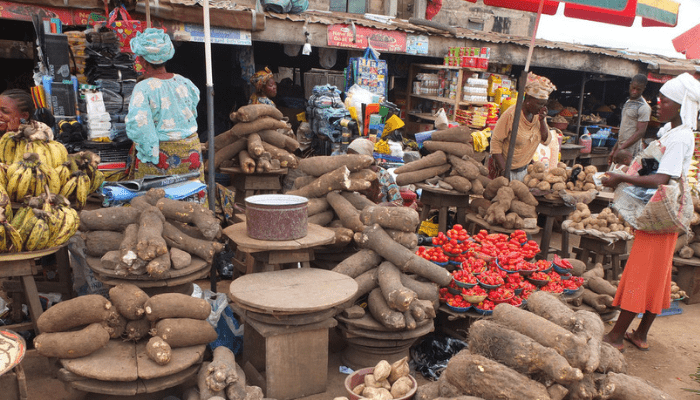
“The rise in food inflation on a year-on-year basis was caused by increases in prices of the following items; yam, water yam, coco yam, etc (potatoes, yam and other tubers class), guinea corn, maize grains, rice, etc (bread and cereals class), beer, pinto (tobacco class), and palm oil, vegetable oil, etc (oil and fats class),” NBS said.
On a month-on-month, food inflation rose to 2.98 per cent, compared to 2.94 per cent in October.
The NBS attributed the rise in food inflation to the rate of increase in the average prices of mudfish, catfish dried, dried fish sardine, rice, yam flour, millet whole grain, corn flour, agric egg, powdered milk, fresh milk, dried beef, goat meat, and frozen chicken.
“The average annual rate of food inflation for the twelve months ending November 2024 over the previous twelve-month average was 38.67 per cent, which was 11.58 per cent points higher compared with the average annual rate of change recorded in November 2023 (27.09 per cent),” it stated.
Food inflation was highest in Bauchi at 46.21 per cent), Kebbi, 42.41 per cent), and Anambra, 40.48 per cent, the report showed.
NIGERIA has paid ₦85 billion and $54 million as community levy contributions to the Economic Community of West African States (ECOWAS), covering its obligations for 2023 and part of 2024.
This payment, made on December 13, 2024, was announced by the president of the ECOWAS Commission, Omar Touray, during the 66th Ordinary Session of the Authority of Heads of State and Government held in Abuja on Sunday, December 15.
It was the first time Nigeria would make such payments to the regional body in 19 years.
Touray revealed that Nigeria remitted ₦85 billion and $54 million, representing 100 per cent of its community levy for 2023, and payments up to July 2024.
He commended Nigeria’s financial contributions to the blocs, describing it as a demonstration of the country’s leadership and commitment to regional development.
“The good news is that for the first time in 19 years, Nigeria has decided to pay 100 per cent of its community levy up to 2023, Nigeria paid N85 billion naira and 54 million US dollars, representing 100 per cent of the 2023 levy and the level of 2024 up to July 2024. The money was paid on Friday, December 13, 2024.
“This payment underscores the leadership and commitment of President Bola Ahmed Tinubu, the government and the people of Nigeria to the ECOWAS community. At a more personal level, it underscores a mark of confidence in the ECOWAS that I have been privileged to lead since 2022. My colleagues and I are deeply grateful.”
Touray, however, expressed concern over the slow remittance of levies by other member states, warning that such delays could undermine the organisation’s operations and programmes.
“Our community levy remittances continue to be slow. A number of countries have fallen behind in their commitment to levy remittances,” he said.
In his remarks, Tinubu, who also serves as the ECOWAS chairperson, highlighted the importance of unity among member states in addressing shared challenges.
“The strength of ECOWAS lies in our unity. This community was born out of a shared vision to create opportunities for our citizens and to promote economic integration and development,” Tinubu said.
He noted that the region continued to face challenges ranging from violent extremism and political instability to environmental crises and the global economic downturn.
Tinubu stressed the need for collective action and collaboration to navigate these pressing issues.
“The world is confronted with challenges ranging from crisis, from Sudan, Middle East and violent extremism and environmental challenges.
“Many of the challenges have impacted our region and the reality underscores the reality of working together,” he said.
Withdrawal of three member states
The ICIR reports that the announcements of Nigeria’s payments to ECOWAS came on the day the ECOWAS approved the exit of Mali, Burkina Faso, and Niger Republic from the bloc.
In a communiqué read by Touray, during the ECOWAS 66th session in Abuja, he acknowledged the sovereign decision of the three Sahelian nations to exit the bloc, citing Article 91 of the revised ECOWAS treaty, which upholds the sovereignty of member states.
The withdrawal, effective from January 29, 2025, followed months of diplomatic engagement led by Presidents Faure Gnassingbé and Bassirou Diomaye Faye of Togo and Senegal, respectively, as well as mediation efforts by Tinubu.
The authority has, however, set a six-month transition period from January 29 to July 29, 2025, to allow for continued negotiations.
During this time, ECOWAS said its doors remained open for the three countries to rejoin the bloc.
“Without prejudice, for the spirit of the opening, The authority directs the president of the commission to launch withdrawal formalities after the deadline of 29th January 2025 and to draw up a contingency plan covering various areas.”
The authority also directed the council of ministers to convene an extraordinary session during the second quarter of 2025 to consider and adopt both separation modalities and the contingency plan covering political and economic relations between ECOWAS and the three countries.
THE African Development Bank (AfDB) Group is planning to launch a debt management forum for Africa (DeMFA).
DeMFA is a new platform aimed at promoting high-level dialogue on debt productivity and sustainability across the continent.
A statement by the bank on Sunday, December 15, said the maiden policy dialogue on the initiative would take place on Monday and Tuesday, December 16 and 17 respectively, in Nigeria’s capital, Abuja.
The policy dialogue is themed: “Making Debt Work for Africa: Politics, Practices and Options.”
The launch will bring together Africa’s ministers of finance, central bankers, debt managers, policymakers, experts and relevant stakeholders.
Participants will exchange views and lessons on challenges related to Africa’s debt vulnerabilities.
According to the bank, DeMFA is a critical response to the continent’s rising public expenditures, declining domestic revenues, rising debts, and debt servicing costs.
“The root causes of Africa’s lingering debt problems are low economic productivity, weaknesses in governance, and internal institutional capacity to mobilise revenues and manage debts productively,” the bank said.
The ICIR reports that the forum is expected to amplify African voices and perspectives on debt matters.
It will provide a channel for knowledge-sharing, advocacy and capacity development on debt management.
In addition, it will leverage partnerships with multilateral and bilateral development institutions.
The launch of DeMFA is part of AfDB’s strategic approach to supporting its regional member countries in managing their debts productively, responsibly and sustainably.
The bank has developed various policy and strategic instruments to address Africa’s debt challenges.
These instruments include the multidimensional action plan for the management and mitigation of debt distress risks in Africa.
Others are the sustainable borrowing policy; and the strategy for economic governance in Africa.
The ICIR reported the AfDB’s earlier call for an overhaul of the global financial architecture that would see African countries’ access to ‘concessional loans’ devoid of debt crisis.
The AfDB made the call in its African Economic Outlook 2024 report released on Thursday, May 30.
The report made bold proposals to reform the global financial architecture, expressing worry over credit risk exposure for most African countries.
It stated that giving Africa a greater voice in multilateral development banks and international financial institutions reflected the continent’s growing share of global gross domestic product and rich natural resources.
THE Economic Community of West African States (ECOWAS) has officially approved the withdrawal of Mali, Burkina Faso and Niger Republic from the regional bloc.
This is part of the resolutions reached at the end of the 66th Ordinary Session of the ECOWAS Commission Authority of Heads of State and Government in Abuja on Sunday, December 15.
The ICIR reports that the decision marks a significant shift in the geopolitical landscape of West Africa.
In the communique read by the President of the ECOWAS Commission, Omar Alieu Touray, the commission noted that it respected the decision of the three countries to exit the community.
However, it announced that the counties would be given a transition period of six months between January 29 and July 29 during which the current negotiations with the ECOWAS mediation team led by the Presidents of Senegal and Togo would continue.
The ECOWAS noted that if during the transition period, the three Sahel countries decide to rejoin the community, they would be readmitted.
The decision is in line with Article 91 of the revised ECOWAS treaties which recognises the sovereignty of every member state.
Part of the communique reads” After deliberations, their excellencies, the authority members of the authority of ECOWAS, heads of state and government, commend the exemplary diplomatic engagement of His Excellency. Bassirou Diomaye Faye, President of the Republic of Senegal, and His Excellency Faure Gnassingbé, President of the Togolese Republic, and the diplomatic efforts of the chairman of authority, His Excellency Bola Ahmed Tinubu and other individual member states towards these three countries.
“The authority takes note of the notification by Burkina Faso, the Republic of Mali and the Republic of Niger of their decision to withdraw from ECOWAS. The authority acknowledges that in accordance with the provisions of Article 91 of the revised ECOWAS treaty, the three countries will officially cease to be members of ECOWAS from 29 January 2025,” the communique noted.
It further disclosed that the authority decided to set the period from 29 January 2025 to 29 July 2025 as a transitional period and to keep ECOWAS doors open to the three countries during the transition period.
The authority also directed the council of ministers to convene an extraordinary session during the second quarter of 2025 to consider and adopt both separation modalities and the contingency plan covering political and economic relations between ECOWAS and the Republic of Niger, the Republic of Mali and Burkina Faso.
The ICIR in January reported that Nigeria would likely face more security and economic challenges following the exit of Burkina Faso, Mali, and Niger as the country’s fight against insurgency and dwindling economy bit harder.
The three countries were sanctioned by ECOWAS for enforcing a military regime and severing diplomatic ties with France, their colonial masters.
They officially took a sovereign decision on Sunday, January 28, to pull out their nations from ECOWAS.
PRESIDENT Bola Tinubu has urged West African leaders to learn from Ghana’s recent elections.
Tinubu described Ghana’s recent election as a model of democratic maturity and national unity.
The President bared his mind about the election in a statement by his special adviser on information and strategy, Bayo Onanuga.
The president eulogised Ghana for its peaceful presidential and parliamentary elections held on December 7.
He praised President Nana Akufo-Addo and the people of Ghana for showing high democratic standards in the region.
He urged all leaders in the region to emulate good democratic practices and prioritise their country’s national unity to ensure the political stability of the region.
Tinubu said the manner of peaceful transition will become the culture of democracy not only in West Africa but also in the entire African continent if Ghana’s election is emulated in the region.
Tinubu praised Vice President Mahamudu Bawumia and the ruling New Patriotic Party (NPP) for accepting defeat and congratulating President-elect John Dramani Mahama of the opposition National Democratic Congress (NDC) even before the official announcement of results.
“This gesture, as it happened in Nigeria in 2015, demonstrates political maturity and respect for the will of the people of Ghana,” Tinubu stated.
He also lauded President Akufo-Addo for his leadership during his two-year tenure as chair of the Economic Community of West African States (ECOWAS).
Tinubu extended congratulations to Shirley Botchwey, Ghana’s foreign minister, on her appointment as secretary general of the Commonwealth.
The president also used the occasion to commend Senegal for successfully holding parliamentary elections and called on ECOWAS member states to recommit to the bloc’s founding ideals of peace, prosperity, and economic integration ahead of its 50th anniversary in 2025.
Tinubu highlighted his administration’s contributions to ECOWAS, including Nigeria’s full payment of its community levy for 2023 and significant remittances for 2024.
The 66th ordinary session of ECOWAS in Abuja was attended by presidents from Côte d’Ivoire, Ghana, The Gambia, Guinea Bissau, Liberia, and Senegal, as well as representatives from Sierra Leone, Benin, Togo, and Cape Verde.
Tinubu, who is serving his second term as ECOWAS chair, also highlighted achievements under his leadership, including regional integration, conflict resolution, and counterterrorism efforts.
“Regional infrastructure projects such as the West African Gas Pipeline and the West Africa Power Pool have significantly enhanced connectivity and promoted greater regional integration,” Tinubu said.
He called for continued commitment to the ECOWAS regional action plan on the fight against terrorism, which he said provides a “comprehensive framework to combat violent extremism and enhance regional security.
Tinubu concluded by calling for continued commitment to the ECOWAS regional action plan on combating terrorism, emphasizing its role in enhancing regional security.
ANALYSIS of government data from the National Oil Spill Detection and Response Agency’s gas flare tracker, in comparison with government documents from the Nigerian Upstream Petroleum Regulatory Commission (NUPRC) and the Nigeria Extractive Industries Transparency Initiative (NEITI), reveal multi-billion-naira shortfalls in payments received by the agency as gas flare penalties designated by the Petroleum Industry Act (PIA) for environmental remediation and relief to oil and gas host communities. This report links the shortfall to the failure of oil and gas companies to pay the actual amount in penalties as well as the inability of NUPRC to enforce the same. Furthermore, the agency has failed to account for the funds it did get in the last three years. TheMail Newspaper visited four top oil-producing states in Nigeria and reports the environmental challenges faced by local communities and how the failure of the Nigerian government to utilise these penalties for its intended purpose continues to worsen the hardship of locals.
Delight Friday, a widow in her late 60s, lived a relatively comfortable and contented life, going about her fish drying business in Itakabasi, Ibeno Local Government Area (LGA) of Akwa Ibom State. That was until disaster struck in August 2010 when an unprecedented coastal flood swept away the entire oil-rich Niger Delta community into the Atlantic Ocean.
The sea level had risen, huts, farms, fishing boats and lives were lost to what residents now call “the great disaster.” But Friday and her six children were fortunate, they were not among the 23 people who lost their lives to the disaster.
The tragedy forced the mother of six to abandon her ancestral home, farmland and business to take shelter in neighbouring Okoroitak community.
“For 14 years now, I have been squatting with a good Samaritan here. I couldn’t recover what I lost to the flood so as to stand again on my feet in terms of my business,” she said.
Delight Friday
Fourteen years later, the water has not receded and Friday and other members of the Itakabasi community are unable to return to their ancestral land.
Itakabasi, a place they once called home is now a part of the Atlantic Ocean, only recognised by a pillar of wood preserved on the ocean to signify the house of the village head. But they remain hopeful. Though hosted by neighbouring communities of Okoroitak, Iwokpom and Okoroinwang, the people sacked by the coastal erosion long to someday return home. Their Village Head, Isemmi Enyina, urged the government to reclaim their land and execute an ocean embankment project so that the people can return to their ancestral land.
When this reporter visited the area in September, he noticed that Okoroitak, Iwokpom and Okoroinwang, where the people of Itakabasi now call home, have equally been pushed further upland by the encroaching coastal erosion.
Man loses two children to gully erosion
East of Ibeno LGA is Mbo, another oil rich coastal area. At Eyoefia community of Ewang, Mbo LGA, Joseph Ante, in his late 30s, struggled to build a home and start a family from the proceeds of fishing in 2016.
In late 2018, a gully started near his house. Although Ante had barricaded some visible areas to protect his family, unknown to him the gully had cut deeper beneath the earth, becoming a looming danger with a heavy cost for Ante’s family. During the July 2022 rainy season, his two children, aged four and two, were playing outside when the gully caved in and swallowed his children. His two-year-old daughter died instantly while his four-year-old son was rescued but died two days later due to complications from the injuries he sustained.
Now, Ante fears for his life as the gully continues to encroach nearer to his house. He insists on living in the house, claiming he has nowhere to relocate to.
Joseph Ante standing by the encroaching gully to his house.
The environmental mishap and threats faced at Eyoefia community is similar to the telltale of woes faced by residents of Eyo Udombo and Uko Akpan communities still in Ewang. The once vibrant road leading to the beach market has been replaced by gullies which started manifesting in 2019. Four houses have already caved in between 2023 and 2024. When TheMail visited the community in mid-September, seven houses were sighted at the edge of the gully.
The village head of Uko Akpan, Emmanuel Etim, said they have sought help several times from the federal, state and local governments yet no help has been rendered to remediate the environmental crisis and provide relief to those who have lost properties to the gully. He fears the gully may consume more homes by the next rainy season.
PIA’s provision on environmental remediation and relief
The environmental concerns highlighted in Ibeno and Mbo local government areas of Akwa Ibom State reflect a glimpse of the many environmental challenges caused by climate change. Before now, being on the fence line of ecological challenges and bearing the brunt of gas flaring had left many communities with no funds to address the impact of climate change.
Gas flaring, according to the World Bank contributes significantly to climate change. Yet, until the Petroleum Industry Act (PIA) came into force in 2021, the penalties on gas flaring were shared as part of revenue across the country.
Interestingly, Section 104(4) of the Petroleum Industry Act (PIA) provides that “Money received from gas flaring penalties by the Commission (Nigerian Upstream Petroleum Regulatory Commission) under this section, shall be for the purpose of environmental remediation and relief of the host communities of the settlors on which the penalties are levied.”
Had the oil and gas companies and the Nigerian Upstream Petroleum Regulatory Commission, adhered to this law, the plight of communities such as Ibeno and Mbo would have been addressed through environmental remediation projects and relief missions from gas flaring penalties in the last three years.
For instance, Ibeno local government is the host community for Network Exploration and Production, a company producing within the OML 13 asset and Mobil Producing Nigeria. Analysis of gas flare data by the Nigerian Gas Flare tracker; a satellite gas flare tracking portal by the National Oil Spill Detection and Response Agency (NOSDRA) shows that between 2021, when the PIA came into force and 2023, a total of 10.4 million dollars is payable as penalties for the gas flared on the OML 13 asset.
Analysis of the Central Bank of Nigeria (CBN) rate used within the three years as published by the Oil and Gas Reports of the Nigeria Extractive Industries Transparency Initiative (NEITI), shows that the $10.4 million payable as penalties by Network Exploration and Production,together with Frontier Oil, operating in nearby Esit Eket and Eket amounts, to N5.19b. When divided among Ibeno, Esit Eket and Eket, each LGA would likely receive at least N1.7b.
Interestingly, Ibeno LGA is among the eight communities in Akwa Ibom State hosting four shallow water assets operated by Mobil Producing Nigeria. Analysis of data by the tracker shows that the penalties accrued to Mobil Producing Nigeria as flare penalties for its four assets is put at N130.3 billion, to be paid to the Nigerian Upstream Petroleum Regulatory Commission.
When divided against the eight communities of Eket, Esit Eket, Ibeno, Onna, Mbo, Mkpat Enin, Ikot Abasi and Eastern Obolo, it means that Ibeno will receive at least N16.29bn as flare penalties. Added to its share of N1.7b from Network Exploration and Production, Ibeno would be entitled to at least N18bn. This amount is, by law, expected to have been used for environmental remediation and relief in the council area.
For Mbo LGA, the gas flare tracker shows that within this three-year period, N10.65bn should have been paid by Addax Petroleum Limited, Moni Pulo and Universal Energy for the gas flared in their respective assets OML 123, 114 and 14. When added to its share of N16.29bn flare penalties from Mobil Producing Nigeria, Mbo would then be entitled to a total of N26.94bn. with such an amount, the environmental challenges faced in the LGA could have been addressed if the penalties for the gas flared within the domain had been paid and the funds utilised.
In all, for the entire 11 assets belonging to Mobil Producing Nigeria, Addax Petroleum, Total Energies, Frontier Oil, Moni Pulo and Universal Energy, operated within eight communities of Akwa Ibom State, analysis of the gas flare tracker shows that a total of N152.21bn should have been released as the flare penalties by the oil and gas companies in the last three years.
Despite N84.57bn remediation fund, Rivers community languish in flood devastation
In early 2024, Helen Azubike, a widow with five children, planted cassava, cocoyam and vegetables on two hectares of land in Erema Town, Egi community of Ogba/Egbema/Ndoni council area of Rivers State.
She had planned to use the proceeds to feed her family and cater for the academic needs of her children as well as other sundry family essentials. But her plans were washed away by a devastating flood that swept away her community in August 2024, destroying her farm among others in the community.
Speaking to this reporter, Azubike said since the incident, her children had dropped out of school for the first term, until she is able to cultivate again.
Helen Azubike at her farmland destroyed by flood.
Azubike is, however, not alone. When TheMail Newspaper visited the community in September, many farmlands lay bare, with cassava stems washed away by flood. Farmers lamented that in recent years, flooding have become perennial and causes deep hunger and poverty in the community.
Others said the flood had gone beyond destruction of farmlands. In 2021 and 2022, members of the community were sacked by the flood. The Paramount Ruler of Erema community, Eze Alexander Odeyi said many who couldn’t move to safer locations had to camp at a school located at a higher ground.
He said despite the destruction of property and loss of two residents, relief materials were only donated by Total Energies, but none from the government.
Odeyi said they desired a drainage system to cut off flood water into the community through the forest of Delta State.
Again, an environmental remediation project would have benefitted the community, if the actual flare penalties by Total Energies had been paid and properly utilised by the NUPRC.
Analysis of data from the gas flare tracker reveals that Total Energies was expected to have paid N6.13bn as penalties for gas flared in Erema community between 2021 and 2023.
The environmental challenge faced by the community is similar to the plight of the people of Umuechem in Etche LGA where Heirs Holding Oil and Gas operates and flares gas.
Gas flare Site of Heirs Holding at Umuechem
Annually, at the height of the rainy season, community members battle flood in their homes, losing property while closing their shops until the water recedes. When TheMail Newspaper visited the community in September, a trader, Eli Ordu said he was unable to open for business between July and August because the area was flooded.
“I had to borrow money to feed my family for the two months period because I couldn’t sell anything due to the flood,” he added.
Eli Ordu
The Paramount Ruler of Umuechem, His Royal Highness, Eze Sampson Emu, linked the perennial flooding in the community to poor drainage system. He believes the flood concerns may be abated with a functional drainage.
Umuechem community hosts Heirs Holding Oil and Gas, a company that operates the OML 17 asset and should have paid N22.36bn as penalties for gas flaring between 2021 and 2023, based on records from the Gas Flare Tracker.
Paramount Ruler of Umuechem, Eze Sampson Emu
The 13 oil and gas assets in Rivers State are operated by eight companies including Heirs Holdings oil and gas, Eroton E and P, NNPC E and P Limited (NEPL), Shell, Belema Oil Producing Ltd, Aradel, Total Energies and Amni International Petroleum Development. Records by the Gas Flare Tracker shows that gas flare penalties payable by the eight companies for Rivers State in the three years accumulated to N84.57bn.
These are funds which could have gone a long way in providing environmental remediation and relief to the communities.
Bayelsa Communities risk being wiped-off despite N64.86bn environmental remediation funds
Like the once vibrant Itakabasi in Ibeno LGA of Akwa Ibom State that is now part of the Atlantic Ocean, many oil and gas communities in Bayelsa State risk being wiped-off from the map.
In 2010, when Gbalipiri Renah, a fisherman at Odioma, a coastal community in Brass LGA in Bayelsa State completed his house, he thought he had achieved a part of his life’s goals and was then ready to focus on training his five children.
For the 45-year-old, things took a drastic turn in 2022 when he lost his home. Although his house was built far off the coast, the sea levels had risen rapidly upland, causing an unprecedented coastal erosion within the space of 10 years.
Gbalipiri Renah pointing to the rubbles of his lost building in the water.
The coastal erosion had washed away Renah’s building, together with several others in 2022. With tears streaming down his cheek, Renah showed this newspaper the rubble of what remains of his five-bedroom bungalow at the shore. He said the disaster had cost him his life savings and unsettled debts.
“Since then, I have no money to build another house or rent an apartment. I now squat with family members and friends together with five children. Due to inconveniences on those that host us, sometimes I rotate where I and some family squat. This week, I will live with my sister, next week, with my brother and so on,” he said.
The father of five explained that the situation has impacted negatively on his children’s academic performance as they are being forced to relocate periodically. Renah also decried that this nomadic lifestyle has withered his once strong family bond.
When TheMail Newspaper visited the community in September, rubbles of 16 buildings, including two storey buildings were sighted by the shores. Two concrete walkways leading to the shores were also washed up to the third layer of the soil. The community cemetery was not spared. The Assistant Secretary of Odioma Youth Association, Iworisou Fedinand who showed this newspaper around the community said over 200 buildings had been lost to coastal erosion in the last five years.
Though Odioma community is host to SPDC, Aiteo and Agip oil companies, the Chairman of the Chiefs Council of Odioma Kingdom, Chief Sunday John Igbousa, ascribed the condition of the community to years of government neglect despite calls for intervention. He urged government to reclaim the land and ensure ocean embankment projects.
he situation is no different at Sangana community which plays host to First E &P, Conoil and SPDC. Like Odioma, houses have been plunged into the ocean.
At Koluama community in Southern Ijaw LGA, which hosts Conoil, First E & P, NEPL, SPDC and NIGDEL United Oil, the environmental disaster remains dire. Due to ocean surge, the community has migrated to two separate locations known as Koluama 1 and 2. Besides the travails of flooding, even at the new locations, residents expressed sadness over the loss of historical sites, including a place they called “the grave of Lord Lugard.”
The paramount ruler of Koluama, Newton Ogboin- Mienyi said six houses gave way to the ocean surge during this year’s rainy season. He blamed gas flaring by the oil companies in his domain for aggravating the situation by melting the ice beneath the ocean, thus causing increased ocean surge.
The paramount ruler said despite several letters to the federal and state governments for help, relief and remediation is yet to arrive.
Paramount ruler of Koluama, Newton Ogboin- Mienyi
However, checks into the gas flare tracker shows that the gas flare penalties payable by oil and gas companies in Odioma, Sangana, Koluama among other host communities in Bayelsa State amounts to N64.86bn. These funds could have been used for their environmental remediation and relief.
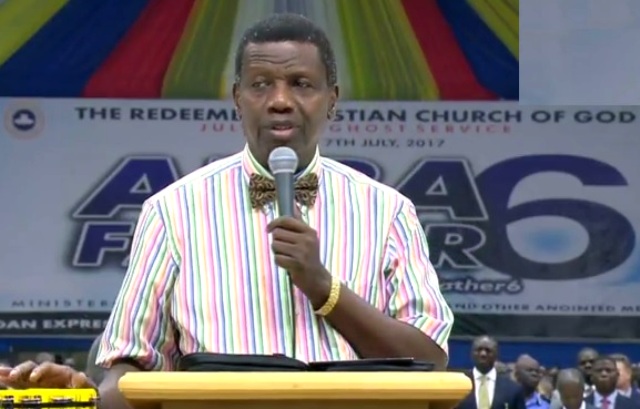
THE General Overseer of the Redeemed Christian Church of God (RCCG) has stated that the Redemption Camp of the church used to be a den for robbers before the arrival of the church.
Adeboye stated this on the sixth day of the church’s Holy Ghost Congress 2024, themed Onward Christian Soldiers, which started on Monday, December 9, at the camp.
As reported by Church Times Nigeria on Sunday, December 15, Adeboye shared a story of how divine providence and the unshakeable faith of a few individuals transformed a desolate land into a thriving spiritual community.
Adeboye described the early days of the Redemption City, saying it was initially a small, two-hectare plot of land that was notorious for being a hideout for highway robbers. He recalled that he was just over 40 years old when he first arrived at the site.
“Not long after we came to the camp, we stumbled on spots where robbers dumped hundreds of suitcases, shoes, and clothes of their victims,” Adeboye revealed.
According to him, the challenges they faced in the early days of the Redemption Camp included how the natural environment seemed hostile.
He added that the area was infested with snakes, particularly pythons, and it was not uncommon for huge reptiles to be killed on the campgrounds almost every week.
He shared a particularly harrowing incident where a snake was found under the bedsheet of one of his children.
Adeboyealso shared the story of a mysterious tree that local villagers believed was cursed, warning that anyone who cut it down would meet a fatal end.
Despite such ominous warnings and numerous challenges, Adeboye expressed his gratitude for the unwavering support of church elders, who worked tirelessly to establish the camp during its early years.
Adeboye emphasised the importance of the younger generation showing respect and appreciation for their elders, stressing that the wisdom and experience of older generations are invaluable and cannot be replicated.
He advised against belittling elders, stating that they had worked alongside him during difficult times, performing tasks such as fetching firewood, digging wells for water, and labouring tirelessly.
He acknowledged their efforts, saying they had done their best. He further emphasized that the years of experience accumulated by elders cannot be replicated through seminary training.
In his final remarks, Adeboye encouraged the congregation to harness the energy of their youth, empowered by faith.
The Holy Ghost Congress, an annual programme of the RCCG came to a close on December 15 with a grand thanksgiving service, leaving participants inspired by the remarkable story of Redemption Camp’s transformation.
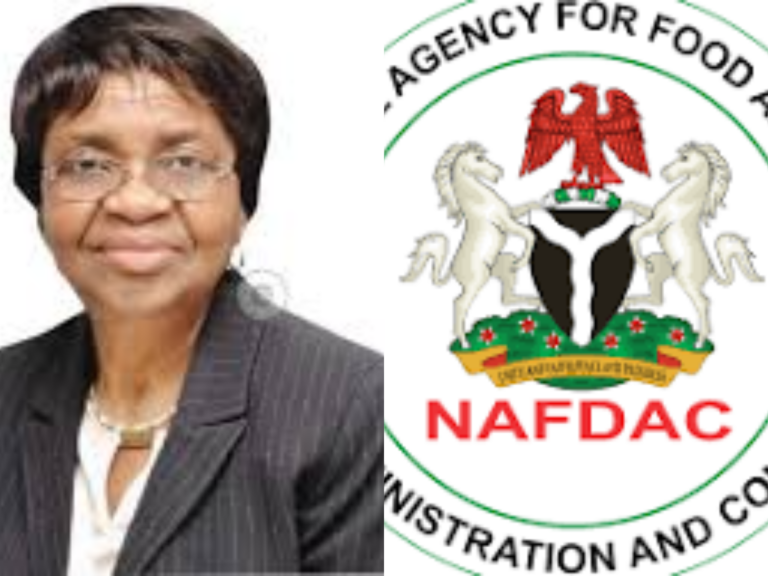
THE National Agency for Food and Drug Administration and Control (NAFDAC) has refuted claims that it endorsed a “lung-cleansing herbal tea” designed for smokers.
In a statement on Saturday, December 14 2024, NAFDAC’s Director-General, Mojisola Adeyeye, clarified that the product, Lungitox (Smokers Pride), was rejected during the registration process.
“The attention of the National Agency for Food and Drug Administration and Control (NAFDAC) has been drawn to a misleading video circulating on social media, alleging that NAFDAC approved the registration of a herbal product claiming that “smoking is healthy” when used with their product.
“NAFDAC wishes to categorically state that this claim is false and completely unfounded.
The product in question – Lung Detox Tea or Lungitox (Smokers Pride) or any similar product – is NOT registered by NAFDAC,” the statement added.
The statement further noted that the individual behind the product had applied for registration, but the application was rejected due to the unsubstantiated and dangerous claim that the product could make smoking “healthy.”
Adeyeye emphasised that the agency remains committed to protecting public health by approving only safe, effective, and scientifically validated products while condemning any attempts to mislead or endanger the public with false claims and urged the public to disregard the video promoting the product.
She also encouraged people to report suspicious claims or products to the Agency through its official channels also stating that the agency would continue to take firm action against any individual or organisation attempting to breach public health standards.
The ICIRreported last week that NAFDAC has issued a public alert announcing the recall of one batch of Deekins Amoxycillin 500mg capsules following ‘reports’ of serious adverse drug reactions. The affected batch, identified as 4C639001, was manufactured by Ecomed Pharma Ltd. and marketed by DevineKings Pharmaceutical Ltd.A statement by the organisation on Wednesday, December 11, via its X handle, confirmed that the recall was based on three cases of adverse drug reactions reported from a hospital where patients had been administered the affected medication.
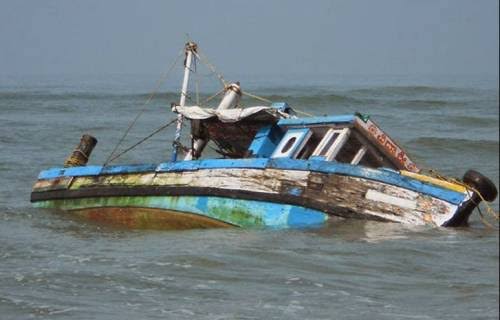
AT least 20 people, mostly women and children, have been reportedly dead in a boat mishap when a wooden boat capsized near Ocholonya in the Agatu Local Government Area (LGA) of Benue State on Saturday, December 14.
Reports say the victims and traders were returning to Odenyi in Nasarawa Toto LGA of Nasarawa State after attending the Ocholonya market when the accident happened.
According to reports, the victims, who were traders, were travelling back to Odenyi in the Nasarawa Toto Local Government Area of Nasarawa State after visiting the Ocholonya market when the boat accident occurred.
The chairman of Agatu Local Government Area, Melvin James, confirmed the incident to Punch on Sunday, December 15, stating that the victims were visitors to the Ocholonya market in Agatu LGA.
He said that what he had learnt was that the victims’ boat had capsized when they were returning to their base in the Apochi and Odenyi communities in Doma, Nasarawa State.
He stated that he was trying to contact his colleague from Nasarawa State to arrange a visit to the families of the victims and offer condolences. He added that although conflicting reports indicated that 20 people had died, to his knowledge, no corpses had been recovered.
“Locals confirmed that divers have recovered corpses, but as chairman, I must speak authoritatively. I want to establish contact with divers to confirm the actual number of bodies recovered, but their lines were not connecting,” he stated.
The chairman disclosed that he had reached out to the Nigerian Navy commander in the local government area for assistance with the rescue efforts.
In a chat with The ICIR on Sunday, the spokesperson for the state Police Command, Catherine Anene, said she has not received any report on the accident; she, however, promised to confirm and get back to our correspondent.
This is not the first time a boat mishap has happened in Benue State. In July 2020, a tragic boat accident occurred on the River Benue in the Makurdi Local Government Area on Sunday afternoon, leaving at least 21 people dead.
The incident took place around the Kwaghter axis. While some passengers were rescued, 21 others were feared dead.
According to Benue Police spokesperson Anene, 23 members of ECAN Church Ijaha in Makurdi LGA were travelling to a conference across the river when their boat sank around 2:30 pm.
Also in September 2022, six people died following a boat mishap in the Guma Local Government Area of Benue state.
Forty travellers were aboard the boat during the incident, and 26 were rescued, with eight other passengers missing.
Recall that recently the head of operations for the National Emergency Management Agency (NEMA) in Kogi State, Justin Uwazuruonye, on November 30, 2024, confirmed that 54 bodies were recovered from a boat accident involving about 200 traders in the state.
He explained that the number of fatalities reported by the Kogi State Emergency Management Agency, the Red Cross, and NEMA stood at 54.
He further pointed out that the lack of a passenger manifest made it challenging to ascertain the exact number of individuals on board.


![Gas flaring: Niger Delta communities suffer as oil giants fail to pay penalties [part 1]](https://www.icirnigeria.org/wp-content/uploads/2024/12/0-768x435.jpg "Gas flaring: Niger Delta communities suffer as oil giants fail to pay penalties [part 1]")