Home Blog Page 506

Police confirms release of 20 kidnapped medical students

THE Benue State Police Command has confirmed the release of 20 medical students who were kidnapped in Benue State on Thursday, August 15.

Reports in the media disclosed that the rescue effort was coordinated by the office of the National Security Adviser (NSA).

Confirming the release to The ICIR in a chat on Saturday, August 24, the spokesperson for the Benue State Police Command, Catherine Anene, said the students were rescued on Thursday, August 23. However, details surrounding their release are still sketchy.

“Yes, they were released yesterday. I got the information yesterday but no details yet. The team has not given me details,Anene stated.

According to reports, the rescue operation involved a collaborative effort from various security agencies, including the Nigerian Police Force (NPF), State Security Services (SSS), and military personnel.  

Previously, the police had utilized helicopters in an attempt to rescue the kidnapped medical students, highlighting the multi-faceted approach to securing their release.

The ICIR reported on August 16, that gunmen abducted over 20 medical and dental students and a house officer in Benue State.

The students who are from the University of Maiduguri and the University of Jos were traveling to Enugu for the annual meeting of the Federation of Catholic Medical and Dental Students (FECAMDS) before they were ambushed by gunmen around 5:30 p.m. in the Otukpo area of the state.

In an earlier confirmation of the incident to The ICIR  on Friday, August 16, the spokesperson for the Benue State Police Command said an investigation had been launched into the abduction.

Benue has been one of Nigeria’s epicenters of conflict and insecurity in recent years. While armed herdsmen are on the rampage in one part of the state, local bandits are wreaking havoc in other parts of the state.

About two weeks ago, gunmen reportedly killed many residents of the Ayati community in the Ukum Local Government Area (LGA) of the state.

According to reports, not less than 50 people were killed in the attack on Thursday, August 8.


READ ALSO:


Confirming the incident in a chat with The ICIR on Friday, August 9, a leader in the community, Shima Ayati, said that over 50 corpses were recovered from the village as of Friday morning.

He blamed the state local security unit, Benue Community Volunteer Guards, for leaving the residents unprotected after starting a fight with ‘herders’.

He added that some victims with serious injuries were taken to the hospital for medical attention.

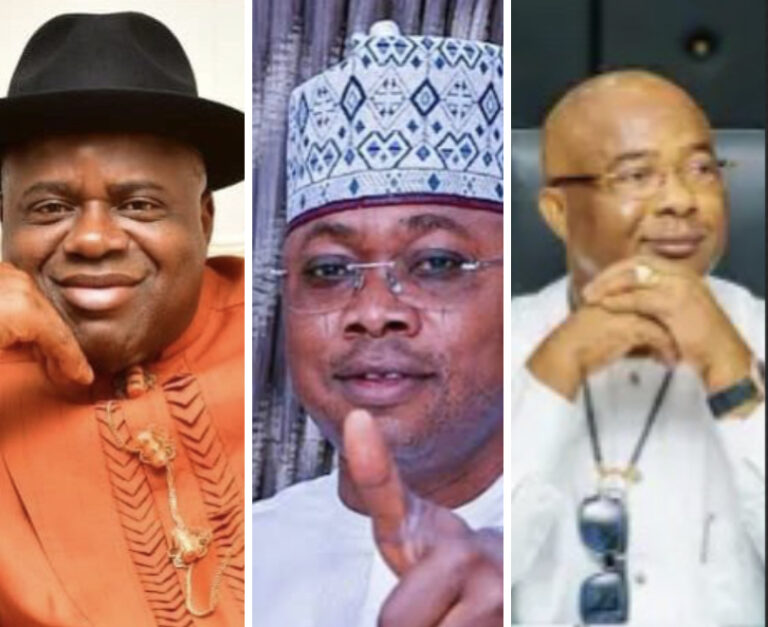
Supreme Court affirms Diri, Ododo, Uzodinma as Bayelsa, Kogi, Imo governors

THE Supreme Court has affirmed the victory of Duoye Diri, Usman Ododo, and Hope Uzodinma as Bayelsa, Kogi and Imo state governors, respectively.

Diri belongs to the Peoples Democratic Party (PDP) while others are the All Progressives Congress (APC) members.

In a unanimous decision on Friday, August 23, the five-member panel dismissed the appeal brought by the APC’s Timipre Sylva, who challenged the November 11, 2023, Bayelsa election results. 

The ICIR reported that the Independent National Electoral Commission (INEC) declared Diri the poll winner.

Diri defeated Sylva – his closest opponent – having polled 175,196 votes.

The APC candidate won in only two LGAs and scored 110,108 across the state, while their Labour Party (LP) counterpart polled 905 votes.

Following Diri’s re-election victory, Sylva challenged the result at the governorship election petition tribunal and consequently at the appeal court but lost in both. 

He further challenged the decision at the Supreme Court, but the court held that the appeal by Sylvia and the APC was not only lacking merit but also amounted to a gross abuse of the court process.

The Supreme Court’s lead judgment, delivered by Mohammed Garba, stated that Sylva’s decision to file multiple notices of appeal against a single judgment from the election petition tribunal was improper.

The panel also rejected the appeal from the National Rescue Movement (NRM) and its candidate, Micah Akeems, who accused Bayelsa deputy governor, Lawrence Ewhrudjakpo, of submitting a forged National Youth Service Corps (NYSC) certificate to INEC. 

The court ruled that the appeal was without merit, as it bothered on a pre-election matter.

The Supreme Court, also on Friday, upheld the judgment of the Court of Appeal, which had on July 11, 2024, affirmed Usman Ododo as the winner of the November 11, 2023, governorship election.

The court held that the appeal by the governorship candidate of the Social Democratic Party (SDP), Muritala Ajaka, challenging the declaration of Ododo as governor of Kogi State lacked merit.

The apex court agreed with the judgement of the appellate court, which held that Ajaka’s case was unmeritorious, and consequently dismissed it.

Similarly, the Supreme Court dismissed two separate appeals by the PDP and LP against Uzodinma’s victory as the elected governor of Imo State.

The Supreme Court dismissed the appeals of LP candidate, Athan Achonu, and PDP candidate, Samuel Anyawu, thereby affirming Uzodinma as the duly elected governor of the state.

In the lead judgment delivered through Mohammed Baba Idris, the apex court stated that the LP and PDP candidates failed to provide sufficient evidence to support their claims of overvoting and other electoral irregularities in the November 11, 2023, election.

The Supreme Court’s unanimous rulings aligned with the previous decisions of the Court of Appeal and the Imo State Governorship Election Petition Tribunal in Abuja, which had also dismissed the petitions in their respective judgments.

Uzodinma won the 2023 Imo governorship election by a landslide. He swept all 27 Local Government Areas (LGAs) in the state.

He polled 540,308 votes to beat Samuel Anyanwu of the PDP who got 71,503 votes, and Athan Achonu of LP who scored 64,081 votes.


FG paid N3.57trn on subsidy in 2023, amid Tinubu’s no subsidy claim

THE Federal Government of Nigeria paid approximately N3.57 trillion in subsidy on petroleum products in 2023, despite the initial declaration by  President Bola  Tinubu that there’s no more subsidy.

An analysis by The ICIR on the Nigerian National Petroleum Company Limited’s (NNPCL) recently released audited financial statements revealed the government paid subsidies and the figure keeps rising.

At the inauguration of his administration on May 29, 2023, the ICIR reported that Nigerian President Bola Tinubu announced that the petrol subsidy regime was gone.

Since then, his government, including the state-owned oil company, kept insisting on not paying subsidies. However, not many Nigerians and industry anaĺysts believe the government, as the latter has secretly been paying petrol subsidies.

In the analysis of the NNPCL 2023 audited financial statements, The ICIR’s findings showed that the Nigerian government has been liable for paying under-recovery expenses, which is the difference between the landing cost of petroleum product and the regulated price at which it mandates NNPCL to sell the product.

The chief finance officer of NNPCL, Umar Ajiya’s, statement at the presentation of the NNPCL 2023 financial report on Tuesday, August 20 affirms the under-recovery expenses.

According to Ajiya’s disclosure, the nation’s sole importer of petroleum products-NNPCL has been selling petrol at half the cost of the landing price.

“In the last eight or nine years, this company or corporation, as it were, has not paid anyone a dim as subsidy. NNPC has paid no one kobo in the name of subsidy. That means no marketers have received money from us in the name of subsidy.

“What has been happening is that we have been importing PMS, landing at a certain price, at a cost price, and the government is telling us to sell it at half the price,” he hinted.

Ajiya explained further that the difference between the landing price and the half price is what “we called shortfall or call it subsidy and the deal is between the federation and ourselves to reconcile, and sometimes they give us money, and sometimes we mark it up.”

The revelation by Ajiya raised unanswered questions about the lack of approval in the “under-recovery and subsidy concerns which was hitherto denied by the Tinibu’s administration at his inauguration on May 29, 2023.

“There are still unanswered questions about who approved trillions of naira paid in the name of subsidy under this administration that had denied there’s no more subsidy. In any corporate venture with the size of NNPCL, you have a board audit committee that looks at the balance sheet. Who approved the trillions of subsidy payments? if it is in any other company, that chief finance officer that gave such approval would have been fired,” the chief executive officer of CFG Advisory, Tilewa Adebajo said in reaction to subsidy payments as reflected in NNPLC financial statements.

The ICIR’s analysis of the financial statements showed that the NNPCL reported N7.15 trillion as revenue from petroleum product sales in 2023 from N4.50 trillion in 2022.

This indicates that subsidy payments by the federal government stood at N3.57 trillion in 2023 in the NNPCL record.

In line with Section 64(M) of the Petroleum Industry Act (PIA) 2021, the cost incurred by NNPCL as the energy supplier of last resort for energy security reasons and all associated costs shall be on account of the Federation.

The NNPCL said, “The government instructed that NNPCL cannot sell its Premium Motor Spirit (PMS) above a certain regulated price,” NNPCL stated in its financial statements. However, the cost of importing the PMS was usually much higher than this regulated price.

“The under-recovery is essentially the difference between the actual landing cost of the product and the regulated price. This balance is used to reduce the cost of sales of the Group.”

It added that the corresponding entry was either used to reduce the liability due to the Federation or used as a receivable from the Federation.

A further analysis of the report reveals that the company reported N9.38 trillion as receivables from the Federation in 2023, rising from N2.18 trillion in 2022.

A receivable represents money due a company for products or services it has already delivered, The ICIR can report.

According to NNPCL, the PMS cost under-recovery is recognised where there is reasonable assurance that it will be received and all attached conditions have been complied with.

“When it relates to an expense item, they are deducted in reporting the related expense in cost of sales,” it stated.

The payment of N3.57 trillion subsidy termed under recovery by the government is made by the Federal Government to the NNPCL to maintain price control in the gasoline market. The payment helps to bridge gap of actual payment of PMS at the market, since the NNPCL is the sole importer currently of PMS.

In the review year, the NNPCL reported N23.99 trillion in total revenue. The figure comprises N14.07 trillion revenue from crude oil sales, N2.30 trillion from natural gas, N94 million from power, N464.94 billion from services, and N7.15 trillion from petroleum products.

The revenue from crude oil sales is from sales of utilised crude during the year and liftings of equity interest in various oil assets.

Petroleum product sales include the sale of PMS, dual-purpose kerosene (DPK), automotive gasoline oil (AGO), Naphtha, lubricants, and other related products.

The sale of natural gas represents the invoice value (transaction price) of natural gas sold to third parties, and revenue from services consists of revenue from seismic contracts, time-based contracts, gas transmission tariffs, shipping, marine, and engineering, the NNPCL detailed.

Tinubu swears in Kudirat Kekere-Ekun as new Chief Justice of Nigeria

0

PRESIDENT Bola Tinubu has sworn in Kudirat Kekere-Ekun as the new Chief Justice of Nigeria (CJN).

Tinubu who returned to the country from France in the early hours of Friday, August 23, administered the oath of office on Kekere-Ekun at the Council Chamber of the State House.

The National Judicial Council (NJC) recommended Kudirat Kekere-Ekun as the next CJN on Thursday, August 15, following the end of the tenure of former CJN, kayode Ariwoola.

The ICIR reported that Ariwoola retired on Thursday, August 22, after clocking 70 years.

After Ariwoola, Kekere-Ekun is the Supreme Court’s oldest senior justice in terms of judicial ranking.

Kekere-Ekun, 66, is the second female CJN in Nigeria. She comes after Maryam Aloma Mukhtar. She will operate in an acting capacity until her confirmation by the Senate.

Kekere-Ekun was elevated to the Supreme Court of Nigeria as the 5th female Justice of the Court and was sworn in July 2013.

Born on May 7, 1958,  Kekere-Ekun has spent 11 years on the bench of the apex court.

She graduated with an LL. B. from the University of Lagos in 1980 and an LL.M. in November 1983 from the London School of Economics and Political Science. She was called to the Nigerian Bar on July 10, 1981.

Kekere-Ekun was named a judge of the Lagos State High Court on July 19, 1996. From November 1996 to May 1999, she presided over the Robbery and Firearms Tribunal in Zone II, Ikeja, Lagos.

She was promoted to the Court of Appeal on September 22, 2004, where she served in several Divisions before presiding over the appellate court’s Makurdi and Aku Divisions in 2011 and 2012, respectively.

Kekere-Ekun’s recommendation as the CJN came a day after President Bola Tinubu signed into law a bill seeking a new salary structure for judicial officers, including the CJN. 

The bill (now law) substantially increased the annual earnings of the CJN to N64 million, while the President of the Court of Appeal will earn N62.4 million.

The ICIR reports that the upward review of the salary of the judicial workers will also see the justices of the Supreme Court earning N61.4 million annually.

Beyond the CJN, the bill outlines salary adjustments for various tiers of the judiciary, with the justices of the Supreme Court earning a total package of N4.2 million, and the President of the Court of Appeal taking home a monthly package of N4.4 million.

Kamala Harris formally accepts Democratic nomination

0

VICE-PRESIDENT of the United States, Kamala Harris, has formally accepted the Democratic nomination for president on the final night of the Democratic National Convention in Chicago.

Delivering her acceptance speech, on Thursday, August 22, Harris pledged a “new way forward” for all Americans as she and her opponent, former president and Republican candidate, Donald Trump entered the final 11 weeks of a keenly contested campaign.

Harris vowed to end the war in Gaza and fight tyranny around the world.

“In the enduring struggle between democracy and tyranny, I know where I stand and I know where the United States belongs,” she declared.

Harris noted that the upcoming election is a chance to “move past the bitterness, cynicism and divisive battles of the past”.

She pledged to secure Israel, bring hostages home from Gaza, and end the war in the Palestinian enclave.

“Now is the time to get a hostage deal and a ceasefire deal done. And let me be clear, I will always stand up for Israel’s right to defend itself and I will always ensure Israel has the ability to defend itself.

“What has happened in Gaza over the past 10 months is devastating. So many innocent lives lost, desperate hungry people fleeing for safety over and over again. The scale of suffering is heartbreaking,” she said.

Naming leaders like Kim Jong Un of North Korea, who according to her are “rooting for Trump,” Harris said she would not “cosy up to tyrants and dictators” rather she would do whatever it takes to protect American interests against Iran, reiterating her determination to support NATO members and Ukraine in its fight against Russia.

The conference ended when 100,000 balloons descended on the applauding audience after her address.

Harris made history as the first black and Asian-American woman to lead a major party’s presidential ticket.

The ICIR reported in July that President Joe Biden endorsed her as the Democratic nominee ahead of the November election, hours after he stepped down from the presidential race.

Biden stepped down from seeking re-election, days after testing positive for COVID-19.

Subsequently, Harris named Minnesota Governor, Tim Walz, as her running mate in the elections.

The ICIR reports that Walz was picked over other high-profile politicians, including Pennsylvania Governor, Josh Shapiro, and Arizona senator, Mark Kelly, pencilled by bookmakers as nominees.

Call for pitches: Climate Home News seeks story ideas on clean energy supply chains

CLIMATE Home News is accepting pitches for long-form stories that explore how energy transition can help support sustainable development, address inequalities and create jobs.

Strong character-driven stories and the use of data or satellite images to unveil new trends are welcome. The ideal story will have an original angle that captures the attention of the international audience.

Stories should be accompanied by visual elements, including high-quality photos and videos.

Journalists around the globe with at least three years of experience are invited to submit pitches.

Climate Homes News will publish six deeply reported articles between November 2024 and June 2025.

Pitches are accepted on a rolling basis. Interested applicants can apply here.

Six #EndSARS protesters freed after 4 years in prison

0

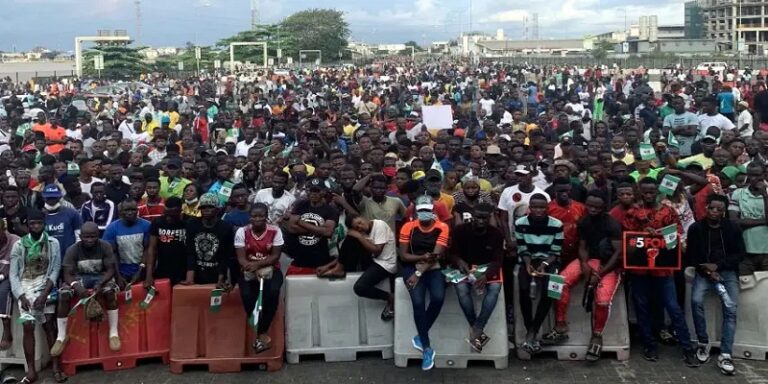
SIX persons who participated in the 2020 #EndSARS protests have been freed by a Lagos State Magistrate Court in Ogba after almost four years in prison.

They are Adigun Sodiq, Salaudeen Kamilu, Daniel Joyinbo, Kehinde Shola, Azeez Isiaka and Sodiq Usseni.

Bolanle Osunsanmi, the court magistrate, discharged them on Thursday, August 23.

The defendants were released after pleading guilty to a reduced charge filed by the Lagos State government on August 22, 2024.

The charge alleged that they engaged in behaviour likely to disrupt public peace, contravening Section 168(d) of the Lagos State Criminal Law of 2015.

The director of public prosecutions, Babajide Martins, said they committed the offence on November 23, 2020, at approximately noon in the Ebute Metta area of Lagos.

Martins told the court that the defendants acted in a way that could have disturbed public order, said to be a punishable offence under the state’s laws.

According to Section 168(d) of the Criminal Law of Lagos State, 2015, the offence of conduct likely to cause a breach of peace carries a penalty of either a three-month imprisonment, a fine of N15,000, or both, at the court’s discretion, considering the case’s severity and circumstances.

Before sentencing, the judge Osunsanmi asked the defendants if they understood the implications of their guilty pleas.

The defendants acknowledged understanding and accepting the terms of the plea bargain agreement as stated in the amended charge.

The prosecution requested that the court impose a sentence consistent with the guilty plea agreement, while the defence lawyer, T.D. Ojeshina asked the court to show mercy and consider a lenient sentence.

The judge after weighing the arguments presented by both the prosecution and defence lawyers, took into account the time the defendants had already spent in custody, indicating that their period of detention would be factored into the sentencing decision.

“In light of the fact that these men have been in prison for nearly four years, I find them guilty as charged but will discharge them as they have already spent more than the required term of punishment,she said.

In October 2020, a protest to stop police brutality, now referred to as the EndSARS protest, was championed mainly by young people against constant harassment and extortion by a police unit, the Special Anti-Robbery Squad (SARS). 

The protest, which shook the foundation of cities like Lagos, Port-Harcourt and Abuja, was positioned as leaderless but came out with demands which included compensation for the families of those who died due to police brutality, the release of arrested protesters, and an increase in the salaries and allowances of police officers. 

 However, On October 20, 2020, a few weeks into the protest, Amnesty International claimed that the Nigerian army and police killed at least 12 protesters at the Lekki toll gate in Lagos in an attempt to disperse the protesters forcefully. 

Following this, the government quickly announced that it had disbanded the SARS unit, and in its place, a new tactical team, Special Weapons and Tactics (SWAT) would be set up.

Hinrich Foundation Award seeks entries for trade reporting

The National Press Foundation (NPF) is accepting applications for the Hinrich Foundation Award for distinguished reporting on trade.

The award recognises exemplary journalism that illuminates and advances the public’s understanding of international business and trade.

Journalists with work that exemplifies the highest standards of journalism and is published by a reputable news organisation can submit entries.

Print, broadcast and digital journalists worldwide can compete for a US$10,000 prize.

Works published or broadcast from September 30, 2023, to September 30, 2024 are eligible for submission.

The deadline for the submission of the application is September 30, 2024. Interested applicants can apply here.

Custody battle: understanding legal concept

0

THE heated exchange between popular Nigerian artiste, David Adeleke known as Davido and the mother of one of his children, Sophia Momodu caused a wave of discussion on social media around child custody.

Both sides have been arguing in court on their ongoing custody battle for their only daughter, Imade.

A few days before his wedding which set the internet a buzz, Davido filed for joint custody of his nine-year-old daughter, Imade and requested unlimited accessibility to her from the court.

In response to the lawsuit, Momodu counter-filed a 102-paragraph affidavit to the complaint through her legal team, Punuka Attorneys and Bimpe’s Anthony Idigbe, explaining why the singer should not be granted joint custody.

She raised worries about Davido’s way of life and previous occurrences that, in her opinion, rendered him “unfit for custody,” including his frequent travels, the influence of “unsavoury individuals” around him and his recent marriage to Chioma Rowland.

The affidavit also detailed times in which Davido reportedly “failed to fulfil his financial responsibilities” and offered proof of her position as their daughter’s primary carer.

The feud on social media between the duo sparked a discussion about child custody and its application under Nigerian law across all social media platforms.

In this report, The ICIR spoke with some Nigerian lawyers explained the custody of a child in Nigeria as regards to the law.

A lawyer, Queenette David explained that the concept of child custody is a peculiar aspect of the Nigerian Judicial system in the sense that the court at all times takes into cognisance the interest of the child/children involved.

She noted that Section 71(1) of the Matrimonial Causes Act (MCA)- one of the legislations that regulate custody of a child in Nigeria, states that “in proceedings with respect to the custody, guardianship, welfare, advancement or education of children of a marriage, the court shall regard the interests of those children as the paramount consideration and subject thereto, the court may make such order in respect of those matters as it thinks proper.

“It goes further to state that the court may adjourn all proceedings until a report has been obtained from a welfare officer on such matters relevant to the proceedings as the court considers desirable, and any such report may thereafter be received in evidence.”

She further noted that, “on the factors the court will consider before making a decision on who to award custody of a child, Section 69 of the Child Rights Act of 2003 provides that the court may:

a) On the application of the father or mother of a child make such order as it may deem fit with respect to the custody of the child & the right of access to the child of either parent, having regard to: The welfare of the child and conduct of the parent and the wishes of the mother and father of the child.

b) Alter, vary or discharge an order made under the paragraph (a) above of the Section 69 (1) of the Child Rights Act on the application of: The father or mother of the child or the guardian of the child, after the death of the father or mother of the child.

c) In every case, make such order with respect to costs as it may think just.

The power of the court under Section 69 (1) of this section to make an order as to custody of a child and the right of access to the child may be exercised notwithstanding that the mother of the child is at that time not residing with the father of the child.

On the issue of the joint custody as requested by Davido in the paragraphs above, a Lagos based dispute resolution lawyer, Alabi Ayokunmi told The ICIR that joint custody does not necessarily mean that contributions/decisions from both parents are on an equal basis, it only means that regardless/whether or not there are any existing irreconcilable difference between both parents, each still acknowledge the joint role of the other party having an equal say on the child’s life, welfare and upbringing, making joint decisions as though both parents are still together.

“The peculiarity of Joint Custody is not in the physical custody or financial care, but rather that both parties have an equal say. That is why the court before granting an order for Joint custody ensures both parties are in co-operation,” he added.

Types of custody explained

The lawyers also explained the different types of custody arrangements that could be awarded by the court.

a. Divided custody: This happens when a child is ordered by the court to live with each parent for a separate portion of the year with reciprocal visitation rights. In such a case, one of the parents is anticipated to have custody of the child and to have total authority over them.

b. Joint custody: This typically occurs when the court orders both parents to share authority and responsibility for the child. This has the effect of involving both parents in the actual sharing of custodial rights over the child as well as decision-making related to the child’s upbringing, including matters of education and health.


READ ALSO:


c. Split custody: Very close to Joint custody is Split custody, whereby one party may have physical custody, while the other attends to the care and other needs mainly by financial contributions.

c. Temporary custody: This happens when one parent is given temporary custody of a child while the other parent awaits the conclusion of separation or divorce proceedings. When a dispute develops during a marital case over the care, welfare, advancement, support, or education of the married children after the primary relief proceedings have been initiated, this power may be used.

d. Third party custody: This typically occurs when the court deems it appropriate to do so. In accordance with section 71(3) of the Matrimonial Causes Act, it may, either permanently or temporarily, place the child in the custody of a third party—someone who is not a party to the marriage—if it deems it to be in the child’s best interests. This order will be made in the event that it is clear that neither party to the marriage is genuinely interested in the child’s welfare and upbringing, that neither party has requested custody, or that the court determines that neither party is a fit and proper parent.

NNPCL states position on OVH Energy’s acquisition allegation

0

THE Nigerian National Petroleum Company (NNPCL) has reacted to allegations over the acquisition of OVH Energy, following the criticism raised by a former vice president, Atiku Abubakar.

The company’s chief corporate communications officer, Olufemi Soneye, in a statement on Thursday, August 22, disclosed what the company highlighted as facts.

A former vice president, Atiku Abubakar, in a statement issued on Monday, August 21 by his media adviser, Paul Ibe, alleged a criminal hijack of the NNPCL by corporate cabals around President Bola Tinubu.

Atiku claimed the group chief executive officer of NNPCL, Mele Kyari, retained his position as compensation for the alleged acquisition of NNPC Retail Ltd by OVH, in which Wale Tinubu, a younger brother to the President, held a 49 per cent stake.

He also alleged the NNPC Retail Ltd—OVH acquisition deal was part of a grand scheme by President Tinubu to integrate his business interests into the country’s public enterprises at the federal level.

In a statement on Thursday, Soneye said, “At the time NNPC Ltd. acquired OVH in 2022, Oando (in which Mr. Wale Tinubu has equity interest), had fully divested its equity in OVH to the other partners – Vitol and Helios.

“Oando began its divestment in 2016, with Vitol and Helios coming in as equity partners, leading to the change of name from Oando to OVH.”

He said, in 2019, Oando fully divested its equity interest in OVH, resulting in Vitol and Helios holding 50 per cent equity interests, respectively.

Upon the acquisition of OVH by NNPC Ltd, both NNPC Retail Ltd. and OVH effectively became subsidiaries of NNPC Ltd, Soneye explained.

However, based on professional advice and sound commercial considerations, NNPC Ltd opted to merge NNPC Retail Ltd into OVH, and thereafter retain NNPC Retail Ltd as the company’s post-merger name.

He further said, “The first step of merging NNPC Retail Ltd. into OVH has been completed and the post-merger renaming as NNPC Retail Ltd. is ongoing.”

Soneye expressed that “contrary to the false alarm raised,” neither Wale Tinubu nor President Tinubu has any interest in the OVH acquisition.

“As a businessman, the former Vice President should know that effectiveness in business leadership is best measured by balance sheets and bottom lines rather than pedestrian considerations.

“We are a commercially focused and profit-driven company managed by professionals who are committed to adding value to the nation. Investment decisions by NNPC Ltd. Management is strictly determined based on commercial viability and national interest,” Soneye maintained.

He added that the NNPCL would resist any attempt to draw its board and management into partisan politics.

“NNPC Ltd. as a commercial entity is devoid of political interest and shall continue to conduct its business full of commitment to national interest and value creation for the benefit of all stakeholders.”

The ICIR reported the House of Representatives was investigating the acquisition of OVH and had interrogated the NNPCL’s boss in September 2023.

The investigation followed a motion,  ‘Need to Investigate the Irregularities and Alleged Corruption in the Nigerian Energy Security Provider, NNPC Retail Limited’, considered by the Lower House.

An ad-hoc committee constituted to investigate the matter, requested the NNPCL to provide it with documents on all financial transactions associated with the acquisition, including payment records and fund transfers, among other details.

At an investigative panel on Friday, September 15, 2023, the NNPCL chief claimed the allegations against the acquisition of OVH were not true.

Meanwhile, in October 2022, the NNPCL announced its acquisition of OVH Energy Marketing Limited’s downstream assets to add what it said was over 380 filling stations to its portfolio.