Home Blog Page 56

 US signals visa restrictions review for Nigeria

0

THE United States Mission to Nigeria has said visa restrictions are not permanent, travel policies remain under review and can be eased if security and identity management standards improve.

In a statement shared on X on Monday, March 30, the mission noted that strengthening systems around screening, vetting, and information-sharing would enhance global safety, suggesting that Nigeria could see changes in its status if it meets required benchmarks.

“Visa restrictions are not permanent, and travel policies are subject to review. Strengthening security and information-sharing standards for screening, vetting, identity management, and immigration make all of us collectively safer,” the statement read.

Analysts said that Washington appears to be encouraging Nigeria to strengthen its systems in areas such as identity management, border control and migration tracking, and data sharing on travellers and security risks, noting that this positions the restrictions less as punitive measures and more as leverage to push reforms.

Indicating that whether the restrictions are eased will likely depend on how quickly Nigeria addresses the concerns raised by US authorities and rebuilds confidence in its travel documentation and security processes.

The development comes amid growing concerns over a travel policy introduced by former US President Donald Trump in December 2025, which placed Nigeria on a list of countries facing partial entry restrictions into the United States.

On December 16, 2025, the White House announced a sweeping expansion of US travel restrictions affecting dozens of countries. Nigeria was not fully banned but placed under partial restrictions, limiting Nigerians’ entry for several visa categories, including B-1/B-2 business and tourism visas, and F, M, and J student visas,  citing concerns over national security, visa overstays, and gaps in identity verification systems.

Nigeria was grouped among about 15 countries facing partial restrictions, while others, mostly in Africa and the Middle East, faced outright bans.

The US government argued that the move was necessary due to “persistent deficiencies” in screening and information-sharing frameworks among affected countries.

Washington cited terrorism threats, religious violence, and instability as part of the broader justification for tightening immigration controls involving Nigeria.

In late December 2025, US forces conducted coordinated airstrikes with Nigerian authorities targeting Islamic State militants in Sokoto State, a few days after recalling several ambassadors across Africa, including its envoy to Nigeria, Richard Mills Jr.

The recall was part of a wider policy shift by the Trump administration affecting nearly 30 diplomats globally, aimed at restructuring the foreign service and installing new envoys aligned with its agenda.

Following his departure in January 2026, the US embassy in Abuja has since been led by a chargé d’affaires, reflecting a temporary downgrade in diplomatic representation.

Opposition gets boost as Kwankwaso officially joins ADC

0

THE former Kano State governor, Rabiu Musa Kwankwaso, has on Monday, March 31, formally joined the African Democratic Congress (ADC) given the opposition the needed boost ahead of the 2027 general elections.

This marked a significant shift in Nigeria’s evolving political landscape ahead of the 2027 general elections.

The development was publicly acknowledged by former Vice President Atiku Abubakar, who shared an image of Kwankwaso holding the ADC membership card. Captioning the post, Atiku wrote: “When men of conviction come together, power trembles. Welcome aboard, @KwankwasoRM.”

Some of the notable dignitaries at the ceremony were the ADC interim chairman, David Mark, former Labour Party presidential candidate Peter Obi, Rotimi Amaechi, John Oyegun, Rauf Aregbesola and Aminu Tambuwal.

Kwankwaso’s defection came days after he announced his resignation from the New Nigeria Peoples Party (NNPP), where he served as national leader and presidential candidate in the 2023 elections.

He had described the move as a “difficult decision,” citing the need for strategic political realignment.

“I seize this opportunity to express my profound gratitude for the honour and privilege of serving as the party’s national leader and its presidential candidate in the 2023 general elections. As a committed and bona fide member of the party, this was not an easy decision to make.”

He said the current political climate informed his decision to leave the party for another platform.

“I extend my deepest appreciation to the national chairman, Ajuji Ahmed and the entire National Working Committee for their steadfast support throughout my time. I also thank the Board of Trustees (BoT), the National Executive Committee (NEC), and all levels of leadership across the party — from the ward to the state level, as well as the legacy members of the party and all followers of the Kwankwasiyya Movement for their dedication and commitment to our shared mission.”

Before his formal registration, the Kwankwasiyya Movement had directed its members nationwide to join the ADC, signalling a coordinated shift. The group said the decision followed consultations and was aimed at advancing democratic values and building a broader political coalition.

It urged members to follow suit across their wards, local government areas, and states.

The ICIR reports that the move is part of ongoing realignments among opposition figures seeking a united front against the ruling party.

Why Zulum sacked commissioners, dissolved cabinet

0

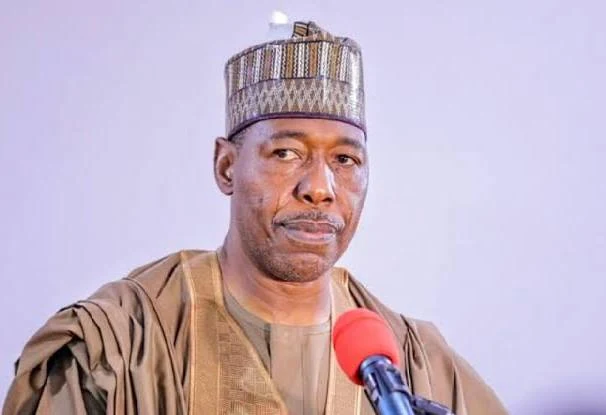
BORNO State Governor Babagana Zulum, a professor, on Monday approved the immediate dissolution of the State Executive Council.

The Secretary to the State Government, Bukar Tijani, explained in a statement that the decision was intended to “provide an enabling environment for any member of the council who may wish to contest elective positions in the forthcoming general elections.”

Following the dissolution, Zulum instructed all commissioners to handover the management of their ministries to the permanent secretaries on or before Friday, April 3.

The governor also expressed gratitude to the outgoing commissioners for their service, “dedication, commitment, and invaluable contributions to the development and service of the people of Borno State.

Zulum’s decision came on the heels of a directive by President Bola Tinubu and some state governors to their cabinet members who are interested in vying for elective offices in the 2027 election to resign, latest by March 31.

Kano, Zamfara, Niger, Cross River and Delta state governors ordered all their appointees seeking election in the coming polls to resign after Tinubu’s order.

Since the directive by Tinubu, none of his cabinet member has resigned. However, reports claimed that the Minister of Foreign Affairs, Yusuf Tuggar, will quit his position in the president’s cabinet any moment from now.

Tuggar, a former of House of Representatives member and Nigeria’s former ambassador to Germany, seeks to become the next governor of Bauchi State after contesting for the office twice and failed.

Nigeria will hold presidential and national assembly elections between January and February 2027.


National convention: INEC recognises Wike-backed PDP leadership amid deepening factional crisis

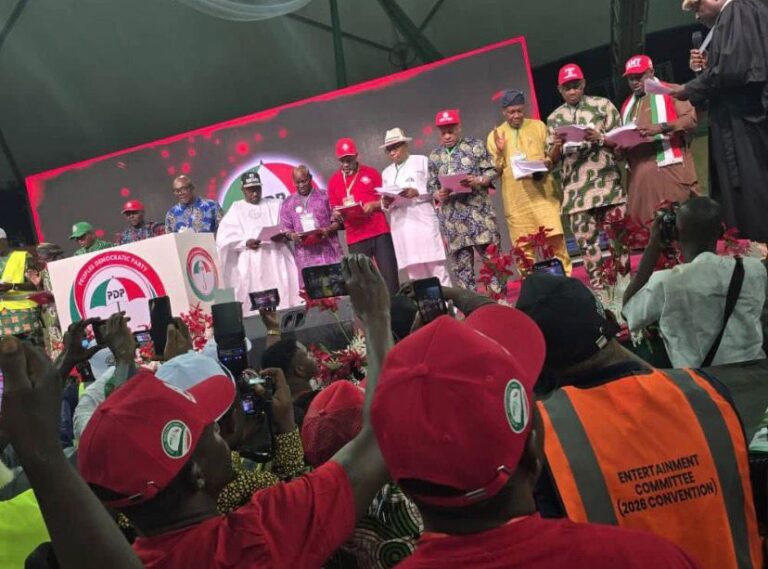
THE Independent National Electoral Commission (INEC) has recognised the faction of the Peoples Democratic Party (PDP) National Working Committee (NWC) aligned with the Minister of the Federal Capital Territory, Nyesom Wike.

INEC reflected the updated leadership structure on its official website on Monday, March 30, listing Abdulrahman Mohammed as National Chairman and Samuel Anyanwu as National Secretary, alongside other national officers said to have emerged from the party’s recent convention in Abuja.

The development followed a disputed national convention held at the Velodrome of the Moshood Abiola National Stadium, Abuja, where a new leadership was elected through consensus after the dissolution of a caretaker committee.

The emergence of the Wike-backed leadership has further polarised the PDP, which has remained divided into rival factions laying claim to the party’s national structure.

A rival bloc led by Kabiru Tanimu Turaki had earlier challenged the legality of the convention, approaching the Supreme Court to stop the exercise and contesting moves by the opposing camp to take control of the party’s national leadership.

The crisis is rooted in a series of court decisions that have shaped the party’s internal struggle over legitimacy and control.

In a judgment delivered on March 9, 2026, the Court of Appeal in Abuja dismissed an appeal filed by the Turaki’s PDP against an earlier Federal High Court ruling that barred INEC from recognising the outcome of the party’s national convention held in Ibadan, Oyo State in November 2025.

The appellate court upheld the lower court’s decision, ruled that the appeal lacked merit, and ordered the Turaki-led faction to pay ₦2 million in costs.

The Ibadan convention had produced a leadership structure led by Turaki, but it immediately triggered internal resistance, particularly from members loyal to Wike, who rejected the outcome and challenged their suspension during the exercise.

The dispute deepened when INEC, in December 2025, declined to recognise the leadership produced at the Ibadan convention, citing existing court orders restraining it from acting on the outcome.

The commission maintained that pending appeals did not amount to a stay of execution and insisted it was bound by subsisting judgments.

In a further development, the Federal High Court in Abuja, in January 2026, nullified the Ibadan convention entirely and barred Turaki and other officials who emerged from it from acting as national officers of the party.

Despite the rulings, the Turaki-led faction insisted that its leadership remained valid and continued to pursue legal remedies to challenge the decisions.

The PDP crisis has its roots in the build-up to the 2023 general elections, when a major rift emerged between supporters of former Vice President Atiku Abubakar and a bloc of governors aligned with Wike over the party’s presidential zoning arrangement.

The disagreement deepened during the party’s presidential primary, where Atiku secured the ticket, defeating other aspirants, including Wike. The outcome triggered internal divisions, with Wike and some allies withholding support during the general election.

The situation contributed to the eventual victory of President Bola Tinubu of the All Progressives Congress (APC), while further weakening the PDP’s internal cohesion.

Tensions escalated after Tinubu appointed Wike as Minister of the Federal Capital Territory, a move that intensified accusations of anti-party activity while he retained membership of the PDP.

Since then, the party has remained fractured, with key figures including governors Seyi Makinde of Oyo State and Bala Mohammed of Bauchi State, alongside other senior members, openly criticising Wike’s role and accusing him of undermining party unity.

Police confirm 14 dead in Jos North attack, as Mutfwang imposes 48-hour curfew

THE Plateau State Government has imposed a 48-hour curfew in Jos North Local Government Area following an attack in Angwan Rukuba community, on Sunday, March 29. 

The state Commissioner for Information and Communication, Joyce Ramnap, announced the curfew in a statement, noting that it would take effect from midnight of March 29 to April 1, 2026.

“Following the tragic security incident that occurred at Gari Ya Waye community, Angwan Rukuba, today, Sunday, 29th March 2026, resulting in the loss of lives, while several others sustained varying degrees of injuries.

“‎The Plateau State Government, in conjunction with security agencies, wishes to inform the general public of the imposition of a 48-hour curfew within Jos North Local Government Area with immediate effect,” Ramnap said.

The ICIR reports that residents shared videos online showing gruesome scenes with bodies lying on the ground. According to eyewitness accounts, the attack reportedly occurred around 8:30 p.m., accompanied by the sounds of gunfire.

The Plateau State Police Command in a statement on Monday, revealed that 12 victims, 10 men and two women, were initially killed, noting that two additional bodies were discovered during follow-up search operations morning, bringing the death toll to 14.

“The Commissioner of Police, Plateau State Command, CP Bassey Ewah psc(++) FCAI, MSPSP, commiserates with the people of  Angwan Rukuba Community Jos North Local Government Area, over the unfortunate attack which took place on March 29, 2026, and claimed the lives of Twelve (12) persons – Ten (10) men and Two (2) women. As at this morning, additional two corpses were found while our men were combing the bushes and trailing the suspects for possible arrests,” the State Police Public Relations Officer, Alfred Alabo said in a statement.

Alabo explained that the victims’ bodies had been evacuated to a mortuary for autopsy, while the process of identifying the deceased was still underway. He noted that the Commissioner of Police, Bassey Ewah, said he personally led a joint security team including tactical units, divisional police officers, and other security agencies to the scene shortly after receiving a distress call.

He said the deployment was aimed at restoring calm and preventing further escalation of violence.

“As we speak, the Police and all other security agencies within the State have organised a joint operation and are currently combing the nearby bushes to ensure that the suspects are arrested or dislodged in accordance with the law. The corpses of the deceased have been evaluated to the mortuary for autopsy and efforts are being intensified to arrest the culprits,” he added.

He also appealed to the public to provide credible information that could aid ongoing investigations, stressing that community cooperation remained vital in tackling insecurity.

“While the identities of the victims are still being verified, the CP assures families of the deceased that investigations are underway to track the perpetrators of this dastardly act and ensure that the law take its course. He therefore calls on all citizens with accurate and useful information to contact the Command immediately through the following GSM numbers: 07059473022, 08038907662, 08075391844, PPRO. 08060545670, PCB, 08067884627, 07068890355,” he added.

Meanwhile, reactions from residents in the area on social media differ from the number of casualties given by the police. Some residents claim dozens of people died in the attack.

Reacting to the situation, the management of the University of Jos on Monday rescheduled examinations earlier scheduled for Monday and Tuesday.

“The Vice Chancellor has directed that all examinations scheduled to hold on Monday and Tuesday will be rescheduled. This is in view of the Sunday night attack by gunmen on residents of Angwan Rukuba and the consequential tensions it has generated in and around the area,” the Deputy Registrar, Information and Public Relations of the university, Emmanuel Madugu said in a statement on Monday.

Madugu urged staff and students to remain vigilant and avoid unnecessary movements, noting that students should report any security breaches to the university’s security unit.

Plateau State have endured recurring waves of violence in recent years, including attacks, kidnappings, and cattle rustling, with residents consistently demanding a stronger security presence.

The ICIR reported in January that nine people were killed during a crossover night celebration in Chigwi village, Vwang District of Jos South Local Government Area, Plateau State.

In 2025, coordinated assaults across several Plateau communities in Bokkos and Barkin Ladi left more than 100 people dead and forced thousands from their homes.

Small performers, big shadows: a new generation expands stage storytelling in Nigeria

NIGERIA’S arts scene is vibrant, anchored by established, content-driven festivals such as ALITFEST, KabaFest, LIPFest, the Ake Arts & Book Festival, and the WRR ‘Words Rhymes & Rhythm’ Poetry Festival.

While these platforms largely spotlight literature, poetry, and spoken word, often through poetry slams, their prominence does not signal a lack of innovation in stage performance. Instead, they exist alongside a quieter but growing wave of experimental theatre.

One visible bridge between these worlds is Dike Chukwumerije’s ‘Simply Poetry’, a hybrid form that blends theatre, choreography, and poetry. Beyond such mainstream expressions, smaller collectives are pushing the boundaries of storytelling in ways still emerging within the Nigerian performance landscape.

Among them is the Hearts Heartist Foundation, led by creative movement artist Bukunmi Olukitibi. Through community-based programmes, the group introduces young people to performance as a tool for expression, confidence-building, and storytelling. Their work took a striking turn with the adoption of shadow theatre; a form rarely explored in Nigeria.

Shadow theatre uses light, silhouettes, and movement to construct layered narratives behind a translucent screen. In 2013, a shadow theatre group, Attraction, became a viral sensation following their performing to Emeli Sandé’s “Read All About It” during their audition on Britain’s Got Talent. They acted a story of a couple who fell in love, marry, and had a child before the father left for war and died. The performance ends with the mother and child at the father’s burial place. Attraction eventually won the competition bringing global attention to shadow theatre.

Attraction Shadow Theatre Group performing to Emeli Sandé’s “Read All About It” during their audition on Britain’s Got Talent.

In ‘Journey of Dreams’, one of the foundation’s productions, children served as the primary performers, transforming their bodies and simple props into shifting visual canvas. The result was a performance that diverged sharply from conventional stage drama.

The staging itself reflected this departure. The performance space was split in three. The audience sat informally on rugs and throw pillows, while the stage hidden behind a large white curtain became a canvas for light and shadow. The third part, behind the stage, is the changing and transition room.  Rather than acting in front of the curtain, the story unfolded through silhouettes behind it, demanding a different kind of discipline from the performers. Beyond memorising lines and choreography, the children had to understand spacing, timing, and the interplay of light and form.

Directed by David Olukitibi, the production was the culmination of weeks of rehearsals involving about 20 children from communities around the Federal Capital Territory, including Dei-Dei, Saburi, Kubwa, Gaduwa, and Utako. For many, it was their first encounter with shadow theatre.

According to Olukitibi, the choice of form was a deliberate attempt to experiment with new storytelling possibilities. The narrative itself reflects contemporary Nigerian realities, exploring themes of unity, conflict, and the consequences of ethnic intolerance. The piece shows how two communities lack of tolerance for each other led to incessant clashes resulting in fatalities, including that of the princess. 

For the children, the experience extended beyond performance. The programme, which spans over 10 weeks, combines theatre with other activities such as tie-dye and environmental projects, creating a holistic creative environment. The aim, Olukitibi explains, is early exposure embedding artistic discipline and confidence at a formative stage.

“It’s a way to engage them from a very early stage,” Olukitibi said, so that by the time they get older, they become professionals. 

Amina Ezekiel, whose two children participated, described the programme as transformative, noting increased confidence, social exposure, and a stronger sense of self-expression.

“The impact is that they are able to stand on their own to be able to defend themselves. It exposes them to the world positively,” she said. 

Another parent, Juliet Michael, said she had never encountered shadow theatre before but was impressed by the production’s creativity and execution.

A scene from Journey of Dreams. Photo: Bamas Victoria

The process was not without its challenges. Diana Liabo, a theatre practitioner from Germany who worked with the group, noted that shadow theatre requires performers to exaggerate gestures and rethink presence, since facial expressions are invisible. Learning to “act with light” proved to be one of the most demanding aspects for the young cast.

For the performers, the format offered unexpected freedom. Solomon Joseph, who played multiple roles, including a warlord, prince, and dancer, explained that quick transitions were possible with minimal costume changes, thanks to the anonymity of silhouettes.

Despite its novelty, creative practitioners believe shadow theatre holds promise in Nigeria. Samson Kukogho, an award-winning poet, novelist and literary promoter, sees potential for the form to become commercially viable. 

“I’ve seen this before”, he told The ICIR, “I think it does have potential to be commercially viable. The problem, as you well know, is the enabling environment for it to thrive.”

He explained that there were many viable art forms in the country “but so little support, from both government and private sector, to encourage anyone to take on their development as a full-time hustle.”

Recapitalisation deadline: 17% credit to businesses sparks heated debate

NIGERIAN commercial banks and deposit money banks’ 17 per cent total lending to businesses, specifically to small and medium enterprises (SMEs), have sparked debates as the Central Bank of Nigeria (CBN) recapitalisation approaches the 31 March deadline.

Available records from the CBN showed that 32 banks have already met the new minimum Capital requirements as of Friday, March 27, 2026.

The exercise has come with no reports of depositor losses, forceful mergers, job losses or erosion of shareholders’ values.

However, economic watchers expressed worry over dwindling lending to small-scale businesses, which are the main drivers of the economy.

The Chief Executive Officer of Centre for the Promotion of Private Enterprise (CPPE), Muda Yusuf, in response to the development, said while recapitalisation has significantly strengthened the capacity of banks to absorb shocks, the question remains on their capacity to support the real economy through business lending.

“Private sector credit as a percentage of GDP in Nigeria is still only about 17% in 2025, compared to the sub-Saharan African average of about 25% and approximately 34% for lower-middle-income countries.

He added that, “Peer economies such as South Africa(57.5%), Mauritius (69.8%) and Cape Verde(66.3%), demonstrate significantly stronger financial intermediation.”

Affirming further lower credit impact, a report from Price Water Coopers (PWC) revealed that Consumer credit in Nigeria remains low at about 7 per cent of total credit, compared to a sub-Saharan African average of 15-25 per cent.

This weak consumer credit environment, analysts say, constrains domestic demand and limits growth prospects across multiple sectors.

Notably, credit to small and medium enterprises (SMEs) is alarmingly low.

“SME credit accounts for only 1% of total credit, compared to an average of about 5 per cent in sub-Saharan Africa. This is particularly troubling given that we SMEs contribute approximately 50% of GDP and over 80%of employment, with an estimated financing gap of N48 trillion, “PWC reports states further.

The low credit for SMEs, analysts say represent one of the most significant weaknesses in Nigeria’s financial architecture.

Meanwhile, Yusuf further highlighted the negative impact of low consumer credit in Nigeria.

A large proportion of bank lending remains short-term in nature. Credit with maturity of less than one year accounts for about 55 per cent of total credit, while long-term credit (above three years) accounts for only about 25 per cent

Sectoral allocation of credit remains skewed, he said, noting that “The services sector accounts for about 55 per cent of total credit, while manufacturing receives about 14 per cent and agriculture just 5 per cent.

This pattern is inconsistent with Nigeria’s aspirations for economic diversification, industrialisation and job creation.

For Nigerian SMEs, weaknesses at any point in this chain can severely limit growth and sustainability. Unfortunately, multiple structural, institutional, and macroeconomic barriers persist and lending to them has not been appealing to businesses,” an economist, Kingsley Obiakor, told The ICIR.

He expressed worry that the high lending rate to the SMEs, despite the lowering inflation rate, is creating problems for businesses.

Small and Medium-Sized Enterprises (SMEs) remain the backbone of Nigeria’s economy, accounting for the majority of employment, business formation, and non-oil economic activity.

However, despite their importance, SMEs continue to face deep-seated challenges along the financial value chain, from capital formation and access to finance, to payments, risk management and long-term investment.

The financial value chain encompasses all financial interactions that support business growth, which are savings, credit, payments, insurance, investment and capital markets.


Nigeria’s Presidential Election in 2027 Could be Uncontested

0

By Chidi Anselm Odinkalu

As Africa approached the turn of the Millennium, the leaders of the continent were well on the way to reaching a consensus that “democracy, good governance, respect for human and peoples’ rights and the rule of law are prerequisites for the security, stability and development of the continent.”

To many, this meant the conduct of elections. Indeed, two decades later, the African Court on Human and Peoples’ Rights would affirm that the only legitimate basis for the exercise of political power on the continent is “regular conduct of free and transparent elections … through universal suffrage.”

Around the same time, the leadership of the continent in the Organisation of African Unity (OAU) was grappling with the meaning of “free and transparent elections.” Senior ambassadors of the OAU reached a decision recommending to the organisation to outlaw “manipulation of the constitution aimed at preventing a democratic change of government” or “any form of election rigging and electoral malpractice, duly established by the OAU or ascertained by an independent and credible body established for that purpose.”

One decade earlier, in 1989, the OAU deployed to observe the referendum on the independence of Namibia, marking the first that the continental organisation would observe an election in Africa. Until then since its creation in 1963, the OAU did not much concern itself with the business of how governments came to power anywhere in the continent. In the first decade of its involvement in election observation, the OAU did not see an election that it did not agree with.

This was a source of comfort for rulers all over the continent. In Nigeria, for instance, Sani Abacha, the four-star general who ruled Nigeria from November 1993, did not have anything against the idea of an election as long as it did not lead anyone into the misapprehension of a contest.

By June 1998, General Abacha was on the cusp of transitioning the country into elective governance. In the election that would have been overseen by him, there were five recognised parties. These were: the Democratic Party of Nigeria (DPN); United Nigeria Congress Party (UNCP); National Centre Party of Nigeria (NCPN); Grassroots Democratic Movement (GDM); and the Congress for National Consensus, CNC.

All five parties shared one presidential candidate in General Sani Abacha.

The death of General Abacha in June 1998 sadly frustrated that plan but opened up a playbook in election management that had, until now, not been seriously revisited in Nigeria.

By the time the All Progressives Congress (APC) came to power in Nigeria in 2015, the African Union (AU), successor to the OAU, had logged about 500 election observer missions around the continent. Over that period, the OAU/AU still did not see an election that it did not approve of.

The AU did, however, evolve some underlying principles to govern elections, which were eventually embodied in a continental charter on democracy, elections and governance. These require the existence of independent election management bodies to manage the elections, such as Nigeria’s Independent National Electoral Commission, INEC. They also require respect for “political pluralism and tolerance”, another way of saying that elections should not exclude competitive candidates.

The AU usually deploys observer missions to these elections. Where there are disputes, the AU also requires an independent judiciary to resolve them.

This is usually done by way of election litigation. Cases around elections can occur before or after the vote. Historically, in Nigeria, this distinction is very important. Regular courts oversee pre-election litigation but only election petition tribunals can adjudicate on disputes over the outcome of an election.

Until 2007, that distinction appeared well settled.

However, following the 2007 cycle of elections, the Supreme Court awarded the governorship election in Rivers State to Rotimi Amaechi who was not even on the ballot in the vote. He had been manipulated out of the party primaries in an act of party political impunity. In response, the Supreme Court hijacked the election outcome on his behalf by judicial fiat in a case that had in fact originated as a pre-election dispute.

That case raised the significance of pre-election disputes in Nigeria and consolidated the transfer of the right to vote in Nigeria from citizens to the judges. By 2019, the Supreme Court awarded the Governorship election in Zamfara State to a well-beaten candidate after disqualifying the winner in a pre-election dispute and precluding his party from the contest by refusing to order a re-run.

Under colour of law, African governments have increasingly used the courts to re-make elections as largely free of contest. Six months ago, for instance, the president of Côte d’Ivoire, Alassane Ouattara, used the courts to ban all competitive candidates from the presidential election. When the result was announced, the election management body awarded him some 90% of the votes.

This past week, retired President of the Court of Appeal, 82 year-old Isa Ayo Salami, floated the idea of such un-contested elections for Nigeria in remarks that simultaneously disparaged his former colleagues in the judiciary while also querying why they sanctioned the candidacy of Peter Obi of the Labour Party in the 2023 general elections.

It is worth recalling that in 2011, a committee of the National Judicial Council chaired by former President of the Court of Appeal, Umaru Abdullahi, considered a consolidated set of petitions concerning the conduct of Isa Ayo Salami in the Sokoto State governorship election in 2007. One of the complaints included “call logs that throughout the month of September up to October 2010 when the judges wrote and delivered the judgment in Ekiti,…. Justice Salami,…. and the person he claimed to be Justice Salami’s said agent….were in close telephone contact by voice or SMS with the counsel to [Action Congress] candidate and official of the party.”

The Committee in the end did not have to make a finding on this but the allegations of close affinity between the former judge and the party that is now the All Progressives Congress (APC) are not new.

Isa Ayo Salami has floated a kite which could consummate an Abacha-style election under a ruse of law. The Electoral Act 2026 creates ample room for such mischief. Among other things, the Act, which became law on 19 February, requires all parties to maintain “a digital register of its members containing the name, sex, date of birth, address, State, Local Government, ward, polling unit, National Identification Number and photograph in both hard and soft copies.”

The logic of keeping this register in hard copy defies understanding. The staggering cost and logistics – not to mention waste – of doing so should not detain us at the moment. The Act goes further: the parties must submit the register (presumably both hard and soft copies) to the INEC at least 21 days before party primaries, which must occur between 23 April and the end of May. In effect, the parties, which have until now not been required to have digital registers, must create them in less than two working months. The cost of failure to do this is will be disqualification of their candidate(s) from the contest.

In 1979, the Federal Electoral Commission tried to disqualify Nnamdi Azikiwe of the Nigeria Peoples Party (NPP) and Aminu Kano of the Peoples’ Redemption party (PRP) from the presidential elections. The courts saved them.

Nigeria’s judiciary has evolved but not necessarily for the better in the intervening period. There is ample room for pre-election judicial mischief in the 2026 Electoral Act, which the courts could easily use to preclude competitive candidates from the contest.

It will be surprising if this is not deployed to block competitive candidates from the presidential election in January 2027. The irony is that the president whose claim to fame is his advocacy against military rule, could be the person who eventually appropriates the methods of Nigeria’s maximum military ruler to make himself the only competitive candidate in an uncontested election in 2027.

A lawyer and a teacher, Odinkalu can be reached at chidi.odinkalu@tufts.edu

 

Political realignment: Kwankwaso dumps NNPP

0

A former Governor of Kano State, Rabiu Kwankwaso, has resigned from the New Nigeria Peoples Party with immediate effect.

Kwankwaso, who was the party’s presidential candidate in the 2023 general election, announced his resignation in a statement issued on Sunday, citing the need for strategic realignment in the country’s political space.

“I wish to formally announce my resignation from the New Nigeria People’s Party (NNPP) with immediate effect,” he said.

The former governor described his exit as a difficult decision, noting his longstanding role in the party.

“I seize this opportunity to express my profound gratitude for the honour and privilege of serving as the party’s national leader and its presidential candidate in the 2023 general elections. As a committed and bonafide member of the party, this was not an easy decision to make.”

He said the current political climate informed his decision to leave the party for another platform.

“I extend my deepest appreciation to the national chairman, Ajuji Ahmed and the entire National Working Committee for their steadfast support throughout my time. I also thank the Board of Trustees (BoT), the National Executive Committee (NEC), and all levels of leadership across the party — from the ward to the state level, as well as the legacy members of the party and all followers of the Kwankwasiyya Movement for their dedication and commitment to our shared mission.”

He added that collaboration with party members would continue despite his exit.

“We shall continue to collaborate and work together towards charting a better and more prosperous future for our dear nation.”

The development comes a day after The ICIR reported that the Kwankwasiyya Movement had directed its members nationwide to join the African Democratic Congress, signalling a major political shift by supporters of  Kwankwaso.

In the earlier statement, the movement said Kwankwaso had concluded arrangements to align with the party and would formally register, while urging members to follow suit across their wards, local government areas, and states.

Economic challenges, reforms reasons for my low key birthdy, says Tinubu

0

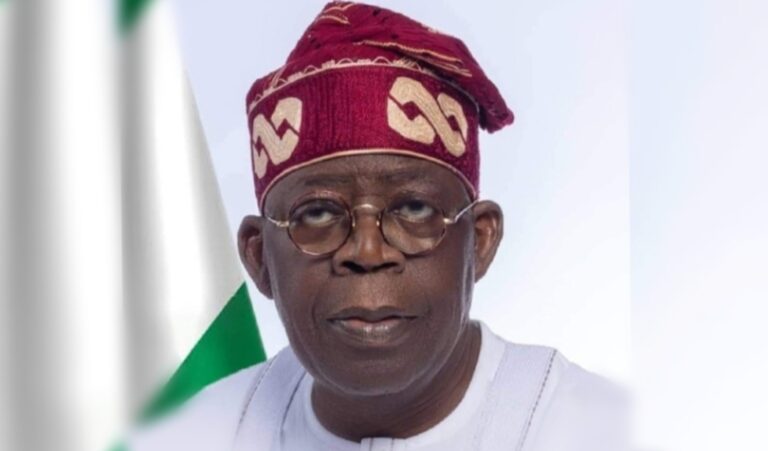
PRESIDENT Bola Tinubu on Sunday said he deliberately chose to mark his 74th birthday quietly in line with the current mood of the nation, acknowledging ongoing economic challenges linked to his administration’s reforms.

In a personally signed message to Nigerians, Tinubu said, “Consistent with my tradition of marking my birthday in line with the mood of the nation, I resolved to observe this year’s birthday low-key.”

The President noted that the country had faced significant difficulties since the commencement of key reforms but expressed optimism about gradual improvements.

“As I mark this special day, I am reminded of the challenges we’ve faced since we initiated our reforms. I’m glad that our sacrifices have not been in vain, as we can see a glimmer of light at the end of the tunnel, despite the temporary setback caused by the ongoing Middle East crisis,” he said.

Tinubu also used the occasion to thank Nigerians for their support and solidarity, stating that recent gains recorded by his administration were a collective effort.

“The credit for the positive outcomes we have achieved does not belong solely to me, our Renewed Hope team, or our government. We achieved the gains together.”

He added that the country would overcome its challenges with continued public support.

President Bola Tinubu assumed office in May 2023 and has since implemented a series of economic reforms, including the removal of fuel subsidies and foreign exchange policy adjustments, which his administration says are necessary to stabilise the economy.

The policies, however, have triggered rising living costs, sparking public concern and debate over their short-term impact.

In recent months, the government has maintained that key economic indicators are improving, citing declining inflation figures, increased investor confidence, and trade surpluses.

The administration argued that these developments signal early gains from the reforms, even as many Nigerians continue to grapple with high food prices and cost-of-living pressures.