Home Blog Page 590

Sir Harry Evans Global Fellowship for Journalists calls for application

Reuters and Durham University are accepting applications for the Sir Harry Evans Global Fellowship in Investigative Journalism.

fellowship honours celebrated British-born journalist, editor, and author Sir Harry Evans, one of the pioneers of modern investigative journalism.

The annual global fellowship will provide the opportunity for an exceptional early-career journalist to receive a nine-month fellowship at Durham University.


During the fellowship, the journalist will undertake an investigative project from inside a Reuters newsroom in London, New York, or Toronto.

The fellow will also be mentored by top Reuters editors in the field while being overseen by Durham University and have access to university academics and research resources.

Early-career journalists around the world are eligible for an investigative journalism fellowship.

The application deadline is July 15.

To apply click here.


Botched marriage: Minister to partner Niger Speaker to empower 100 orphans

0

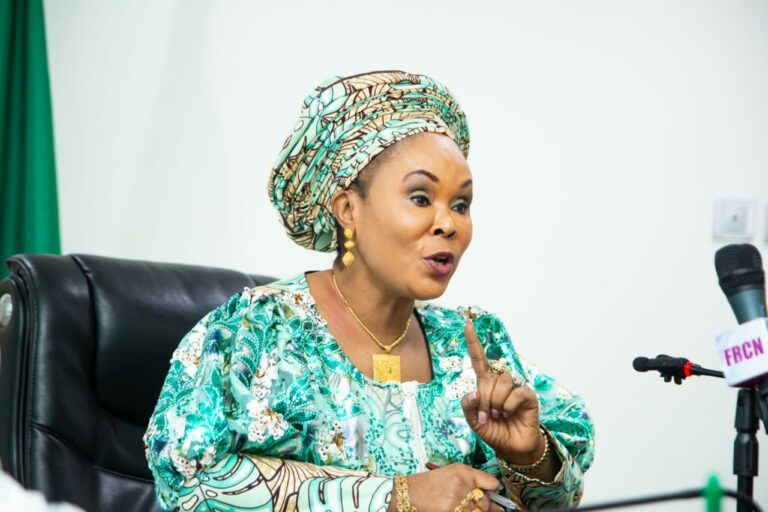
THE Minister of Women Affairs Uju Kennedy-Ohanenye and the Speaker of the Niger State House of Assembly Abdulmalik Sarkindaji have agreed to collaborate on the empowerment of 100 girls orphaned by terrorism in the state.

The girls were earlier scheduled to be married off in a mass wedding ceremony to be sponsored by the Speaker.

The ministry’s head, press and public relations Grace Njoku who spoke with The ICIR on Friday, May 17, 2024, said Sarkindaji and the Emir of Kotangora visited the minister and they agreed to collaborate on how best to empower the girls.

She said this was contrary to reports that the minister withdrew the suit filed against the Speaker over the planned marriage.

“Even though the suit is there, that is not her emphasis now. The emphasis is that those people from the other angle are standing with her. So it is a collaboration to help those girls, even some outside the 100, in that same local government.

“The marriage will not go on immediately. When they sit and discuss and see the girls, hear from them, then they will know those that are interested in marriage, those that want to go to school. Then a better arrangement will come out,” she said.

Sarkindaji announced plans to marry off the 100 orphans as part of his empowerment project on Friday, May 10, a move that was met with stiff resistance by the minister.

The orphans whose ages were not disclosed were said to have lost their parents to banditry in the  Mariga Local Government Area of the state.

Ohanenye immediately filed a petition with the Inspector-General of Police (IGP) Kayode Egbetokun and sought a court injunction to halt the marriage plan.

Sarkindaji kicked back, accusing the Minister of overstepping her bounds. He eventually backtracked and suspended the marriage.

However, the Muslim Rights Concern (MURIC) released a statement on Thursday, May 16, 2024, urging the minister to let the ceremony go on as planned.

Six years after ban, scavengers still pose security threat to FCT

0

Six years after scavengers, otherwise known as ‘baban bola’ were banned from moving around residential neighbourhoods in the Federal Capital Territory (FCT) due to security concerns, residents still deal with thefts and violent attacks perpetrated by members of this group.

On Wednesday, May 15, 2024, the FCT police public relations officer (PPRO) Josephine Adeh disclosed in a statement that a group of scavengers were arrested for attempting to steal valuables and carrying out violent attacks on residents of Byazhin, Kubwa.

According to the PPRO, violence erupted in the area after the group of scavengers waylaid passersby and attempted to dispossess them of their valuables.

“A courageous lady resisted, leading to a violent attack by the hoodlums, resulting in severe machete injuries. The FCT Police Command swiftly responded to the situation and arrested several suspects currently being interrogated to ascertain their complicity or otherwise,” the statement read.

According to a report, three people, including two women and a boy, died in the clash after a scavenger attempted to steal from a woman but was overpowered and beaten up by residents.

The scavenger returned to the neighbourhood with a group of men wielding weapons and killed the woman he had attempted to rob and two others.

This is not the first time the activities of scavengers in the FCT have raised security concerns for residents.

In 2018 the FCT administration restricted scavengers to approved dumpsites over these issues.

The FCTA Secretary, Social Development Secretariat at the time, Ladi Hassan, also said public utilities had been vandalised in robbery incidents traced to scavengers.

“Baba bolas are to operate only at the Gousa, Karshi, Bwari, Gwagwalada, Kwali, Abaji and Kuje approved dumpsites as opposed to moving from one neighbourhood to another collecting waste objects across the city of Abuja,” Hassan had said.

However, inadequate enforcement of these restrictions has left residents at risk of violent attacks, thefts, or other security issues.

In 2021, The ICIR reported that scavengers could still be spotted roaming around neighbourhoods in the FCT, including the city centre, Abuja.

Similarly, in another report in 2022 by this organisation, it was learnt that the baban bola group and others were responsible for the theft of several missing manholes on highways in the city.

“Some scavengers masquerade as baban bola, but it is a lie. They peep through people’s compounds and break into homes, especially in the remote communities in the FCT,” a resident Omoniyi ‘Tayo said.

Omoniyi averred that he had seen the scavengers mobilise their members at night to attack whoever offended them.

“I saw them in Zamani along the Airport Road. There was a time in 2022 when baban bola descended on the people of the village because the residents were opposed to their heinous activities.

“There have also been reports of attacks by the group in the Lugbe area of the FCT. They are in several villages and constitute a security threat wherever they operate. Most times that residents have fought them, they have often seen valuable items in their bags which they stole,” Omoniyi added.

The Abuja Environmental Protection Board (AEPB) confirmed to The ICIR that the ban on the group was still in place and efforts were being made to enforce it.

The ICIR reports that until recently, Abuja had almost become unsafe for residents as activities of criminals, including kidnappers, thieves, once-chance syndicates and others escalated in the city.

As of the time the FCT former police commissioner Sadiq Idris Abubakar, assumed office on December 23, 2022, residents were already panicking because of the extent of rising cases of insecurity in the city.

But the FCT residents appear to have heaved a sigh of relief and enjoyed some peace after its incumbent minister, Nyesom Wike, and commissioner of police, Benneth Igwe, came hard on the criminals.

In addition to other strategies to contain criminalities in the city, including treating one-chance syndicates as criminals, Wike promised the police N20 million to apprehend two notorious kidnappers terrorising the FCT.

The police arrested the kidnappers within days after the minister announced his bounty.


Tinubu approves ₦3.3trn to clear outstanding power sector debts

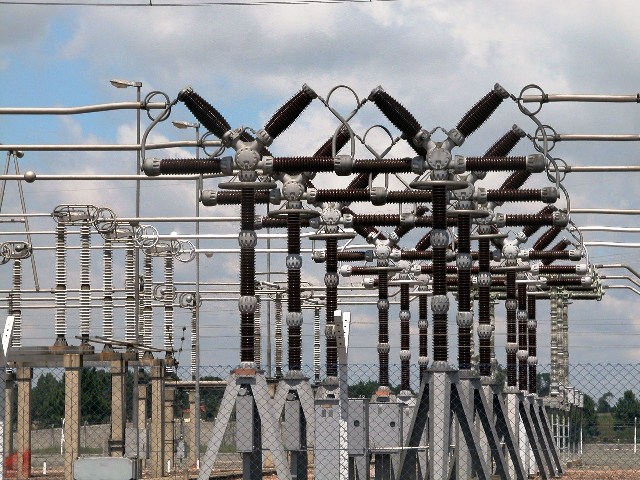
THERE are high hopes for improved power supply as the President Bola Tinubu-led administration has approved a payment plan to clear outstanding debts owed by the power sector, estimated at N3.3 trillion.

The Minister of Power, Adebayo Adelabu, disclosed this on Thursday at the ongoing 8th Africa Energy Marketplace in Abuja.

Adelabu said the government would liquidate the N1.3 trillion owed to power generation companies and the $1.3 billion debt to gas companies.


Read Also:


In the past, the gas generation companies had threatened force majeur and informed of plans to shut down their services to Nigeria’s power sector due to debts owed them.

However, the minister said the government was prepared to clear its outstanding debts, adding: “The N1.3 trillion debt to power-generating companies would be paid via cash injections and promissory notes, while about $1.3 billion owed to gas companies will be paid via cash and future royalties.”

The minister said the federal government had commenced payment of the cash part of the N1.3 trillion debt owed Gencos and concluded plans to settle the second part via promissory notes within two to five years.

He said: “Mr President has approved the submission made by the Minister of State Petroleum (Gas) to defray outstanding debts owed to gas supply companies by power generation companies.

‘’The payments are in two parts: the legacy debts and the current debts. For the current debt, approval has been given to pay about N130 billion from the gas stabilisation fund which the Federal Ministry of Finance will pay.”

According to him, the payment of the legacy debt will be made from future royalties in exchange for income in the gas sub-sector. This will allow the companies to enter into firm contracts with power generation companies, he said.

He added, “For the power generation companies, the debt is about N1.3 trillion and I can also tell you that we have the consent of the President to pay, on condition that the actual figures are reconciled between the government and the companies.

“This we have successfully done and it is being signed off by both parties now. The majority has signed off and we are engaging to ensure that we have 100 per cent sign-off.

“The debt will be paid in two ways, immediate cash injection and through a guaranteed debt instrument, preferably a promissory note. This assures the companies that in the next three to five years, the government is ready to defray these debts.”

MRS Oil offers N46.29bn payoff to shareholders

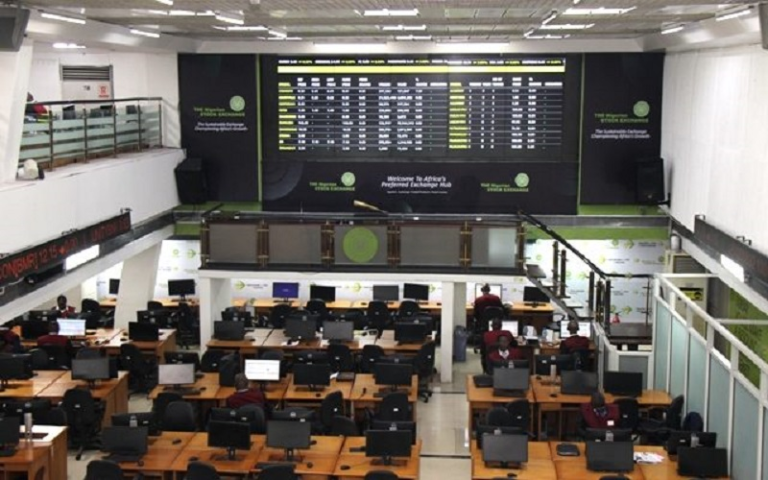
THE Board of MRS Oil Nigeria Plc has offered to pay N46.29 billion as exit consideration to shareholders following voluntary delisting from the Nigerian stock market.

The company disclosed this in an updated statement to the Nigerian Exchange Limited (NGX) and the investing public on Thursday, May 16.

It proposed to delist 342,884,706 ordinary shares at an exit consideration of N135 per share to shareholders.

“The board of directors of the company, having undergone a strategic reassessment of the company’s status, particularly considering regulatory obligations, administrative and compliance costs, emerging opportunities, evolving market conditions and the trajectory of projected long-term financial and operational growth, proposes to de-list the issued shares of the company, comprising a total of 342,884,706 ordinary shares from the daily official list and trading on the main board of the NGX,” the company stated.

MRS Oil noted that the NGX’s rules for delisting equity securities from its daily official list required the company to make adequate provisions to purchase the interest of dissenting shareholders.

It said, “In accordance with the requirements of the NGX, the share price at which the interest of such shareholders shall be bought, shall not be less than the highest price at which the shares of MRS Oil traded over the last six months immediately preceding the date on which the notice of the EGM was issued, being N135 per share.”

The ICIR reported that MRS Oil had scheduled an extraordinary general meeting (EGM) for May 21 to request shareholders’ approval for its voluntary delisting from the Nigerian stock market.

After the EGM, dissenting shareholders may elect to receive the exit consideration between June 25 and July 1, 2024, the company said.

It hinted that it would set aside sufficient funds in a custody/escrow account to be domiciled with a registrar or custodian from which the exit consideration shall be paid to relevant dissenting shareholders.

Besides other steps to be followed, the voluntary delisting would only become effective upon shareholders’ consideration and approval of the board’s resolution, it added.

“The exit consideration shall be settled by way of electronic bank transfers to the respective bank accounts provided by dissenting shareholders in the election form.”

The ICIR reports that MRS Oil operates in the Nigerian downstream oil and gas sector and started operating in the country in 1913 under the name Texaco.

In 2023, NGX recorded the delisting of companies worth over N264.92 billion as seven companies delisted their stocks and about six others wanted to delist.

The companies included Union Bank of Nigeria, Courteville Business Solution, Capital Hotels, Ardova, Global Spectrum Energy, Sterling Bank, and Consolidated Hallmark Insurance. However, the last two companies were relisted as holding companies.

The national chairman of the Progressive Shareholders Association of Nigeria (PSAN), Boniface Okezie, told The ICIR that the delisting of companies from the Nigerian stock market had been a call for concern.

He suggested a law be enacted to stop voluntary delisting while attracting more companies to list on the exchange.

He had also raised concern about the Securities and Exchange Commission withholding of investors’ payoffs (exit consideration) from delisted companies of which the Olam International Limited payoff to acquire Dangote Flour Mills Plc had dragged for many years.

FG opens students loan portal May 24

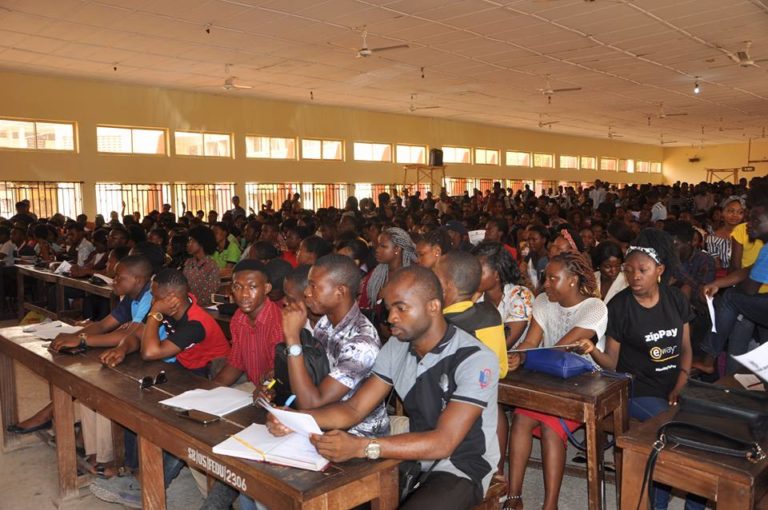
THE federal government has announced May 24, 2024, as the official date to open the student loan portal for applications.

This was contained in a statement by the management of the Nigerian Education Loan Fund (NELFUND), NELFUND, signed by its spokesman, Nasir Ayitogo, on Thursday, May 16.

Led by its managing director, Akintunde Sawyerr, NELFUND is the body saddled with the responsibility of managing and disbursing loans to interested students.

The ICIR reported how implementation of the Student Loan Act has continued to drag, since Tinubu first signed its bill into law in June 2023 to enable students in need to access interest-free loans to pursue their education in any tertiary institution in the country.

While implementation continued to drag, Tinubu later wrote to the Senate on March 14, seeking a repeal of the Act and its re-enactment, which birthed the Student Loans (Access to Higher Education) Act (Repeal and Re-Enactment) Bill, 2024, which Tinubu signed into law on April 3.

Although the bill is touted to ease access to tertiary education for Nigerian students, members of the Academic Staff Union of Universities (ASUU) described it as an attempt by the government to abandon funding education in public universities.

Meanwhile, NELFUND has given the new date for the opening of the portal as 24 May.

The NELFUND’s statement reads in part: “The management of Nigerian Education Loan Fund (NELFUND) led by its managing director, Mr Akintunde Sawyerr is thrilled to announce the 24th of May, 2024 as the official date for the opening of the portal for student loan applications.

“This marks a significant milestone in the commitment of President Bola Ahmed Tinubu (GCFR) to fostering accessible and inclusive education for all Nigerian students. Through the portal, students can now access loans to pursue their academic aspirations without financial constraints. The portal provides a user-friendly interface for students to submit their loan applications conveniently.”

NELFUND further urged eligible students of tertiary institutions and accredited skill acquisition centres nationwide to seize this opportunity to invest in their future and contribute to the nation’s growth and development.

While encouraging intending applicants to seek more information and assistance through the agency’s verified social media handles to avoid being duped by fraudulent persons, the agency said the portal could be accessed via www.nelf.gov.ng, 

Wale Edun clarifies concerns over N20trn pension fund for infrastructure

0

THE Minister of Finance and the Coordinating Minister of the Economy Wale Edun has clarified concerns over the federal government’s planned withdrawal of N20 trillion from the pension fund for infrastructure projects.

Reacting to the backlash that the planned withdrawal of the fund generated, Edun said the government would comply with the established rules governing the fund.

In a statement issued on Thursday, May 16, in Abuja, Edun noted that the pension industry, similar to other sectors in the financial industry, is strictly regulated by law.


Read Also:


He explained that the federal government did not plan to surpass these laws, emphasising that the government was committed to protecting workers’ pensions.

It would be noted that public backlash greeted the federal government’s plan to use the N20 trillion in workers’ pension funds for infrastructure projects.

Edun in further response to the concerns said: “It has come to my notice that stories are making around that the federal government plans to illegally access the hard-earned savings and pension contributions of workers. Nothing could be farther from the truth.

“The pension industry, like most of the financial industries, is highly regulated. There are rules. There are limitations about what pension money can be invested in and what it cannot be invested in.”

According to the minister, the federal government has no intention whatsoever to go beyond those limitations and go outside those bounds which are there to safeguard the pensions of workers.

“What was announced to the federal executive council was that there was an ongoing initiative drawing in all the major stakeholders in the long-term saving industry, those that handle funds that are available over a long period to see how, within the regulations and the laws, these funds could be used maximally to drive investment in key growth areas,” Edun said.


READ ALSO:


In addition, the Minister said the recommendation to ‘unlock’ some of the latent funds in the country such as pension funds was only an ongoing conversation in the financial sector among the “best and brightest”.

He said the conversation revolved around exploring avenues for funding that would lead to growth, creation of jobs, and alleviation of poverty.

Moreover, Edun said the government had no attempt to increase the risk of the pension funds or allow their investment to be less safe.

Arresting journalists over cyberstalking illegal – Falana

0

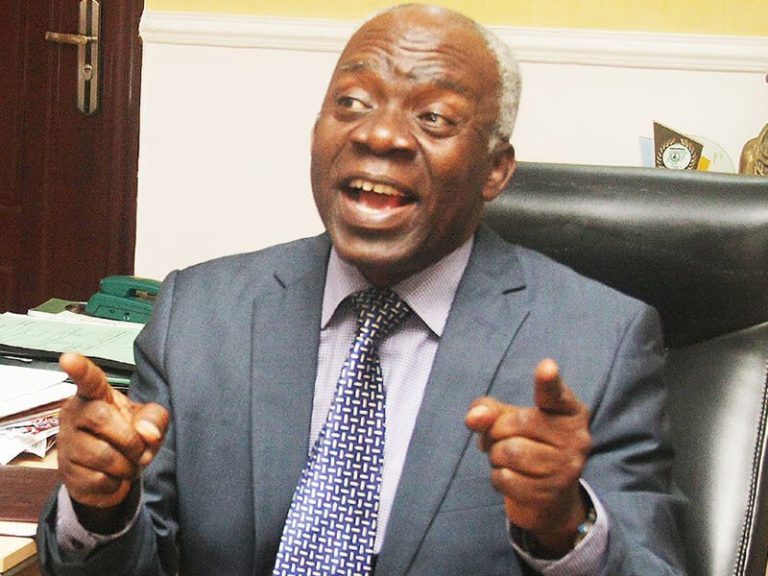
FOLLOWING the invitation of The ICIR management and one of its reporters, Nurudeen Yahaya Akewushola, by the Nigerian police for alleged violation of the Cybercrime Act, human rights lawyer Femi Falana has said that arresting journalists based on cyberstalking and criminal intimidation charges is unlawful.

Falana, in reaction to the police invitation received by The ICIR, on May 16, stated that although Section 24 of the Cybercrime Act (2015) initially criminalised cyberstalking, insult, causing annoyance, sending offensive messages, and criminal intimidation, the Nigerian government has repealed the section and replaced it with Section five of the Cybercrime Amendment Act.

Falana, a senior advocate, who described arresting journalists on cyberstalking charges as illegal, said the provisions of Section 24 of the Cybercrimes (Prevention and Prohibition) Act, 2015, that the police rely on have been amended by the Nigerian government.

“In the cases of Laws and Rights Awareness Initiative (Suit No. ECW/CCJ/APP/53/18) and Socio-Economic Rights and Accountability Project (Suit Laws and Rights Awareness Initiative (Suit No ECW/CCJ/APP/09/19), the Ecowas Court declared section 24 of the Cybercrime Act 2015 illegal and directed the federal government to amend the section to make the law conform with the fundamental right of Nigerian citizens to freedom of expression guaranteed by section 39 of the Constitution of the Federal Republic of Nigeria,1999 and article 9 of the African Charter on Human and Peoples Rights (Ratification and Enforcement) Act, Laws of the Federation of Nigeria 2004.

“In line with both judgments of the Ecowas Court, the government of Nigeria has repealed section 24 by removing the provisions relating to ‘cyberstalking’, ”insult’, ‘causing annoyance’, ‘sending offensive messages’, and ‘criminal intimidation’ from the Cybercrime Act 2015 and replaced same with section 5 of the Cybercrime Amendment Act,” Falana said.

Quoting Section five of the Cybercrime Amendment Act, Falana noted that any person who ‘knowingly or intentionally’ sends a pornographic or false message via computer systems or networks, aiming to disrupt law and order or pose a threat to life, commits an offence and may face a fine up to N7,000,000, imprisonment for up to three years, or both.

The human rights lawyer, further argued that the Police and other security agencies lacked the power to arrest, detain and prosecute Nigerian citizens for the ‘so-called offences’ earlier listed in subsection 24 of the Cybercrime Act 2015.

“From the foregoing, it is crystal clear that the Police and other security agencies lack the power to arrest, detain and prosecute Nigerian citizens for the so- called offences of ‘cyberstalking’, ”insult’, ‘causing annoyance’, ‘sending offensive messages’, and ‘criminal intimidation’. Consequently, all pending cases filed on the basis of the repealed aspects of section 24 of the Cybercrime Act 2015 should be discontinued without any further delay, Falana added.”

Earlier, The ICIR had expressed concerns over the invitation letter to Akewushola and its managers by the Nigeria Police Force National Cybercrime Centre (NPF-NCCC) in Abuja.

The letter, dated April 16, 2024, required the journalist to report to the Centre on Wednesday, April 24, 2024, three weeks before the letter was delivered to The ICIR by the Police on Wednesday May 15.

Part of the letter reads, “The Nigeria Police Force National Cybercrime Centre is investigating a case of cyberstalking and defamation of character in which the above-named person featured prominently.

‘In view of the above, you are requested to interview the Director of the Nigeria Police Force National  Cybercrime Centre (NPF-NCCC) plot 625 Mission Road, Diplomatic Zone, Central Business District, Abuja through CSP Omaka Udodinma Chukwu on Wednesday 24th April 2024. Call 08067854241 on your arrival. Your cooperation in this regard will be highly appreciated, please.”

One of the concerns raised by The ICIR was that there were no details of the petition which led to the investigations for cyberstalking and defamation of character, as this would have helped the reporter better prepare for the interview with the Police.

The invitation is most likely about an investigation done by Akewushola and published by The ICIR which linked two past Inspectors-General of Police (IGPs) to corruption.

Continued attack on journalists 

Despite the constitutional mandate given to journalists to hold the government and its agencies to account, laws such as the Cybercrimes Act have been used to intimidate journalists and stifle press freedom.

On Wednesday, May 1, a journalist with the Foundation for Investigative Journalism (FIJ) Daniel Ojukwu was abducted by officials of the Nigerian Police and detained at the NPF-NCCC for ten days.

Before his abduction, former editor of First News Segun Olatunji was also abducted and detained for nearly two weeks by operatives of the Nigerian military before being released.

On Friday, May 3, The ICIR reported how the latest data on the 2024 World Press Freedom Index by Reporters Without Borders (RSF) placed Nigeria as one of West Africa’s most dangerous and difficult countries for journalists.

This followed Nigeria’s placement at 112th out of 180 countries where journalists are regularly monitored, attacked, and arbitrarily arrested.

Nigeria’s power sector to benefit ‘significantly’ from AfDB’s $1bn fund, Bank says

THE African Development Bank (AfDB) has disclosed plans to invest a significant portion of its $1 billion policy-based operation fund in Nigeria’s power sector.     

The vice president of Power, energy, and climate change at the AfDB, Kevin Kariuki disclosed this at the 8th edition of the Africa Energy Market Place, held in Abuja on Thursday, May 16.

According to him, the continental bank is aware of the extent of the challenges in the Nigerian power sector, ranging from addressing the electricity access deficit to rehabilitating and upgrading the power system to meet a load of 20 gigawatts(GW) which is believed to be the true demand, for Nigeria’s over 200 million people.


Read Also:


“Hence, we must have all our hands on the deck, empowered by the new Electricity Act, 2023. At AfDB we put our money where our mouth is, as is manifested by the fact we will be shortly seeking board approval for a $1 billion policy-based operation (PBO) with a significant energy component aimed at supporting the ongoing power sector reforms triggered by the new Electricity Act.

“The timing of the AEMP and the proposed policy-based lending focused on the energy sector is not coincidental. We will finance the policy recommendations to actualise the expected outcomes from the National Integrated Electricity Policy and Strategic Implementation Plan,” he added.

He disclosed that the bank was financing a study for the Transmission Company of Nigeria (TCN) to explore the deployment of battery energy storage systems to enhance grid stability and facilitate greater uptake of renewable energy generation.

“Nigeria is part of our flagship United States 20 Billion Desert to Power Initiative, which aims to generate 10,000 MW of solar power across 11 countries in the Sahel region to provide power to 250 million Africans. This portends great promise for increasing the proportion of renewable energy in Nigeria’s energy mix.

“Through this multi-prong approach of supporting policy development, financing critical power sector infrastructure, and providing technical assistance and capacity building, we strongly believe that our partnership with the federal government will ensure a viable and sustainable power sector will yield the desired result,” he said.

Earlier in his remarks, the chairman of the Nigerian Electricity Regulatory Commission (NERC)  Sanusi Garba, said that the major challenge with the Nigerian power sector was the insolvent state of the distribution companies.

He stressed that the implementation of the Electricity Act required a strong political will and decisions that impact the wider public.

“And the challenge we have today is the ability of major stakeholders to feed the nation he said. and state exactly what the challenge is so that we can collectively address the issue,”

The ICIR reported the insolvency of the distribution companies which informed the recent acquisition of its majority stake by some banks through a restructuring effected by the Bureau for Public Enterprise (BPE).

Why Nigerian youths should take up breakdancing – US dancers

0

UNITED States (US) sports envoys have encouraged Nigerian youths to take up breakdancing to improve their dancing skills and enable them to compete in global sporting events, including the Olympics, where it will be featured. 

The envoys, Macca Malik and Jacob Kujo stated this at an event to raise awareness on the sport in Abuja on Wednesday, May 15.
The event was hosted by the Public Diplomacy Section of the U.S. Embassy, Abuja, in collaboration with the FAME Foundation.

Read also:

Paris 2024: D’Tigress to face Canada, France, Australia in group stage 

D’Tigress grab 2024 Olympic ticket over Senegal 

Table Tennis: Race to 2024 Olympics intensifies as WTT Contender serves on in Lagos


Addressing newsmen, Malik said breakdancing gives young Nigerians a platform to showcase their skills and creativity, adding that it could also make them represent their nation at global sporting events.
 She highlighted Nigeria’s rich cultural legacy and encouraged young women to get involved in the dance sport.

“As an officially recognised Olympic sport set to debut at the upcoming Olympic Games, breakdancing’s dynamic movements and creativity present a significant opportunity for Nigerian youth,” she said.

Similarly, Kujo encouraged the Nigerian government to invest in breakdancing as a sport, adding that developing a strong breakdancing culture in Nigeria would boost the nation’s place in global sports.

“We urge the federal government of Nigeria to consider investing in breakdancing infrastructure and training programmes. The substantial positive impacts of such endeavours will be felt in youth empowerment, skill enhancement, and international representation are undeniable,” he said.

Malik, also known as B-Girl is a top female competitor in the breakdance. She
brings visibility to women in a male-dominated sport while Kujo, also known as Lyons represents the people with hearing impairment in the sport.

The executive director of the FAME Foundation, Aderonke Ogunleye-Bello, appreciated the US sports envoys for giving Nigerian breakdancers substantial guidance on how to succeed and called on the federal government and stakeholders to provide facilities that support dancers’ ambitions.

“We believe that through this training, Nigeria can progress towards meeting international standards in breakdancing and prepare its youth for Olympic participation. The encouragement from the U.S. sports envoys reminds us of the transformative impact of investing in diverse artistic expressions and athletic pursuits.

“While the Nigerian breakdancers may not partake in this year’s Olympic competition, this training equips them to compete effectively in future events,” she said.

The Minister of Youth and Sports Development, John Enoh, represented by Orok Effanga, pledged the ministry’s commitment to promoting and facilitating the sport’s growth in Nigeria.

The event had a series of breakdancing performances from different groups including the Abuja breakdance community and other individual performances.

Break dancing was recently introduced in Olympic sports and will make its debut on the world’s stage at the 2024 Paris Olympics set to take place from July 26 to August 11, 2024.