THE Special Adviser to President Bola Tinubu on Information and Strategy, Bayo Onanuga, has accused Nigerian media of creating a false impression that Nigeria is overwhelmed by insecurity, despite thousands of killings and kidnappings recorded across the country since the current administration came into office.
Speaking during an in on Arise Television on Tuesday, June 24, Onanuga argued that media reports often portray insecurity as though it has engulfed every part of Nigeria.
“The problem is that the media in Nigeria, they’re even creating the problem. The way they’re reporting security is as if the entire country is consumed,” he said.
His remarks came amid persistent attacks by bandits, insurgents, armed herders and other criminal groups across several states.
Data analysed by The ICIR show that at least 19,980 people have been killed across Nigeria between 2023 and April 2026.
The figures, compiled from the Mass Atrocities Tracker, indicate that violence linked to insurgency, banditry, communal clashes and separatist activities has continued to claim lives despite repeated assurances from the government that security is improving.
A breakdown of the data shows that 4,416 people were killed in 2023. The figure rose to 5,353 in 2024 and increased further to 6,518 in 2025. Between January and April 2026 alone, at least 3,693 people had already been killed.
The data further show that kidnapping remains widespread.
Between 2023 and April 2026, at least 12,362 people were abducted across the country. While 2,653 kidnappings were recorded in 2023, the figure nearly doubled to 5,171 in 2024. In 2025. At least 3,033 people were kidnapped, while another 1,505 abductions were recorded in the first four months of 2026.
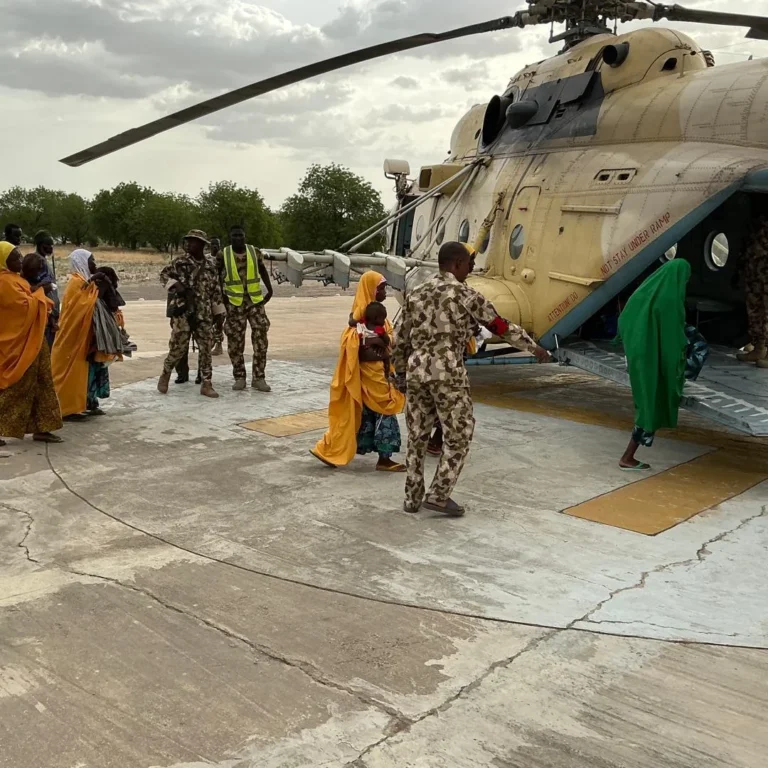
Recent incidents have heightened concerns about the country’s security situation. On May 15, gunmen abducted dozens of pupils from Government Day Junior Secondary School in Askira-Uba Local Government Area of Borno State.
On the same day, armed men attacked three schools in Oyo State, kidnapping pupils and teachers in incidents that revived fears of mass school abductions.
However, Onanuga insisted that while security breaches occur, Nigeria is not under siege.
“Don’t let people frighten you that the entire country is under siege. It’s not. There are security breaches,” he said.
The presidential aide argued that many Nigerians continued to travel safely across the country and cited examples of individuals undertaking long-distance road journeys without incident.
He also suggested that many attacks occur at night, adding that said there were longstanding security advisories against night travel.
“Any time I read about either a kidnap or an attack somewhere, sometimes, I look at the time. I say, wow, it happened 8 p.m., it happened 9 p.m., sometimes 1 a.m. A long time ago, the police told people to stop travelling at night,” he said.
The TV host further presented to Onanuga insecurity data from Beacon Security and Intelligence Limited and the Armed Conflict Location and Event Data Project (ACLED), which reportedly showed that terror-related fatalities linked to terror groups increased by 4.6 per cent between 2015 and 2025.
The figures appeared to contradict Tinubu’s recent claim that insecurity-related fatalities had declined by 81 per cent.
Defending the government’s position, Onanuga said the Presidency relied on statistics supplied by the Office of the National Security Adviser.
“The data we’re offering is the data provided by the Office of National Security Adviser. That’s the data we use. Whoever is compiling that, where did they get it from?, he queried.
When informed that the alternative figures were compiled by internationally recognised conflict-monitoring organisations, he questioned their accuracy.
“They may be wrong. The data we have is the data from the Office of National Security Adviser. You cannot say the data is wrong and only this one is right,” he added.