THE Federal Capital Territory (FCT) Police Command said on Tuesday, April 16, that it would investigate the alleged attack and counterattack launched by the factional leaders of the National Association of Nigerian Students (NANs).
The attack, as observed by The ICIR, resulted in serious injury to at least three members who were believed to be affiliated with the organisation.
Some yet-to-be-identified persons seriously assaulted one of those injured.
One of the victims is currently undergoing surgery in an Abuja hospital, The ICIR can confirm.
In a video shared by the media aide of the Kwara State governor, Ibraheem Abdulateef, on his X page on Tuesday, April 16, some people with cutlasses ran into a peaceful setting of some group of people and attacked them.
They also destroyed an 18-seater bus with the pictures and name of one of NANS’ factional leaders, Chibuzo Obi Pedro, who was tagged as the organisation’s president on the bus.
The attack, which happened on Monday, April 15, in Area 8, Abuja, took place shortly after the factional president, Pedro, left a meeting they held regarding their inauguration.
Calling on the attention of the Police Force public relations officer, Olumuyiwa Adejobi, Abdulateef wrote: “ Hello esteemed PPRO@Princemoye1, Are you aware of the attacks and counter-attacks factional NANS leaders have been launching against one another in Abuja? A young man from Kwara was caught in the latest at Zone 8 and was butchered to near death in broad daylight. It is crazy.
“The Force should invite the leadership for questioning before we have a further breach of law and order and a possible loss of life. This is criminality on the loose.”
Meanwhile, reacting to the post, the FCT police command, in a statement signed by its spokesperson, Josephine Adeh, said the police were aware of the incident and were looking into the matter.
The statement reads: “The FCT police command is aware of the news making rounds about the recent attacks and counterattacks launched by the factional NANS leaders against one another in the Federal Capital Territory and therefore wishes to state that the police command has commenced an investigation into the matter and is ensuring no disruption of peace being enjoyed by residents is allowed. Further development would be communicated.”
This incident has, however, generated public outrage as many Nigerians called on the authorities to wade into it and bring those behind it to justice.
Some also called on the authorities to suspend or reform the student body, citing its transformation into a tool of Nigerian politicians.
The ICIR gathered that following its last year’s elections, NANs has had two leadership camps fighting for recognition.
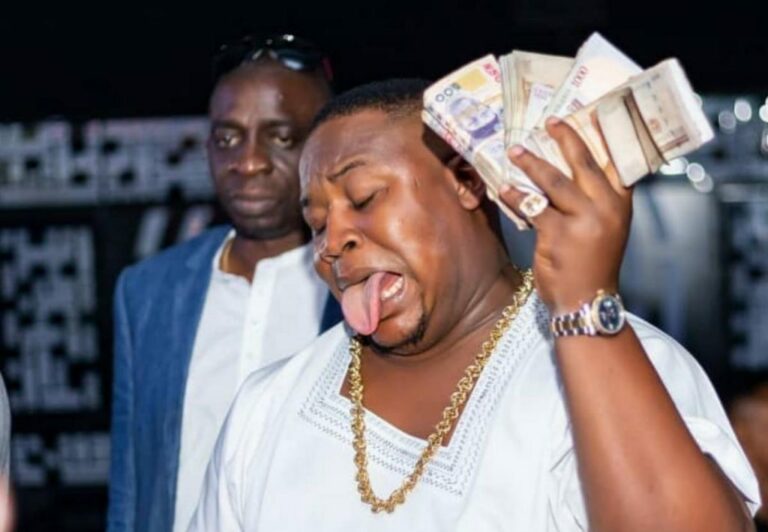
THE Economic and Financial Crimes Commission (EFCC) is set to arraign a popular Nigerian celebrity, Pascal Okechukwu, better known as Cubana Chief Priest, for allegedly spraying and mishandling the Nigerian currency – naira- at a social event.
He will be arraigned on Wednesday, April 17, 2024, before Kehinde Ogundare, a justice of the Federal High Court, Lagos State.
Okechukwu is facing three counts of allegedly spraying and tampering with the naira at a social event, contrary to the provisions of the Central Bank Act of 2007.
The case was filed on April 4 by EFFC’s prosecutor, Rotimi Oyedepo (SAN), along with seven other lawyers representing the commission’s chairman.
Count one of the case alleged: “That you, Okechukwu Pascal on 13th Feb. 2024, at Eko Hotel, within the jurisdiction of the court, while dancing during a social event, tampered with funds in the denomination of N500 issued by the Central Bank of Nigeria by spraying same for two hours, and you thereby committed an offence, contrary to and punishable under Section 21(1) of the Central Bank Act 2007.”
In count two, it was alleged: “That you, Okechukwu Pascal, sometime in 2020, in Lagos during a social event, tampered with funds in the denomination of N500 issued by the Central Bank of Nigeria by spraying same for two hours, and you thereby committed an offence, contrary to and punishable under Section 21(1) of the Central Bank Act 2007”.
Also, count three of the offences against the accused alleged: “That you, Okechukwu Pascal, sometime in January 2024, in Lagos during a social event, tampered with funds in the denomination of N500 issued by the Central Bank of Nigeria by spraying same and you thereby committed an offence, contrary to and punishable under Section 21(1) of the Central Bank Act 2007”.
This is coming barely two weeks after the EFCC arrested and arraigned controversial cross-dresser Idris Okuneye, also known as Bobrisky, for naira abuse.
He was arrested on the night of Wednesday, April 3, in Lagos State.
Consequently, the Federal High Court, Lagos State, sentencedBobrisky to six months imprisonment without the option of a fine on Friday, April 12.
In her ruling, the judge, Abimbola Awogboro, said the judgment would serve as a deterrent to others fond of abusing the naira.
Selective arraignment?
Meanwhile, The ICIR reported that several videos have surfaced on social media platforms, including X, Instagram, and TikTok, showing public officials, monarchs, and some Nigerian celebrities spraying the naira notes in public.
As of the time this report was filed, the EFCC and related agencies had not arrested any of them.
Some of these videos and reports exposed the Governor of Niger State, Umaru Bago, a lawmaker from Borno State, Ibrahim Abuna, and the Minister of Arts, Culture and Creative Economy, Hannatu Musawa abusing the naira.
The CBN had said it would prosecute the minister, but she has continued as a cabinet member in President Bola Tinubu’s government without an arrest.
Another video showed how the Olu of Owode-Egba, Ogun State, Aremo Sowemimo, sprayed naira on a musician during an event. The ICIR reported that the monarch was suspended for two months by his aggrieved fellow monarchs but has not been arrested by relevant government institutions and prosecuted for it.
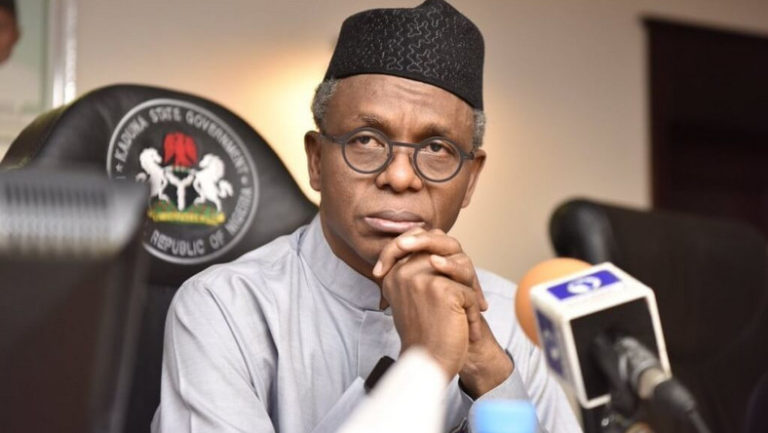
The Kaduna State House of Assembly has set up a committee to investigate all finances, loans, and contracts awarded under former Governor Nasiru el-Rufai’s administration.
The committee has been tasked with examining loans, grants, and project implementation from 2015 to 2023, during which El-Rufai served as the state governor.
The chairman of the House Committee on Information, Henry Zacharia, confirmed the development on Tuesday, April 16.
Zacharia said the eight-member fact-finding committee was set up during Tuesday’s plenary “to investigate the state’s financial dealings under the former governor.”
The committee is also expected to investigate the activities of Jimi Lawal, the former governor’s senior aide and investment counsellor.
The State Assembly ordered the committee to invite notable individuals, such as previous speakers of the 8th and 9th Assembly, commissioners of finance, former managing directors of Kaduna Markets, commissioners of budget and planning, and commissioners of finance.
During a town hall meeting on Saturday, March 30, the state Governor, Uba Sani, lamented the huge debt he inherited from El-Rufai.
The governor claimed he inherited about $587 million from the former governor.
He also alleged that his government inherited N85 billion and 115 contract liabilities from the previous administration.
He, however, noted that his administration was working to find a way around the situation.
“Despite the huge debt burden of $587 million, N85 billion, and 115 contractual liabilities sadly inherited from the previous administration, we remain resolute in steering Kaduna State towards progress and sustainable development. We have conducted a thorough assessment of our situation and are sharpening our focus accordingly.
“It gladdened my heart to inform you that despite the huge inherited debt on the state to date, we have not borrowed a single kobo,” Sani said.
He also said the devaluation of the naira made it more challenging to pay back the debt.
He noted that a huge chunk of the federal allocation was being channelled towards debt servicing, leaving the state with inadequate funds to pay salaries.
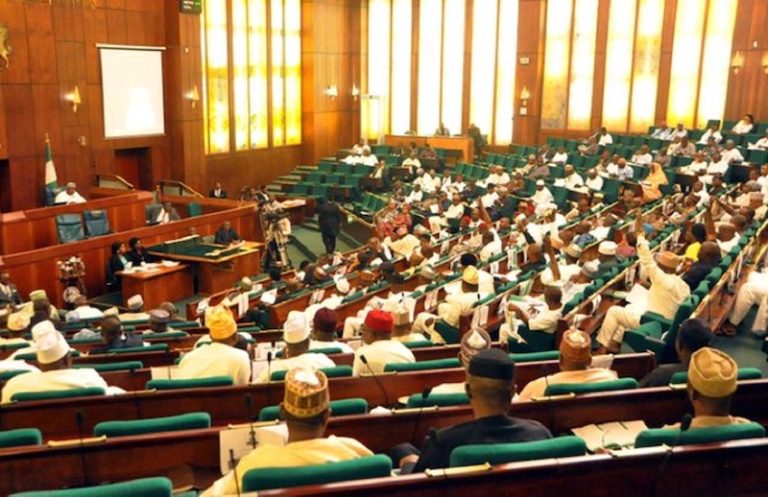
THE Public Accounts Committee of the House of Representatives has set a 21-day deadline for the Securities and Exchange Commission (SEC) and the Fiscal Responsibility Commission (FRC) to reconcile the unremitted operating surplus of N45 billion, documented from 2007 to 2021.
The committee chairman, Bamidele Salam, announced its decisions following its findings on the audit report, which highlighted the unaccounted funds during the committee’s public hearing on government revenue leakages.
The committee summoned the SEC after the FRC reported that the SEC had not responded to its 2022 report, which revealed a liability of N45.013 billion for unremitted funds.
Addressing the committee, Bello Aliyu, an FRC representative, said the FRC wrote to the SEC in December 2022 seeking its reaction to its findings but did not get a response over 15 months later.
“We have written SEC on December 20, 2022, intimating the commission of our computed liability for the period 2007–2021, and the said liability amounted to N45,013,010,229 only.
“Up till now, we have not received any response from them, so as far as we are concerned, they have accepted the liability, and that is what we have recorded against the commission,” he said.
He further stated that from the period till now, the SEC had made no effort to reconcile the figure outlined in the report.
Aliyu noted that, according to the law, any remaining balance of an operating surplus must be transferred to the federal government’s consolidated revenue fund within one month of the statutory deadline.
While reacting to the allegation, the Director General of SEC, Lamido Yuguda, said the commission had reconciled its operating surplus with the Office of the Accountant General of the Federation (OAGF).
“I think if the FRC had actually done a little more work, they would have really seen from the OAGF all the efforts that we have made to reconcile the surplus figure from 2007 when the FRC came into being,” Yuguda told the committee.
On his part, the committee chairman noted that the FRC was empowered by law to ensure that all agencies and government corporations listed in its enabling Act behave responsibly regarding remittances and revenue management.
“I don’t know why SEC is more comfortable with the Accountant General Office, and I don’t want to insinuate anything, but I want to assure the FRC that from now on, all that will stop.
”We are going to ensure that all agencies make FRC the major body of government that should ensure compliance with the provisions of the Act,” Salam said.
THE International Press Centre (IPC) has condemned the harassment of its Executive Director Lanre Arogundade by officials of the State Security Service (SSS).
This was contained in a statement signed by the IPC Press Freedom Officer Melody Akinjiyan on Tuesday, April 16.
According to the statement, SSS officials accosted Arogundade at the Murtala Mohammed International Airport (MMIA) on Thursday, April 11.
“The incident of Thursday April 11, while Mr. Arogundade prepared to board a late-night Air France Flight to Berlin, Germany to participate in the respective general meetings and conferences of the African Freedom of Expression Exchange (AFEX) and the International Freedom of Expression Exchange (IFEX) would be the umpteenth of such unwelcome development.
“Mr. Arogundade is a renowned journalist, advocate for social justice and democracy, former Chairman of the Lagos State Council of Nigeria Union of Journalists and former President of the National Association of Nigerian Students. We believe these roles and positions should not warrant his unending torment by the DSS,” the statement read.
Arogundade had been held down by SSS officials for 40 minutes at the airport on Thursday over claims that his name was on their watch list.
According to the statement, he said that two years ago, the SSS Director-General Yusuf Magaji Bichi said his name had been taken off the Service’s watch list during a meeting with members of the International Press Institute (IPI).
“Mr. Arogundade additionally informed IPC management that the senior DSS official to whom he was referred threatened to bar him from traveling unless he produced his old passports, describing the request as ‘bizarre and ridiculous.’
“IPC holds that the persistent harassment violates Mr. Arogundade’s right to freedom of movement while undermining basic democratic principles,” the statement read.
The organisation urged the Director-General and officials of the SSS, especially those stationed at the MMIA to desist from further harassing Arogundade.
Recently, a Nigerian journalist, Segun Olatunji, had been abducted by the military and detained in an unknown location for nearly two weeks.
His detention was linked to a report, “Revealed: Defence Chief running office like family business – Public Interest Lawyers,” which was published by his organisation.
The IPI, Nigeria Guild of Editors (NGE) and NUJ representatives, Mojeed, Iyobosa Uwugiaren and Chris Isiguzo, respectively, during a press briefing, disclosed that efforts to find out his location and secure his release initially proved abortive, despite the involvement of top government officials.
Both men are among the many journalists who have been attacked or harassed, especially by state actors in Nigeria.
The ICIRreported that at least 39 journalists were harassed by state and non-state actors in 2023 alone.
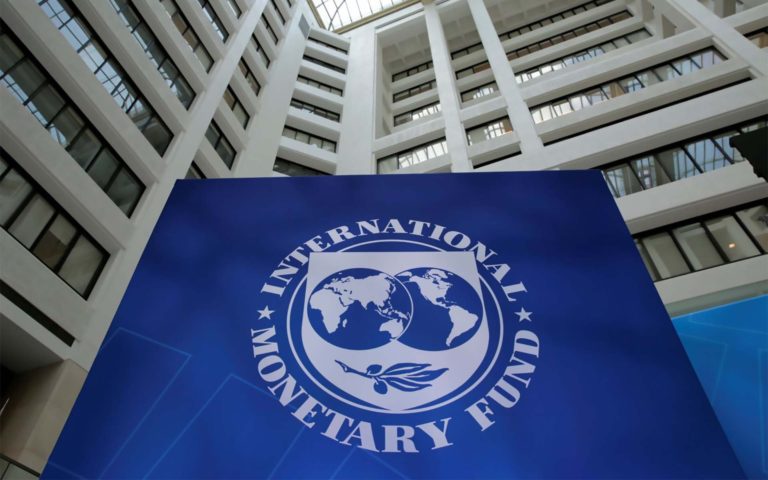
THE International Monetary Fund (IMF) has upgraded Nigeria’s economic growth to 3.3 per cent in 2024 from 3.0 per cent.
The Bretton Wood Financial Institution gave the upward review in its latest forecast released today, April 16.
In its January 2024 World Economic Outlook, IMF downgraded the country’s economic growth forecast to 3.0 per cent from a 3.1 per cent projected in October 2023.
In 2023, the IMF estimated the country’s economy to grow by 2.9 per cent amid various macroeconomic headwinds.
However, in its last report, ‘World Economic Outlook, April 2024: Steady but Slow: Resilience amid Divergence,’ the IMF stated that Nigeria’s economy would grow to 3.3 per cent this year but slid back to 3.0 per cent in the coming year.
The ICIR reports that the latest forecast represents a 0.3 per cent growth in 2024. However, Nigeria’s economy is expected to slide to 3.0 per cent in 2025.
In the sub-Saharan Africa region, growth is projected to rise from an estimated 3.4 per cent in 2023 to 3.8 per cent in 2024 and 4.0 per cent in 2025 as the adverse effects of earlier weather shocks subside and supply issues gradually improve.
Global growth, estimated at 3.2 per cent in 2023, is projected to continue at the same pace in 2024 and 2025.
According to the IMF, high borrowing costs, withdrawal of fiscal support, longer-term effects from the COVID-19 pandemic, Russia’s invasion of Ukraine and the conflict in Gaza and Israel, weak growth in productivity, and increasing geoeconomic fragmentation are factors affecting the global economy and could raise interest rate expectations and reduce asset prices.
Amid high government debt in many economies, a disruptive turn to tax hikes and spending cuts could weaken activity, erode confidence, and sap support for reform and spending to reduce risks from climate change.
An IMF team recently visited the Nigerian Minister of Finance, Wale Edun, the Central Bank Governor, Olayemi Cardoso, other key government officials, representatives from subnationals, the private sector, and civil society, and flagged the country’s critical challenges.
“With about eight per cent of Nigerians deemed food insecure, addressing rising food insecurity is the immediate policy priority,” the team urged.
The team also pointed out that the approved targeted social safety net programme, which is expected to provide cash transfers to vulnerable households, needed to be fully implemented before the government could address costly, implicit fuel and electricity subsidies in a manner that would ensure the protection of low-income households.
Despite the CBN tightening monetary policy to curb the surging inflationary pressure, a recent release by the National Bureau of Statistics showed that headline inflation rose to 33.2 per cent in March, the highest since 1996, and food inflation to 40.01 per cent.
Since this year, the CBN has raised the monetary policy rate by 600 basis points in its last two consecutive meetings, held in February and March. However, the measure has not helped to contain the rising inflation figure that the IMF anticipated.
THE Kano Public Compliant and Anti-Corruption Commission (PCACC) has revealed that it filed fresh corruption charges against Abdullahi Ganduje, the state’s former governor and the current All Progressives Congress (APC) chairman.
The PCACC chairman, Muhuyi Magaji Rimingado, said this on Channels Television’s Sunrise Daily programme on Tuesday, April 16.
Rimingado described what the agency had made public about Ganduje as “a tip of the iceberg.”
He said the commission was investigating a case whereby N51.3 billion local government funds were directly taken from the government coffers and sent to other individuals under the former governor’s watch.
Rimingado claimed that the Ganduje administration embezzled N1 billion from state coffers at the end of its term in May 2023, and the funds were transferred to Bureau de Change operators rather than being used for designated road maintenance.
“We have piled a series of cases. We have a case whereby N1 billion in April last year (2023) was removed from government coffers under the allocation of renovating 30 roads in the metropolis, and it was taken away and sent to bureau de change.
“We have a case of N4 billion whereby it was sent from the consolidated revenue account of Kano State to an agricultural company. All these cases are before the court,” he said.
Rimingado, who said he was being perceived as a “stubborn person” in some places, maintained that although the court had declared money laundering a federal crime, the commission was still entitled to investigate corruption and poor management claims against the Ganduje government.
The anti-graft chair declared that there should be no sacred cows in the state’s fight against corruption.
“And that is how it is supposed to be. Anybody that is charged before the court of law, let him go and answer,” he said.
On Wednesday, April 17, 2024, Ganduje will be arraigned before the Kano High Court on charges of bribery, diversion, and mismanagement of funds.
These charges include the alleged acceptance of bribes of N1.38 billion and $413,000.
There has been pressure on Ganduje, who was the governor of Kano from May 2015 to May 2023, to step down from his role as the All Progressives Congress (APC) National Chairman.
The ICIR reportedon Monday that the party leaders suspended Ganduje in his ward at the state’s Dawakin Tofa Local Government Area.
The party’s legal adviser at the ward, Halliru Gwanzo, made this known while addressing journalists in the state on Monday, April 14.
The Kano State Government had dragged Ganduje, his wife, Hafsat Umar, and five others to court over eight corruption charges, amounting to billions of naira during his eight years in government.
The charges were contained in a charge sheet dated April 3, which also attached a list of 15 prosecution witnesses.
According to the lawsuit, the other respondents are Abubakar Bawuro, Umar Abdullahi Umar, Jibrilla Muhammad, Lamash Properties Ltd, Safari Textiles Ltd, and Lesage General Enterprises.
Meanwhile, in March, a Federal High Court in Kano State ruled that PCACC lacked the power to investigate Ganduje over a dollar bribery video.
The court presided over by Abdulahi Liman, stated on Tuesday, March 5, that the offence was a federal one, and only the Attorney General of the Federation (AGF) and the Economic and Financial Crimes Commission (EFCC) could prefer charges against Ganduje.
Liman emphasised that there were limitations to the Kano anti-graft agency’s power to probe the former governor.
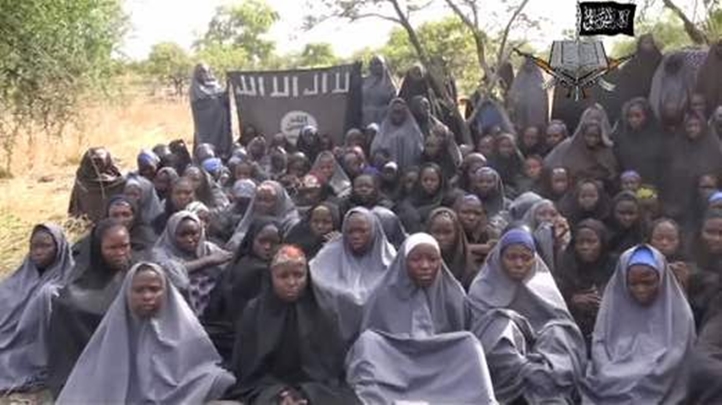
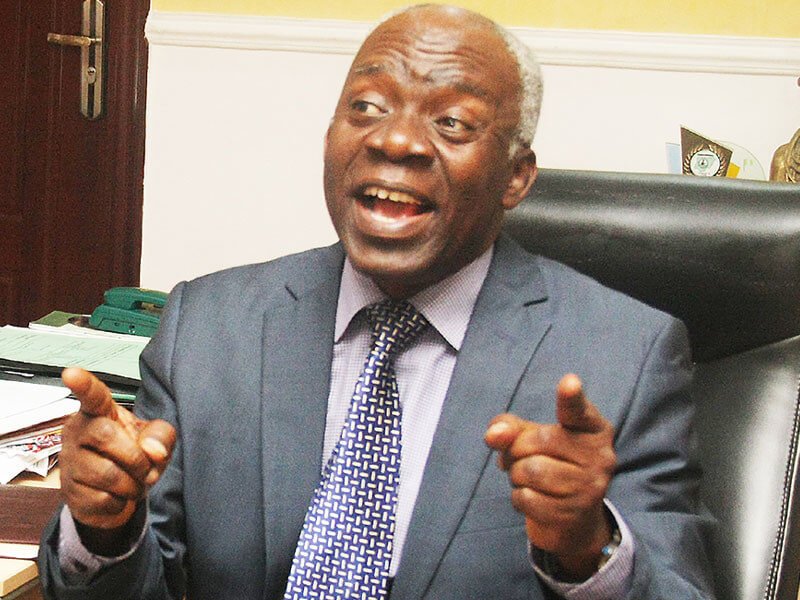
HUMAN Rights lawyer Femi Falana has called for renewed protests and rallies across Nigeria to remind the government of the imperativeness of rescuing the abducted Chibok girls from their captors.
The call comes on the heels of the celebration of the 10th anniversary of the girls’ abduction from their school in Borno State.
Falana, a senior advocate, said this while participating in a programme to mark the 10th anniversary of the girls’ abduction from the Government Girls Secondary School in Southern Borno state on the night of April 14, 2014.
According to the lawyer, Nigerians from all walks of life must continue to mount pressure on the government to look for the girls.
“Now that we are marking the 10th anniversary, the challenge before the movement, other stakeholders, interested Nigerians, and the human rights community is to see how we can revive the rallies and protests, remind Nigerians that these girls are still missing, remind the entire world that these girls are still missing, and see what can be done to pressurise the government to devise means of locating them.
Femi Falana (SAN)
“Initially, we were told, once government can take over the Sambisa forest, we are going to be able to secure the release of these girls. We must go back to that harassment which I will call harassment of the government by gathering either on a weekly basis or on a monthly basis and let the world know that these girls are still missing,” the fiery lawyer stated.
According to Falana, when the unfortunate incident occurred ten years ago, the military hierarchy claimed that the armed forces knew where these girls were, but they didnt want any harm to occur to them. For that reason, they were going to find a way to get them released, but unfortunately, that was not the case.
He said that even when some foreign government offered to assist in locating the girls, the government arrogantly maintained that it could ensure that they were brought home safely.
He added that to divert attention at a stage, former President Goodluck Jonathan’s government set up a panel of enquiry to help the government make suggestions on how the girls could be located.
“I was a member of that panel, and I declined to serve because it is not the business of civilians to make suggestions on how to secure the release of innocent, unharmed girls who were kidnapped in their school; it is the duty of the government to ensure the safety and security of not just of citizens but everybody living in Nigeria.
“We have a duty to continue to mount pressure on the government to look for these girls. Under the law, somebody will be presumed dead after seven years if he can not be located but we are all convinced that these girls are alive and that the government did not do enough and the government has not done enough to secure the release of these girls ,” he claimed.
He argued that one of the most horrendous actions ever taken by a Nigerian government was the attack on the Bring Back Our Girls movement in Abuja.
According to him, the government initially felt disturbed over the movement’s activities and court judgement backing its efforts that it had been reminded of its responsibility and sent troops to attack the movement.
“The government was disturbed and not satisfied with the judgement. Instead of filing an appeal, the government sent troops to disband the protesters around the Unity Fountain and made it impossible for the movement to continue to operate,” Falana stated.
He said that despite the abduction of Chibok girls ten years ago, several girls and students, including primary school pupils, had been kidnapped and abducted, and some had died in the process and called it shameful.
“This is unacceptable in modern society; therefore, we must call on the government to comply with Section 14, sub-section 2b of the Constitution, which provides that the security and welfare of the Nigerian people is the primary purpose of government. If the government cannot secure the people, it is not fit to be in power.
He pleaded with the executive secretary of the Human Rights Commission, Anthony Ojukwu, who was also on the programme, to coordinate efforts to renew the campaign for the search for the missing girls.
Speaking on the report published by HumAngle stating that over N1 billion was approved for the Federal Ministry of Women Affairs between 2017 and 2022 to empower and educate some of the Chibok girls that were released, the head of investigation at HumAngle, Kunle Adebajo, said many red flags were spotted in the disbursement.
According to him, with the help of the Open Treasury Portal, the Federal Ministry of Women Affairs has spent over N1.4 billion between 2018 and 2023.
“Unfortunately, there are many red flags. For example, you will find out they paid a company N83 million to provide palliative care in 2021, and if the parents say they have not received any support from the government, that means there are many questions to be answered.”
He said he also found that some money went into private accounts.
Apart from Falana, other participants in the programme include Adebajo, Executive Director of Enough Is Enough (EIE) Yemi Adamolekun, and the Executive Secretary of the National Human Rights Commission, Ojukwu.
On April 14 2014, Boko Haram struck at night at the Government Secondary School in Chibok, Borno State, and rounded up at least 276 schoolgirls from their dormitory and escaped into the Sambisa Forest.
As they journeyed in the dark, some of the girls escaped by jumping off the trucks that conveyed them.
The Chibok incident birthed the BringBackOur Girls (BBOG) campaign that would later metamorphose into a massive international platform for calling for the girls’ rescue.
In May 2023, The ICIRreported that 37 parents of the girls had died since the incident.
Though many of the girls have been rescued by the military, it is believed that more than 90 of them are still with their captors.
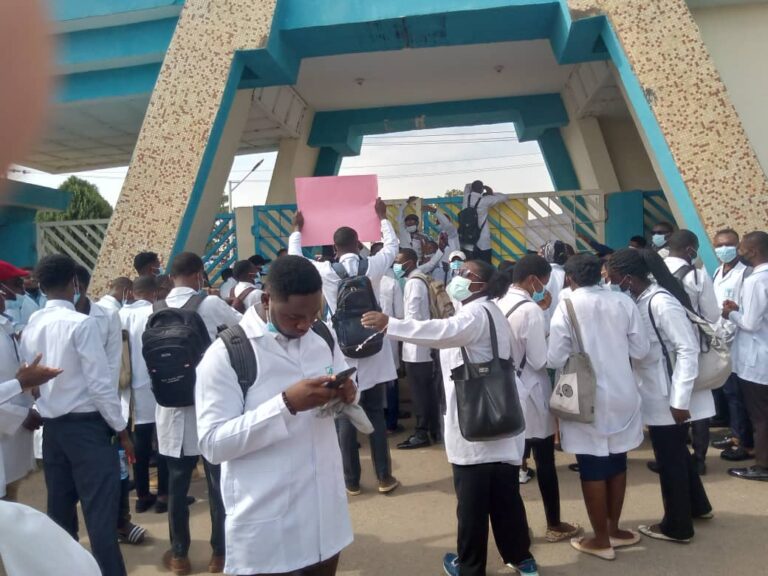
MANY students of the University of Jos (UniJos) took to the university’s main campus on Monday, April 15, to protest what they described as poor health and hostel facilities and understaffing at their school clinic.
As seen in videos shared with The ICIR, the students climbed the school gate that was shut down against some of the school staff, chanting protest songs and calling on the school management to meet their demands.
They protested the lack of drugs, proper medical equipment, poor toilets and leakage of their hostels despite the astronomical’ increase in their school.
The students also carried placards with different inscriptions, including “insufficient medical facilities in the school clinics, and yet school fees were increased.”
Sources who spoke to The ICIR said the protest was the second in two weeks, adding that Monday’s agitation was prompted by the deaths of two students who died in the school facilities, with one shortly after being taken to the Jos Teaching Hospital.
They said although the university management argued that the deaths were not a result of medical negligence and poor health facilities, they would not agree with such a claim.
“The school management rendered poor services to us, which has left our hostel accommodations in bad shape.
For example, the Abuja hostel, which formed largely part of today’s protest, is leaking from the roof, has blocked and broken soakaway, and sewage is floating around the hostel, polluting the environment.
“We do not have adequate water and light in the hostel. Our school clinic is poorly equipped. This was why management opted to increase our school charges from 45,000 naira to one between N105,000 and N1 135,000.
There have been protests in the institution in the past over poor infrastructure and hike in school tuition fees.
In September 2023, the students blocked roads leading to the campus in protest following increased school fees and other services rendered by the institution.
Led by the students’ union leaders, the students called for an urgent reversal of the hike in school fees and other university services.
According to reports, the school fees and other charges were hiked from N40,000 to N160,000 per academic session, with some expected to pay more based on department and level.
Meanwhile, efforts by The ICIR to get the Dean of the university’s Students’ Affairs, Chris. Piwuna, a professor, to speak on the allegations against the school proved abortive. His known phone number was unreachable, and he did not reply to a text message sent to the line.
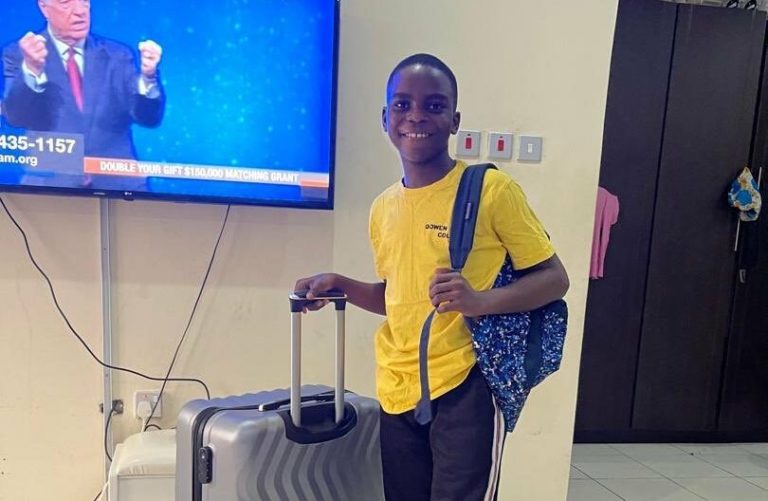
THE Coroner Inquest sitting in Ogba Magistrate Court, Lagos State, to examine the death of a 12-year-old student of Dowen College, Lekki area of the state, Sylvester Oromoni, has absolved the five students of the school implicated in the incident.
The inquiry, while determining that the students played no role in Oromoni’s demise and should not have been implicated in the case, attributed his death to his parents and doctor’s negligence.
The Coroner Magistrate, Mikhail Kadiri, in a judgment, stated that Oromoni’s death was avoidable and was a result of failed treatment for his enlarged liver.
Kadiri further urged for enhanced collaboration between the police and medical professionals, emphasising the importance of police discretion before making arrests in subsequent cases.
In his judgement, the Coroner also recommended that the management of Dowen College should ensure thorough documentation of students’ entry and exit from the hostel, along with conducting comprehensive psychological evaluations for the five students accused of bullying the deceased.
The latest development came about 15 months after the Lagos State government cleared the five students and staff of Dowen College linked to the death of Oromoni.
The clearance was contained in legal advice of the Director of Public Prosecution, Adetutu Oshinusi addressed to the Deputy Commissioner of Police in charge of the State Criminal Investigation Department and the trial magistrate, Olatunbosun Adeola.
According to the advice, the interim and final autopsy reports issued by the Lagos State University Teaching Hospital and the toxicology report of post-samples and that of the Central Hospital, Warri, were in agreement as to the cause of death, namely septicaemia, lobar pneumonia with acute pyelonephritis, pyomyositis of the right ankle and acute bacteria pneumonia due to severe sepsis.
The toxicology result is also not indicative of any toxic or poisonous substance in the deceased’s body, it added.
The DPP’s legal advice concluded that based on these findings, there was ‘no prima facie case of murder, involuntary manslaughter and or malicious administering of poison with intent to harm against the five students.’
The students cleared by the state government are: Favour Benjamin (16), Edward Begue (16), Ansel Temile (14) and Kenneth Inyang (15) and 15-year-old Micheal Kashamu, the son of the late Senator Buruji Kashamu.
The government cleared the following school officials through the director of public prosecution: Adesanya Olusesan Olusegun, Hammed Ayomo Bariyu, Celina Uduak, Valentine Igboekweze, and Adeyemi.
Oromoni’s death
On November 30, 2021, Sylvester died following an alleged attack by ‘some of his senior colleagues’ for refusing to join a cult group.
Oromoni allegedly mentioned five senior students of Dowen College as responsible for the injuries he sustained when he was attacked at the college.
He was also reported to have sustained internal injuries that led to his death on November 30, 2021.
The death of Oromoni sparked various reactions from celebrities, civil society organisations and Nigerians alike.
Oromoni’s family alleged he was bullied and beaten by fellow students, and the injuries sustained from the beating led to his death.
The Lagos State Government had ordered Dowen College’s indefinite closure pending the outcome of an investigation into the case.
However, the school has denied all allegations, stating that Oromoni was neither bullied nor beaten but only complained of hip pain after playing football.