Home Blog Page 645

ICIR trains journalists on strengthening public accountability and knowledge project

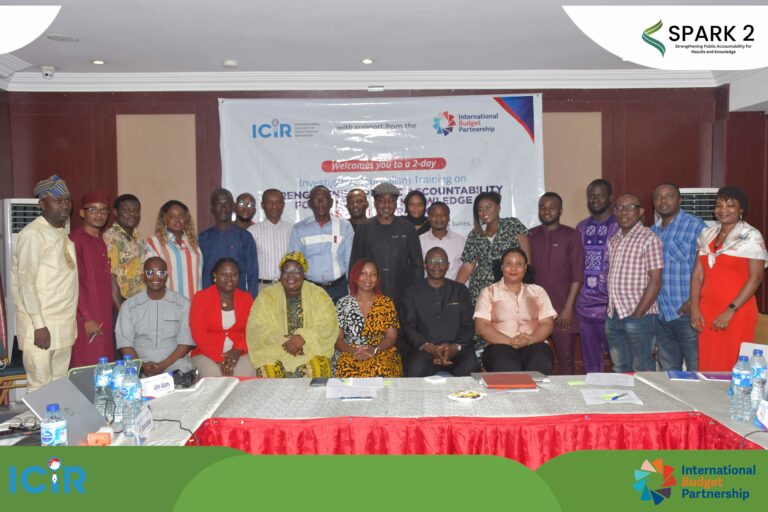
THE International Centre for Investigative Reporting (The ICIR) has concluded a two-day training for selected journalists on the Strengthening Public Accountability for Results and Knowledge Project christened SPARK2.

The training, which had participants drawn from Oyo, Anambra, Niger, Jigawa, Nasarawa, Kano and Ogun states across print, electronic and digital media, was held in Abuja between Wednesday, March 13 and Thursday, March 14.

The project supported by the International Budget Partnership (IBP) aims to examine factors contributing to the appalling state of the healthcare and agricultural sector in Nigeria.

SPARK2  also aimed to address significant challenges and power relations and provide system-level evidence across the two thematic areas on challenges in the delivery of the Basic Health Care Provision Fund -(BHCPF), Maternal Service  Scheme-(MSS), and the Agriculture Development Projects across SPARK’s focal states.

It also focuses on systemic, political, and economic issues such as inadequate budgetary support, the influence of party politics in policy, gender disparities as well as cultural and other nuanced influences that impact on outcomes.

It was designed to build the capacity of journalists to hold power bearers, policymakers, and implementers accountable by publishing focused special and investigative reports and documentaries on delivery end at Primary Health Care, Ward Development Committees, across commodity groups within Small Scale Women Farmers Organisation (SWOFON) networks in the focal states to report and investigate the health and agriculture sectors.

participants during an investigative sharing workshop

THE ICIR will also provide financial support for the selected journalists to undertake critical investigative and data-driven reports on the health and agriculture sector in Nigeria.

Some of the participants interviewed by The ICIR, Vincent Yusuf from Daily Trust and Ibukun Emiola from News Agency of Nigeria, in their remarks, lauded the training programme and said it would positively impact their future.


READ ALSO:


The Executive Director of The ICIR, Dayo Aiyetan, highlighted the importance of the training in his opening remarks and stressed its significance for journalists, urging them to take a proactive approach to the #SPARK2 project while emphasising the importance of not just reporting and writing but also actively tracking its impacts as a follow-up measure.

Executive Director of The ICIR, Dayo Aiyetan

The Country Director of the IBP, Babalola Olayinka, shared her delight in being involved in the #SPARK2 project. She noted that the project is focused on adopting a systematic change approach, with a focus on identifying those directly impacted.

The Country Director, IBP,  Babalola Olayinka.

The Programme Coordinator, IBP,  Ogechi Gift Okebugwu, from the Smallholder women farmers, also expressed her enthusiasm about the #SPARK2 project. She provided an overview of the project’s goal, which aimed to enhance the quality of life for smallholder women farmers in Nigeria.

The Programme Coordinator SWOFON, Ogechi Gift Okebugwu

The organiser said in the last five years, the Centre had worked to build the journalists’ capacity to undertake investigative, data-driven reporting,  strengthening accountability and engendering effective service delivery for citizens, particularly at the sub-regional level.

Audio storytelling takes a new turn with Kara House launching

0
EMPOWERING human narratives takes centre stage as Kara House, an evolving media outfit led by investigative journalist Damilola Banjo, emerges onto the scene.

With its official launch on February 13, 2024, Kara House aims to extend the reach of compelling investigative stories to wider audiences.

Speaking with The ICIR, Banjo who is the creative lead, with over 10 years of journalism experience, noted that Kara House is focused on bridging the gap of distribution that combines both traditional and digital media to reach diverse audiences and building a sustainable public service journalism outlet that can stand on its outside of grants.

She added that establishing her own media house stemmed from the discovery of audio storytelling.

“When I found audio and started listening about four years ago, it felt like I’d been missing out on this impressive medium all my career life. And it’s so strange because we have lots of radio stations in Nigeria but I was never a fan of the kind of content you find on our radio stations.
“I then began to ask myself, how do you use this medium to solve the inherent problems in Nigeria? I should say that radio already holds lots of power. It has the widest penetration in Nigeria” Banjo stated

Banjo thought of the kind of content that would encourage civic and democratic participation in Nigeria with the power radio wields.


READ ALSO:


She further stated that Kara House is not just a podcast or a news website but a journalism production outlet while noting that the goal is to improve how readers perceive journalistic articles.

“We are not just another news website and we are not a podcast. We are a journalism production outlet. The website, podcast channels, and radio stations are just paths through which we are distributing our products. We want to change the way journalism pieces are seen. Your investigative story can provide public service but it can also be commercial,” she stated.

“One of the things we do is to creatively package our product in the same way other media content is packaged. We want to keep the attention of people by making the content short. And even though we take on serious issues in our society, we grind them down to tiny bits that it becomes comprehensively for anyone and it is not laborious to follow,” she explained.

Nigeria’s inflation rate rises to 31.7% in February 2024

NIGERIA’s inflation rate has continued to rise nine month months after President Bola Tinubu assumed office in May 2023 as the latest data showed that the rate stood at 31.70 per cent as of February 2024. 

The rate at which the inflation figure picked up over the month has placed pressure on the prices of consumer goods in local markets. The food prices were triggered largely by high energy prices as a result of fuel subsidy removal, devaluation of the currency and other monetary policies implemented by the president. 

Recently there have been protests across some parts of the country calling for government intervention in the hardship. In other parts of the country, residents invaded warehouses to cart away food products.


Read Also:


According to the National Bureau of Statistics, the inflation rate rose by 1.80 per cent from 29.90 per cent recorded in January. Also, on a year-on-year basis, the headline inflation rate was 9.79 per cent points higher compared to the rate recorded in February 2023, which was 21.91 per cent.

The report stated that the February inflation rate was driven majorly by Food & Non-Alcoholic Beverages and Housing, Water, Electricity, Gas & Other Fuel. Meanwhile, the Rural inflation rate stood at 29.99 per cent compared to the Urban inflation rate which was 33.66 per cent in February.

The data in February 2024, the inflation rate on a Year-on-Year basis was highest in Kogi (37.98 per cent), Oyo (36.60 per cent), Bauchi (35.62 per cent), while Borno (26.28 per cent), Taraba (26.72 per cent) and Benue (27.40 per cent) recorded the slowest rise in Headline inflation

Food Inflation 

The Food inflation rate in February 2024 was 37.92 per cent which is 13.57 per cent higher compared to the rate recorded in February 2023 (24.35 per cent). 

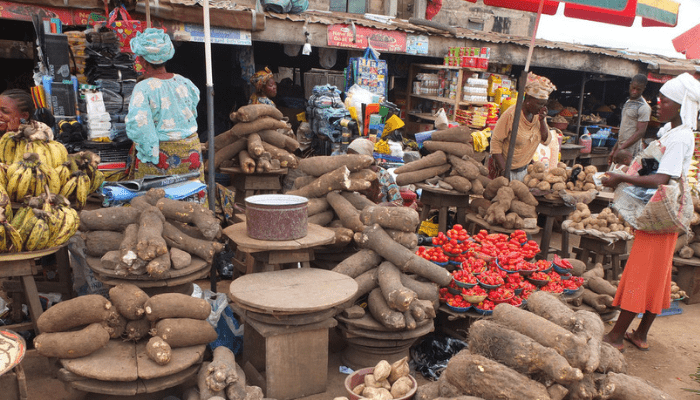
The rise in Food inflation on a year-on-year basis was caused by increases in prices of Bread and cereals, Potatoes, Yam and other Tubers, Fish, Oil and fat, Meat, Fruit, Coffee, Tea, and Cocoa. 

Food inflation was highest in Kogi (46.32 per cent), Rivers (44.34 per cent), and Kwara (43.05 per cent), while Bauchi (31.46 per cent), Plateau (32.56 per cent), and Taraba (33.23 per cent) recorded the slowest rise.

The ICIR reported that as of January 2024, a Nigerian would averagely spend N858 to eat a healthy diet

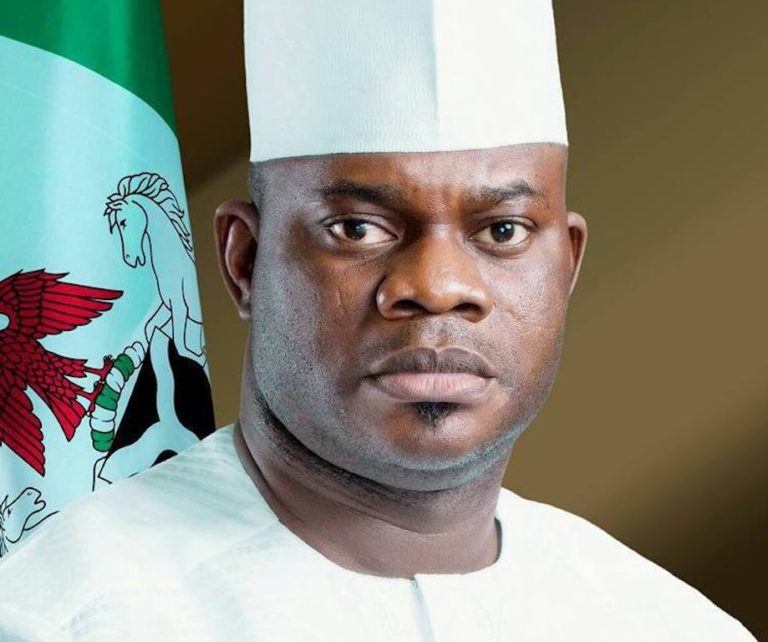
Alleged N84bn money laundering: EFCC files charges against Yahaya Bello, others

0

THE Economic and Financial Crimes Commission (EFCC) has filed charges against former Kogi State governor Yahaya Adoza Bello, alongside his nephew Ali Bello, Dauda Sulaiman and Abdulsalam Hudu, for alleged N84 billion money laundering.

The case was initiated before James Omotosho of the Federal High Court, Maitama, Abuja, on Thursday, March 14, 2024.

The EFCC is prosecuting the trio on an amended 17-count charge of money laundering, breach of trust and misappropriation of funds to the tune of N84,062,406,089.88 (Eighty-four Billion, Sixty-two Million, Four Hundred and Six Thousand, Eighty-nine Naira, Eighty-eight Kobo).


Read Also:

To allow for Yahaya Bello’s inclusion in the trial, Rotimi Oyedepo, SAN, informed the court of an application to amend the charges against the defendants, dated February 5, 2024, and filed the same day. He then prayed that the amended charges be read to the defendants so they could take their pleas.

The judge granted the prayer, overruling objections from A.M Aliyu SAN and Olusegun Joolawo SAN, lawyers to Ali Bello and Suleiman, the first and second defendants.

Count one of the charges reads: “That you, Ali Bello, Dauda Suleiman, Yahaya Adoza Bello (still at large) and Abdulsalam Hudu (still at large), sometime in September 2015 in Abuja, within the jurisdiction of this Honourable Court, conspired amongst yourselves to convert the total sum of N80,246,470,089.88 (Eighty Billion, Two Hundred and Forty-six Million, Four Hundred and Seventy Thousand, Eighty-nine Naira, Eighty-eight Kobo), which sum you reasonably ought to have known forms part of the proceeds of your unlawful activity to wit: criminal breach of trust and you thereby committed an offence contrary to Section 18(b) and punishable under Section 15(3) of the Money Laundering (Prohibition) Act, 2011 as amended.”

According to a statement by the EFCC spokesperson, Dele Oyewale, while ex-Governor Bello and Hudu are still at large, Ali Bello and Suleiman, first and second defendants, respectively, who were present in court, “pleaded not guilty” to all the charges when they were read to them.

In continuation of the trial, EFCC lawyer Oyedepo invited the fourth Prosecution Witness, PW4, Yakubu Gana, counsel to the property owner and seller of a property located in Danube Street, Maitama, Abuja, which Ali Bello and Suleiman allegedly bought at the cost of N950million on behalf of ex-governor Yahaya Bello through their lawyer, Ramalan Jibril Abdullahi.

“We negotiated and agreed on the sum of N950 million. Their lawyer, Ramalan Abdullahi, said his clients would prefer to pay in cash and dollars. I had to call my client to inform him because he was not in the country at that time. My client cautioned me whether I knew the buyers, and I answered that I knew their lawyer way back in secondary school.

“The lawyer and the clients invited me into their office, a bureau de change office at Zone 4, adjacent to Sheraton, now Abuja Continental Hotel. They then showed me dollars in ‘Ghana Must Go,’ but the dollars in ‘Ghana must go’ were not up to that N950million. They said they would make it up by bringing some dollars to make it to N950 million. The transaction took us almost two weeks, and the lawyer invited me to the same BDC office for confirmation. The money was completed in dollar equivalent,” Gana said.

In his testimony as the fifth prosecution witness, Abdullahi told the court that though he acted as a go-between in the purchase of the property, his major assignment was to carry out due diligence on the said property, which paved the way for its purchase by Ali Bello and Suleiman, his clients.

Oyedepo requested the property’s title documents to enable him to tender them in evidence. However, Omotosho ordered him to apply to the defendants formally and thereafter adjourned the matter to March 28, 2024, for the continuation of trial.

Tinubu seeks Senate approval to re-enact student loan act

0

PRESIDENT Bola Tinubu has written to the Senate, seeking repeal of the Students Loans Act 2023 and re-enactment of the Students Loan Bill 2024.

According to a letter addressed to the President of the Senate, Godswill Akpabio, and dated March 14, Tinubu is seeking ‘expeditious consideration’ of the bill and the repeal of the existing law.

The latest development was at the heel of the public outburst that trailed the announcement of the temporary suspension of the commencement of the student loan system. 

On Tuesday, March 12, The ICIR reported that the Executive Secretary of the Nigerian Education Loan Fund (NELFund), Akintunde Sawyer, said he cannot give a date for the rollout of the student education loan scheme, initially expected to be launched this Thursday, March 14.

Sawyer blamed the postponement on undisclosed issues.

However, Tinubu, in his letter to the senate explained that the request for repeal of the Students Loans Act 2023 and a fresh enactment is to address some challenges with the earlier Act and to enhance the implementation of the students loan scheme by his administration.

The letter reads in part: “ Pursuant to Section 58 (2) of the Constitution of the Federal Republic of Nigeria, 1999 (as amended), I forward, herewith, the Student Loan (Access to Higher Education) (Repeal and Re-enactment) Bill, 2024 for the kind consideration of the Senate.

“The Student Loan (Access to Higher Education) (Repeal and Re-enactment) Bill, 2024 seeks to enhance the implementation of the Higher Education Student Loan Scheme by addressing challenges related to the management structure of the Nigerian Education Loan Fund (NELF), applicant eligibility requirements, loan purpose, funding sources, and disbursement and repayment procedures.

“Whilst hoping that this submission will receive the usual expeditious consideration of the House of Representatives, please accept, Rt. Honourable Speaker, the assurances of my highest consideration.”

It could be recalled that Tinubu had in June 2023, signed the Access to Higher Education Bill (also known as student loan) to enable students in need to access interest-free loans to pursue their education in any tertiary institution in the country.

NELFund was set up to support students in public tertiary institutions from all the states of the Federation who wish to apply for a loan on the scheme. The objective was to cover the total cost of their institutional fees.

However, despite N50 billion budgetary allocations and pledges by the federal government there has been back-and-forth for the rollout of the scheme.

TIMELINE: Over 1000 schoolchildren kidnapped since Chibok incident

Read the update version of this report HERE


IN the last decade, bandits and terrorist groups have disrupted the Nigerian education system, kidnapping over 1000 students, The ICIR findings have shown.

Within the past three administrations, the abduction of school children has generated millions in ransom for kidnappers, as fresh attacks prove no end in sight to the menace.

From former President Goodluck Johnatan to Muhammadu Buhari and, now, President Bola Tinubu, more than 1000 students have been kidnapped between 2014 and March 2024. The ICIR had reported how Buhari’s administration recorded 300 per cent more schoolchildren abductions than Jonathan’s.


Read Also:


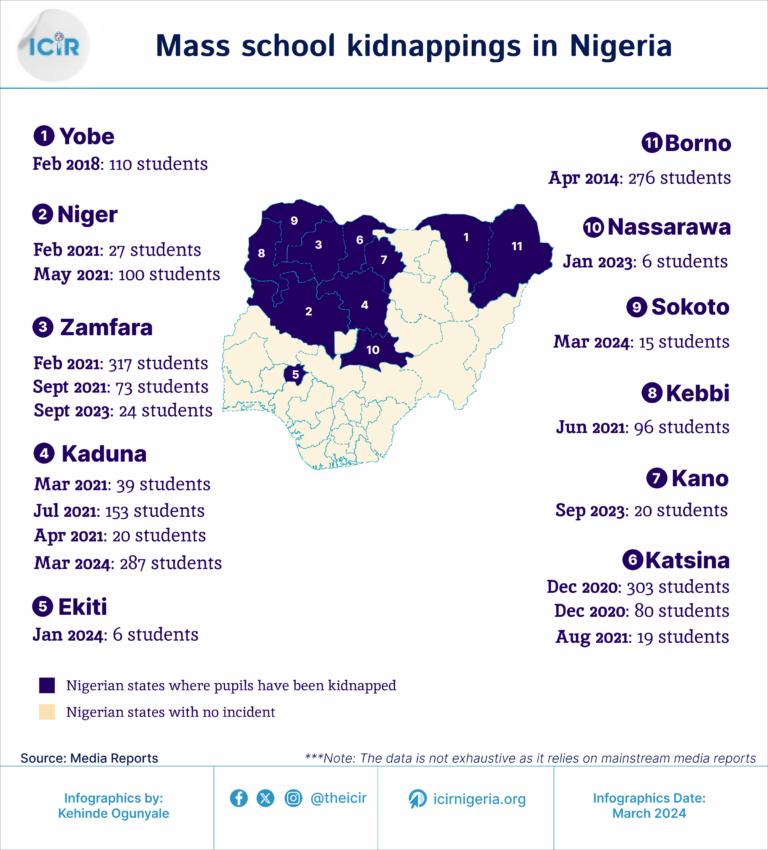
Several media reports gathered by The ICIR have shown that not less than 15 attacks have been carried out in 10 states, located around the northern region of Nigeria.

Further findings also showed that Kaduna state has experienced more schoolchildren abductions than any other affected state in Nigeria that made it to mainstream media.

While some of the schoolchildren kidnapped have been rescued, either through the effort of security operatives or ransom paid by families, others are still held in captivity. The worsened school abduction is just one out of many insecurity crises that Nigeria have been challenged with over the years. 

Timeline of abduction 

2014: In April 2014, over 276 female students, between the 16 to 18, were kidnapped by Boko Haram from the Government Girls Secondary School, Chibok in Borno State. Some of the school girls reportedly escaped in the process of being transported while others, on several occasions, were reduced by the military. Meanwhile, over 100 of these children are still missing to this date.

2018: The second attack was reported four years after in Yobe state on February 19, 2018. About 110 students were kidnapped after Boko Haram invaded the Government Girls Science Technical College (GGSTC) in Dapchi. While being held hostage, some of the girls died, and others were later rescued, leaving Leah Sharibu, a Christian child who had not been rescued.  

2020: On December 11, 2020, more than 303 students of Government Science Secondary School, Kankara, Katsina were kidnapped by gunmen.

Mass school kidnappings in Nigeria
Infographics: Mass school kidnappings in Nigeria

Also, on December 19, another 80 Islamic school students in Dandume, Kastina were kidnapped. These children were later rescued by the security operatives. 

2021: Gunmen raided the Government Science College Kagara, Shiroro Local Government Area of Niger State, on February 17, capturing 27 students and teachers in the school.

Some days later, on February 26, about 317 schoolgirls from the Government Girls Science Secondary School, Jangebe in Jangebe, Zamfara state. 

The following month, on March 11, 39 students were kidnapped by gunmen in the Federal College of Forestry Mechanisation, Afaka, Igabi LGA, Kaduna state. 

Another attack took palace On May 30 at an Islamic school in Niger state with armed men abducting about 100 students.

The next month, on June 17, over 96 students and eight teachers were abducted by bandits at Federal Government College, Birnin Yauri, Kebbi State.

Finally, in July, bandits kidnapped over 153 students of Bethel Baptist High School in Damishi town of Chikun local government area in Kaduna.

2023: In January 2023, six people were abducted at the Local Government Education Authority Primary School, Alwaza, in the Doma, Nasarawa state. In September, 24 students were reportedly kidnapped from their hostel in Sabon Gida, Zamfara state. 

2024: At the beginning of the year, January 30, gunmen abducted six pupils and three teachers of a private school in Emure, headquarters of Emure Local Government Area of Ekiti State.

Also, on March 8, gunmen abducted about 287 children in Kaduna state from the Local Education Authority (LEA) Primary and Junior Secondary School, Kuriga, in Chikun Local Government Area of Kaduna State.

Some days later, another 15 students were kidnapped from a school in Gada, Sokoto.

(This report only focuses on schoolchildren kidnapped within the last 10 years that made it to mainstream mediums. It also focuses on kidnappings of schoolchildren that happened within or around a school environment and uses the term schoolchildren synonymously with students).

[ANALYSIS] Ningi’s padding allegation and the 2024 budget in detail

IN November 2023, President Bola Tinubu presented N25.7 trillion as the proposed budget for the 2024 fiscal year to the Joint National Assembly. This was his first budget presentation as the president of Nigeria since he assumed office in May 2023. 

The proposed budget had a capital expenditure of N8.7 trillion and a recurrent expenditure of N9.92 trillion. The budget deficit was placed at N9.18 trillion, with a projected revenue of N18 trillion. 

Days before the presentation, the Federal Executive Council (FEC), on November 27, had approved N26.01 trillion. Upon the presentation, the budget was increased by 5.73 per cent. 


Read Also:


After deliberation was made by the National Assembly, the president passed N28.7 trillion into law on January 1, 2024. This is an increase of N1.2 trillion or 4.36 per cent when compared to the proposed budget.

The breakdown

With a budget of N28.7 trillion passed by the president, the Ministries, Departments and Agencies of the government are expected to spend N24.45 trillion. The amount captures the personnel cost, overheads and capital expenditure of the MDAs. Some other payments including royalties, deductions, debt financing and others are also captured within the purview of this figure.

On another hand, about N1 trillion would be used to offset Statutory Transfer to five agencies namely Niger Delta Development Commission (N338.92 billion), Universal Basic Education Commission (N263.04 billion), National Human Right Commission (N5 billion), North East Development Commission (N131.52 billion), Basic Healthcare Provision Fund (N131.52 billion) and National Agency for Science and Engineering Infrastructure (N131.52 billion).

This would bring the budget to N25.45 trillion

Another N3.3 trillion was earmarked to cover the budget of 62 Government Owned Enterprise (N1.88 trillion), TETFund (N700 billion), National Judicial Council (N341.63 billion), National Assembly (N344.85 billion), Public Complaints Commission (N14.46 billion), and INEC (N40 billion).

This will bring the total budget to N28.78, as passed by the president.

The concerns 

The Senate suspended a Sentor, Abdul Ningi, for three months over the allegation he brought that the National Assembly padded the 2024 budget. The allegation was hinged on the unclarity of some items of the budget amounting to about N3 trillion. Also, there were allegations of some projects carried out by MDAs without a description and some constituency allocations higher than others. 

Findings by The ICIR revealed:

  • Unlike the MDA’s budget which is broken down by line items for both the capital and recurrent expenditure, statutory transfers made to some agencies, commissions and GOEs were not clearly explained.
  • By this, the public is denied access to the accountability of these agencies. For example, the NASS budget, NJU, TetFund, INEC etc.
  • Some capital projects carried out by MDAs do not have a specific location; hence the ability to monitor the procurement process including accountability becomes difficult. 
  • More than 100 capital projects to be implemented by several MDAs fall under frivolous allocations. See The ICIR report here
  • Several MDAs are carrying out projects not related to the mandate-responsibility of the MDAs

Additional findings 

A civic non-governmental organisation, BudgIT, disclosed in its report that 33 per cent of the projects worth N632 billion were inserted in the Ministry of Agriculture’s budget, raising its capital budget from N332 billion to N963 billion. 

Also, in other Ministries such as Science and Technology, 757 new projects worth N207 billion were added and 263 projects with a value of N242 billion were inserted by the National Assembly.

BudgIT also stated that about 15 MDAs are expected to carry out more than 600 capital projects which they do not have the technical capacity to execute. 

The civic organisation recommend that the judiciary explain the power of the National Assembly, make a ruling for the full disclosure of the budget of some agencies of the government and involve civic organisations in the budget deliberations.

FG opens land, air borders with Niger Republic

0

PRESIDENT Bola Tinubu has directed the opening of Nigeria’s land and air borders with the Republic of Niger and the lifting of other sanctions against the country with immediate effect.

This is contained in a statement issued by the president on his X handle on Wednesday, March 13.

He said the presidential directive was in compliance with the ECOWAS Authority of Heads of State and Government at its extraordinary summit on February 24, 2024, in Abuja.

In August 2023, Nigeria announced the closure of land borders connecting the country to Niger Republic. This move was in compliance with the decision of the Economic Community of West African States (ECOWAS) to suspend trading between Niger and member states until further notice.

The ECOWAS, under the leadership of Nigerian President Bola Tinubu, imposed sanctions on Niger Republic following a military coup, which ousted democratically elected President Mohamed Bazoum and ushered in Omar Tchiani, who was previously the head of the presidential guards.

The Community also imposed a no-flight zone on Niger Republic, cut off electricity supply from member-states, mobilised international support for the implementation of the provisions of the ECOWAS communique and reactivated the border drilling exercise.

In a joint statement on Monday, Mali and Burkina Faso backed the actions of the Nigerien military and threatened ECOWAS with war.

However, following the recent development by the ECOWAS on the directive of lifting economic sanctions on Niger, Mali and Burkina-Faso with immediate effect, Tinubu said Nigeria’s land and air borders with Niger are now opened.

The president also reversed the following sanctions:

  • Suspension of all commercial and financial transactions between Nigeria and Niger, as well as freeze of all service transactions, including utility services and electricity to Niger Republic.
  • Freeze of assets of the Republic of Niger in ECOWAS Central Banks and freeze of assets of the Republic of Niger, state enterprises, and parastatals in commercial banks.
  • Suspension of Niger from all financial assistance and transactions with all financial institutions, particularly EBID and BOAD.
  • Travel bans on government officials and their family members.                                                                                                                                                              Tinubu said he has also approved the lifting of financial and economic sanctions against the Republic of Guinea. 

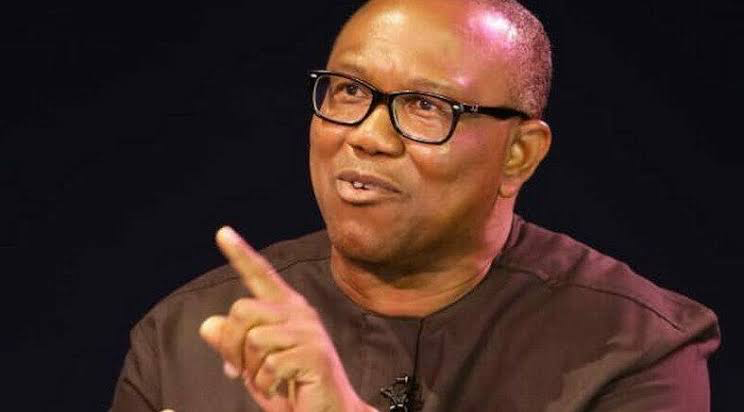
Obi slams senate,says issues raised by Ningi not addressed

0

PRESIDENTIAL candidate of the Labour Party (LP) in the 2023 elections, Peter Obi, has expressed concerns over the alleged padding of the 2024 budget with N3 trillion, stating that the suspension of the whistle-blower senator, Abdul Ningi, has not addressed the vital issues emanating from the allegations.

Obi, in a statement on Wednesday, March 13, on X, also called the leadership of the National Assembly to explain to Nigerians the exact amounts allocated for constituency projects for appropriate monitoring of implementation by the public.

He mentioned that fresh allegations have emerged regarding the Senate leadership’s indiscriminate and uneven allocation of constituency projects.


Read Also: 


While also noting that although the Senate might have denied the allegations of padding the budget by N3.7 trillion and agreed that there was only N1.2 trillion padded, a civic society group, Budgit, through their official, has agreed with the whistle-blower Senator. 

He said Budgit alleged that there were no detailed project allocations for about N3.7trn in the 2024 Appropriation Act.

The ICIR had earlier reported how the senate was turned into an uproar on Tuesday, March 12, during the plenary that led to the suspension of Abdul Ningi, a senator, for three months over the allegation he brought that the National Assembly padded the 2024 budget.

Ningi, a member of the opposition Peoples Democratic Party (PDP), is the Senate Committee on Population chairman. He is a member of the opposition Peoples Democratic Party. 

Some senators from the northern part of the country had earlier rejected Ningi’s accusations, claiming the Senator from Bauchi State did not speak for them, even as the parties demanded an investigation into the allegation. 

On Monday, March 11, Ningi maintained that the 2024 budget could not account for N3.7 trillion.

However, reacting to his suspension, Obi said the senate suspension of the senator involved has not addressed the issue as still owes the Nigerian public a clear explanation over the various claims and counterclaims, including that of the executive arm.

“I had particularly elucidated in my earlier comment on what we can use the N3 trillion to achieve by showing that it is more than the national budget of the two most critical components of the human development index, health and education, combined.

“Now that the executive arm has accepted that the padded amount is only N1.2 trillion, it is still a very significant amount, when you consider that it is almost 5 times the N251.47 billion proposed for Universal Basic Education, which is the foundation of education, in the Country. Today in Nigeria, the greatest challenge to human resource development is education, which has been identified as most critical at the basic level,” he wrote.

According to him, the agreed padded amount of 1.2 trillion should have been utilised to ensure that approximately 20 million out-of-school children are taken off the streets and returned to schools.

“The N1.2 trillion, which the executive branch admitted to have been padded, if channelled into any of the critical areas of development, could have positively impacted the nation and uplifted the people.

“And if indeed the report from Budgit is true, that there is about N3.7 trillion without any detailed project allocations, I strongly urge the Senate to do more detailed work of channelling these funds into the critical areas of development – education,health and pulling people out of poverty, which will in turn, minimise the criminality we are facing today. We must, as a matter of urgency, put a stop to all the wastage of our scarce resources, amid the excruciating hardship in the country,” he added.

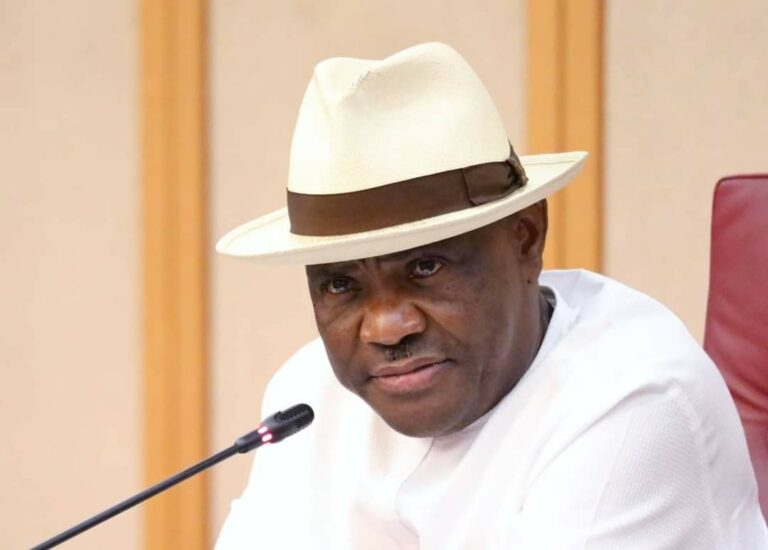
Senate grills Wike, FCT police commissioner, over insecurity

0

THE Minister of Federal Capital Territory (FCT) Nyesom Wike, and Police Commissioner Benneth Igwe are currently responding to inquiries from the National Assembly over the insecurity in Nigeria’s capital city.

The duo arrived at the National Assembly on Wednesday, March 13, in response to a Senate resolution for an interaction.

The ICIR gathered that the Senate had, on Wednesday, February 28, summoned Wike and the Commissioner of Police, Igwe, over the murder of Chris Agidy, an aide to Senator Ned Nwoko, by some kidnappers.


Read Also:


The Senate resolved that the FCT Minister and the police commissioner should appear to brief the Red Chamber on the increasing cases of kidnapping in the city.

The Senate’s decision stemmed from a motion put forward by Senator Nwoko regarding the abduction and murder of his senior legislative assistant, Agidy.

Meanwhile, during the Wednesday plenary, the Senate decided around 12:20 pm to postpone the first order of the day to another legislative session in order to convene a closed-door meeting with the two individuals in a Committee of the Whole. 

Subsequently, the Deputy Senate Leader, Oyelola Ashiru, moved a motion to this effect, which the Minority Leader seconded.

They are also expected to brief the chamber on security modalities in the FCT to find a lasting solution.

Ashiru said, “The minister and the commissioner will brief us on the modalities of security in the FCT.”

The ICIR reports that past and present administrations have made several promises to address insecurity within the FCT. However, many years later, abductions have persisted, and more residents are leaving their homes to escape attacks by bandits.

In December 2023, the FCTA named three area councils, Kuje, Abaji, and Bwari, as places with the highest records of kidnapping in the FCT.

Several kidnap cases were recorded within these areas during the festive period, including the mass abduction of about 23 residents of Dei-Dei, Bwari, and 12 others in Gbaupe, a rural community along Airport Road.

This incessant kidnapping has made many flee their homes, with some residents putting up their houses and properties for sale.

Similarly, in January 2024, The ICIR reported that over 380 persons were kidnapped between December 1, 2023, and January 3, 2024, across Nigeria under President Bola Tinubu.

According to data obtained by The ICIR from the Armed Conflict Location & Event Data Project (ACLED), a data bureau collecting data on the locations, dates, actors, fatalities, and types of all reported political violence and protest events worldwide, those abducted include men, women, farmers, children, and students.

The victims were taken hostage at various events that happened during the last month of 2023 and the first week of the new year, illustrating the escalating number of kidnapping cases in the country.