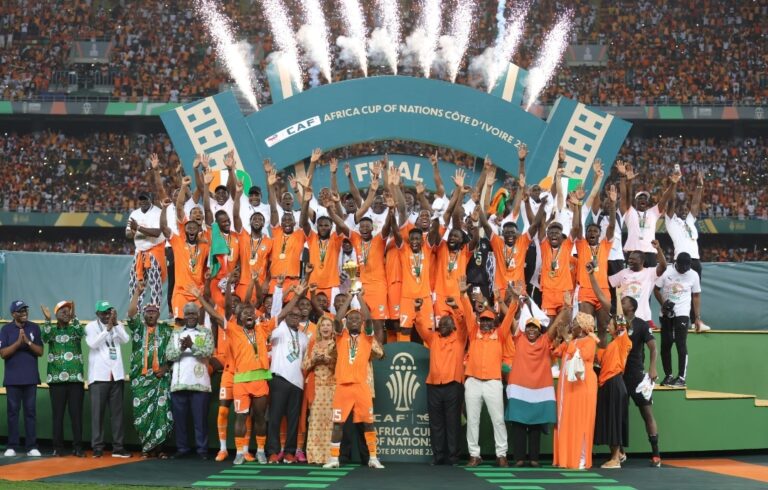
HOST nation Cote d’Ivoire defeated Nigeria’s Super Eagles, 2-1 on Sunday, February 11 to win the 2023 African Cup of Nations (AFCON) trophy, extending Nigeria’s eleven-year trophy drought.
The Ivorians who smiled home with the $7M prize money won their third title after winning in 1992 and 2015.
They were outstanding in the first 20 minutes at Stade Olympique Alassane Ouattara as they outplayed their opponents, surging forward to their opponent’s goal-bound area to take the lead.
The host trio, Simon Adingra from the left flank, Sebastien Haller and Evan Ndika, piled up pressure on the Super Eagles’ defence but were unable to cover some of their chances.
Despite the host nation’s dominance of possessions, Nigeria soaked the pressure as they gained set pieces, which paid off with a corner kick well delivered and nodded in captain William Troost-Ekong in the 30 minutes to give the country.
The lead aroused the superiority of the Super Eagles to reduce the pressure of their opponent, but they could not tame the Ivorian for long as they showed themselves to be hungrier for goal.
Nigeria maintained the lone goal victory to the end of the first half.
But the resumption of the second half revealed the ‘never-say-die’ of the Ivorian side as they threw in all their arsenal with the Man of the Match Adingra dictating paces from the right flank with a cross in the 59 minutes but met a light header nodded by Frank Kessie.
Ivorians’ restlessness paid off after Kessie beat Troost-Ekong in the aerial challenge to nod in the ball to the back of the net after connecting a cross from the corner kick by Adingra in the 61 minutes.
The goal enliven the hope of the host nation to repeat the comeback victories they recorded against Senegal in the round of 16 and Mali in the quarter-final.
After a series of chances created to double the lead, the host nation sealed their victory after Haller stretched his long leg to tap into the net, throwing their supporters into wild jubilation.
Haller goal cemented the third AFCON title for the host nation.
Ivory Coast road to final
The host nation’s road to the final is a testament of grass to grace. They began the AFCON tournament with a disastrous start, leading to the hurried appointment of a new coach, Emerse Fae, after they heaved a sigh of relief emerging to the next round as one of the four best losers on the group stage.
But their knockout journey to the final has seen the strength of the host nation as they defeated defending champion Senega 5-4 via penalty shootout after a 1-1 draw in the regular time while the team edged Mali 2-1 in the quarter-final to advance to the semi-finals.
They won DR Congo, 1-0 in the Semi-final and went straight to beat Nigeria, 2-1 in the final.
Individual award
South Africa’s Ronen William won Best Goal-Keeper
Ivory Coast’s Emerse Fae won the Best Coach
Ivory Coast’s Simon Adingra won Best Young Player
Mostafa Mohamed won the Bronze Boot
Angola’s Gelson Dala won the Silver Boot
Nigeria’s William Troost-Ekong won Man of the Competition
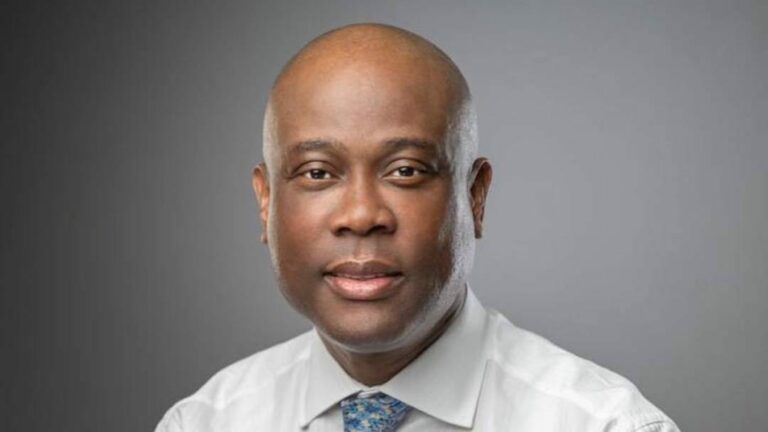
ACCESS Holdings Plc has officially confirmed the death of its pioneer Chief Executive Officer, Herbert Wigwe, and said it will announce the appointment of an acting Chief Executive Officer to run the affairs of the company.
In a statement issued on Sunday, February 11, confirming the death of Wigwe along with his wife, Chizoba and son, Chizi, the company secretary, Sunday Ekwochi, quoted the company’s chairman, Abubakar Jimoh as saying: “In line with the Company’s policy, the Board will soon announce the appointment of an Acting Group Chief Executive Officer even as we remain confident that the Access Group will build further on Dr. Wigwe’s legacy of growth and operational excellence.”
The statement said, “It is with deep sadness that the Board of Directors of Access Holdings Plc (‘the Company’) announces the passing of Dr. Herbert Wigwe, CFR, the Company’s founding Group Chief Executive Officer and former Group Managing Director of its flagship subsidiary Access Bank Plc (‘the Bank’).
“Dr. Wigwe died alongside his wife and son on Friday, February 9, in a helicopter accident in the United States of America.
“The entire Access Family mourns the loss of Herbert, Doreen, and Chizi. We extend our deep and sincere sympathies to his family and loved ones.
Wigwe was a key driving force and a larger-than-life personality who brought his remarkable passion, energy, and experience to the transformation of the Access franchise since joining the Bank in 2002.
Commenting on the passage of Wigwe, Abubakar Jimoh, Chairman of Access Holdings said: “The Access Family has suffered a major loss with the passing of Dr. Wigwe who was a great friend and fine gentleman. He had a prodigious intellect, admirable personal qualities, and vast business experience which he brought to bear on the Access Family and for which we owe him a debt of gratitude.
“In line with the Company’s policy, the Board will soon announce the appointment of an Acting Group Chief Executive Officer even as we remain confident that the Access Group will build further on Dr. Wigwe’s legacy of growth and operational excellence,”he added.
Also, the Bank on their X account said, “Today, we bid farewell to a visionary leader, @HerbertOWigwe, whose passion and unwavering commitment to excellence transformed Access into a global powerhouse.
“His legacy of excellence and compassion will continue to inspire us all.
“Rest in peace, Herbert Wigwe. Your impact will forever be felt.”
Earlier, Access Holdings Plc had acknowledged reports of a helicopter crash involving Dr. Wigwe but lacked specific details. The company stated its collaboration with US authorities for updates on the incident, which occurred near the California-Nevada border.
HERBERT Wigwe was reported dead after a tragic chopper crashed in California near the Nevada border, United States of America (USA).
Several reports say that no survivor was found up until the morning of Saturday, February 10.
Who is Wigwe?
Herbert Onyewumbu Wigwe is the full name of the Group Chief Executive Officer of Access Holdings Plc, a bank that he and his business partner, Aigboje Aig-Imoukhuede, bought in 2002. As of then, the bank was ranked 65th out of 89 banks operating in the country.
However, in 15 years, the bank rose to become the 4th largest bank in Nigeria with subsidiaries in about 14 countries.
Wigwe started his career as a consultant at Coopers & Lybrand, Lagos with an educational qualification of a degree in accountancy from the University of Nigeria and two master’s qualifications from the University College of North Wales and the University of London.
After leaving Coopers & Lybrand, he joined GT Bank, where he spent most of his career before acquiring Access BAnk in 2002.
The rise of Access Bank
A year after the acquisition in 2002, Wigwe raised over N14.5 billion with a public offering, registering a 133 per cent oversubscription which earned the bank the the Hewlett Packard Award for the best implementation of a basic banking application in West Africa.
In an interview, Wigwe said the first task was to put up a strong team and competent management that shared the same value system and vision of the bank.
He said, “We had to build up the brand, we had to look for institutions to partner with, to give more credibility to the institution. We realised that the pace of growth was such that we had to pay specific attention to issues around risk management and compliance. So that was another aspect that we had to look at.”
This partnership led to Access Bank’s absorption and integration with Capital Bank and Marina Bank in 2004. After several business modifications, the bank raised the public offering to $1 billion in 2008.
In 2009, Access Bank merged with Intercontinental Commercial Bank and became listed on the London Stock Exchange. 10 years later, in 2019, the bank acquired Diamond Bank with over 29 million customers for $235 million and by 2021, acquired a stake in Grobank, a South African bank, for US$60 million.
As of now, the public offer for Access Bank comprises an Over-The-Counter GDR placement of US$250 million, which was similarly oversubscribed by 700 per cent.
Other Investments
Wigwe is also known to be a philanthropist leading the Herbert Wigwe Foundation, which invests in education and entrepreneurship in Nigeria. This earned him the Order of the Niger (CON) in October 2022.
He also founded the Wigwe University, situated in Isiokpo, Port Harcourt, and was approved by the Nigerian University Commission in June 2023.
The deceased was born on August 15, 1966, and was reported dead on February 7, 2024, at age 57.
ACCESS Holdings’ response to Wigwe’s reported death
In the wake of this development, Access Holdings PLC has responded to the news of the reported death of the Group Chief Executive Officer of Access Holdings Plc.
The statement said: “We have received numerous inquiries concerning an airplane crash in the USA. Presently, we lack specific information; however, we are actively collaborating with US authorities who will furnish updates.
“Your understanding and support are valued, and we commit to keeping you informed promptly as we receive updates on the situation,” the statement added.
Despite the several allegations and controversies surrounding the operations of the Baffa Babba – led Kano Road Transport Agency (KAROTA) and the Abdullahi Umar Ganduje government, there was never any real investigation into the KAROTA daily taxes on tricycle (better known as Keke) operators. This investigation x – rays KAROTA’s daily Keke tax collection and unearths hitherto unreported cases of illegal tax collection in local councils, extortion and embezzlement of funds collected as tax and tracker fees from Keke riders in the state.
There was no love lost between Tricycle (popularly known as Keke) riders and The Kano Road Traffic Agency (KAROTA) during the immediate past administration in Kano State, as there was were several allegations of extortion and animosity between them.
In 2021, the former governor of Kano state, Abdullahi Umar Ganduje, introduced a N120 daily Keke tax collection system for tricyclists in the state through KAROTA.
Soon after this, Keke riders in Kano went on two massive strike actions. The first was in February 2021, while the second was on January 10, 2022. Both strikes were a culmination of the built-up animosity between KAROTA and Tricyclists
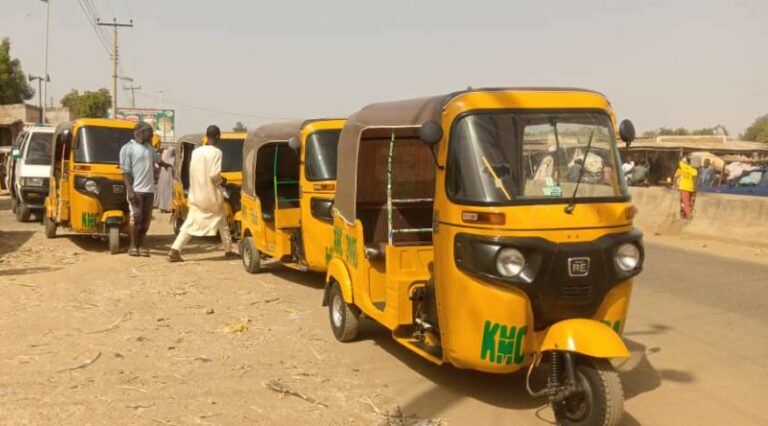
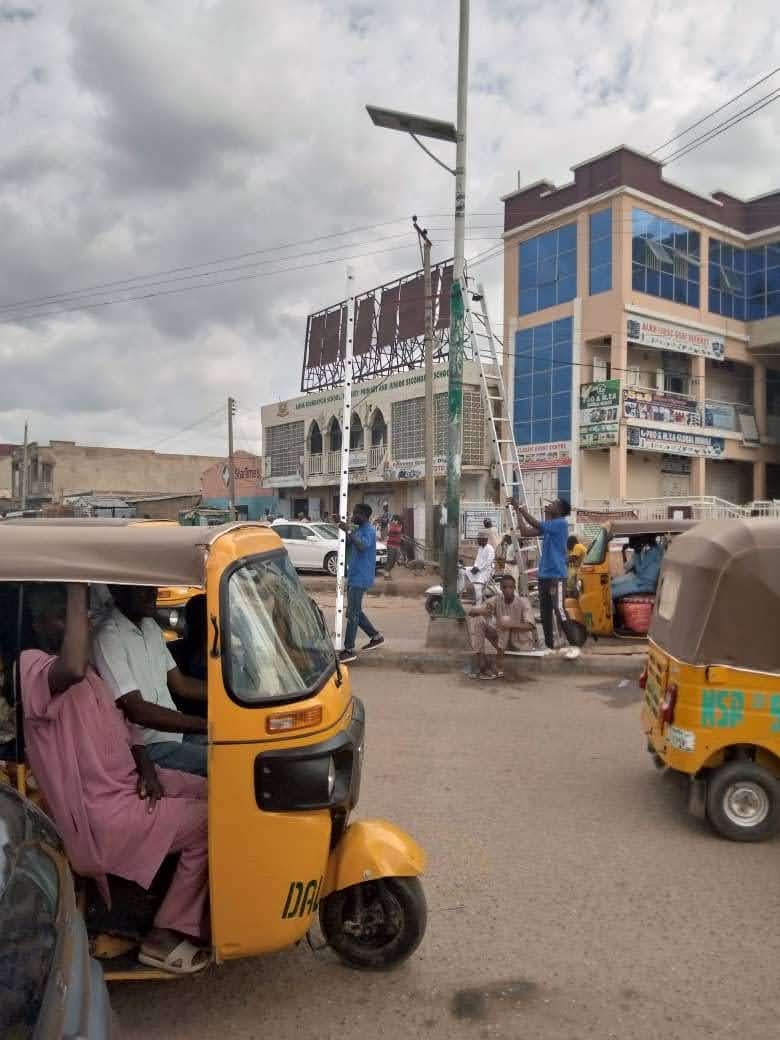
keke riders in a community
The major issue was over the agency’s compulsory daily tax collection, issuance of paper stickers instead of electronic tracking devices promised by the government, and perceived high operational licensing of Keke riders.
Prior to the strike actions, Keke riders in 2020 had taken the then Managing Director of KAROTA, Baffa Babba Dan-Agundi, to court over the issuance of what they called fake tracking machines. The case was ruled in favor of Dan-Agundi.
Kano Focus investigations showed that the Keke operators might have been right in alleging corruption in the state transport tax system, especially the daily Keke tax collection.
Kano Focus got exclusive video footage of young boys who acted as sales agents of KAROTA, issuing fake Keke tax tickets.
The footage of close to six minutes showed more than 20 young boys between the ages of 9 and 22 admitting to selling daily tax tickets to unsuspecting Keke riders around the Ja’in area of Kano state.
The footage obtained from an inside source within the KAROTA was never publicly released before now, despite it being in existence since 2020.
In an interview with the Public Relations officer (PRO) of KAROTA, Nabulisi Kofar Na’isa, who worked in the same capacity as PRO under Dan-Agundi, he said the case was not brought to the public at that time because the management did not want to escalate issues and cause unrest among citizens.
He, however, added that the boys were handed over to the police shortly after they were questioned at the KAROTA offices.
“The boys were taken to police headquarters Bompai and were subsequently taken to court,” he said.
Kano Focus investigated KAROTA’s claim of taking the boys to the Bompai police station.
The reporter reached out severally in person, via messages and through calls to the Kano state police command Public Relations Officer (PRO), SP Abdullahi Haruna Kiyawa, to verify the claims by the KAROTA.
The Police PRO confirmed that some boys were brought in by the agency on ticket forgery offences, but he did not provide any added information as he said the command was preparing to have its routine press brief that same day, December 29, 2023.
He added that the issue was over two years old, and he needed time to look through the case file.
Kiyawa, however, agreed to speak to the reporter via WhatsApp to give the details of the case but did not. The reporter again visited the Bompai Police Command later to get a detailed report from the police but was unable to see or reach the PRO by phone. As various calls made to him went unanswered.
Officers at the command had directed the reporter to the Bompai Command recruit screening ground; however, upon reaching there, the Police PRO could not be reached as both calls made to him by the reporter and other police officers went on answered.
KAROTA recruited motor park boys to sell tickets and collect tax from Keke riders
“I sold tax tickets to Keke riders,” a motor park goods loader and Sabon Gari Market tax collector, Sani Ibrahim, said.
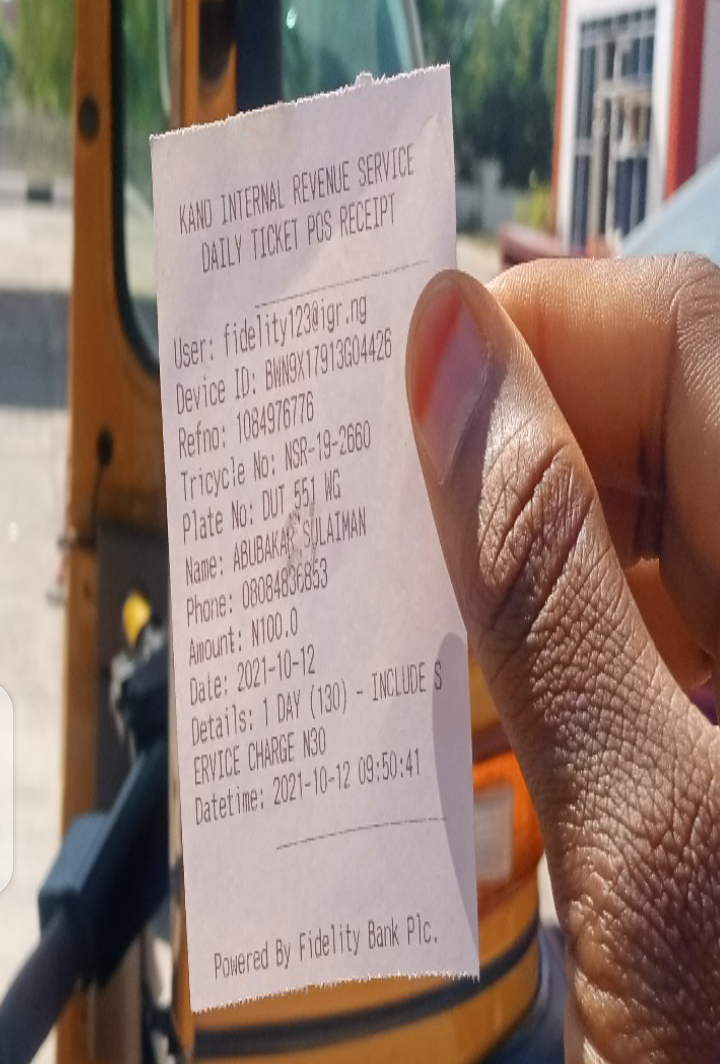
KIRS Keke daily tax receipt
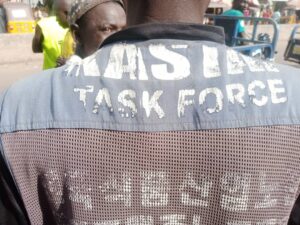
Ibrahim, like many of his colleagues, present themselves to be members of the Kano State Tricycle Association Forum (KASTAF). However, many of them are found in motor/Keke bus stops within the city without owning or driving tricycles themselves, but instead they collect taxes at marketplaces and issue tickets or load goods for people at the market.
Photo of KASTAF uniform
Investigation revealed that the KASTAF was chosen by the then KAROTA management to act as middlemen between them and Keke riders in the state for ease of collection.
They acted in that capacity and collected tickets from the office of KAROTA, while they stood at various points within the city issuing tickets in exchange for money from Keke riders.
“We were recruited to start issuing daily tax tickets to Keke riders shortly after the KASTAF own tickets issuance was stopped”, Ibrahim said.
“Back then we sold the association tickets at N50 each, but when we were stopped from doing that, we were then given the Kano State daily tickets to sell instead,” Ibrahim said.
He, however, did not comment on who stopped them from collecting the former association tax of N50. During the investigation, it was gathered that the N50 tickets sold at that time were not compulsory; some Keke riders declined to pay for them while others did, Kano Focus gathered.
Ibrahim narrated that when members of the KASTAF were stopped from collecting the N50 tickets, they were then approached by their leadership to resume collection of the Kano State and KAROTA daily tickets.
“Daily, we collected a bundle of tickets, a bundle contains 100 pieces of tickets. At the close of day, if we get successful in selling off the whole 100 pieces, we will get N1,000 as commission,” Ibrahim said.
However, when they were unable to sell the whole bundle, they were given stipends from whatever they sold for the day.
“We don’t have a choice, for instance, if the commission of overall sales for a day came up to N200 that’s all we got.”
“We help people in carrying their goods to supplement little sales we made from selling the tickets,” he added.
Aside from the KASTAF members, younger boys were also sent all over the state, acting as tax collectors. It was gathered that some of the KASTAF members recruited young boys within the community to sell the tickets they had collected from the KAROTA.
Could this be how the KAROTA daily Keke tax tickets got fabricated?
In an interview with Na’isa, KOROTA spokesman, he insisted that the agency did not know about the recruitment of personnel who were not members of the KASTAF.
He, however, admitted that the KAROTA recruited KASTAF because the agency was understaffed and could not have covered the distribution of the tickets and the collection of taxes from Keke operators in most of the state.
Before KAROTA started collecting taxes through KASTAF members, the agency and the Kano State Internal Revenue Service (KIRS) were responsible for collection of taxes from the riders.
According to Director, of Government Business at the KIRS, Sammani Ibrahim, the agency engaged technical advisors who were given the mandate to collect N100 from the Keke operators.
Sammani went on to disclose that KAROTA on its part, being the road traffic agency with the mandate for enforcement of tax collection process, was the only ones who could act as enforcers of tax and not KIRS.
“Our team could not stop vehicles on the streets to demand they pay taxes so the KAROTA men were told by the government to act as enforcement agents, as by law we cannot go on road to stop any vehicle to collect any revenue,” he explained.
He, however, added that shortly as the process began, KIRS discontinued from overseeing money collection. According to him, the then MD of KAROTA Baffa Babba Dan Agundi, argued that his men would do better in the daily Keke tax collection, than the KIRS and its team.
“Being that Baffa and the then governor had a close relationship, he sought the government’s approval to have collection of the daily tax solely handled by the KAROTA and they were given approval by the governor,” he said.
Back in late 2021, KIRS had its technical team drawn from consultants stationed at designated roads and streets they used Point of Sale Machine, popularly known as POS, to collect the daily Keke tax from Keke operatives.
“We had our personnel at strategic spots within the state, where Keke drivers go to pay the daily tax using a point-of-sale machine (POS),” Mr. Ibrahim said.
“After the payment, our personnel gave the Keke drivers a receipt of payment generated from the POS machine” he added.
The process of collection by the KIRS did not offer ticket stamps to Keke riders as proof of payment, instead the Keke operatives got receipts to validate their payments through the POS operators.
Sammani told Kano Focus that tricycles paid N100 as daily Keke taxes but the riders clarified that they paid between N120 and N130 daily for the tickets.
The piles of ticket stamps obtained during this investigation showed that all Kano State KAROTA tickets had N100 price tag on them.
Daily KARROTA TICKETS
Na’isa, confirmed that the tickets were sold at N120. He, however, claimed that the extra N20 fees not indicated on the ticket stamps was taken as fee by the Tricycle union members who acted as middlemen between the KAROTA and the riders.
“After their sales, they removed the N20 on top of the N100 on each ticket sold and brought the remaining money in person to the KAROTA headquarters,” he said.
The KAROTA spokesperson’s claim was vehemently denied by Ibrahim and his colleague, Sadi Isa, both KASTAF members, who were part of the process of distributing Kano State daily tickets and collection of daily tax from Keke riders.
“When we sold a bundle of the tickets, which were 100 pieces per bundle, amounting to N12,000 naira daily, we were only given N1,000 if we sold all 100 pieces of tickets” Ibrahim and Isa said.
“The allegation that N20 on top of each ticket was ours is not true. All money was taken to KAROTA. We don’t remove anything, it is them who give us commission based on our sales, ” Sani said.
Back in 2021, the Tricyclists and the KAROTA management made an agreement on the amount to be paid as daily Keke tax. The agreed amount was N100 to be paid to the Kano State Internal Revenue Service, and N30 as charges for the POS operators.
This was based on a February 23, 2021, agreement between the Kano state Chairman of the Amalgamated Commercial Tricycle and Motorcycle Owners, Repairs and Riders Association (ACOMORAN) Alhaji Mansur Tanimu, and the then Kano State government and KAROTA. This was the beginning of the KAROTA daily Keke tax collection in Kano state.
Illegal taxing of Keke riders in Gwarzo Local Government
Keke operatives in Gwarzo town are not as opposed to paying the transport tax as those in Kano metropolis. Here, the Keke rider’s community is tight-knit,, apparently due to the small number of Keke’s available (just 100) and the fact that the commercial tricycles are primarily situated directly by the town’s only market.
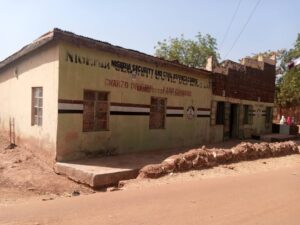
Kano Focus gathered that contrary to expectation, the collection of Keke tax is not done by the Kano Road Traffic Agency (KAROTA) but allegedly by Nigeria Security and Civil Defense Corps (NSCDS) Gwarzo Division
NSCDC office, Gwarzo division
Unlike Kano metropolis where KAROTA oversees all road compliance and enforcement activities, in Gwarzo town, the NSCDC is responsible for controlling vehicular movements and enforcement of disciplinary levy against Keke parked by the roadside to pick up passengers.
Speaking to the Leader of the Keke riders’ group in Gwarzo town, Hassan Abdullahi, he alleged that the Gwarzo Local Government Secretariat was working in cahoot with the NSCDC to collect a daily levy of N50 from Keke riders in the town.
According to Abdullahi, the N50 Levy has been imposed since October 2023.
He further revealed that there is a recent demand by the NSCDC on Keke riders in Gwarzo to leave the Gwarzo Market environs and other roadsides to be stationed inside the town’s motor park only.
Kano Focus gathered that the NSCDC in Gwarzo demands for Keke riders to be permanently stationed inside the motor park and have the motor park boys load in passengers for them.
“We were told that we should no longer stay on the market side or any other road to carry passengers by ourselves. We were directed that the motor park boys will be the ones to load passengers for us, and we must be stationed inside the park too,” Abdullahi lamented, amid a crowd of fellow Keke riders in Gwarzo town.
“The NSCDC have stationed their personnel on the road. If they see any Keke man by the road picking up a passenger that person will be arrested” he added.
Kano Focus further gathered that it was the Gwarzo Local Government Secretariat authority that stationed the NSCDC personnel on the roads to collect a fine of N5,000 Naira from any Keke rider seen picking up passenger on the road.
Abdullahi attested to that being the situation of this currently at the town from morning to 6pm in the evening.
Kano Focus inquired from the Keke riders whether they sought to find out from the Secretariat and the NSCDS on what the N50 daily levy was meant for. According to Abdullahi, the Keke riders and the NSCDS boss in Gwarzo town had three separate meetings.
“At the meetings, the man kept saying that he was instructed not to allow any Keke rider by the roadside.”
“They also never told use what the N50 levy collected will be used for, and if a Keke man is sited on a roadside, then that person will definitely pay N5,000 Naira” he said.
Inquiring into the identity of the NSCDS boss at Gwarzo, nobody knew his name as the townspeople said he did not reside in the town but comes and goes.
“He is new, he was not the one who was the NSCDS boss before, all these issues started in October which is also about the time he also started coming here” Mr. Abdullahi said.
Investigations also revealed that the Keke riders pay to the NSCDS and secretariat staff the N50 levy manually, after which they get a paper slip. However, the slip could not be obtained from the Keke men, who say they discard them as soon as they are given.
“The secretariat did not allocate a Keke park for us, the market side and the roadside is where we pick passengers from. Everybody knows that tricyclists get passengers on the go, it’s not possible to have us permanently stationed at a place far from where passengers need our services” Abdullahi reasoned.
“And the N5,000 charged by the NSCDS for standing by the road we do not know where the funds are sent to, whether it’s with the NSCDS or the Gwarzo Local Government Secretariat that takes it, we don’t know,” he said.
In a bid to also hear from the NSCDS in Gwarzo, our reporter went to the major road where they mounted a stand, but they were surprisingly missing even though the reporter had earlier noticed them while arriving the town.
The reporter proceeded to their NSCDS divisional office in the town but was also met by an empty office, with no single personnel in sight.
However, the Gwarzo Local Government Secretariat confirmed the collection of the N50 levy from Keke riders in the town. According to the Revenue Officer at the Gwarzo Local Government secret Safi’u Mande Shanono, the collection is with agreement from the Keke riders.
“The Keke riders obstruct the roadside, that was why the LGA decided that they should relocate inside the motor park because where they reside is basically on the road,”.
“That was when the Keke riders agreed to be paying N50 as levy,” Shanono said.
When Kano Focus enquired what the LGA plans to do with the levy collected from Keke riders the Gwarzo LGA Revenue officer could not specify any particular project the money will be channelled toward. He insisted that the levy collected was a tax, just as every other one collected by the government.
During the interview with Shanono enquiries were made into who manually acts as the tax collectors from the Keke riders. He confirmed that the tax collectors were not LG Secretariat personnel but casual workers recruited by the Secretariat for the purpose.
“The collectors are committee members, the committee members are not LGA staff, they are like casual personnel recruited. When issues of collection of tax come, we do not only work with LGA staff.”
“We work with various people. Some of the casual staff brought into the process were brought in by politicians to come to be part of the collection process,” Shanono disclosed.
When Kano Focus dug deeper to enquire on the role that politicians play in the levy collections process, Shanono explained that in any government, politicians bring in some of their people to work with LGA staff to oversee and collect taxes.
He went on to say that the heads of the Keke Riders Association were the ones who collect the levy stamps from the LGA and sell to the Keke riders.
“We had a sit down with the Keke Riders Association heads who agreed to not only give the levy stamps to riders, but they collected N20 off the N50 collected and remit N30 to the local government,” Shanono revealed.
Kano Focus discovered that the Gwarzo Local Government Secretariat wis re responsible for printing the levy stamps.
Shanono also confirmed to selling levy stamps worth N12,000 himself.
“The money I received personally was N3,000 and N9,000, respectfully and the money was deposited into the local government account” he said.
According to him the levy collection started for a while then it was halted before it began again a few days before the reporter visited the town.
“The collection was stopped for a while because of the shortage of passengers available for the Keke riders convey,” he said.
However, Shanono denied the allegation that the council recruited members of NSCDS to collect taxes from the Keke riders.
“It is not true that we employed the services of NSCDS in the town to collect the levy from Keke riders. But I know that there were some NSCDS personnel who came and stopped Keke riders from standing and packing on the roadsides.”
“I do not also know about the NSCDS collecting taxes or levies from Keke riders in Gwarzo” he affirmed.
COUNCIL for the Advancement of Science Writing (CASW) is currently seeking entries and nominations for the 2024 Sharon Begley Science Reporting Award.
This award will recognise and reward reporting and writing by a science journalist with unwavering passion, skill, moral clarity and a commitment to mentorship with the body of work defined as print, audio, video, and online reporting on science, health/medicine, environment, mathematics and technology.
It is open to working journalists working for at least eight to ten years, including significant experience in science journalism, or provide equivalent evidence of commitment to the field with a grant of US$20,000 to execute a substantial reporting project.
Interested applicants should send three to five published clips or other work samples demonstrating their best work in science journalism. Applicants must submit a proposal for a reporting and writing project alongside the prize grant.
Journalists living and working anywhere worldwide are eligible if they have published in news outlets that reach a global audience.
The deadline for application is April 30. Interested applicants may apply here.
THE Group Chief Executive Officer of Access Holdings Plc, Herbert Wigwe, has reportedly been involved in a helicopter crash.
The helicopter was reported to have crashed in California near the Nevada border, United States of America (USA).
Wigwe was said to have been on the flight with his wife, the group chairman of Nigerian Exchange Group Plc (NGX Group), Abimbola Ogunbanjo, and their kid were onboard the chopper when it crashed in California close to the Nevada border.
Reports say that the authorities had not found any survivors on Saturday, February 10, morning.
According to the US Federal Aviation Administration. The crash occurred at roughly 10 p.m. local time.
The Eurocopter EC130 helicopter crashed near Nipton, California, an unincorporated village located in eastern San Bernardino County about 60 miles south of Las Vegas,
It was unclear on Saturday morning where the helicopter departed from and where it was headed.
Herbert Wigwe was a co-founder of Access Bank and the founder of Wigwe University.
He was also the CEO of Access Holdings, the parent company of Access Bank.
According to NBC News, no survivors had been located as of Saturday morning, said the San Bernardino County Sheriff’s Department.
“We were made aware of a downed aircraft at approximately 10:12 p.m. on February 10, 2024. The scene of the crash was determined to be east of the 15-Freeway, near Halloran Springs Road,” the sheriff said.
It added that the FAA recognised the helicopter as a Eurocopter EC 130.
Reacting to the incident on X, @ronaldnzimorasaid he is pained by this Wigwe’s death because, according to him, he is a builder.
“We need builders building things here. We can’t have out builders die off while our uber corrupt politicians are stealing, wining and dining, yet nothing is happening to them,” he posted.
Another X user, @Morris_Monye, wrote, “This Herbert Wigwe crash is the most shocking thing I’ve heard. Trying to even understand it.”
“Another reminder that power and wealth are all vanity. Live a life of legacy. Wigwe will never be forgotten in the history of the Nigerian banking industry.”
OPERATIVES of the Federal Capital Territory (FCT) Police Command have foiled a child trafficking attempt and rescued twelve children in Abuja.
The police also arrested three suspects in connection with the crime.
This was disclosed in a statement on Saturday, February 10, by the Public Relations Officer (PRO) of the FCT Command, Josephine Adeh.
According to her, policemen attached to the Rapid Response Squad 74 (RRS 74), on Friday, February 9, intercepted one Muhammad Isah ‘m’ of Kafanchan, Kaduna, in a Toyota Hiace bus with Reg No APP 489 XE, conveying twelve four (4) male and eight (8) female; underaged children to a destination later discovered to be in Ogun state.
She said preliminary investigation revealed that the children, whose ages are between 5 years to 16 years, all from Akwanga LGA, Nasarawa State, are being trafficked to Ogun state by one Simon Kado ‘m’, a pastor and Jesse Simon Kado ‘m’, who are now in police custody.
“While the investigation is still ongoing and efforts in conduit with Nasarawa State Police Command on how to reunite victims with their respective families, the Commissioner of Police FCT, CP Benneth C. Igweh, wishes to reiterate that the safety of residents remains his utmost priority.
“He equally urges residents to report suspicious activities through the following emergency lines; 08032003913, 08061581938, 07057337653, and 08028940883; PCB: 09022222352,” the statement added.
Recall that operatives of FCT Police Command arrestedarmed robbers at an abandoned N4billion healthcare project in the Utako area of Abujaon Wednesday, February 7.
The ICIRrevealedhow the hospital project remained abandoned ten years after the contracted company, PPC Limited, shabbily executed the project despite gulping over N2 billion.
In a statement signed by the spokesperson of the FCT Police Command, Adeh, Police officers attached to Utako Divisional Headquarters, on Wednesday in a coordinated raid operation, arrested six suspected armed robbers in the building already marked a black spot.
“A locally made pistol, two live cartridges, and wraps of substances suspected to be marijuana were recovered from the suspects.
Further investigation about the recovered ammunition led to the arrest of one Yusuf Iliyasu, popularly known as ‘Tablet’, who is an ex-convict and the syndicate leader,” the statement reads.
Conceived in 2008, the Utako District Hospital, now a haven for criminals, was initially designed as a 220-bed facility to provide high-quality healthcare services to FCT residents, particularly those living in the surrounding area.
Surprisingly, the community is not located in a remote area but along the Obafemi Awolowo Road, near the Arab junction in the heart of the FCT.
According to the Freedom of Information Act (FOIA) response received from the Federal Capital Territory Development Administration (FCDA), the project was awarded to M/S Phillips Project Centre Limited at a total cost of N4.26 billion on September 20, 2008.
THE Economic and Financial Crimes Commission (EFCC) has declared the wife of a former Governor of the Central Bank of Nigeria, Godwin Emefiele, and three others wanted for money laundering.
According to the anti-fraud commission, Margaret Emefiele, Anita Omoile, and her husband, Jonathan Omoile and Eric Odoh, were declared wanted Friday, February 9, for allegedly conspiring with the former CBN Governor “to convert huge sums of money belonging to the Federal Government of Nigeria and committed felony to wit: obtaining money by pretenses, and stealing, contrary to and punishable under Sections 411, 287, and 314 of the Criminal Law of Lagos State.”
This was disclosed in a post on X by the EFCC late Friday night.
The document read, “Emefiele, Odoh, Mr and Mrs Omoile, wanted by the EFCC. The quartet of Eric Odoh, Margaret Emefiele, Anita Omoile, and Jonathan Omoile are wanted by the EFCC for offenses bothering economic and financial crimes. Any information on their whereabouts? Please contact the nearest EFCC Command or the nearest police Station.”
The wife of Godwin Emefiele and others were declared wanted in connection with the ongoing legal procedures against him, where he was accused of defrauding the government out of ₦1.8 billion and $6.2 million.
Emefiele was accused in the most recent revised accusation of posing as the Secretary to the Government of the Federation to obtain $6.2 million illegally. The case was made before Justice Hamza Muazu of the Federal Capital Territory High Court in Abuja.
According to the EFCC, Emefiele and Odoh Ocheme got the cash from the CBN using false pretences, claiming the SGF had requested them.
Emefiele was also charged with fabricating paperwork and giving his brother-in-law and wife bribes in exchange for contracts to renovate the CBN Governor’s mansion in Lagos.
According to the EFCC, Emefiele’s purported conduct violated Section 19 of the Corrupt Practices and Other Related Offenses Act 2000.
There are a total of 20 counts against Emefiele in the updated charge sheet.
The judge postponed the hearing to Friday so the former CBN governor could enter a plea regarding the revised charges.
When Emefiele was first charged in August 2023, he was charged with N6.5 billion worth of procurement fraud.
Then, he was accused of April 1616 Investment, the company owned by Sa’adatu Yaro, a female employee of CBN.
Subsequently, the EFCC modified the accusation, lowering the number of suspected procurement fraud to N1.2 billion, eliminating the names of Yaro and April 1616 Investment, and cutting the number of counts to six.
On November 29, 2023, Emefiele was arraigned on the second accusation and entered a not guilty plea.
Before the most recent revision, the EFCC had already summoned three witnesses before it commenced its trial.
THE Port Harcourt Refinery is set to start operations following the supply of 475,000 barrels of crude oil by Shell Petroleum Development Company Limited.
The crude oil supply is the first to be made in the past few years, due mainly to the poor state of the plant, which called for the recent rehabilitation and testing to ensure readiness for sustainable operations.
The ICIR has earlier reported that the Port Harcourt refinery rehabilitation has been technically completed and would commence production after Christmas barring any unforeseen circumstances.
Confirming this development, Shell said: “This significant milestone was made possible through intensive preparations, collaboration, and the dedication of the Bonny Oil and Gas Terminal, (BOGT) and Port Harcourt Refinery Company, (PHRC) teams.”
It stated that some activities, including pressure and leak testing to assure pipeline integrity by relevant subsidiaries of the NNPC Limited and integrity and maintenance activities on the Oil and Gas Terminal, BOT Refinery export pumps, and associated instrumentation, were carried out at the terminal through diligent efforts of the BOT operations and maintenance teams.
“The recommencement of crude oil supply from the Bonny Oil and Gas Terminal to Port Harcourt Refinery is a significant achievement and a game-changer for the industry and the country. The intensive preparations, collaboration, and dedication of both teams involved were instrumental in overcoming challenges and ensuring a safe and efficient supply operation.
“This milestone will support the government’s aspiration of a steady supply of petroleum products to the downstream market and other associated benefits to the economy of the nation,” Shell stated.
Already, the Nigerian National Petroleum Company (NNPCL) Ltd said it has fulfilled its pledge of achieving the mechanical completion of rehabilitation work on the Area 5 Plant of the PHRC.
It stated that rehabilitation work has been ongoing at the Refinery for over two years and the NNPC Ltd. had pledged to complete Phase One of the project (mechanical completion and flare start-up) of Old Port Harcourt Refinery (Area 5) by 31st December 2023.
Speaking during an inspection tour of the rehabilitation project, which also coincided with the 15th Refineries’ Rehabilitation Steering Committee Meeting, the Group Chief Executive Officer, NNPC Ltd., Mr. Mele Kyari, had said as of December 15th, 2023, 84.4per cent of Area 5 Plant, a key component of the Refinery, and 77.4per cent of the entire rehabilitation project has been completed.
Industry analysts said improving domestic refining of crude will impact 52 million litres of daily consumption of petroleum products in Nigeria, and lessen pressure on scarce foreign exchange expended on fuel importation.
Speaking on the development, the President of the Petroleum Retail Owners Association of Nigeria (PETROAN), Billy Gillis-Harry, told The ICIR that the development would lead to stable pricing of petroleum products in the country.
“Export, shipping, trains-shipment costs, and insurance are the costs that Nigeria won’t be paying when it refines large chunk of its imported petroleum products locally. Foreign exchange, which we are lacking now, will be saved also. It is a very welcome development for the sector, “he added.
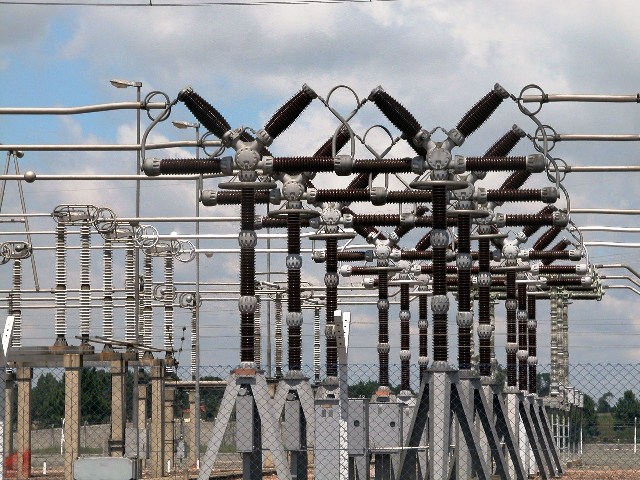
FOLLOWING the non-compliance of the 11 Electricity Distribution Companies (DisCos) to cap estimated billing for unmetered customers in the country, the Nigerian Electricity Regulatory Commission (NERC) has issued a fine of N10.51 billion to be paid by all DisCos.
The commission recalled that in February 2020, the ‘Order on Capping of Estimated Bills’ was issued and subsequently, a monthly energy cap for all DisCos, but the regulation has not been followed.
The energy cap is aimed at aligning the estimated bills for unmetered customers with the measured consumption of metered customers on the same supply feeder.
The NERC said, “In response to this and the bid to safeguard customers from arbitrary billing by DisCos, the Commission, according to Section 34 (1)(d) of the Electricity Act 2023 (EA 2023), has issued the Order on Non-compliance with the capping of estimated bills which stipulates the following:
Credit Adjustment to Customers: Discos are to issue credit adjustments to all overbilled for the period of January to September 2023 by the March 2024 billing cycle.
Public Notice: DisCos have been directed to publish the list of credit adjustment beneficiaries in two national dailies and on their website no later than 31st of March 2024.
Regulatory Sanctions: the commission shall deduct a sum of N10, 505, 286,072 from the annual allowed revenues of the eleven (11) DisCos during the next tariff review, to determine future non-compliance with the energy caps approved by the Commission.
The ICIRreported that the total number of electricity customers increased to 11.71 million in the third quarter of 2023.
According to the National Bureau of Statistics (NBS), the metered customers in the quarter under review stood at 5.68 million. This indicates a growth of 3.77 per cent from 5.47 million recorded in the preceding quarter.
Also, estimated customers during the quarter were 6.03 million, higher by 0.53 per cent from 6.00 million in Q2 2023.