The Nigeria Civil Aviation Authority (NCAA) has directed Overland Airways to refund passengers who were incorrectly charged Value Added Tax (VAT) on flight tickets purchased before January 1, 2026.
In a statement issued on Saturday, February 28, the NCAA’s Director of Public Affairs and Consumer Protection, Michael Achimugu, said the issue had been resolved following regulatory engagement between the authority, the airline, and the Nigeria Revenue Service.
“As directed by the NCAA, the operator, Overland Airways, has reverted with clarification from the Nigeria Revenue Service,” Achimugu said.
The ICIR reports that the directive followed a clarification issued by the Nigeria Revenue Service regarding the implementation of the new tax regime for airline tickets.
Passengers had raised complaints with regulators after an elderly woman was reportedly compelled to pay the new tax in 2025, despite the policy being scheduled to take effect on January 1, 2026.
Travellers said the development came as a surprise and imposed additional financial strain, particularly during the busy December travel period.
Achimugu explained that passengers who purchased their tickets before the new tax laws took effect should not have been required to pay any additional charges.
“Tickets purchased before January 1, 2026, were not affected by the new tax laws,” he said, adding that passengers who bought tickets in 2025 but were later made to pay VAT at check-in in 2026 were not supposed to have been charged.
According to the NCAA, the airline initially applied the VAT requirement based on its understanding of the new fiscal policy, which led to complaints from affected travellers, noting that regulatory clarification was required to establish the proper application of the tax.
“The onus was on the NRS to clarify, which they have now done,” he said, noting that the aviation regulator had earlier communicated its position to the airline.
He added that, following the clarification, Overland Airways agreed to rectify the situation.
“The airline has committed to redressing the situation by initiating a refund for affected passengers,” Achimugu added.
THE ISRAELI military has confirmed a new wave of Iranian missiles was launched toward Israel on Saturday, marking a sharp escalation in hostilities after the United States announced it had begun major combat operations inside Iran.
Iran confirmed it had carried out its first large-scale drone assault against Israel, firing what it described as “dozens of attack drones” in retaliation for earlier strikes targeting Iranian military and nuclear facilities. The retaliatory action quickly expanded beyond Israel, with explosions reported across several Middle Eastern countries, including the United Arab Emirates, Bahrain and Qatar, raising fears of a widening regional conflict.
Qatar’s Ministry of Defence said a second round of missiles directed toward the country was successfully intercepted.
“All incoming missiles were intercepted and destroyed before reaching Qatari territory,” the ministry said in a statement posted on Instagram, assuring residents that the armed forces possess the full capability to safeguard national security. Authorities urged citizens to remain calm and follow official instructions.
According to CNN, by 2:30 p.m. local time in Qatar, multiple missile interceptions were reportedly heard across the country, underscoring the scale of the unfolding confrontation.
The escalation follows an announcement by former U.S. President Donald Trump, who said American forces had begun “major combat operations in Iran,” aimed at dismantling Tehran’s missile capacity and nuclear programme. Trump also suggested the campaign could trigger political change within Iran, saying the objective was to secure long-term safety for the United States and its allies.
Israeli Prime Minister Benjamin Netanyahu confirmed that Israel and the United States were conducting joint military operations that would continue “as long as needed,” signalling a sustained campaign that analysts warn could engulf the broader Middle East.
The intensifying exchange between Iran, Israel and the United States has heightened global concern that the conflict could expand beyond bilateral strikes into a broader regional confrontation, threatening stability across the Middle East and international energy and security interests, as both sides signal readiness for prolonged operations.
The ICIRreported that on Saturday, explosions were heard in the Iranian cities of Kermanshah, Lorestan, Tabriz, Isfahan and Karaj.
Defence Minister Israel Katz had said, “The State of Israel launched a pre-emptive attack against Iran to remove threats to the State of Israel.”
The attack followed a 12-day air war between Israel and Iran in June and repeated US.-Israeli warnings that they would strike again if Iran pressed ahead with its nuclear and ballistic missile programmes.
US President Donald Trump on Saturday announced that American forces had launched what he described as “major combat operations” against Iran, marking a dramatic escalation in tensions between Washington.
Trump said the US military had begun large-scale operations aimed at eliminating what he called “imminent threats” posed by the Iranian government to American citizens, troops, and allied nations.
Military analysts say Iran’s rapid response is now testing the extensive U.S.-backed defence architecture built across the Gulf and surrounding areas.
Retired US Air Force Colonel Cedric Leighton told CNN that Iran’s speed in launching counterstrikes was unexpected, given intelligence assessments suggesting its missile-launch capacity had been weakened by earlier attacks.
“This defensive posture that has been established over months and years in the Gulf region is now being put to the test,” Leighton said, noting that Tehran appeared more prepared for a large-scale assault than anticipated.
According to intelligence estimates cited by the analyst, Iran may possess only about a third of the missile launchers it had before attacks last year, making the rapid retaliation particularly notable.
UNITED State President Donald Trump has announced that American forces had launched what he described as “major combat operations” against Iran, marking a dramatic escalation in tensions between Washington.
In a televised statement released Saturday morning, Trump said the United States military had begun large-scale operations aimed at eliminating what he called “imminent threats” posed by the Iranian government to American citizens, troops, and allied nations.
“A short time ago, the United States military began major combat operations in Iran. Our objective is to defend the American people by eliminating imminent threats from the Iranian regime, a vicious group of very hard, terrible people. Its menacing activities directly endanger the United States, our troops, our bases overseas, and our allies throughout the world.
“They’ve rejected every opportunity to renounce their nuclear ambitions, and we can’t take it anymore. Instead, they attempted to rebuild their nuclear programme and to continue developing long-range missiles that can now threaten our very good friends and allies in Europe, our troops stationed overseas, and could soon reach the American homeland. Just imagine how emboldened this regime would be if they ever had and actually were armed with nuclear weapons as a means to deliver their message,” he said.
The ICIRreports that on Saturday, explosions were heard in the Iranian cities of Kermanshah, Lorestan, Tabriz, Isfahan and Karaj.
Defence Minister Israel Katz had said “The State of Israel launched a pre-emptive attack against Iran to remove threats to the State of Israel.”
The attack follows a 12-day air war between Israel and Iran in June and repeated U.S.-Israeli warnings that they would strike again if Iran pressed ahead with its nuclear and ballistic missile programmes.
According to President Trump, the operation targets Iran’s missile capabilities, naval assets, and military infrastructure linked to regional militant groups.
“We are going to destroy their missiles and raise their missile industry to the ground. It will be totally, again, obliterated. We’re going to annihilate their navy. We’re going to ensure that the region’s terrorist proxies can no longer destabilise the region or the world and attack our forces, and no longer use their IEDs or roadside bombs, as they are sometimes called to so gravely wound and kill thousands and thousands of people, including many Americans. And we will ensure that Iran does not obtain a nuclear weapon,” he added.
The president framed the campaign as a continuation of longstanding US policy aimed at stopping Iran’s nuclear ambitions, referencing earlier strikes on nuclear facilities at Fordow, Natanz, and Isfahan.
“And it was Iran’s proxy, Hamas, that launched the monstrous October 7th attacks on Israel, slaughtering more than 1,000 innocent people, including 46 Americans, while taking 12 of our citizens hostage. It was brutal, something like the world has never seen before. Iran is the world’s number one state sponsor of terror and just recently killed tens of thousands of its own citizens on the street as they protested.
“It has always been the policy of the United States, in particular my administration, that this terrorist regime can never have a nuclear weapon. I’ll say it again, they can never have a nuclear weapon. That is why in Operation Midnight Hammer last June, we obliterated the regime’s nuclear programme at Fordow, Natanz, and Isfahan,” Trump said.
In his address, Trump justified the military action by citing decades of hostilities between the United States and Iran, including the 1979 U.S. embassy hostage crisis in Tehran, the 1983 bombing of US Marine barracks in Beirut, and attacks on American forces and vessels in the Middle East.
“For 47 years, the Iranian regime has chanted, Death to America, and waged an unending campaign of bloodshed and mass murder, targeting the United States, our troops, and the innocent people in many, many countries. Among the regime’s very first acts was to back a violent takeover of the U.S. embassy in Tehran, holding dozens of American hostages for 444 days. In 1983, Iran’s proxies carried out the Marine barracks bombing in Beirut that killed 241 American military personnel.
“In 2000, they knew and were probably involved with the attack on the USS Cole. Many died. Iranian forces killed and maimed hundreds of American service members in Iraq,” he explained.
He also accused Iran of backing militant groups across Lebanon, Yemen, Syria, and Iraq and linked Tehran to the October 7 attacks carried out by Hamas against Israel, adding that Iran has previously denied directing such attacks and maintains that its nuclear programme is for peaceful purposes.
Trump issued a direct warning to members of Iran’s security forces, urging them to lay down their weapons and promising immunity if they complied, also addressing Iranian civilians, urging them to remain indoors as military operations continue.
The US president acknowledged the possibility of American casualties, describing the operation as a “noble mission” necessary to protect future generations from the threat of a nuclear-armed Iran.
The announcement is expected to trigger urgent reactions from world leaders amid fears that direct U.S.–Iran conflict could destabilise the Middle East, disrupt global oil markets, and draw regional powers into a broader confrontation.
An Iranian official has told the Reuters news agency that Tehran is preparing for counterattacks that are set to be crushing.
Iran’s supreme leader, Ayatollah Ali Khamenei, was reportedly not in Tehran when missiles from US and Israel hit Iran.
He has reportedly been transferred to a secure location.
However, responding to the attack, Ebrahim Azizi, Head of National Security Commission of the Iranian parliament, said Israel and America had gone down a path which is no longer in their control.
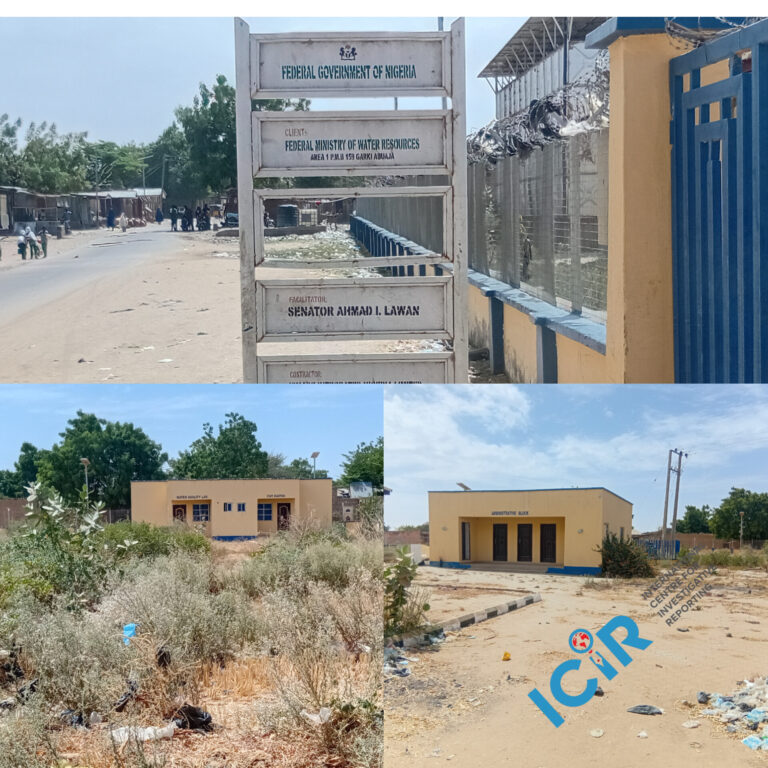
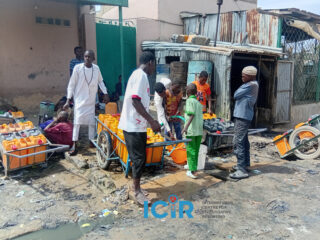
Residents of Bade, Gashua, Jakusko and other communities in Bade Local Government Area of Yobe have been battling a chronic kidney disease suspected to be caused by contaminated water. The ICIR investigation found that a N5.7 billion Gashua water scheme the federal government commissioned in Yobe in May 2025 to serve over 1 million residents remains dormant.
The project facilitated by former Senate President, Senator Amad Lawan, a resident of Gashua, was inaugurated by the Minister of Water Resources and Sanitation, Joseph Utsev, who described it as a strategic solution to long-standing water scarcity and repeated outbreaks of waterborne diseases in the region.
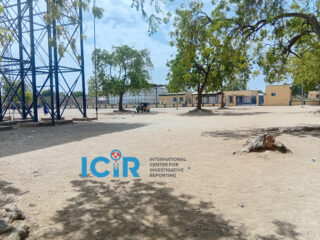
Ironically, findings by The ICIR showed that the water scheme functioned in the presence of the dignitaries that commissioned the project but stopped operating thereafter. The facility which has a water laboratory for water treatment was found firmly locked, with no sign of staff or activity as the surrounding compound has been overtaken by thick bushes and weeds, giving the impression that it had been abandoned for months without maintenance or human presence.
How we were diagnosed of kidney disease-Residents
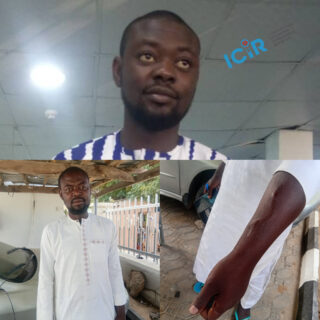
In January 2024, Abdullahi Zakari, decided to visit the nearest clinic in Gashua, in Bade Local Government Area of Yobe State when he started experiencing general discomfort and frequent vomiting.
“When I went to the clinic, they found out that I was having hypertension. I didn’t even know that I had high blood pressure (HBP). I had never checked my BP in my life. My BP was reading 200, 190 something, 180 something,” Zakari said.
Photo collage of Zakari showing his looks before he was diagnosed with CKD and his current looks. PC: Nanji Nandang/ICIR
The 33-year-old father of one, said that he continued to take the drugs the doctor prescribed but started having blurry vision, swollen legs and shortness of breath, which prompted him to visit the Aminu Kano Teaching Hospital in Kano State on March 7, 2024, for a general test.
“That’s when I found out that I was having this kidney problem. So, for two years now, every week, I go to the specialist hospital in Damaturu twice for dialysis,” he said.
Zakari, a private worker, said that the state specialist hospital doesn’t charge for the dialysis but he spends at least N60,000 on transportation, accommodation, and feeding weekly for the dialysis.
“Dialysis is free. The only problem is the transport because each day I have to go to Damaturu, I spend not less than N11,000 on transport alone. I have to feed myself there. Every week, I must go twice. If I receive my salary, I just give my wife her daily expenses. Then, the remaining amount, I keep it as transport,” he explained.
Zakari’s case is not isolated as over ten patients diagnosed with chronic kidney disease- who are currently attending dialysis at the Yobe State Specialist Hospital Damaturu- shared similar experience.
Rising cases
An independent medical expert who pleaded to remain anonymous analysed the diagnosis result from Aminu Kano Teaching Hospital in Kano Zakari shared with this reporter.
“These symptoms are classic signs of advanced kidney failure, also called uremia, where waste products accumulate in the blood because the kidneys cannot filter properly. The extremely high blood pressure and neurological sign (asterixis) also indicate advanced kidney disease affecting multiple body systems. This patient has anaemia, common in CKD because kidneys fail to produce erythropoietin, the hormone that makes red blood cells,” the expert explained.
Residents of Gashua, Jakusko and other communities told The ICIR that for decades their family members and friends have died from kidney disease, noting that nearly every family in these communities have lost a loved one, relative, or friend to the disease.
A 40-year-old Habu Bunu, from Nguru, a neighbouring LGA, said that he is the survivor out of the five patients of kidney disease in his community that travel to Damaturu for dialysis, as the other four died one by one throughout 2025.
“Even this week, two patients died. One from Damaturu and another from Matina. It’s a terrible disease,” he said.
Bunu explained that he was first diagnosed with chronic kidney disease on October 15, 2024, and he meets with over 50 patients who come for dialysis on Mondays and Thursdays.
Similarly, Muhammed Nasiru Buba, a resident of Gashua, said he was diagnosed in August 2025 after experiencing severe discomfort, shortness of breathing and swollen face.
“I went to the Federal Medical Centre Nguru for a checkup. The doctor collected my blood and ran an EUC test. She prescribed some drugs and asked me to come back after two weeks for a scan. After everything, the doctor told me my creatinine was up to 330 and recommended dialysis,”
According to Mayo Clinic, a world-renowned nonprofit medical centre known for its integrated care, cutting-edge research, and commitment to patient-cantered healthcare, EUC (Electrolyte, Urea and Creatinine) is a kidney function test, noting that creatinine usually enters the bloodstream and is filtered from the bloodstream at a rate that tends to be constant. The amount of creatinine in blood should be somewhat stable. A rise in the level of creatinine may be a sign that the kidneys aren’t working as they should.
“Serum creatinine is reported as milligrams of creatinine to a decilitre of blood (mg/dL). Or it’s reported as micromoles of creatinine to a litre of blood. The typical range for serum creatinine is for adult men, 0.74 to 1.35 mg/dL (65.4 to 119.3 µmol/L) and for adult women, 0.59 to 1.04 mg/dL (52.2 to 91.9 µmol/L),” the Moyo website reads.
Muhammed Abba Lawal from Jakusko, a neighbouring LGA, said that in June 2024, one side of his face became swollen, and he went to the general hospital Jakusko for checkup.
“The doctor told me that my blood was low and infused six pines of blood on me immediately. When I got better, the doctor gave me a written note to take to the specialist hospital in Damaturu. It was there that the test revealed that I had kidney problem,” Lawal said.
Similarly, 60-year-old Shuaibu Idris from Matina, a neighbouring LGA, narrated that his health deteriorated in August 2025, when he started experiencing consistent headaches, shortness of breathing was told in the clinic that his blood pressure was high.
“We went to the hospital afterwards. That was where I was tested and diagnosed with kidney disease. The doctor referred us to the hospital in Damaturu for dialysis. I was thinking I will get better after one or two dialysis but it’s obvious my journey to the hospital will not end anytime soon,” he said.
In October 2025, Yobe State Government announced that it was extending the free dialysis programme that was first introduced by the previous administration for kidney patients across the state.
The Commissioner for Information, Abdullahi Bego, explained that the initiative was introduced to ease the financial burden on patients and their families while improving access to quality healthcare as part of efforts to tackle the rising cases of kidney-related diseases among residents.
A medical engineer based in Gashua, Muhammad Aji-Gana, who lost three family members to the disease within the interval of three years said it was a traumatic experience.
“I lost three of my siblings and my mother. First, my mom started in 2021. Her condition started with symptoms of rashes from her skin. She was treated with the creams and antibiotics for rashes treatment. After two weeks, the rashes disappeared but a week later, she felt discomfort. We took her to the specialist hospital Gashua. We were told to go for the kidney function test,” he narrated.
Aji-Gana said that after this test was carried out, his mother was found with high levels of creatinine and urea, noting that the two are the biomarkers that clinically show that a patient’s kidney is normal or abnormal.
“She was 61 years old. She spent three days in the hospital. In her four days, she passed away. So, the following year, after her departure, my sister who just gave birth to seven children was taken to hospital and for the first time, her blood pressure was very high. It was around 200. We were directed to go for EUC and LFT. The result showed that the kidney had failed and the liver was almost impaired,” he recalled.
The medical engineer explained that it was during the treatment that she passed away, noting that his second sister was diagnosed in 2023 too.
“She had given birth to a child and the child died immediately. Her BP was rising and we were directed to go for EUC and LFT again. She was diagnosed with high elevated urea and creatinine which led to due cause for dialysis. During the treatment, she passed away too,” he said.
Also, a family member of a 15-year-old boy who pleaded to be anonymous explained that the teenager showed symptoms commonly mistaken for minor illness, including persistent weakness and fatigue, reduced appetite, and swelling of the face.
“We didn’t understand the symptoms. it was when his face started swelling that we went to the hospital, but he died when we had just started treatment,” he explained.
The ICIRreported in 2022 that no less than 150 residents of Gashua, die of kidney disease yearly, meaning that the figures have increased, a data that could not accessed as at the time of filing this report.
This reporter gathered from medical experts during field visits to some of the medical facilities and laboratories in the communities, that the number of cases has seriously increased and more people are dying monthly from their database but declined to share relevant figures until this reporter can provide ethical clearance.
This reporter contacted the Executive Secretary of the Hospital Management Board, Abubakar Yerima, to obtain ethical clearance to interview medical experts at the state specialist hospital and gather data.
“It is the ministry of health that gives ethical clearance for any research. and you must come with a proposal of your research methodology,” Yerima said in a phone conversation.
The reporter also shared questions seeking data on the annual number of CKD cases recorded across state-owned hospitals in Yobe State over the past 10 years, disaggregated by location, age group, and gender.
Like all the medical experts this reporter met at the hospital, Yerima declined to respond to the questions but agreed to facilitate the ethical clearance process by forwarding the request to the State Ministry of Health for approval.
Multiple research projects have been carried out because of the alarming cases of death in these communities.
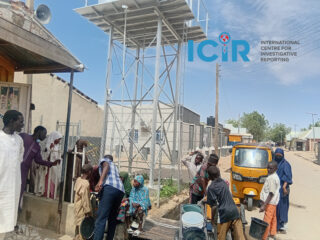
Buba and other sources explained that they drink water from vendors, who buy water from public boreholes, and sachet water popularly called pure water.
One of the public boreholes Buba and other residents drink from. PC: Nanji Nandang/ICIR
One of the research projects analysed by The ICIR is the one carried out by biochemistry graduate of Federal University Gashua, Khalid Rabiu Ahmad, in 2021, which assessed the quality of sachet water widely consumed in the town, amid growing public concern over kidney-related illnesses and the absence of consistent pipe-borne water supply.
Ahmad’s research found that popular sachet water brands sold in Gashua largely meet international safety standards for drinking water, with heavy metals and key physicochemical parameters falling within permissible limits set by the World Health Organization.
According to him, Gashua residents rely heavily on commercially packaged sachet water due to limited municipal water infrastructure.
Similarly, In late December 2025, a preliminary report by Mahmoud Maina, the Lead Researcher and Director, Biomedical Research and Training Centre (BioRTC), Yobe State University, indicated heavy metal presence in samples of water consumed by residents of Gashua town.
He said BioRTC, in collaboration with a 50-man team of scientists from the United States, United Kingdom, Ghana, among others which included nephrologists, geologists, chemists, physicians, geneticists and environmental scientists, collected over 3,000 human and environmental samples, including urine, blood, food items, farm soil, river and borehole water for the research.
FG water project dormant after commissioning
The ICIR found out that the government water facility that was supposed to treat water before distributing in Gashua stopped working some years ago. Although there are government drilled boreholes within the community, in May 2025, the Federal Government commissioned a N5.7 billion Gashua water scheme very close to the old facility to serve over 1 million residents.
The N5.7 billion Gashua water scheme the Federal Government commissioned in Yobe in May 2025 to serve over 1 million residents lying dormant. opposite the facility is the old government water supply tank. PC: Nanji Nandang/ICIR
When the ICIR contacted the General Manager of the State Water Board, Baaba Habu for insights, he confirmed that there might be contamination in the sources water the residents drink from.
“There may be contamination because there may be the presence of heavy metals that are responsible for these kidney problems. We are aware of kidney failure in that community. The state is aware,” he said, noting that the water board has been trying to mitigate the problem “through advising the communities to avoid these shallow wells. Because the boreholes we drill are a little bit deeper, but the wells people are using in Gashua are shallow. So, there will be penetration of heavy metals from the surface into the groundwater.”
When The ICIR asked why the N5.7 billion Gashua water scheme was under lock since the board is encouraging residents to drink its treated water, Habu insisted that the facility was not under lock.
“I would disagree with this because we have an area manager there and we are operating the boreholes. We have three well fields. One is in the middle, the other one is this water works, and the other one is around Zango. And they are working. That’s the feeder, that’s the boreholes that feed the town. Apart from the isolated boreholes in the town,” he said.
Result of water lab-test
The ICIR collected water samples from the government water borehole Habu mentioned and samples from the private boreholes the residents buy water from to determine the heavy metals concentration.
One of the government water boreholes from which samples were collected for lab analysis. PC: Nanji Nandang/ICIR
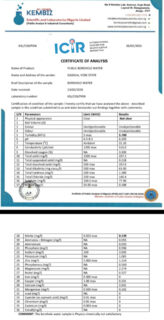
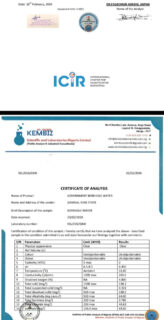
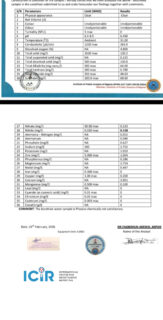
The result obtained from Kembiz Scientific and Laboratories Nigeria Ltd, accredited by National Register for Conformity Assessment Practitioners under Standard Organisation of Nigeria (SON) and certified by Institute of Public Analysts of Nigeria (IPAN) revealed that the samples are Physico-chemically not satisfactory.
The result obtained from Kembiz Scientific and Laboratories Nigeria Ltd, accredited by National Register for Conformity Assessment Practitioners under Standard Organisation of Nigeria (SON) and certified by Institute of Public Analysts of Nigeria (IPAN) revealed that the samples are Physico-chemically not satisfactory. PC: Nanji Nandang/ICIR
An independent Water Quality Analyst, who pleaded to remain anonymous explained that the result shows that both the government and public borehole water contains elevated levels of nickel and iron above World Health Organization (WHO) safety limits, alongside dangerous nitrite contamination, associated with kidney stress, noting that the water fails WHO drinking-water quality standards.
“You see the WHO standard values represent the maximum safe concentration of substances in drinking water. Sample 1 iron level is over 7 times higher than WHO limit. High iron causes: metallic taste, staining of containers, growth of iron bacteria, gastrointestinal irritation, Long-term exposure stresses kidneys and liver. Nickel exceeds WHO safety limits in both samples. The health implications are kidney damage, allergic reactions, possible carcinogenic risk with chronic exposure. This is a serious toxic metal finding.
“Both samples exceed WHO limit of Nitrite. This alone makes water unsafe for drinking because it reduces oxygen transport in blood, which is dangerous for infants” the expert explained.
The expert noted that the two water samples have heavy metal.
“If the water is not treated, it must have heavy metal because there are metals that are drilled from the soil. So, you don’t know what the component of that soil is,” the expert added.
Residents in limbo
While the N5.7 billion federal government water scheme in Gahua that is supposed to treat and supply safe water to over one million residents remain dormant, residents like Aji-Ghana have expressed fear that they may be the next victims of the chronic kidney disease that have continued to ravage Bade, Jakusko, Guru, and neighbouring LGAs.
“You see, I am a victim of this issue. I fell ill last two weeks, and the doctor told me to go for EUC and LFT when I went to the hospital,” he said, expressing fear that he might also face the same complications his three family members faced.
“Imagine losing family members each year it is very traumatising situation because it was reported that each year not less than 150 people are dying. 150 people are too many. meaning that each and every one of us will pass away through this process,” he added.
Aji-Ghana called on the state and federal governments to take action in solving restoring the water scheme to reduce the spike.
Also, Zakari and other patients currently undergoing dialysis in Damaturu have appealed to the government to establish dialysis centres in Gashua and at the state specialist facilities in neighbouring communities to ease the treatment burden and improve access to care.
“I used to be a farmer but since I was diagnosed with this sickness, I can barely go to the farm. This constant visit to Damaturu is telling on me. Sometimes I get stranded in Damaturu,” Abba said.
Idris explained that, if the dialysis centre is established in Gahua, it will be cheaper for him than travelling twice a week to Damaturu.
THE NATIONAL Identity Management Commission (NIMC) has said National Identification Number (NIN) would be required for all students taking the 2026 Senior Secondary School Certificate Examinations.
According to the commission, the NIN is a crucial academic tool needed for school registrations, scholarship applications, and other government benefits.
In a statement on its X,handle, NIMC said, “Dear Nigerian parent, your child needs an NIN. NIN is now important for school registrations, exams, scholarships, and many other government benefits.”
“To make it easier for students to get their NIN, NIMC has set up registration points in local communities through their ‘Ward Enrollment Strategy.’ This means students can register closer to home, rather than having to travel far.
“NIMC has also provided ways to find the nearest registration center, including checking their website www.nimse.gov.ng or calling their toll-free line. The commission is emphasising that getting a NIN is free at official centers, and people should beware of unauthorised agents who might try to charge for the service.”
The commission said for students under 16, a parent or guardian with a valid NIN must accompany them to the registration center. It also advised parents to bring their children’s original birth certificate or a statutory declaration of age.
The commission further appealed to parents to take advantage of these efforts to ensure their children have a smooth examination process.
THE ICIRreported that in December 2020, the late president Muhammadu Buhari’s administration issued a directive to communication service providers to withdraw the licence of any service provider which failed to link NIN to subscribers’ SIM cards. This order has since made more millions of Nigerians to register for NIN.
THE Ejigbo Local Council Development Area (LCDA) of Lagos State has reportedly spent over ₦3 billion on roads, drainage, and other projects. An investigation by The ICIR, however, reveals that the amounts quoted for the jobs were inflated beyond market value, while others were poorly executed and abandoned.
Janet Adanyari has operated her provision shop along Falana Street since 2010. Every time a vehicle or tricycle drives past the front of her shop, layers of dust settle on her goods, shelves, and the floor.
Oftentimes Adanyari had to cover her nose whenever in her shop, and uses a small rag to dust her goods. It is a daily ritual for her and many others who operate shops close to the main road at Falana Street.
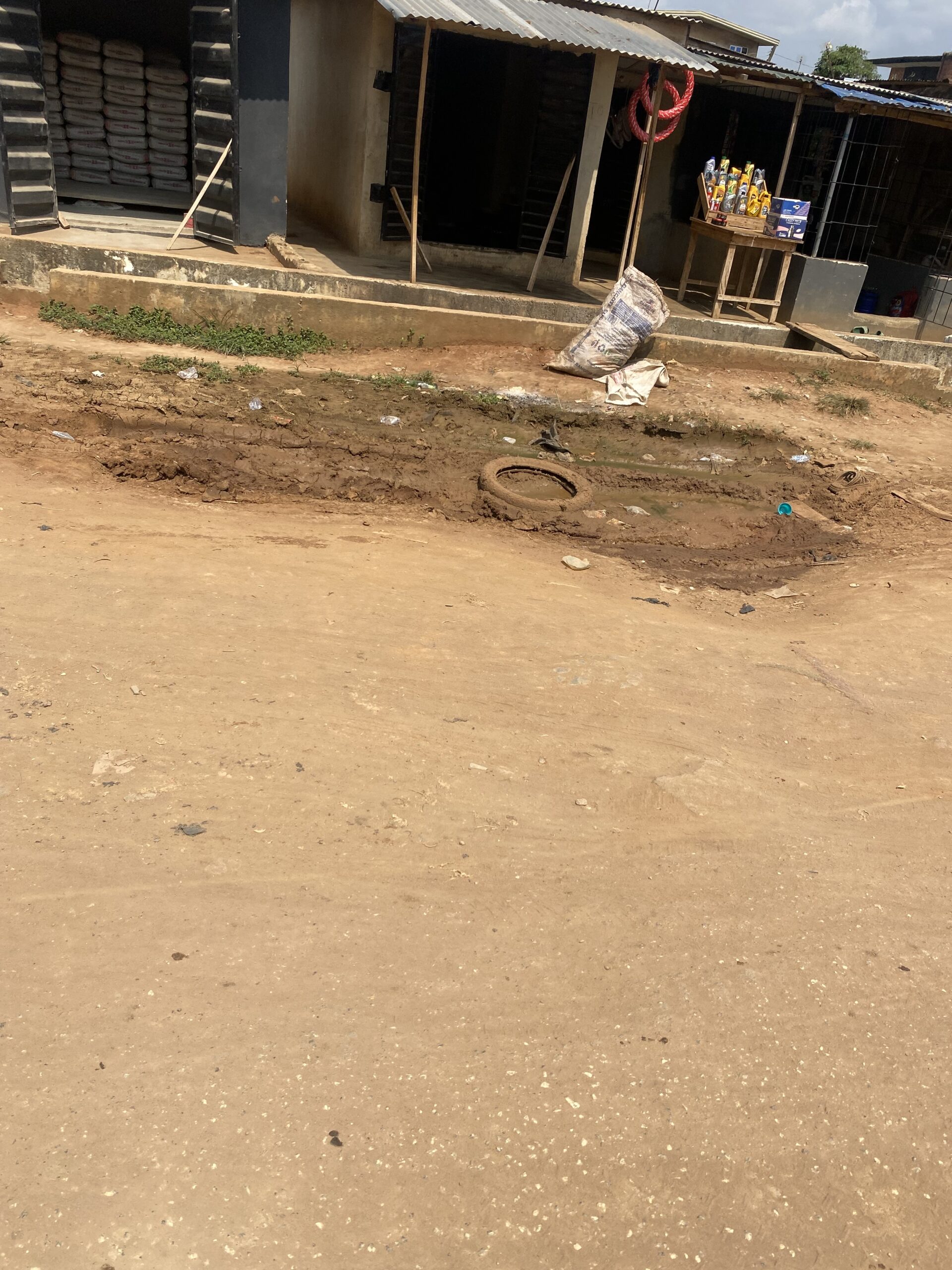
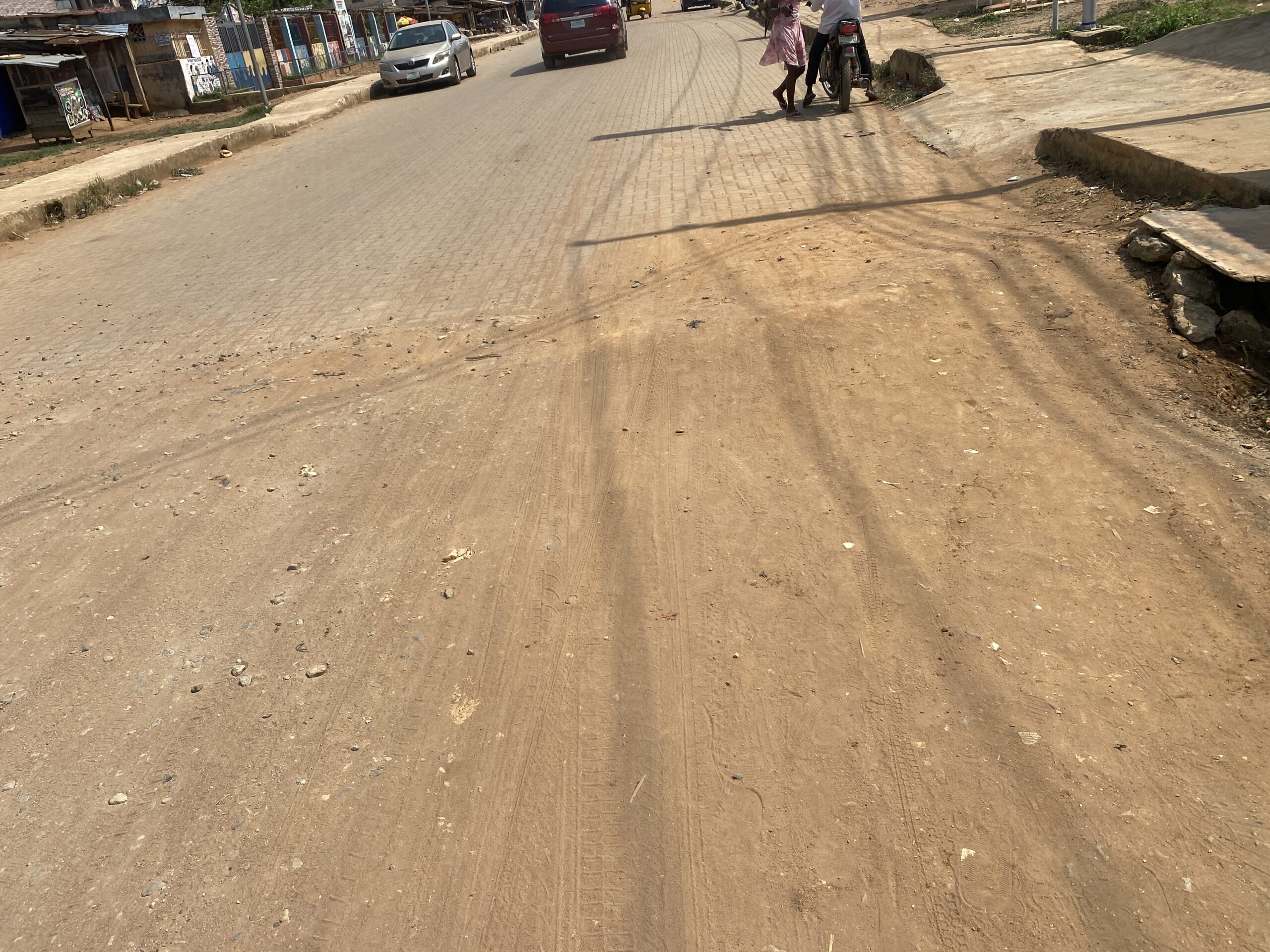
The abandoned road in front of Adanyari shop at Falana street. PC:Mustapha Usman/ICIR
Adanyari, whose provision shop is located besides the newly constructed drainage, said the council merely extended the channel from the point where the interlocking and drainage project had been abandoned in 2025. However, she noted that the road itself has remained in a deplorable condition for years.
But dust is not her only worry. During the rainy season, water washes through the front of her shop. The situation worsens during heavy rainfall when flooding turns the surface muddy and slippery, preventing vehicles from passing through.
“There is nothing we can do,” Adanyari said. “We must eat, so we cannot stay indoors because of dust. We keep cleaning and covering our noses until God remembers us. Most of my customers are children, but some now go elsewhere because of the dust.”
Adanyari, who said she has operated in the area since 2010, recalled that the road has remained largely unchanged over the years.
Her experience mirrors that of other residents and traders in the area, who continue to wait endlessly for contractors to complete the Falana Road project awarded by the Ejigbo Development Area Council in July 2024.
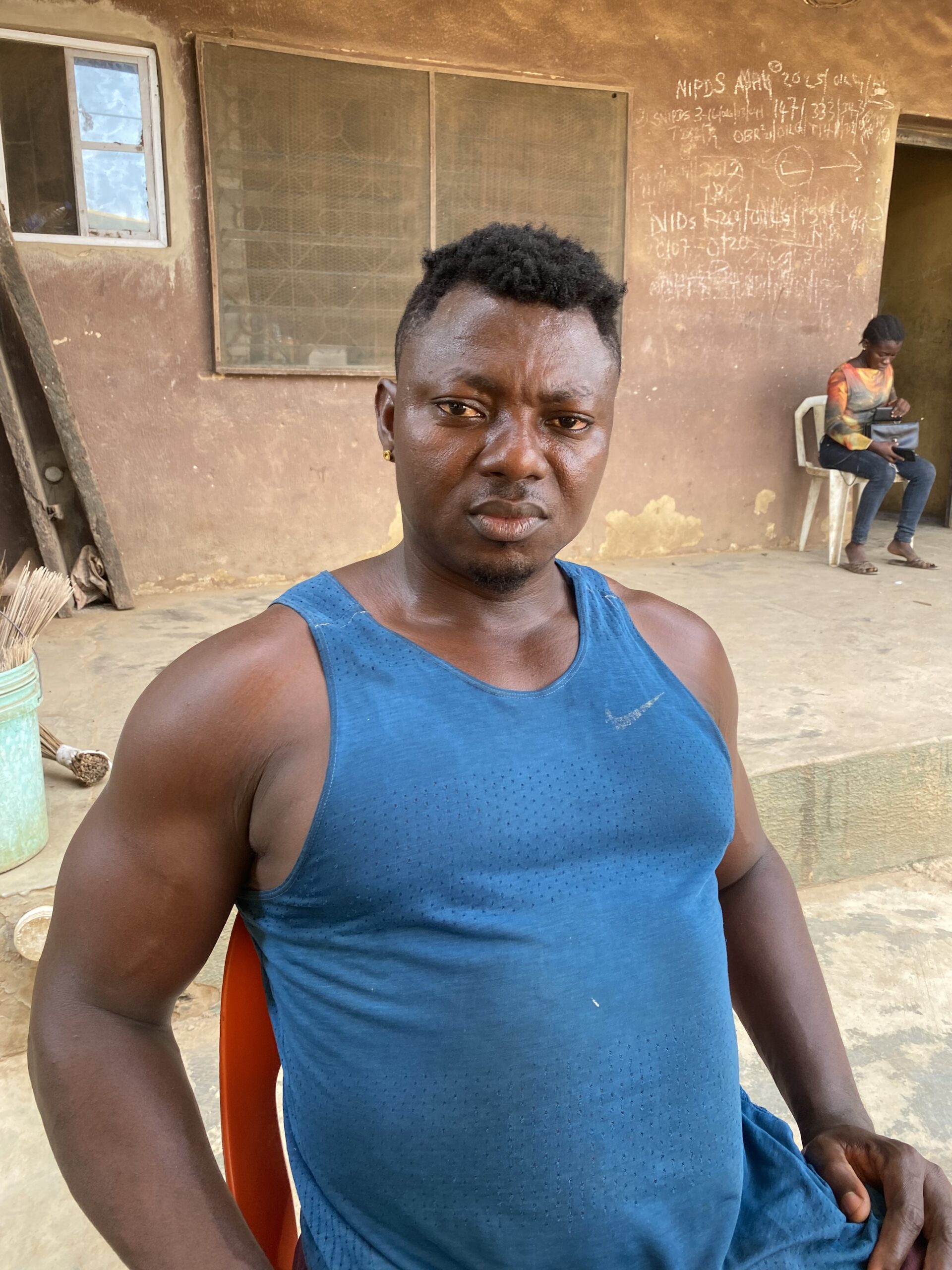
Quadri Lateef, one of the residents at Falana street
Quadri Lateef, who also lives in the area, expressed frustration over what he described as poor handling of the project after the drainage construction.
“After they did the drainage, the contract engineers sold the soil and sand and packed everything away. We left them because we did not want trouble,” he said, adding that he was unaware any funds had been collected for the full completion of the road and gutter.
Lateef noted that although the drainage itself appears functional, the surrounding road condition undermines its value. He described frequent vehicle damage along the street and recalled periods when motorists had to push their cars through particularly bad sections.
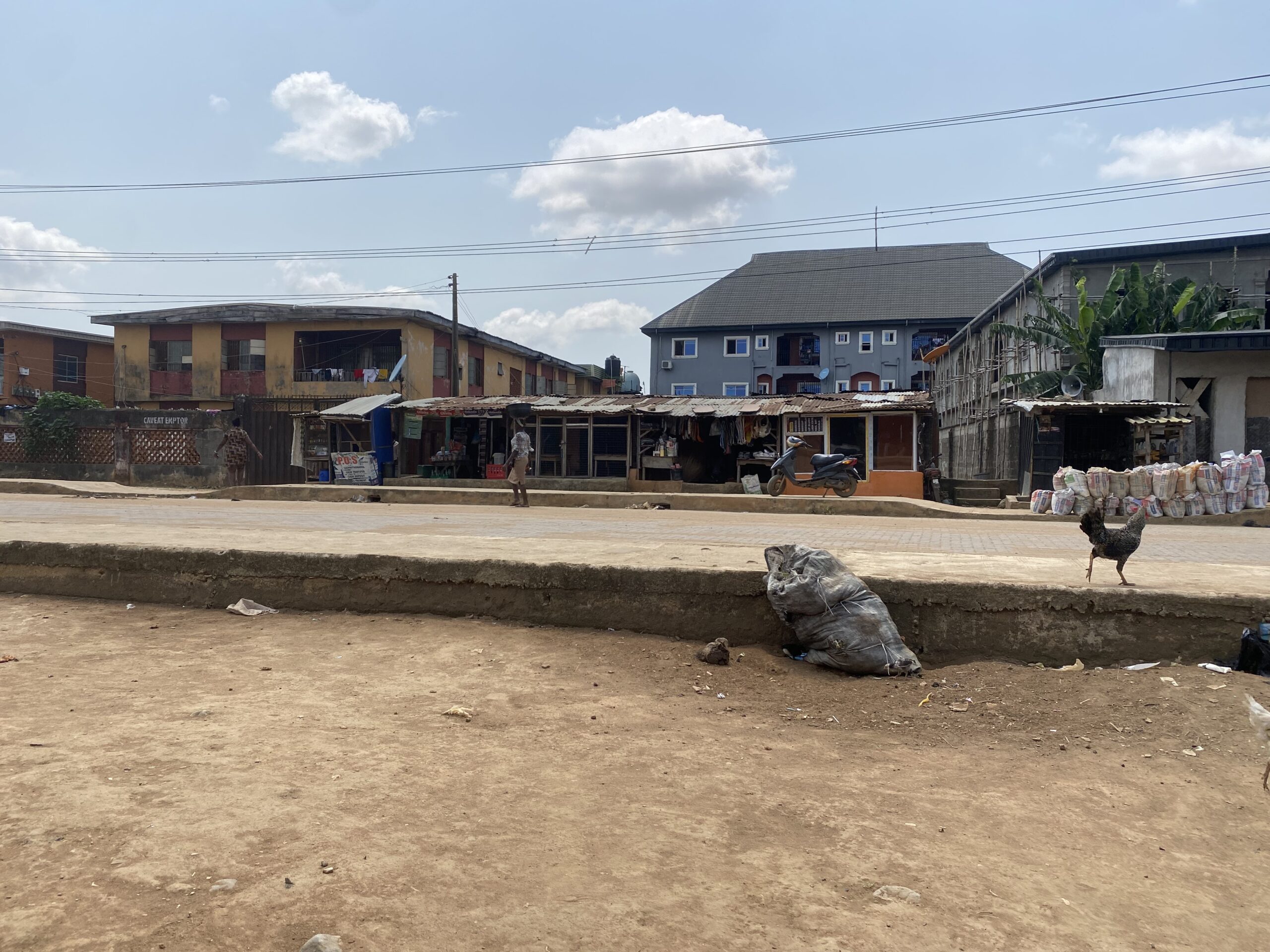
Abandoned road, exposed trench in front of Lateef’s house
“The drainage may be good, but it is not right for people entering the community to meet a road in this deplorable state,” he added.
Adanyari and Lateef live at the far end of Falana Street, which would later be described as Falana Street phase 2 by the council. Their houses and shops fall under the unfinished stretch of the street, leading toward Omiyale, which continues to be a nightmare for commuters.
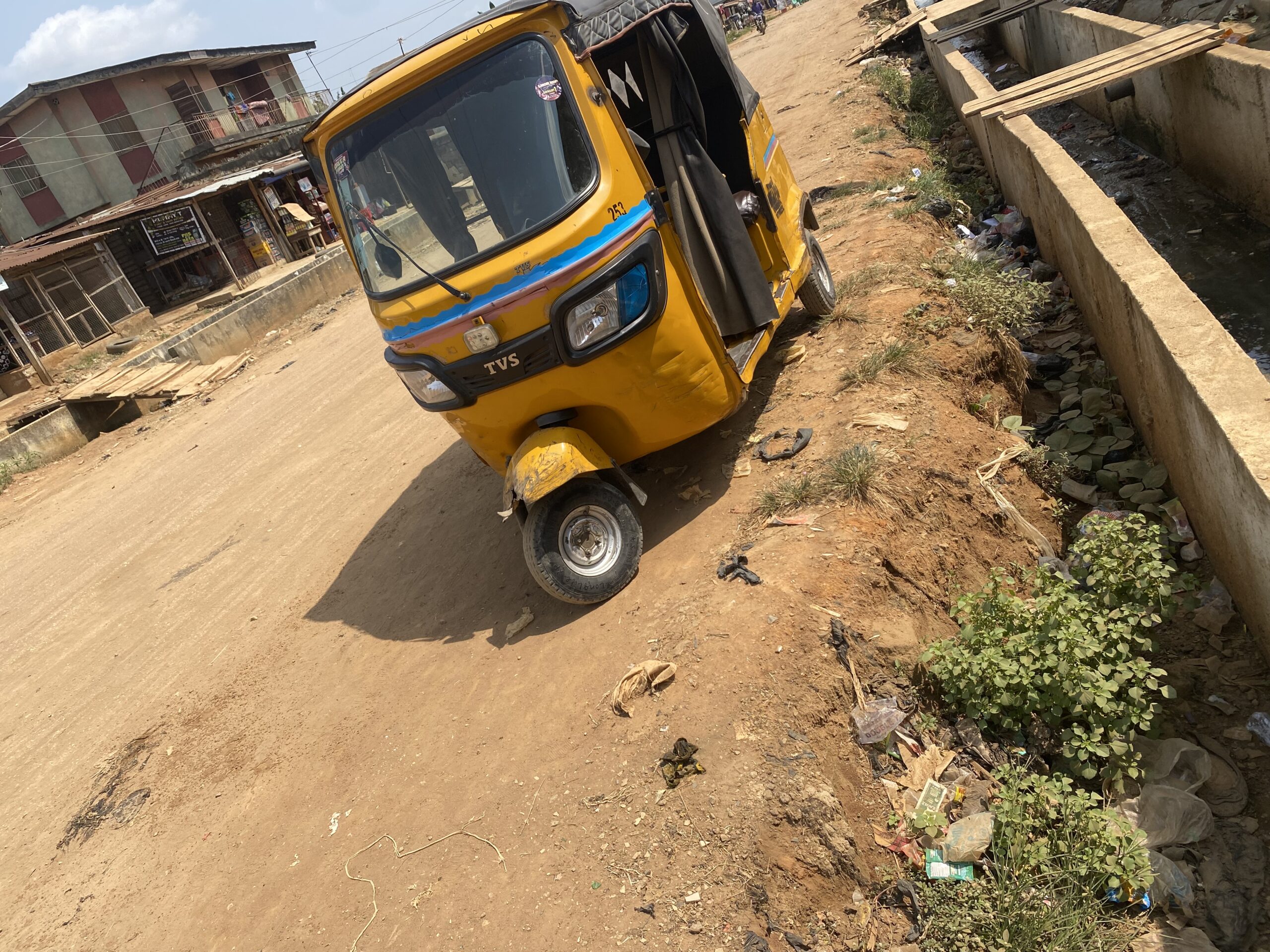
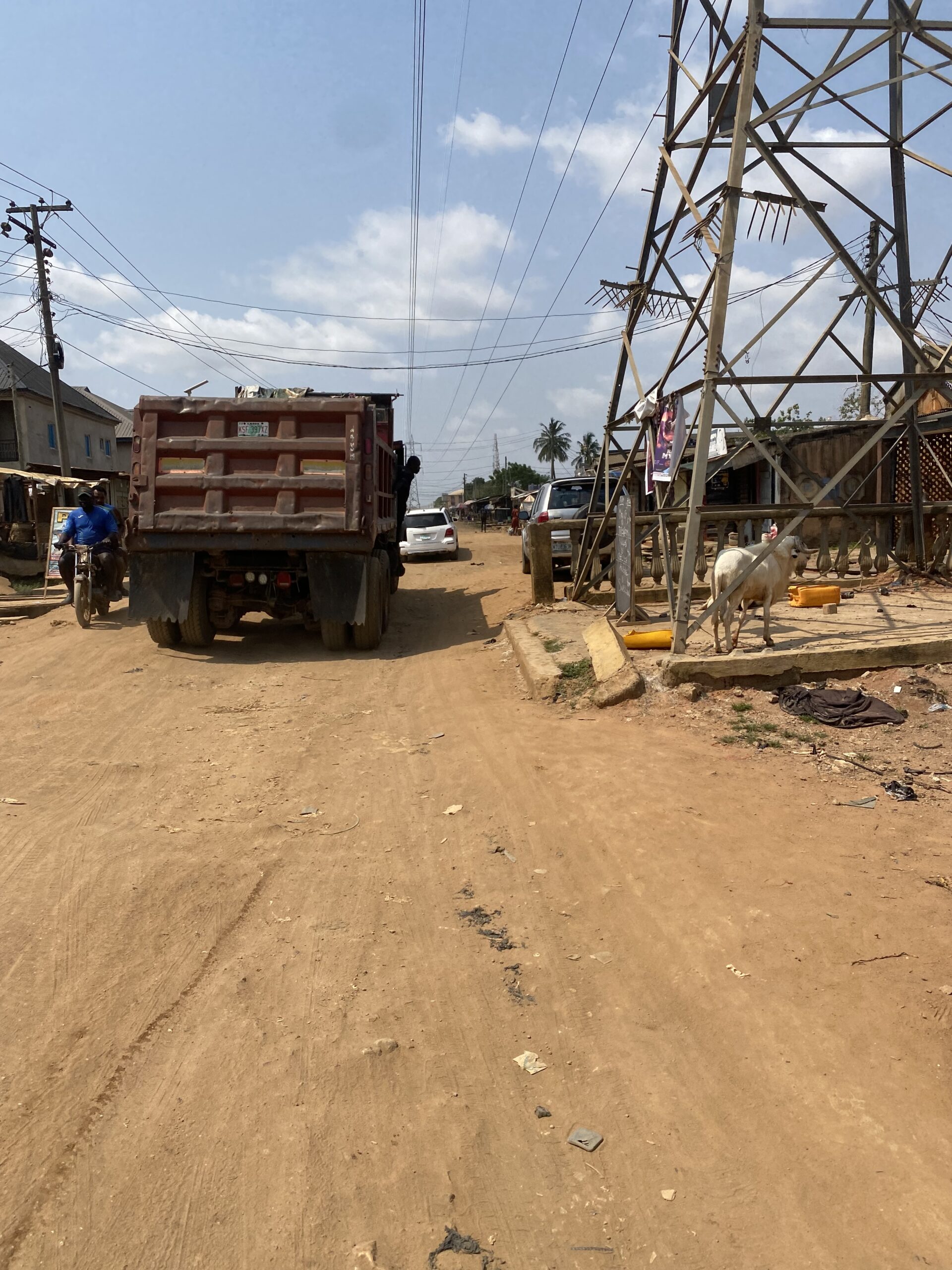
When The ICIR visited the site, tricyclists honked in frustration as motorcyclists struggled through thick dust that choked riders and passers-by.
Progress marred by contract inflation
While many residents of Falana Street are still wading in disappointment, months after a multi-million-naira drainage and road project was supposed to ease flooding and improve transportation, The ICIR findings showed that the project, commissioned under former council chairman Monsuru Bello, was riddled with overpayments, poor execution and fund mismanagement.
The project was split into two contracts during the tenure of the former council boss. The first phase cost ₦505,065,301.18, while the second phase was valued at ₦212,962,927.80.
Our findings indicate that the initial project, described as the construction of reinforced concrete drainage along the 944m length of Falana Street, was later re-awarded in parts, including an additional contract reportedly valued at about ₦54 million.
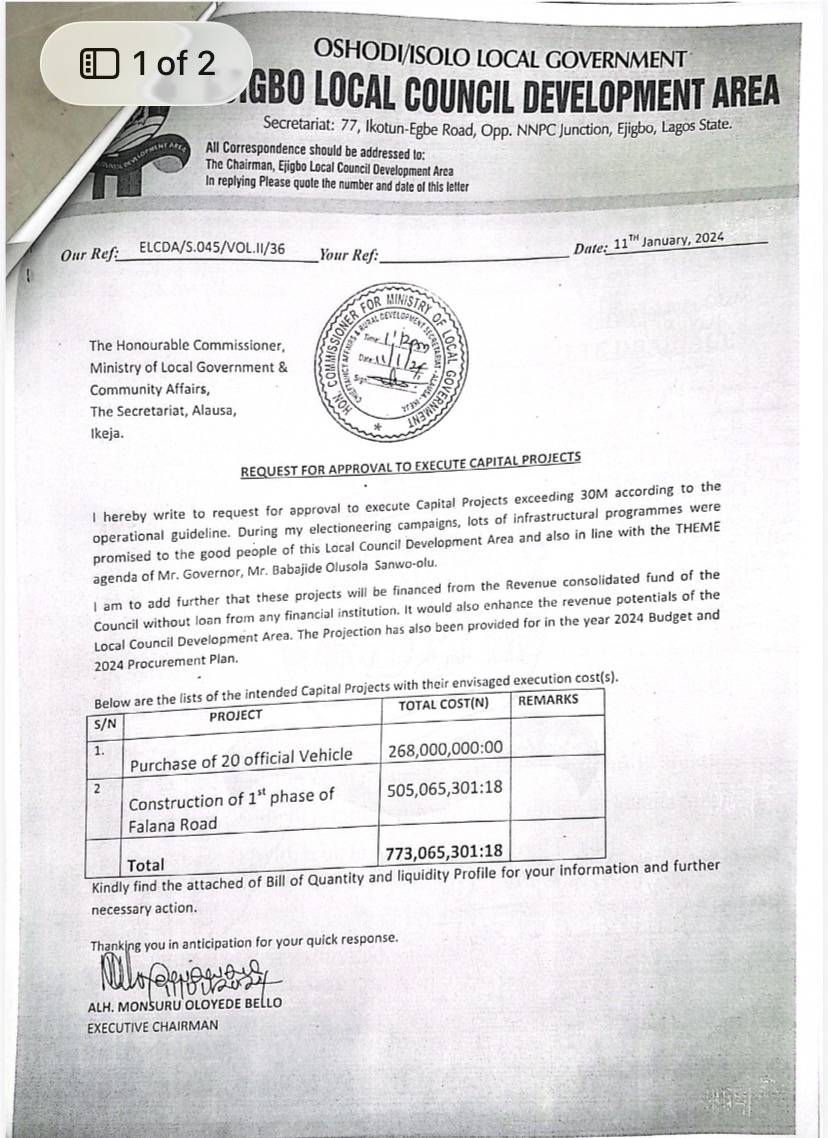
Letter requesting approval of over N500 million for Falana Street from the state government
In a letter dated January 11, 2024 and addressed to the Commissioner for Local Government and Community Affairs, the council requested the approval of the of ₦505,065,301.18 for what it described as the construction of the ‘first phase of Falana Road,’ not drainage as later approved by the council.
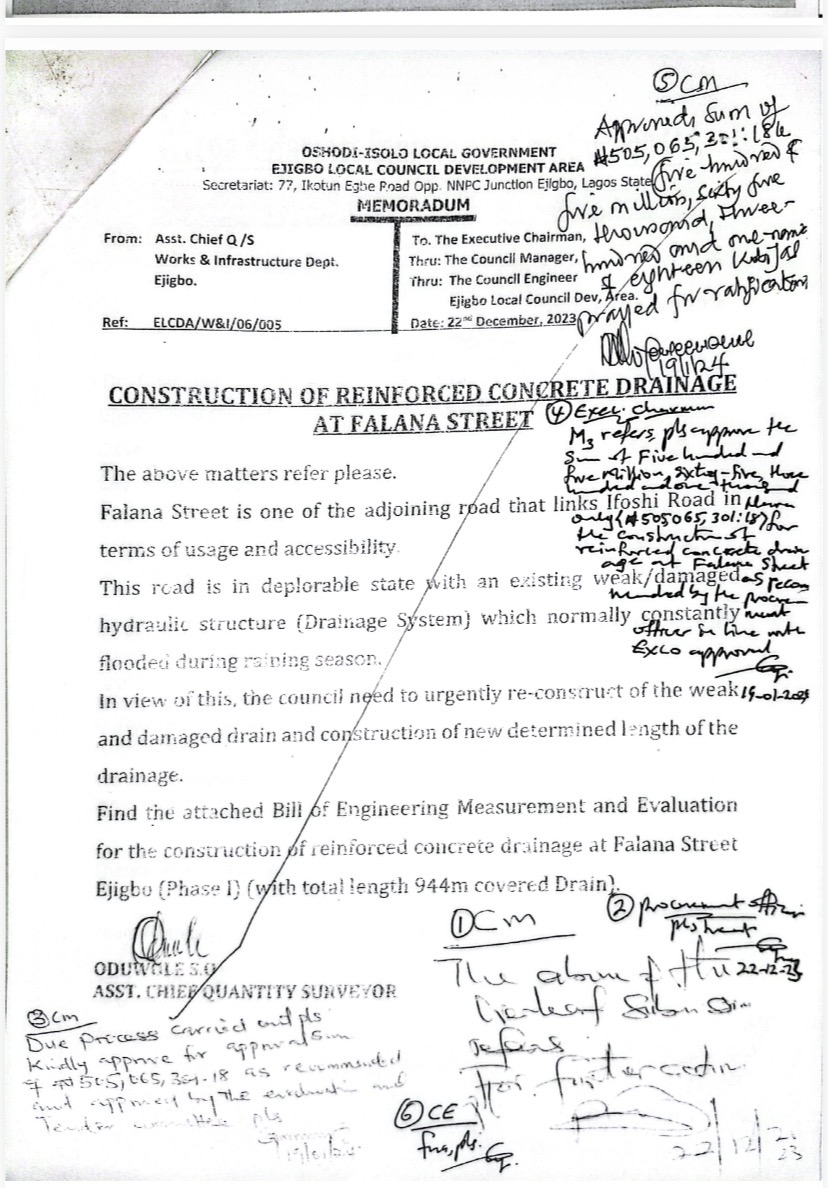
Council approval for the release of ₦505,065,301.18 for phase one was granted on January 19, 2024, covering a proposed drainage length of 944 metres, which is just under one kilometre.
Memo showing approval of over N500m by the council for Falana road project
However, on-site measurements show the completed work spans only 514.65 metres, barely half of the approved length, despite full payment approval. The completed section runs from the main junction to St. Favour Room Nursing Care Maternity Home, just beyond Francel Montessori School, far short of the originally planned 944 metres.
It remains unclear whether the same contractor handled both the drainage and road works, but the projects were carried out at the same time and appeared to be parts of the single, composite project. When The ICIR visited the location, apart from the commissioning plaque, there was no signpost to show the project description and the job done.
A similar pattern appears in the road construction itself. Interlocking stones line only the finished stretch, with installation ending near the maternity home and leaving roughly 400 metres of the street in poor and neglected condition.
The point at which the interlocking and the first drainage project was stopped
Residents who spoke with The ICIR acknowledged improvements in mobility at the completed 514.65 metres, but said the drainage system fails during heavy rainfall.
Photo showing the area alongside the road prone to flooding whenever it rains
Speaking during the field visit, an engineer who accompanied the team warned that if the flooding is not properly addressed, it could damage the completed sections of the road and significantly reduce its lifespan.
“It appears the drainage is not solving the flooding issue, and that is due to the drainage being blocked and not wide enough to take the water. The drainage size should have considered all these,” the engineer said. “The holes through which the water enters the drainage should be considered and the numbers of holes should possibly be increased,” he added.
“If this drainage problem persists, the entire stretch will begin to fail sooner than expected.”
Costs raise red flags
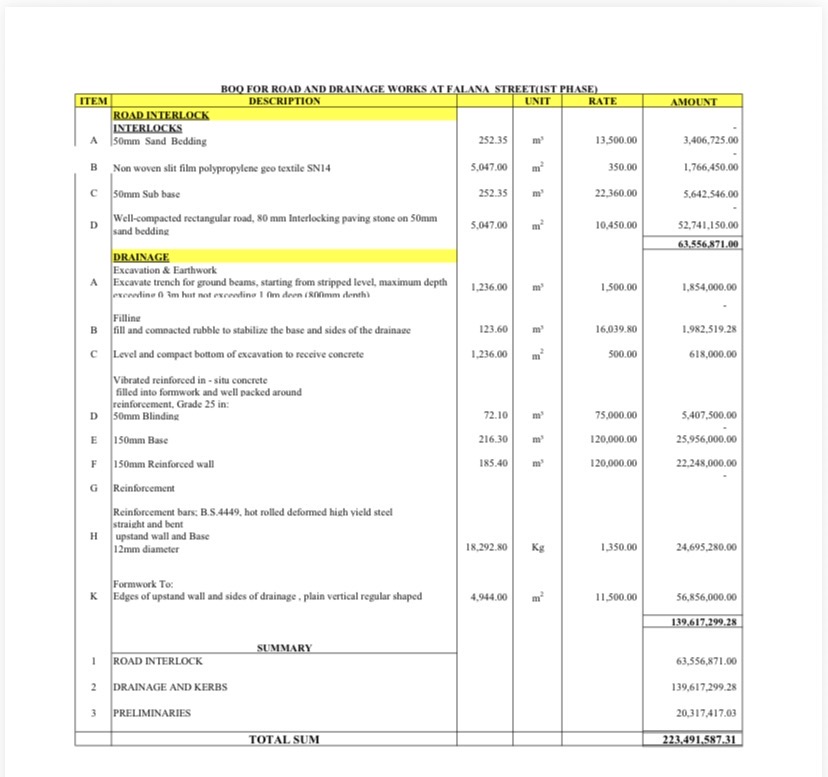
Bill of Quantities (BOQ) estimates reviewed by this reporter indicate that constructing 514 metres of drainage should not exceed ₦160 million, including excavation and earthwork, filling, slab installation, compaction, preliminaries and workmanship.
Bill of quantity as prepared by an independent surveyor purposely for this investigation. The bill shows drainage construction cost N139m, when preliminaries and workmanship are factored in, it costs N160m
Instead, the council approved release of N505 million, which is triple of the amount spent on the project. This raises concerns about possible fund mismanagement.
A quantity surveyor, estimated the total cost for the completed 514 metres, including interlocking, kerbs, preliminaries, and contractor charges, at about ₦245.74 million.
The quantity surveyor explained that workmanship is typically calculated at about 10 per cent of project value, which is N223.5 million. Then 10 per cent of the amount stands at N22.3 million. Applying this industry benchmark raises the realistic execution cost of the existing drainage segment to roughly ₦245.74 million.
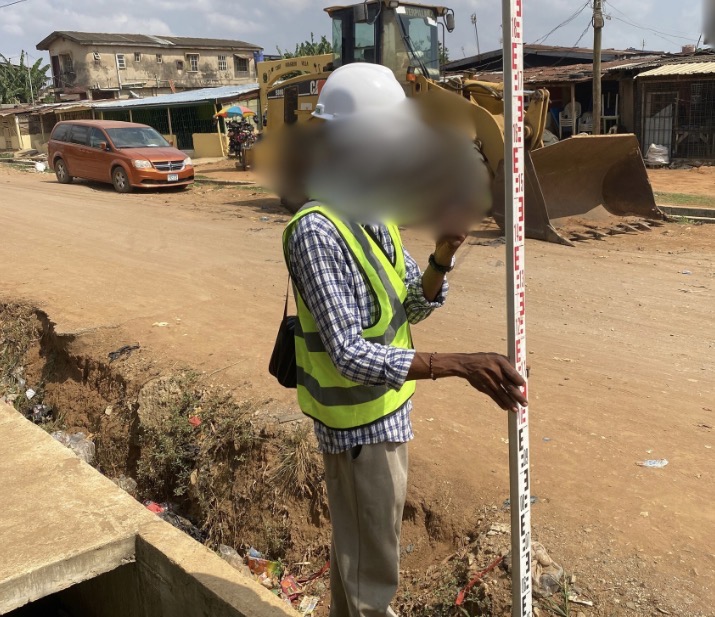
A team of engineers at Falana street for on-sight investigation
In the case of 944 metres long of drainage approved by the council, The ICIR investigation showed that the project should have cost only ₦313,698,925.56 after all valuation, including preliminaries and 10 per cent of the total approved amount for the contractor.
Another N54m paid for same inflated project
Months after the partially completed project was commissioned in 2025, contractors returned to extend the drainage toward the start of Omiyale Street.
The ICIR reports that the initial approval of more than ₦505 million for phase one had already covered a drainage length longer than what was ultimately constructed.
However, instead of enforcing completion under the original scope, it was gathered that the council approved new funding for work that residents said was poorly executed.
In October 2025, The ICIR reported how a civic group under the umbrella of Concerned Citizens of Ejigbo petitioned the Independent Corrupt Practices and Other Related Offences Commission (ICPC), listing among others the approval of an additional ₦54 million for “construction of reinforced concrete drainage at Falana Street.”
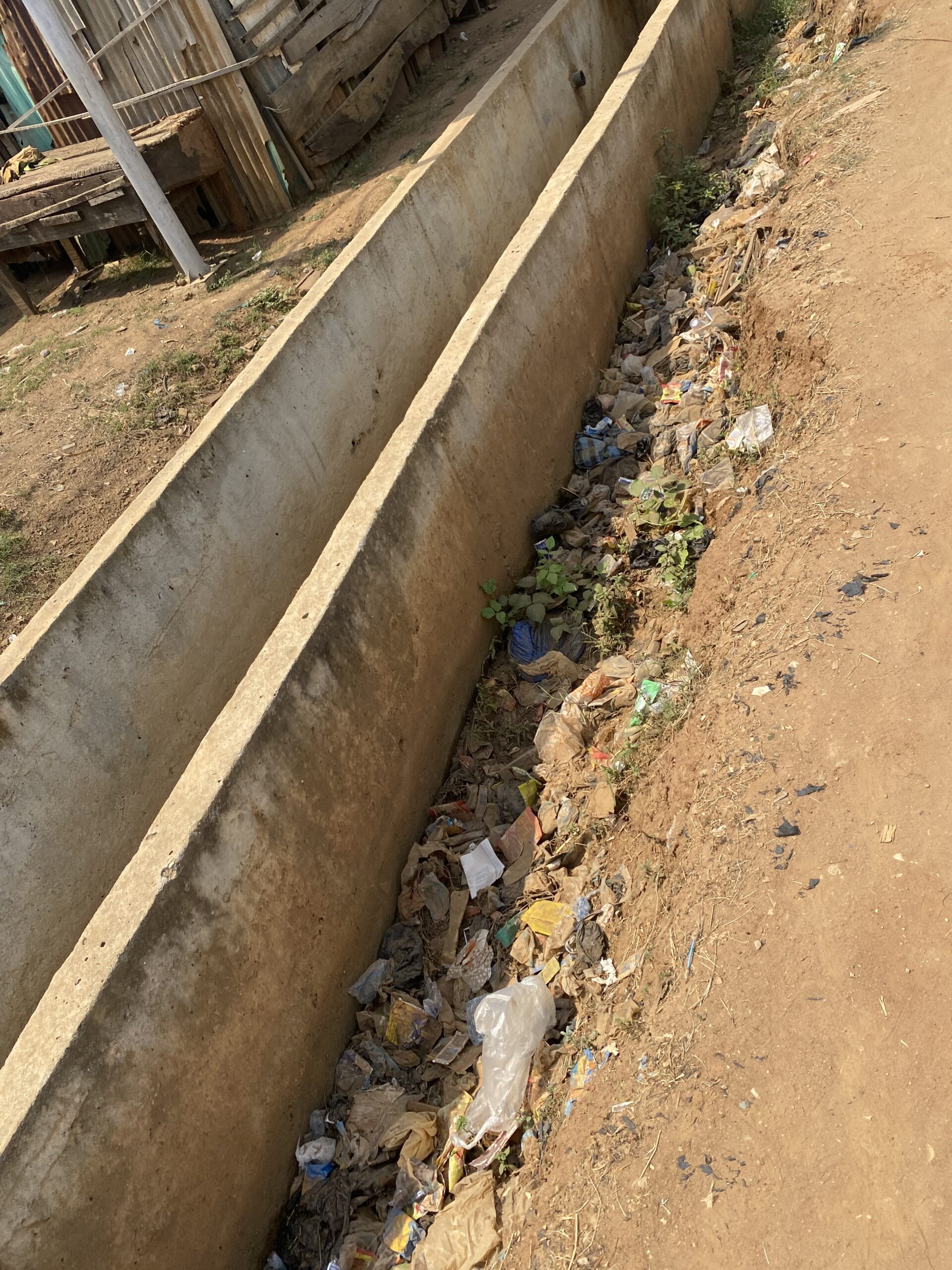
Site inspection shows that despite the reported additional payment, the drainage has not been sealed, leaving an exposed side trench running alongside the concrete structure.
Exposed side trench of drainage constructed at Falana street
Residents said the exposed side trench has left them, particularly children, vulnerable to injury, as people could mistakenly step into the potholes.
Another N212 million awarded for Falana Street
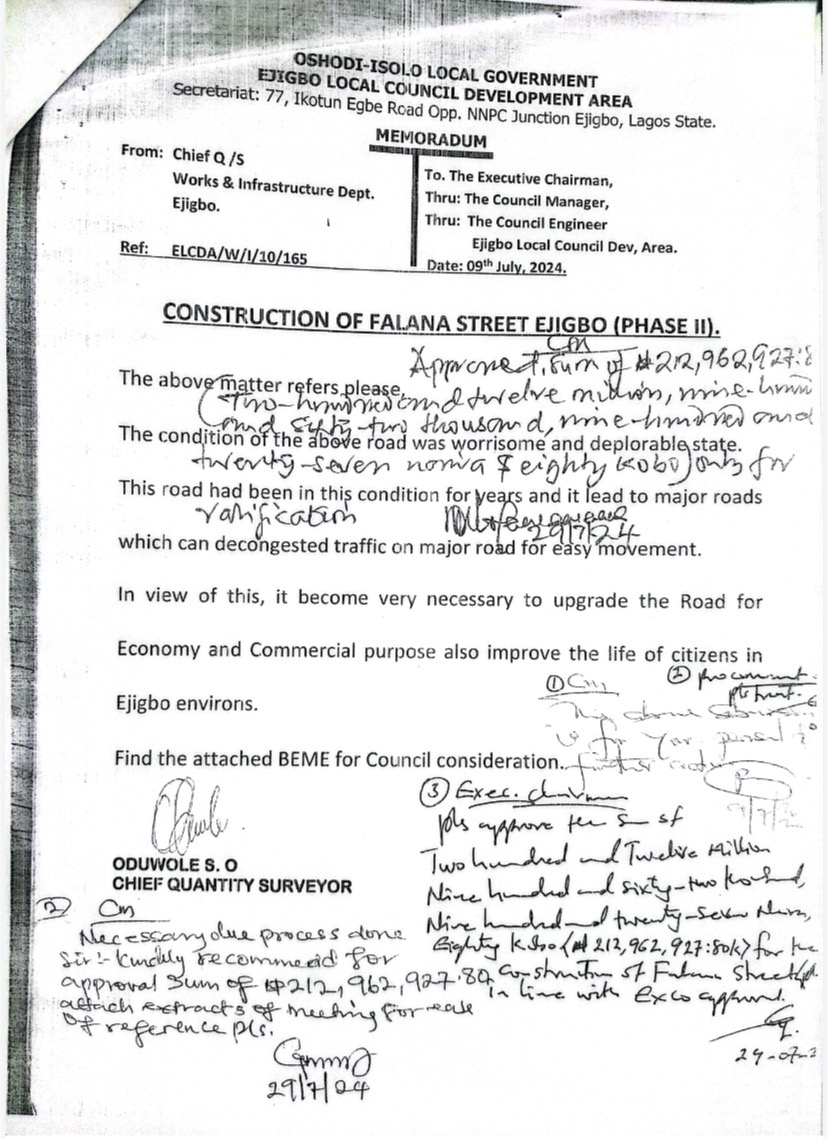
Although the initial phase of the road project was left incomplete, records show that the council approved an additional ₦212,962,927.80 in July 2024 for the construction of Falana Street (Phase 2).
Council approval of payment for Falana phase 2 project
Despite the approval by the former council chairman on July 29, 2024, the remaining stretch from the maternity home to Kila House (Oyekunle street) and the Omiyale end of the street remained uncompleted and abandoned.
In the memo requesting approval, the road was described as “worrisome and deplorable,” noting it had remained in poor condition for years. However, on-ground assessment indicated the approved funds did not translate into meaningful construction, as residents continue to lament the state of the road.
Current state of Falana road (phase 2) despite approval of over N200 million
Notably, the ₦505 million earlier approved for phase one should have covered at least 400 additional metres beyond where it was currently abandoned, which the second phase expectedly should cover. But the project has been left abandoned despite the money approved in 2024. Curiously, the road was hurriedly commissioned before Bello left office, even though large sections remained visibly incomplete.
In the execution of the project to where Falana Street ends, The ICIR in consultation with civil engineers and a quantity surveyor, found that interlocking the street from where the first phase ends would cost N55 million after sand bedding, sub base, preliminaries and workmanship have been considered.
This means that the ₦212,962,927.80 approved for Phase 2 could have funded nearly four full completions of the remaining road section.
Residents of Majiyagbe lament as ₦400m worth project stalls
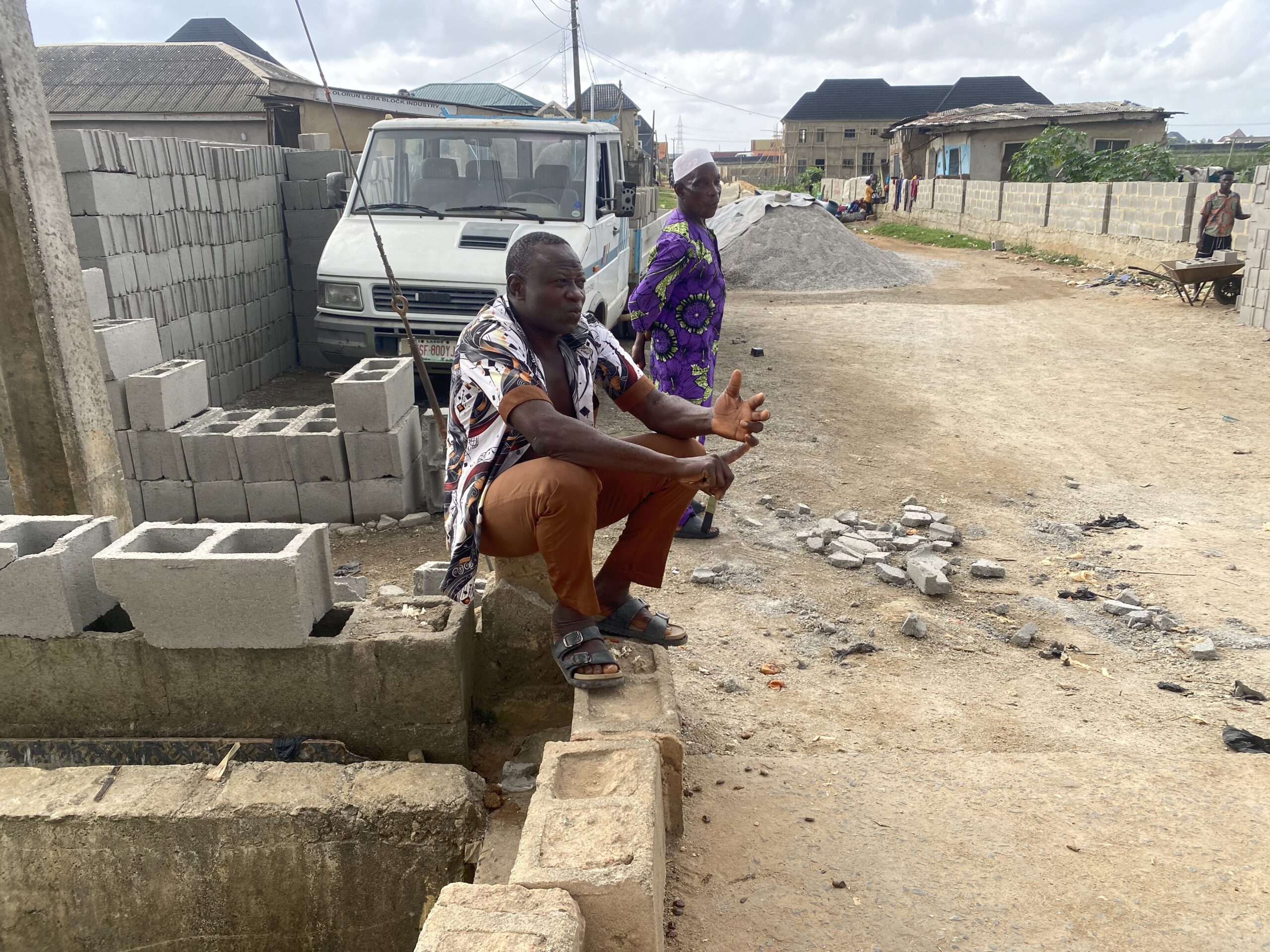
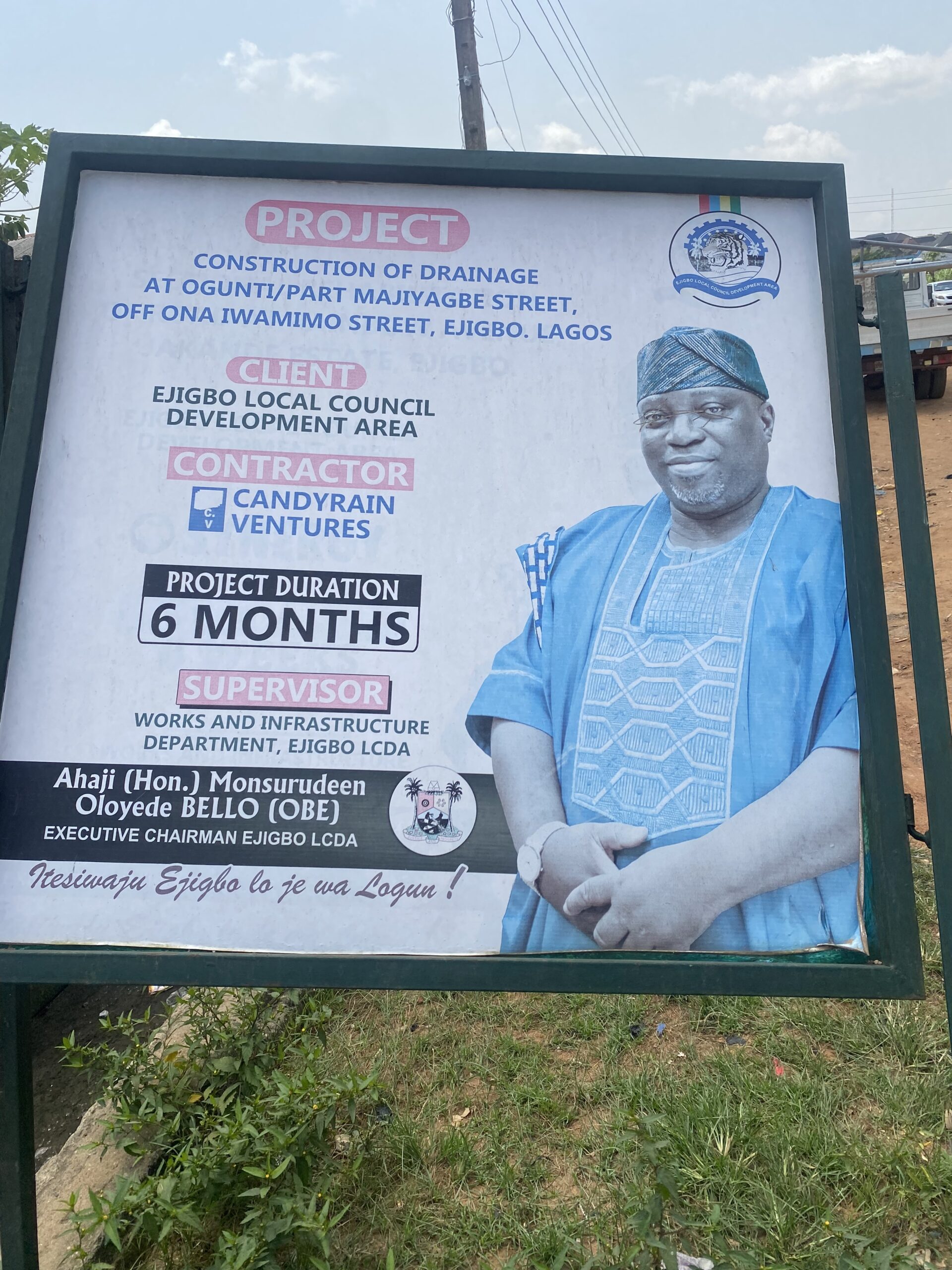
Baba Ayinde Olohunloba had high hopes in 2024 when Candyrain Ventures arrived in his community to dismantle the old, community-owned drainage with plans to upgrade it and construct a standard drainage system along Ogunti/part Majiyagbe Street.
Olohunloba explaining the history of abandonment of Majiyagbe road project
He imagined an end to years of flooding and unmotorable roads and hoped for a future of smoother rides and rainwater that would no longer threaten his home and business.
But months later, that excitement turned into deep frustration when the contractor dragged on a project that should only take six months. His frustration grew as the abandoned open trench left his house and business vulnerable to flooding.
According to Olohunloba, after the initial excavation, the engineer vanished for months. He also noted that the project began at the far end near the canal, leaving the section in front of his house incomplete.
When the rains came in 2025, floodwaters washed through his home and many others. His block-making business was often damaged, prompting him to take matters into his own hands.
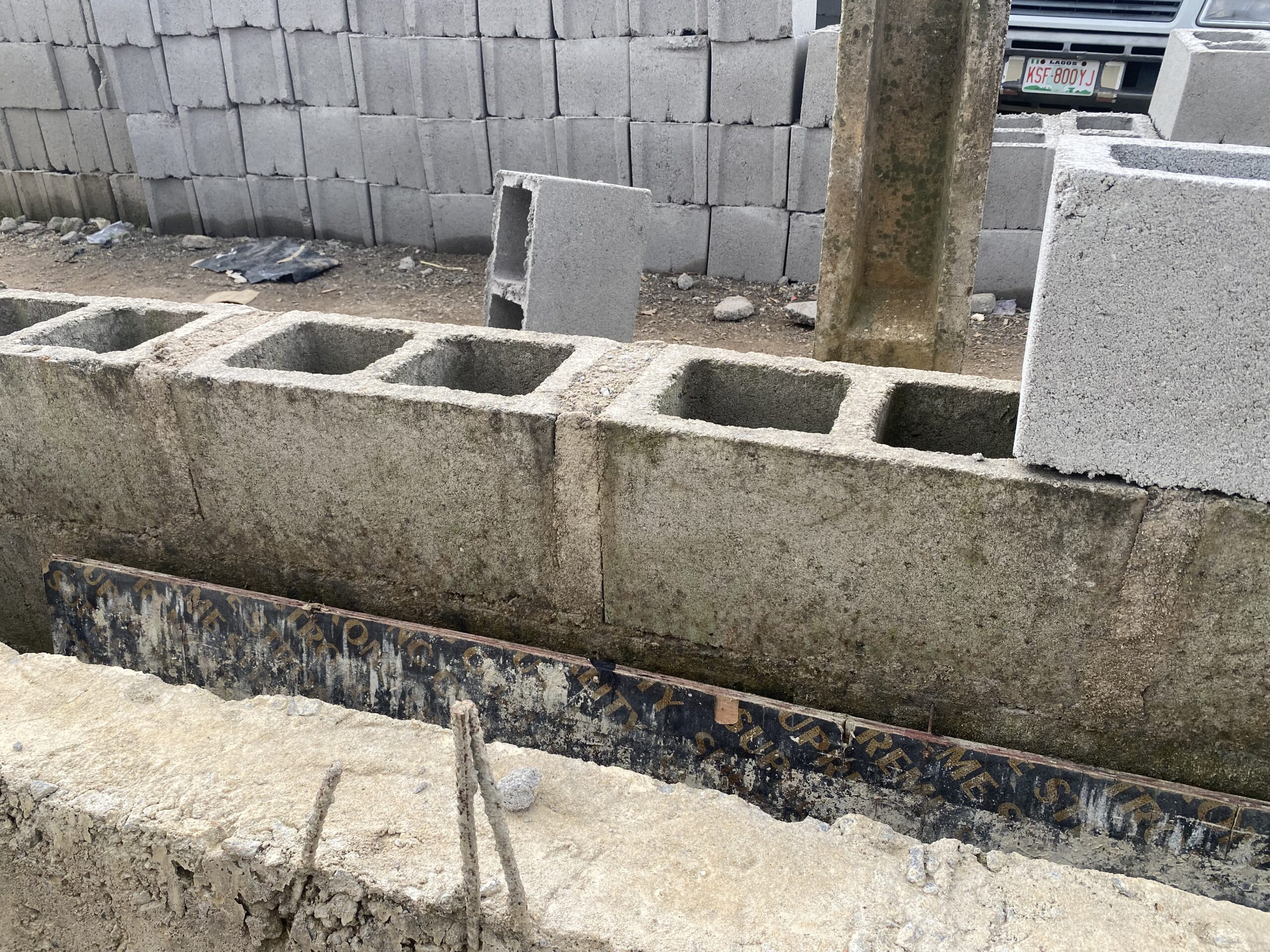
Photo showing blocks mounted by the community after the contractor disappeared from site
“We had to ask the engineer if we could construct and put blocks in the holes ourselves, and he said we could. So, we did the gutter ourselves. Months later, he finally came back to build his own drainage. Since then, it has been an inconsistent attempt to make the system work,” Olohunloba said.
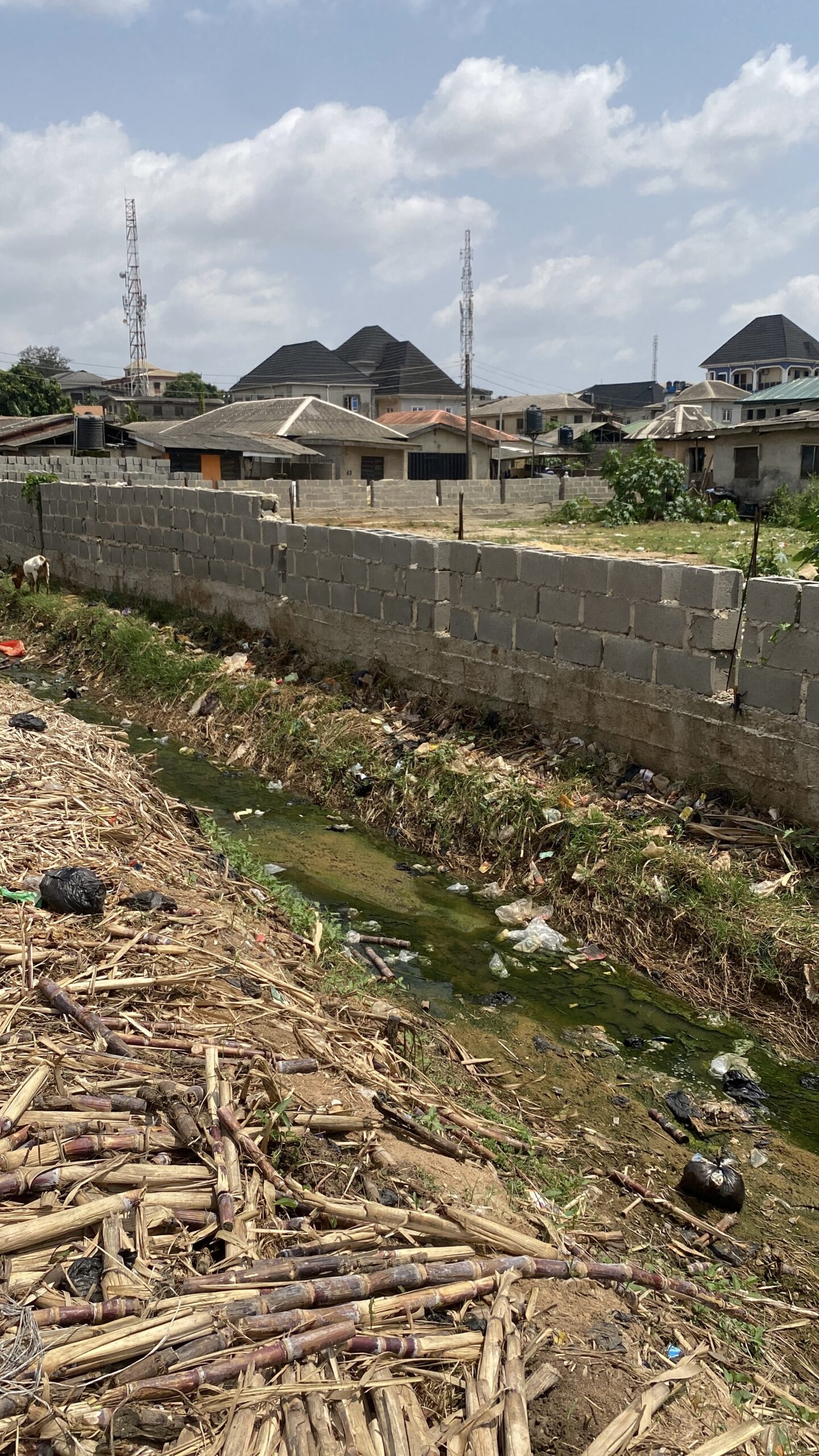
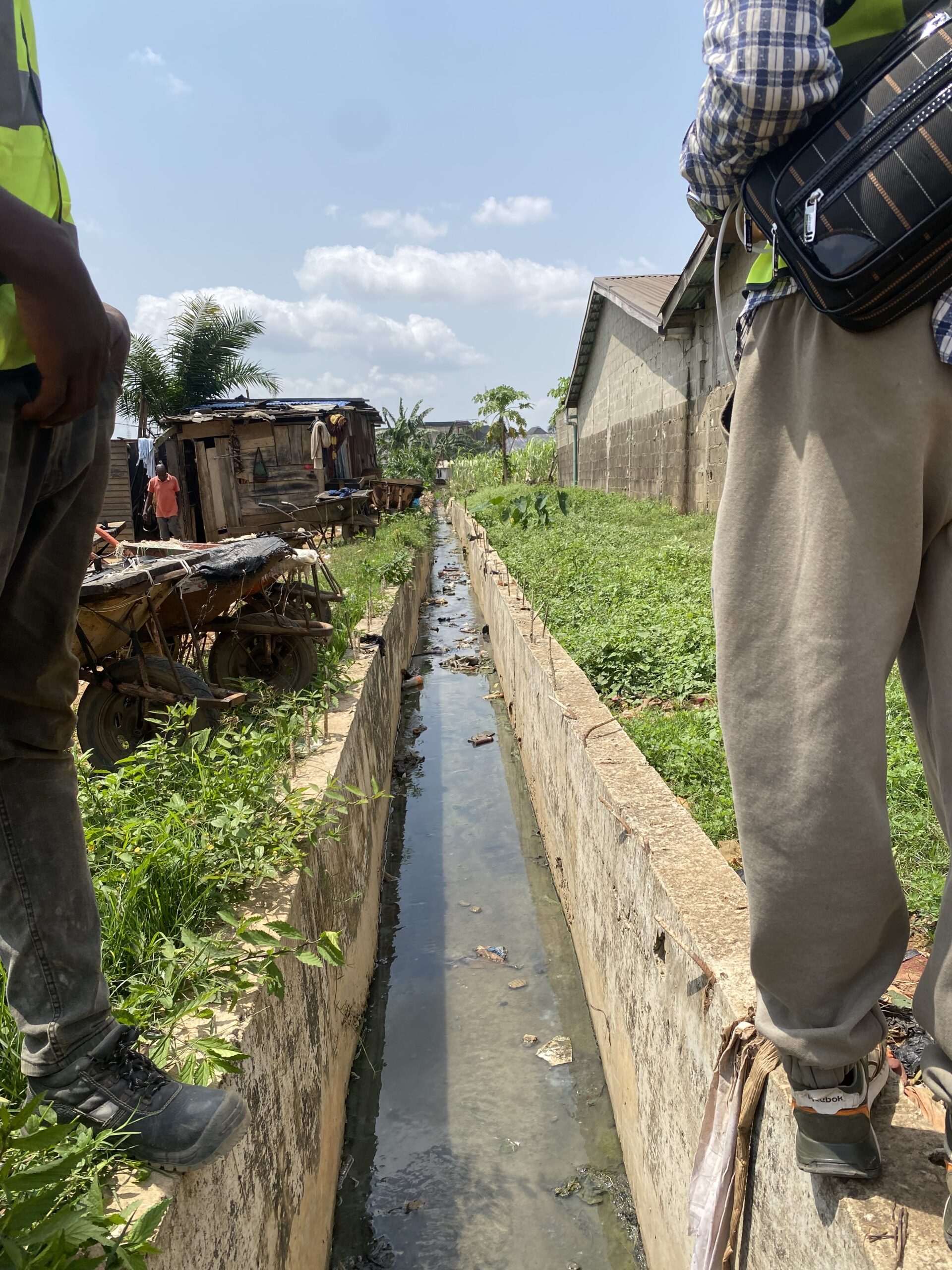
The ICIR observed that even after the engineer returned in 2025, the drainage section near the canal beyond Olohunloba’s house was left open, exposing homes and makeshift structures where some traders live.
Dug but left abandoned.
The open gutters, lacking slabs as initially promised, also became sites for open defecation.
No construction activity was observed during the reporter’s visit. By the roadside lay heaps of granite and sharp sand. In addition, potholes and uneven bumps said to have been caused by flooding scattered across the road continue to hinder smooth and safe vehicular movement.
Photo showing granite left on site by the contractor and exposed iron in the drainage, indicating an unfinished slab. Mustapha Usman/ICIR
Abandoned despite contract inflated by over N450m
An on-site investigation by The ICIR showed a disconnect between the scale of public funds released for infrastructure on Majiyagbe Street in Lagos and the limited work visible at the project site.
During a visit to the site on February 8, 2026, the only activity attributable to the project was a short stretch of partially constructed drainage.
A short stretch of drainage leading into the canal at Majiyagbe. PC:Mustapha Usman/ICIR
There was no evidence of road grading, interlocking installation, access slabs, or any of the complementary civil works typically associated with a standard drainage-and-road intervention of such financial magnitude.
Although contractor signpost signalled only the construction of drainage for the street, a civic group under the umbrella of Concerned Citizens of Ejigbo, in a petition, alleged that a total of ₦479,118,411 was released for construction of the street.
Contractor signpost at Majiyagbe. PC: Mustapha Usman/ICIR
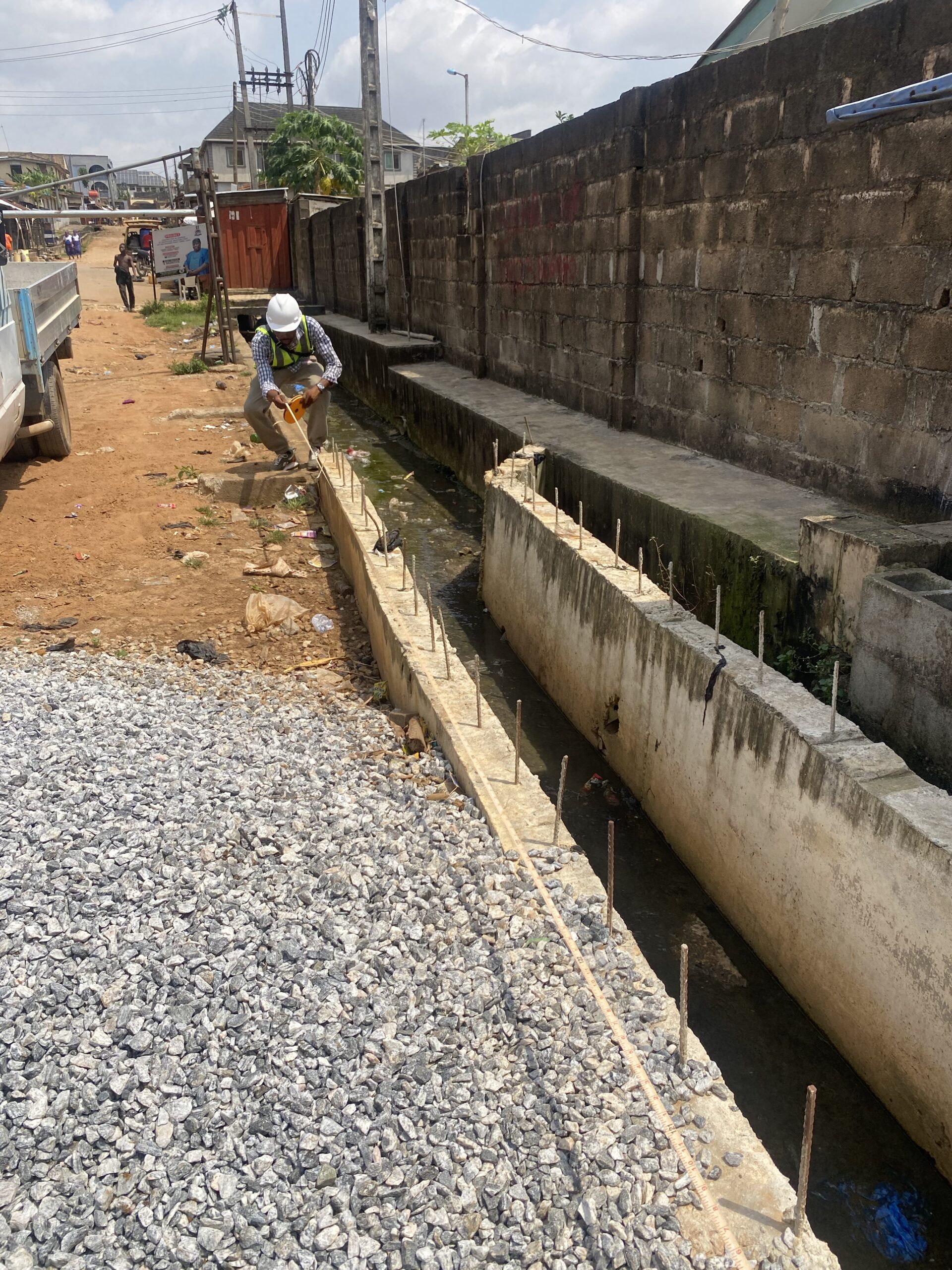
Measurements taken during the inspection revealed that the executed structure covers just 78.35 metres on one side of the road and 42.5 metres on the opposite side, with an average depth of 0.8 metres and width of 0.7 metres. Even this limited construction remains unfinished and abandoned.
The ICIR, alongside engineers, observed exposed reinforcement bars protruding from the concrete, refuse altering the designed slope and blocking water flow, and visible misalignment suggesting that the drainage walls fall short of acceptable engineering standards.
No additional work corresponding to the nearly half-billion-naira release could be identified on the ground.
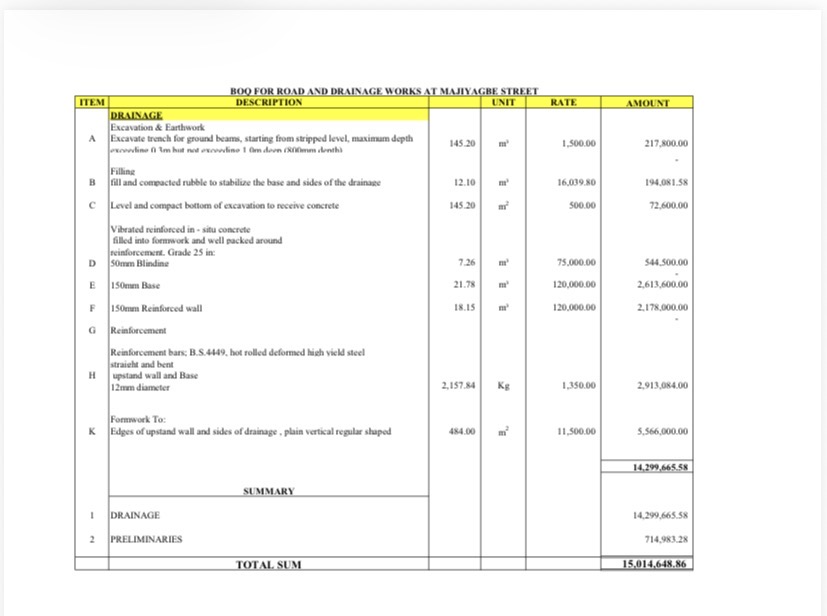
To determine whether the expenditure aligns with the physical progress recorded at the site and the amount the completed project could cost, engineers reconstructed a bill of quantities restricted strictly to the 120.85-metre drainage already built.
The Bill of Quantity indicated that excavation, filling, concrete works, reinforcement, and formwork for the drainage were collectively valued at ₦14,299,665.58, while preliminaries were estimated at ₦714,983.28, bringing the total expected drainage cost to ₦15,014,648.86.
Bill of quantity for Majiyagbe drainage system
Applying this industry benchmark raises the realistic execution cost of the existing drainage segment to roughly ₦16.5 million.
When this engineering valuation of ₦16.5 million is compared with the ₦479.1 million reportedly released for the street, the difference suggests a potential inflation level running into about twenty-nine times the realistic construction cost.
The ICIR also checked on how much the completed project could cost, the quantity surveyor mentioned that the project would only cost about ₦52,083,577.05.
Nearly 1bn spent on another 1km road project
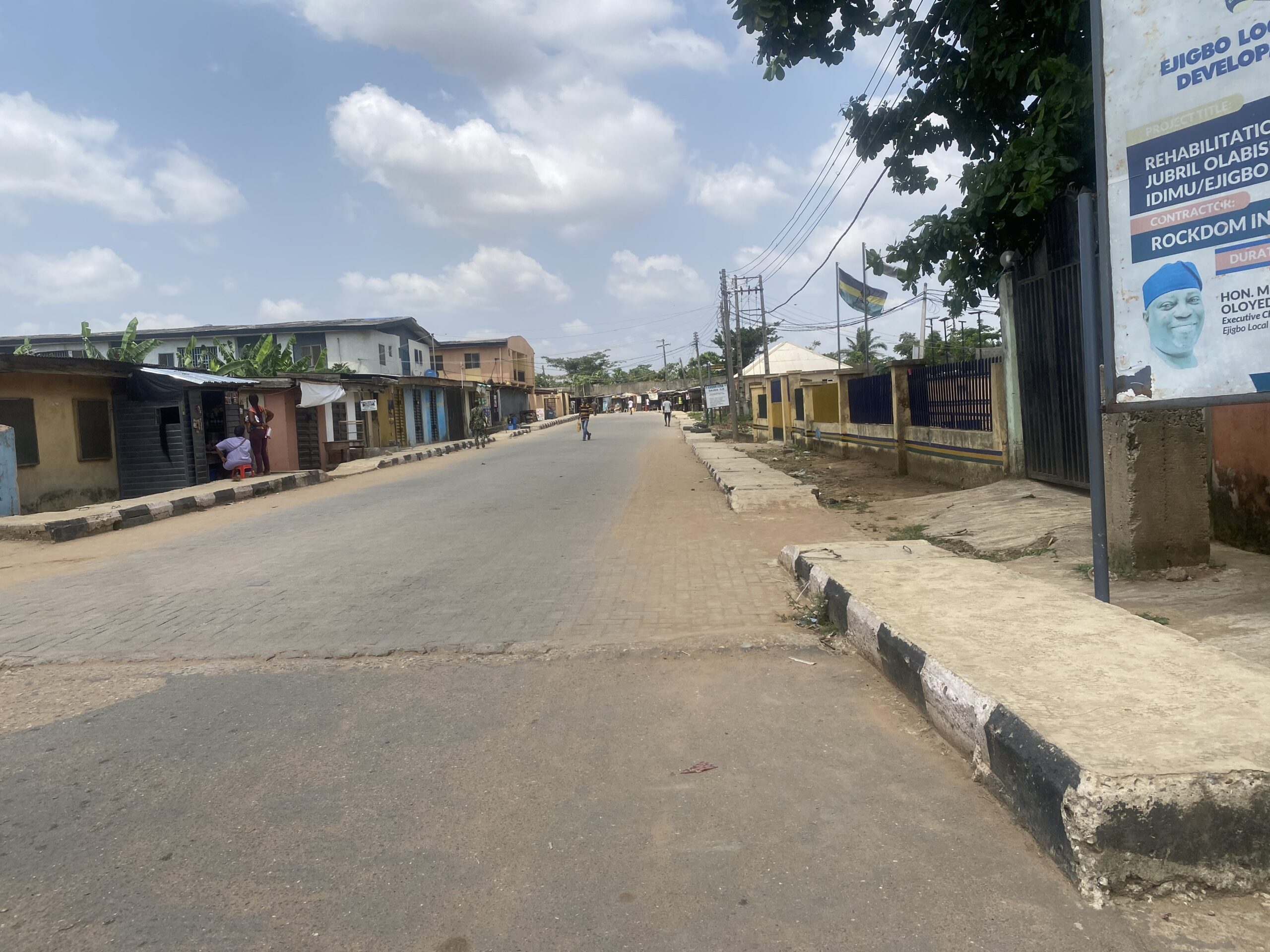
The pattern of inflated local government road contracts in Ejigbo Local Council Development Area (LCDA) continues with the Jubril Olabisi Road project, a short stretch of road whose cost is also disproportionate to its scale.
By contrast, Jubril Olabisi Street showed a seemingly successful intervention when compared to Falana Street and Majiyagbe.
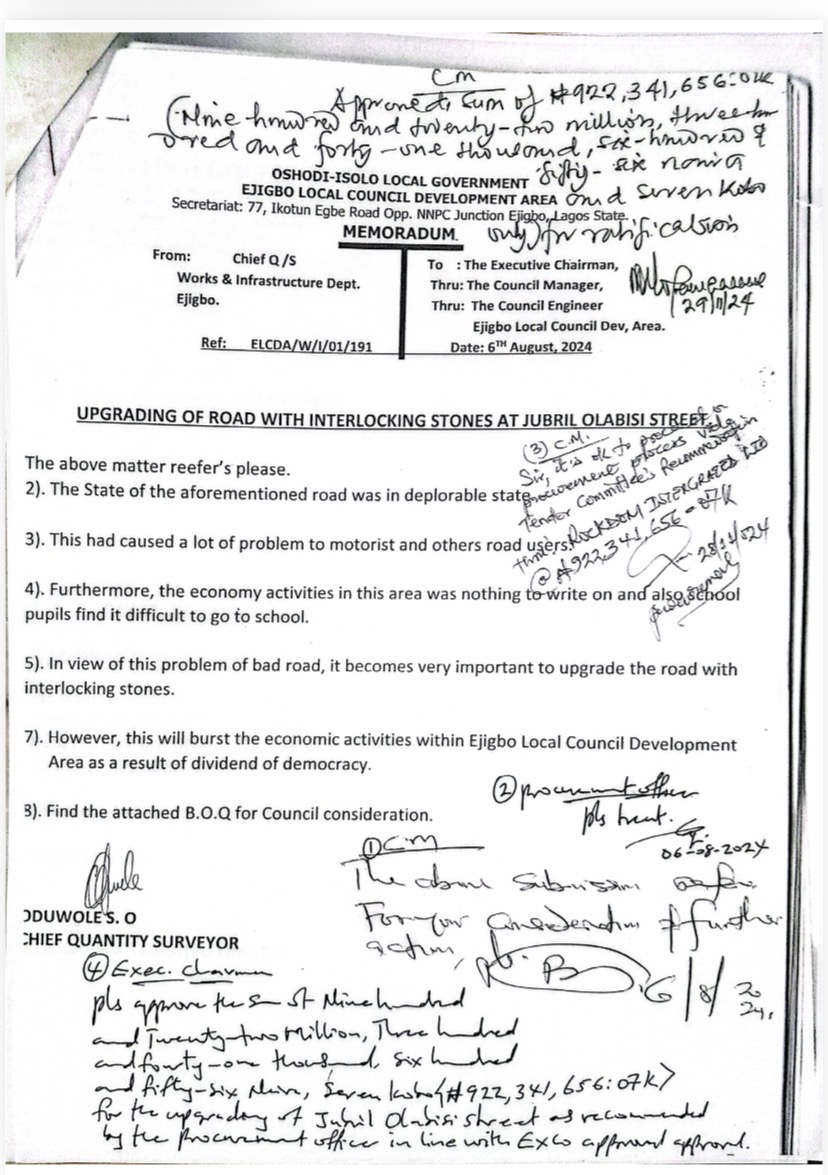
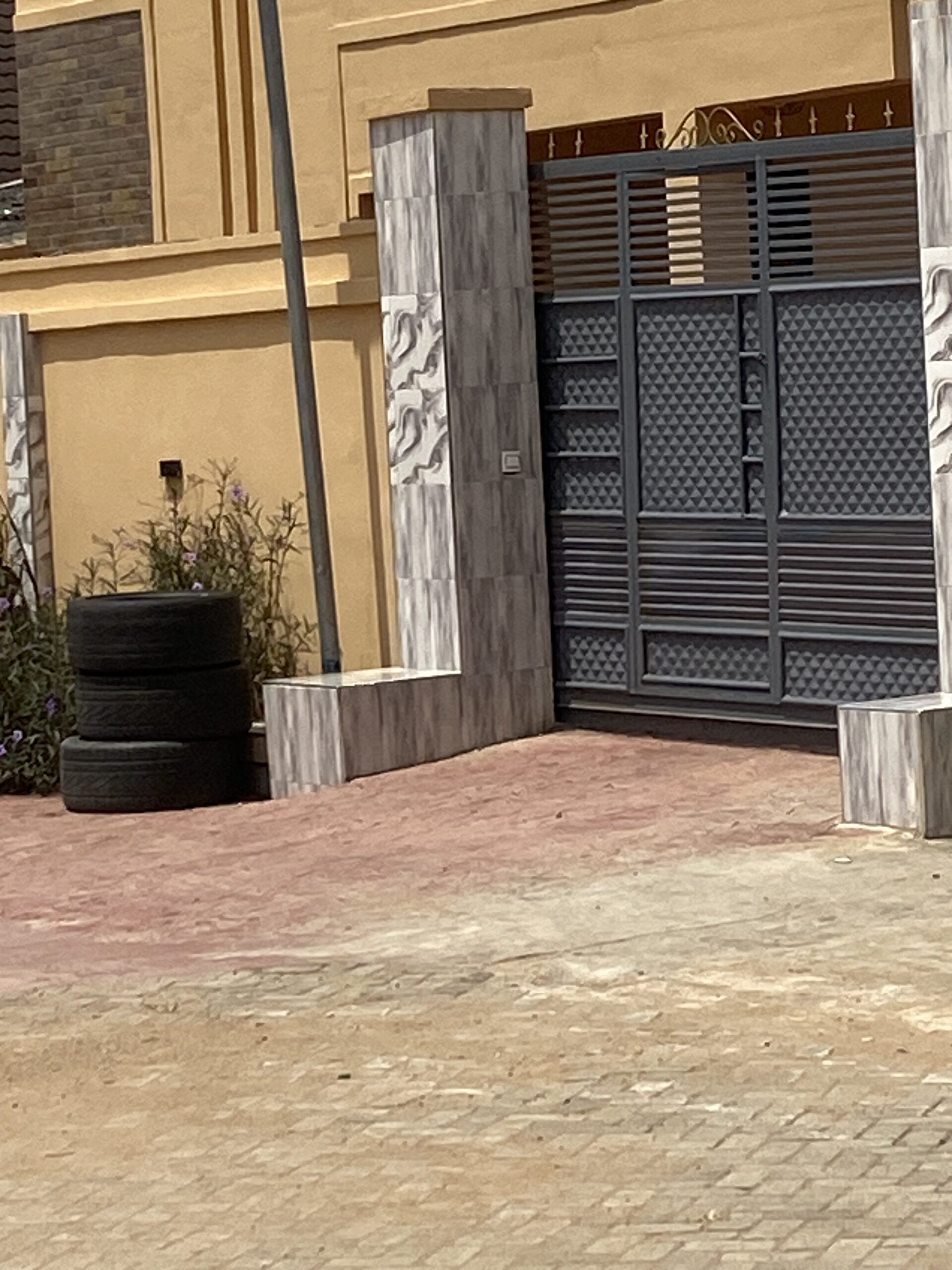
The road measures roughly 627 metres, fully interlocked over 572.3 metres, and flanked on both sides by a completed drainage system. The project, executed by Rockdom Integrated Limited, was approved for a contract sum of ₦922,341,656.41, with payments cleared on November 29, 2024.
The contractor was mobilised to the field in 2024 but completed the project around April 2025. The project was consequently commissioned by ex-council chairman Bello in July 11, 2025.
Memo showing the approved payment for Jubril Olabisi street
An independent Bill of Quantities (BOQ) prepared shows that constructing the interlocking road, the dual-sided drainage system, culverts, and necessary preliminaries and workmanship should not have exceeded ₦275.77 million, some N646,571,656.41. Less than what the project cost.
Of the N275.77 million,, interlocking the pavement accounts for just over ₦60 million, the dual-sided drainage and kerbs approximately ₦156 million, culverts about ₦10 million, and preliminaries roughly ₦22.79 million.
While many residents lauded the completion of the road and acknowledged the improved mobility and drainage in the area, expressed shock and incredulity upon learning that the contract was worth nearly a billion naira for such a short stretch of road.
Rockdom office
When The ICIR visited Rockdom Integrated Limited company to request information about the project, one of the company’s employees confirmed that it was executed by the firm but declined to provide relevant details, stating that the Independent Corrupt Practices and Other Related Offenses Commission, ICPC, is currently investigating the project.
The ICIR subsequently filed a Freedom of Information Act (FOIA) request with the company but, no response has been received since Monday, February 9, when the request was submitted.
Niyass Street gets N1bn for half a kilometre road project
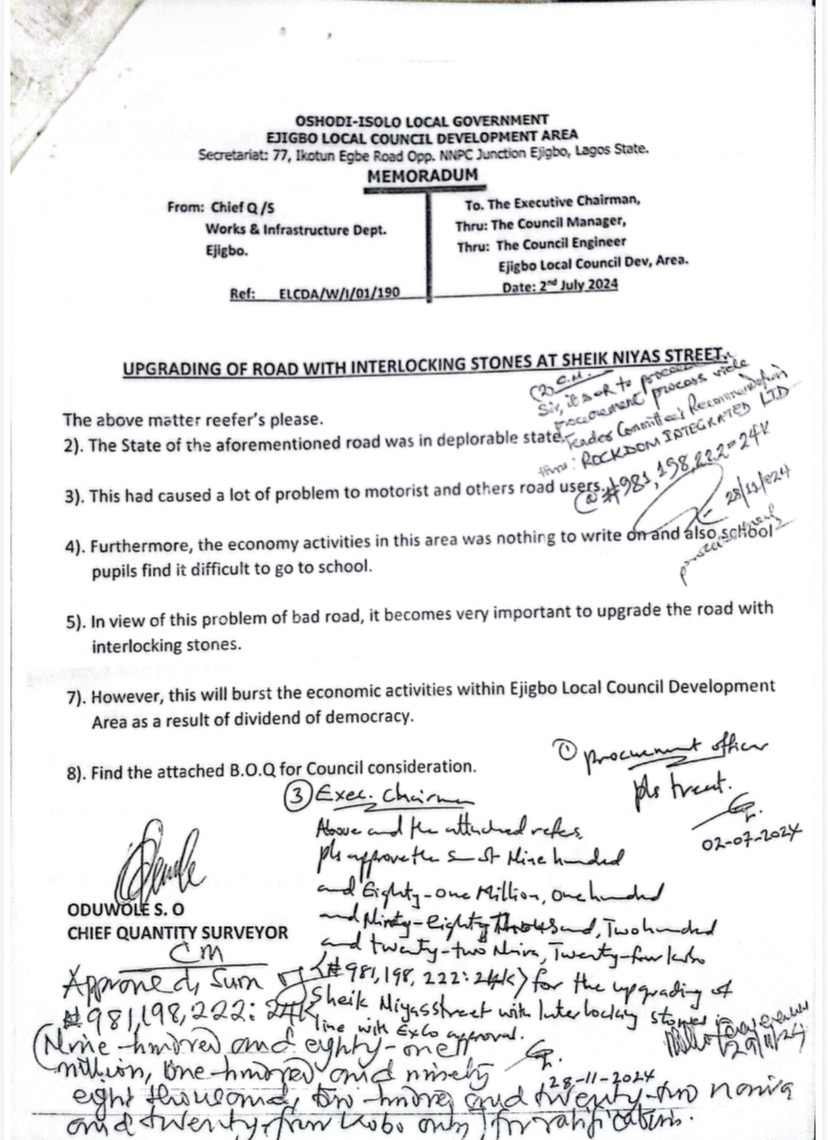
In a similar development, the Ejigbo Council also approved upgrading of a road with interlocking stones at Sheik Niyass to Rockdom Integrated Limited in July 2024 at a contract sum of N981,198,222:24.
Sheikh Niyass road project approval by the Ejigbo council
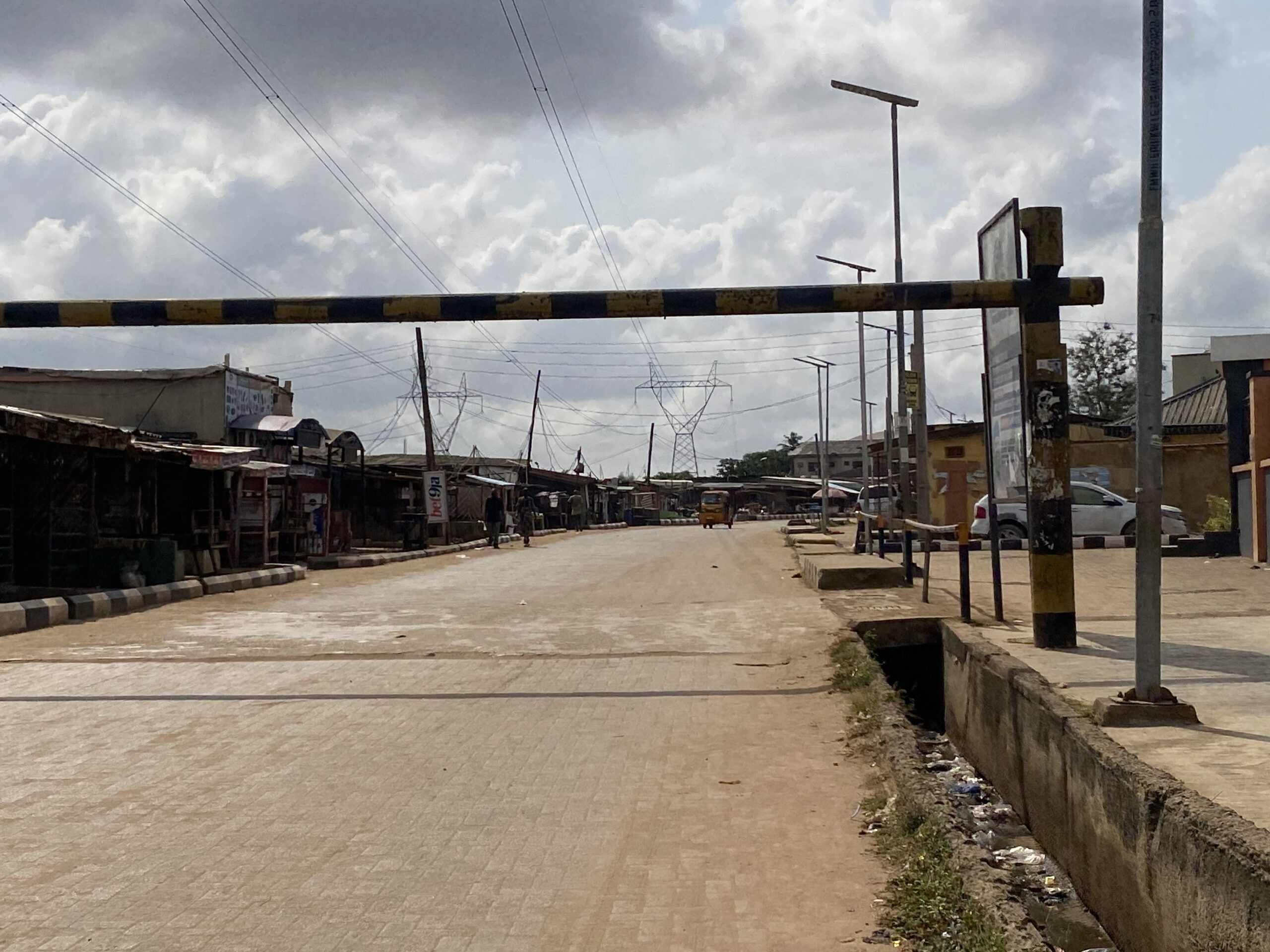
Findings showed that the project was also completed in 2025 and commissioned by the former chairman before he left office. The road project spanned about 593 metres long, with the drainage, roughly one metre deep and 0.8 metres wide, runs cleanly along one side, with 18 nos of culverts cutting across at intervals.
Despite the road being slightly shorter than Jubril Olabisi Street and has drainage on only one side, it received a higher allocation than the Olabisi Street project.
Sheikh Ibrahim Niyass street
The independent Bill of Quantities for Sheik Niyass Street prepared by an independent quantity surveyor totals ₦189,573,654.41, covering the interlocking, drainage, culverts and preliminaries.
For a road of that length and specification, the quantity surveyors consulted by this reporter described the figure as “excessive and inflated”.
Double Star street riddled with potholes despite ₦34m payment
Despite government claims of filling and grading Double Star Street with N34 million in Jakande Estate, commuters and residents have continued to battle with poor road conditions long after funds were released for repairs.
Current state of double star road despite claim of spending N34m on rehabilitation
The council in February 2025, approved ₦34 million to Gake Global Resources LTD, for Double Star Street rehabilitation, a sum residents were told would address potholes and surface degradation. But months after the contract award, the stretch of road remains riddled with potholes, depressions and craters that trap vehicles, slow and worsen during the rainy season.
Residents told The ICIR that at some point in 2025, engineers filled potholes with stones and graded parts of the road, but several sections were left untouched.
They noted that the street’s surface often breaks apart soon after minor rains, forcing drivers to slow down or swerve, further contributing to congestion and wear on vehicles.
Other residents attributed the poor condition partly to inferior workmanship or incomplete surface compaction.
The ICIR independently learnt that despite the approved N34 million purposely for the project, the road was largely filled with sand and asphalt sourced from other street projects, including Falana and Niyass streets. Residents at Falana Street also mentioned that the contractors packed away sand after fixing the drainage, leaving the drains exposed and open.
Public records show that Gake Global Resources Ltd was registered with the Corporate Affairs Commission (CAC) in 2021, four years before the project was awarded. However, the company displays little evidence of prior experience, particularly on its social media platforms.
Its first Instagram post appeared only in April 2023, and subsequent posts show minimal projects or work that could demonstrate the expertise or track record needed to execute a contract of this scale.
Although the company is active with the CAC, The ICIR could not locate a functional website for Gake Global Resources Ltd.
When The ICIR reached out to the company on Wednesday, February 25, 2026, for comments on these findings, the effort was unsuccessful. Calls to the phone contacts listed on the company’s Instagram page went unanswered. Subsequently, messages were sent via SMS and WhatsApp, but no response was received as of publication.
Ex-Chairman, Ejigbo council declines comment, cites ongoing ICPC investigation
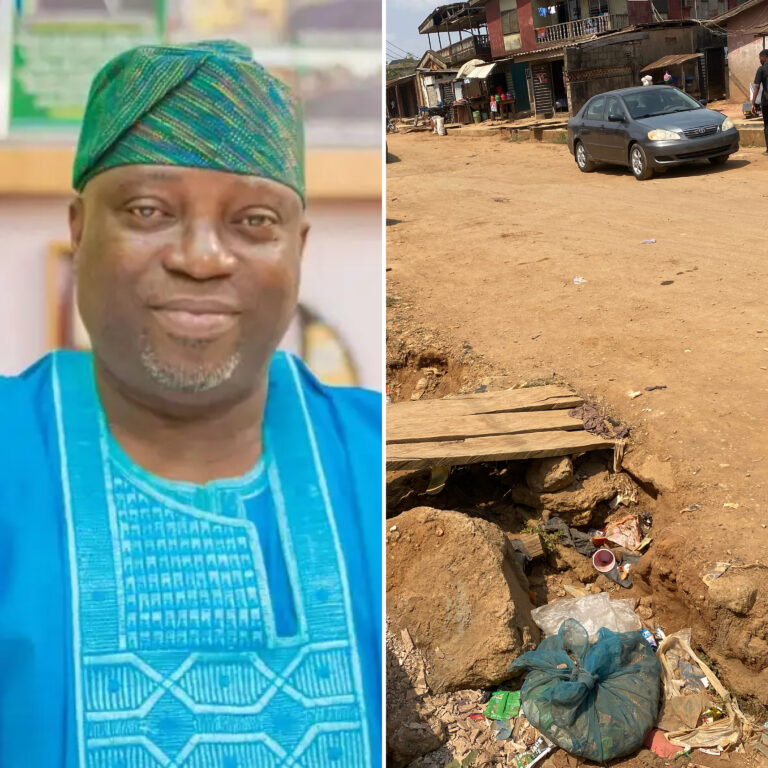
Efforts by The ICIR to obtain response from former Ejigbo LCDA chairman, Monsuru Bello, on its findings have so far been unsuccessful.
Ex-Chairman Ejigbo LCDA Monsuru Bello
In a correspondence sent to Bello on February 18, 2026, The ICIR sought explanations regarding the status, cost, and execution of several projects executed during his tenure.
Bello, however, declined to provide answers, citing an ongoing investigation. In a formal response, he wrote:
“The subject matter referenced in your request is currently under active investigation by the ICPC. Disclosure of records relating to an ongoing law enforcement investigation is exempt under the Freedom of Information Act where such disclosure could interfere with enforcement proceedings, prejudice investigation, or affect the rights of the person involved.”
The Ejigbo LCDA also declined providing information or reacting to the ICIR’s findings. In response to a FOIA request sent in a letter dated February 12, 2026, and signed by the Deputy Director of Legal, Okoya A. Adegoke, the council said that it could not comply with The ICIR’s FOIA request.
Lagos officials decline to respond
The ICIR contacted the Commissioner for Local Government and Chieftaincy Affairs Bolaji Robert, to seek an explanation of the cost-evaluation process applied before granting approval for the Ejigbo LCDA projects.
Calls placed to the commissioner were not answered, and a follow-up WhatsApp message sent thereafter had not received a response at the time of filing this report.
A message was also sent to the spokesperson for the Ministry of Local Government and Chieftaincy Affairs, Kehinde, who said he could not speak on the matter concerning the ministry without approval. He promised to facilitate an interview with the commissioner but of press time, no feedback had been received.
Similarly, enquiries were directed to Gboyega Akosile, the Chief Press Secretary to Governor Babajide Sanwolu requesting clarification on the state’s oversight framework and whether any review had been initiated in light of the discrepancies identified.
No response was obtained from him by press time.
Also, The ICIR reached out to the ICPC spokesperson, Okor Odeh, on the status of the investigation. He promised to look into the matter and get back. However, there was no further feedback as of the time of filing this report.
ADAMAWA State Governor, Ahmadu Fintiri, on Friday, February 27, defected from the Peoples’ Democratic Party (PDP) to the ruling All Progressives Congress (APC), becoming the 30th serving governor in the party.
In a statewide broadcast, Fintiri announced that he moved to the APC alongside members of his cabinet and PDP officials in the state.
He said the decision was taken in the overall developmental interest of the state and its people.
Fintiri’s defection came weeks after Kano State Governor, Abba Kabir Yusuf, joined the APC as the 29th governor under the party, following his resignation from the New Nigeria People’s Party (NNPP) over alleged internal crises and leadership disputes.
Yusuf’s move had triggered a wave of defections in Kano, including state lawmakers and local government chairmen, significantly weakening the NNPP’s structure in the state.
With Fintiri’s switch, the current governorship standings as of January 2026 show the APC controlling 30 states, while the PDP has three governors.
The All Progressives Grand Alliance (APGA), Labour Party, and Accord Party have one governor each.
The addition of Fintiri as the 30th APC governor continues to strengthen the party’s influence in northern Nigeria, consolidating its reach in a region that offers huge votes during elections.
Beyond that, Fintiri’s defection carries significant political impact as Adamawa is widely regarded as the political base of former Vice President Atiku Abubakar, the PDP’s presidential candidate in the 2023 election, and a major chieftain of the African Democratic Congress (ADC), who might have another shot at the Presidency for the seventh time.
Several online commentators suggested that the wave of defections is likely to influence both state and national politics, giving APC a strategic advantage in key regions ahead of the 2027 polls.
The ICIR reports that there have also been concerns among political analysts that the shrinking number of opposition governors could result in a de facto one-party state in the country, as the APC steadily consolidates power under the Tinubu’s leadership.
WHEN Merian [surname withheld] lost her job at the Kaduna Electric Distribution Company (KAEDCO) in 2023, she thought she had one small cushion to fall back on – her pension. But when she approached her Retirement Savings Account (RSA), there was little to withdraw.
“For about 52 to 54 months, they deducted from our salaries and didn’t remit it,” she said, “They are supposed to add their own contribution and pay it, but they didn’t remit from 2018 to 2023.”
Under Nigeria’s contributory pension scheme established by the Pension Reform Act 2014, employers are required to deduct a minimum of eight per cent from employees’ salaries and contribute an additional 10 per cent as the employer’s share. Both must be remitted to a licensed Pension Fund Administrator (PFA) within seven days of the payment of salary. Failure to remit attracts penalties, including interest on unpaid sums.
Merian’s problem is not that a PFA failed to manage her funds, but that the money never got to them.
A review of Merian’s pension statement reveals intermittent payments, with some years having just a single payment instead of 12 remittances.
“I want to access my 25 per cent,” she said, referring to the provision of the law that allows a worker who has been unemployed for at least four months to withdraw up to a quarter of their RSA balance. “But if I access it now, it will be something very small.”
With years of contributions missing, withdrawing 25 per cent now would mean collecting a negligible amount. So, she waits.
Her experience is not isolated.
Jade (not real name), who is still employed at KAEDCO, popularly referred to as Kaduna Electric, confirmed that deductions were made from her salary for years without full remittance to her PFA.
“Exactly, 2018 to 2022,” she said when asked to confirm the period affected.
She has been with the company since its days as the government-owned Power Holding Company of Nigeria (PHCN). “I have been working with them since it was with government PHCN. When it was privatised in 2014, they took over in 2015,” she said.
PHCN was unbundled in 2013–2014 into 11 electricity distribution companies (DisCos), including Kaduna Electricity Distribution Company. Others are Abuja Electricity Distribution Company (AEDC), Ikeja Electricity Distribution Company, Eko Electricity Distribution Company, Ibadan Electricity Distribution Company, Benin Electricity Distribution Company, Enugu Electricity Distribution Company, Port Harcourt Electricity Distribution Company, Jos Electricity Distribution Company, Kano Electricity Distribution Company and Yola Electricity Distribution Company. There is also Aba Power (officially Aba Power Electric Company) which operates under a slightly different structure.
According to Jade, the issue has spanned multiple management transitions at Kaduna Electric.
“You know they are taking over from one management to another. The union protested the other time. They promised making the necessary payment, but till now we have not heard anything from them,” she said.
Kaduna Electric began operations in 2015 following the privatisation exercise. According to Jade, in 2018, a new management took over. By 2023–2024, another management transition occurred.
“They are aware and they are informed. It is recorded, it should be on their records,” she added speaking about the pension non-remittance.
Jade was clear that both components of the contributory pension appear affected.
“Our own pension, the one that was deducted from our salary, was not remitted. There is another one separately that they were supposed to remit to our PFA, but they have not remitted that either.”
The first is the employee contribution deducted monthly and reflected on payslips. The second is the mandatory employer contribution required under the Pension Reform Act.
For employees, the concern is not only about present access but future security.
“Even though I am not touching the pension money, at least it should be there. It is supposed to be for our future,” Jade said. “With the way the company is going, there is no reliability, because they employ and sack people at will. If something happens to me, where do I start from?”
She has watched colleagues lose their jobs and struggle. “Some of my colleagues that were sacked are out there. Some of them are frustrated.”
Zayyanu Umar, who left Kaduna Electric in April 2024 after joining in 2015, said his pension backlog was about 54 months.
“It’s a general issue. They are not remitting it,” he said.
Disengaged, but no exit package
Haruna Sufiyanu Sani understands the system from the inside. For ten years, from 2015 to 2025, he worked in human resources department, interpreting and explaining the company’s conditions of service to employees.
“I used to be the one to interpret the condition of service. We are the custodian of it. We interpret it,” he said.
From that vantage point, he understood the company’s obligations including pension remittances and exit entitlements for disengaged staff. He confirmed that management was aware of the pension issue and that the matter had been raised through the union.
“This is the issue that they are aware of. The management is aware of this,” he said. “There were many strides regarding the issue of non-remittance, which the management pledged and promised that they will do.”
Like others, he said some years were paid while others were not.
“Even while we were in service, they paid some years and left other years without payment.”
A review of Sani’s pension statement also revealed large chunks of missing remittances. For instance, 2019 and 2021, recorded only one payment each, while 2020 had no payment.
For Sani, what was once a policy he explained to staff eventually became his own reality when he was disengaged. According to him, under the company’s conditions of service, employees whose “services are no longer required” are entitled to exit tokens. But he, as well as many others, are yet to receive them.
The conditions of service sighted by The ICIR in chapter 13 which spoke about exit token, state that employees who spent five to nine years are entitled to 35 per cent of total annual emoluments per completed year; 10 to 15 years attract 40 per cent, while 16 years and above attract 50 per cent per completed year as exit token.
‘It is criminal’ — Union reacts
Dominic Igwebike, the Acting General Secretary of the National Union of Electricity Employees (NUEE), confirmed that the union had picketed Kaduna Electric over non-remittance of pensions and non-payment of exit benefits.
“ …although they have said they did part payments after our negotiation with the management to pay everybody part of their exit packages and every month they should be paying a certain amount for those who are disengaged staff. On the pension, there is over 80 months pension arrears which they said they cannot clear at once based on the challenges,” he said.
Pressed on why electricity distribution companies appear to default on pension remittances, Igwebike said: “For me, it’s criminal. You don’t collect a worker’s pension contribution and fail to remit it to the PFA. It is not acceptable.”
He said the union had continued to press management to honour agreements and warned that if commitments were not kept, industrial action could resume.
“If they don’t honour the agreement, you go back to the trenches – and the trenches mean strike action, which we are trying to avoid. But we are not keeping quiet.”
The union, in a letter dated February 1, 2025 (Ref: NUEE/ZOS/NW/KD/2025/008), advised staff not to accept correspondence from the company following an emergency meeting in which Kaduna Electric management allegedly disclosed plans to terminate over 900 workers.
Earlier, on January 10, 2025, NUEE had written to Kaduna Electric following a declared redundancy affecting 10 members, demanding immediate negotiations and warning of industrial action.
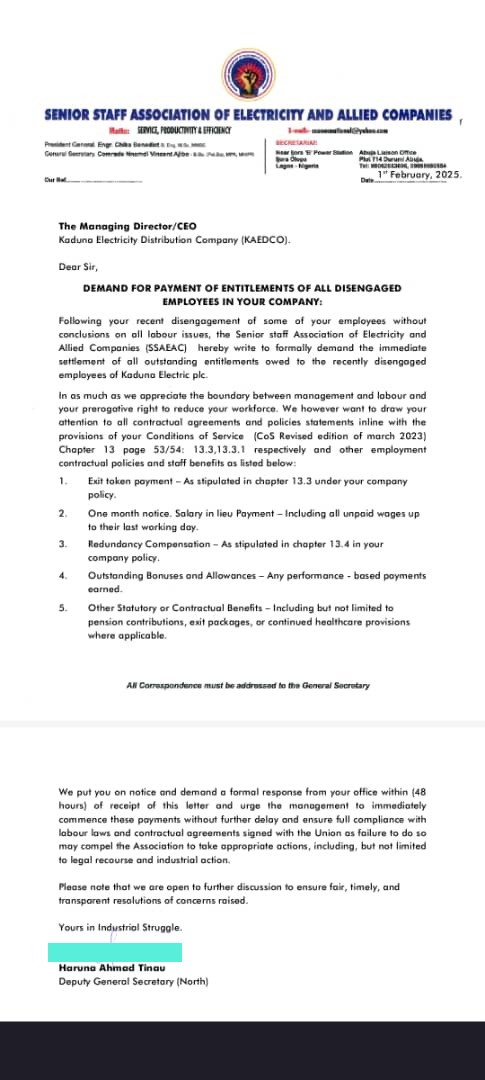
The Senior Staff Association of Electricity and Allied Companies (SSAEC), in a February 1, 2025 letter signed by Haruna Ahmed Tinau, Deputy General Secretary (North), demanded payment of exit tokens, one-month salary in lieu of notice, redundancy compensation, outstanding bonuses and allowances, and statutory or contractual benefits, including pension contributions. The association cited Chapter 13 of the company’s conditions of service as the basis for the demand.
The association cited Chapter 13 of the company’s conditions of service as the basis for the demand.
Government intervention, yet payments pending
In early 2025, the crisis escalated into protests and picketing of Kaduna Electric’s headquarters in Kaduna over non-payment of pensions and emoluments.
The Deputy Governor of Kaduna State, Hadiza Balarabe, convened a meeting involving Kaduna Electric management, NUEE and SSAEC. Subsequently, Governor Uba Sani also intervened.
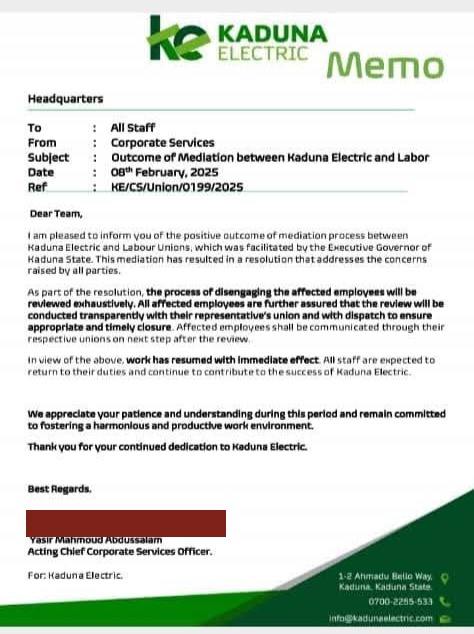
Following the intervention, Kaduna Electric issued a memo stating that mediation facilitated by the governor resulted in a resolution, including a review of the disengagement process.
Following the intervention, Kaduna Electric issued a memo stating that mediation facilitated by the governor resulted in a resolution, including a review of the disengagement process.
According to a memo from the agreement signed by NUEE representatives and management after a review meeting held on March 6, 2025, it was resolved that 20 per cent of total emoluments, based on years of service for staff with five years and above, would be paid to disengaged staff. The first payment was to commence at the end of April, with subsequent payments made every other month, concluding in August 2025.
However, when The ICIR interviewed affected staff in December 2025, they said they were yet to receive the agreed payments.
Igbwebike of NUEE insists that responsibility ultimately rests with regulators. “The buck stops on the desk of PenCom. They have the power under the law.”
Regulatory oversight questioned
The responsibility for regulating pension compliance lies with the National Pension Commission (PenCom), established under the Pension Reform Act 2014. The law empowers PenCom to investigate, sanction and compel defaulting employers to remit outstanding contributions and a statutory penalty of not less than two per cent of the unpaid amount for each month of default.
The ICIR contacted PenCom’s spokesperson, Ibrahim Buwai, seeking clarification on whether the commission had investigated Kaduna Electric over non-remittance from 2019 to 2025, and what enforcement steps had been taken, including recovery of arrears and penalties.
Buwai said an officer had been assigned to respond. After which the commission responded in a statement.
The commission stated that it is “aware that Kaduna Electricity Distribution Company has defaulted in the remittance of employees’ pension contributions.” Citing the Pension Reform Act 2014 (PRA 2014), PenCom stressed that the law “requires employers to deduct pension contributions at source and remit both the employee and employer portions to the custodian specified by the employee’s Pension Fund Administrator (PFA) not later than seven working days from the date salaries are paid.”
The commission further emphasised that under the Act, “any employer who fails to deduct or remit the contributions within the stipulated time frame shall, in addition to remitting the outstanding amount, be liable to a penalty of not less than two percent of the total unpaid contributions for each month or part thereof that the default continues.” It added that the penalty “is treated as a debt and is credited into the affected employee’s Retirement Savings Account (RSA).”
PenCom disclosed that it “has undertaken a series of regulatory and enforcement actions to ensure Kaduna Electricity Distribution Company complies fully with the provisions of the law,” noting that “the process is ongoing.” As part of these efforts, the commission said it “has appointed Recovery Agents to determine the total unremitted pension liabilities and applicable penalties.”
The commission was, however, silent on the duration and timeline expected to reach a resolution, but assures affected workers, stating that “all recovered pension contributions and accrued penalties will be credited directly into their respective RSAs,” reiterating its commitment to “protecting the rights and retirement benefits of pension contributors in line with its statutory mandate.”
PenCom added that it is engaging the Nigerian Electricity Regulatory Commission (NERC), which regulates electricity matters in Nigeria, to facilitate resolution of the matter.
The NERC, which regulates electricity distribution companies under the Electric Power Sector Reform Act, was also contacted, through its communication officer, Christiana Illiya, for response on what regulatory steps it was taking in light of repeated picketing of Kaduna Electric that could threaten service delivery and consumer protection, and also the status of the inter-agency engagement with PenCom.
After several calls, SMS, and WhatsApp messages for days, Illiya said she does not have the clearance to speak, inquiry should be sent to the head of the unit. Several attempts via calls and SMS and reminders on different days to the unit head, Hafsat Abdullahi Mustapha were not answered.
In an attempt to book an appointment to speak with NERC chairman, Musiliu Oseni, The ICIR was advised to send a Freedom of Information (FOI) request with the questions. This was sent to NERC via e-mail and also a dispatch. The ICIR will report the outcome of the response.
However, a source at the NERC, familiar with the situation, said non-payment of salaries, remittance of pension and emoluments is considered an internal matter between discos and their employees. Notwithstanding that, strike actions by unions often lead to paralysed services which inadvertently leads to service distribution which falls under the regulatory oversight of NERC.
Kaduna Electric silent
The ICIR contacted Abdulaziz Abdullahi, who had previously spoken on behalf of Kaduna Electric, but he said he was no longer with the organisation. Abdullahi’s claim was confirmed by a staff in the company.
In 2024, Abdullahi had described the strike action by NUEE as “illegal” and “unnecessary”.
He told the press that “We woke up this morning to the news that members of NUEE have locked up our offices. We were shocked because there was no need for it. We have a quarterly meeting scheduled for Wednesday. They have told us about the pension remittances, and there is a plan to settle the backlogs.”
“We have a new MD, and he needs time to settle down and then plan on how to gradually offset the historical liabilities. But they chose to do this and have stopped staff and customers from coming in.”
The MD Abdullahi was referring to is Umar Hashidu who was appointed following the resignation of his predecessor.
The ICIR contacted Hashidu, his line was busy and subsequent calls went to voicemail. A detailed WhatsApp message and later an email were sent asking why pension contributions – both employer and employee portions – were deducted but not remitted in apparent contravention of the Pension Reform Act; why exit benefits remain unpaid; and when affected staff should expect full settlement of arrears. Reminders were sent on different days as follow-ups, but as of press time, he did not respond.
The ICIR also reached Asmau Abdullahi who was said to be heading the communication unit, she said the inquiry will be relayed to the appropriate person who is the deputy to the managing director. when a follow-up call was made for update, she said he was not yet on seat but promise to get back as soon as he is available. As of press time, the company had not responded.
Beyond Kaduna Electric – discos getting picketed left, right and centre
Kaduna Electric is not alone in this trend. The power distribution sector has experienced at least eight major strikes and protests since 2019, most of them linked to unpaid pensions, entitlements, and poor working conditions.
In October 2019, workers at the Abuja Electricity Distribution Company (AEDC) staged protests over unpaid allowances, disrupting electricity supply across Abuja and neighbouring states.
By late May 2024, AEDC workers were again on strike, this time over pension arrears, highlighting what union leaders describe as a recurring pattern across several distribution companies.
The following year, in January–February 2025, staff of Kaduna Electric embarked on strike action over a combination of unpaid pension contributions and a mass sack plan affecting over 900 workers. Government mediation in February 2025 led to a staggered payment agreement, but implementation remained incomplete.
In June 2025, AEDC workers issued a fresh strike threat over unresolved pension non-remittance, signalling that previous disputes had not been fully resolved.
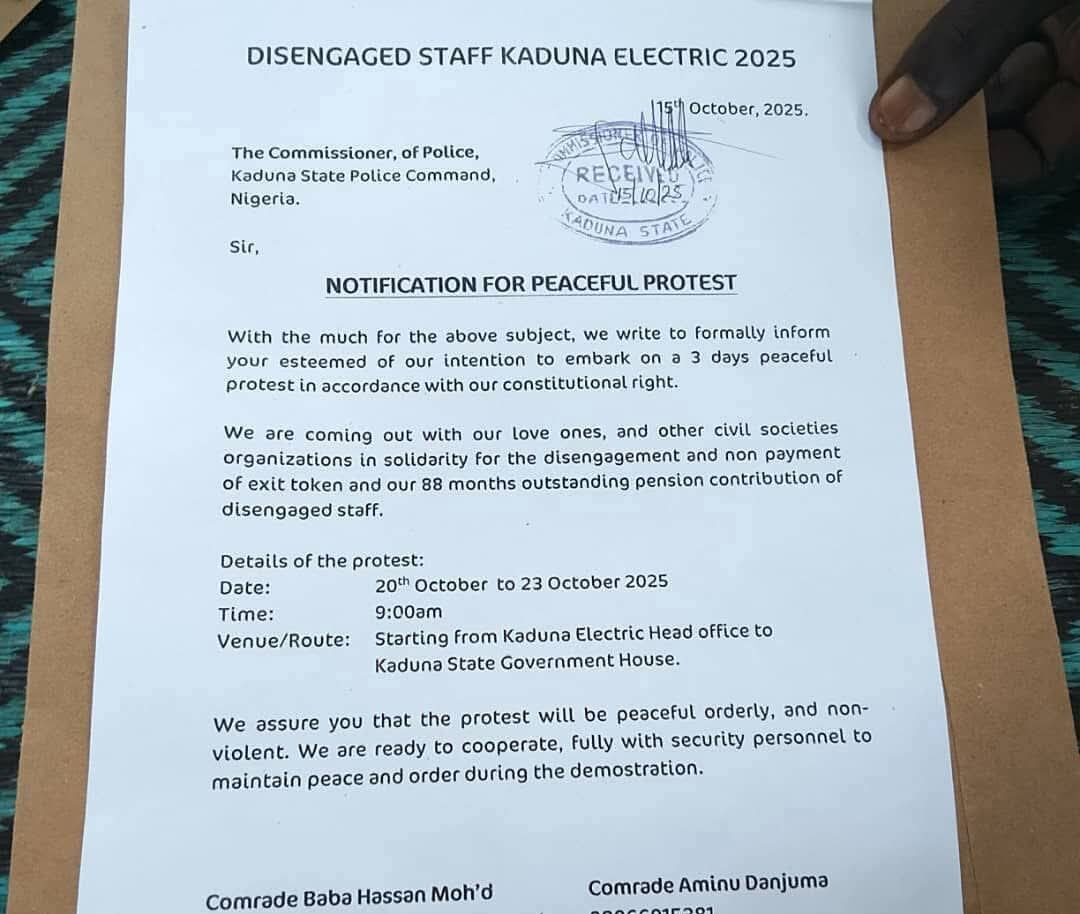
Towards the end of 2025, disengaged Kaduna Electric staff notified the police of a planned protest scheduled for October 20–23, staggered exit payments, pension arrears, and redundancy benefits.
Towards the end of 2025, disengaged Kaduna Electric staff notified the police of a planned protest scheduled for October 20–23, staggered exit payments, pension arrears, and redundancy benefits.
In January 2026, workers at Kano Electricity Distribution Company (KEDCO) commenced strike action over alleged long-standing pension arrears and poor working conditions.
These repeated actions across multiple DisCos illustrate a systemic issue in Nigeria’s power sector, where deductions often appear on employee pay slips but fail to reach PFAs leaving workers uncertain about their retirement security.
On the broader implications, labour leaders warn that recurring industrial actions by electricity workers disrupt operations. For Meriam and others, however, the issue is deeply personal.
“It’s our future,” she said quietly. “We worked for it. We should not have to beg for it.”
THE Independent National Electoral Commission (INEC) has rescheduled the timetable for 2027 elections.
The new timetable was announced in a statement by the INEC’s National Commissioner and Chairman of Information and Voter Education Committee, Mohammed Haruna, Thursday night in Abuja.
He announced that the presidential and National Assembly elections would hold on January 6, while governorship and State Houses of Assembly elections are slated for February 6.
The ICIR reported that the commission had announced February 20, 2027, for the presidential and National Assembly elections, while governorship and state assembly polls were scheduled for March 6.
However, the earlier timetable sparked widespread criticism after stakeholders noted that the dates coincided with the Muslim holy month of Ramadan, expected to begin on February 8 and end around March 10, based on the 1448 AH Islamic calendar.
Some political leaders, including former Vice-President, Atiku Abubakar had criticised the timetable, arguing that the elections fell within a sacred period of fasting, reflection, and spiritual devotion for millions of Nigerian Muslims.
He stated that elections required maximum participation, physical endurance, and national focus, adding that fixing such an important civic exercise during a major religious observance showed poor judgment and a lack of sensitivity to Nigeria’s socio-religious realities.
Meanwhile, INEC Chairman, Joash Amupitan, explained that INEC’s earlier Notice of Election, issued on February 13, 2026, was in compliance with constitutional provisions and Section 28(1) of the Electoral Act, 2022, which requires the commission to publish the election notice no later than 360 days before polling day.
The INEC boss noted that the commission would issue a revised timetable for the elections but would have to wait for the National Assembly to amend the Electoral Act to accommodate the adjustment.
The House of Representatives reconvened on February 17, for an emergency sitting over the need to amend the law for the new election dates.
President Bola Tinubu recently assented to the amended Electoral Act barely 24 hours after its passage by the National Assembly.
THE Nigerian National Committee of the International Press Institute (IPI Nigeria) has called on the new Acting Inspector-General of Police, Tunji Disu, to immediately halt harassment, intimidation, and unlawful detention of journalists across the country.
In a statement on Thursday, February 26, IPI Nigeria said the demands followed persistent violations under the tenure of former IGP Kayode Egbetokun, whose leadership the institute said, enabled a culture of impunity in police interactions with media practitioners.
The ICIRreported how Egbetokun, along with Niger State Governor Mohammed Umaru Bago, and Akwa Ibom Governor Umo Eno, were listed in IPI Nigeria’s newly launched Nigeria Book of Infamy, a registry blacklisting public officials accused of violating press freedom.
The institute cited several cases, including repeated summons and detention of Media Room Hub publisher Azuka Ogujiuba over her reporting on court matters, as well as unlawful arrests and assaults of journalists across states, including Abdulaziz Aliyu in Kano, Nasir Yelwa in Abuja, and FIJ reporter Sodeeq Atanda in Ekiti.
“IPI Nigeria urges Disu to immediately end the pattern of harassment, intimidation and attacks against journalists that characterised the tenure of his predecessor, Mr Kayode Egbetokun.
“Under the previous leadership, journalists were repeatedly harassed, unlawfully detained and, in some cases, assaulted while carrying out their constitutional duties,” the institute said.
It emphasised that the police, as a critical institution in a democratic society, have a constitutional obligation to respect the fundamental rights of all Nigerians, including the right to freedom of expression and of the press.
IPI Nigeria urged Disu to review pending cases against journalists, institute a reorientation programme for police personnel focused on press freedom, and establish clear communication channels with media stakeholders.
The organisation also called for an immediate end to all forms of harassment of journalists, and the implementation of a comprehensive training programme for police personnel on press freedom and human rights.
“We urge Mr Disu to chart a different course and rebuild trust between the police and the media. Respect for press freedom is essential to sustaining Nigeria’s democracy.
“A free and independent press strengthens accountability, enhances transparency and supports law enforcement efforts by informing the public responsibly,” the statement added.