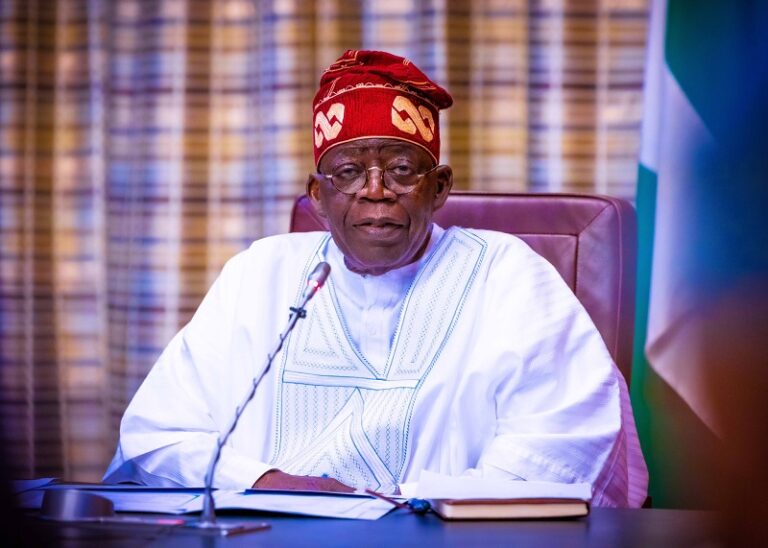
PRESIDENT Bola Tinubu has appointed five heads of agencies in the Federal Ministry of Communications, Innovations, and Digital Economy.
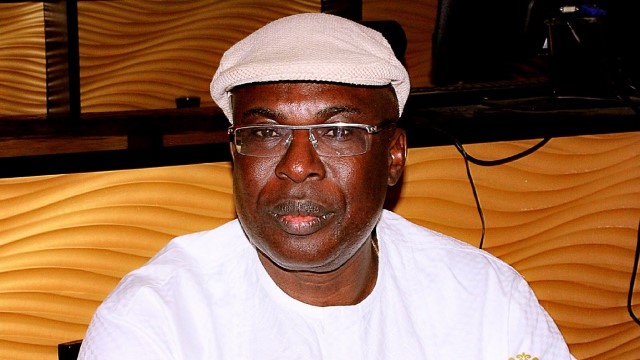
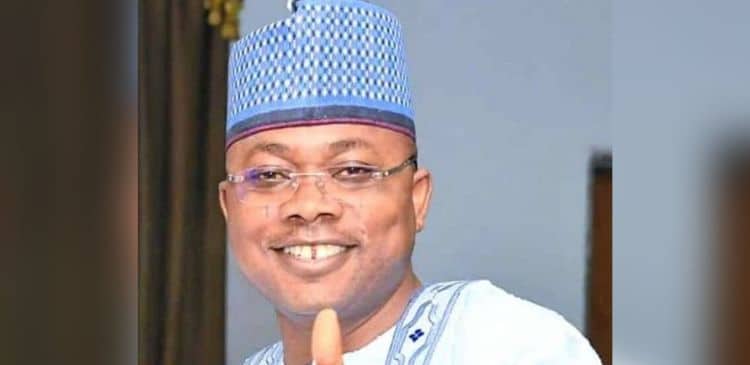
In a statement by his Special Adviser on Media and Publicity, Ajuri Ngelale, on Wednesday, October 11, the President announced Aminu Maida as Executive Vice Chairman and Chief Executive Officer of the Nigerian Communications Commission and Tola Odeyemi as the Postmaster General of the Nigerian Postal Service.
He also named Vincent Olatunji as the National Commissioner of the Nigeria Data Protection Commission, while Nkechi Egerton-Idehen is the Managing Director of the Nigerian Communications Satellite Limited.
Similarly, he named Kashifu Abdullahi the Director General of the National Information Technology Development Agency (NITDA).
Abdullahi’s appointment was for a second and final term in office.
Additionally, Tinubu approved Idris Alubankudi as his new Special Advisor on Technology and the Digital Economy.
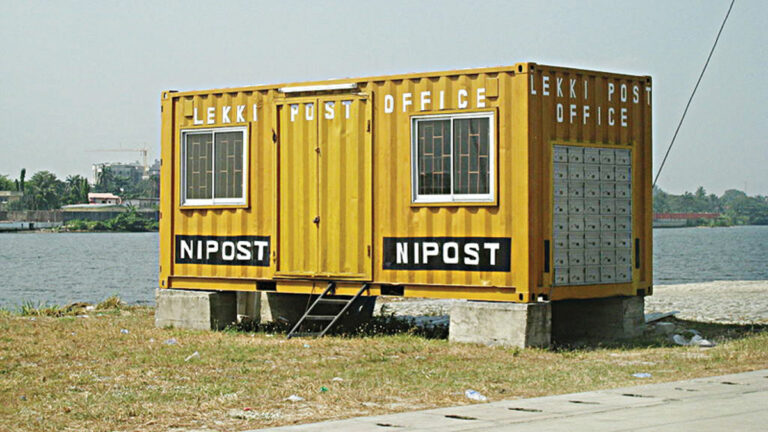
The ICIR reports that Odeyemi becomes the third chief executive officer to have led NIPOST in less than 13 months. On October 5, 2022, former President Muhammadu Buhari appointed Adepoju Sunday as the new Postmaster General.
The appointment ended the tenure of Ismail Adewusi, who was until then the NIPOST’s CEO.
Adepoju was to spend an initial term of five years in office. But barely a year after, Tinubu, a new President who assumed office in May 2023, fired and replaced him with Odeyemi.
The ICIR reports that the abrupt changes in NIPOST leadership coincide with the myriads of challenges facing the organisation, with many Nigerians assuming its services are no longer available.
A LAGOS State High Court has convicted two members of a group of pipeline vandals for murdering seven operatives of the State Security Service (SSS).
The judge, Hakeem Oshodi, convicted Clement Ododomu and Tiwei Monday after finding them guilty of a 10-count charge of murder and possession of firearms contrary to Sections 223 and 298 (3) of the Criminal Law, Cap. C. A Vol. 3, Laws of Lagos State, 2015.
The court found Ododomu (the first defendant) guilty of conspiracy to commit murder and possession of a firearm with the intent to commit a felony.
Monday (the second defendant) was found guilty of failing to report a crime and conspiring to murder.
According to the Lagos State government, in 2015, the SSS agents Uzor Nwafor, Kayode Oladimeji, Luke Akande, Adebayo Adeniyi, Benjamin Mafo, and Simeon Owolabi and one other were killed and buried.
During the trial, Saheed Adetunji, an investigation officer, testified before the court that seven out of nine people dispatched on a kidnapping rescue mission were ambushed by vandals and taken hostage at Abule Oba.
He stated that the first defendant took the seven SSS personnel to their hideout in the creeks, called Barracks.
Adetunji also identified the 2nd defendant, Monday, as a member who used the teargas on the personnel. He also recalled one Godwin Oweli and Prince Sunday as other perpetrators.
“He said that when they got to their Barracks, he shot two SSS personnel with a pump-action rifle, while one Agbala shot the remaining five with an AK47.
“The dead bodies were buried in three separate graves. The first defendant said that some Ijaw boys dug the graves. Three slim operatives were packed in one. And the bigger ones were put in twos into the other graves,” Adetunji stated.
The judge, Oshodi, ruled that the prosecution established some elements of the case against the two convicted individuals beyond a reasonable doubt.
Additionally, the judge disregarded their alibi, calling it unreliable and an afterthought.
He further stated that their efforts to refute their confessional statements were ineffective and that the evidence before the court demonstrated the voluntariness of the extrajudicial statements.
But the judge postponed sentencing until November.
The Director of Public Prosecution (DPP) has pleaded with the court to sentence the offenders to the maximum term to make it clear that the state would not accept the killing of anyone, especially officers performing their official duties.
He also used the opportunity to renew his demand that the secret police find Agbala, suspected of shooting five of their personnel.
THE Federal Capital Territory Emergency Management Agency (FEMA) has reduced its emergency response time to three minutes.
FEMA said the response time in the nation’s capital was cut from five to three minutes to lessen deaths and save lives and property.
Its Director of Forecasting, Response, and Mitigation at FEMA, Florence Wenegiem, stated this on Tuesday, October 10, in Abuja during a campaign to raise awareness of the 2023 International Day for Disaster Risk Reduction.
The sensitisation was conducted at the Bwari Area Council Secretariat in Abuja and the Palace of Esu Sa-Bwaya of Bwari (the Chief of Bwari), Ibrahim Yaro.
The sensitisation campaign with the theme “Fighting Inequality for a Resilient Future for All” began on October 4 across the six Area Councils of the FCT.
Wenegieme said that after community structures were trained to act as first responders to emergencies in their communities, the three-minute reaction time became realistic.
The director specified the community structures, including the local divers, emergency vanguards, disaster marshals, town criers, volunteers, and other systems like youth and women groups.
“Community members are usually the first respondents to an emergency because it happens within their community. They have been adequately trained to know exactly what to do during emergencies and rescue operations before FEMA officials arrive,” she stated.
She claimed that through drills and simulations, the community structures had received sufficient training in emergency response, giving them the required information and abilities.
The director said that FEMA had also purchased power cycles for the agency personnel to get through the gridlock in Abuja and arrive at the disaster situation in three minutes.
“This quick response will ensure that more lives and properties are saved,” she noted.
She said it was crucial to sensitise community members to ensure that no one was left behind during emergencies.
She emphasised the importance of paying attention to vulnerable populations such as children, expectant mothers, people who are blind, the elderly, and persons residing in disaster-prone areas.
In response, the Esu of Bwari, Yaro, pledged to work with FEMA to spread awareness of disaster risk reduction among all households in the Bwari area council.
Earlier, the council chairman, John Bagaya, announced that the council had established its local emergency management committee to handle situations on a neighbourhood level.
The ICIRreported that a video went viral on Wednesday, September 27, showing a lady, later identified as Greatness Olorunfemi, by the roadside along the Maitama-Kubwa expressway after being pushed out of a vehicle by a suspected criminal gang disguised as commercial drivers.
“This lady was just pushed down from a vehicle between Maitama-Kubwa express, the road going towards Wuse, Berger. She was pushed by all this one chance. Please, let’s be careful, she was pushed down from a one-chance vehicle,” an unidentified eyewitness narrated in the video.
According to an audio tape from the eye witness that also went viral, passersby took Olorunfemi to the Maitama District Hospital in Abuja for treatment, but she was denied treatment by the hospital staff, who demanded a police report before attending to her.
The Labour Party presidential candidate in the 2023 election, Peter Obi, has challenged President Bola Tinubu to address Nigerians and the international community on his identity and the allegations of forgery and discrepancies in his university certificates at the Chicago State University (CSU).
Speaking at a press conference in Abuja on Wednesday, October 11, Obi said the Chicago Court deposition and allegations of forgery against the President had further exacerbated the challenges faced by numerous Nigerians and the nation on the global stage.
The ICIR reports that the Chicago Court deposition and the forgery allegations have raised questions about Tinubu’s integrity. According to Obi, the gravity of these allegations cannot be underestimated, as they have implications not only within Nigeria but on the international stage.
“The controversy is unnecessary, just as the implicit global embarrassment could have been avoided. In my opinion, Chief Bola Ahmed Tinubu should have saved the nation and himself from this protracted embarrassment and undue anxiety. Even at this late in the day, however, Chief Ahmed Bola Tinubu still owes the nation and the world a simple obligation only he can discharge.”
In his address, Obi called on Tinubu for an impartial disclosure of his identity and to re-introduce himself to Nigerians.
He also urged the President to indicate where he did his National Youth Service, adding that he should clearly give the account of his background.
“I therefore respectfully and humbly call on him to immediately personally mount the rostrum of his present high office to perform a simple task of once and for all times; he should reintroduce himself to the nation he governs and to the world for the avoidance of further doubts.”
The former Anambra governor also asked Tinubu to let the world know his full name, nationality, place of birth, parentage, details about the primary and secondary schools he attended along with their respective dates, and comprehensive information about the universities he attended, including the certificates obtained.
“In addition, if at any time if he had a change of name, he should say clearly and the circumstances. That itself is no crime. This is a simple task that will take only a few minutes. It requires no affidavit, spokespersons or surrogates. The task is one that only Bola Ahmed Tinubu himself, through a direct personal statement, can perform. He must perform this task urgently in order to lay to rest the many lingering doubts and speculations about his true identity.
“In his present capacity as a leader of a nation of over 200 million Nigerians, his true identity is a matter of grave national and international interest. The people deserve to know with certainty the true identity of their leader and this overrides whatever rights he may have to personal privacy. In addition, the international community deserves to know the true identity of the person with whom they will engage on Nigeria,” he added.
The Peoples Democratic Party’s (PDP) candidate in the last election, Atiku Abubakar, had successfully obtained the release of Tinubu’s education records from the CSU through a court subpoena against the disclosure by the President.
He requested the documents to back his allegation of forgery of the CSU certificate against Tinubu.
Despite the court’s decision to reject the accusation of forgery against Tinubu, Atiku persisted with his case in the US court and sought official documents supporting his allegations, which he most likely will incorporate into his appeal at the Supreme Court.
The disclosed documents, initially released on Monday, October 2 and further emphasized in a deposition on Tuesday, October 4, revealed a discrepancy concerning Tinubu’s 1979 CSU certificate.
During the deposition, the CSU registrar also stated that he could not authenticate the certificate presented by Tinubu to INEC.
But the registrar affirmed that Tinubu graduated from the school.
The ICIR had, on October 5, reported how Atiku Abubakar called on relevant institutions to address the discrepancies in the certificate submitted to the Independent National Electoral Commission (INEC) by Tinubu.
He said failure to do so put the nation’s image at stake and would give citizens a wrong image before the rest of the world.
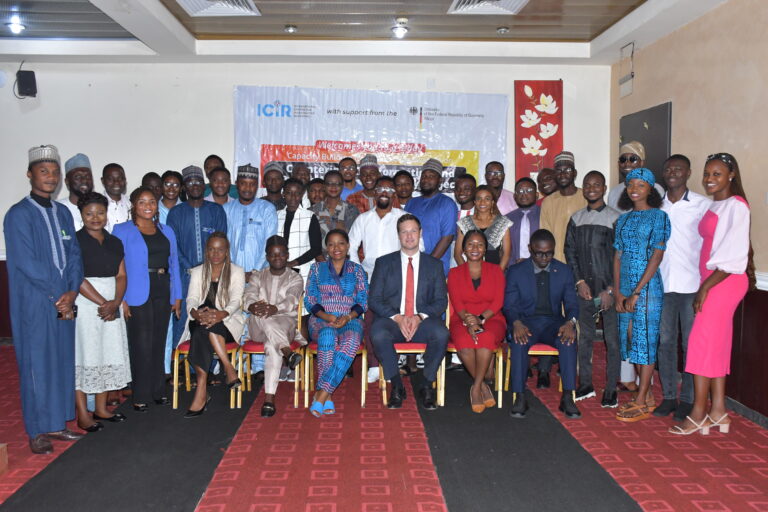
THE International Centre for Investigative Reporting (The ICIR) has commenced training for select journalists on Countering Misinformation and Promoting Media Literacy in Nigeria Project.
The three-day training began in Abuja on Tuesday, October 10, with participants drawn from print, online and broadcast media.
Beneficiaries are from different newsrooms across the country.
The Countering Misinformation and Promoting Media Literacy in Nigeria Project aims to combat the dissemination and impact of misinformation in Nigeria by promoting media literacy and responsible information sharing among citizens.
The German Embassy in Nigeria supports the project.
In his opening remark, The ICIR‘s Executive Director Dayo Aiyetan, represented by the FactCheckhub Editor, Opeyemi Kehinde, said the fight against misinformation in Nigeria could not be won without the media.
“Building the capacity of media professionals to counter misinformation and disinformation narratives via their various platforms is key to attaining the goal of The ICIR to encourage the public to imbibe the culture of fact-checking.
In his welcome address, the German Embassy’s First Secretary of Political Affairs Nigeria, Mathias Dold, highlighted the importance of Countering Misinformation and Promoting Media Literacy in Nigeria as a key component of democracy.
He said, “The EU Election Observation Mission concluded in its final report documented a large amount of misleading content allegedly produced by political camps and various individuals, regularly targeted actors across the political system.
“In addition, influential members of leading parties regularly spread unverified or even false information targeting the opponents, while critical reporting was at times also referred to as ‘fake news’ by some political actors. This worsened an already opaque information environment.”
THE Nigeria Premier Football League (NPFL) board issued a strong warning against home teams whose ball boys deliberately hold the balls to the home teams’ advantage.
In a memo issued by the Chief Operating Officer of the NPFL, Davidson Owumi, to clubs on Tuesday, October 10, the NPFL ordered that a minimum of 10 balls be made available at every match to enable the ball boys to replace balls kicked outside the playing area promptly.
Besides, the NPFL directed teams and their handlers to re-orientate their ball boys to end delaying tactics.
“It has come to our attention the unscrupulous and undisciplined behaviour of ball boys on match days. The continuous attitude of ball boys hiding match balls when the game is still on and mostly in favour of the home team shall no longer be tolerated.
“Note that at every point in time during an NPFL match, a minimum of not less than ten match balls should be available for use at all times”, part of the memo read.
The NPFL said delaying tactics by ball boys constituted misconduct under Rule C1.1 of the NPFL Framework and Rules, a breach of which could lead to heavy sanctions against erring clubs.
“We urge you to take immediate steps to rectify this situation by carrying out orientation sessions for the ball boys to ensure they understand and adhere to the rules.
“Failure to do so may result in penalties, including fines and points deductions as outlined in Rule C18 of the NPFL Framework and Rules”, the memo stated.
The ICIR reported that the match day one of the league recorded seven home wins and one draw. Also, match day two recorded nine home wins and two draws.
Since the commencement of the 2023/2024 league, there have been 16 home wins and three draws.
THE Intergovernmental Group of Twenty-Four on International Monetary Affairs and Development (G-24) is concerned about the high and increasing public debt levels, with many developing countries carrying unsustainable debt burdens.
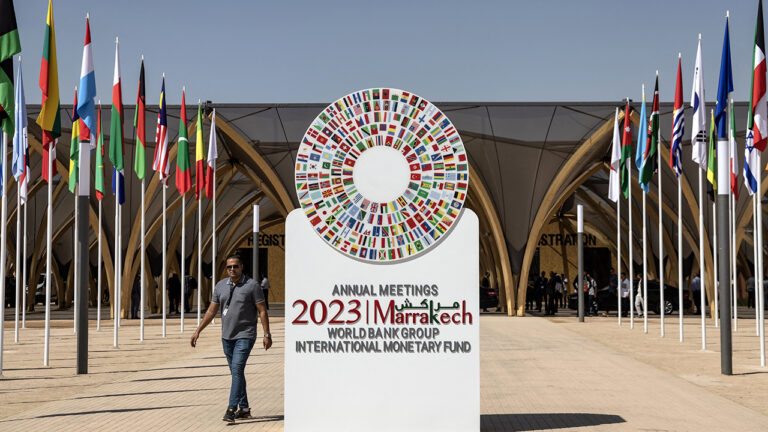
The Group said this at the ongoing 2023 Annual Meetings of the World Bank Group (WBG) and the International Monetary Fund (IMF) on Tuesday, October 10.
Comprised of 28 members plus China, the G-24 aims to coordinate the position of developing countries on monetary and development issues.
The WBG/IMF event, which started Monday, October 9, will run through Sunday, October 15, in Marrakech, Morocco, and is focused on critical institutional priority topics under the theme of ‘Global Action, Global Impact.’
Expressing its concern, G-24 urged the Bretton Woods Institutions (BWI) to provide a durable debt resolution and a variety of steps to increase financing availability to developing countries.
It also called for reforms of the BWI and international taxation and trade reforms, stating that some of the poorest and most vulnerable countries are excluded from the benefits of debt relief.
Stressing further, it said the global economic landscape is uncertain, with countries affected by declining access, tight external finance conditions, high debt levels and rising inflation.
According to the Group, it is demanding for “allocation of new Special Drawing Rights, the IMF’s reserve currency; reform of IMF short-term financing instruments; increased concessional resources to low-income countries; reform of the IMF’s surcharge policy; increased channelling of SDR from donor countries to needy countries and increase of the Fund’s resource base through its 16th General Review of Quotas.”
It said its recommendations would provide additional financing for members to mitigate shocks and invest in climate action and sustainable development.
The G-24/said a rising trend in protectionist policies, especially from the largest economies, adversely affecting global integration and trade.
“Developing countries experience unequal distribution of the benefits of trade, limited market access and unfair trade practices, especially in the agriculture sector, which is often the main source of livelihood for the poor,” it stressed.
Calling on the BWI to support reforms of the multilateral trade system, it recommended further pursuit of governance reforms to correct regional underrepresentation in the IMF.
It added that there is a need for more concessional lending, especially for investments in global public goods and sustainable development such as affordable water and energy.
Ahead of the annual meeting, which is taking place for the first time in Africa in 50 years, the IMF had said it needed $4.7 billion to close the loan resource gap in Africa.
The Director-General of IMF, Kristalina Georgieva, said the institution urgently needed to provide $1.6 billion in support to the African continent.
Recently, The ICIRreported that the IMF said not only has the debt risen and almost doubled in just a decade, but repaying the debt has also become much costlier.
Nigeria’s public debt burden has risen to N87.38 trillion at the end of the second quarter of this year, according to the Debt Management Office (DMO).
IN 2019, a lawmaker who had served in the Kano State House of Assembly since 2007, Labaran Abdul Madari, influenced the award of a school construction and furnishing project to his firm; he thereafter lied that part of the project he executed with the contract fund were his donations.
According to a report published by The ICIR, the Kano state government, under its Ministry of Works and Infrastructure, awarded a contract for the construction of a one-block Islamiyya classroom type E in Katarkawa, Warawa LGA to a company, Kwore Nigeria Limited at the sum of over N6.7 million.
Findings by The ICIR revealed that Madari is the Beneficial Owner of Kwore Nigeria Limited, which violates the Public Procurement Act (PPA) of 2007, a law governing procurement processes in the country.
The report established that undue influence was applied in securing the contract, as 16 of the 19 contracts for constituency projects awarded by the ministry for Warawa Local Government Area (LGA) in 2019 went to Kwore Nigeria Limited.
Despite violating existing laws, the desks provided by Kwore Nigeria Limited had “Donated by Hon Labaran Abdul Madari” imprinted on them, suggesting that the furniture was free donations by the lawmaker rather than a constituency project funded by the government.
Contraventions of both the PPA 2007 and the State Public Procurement Law of 2021 by other lawmakers and contactors in Kano are adversely affecting residents and threatening students’ access to education.
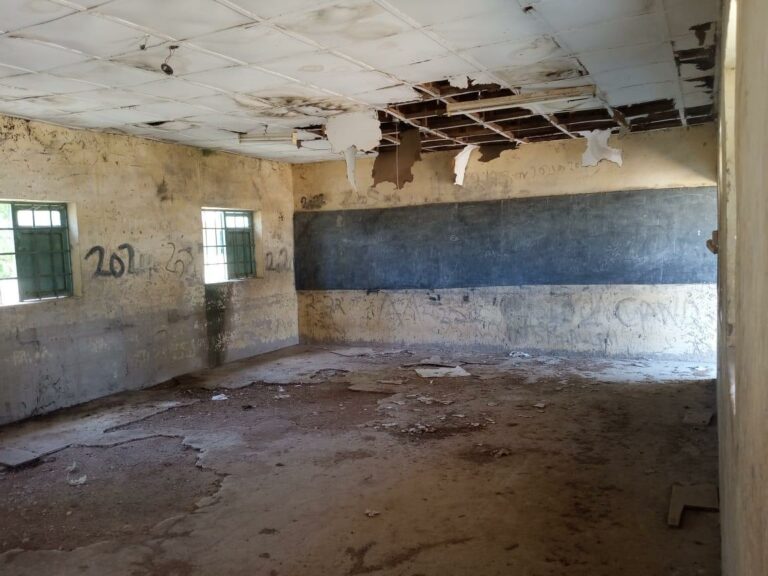
Children learn under dangerous structures with roofs threatening to cave in and, sometimes, are at risk of abduction or accidents due to the absence of perimeter fences around the buildings, despite the award of contacts and disbursement of funds to address these issues.
For instance, the Kano State Ministry of Works, Housing, and Transport in 2019 awarded a contract worth over N7.5 million each for the construction of classroom buildings with an office and a store to improve learning conditions in the Government Senior Secondary School (GSSS), Dundun Primary School, Ajingi and Falankawar Gafasa Primary School, Ajingi.
The contract was awarded to Danyarimawa Synergy Global. Findings revealed that the company, owned by a lawmaker in the Kano State House of Assembly, Abdulaziz Garba Gafasa, abandoned the school project until August 2023.
Sometimes, political leaders in Kano award contracts to ghost companies while citizens suffer from lacking basic amenities.
In August, The ICIR reported that other lawmakers in Kano touted projects donated by charity foundations, including the United Nations Children’s Fund (UNICEF), as theirs.
Member of the Kano State House of Assembly representing Kunchi/Tsanyawa constituency Garba Yau Gwarmai had a contract of N1.4 million awarded to his company Safnaj Synergy WorldWide for the construction of a borehole in his LGA in 2019.
IN a month from today, Kogi, Bayelsa and Imo States residents will elect a new governor (on November 11) as the Independent National Electoral Commission (INEC) conducts the states’ off-cycle governorship poll.
The states are three of six states in Nigeria with off-season governorship polls. Others are Ondo, Edo and Osun.
The former INEC’s Information and Voter Education Committee Chairman, Festus Okoye, announced the election date in October 2022.
Okoye said the decision was in tandem with Section 28(1) of the Electoral Act of 2022, which requires the commission to publish the notice of election not later than 360 days before the date set for the poll.
While the current governor of Imo State’s term expires on January 14, 2024, Okoye said the governors of Kogi and Bayelsa States had respective terms that expire on January 26, 2024, and February 13 of the same year.
The ICIR looks at the top candidates in the three states and their chances.
Bayelsa State
In Bayelsa, South-South, 16 candidates will be slugging it out to win the top seat of the oil-rich state. The major three candidates include the incumbent Governor Douye Diri of the Peoples Democratic Party (PDP), former governor and the immediate Minister of State for Petroleum, Timipre Sylva of the All Progressives Congress (APC), and Udengmobofa Eradiri of the Labour Party (LP).
However, The ICIR reported on Tuesday, October 10, that a Federal High Court in Abuja disqualified Sylva from participating in the exercise on Monday, October 9. The court argued that he had taken oath as an elected governor twice.
He was the state governor from May 29, 2007, to April 15, 2008, and from May 27, 2008, to January 27, 2012, when the court sacked him.
Hours after Monday’s ruling, the APC vowed to appeal the judgment.
Bayelsa State is constantly faced with a flooding crisis. A flash flood hit the state and other parts of Nigeria in the last quarter of 2022. At least 3.5 million people were displaced, 569,000 hectares of agriculture were devastated, and over 600 people died, according to figures from the UN Office for the Coordination of Humanitarian Affairs (OCHA).
Candidates and their chances
Douye Diri
Diri, a former senator, House of Representatives member, and Commissioner for Youth and Sports in the state became governor following a court judgement that disqualified the winner of the 2019 governorship election in the state, David Lyon.
The 2019 election in Bayelsa was between Diri of the PDP and Lyon of APC.
Lyon won with 352,552 votes, defeating Diri of the PDP with 143,172 votes.
However, a day before his swearing-in, the Supreme Court sacked him as governor-elect because his deputy, Biobarakuma Degi-Eremienyo, forged the certificate he submitted to INEC.
Diri will be banking on the fact that the PDP has led the state since the nation returned to democracy in 1999.
Timipre Sylva
Sylva is the immediate past Minister of State for Petroleum. He was also a former governor of the state. He governed the state under the PDP.
Among others, Sylva will be counting on his accomplishments when he led the state and the clout of his party, APC, at the national level.
Candidate of APC in Bayelsa State,Timipre Sylva
Though, as it stands, he is out of the contest following Monday’s Federal High Court judgement against him, he can still participate in the election if a superior court upturns the decision.
Udengs Eradiri
It is posited that the youth’s support for him may swing the pendulum in his favour.
An engineer, he is a former president of the Ijaw Youth Council (IYC) worldwide, commissioner, and special adviser on Youth Matters in the NDDC.
He will also be capitalising on the popularity of Peter Obi, the LP’s Presidential candidate in the February 25 Presidential election, to cause an upset.
Kogi State
According to the candidates’ list published by INEC,the governorship elections in Kogi state will be keenly contested by 18 candidates.
Kogi faces substantial security issues. Flooding is also a perennial issue in the North-Central state.
Among the leading candidates jostling for the number one seat in the state are Murtala Yakubu Ajaka of the Social Democratic Party (SDP), Dino Melaye of the PDP, Ododo Usman Ahmed, APC and Leke Abejide of African Democratic Congress (ADC).
Usman Ahmed Ododo
Ododo is a former auditor-general for Local Government in the state.
He enjoys the advantage of being the only candidate from the central senatorial district of the state, the support of the incumbent Yahaya Bello, and his party (the APC), which leads at the federal level.
Ahmed Usman Ododo, APC candidate for Kogi governorship election.
He is, however, faced with opposition from some members of his party who lost out in the primaries.
Dino Melaye
He is the gubernatorial candidate of the PDP in the coming election.
A former House of Representatives member and senator, Melaye contested the governorship primaries of his party in 2019 and lost.
He was the spokesperson for the PDP presidential candidate in the 2023 election.
He is famous for his flamboyance.
Melaye hails from Ayetoro Gbede in Ijumu Local Government Area of the state.
Muritala Yakubu Ajaka
Muritala Ajaka was the former deputy national publicity secretary of the APC.
He resigned the party membership, after which he emerged as the gubernatorial candidate of the SDP for the November 11 election.
Many residents see him as one of the likely winners.
He is from the eastern senatorial district – the region with the highest voters and population.
Leke Abejide
Abejide is a serving House of Representatives member elected under the platform of the (ADC). He represents the Yagba Federal Constituency.
He was reelected on February 25, 2023, for a second term.
Abejide is running for the Kogi governorship seat under the ADC platform.
He is one of the three candidates from Kogi West Senatorial District.
Like others, The ICIR reports that the Kogi election promises to be interesting, given the heavyweights vying for the exalted seat.
Imo State
Insecurity has been a major challenge in the Southeast region, and it has led to the deaths of more than 1,700 people between January 2021 and June 2023.
Deaths occur from protests, armed clashes, abductions, mob violence, activities of secessionist groups, riots, electoral violence, and other causes.
Insecurity affects all five states: Abia, Anambra, Ebonyi, Enugu and Imo.
In Imo, INEC cleared 17 candidates for the forthcoming election.
The major candidates are the incumbent governor, Hope Uzodinma of the APC, Athan Nneji Aconu, LP and Samuel Anyanwu of the PDP.
Hope Uzodinma
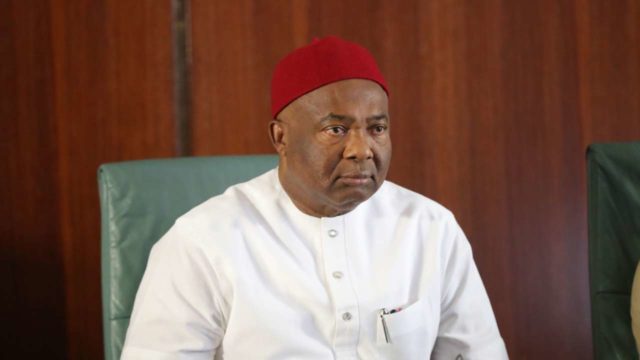
Uzodimma has been Imo State governor since 2020 after the Supreme Court nullified the election of Emeka Ihedioha of the PDP and declared him the winner despite coming fourth in the election results announced by INEC.
PRESIDENT Bola Tinubu has delivered his speech to commemorate Nigeria’s 63rd Independence Day celebration. While this is his first speech delivered on October 1st as a democratically elected president, this is the fourth broadcast to the country by the president since May 29, when he assumed office.
The ICIRreported that the president approved an additional increment of N25,000 to the minimum wage for ‘average workers’ in Nigeria for the next six months. This is part of the efforts of the federal government to cushion the effects of some reforms by his administration. The amount was later reviewed upwards.
However, for this report, The ICIR examined the choice of words of the president in the last four speeches delivered between May 29 to October 1 and how the structures and tone reflect the reality of the country.
For context, this report will only analyse the Inauguration speech, Democracy Day speech, an address by the president on Nigeria’s economy and Independence Day speech. It is of note to say that Tinubu has delivered other addresses to international countries and summits, but the four speeches listed above are primarily to Nigerians.
The first speech was delivered on May 29 during the inauguration as the elected president of Nigeria. The second speech was delivered to commemorate Nigeria’s Democary Day on June 12. The third speech was delivered to address the economic challenges of the country following the implementation of policies pronounced by the president, while the fourth speech was delivered to commemorate the country’s 63rd Independence Day on October 1st.
Before the country’s general elections on February 25, Tinubu released an 80-page policy document that highlights his agenda and action plans if he was elected as the president. The priority was national security, economic, agriculture, power, oil and gas, transportation, education, healthcare and digital economy.
Others are points on sport, entertainment and culture, youth empowerment and entrepreneurship, women empowerment, social programs, judicial reform, federalism/decentralisation of power and foreign policy.
Using these 17 agenda points as parameters, this report filtered the speech of the president by basic, reoccurring topics that reflect the current challenges of the country. These topics are insecurity/security, economy/economic, fuel/subsidy, corruption, jobs/employment and agriculture.
The inauguration speech delivered by the president had 140 sentences with 1,985 words and a readability ease of 54.6 per cent. The speech, according to The ICIR’s report, captured the president’s commitment and reassurance to address issues around the economy, and insecurity, among other lingering challenges.
One of them was the immediate removal of fuel subsidy when he uttered the statement, “fuel subsidy is gone”.
Fourteen days later, the president delivered his second broadcast to commemorate the June 12 Democracy Day. The speech had a 1,444-word count with 57 sentences and a reading ease of 39.3 per cent. By this time, Nigerians have begun to experience the effect of the removal of fuel subsidy on transportation and the price of foodstuffs.
Word count
Sentences
Reading ease
First speech
1985
140
54.6%
Second speech
1444
57
39.3%
Third speech
1757
96
52.4%
Fourth speech
1340
87
53.1%
Text analysis of Tinubu’s speech
Tinubu, in his address, promised to invest massively in transportation, power, health, education and other sectors to cushion the pains of Nigerians. He said, “I feel your pain. This is one decision we must bear to save our country from going under and take our resources away from the stranglehold of a few unpatriotic elements.”
On July 31, the president delivered his third speech to address the economic challenges of the country. The broadcast came just a few days after a planned protest by the labour union. The speech had 96 sentences with a word count of 1,757 and a readability ease of 52.4 per cent. The ICIR reported how Tinubu rolled out several plans to ease the hardship in the country.
To sympathise, Tinubu reiterated, “I understand the hardship you face. I wish there were other ways. But there is not.”
Meanwhile, the speech delivered on October 1st had a 1,340-word count with 87 sentences and a reading ease of 53.1 per cent. Tinubu said the government would make provision for relief packages to ease the impact of rising food prices and transportation and also embark on tax reform.
Findings from the speech analysis showed that the only time the president had to speak long was during his inaugural address and the third address on the country’s economic challenges.
What does this mean?
The founder of Policy Shapers, Ebenezar Wikina, said that from the inauguration speech, the president has seen that any word he says has power. He is becoming careful about how he addresses the country.
While reacting to how the content of the speech actualises the president’s agenda, he said, “There needs to be clarity on issues and what is happening in the economy. There is something called policy appraisal, and there needs to be a measuring mechanism to see what is working or not.”
Also, the Acting Head of Open Government and Institutional Partnership, BudgIT, Iyanu Bolarinwa, said that the addresses had enacted policies that have been very tough on the public and macroeconomics.
He said, “What we hope to see is beyond promises of the federal government. Nigerians are tired of hearing promises, they want to see real actions. The cost of living has increased, and the earning power still remains the same.”
What has happened amidst all these ‘talks’
Between May 29 and October 1, The ICIR has documented several developments across the country tied to the agenda of the president.
These decisions, including the devaluation of naira, increased Nigeria’s inflation rate to the highest rate in over a decade. The ICIR also reported the feasibility and its impact on the distribution of palliatives to the public and state government. Within five months, at least 10 palliative schemes were announced by the president and lawmakers. Also, on insecurity, The ICIR reported that over 600 people were killed within the first 45 days under the new administration.