Home Blog Page 808

Faith lifts gold: from walking to school to setting world athletics alight

0
By Wycliffe W. Njororai Simiyu, Stephen F. Austin State University

ALL eyes were on Faith Kipyegon at the 2023 World Athletics Championships in Budapest, Hungary. That’s because the Kenyan 1,500 metre and 5,000 metre star broke three world records in less than two months on her way to Hungary, where lifted gold in the 1,500m for the third year in a row as well as winning the 5,000m event. She becomes the first woman in history to win gold over both distances at the championships.

As expected, Ethiopia, Uganda and Kenya spearheaded Africa’s hopes for medals, continuing their dominance in middle and distance running events.

Over time, Africa is earning fewer gold medals at the event, even from Kenya’s famous male distance athletes. Kipyegon, however, bucked the trend. Considered by many as the greatest female 1,500m runner in history, she is the one athlete who has been consistent for the last eight years.

As a sport scientist with a research focus on Kenyan athletics, I have followed Kipyegon’s career with interest. But who is she, what drives her and how did she manage to achieve this level of success despite taking a break from competing to start a family?

World record spree

Of the last six World Athletics Championships or Olympics dating back to 2016, the 29-year-old Kipyegon has only missed out on 1,500m gold once. That was in 2019 when the championships took place 15 months after she gave birth to her daughter.

She has comfortably won Olympic gold medals in 2016 and 2021 as well as her multiple world championship titles. She broke the 1,500m world record in June 2023 and just a week later stunned the stadium – and herself – by smashing the 5,000m world record. It was only her third race over the distance. Her season has simply been outstanding – also breaking the world record for the mile.

The 2023 World Athletics Championships cemented her legacy and single season success – which compares to other historic feats such as US stars Usain Bolt’s 2009 and Florence Griffith-Joyner’s 1988 performances.

Who is Faith Kipyegon?

The eighth of nine children, Kipyegon grew up on a farm in Ndabibit, a village in the Rift Valley province of Kenya. Like many kids educated in rural areas, she walked and jogged many miles to and from school. Little did she know that this would instil the fundamental locomotion and physical skills that would form the foundation of her athletics career. This walking is enhanced by the physical education and sports activities that children engage in while in school.

By 14, Kipyegon had tried her hand at football when, during a physical education class, she took part in her first 1km race. She finished far ahead of everyone else in class.

In the words of Kipyegon, winning that race created an awareness that she could “run fast and be a good athlete”. Just two years later, she came fourth in the World Cross Country Championships under-19 event. At 16 she was the youngest finisher in the cross country top 21. Running barefoot, she started her winning trend at a cross country event the following year and achieved 1,500m Olympic gold in 2016.

After world 1,500m titles in 2016 and 2017, Kipyegon took a break to give birth to her daughter, Alyn. She faced the conflict of many women athletes, between family and career. “I was so afraid, maybe I will not come back, I will just disappear,” she said. “I thought it was the end of my career, but it was the beginning.”

It took great mental strength to take a year off and gradually rebuild her stamina, strength and speed. In a vibrant comeback, she seems stronger than ever. Winning gold at the Tokyo Olympics and last year’s world championships made her the first woman to claim four global outdoor titles in the 1,500m, thus the greatest female mile runner ever.

Kipyegon spends five days a week training, separated from Alyn and her husband Timothy Kitum, the 2012 Olympic 800m bronze medallist, who serves in the army in Kenya. For all three of her world records, she wore a bracelet adorned with her daughter’s name and the colours of the Kenyan flag. Alyn wears a matching bracelet while doing schoolwork back home.

Well deserved victories

Her successes on the track have brought riches to her and her family. The Kenyan government has rewarded her excellent performances with cash and a house.

During a recent speech she broke into tears, saying:

Now I can buy my father a car. I promised him when I was going to break a world record that I’m going to buy a car for him. So now I can fulfil my promise.

Kipyegon’s humble background meant that her parents couldn’t watch her win gold at the 2016 Olympic Games because they didn’t even have electricity in their rural home. It is inspirational to see what her vision, focus and application have yielded over time. Her training environment at Kaptagat in Kenya also reveals her humility. She’s part of a group of 30 or so athletes who largely live together and share chores, along with marathon world record holder Eliud Kipchoge.

Kipyegon’s story is worth telling. She stands as an inspiration to countless girls back home and, indeed, a continent.

This article was updated to reflect Kipyegon’s wins at the 2023 World Athletics ChampionshipsThe Conversation

Wycliffe W. Njororai Simiyu, Professor and Chair of Kinesiology and Health Science, Stephen F. Austin State University

This article is republished from The Conversation under a Creative Commons license. Read the original article.

Four sectors slide into recession as Nigeria’s economy drops by 2.51% 

FOUR critical sectors of the Nigerian economy slid into recession as the gross domestic product (GDP) fell by 2.5 per cent year-on-year in the second quarter of the year compared to 3.54 per cent in the corresponding period in 2022.

The National Bureau of Statistics (NBS) disclosed this in its ‘Nigerian Gross Domestic Report Q2 2023’ released on Friday, August 25.

The ICIR analysis of the report showed that oil refining, crude petroleum and gas, textile and livestock sectors contracted in the first two quarters of the year (Q1 and Q2) in real terms. 

Oil refining contracted by 35.56 per cent in Q2 from 35.84 per cent in Q1; crude petroleum and gas by 13.43 per cent from 4.21 per cent; textile by 4.38 per cent from 3.68 per cent; and livestock by 2.30 from 30.57 per cent. 

The sectors have been struggling because of macroeconomic, structural and policy issues, an economist, Muda Yusuf, pointed out.  

“Growth in these sectors continued to be subdued by heightened inflationary pressures, exchange rate volatility, spiking energy cost, insecurity and the political economy of the oil and gas sector,” he further explained. 

Yusuf, the director/chief executive officer of the Centre for the Promotion of Private Enterprise (CPPE), said Nigeria’s economy was going through corrective reforms to remove some fundamental distortions and restore the economy back to the path of recovery and growth.

He said the implementation of the reforms were an arduous task.  

“The trade offs are profound and the social impact has been devastating. Given the inevitability of the reforms, the implementation calls for a delicate balancing act and strategic sequencing to ensure an inclusive economic transition. 

“Dealing with the issues of insecurity, spending priorities, corruption, productivity and competitiveness, regulatory environment and macroeconomic stability are paramount to rebuilding the momentum of economic growth and development,” Yusuf stressed.

While GDP growth improved marginally by 20 basis points compared to previous quarter, however, the economy slowed amid shocks from current economic reforms which impacted energy prices and the naira exchange rate. 

The adverse impacts of the reforms were disproportionately higher than expected, however, a rebound of the economy was expected in the medium to long term as current distortions in the economy are corrected.  

“There is an immediate positive outcome which is the marked improvement in the fiscal space of governments at all levels,” the CPPE boss asserted. 

Other sectors: road transport, coal mining, motor vehicle and assembly, music and motion pictures recorded negative growth compared to positive growth in previous quarter.

The output in the sectors contracted because of the prevailing economic and investment climate conditions, Yusuf explained. 

The report also revealed that the telecommunications and information services, air transport, crop product, wood and wood products, paper and publishing, and water transport sectors recorded lower positive growth when compared to the previous quarter.

On a positive run, quarry and minerals, financial institutions, rail transport, insurance, trade, construction, manufacturing, education, agriculture and other sectors recorded better growth performance than in previous quarter. 

A further analysis of the NBS report showed that the non-oil sector contributed 94.7 per cent to the GDP while the oil sector recorded a paltry 5.3 per cent.

In overall growth performance, the service sector continues to dominate the economy with a contribution of 58.4 per cent of GDP.

Yusuf further maintained that the structure of the Nigerian economy has continued to reflect its vulnerabilities, especially the challenges of productivity and competitiveness of the real economy.

Moreover, the Nigerian GDP fell short of the sub-Sahara projected average of 3.1 per cent for 2023; but better than projections for the Euro Zone of one per cent and the United States of 1.8 per cent. 

PSC compulsorily retires four DIGs, approves replacement

0

THE Police Service Commission (PSC) has compulsorily retired four Deputy Inspectors General of Police (DIGs), Moses Jitiboh, Dan-Mallam Mohammed, Adeyinka Adeleke, and Hafiz Inuwa.

The PSC spokesman, Ikechukwu Ani, disclosed this in a statement on Monday, August 28.

In the statement, the PSC said the retiring DIGs are seniors of the incumbent Inspector General of Police, IGP, Kayode Egbetokun.

According to Ani, the Commission had awaited retirement applications from the officers. However, it was not forthcoming, hence the need to wield the big stick.

“The Police Service Commission in the exercise of its statutory powers, pursuant to the Third Schedule, Part 1 M, para A&B of the 1999 Constitution, reinforced with Section 6 of the Commissions (Establishment) Act 2001, para a, c, d, e, &f, has compulsorily retired four Deputy Inspectors General of Police.

“The affected DIGs are Dan-Mallam Mohammed, Moses Ambakina Jitiboh, Hafiz Mohammed Inuwa and Adeleke Adeyinka Bode.

The PSC said in the wake of the appointment of the acting IGP Kayode Egbetokun on June 19 by President Tinubu, the Commission expected, in accordance with the revered tradition of discipline and regimented culture of the NPF that those DIGs who were seniors in rank before his elevation will voluntarily apply for retirement or elect to leave the Force.

But the Commission, having waited for ample time with no such application from any of them, decided to retire them compulsorily.

“Accordingly, the former DIGs have been mandated to immediately proceed on compulsory retirement with effect from Friday, 25th August 2023. The Commission appreciates their immense contributions and efforts towards the peace and security of our country and also wishes them well in their future endeavours in retirement,” the Commission added.

Similarly, the Commission also approved the appointment of four Assistant Inspectors General of Police (AIGs) to the rank of DIG, which would be subject to ratification by the Board of the Commission to replace the retired DIGs.

The Commission listed the newly appointed DIGs as Ibrahim Sani Ka’oje, Daniel Sokari–Pedro, Ayuba Ekpeji, and Usman Nagogo.

The PSC said it hopes their appointment will add value and greater vigour to the efforts of the NPF.

Warehouse invasion: Bayelsa residents cart away flood palliatives ‘unfit for consumption’

0

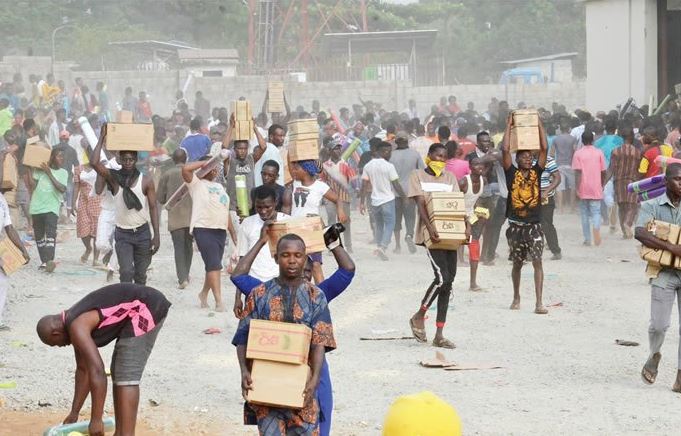
RESIDENTS of Bayelsa on Sunday night broke into a warehouse in Yenagoa, the state capital, to cart away food and materials meant for flood victims.

 The warehouse, used to store flood palliatives since 2022, was reportedly raided by residents who made off with some food items that had deteriorated over time.

The theft resulted from mounting frustration stemming from the economic challenges exacerbated by the removal of subsidy on Premium Motor Spirit (PMS), commonly known as petrol, by the Federal Government. This removal resulted in a significant surge in petrol prices from approximately N190 to a staggering N620 per litre. 

Similarly, In Adamawa state, The ICIR reported about the looting of warehouses by the residents. It showed hoodlums chanting “Enough of Hunger” stormed warehouses in the state. 

The cascading effect has increased the cost of goods, services, and transportation fares.

Bayelsa State Emergency Management Agency (BYSEMA) officials revealed that the looted food items were no longer suitable for human consumption. 

These items had been stockpiled during the 2022 flood crisis in the state. 

It remains to be seen if the warehouse in Yenagoa contained food items that were part of the N5 billion palliative and grant programme announced by the Federal Government, led by the administration of President Bola Tinubu.

Responding to the incident during an inspection of the warehouse on Monday, August 28, the Director-General of BYSEMA, Walamam Sam Igrubia, stated that the Agency had been preparing for the upcoming flood season. 

During his inspection, remnants of food items, including rice and garri, which had deteriorated beyond consumption, were cleared from the warehouse and placed outside for disposal the following day.

He said: “The Bayelsa State Emergency Management Agency (BYSEMA) notes with surprise and concern the unwarranted invasion of the premises of a privately-owned warehouse in the Kpansia area of Yenagoa, the state capital.”

“Importantly, these items are unfit for human consumption, and a responsible, caring government like ours will not give Bayelsans such items as palliatives”.

“In essence, there were no food items to loot. So, those who carted away the unfit things are advised in their interest not to consume them”.

Furthermore, the Agency refuted any claims of hoarding or political manipulation. It urged those who had taken the unfit things not to consume them for their well-being.

Igrubia criticised opposition elements in the state for attempting to politicize the incident and exploit it for political gain. 

The Agency assured the state’s residents of its readiness to facilitate the distribution of legitimate palliatives provided by the Federal Government to mitigate the impact of the fuel subsidy removal policy. 

Obi says Reno’s bribery allegation against him, is ‘cheap blackmail’

0

THE Presidential candidate of the Labour Party (LP) in the February 25 elections, Peter Obi, has described as ‘cheap blackmail’ the allegation that he bribed Rufai Oseni, a journalist with Arise TV.

This followed a claim made by a former aide of ex-President Goodluck Jonathan Reno Omokri.

Omokri alleged that Obi financially sponsored the funeral of Oseni’s dad.

Reacting to the allegation in a series of tweets on his personal X account, formerly known as Twitter, Obi described the allegation as cheap blackmail.

He described Oseni as “the courageous journalist who has been doing his job professionally”.

According to the former governor of Anambra State, Oseni has frequently challenged him fearlessly and has always stood up for what is right.

“Ordinarily, I do not get involved in name-calling and mud-slinging, neither do I attack people nor try to defame their personalities in the course of my political journey.

“I have also avoided replying to cheap, wicked, or malicious blackmails publicly or openly in the same irresponsible manner they are thrown at me.

Reno's tweet
Reno’s tweet

“Anyone who has followed my corporate and political life knows that I always stay on issues, with my focus on finding solutions to societal challenges and ameliorating people’s suffering,” Obi tweeted.

He described the allegation as a “categorical lie from the pit of hell.”

He said everyone who knows him can attest that he doesn’t give anyone money to promote his name.

He claimed he has never monetarily induced any journalist to speak or write in his favour.

Obi said that witnesses may confirm that he always accepts invitations to social gatherings like birthday parties and wakes.

He continued by saying he had never visited Oseni’s village and had no idea where the journalist was originally from.

“As it is obtainable in Igbo tradition, I always attend such events with some gifts to support the celebrant.

“I have never been to Rufai’s village. Even at the point of writing this, I do not know where he is from. One then wonders why people could decide to tarnish other people’s image for no justifiable reason.

“To those involved in such evil endeavours, I wish them well and pray to God to have mercy on them,” he added.


READ ALSO:


Obi stated that he is dedicated to helping Nigeria overcome its problems and that its various problems should be the major focus of attention.

On Tuesday, August 1, the Presidential Election Tribunal reserved judgment on the petitions filed by the Peoples Democratic Party (PDP) candidate Atiku Abubakar and Obi against the outcome of the February 25 presidential election.

In different suits, Atiku and Obi are challenging President Bola Tinubu’s declaration as the winner of the election by the Independent National Electoral Commission (INEC).

Ministerial appointment: No excuses, Tinubu won’t accept failure – Presidential Spokesperson

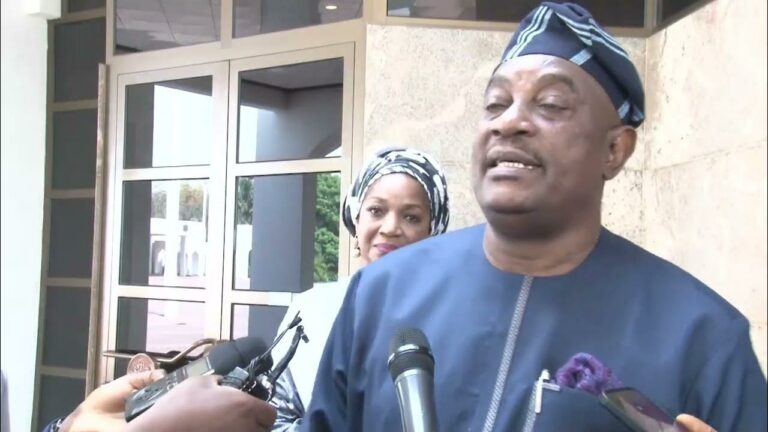
THE special adviser to President Bola Tinubu on media and publicity, Ajuri Ngelale, has said the President will not take any excuse for failure from any of the newly inaugurated ministers.

Ngelale spoke when he appeared on Channels TV Sunrise Daily on Monday, August 28.

Ngelale claimed that the President has given the ministers deadlines and benchmarks.

“He doesn’t need to worry about power or works. The President said if I am going to put a minister in place who has a sole focus, there is no excuse for failure.

“And at that point, you can now say we can hold them accountable,” Ajuri stated.

According to Ajuri, Tinubu has spent the months since winning the election on February 25 formulating specific objectives for every sector of the nation so he won’t accept any of his newly appointed ministers to be ineffective.

“The President has set the benchmarks. The question now is about enforcement, and the President has shown, as he did during his time in Lagos State as governor, that he is not someone that is afraid to fire anybody.

“He is not somebody that is afraid to levy quick sanctions to ensure that they get the results that he wants ’cause, ultimately, if this administration fails, they will not say a minister failed, or a set of ministers failed. They will say President Bola Tinubu failed, and he will not accept failure.”

According to the Presidential spokesperson, Tinubu looked at exactly what Buhari has achieved and wants to do to build on all these achievements.

On the number of ministers appointed, Ngelale stated that the President prioritises specialisation for improved performance when assigning ministers.

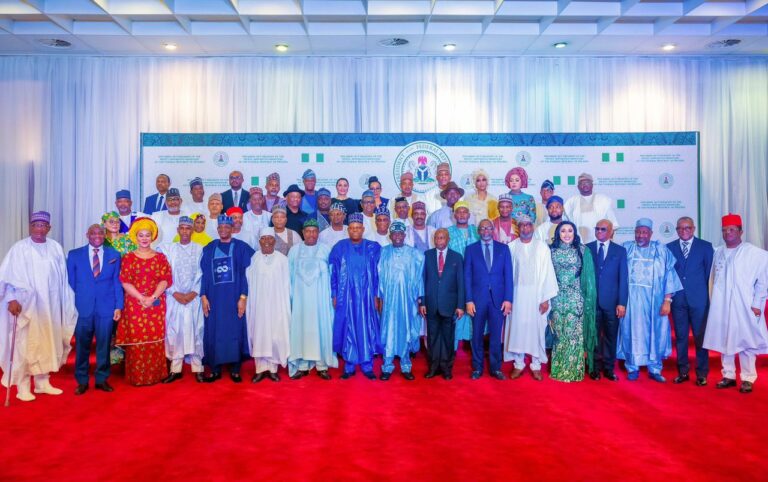
The ICIR reported that President Tinubu had sworn in 45 new ministers on Monday, August 21, at Presidential Villa, Abuja.

During the inauguration, Tinubu emphasised the importance of the new cabinet in steering Nigeria towards prosperity and addressing its multifaceted challenges.

In his address, Tinubu stated that the newly inaugurated ministers were carefully selected and represented the diversity in the country.

Transparency: FCTA ‘consistently’ flouts FOI act, hides information on abandoned projects

THE Federal Capital Territory Administration (FCTA) has consistently failed to provide information on some of the abandoned projects in Nigeria’s Capital.

The ICIR had, between June 2022 to July 2023, sent six Freedom of Information (FOI) requests, asking for project details of some roads and abandoned hospital projects.

The ministry not only failed to provide such information but did not give reasons to that effect.

Beyond the six FOI requests sent, the ICIR also sent several reminders which stressed the importance of the information and why the Ministry must adhere to the FOI Act.

The requested information seeks transparency into the exact details of some awarded projects by the Ministry and explanations on why some projects were abandoned and ‘shabbily’ executed.

In all the FOI requests sent to FCTA, The ICIR also sent some copies to the office of the Federal Capital Development Authority (FCDA). The FCDA is an Agency of the government under the Federal Capital Territory Administration.

One of the six FOI requests sent to FCTA, FCDA.00
One of the six FOI requests sent to FCTA, FCDA.

The FCDA boasts of having the responsibility of overseeing “the infrastructural and physical development (planning, design and construction) of the new Federal Capital. It seeks further to ensure conformity to the global standards of new Capital cities around the world, while paying special attention to inclusivity, functionality, design and aesthetics.”

Meanwhile, the FCDA provided an answer to one of several requests after a reporter from The ICIR visited its office about four times. This was also coupled with consistent phone calls, messages and follow-ups. 

This, The ICIR can confirm, was contrary to the Freedom of Information Act (FOIA) signed into law by the administration of former President Goodluck Ebele Jonathan.

Six FOI requests sent, one response gotten

While the Federal Capital Territory Authority and its Agency, FCDA, acknowledged receipt by signing and stamping each letter sent, they have, nevertheless, failed to provide The ICIR with the information requested or give reasons for their lack of response.

Request for details of some projects in FCT
Request for details of some projects in FCT.

On June 7, 2022, The ICIR sent a FOI request to FCTA, requesting information regarding some road projects, such as Maitama Garu 1 road, Mpape, Bwari FCT. I, rehabilitation of Goma palace road, Kuje, Local Council III, construction of Giri Toad, Giri town, Gwagwalada local council IV., and Construction of sharp corner/Nura bread road, carried out by the Agency.

However, more than a year later, no response has been received. 

Another FOI sent to the FCT on August 30, 2022.

On August 30, 2022, The ICIR also wrote in pursuant to the FOI act and requested information on open and competitive bidding for the Giri Road Project in Giri Town, Gwagwalada, that was awarded in 2015 by the Agency but has gotten no response. 

Accordingly, on September 8, 2022, another FOI request was sent to FCTA to request details about the Abuja Light Rail Project commissioned on July 12, 2018, by President Muhammadu Buhari.

The Agency, despite being referred to as the Agency with the necessary information by the Federal Ministry of Transportation, failed to respond to The ICIR

Request for details of Abuja light rail contract.

This situation, mirrors all other FOI requests sent to the Agency. 

Attempt to frustrate journalists

In several attempts to get a response from the two institutions, The ICIR has faced numerous challenges, ranging from repeated visitations to the offices and unyielding texts and calls.

One of The ICIR’s reporters, who had faced this hurdle, explained that he visited the offices of the two institutions on four occasions before he finally got a response to his request.

The reporter, in July 2023, sent the FOI request to FCTA to request for project details of Utako General Hospital, which has been abandoned for years but got no response until a month later when he had to visit the office of the Authority.

“I sent the request to the Permanent Secretary of FCTA, but it was not responded to despite a reminder. I then sent it to the Health Secretariat. When I went to confirm, they said it had been forwarded to FCDA, I checked at FCDA, and they confirmed that it has been received and processed. I initiated a contact to inform me when it’s out, he did, and I went back there to pick it up.

“But I was there four times. It was a follow-up because I needed it. I sent it on July 17. I received it on August 8,” he added.

Also, a data analyst who works at The ICIR FOI Desk, Ibukun Ajayi, said the lack of proactive disclosure and timely response from MDAs, particularly FCTA, frustrates the repertoire process.

“After handling FOI correspondence, my initial observation is that many MDAs disregard the Act’s seven-day timeline for responding to requests, leading to frustration. Some MDAs take much longer, even up to a year to respond, despite the urgent need for the requested information. This lack of proactive disclosure and timely response hampers the process. Addressing this understanding within MDAs could lead to more urgent handling of requests.

She also stated that many MDAs lack dedicated officers to handle requests.

FCTA
FCTA

What the FOI Act says

The Freedom of Information Act, in various sections, highlighted the right of any individual or organisation to access information from government ministries, agencies and departments.

Section 1, subsection (1) of the FOI act, states that “Notwithstanding anything contained in any other Act, law or regulation, the right of any person to access or request information, whether or not contained in any written form, which is in the custody or possession of any Public official, Agency or institution howsoever described, is established.”

Also, section 2, subsection 4, of the same act mandates Public institutions to ensure that information requested by an individual or organisation is widely disseminated and made readily available to members of the Public through various means, including print, electronic and online sources, and at the offices of such Public institutions.

In case there’s a reason as to why a FOI request will not be granted, the act rules that the concerned Agency must give a written notice to the applicant that information will not be granted, referencing the section of the FOI act under which the denial is made.

Furthermore, Section 4 stated that: “Where information is applied for under this Act, the public institution to which the application is made shall, subject to sections 6, 7, and 8 of this Act, within 7 days after the application is received- (a) make the information available to the applicant (b) Where the public institution considers that the application should be denied, the institution shall give written notice to the applicant that access to all or part of the information will not be granted, stating reasons for the denial, and the section of this Act under which the denial is made.”

Similarly, section 5, provides for a Public institution to transfer a FOI request to another Public institution if the organisation has a greater interest in the information within 2-7 days after the application is received.

Section 5: “(1) Where a Public institution receives an application for access to information, and the institution is of the view that another Public institution has a greater interest in the information, the institution to which the application is made may within 3 days but not later than 7 days after the application is received, transfer the application, and if necessary, the information, to the other Public institution, in which case, the institution transferring the application shall give written notice of the transfer to the applicant, which notice shall contain a statement informing the applicant that such decision to transfer the application can be reviewed by the Court.

“(2) Where an application is transferred under subsection (l), the application shall be deemed to have been made to the Public institution to which it was transferred on the day the Public institution received it.

“(3) For the purpose of subsection (l), a public institution has ‘a greater interest’ in information if – (a) the information was originally produced in or for the institution; or (b) in the case of information not originally produced in or for the public institution, the institution was the first public institution to receive the information.”

Experts react

The Media Right Agenda’s programme manager,  Ayode Longe, in an interview with The ICIR, said every Agency owned by the government is expected to respond to FOI requests or give reasons for their non-compliance within seven days.

“In fact, the law does not specify who they should not respond to, and it applies to both Natural and legal persons, whether they are registered or not registered. They are expected to respond to all of that type of request.”

He however advised The ICIR and other NGOs who have been denied response to charge them to court or seek help to address the issue.

Also, a human rights lawyer, Festus Ogun, bemoaned the trend, adding their recklessness persists because there are no consequences for impunity in this country.

“I think the refusal to provide your organisation with the requested information is a violation of the Freedom of Information Act. 

“It is gravely disturbing. It seems that the rule of law has no place in this country. And their recklessness persists because there are no consequences for impunity.”

The official in charge will get back to me – Chief Press Secretary 

Meanwhile, in an attempt to seek a reaction as to why the institution failed to respond to its requests, The ICIR reached out to the chief press secretary (CPS) of the FCTA, Tony Ogunleye, on August 11. 

He advised the journalist to re-send some of the FOI requests via text message for further tracking, which the reporter promptly did on August 14.

Ogunleye assured The ICIR of an update by Wednesday, but the update was provided on Thursday, August 17. He indicated that the responsible official would communicate with us, stating, “I have forwarded it to the relevant officers, and they will respond. They are currently reviewing it.”

However, The ICIR hasn’t gotten a response from the FCTA CPS as of the time of filing this report.

BBNaija All Stars: Tolani, Frodd evicted from reality show

IT was a double eviction and end of the road for Tolani Shobajo, popularly known as Tolanibaj and Chukwuemeka Okoye, known as Frodd, housemates of the Big Brother Naija reality show, “All Stars” edition.

The live eviction show of August 27 did not have the jury come back to determine who leaves and remains on the show as it was done in the past weeks.

Frodd, who became a dad while on the show, had participated in the Pepper Dem edition (Season 4) before.

During the live eviction show, the host, Ebuka Obi-Uchendu, asked Adekunle and Venita Akporfure the status of their relationship of which they admitted that they are dating.

In the past week, Soma emerged as the Head of House (HOH), succeeding Mercy. He selected Angel, Adekunle, Alex, and Seyi to join him as his companions in the luxurious HOH lounge.

The organisers treated the housemates to a comedy night during which Deeone, Destalkercomedian and Akpororo were invited to entertain the housemates.

The “All Stars” edition commenced on July 23, featuring 20 housemates. Five have been evicted, leaving the rest competing for the grand prize.

2023 flood: Cameroon writes NEMA on opening of Lagdo Dam

0

THE Cameroonian government has written to the National Emergency Management Agency (NEMA) on its plans to open the floodgate of the Lagdo Dam soon, The ICIR can authoritatively report.

In a letter, received by the agency and signed by the director of African affairs, Umar Salisu, the Cameroon government said that the opening of the dam became necessary due to the heavy rainfall around the dam catchment area in Northern Cameroon.

“The authorities of the Ladgo Dam will be releasing only modulated variable small amount of water at a time in order to mitigate and avoid damages that the released water may cause along River Benue basin in both Cameroon and in Nigeria,” the letter said.

However, the officials advised that NEMA take proactive steps to mitigate damages and sensitise Nigerians living around the region, who might be affected by the released water.

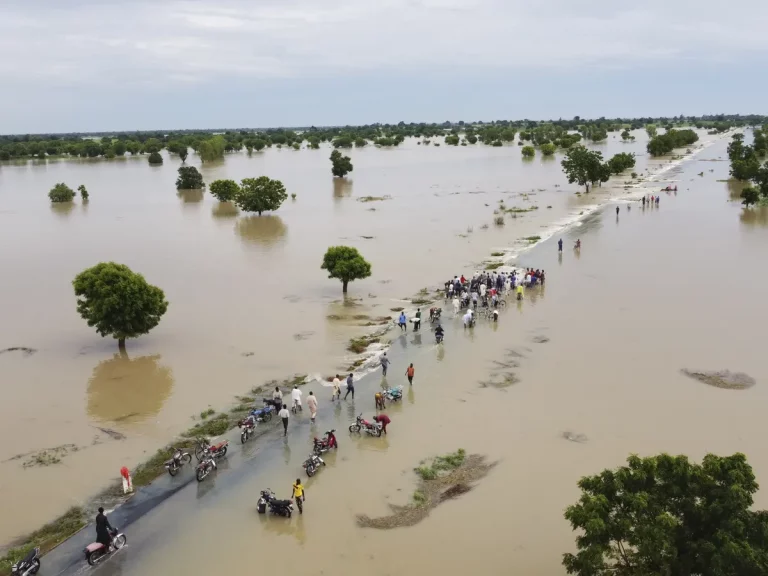
The Lagdo dam is located in Northern Cameroon, and opening the floodgates allows water to flow into Nigeria’s River Benue. However, excessive release of water can exacerbate flooding in Nigerian communities around the water region.

In 2022, the dam was opened on September 13, and the excessive water released, alongside continuous heavy rainfall, displaced 1.4 million Nigerians from their homes. The ICIR also reported that about N700 billion in agricultural investments were lost. 

Recently, the federal government disclosed that 32 states, 178 local government areas (LGAs) and the Federal Capital Territory (FCT) are at risk of heavy flooding in 2023. The ICIR has also captured in several flood series reports the preparations and mitigation plans of some states towards the 2023 prediction.

Despite this, over 33,00 people, according to NEMA, have already been affected by flooding this year. There are also questions around the utilization of ecological funds, as 12.9 billion have been shared with 36 states in the first four months of 2023. 

Meanwhile, NEMA Spokesperson Ezekiel Manzo, told The ICIR that since the letter was received, the agency had increased its sensitization activities, particularly in the Benue state communities closer to the water channels

Manzo said, “We are not raising a reg flag yet but we are on alert. With this opening coming at this period of the rain season, the intensity of the rain will increase, It means all our activities and preparation for the flood would increase and that has started.”

The spokesperson noted that the country has entered into the timeline slated for another flooding but the agency is putting all effort into mitigating the effect.

Nigeria Content Board, BoI sign $50 million manufacturing fund

0

THE Nigerian Content Development and Monitoring Board (NCDMB) and the Bank of Industry (BoI) have signed an amendment to the Memorandum of Understanding (MoU) on the $50 million Manufacturing Fund.

The Fund was created by the NCDMB and domiciled with BoI to to attract oil and gas equipment manufacturers to the Nigerian Oil and Gas Parks Scheme (NOGaPS) facilities established by the NCDMB, and increase access to affordable finance by manufacturing entities.

The signing of the amended MoU took place in Lagos on August 25, 2023 at the 2023 second quarter Review Meeting of the Nigerian Content Intervention Fund (NCIFund).

Executive Secretary, NCDMB, Simbi Kesiye Wabote, underlined the tremendous success of the NCIFund in catalyzing capacity development and investments in the Nigerian oil and gas industry.

He disclosed that the Fund serves as a model for local content practice across the African continent and inspired the creation of the African Energy Bank by the African Petroleum Producers Organization (APPO) in partnership with the African Export Bank (Afreximbank).

He added that countries like Angola and Namibia are currently engaging the Board with a view to understanding the workings of the NCI Fund so as to replicate the same in their jurisdictions.

He said: “Today, Angola is thinking of establishing a similar credit line for their oil and gas companies. I think the parliament recently approved some sum of money for them to manage in that respect. Namibia is planning to do the same with the potential enactment of a Local Content Act.”

Wabote, lauded and the BoI for the successes being recorded in the management of the NCI Fund, assuring that the Board will continue to look for other opportunities to increase its partnership with BoI.

He said: “Considering the effectiveness and success recorded by BoI, NCDMB may consider inviting BoI to send a nominee that will act as independent Director to the Board of Directors of some of the companies that we have invested equity in. This will help them overcome some of the prevailing issues around governance, liquidity and technical optimization.”

The Managing Director of the Bank of Industry, Olukayode Pitan expressed confidence in the future performance of the Board’s funds domiciled in the bank while noting that these quarterly review meetings will impact on sustaining the effective disbursements and recovery of these funds.

According to him, the NCI Fund is performing excellently with 194 applications equalling US$1 billion /₦80.6 billion with 69 disbursements totalling US$324 million /₦38.4 billion as of the day of reporting.

It would be noted that the board established the NCI Fund in 2018 with the purpose of financing Oil and Gas companies to increase capacity and grow Nigerian Content in the Industry.

Presently, the NCI Fund has five product lines which are being managed by the Bank of Industry. They include – Manufacturing Finance -$10m; Asset Acquisition Finance -$10m; Contract Finance -$5m; Loan Refinance -$10m; and Community Contractor Finance – ₦20 million.