THE African Investigative Journalism Conference (AIJC) has announced a limited fellowship opportunity for its three-day event scheduled from November 20 to 22nd in Johannesburg.
The conference is intended for a broad audience, with sessions being given in both English and French.
The Fellowship will cover flights to Johannesburg, airport transfers, accommodation in single rooms, transport to and from the conference, meals and conference fees.
THE Federation Account Allocation Committee (FAAC) says it shared N966.110 billion among the three tiers of government in July out of a total gross revenue of N1.746 trillion.
The July allocation shows an increase of N59.06 billion compared to N907.05 billion shared in June.
Details of the allocation were contained in the communiqué issued at the end of the FAAC meeting on Tuesday, August 22, chaired by the new minister of finance and coordinating minister of the economy, Wale Edun.
It stated that the federal government received N374.485 billion, the states N310.670 billion, and the local government councils (LGCs) received N229.409 billion.
In addition, oil-producing states received N51.545 billion as derivation, which represents 13 per cent of mineral revenue.
The amount shared includes gross statutory revenue, value-added tax (VAT), electronic money transfer levy (EMTL), and exchange difference.
According to FAAC, the gross revenue available from the VAT was N298.789 billion, an increase from the N293.411 billion distributed in the preceding month.
From that amount, N11.681 billion was allocated for collection costs, and N15.161 billion was given for savings, transfers and refunds.
The remaining sum of N271.947 billion was distributed, of which the federal government received N40.792 billion, states received N135.974 billion, and LGCs got N95.181 billion.
The gross statutory revenue of N1.150 trillion received for the month was lower than N1.152 trillion received in June, FAAC disclosed.
A sum of N50.203 billion was allocated for costs of collection and a total sum of N702.801 billion for savings, transfers and refunds. At the same time, the remaining balance of N397.419 billion was distributed to the tiers of government.
The federal government got N190.489 billion; states, N96.619 billion; and LGCs, N74.489 billion, while N35.822 billion is 13 per cent oil derivation.
Details of the disbursement also showed FAAC shared N13.375 billion sum from EMTL to the federal government, N1.926 billion; states, N6.420 billion; LGCs, N4.494 billion, while N0.535 billion for collection costs.
Further, it shared the sum of N283.904 billion from exchange difference with the federal government receiving N141.278 billion; states, N71.658 billion; and LGCs, N55.245 billion, while N15.723 billion for 13 per cent derivation of mineral revenue.
According to the committee, revenues from company income tax (CIT), petroleum profit tax (PPT) and oil and gas royalties significantly declined, but revenues from import and excise duties and EMTL increased considerably while VAT increased marginally.
It said the total revenue distributable for July was drawn from statutory revenue of N397.419 billion; VAT, N271.947 billion; EMTL, N12.840 billion; and exchange difference, N283.904 billion, which brought the total distributable amount to N966.110 billion.
The committee, however, hinted that the balance in the excess crude account (ECA) as of August 22 is $473,754.57.
The government needs to mobilise resources to deliver on its mandate to increase employment and reduce poverty, Edun said, adding that there should be discipline in the money supply to control inflation in the nation’s economy.
GUINNESS World Record (GWR) holder, Hilda Bassey, known as Hilda Baci, has revealed her motivation behind attempting to break the record for the longest cooking time.
Baci made this revelation during an interview with a former BBNaija housemate, who was disqualified, Anita Natacha Akida referred to as “Tacha,” on August 18, on the Cool FM’s Big Friday Show.
She said, “I have been obsessed with Guinness World Record for the longest time, and I did not know this particular record existed until I had a conversation with my brother. This led me into doing research about four years ago on it where I found out that there was a record like that, and I said to myself that I’ll break this one.”
Baci expressed her desire to achieve fame and uniqueness simultaneously, mentioning that she had always wished for something distinctive to accompany her name and recognition.
“I have always told myself that I want to put my name in the sands of time for good. I don’t just want to be famous, but I want to be known for what I do and good at”, she noted.
Speaking on the expenses of the cookathon, Baci mentioned her intention to create an elaborate event, investing a huge amount of money. However, she declined to specify the exact amount, suggesting the host consider the cost in comparison to that of a high-priced luxury car.
She further mentioned that she did not perceive Chef Dammy’s attempt to break the record as a threat. In fact, she expressed indifference towards it, as her focus remained on her engagement with Guinness World Records (GWR).
“At the time she was having her attempt, we were still trying to submit evidence. My major focus was not what was going on rather ensuring that all the evidence were put together properly and submitted. I was not thinking about who wanted to break the record.”
Hilda Baci gained widespread attention, not only in Nigeria but globally when she broke the Guinness World Record for the longest cooking time by an individual in May 2023.
This investigation documents multiple cases of religious intolerance in northern Nigeria, providing insights into whether or not the holy scripture supports the death penalty for blasphemy and the position of the constitution and international frameworks on religious freedom.
USMAN* is in his early thirties, a Christian convert, resident of Kano state.
But he currently disguises each time he goes out. This is due to fears that he is still being tracked by persons who accused him of blasphemy.
Before he agreed to be interviewed by The ICIR on May 25, in a suburb town of the state, Usman had used a different phone number to share his location with this reporter.
It was a deliberate move to ensure he was not being set up. Yet, he was willing to meet with the right source, The ICIR reporter, who had visited to document real cases of religious extremism and intolerance in the state.
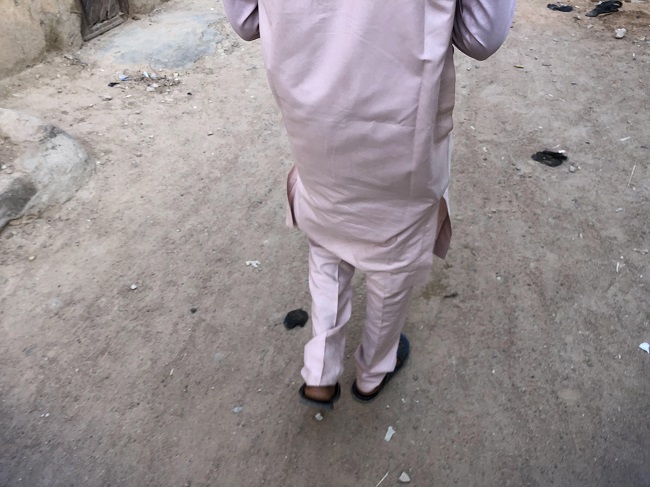
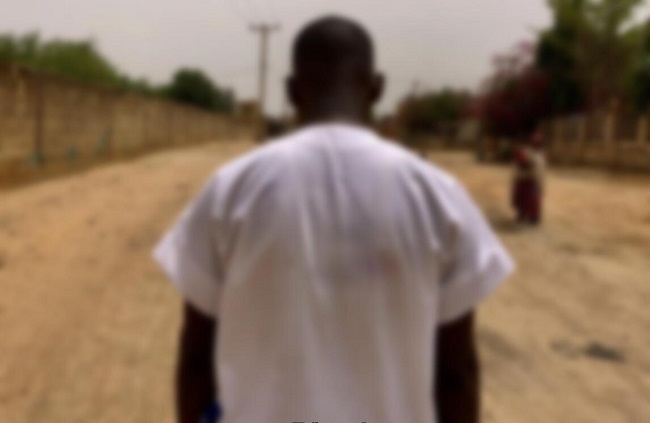
Backshot of Usman, a Christian convert based in Kano. Photo Credit: The ICIR
On arriving at the location, Usman kept a distance of about 200 meters apart, looking sideways, still in doubt.
He appeared as one still battling post-traumatic stress disorder (PTSD), owing to his horrible encounter in the past.
The ICIR would later discover Usman had suffered religious intolerance and had to relocate from one part of Kano to another.
“Sorry for keeping you waiting and staying this far,” he said, forcing a hard smile yet keeping his distance. “You know I’m just doing this for my safety because of my previous experience.”
Religious intolerance is a big issue in Nigeria. And it is not peculiar to a particular religion. It exists among the three major religions in the country – Christianity, Islam and Traditionalists.
By context, the Brussels-based research institute, the Union of International Association (UIA), described religious intolerance as “the acts denying the right of people of another religious faith to practice and express their beliefs freely.”
The ICIR earlier reported how religious intolerance and extremism resulted in 289 nationwide deaths across churches and mosques between January 2021 and June 2022. And these were from 65 attacks on Churches and 12 episodes on Mosques in the same period.
The genesis of Usman’s nightmares
Usman has a friend named Bello*, a new Christian convert whose decision was vehemently opposed by his (Bello’s) parents. He was threatened severely and, eventually, disowned by his family.
He would later seek refuge in Usman’s house after escaping from his parent’s residence through the roof. Multiple sources confirmed leaving Islam for any other religion is sacrilegious, especially in northern Nigeria.
Bello had to stay with Usman for a few months; unknown to the two, they were being tracked while his parents waited for the right time to strike.
Alas! It came.
It was on a sunny Monday morning towards the end of the lockdown in 2020. Bello needed to correct his bank account information, and both set out that morning to the bank. On approaching the financial institution, they got surrounded by Bello’s parents, relatives, and men dressed in security regalia.
“We were beaten mercilessly,” he told The ICIR. Usman said they sustained injuries.
“While they were beating us up, nobody around could help because they said I was why their son converted to Christianity.”
As he narrates his heart-wrenching story, he unconsciously looks around as one being watched.
“After beating us up like criminals, we were bundled into a tricycle and whisked to a vigilante outpost. We were detained for several hours and handcuffed at the leg as we bled while they went through our phones after forcing us to unlock them.”
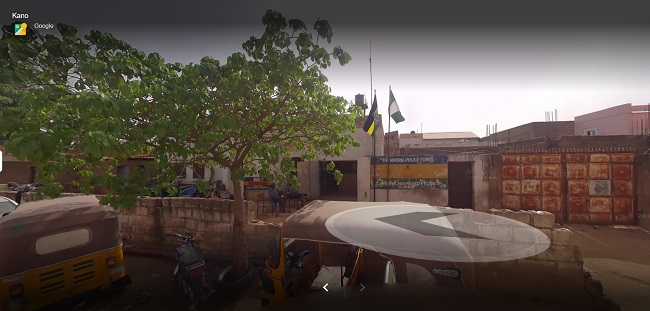
He was later taken, with his friend – Bello, to Rijiyar Zaki Divisional Police station, along Bayero University Kano road, Ungogo L.G.A. of the state. “The vigilante officials abused me verbally, said harsh words about my religion, and we were taken to Rijiyar Zaki Police station in the evening.”
Rijiyar Zaki Divisional Police Station in Kano. Photo Credit: Google Maps.
The argument from Bello’s parents to the Police was that he attempted to convert their son to Christianity, but “honestly, Bello came to me and told me about his decision to convert on his will.”
The Divisional Police Officer eventually released him.
Other instances of religious intolerance
In June 2015, a Sharia court in Kano sentenced nine persons to death for blasphemy. The victims allegedly rated Sheikh Ibrahim Niasse, a Senegalese Tijaniya sect’s founder, as “bigger than Prophet Muhammad.”
This would ordinarily mean demeaning the superiority of the highly revered Islamic clergy – Prophet Muhammad. But it eventually led to social disorder, and swiftly, judgement was passed over the nine victims – eight men and a woman.
Another cleric, Abduljabbar Kabara, was not so lucky despite being a cleric, and son of the deceased Nasiru Kabara, leader of an Islamic group – Qadariyya Islamic Movement in West Africa.
He was sentenced to death by hanging for blasphemy. The Upper Sharia Court in Kofar Kudu, Kano state, Thursday, December 15, 2022, found him guilty of a four-count charge, including blasphemy.
Umar Farouk, another victim, was also found guilty of blasphemy for reportedly abusing Prophet Mohammed while arguing with his friends. He was a 16-year-old teenager. He also got a-10-year jail term from the Sharia Court, though the judgement was later nullified by a superior court in the state.
The story of the late Deborah Samuel is probably still fresh in the mind of many. She was killed at the Shehu Shagari College of Education in Sokoto state based on the allegation of making a “social media post that blasphemed the Prophet, Muhammad.”
The incident drew global attention, mainly condemnation; the school was closed. It was re-opened shortly after. The ICIR cannot independently confirm if anyone has been prosecuted for the incident. A Nigerian former vice president, Atiku Abubakar, and ex-presidential candidate in the 2023 presidential election had tweeted condemning the mob attack on the female student. But he later reversed his decision. He deleted the Twitter post when he came under attack.
Aminu Ibrahim Daurawa, the former head of Kano state religious and morality police, Hisbah corps, argued that Muslim clerics have agreed that any disrepute with the holy prophet attracts a death sentence.
“There has been the consensus among Muslims scholars that insulting the prophet carries a death sentence,” Daurawa told the B.B.C. Hausa service in June 2015.
“We quickly put them on trial to avoid bloodshed because people were very angry and trying to take the law into their hands.”
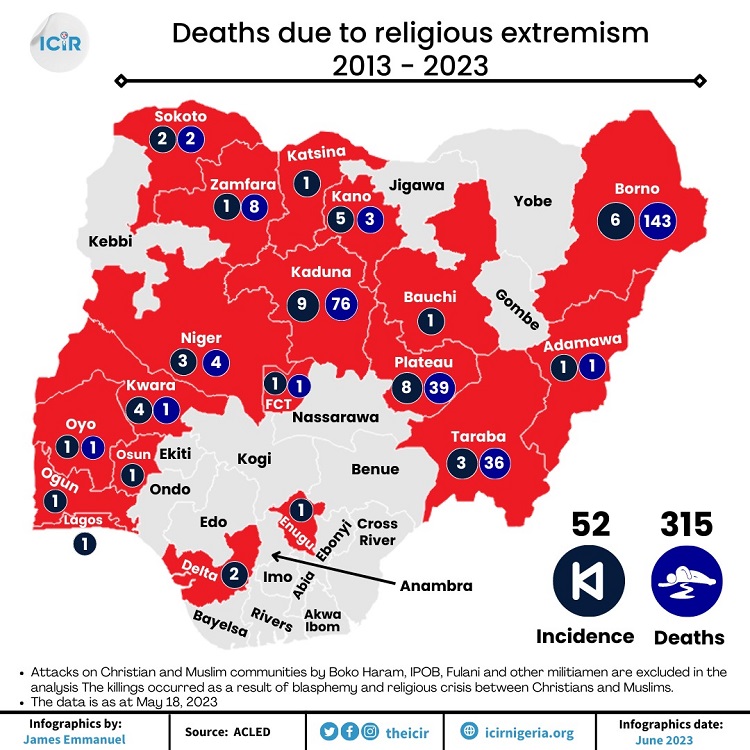
The ICIR, in a recent study of data collected by the Armed Conflict Location and Event Data Project (ACLED), revealed Nigeria witnessed at least 52 incidents of religious attacks, accounting for 315 deaths in a decade, 2013 – 2023. ACLED is a data source which collects all kinds of crisis information with dates, locations, actors and fatalities and makes it freely available to the public. But the findings in this study focused solely on incidents of blasphemy and religious crisis leading to killings due to intolerance between the two major religions.
Attacks on Christians and Muslim communities by the Boko Haram, IPOB, Herdsmen and other militia group were excluded.
Death penalty for blasphemy: Right or Wrong?
Nevertheless, there is a mixed reaction to whether or not the Holy Quran supports the death sentence for those accused of blasphemy.
Oyewole Oladipupo, an Islamic scholar at Allahu Wahid Central Mosque, Osogbo in Osun state, said the Holy Book – Quran does not support capital punishment for blasphemy.
He said the “Quran didn’t support it”. According to him, such capital punishment violates the freedom of religion as documented in the constitution. Yet, he noted the act is a practice in the Islamic faith as not all Islamic laws are written in the Quran but in Hadiths.
Ustaz Abdulafeez Akomolede, the Mudir (Principal) of Al-Mafuz Islamic School, also in Osogbo, shared a deeper perspective. He said the Quran discourages Muslims from leaving the religion for any other, and the act could attract the death penalty.
Akomolede emphasised that those who abused or committed blasphemy against Prophet Muhammad should not be subjected to capital punishment as the Quran does not back it.
The country, he said, is governed by a constitution which supersedes any other law, including the Sharia. But, “if the whole nation decides to run its affairs based on Sharia law, the death penalty applies to anyone who discards Islam for other religion.”
He argued further, citing the instance of the COVID-19 lockdown where the Federal Government, in 2020, asked everyone nationwide to stay indoors to prevent community spread of the disease, “No one dared breach the law.”
On the contrary, the Chief Imam of Nagazi-Uvete Jumu’ah in Okene, Kogi, North Central Nigeria, Imam Gusau Murtadha Muhammad, confirmed the death sentence for anyone who blasphemes against Islam, Prophet Muhammad or any of the prophets.
But he was more specific that the judgement would be done by the right authority, such as the court, not by the mob or any individual.
“The Constitution does not allow you to take laws into your hand. There are courts, leaders…even if someone committed blasphemy, nobody in the society has the right to take the life of another.”
In a recent interview with Wale Fatade, an editor at The Conversation, AbdulRazzaq Alaro, a Professor of Islamic Law at the University of Ilorin, Kwara State, described blasphemy as an offence under the Sharia law and Nigeria’s criminal law.
He argued the capital punishment for blasphemy stressing its recognition to the supreme court.
According to Alaro, the apex court recognised blasphemy as a Sharia offence and described it as “a serious crime which is punishable by death….”
In the referenced case heard on Friday, 15 February 2008, the appellant was criticised for taking the law into his hands by ‘slaughtering’ the victim “like a goat”. The proceeding was before five Justices of the Supreme Court. They are Justices Niki Tobi, Sunday Akinola Akintan, Walter Samuel Onnoghen, Ibrahim Tanko Muhammad (the immediate past CJN) and Christopher Mitchell Chukwuma-Eneh.
Incidentally, the issue of blasphemy is not peculiar to Nigeria. It is a reality in other countries, including Islamic nations such as Pakistan, where a Christian mother of four bagged a death sentence for alleged blasphemy, Iran Algeria, to mention a few.
In 2019, the U.S. government labelled Nigeria one of the most religiously intolerant countries globally.
The FG was not pleased with the report, and the former minister of information and culture, Lai Mohammed, countered the declaration.
A year after, the U.S. delisted Nigeria from the controversial list. Still, several documented reports confirmed incidents of religious intolerance persisted. A recent example was the case of a multimillion-naira monument demolished by the Kano state government because it allegedly had a large Christian cross.
At least, in two quarters of 2022, the nation experienced incidents depicting one form of religious extremism or intolerance. These events have cast aspersions on the supremacy of the nation’s Constitution on religious freedom.
Nigerian Constitution and dynamics of religious freedom
In Nigeria, the freedom of religion is enshrined in the Constitution as a natural right, just as the freedom of expression. It is similar to Article 18 of the Universal Declaration of Human Rights (UDHR) and Article 91 of the African Charter on Human and Peoples Rights which Nigeria is a signatory.
Chapter 4, Section 38 of the Constitution also promotes rights to freedom of thought, conscience and religion.
“Every person shall be entitled to freedom of thought, conscience and religion, including the freedom to change his religious belief, and freedom (either alone or in community with others, and in public or in private) to manifest and propagate his religion or belief in worship, teaching, practice and observance.”
The same Constitution, in Chapter 1, Part II, Section 10, prohibits adopting a particular religion by state or federal governments.
It states that “the Government of the Federation or a State shall not adopt any religion as State Religion.” That implies no state in Nigeria, even the federal government, can adopt a religion.
While it is worth noting that state governments have the right to enact laws that could govern their activities, legal experts argue the Constitution remains supreme.
Nevertheless, for many, these situations have raised some curiosity, from the enactment of Sharia law, through the adoption of Islam in some 12 northern states, to the prosecution of teenage boy and death sentence for blasphemy.
Some would argue that these realities countered the religious freedom guaranteed by the Constitution. Others have also debated that the series of events indirectly implied a battle of supremacy between the Constitution and the sharia law.
In a paper published on the Nigerian Law Forum, titled, the Islamic Legal Account on Justification of Death Penalty for Blasphemy Against the Holy Prophet (S.A.W.), N.U Muhammad, the author, insisted that blasphemy would always attract the “unquestionable punishment of death.”
He referenced the former Justice of the Supreme Court of Nigeria, Ibrahim Tanko Muhammad, to validate his position.
According to him, Tanko “puts it clearly and pronounced it in a case of Kaza vs State, (2008)7 NWLR part 1085 page 125, particularly at page 199 para A-B: the trite position of law under Shari’a is that, any Sane and Adult. Muslim who insults defames or utters words or acts capable of bringing into disrepute, odium, contempt, the person of the holy prophet Muhammad (S.A.W.), such a person has committed a serious crime punishable by death.”
“It is clear that the Supreme Court of Nigeria has affirmed the punishment of death for the offence of blasphemy in the Case as mentioned above and leaves no doubt in the mind of Nigerians,” he argued.
But, Alaro stressed that even if blasphemy should attract a death sentence, it “has to be established through evidence before a court of law” and “the killing is controlled and sanctioned by the authorities.”
In his opinion, another lawyer, Abiola Kolawole, said the 1999 Constitution “is supreme to any other laws, acts and decrees.” He explained to The ICIR that the accused must rely on the constitution in the case of blasphemy.
“The reason why these things keep going on is the fact that they only use sharia laws in the north to intimidate people.”
“In the instant case, that practice will take the second chair if it comes close to the constitution. When those persons decide to defend themselves, they will have to use the Constitution.”
Barrister Ezra Gana, in his opinion, believed under the sharia law, it is an offence to leave Islam for other religions, but the constitution does not support it. He argued Nigerians are free to choose any religion, describing such a scenario as a ‘conflict of laws,’ which only the court can decide at the time of the incident.
Regardless, Gana said there is currently no judgement in the country that penalised any Nigerian for changing his religion. Still, he emphasised that usually, before persons accused of such acts are taken to court, there would have been a mob action – killing the victims.
“It does not really get to court for interpretation…”
“I know of a Christian girl that converted to Islam, and they cited those laws, and it was upheld, but the other way around, a Muslim being converted, I don’t think the law usually relates to such. That’s where the problem is.”
Blasphemy, the recurring accusation
In August 2020, a musician, Yahaya Sharif-Aminu (22), was sentenced to death for sharing a song alleged to be blasphemous via WhatsApp. The song was said to have contained profane content. He was sent on retrial and continued arguing his case at the Supreme Court.
The argument remains that the blasphemy law in Kano State’s Sharia law violates the nation’s Constitution and other international agreements on freedom of human rights, of which Nigeria is a signatory.
Mubarak Bala, an Atheist jailed for 24 years over blasphemy. Photo Credit: OSINT
When he was arrested, Mubarak Bala was the President of the Humanist Association of Nigeria. His case was particularly interesting because his father was an Islamic cleric.
There’s was a notable Muslim family in Kano State. That means his entire household was Muslim and expected to be devout, but he became an atheist, and a humanist who was vocal about his sentiments against religion. He was charged with blasphemy – insulting the Prophet Mohammed. Bala was accused of making public assertions via his Facebook post, capable of causing “a breach of public peace.” The controversial post would later land him a 24-year jail term.
Since Sharia was re-launched in Gusau, the state capital of Zamfara State, on October 27, 1999, it has extended to 11 other states. They include Bauchi, Kano, Katsina, Kebbi, Borno, Yobe, Gombe, Sokoto, Kaduna, Jigawa, and Niger.
The criminal and Penal Code dimension
The Criminal Code Act and the Penal Code also govern Nigerians. While the southern part of the country adopted the Criminal Code, the north embraced the Penal Code.
Both codes are to prevent social vices or criminalities. And blasphemy is considered a criminal offence in both laws but not part of the Constitution. Still, experts say the codes derived their strength from the constitution.
“Every state has the right to make laws according to their culture or tradition. That is why you see the Chieftaincy law of Kogi state or that of Ogun state…,” Kolawole explained while reacting to the criminal and penal codes.
He went further – “The idea behind these penal codes and criminal codes is that, I chose to drive in my house in a particular way, you can choose a different approach in your house, but at the same time, when we go out, we have to obey Federal Road Safety Law.”
The whole of Sections 204 to 213, Chapter 19 of the criminal code act, for instance, documents sanctions for wrongdoings against religious worship. It forbids any act of publicly insulting any religion.
Section 204 of the Criminal Code speaks explicitly to when an individual insult a religion – irrespective of Christian, Islamic or traditional practices. And the maximum punishment an offender could attract is a charge for a misdemeanour or two years imprisonment.
“Any person who does an act which any class of persons consider as a public insult on their religion, with the intention that they should consider the act such an insult, and any person who does an unlawful act with the knowledge that any class of persons will consider it such an insult, is guilty of a misdemeanour and is liable to imprisonment for two years,” it reads.
By extension, Chapter 20 of the criminal code deals with Witchcraft, Juju, Ordeal and Criminal Charms.
Only using charms for criminal activity attracts the highest sanction of five years.
These implied no part of the criminal code regulating offences related to religious worship supports the death sentence. But, according to the Berkley Centre for Religious, Peace and World Affairs, the Sharia law, which is a creation of the states, “is exclusively concerned with acts considered to insulting Muslims, the punishment which can be as severe as execution.”
The ICIR contacted the Police to understand how issues of blasphemy are treated. But in his reaction, Olumuyiwa Oladunmoye, the Force Public Relations Office (FPRO) Assistant Commissioner of Police (ACP), no Nigerian has the right to take the life of another, as it would amount to jungle justice, which is against the law.
The Police spokesperson explained that in such a situation, the Police try to prevent lynching.
“We do our best to prevent it, but when we can’t, we go after the perpetrators.”
“It is a jungle justice case, treated like a jungle justice matter. Go through our records; many of them are presently being prosecuted. We don’t encourage jungle justice.” He advised that anyone who commits any offence should be handed over to the police.
Bello in six-week detention at vigilante’s custody
Being a Christian convert is perhaps one of the toughest decisions someone born into a Muslim family can make. This is because it often comes with severe consequences.
It could be worse in Northern Nigeria. Observance that a Muslim fails to observe his regular prayers will often call for suspicion. In the case of Bello, who converted to Christianity, he has been a great friend of Usman for years, such that they have crossed several hurdles together.
When Usman contacted Bello at the vigilante detention, he said he had spent over three weeks at the holding.
The ICIR attempted to verify the detention period. And in his response, Bello put the holding period at “one month and two weeks.” He confirmed he escaped from his father’s house through the roof but was uncomfortable speaking further.
“He looked starved and emaciated,” Usman told The ICIR during the visit. “Every Friday, they took him to a Hisbah office for cleansing to retrieve him back to his previous religion.”
*Information on how Usman left the vigilante holding is withheld for security reasons.
When Bello relocated to another state, he sought refuge and underwent a discipleship programme in a church since he was still keen on remaining a Christian.
“When he escaped, and his whereabouts were unknown, his family members and other relatives kept threatening me several times via phone calls, so I did not feel safe.
“When he returned after some months, his parents never allowed him back to the family because they had already disowned him. He now stays with his uncle, who can tolerate him.”
“To date, I do not follow regular routes to work or pick up calls from unknown phone numbers because those threats keep coming in”, he explained that he *finds innovative ways to stay hidden.
“That’s why I also took those measures before we met at the roadside.” He told The ICIR.
Living as a frustrated Hausa Christian
In 2022, Usman had what he described as a terrible experience when he relocated to a new neighbourhood in another LGA in Kano state.
He rented a room for N60,000, but barely a week after settling in; he started experiencing discrimination from a neighbour who found out he was a Hausa Christian from Kano. The neighbour informed the community and ward head. This led to Usman being interrogated at different times, which he described as quite frustrating.
“On a particular day, two men came to my room and said they were sent by the ward head to investigate the people who newly occupied the space and demanded that the room key should be given to them. I refused to give them the key, and they left in annoyance.
“As if that was not enough, they kept harassing me by barging into my room at different times to interrogate me and never gave me peace of mind. Days later, the landlord called me and told me that my rent had been increased to N80,000,” he told The ICIR during the visit.
“I refused to pay the increment, and we kept having back and forth. It was so bad that the caretaker and the landlord had an issue because while the landlord was frustrating me, the caretaker tried his best to stand up for me because I was unjustly treated.”
“It got to a time that the landlord asked me to park out of the house, stating that he wants to renovate it, so I had no other option than to leave.”
Victimised by family members
When Ibrahim* was little, he stayed with his mother in Edo State. His mother is a Christian, while his father, a resident of Kaduna, is Muslim. At age five, he was later taken away from his mother to Kaduna state, and he started attending Islamic school and practising Islam.
Almost two decades after, he suddenly stopped attending the regular Muslim prayers. He converted to Christianity but never told anyone.
“One of my uncles noticed I no longer observed the Muslim prayers. He confronted me and warned should there be religious crises in the state; I would never escape it.”
The hostility against him grew, he told The ICIR, and he moved to another state. But, even at that, he said he would always watch his back and peep through the window each time he spoke about religion.
In 2015, Ayuba Hassan, a Christian Fulani from Kano, recalled how a shopkeeper in his community never sold confectionaries to him or any of his family members, all because of their religious beliefs.
Ayuba Hassan, Fulani Christian based in Kano, agreed to a backshot after an interview. Photo Credit: The ICIR.
At first, Hassan thought the shopkeeper did not just like his family, but afterwards, he understood that the shopkeeper only sold groceries to individuals who were Muslims.
As this lingered, the shopkeeper later said he doesn’t sell groceries to people he described as ‘Arna’ (A Hausa word for pagan).
“He clearly told us that he would not sell provisions to us because, according to him, we are Pagans, but I am a Christian and not a Pagan. No matter how often we go to his shop, he never sold provisions to us and others he knew were Christians,” he said.
But to end religious extremism and intolerance, Akomolede, the Mudir of Al-Maruz Islamic School, advised not every battle should be fought on behalf of the holy prophet or God, as whoever commits blasphemy would definitely be judged on the last day – the judgement day believed by many faiths.
He advised peaceful and religious tolerance, stressing that the nation’s Constitution should be supreme above all and being mindful of different religions practised in the country.
“We have a constitution in Nigeria. Leave judgement to God,” he suggested. “Those who abused the Holy Prophet or left Islam for other religion should be left for God to judge.”
“Even if you arrest a robber, and he is presented to the Police, and the next day you see him walking freely on the road, leave judgement to God.”
NOTE: Names, places, and information with asterisks were deliberately omitted or changed for security reasons.
This story was produced with the support of the International Centre for Journalists (ICFJ) in partnership with Code for Africa.
THE Medical and Dental Consultants Association of Nigeria (MDCAN) has threatened to go on strike should the Federal Government fail to meet its demands within 21 days.
MDCAN gave the ultimatum in a communique issued on Tuesday, August 22, at the end of its extraordinary National Executive Council meeting, which was held virtually.
The communique expressed disappointment over the non-implementation of the jointly agreed CONMESS review and Accoutrement allowance with the Nigerian Medical Association, stating that the released circular only increased basic salaries, omitting all allowances except hazard allowance.
MDCAN noted that the error has resulted in the complete exclusion of the clinical lecturers (Honorary Consultants) from benefitting from the upward review.
It also said that the commencement date for the new circular was agreed to be January 1, 2023, rather than June 1, 2023.
“We believe this error will be corrected without delay. The recent upward review of CONMESS did not take into consideration the consequences of the fuel subsidy removal and exponential inflation that has pervaded our socio-economic space in the past three months.
“Despite our association’s decision to keep faith with the engagement and negotiations with the National Salaries Incomes and Wages Commission for more than two years regarding the correction of the shortfalls in remuneration for Clinical Lecturers (Honorary Consultants), the issue is yet to be conclusively addressed by the Federal Government.”
The Association also disclosed that it observed the non-universal implementation of CONMESS for all medical and dental doctors, irrespective of the agencies of the government they are working with.
The council expressed disappointment with the government’s lack of understanding regarding the severity of the brain drain in the healthcare sector. This was evident in the National Council on Establishment’s rejection of the Federal Ministry of Health’s proposal to increase the retirement age for Medical and Dental Consultants and other health workers.
According to MDCAN, the government’s inability to resolve disputes with the National Association of Resident Doctors has negatively affected healthcare access for Nigerians.
The consultants are urging for an immediate revision of the recently updated CONMESS circular and also requesting the issuance of a new circular that accurately reflects the agreed percentage increase on both Basic Salary and other allowances, apart from hazard allowance.
Other demands include, “A call for the correction of the error of commencement of the implementation of the upward review of CONMESS from June 1, 2023, to January 1, 2023.
“The upward review of the CONMESS should take into consideration the impacts of the fuel subsidy removal and the high inflationary trend that is currently being experienced. A demand for the immediate implementation and circularisation of the agreed modalities for correcting the shortfalls in remunerations of Clinical Lecturers (Honorary Consultants). An appeal for the universal applicability of CONMESS to all medical and dental doctors, particularly those in public universities.
“The attention of the government is once again called to the impact of brain drain in the health sector, which is contributing to burnout among our members and inadequate healthcare workforce to cater to the health of Nigerians. We, therefore, demand the immediate implementation of the upward review of age retirement to 70 years for Consultants and 65 years for other Health workers, as an immediate measure to bridge the ongoing massive brain drain.
The Association urged the government to urgently resolve issues with NARD to restore normal hospital operations for better healthcare while also calling on all levels of government and security agencies to ensure the safety of its members and the release of those kidnapped.
The NEC hopes for resolution within 21 days, warning that it may be forced to take industrial actions against the government fails to meet its demands.
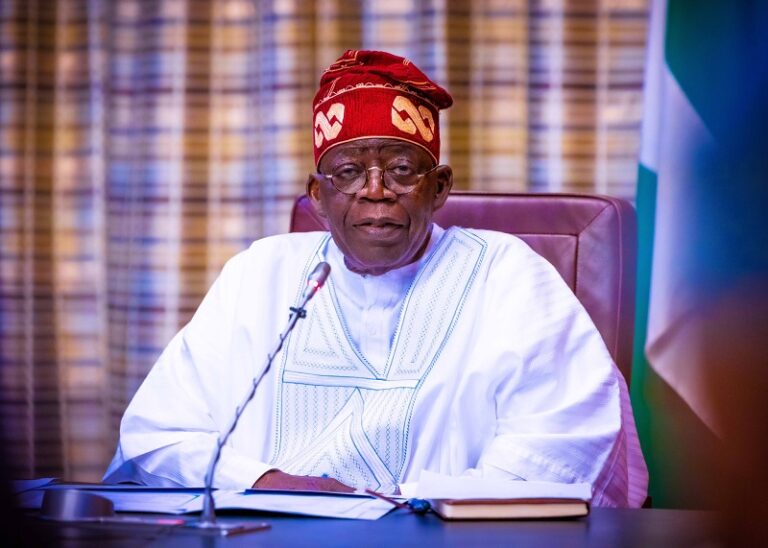
PRESIDENT Bola Tinubu has ordered the Director-General of the National Identity Management Commission (NIMC), Aliyu Abubakar Aziz, to commence a 90-day pre-retirement leave with effect.
This was contained in a statement issued by the Special Adviser to the President on Media and Publicity, Ajuri Ngelale.
According to the statement, the pre-retirement leave will commence on Thursday, August 24, leading to his eventual retirement from service on November 24, 2023.
NIMC in Nigeria oversees national identification issues, including National e-ID card issuance, identity verification, services for National Identification Number (NIN) and data harmonisation and authentication.
The President has also approved the appointment of Bisoye Coker-Odusote to serve as the Acting Director-General of the commission for 90 days, with effect from August 24, after which a full term of four years will begin as the substantive NIMC DG starting on November 24, 2023.
Meanwhile, President Tinubu has approved the appointment of Yusuf Buba Yakub to serve as the Director of the Directorate of Technical Aid Corps (DTAC).
This came after the former DTAC Pius Osunyikanmi’s tenure recently expired.
According to the statement, the appointment is with immediate effect.
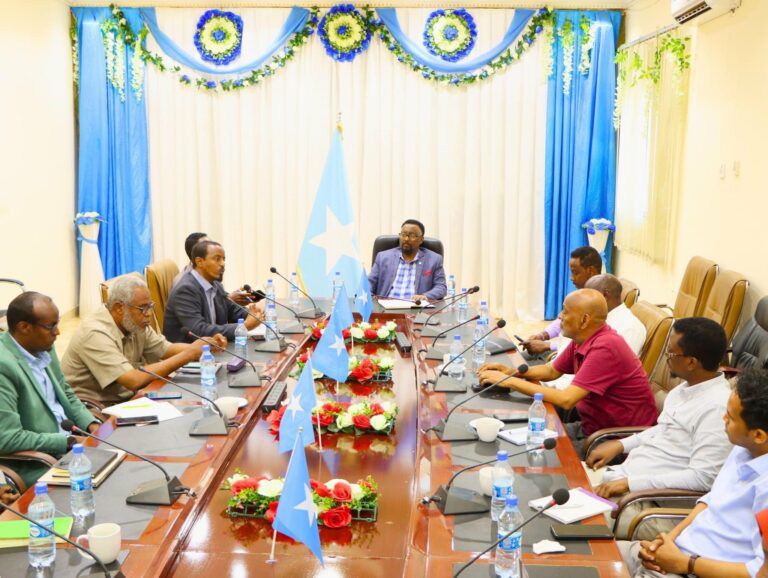
THE Somalian government has banned TikTok, Telegram and online-betting website 1XBet, adding that the ban is aimed at curbing the spread of horrific content and misinformation in the country.
The development was disclosed by its communications minister, Jama Hassan Khalif, via his Twitter handle on Monday.
According to him, this is due to concerns related to the spread of explicit content, blackmail, and the promotion of gambling.
“These platforms have had a detrimental impact on our youth and have been misused to harm many individuals in recent years,” he stated.
Khalif added, according to a report by Reuters that the said apps were responsible for indecent content and helping terrorists spread “horrific” messages to the public.
According to the report, the internet service providers are given until August 24, 2023, to comply.
“The minister of communications orders internet companies to stop the aforementioned applications, which terrorists and immoral groups use to spread constant horrific images and misinformation to the public,” part of the statement quoted by Reuters read.
1XBet is popular in Somalia for betting, especially on soccer matches.
TikTok, a Chinese-owned video-sharing company, has been banned in several countries due to security concerns and the platform’s alleged sharing of users’ data with the Chinese government.
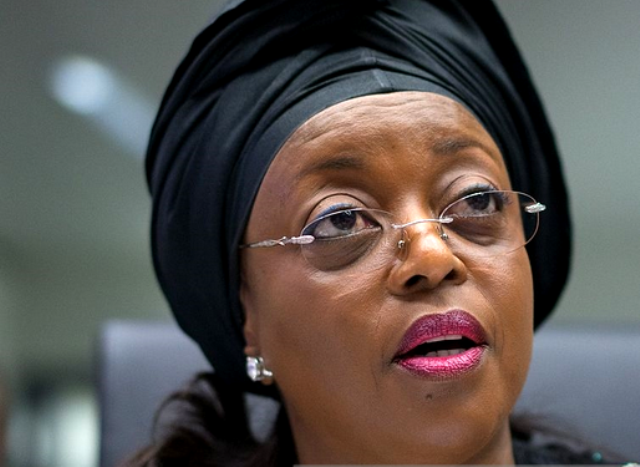
A FORMER Nigerian minister Diezani Alison-Madueke has been charged to court over alleged bribery offences by the United Kingdom government.
Madueke will appear at Westminster Magistrate Court on October 2, 2023.
A statement by the National Crime Agency (NCA) on Tuesday, August 22, confirmed that the charges are a milestone in what has been a thorough and complex international investigation.
Madueke, served as the petroleum resources minister during the administration of former President Goodluck Jonathan between 2010 to 2015 and also served as the president of the Organisation of Petroleum Exporting Countries (OPEC).
The NCA said it suspected that Madueke accepted bribes while serving as the Minister for Petroleum Resources in exchange for awarding multi-million-pound oil and gas contracts.
The former minister is accused of acquiring a minimum of £100,000 in cash, chauffeured cars, private jet flights, opulent family vacations, and the utilisation of numerous London properties.
The charges against her also outline financial benefits such as furniture, property renovations, staffing, covering private school fees, and receiving gifts from upscale designer stores like Cartier jewellery and Louis Vuitton items.
The head of the NCA’s International Corruption Unit (ICU), Andy Kelly, in the statement, said, “We suspect Diezani Alison-Madueke abused her power in Nigeria and accepted financial rewards for awarding multi-million-pound contracts.
“These charges are a milestone in what has been a thorough and complex international investigation.
“Bribery is a pervasive form of corruption, which enables serious criminality and can have devastating consequences for developing countries. We will continue to work with partners here and overseas to tackle the threat.”
NCA also disclosed that assets worth millions of pounds relating to the alleged offences have already been frozen as part of the ongoing investigation.
Similarly, in March 2023, the US Department of Justice, through the evidence provided by the NCA, recovered assets totalling USD$53.1m linked to Diezani Alison-Madueke’s alleged corruption.
“ICU officers have also worked closely with the Economic and Financial Crimes Commission of Nigeria during the investigation, as well as with the NCA-hosted International Anti-Corruption Coordination Centre.
“The IACCC brings together specialist anti-corruption investigators from agencies around the world to tackle allegations of corruption involving politically exposed people. It is currently working in 37 different jurisdictions,” the statement read.
The chief crown prosecutor for the Crown Prosecution Service (CPS), Andrew Penhale, noted that the CPS authorised the NCA to charge Diezani Alison-Madueke with bribery offences.
The CPS, according to the statement, decided to authorise the charge after reviewing a file of evidence from the NCA relating to allegations of bribery in Nigeria.
“Criminal proceedings against Ms Alison-Madueke are active, and she has the right to a fair trial.
“It is extremely important that there should be no reporting, commentary or sharing of information which could in any way prejudice these proceedings.
“The function of the CPS is not to decide whether a person is guilty of a criminal offence, but to make fair, independent and objective assessments about whether it is appropriate to present charges for a criminal court to consider.”
Meanwhile, Madueke has been the subject of several allegations in Nigeria, primarily linked to her tenure while she was serving as the minister of the Country.
On October 25 last year, the Federal High Court in Abuja, ordered the final forfeiture of two Abuja houses and two luxury cars belonging to a former minister of petroleum resources, Diezani Alison-Madueke, to the Federal Government.
The two properties, according to the statement released by the Economic and Financial Crimes Commission (EFCC), are located at Plot 1854 Mohammed Mahashir Street, and No. 6, Aso Drive, in the highbrow areas of Asokoro and Maitama districts in Abuja and are valued at $2,674,418USD and N380,000,000, respectively.
The luxury cars are a black BMW saloon with Chassis No. B8CV54V66629 and registered plate number RBC155 DH, and a black Jaguar saloon car with Chassis No. SAJAA.20 GRDMv43376, valued at N36,000,000.
The Commission had on November 29, 2021, secured the interim forfeiture of the assets in a ruling on a separate motion ex-parte filed on September 27, 2021, which prayed the court to order the interim forfeiture of the assets on the grounds of reasonable suspicion that they were proceeds of unlawful activities.
“In granting the interim forfeiture order, Justice Olajuwon had ordered the EFCC to publish a notice in a national newspaper, inviting anyone with an interest in the assets to show the reason why they should not be finally forfeited to the Federal Government of Nigeria. The court consequently adjourned till January 22, 2022, for a report.
“In compliance with the order of the court, the forfeiture order was published in Thisday Newspaper of Wednesday, April 6, 2022. In the absence of any contestation of the interim order, the court today forfeited the properties to the Federal Government,” the Commission added.
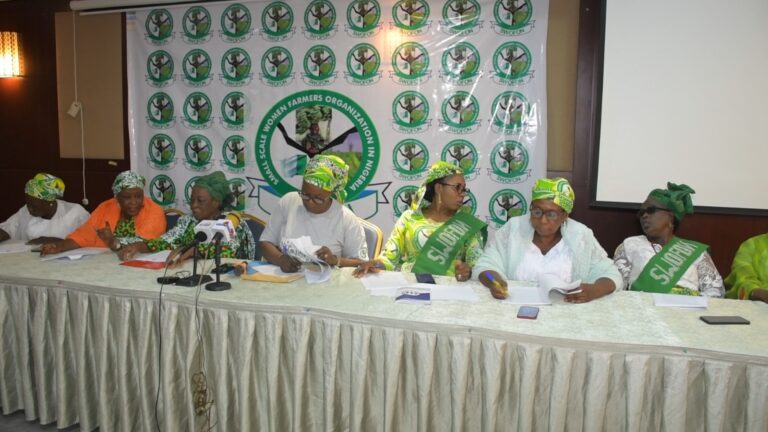
Fuel subsidy removal and declining climate conditions have been identified as some of the factors worsening small-scale farming for women in Nigeria by members of the Smallholder Women Farmers Organisation in Nigeria (SWOFON).
The women decried the rising cost of transportation, fertilisers and implements during a press briefing organised by International Budget Partnership (IBP) on Tuesday, August 22, in Abuja.
“The ensuing rise in the cost of farm inputs and transportation has had profound implications, particularly on smallholder women farmers who are the backbone of our agricultural industry.
“The removal of fuel subsidy, which has led to an undeniable increase in transportation costs, is unduly affecting the livelihoods of smallholder farmers who rely on affordable means of transportation to transport their produce from the farms to the market,” SWOFON National President Mary Afan said.
She added that farm inputs such as fertilisers, seedlings and agrochemicals have become more difficult to access due to transport challenges.
“Processing of farm produce, especially those that require petrol-powered engines, has also been paralysed by this policy direction.
“Similarly, this new reality is further compounding the woes of smallholder women farmers in Nigeria who are still grappling with the high cost of fertilizers and other agricultural inputs whose prices has since become exorbitant following the Russia and Ukraine war,” she noted.
While states like Jigawa have subsidised the cost of fertilisers, the women state that this has not helped the situation due to declining purchasing power.
Ramatu Dahiru, who represented the Jigawa State SWOFON Coordinator, stated that access to the subsidised products was limited and shared the challenges associated with accessing the products.
“They have politicised that one because from the grassroots, you have to go through the Ward level, through the Councillor, before you can get it. So when our women went there to procure, they told them that they can only get one bag. Those that are capable of buying can only get one bag. One bag is not sufficient for their farms,” Dahiru said.
They also alleged that interventions by the government were not directly targeted at smallholder women farmers, who were mostly affected by the flood.
The women also called for strengthening early warning systems on climate conditions by relevant agencies, gender-sensitive equipment and urgent palliatives measures.
SWOFON National Vice-President and Cross River State Coordinator said data collection exercises by the Nigerian Meteorological Agency (NIMET) in 2021, aimed at monitoring rainfall and planning for future climate issues, were not completed by the organisation.
“I remember some two years ago, NIMET gave us as farmers -I was one of the participants- they gave us some instruments that we placed in our farm. And we were recording the level of rainwater. Every day, we did it religiously. And we kept the documents, but they never came back to collect them. So we became like a point of ridicule.
“The instrument was there in the farm; any time it rains, we would run to collect the level of water. So I have been wondering why that project just stopped like that. I went to NIMET’s office in Calabar to submit my document because we needed the information to help our farmers against the next rainy season. But nobody seemed to know what was really happening,” she said.
Noting that some equipment had been provided in the past, the women said they were hardly sufficient for a large number of smallholder women farmers in the country.
In 2021, The ICIRreported that smallholder women farmers deal with the adverse effects of the changing climate conditions in Nigeria.
SINCE 2015, the Nigerian government has grappled with the ongoing issue of its food exports consistently being rejected by the European Union, United States, Asia, and other nations that prioritise food safety for their citizens and the environment.
These countries have implemented stringent measures to ensure food safety, responsible chemical usage, and a standardised import monitoring system.
Paradoxically, they generate revenue and secure employment by promoting the export of their locally banned toxic chemicals, including pesticides, to countries like Nigeria, which have inadequate or no food safety laws, weak regulations, poor manpower capacities, and little or no enforcement regulations.
The trade of internationally banned pesticide practices occurs under the umbrella of international conventions, treaties, and frameworks that allow the movement of highly toxic chemicals, particularly to developing nations. Despite the knowledge of the impossibility of safe handling of these toxic chemicals in the recipient country, this decision is facilitated by a few national delegates representing government ministries and agencies who lack the necessary capacity, handy information, network, and resources to make sound, informed decisions to the benefit of all Nigerians.
It is difficult to blame the governments of Europe, America, and some Asian countries, as well as their international agrochemical companies, for taking advantage of this situation and profiting from the manufacturing and trade of internationally banned and highly hazardous pesticides in countries like Nigeria. As the saying goes, “mugu fall – guy man go wak” (the victim has fallen, and the trickster is at work).
Often, private companies with a sole profit-driven agenda sponsor the questionable actions taken by food safety regulators in Nigeria. This trend has caused many if not all, regulatory agencies in Nigeria to operate contrary to their regulatory mandate. Instead of professionally regulating in an unbiased manner to ensure consumer protection and a healthy market, they promote and protect products, technologies, and methods. This toxic alliance between regulators and private companies in the food sector has not only resulted in significant compromises of food safety laws in Nigeria but also explains the growing food safety hazards and numerous deaths in the country.
This article aims to highlight and present instances of legal flaws and propose actions to address the gaps for better food and pesticide regulation in Nigeria.
Inadequate laws and regulatory lapses exist in Nigeria due to various factors:
1. Poor Collaboration between CSOs and regulators:
In Nigeria, there is a notable lack of effective collaboration between regulatory bodies and Civil Society Organisations (CSOs). This lack of cooperation poses a hindrance to the development and implementation of robust pesticide regulatory frameworks.
The CSOs such as the Alliance for Action on Pesticide in Nigeria (AAPN), Health of Mother Earth Foundation (HOMEF), Coalition against Paraquat (CAP), and others play a vital role in advocating for consumer protection and ensuring the enforcement of stringent pesticide regulations.
Unfortunately, rather than being recognised as collaborators working towards a safer nation, government officials often label many CSOs as antagonists, further exacerbating the lack of collaboration and trust between the two parties.
2. Poor Capacity and limited budget:
Regulatory agencies in Nigeria, including the National Agency for Food and Drug Administration and Control (NAFDAC), the National Environmental Standards and Regulations Enforcement Agency (NESREA), and the Ministry of Agriculture, encounter notable challenges due to insufficient resources and budgetary constraints.
These limitations impede their capacity to effectively enforce regulations and promptly respond to internationally banned or highly hazardous pesticide products.
Furthermore, these agencies often face a shortage of qualified personnel, lack adequate machinery, and have limited working laboratories for conducting product testing. These resource-related issues further contribute to the difficulties faced in enforcing robust pesticide regulations.
The lack of financial resources compels regulatory agencies to seek support from private sector companies and international development partners.
However, this reliance on external funding sources often leads to a concerning situation where these entities are primarily focused on advancing their own interests rather than improving regulations for safety. Consequently, the regulatory agencies become susceptible to external influence, resulting in a shift from their intended role as enforcers to becoming promoters and marketers for the very companies they are meant to regulate. This compromised relationship further undermines the integrity and effectiveness of the regulatory process.
3. Toxic Alliance between regulators and promoters of agrochemicals:
A concerning issue in Nigeria is the existence of a toxic alliance between regulators and promoters of agrochemicals. This alliance compromises the integrity of regulatory processes and prioritises the interests of agrochemical companies over public health and safety.
The close relationship between regulators and industry actors can result in compromised regulations, weak enforcement, and biased decision-making.
4. Proposed pesticide bills backed by a toxic alliance:
The current legal framework in Nigeria may inadvertently support the toxic alliance between regulators and agrochemical promoters.
Flaws in existing laws and regulations allow for loopholes that enable the exploitation of regulatory systems for personal gain, easing pesticide entry and turning Nigeria into a dumping ground for pesticides. The proposed bill to Establish a Pesticide Council 2021 (HB 1396) is one such proposed law that would promote the toxic alliance to the detriment of the Nigerian people and the environment.
For instance, Section 3 of the proposed bill – Composition of the Council – excludes and repeals the power of relevant agencies like NAFDAC, NESREA, NAQS, and the Federal Competition and Consumer Protection Council (FCCPC) as part of the Council members {Section 3(1b)}. For a Bill that seeks to protect against unreasonable adverse effects of pesticide on Nigerians and our environment, excluding these enforcement agencies is wrong, and suggest a lack of intention to collaborate with them.
The bill went further in Section 3 (1b) to reserve two seats in the Council for an internationally affiliated association – CropLife Nigeria, as Council members. CropLife is an International Association consisting of international private companies that manufacture and promote highly hazardous pesticides. CropLife members – companies like Bayer –Monsanto, Syngenta, Corteva, BASF, etc, manufacture, and promote the usage of Highly Hazardous Pesticide like Paraquat, Glysophate, 1,3-dichloropropene etc, in developing countries like Nigeria, even when these pesticides are banned in their European home countries due to their adverse health impact on Europeans.
The bill in Section 4(i), boldly recommends that – “council members accept gifts of land, money and other property on such terms and conditions that is ethically acceptable to the Council and as may be specified by the person or association or organisations making the gift”. This is a window for lobbyists. It opens the Nigerian pesticide regulation to corruption and compromises the health and safety of Nigerians.
Aside from the recommendation that allows Council members acceptance gifts, the bill also gives power to the Chairman of the Council to delegate decision-making power to the members of the Council – by implication CropLife members and other council members.
In conclusion, the Bill seems to focus on jumping or overhauling the perceived existing bureaucracy in the current regulation of pesticides in Nigeria. The bill seems to focus more on harmonising the existing regular channels, thereby easing the registration and operational processes of pesticide promoters. It does not consider the existence of the existing regulatory agencies, officer liability to polluters or precaution to HHPs or environmental protection.
After the above points were highlighted by the Alliance for Action on Pesticides in Nigeria (AAPN) at the Public hearing on the bill in November 2021, the Farm Input Support Services (FISS) in the Federal Ministry of Agriculture and Rural Development (FMARD) publically withdrew their support of the bill.
CropLife delegates in attendance also okayed their removal from the bill. It is shocking that the same Farm Input Support Services (FISS) that publically withdrew their support from the Pesticide Council Bill 2019, is now Nichodemouly including CropLife Nigeria back in their proposed amendment of the Fertiliser Control Act of 2019. This stirs worries and suspicion on why FISS is insisting on forcing CROPLIFE into a national council.
5. Failure to work sustainably with local channels and groups Consistently:
Regulatory agencies in Nigeria often fail to work consistently with local channels and groups. These local stakeholders, including farmers’ associations, community organisations, and consumer groups, can provide valuable insights and feedback on the ground realities of pesticide usage and its impact. Engaging these groups in a sustained manner would help in developing more effective regulations and ensuring their proper implementation.
6. Poor Collaboration among agencies:
Inefficient collaboration among different regulatory agencies within Nigeria further contributes to inadequate laws and regulatory lapses. Fragmented coordination and lack of communication between agencies involved in food safety and pesticide regulation create gaps in enforcement and monitoring. Harmonizing efforts and establishing effective inter-agency collaboration is crucial to strengthen the regulatory landscape and addressing regulatory lapses effectively.
Part two: Checking the flaw
Based on the issues identified regarding inadequate pesticide laws and regulatory lapses in Nigeria, here are some recommendations to address these challenges. By implementing these recommendations, Nigeria can work towards establishing a comprehensive and effective pesticide regulatory framework that ensures food safety, protects public health, and promotes sustainable agricultural practices.
1. Enhance collaboration and partnership:
There is a desperate need to foster a culture of collaboration and cooperation between regulatory bodies and Civil Society Organizations (CSOs) to ensure meaningful engagement in the development and implementation of pesticide regulations.
Regulatory agencies and CSOs should establish regular dialogues, joint initiatives, and knowledge-sharing platforms between regulators, CSOs, farmers’ associations, community organisations, and consumer groups to incorporate diverse perspectives and enhance the effectiveness of regulations.
2. Strengthen regulatory capacity:
Both the federal and state governments need to prioritise and allocate sufficient financial resources and budgets to regulatory agencies like NAFDAC, NESREA, FMARD, NARS, etc to make them independent and enhance their capacity in terms of personnel, equipment, and laboratories for pesticide testing and enforcement.
Provide comprehensive and continuous training programs to regulatory personnel to enhance their technical knowledge and enforcement capabilities.
3. Promote transparent and accountable governance:
The new Secretary General of the Federation, having resumed office, should ensure transparency and accountability in the regulatory process by implementing clear guidelines and mechanisms to prevent conflicts of interest and undue influence from agrochemical companies or other external entities. There is a need to develop and enforce strict ethical codes of conduct for regulatory officials to prevent the acceptance of personal gifts, donations, and/or appreciation that compromises their mandate and understanding of their roles. Bribes, lobbying or any form of unethical practices that compromise the integrity of pesticide regulation should not be encouraged – pesticides and food are public health issues. They can be a security threat.
4. Review and strengthen Existing Laws and Regulations:
CSOs and government need to conduct a comprehensive review of existing pesticide laws and regulations to identify gaps and inconsistencies.
Especially those that put business profit and ease the business entry of toxic chemicals that can be abused into Nigeria.
Caution cannot be thrown to the wind with haste in the check and approval of chemicals especially highly hazardous pesticides (HHPs) going into our food, water, soil, air and bodies. With the average life expectancy in Nigeria falling towards the mid-40s, more caution needs to the placed on food safety laws and enforcement. We need to amend and strengthen existing legislation to address the identified flaws, close loopholes, and ensure alignment with international best practices for food safety, environmental protection, and public health.
5. Introduce regulatory risk Insurance for agrochemical Investors:
To cover the investment loss of investors who, after a product registration (within the 5 years registration period), are forced to deregister, recall, remove and destroy a now ban pesticide product in Nigeria (following a NAFDAC or FMARD decision for public and environmental safety reasons), the Federal government through the Nigerian Agricultural Insurance Corporation (NAIC) should design an insurance policies like the Regulatory Risk Insurance.
This will provide coverage for losses or damages that may result from changes in government policies, laws, or regulations that affect businesses and investments.
This type of insurance can help protect agricultural businesses from financial losses due to unexpected regulatory changes that may affect their operations, such as restrictions on pesticide use, land-use regulations, or changes in import/export policies.
It will also give NAFDAC and FMARD more confidence to take bold actions that prioritise the safety and health of Nigerians, without fear of possible reprisal attacks and threats to their personal safety.
6. Enhance inter-agency collaboration:
There is a National Council on Chemical Management (NCCM) in Nigeria, chaired by the Federal Ministry of Environment. The council needs to wake up to their call and meet regularly using online platforms where budget provisions and logistics are not available. The relevant government should all be proactive and establish effective communication channels and coordination mechanisms among themselves; covering all regulatory agencies involved in food safety, environmental protection, and pesticide regulation, as well as CSOs and consumer protection groups.
We all need to foster inter-agency collaboration to harmonise efforts, streamline regulatory processes, and improve enforcement and monitoring of pesticide usage.
7. Promote public awareness and education:
All relevant MDAs at national, state and local government levels need to launch public awareness campaigns to educate farmers, consumers, and the public about the potential risks of pesticide usage, safe handling practices, and the importance of adhering to regulations.
There is a need to promote sustainable agricultural practices and the use of alternatives to pesticides through training programmes, workshops, and extension services. Traditional leaders, farmers’ associations, market groups, cooperative groups and local government councils and state land and agricultural commissions need to also play a key role in this regard.
7. Engage international partnerships:
NAFDAC, NESREA and other regulators, FISS specifically, need to seek collaboration with international organisations, development partners, and countries with robust pesticide regulatory systems to leverage their expertise, resources, and best practices.
The relevant regulator should seek technical assistance and capacity-building support to enhance Nigeria’s regulatory frameworks, enforcement mechanisms, and monitoring systems from such groups, not the promoters and markets for products.
Easier said and done, some may dare to say regarding the implementation of the above recommendations.
However, far from it. These recommendations are far from rocket science, and most need little or no resources, just friendly communication, building relationship, handholding one another, and deliberately putting Nigerian lives and interests first. After all, if we do not protect Nigeria who will? The West?
Donald Ikenna Ofoegbu is a Lead Coordinator for Alliance for Action on Pesticide in Nigeria (AAPN) he can be reached via ikennadonald@gmail.com