EXPERTS working in the disinformation space on Friday identified the need for more advanced methods in addition to the traditional fact-checking process to check the spread of misinformation.
The experts spoke at the webinar FactCheckHub hosted as part of activities to mark the organisation’s third-year anniversary.
The webinar themed: The Impact of Artificial Intelligence and deep fake technologies on information space, had in attendance Christopher Guess, a Lead technologist at Duke Reporter’s Lab, a senior investigations manager at the Code for Africa, Allan Cheboi, David Ajikobi Nigeria editor of the Africa Check.
During the webinar, the editor of the International Centre for Investigative Reporting, Bamas Victoria , sought how fact-checkers could develop better capacity to address sophisticated online misinformation in the future.
Responding to the question, Guess raised the for fact-checkers to start investigating disinformation campaigns rather than individual pieces of disinformation content.
He said fact-checkers should consider investigating the source of disinformation campaigns, the motive behind the campaign, and who is funding it.
Guess pointed out the need to incorporate investigative journalism in fact-checking, urging fact-checkers to combine fact-checking tools and investigative research in unravelling disinformation campaigns.
“Collaboration between fact-checkers and investigative journalists is going to be the next big win,” he added.
Giving tips on how to manually identify AI-generated images, Guess, highlighted that a common feature to note is the way some parts of the body look distorted in the images.
He stated that AI-generated images are difficult to detect because they are generated from complete randomness.
“One way to identify AI images is to look at their hands, ears, shadows and edges. Instead of five fingers, the fingers may look twisted or three or four fingers instead. The ears are often missing. They are all telltale signs for the next few years.”
“One of the kickers as technology moves forward, a lot of these problems would be fixed is”
He added that looking at the text, language, and characters which are often gibberish is also away to tell an AI-generated image.
While sharing tools and techniques that can be used to fact-check AI-generated images, he stated that regular journalism techniques need to be deployed.
“The thing about artificial intelligence and generated AI images and texts is that you have to do regular journalism; you have to treat it just like it’s a politician that is lying to you but is an actual human being talking.
“Assume and act like it’s fake. Regular journalism and fact-checking techniques that is what you want to do. Anything that has been purported has been real… how old is it? Has it appeared on the internet before? Was the person where it says they were? Does it make sense? Treat it like regular reporting and check it out,” Christopher emphasised.
On his part, Cheboi charged fact-checking organisations to devise technology that will promote easy identification of behaviours, narratives around disinformation contents and the actors behind its dissemination.
“When we focus on content alone, we will never beat the bad guys. Now that AI is here, they will keep churning out [false] contents that are very convincing, but you will never know,” he said.
Flyer from the webinar
He urged stakeholders to tackle disinformation holistically by looking at the ABC template – Actors, Behaviour and Content,
He explained how disinformation actors use emojis, wrong spellings and other means to evade detection, adding that the actors need to be fished out using technology and research to unravel the source of a disinformation campaign.
Cheboi highlighted the struggles that social media platforms face in containing toxic content such as disinformation and hate speech across Africa. The reason being the context of the narratives are in the local vernacular.
“In Africa, we have more than 2,000 languages. In Nigeria alone, the number of languages can’t be estimated. In Kenya, we have about 42 languages. For the platforms to detect content that is created in all these languages, it’s really hard. That is why AI is becoming something that a lot of investment is being put in place for us to be able to do that.”
Citing examples of how AI can be used for disinformation campaigns, he shared videos that were created by an extremist group with fictitious people pretending to be American pan-Africanists in support of what was going on in their countries while highlighting the influx of generated AI content in Africa.
“We’re talking about AI, and you know, maybe people imagine that in Africa, no one really produces AI to produce content that is divisive, content that at the end of the day would be polarising to citizens, but it is here, it is being used already, and that is the reason we are having this conversation,” Allan said.
Guess further stated that there is a need for disinformation experts to start discussing the policy, advocating and pushing for the criminalisation of misinformation, while Allan emphasised the need for social media platforms to invest more in the African region in order to counter disinformation, hate speech and polarising contents on their platforms.
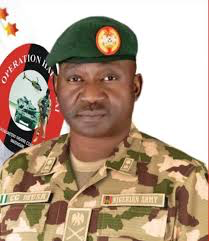
THE Defence Headquarters (DHQ) said the military is better off under democracy, while it further condemned calls for it to interfere in the nation’s democracy.
The defence headquarters stance was disclosed in a statement by the Director of Defence Information, Tukur Gusau, on the evening of Friday, August 11, in Abuja.
According to the statement, the call for military intervention in democracy is highly unpatriotic and wicked.
It also warned against attempts by unpatriotic elements to distract the military from performing its constitutional responsibilities.
Gusau added that the DHQ frowned at the report being circulated online about welfare issues in the Armed Forces of Nigeria.
He said the armed forces leadership has prioritised the welfare of its personnel and will continue to do so.
“The military hierarchy detests any attempt by any individual or group to instigate the law-abiding military to embark on any unconstitutional change of government in the country.
“We wish to state unequivocally that the military is happy and better under democracy and will not get involved in any act to sabotage the hard-earned democracy in our country,” Gusau said.
He remarked that the armed forces, under the leadership of a general, Christopher Musa, is determined to ensure its complete subordination to constitutional authority under President Bola Tinubu.
The statement added that it would not be distracted from its roles that are well defined in the 1999 constitution (as amended).
There have been calls on social media recently for the military to intervene in Nigeria.
The call was heightened by the difficulty faced by Nigerians after the fuel subsidy removal and the recent successful coup in the neighbouring Niger Republic.
Meanwhile, the DHQ said troops of the Nigerian army have killed 38 suspected terrorists in one week across the country’s six geo-political zones.
The Director of defence media operations, Edward Buba, disclosed this to journalists yesterday.
Buba said soldiers also apprehended 242 suspects and rescued 89 hostages during different operations nationwide.
He said the suspects include 175 gunmen, 20 kidnappers, 30 collaborators and 17 pipeline vandals.
He continued by saying that the troops had also found stolen crude oil worth N607 million.
OSUN State Police Command has confirmed the arrest of some of its personnel for extorting commuters along the Ile-Ogbo-Iwo road, in Osun state.
Public Relations Officer of the Command Yemisi Opalola disclosed this in a statement on Friday, August 11, adding that disciplinary action will be carried out against the detainees after investigations are concluded.
“The Police officers involved in this unprofessional and unethical behaviour have been identified, arrested and detained. The Command frowned and condemned the act in totality as the erring police officers are currently in detention since Thursday, 10 Aug. 2023.
“They are undergoing investigation and eventual disciplinary procedure of orderly room trial for their unprofessional conduct while the senior officers among them have been queried accordingly,” she noted.
Speaker of the Osun State House of Assembly Adewale Egbedun helped some commuters recover money extorted by police officials stationed along their route.
The speaker was captured in a viral video confronting the officers over the allegations of extortion by commuters.
Egbedun’s Chief Press Secretary, Olamide Tiamiyu, disclosed in a statement that three of the travellers had been extorted of N25,000 each.
Force Public Relations Officer Muyiwa Adejobi also confirmed the arrest of the policemen on Friday.
Adejobi warned other officers to desist from visiting Acting Inspector-General of Police (IGP) Kayode Egbetokun with money or gift items.
“The IGP has made it clear severally. In fact, at the last IGP’s conference with senior officers in Abuja on Tuesday, the IGP warned that no officer should bring money or gifts to him.
“He said, ‘I don’t need your money. Don’t bring any money to me. Use your legitimate money to improve the policing of your area of responsibility. So, no officer should use IGP’s name to extort. We have sent out IGP’S monitoring squad to arrest any erring officer, not only the Police but other law enforcement agents who dwell in corruption and inappropriate behaviours,” Adejobi noted via his official Twitter handle.
Police extortion and harassment and brutalisation have been a long-standing issue in Nigeria.
In October 2020, youths across the country embarked on a nationwide protest against police harassment and brutality, which lasted for weeks.
The protest was brought to a halt when officials of the Nigerian Army opened fire on unarmed protesters at Lekki Toll Gate, Lagos, on October 20, 2020.
Despite government promises to check harassment of citizens following the protest, extortion and other forms of indiscipline still persist within the Nigeria Police Force (NPF).
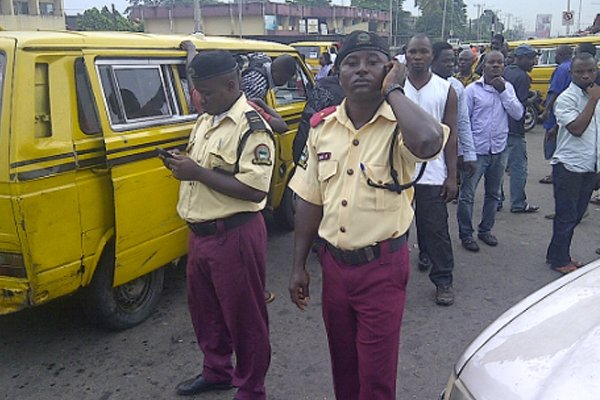
THE Lagos State Traffic Management Authority (LASTMA) has warned against the unapproved use of the agency’s uniform by skits and filmmakers.
The General Manager of LASTMA, Bolaji Oreagba, in a statement released on Friday, August 11 and signed by the Director of Public Affairs and Enlightenment Department, Adebayo Taofiq, warned against the unauthorised use of its uniforms in movies and comedy skits.
LASTMA stated that using its uniforms, Kits, and other accoutrements by film and skit without approval is illegal.
According to the statement, LASTMA disapproved of the degrading way the movie and skit creators portrayed LASTMA institutions in their productions.
The agency noted that it violates Section 79 of the Lagos State Criminal Law 2015 and termed the unauthorised use of official clothing as a criminal conduct.
Oreagba cautioned film or skit makers who portray themselves as LASTMA officers “without applying for, and being duly issued a permit letter for such portrayals, to desist with immediate effect or face the full wrath of the Law.”
He claimed that the complete LASTMA outfit worn by a woman in the Yoruba film “Gbogbo Lowo” was an example of how the uniforms should not have been worn.
Therefore, Oreagba urged for rules governing the ownership of LASTMA uniforms.
He pleaded with the National Association of Nigeria Theatre Arts Practitioners (NANTAP) and other connected groups to alert their members of the possibility of prosecution for anyone found utilising LASTMA Uniform without a valid permit.
The ICIRreported in July 2022 that the former Inspector General of Police, Usman Baba, ordered the arrest and prosecution of skit and movie makers who use the police uniform without approval.
The order was in a statement issued by Force Public Relations Officer (FPRO) Olumuyiwa Adejobi.
The statement explained that skits and filmmakers had not been stopped from using the police uniform to act. However, they must get permission from the force’s Public Relations Officer, with the desire to promote the Nigerian police much more positively.
The statement also denounced dealers selling police equipment and supplies illegally in stores and open establishments not authorised or recognised by the police authority.
According to the statement, the IGP also disapproved of the “demeaning manner in which movie and skit producers portray the police institution in their films and skits, using the police uniform without reference to Section 251 of the Criminal Code law or Section 133 of the Penal Code law, which criminalises such unauthorised use and accompanying necessary sanctions.
THE Nigerian Army has said it is not involved in any collaboration with leader of the Niger Delta Volunteer Force (NDVF), Asari Dokubo.
According to a report, Director Army Public Relations Onyema Nwachukwu disclosed this during an interview with PUNCH newspapers while reacting to claims by Dokubo that his security outfit operates in collaboration with the Nigerian Army.
“It must be clarified that the Nigerian Army is not in any form of partnership or collaborative pact with the ex-militant or whatever private security outfit he claims to own.
“It is also expedient to place on record that contrary to his claims, the Nigerian Army has never conducted any operation jointly or side by side with Asari or the organisation he represents, in any of those areas he mentioned or in any theatre of operations,” Nwachukwu said.
In a video that went viral earlier in the week, Dokubo said he owns a private military company which has been contracted by the government to fight alongside the Nigerian Army.
“I have a private military company that is engaged by the government, and we are fighting side by side with the Nigerian military in many places. Like Niger, Plateau, Abia, Imo, and parts of Rivers State. We were in Anambra too. We are doing a good job, and we are being commended by the host communities,” he said.
Dokubo has made similar claims in the past, including taking responsibility for the relative calm being experienced along the Abuja-Kaduna road.
In the recent past, the route was notorious for terror activities in Nigeria, as non-state actors randomly abducted or killed commuters. However, there has been a decline in reports of banditry along the road, which Dokubo claimed was achieved by his company’s efforts.
Although the Nigerian Army had stayed silent on the issue for a while, Dokubo’s claims were later rebutted by Director Defence Information (DDI) Tukur Gusau during an interview with The ICIR.
“All we know is that it is the Armed Forces that are in charge of the security of that road. We have Operation Whirl Stroke and Operation Deep Punch on that road. There are certain things we don’t even need to bother ourselves responding because Nigerians know better. We did not intend to waste our time responding to issues on which Nigerians know better,” Tukur told The ICIR.
The possibility of the government’s engagement with private military companies, such as Dokubo’s, is a source of concern for many citizens, some of who have described it as dangerous.
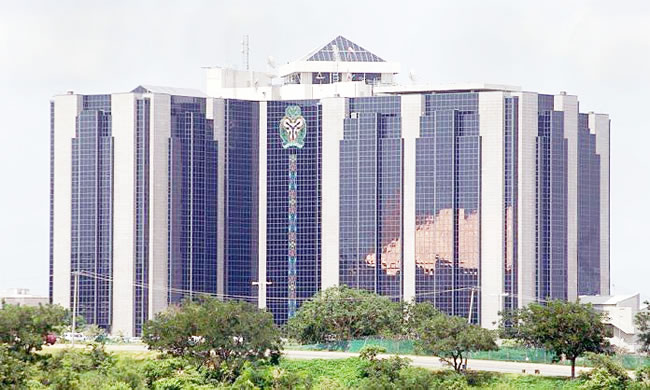
THE Central Bank of Nigeria has released its Consolidated Financial Statements for the last seven years amid an investigation into its financial management.
The long-awaited statements had raised concerns about integrity in the apex bank’s financial management.
According to information from the CBN website, the financial statements released are for 2016, 2017, 2018, 2019, 2020, 2021 and 2022.
The ICIR had on July 5 reported why the CBN and other public interest entities should disclose their financial statements yearly, as it is a core of transparency and accountability surrounding the activities of public interest entities.
The suspended CBN Governor, Godwin Emefiele, had come under attack for not releasing the apex bank’s financial statements to the public, a gross violation of the CBN Act 2007.
Since 2005 when it started publishing details of its annual report on its website, CBN never failed to publish the report until 2016, when it abruptly stopped the publication of the crucial documents in deviance of the law regulating its operations.
According to the CBN Act 2007, the apex bank is expected to publish its report within two months after the end of each financial year.
“The Bank shall, within two months after the close of each financial year, transmit to the National Assembly and the President a copy of its annual accounts certified by the Auditor.
“A report required to be submitted to the National Assembly and the President shall be published by the Bank in such a manner as the Governor may direct
“The Board shall ensure that accounts submitted pursuant to this section shall as soon as possible, be published in the Gazette.
“The Bank shall, as soon as may be practicable after the last day of each month makeup end, publish a return of its assets and liabilities as at the close of business on that day, or if that day is a holiday, as at the close of business on the last preceding business day,” the Act stated.
The ICIR also reported that President Bola Tinubu had appointed a Special Investigator, Jim Obazee, to probe the CBN seven weeks after the suspension and arrest of Emefiele.
The appointment dated July 28 came with immediate effect, and Obazee was to report directly to the President.
The President had directed Obazee to investigate the CBN and related entities using a suitably experienced, competent, and capable team and to work with relevant security and anti-corruption agencies to deliver on the assignment.
A Punch report on Friday, August 11, showed that the CBN owes JP Morgan and Goldman Sachs a combined sum of $7.5bn as of the financial year ended December 2022.
Included as part of its liabilities is another $6.3bn owned in foreign currency forwards.
“The Group entered into a securities lending agreement with Goldman Sachs and J. P. Morgan, and as part of the agreement, the Group pledged its holdings on foreign securities in return for cash. The cash received from Goldman Sachs is N0.23tn ($500m), 2021: N0.22tn ($500m), and JP Morgan N3.23tn ($7bn), 2021: N3.05tn ($7bn) is recognised in other foreign securities,” it stated.
Securities lending forms part of the CBN’s total external reserves of about N14.3tn or $29bn using the official exchange rate of N494/$1 as of 2022.
However, the apex bank also owes another N3.15tn ($6.3bn) in foreign currency forward, which are forex obligations it needs to make to foreign investors, it showed.
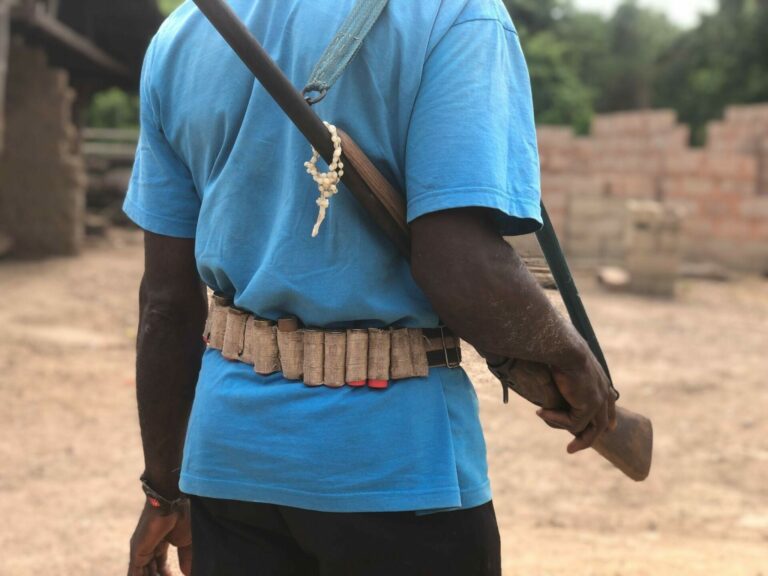
FOLLOWING fresh attacks on some communities in the Guma Local Government Area (LGA) of Benue, which occurred on Thursday, August 10, residents have taken to the streets to protest against the incessant killings in the state.
The protesters, mostly women and young people, blocked the Markurdi-Abuja highway very early on Friday, August 11, demanding an end to the attacks.
A resident of Benue state Gabriel Yev, confirmed to The ICIR on Friday that suspected herders attacked the Ngban community in Guma.
“There were killings yesterday around Ngban. Right now, women are protesting over it,” Yev said.
Though Yev could not provide information on the number of people murdered, locals claim that at least five people were killed in separate attacks carried out within Mgban and Niyan communities on Thursday.
Security Adviser, Guma LGA Christopher Waku confirmed the killings, saying three people were killed in Ngban, while the other two murders occurred in Niyan.
“Three people were killed at Ngban yesterday night and two people killed at Nyian this morning. The women have said that they are not going to leave the road until the governor comes and talks to them. I’m right now on the road, the women are protesting waiting for governor, Rev Fr Hyacinth Alia,” Waku said.
Benue state has been one of the hotbeds of terror attacks in Northern Nigeria.
According to the state’s commissioner for Information, Mike Inelagwu, over 5,000 people have died in Benue as a result of terror attacks in the last seven years.
The state is also overwhelmed with Internally Displaces Persons who have lost their homes and other property to the attacks.
In April, at least 95 persons were killed during attacks on different LGAs within the state, including Otukpo and Guma, over a period of three days.
The killings sparked up a protest by young people in the state, who blocked vehicular movement along the Otukpo-Abuja highway for hours.
The ICIR reported that about 55 people were killed in four communities within Otukpo LGA in April.
Residents of Umuogidi, one of the affected communities, told The ICIR that the attacks, which also saw the demise of children, were unprovoked and unexpected.
ON Tuesday, August 1, the former governor of Kaduna State, Nasir El-Rufai appeared before the Senate following his nomination by the President, Bola Tinubu, as a minister in his cabinet.
He was among a number of Ministerial nominees who were screened by the members of the National Assembly (NASS).
El-Rufai shared his plans on how he intends to increase Nigeria’s electricity generation and distribution if made the power minister.
This was in response to a question posed to him by Abdulaziz Yari, the Senator representing Zamfara West Senatorial District, regarding revamping the power sector if approved as a minister.
He said Tinubu’s vision in the next seven years is to achieve a constant power supply in the country. He made several other claims to affirm his competence and why he should be offered the job as a cabinet member.
In this fact-check, we examine four of his major claims while sharing his plans to stabilise the Nigeria power sector.
CLAIM 1
Nigeria has about 13000 MW of installed generation capacity
THE FINDINGS
Findings by FactCheckHub show that the claim TRUE.
Nigeria has been grappling with persistent power supply challenges for decades. The country’s generation capacity has consistently fallen short of demand, leading to frequent blackouts and load shedding. The country generates most of its power through hydro, gas and thermal.
Between 2010 and 2022, reports showed the country recorded 222 partial and total power collapses.
The inadequate generation capacity to meet the rising demand for electricity has been identified as primary challenge facing Nigeria’s power sector. It is also made worse by old transmission infrastructure.
Data obtained from the Nigeria Electricity Regulatory Commission (NERC) revealed the nation’s total installed capacity stands at 10,396 MW. But The FactCheckHub discovered the data is old because the website is hardly updated, except for its quarterly report.
A check on the Nigeria Electricity System Operator, a platform under the Transmission Company of Nigeria (TCN) showed as of Wednesday, August 2, the total installed capacity of the grid as 13,014.14 MW.
The system provides information on the daily and hourly distribution and generation of power from the Gencos, among other detailed information. They basically monitor the functionality of the power systems.
Though the former minister of power Abubakar was quoted as saying Buhari’s administration would leave an installed capacity of about 22,000 megawatts (MW) of electricity, the official data as of the time of the fact-check states otherwise.
THE VERDICT
The claim that Nigeria has installed power capacity of 13,000 MW is TRUE, according to data from Nigeria Electricity System Operator.
CLAIM 2
Nigeria hardly generates 4000mw to 5000mw of electricity.
THE FINDINGS
Findings by FactCheckHub show that the claim is true.
Nigeria produces an average of 5,000 megawatts of electricity which is insufficient for the consumption of about 200 million of its population.
Successive governments have tried but failed to reform Nigeria’s energy sector. Nigeria’s former Minister of Power, Abubakar Aliyu admitted this fact before he left the office, attributing the challenge to the shortage of gas supply.
According to the latest NERC quarterly report, Nigeria’s average available generation capacity in the fourth of 2022 stood at 4,503.59MW.
THE VERDICT
The claim that Nigeria still struggles to generate 4000-5000MW is TRUE according to public records.
Claim 3
Eighty per cent of Nigeria’s electricity generation is from gas.
THE FINDINGS
Findings by FactCheckHub show that the claim is TRUE.
Natural gas is the primary fuel source for power generation in Nigeria. However, inadequate gas supply, pipeline vandalism, and pricing challenges have affected the availability of gas to power plants, leading to reduced electricity generation.
El-Rufai attributed the country’s epileptic power system to gas constraints, hampering the production capacities of generating companies (GenCos). He says 80 per cent of power generation is sourced from gas.
Findings show that out of the 28 electricity generation companies (GenCos), merely three operate as hydro plants: Shiroro, Kainji, and Jebba. The rest are gas-fired power plants, which means they rely on a steady gas supply to produce electricity.
According to International Energy Agency , 80 per cent of power generation comes from gas; most of the remainder comes from oil. The latest quarterly report released by the NERC shows that approximately 75 per cent of the available generation capacity is gas-based. The report, made public on July 31, stated that most of the power plants in Nigeria’s Electricity Supply Industry (NESI) are dependent on “associated Gas.”
Moreover, as of the last quarter of 2022, insufficient gas, according to NERC “resulted in the reduced generation from Geregu National Independent Power Project (NIPP) (97,201.07MWh), Olorunsogo (176,090.50MWh), Omotosho NIPP (106,295.57MWh), and Rivers IPP (156,890.67MWh).
THE VERDICT
El-Rufai’s position that gas is the major source of electricity in Nigeria is correct, and that 80 per cent of power generation comes from gas is mostly TRUE.
CLAIM 4
Banks have taken over 5 to 6 of our electricity companies due to liquidation.
THE FINDINGS
Findings by FactCheckHub show the claim is TRUE.
Nigeria’s power sector was unbundled and privatised in 2013 with a view to creating a competitive market that would improve management and efficiency, attract private investment, increase generation, and provide a reliable and cost-efficient power supply.
However, the quest to deliver a cost-efficient power supply to Nigerians remains a pipe dream due to poor leadership and weak regulatory intervention.
The situation has defied successive governments as the sector continues to falter in inefficiency. Most private DISCos are also struggling financially to run the companies.
As a result, the federal government, in collaboration with Fidelity Bank and AMCON, took over the affairs of five electricity distribution companies, also known as DISCOs, over debts owed to Fidelity Bank.
The step is to save the companies from insolvency, among other reasons.
The affected companies are Kano Eectricity Distribution Company (KEDCO), Ibadan Electricity Distribution Company (IBEDC), Benin Electricity Distribution Company (BEDC), Kaduna Electric, and Port Harcourt Electricity Distribution Company (PHED).
THE VERDICT
The claim by EL-Rufai that about five to six DISCOs have been taken over by banks is TRUE, according to public records.
This report is republished from the FactCheckHub, read the original here.
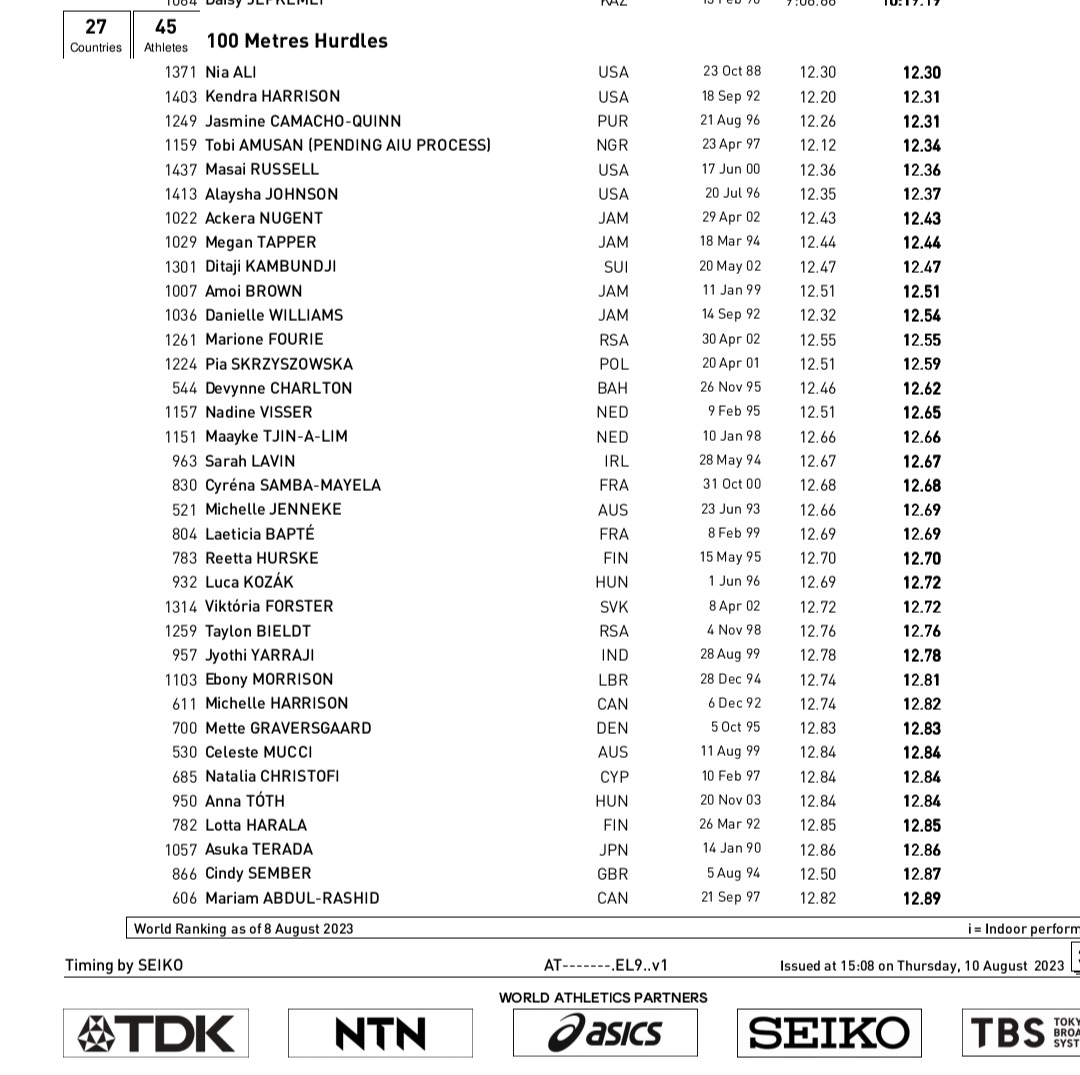
A ray of hope has been stirred up for the possibility of World 100m hurdle title holder Tobi Amusan defending her title at the forthcoming World Athletics Championship, billed to hold between August 19 to 27 in Budapest, Hungary.
Amusan has been in the eye of the storm after she was provisionally suspended last month (July) by the Athletics Integrity Unit (AIU) after allegedly missing three drug tests.
On Tuesday, the Athletics Federation of Nigeria, AFN had submitted a 26-man list which comprised 11 male and 15 female athletes to represent the country at the championship.
Although Amusan name was not included on the list released by AFN but the World Athletics gave room for her to file for an appeal.
Upon the day of her hearing, the world governing body for the sport on Thursday had included the 26-year-old in the list of athletes that will compete for Nigeria.
The ICIR confirmed her name on the World Athletics’ website, but it was seen by her name (pending AIU process).
Tobi Amusan is on this list, but still pending
But her participation still hangs in the balance as it depends on if she gets cleared of the anti-doping rule violation charged against her by the AIU.
The AIU said a decision on Amusan’s appeal will be made before the start of the World Championships, and the petite sprint hurdler will be offered the chance to compete if she is cleared.
The World Championship remains the only competition Amusan has not had the opportunity to defend after successfully defending her Nigeria, African Championships, African Games, Commonwealth Games and Diamond League titles.
In 2019, to improve the condition of public schools and Islamiyya in Kano State, the Kano State Government, through the Kano State Ministry of Works, Housing, and Transportation, disbursed millions of naira for the construction of classrooms in state-owned secondary schools. However, an investigation by AISHA AHMAD reveals that contractors have not executed the projects, leaving students to suffer learning under unfavourable conditions.
On Monday, May 15, 2023, it was 9.00 and across secondary schools in Kano State, students had settled down to the business of learning. But the case was different at Government Senior Secondary School (GSSS) in Ajingi local government area of Kano State. Some students at the school were doing anything but learning. While some were spotted hawking, others were on farms helping their parents do ridges ahead of the rainy season farming.
This disinterest in learning can be partly traced to the conditions under which students at the school are expected to get an education. When this reporter visited, students at the GSSS Ajingi were found learning in a suffocating environment, as over 200 students were cramped into a single classroom being taught mathematics with inadequate ventilation.
Abubakar Haliru, a Mathematics teacher in the school, revealed that the lack of classrooms and a conducive learning environment in the school is seriously affecting both the students and the teachers.
“The school has over 10 blocks of two classrooms, but all are dilapidated and uninhabitable for students because a quality building can help or hinder learning and teaching. Well-designed buildings and pleasant surroundings can lead to better attendance and concentration among students, as well as motivation and self-esteem, factors that can improve performance,” he reasoned.
It appeared that the government understood exactly this as the Kano State Ministry of Works, Housing, and Transport in 2019 awarded a contract worth N7,577,267.04 million for the construction of two classroom buildings with an office and a store to improve learning conditions in the school. The contract was awarded to Danyarimawa Synergy Global.
However, investigation reveals that the project has been abandoned since 2019, which has exposed students to poor learning conditions while many others are now roaming on the streets.
GSS Ajingi
Teachers in the school say all classrooms are using, as projects were abandoned since 2019
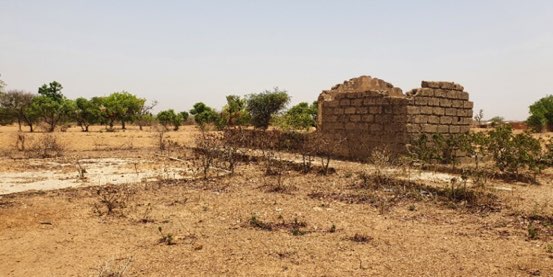
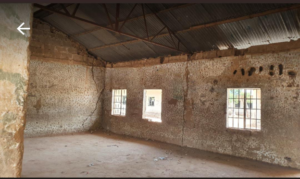
During a visit to the school, this reporter observed an abandoned and incomplete structure. The construction of two classroom buildings with an office and a store was lacking in roofing, floors, or plaster; the building was just erected to lintel level.
Zakari Aminu a school teacher at GSSS Ajingi, drew a correlation between the poor condition of learning in the school and the high number of student drop-outs
“All the classrooms we have in this school are useless. Some are even risky to study in, as the walls have sustained severe cracks that, at any moment, can crash and claim the lives of students.
“Sometimes, during the rainy season, whenever there’s heavy wind and thunderstorms, we can feel some buildings shaking, which means the foundation structures are weak, so we started praying to God for safety, while sometimes we leave the classroom to find cover.”
Aminu added that in 2019, when the construction of the two classroom blocks, office, and store commenced, both teachers and students were happy that finally the state government had considered both their plights, but they were soon disappointed
“Despite the fact that the classrooms won’t be enough to contain the students of the school, at least we believed some students would have enjoyed safe learning,” he said.
But the reporter observed that it is not only classrooms that are inadequate in the school.
“Another challenge is that the staff rooms are not enough for the teachers; we have only one staff room with over 15 teachers in the school. The lack of completion of the staff office has made many teachers hang around the school compound after teaching their subjects, or some will close for the day without waiting for closing time.”
“In addition to these direct problems with lack of space, a more crowded classroom or school is also likely to be noisier and more difficult to ventilate, problems that can interfere with the learning of the students, and honestly, most of the students don’t even understand what the teacher is teaching.”
Usman Abdullahi, a student at the school, said learning has been difficult as all their classes are in bad shape. Also, with the large number of students in the classrooms, most students find it hard to comprehend what they are being taught.
A dilapidated classroom in GSS Ajingi
More Sordid Tales in Ajingi
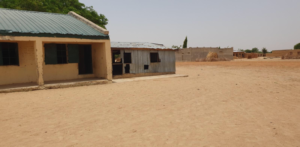
It is not only in GSSS Ajingi that Danyarimawa Synergy Global failed to deliver the constituency project. The same fate has been suffered by Falankawar Gafasa Primary School, where pupils also suffer unsafe learning environments in uninhabitable buildings.
On a visit to the site, this reporter observed that some students at this school learn in zinc classrooms with no chairs and appropriate wall boards.
Ammar Ismail, village head of Falankawar Gafasa, explained that for over eight years there has been no construction of new classrooms in the school by the state government.
“Our pupils are learning in an untidy environment; we have raised motions with our representatives, and they always promise to intervene, but there is still nothing to prevail about as the education system of our local community is in danger.”
“This primary school is the only school in Falankawar Gafasa; it serves both primary and secondary schools. The primary session has over 600 students, as does the secondary school, with over 400 students. The school has only two blocks of classrooms, totaling four classrooms.
Falankawar Gafasa Primary and Secondary in Ajingi Lga
“These classrooms are not enough to contain the students due to each class containing over 50 to 60 students. So we decided to structure the learning hours into batches. The first batch will be available from 8 a.m. to 12 p.m., the second batch from 12 p.m. to 3 p.m., and the third batch from 3 p.m. to 5 p.m.
“These learning hours are not enough for our pupils to learn tangibly in the school. Due to the insufficient classrooms, the community members decided to construct a classroom with wood and zinc for our pupils.”
Again, Danyarimawa Synergy Global got a contract worth N7,577,267.04 to construct a classroom with an office and store at Falankawar Gafasa Primary School. The same contractor has failed to deliver on the completion of a classroom with an office and store at Dundun Primary School in Ajingi Local Government, at a cost of N7,592,005.66 million. Like all the others, the contract was awarded by the Kano State Ministry of Works, Housing, and Transportation in 2019.
Usmar Rabilu, a teacher at Dundun Primary School, said there has never been such a project as a classroom with an office and store started or completed in the school.
Premises of Dundun Primary School
“For over 12 years I have been teaching in this school, there has been no new project of classroom construction by the state government, not to mention the completion of classroom blocks with an office and store. That is a ghost project.
“We, the teachers, have been exercising patience just because we regard the pupils as our children, but with the bad impression given to education, we would not have been here teaching under these frail conditions.
Lawmaker gets contract
A search for the contractor, which unearthed the beneficial owner of Danyarimawa Synergy Global, soon explained the reason behind the award and release of funds for the construction of educational facilities without delivery by the contractor. It appears that there was never any plan to do any job, as the contract was awarded to a politician.
After a full check on the company’s status on NG-Check, an online search engine that records the activities of companies in Nigeria, it was discovered that Danyarimawa Synergy Global belongs to a Kano lawmaker identified as Abdulaziz Garba Gafasa, who is listed as a director of the company.
Not only did the politician influence the award of the contract, but he also probably set up the company for the specific purpose of getting the contract, as it was registered shortly before the contract was awarded. The Public Procurement Act stipulates that for any company to get a contract, it has to have been in existence for three years, during which it would have been paying taxes and filing returns, among other obligations.
Abdul’aziz Garba Gafasa, the politician who influenced the contract, was born in Gafasa Ajingi Local Government Area in 1962. He was elected twice as a councillor in Gafasa Ajingi Local Government. As a grassroots politician, Gafasa was elected to the Kano State House of Assembly in 2023 to represent his constituency under the All Nigerian Peoples Party (ANPP) and served for two terms from 2003 to 2011.
He was the Speaker of the Kano State House of Assembly from 2007 to 2011. And during Governor Abdullahi Umar Ganduje’s administration in 2019, he served his fifth term as a member of the House and was elected as the 9th Assembly Speaker.
Discreet investigations revealed that he was awarded the contract when he was Speaker of the Kano State Assembly.
In an effort to get clarification from Hon. Gafasa, after placing several calls on May 21st, his network line has been busy.
In a text message that was sent to him on the allegation, Hon. Gafasa called back this reporter and claimed that he executed the project of constructing the classrooms.
He added that “I can assure you that whoever told you that is lying; the project was done. If I want to lie or cheat the government, I do things that are perishable, but for a capital project like this, if anyone told you it was not done, I swear he is lying.
The lawmaker, who did not believe this reporter visited the site, said both Dundun and Falankawa projects were carried out without fail.
However, during a visit to the school by this reporter, the school discovered there was no construction of a classroom block with office and store in either school.
Kano Ministry of Works violates the PPA Act
Both the contracting entity and the contractor breached the Kano state Public Procurment Act is many ways.
The lawmaker who influenced the contract apparently cornered the job by virtue of his position, not because his company had any professional or technical qualification.
Section 31 of the Kano State Procurement Law provides that a supplier, contractor, or service provider may be a Natural/Legal person, suppliers, contractors, or service providers acting jointly and severally are liable for all obligations and responsibilities arising from this law and the non-performance or improper performance of any contract awarded pursuant to this law
(1) All bidders, in addition to the requirement contained in any solicitation document shall possess the following;
(a) Professional and technical qualification to carry out particular procurement
(b) Financial capacity
(c) Equipment and other relevant infrastructure
(d) Personnel to perform the obligations of the procurement contract; and
(e) The legal capacity to enter into the procurement contract.
Also, Section 87(2) Kano State Procurement Law provides that it shall be an offence to:
engage in procurement fraud by means of fraudulent and corrupt acts, promises, threats, unlawful influence, undue interest, agreement, corruption, bribery or any other;
directly or indirectly attempting to influence in any manner the procurement process to obtain an advantage in the award of a procurement contract;
engage in bid-rigging
Clearly, both the contractor and the procuring entity’s actions contravene this section of the aw and committed offences contained in Section 87(2), ranging from procurement fraud to direct or indirect influence in the procurement process.
Furthermore, Section 87(1) of the Law provides that any natural person who contravenes any provision of this Law commits an offence and is liable on conviction to a term of imprisonment of one to five years or an option of fine from a minimum of N100,000 to N500,000 or both
Section 87 (4) provides that any corporate body or firm that contravenes any provision of this Law and its regulation commits an offence and is liable on conviction to a cumulative penalty of:
being barred from all public procurement for a period of not less than five (5) years; and
A fine equivalent to the value of the procurement in issue.
How Non-existent contractor abandoned, executed shabby works in Kunchi
In Nawala, Kunchi Local Government Area of Kano State, students trek for over 15 kilometers to access education as there is no school in their community. Because they find it difficult to trek such a distance, the majority of students in Nawala village quit school.
Many residents of Nawala were happy when in 2019, a contract worth N5,975,752.56 was awarded to N-Dazz Resources Ltd. to construct one block of Islamiyya type “E”, as a means for the students of Nawala village to stop trekking far to get an education.
But their joy was short-lived. No wonder! When our reporter went to the school, he found that the building had collapsed because of shoddy construction.
Collapsed Islamiyya block in Nawala Kunchi, constructed by N-Dazz Resources Ltd
According to Mallam Musa Ishaq, an Islamic teacher at the school, the wind blew away the roofing shortly after it was constructed. A week later, the whole building collapsed.
Usman Adamu, the village head of Nawala in Kunchi, had this to say about the classroom project:
“We started enjoying the building, but not until about 3 months after construction, when the whole building came down. We thank God it wasn’t during classes; we would have lost most of our children due to the shoddy job done by the contractor.
“This clearly showed that the building materials used were of poor quality because after the wind took away the roof, we then had a temporary place for them to learn, which was also destroyed by wind.
He said they wrote many complaints to authorities, but no action was taken.
Giving an expert opinion Engineer Abubakar Abdullahi, a civil engineer, says the reasons a building collapses can be due to poor structural design, poor compliance with specifications, poor quality control, faulty construction methodology, foundation failure, and corruption by the contractor or government.
It was discovered that it was not only at Nawala village that the same company, N-Dazz Resources Ltd., had failed to deliver on other contracts.
For example, the company either abandoned or failed to execute the contracts for which it received payments of over N10 million at two other schools.
First, it abandoned a contract for the construction of one block of Islamiyya Type “E” at a cost of N5,975,752.56 at Garin Labo in Kunchi LGA. No such project was found in the school
The village Head of Garin Labbo in Garin Sheme Ward of Kunchi LGA said, “Whoever told you they built a classroom in this community is lying.”
Barely containing his disappointment, he said, “Our pupils usually study under the trees no matter how soft or harsh the weather is.”
The Village Head said that the projects done in the school—a block of classrooms and a borehole—were constructed by a non-governmental organization (NGO).
“With my effort, I wrote to an NGO, Crystal Muslim Organization (CMO), seeking help. With the help of God, they built a block of classrooms and a borehole.”
“This structure has been standing for about two years, and we have about 400 pupils; the classrooms are too small to contain the students, so they are crammed together here,” he lamented.
While speaking to this reporter, the headmaster of G/Labbo Islamiyya, Abdullahi Dan Agwai, said they are yet to see government projects in the school. He appealed to the incoming administration to provide them with benches or even mats for their students to learn comfortably.
Residents built Zinc Classrooms after failed constituency project
N-Dazz Resources Ltd. also received the sum of N5,975,752.56 for the construction of a block of classroom type ‘E’ for islammiya students of Mahauta Unguwar Gyartai community in Kunchi LGA. However, no such project was ever done at the school, in spite of a promise to the people.
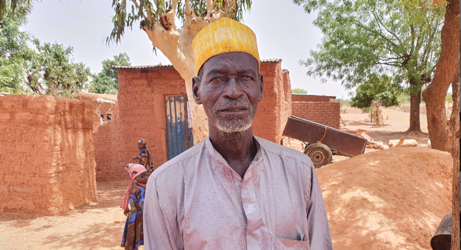
Alhaji Garba Lawan, the Village Head of Mahuta Unguwar Gyartai, said for over 20 years there have not been any constituency projects in the community, adding that the promised classroom has also not been delivered.
Village Head, Mahuta Unguwar Gyartai, Alhaji Garba Lawan
He lamented that “due to the non-availability of classrooms, we decided to build some classrooms with zinc and wood.”
An Islamiyya student of the school, Umar Naabba, cried out that during the summer we can barely stay in the zinc classrooms for two hours due to the zinc used to be hot. We used to study in discomfort, which makes us hard for us to comprehend what they are teaching us, we are in serious need for help from the government to construct classrooms for us,” she stated
A search at the Corporate Affairs Commission (CAC, showed that N-Dazz Resources Ltd. is not a registered entity and is ineligible for contract awards under the law. The award of a contract to N-Dazz Resources Ltd., a non-existent contracting company, contravenes Sections 417–424 of the Companies and Allied Matters Act, 2020, which state that “every company must make and deliver their annual returns to the CAC every year”.
Therefore, the award of a contract to N-Dazz Resources Limited contravenes the Public Procurement Acts, under Section 16 of the Public Procurement Act 2007. Section 16 Subsection 6(d) states: “All bidders, in addition to requirements contained in any solicitation documents, shall have fulfilled all their obligations to pay taxes, pensions, and social security contributions.
Also, the agency contravenes Section 31 (4d), of the Kano Public Procurement Law, KPPL, which stipulates that “the bidder is in arrears regarding payment of due taxes, charges, pensions, or social insurance contributions unless such bidder has obtained a lawful permit with respect to the allowance or difference of such outstanding payments in instalments.”
Expert sheds light
A lecturer, Malam Dan Lami Aminu of the Aminu Kano College of Islamic Legal Studies, said environments matter a lot in education, and they are almost as important as the subjects being taught.
“Among the integral parts that make learning conducive is the environment, and in this case, to be specific, we can narrow down the environment to that of the classroom.
“Consequently, a classroom is a very important component of the physical material resources that make learning conducive,” he said.
He said children often lose concentration in dilapidated buildings, adding that it is a threat to their lives.
“Imagine pupils in a dilapidated classroom during the rainy season. Uncomfortable settings during unfriendly weather like extreme heat or cold weather would make them lose their minds.”
Dan Lami added that there would be a serial suspension of class and learning activities due to the fact that whenever there is a challenge, that will not allow the class to hold.
“Series of learning loss that, if care is not taken, can accumulate into days, weeks, or even months, as the case may be. Learning loss, especially a prolonged one, can hamper the progress of pupils, which in the long run will lead to their inability to catch up with their colleagues who have a better classroom environment,” he added.
Kano Ministry of Works kept FOI Mum
When approached to provide further information and clarifications on the findings of this investigation, the Kano Ministry of Works, Housing, and Transport requested a formal letter stating what the reporter needed. A Freedom of Information Act, FOIA, request was written and sent to the ministry on May 19, 2023, seeking explanation on the non-execution of the constituency projects and also why the contract was awarded to a lawmaker as well as a non-existent company.
The FOI was acknowledged, but the ministry and institute had yet to provide feedback regarding the questions as of the time of filing this report.
This report is supported by the John D. and Catherine T. MacArthur Foundation and the International Centre for Investigative Reporting (ICIR).