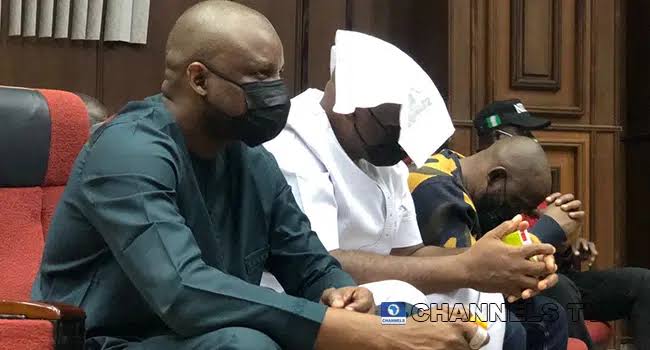
THE Supreme Court on Friday, July 7, freed a former senator, Peter Nwaoboshi, from a seven years prison sentence after nullifying his conviction for fraud and money laundering offences.
The apex court ordered Nwaoboshi’s immediate release from the Lagos Prisons in Ikoyi, where he is serving the now nullified jail sentence.
Nwaoboshi’s two businesses, Suiming Electrical Ltd. and Golden Touch Construction Project Ltd., charged with two counts by the Economic and Financial Crimes Commission (EFCC) and tried alongside the accused person, were also freed by the Supreme Court.
In a split decision of four-to-one, the Supreme Court set aside the July 1, 2022 judgment of the Court of Appeal, Lagos, which had reversed Nwaoboshi’s earlier discharge and acquittal by a Federal High Court in Lagos.
The verdict made by the appellate court against Nwaoboshi’s firms was also overturned by the Supreme Court in its lead opinion, read by Emmanuel Agim, a justice.
The apex court held that the EFCC unfairly and intentionally punished Nwaoboshi and the two companies for allegedly committing crimes not punishable by law.
Nwaoboshi previously represented Delta North Senatorial District in the Senate.
The ICIR, in July 2022, reported that theLagos Division of the Court of Appeal sentenced Nwaoboshi to seven years in prison for money laundering.
The EFCC announced the development on its official Twitter handle.
The anti-graft agency also said the court ordered that Nwaoboshi’s two companies, Golden Touch Construction Project Ltd and Suiming Electrical Ltd, be wound up in line with the provisions of Section 22 of the Money Laundering Prohibition Act 2021.
The judgment, according to the EFCC, was a result of the success of the appeal against the decision of a Lagos Federal High Court presided by Chukwujekwu Aneke, which on June 18, 2021, discharged and acquitted Nwaoboshi of a two-count charge of fraud and money laundering.
Aneke, in the June 2021 judgment, had also dismissed the fraud and money laundering charges against Nwaoboshi.
The judge said the EFCC failed to prove the elements of the offences it charged the lawmaker for.
The lawmaker and his two companies were subsequently discharged and acquitted before the EFCC appealed the judgment, which led to the conviction by the Court of Appeal in July 2022.
Nwaoboshi was arraigned alongside Golden Touch Construction Project Ltd and Suiming Electrical Ltd before a Lagos Division of the Federal High Court 2018 over fraud and money laundering charges.
The EFCC, in suit number FHC/L/117C/18, accused the three defendants of fraudulently acquiring a property named Guinea House, Marine Road, in Apapa, Lagos.
Ruling on the EFCC’s appeal, the Court of Appeal held that the trial judge erred in dismissing the charges against the respondents.
The appellate court held that the prosecution had proved the ingredients of the offence and consequently found the defendants guilty as charged.
However, dissatisfied with his conviction and prison sentence, Nwaoboshi took the case before the Supreme Court, which, on Friday overturned the verdict of the Court of Appeal.
MUSIC competition, Nigerian Idol, has been providing a platform for many talented singers to launch their career and gain recognition in the Nigerian music industry.
In addition to providing exposure to every talented individual who graces its stage, the show has a positive impact on the Nigerian entertainment industry, introducing new, vibrant, and talented personalities to Africa’s leading entertainment sector.
Over the past few years, music talent shows have emerged as platforms for up-and-coming singers to exhibit their skills and engage in competitive showcases. These shows offer aspiring artists the chance to not only vie for recording deals and cash prizes but also to secure various opportunities that can propel their music careers to new heights.
In Nigeria, a multitude of talent shows has emerged, offering individuals the invaluable opportunity to showcase their abilities and gain global recognition. Shows such as Nigerian Idol, The Voice Nigeria, Nigerians’ Got Talent, Project Fame, De9jaspirit, among others serve as platforms that not only spot raw talents but also provide nurturing environments to help these individuals promote themselves on a larger scale.
Since its debut in 2010, Nigerian Idol has played a significant role in showcasing new talents and elevating the Nigerian music industry. The show has served as a platform for aspiring singers, leading to the discovery of remarkable artistes including Timi Dakolo, Mercy Chinwo, Omawumi, among others. These talented individuals have not only gained recognition within Nigeria but have also made a notable impact on the global music scene.
Mercy Chinwo, Timi Dakolo and Omawumi. Source: Instagram
In an interview with the E-Splash crew on TVC, the Season 7 winner of the Nigerian Idol, Progress Chukwuyem said winning the show was the biggest thing that has ever happened to him in his entire life.
“Winning the show was beautiful, I’d say it’s the biggest thing that has ever happened to me in my entire life. So, I’m always grateful”, he said.
Nigerian Idol Season 8 winner, Progress. Source: Instagram
The ongoing 8th season of the show hosted by Ik Osakioduwa commenced on Sunday, April 23, attracting a multitude of talented auditioners. After careful evaluation by a distinguished panel of judges, consisting of esteemed artists and producers, the final top 10 contestants were chosen.
The judges, including Simi, D’banj and Obi Asika meticulously assessed the participants’ vocal abilities, stage presence, and overall performance. Over the past few weeks, the selected top 10 – SavyHenry, Reigny, Chisom, Precious Mac, Constance, Goodness, Abraham, Quest, Ose Daniel and Victory Gbakara – have been showcasing their talents on the live show.
After a compelling journey, the show has reached a crucial stage with only three contestants remaining. However, Ose Daniel and Goodness, who had successfully secured spots in the top 5, were eliminated on Sunday, July 2. This turn of events has now left the viewers with Precious Mac, Quest, and Victory Gbakara who are the final trio of contenders, vying for the ultimate title of Nigerian Idol Season 8 winner.
Speaking with The ICIR, the founder of Afrobeats Intelligence, Joey Akan stated that the show not only offers a platform for showcasing talents but also plays a crucial role in marketing them.
“Nigerian Idol helps talent to be seen by people , it helps to market new artists and gives them the tools to start in the industry”, he said.
He emphasised that the show’s intention is not to transform its contestants into celebrities. Instead, it aims to provide them with a platform for visibility and learning. Ultimately, it is up to the contestants to seize this opportunity and create something significant for themselves.
“Basically, what Nigerian Idol gives is the stage to showcase oneself. People going for Nigerian Idol should not think they will suddenly get into the limelight but it is a good platform to showcase oneself, take advantage of it, show yourself, learn, get the training and work towards turning it into something big for yourself,” he said.
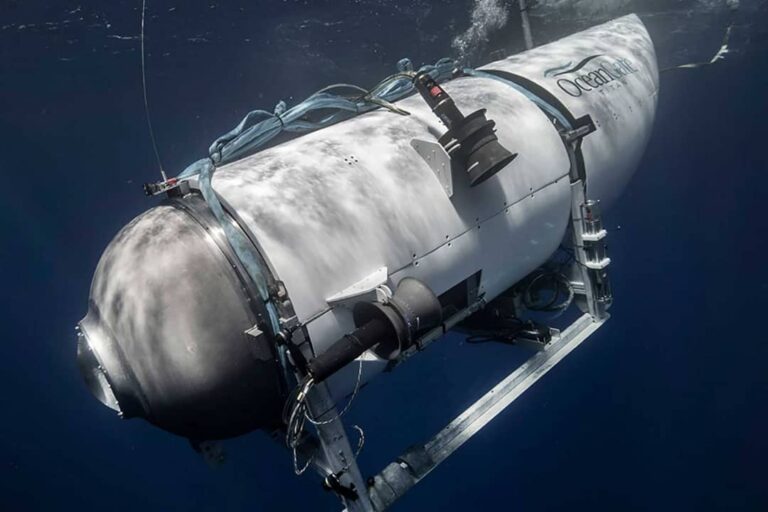
OPERATOR of the submersible, which imploded during a trip to the Titanic wreckage in June, OceanGate Expeditions, has announced the suspension of all its commercial activities.
This was contained in a short message on OceanGate’s website. The message read: “OceanGate has suspended all exploration and commercial operations.”
The announcement comes two weeks after OceanGate’s vessel, Titan, imploded in the sea, killing all five underwater explorers aboard the submersible, including the company’s Chief Executive Officer (CEO) Stockton Rush.
Other occupants of the Titan sub include British businessman Hamish Harding, British-Pakistani businessman Shahzada Dawood and his son Suleman, and French explorer Paul-Henry Nargeolet.
The Titanic wreck sits over 12,000 feet below the sea, and OceanGate had previously carried out successful trips to the site, for the cost of $250,000 per passenger.
OceanGate lost contact with the sub less than two hours after it dived into the sea, resulting in a frenzied search that lasted for four days, after which parts of the vessel were found on the sea floor, and the United States Coast Guard said it suffered a catastrophic implosion on the day it went missing.
Following the implosion, previous concerns about the safety of the submersible were made public.
There had been calls from at least three dozen experts in the industry for extra assessment and warnings of possible catastrophe due to the company’s refusal to subject the vessel to further inspection.
OceanGate has been the subject of public criticism for ignoring warnings of potential disaster and experimenting with the lives of unsuspecting passengers.
On June 29, presumed human remains were found within the Titan’s wreckage brought up from the ocean floor.
The US Coast Guard has set up a Marine Board of Investigation, described as its highest level of inquiry, to investigate the cause of the catastrophic implosion and provide recommendations against a future reoccurrence.
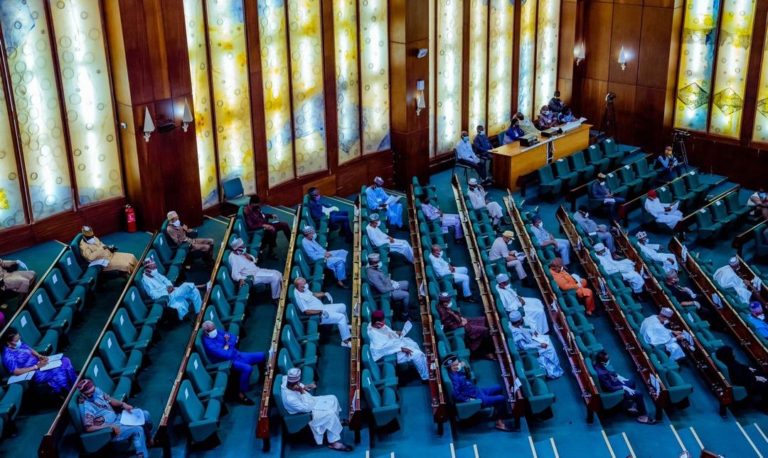
THE House of Representatives has warned public tertiary institutions in Nigeria against using the introduction of the student loan scheme as an excuse to increase tuition fees.
The House issued the warning after the adoption of a motion by Terseer Ugbor (APC-Benue) at plenary on Thursday, July 6.
The President, Bola Tinubu, signed the Student loan bill in June. And since then, there have been concerns about universities, both federal and state-owned, using the student loan scheme provided by the bill as a ploy to hike tuition.
Ugbor, a lawmaker representing Kwande/Ushongo federal constituency of Benue State, stressed that the scheme aims to enable underprivileged students to borrow funds for their education.
He said the introduction of students loans and other educational credit schemes in most countries of the world is justifiable because it guarantees greater access to higher education for less privileged citizens.
“The use of students loans and educational credit schemes in most countries of the world is often justified because it guarantees greater access to higher education for the less privileged citizens
“It is further predicated on the notion that education is an investment in human capital, promoting individual development, economic growth and national productivity.
“After several years of unsuccessful attempts by successive administrations to introduce students loans, scholarships and other educational credit schemes, the 9th National Assembly passed the Students Loans (Access to Higher Education) Bill, 2023, which was recently signed into law by the President to provide the legal and institutional framework for implementation of a Students Loan Scheme in the country.”
The lawmaker noted that while the objectives and intentions of the Students Loans (Access to Higher Education) Act, 2023 are patriotic and would impact positive access to higher education in Nigeria, especially among underprivileged citizens, there are several critical omissions and identifiable bottlenecks that would frustrate the successful implementation of the Act if immediate further legislative action is not taken to ensure its efficient implementation.
“The intendment of the Students Loans (Access to Higher Education) Act, 2023 is highly commendable and its enactment has been well received by a large segment of the general Public, particularly Nigerian youths, the identified and observable lapses have the potential to frustrate its smooth implementation for the overall benefit of Nigerian students,” he added.
AN Abuja Federal High Court has granted the former commander of the Police Intelligence Response Team (IRT), Abba Kyari, conditional bail in a criminal case of alleged failure to declare assets.
The court presided by James Omotosho in a ruling on Thursday, July 6, stated that the condition attached to the suspended cop is tied to the conclusion of a separate trial on drug trafficking charges.
The National Drug Law Enforcement Agency (NDLEA) had accused Kyari and his two siblings, Mohammed Kyari and Ali Kyari, of non-disclosure of assets.
The court granted Kyari bail in the sum of N50 million with two sureties in like sum.
Omotosho said there was no proof that the defendant was a flight risk as canvassed by the NDLEA.
“He has not committed a capital offence neither has it been proved that he is a flight risk. I therefore exercise my discretion in favour of the defendant/applicant.
“On the possibility of the 1st defendant (Abba Kyari) attending his trial, it is pertinent to state that, according to the affidavits in support of the application, the applicant stated that he was in detention at the Kuje prisons when the jail break of 5 July 2022 occurred and he stayed put, even though he had the opportunity of escaping,” the judge said while granting the ball application.
While stressing that deposition was not challenged by the NDLEA, the judge mentioned the applicant has shown willingness to attend court when required and unwilling to run away from his trial.
Granting the bail conditions, the judge stated that Kyari’s sureties must possess properties worth N25 million within the court’s jurisdiction in Abuja.
The court further mandated the sureties to deposit their statements of account, their international passports, the title deed of their property and recent passport photographs with the Registrar of the Federal High Court.
However, the judge noted that Kyari will not be released until Justice Emeka Nwite grants him bail in the drug trafficking case, or when case comes to an end.
Disclosing that Abba Kyari’s release warrant would not be signed until either of the two scenarios comes to effect, the judge adjourned further hearing in the suit until October 18.
The ICIRreported that the Federal Government filed a 24-count charge against Kyari after uncovering 14 assets linked to the former commander of the Intelligence Response Team (IRT).
The assets include shopping malls, residential estate, polo playground, lands and farmlands.
According to the PUNCH Newspaper, the assets were uncovered in different locations in Abuja and Maiduguri, Borno State.
The 24-count charge against Kyari were filed by the Director of Prosecution and Legal Services, J. Sunday, at the Federal High Court, Abuja, and dated August 30, 2022.
The Attorney-General of the Federation (AGF) stated that the suspended police officer allegedly disguised his ownership of some of the properties.
A certificate of origin is an essential document in Nigeria. From job placements to admission into educational institutions and political appointments, the certificate, issued to only indigenes of a particular state, validates that one is indigenous to a community in the area. It is like a password to many opportunities in the country.
In spite of its relevance, The Cable’s JAMES OJO and SAMAD UTHMAN, in this series, uncovered how public officials in some LGAs across the country are issuing the certificate for a fee to non-indigenes, foreign nationals – and even non-existent people – in violation of the law.
It was 8 am on February 13, 2023. The atmosphere bustled with the blaring horns of cars and motorcycles as commuters geared up for the day’s activities. The reporter walked into the liaison office at Akute, Ifo LGA of Ogun state, to request a certificate of origin.
Using Olawale Ayo James – a non-existent name, a fictitious address and family compound name, date of birth, and non-existent parents – the reporter presented himself as a young graduate in need of the document for juicy employment.
“Your money is N10,000,” Folashade, a woman at the office, told the reporter.
“Input your details there (referring to a note offered to the reporter). We need your father’s and mother’s names, address, LGA, state, name of father’s compound, and two passport photographs. With these, you are good to go.”
This should be a thorough process considering the significance of the document requested. However, the experience at the LGA office was far from ideal.
“If you agree, let me call Yusuf, he will tell you when to come back for it,” she added.
After haggling over the price on the phone for a while, Yusuf instructed Folashade to get the reporter’s details as well as the agreed sum of N8,000. He asked the reporter to come back for the certificate in a few hours.
Yusuf is the liaison officer in charge of certificates of origin, birth certificates and other official documents at the office. The reporter had informed Yusuf that he was not from Ogun, but only needed the certificate to get a job. He did not bat an eyelid. Only one thing mattered – the N8,000.
The certificate of origin issued by the Ifo LGA
The document says the fictitious applicant “is an indigene of Ogun state from Ajuwon in Ifo LGA” and should be accorded the “necessary recognition and assistance”.
“Usually, I ask people to submit their details and come back for the certificate the next day because it has to be signed, but I did yours because you told me you need it for an interview,” Yusuf told the reporter at a fast food joint where he asked him to come for the document.
At Sagamu LGA, the reporter did not find the process as easy as it was with Yusuf. He had barely entered the gate when he was faced with a series of questions bordering on the purpose of his visit to the facility.
Signpost of Sagamu LGA…Photo credit: James Ojo/TheCable
The atmosphere was a bit relaxed when the reporter disclosed he was there to get a certificate of origin for a friend.
“It’s N4,200, but you cannot collect on behalf of anyone. Also, be ready to answer questions asked by the officials. If you falter, you will not be attended to,” Abideen Olaiya, an official at the LGA, told the reporter.
His remark heightened the reporter’s fears due to the fact that the supposed friend – Ogunbawowo Busola Mary – was non-existent. The supposed friend’s father’s name (Ogunbamowo Isaac), family compound (Ogunbamowo Isaac compound), mother’s name (Gloria Ogunbamowo), and the given address – 25, Ikenne Road, Ilaye, Sagamu – were all fictitious.
In spite of the initial impression that a thorough check would be carried out before issuing the certificate, the process turned out to be an easy ride after paying an extra N4,000 to Olaiya and N500 to another staff at the LGA.
The reporter obtained an official certificate indicating that the non-existent Mary was a “native of Sagamu LGA”. Even though the reporter did not submit any document to prove the identity of Mary, the certificate claimed: “ancestral, historical, and administrative records verified by the local government attested to this fact”. The certificate, dated February 14, was signed and stamped by the secretary to the LGA as well as the LGA chairman.
The certificate of origin from Sagamu LGA
At Ewekoro LGA, the situation was the same – no due process and no official document required. The reporter was asked to pay N12,000 and thereafter forward his address and passport photograph to get the certificate of origin – despite clearly indicating that he was not from the state and only needed it for a job.
In Nigeria, a certificate of origin is a prima facie evidence of the holder’s state of origin which a person claims. According to the guiding principles of the Federal Character Commission (FCC), an indigene of an LGA is anyone “accepted” as such by the local government. This leaves enormous discretionary powers in the hands of LGA officials.
Federal and state institutions also request the certificate to effect the catchment system for the even distribution of admission quota among states. The certificate of origin also affects differences in school fees and bursary allocation for indigenes and non-indigenes.
The Lagos Experience
It was just another day in the office for Biodun who works around the Nigerian Immigration Service (NIS) office in Alausa, Ikeja, Lagos.
Biodun is literally a jack of all trades for issues that concern passport application, issuance and collection. He knows the right plug for every deal – mostly done through the back door.
When the reporter inquired how he could get a certificate of origin to apply for a job, the plum, Abiodun’s name rang a bell to everyone around the NIS passport office.
“It’s not a big deal, I can do it for you. You just have to pay N10,000 since you are from Lagos. If you are a non-indigene, you will have to pay N12,000. I can do Alimosho LGA for you. Is that okay?” he asked.
Biodun… Photo credit: James Ojo/TheCable
By law, certificates of origin should only be issued to certified indigenes of an LGA; but according to Biodun, anyone can get it for a fee.
After a few minutes of haggling over the price, the reporter agreed to pay N10,000. With that settled, he called his plug at Alimosho LGA and asked the reporter to come back by 2 pm the next day.
Biodun did not ask the reporter for any document to facilitate the certificate, and true to his words, the certificate was ready the next day. The certificate, signed by Dare Ogunkoya, secretary to Alimosho LGA, on behalf of the chairman, “confirmed” that the reporter – who is not from Lagos state – is an indigene of the LGA and should be accorded “necessary assistance”.
The certificate of origin issued by Alimosho LGA without due process
The experience with Biodun showed that getting a certificate of origin through the back door was a possibility at Alimosho LGA. When the reporter eventually visited the LGA, the practice was prevalent. The reporter had barely alighted from the car when one Sarah approached him and took him to a section of the facility that she and other colleagues were using for their operations.
“This is the easiest method to get it. If you are to go through the normal process, it will take you a lot of time,” she said, trying to convince the reporter.
Sarah then handed the reporter a plain sheet to input his details. “Your money is N8,000,” she said.
After an intense plea from the reporter, she agreed to take N7,000, which will be sent to a designated account number. Sarah’s countenance was that of someone who just hit a jackpot. Beaming with a smile, she offered the reporter a seat and zoomed off with his details to process the certificate.
To further test the strength of the process of issuing certificates at the LGA, the reporter used fictitious names – the same details submitted at Ifo LGA in Ogun state. But the outcome was the same as that of Biodun; no thorough check was done.
In less than an hour, Sarah returned with a certificate of origin also signed by the same Ogunkoya, certifying that the reporter and his parents “hail from Alimosho LGA” and should be given “necessary support”.
The second certificate issued to the same person by Alimosho LGA
“The certificate is original; you can see it was officially signed,” Sarah told the reporter when he sought to confirm the authenticity of the document.
Excited to have completed the process without hitches, Sarah gave her phone number to the reporter and asked him to call when in need of other services at the LGA.
“I also do car documents – driver’s license, number plate, everything you need,” she added.
Sarah… Photo credit: James Ojo/TheCable
At Somolu LGA, the experience was not different – extortion and backdoor activities were prevalent, with no proper background check of presented names. The two men who approached the reporter at the LGA asked him to pay N7,000 and provide two passports to get the certificate – with no mention of any official document.
The Ikeja, Oshodi-Isolo LGAs exception
The reporter’s experience at Ikeja and Oshodi-Isolo LGAs was a sharp contrast to the other LGAs visited across Ogun and Lagos states.
Linus, as he simply identified himself, was the officer in charge of issuing the certificate of origin in Ikeja. When the reporter entered his office, located within the ministry of special duties and intergovernmental relations section, the simple but firm official insisted on getting valid means of identification and other essential documents before issuing the certificate.
“Do you have a letter from the Oba (king) of your town or a letter from the local government?” he asked, gazing intently at the reporter.
“You have to provide a birth certificate as well as your National Identification Number (NIN) slip or Lagos State Residents Registration Agency (LASRRA) card. Preferably, we want your LASRRA card since it has to do with the state. The essence of all these is to be sure of the name. If you have the necessary documents, then bring two passport photographs and pay N2,000 to the state government.”
The reporter, sensing the official was becoming more suspicious, asked if he could get the certificate without the listed documents while he feigned he needed it to complete an urgent job application.
The entrance to Linus’ office…Photo credit: James Ojo/TheCable
But Linus would not change his stance.
“Which of them do you have exactly? There’s no way I can help you; if you don’t have any of the documents here, ask someone to send them to you via email or WhatsApp, and you can print them around. It should be very easy for you,” he concluded.
Realising the insistence on due process, the reporter headed for the exit door, promising to come back for the certificate.
At Oshodi-Isolo LGA, the reporter also observed an improvement in the process. The female official in charge of the certificate asked the reporter to provide his birth certificate, two passports, compound name, and his mother’s maiden name, and pay N7,500 to get the document.
The official did not shift her ground on the demands for documentary proof.
Meanwhile, there are reported cases of people getting jobs, admissions, and appointments by randomly obtaining certificates of origin for states they are not from.
In 2017, for instance, the Kwara state government uncovered 67 persons recruited into the Nigerian army between 2010 and 2016 with fake certificates of origin from the state. They were said to have been exposed through their names and inability to communicate in the languages of the LGAs, they claimed.
In 2019, Olamide Olakunlade, a 23-year-old indigene of Ekiti state, was arrested and arraigned in Lagos for allegedly forging an Ikeja LGA certificate of origin to apply for an air force recruitment programme.
Oshodi/Isolo LGA secretariat…Photo credit: James Ojo/TheCable
If the certificates can be obtained without hassle – as the reporter experienced – it means the country’s federal character principle and appointment/job distribution is under threat as anyone can claim to be an indigene of a state for a fee.
But this anomaly is not prevalent in the southern part of the country alone. In the north, the situation is also grim and reckless.
THE Ecological Project Office has failed to provide information on the amount released for ecological projects in Kwara State in 2021 and 2022.
The Ecological Project Office is an arm of the Office of the Secretary to the Government of the Federation (OSGF), chaired by the Permanent Secretary.
The role of the Office is to fund and carry out projects that would address ecological issues in the country.
The ICIR had sent a Freedom of Information (FOI) request dated June 26, seeking detailed information on the ecological projects carried out by the agency in Kwara State within the last two years.
An acknowledged copy of the FOI request
The request was acknowledged. However, seven days after an FOI request was submitted, the Office is yet to respond.
This contradicts the Freedom of Information Act established in 2011, which dictates that all Public institutions must provide any required information upon request.
Section 1, sub-section 1 of the FOIA says, “Notwithstanding anything contained in any other Act, law or regulation, the right of any person to access or request information, whether or not contained in any written form, which is in the custody or possession of any Public official, Agency or institution howsoever described, is established.”
Section 2(4): “Public institutions shall ensure that information referred to in this section is widely disseminated and made readily available to members of the Public through various means, including print, electronic and online sources, and at the offices of such Public institutions.
Section 5, sub-section 1 also says, “Where a Public institution receives an application for access to information, and the institution is of the view that another Public institution has greater interest in the information, the institution to which the application is made may within three days but not later than seven days after the application is received, transfer the application, and if necessary, the information, to the other Public institution, in which case, the institution transferring the application shall give written notice of the transfer to the applicant, which notice shall contain a statement informing the applicant that such decision to transfer the application can be reviewed by the Court.”
THE Federal Inland Revenue Service (FIRS) says it is exempting dealers of foodstuffs from the Value Added Tax (VAT) Direct, its proposed tax for traders in the informal economy.
The tax also excludes artisans from compliance.
Many Nigerians have expressed disapproval with the proposed tax, but a senior FIRS official had provided explanations on why the Service is focusing on the informal sector, which constitutes a large chunk of traders.
The FIRS Director of VAT, Loveth Ononuga, said on Thursday, June 6 that any trader whose turnover is below N25 million would not be affected by the initiative.
Ononuga said that those who trade in VAT-exempt goods are also excluded.
According to the Director, the initiative largely aims at expanding the tax net to those who are not formally registered and have not been paying VAT, according to the VAT Act.
She further said that VAT Direct targets dealers of electronics, textiles, gold, and “deep-pocket traders who may not have been captured in the tax net.”
She added that the VAT Direct initiative would enumerate traders, as “at the moment, we do don’t have the data of the business community in Nigeria.”
A World Bank figure had revealed that 80 per cent of the Nigerian business was informal, while only 20 per cent was formal.
Ononuga said, “We don’t know who makes up that 20 per cent. The VAT Direct is the foundation for building up that data bank to know exactly those who are the informal traders, and what they are dealing in.”
She emphasised the importance of gathering data in planning the economy, both in state and federal governments.
She said data capturing of marketers would enable the government to easily reach out to them on incentives, and on palliative interventions.
She posited that the scheme would help curb imposition of multiple taxes, and that there was actually a collaboration among stakeholders that would address this.
“Part of the focus of the VAT Direct is to reduce multiple taxation. You could see the FIRS partnering with the umbrella body of the Market Traders Association of Nigeria (MATAN) and law enforcement agencies.
“The VAT is a federal tax to be collected according to section 8 of the VAT Act, which states that all persons and individuals, whether incorporated or not, registered or not dealing in invertible goods and services in the country, must pay it, so the FIRS has the right to collect it,” she said.
The FIRS chairman, Muhammad Nami, who is also the chairman of the Joint Tax Board (JTB), is expected to collaborate with JTB and Market Traders Association of Nigeria (MATAN), which is the umbrella association of traders, to rid markets of touts posing as tax collectors in the drive to eliminate multiple taxes and illegal dues.
VAT-exempt goods include healthcare related equipment and services, medicines including for veterinary care but excluding cosmetology and fitness devices, spas, and gymnasium and similar services.
PRESIDENT Bola Tinubu has signed four Executive Orders and suspended the five per cent excise tax on telecommunication services and locally manufactured products.
The Special Adviser to the President on Special Duties, Communications and Strategy, Dele Alake announced this on Thursday while briefing journalists at the State House in Abuja.
He stated that Tinubu signed the Finance Act (Effective Date Variation) Order 2023, which has now deferred the commencement date of the changes contained in the Act from May 23, 2023, to September 1, 2023.
He also signed the Customs, Excise Tariff (Variation) Amendment Order 2023 shifting the commencement date of the tax changes from March 27, 2023, to August 1, 2023, in line with the National Tax Policy.
The President gave an order suspending the five per cent Excise Tax on telecommunication services, as well as the Excise Duties escalation on locally manufactured products.
He also ordered the suspension of the Import Tax Adjustment levy on certain vehicles.
“The Executive Orders signed by the President is a step in the right direction,” the head of financial institutions ratings, Agusto and Co, Ayokunle Olubunmi, said.
Olubunmi added that businesses had been operating on a wait-and-see approach as the President was yet to form the full cabinet that would work with him.
Former President, Muhammadu Buhari, had on April 29 approved increases in some taxes following the introduction of new Fiscal Policy Measures (FPM) for 2023, The ICIRreported.
The increase affected excise duty on beverages, drinks, and wines, while it levied a 40 per cent import duty on vehicles, and a 45 per cent import duty on iron and steel products.
Addressing journalists in Abuja, the special adviser to the President on Special Duties, Communication and Strategy, Dele Alake, said the Executive Order on Finance Act was to ensure adherence to the 90 days minimum advance notice for tax changes as contained in the 2017 National Tax Policy.
According to Alake, Tinubu’s administration regarded business owners and local and foreign investors as critical engines in its focus on achieving higher gross domestic product (GDP) growth and appreciable reduction in unemployment rate through job creation.
He added that the administration would not raise taxes without robust consultations within a coherent fiscal policy framework.
KANO PILLARS, Kastina United, Heartland FC and Sporting Lagos have gained promotion to the Nigeria Professional Football League (NPFL).
The four years secured promotion to the country’s premier football league from the ongoing Nigeria National League (NNL) playoffs, taking place in Asaba, Delta State.
Kano Pillars, Kastina United and Heartland FC of Owerri were relegated from the NPFL in the 2021/ 2022 season. They are making an immediate return to the top tier.
Sporting Lagos is a newcomer on the Nigerian football scene and will be making a first appearance in the NPFL.
Road To NNL playoffs
The 2022/2023 NNL campaign began with a regular season with 44 clubs which were divided into 8 groups in an abridged format of both Southern and Northern Conferences.
Qualification for NNL playoffs
The clubs that finished at the top of the eight groups, after the end of the round-robin fixtures of the regular season, qualified for the NNL playoff.
The playoff is used to determine the four teams that will gain promotion to the top tier league (NPFL) and the eventual winner of the league.
Teams that qualified for the NNL playoffs are EFCC from group A1, Katsina United from group A2, One Rocket from group B1 and Sporting Lagos from group B2.
Others are Kano Pillars from group A3, DMD from group A4, Abeokuta Stormers from group B3 and Heartland FC from group B4.
After series of football encounters in the ongoing NNL playoffs among the eight teams which were grouped into two groups, four teams were able to cross the hurdles to grab the tickets for the top tier league.
The eventual winner of the league would be determined when the leaders in the two groups, Kano Pillars and Heartland, slug it out at the Stephen Keshi Memorial Stadium, Asaba, on Friday, July 7.
The four promoted teams will replace the quartet of El-Kanemi Warriors of Maiduguri, Nasarawa United of Lafia, Wikki Tourists of Bauchi and Dakkada FC of Uyo, who were relegated from the NPFL at the end of the 2022/23 abridged season.