ROAD accidents in the country declined by 25 per cent during the just concluded Eid-el-Kabir celebration, according to the Federal Road Safety Commission (FRSC).
The Commission said this in a statement issued on Wednesday, July 5, by the Corps Public Education Officer, Bisi Kazeem.
The FRSC attributed this reduction to what it described as it’s revamped operational tactics.
“In line with its rejigged operational tactics towards creating a safer motoring environment in Nigeria, the Federal Road Safety Corps has successfully recorded a 25% reduction in the total number of Road Traffic Crashes, a 53% decrease in people killed, and a 43% reduction in a number of people injured in crashes that involved 522 people on Nigerian roads during the 2023 Eid-El Kabir special patrol operations that held from June 26 to July 1, 2023.”
However, Nigeria has been infamous for having one of world’s highest road accident death rates. Nigeria tops the list of countries with the most fatalities from traffic crashes, according to a 2014 report by the Global Road Safety Facility (GRSF).
Nigeria also has the highest road injury death rate (52.4 per 100,000 people) of any country in the world.
In past years, road crashes in Nigeria have been consistently high. According to an ICIRreport, Nigeria recorded 13,656 crashes in 2022.
Speaking on road crashes in the country, Kazeem said the “huge record of reduction in road traffic crashes during the 2023 celebration period came as a result of improved and rejigged patrol operations, robust Public enlightenment campaign, injection of more operational vehicles for enhanced visibility, prompt rescue services, enhanced stakeholder collaboration, wider coverage of the national road network due to the establishment of more FRSC Commands, Outposts roadside clinics and Zebra points, among others”.
He noted that the Corps Marshal, Dauda Biu, had pledged that the Commission would sustain the tempo and enhance its effort towards entrenching safety on all roads.
He said 88 persons were killed in crashes in 2022 against the 38 recorded in 2023, while 373 were injured in 2022 as against the 211 recorded in 2023.
“The Corps also rescued a total of 273 victims without injuries in 2023 against 347 in the same period in the year 2022. More so, 4,116 offenders were apprehended over 4,682 offences committed across 2,053 routes covered by the Corps,” he added.
AHEAD of the 2023 World Athletics Championships in c, Hungary, billed to hold from August 19 to 27, Nigerian foreign-based athletes who fail to show up at national trials in Benin risk exclusion from the international sporting event.
The national trials, the preliminaries stage where athletes who would represent the country at the international event are to be selected, is slated for Thursday, July 6 till Friday, July 8.
Secretary General of the Athletics Federation of Nigeria (AFN), Rita Mosindi, said there will be no slot at the World Athletics Championship for any foreign-based athlete who failed to show up for the national trials.
Mosindi insisted that the AFN will ensure that selection of athletes for the Championship is done according to the rules.
“AFN has a policy in the selection of athletes for major competitions, including the World Championships. If you don’t come for the national trials, you won’t go to Budapest.”
However, she said only on the condition of ill-health can an athlete miss the national trials.
“The only condition for the AFN to consider such athlete for the World Championship is, if he or she tenders a genuine case of ill-health. In that case, our medical team has to be notified and the board has to take a decision on it. For now, no athlete has informed me of his or her absence from the national trials.
“We have only heard rumour that some athletes would not be here for the national trials, but the rules are clear. If you don’t come, forget the ticket,” she stated.
AFN Technical Director, Samuel Onikeku, added: “Some of the athletes feel that they have already qualified for the World Championships with A Standard. But it is the AFN that will register them for the World Championships. Anybody who fails to show up in Benin City is on their own,” he said.
Tobi Amusan, other expected at national trials
The AFN’s Secretary General revealed that reigning sprint hurdles world champion, Tobiloba Amusan and Nigeria’s best 200m runner at the moment, Udodi Onwuzurike, are among athletes expected in Benin City.
“Tobi Amusan’s flight from Sweden was cancelled on Monday, but we are expecting her,” she added.
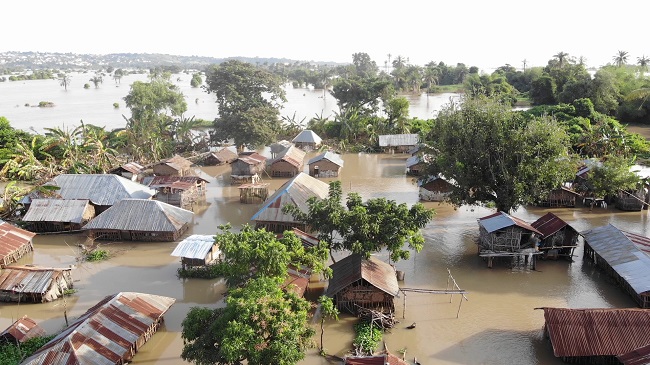
THE National Emergency Management Agency (NEMA) has issued an alert warning 14 states of heavy rainfall that might lead to flooding, between July 4 and July 8.
NEMA said 31 communities may also be affected.
This alert was contained in a statement issued on Wednesday, July 5, by the Coordinator, NEMA, Lagos Territorial Office, Ibrahim Farinloye.
Farinloye advised that necessary measures should be taken to prevent loss of life and property.
He listed the states and communities that are likely to be affected by the looming flooding as Kano (Sumaila, Tudun Wada); Sokoto (Shagari, Goronyo and Silame); Katsina (Katsina, Jibia, Kaita and Bindawa). Delta (Okwe); Kaduna (Kachia); Akwa Ibom (Upenekang); Adamawa (Mubi, Demsa, Song, Mayo-Belwa, Jimeta, and Yola); and Plateau (Langtang and Shendam).
Others are Zamfara (Shinkafi and Gummi); Borno (Briyel); Jigawa (Gwaram); Kebbi (Wara, Yelwa and Gwandu); Niger (Mashegu and Kontagora)and Kwara (Jebba).
Farinloye thanked the Federal Ministry of Environment, Abuja, for sharing the information through the FEWS Central Hub.
Flooding has been a significant issue in Nigeria, with several lives lost and many people displaced.
In 2022, about 96 persons died, while 1.3 million others were displaced by floods in Bayelsa State alone.
The Bayelsa State Emergency Management Agency (BYSEMA) disclosed this in a statement.
Bayelsa is among the states that were ravaged by floods in 2022.
BYSEMA Chairman Walamam Igrubia, in the statement released in Yenogoa, said those displaced by the floods were forced to seek refuge in temporary camps
Also, in 2022, amidst severe flooding that sacked residents of several communities in Kogi State, about five persons were confirmed dead when a building collapsed at Ayah, in Ibaji Local Government Area (LGA) of the state.
The deceased included four females and one male.
Recently, on Friday, June 23, foods took overTrademore, a popular estate in Abuja.
The ICIR in April did a report on the likely occurrence offlooding in 2023 and listed what government and residents should do.
In another report done by The ICIR, an environmental activist, Olumide Idowu, asked the Federal Government to collaborate with Civil Society Organisations (CSOs) to sensitise Nigerians at the grassroots on climate change and how it leads to environmental disasters such as flooding.
A NIGERIAN boy, Achunike Okafor, has received 40 scholarship offers after bagging an International Baccalaureate diploma with a record-breaking 4.625 grade-point average from the Science Park High School in Newark, New Jersey, United States (US).
As a result of the feat, prominent institutions, including Columbia, Cornell, Dartmouth, Duke, Princeton, Penn State, Stanford, Massachusetts Institute of Technology, University of Southern California, and Rutgers, have offered scholarships to the 18-year-old Okafor.
Science Park principal Darlene Gearhart, hailed Okafor as an extraordinary individual, noting his humility, drive, and industrious nature.
She described him as an exceptional student who has always displayed a thirst for knowledge.
Superintendent of Schools Roger León also commended the student’s exceptional performance, recognising it as a source of pride for Science Park High, the school district, and the Newark community.
Expressing his gratitude for the opportunities presented to him, Okafor said, “I am grateful for the opportunities to attend such esteemed universities and to represent my family and community.
“I do not take lightly the privilege and responsibility to be among the few individuals selected for such honors.”
With his sights set on a neuroscience degree, the 18-year-old plans to pursue his education at Harvard University.
León expressed well wishes for Okafor’s future success at Harvard and anticipated further accomplishments from him.
Beyond his academic achievements, Achunike Okafor has actively contributed to the school community. He co-founded the Science Club, served as the vice president of the Junior Student Council and the Stand & Deliver Club.
Additionally, he held the position of president in the Future Educators Club and the Black Student Union. Okafor also acted as the co-captain of the robotics team and served as the treasurer of the Environmental Club at his school.
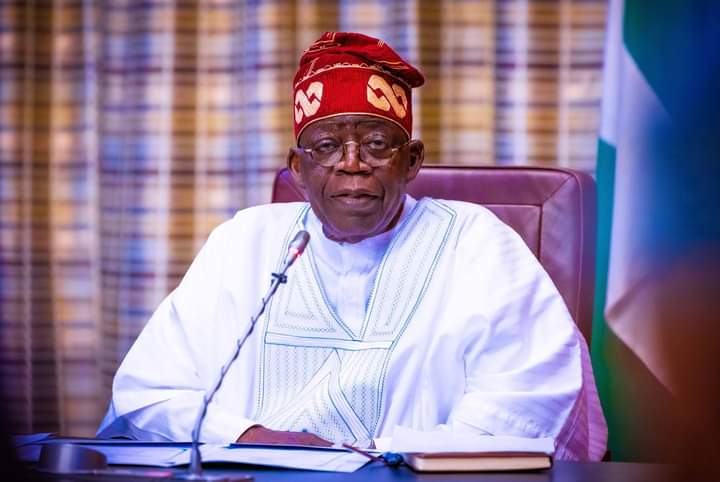
PRESIDENT Bola Ahmed Tinubu has closed his defence against the petition filed to challenge his victory in the 2023 presidential election by Labour Party (LP) candidate, Peter Obi.
During the continuation of hearing by the Presidential Election Petition Court on Wednesday, July 5, Tinubu’s lawyer, Wole Olanipekun, a Senior Advocate of Nigeria (SAN), said the President and Vice President Kashim Shettima, the second and third respondents, have closed their cases after adopting the written statement of their sole witness, Micheal Opeyemi Bamidele.
Bamidele is the Senate Majority Leader, representing Ekiti Central Senatorial District of Ekiti State.
Earlier, Olanipekun, tendered 18 documents as exhibits before the tribunal presided over by Haruna Tsammani.
One of the documents presented alleged that Obi was not a registered member of the LP when he contested the presidential election. The document was a copy of the LP membership register for Anambra State, accompanied by a letter from the LP dated April 25, 2022, which forwarded the membership register to the chairman of the Independent National Electoral Commission (INEC).
Among the tendered documents were Tinubu’s Nigerian passports issued on February 2, 2011, and November 20, 2019, his US visa issued on February 4, 2011, and Kashim Shettima’s acknowledgement copy of voluntary withdrawal of candidacy from the Borno Central Senatorial District election, dated February 6, 2023.
Additionally, 12 documents certifying Tinubu’s educational record from Chicago State University were tendered. Copies of letters exchanged between the Nigeria Police Force and the US Embassy regarding alleged criminal records of Tinubu in the US over alleged drug trafficking were also presented. The US consulate allegedly cleared Tinubu of any criminal conviction or arrest in the US in the said letter dated February 4, 2003.
Obi’s counsel, Livy Uzoukwu, SAN, objected to the admissibility of the documents, while INEC and the All Progressive Congress (APC) consented to their admissibility.
During his testimony, Opeyemi asserted that the votes Tinubu received in Kano State were not properly recorded, claiming a shortfall of about 10,929 votes. He noted that several international bodies, including the Economic Community of West African States (ECOWAS), had submitted reports on the election.
He said that the ECOWAS report, dated February 27 was signed by former President of Sierra Leone Ernest Koroma.
Under cross-examination by APC counsel Lateef Fagbemi (SAN), Opeyemi stated that the list of LP members forwarded to INEC before the presidential election did not include Obi’s name.
In a counter move, Uzoukwu, through the witness, presented the final report of the European Union Election Observation Mission to Nigeria, which faulted the conduct and outcome of the 2023 general elections.
Despite objections from the respondents, the court admitted a certified copy of the EU report as an exhibit.
The witness also read a portion of the ECOWAS report, which he tendered as evidence, highlighting wanton destruction of property and killings leading up to the elections, including the murder of an LP senatorial candidate in Enugu State. However, the witness disagreed with this aspect, asserting that the killings in the South-East were a result of the IPOB situation, not the election.
Regarding Tinubu’s alleged involvement in drug-related crimes, the witness clarified that the decision made by the US Court was related to a civil proceeding, not a criminal forfeiture.
However, during questioning by Obi’s lawyer, Bamidele admitted that the alleged forfeiture was indeed related to narcotics dealing. He also acknowledged his understanding that money laundering played a role in the matter prior to the final forfeiture.
The Tribunal, relying on paragraph 46 of the First Schedule to the Electoral Act, directed the respondents to file their final briefs of argument within 10 days. The petitioners were given seven days to file their own briefs, and upon receipt of the petitioners’ process, the respondents were instructed to file their replies within five days.
The Tribunal announced that the date for the adoption of all the processes leading to the final judgment in the case would be communicated to all parties involved.
INEC had declared Tinubu as the winner of the February 25 presidential election.
According to INEC, Tinubu secured 8,794,726 votes to come first, Atiku Abubakar of the Peoples Democratic Party (PDP) finished second with 6,984,520, while Obi polled 6,101,533 to come third.
Displeased with the results, Obi and his party filed a petition at the court to challenge Tinubu’s victory.
In their petition, Obi and the LP argued that when Tinubu’s running mate, Kashim Shettima, became the vice presidential candidate, he was still nominated as the APC candidate for the Borno Central Senatorial election.
They also challenged Tinubu’s eligibility, alleging that he was previously indicted and fined $460,000.00 by a United States District Court for an offence involving dishonesty and drug trafficking.
Obi claimed that the election was invalid due to corrupt practices and non-compliance with the provisions of the Electoral Act 2022.
He argued that INEC breached its regulations and guidelines by not prescribing and deploying technological devices for voter accreditation, verification, continuation, and authentication as required.
The petitioner sought a declaration from the court that Tinubu was not qualified to contest the election and that all votes recorded for him were wasted.
He also requested the court to determine that he received a majority of lawful votes and satisfied constitutional requirements to be declared the winner.
In the alternative, he called for the cancellation of the election and the conduct of a fresh election in which Tinubu, Shettima, and the APC would not participate.
MMESOMA Ejikeme, a candidate of the Unified Tertiary Matriculation Examinations (UTME), accused by the Joint Admissions Matriculation Board (JAMB) of faking her score has admitted that a message she received from the examination body said she scored 249.
Ejikeme disclosed this during an interview with Channels TV on Wednesday, July 5.
But she insisted that the result she displayed, which was disowned by JAMB, was printed from the organisation’s portal.
Ejikeme said she sent an SMS to JAMB through the support system while trying to confirm her result. The student also suggested that she saw different scores as her result, including one showing 362.
She noted that a message from JAMB said she scored 249, after which she sent an SMS to the organisation to find out what happened.
“After all said and done, I saw that I got 249. I sent them a text message to know what really happened – the JAMB support system. If they can truly go to their system, they will see it there,” Ejikeme said.
She insisted that the earlier result, which had a score of 362 was downloaded from the JAMB portal after she was redirected to another server.
“I went to JAMB portal. In that JAMB portal, I tried to get my result. They redirected me to another server there. I imputed my registration number, and that result is the result I got there. I didn’t go to any computer centre for that.
“The server that they redirected me to, that is what I got there. So I downloaded it,” she said.
JAMB Public Relations Officer (PRO) Fabian Benjamin disclosed on Tuesday, July 4, that Ejikeme tried to change her score by sending text messages with the alleged fake result to the Board.
Reacting to allegations, the student said she only contacted JAMB through the support system after she noticed a change in her score.
“The only SMS I sent to JAMB was through JAMB Student set-up system. That is the only SMS I sent them. They didn’t reply. If they check their JAMB support system, they will see it there. I sent them a text message.”
Ejikeme also described the decision of the examination body barring her from taking the UTME for three years as unfair.
“I am sad about it because the problem might not be my fault. It is not my fault that I printed my result like that, and they said that I forged my result. So they banning me is not fair to me,” she said.
Meanwhile, the Anambra State Government has condemned JAMB’s actions following the controversy, saying the Board reacted without the conclusion of ongoing investigations.
According to a statement by the Commissioner for Information Paul Nwosu on Wednesday, July 5, an eight-member committee has been set up by the state government to investigate the results.
“It is important to note that Miss Mmesoma Ejike went to the office of the Anambra State Commissioner for Education, Professor Ngozi Chuma-Udeh, with her UTME result to protest that the Joint Admission and Matriculation Board didn’t recognise her as the candidate with the highest score.
“The Commissioner in turn called JAMB to confirm her claim, but she was told that Mmesoma’s result was forged,” Nwosu noted.
Following the controversy, JAMB announced that Ejikeme’s result would be withdrawn. The organisation equally barred her from taking the exams for the next three years.
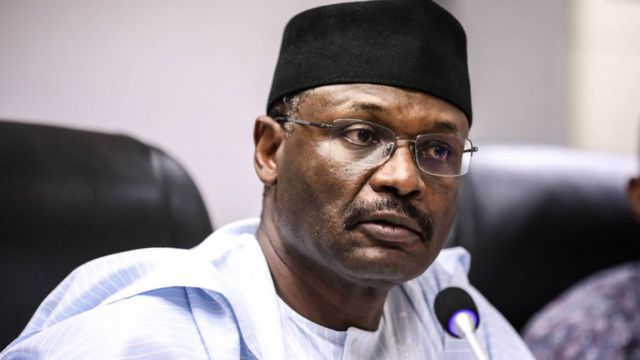
THE Independent National Electoral Commission (INEC) said it is ready to prosecute the suspended Adamawa State Resident Electoral Commissioner (REC) Yunusa Hudu Ari, for his role in the 2023 elections.
The Commission also said it will work with the Economic and Financial Crimes Commission (EFCC) and Independent Corrupt Practices and other related Offences Commission (ICPC) to prosecute persons found to have engage in vote buying during the general elections.
The Chairman of the Commission, Mahmood Yakubu, stated this on Tuesday, July 4, while addressing Resident Electoral Commissioners (RECs) from the 36 states and the Federal Capital Territory (FCT).
Yakubu met with the RECs to mark the beginning of a month-long review of the 2023 general election conducted by the Commission.
He disclosed that that following the conclusion of investigations by the Police, the Commission will soon commence legal actions against Ari and 215 other electoral offenders.
“I can confirm that the Nigeria Police concluded its investigation of the conduct of our c State and submitted the case file to us. Appropriate action will be taken in a matter of days, and Nigerians will be fully informed.
“I can also confirm that we have received 215 case files from the Nigeria Police following their arrest and the conclusion of an investigation into electoral offences arising from the 2023 general election.
“We are working with the Nigerian Bar Association (NBA) to prosecute the alleged offenders. Already, the NBA has submitted a list of 427 lawyers across the country who have volunteered to render pro bono services to the Commission,” Yakubu stated.
The INEC chairman said the lawyers are not charging legal fees, but by mutual agreement, the Commission will provide a token amount to cover filing fees/expenses.
“Similarly, we are working with the Economic and Financial Crimes Commission (EFCC) and the Independent Corrupt Practices and other related offences Commission (ICPC) on the prosecution of cases relating to vote-buying and associated violations,” he added.
He noted that INEC had taken administrative actions against some RECs who failed to discharge tasks assigned them during the polls.
“Many of you performed very well during the general election under extremely challenging circumstances. I commend you for that. However, a few of you did not properly manage the tasks lawfully bestowed upon you for which the Commission has taken some administrative actions. I urge you to remain loyal to your oath of office.”
The ICIRreported in April that former President Muhammadu Buhari approved the Adamawa REC’s suspension after he illegally declared the winner of the state governorship election while the collation of results had yet to conclude.
According to Electoral Act (2022), the Returning Officer for the election, rather than the REC, has the power to declare the winner of an election.
THE House of Representatives has said it will investigate the alleged abuse of N2.3 trillion tertiary education tax by the Tertiary Education Trust Fund (TETFund) from 2011 to 2013.
The resolution was passed during plenary on Tuesday, July 4, after the adoption of a motion co-sponsored by Olusola Fatoba, David Fouh and Zakari Nyanpa.
The lower chamber has also established an ad hoc committee to investigate the alleged fund abuse and report back within four weeks.
According to Fatoba, the lead sponsor of the motion, the TETFund is known for numerous financial abuses in its operations, award and execution of projects.
The tertiary education tax was implemented through the Tertiary Education Trust Fund Act in 2011 as a unique corporate tax to offer specialised funding for higher education in Nigeria.
The funds, from a two per cent education tax paid from the assessable profit of companies registered in Nigeria, will be used to support capital projects, research and development, and other educational initiatives.
Fatoba said TETfund has received trillions of naira as generated revenue since its inception in 2011.
However, he noted that the TETFund standard of operations is porous and does not give room for proper supervision of its projects.
“The standard operating procedure within the Fund is porous and does not create a platform for proper supervision of projects domiciled with tertiary institutions, with disbursements of funds happening without tracking and payments being made despite the failure of contractors to achieve milestones required for such payments.
“These abuses, actions, inactions and infractions have resulted in the misappropriation of funds worth about N2.3 trillion.”
According to the lawmaker, corruption in the tertiary education system will continue to rise if actions are not taken to combat the situation.
He demanded that the gross abuse of funds in TETFund be investigated and death with.
Otherwise, according to him, the situation could lead to “strikes by academic workers, substandard institutions, lack of faith in the system, migration of talented youths and total collapse of the education system arising from gross abuse of laudable special intervention programmes and aspiration of the president to provide opportunities to young people through quality tertiary education”.
The motion was approved through a voice vote conducted by the Speaker, Tajudeen Abbas.
THE ICIR Head of Investigation, Olugbenga Adanikin, has been shortlisted for the 2022 Sanlam Financial Journalism Awards.
He was shortlisted in the Environmental, Social and Governance (ESG) “Business and the Environment ” category.
A total of seven journalists were shortlisted in the ESG category.
Winners will be announced at a gala event in Johannesburg on August 3, 2023.
The Sanlam Awards
The Sanlam Awards for Excellence in Financial Journalism have recognized and rewarded exceptional business journalism in Africa since 1974.
Before this cycle of the awards, the competition was made up of seven category prizes and three main awards – The African Growth Story, Business and Companies, Economy, Financial Markets, Consumer Financial Education, Broadcast: Radio/Audio/Podcasting (in business reporting), and Broadcast: Television/Video (in business reporting).
However, this year, the organisers introduced a new category, Environmental, Social and Governance (ESG), with two sub-categories – Business and the Environment, and Business and Society.
According to the organisers, this category received an impressive response from the journalists, as did other popular categories such as Business and Companies and the African Growth Story. “The broadcast categories attracted a significantly limited number of entries,” they said.
Chair of the independent judging panel, Nixon Kariithi, described the entries as “highly competitive”, covering a range of topical issues impacting Africa’s economy, reflecting the relevance of financial journalism on governance, and combining the business world with compelling human-interest angles.
The winner of each category will receive R25,000 (about N645,000) prize money, while the overall winner – Sanlam Financial Journalist of the Year – will receive R35,000 (N904,000). All winners will get certificates of recognition.
LIKE other public interest entities, the Central Bank of Nigeria (CBN) and the Securities and Exchange Commission (SEC) are expected to disclose annual reports to underline trust, transparency, and accountability.
But a check at the SEC website showed that it has not published its annual reports since 2015, and the CBN website since 2018, raising concerns of integrity in their financial management.
The annual reports are the core of transparency and accountability surrounding the activities of public interest entities, a financial analyst, David Adonri, said.
“The CBN and SEC are regulators in their industry. They require that companies they regulate disclose their financial activities from time to time, and impose sanctions when such disclosures are not followed. So, if they demand such a level of transparency, but they themselves are no longer transparent, then it is a call for concern,” Adonri said.
A development economist, Kelvin Emmanuel, had also expressed concern during an appearance on Channels Television in June 2023 that the CBN had since 2019 stopped disclosing its audited financial statements to the Senate in line with Section 51 of the CBN Act 2007, and had consequently stopped gazetting the published financial statements in line with Section 53 of the CBN Act.
What the law says
The law is not silent as regards the publication of annual reports by public interest entities, a legal expert, Rose Adima, told The ICIR.
“It is not news that for accountability sake, public interest entities are duty-bound to publish financial reports. Such publications, however, depend on the entity and the law that governs the activities of such entities,” Adima explained.
FRC, its Act, and role
The Financial Reporting Council (FRC) of Nigeria is a federal government agency responsible for, among other things, developing and publishing accounting and financial reporting standards to be observed in preparing financial statements of public entities in Nigeria, and for related matters.
Under Section 77 of the Financial Reporting Council of Nigeria Act, 2011 (Act No. 6), public interest entities “means Governments, Government Organisations, quoted and unquoted companies, and all other Organisations which are required by law to file returns with regulatory authorities, and this excludes private companies that routinely file returns only with the Corporate Affairs Commission (CAC) and the Federal Inland Revenue Service (FIRS).”
Adima, the principal partner at Rose Adinma & Associates, posited, “In line with the above, therefore, it could be said that government organisations may include the CAC, CBN, FIRS, and SEC.
“All public interest entities are mandated by virtue of the law establishing them to publish their financial statements.”
What CBN Act says
Section 50 (1) of the Central Bank of Nigeria Act (2007) provides thus:
“The Bank shall, within two months after the close of each financial year, transmit to the National Assembly and the President a copy of its annual accounts certified by the Auditor.
(2) A Report required to be submitted to the National Assembly and the President shall be published by the Bank in such manner as the Governor may Direct.
(3) The Board shall ensure that accounts submitted pursuant to this Section shall as soon as possible be published in the Gazette.
(4) The Bank shall as soon as practicable after the last day of each month make up and publish a return of its assets and liabilities as at the close of business on that day, or if that day is a holiday, as at the close of business on the last day preceding business day.
(5) A copy of the return referred to in sub–section (4) of this Section shall be forwarded to the President and shall be published in the Gazette.”
Section 48 of the Central Bank of Nigeria Act (2007), says the Bank’s financial year shall begin on January 1 and end on December 31.
What ISA Act says
The SEC, being an establishment of the Federal Government, is also expected to file an annual report, Adima maintained.
This is in line with Section 27 of the Investment and Securities Act (2007), which provides that “The Commission, shall not later than three months after the end of each year, submit to the Minister and the National Assembly a report on the activities and administration of the Commission during the immediately preceding year, and shall include in such reports audited accounts of the Commission and the report of the Auditor on the accounts.”
According to her, from the two provisions above, therefore, it was crystal clear that the publication of reports is part of the obligations bestowed upon government agencies, and that there are punishments for defaulters.
Section 57 of the Financial Reporting Council of Nigeria Act, 2011 (Act No. 6) states that “where any public interest entity is required to prepare any financial statement or report under any enactment, it shall ensure that the financial statements or reports are in compliance with the accounting and financial reporting standards developed by the Council under this Act,” she noted.
Effect of non-compliance
Adima also cited Section 65 (1) of the Financial Reporting Council of Nigeria Act, 2011 (Act No. 6), which provides thus:
“Where the Council reaches a final decision under section 57 to the effect that a public interest entity has failed to comply with any of its decisions under this Act, and with such other financial reporting, accounting, auditing, and financial reporting standards as may be specified under the relevant enactments, the Council shall serve a notice on the entity for an immediate restatement of its financial statements.
(2) Where a notice is served on a public interest entity under sub-section (1) of this Section, it shall, within 60 days of the service of the notice, restate its financial statements and resubmit same to the Council and to the relevant government department or authority.
(3) Any public interest entity which fails to comply with the notice referred to in sub-section (2) of this section commits an offence and shall on conviction be liable to a fine not exceeding N10,000,000.00 and be required to restate the said financial statements within 30 days thereafter, and the Council shall require such entity to disclose same in the following year’s financial statements.”
The lawyer explained that by the provision, “it is compulsory for all government organisations that fall under the public interest entities to publish their reports on financial statements and make them available to the public whose tax payments are used to fund their activities as domesticated in the Freedom of Information Act (2011).”
CBN declines comment
The apex bank did not respond to The ICIR questions on why it has not been making its annual reports public since 2018, as its director of corporate communications, Isa Abdulmumin, did not respond to messages sent via WhatsApp.
How SEC and FRC responded
The SEC head of corporate communication, Efe Ebelo, had in March 2020 told this reporter that a board was to meet to approve the commission’s annual reports.
Asked now why SEC has still not made the reports public, Ebelo said, “The board has approved all the reports from 2015 to 2021,” but declined to explain why the reports remained have not been made public.
When also reached for inquiry, the deputy director of policy, planning, research, and statistics at the FRC, Felix Azubuike, responded, “We confirm to you that the Council is in receipt of the Annual Reports and Financial Statements of Securities and Exchange Commission and Central Bank of Nigeria up to the year ending 2021.
“The Council has, in line with her statutory powers carried out regulatory reviews of the FS [financial statements].”
But Azubuike did not respond to a follow-up question about whether FRC was not supposed to have received 2022 annual reports from CBN and SEC and what sanctions were meted out to the regulators, even though he promised to revert.
A look at CBN’s financial status as of December 2017
A draft copy of the CBN Annual Report for the year ended December 31, 2017, signed by its suspended governor Godwin Emefiele, and former deputy governor, economic policy directorate, Okwu Nnanna, revealed that the apex bank posted a negative net interest (expense)/ income of N659.254 billion in 2017 after N1.344 trillion interest expenses were deducted from N685.608 billion interest income.
Net operating income dropped to N418.427 billion in 2017 from N660.350 billion in 2016 after the deduction of loan impairment charges from the total operating income of N788.736.
The bank also posted negative total operating expense of N327.643 billion in 2017 and N548.884 billion in 2016, respectively.
A further look at the report showed that net income before tax dropped to N109.170 billion from N125.360 billion, and after-tax deduction, the net income for the year dropped to N107.397 billion in 2017 from N124.470 billion in 2016.
Its total assets stood at N29.588 trillion, from N21.914 trillion, total liabilities at N28.769 trillion from N21.219 trillion, and total equity at N819.222 billion from N695.104 billion in the review year.
SEC financial status as of the 2014 year-end
For the year ended December 31, 2014, SEC posted a total comprehensive loss of N73.541 million after other comprehensive income/loss of N269.024 million was deducted from the surplus of N195.483 million.
Total income rose to N9.280 billion in 2014 from N8.965 billion in 2013, and total assets to N34.196 billion from N34.402 billion, while total liabilities stood at N2.033 billion from N2.166 billion.
Global perspective and standard
The publishing of annual reports does not relate to the CBN or SEC or any government ministry or agency alone; it is a standard globally known and recognised practice, a development economist, Kazeem Bello, said.
It is a practice that all public sector entities must ensure they take accountability serious, and financial report rendering is mandatory, he said.
Bello: Publishing of annual reports is a standard globally known and recognised
According to Bello, the fact that the laws require this as a minimum standard shows why it must be honoured.
He wondered why Nigeria lacked simple adherence to the laid-down rule.
“We lack the taste for accountability and financial reporting responsibilities in Nigeria. In most countries where things are well structured, the volume of work carried out by professional auditors, lawyers and accountants are in the ratio of average 65 per cent for governments and the public sector, and 35 per cent or lower for the private sector,” said Bello, who is the chief executive officer/principal partner, Afrique Capital and Equity Funds Limited.
He pointed out that public service or sector anywhere, regardless of the type of government, either transparent democracy, autocracy, or even dictatorship to some extent, is primarily established on holding and managing that sector in trust for the people and the country.
He said, “The key point is that when you hold any position or asset in trust, the issue relating to accountability, prudent management, rendering of service reports and financials are completely non-negotiable.
“The constitution may not specifically mention accountability and financial reporting, but the fact that it has implied or referenced the issue of trust holding is adequately sufficient to compel and, I restate, force all public entities, governments, and institutions to render the records in accountability and comprehensive financial reporting. Unfortunately, in Nigeria, the problem actually centres on the disobedience and flagrant abuse of the rule of law.”
He emphasised the need to change the narratives as part of the larger effort to improve the quality of services rendered by our public sector groups, generate economic activities and income, improve citizen trusts in governance, and reduce the incidence of public officers corruption.