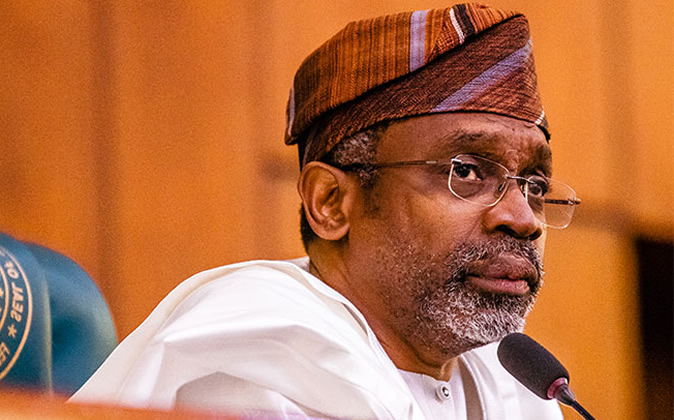
THE Presidency has defended the Chief of Staff to the President, Femi Gbajabiamila, against allegations linking him to the controversial Presidential Foreign Intervention Promotion Council (PFIPC), insisting that no such council ever existed under President Bola Tinubu’s administration.
However, the Presidency’s defence, contained in a statement issued on Wednesday, July 1, did not explain why the council appears in the 2026 Appropriation Act with a budgetary allocation of more than ₦1.3 billion.
The development comes days after Adeniyi Adeyemi Matthew, who had identified himself as Director-General of the PFIPC, accused Gbajabiamila of demanding part of the council’s alleged take-off grant and challenged the Presidency’s claim that the agency did not exist.
Adeyemi had questioned how Gbajabiamila could describe him as an impostor while he was demanding 58 per cent of the agency’s alleged N27.4 billion take-off grant.
He further alleged that the Chief of Staff received N400 million through proxies to facilitate his appointment as director-general of the council, with an outstanding balance of N200 million yet to be paid.
Responding to the allegations and outrage, the Special Adviser to the President on Information and Strategy, Bayo Onanuga, described Adeyemi as an impostor who had created a fictitious government agency and used forged documents to deceive government institutions, foreign missions and the public.
According to Onanuga, the Office of the Chief of Staff first became aware of the alleged activities of the council in October 2025 after officials of the Nigerian Investment Promotion Commission (NIPC) raised concerns that another agency appeared to be carrying out similar responsibilities.
He said Gbajabiamila subsequently petitioned the Department of State Services (DSS) and the Nigeria Police Force on October 17, 2025, requesting an investigation into individuals allegedly forging appointment letters purportedly issued from his office.
According to the statement, the petition was accompanied by copies of the alleged forged appointment letter, a request seeking a note verbale from the Ministry of Foreign Affairs to facilitate visa applications for members of the council, and photographs of engagements obtained from the organisation’s website.
The Presidency said the Ministry of Foreign Affairs had also become concerned about the council’s activities after Adeyemi reportedly convened a meeting with ambassadors at the Wells Carlton Hotel in Abuja on October 10, 2025, without involving the ministry.
It said the ministry wrote to both the Office of the National Security Adviser (ONSA) and the Office of the Chief of Staff on October 15, seeking clarification on the status of the organisation.
According to the Presidency, the Office of the National Security Adviser subsequently referred the matter to the Office of the Secretary to the Government of the Federation (OSGF), which also sought clarification from the Chief of Staff after receiving enquiries from government and non-governmental organisations about the council.
The Presidency said Gbajabiamila responded that he neither appointed Adeyemi nor recognised the council, adding that appointments into such offices fell within the responsibility of the Office of the Secretary to the Government of the Federation.
It added that police investigations established that the council was fictitious and that Adeyemi allegedly forged appointment letters and other government documents, falsely represented himself as a presidential appointee and used the documents to solicit official recognition.
The statement further said police investigations found that Adeyemi operated 34 bank accounts, including nine allegedly opened in the names of fictitious organisations such as the FCT Investment Promotion Agency and Public Private Partnership (FIPA-APP).
The Presidency also stated that Adeyemi allegedly used forged documents to open a Central Bank of Nigeria (CBN) account through the Office of the Accountant-General of the Federation but maintained that no public funds were transferred into the account.
According to the statement, Adeyemi and two other persons were arraigned before the Federal High Court on November 27, 2025, on an eight-count charge bordering on forgery, impersonation and obtaining by false pretence. The matter is scheduled to come up in court later this month.
No explanation on budget allocation
However, the Presidency in its statement did not address the inclusion of the council in the 2026 Appropriation Act.
A review of the Appropriation Act had shown that the Presidential Economic Advisory Council/Presidential Foreign Intervention Promotion Council is listed under the Presidency with a total allocation of N1,302,978,784.
The allocation consists of N802,978,783 for personnel costs, N200,000,001 for overhead expenditure and N300 million for capital expenditure.
The inclusion of the council in the budget has drawn attention because the federal appropriation process requires spending proposals from ministries, departments and agencies to pass through multiple stages before becoming law.
Budget proposals are first prepared by the relevant institutions before being reviewed by the Budget Office of the Federation. They are subsequently considered by the Federal Executive Council (FEC), transmitted to the National Assembly for legislative approval and later signed into law by the President.
The Presidency’s statement did not indicate how the council came to be listed in the budget or whether its inclusion is being reviewed.
It is also surprising that details of the accused’s trial were not made public. The alleged impostor has continued to move freely across the country, including addressing press briefings and attending other public events, despite facing such serious allegations. This stands in contrast to the treatment of suspects accused of less serious offences, some of which are non-bailable under Nigerian law.
Conflicting claims
The controversy first gained public attention after Gbajabiamila, on June 11, publicly disowned Adeyemi’s claim that he had been appointed director-general of the Presidential Foreign Intervention Promotion Council.
The Chief of Staff stated that no such office existed under President Bola Tinubu’s administration and urged foreign missions, development partners, financial institutions and the public to disregard any claims made by Adeyemi on behalf of the Presidency.
“It has come to the notice of the Federal Government of Nigeria and specifically the Office of the Chief of Staff to His Excellency, President Bola Ahmed Tinubu, GCFR that a certain Prince Adeniyi Adeyemi, under the auspices of an alleged organisation styled as the “Presidential Foreign Intervention Promotion Council” is portraying himself to the general public, as having been appointed by my office,” the statement reads.
But Adeyemi reportedly rejected the disclaimer, insisting the council had offices at the Federal Secretariat, operated accounts with the Central Bank of Nigeria and received approval for more than 300 staff members from the Office of the Head of the Civil Service of the Federation.
Speaking at a press conference in Abuja on Thursday, June 25, he argued that if the council did not exist, it would have been impossible for it to appear in the 2026 Appropriation Act.
“If Honourable Femi Gbajabiamila, who is supposed to be the Chief of Staff to the President and also the administrative gateway to the Presidency can make such an administrative error, by allowing the president to sign a document with a fake agency in it, he should possibly resign his appointment now,” he said.
He challenged the President to establish an independent investigative panel to review official records relating to the council and determine how it appeared across multiple government documents.
He also claimed that the council maintained both Treasury Single Account and domiciliary accounts with the Central Bank of Nigeria, and obtained approval for more than 300 personnel through the Office of the Head of the Civil Service of the Federation.
He questioned at what stage references to a supposedly non-existent agency entered official government records.
“The national budget does not emerge in isolation. It passes through multiple layers of technical drafting, executive coordination, ministerial inputs, budget office review, and finally legislative scrutiny by both chambers of the National Assembly, where COS has meritoriously served for good 20 years and rose from Minority to Majority leaders and Speaker for four years.
“So, the question becomes unavoidable: at what point in this process did references to a non-existent agency allegedly enter the official record? And if they are indeed present in official documentation, what does that imply about the integrity of the process that produced and approved those documents?”
Official engagements
Although The ICIR could not yet find any official statement announcing his appointment like many other Tinubu’s appointments, the council has engaged with public institutions and officials in the previous year.
Publicly available information shows that Adeyemi, while acting as Director-General of the council, held meetings with officials of the Economic and Financial Crimes Commission (EFCC), the Nigerian Electricity Regulatory Commission (NERC), the Raw Materials Research and Development Council (RMRDC) and representatives of the China Investment Business Development Commission (CIBDC).
In September 2025, the EFCC said its Chairman, Ola Olukoyede, received Adeyemi and members of his delegation during discussions on promoting foreign direct investment.
On September 9, 2025, the Nigeria Electricity Regulatory Commission (NERC) also announced engagements with the said council over preparations for the proposed World Investment Summit.
He also met with Chinese investment officials on plans to establish a Nigeria-China Investment Group.
The Presidency’s statement did not comment on those engagements.
Questions trail presidency’s defence
Meanwhile, many Nigerians on social media, particularly on X, have called for further explanations from relevant government institutions.
The Executive Director of the Centre for Journalism Innovation and Development (CJID), Akintunde Babatunde, in his reaction on X, questioned why government institutions continued exchanging official correspondence over the status of the council after Adeyemi had reportedly been arrested in October 2025.
He also asked how the alleged agency operated from an office within the Federal Secretariat, held meetings with foreign diplomats and reportedly opened a CBN account if it was fictitious.
According to him, while the Presidency’s statement addressed allegations against Adeyemi, it did not explain whether there were lapses in institutional verification processes within agencies including the Ministry of Foreign Affairs, the Nigerian Investment Promotion Commission, the Office of the National Security Adviser, the Office of the Secretary to the Government of the Federation, and the Central Bank of Nigeria.
Also, a social media user, Oluomo of Derby, questioned how the alleged fictitious agency was able to operate within government premises and appear in the federal budget.
“Are we seriously expected to believe that fake documents were used to open an account with the CBN without any internal checks?” he further asked.
Another X user, Nimsy, questioned how the disputed council remained in the 2026 Appropriation Act if, as the Presidency stated, investigations into the alleged fraud had commenced months earlier.
“If he was caught as a scam in 2025, how did the 2026 Budget (signed months after his arrest) still allocate N1.3 billion to this exact same setup?” the user wrote.
Similarly, another commentator, Abdulherphyz, questioned the budget allocation in light of the Presidency’s position that the council never existed.