The initiative aims to increase the quality and quantity of ocean pollution-related stories in the media, and build the capacity of journalists to improve their coverage of ocean-related topics.
Story ideas must focus on marine pollution – its sources, impacts on ecosystems and marine species. Attention will also be focused on ongoing efforts to curb and regulate sources of marine pollution.
Journalists worldwide, preferably from coastal countries, can apply for reporting grants up to US$1,200.
Up to eight story grants will be awarded to selected journalists. In addition to funding, journalists will receive support from experienced mentors through the story production process.
The organiser says, “By 2050, it is expected there will be more plastic than fish in the oceans. Every year, over 1 million marine species (including mammals, fish, sharks, turtles, and seabirds) are killed due to plastic debris in the ocean.
“The ocean, already under stress from climate change, is the ultimate sink for many pollutants besides plastics (and increasingly, microplastics), including sewage, radioactive waste, industrial and agricultural chemicals such as pesticides, fertilizers and herbicides, and oil spills.”
The deadline for submission of applications is February 13, 2023. Interested applicants can apply here.
A project of the Columbia University Graduate School of Journalism, 12 to 14 journalists will be selected as Dart Center Ochberg Fellows.
The next program will be held from July 21, 2023, to July 27, 2023, at Columbia University in New York.
Fellows will attend background briefings by prominent interdisciplinary experts in the trauma and mental health fields, conversations with journalist colleagues on issues of ethics, craft and other aspects of professional practice, and a host of other opportunities for intellectual engagement and peer learning.
Mid-career journalists who want to deepen their knowledge of trauma and improve coverage of violence, conflict and tragedy can apply for a fellowship.
The fellowship covers travel to and accommodations in New York, meals and other expenses directly related to participation.
The organiser says, “Reporting responsibly and credibly on traumatic events on street crime and family violence, natural disasters and accidents, war and genocide, pandemic and social upheaval is a major challenge.”
The deadline for submission of the application is March 1, 2023. Interested applicants can apply here.
The grants support projects and programs that will help science writers in their professional lives and/or benefit the field of science writing.
The NASW Grants Committee is interested in projects led by and/or that serve underrepresented audiences and groups. The best proposals will outline plans for diversity, equity, and inclusion in project development, execution, and outreach.
The committee would like to see projects that will have a wide impact on the field and applicants who carefully consider how funded work will be sustained beyond the award period.
Journalists and freelance writers can apply for a US$15,000 grant.
International applicants are welcome, but proposals must demonstrate a clear benefit to U.S.-based science writers.
The deadline for the submission of the application is February 1, 2023. Interested applicants can apply here.
THE Director-General of the Nigerian Institute of Medical Research (NIMR), Babatunde Salako, has called on the Federal Government to amend the NIMR Act to improve healthcare delivery in the country.
Speaking at a dialogue session with a delegation from the Bill and Melinda Gates Foundation (BMGF) on Wednesday, January 25, Salako stated that medical research will improve the health sector significantly.
Noting that health research is poorly funded in the country, he stressed the need to establish direct funding for the program through a committed Medical Research Council.
“The impact of the Medical Research Council will be felt in the better health indices, number of direct grants to Nigeria, number of locally funded projects and use of policy briefs from research evidence/innovations, as well as homegrown solutions to challenges in drugs, vaccine development and the health system.
“The best thing that can happen to Nigeria is to have its Medical Research Council, which is specifically to fund all health research in the country from universities to research institutes and other institutions,” he said.
Salako noted that most successful countries have functional research and development programs funded by health research funding agencies.
According to him, the Tertiary Education Trust Fund (TETFUND) is restricted to tertiary research and is specifically for universities and not the health sector.
The NIMR boss stressed that almost 90 per cent of medical research in Nigeria is funded by donors.
Salako added the creation of a Nigeria Medical Research Council, with allocated federal funding, will strengthen, coordinate and improve healthcare research in the country.
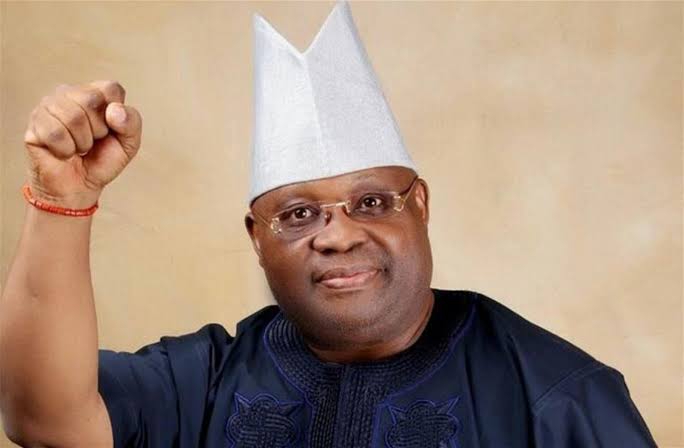
OSUN State governor, Ademola Adeleke, has rejected the judgment of the state governorship election petition tribunal that ordered his removal from office.
The ICIR had reported that Adeleke was sacked in a split judgment delivered by the tribunal in Osogbo, Osun State capital, on Friday, January 27.
The tribunal ordered that the Independent National Electoral Commission (INEC) to withdraw the Certificate of Return issued to Adeleke and issue the same to the candidate of the All Progressives Congress (APC) and former governor Gboyega Oyetola.
The majority judgment which was read by the chairman of the tribunal, Justice Tertse Kume, said Oyetola scored the majority lawful votes of 314,931 against Adeleke’s 219,666.
Reacting to the development, Adeleke in a statement signed by his spokesperson, Olawale Rasheed, described the judgment as “a miscarriage of justice”.
He faulted the resolution of the over-voting question in favour of Oyetola, calling it “an unfair interpretation against the will of majority of voters”.
While urging his supporters to remain calm, Adeleke vowed to appeal the judgment at the Court of Appeal, insisting he remained the rightful winner of the July 16 election.
“I call on our people to remain calm. We will appeal the judgement and we are sure justice will be done. Let our people be reassured that we will do everything possible to retain this widely acclaimed mandate,” he said.
THE Nigerian Government has explained why the average passport processing time of three and six weeks for renewals and first-time applicants, respectively, may be exceeded.
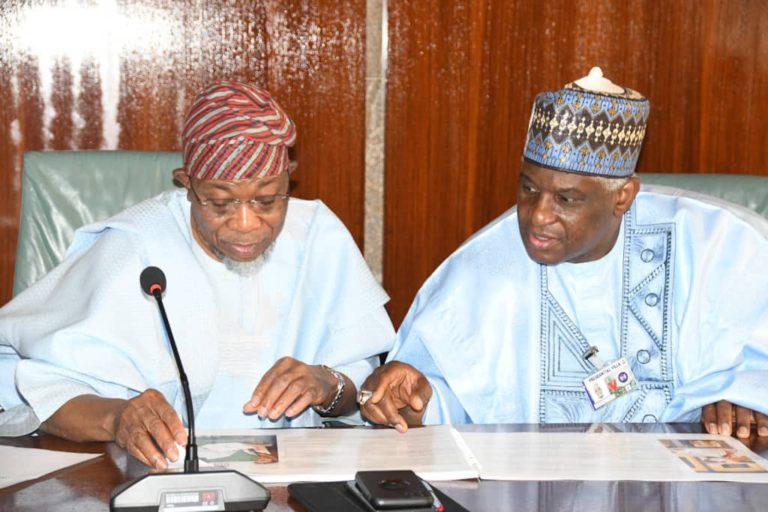
The Minister of Interior Rauf Aregbesola, who spoke to journalists after a high level meeting in Abuja on Thursday, January 26, said the increasing emigration of Nigerians from the nation in quest of better opportunities abroad, a phenomenon now known as “Japa syndrome,” was driving up demand for passports.
Aregbesola added that the Nigerian Immigration Service (NIS) issued 1.9 million passport booklets in 2022 alone, nearly double the one million issued in the corresponding period of 2021.
“This is about 80 per cent increase and it is unprecedented,” the minister stated.
He said the Ministry of Interior was working closely with the NIS to constantly reform the passport administration process in order to deliver improved services to Nigerians at all times.
Also speaking during the media briefing, the Permanent Secretary of the Ministry of Interior Shuaib Belgore, said last year, 159 Nigerians renounced their citizenship, noting that the figure was higher than the 15 years preceding 2022.
“In the last two years, the minister issued a total of 70 deportation orders for the deportation of different nationals from Nigeria due to one infraction or the other. The majority of those deported were from the Democratic Republic of Korea, Egypt, Sri Lanka and a host of others,” he disclosed.
Top government officials who attended the meeting include: the Comptroller-General of the Nigerian Correctional Service Haliru Nababa, the Comptroller-General of the Nigeria Immigration Service Idris Isah Jere, the Comptroller-General of the Federal Fire Service Abdulganiyu Jaji and the Commandant General of the Nigeria Security and Civil Defence Corps Ahmed Abubakar Audi.
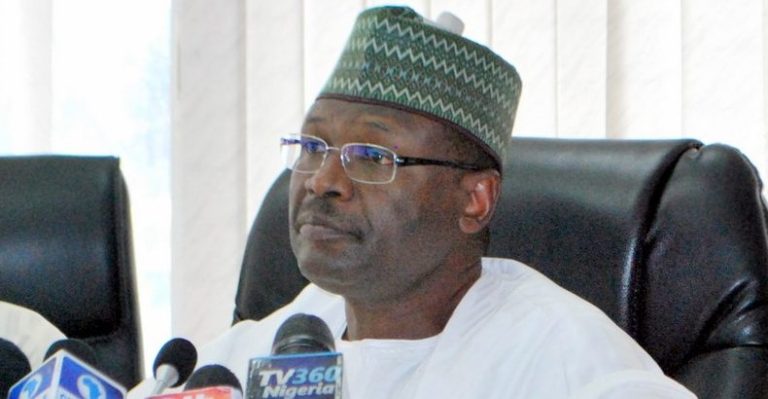
THE Independent National Electoral Commission (INEC) will hold mock accreditation exercises in 436 polling units across the country on Wednesday, February 4.
This was disclosed by the Chairman of the Commission Mahmood Yakubu during a meeting with Resident Electoral Commissioners (RECs) in Abuja on Friday, January 27.
Yakubu noted that the exercise was part of efforts to ensure the effectiveness of Bimodal Voter Accreditation System (BVAS) machines which the Commission had taken delivery of ahead of the elections.
“The mock accreditation will hold on Saturday, 4th February 2023, in 436 polling units nationwide. Twelve polling units have been designated in each State of the Federation and four in the Federal Capital Territory on the equality of the country’s 109 Senatorial Districts for the exercise.
“A comprehensive list of the polling units, including their names and PU Code numbers, as well as their distribution by State, Senatorial District, Local Government and Registration Area (Ward) will be uploaded to the Commission’s website shortly,” Yakubu said.
He urged registered voters in the selected polling units to participate in the mock accreditation process, adding that journalists and Civil Society Organisations (CSOs) could observe the exercise.
The INEC chairman assured that final preparations were being concluded ahead of the forthcoming elections, including movement of materials and consultation of stakeholders.
Noting that training of election officials would soon begin, Yakubu assured that the Commission was committed to resolving issues around collection of Permanent Voter Cards (PVCs).
“The Commission is aware that there are a few issues to be addressed. One of them is the ongoing collection of Permanent Voter Cards. The commission is encouraged by the determination of registered voters nationwide to collect their PVCs and the actual level of collection so far.
“This meeting with RECs will consider reports from other states of the Federation, and the commission will not hesitate to consider additional measures to ensure that all citizens have ample opportunity to collect their PVCs ahead of the general elections. We wish to assure Nigerians that the commission will always be responsive to the needs of the electorate,” he said.
THE Osun State Governorship Election Petition Tribunal has sacked Ademola Adeleke as the duly elected governor of the state.
The tribunal gave the judgment in Osogbo, the state capital, on Friday, January 27.
In a split decision of two to one, the tribunal ordered that the Independent National Electoral Commission (INEC) to withdraw the Certificate of Return issued to Adeleke and issue the same to former Governor Gboyega Oyetola.
The majority judgment which was read by the Chairman of the tribunal, Justice Tertse Kume, said Oyetola scored the majority lawful votes of 314,931 against Adeleke’s 219,666.
Earlier, the tribunal ruled that Adeleke was eligible to contest the election in a certificate forgery petition pressed against him by Oyetola.
Meanwhile, a minority decision by one of the judges is being read as at the time of filing this report.
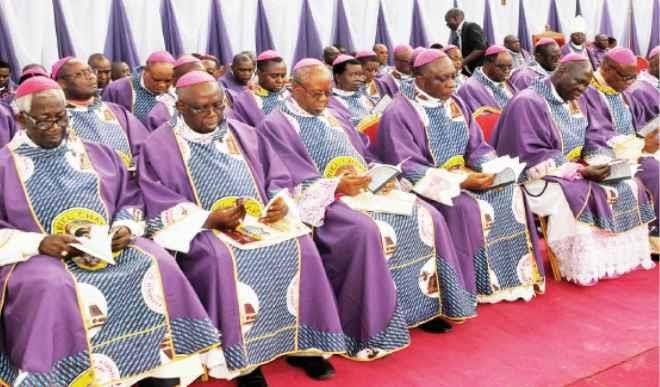
THE heads of the Catholic Church in Ondo and Ogun states have called on Nigerians to resist the temptation to trade their votes for peanuts in the forthcoming general elections.
The bishops who made the call at the 25th anniversary of the Canonical Erection of the Catholic Diocese of Abeokuta, on Thursday, January 26, also tasked Nigerians to shun every form of election violence.
Bishop of the Catholic Diocese of Abeokuta, Peter Olukayode, expressed optimism and hope that Nigeria will come out better after the elections.
“We pray that Nigeria will be better, we pray that all of us electing the right person to the right position, Nigeria will be better,” he said.
“We should go and perform our civic duties and vote rightly according to our consciences for good leaders who will lead Nigeria better and give us what we desire according to the mind and the will of God.”
On his part, the Catholic Bishop of Ondo Diocese, Jude Arogundade, called on Nigerians to reject candidates who according to him are “known criminals” that have been implicated by national and international agencies.
Arogundade urged Nigerians to vote for decent and credible leaders and save the country from imminent collapse.
He lamented that the impact of one hundred years of Christianity in the society had been eroded by bad governance, ethnic and tribal war and a new wave of paganism.
“Are we not the same Yoruba, Igbo, Hausa and indeed Nigerians that are calling on God for intervention and redemption from corrupt politicians that will also vote for known criminals that have been implicated by national and international watchdog bodies?
“All of us Christians and non-Christians alike are searching for decent and credible leaders who will reorganise our country to be the best that God has created it to be.
“Then vote for one and save the Church from the trauma of having to deal with the emotional outcome of leaders who continue to ravage our commonwealth for personal gains.”
He urged Nigerians not to stand by and watch “this great nation destroy itself under mediocre leadership that drifts from one crisis to the next, eroding our national will and purpose”.
That humans originated in Africa is widely accepted. But it’s not generally recognised how unique features of Africa’s ecology were responsible for the crucial evolutionary transitions from forest-inhabiting fruit-eater to savanna-dwelling hunter. These were founded on earth movements and aided physically by Africa’s seasonal aridity, bedrock-derived soils and absence of barriers to movements between north and south.
These features promoted extensive savanna grasslands marked by erratic rainfall, regular fires and abundant numbers of diverse grazing and browsing animals.
My lifelong studies have focused on the ecology of Africa’s large herbivores and their effects on savanna vegetation. In my recent book, by linking pre-existing threads together for the first time, I explain how distinctive features of these animals’ ecology, founded on Africa’s physical geography, enabled the adaptive changes that led ultimately to modern humans.
What emerges is the realisation that this amazing evolutionary transformation could only have occurred in Africa. This recognition emphasises the deep cultural legacy formed by Africa’s large mammal heritage for all of humankind.
Ape-men
Starting during the late Miocene, around 10 million years ago, a plume of molten magma, hot liquid material from deep inside the Earth, pushed eastern parts of Africa upward. This led to rifting of the Earth’s crust, volcanic eruptions and soils enriched in mineral nutrients from the lava and ash. Grassy savannas spread and animals adapted increasingly to graze this vegetation component. Apes from that time were forced to spend less time up in trees and more time walking upright on two legs.
Progressive reductions in rainfall, restricting plant growth and worsening dry season aridity, forced the early ape-men, (Australopithecines), to change their diet. They went from eating mainly fruits from forest trees to consuming underground bulbs and tubers found between the widely spaced trees. These were tough to extract and chew.
This led to the emergence through evolution of the genus Paranthropus (colloquially “nutcracker man”), characterised by huge jaws and teeth. By about a million years ago they were gone. Apparently, the effort of extracting and processing these well-defended plant parts became too formidable.
Homo habilis
Around 2.8 million years ago, another lineage split off from the australopithecines, reversing the trend towards robust dentition. This lineage used stones chipped to serve as tools. These were used to scrape flesh from carcasses of animals killed by carnivores, and crack open long bones for their marrow content. This transition in ecology was sufficiently momentous to warrant a new generic name: Homo, specifically habilis (“handy-man”).
These first humans thus became scavengers on animal left-overs. They most probably exploited a time window around midday when the killers – mainly sabre-tooth cats – were resting, before hyenas arrived nocturnally to devour the leftovers. Walking upright freed their arms to carry bones away to be processed in safe sites to augment the plant-based dietary staples.
To facilitate such midday movements, Homo habilis lost its body hair; this made it possible for them to be active under conditions when fur-covered animals would soon over-heat.
Homo erectus
Several hundred thousand years of progressive advancements in upright walking and brain capacity led to the next major adaptive shift, exemplified by improvements in the design of stone tools. Stone cores became shaped on both sides to aid the processing of animal carcasses.
This led to the emergence of Homo erectus around 1.8 million years ago. These early humans had become efficient hunters. Consequently, meat and bones became reliable food resources year-round.
A division of labour came about. Men hunted; women gathered plant parts. This required a home base and more elaborate forms of communication about planned excursions, laying the foundations for language.
Homo sapiens
After 800,000 years ago, fluctuations in heat and aridity became more extreme in Africa. Finely crafted stone tools defined the transition into the Middle Stone Age, coupled with the emergence of modern Homo sapiens in Africa around 300 thousand years ago.
But despite its hunting prowess Homo sapiens had declined to precarious numbers in Africa by around 130,000 years ago, following an especially severe ice age. Genetic evidence indicates that the entire human population across the continent shrank to fewer than 40,000 individuals, spread thinly from Morocco in the north to the Cape in the far south.
One remnant survived by inhabiting caves along the southern Cape coast, exploiting marine resources. This reliable food source fostered further advances in tool technology, and even the earliest art.
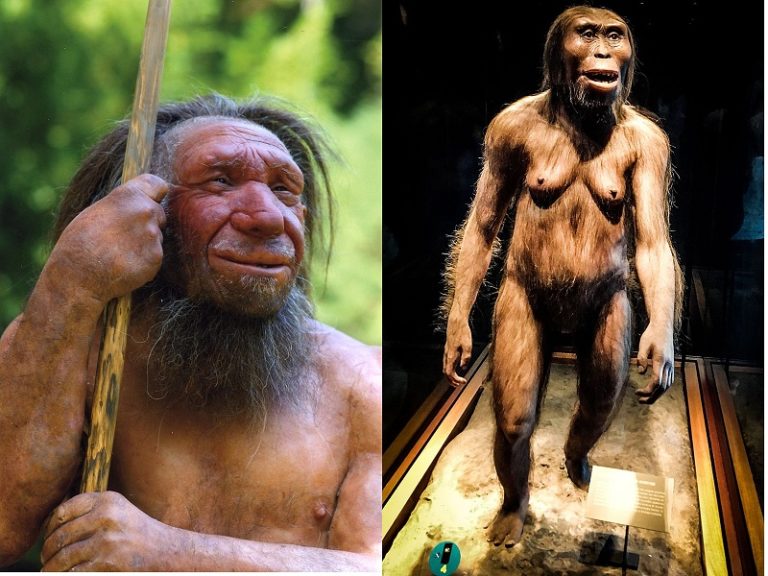
The use of bows and arrows as weapons, along with spears, probably contributed crucially to the expansion of humans beyond Africa around 60,000 years ago. They spread onward through Asia and into Europe, displacing the Neanderthals.
Only in Africa
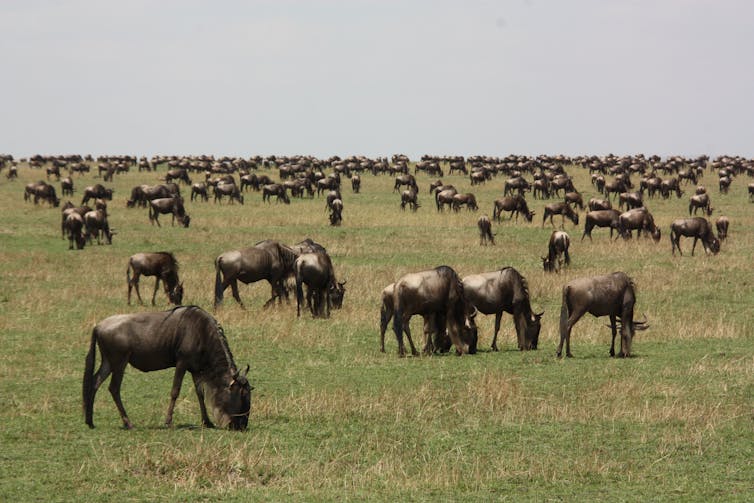
Wildebeest grazing on the Serengeti Plains in Tanzania. Norman Owen-Smith
As outlined in my book, it was the abundance specifically of medium and large grazers in fertile savannas, concentrated near water in the dry season, that enabled the evolutionary transformation of a relatively puny ape into a feared hunter in Africa.
Africa’s high-lying interior plateau generated the seasonal dryness that restricted plant growth through its eastern and southern regions. Widespread volcanically derived soils were sufficiently fertile to foster the spread of medium-large grazers adapted to digest dry grass efficiently.
These especially abundant herbivores crowded around remaining waterholes, providing sufficient remnants of flesh and marrow to make scavenging a reliable means to overcome shortages of edible plant parts during the dry season. The increased dependence on meat to supplement a plant-based diet led to social coordination between male hunters and female gatherers, which in turn promoted advances in communication and tool technology supported by expanding cranial capacity.
If Africa had remained largely low-lying and leached of nutrients like most of South America and Australia, this would not have been possible.
Africa’s mobile grazers, such as wildebeest, are currently being squeezed out of their sanctuaries by expanding human settlements. These animals represent a global cultural heritage, having being pivotal to our evolutionary origins. We must ensure that sufficient space remains in Africa to enable their persistence despite burgeoning human populations.