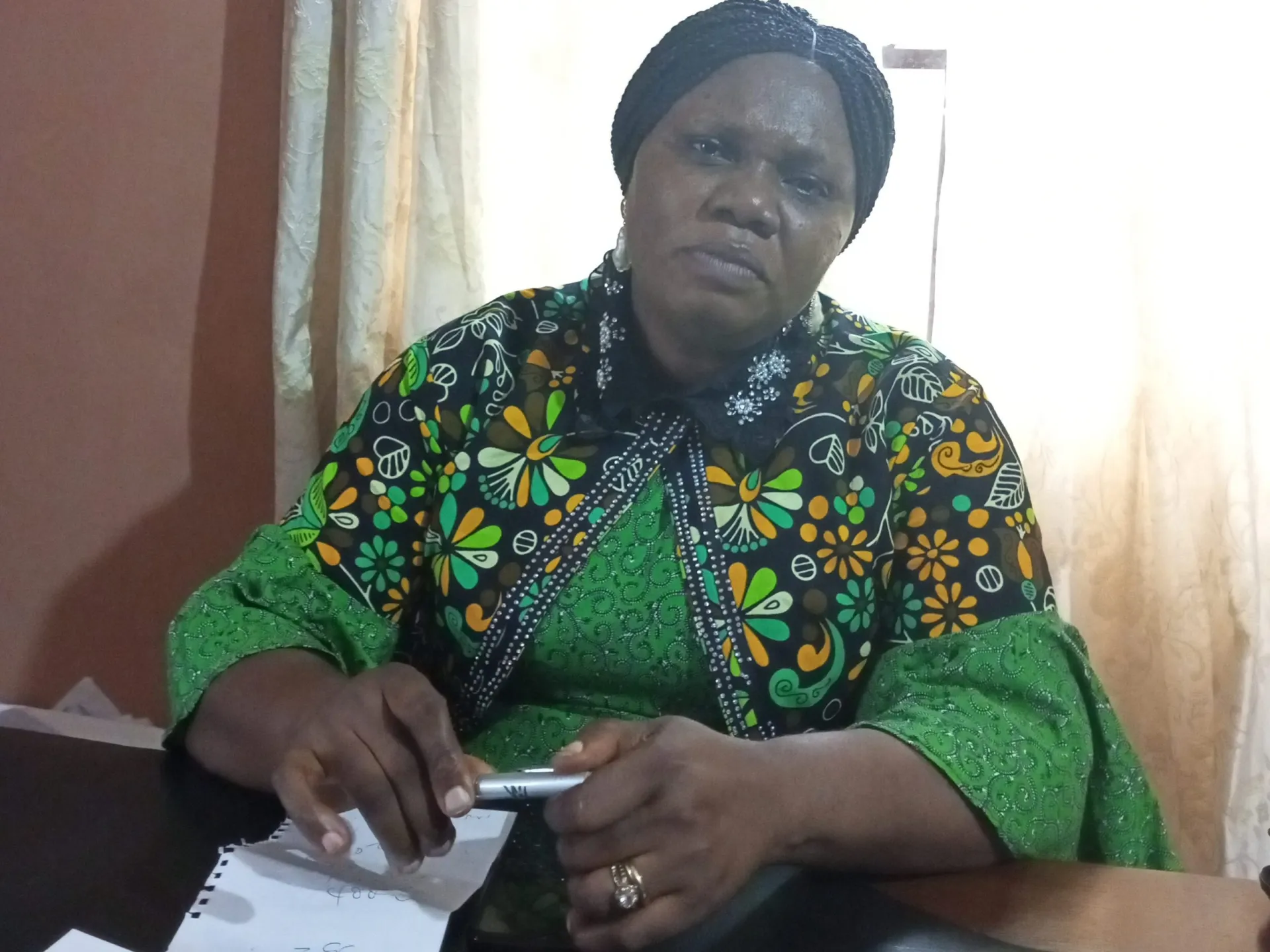
THE Chairman of the Labour Party (LP) in Ogun state, Michael Ashade, has said Doyin Okupe, the party’s presidential campaign director, was expelled for mishandling N20 million mobilisation funds, among other offences.
The ICIR had reported how Ogun State Labour Party expelled Okupe and 11 others over their failure to pay their membership dues.
However, the National Secretary of the Labour Party, Umar Farouk stated that the State Chapter lacks the constitutional right to remove Okupe and 10 other members of the party.
Reacting to the development on Saturday, December 4, on Arise TV, Ashade explained that in addition to his failure to meet up with financial obligations as a member of the party, Okupe was expelled for mishandling the mobilisation fund.
He said the fund was allotted to the state chapter by the Presidential Campaign Council (PCC) but Okupe only released N4 million out of the approved N20 million to mobilise the state’s party members to the presidential rally in Oyo State last month.
“Our grouse is not just the fact that he has been found wanting on his financial obligation as a member, we also highlighted certain deeds that occurred during the rally at Ibadan in which members in Ogun State were expected to be mobilised for that rally. And certain financial anomalies occurred which we highlighted there. And we have discovered that certain amounts of money were approved for the states by the campaign council and we are asking where are the funds,” Ashade said.
“It’s unfortunate maybe he didn’t know it will get to this, because I have a chat he sent me saying that he was personally paying the mobilisation of members from Ogun, Ekiti, Ondo, and Osun states for the Oyo State rally saying that there is no official amount approved. But, N20 million was approved specifically for Ogun State to mobilise members.
“We estimated 200 buses for the members, and it was turned down. It was reduced to 100 buses and forwarded to him, but he still rejected it saying no, that there are no funds that he was personally funding it. He came up with an estimate of N5,195,000, saying that was what he could personally afford. But it was less than that. About N4 million was what was gathered.
“It’s so appalling that the budget we did, every member that goes there, a certain amount should be given to them, at least N5,000 as a token. He said no, N1,000 will be given. I said that is ridiculous. I, as a chairman of the party cannot be in that position and be giving N1,000 to every member who left their home to Ibadan, and he said it’s for feeding.”
LP National Secretary, Farouk, had earlier said the Ogun State chapter lacked the powers to expel Okupe.
“The Ogun State chapter acted outside its constitutional jurisdiction,” Farouk had said at a press conference in Abuja.
Farouk noted that the national leadership of the LP was aware of moves by opponents to destabilise the party.
THE National Drug Law Enforcement Agency (NDLEA) has declared an Abuja-based drug lord Ibrahim Momoh, alias ‘Ibrahim Bendel, wanted over drug-related offences.
The NDLEA, in a statement by its Director of Media and Advocacy Femi Babafemi, said Momoh escaped from prison custody to return to his criminal trade.
According to the statement, NDLEA operatives recovered 81 jumbo bags of cannabis weighing 1,278kgs during a raid on Momoh’s warehouse.
According to the statement, although the fleeing drug dealer is still at large, his warehouse keeper, 55-year-old Ghanaian Richard Forson Gordon, has been arrested.
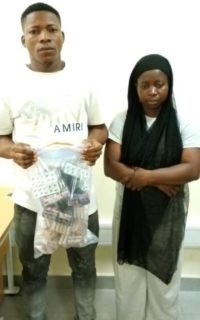
Afam Chibuike Stanley and Adebisi Aina Hafsat Photo credit: NDLEA
“Ibrahim Momoh was first arrested on November 27, 2014 with the same substance weighing 385.1kgs, prosecuted, convicted and sentenced to seven and a half years in prison on 22nd of April, 2020 but escaped from jail after three months,” the statement added.
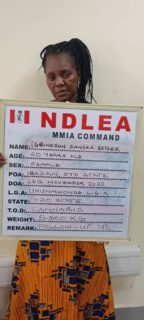
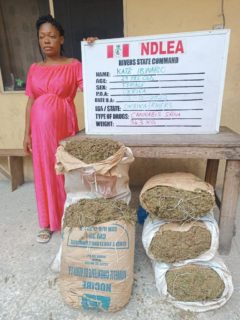
In another development, a 60-year-old grandmother and a pregnant woman were also arrested during interdiction operations in which 5,527.15 kilograms of methamphetamine and cannabis sativa, as well as 132,090 tablets of tramadol and 2,000 bottles of codeine, were recovered by the agency.
According to the NDLEA, the grandma, Ibinosun Sandra Esther, was arrested in Ibadan, Oyo State, in a follow-up operation following the seizure of a 5.5kg Loud variant of cannabis imported into the country from South Africa.
“The consignment, which she claimed was sent to her by her daughter, was concealed in two giant speakers as part of a consolidated cargo that arrived the NAHCO import shed of the Murtala Muhammed International Airport, Ikeja Lagos on board an Airpeace Airline flight.”
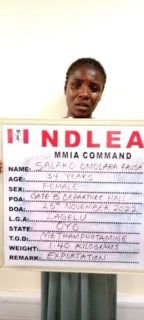
Also, NDLEA operatives, on Saturday, November 26, intercepted 1.4 kilograms of methamphetamine concealed inside custard tins packed among cosmetics and foodstuffs going to Brazil via Doha on a Qatar Airways flight.
A cargo agent, Salako Omolara Fausat, who brought the bag containing the illicit drug to the airport and an intending passenger to Brazil, Anyanwu Christian, who was to travel with the consignment, were arrested.
Kate Ibinabo,pregnant lady areested by the NDLEA. Photo credit: NDLEA
Also, plans by one Adebisi Aina Hafsat, a freight agent, to export 3,000 tablets of tramadol concealed in motor spare parts to Banjul, Gambia, through the NAHCO export shed, were equally thwarted by operatives of the NDLEA.
The agency seized the consignment and arrested Hafsat on Monday, November 28, while a follow-up operation in the Ebute-Meta area of Lagos the following day, Tuesday, November 29, led to the arrest of the actual owner of the consignment, Afam Chibuike Stanley, a car spare parts dealer.
THE Chairman of the Independent National Electoral Commission (INEC) Mahmood Yakubu has blamed the failure to prosecute electoral offenders on the inability of the National Assembly to pass the National Electoral Offences Commission Bill, 2022.
The is coming barely three months to the 2023 general election.
Yakubu, who spoke at a one day strategic interactive meeting with editors in Lagos on Saturday, December 3, appealed to the lawmakers to fast track the passage of the National Electoral Offences Commission Bill.
Although the INEC chairman admitted that the power to prosecute offenders rests upon the Commission, he bemoaned the inability to do that because of the non-passage of the Electoral Offences Bill.
“To prosecute electoral offenders fully rests upon the INEC. But we are constrained to prosecute any electoral offender due to the deficit of legislation,” he said.
According to him, If passed, the Bill would empower the Commission to prosecute the destroyers of INEC’s properties and kidnappers of its staff.
He however added that the Commission “is not responsible for the arrest of electoral offence suspects”.
“Also, INEC does not have the power to investigate electoral offences. These are challenges we are facing in prosecuting suspects of electoral offences.”
The INEC chairman stressed that the country’s electoral process would remain ineffective without proper laws and an agency that punishes the violators of electoral laws.
“INEC is not happy that most electoral offenders are let off the hook because INEC lacks the legislative backing to prosecute electoral offenders.
“Until a Bill for an Act to establish the National Electoral Offences Commission’’ becomes operational, INEC will not be able to expeditiously deal with electoral offenders,” he said.
Yakubu reiterated that the Commission plans to conduct the 2023 elections in 176, 846 polling units across the country, including the areas affected by insecurity.
THE Socio-Economic Rights and Accountability Project (SERAP) has filed a lawsuit against President Muhammadu Buhari over the alleged mismanagement of ecological funds.
The Attorney-General of the Federation (AGF) and Minister of Justice, Abubakar Malami, and Secretary to the Government of the Federation (SGF), Boss Mustapha were also joined in the suit as respondents.
The group accused the Federal Government of “the failure to probe the spending of trillions of ecological funds by governments at all levels — federal, state and local governments from 2001 to date, and to ensure the prosecution of suspected perpetrators of corruption and mismanagement of public funds”.
The development is coming after floods ravaged most states across the country, which led to the loss of lives and rendered thousands homeless, with the destruction of properties.
According to the suit numbered FHC/L/CS/2283/2022, filed on Friday, December 2, at the Federal High Court in Lagos, SERAP asked the court to compel Buhari to promptly investigate the spending of ecological funds by governments at the federal, state and local government levels.
The group argued that the failure of the government to probe the alleged missing funds, prosecute suspected perpetrators and recover any missing public funds is a breach of constitutional and international legal obligations.
It alleged that the Federal Government failed to fulfill its obligation to protect and uphold the human rights of those affected.
The group also said the government failed in its responsibilities to provide them with access to justice and effective remedies.
“According to the audit of the Ecological Fund Office carried out by the Nigeria Extractive Industries Transparency Initiative, the total amount received by the fund from December 2011 to November 2016 alone was N277 billion.
“The operations of the Fund from 2012 to 2016 reportedly showed that some of the disbursements were not utilised for the purpose for which it was established. During these periods, N74,170,932,645.20 was released to State Governments to solve ecological problems in their States.”
“Although ecological funds are shared across the three tiers of government, and emergency management agencies, the funds are managed and supervised by the Federal Government,” part of the originating summons filed by the group’s lawyer, Kolawole Oluwadare, read.
The court is yet to fix a date for the hearing of the suit.
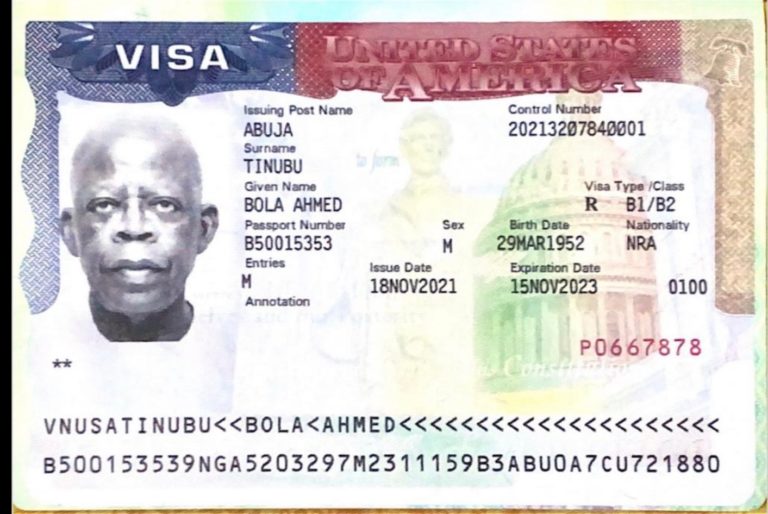
THE All Progressives Congress (APC) has shared the visa of its presidential candidate, Bola Tinubu, to debunk reports that he couldn’t make the scheduled United States (US) trip due to entry denial.
The development is coming after the ruling party’s Presidential Campaign Council (PCC) dismissed a viral picture of Tinubu in the US with President Joe Biden.
They claimed it was an attempt by the opposition to discredit Tinubu through misinformation.
Reacting to the entry denial reports, the spokesperson for the APC PCC, Festus Keyamo, released a photo of Tinubu’s US visa to further prove Tinubu’s scheduled trip.
Keyamo tweeted, “For mischief-makers who peddle unfounded rumours about Bola Tinubu being denied a visa to the US, you leave us with no option but to show you his current visa (that has always been renewed since time immemorial).
“This is for the misguided ones who believe these rumours.”
Tinubu is however set to speak at Chatham House in London with a host of foreign investors and economic experts.
He is expected to give the breakdown of his plans for Nigeria.
THE Bauchi government has set up a committee to investigate the report that health workers divert drugs, and equipment for personal gains in the state.
The Chairman of Bauchi state Primary Healthcare Development Agency, Rilwan Mohammed, disclosed this when Alheri Community Development and Support Initiative, a Bauchi/Gombe-based civil society organisation, paid an advocacy visit to the agency.
The agency’s boss maintained that the state government will implement the recommendations outlined in the committee’s report to ensure a transparent service delivery across the healthcare centres in the state. He assured that the agency will inform the civil society groups of whatever decision the government takes after the submission of the committee’s report.
The investigation chronicled how the staff connived with their collaborating syndicate, who were mostly drug vendors, to cheat the system. Their corrupt conduct left those in need in excruciating pain and forced them to dive deeply into their pockets to afford treatment while many who could not afford it perished in the process.
About a month later, WikkiTimes Publisher Haruna Mohammed Salisu, lamented the government’s laxity in prosecuting individuals and entities exposed by the medium.
The Publisher in an interactive programme with Albarka Radio in Bauchi lamented that despite the time and resources invested to uncover the wrongdoings, the governments seemed not to make a drastic effort to bring the perpetrators into books to account for their wrongdoings.
THE Nigerian Communications Commission’s Computer Security Incident Response Team (NCC-CSIRT) has raised the alarm over a vulnerability said to be present in all versions of windows-based products as phishing attacks and malware threats.
The CSIRT is the telecom sector’s cyber security incidence centre.
It was set up by the NCC to focus on incidents in the telecom sector and as they may affect consumers and citizens at large.
The CSIRT also works in collaboration with ngCERT, which was established by the Federal Government to reduce the volume of future computer risk incidents.
They do this by preparing, protecting and securing Nigerian cyberspace to forestall attacks.
An advisory contained in a statement by the Commission’s Director of Public Affairs, Reuben Muoka, said the phishing exploit on windows zero-day vulnerability can load a malicious QBot malware without triggering any windows security alerts on the compromised device.
“To take advantage of the Windows Mark of the Web zero-day vulnerability, threat actors have switched to a new phishing strategy that involves propagating JS files (plain text files that include JavaScript code) signed with forged signatures. The newest phishing attempt begins with an email that contains a password for the file along with a link to an allegedly important document.
“When the link is clicked, a password-protected ZIP folder that includes another zip file and an IMG file is downloaded. Normally, launching the JS file in Windows would result in a Mark of the Web security warning because it is an Internet-based file.
“However, the forged signature permits the JS script to function and load the malicious QBot program without triggering any Windows security alerts,” the advisory read.
According to NCC-CSIRT, ProxyLife security researcher found the new phishing exploit on Windows zero-day vulnerability to drop a Qbot malware without displaying Mark of the Web (MoTW) security warnings.
NCC-CSIRT further advised users to apply updates per vendor instructions.
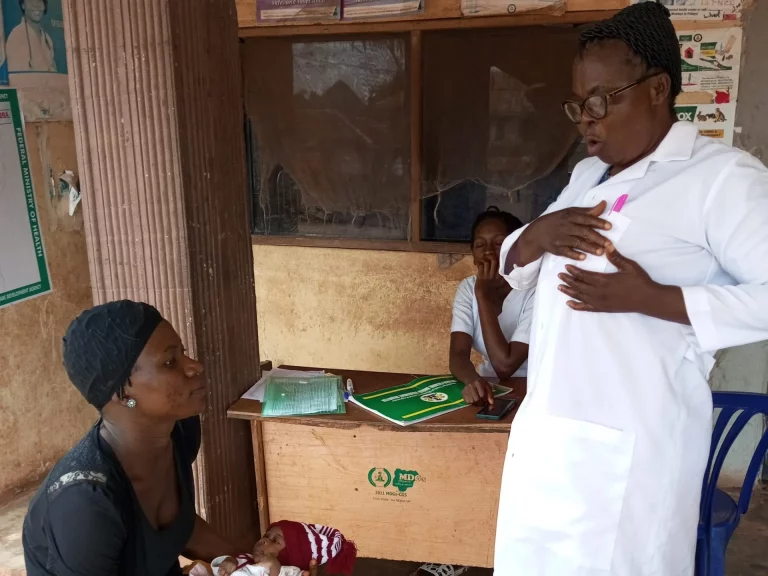
KAMELITA Onyeka is a public health nurse and officer-in-charge (OIC) of the Otuocha Primary Health Centre (PHC) in Anambra East Local Government Area of Anambra State.
She supervises two other employees – a laboratory technician and a midwife – engaged under the revived Midwives Service Scheme (MSS), courtesy the Basic Health Care Provision Fund (BHCPF).
Despite the deployment of the young midwife, Kamelita still feels overburdened with the workload at the facility.
“As the OIC, I stay in this facility from Monday to Friday every week. It is difficult for me to take a leave. Even when I go home on weekends, calls keep coming for my attention. It’s too demanding,” shesaid.
At a point, she was compelled to engage another unemployed midwife, who she pays from her salary. She added,
“I don’t want to kill myself. I engaged her so that when I am not there, she will relieve me. I came back just yesterday night and already, they are calling me now, telling me that somebody is in labour.
“The midwife I employed to assist is there, but they don’t want her to take the delivery. The husband of the woman will not let me rest.”
When Radio Nigeria asked Kamelita why she kept mute about the poor attitude of the new government-employed midwife to the job, Kamelita replied “she keeps begging me not to tell anybody,” was her response, adding, “but the truth is it looks like she is working somewhere else. She comes in, at most, three times a month.”
Kamelita’s testimony about the new midwife is in tandem with Radio Nigeria’s findings in some other health centres.
All the OICs this reporter spoke with chorused about how the assistants do not take the job seriously.
One, who wished to remain anonymous, said she agreed to an arrangement with the newly posted midwife that she can come to work two days a week.
Let me just tell you the truth, most of them, if not all, work elsewhere with private hospitals. We reached an agreement with the one here. She comes only on Mondays and Wednesdays. She was here yesterday and will be here tomorrow.
“She works somewhere in Awka. I can’t really blame her because we, the OICs, who earn more than N100,000 every month, are complaining that it is not enough, how much more someone receiving N30,000. And most of
them are married,” she explained.
The midwife deployed to the Isuaniocha PHC, Chidinma Alike, left the job less than one year after her engagement. She said she could no longer cope with the “pittance” she was getting from the scheme.
Chidinma is a mother of two and in her late twenties. She is one of the 60 midwives engaged in 2021. Radio Nigeria sought to ascertain the reasons behind her decision.
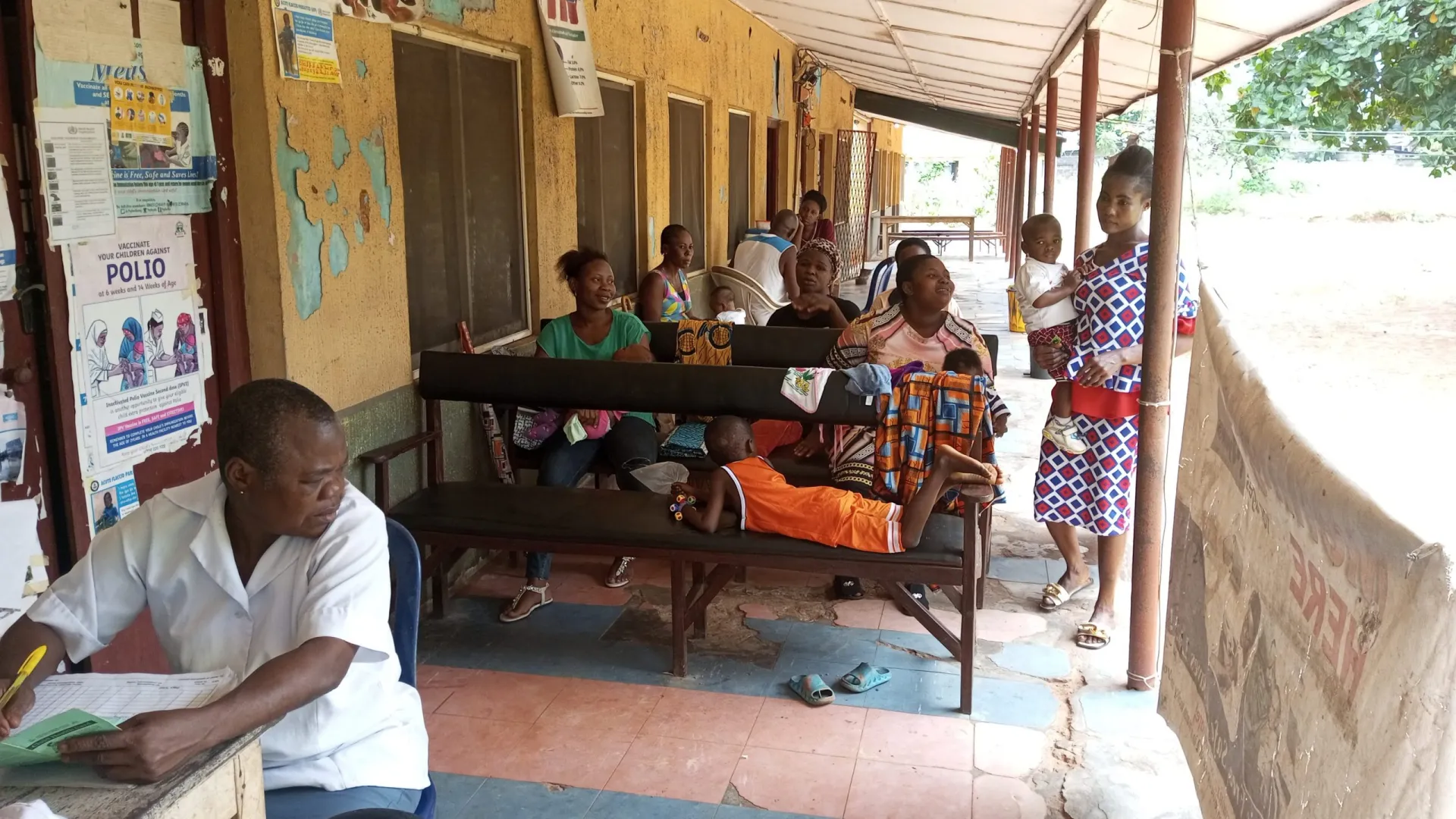
Nursing mothers at Isuaniocha PHC
“The remuneration is very poor. I am a registered nurse and midwife. I have the two certificates. Someone that has a family is being paid N30,000 in the Nigeria of today and you have to work the whole of the week. It was taking much of my time. If the pay is good, we can say no problem, it is worth it,” she responded.
Chidinma has just been replaced with another midwife, Chinemelum Muogbo, who resumed work in early October.
The problem of workload is a common tale across PHCs visited in Awka North, Aguata, Anambra East, Ogbaru and Onitsha South local government areas.
At Ula PHC, Ekwulobia in Aguata local government area, the OIC, Roseline Nwankwo had been awake throughout the night preceding the visit by the reporter. She was attending to Chinemerem Obi, a heavily pregnant woman, whose bundle of joy arrived a few hours before the visit.
Roseline spoke on her challenges.
“I am the OIC and the only government staff at that facility. The lady you met there is a volunteer. It is not easy at all. I do almost everything: immunization, ante-natal, delivery and so on. That is why I engaged a volunteer.”
With an impression that the reporter was from the BHCPF, Roseline passionately appealed for more hands to ease the workload on her.
“Please, I need more staff. You people should send us more before somebody dies here,” she pleaded.
However, the story is heartwarming at Mgbakwu PHC, Awka North, where a nursing mother, Esther Nwune, testified to the impact of the deployment of a midwife to the facility.
I have been coming to this facility since 2014. But I have been seeing positive changes since 2021,” Esther enthused.
Comparing her delivery experience in 2014 with that of her sister recently, Esther submitted that the difference was clear,
“That time, the nurses here were very careless, doing things as they wanted. But, now, the midwife here is very wonderful. She is friendly and empathetic. She is really doing well.”
The OIC of the facility, Virginia Nduka, was equally full of accolades for the midwife.
“The Basic Health Care Provision Fund posted a midwife before I came last year. It makes a lot of difference during delivery and antenatal care. The woman helps us a lot. It is a relief to me,” Virginia said.
Anambra State though adjudged the best in terms of maternal mortality in the South-East region, has lost 20 pregnant women to various birth-related complications between January and June 2022. The development was hinged on the fact that a good number of women still patronize quacks for ante-natal and child delivery.
A consultant community physician at the Nnamdi Azikiwe University Teaching Hospital, Nnewi, Dr Chinomnso Nnebu, advised residents against patronizing prayer houses for antenatal care.
“Some faith-based organizations will keep pregnant women in and be praying for them instead of advising them to go to the hospital. Faith works but faith without work is dead,” Nnebu said.
“We need to educate pregnant women to stop giving birth in prayer houses because those places cannot manage pregnancy complications,” he warned.
With Dr Nnebu’s warning , many citizens of the state believe that the pitiable conditions of most primary
health centres, especially in the five selected local government areas, leaving the locals with no option but to embrace other alternatives.
A community leader in Mmiata-Anam, Matthias Ameke said the state government was culpable:
“The health centres do not have the necessary facilities. Also, they are grossly understaffed. The workers are generally under-trained. They don’t even know what to do. All these discourage patronage of public health centres.”
MSS Poorly Implemented
The Midwives Service Scheme (MSS) came into being in 2009 to reduce maternal mortality and as one of the initiatives targeted at fast-tracking the attainment of the Millennium Development Goals (MDGs).
Latest figures showed that Nigeria had so far recorded maternal mortality rate of 917 per 100,000 live births in 2022, while infant mortality rate was 56.220 deaths per 1000 live births, showing a 2.57 per cent decline from 2021 when the infant mortality rate was 57.701 deaths per 1,000 live births.
Also, in 2022, the mortality rate of infants aged under a year in the country is at 56.68 per cent, signifying about 56 deaths of children under the age of one year per 1,000 live births.
This, in the view of many respondents, is because the scheme has not been efficiently implemented to achieve its lofty objectives. Ideally, MSS is meant to engage newly graduated midwives, the unemployed and the retired ones for a period of one year in rural areas, where the rate of maternal mortality is higher.
Under the scheme, four of such facilities with the capacity to provide basic essential obstetric care are clustered around a secondary care facility with the capacity to provide comprehensive emergency obstetric care. This is to further increase the chances of survival for any endangered woman and her unborn baby.
Unfortunately, before the recent recruitment of 85 nurses and midwives by the agency, the MSS was a forgotten scheme in the state.
“MSS was functional around 2019 to my knowledge. But with this basic health, I know the agency employed about 60 midwives,” Ijeoma Onuora, a staff nurse, midwife and OIC, Aguata PHC, Ekwulobia, stated.
The MSS, despite being a collaboration among the three tiers of government to improve maternal and child health indices in rural Nigeria, the case in Anambra does not reflect this ideal because the state government is yet to show financial commitment to enhance sustainability. The story is worse for the local governments, which are currently undemocratically administered and can hardly embark on any capital intensive project apart from salary payment.
Poor remuneration of professionals
Apart from the negative impacts the meagre monthly stipend paid to those engaged under the MSS have on the scheme, the general poor remuneration of nurses and midwives in the employ of Anambra State
government is another discouragement.
Okwudilichukwu Udeze, a Staff Nurse Midwife recruited in 1982, feels unfulfilled three years to her retirement.
“Somebody who is about to retire, you don’t have a place you can call your own house, even if it is two-bedroom. They are not paying us well. That is the reason our colleagues are running abroad. “One of the persons I graduated with went to the US and every time she calls I would always tell her my father is not well, I could not leave him that time. Now, it is too difficult for me to go,” Okwudilichukwu, who currently heads Saint Monica Anglican PHC, Onitsha, lamented.
Maternal mortality reduction a mirage without midwives
Midwives are considered critical to the smooth and efficient running of primary health centres, as well as governmental efforts to drastically reduce child and maternal mortality.
“The aim of MSS will be defeated if you don’t have qualified and competent midwives handling deliveries and antenatal care at the PHCs,” IfeyinwaMesigo, a Chief Nursing Officer, maintained.
Ifeyinwa shed further light, “A PHC should have midwives to handle ante-natal and deliveries. Not all labour is meant for a midwife. We were trained to attend to normal labour. As a matter of fact, a midwife is not supposed to deliver a woman who carries her first pregnancy. But, most of them come to PHCs”
“A midwife knows when to refer the expectant mother when the baby is still okay to increase the chances of survival. You have a live mother and a live baby. But, the untrained ones don’t know all these. They just want to prove to the clients that they know what they are doing.”
Despite the availability of skilled birth attendants at MSS facilities, women still deliver at home in some parts of the country.
These are true reflections of the realities in Anambra State, where women, especially those residing in rural communities as mentioned earlier, still prefer traditional birth attendants.
More midwives will be recruited – Government
Efforts to get the reaction of the Executive Secretary of the Anambra State Primary Health Care Development Agency (ASPHCDA), Dr Chioma Ezenyimulu, to various issues raised, especially the unsustainable way
of implementing MSS in the state, did not yield positive results.
Several calls put across to her on three different days (September 7, 19 and 26, 2022) were ignored as she did not pick nor return them. Three SMS messages were equally sent, stating the purpose of seeking her reaction. She never responded to any of them.
They were followed up with another whatsApp message on the same September 26, at 6.30pm, reminding her of the previous messages and calls. She read the message as indicated by the two blue marks on the app, but, there was no reaction from her until the time of filing this report.
However, Dr Ezenyimulu had in previous interviews acknowledged that the BHCPF part being used to engage midwives under the revived MSS is bringing succour to the benefiting PHCs, while the massive recruitment
promised by the state government is being awaited.
Strengthening that position, the Anambra State Commissioner for Health, DrAfamObidike, reiterated to Radio Nigeria the commitment of the present administration to addressing the manpower gap in the health sector of the state.
“As I told you earlier, we shall recruit staff into our primary health centres when we are done with the job interviews we are conducting to fill the vacancies in the general hospitals. The general hospitals are also short-staffed.
“We are aware of where there is gap and we shall fill the gaps with the recruitments to be done immediately we are done with the general hospitals,” DrObidike assured.
As gratifying as the assurance by the commissioner sounds, it is not clear if the recruitment will be able to address the acute shortfall in the manpower strength of these PHCs, especially regarding nurses and midwives.
For instance, if the recommendation of four midwives per facility, as prescribed by the 2006 Minimum Ward Health Care Package for Primary Health Care is adhered to, the state, currently with a total of 152 nurses and midwives, needs to recruit over 3,000 nurses and midwives to effectively cover all its 638 primary health centres.
Will the much-anticipated recruitment absorb this number of nurses and midwives at the expense of other professionals? This is a question only the state government can answer.
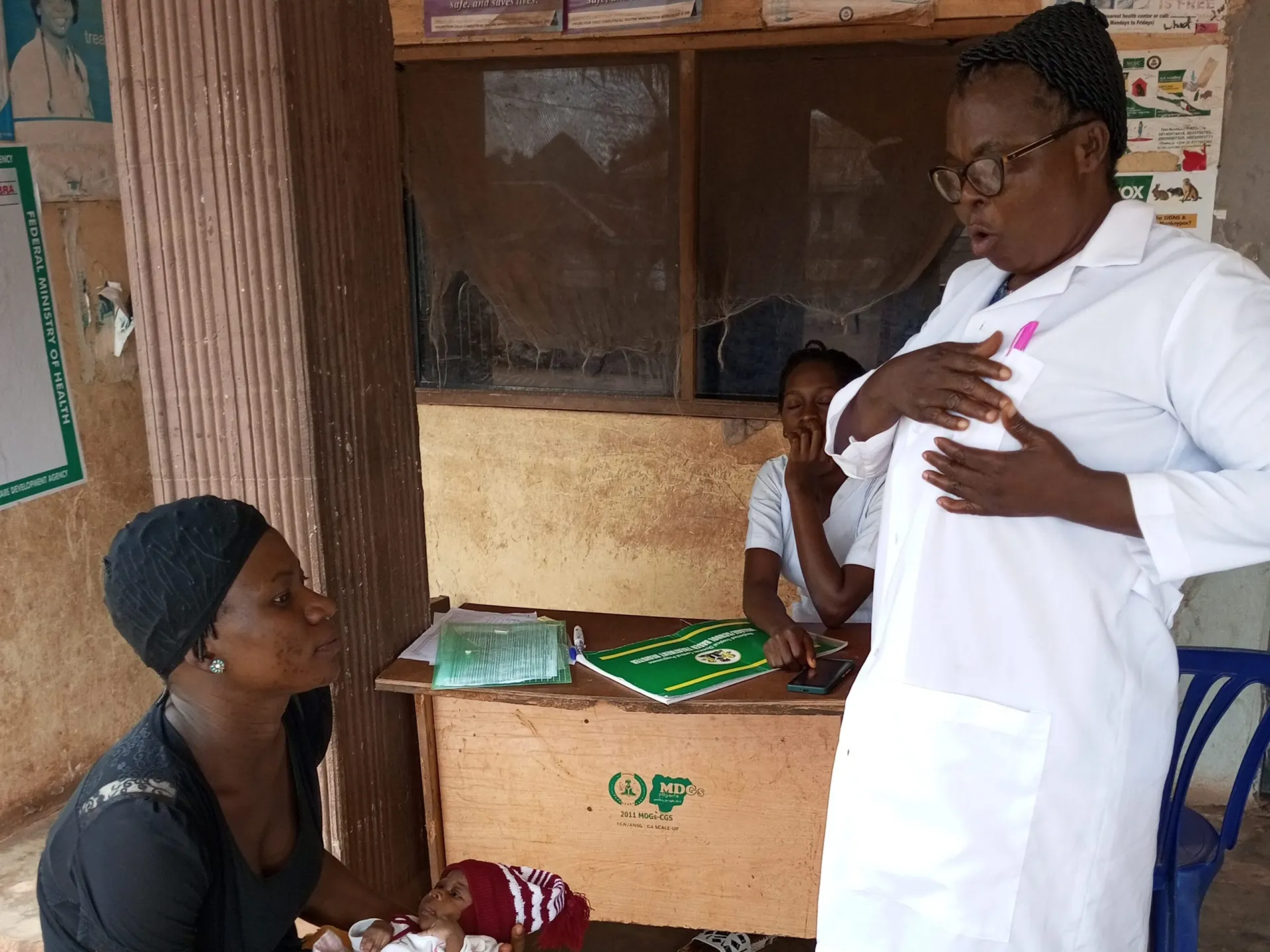
OIC, Amansea PHC Eunice Obi educatina a nursing mother on exclusive breastfeeding
Moreover, Eunice Obi, the OIC, Amansea PHC, is indifferent to the hues and cries about shortage of nurses and midwives.
“They have trained some of us, who are not certified nurses, to take safe deliveries and we are doing it effectively. That is why I am not bothered much about the deployment of midwives. Nurses and midwives are necessary. But some of us are effectively filling the gaps,” Eunice asserted.
One of the previous initiatives of government targeted at reducing child and maternal mortality, especially in under-served communities is task-shifting to Community Health Workers (CHEWs). However, while task-shifting has undoubtedly offered a cost-effective expansion of the overall human resources for health (HRH) pool, skilled birth
attendance offered by the midwives will help to reduce the burden of maternal mortality. It will also help to improve utilization of services by women in the affected localities.
According to findings, the last massive recruitment of nurses and midwives into the local government system in Anambra State was in 2004, under the administration of Dr Chris Ngige. However, the total of 400 employed then has been reduced to 152.
Comrade Edith Onwuka, Anambra State chairman of the National Association of Nigerian Nurses and Midwives
“Some retired, some died, some have left for greener pastures. Every year, government does little employment into secondary health care, leaving unattended-to the primary healthcare system that should be invested in,” Comrade Edith Onwuka, Anambra State chairman of the National Association of Nigerian Nurses and Midwives, explained.
Towards effective MSS implementation
Proffering solutions to the problem, Comrade Onwuka recommended regularizing those engaged under MSS into the state civil service.
“Even these people recruited into the MSS under the umbrella of BHCPF are still receiving N30,000 in the Nigeria of today. They will not all stay. If they want the MSS to flourish, the government should regularize those employed under the scheme into the state civil service.
“In total, they have employed 85, but I don’t know how many of them are remaining because the state government is still not augmenting the N30,000.
“We are also pushing for the state government to start paying rural posting allowance to those under regular civil service so that they will agree to go to rural areas to serve,” Onwuka said.
For the Programme Manager, Justice, Development and Peace/Caritas (JDPC), Nnewi, OnyekachiOlolo, the Federal Government should not allow the state governments to frustrate its good intentions with the MSS.
“I advise that the Federal Government should not wait for the states. The Federal Government should take the issue of these MSS midwives seriously. Give them what is due to them from the Salary, Wages and Income Commission. Scale them appropriately so that they can stay,” Ololo appealed.
*This report published in October 2022 is supported by the International Budget Partnership (IBP), and the International Centre for Investigation Reporting (ICIR).
He explained that the presidential candidate, Peter Obi, played a key role in producing the manifesto.
The seven thematic areas of the 62-page manifesto are security, production, institutional reforms, the industrial revolution, infrastructural development, human capital development, and robust foreign policy.
A cursory look at the document also showed that Obi and his running mate, Yusuf Datti Baba-Ahmed, promised to, among others:
“Secure and unite our dear nation, and manage our diversity such that no one is left behind in Nigeria.
“Move Nigeria from consumption to production and embark on comprehensive legal and institutional reforms and practicable restructuring measures, to fight corruption; ensure the enthronement of the rule of law, and decisively tackle all forms of corruption.”
They also pledged to “Prioritize Human Capital Development through robust investments in STEM education, health, and infrastructural development, with emphasis on wealth creation, distribution, and sustainable development.
“Improve access to finance, particularly to MSMEs, for youths, and women, to significantly reduce unemployment and insecurity.
“Ensure that in policy and practice, governance will be made more inclusive, cost-effective, transformative, and less transactional. No more sharing of the national wealth by a few.”
The LP presidential candidates also promised to embark on comprehensive legal and institutional reforms and practicable restructuring measures, to fight corruption; to ensure the enthronement of the rule of law, and decisively tackle all forms of corruption.
They also promised to engineer the transition of Nigeria from fossil fuel dependency to climate and eco-friendly energy use.
Obi and his running mate also pledger to pursue holistic poverty eradication with emphasis on agricultural revolution through effective utilization of our vast arable lands, particularly in Northern Nigeria, and erase Nigeria’s categorization as the poverty capital of the world.
FOR Africa to have multiple teams go beyond the group phase to reach the Round of 16 in a World Cup is a milestone.
The remarkable result at the 2022 men’s Fifa World Cup in Qatar – which sees Senegal and Morocco move into the knockout stage is Africa’s best performance at the World Cup since 2014. That year both Nigeria and Algeria reached the final 16. This is a pleasing performance after a dismal 2018 World Cup when none of the African representatives went beyond the group stage.
Reaching the Round of 16 is an important marker, but what could be even more sustaining is having multiple teams reach the final eight in the quarter-finals. Although it will be a Herculean task, it could well become a turning point in Africa’s World Cup history. Previously, three African teams have reached the quarter-finals: in 1990 (Cameroon), 2002 (Senegal) and 2010 (Ghana).
However, two African teams have never reached that stage in a single World Cup. Could 2022 be the year?
A definitive moment
Reaching the quarter-finals aside, the performance of Africa’s representatives in Qatar points to a definitive moment indicating that the continent can compete with the top teams in the world sustainably.
Presently, the remarkable performance by Tunisia provides an indication. Tunisia did not go beyond the opening round but by beating the defending World Cup champion France 1-0 was a story in itself. It was France’s only loss in the opening round.
Cameroon, too, showed the kind of mettle needed when they stunned favourites Brazil in a gutsy performance, narrowly losing out on a place in the final 16 after Switzerland beat Serbia to edge ahead of them.
But the real story lies ahead. Could Senegal and Morocco even advance to the medal stages? Morocco’s manager Walid Regragui clearly thinks so. He told the media:
We are going to be very difficult to beat … I think African teams can go far. Why shouldn’t we dream of winning the World Cup?
The problem with the rankings
Africa’s performance in 2022 shines a light on a persistent World Cup issue: rankings. The rankings provided by world football body Fifa have been a bone of contention for years. This is especially in its use of coefficients – a system based on past scores that is used to rank the collective performance of the teams. This then determines the number of places each continent or region is given at the World Cup. Currently, coefficients favour European and South American teams to the detriment of teams from other parts of the world.
It’s not an efficient method for assessing the strength of national teams because the ranking system assigns coefficients based on the performances of the top teams within a continental confederation (like the Confederation of African Football). It makes more sense to assign coefficients based on position on the Fifa rankings rather than on the results from confederations. For instance, teams ranked 1 to 50 receive the same coefficient, regardless of their confederation. This prevents weak teams in some confederations benefiting from the performance of strong teams in their confederation. Presently, top teams in weak confederations are disadvantaged because their wins are impacted by lesser coefficients in the calculation of points earned in the ranking equation.
Although Fifa has periodically made changes to its ranking model, this World Cup once again called the model to question. It is not so much that Morocco, ranked 22, would finish its group in first position ahead of both Belgium and Croatia that were ranked well ahead of it but the fact that the poorer teams of Europe benefit from those coefficients when they are weaker than the top teams in regions with weaker coefficients. For example, teams like Serbia and Wales each received ranks that are higher than those of Morocco, Ghana, and Japan, who solidly outperformed them.
But what do the 2022 matches indicate? Firstly, it is increasingly clear that Africa deserves the increase to nine spots that it is getting for the next World Cup in the US in 2026.
Presently, Africa has five spots but there is usually fierce competition for those placces and several top African teams have failed to qualify because of this. These include Algeria, Egypt, Ivory Coast and Nigeria who have previously won the African Cup of Nations and have consistently been among the top ranked African teams in the last few years.
Narrowing the gap
Another thing that is clear in Qatar is that the Bosman ruling, which opened up the transfer of footballers across clubs and countries, has helped to hasten the development of football talent globally. It has widened the reach and distribution of football’s technical development. This has closed the gap between the haves and have-nots in global football. For instance, the CIES Football Observatory notes the large number of football talent migration from all over the world including Africa to the “Big Five” leagues in Europe. These talents return from Europe to represent their birth nations at the World Cup.
An emerging source of talent for African countries at the World Cup are footballers born in Europe, particularly, to African parents or are otherwise eligible to play for African countries. Several of these footballers are increasingly declaring eligibility to play for African countries and their impact at competitions like the World Cup is particularly evident in 2022.
Ultimately, African teams at the World Cup are proving that they deserve their seats at the main table.