“Yes, I am at the scene now. If it is confirmation you want, I can confirm it, but other details will come later, please,” she said.
The news of the kidnap was also disclosed by the Benue State government on its official Twitter handle @benuestategovt
“BREAKING NEWS… Benue State Commissioner for Housing and Urban Development, Chief Ekpe Ogbu, has been Kidnapped. According to the report, he was kidnapped alongside Honourable Agbo Ode, one of his in-laws, and the driver.
“They were kidnapped along David Marks Farm after Akpa Otobi while on their way from Otukpo to Utonkon in Ado LGA. His official vehicle had since been recovered from the scene and taken to the Divisional Police Headquarters in Otukpo,” the tweet read.
Reports say Ogbu was returning from a church programme, where Abba Moro, a Senator representing Benue South, dedicated his newly inaugurated Campaign Council to God at St. Augustine Catholic Church, Otukpo, before he was abducted.
His official vehicle had since been recovered from the scene and taken to the Divisional Police Office in Otukpo.
Ortom who reacted to the criticism in a statement issued on Sunday, December 4, by his Special Adviser, Media and Publicity, Terver Akase, described Agada as a gang leader.
The statement said: “It was not the first time that the young man who runs APC in Benue as if he is leading a group of thugs would insult the governor of his state in the manner he did.
“A party chairman who was beaten to a pulp in his community Otukpa by aggrieved members of APC who were protesting against the fraudulent governorship primary election he conducted in May this year lacks the moral authority to question the leadership abilities of anyone else.
“Agada and others who write and speak for the APC in Benue State were apparently too young to know that the leader of their party, Senator George Akume, as governor of Benue State between 1999 and 2007, was a very close friend of then Rivers State governor Dr. Peter Odili.
“Obviously, the APC state chairman has also heard of the longstanding relationship between Governor Aper Aku of Benue State and Governor Melford Okolo of Rivers State during the second republic. Agada has no idea that cordial relations among state governors are vehicles of development.
“Governor Ortom’s relationship with Governor Wike is built on mutual respect, progress and benefit of the two states. The governor has at different times invited his Rivers counterpart and several other governors to Benue State to commission numerous projects, the same way governor Wike invites him to reciprocate the gesture in his state.
“Last year, during the commissioning of the ultra modern Tor Tiv Palace constructed by the Ortom administration in Gboko, the Tor Tiv, his royal majesty, Professor James Ayatse, conferred chieftaincy titles on Governor Wike, Governor Aminu Tambuwal of Sokoto State and Governor Ifeanyi Ugwuanyi of Enugu State.
“The speaker, House of Representatives, Femi Gbajabiamila, was also honoured with a chieftaincy title at the same event. The ceremony was preceded by the commissioning of four major roads, which Governor Ortom constructed.
“Since they assumed control of the party, the APC State Working Committee led by Agada has not been able to accomplish a single task. They operate the party as a racket.
“The only known achievements of the inexperienced APC leadership in Benue were extorting huge sums of money from aspirants before the party primaries and the reported embezzlement of funds meant for delegates to the party’s national convention in Abuja.’
The statement assured that Ortom remains committed and focused on the mandate of serving the people of Benue, adding that no amount of smear campaign will deter him.
STAKEHOLDERS have said that the failure of ministries, departments and agencies (MDAs) to honour the Freedom of Information Act (FOIA) would hamper accountable governance in Nigeria.
They sounded the alarm recently at a one-day roundtable interactive workshop on the appraisal of the implementation of the FOIA (2011) in Abuja.
Some of the stakeholders were drawn from the General Bureau of Public Service Reforms (BPSR), Open Government Partnership (OGP), Ministry of Justice (MOJ), and Global Analytics Consulting (UK) Limited.
Addressing the forum, Director General of the BPSR, Dasuki Arabi, said the organisation had continuously included state and non-state actors in implementing and understanding the FOIA.
Arabi explained that there would only be a guarantee for good governance and transparency if citizens had access to the information they needed from the government.
He added that the FOIA provides a platform for inclusiveness, holds leaders accountable and aids the decision-making process.
The ICIR reports that BPSR is a leading institution in initiating and coordinating reforms in the public sector and has, in the past years, been working on implementing the FOI Act and making efforts that the law is institutionalised across all MDAs.
In past years, the BPSR has consistently taken top positions in FOI Rankings carried out by various Civil Society Organisations in Nigeria.
The National Coordinator of Open Government Partnership, Gloria Ahmed, commended the BPSR for being compliant with the OGP and carrying out an impact assessment study to ascertain the level of compliance and implementation of the FOIA.
According to her, the assessment revealed that the Act was a remarkable law on paper with little implementation.
She said the involvement of the OGP in the discussion fulfilled one of its key principles, which is co-creation. She assured that her organisation would ensure that the government institutionalises deliberations at the meeting.
The FOIA National Coordinator at the Ministry of Justice, Ayobamidele Bakare, took the participants through the implementation of the FOIA by MDAs in the past years.
He averred that the law mandates public servants to provide information upon request by the citizens because it is their right.
Bakare said that though the law makes provisions for certain information not to be disclosed without authorisation, the law also mandates public institutions to provide information proactively to the public via their websites according to Section 2 (3) a-f. He frowned at how MDAs still withhold some “ridiculously basic information”.
This newspaper reports that all MDAs submit their FOIA report to the National Assembly as required by the Act in January every year. Statistics, however, showed that out of about 800 MDAs, the level of compliance is less than 20 per cent.
The Chief Executive Officer (CEO) Global Analytics Consulting (UK) Limited, Tope Fasua, listed the challenges faced by the FOIA, namely the late adoption of the law by the Nigerian government after many countries already had it in place.
Others are:
⦁ Lack of funding to process some FOI requests
⦁ Lack of a single filing system of public records
⦁ The seven-day duration to process requests
⦁ Inadequate training for FOI desk officers
⦁ Poor record-keeping and infrastructure
⦁ Websites not maintained and updated
⦁ State governments not adopting the FOI Act
⦁ The literacy level of citizens
The forum also made some recommendations to push the FOI further. They include:
⦁ Proactive disclosure of information by MDAs to promote transparency
⦁ Need for the National Assembly to state clearly that FOIA applies to states.
⦁ Writing FOI requests in Nigerian languages to ease the understanding of the information by the citizens
⦁ Training and retraining of FOI officers
⦁ Clearly defining the meaning of “public interest” ambiguity “as this is the common reason MDAs do not disclose information to the public.”
Ali Falila, 35, a mother of four, reside in Mallam Anna village did not have any choice but to take her son, three-year-old Usman, to the Primary Healthcare Centre at Mallam Sidi in Kwami Local Government Area of Gombe State, even though she did not have any money. She was desperate and hoped she could talk health workers at the facility into treating her child and probably get paid later.
“My son has been down with malaria, and I brought him to the hospital for treatment, but I don’t have money,”Falilat said.
To Falila’s surprise, she was told that her son would have been treated for free if she had enrolled under a government scheme, the Basic Health Care Provision Fund (BHCPF).
She had never heard about the scheme and was shocked to learn of such a free health scheme. She said her family had always spent money to access healthcare services.
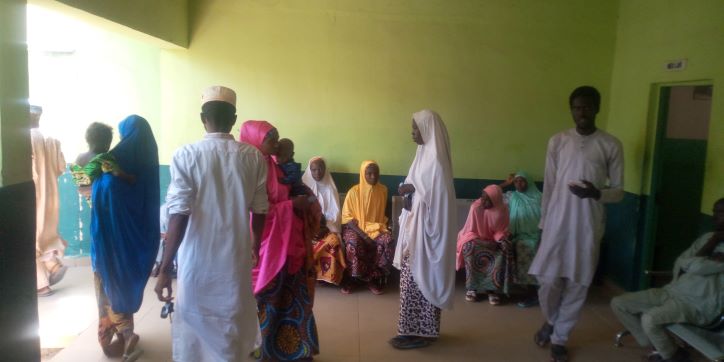
Like the mother of four, several Nigerians in rural communities, including young pregnant Fatima Mohammed from Musa Huduvillage in Mallam Sidi, Kwami local government area have not heard about the BHCPF.
Fatima was at the hospital to treat malaria, but she and her husband, Mohammed, a peasant farmer, were struggling to offset the hospital bills. They paid for drugs prescribed for Fatima.
The lack of awareness of the BHCPF is already defeating the purpose of the scheme that the federal government initiated to make health care services available to the vulnerable at no cost.
A report on maternal and child health released by the National Primary Health Care Development Agency (NPHCDA) in 2019 revealed that Nigeria loses 2,300 under-five children and 145 women of child-bearing age daily.
In the report, the NPHCDA listed inadequate health facilities, shortage of critical human resources, inadequate power or water supply, commodity stock-outs, equipment inadequacy, weak standards/quality, and very low demand for critical services primarily driven by the loss of confidence in the system as the causes.
To address this situation, the Federal Government established the Basic Health Care Provision Fund (BHCPF) under Section 11 of the National Health Act as catalytic funding to improve access to primary health care.
The scheme, implemented by the NPHCDA, funds a Basic Minimum Package of Health Services (BMPHS). It is also to increase the fiscal space for health, strengthen the national health system, particularly at the Primary Healthcare Centre, PHC, PHC level, by making provision for routine daily operation cost of facilities, and ensure access to health care for all, particularly the poor, thus contributing to overall national productivity.
The World Banks 2018 report classifies about 89 million Nigerians as living below the poverty line.
A joint World Health Organisation, WHO, and World Bank report also highlighted that over 500,000,000 individuals around the world might be pushed into poverty due to out-of-pocket spending on healthcare.
Many grassroots dwellers have not heard about BHCPF
Since 2021, as many as 25,565 poor and vulnerable people across the 11 local government areas of Gombe State have been successfully enrolled under the BHCPF to access free medical treatment from various health facilities, according to Gombe State Contributory Healthcare Management Agency, GO-Health.
The number of enrollees, however, appears to be insignificant compared to 3,472,223, which is the current population of the state.
The poor awareness of the scheme, some healthcare officers and other stakeholders argued, is partly responsible for the low number of beneficiaries.
For instance, Hajara Mohammed, whose niece, Harira, was admitted to Mallam Sidi PHC for anaemia, claimed she did not know about the scheme.
“Who did they enroll since we are omitted? I am hearing this for the first time”, a distraught Hajara said. Rashida, another resident from Mallam Sidi village, said the BHCPF scheme was strange to her, as she was not also aware of the scheme.
Many other villagers like 27-year-old Ahmed Hauwa complained about not knowing about the scheme and have been spending their money to seek healthcare services.
Rural dwellers do not usually use primary healthcare facilities as many believe it costs a lot to access medical treatment. But the scheme with which the government intends to deliver healthcare to the people at the grassroots level has not enjoyed enough publicity.
Hauwa believes that the government had forgotten the vulnerable as she appealed. Government should always remember the poor because there are a lot of poor and vulnerable that are experiencing different kinds of diseases but do not have money to go to the hospital.
‘A lot of people don’t come to the hospital because of lack of money. Even if I have N500 and come to the maternity with it, it will not be enough to buy a card, do a blood test, it will not do anything.”
“The way life is now, the government should help the poor, every assistance that comes is stopping only with our elites in the society, we are not benefiting from anything, or we hear rumours that there will be government assistance before it will reach us, we will later hear stories, it is not reaching us.”
While accessing free health care has remained a nightmare for many poor and vulnerable at the grassroots, others are enjoying free medical services under the BHCPF intervention.
In Bajoga, headquarter of Funakaye LGA, Asabe Yusuf Ahmadu said before she got enrolled, she spent a lot of money at Miyyeti Hospital to treat diabetics. She disclosed that she had spent about N180,000 seeking treatment for the ailment but now enjoys free medical services under the scheme.
On her part, Fatima Ali, a petty trader who is also a beneficiary of BHCPF and a resident of Bajoga, said she only spends transport money to the health care facility, as she gets everything free. When Ramatu Hassan was asked how she got informed of the scheme, she said it was through the village head.
Other residents like Aishatu Isa, Zainab Kabiru Daban-Fulani and Aishatu Abdullahi confirmed that they now enjoy free medical services at Daban-Fulani PHC in Kwami Local Government Area while appreciating government for lifting the financial burden on them.
Rufaatu Ibrahim Abdullahi, a scheme beneficiary at Mallam Sidi PHC in Kwami LGA, said she has been enjoying free health care service but that before her enrollment, she spent a huge sum of money when she was sick.
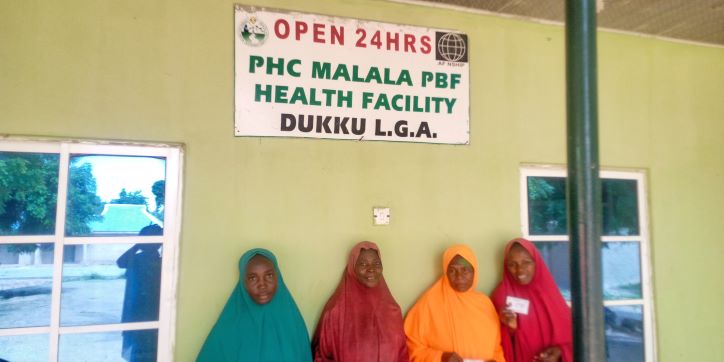
PHC Malala PBF
Mohammed Usman, the Dukku PHCs Director, appealed for the continuity of the BHCPF scheme, noting that it has brought great relief to the beneficiaries.
Usman said the challenge they earlier had was that beneficiaries thought that because the government earmarked N570 for treatment per person, the amount would not be enough to settle their medical bills. He said, when they later understood that a person could undergo surgery without spending a dime, they began to rush to the facilities
Adama Maigana, a 62-year-old resident of Chiroma in Dukku Local Government Area, who enrolled under the Comprehensive PHC in Dukku, said she’s enjoying free medical services.
“Truly I am happy for this government program brought to us that is helping the poor and vulnerable because when someone is sick even if you don’t have money you will be thinking of going to the hospital but when they call us for this, we felt really excited, when you are sick and you come to the facility, you will see a doctor, do blood test all free without money, before you will be thinking of money for test, but now everything is free. We commend the government for this God bless and increase those behind this.
“Before I was enrolled I spend like N5,000 to N10,000 it depends on the illness weather you have money or not when you are sick you must look for treatment but now if you just come with your card and show them, they will do everything for you, we don’t have any drugs issues”
Sixty-five-year-old visually impaired Muhammadu Sani from Dukku, who enrolled in the Dukku Comprehensive PHC said the scheme is a lifesaver, especially for people with disabilities, PWDs. He called on government to remember other PWDS that are not yet enroll.
“I am excited for getting this free gift that the government is doing before we don’t have this, no previous government has done this but Inuwa’s administration we got this program that is helping people with disabilities my brothers those that got enrolled thank God and we pray that the way it is implementing this poliy, may God make it to expand more”
Zubana Danjuma, 26, a resident of Hashidu in Dukku LGA, who enrolled under the PHC in Hashidu, Dukku council area, said taking care of her health by the government has really taken away some burden on her family.
“My enrollment under the BHCPF has really help my life and family, I heard the program is for one year ending this month (July) but I want it to be continue, I also call government like the way I am enjoying this program that has being helping me, I appealed that those not enrolled should be enroll “
Auwal Umar Hashidu, aged 32, another native of Hashidu enrolled at the Hashidu PHC, said he has being enjoying free access to medical services since he got enrolled.
“Prior to my enrollment I spent a lot of money on health care especially this rainy season that malaria easily infect people. Sometimes N5,000 to N7,000. It depends on the illness but now I come to the facility I get everything free, from card, examination, test, to going to get drugs at the pharmacy everything is free”
The coordinator Primary Health Care centers for Dukku Local Government Area, Moh’d Usman, said the implementation of BHCPF has further enhance maintenance of clean environment at the facilities.
“With the introduction of BHCPF scheme, you know there’s token of amount given to facilities direct – just between them and the facilities, not in the department. So with this money, they are employing staff including cleaners, they also buy detergents with the little amount they are getting, they will pay their volunteers. That’s why you see the facilities are very clean”
Habiba Hashimo, a petty trader resident in Bage Ward of Funakaye LGA, whose husband died and is left with six children and is also about seven months pregnancy, said the scheme has a direct bearing on poor and vulnerable people like her.
“My husband died and left me with 7 months pregnancy and afterward labor began. I delayed at home before coming to the Bage PHC center where I was enrolled but on arrival I was too tired and couldn’t push and was referred to Bajoga General Hospital and on reaching there, I was booked for operation because it was found the baby already die.”
She added “the surgery I went for, if not for BHCPF, I may have being a history now because my family wouldn’t have afford it but everything was done for me on the planter of gold for free without me nor my relatives spending a dim; all thanks to BHCPF”
The Facility Manager of Hashidu PHC, Ibrahim Tukur, said the BHCPF is a dream come through for them.
“We came there’s no staff in the facility but God helped us the BHCPF was introduced and we did business plan and it was approved. We then employed volunteer staff that we pay some allowance. Before the introduction of the scheme it was not easy on us because we were just 3 government staff here with the help of BHCPF we now have more than 10 (members of )staff”
“The scheme has improved the standard of our facility in terms of structure and it’s very hard if not impossible for you to come here and not meet any staff”
The BHCPF is a federal government intervention requiring counterpart funding from state government. It is a component of the National Health Act of 2014, which called for better investment within health sector. The Fund was first provided for in the 2019 fiscal budget by President Muhammadu Buhari with the sole aim of achieving Universal Health Coverage (UHC).
The BHCPF was designed as a fund to be financed from not less than 1% of the consolidated Revenue Fund (CRF) of the Federal Government and other sources including donor contributions bearing in mind that healthcare is the right of every Nigeria and the BHCPF will take Nigeria one step closer to universal health coverage.
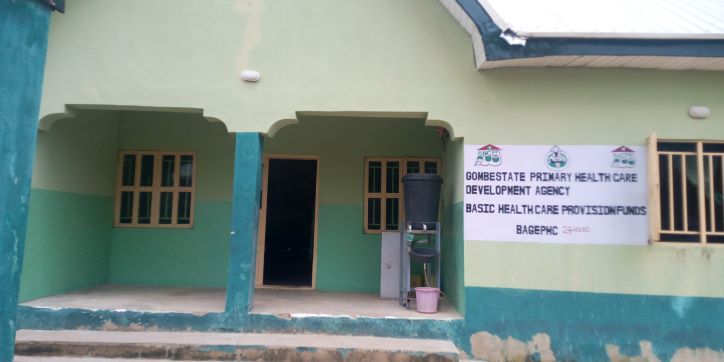
The BHCPF programme was launched April 2021 in Gombe State, which has a total 627 PHCs with only 114 covered by the scheme.
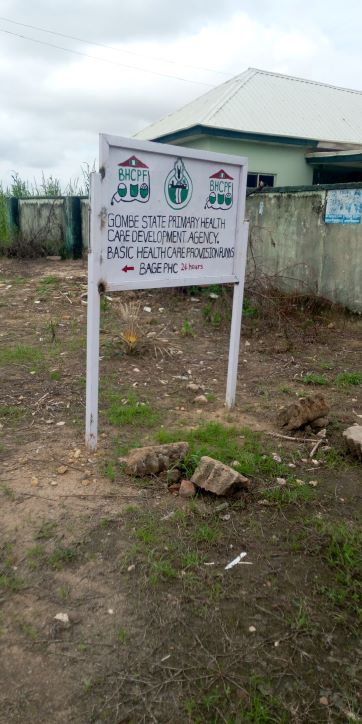
The implementation of the scheme in the state has activated a 24 hour healthcare delivery system at the focal PHCs across the state.
Since the program commenced, accessing health care for some enrollees has become easier thereby reducing the huge financial burden they usually incurred while accessing medical services.
The State Project Manager of the BHCPF, Nurudeen Bello Kumo, said the scheme began full implementation in Gombe State in April 2021, when it received over N270 million (N276,105,335.49). The state has received over N177 million (177,629,639.00) in 2022.
Kumo said the BHCPF has given facilities autonomy and also enhances community participation and ownership. When asked why the fund was reduced in 2022, Bello said in 2021, poverty population formula was used while in 2022, the government used number of facilities being engaged in the programme.
Despite some successes recorded some enrollees are still spending from their pocket due to some challenges ranging from distance, attitude of some health workers after referrals, while others complained that the selection process was politically motivated.
A government health official on condition of anonymity said that in some wards, the selection process was not done properly as the targeted beneficiaries, mainly children under five, women of childbearing age the elderly, were not the ones enrolled.
“The truth is, the poor of the poorest were not the ones enrolled,” he said
Also speaking with facilities head, they said the scheme has increase the number of clients explaining that they receive N570 per patient. They said that they receive N300,750 for operational services quarterly from National Gateway of the BHCPF, out of which they pay their contracted staff, do repairs, buy equipment, drugs and maintain the facilities, among others adding that, they have to do a business plan, which has to be approved before accessing the fund.
From our reporter’s observation on the visit to many facilities, facilities managers did well with the fund while others did not have much to show. But what is clear is that the scheme lacks proper monitoring and evaluation by government officials who do not track how the Fund is doing or impacting on the PHC and the beneficiaries.
For example, up till the time of the reporters visit, there was still confusion over the use of the cards issued to enrollees to enable them access free medical care. In some places, the enrollees, who did not even know about the scheme, had not collected their cards.
“A lot of the enrollees thought the card was to access covid-19 loans,” the facility manager of Tongo Ward, Abubakar Bappa Inuwa, told our reporter. He said it took them a lot of time before convincing enrollees to come and access the free medical care under the BHCPF.
Even for enrollees who had collected their cards and had probably benefitted from free health services before, there was still some confusion about what they could use their cards for. The facility manager of Kwami Model PHC, Hafsat Mohamed, said some enrollees come with their access card to seek for medical services for their children or relatives, whereas the card only gives access to the one person to which it was issued.
Shortage of manpower
In all the facilities visited, they lack adequately trained staff, although all the facility managers, despite contracting staff, appealed to government to add skilled staff. Base on findings, the issue of lack of adequate staff cannot be separated from the fact that some health workers perceive rural life as difficult and lack the desire to work in PHCs located in rural communities.
Reasons include lack of basic amenities that characterise rural areas; inadequate personnel and equipment, leading to difficult working conditions and dissatisfaction; lack of electricity and water, leading to poor quality of care and performance; and inadequate supply of drugs, which is a considerable constraint to service delivery. Alao, separation from families is another significant challenge for health workers who have to leave their families and to go and work in rural areas .
Benefiting Facilities Under BHCPF looking Clean
The renovation of one facility per ward policy of the Governor Muhammadu Inuwa Yahaya administration has given most of the facilities under the BHCPF visited a face lift. Virtually all of them were painted army and lemon green.
The funds received by the Deba PHC in Yamaltu/Deba LGA has helped in improving on many things, including the environment, said the facility manager, Nasiru Ali Nature.
“This scheme did not only help the rural dwellers but also make working conditions comfortable; life without BHCP can only be imagined. We employ cleaners. That why you see everywhere is clean. Not only them. We contracted others like Laboratory Technician, among others,” he said.
“As far as the PHC is concerned, this scheme is a life saver. See, we brought wall fans, television, reconstructed our injection room and staff dressing room, bought PB apparatus, tyres for our ambulance, repaired of our borehole, and doors ,amongst others,” he added.
Referrals are a big problem
Despite the availability of free access to medical care, referrals across the facilities visited have been identified as one of the bottlenecks faced by enrollees.
Under the BHCPF, health workers at the PHCs have been urged not to treat hypertensive, ulcer and diabetes cases. They are instructed to refer them to General Hospitals, which are appointed as their referral centers.
The deputy facility manager of Lano/Kuri/Lambam Ward, Musa Jibril, said most of their patients are suffering from these excluded cases and Yalmatu/Deba has so many hard-to-reach areas. He further said, each time a patient is diagnosed with either of the cases above and they make referrals, instead of them traveling long distances to the general hospital, they prefer to buy medication from patent medicine sellers while others go for herbal medicine which are mostly cheaper and more affordable.
BHCPF PHCs running without midwives
When our reporter visited, the Facility Manager of Bage Ward in Funakaye Local Government Area Laraba Batari was finding it hard to sit down and rest because she is busy doing too many chores at the same time.
Aside being in charge, she’s also the only midwife although she is assisted by a Community Health Extension Worker (CHEW).
Batari said “It’s has not being easy for me, I work almost 24 hours, see my house here (Laraba’s house is inside the premise of the facility). I have to multitask. Prior to the implementation of the scheme, this facility delivered like 20 babies in a month but now we receive above 40. In a day, we can relieved more than five deliveries,” she added.
Bage PHC Billboard
“Government staff are just 11 and sometimes is affects their planned outreach because they can’t leave the facility empty.”
Similarly, In Tongo PHC in Funakaye LGA, the facility manager, Abubakar Bappa Inuwa, said they do not have skilled birth attendants – only a Community Health Extension Workers (CHEWs).
Government response
In responding to the myriad of challenges, when our reporter spoke with executive secretary Gombe State Primary Health Care Development Agency, Dr Abdulraman Shaibu, he advocated for increased funding for BHCPF so that more facilities will be covered.
“We are doing continuous advocacy to the federal government to increase the number of facilities at least two facilities per ward because one facility per ward policy is not enough to cater for the health need of the people, especially some wards that are larger and have population than others like in Gombe and Akko local government areas.
Increase the Fund to 2 percent of the consolidated revenue and that will skyrocket number of beneficiaries,” Dr Shaibu said.
On the alleged politicising or favoritism of the selection process he said that would be difficult.
“Objective tool is being use by GO-HEALTH as the selection was done through the social register domicile at the state Bureau of Statistics which is being used by GO-HEALTH to compute and classify people into vulnerable and those not as the selection is being done base on that,” he stated.
Reacting to the issue of lack of adequate staff in the facilities, Dr Shaibu said “the government has approved recruitment of 440 staff and we are going to complete the process in the next one or two weeks and they will be posted to the facilities across the state including midwives”
When asked on the findings by the reporter on some beneficiaries buying drugs he said “that doesn’t happen regularly but maybe sometimes”
* This report first published in October is supported by the International Budget Partnership and the International Centre for Investigative Reporting (The ICIR).
A STUDENT Aminu Adamu has apologised to the wife of the President, Aisha Buhari, over an alleged defamatory post made on social media.
The final-year student in the Department of Environmental Management and Taxocology, at the Federal University Dutse, Jigawa, further said he will deactivate all his social media accounts to focus on his final examinations which is to commence on Monday, December 5.
In a video posted on his Twitter handle, @aminullahie, on Sunday, December 4, Adamu sought the prayers of well-meaning Nigerians to sail through his final exams.
“I’ll like to use this medium to express my gratitude to the general public, the National Association of Nigerian Students (NANS) and to the management of Federal University, Dutse, for their help, support and prayers.
“I will also like to thank the First Lady of the Federal Republic of Nigeria, the mother of the nation, the person of her Excellency, Aisha Buhari for finding it worthy in her heart to forgive me for my recent actions and for her moral advice that I should change for the better. I will abide to those words,” he said.
He stated further that the deactivation of his social media accounts is to enable him concentrate in his examination.
“I have to deactivate my whole social media accounts because of my exams starting tomorrow as this is going to be the final semester and final exam, a little mistake might lead to several days,” he said.
It would be noted that many Nigerians had condemned the arrest of the student while urging those in position of authority to be tolerant of criticism in a democratic setting.
The former Second Vice President of the Nigerian Bar Association (NBA), Monday Ubani faulted the President’s wife over the arrest of the student.
Ubani said many Nigerians had criticised former First Lady Patience Jonathan during her husband’s tenure as Nigeria’s President but she never arrested any of her detractors.
While reacting to the arrest of Aminu, Amnesty International had earlier tweeted: “Amnesty International strongly condemns the arrest of #Aminu. His family and acquaintances said that he was tortured, severely beaten, and subjected to other sorts of cruel treatment while being held incommunicado. Neither his family nor his lawyer have had access to him since his detention.”
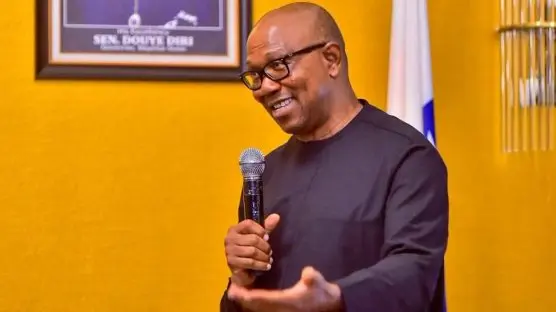
LABOUR Party (LP) presidential candidate, Peter Obi, has said no federal public servant, including elected and appointed officials, will earn more than civil servants if he is elected President of Nigeria in 2023.
Obi made the promise in his manifesto titled, ‘It’s POssible: Our Pact with Nigerians’.
In the manifesto, which highlighted seven priority areas for his administration, Obi said he would walk with the National Assembly to harmonise the salaries of public and civil servants in the country.
“Direct executive action and push for legislative mandate aimed at formulating a policy on Common Regimentation Emolument Structure Table (CREST) that will harmonize the wages of the federal public servants so that public servants (whether elected or appointed) are not ranked or earn higher than career civil servants and the military such as those in the judiciary, academia, para-military, and federal statutory agencies.
“Those in these cadres should earn the same salary and the same prescribed perquisites. This will aid in cutting the cost of governance while promoting amity. It will also address the incessant strikes that bedevil our country, particularly our tertiary institutions,” Obi said in the manifesto.
The former Anambra State governor said he would resolve the national minimum wage problem by doing away with the extant salary structure and introducing an hourly productivity-based national minimum rate, by which public and private sector employers should pay their employees based on their actual productivity.
While stating that he would drive the legislation to retain a National Minimum Wage with a binding effect and application across all of Nigeria’s States and Local Governments, the LP presidential candidate said he would ensure that non-payment of salaries, wages, pensions, entitlements, benefits, and violation of collective bargaining agreements are criminalised.
He added that such measures would reduce poverty and inequality and enhance the social solidarity necessary for a development bargain.
Obi further promised that he would submit an Executive Bill to the National Assembly for a consolidated Occupational Health and Safety Act to revamp and improve on the 2012 Labour, Safety, Health, and Welfare (LSHW) Bill.
He also stated that he would articulate a policy framework in line with the constitutional provisions of the Federal Character principle that offers opportunities to all Nigerians to
serve in any capacity in the public sector anywhere in the country.
The LP presidential candidate promised to operate a National Unity Government by embracing competent Nigerians at home and in the Diaspora with proven integrity, honesty, diligence and commitment to governance, irrespective of their political affiliations.
“Our government will be a melting pot of Nigeria’s best and brightest in character, competence and capacity,” he stressed.
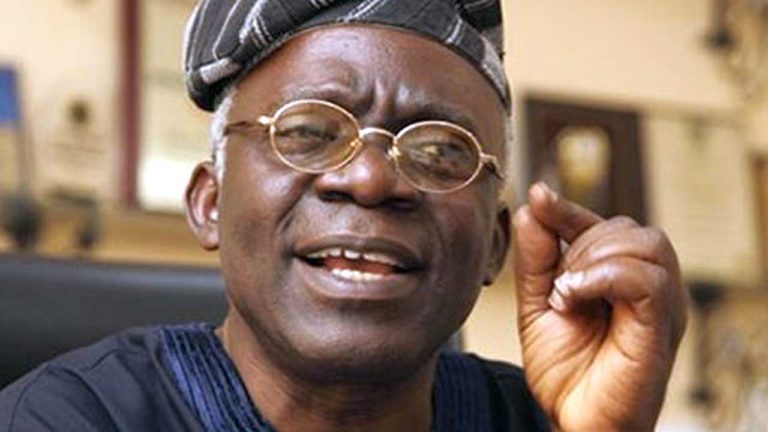
HUMAN rights lawyer, Femi Falana, has faulted the recent endorsement of the naira redesign by President Muhammadu Buhari, saying it does not translate to legitimising of the policy.
Falana made his stance known in a statement issued on Sunday, December 4.
Citing concerns of unregulated circulation of over 80 per cent of illicit fund, the Central Bank of Nigeria (CBN) had on October 26 said it will redesign the N200, N500, and N1,000 notes in order to take control of the currency in circulation.
Though the Minister of Finance, Zainab Ahmed, said she wasn’t consulted by the apex bank on the initiative, Buhari backed the CBN Governor, Godwin Emefiele, saying he was fully in support of the policy.
But Falana, in the statement, said the President is expected to present a money bill to the National Assembly for approval.
“The official endorsement is not sufficient as the President is mandatorily required to present a Money Bill to the National Assembly for the withdrawal of the billions of naira from the public fund earmarked for the printing of the new naira notes,” the statement read.
“Specifically, Section 59 of the Constitution requires “an appropriation bill or supplementary bill including any other bill for the payment, issue or withdrawal from the Consolidated Revenue Fund or any other public fund of the Federation of any money charged thereon or any alteration in the amount of such payment, issue or withdrawal…”
Besides Falana’s observation on the legitimacy of the process, there has been concerns about the timing of the government policy, with the Abuja Chamber of Commerce seeking for the extension of the deadline.
“As a Chamber, we recognise the advantages of this policy to include improvement in the integrity of the currency, curbing inflation, the efficiency of supply, and strengthening the strategy to conduct monetary policy, among others.
“However, we are not unaware of the cons of this policy on the national economy, specifically to the Micro, Small and Medium Enterprises (MSMEs),” the Chamber said in a statement.
Also, Muda Yusuf, a former Director-General of Lagos Chamber of Commerce and Industry, told The ICIR that the policy would cause some economic dislocation, following the January 31 deadline given by the apex bank.
“We don’t have banks in most of our rural areas, we expect the government to find a way to reach the rural people before the deadline Issuance of 31st January,” he said.
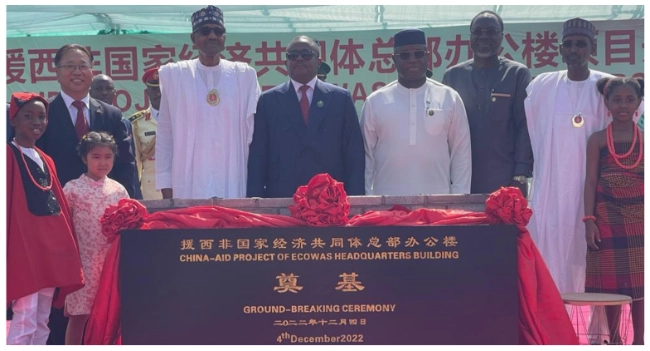
NIGERIAN President Muhammadu Buhari has laid the foundation of the new ECOWAS Headquarters Complex in Abuja, the Federal Capital Territory.
The ceremony which took place at the permanent site located in Lugbe along the Airport Road in Abuja, witnessed the presence of a high-powered delegation of African leaders.
In his speech during the ground-breaking ceremony, Buhari thanked the Chinese Government for donating the complex in support of the ECOWAS, noting that it will be a befitting edifice that will house the three major ECOWAS institutions – ECOWAS Commission, ECOWAS Parliament and the Community Court of Justice – in one building
“We have waited for this day, since the 10th of July, 2019, when ECOWAS and the Peoples Republic of China signed an implementation agreement for this diplomatic gift to the West African States.
“This no doubt represents China’s commitment to our sub-regional organisation. It will be our home and a regional rallying point,” he said, adding that the complex will strengthen operationalisation of the regional institutions and foster regional integration.
Buhari further gave directives to the various ministries, departments and agencies under the Coordination of Nigerian Ambassador and Permanent Representative to ECOWAS, to ensure smooth facilitation of the project.
The Nigerian government and ECOWAS Institutions in Abuja had agreed to consolidate ECOWAS operations in one complex, a departure from operating at three different locations, and the new complex is expected to be ready within the next 26 months.
“The Contractors have informed us that “The Eye of West Africa” will be ready in Twenty-Six Months. I have no doubt about their ability to deliver as promised. We look forward to its commissioning in February 2025, God – willing,” Buhari said.
Among delegates at the event were the President of the Republic of Guinea Bissau and Chair of the ECOWAS Authority of Heads of State and Government, President Umaro Sissoco Embalo and President of the Republic of Sierra Leone, Julius Maada Bio.
Others are: the President of the ECOWAS Commission, Omar Alieu Touray; the Ambassador Representing the Government of Peoples Republic of China; Permanent Representatives and Members of Diplomatic Corps as well as Heads of ECOWAS Institutions, amongst others.
LABOUR Party (LP) presidential candidate, Peter Obi, has promised to increase the country’s power generation capacity to 25,000 megawatts (mw) by 2025 if elected President in 2023.
Obi made the promise in his 72-page manifesto titled, ‘It’s POssible: Our Pact with Nigerians’.
He said his administration would reform and restructure the Nigeria Electricity Supply Industry (NESI) to deliver adequate, accessible, reliable and affordable power to Nigerians while also delivering the needed energy to move Nigeria to a competitive and productive economy.
The former Anambra State governor said he would take decisive decisions to end Nigeria’s chronic power shortages through adequate and tailored investments in various sources of electricity and transmission lines.
According to him, he would complete the ongoing “$2.3b Nigeria-Siemens network improvement deal to achieve 7,000mw stable capacity by 2023, 11,000 megawatts by 2024, and 25,000 megawatts by 2025”.
Obi also promised to retain top local and international financial advisers to restructure the Transmission Company of Nigeria (TCN), and contract an experienced grid operator to manage it to deliver, through callable financial guarantees, a resolution to the existing transmission challenges, persistent grid stability and an expanded capacity for Nigeria’s future power transmission needs.
The LP flagbearer added that he would urgently re-engage the 14 Independent Power Producers (IPPs), who had, in 2016, initialled Power Purchase Agreements (PPAs) worth $2.5 billion to build a total of 1,125 megawatts of installed solar capacity for delivery to the national grid.
He stated that he would remove the main structural impediments to reaching financial closure and negotiate a win-win PPA with an excellent list of local and international investors who have already demonstrated their capacity to fund these projects.
“We will invite experienced local and international developers to sign new PPAs for 8,000mw of solar and wind plants, including offshore wind farms in the Lagos, Warri and Port-Harcourt coastal areas with a mandatory latest commercial operation date of December 2025,” he said.
“We will restructure the Niger Delta Power Holding Company (NDPHC) to release its 4000mw of generating capacity by bringing on stream Gbarain, which had a fire incident, Ihovbor, with a turbine failure, Olorunsogo, Alaoji, Calabar and Sapele IPPs, as well as ensuring that Sapele, Omoku, Alaoji, Omotosho II, Olorunsogo II, and Geregu II, all return to optimal status, to generate up to their nameplate capacity.”
To finance the power sector, Obi said he would as a matter of principle, implement financing of power projects through different financing mechanisms including project and export finance, trade finance advisory and insurance, development and multilateral institutions’ long-term debt facilities and export credit insurance.
He added that the private sector participants will be incentivised to provide equity, expertise, governance, warranties, bonds and other suitable financial and performance guarantees as a condition for participating in the electricity sector.
Obi stated that the manifesto laid out his “mission focus and mandate for securing, uniting and making Nigeria productive”.
THE Chairman of the Labour Party (LP) in Ogun state, Michael Ashade, has said Doyin Okupe, the party’s presidential campaign director, was expelled for mishandling N20 million mobilisation funds, among other offences.
The ICIR had reported how Ogun State Labour Party expelled Okupe and 11 others over their failure to pay their membership dues.
However, the National Secretary of the Labour Party, Umar Farouk stated that the State Chapter lacks the constitutional right to remove Okupe and 10 other members of the party.
Reacting to the development on Saturday, December 4, on Arise TV, Ashade explained that in addition to his failure to meet up with financial obligations as a member of the party, Okupe was expelled for mishandling the mobilisation fund.
He said the fund was allotted to the state chapter by the Presidential Campaign Council (PCC) but Okupe only released N4 million out of the approved N20 million to mobilise the state’s party members to the presidential rally in Oyo State last month.
“Our grouse is not just the fact that he has been found wanting on his financial obligation as a member, we also highlighted certain deeds that occurred during the rally at Ibadan in which members in Ogun State were expected to be mobilised for that rally. And certain financial anomalies occurred which we highlighted there. And we have discovered that certain amounts of money were approved for the states by the campaign council and we are asking where are the funds,” Ashade said.
“It’s unfortunate maybe he didn’t know it will get to this, because I have a chat he sent me saying that he was personally paying the mobilisation of members from Ogun, Ekiti, Ondo, and Osun states for the Oyo State rally saying that there is no official amount approved. But, N20 million was approved specifically for Ogun State to mobilise members.
“We estimated 200 buses for the members, and it was turned down. It was reduced to 100 buses and forwarded to him, but he still rejected it saying no, that there are no funds that he was personally funding it. He came up with an estimate of N5,195,000, saying that was what he could personally afford. But it was less than that. About N4 million was what was gathered.
“It’s so appalling that the budget we did, every member that goes there, a certain amount should be given to them, at least N5,000 as a token. He said no, N1,000 will be given. I said that is ridiculous. I, as a chairman of the party cannot be in that position and be giving N1,000 to every member who left their home to Ibadan, and he said it’s for feeding.”
LP National Secretary, Farouk, had earlier said the Ogun State chapter lacked the powers to expel Okupe.
“The Ogun State chapter acted outside its constitutional jurisdiction,” Farouk had said at a press conference in Abuja.
Farouk noted that the national leadership of the LP was aware of moves by opponents to destabilise the party.