Home Blog Page 1164

Peter Obi, Baba-Ahmed release manifesto, prioritize seven key areas

THE Labour Party (LP) has released its manifesto tagged ‘It’s POssible’, with priority on seven thematic areas. 

The document will be formally unveiled to Nigerians on Sunday, December 4.

The Head of Media of the LP Presidential Campaign Council (PCC) Diran Onifade confirmed the development on Saturday evening.


Read Also:

He explained that the presidential candidate, Peter Obi, played a key role in producing the manifesto.

The seven thematic areas of the 62-page manifesto are security, production, institutional reforms, the industrial revolution, infrastructural development, human capital development, and robust foreign policy.

A cursory look at the document also  showed that Obi and his running mate, Yusuf Datti Baba-Ahmed, promised to, among others:

“Secure and unite our dear nation, and manage our diversity such that no one is left behind in Nigeria.

“Move Nigeria from consumption to production and embark on comprehensive legal and institutional reforms and practicable restructuring measures, to fight corruption; ensure the enthronement of the rule of law, and decisively tackle all forms of corruption.”

They also pledged to “Prioritize Human Capital Development through robust investments in STEM education, health, and infrastructural development, with emphasis on wealth creation, distribution, and sustainable development.

“Improve access to finance, particularly to MSMEs, for youths, and women, to significantly reduce unemployment and insecurity.

“Ensure that in policy and practice, governance will be made more inclusive, cost-effective, transformative, and less transactional. No more sharing of the national wealth by a few.”

The LP presidential candidates also promised to embark on comprehensive legal and institutional reforms and practicable restructuring measures, to fight corruption; to ensure the enthronement of the rule of law, and decisively tackle all forms of corruption.

They also promised to engineer the transition of Nigeria from fossil fuel dependency to climate and eco-friendly energy use.

Obi and his running mate also pledger to pursue holistic poverty eradication with emphasis on agricultural revolution through effective utilization of our vast arable lands, particularly in Northern Nigeria, and erase Nigeria’s categorization as the poverty capital of the world.

World Cup final 16: African performances mark a definitive moment in football

0

By Chuka Onwumechili, Howard University

FOR Africa to have multiple teams go beyond the group phase to reach the Round of 16 in a World Cup is a milestone.

The remarkable result at the 2022 men’s Fifa World Cup in Qatar – which sees Senegal and Morocco move into the knockout stage is Africa’s best performance at the World Cup since 2014. That year both Nigeria and Algeria reached the final 16. This is a pleasing performance after a dismal 2018 World Cup when none of the African representatives went beyond the group stage.

Reaching the Round of 16 is an important marker, but what could be even more sustaining is having multiple teams reach the final eight in the quarter-finals. Although it will be a Herculean task, it could well become a turning point in Africa’s World Cup history. Previously, three African teams have reached the quarter-finals: in 1990 (Cameroon), 2002 (Senegal) and 2010 (Ghana).


Read Also:

However, two African teams have never reached that stage in a single World Cup. Could 2022 be the year?

A definitive moment

Reaching the quarter-finals aside, the performance of Africa’s representatives in Qatar points to a definitive moment indicating that the continent can compete with the top teams in the world sustainably.

Presently, the remarkable performance by Tunisia provides an indication. Tunisia did not go beyond the opening round but by beating the defending World Cup champion France 1-0 was a story in itself. It was France’s only loss in the opening round.

Cameroon, too, showed the kind of mettle needed when they stunned favourites Brazil in a gutsy performance, narrowly losing out on a place in the final 16 after Switzerland beat Serbia to edge ahead of them.

But the real story lies ahead. Could Senegal and Morocco even advance to the medal stages? Morocco’s manager Walid Regragui clearly thinks so. He told the media:

We are going to be very difficult to beat … I think African teams can go far. Why shouldn’t we dream of winning the World Cup?

The problem with the rankings

Africa’s performance in 2022 shines a light on a persistent World Cup issue: rankings. The rankings provided by world football body Fifa have been a bone of contention for years. This is especially in its use of coefficients – a system based on past scores that is used to rank the collective performance of the teams. This then determines the number of places each continent or region is given at the World Cup. Currently, coefficients favour European and South American teams to the detriment of teams from other parts of the world.

It’s not an efficient method for assessing the strength of national teams because the ranking system assigns coefficients based on the performances of the top teams within a continental confederation (like the Confederation of African Football). It makes more sense to assign coefficients based on position on the Fifa rankings rather than on the results from confederations. For instance, teams ranked 1 to 50 receive the same coefficient, regardless of their confederation. This prevents weak teams in some confederations benefiting from the performance of strong teams in their confederation. Presently, top teams in weak confederations are disadvantaged because their wins are impacted by lesser coefficients in the calculation of points earned in the ranking equation.

Although Fifa has periodically made changes to its ranking model, this World Cup once again called the model to question. It is not so much that Morocco, ranked 22, would finish its group in first position ahead of both Belgium and Croatia that were ranked well ahead of it but the fact that the poorer teams of Europe benefit from those coefficients when they are weaker than the top teams in regions with weaker coefficients. For example, teams like Serbia and Wales each received ranks that are higher than those of Morocco, Ghana, and Japan, who solidly outperformed them.

But what do the 2022 matches indicate? Firstly, it is increasingly clear that Africa deserves the increase to nine spots that it is getting for the next World Cup in the US in 2026.

Presently, Africa has five spots but there is usually fierce competition for those placces and several top African teams have failed to qualify because of this. These include Algeria, Egypt, Ivory Coast and Nigeria who have previously won the African Cup of Nations and have consistently been among the top ranked African teams in the last few years.

Narrowing the gap

Another thing that is clear in Qatar is that the Bosman ruling, which opened up the transfer of footballers across clubs and countries, has helped to hasten the development of football talent globally. It has widened the reach and distribution of football’s technical development. This has closed the gap between the haves and have-nots in global football. For instance, the CIES Football Observatory notes the large number of football talent migration from all over the world including Africa to the “Big Five” leagues in Europe. These talents return from Europe to represent their birth nations at the World Cup.

An emerging source of talent for African countries at the World Cup are footballers born in Europe, particularly, to African parents or are otherwise eligible to play for African countries. Several of these footballers are increasingly declaring eligibility to play for African countries and their impact at competitions like the World Cup is particularly evident in 2022.

Ultimately, African teams at the World Cup are proving that they deserve their seats at the main table.The Conversation

Chuka Onwumechili, Professor of Communications, Howard University

This article is republished from The Conversation under a Creative Commons license. Read the original article.

Photo by Fauzan Saari on Unsplash

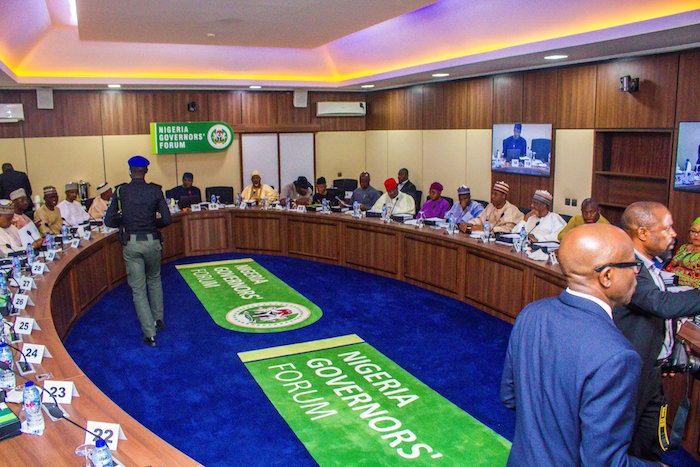
Governors hit back, say FG’s failure to secure Nigeria responsible for rising poverty

THE NIGERIA Governors’ Forum (NGF) has described the claim by the Federal Government that governors are responsible for the rising poverty and economic hardship in the country as “baseless”.

The Forum, which consists of the 36 state governors, attributed the high level of poverty to the Federal Government’s failure to provide adequate security for lives and property.


READ ALSO:

FG blames state governors for rising poverty, hardship in Nigeria

133m Poor Nigerians: SERAP calls on Buhari to probe spendings on poverty intervention programmes

Retiring to poverty: Benue retirees live in penury as government defaults on pension payment

Economists seek improved partnerships of states, private sector to curtail rising poverty


The NGF reacted to the Federal Government’s claim that governors are responsible for rising poverty and economic hardship in the country through a statement by the Director of Media and Public Affairs, AbdulRazaque Bello-Barkindo, on Saturday, December 3.

The ICIR reported how Minister of State for Budget and National Planning, Clement Agba, blamed state governors for the rising rate of poverty and hardship in the country, particularly the rural areas.

“Our governors are now competing to build flyovers all over the place and we applaud them, but they should concentrate on building rural roads so that the farmers can at least get their products to the market,” the minister said.

The minister noted that majority of the country’s population live in the rural areas and as result, efforts to eradicate poverty should be focused on them.

“The governors are basically functioning in their state capital. And democracy that we preach is about delivering the greatest goods to the greatest number of people,” the minister added while addressing journalists after a meeting of the Federal Executive Council (FEC) on November 30.

Reacting to the Federal Government’s claims, the governors said they were not to blame for the high rate of poverty in the country.

Parts of the statement released by the NGF said: “The tirade early this week by the Minister of State for Budget and National Planning Clement Agba, on the 36 Governors, where he blamed them for the rising poverty index in the country came to the Nigeria Governors’ Forum as a surprise.

“The minister got his message totally wrong. His attacks are not only unnecessary, but they represent a brazen descent into selective amnesia. It is also diversionary as far as the Governors are concerned.

“While rightly pointing out that 72% of the poverty in Nigeria is found in the rural areas, the minister said that the rural populace had been abandoned by governors.

“This assertion is not only preposterous and without any empirical basis, but also very far from the truth. It is Clement Agba’s veiled and deliberate effort as a minister, to protect his paymasters and politicize very critical issues of national importance.”

The NGF said the Federal Government’s inability to secure lives and property was the main reason for the high rate of poverty across the country.

The statement added, “First and foremost, the primary duty of any government is to ensure the security of lives and property, without which no sensible human activity takes place.

“But the Federal Government which is responsible for the security of lives and property has been unable to fulfil this covenant with the people thus allowing bandits, insurgents, and kidnappers to turn the country into a killing field, maiming and abducting people, in schools market squares and even on their farmlands.

“This dereliction of duty from the centre is the main reason why people have been unable to engage in regular agrarian activity and in commerce.

“Today, rural areas are insecure, markets are unsafe, travel surety of travels are improbable, and life for the common people generally is harsh and brutish.

“The question is, how can a defenceless rural population maintain a sustainable lifestyle of peace and harmony when their lives are cut prematurely, and they wallow permanently in danger?

“How does a minister whose government has been unable to ensure security, law and order have the temerity to blame governors?”

“Two states, Edo State and Akwa Ibom, had promptly responded to the vituperations of the minister.

“According to Akwa Ibom State, what determines poverty and unemployment in a country is its economic policy, which is set normally by the central government nationally. Akwa Ibom insists that the Federal Government cannot abdicate its responsibility by blaming states and goes further to ask, albeit rhetorically, how economic policies in a state drive the dollar which determines almost every aspect of our national existence.

“In its response to Clement Agba, Edo State, on the other hand, reeled out the projects the state embarked upon which were targeted at alleviating poverty among its people. Agba is perceptibly oblivious to them. Many other states have been implementing pro-poor programs in their domain, and they are there for all to see.

“For example, it is the Federal Government that, in its campaign message in 2019, promised to take 100 million Nigerians out of poverty. Today, records show that more than 130 million Nigerians are living below the globally accepted poverty line of a dollar a day,” the statement said.

The National Bureau of Statistics (NBS) recently announced that over 133 million Nigerians – about 63 per cent of thr country’s population – are living in poverty.

Oyetola closes case as tribunal admits Adeleke’s results

THE Osun Election Petitions Tribunal, sitting in Osogbo, has admitted original copies of Form CF001 and all its attachments used by Osun State governor, Ademola Adeleke, to contest the 2018 governorship elections.

This is as the former Osun State Governor, Adegboyega Oyetola, and his party, All Progressives Congress (APC), who are challenging the governor’s election at the tribunal, closed their case.

According to a report by The Punch, the documents which were presented to the panel by the Independent National Electora Commission (INEC), through a Deputy Director, Joan Arabs, were admitted as exhibits.


Read Also:

The tribunal had ordered INEC to produce the nomination form and copies of the academic certificates used by Adeleke to contest the 2018 governorship election.

At last Thursday’s sitting, INEC presented GCE results and testimonial obtained from Ede Muslim Grammar School, Ede, however there were allegations that the results are blurry and the Commission was ordered to bring a clearer copy at the next sitting.

Counsel to Adeleke, the second respondent in the matter, Niyi Owolade, and that of Peoples Democratic Party (PDP), the 3rd respondent, Alex Izinyon, SAN, said they had gone through original copies brought by the 1st respondent, noting that the documents were more legitimate than the previous ones presented.

After going through the documents, Lateef Fagbemi, who represented the petitioners, said they were legible enough and applied to tender them before the panel.

But counsel to the respondents opposed tendering of the documents but they reserved their argument till the final written address stage.

Izinyon also said the entire documents and its attachment could not be admitted, since only two pages were said to be blurry, out of the ones previously brought by INEC.

But Fagbemi insisted that the entire documents should be admitted since the copies earlier brought by INEC had not been admitted by the panel.

The panel admitted all the original documents brought by INEC and tagged them as exhibit ‘FILE D.’

Fagbemi while further addressing the panel, said the petitioners had closed their case.

The panel chairman, Justice Tetse Kume, adjourned further hearing till December 20 for the respondents to open their case.

FG lost N113m to shutdown of Abuja-Kaduna rail line, NRC resumes operations Monday

0

THE Nigeria Railway Corporation (NRC) has said about N113 million was lost due to shutdown of the Abuja-Kaduna rail line for over eight months.

The Managing Director of the NRC Fidet Okhiria disclosed this in an interview with the News Agency of Nigeria in Abuja on Saturday, December 3.

According to NAN, Okhiria said many Nigerians incurred some losses indirectly due to the halt of operations on the route.


READ ALSO:

FG reveals plans to increase trips on Lagos-Ibadan train route

The ICIR offers training on Business, Finance Reporting 

Police Area Command created for Abuja-Kaduna train route – NRC

Abuja-Kaduna train services to resume in November


He said, ”The last time we checked, that was between the months of February to August. We have lost about N113 million, using what we were earning between January and March as a working document.

“When the train was working, there are a lot of other businesses that were going on.

“There were people selling on the train, there were people selling around the stations, and there were people that had opened shops and people were patronising them because the trains were running.

“So those were indirect benefits and cost that have been lost to the Nigerian economy.

“More so, somebody who would have travelled from Kaduna to Abuja via train for some form of transaction and couldn’t make it because the trains were not running would have also lost something.

“The economic benefits is also lost, so we should not only look at the Naira and kobo that railway would have been able to make from it, but include all other losses by Nigerians.”

Meanwhile, the NRC has announced that it will resume the Abuja-Kaduna passenger train service on Monday, December 5, with only two return services.

According to Channels TV, NRC Managing Director Okhiria disclosed this in a statement released on Saturday, December 3.

According to the statement, the first train will depart Rigasa train station in Kaduna to Abuja by 8:00 in the morning while from Abuja, the first train will depart Idu Train Station to Kaduna by 9:45 in the morning.

The NRC also revealed that as part of the new security measures, it is now mandatory for passengers to present their National Identity Number (NIN) and valid Boarding Ticket before they will be allowed to board the trains.

Also, the purchase of tickets by proxy is only limited to minors and a specified number of adult passengers.

Online and mobile app ticketing will be available from 8:00 in the morning on Sunday, December 4, while the ticket offices at the train stations will open from 6:30 in the morning on Monday, December 5.

The NRC suspended service along the route after Boko Haram terrorists attacked a passenger train in Kaduna on March 28.

EFCC to commence auction of forfeited items December 6

2

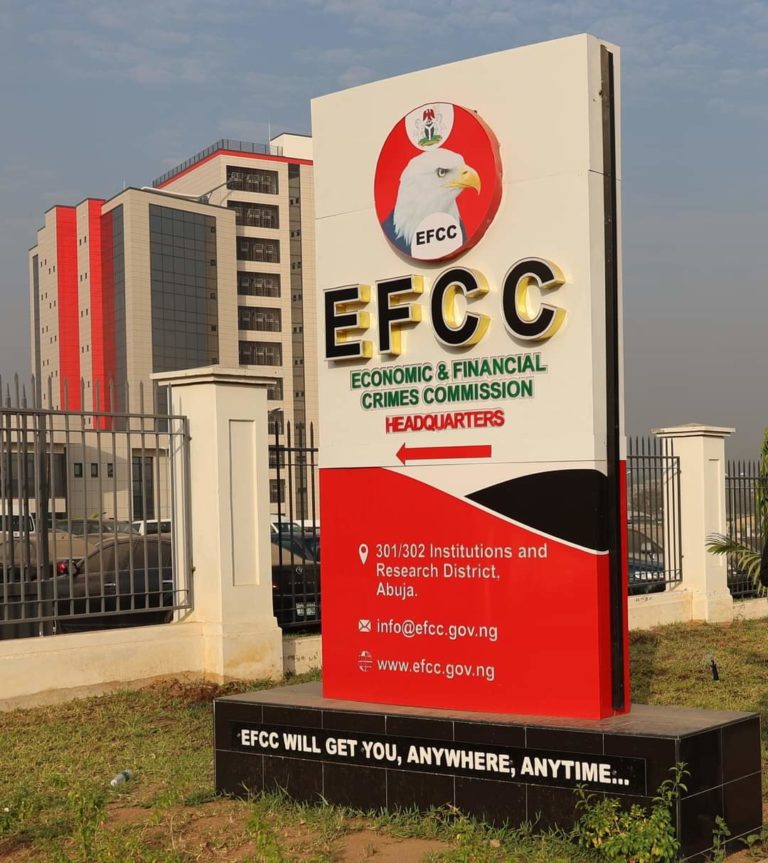
THE Economic and Financial Crimes Commission (EFCC) will commence physical inspection and auction of 649 forfeited vehicles and other assets on December 6.

EFCC disclosed this in an advertorial published in some national newspapers on Friday, December, 2.

The anti-graft agency said the exercise will hold at its offices in nine states, including Abuja, the Federal Capital Territory (FCT).


READ ALSO:

EFCC secures 3,328 convictions in 11 months

N544m contract fraud: EFCC loses as court discharges ex-SGF Babachir Lawal

More governors on EFCC watchlist – Bawa

Naira redesign: EFCC promises 5% reward for information on hidden money


The offices where the auction is to take place include Uyo, Enugu, Kano, Lagos, Benin, Ibadan, Port Harcourt, and Sokoto.

According to the advertorial, the forfeited assets to be auctioned include 649 vehicles, 52 mobile gadgets and 15 ships.

The Commission disclosed that the auction of vessels and barges would hold online at www.iNaira.com and www.rihago.com on December 6 to December 7.

“The auction is open to the general public throughout Nigeria for the duration of the bidding period stated above. Asset viewing is free at asset location,” the advertorial reads.

“Prospective bidders will only be granted viewing access to view the lots at the asset location from 8:30 am to 4:30 pm on viewing days.

“The assets will be sold ‘AS IS and WHERE IS’ in their current condition and location. No asset will be sold below its reserve price.

“A winning bid can only be equal or above the Commission’s reserve price.

“Any person who places the highest bid for an asset will be declared the winner of the asset at the end of the auction.

“Upon declaration of winning bidder, a 100% payment via Remita, Retrieval Reference (RRR) to be issued by the auctioneer for direct payment to Government TSA.

“Successful bidder will have a 48 hours window to make full payment.”

The Commission said the final forfeiture of the auctioned assets is in accordance with the EFCC (Establishment) Act, 2004, Public Procurement Act, 2007 and the Proceeds of Crime (Recovery and Management) Act, 2022.

Many Nigerian graduates can’t speak, write correct English — VC

0

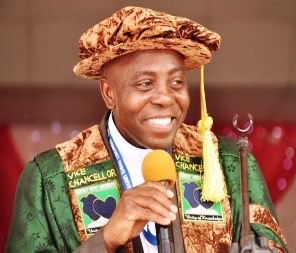
THE Vice-Chancellor of Godfrey Okoye University (GOUNI), Christian Anieke has said many Nigerian graduates find it difficult to speak and write correct English Language.

According to the News Agency Nigeria (NAN), Anieke made the remark at a meeting with officials of the National Universities Commission (NUC) on Friday, December 2.

The Vice-Chancellor said writing and speaking English Language is a major challenge for most Nigerian graduates.


READ ALSO:

Why Nigerian Graduates Are Unemployable – DG Science & Tech Agency

Tribal debate erupts on Twitter as all nine Master of Law graduates in a Canadian university are Nigerians

Frustration of Nigerian undergraduates learning over a video conferencing app

SPECIAL REPORT: How Nigerian female techies are bridging gender gap despite limited funding


He noted that GOUNI has observed that English was a challenge for many graduates from tertiary institutions, adding that some of the best graduating students were not able to speak and write accurate and correct English.

“This is why we introduced a course we called ‘Communication in English’. Students’ inability to use English language correctly could be due to their background.

“In the Post-Graduate School, we ensure that when you write your thesis, it will be strong enough to be published in a journal and if not publishable, then you have not written a good thesis.

“You may not have a lot of students here because a lot of Nigerian students want it easy, but quality is very important to me,” Anieke said.

He commended the NUC for championing national integration by sending university officials in charge of academics to institutions outside their regions.

“I see this as very important for the growth of our universities,” Anieke added.

Flooding: Kogi asks FG to find lasting solution

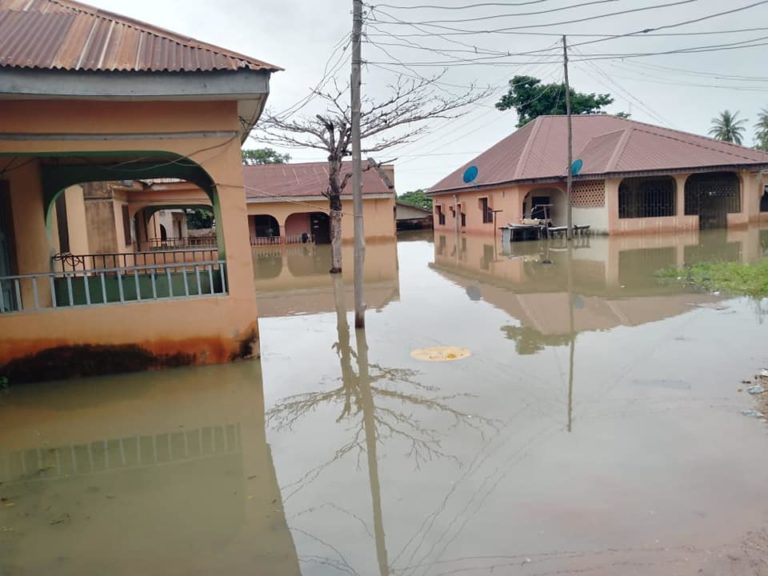
THE Kogi State Government has called on the Federal Government to find a lasting solution to the perennial flooding affecting the state and other parts of the country.

Managing Director, Kogi State Agricultural Development Agency, Bello Ogirima, stated made the call at the opening ceremony of a two-day training for farmers and extension officers organised by the Federal Ministry of Agriculture and Rural Development.


READ ALSO:

Flooding: SWOFON calls for govt intervention to reduce impact

Amid concerns of flooding, inflation, IMF downgrades Nigeria’s growth forecast

Construction of dams will mitigate flooding – Delta commissioner

VIDEO: The harrowing tales of Kogi residents escaping flooding to biting hunger


Bello stressed the need for more efforts on the part of the Federal Government to cushion the devastating effects of the recent flood that ravaged parts of the state recently.

“It is not enough to give palliatives, there is a need to find a permanent solution to the issue of perennial flooding if we want to achieve food security in the country,” Ogirima said.

The recent floods disrupted communities and village settlements in various parts of the country.

According to the Kogi State government, the disaster affected over 514 communities and destroyed 92 health facilities.

Twenty four deaths were recorded in the state, while 471,000 persons were displaced.

NIS graduates first batch of Women Armed Squad

THE Nigerian Immigration Service (NIS) has graduated its first batch of Women Armed Squad consisting of 61 female personnel.

The officers were passed out after undergoing training exercises in weapons handling, border security among others.


READ ALSO:

Four jailed over Immigration job scam

Human rights activists kick as Immigration refuses to react to cases of bribery, extortion in passport offices

How Corrupt immigration officers extort Nigerian passport seekers despite launch of digital portal


Speaking at the passing out parade ceremony of the squad, Isa Jere, the Comptroller-General, NIS tasked the newly graduated female officers to put the knowledge and training learnt into use to enhance their capacity and prepare for future tasks ahead.

Jere was represented by an Assistant Comptroller-General, Usman Babangida, at the passing out parade ceremony at the NIS training school, Ahoada in Rivers State.

He charged the officers to ensure the security of the country’s borders and also ensure that the lives and property of the citizens are well protected.

Jere further said the Women Armed Squad would enhance the capacity of the Service to deploy more personnel to critical areas.

“Today, we are witnessing the Passing Out Parade of 61 officers, all female, who have undergone rigorous physical training on weapons handling among others.

“These officers have indeed demonstrated their readiness and capacity to stand toe-to-toe with the male as they go out there to serve our fatherland,” Jere said.

He explained that the Service still has over 1000 personnel undergoing the pre-basic training programme in Immigration Training School, Kano and the Customs Training School, Goron Dutse, Kano.

The Comptroller-General noted that the essence of the training was to ensure the readiness of NIS operatives to compete favourably with their counterparts across the world in the performance of core Immigration duties.

Zulum donates Govt House diesel to hospitals in darkness during unannounced visit

0

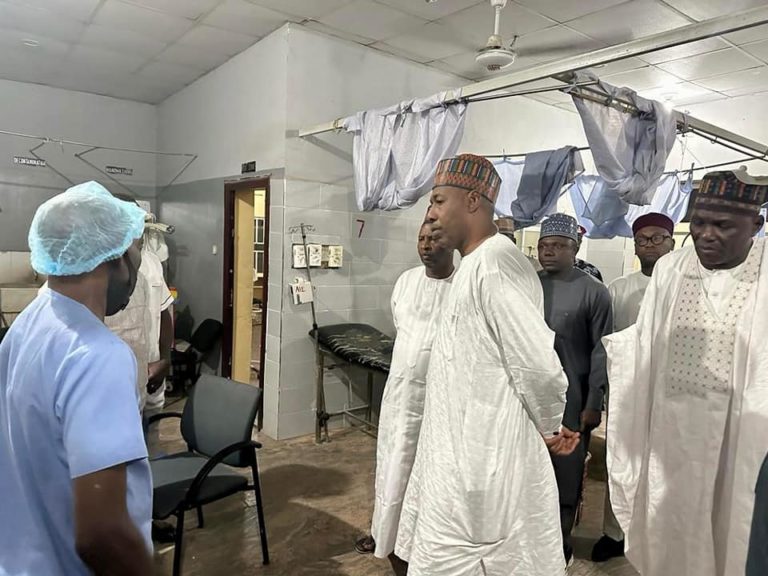
BORNO State Governor Babagana Zulum surprised many patients and workers at two hospitals in Maiduguri on Friday night when he ordered his aides to move diesel meant for the Government House to the facilities after realising they were in darkness.

The governor paid an unscheduled visit to the hospitals on his way from Abuja, a statement on his Facebook Page read Saturday morning.

Some people told him that the facilities had been without light for days.


READ ALSO:

Boko Haram destroyed nearly half of primary schools in Borno – Zulum

Zulum visits Bama hospital at night, orders employment of doctors, nurses from community

Timing of shutdown of NNPP Borno office wrong – Zulum

Stop insulting governors because of my performance – Zulum


Zulum wondered at the hospitals why none of their management staff or governing board members informed him about the outage.

The Umaru Shehu Ultra Modern Hospital and Fatima Ali Sheriff Maternity Hospital are both around densely populated Bulumkutu communities in Maiduguri.

The governor confirmed patients were in darkness because there was no diesel supply to standby generators.

Both hospitals rely on generators because they lack an electricity supply from the national grid.

Boko Haram has destroyed electricity equipment along the Maiduguri-Damaturu highway, and efforts by the state and the Federal Government to restore connections to the area is yet to achieve the desired result.

The governor said, “If we can power our streetlights constantly, I see no reason we cannot power our hospitals.”

Governor Babagana Zulum and his team at one of the hospitals on Friday night. The governor could not be identified in the crowd because of the darkness.

Zulum, an engineering professor, asked persons in charge of generators at both hospitals some technical questions, which led to his confirmation that the generators had no problems. They were fully functional but lacked diesel to power them.

The governor decried the situation and consoled patients and their loved ones for being in darkness despite dealing with illnesses.

“Wondering the quickest way to mobilise diesel, the governor directed that available diesel meant to power generators at the Government House, Maiduguri, where he lives, be immediately transferred by trucks to both hospitals, pending his meeting with officials of the state’s Ministry of Health the following day, to find a sustainable solution.”

Governor Babagana Zulum, at one of the hospitals on Friday night, listens to the hospital’s staff on duty as they brief him about the power crisis.

To ensure sustainable electricity in both hospitals, the governor directed upgrading the existing solar-powered installation at Fatima Ali Sheriff Maternity Hospital.

He also ordered installing solar power at Umaru Shehu Ultra Modern Hospital.

Zulum is popular for paying unscheduled visits to public institutions and making prompt interventions, including rewarding or sanctioning officials who do well or fall short of their responsibilities.