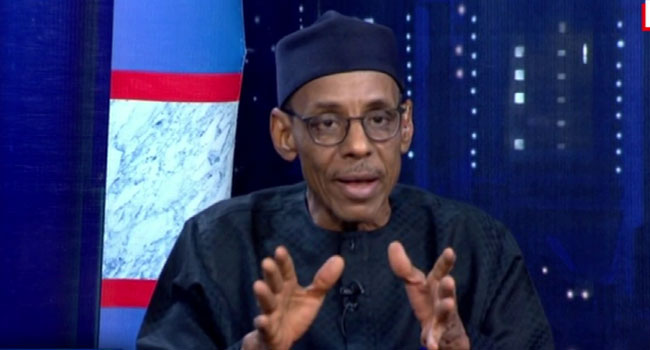
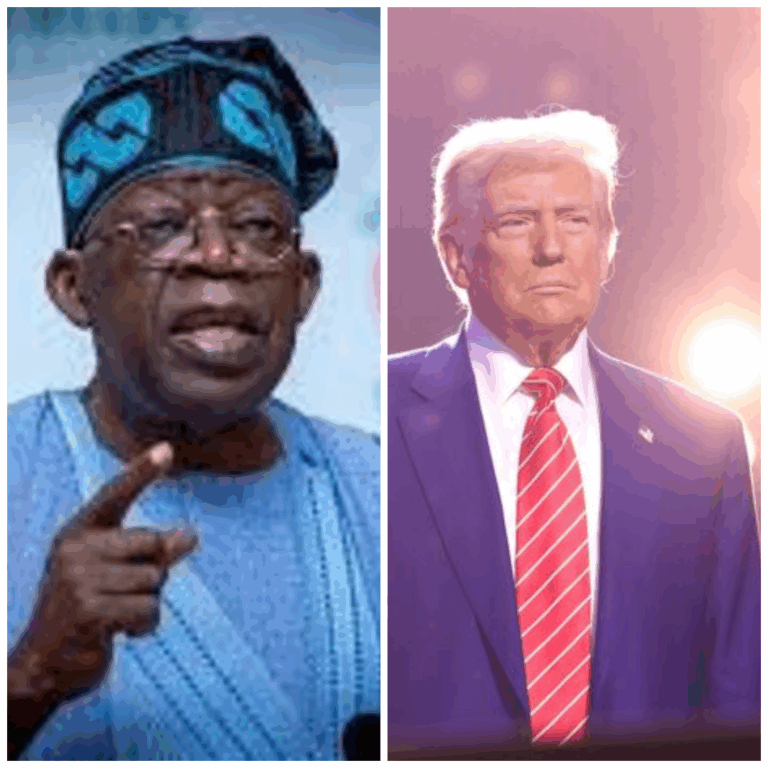
FORMER Presidential Adviser, Hakeem Baba-Ahmed, has tasked President Bola Tinubu to address Nigerians over the recent threat by United States President Donald Trump to invade Nigeria with his country’s military.
In a Facebook post written in Hausa language on Thursday, November 6, Baba-Ahmed, a former political adviser to Tinubu, expressed concern that the president had yet to address Nigerians on the development.
“If President Tinubu truly has capable advisers and understands the weight of his office, he should have spoken to Nigerians by now. This is not the time for ministers or aides to issue statements. The president himself should reassure the country, clarify our position, and outline the steps his administration intends to take. Our silence makes us appear weak and without direction,” he said.
Baba-Ahmed warned that the president’s silence portrayed a troubling picture for Nigeria’s leadership. He cautioned against any plan to visit the United States for a meeting with Trump, describing such a move as ill-advised.
“At this critical moment, Tinubu should not even think of going to America to meet Trump. It would only worsen Nigeria’s image — like receiving a slap and smiling in return,” he remarked.
Baba-Ahmed, called on the president to take decisive action.
“If Tinubu truly listens to those who care about this country, he must act immediately — appoint ambassadors, rebuild Nigeria’s diplomatic presence, and address the nation directly,” he said.
The ICIRreported that the US military has drawn up and submitted contingency plans for possible strikes in Nigeria, in line with Trump’s directive to the Pentagon to prepare for intervention over alleged Christian persecution in Nigeria.
The US Africa Command (AFRICOM) submitted the plans to the Department of War following a directive from Secretary Pete Hegseth.
This is coming days after Trump added Nigeria to countries on watchlist for alleged Christian genocide.
He insisted that Christianity was facing an existential threat in Nigeria, alleging that thousands of Christians were being killed by radical Islamists.
However, Tinubu said Nigeria stood firmly as a democracy governed by constitutional guarantees of religious liberty and continued to maintain open engagement with both Christian and Muslim leaders across the country.
He argued that the portrayal of Nigeria as religiously intolerant did not reflect the reality in the country, adding that the government’s efforts to safeguard freedom of belief for all Nigerians remained consistent and sincere.
China has likewise voiced its support for Nigeria, condemning Trump’s threat as “an interference in the internal affairs of a sovereign nation.”
WITH the recent return of the Senator representing Kogi Central in the red chamber, many political watchers and, indeed Nigerians, thought the dust had finally settled in the political feud between the embattled senator and Senate President Godswill Akpabio. However, recent events have indicated that the part two of the unfolding drama may have begun.
Tensions between the duo appeared to have eased when Akpoti-Uduaghan extended an invitation to Akpabio to attend a project commissioning in her senatorial district.
The invitation, which was conveyed in a personally signed letter by Akpoti-Uduaghan and read during plenary by Akpabio reads: “In marking my second-year anniversary as serving Senator of the Federal Republic of Nigeria, I wish to invite fellow distinguished senators to join me for projects commissioning in Kogi State.”
Apparently pleased with the invitation, Akpabio, after reading the letter, rejoiced with the Kogi lawmaker, saying: “Congratulations in advance.”
Upon resuming her duties on September 24, Akpoti-Uduaghan had been seen engaging with Akpabio during plenary sessions, including contributing to proceedings as additional prayers on the Criminal Code Act (Amendment) Bill, 2025. However, her invitation was seen as significantly marking the most direct step toward replacing recrimination with reconciliation.
Although many observers saw the invitation as signalling a thaw in relations between the two, unfolding events have indicated that a part two of the drama may have reignited.
Passport seizure
In the latest part of the ensuing feud, Akpoti-Uduaghan, accused Akpabio of instructing security officials to withhold her international passport and prevent her from travelling abroad.
A video shared on Tuesday, November 4, saw the lawmaker expressing frustration as she confronted immigration officials whom she said refused to release her passport.
“I have just completed celebration of my second year in office. I decided to take a week off. So, I am at the airport here, and my passport has been withheld again,” she said in the video.
According to the embattled senator, the last time this happened, the officer in charge said that the Senate President instructed them to withhold her passport and prevent her from traveling because: “Each time I travel out of the country, I smear its image by granting interviews to international media.”
Describing the repeated seizure of her passport as harassment and a violation of her fundamental rights to freedom of movement, and vowing to seek legal redress, Akpoti-Uduaghan told Akpabio, “You have no right to withhold my passport. You have no right to deny me exit and entrance into my country. I have not committed any offense and this must stop.”
She added that although there were two ongoing cases in court against her by Akpabio, President Bola Tinubu had directed the Attorney-General of the Federation to withdraw them after allegedly acknowledging they were politically motivated.
Reactions
The Action Collective, a pro-democracy advocacy group described the reported passport seizure incident as “unwarranted, illegal, and a gross embarrassment to the image of the country.”
The National Coordinator of Action Collective, Teddy Onyejuwe, said the action by the Immigration officers was not only an affront to the senator’s fundamental human rights but also a deliberate attempt to humiliate a public servant who has remained law-abiding and cooperative with all judicial processes involving her.
However, the Nigeria Immigration Service (NIS) said the episode involving the senator was a normal screening process that didn’t take long.
Public Relations Officer (PRO) of NIS, Akinsola Akinsobi told the press that, “there was no order or instruction from anyone. It was a routine check, and she has been allowed to travel. It’s a standard procedure applied to all traveler and nothing unusual occurred. He dismissed the claim that the directive came from the Senate President, describing it as baseless.
Background to part one of the feud
The conflict between the two lawmakers’ dates back to December 2023 when Akpoti-Uduaghan accused Akpabio of making inappropriate advances towards her. The situation escalated in February 2025, leading to her suspension.
On December 8, 2023 Akpoti-Uduaghan alleged that Senate President Akpabio made inappropriate advances towards her, prompting her to file a formal petition with the Senate Ethics Committee.
On February 20, 2025, tensions escalated when her assigned seat was reassigned without notice, leading to a heated confrontation with Akpabio and on March 6, 2025, the Senate voted to suspend her for six months, citing gross misconduct and unruly behaviour.
Although the Kogi senator, on had on Wednesday, March 5, submitted an official petition regarding the sexual harassment and abuse of office by Akpabio, the Ethics Committee threw out the petition, citing key procedural oversights that allegedly undermined the petition’s legitimacy.
She resubmitted the petition but shortly thereafter, she was suspended for six months despite an interim order from a Federal High Court in Abuja restraining the Senate from investigating her recent actions. The court, presided over by Obiora Egwuatu, had on March 5 issued an injunction stopping the Senate Committee on Ethics, Privileges, and Public Petitions from proceeding with its probe. The ruling followed an ex parte application filed by Akpoti-Uduaghan’s legal team.
On March 11, 2025, Akpoti-Uduaghan petitioned the Inter-Parliamentary Union (IPU) in New York, alleging unlawful suspension and injustice.
Many condemned the Senate’s actions as politically motivated and an attempt to silence her. Others criticised the Senate’s handling of the situation, arguing that it reinforces a culture of impunity and allows powerful politicians to evade justice.
Civil society groups, human rights organisations, and women’s rights advocates expressed solidarity with Akpoti-Uduaghen, using hashtags like #JusticeForNatasha and #WeAreAllNatasha to demand accountability.
However, the Senate went ahead with the investigation and, based on the committee’s findings presented by Neda Imasuen, voted to suspend the Kogi Central lawmaker for violating Senate rules.
The suspended senator was later arraigned before the Federal Capital Territory High Court in Maitama, Abuja, over defamation. The Attorney General of the Federation, in three criminal charges, accused Akpoti-Uduaghan, the sole defendant, of making defamatory statements against the Senate President, Godswill Akpabio, during a live television broadcast.
The charge, which, the lawmaker denied, lists the Akpabio and the former Kogi State Governor, Yahaya Bello, as nominal complainants, alleged that Akpoti-Uduaghan claimed Bello had conspired with Akpabio to orchestrate her assassination outside Abuja, disguising it as a mob or local attack.
The development came as the Socio-Economic Rights and Accountability Project (SERAP) slammed the Federal Government, asking that the criminal defamation lawsuit against the suspended senator be dropped immediately, while describing it as “bogus criminal defamation”
In a statement on its X handle, SERAP said “This case makes a mockery of justice and strikes a grave blow to freedom of expression and the rule of law in Nigeria.”
However, a civil society group, Centre for Justice and Institutional Integrity (CJII), commended the arraignment, emphasising that truth must prevail over theatrics in a society governed by laws, and that justice should outweigh publicity stunts.
According to the CJII, Senator Akpoti-Uduaghan’s accusations were not being supported by any credible evidence, and her actions were aimed at damaging reputations for political gain.
Notice of return and the senate reaction
The ICIR reports that after completing her six-month suspension the Kogi state senator’s lawyer, Victor Giwa, had disclosed that the senator, then on vacation in London, had already made plans to resume plenary alongside her colleagues when the Senate reconvened on Tuesday, September 23.
However, signs indicating that it was not yet Uhuru for the Senator emerged when the acting clerk to the National Assembly, Yahaya Danzaria, made this known in a letter released on Tuesday, September 9, 2025, following the Senator’s notice of resumption on September 4, 2025.
In the letter, the Senate insisted that no administrative action could take place until the Appeal Court’s verdict.
Mild drama
Shortly after her resumption, a mild drama unfolded in the Senate when Senate President Godswill Akpabio and Akpoti-Uduaghan engaged in a brief exchange during deliberations on the Criminal Code Amendment Bill, which seeks to impose stiffer penalties for aiding or procuring abortions in Nigeria.
The bill, earlier passed by the House of Representatives and presented for concurrence by Senate Leader Opeyemi Bamidele, proposes to increase the punishment for anyone supplying drugs or instruments to facilitate abortions from three years to ten years’ imprisonment without an option of fine.
According to the sponsor, the amendment aims to update Nigeria’s Criminal Code Act in line with “contemporary social, moral, and medical realities.”
However, debate on the bill soon became heated as senators expressed divergent views on what constitutes an “unlawful abortion.”
Following the heated exchanges, Akpabio intervened, ruling that the bill be stepped down and referred to the Senate Committee on Judiciary, Human Rights, and Legal Matters for further review and recommendations within two weeks.
Akpoti-Uduaghan then sought recognition to make a contribution, appealing to the presiding officer, saying, “Senate President, please may I speak? I am a woman, and abortion has to do with women. It is very important, sir.”
Akpabio, however, declined her request maintaining that the matter had been suspended “in totality.” This was followed by Senator Adams Oshiomhole who raised a point of order, arguing that reopening the discussion after the gavel had fallen would violate Senate standing rules.
“If you grant this exemption to Senator Natasha, then you must extend it to everyone else,” Oshiomhole said, adding: “The rules should be applied uniformly, as you have already done.”
Akpabio upheld Oshiomhole’s position citing Rule 52 (Subsection 6) of the Senate Standing Orders, which bars reconsideration of any matter that has been concluded.“I rule Senator Natasha out of order,” Akpabio declared.
As the second phase of the drama unfolds, Nigerians are left wondering if this is just a continuation of the ongoing power struggle or a new chapter in the Natasha-Akpabio saga.
The feud has again attracted concerns among Nigerians, with many saying it is a reflection of the systemic challenges female politicians face in the country. Political watchers say it’s likely that more developments will emerge, keeping the feud in the spotlight.
For now, the situation remains fluid, with Senator Natasha vowing to pursue legal action and Akpabio denying allegations. Observers say the outcome may have significant implications for Nigerian politics and the treatment of female lawmakers.
THE United States military has drawn up and submitted contingency plans for possible strikes in Nigeria, in line with President Donald Trump’s directive to the Pentagon to prepare for intervention over alleged Christian persecution Nigeria.
According to The New York Times, the U.S. Africa Command (AFRICOM) submitted the plans to the Department of War following a directive from Secretary Pete Hegseth.
The newspaper cited military sources who revealed that three operational options, heavy, medium, and light, were proposed, each outlining varying levels of engagement in Nigeria.
It stated that the heavy option, the most aggressive of the three, would entail deploying an aircraft carrier strike group to the Gulf of Guinea to launch fighter jets or long-range bombers against militant targets deep within northern Nigeria.
The medium option proposes the use of drone strikes employing MQ-9 Reaper and MQ-1 Predator drones to target militant camps, convoys, and vehicles.
These drones, capable of remaining airborne for extended periods, would depend on US intelligence to carry out precise attacks.
Meanwhile, the light option, according to the plan, emphasises joint operations with Nigerian forces through intelligence sharing, logistical support, and coordinated efforts against Boko Haram and other insurgent groups responsible for attacks, abductions, and bombings.
The report noted that Pentagon officials acknowledged privately that limited airstrikes or drone missions would be insufficient to resolve Nigeria’s complex insurgency without a full-scale campaign akin to those in Iraq or Afghanistan, but the US deemed such an operation too costly and politically unpopular in Washington.
This is coming days after Trump added Nigeria to countries on watchlist for Christian genocide.
He insisted that Christianity was facing an existential threat in Nigeria, alleging that thousands of Christians were being killed by radical Islamists.
The following day, Trump warned he would consider military action against Nigeria if the country failed to curb alleged killings of Christians.
Other nations on the list include China, Myanmar, North Korea, Russia and Pakistan.
Trump said that the American military could deploy ground troops or launch air strikes in Nigeria to halt what he described as the widespread killing of Christians in the West African nation.
The conversation started last month, when US lawmaker Riley Moore had urged Secretary of State Marco Rubio to take diplomatic action over “systematic persecution and slaughter of Christians” in Nigeria, calling it “the deadliest place in the world to be a Christian.”
He also advocated suspending arms sales to Nigeria until measurable progress was made in curbing violence.
However, President Bola Tinubu said Nigeria stood firmly as a democracy governed by constitutional guarantees of religious liberty and continued to maintain open engagement with both Christian and Muslim leaders across the country.
He argued that the portrayal of Nigeria as religiously intolerant did not reflect the reality in the country, adding that the government’s efforts to safeguard freedom of belief for all Nigerians remained consistent and sincere.
China has likewise voiced its support for Nigeria, condemning Trump’s threat as “an interference in the internal affairs of a sovereign nation.”
Despite Trump’s remarks, analysts and former US military officers like Paul Eaton, have cautioned against any strike in Nigeria, warning that it could further destabilise the region.
Eaton told The New York Times that the plan was “a fiasco waiting to happen,” adding that “bombing northern Nigeria would be like pounding a pillow, it would cause chaos but solve nothing.”
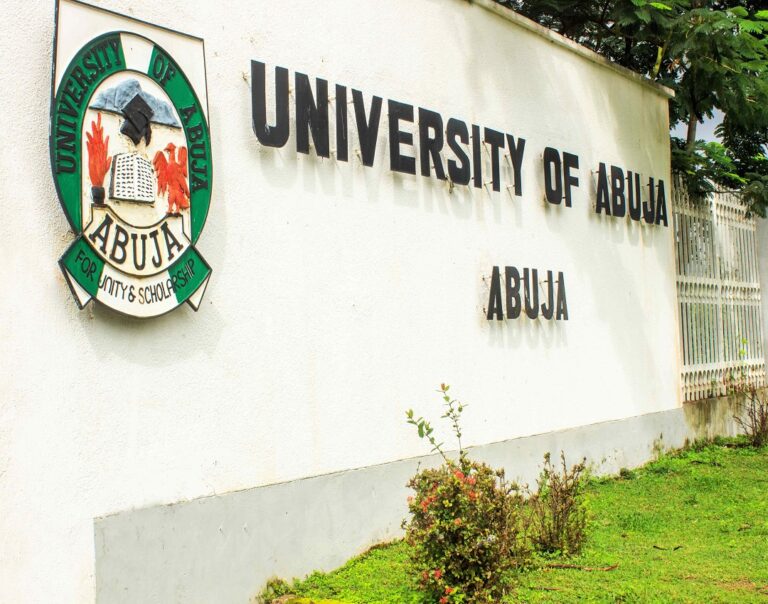
THE University of Abuja Alumni Association has urged the Governing Council of the institution to ensure transparency, fairness, and merit in the ongoing process of appointing a new vice-chancellor.
In a statement signed by the group’s National Publicity Secretary, Rauf Sarafadeen-Kunle, on Wednesday, November 5, the association emphasised that the integrity of the process must not be compromised by external interference or political interests.
“The Council must resist all external pressures, undue influences, or any attempt to manipulate the outcome of the selection process. The integrity of the University of Abuja is far more important than the ambition of any individual or interest group,” said the group.
It also cautioned the Federal Ministry of Education against actions that could disrupt the process or undermine the autonomy of the institution, alleging that past interferences from the ministry had led to administrative instability and set negative precedents in the university’s history.
“It is only natural that such individuals who understand the university’s history, challenges, structures, and potentials, be given due consideration for its highest leadership position,” it said.
Backing the call for internal leadership, the alumni expressed support for a home-grown candidate, one who has risen through the ranks within the university.
“The association emphasises that being home grown is not the sole criterion. The next vice chancellor must also be the most qualified, most competent, and most administratively capable among the applicants. The university needs a leader who embodies academic excellence, administrative experience, visionary leadership, impeccable character, and a proven track record of service to the university community. Only such a person can take the University of Abuja to its next phase of development,” the alumni noted.
While commending the outgoing vice-chancellor for steering the university towards stability and growth, they charged the incoming administration to build on existing gains and pursue reforms that would enhance innovation, discipline, and national relevance.
The ICIR reports that the university has had three VCs in one year.
In February, President Bola Tinubu sacked the school’s vice-chancellor, Aisha Sani Maikudi, a professor, who was newly appointed. He also dissolved the institution’s governing council.
The decision, which took immediate effect, also included leadership changes at several other federal universities, in a sweeping leadership overhaul.
The president consequently appointed Lar Patricia Manko, another professor, as acting vice-chancellor of the university for a six-month term.
Manko will not be eligible to apply for the permanent vice-chancellor position once the term expires, the president said.
The university’s governing council, chaired by Saddiq Ismaila Kaita, had on December 31,2024 announced Maikudi as the institution’s seventh substantive vice-chancellor.
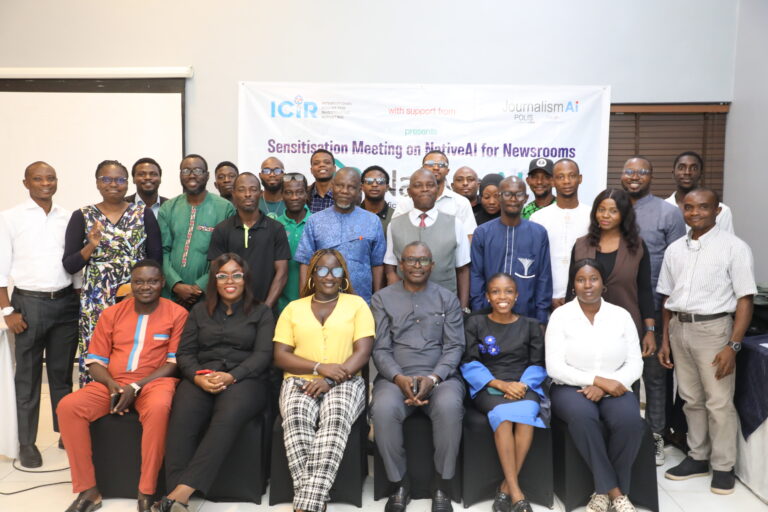
THE International Centre for Investigative Reporting (The ICIR) on Wednesday, November 5, held a one-day sensitisation meeting with journalists and stakeholders in Lagos State on how NativeAI helps newsrooms advance their work.
The meeting held one week after a similar meeting in Abuja.
Addressing participants, The ICIR Executive Director, Dayo Aiyetan, said the tool was meant to save journalists and others the time they spend transcribing their works.
“Journalism today is driven by technology. The NativeAI, built and released a few weeks ago, is an AI-driven tool that enables journalists, newsrooms, and other users to transcribe audio-visual files and translate them.
He added, “This model was developed by The ICIR. We designed a technological solution to deal with practical problems in the newsroom. It’s not just about transcribing interviews, but it’s also about translating them.
“I do hope that this would resonate with newsrooms. Now that we have developed the tool, we are handing it over to newsrooms, journalists, and others who will use it, so that they can have a buy-in. We expect that beyond this room, everyone will take an interest in not just using this app but also sharing it with colleagues, newsrooms, and making them understand how it works.”
Executive Director of The ICIR, Dayo Aiyetan
In addition to English, the app translates files into three Nigerian languages, namely Hausa, Yoruba, and Igbo. The ICIR hopes to expand the translation into other Nigerian and African languages.
In her presentation, The ICIR Programme Officer, Eunice Enoch, described NativeAI as an AI-driven model that reduces one hour of work to five minutes, bridging the gap between sounds and text.
“Because everyone matters, the deaf and people with hearing impairment can be part of every conversation,” she said, adding that language should never be a barrier to their work.
Eunice Enoch, Programme Officer
Nigeria is home to over 500 languages, a collection of radiant cultures and voices, yet this richness often creates walls between communities, journalists, and stories, Enoch noted.
She explained that Native AI was born from the challenges faced by newsrooms, researchers, and inclusion advocates, stressing that it was created to make information accessible to all and to streamline newsroom work.
She took participants through a virtual experience on their devices (mobile phones and laptops) to understand how the NativeAI works.
Similarly, The ICIR ICT Officer, Adulazeez Gobir, engaged everyone with hands-on activities, making them record, upload ,and test the outcomes of the model.
Gobir said, “This model generates speech-to-text transcription, instant translation, and live event transcription. It allows you to generate clear, exportable transcripts and translations that fit editorial workflows.”
A spectre is haunting Nigeria—not the ghost of a past conflict, but the living, breathing reality of a systematic, targeted campaign of eradication.
In the fertile lands of the Middle Belt and the scattered communities of the North, the bones of the slain are piling up, forming a grim monument to a national failure of catastrophic proportions. The world is beginning to take notice, using words we ourselves refuse to utter: words like “pogrom,” “religious cleansing,” and “genocide.” Yet, within our own borders, a different, more insidious sound dominates the discourse. It is not the sound of alarm, nor the roar of decisive action, but the murmur of a dangerous and morally bankrupt fallacy, repeated like a protective incantation against the demands of justice: “But others are also being killed; it is not only Christians.”
This argument, masquerading as nuance, is the anaesthesia that keeps the Nigerian conscience sedated while the body of the nation is dismembered. It is a lie we tell ourselves to avoid the terrifying necessity of introspection and the difficult path of definitive action.
The anatomy of a national deception
The statement “others are also being killed” contains a kernel of truth, which is precisely what makes it so pernicious. Yes, Nigeria is a pressure cooker of multifaceted insecurity. Bandits kidnap Muslims and Christians alike along the Abuja-Kaduna highway. Criminal elements in the South-East kill for separatist ambitions. In the North-East, Boko Haram and ISWAP have murdered countless Muslims they deem insufficiently orthodox.
Conflating the random violence of criminality with the targeted, systematic violence of ethno-religious eradication is not just an error in analysis; it is an act of intellectual and moral cowardice
However, this general state of criminal anarchy is being weaponised to camouflage a specific, ideologically driven project of territorial displacement and religious cleansing. Conflating the random violence of criminality with the targeted, systematic violence of ethno-religious eradication is not just an error in analysis; it is an act of intellectual and moral cowardice. The conflict in the Middle Belt—states like Plateau, Benue, Southern Kaduna, and parts of Taraba and Nasarawa—follows a clear and chilling pattern that distinguishes it from mere criminality:
Identity-based targeting: Attacks are not random. They meticulously target Christian farming communities, their churches, their villages, and their religious leaders. The victims are selected based on their faith and ethnicity.
Strategic timing and method: Assaults are often calculated for maximum impact—under the cover of night, during harvests to destroy livelihoods, or on worship days to desecrate the sacred.
Asymmetric weaponry: The attackers are not wielding sticks and stones. They are armed with sophisticated weaponry—AK-47s, RPGs, and sometimes even military-grade gear—that far outstrips the local vigilantes and police, pointing to a level of organisation and sponsorship that transcends mere farmer-herder clashes.
The clear objective of dispossession: The ultimate goal is not merely to kill, but to displace and conquer. Survivors are forced to flee their ancestral lands, which are then occupied and renamed. This is not crime; it is a strategy of land grabbing and demographic alteration, a slow-burn genocide aimed at rewriting the nation’s map.
When bandits kidnap a traveller, the primary motive is financial ransom. When militias massacre a village, burn its churches, and seize its land, the motive is territorial conquest and the elimination of a competing religious and ethnic presence.
To equate the two is to misunderstand the nature of the threat entirely and to provide cover for its perpetrators.
The numbers scream what our leaders whisper
Organisations like the International Society for Civil Liberties and Rule of Law (Intersociety) and various UN reports have consistently documented a staggering death toll that our own government seems unwilling to officially acknowledge. Their findings paint a horrifying picture: tens of thousands of Christians killed in the past decade, with thousands more maimed, and millions transformed into internal refugees in their own country.
The fallacy of “others are also being killed” is a statistical sleight of hand. While true in absolute numbers, it deliberately ignores the proportionality, intent, and impact.
If a disease kills 100 people from a population of one million, and another disease kills 100 people from a population of ten thousand, the latter represents an existential threat to that smaller community. For Christian communities in specific Local Government Areas, the violence is not just “insecurity”; it is a systematic unraveling of their very existence. To dismiss their specific agony by pointing to a generalised crisis is a profound injustice.
The convenience of the “complexity” shield: A refuge for the guilty
The Nigerian state and its apologists often retreat into the fortress of “complexity.” They argue, with academic detachment, that the situation is a tangled web of climate change, desertification, resource competition, and historical grievances. While these are contributing factors, they have been elevated from context to excuse.
This obsession with “root causes” at the expense of addressing the manifest symptoms is a strategic diversion. It is like a team of doctors standing over a patient bleeding from a machete wound, delivering a lengthy seminar on regional conflict theory while the patient bleeds out. The immediate, life-threatening injury is the targeted violence. The “complexity” argument is a sophisticated form of denial, designed to paralyse action and absolve the state of its primary responsibility: to protect lives and property.
Mass burial ground in Zikke, where 51 residents were buried in the aftermath of the April 13 attack by suspected armed herdsmen. Photo: Mustapha Usman\ICIR
A call for national introspection: the mirror we must face
This moment demands more than just policy adjustments; it demands a deep, uncomfortable national introspection. We must look in the mirror and ask ourselves difficult questions:
What does it say about our nationhood that we can so easily explain away the systematic extermination of our own citizens?
Why does our patriotic fervour only ignite when foreign powers point out our failures, rather than in righteous anger at the failures themselves?
Have we become so desensitised to death that we now engage in macabre arithmetic to justify inaction?
The fallacy of “others are also being killed” is the language of a comatose conscience. It is the sound of a nation trying to rationalise its own descent into the abyss. We must reject it utterly. But to do so, we must first understand its deceptive mechanics.
“Others are also being killed”: the lamentable fallacy of relative privation
This core argument is a textbook example of the Fallacy of Relative Privation, or the “Not As Bad As” Fallacy. It is a species of the broader Red Herring Fallacy, designed to distract from the specific issue at hand.
The mechanics of the fallacy:
Moral obfuscation: It replaces the absolute moral imperative “Thou shalt not murder” with a relativistic calculation: “Whose murder is more important?” This seeks to bury specific tragedies within generalised statistics, anaesthetising the public conscience.
Strategic Deflection: It shifts focus from the qualitative nature of the violence (targeted eradication) to a purely quantitative argument (general “insecurity”). This prevents a correct diagnosis, just as one cannot cure cancer by insisting that malaria also kills.
Erasure of specific intent: It erases motive and intent, which are central to legal definitions of genocide and crimes against humanity. By equating random crime with ideologically-driven violence, it absolves perpetrators of their specific guilt.
The consequences:
Paralysis of action: It creates analytical paralysis, where no specific problem can be addressed until all general problems are fixed—a perfect excuse for a complicit state.
Victim-blaming and silencing: It frames victims and advocates as selfish for “only” caring about their specific genocide, a profound form of re-victimisation.
Normalisation of atrocity: By constantly comparing atrocities, it normalises all of them, creating a macabre “hierarchy of suffering” where no suffering is ever urgent enough.
The logical and moral counter-argument:
“The existence of other crimes does not negate the reality of this specific crime. A just society is obligated to address all forms of suffering, and this requires correctly diagnosing and naming each specific malady.”
To illustrate with an analogy: If a patient arrives at a hospital with a gunshot wound, and another with pneumonia, a competent doctor does not refuse to treat the gunshot wound because pneumonia also exists. He provides the specific, urgent care required for each ailment.
In Nigeria:
The “gunshot wound” is the targeted eradication of Christian communities. Its treatment requires specific security, legal, and political interventions.
The “pneumonia” is generalised banditry and kidnapping, requiring different strategies.
The “cancer” is the ideological insurgency of Boko Haram/ISWAP, requiring military engagement.
A government that treats a gunshot wound, pneumonia, and cancer with the same aspirin—calling it all “insecurity”—is not a government; it is a mortuary in waiting.
Conclusion: the crossroads of redemption or ruin
Nigeria stands at a precipice. Down one path lies continued obfuscation, the slow-motion erosion of our territorial integrity, and the permanent staining of our national soul with the blood of the abandoned. Down the other lies the difficult but redemptive path of truth and decisive action.
This is not a call for sectarian division, but for a united stand against a common menace that, left unchecked, will consume us all. Justice is not a finite resource; protecting one group does not mean abandoning others. True patriotism demands that we first secure the most vulnerable in our midst.
The solution requires a move beyond rhetoric to quick, intentional, decisive, and definitive action:
Name the crime: The government must demonstrate courage by officially commissioning an independent investigation to document and label these attacks for what they are: acts of ethno-religious cleansing.
Provide overwhelming security: Deploy a definitive, well-equipped security presence to vulnerable communities, implementing proactive, intelligence-driven protection, not the tokenistic and reactive deployments of the past.
Disarm the perpetrators, decisively: Launch a systematic, no-quarter campaign to identify, dismantle, and disarm the militias. This includes tracing and blocking the sources of their sophisticated weaponry.
Administer swift and exemplary justice: Establish special tribunals to ensure the speedy prosecution not just of the foot soldiers, but of the financiers and ideologues who mastermind this violence from the shadows.
The blood crying out from the fields of Plateau, Benue, and Southern Kaduna is a judgment upon us all. It asks a simple, searing question: When will we stop making excuses for the monster devouring our nation and find the collective will to slay it? The time for sophistry is over. The hour of national salvation and definitive action is now. We must choose: will we continue as the mortuary in waiting, or will we finally become the hospital that heals its specific, grievous wounds?
Ilorah is a Catholic priest and a lawyer. He also serves as the National Chaplain of the National Association of Catholic Lawyers (NACL), Nigeria.
NOLLYWOOD actress Regina Daniels has said that she would fight to reclaim her children from her husband, Ned Nwoko, the senator representing Delta North.
Daniels said this in a video she released on Wednesday, stating that the only reason she was not fighting Ned was because she still cared and respected him.
“I’m going to fight for my children. I’ll take them, train them, and raise them with or without your support.
“I did fall in love, and I still care and respect him. That’s love, care and respect. The only reason I’m not fighting you, Ned, is that I want Mona and Khalifa’s father’s name to remain strong. But they can take mine,” she said.
She reaffirmed her independence, saying “For the record, I don’t regret anything. Na only me carry my leg enter. This was a route I was meant to take — not my final destination.”
Daniels spoke emotionally about her sons, Munir (born in 2020) and Khalifa (born in 2022), pledging to protect and nurture them regardless of any challenges in her marriage.
“Tell me why everyone else is sleeping while I can’t. I’m not going to cry. You don’t do that in front of the camera. This means I’m tough, and I’m not crying,” she added.
The ICIRreported how a viral video showed Daniels in a confrontation at her marital home on October 18, accusing the senator of domestic violence.
In reaction, Nwoko accused her of violence against domestic staff and long-term drug abuse, claiming it had affected her health.
Nigerians flooded social media with divided opinions. Some accused Nwoko of using drug allegations to divert attention from domestic-violence claims. Others urged both parties to seek professional help and protect their children from public scandal, while others advised the government to investigate them for domestic violence and drug-related offences.
Daniels broke the silence on Tuesday, November 4 alleging that the senator arrested her family members.
In her latest video on Instagram, she opened up about her struggles, family, marriage and the toll recent controversies have taken on her.
The actress affirmed her unwavering support for her mother, Rita Daniels, despite growing social media backlash over the controversies surrounding her role in her daughter’s marriage to the senator.
“Please stop insulting my mum, I beg you. She’s the best thing that ever happened to me. She’s my God on earth. For seven years, my mum held it down. You all insulted her, but she tried. She warned me. My brothers warned me. Everybody did,” Daniels said.
She disclosed that although her family initially opposed her marriage to Nwoko, she chose to proceed with it because she was in love.
“Everyone said no. My mum warned me, my brothers were fighting, breaking bottles. I even went to the police station and said, ‘Arrest me! My family doesn’t want me to marry the love of my life,’” she said.
Daniels refuted long-standing allegations that her mother pushed her into the marriage for financial gain, emphasising that she had been supporting her family even before getting married.
“You all should stop saying I got married out of greed. Excuse me — we were not broke! What amount of money can a man give to a mother who already has a child providing for the whole family? Through me, my mum trained all her children. I was a blessing to her, and God used me to settle her,” she said.
SEVEN years after 13-year-old Ogbanje Ochanya died following prolonged sexual abuse allegedly perpetrated by her uncle and cousin, the family of the deceased has petitioned the Inspector General of Police (IGP) over what it described as the “blatant refusal” of the Nigeria Police Force to arrest and prosecute one of the key suspects, Victor Ogbuja.
In the petition dated November 3, 2025, and signed by human rights lawyer Inibehe Effiong on behalf of the family, the legal chamber accused the police of neglecting their statutory duty in bringing Victor, who absconded in 2018, to justice.
“We write to bring to your knowledge the blatant refusal of the Nigeria Police Force (NPF) to apprehend and prosecute a fleeing suspected rapist, Victor Ogbuja, seven (7) long years after he absconded when it was made public that he (Victor Ogbuja) and his lecturer-father (Andrew Ogbuja) repeatedly raped Ochanya Ogbanje, a 13-year-old schoolgirl at Ugbokolo township in Okpokwu Local Government Area of Benue State,” part of the petition read.
The petitioner described the continued failure of the police to apprehend the suspect as a grievous act of injustice and a danger to innocent girls and women unaware of his predatory habit and antecedents.
The family is demanding that the IGP declare Victor wanted, recall the case file from the Benue State Police Command to the Force Headquarters, and provide protection for Ochanya’s family members, who have allegedly continued to face threats and intimidation from the Ogbuja family.
The petition noted that Ochanya, a Junior Secondary School student of the Federal Government Girls’ College, Gboko, died on October 17, 2018, from complications resulting from years of prolonged rape at the hands of the Ogbujas.
It noted that a medical report from the Benue State University Teaching Hospital, Makurdi, confirmed that she suffered from “faecal and urinary incontinence, which was initially mild and progressively worsened before her death.”
According to the petition, despite Victor’s continued evasion of arrest, the Nigeria Police have failed to declare him wanted or intensify efforts to locate him, a lapse that, according to Effiong, “portrays Nigeria in the eyes of the international community as a lawless country where the rights of vulnerable people are trampled upon at will by powerful people and the elite.”
Background
The ICIR reported that in 2018, Ochanya, then 13, died after years of sexual abuse while living with the Ogbuja family in Ugbokolo, Benue State. Her uncle, Andrew Ogbuja, a lecturer at the Benue State Polytechnic, and his son, Victor, were accused of repeatedly raping her from the age of five.
Ochanya spent four months in diapers’ before several tests revealed that she was sexually violated through her vagina and anus. Doctors later diagnosed Ochanya with Vesico-Vaginal Fistula (VVF) and she was admitted at the Federal Medical Centre in Makurdi for two months before she died on October 17, 2018.
Although Ochanya’s death sparked national outrage, the pursuit of justice moved at a slow pace.
In April 2022, a judge of the Benue State High Court,Augustine Ityonyiman, acquitted Andrew after ruling that the prosecution failed to establish sufficient evidence linking him to the crime.
Ogbuja was remanded in custody while his son, Victor was on the run. The manhunt launched for Victor by the police yielded no result at the time of the prosecution.
However, in a separate case, Andrew’s wife, Felicia Ogbuja, was convicted and sentenced to five months’ imprisonment by the Federal High Court in Makurdi for negligence that led to the abuse and death of Ochanya.
The National Agency for the Prohibition of Trafficking In Persons (NAPTIP) had charged her with negligence leading to the rape and death of the 13-year old Ochanya. It accused Felicia of failing in her duty to protect the deceased teenager who was her niece from “being raped” by her husband, Andrew Ogbuja, and son, Victor.
The ICIR had also reported renewed public outrage over the case in October 2025, which prompted the senator representing Kogi Central, Natasha Akpoti-Uduaghan to urge Ohanya’s family to submit a petition to her office to help reopen the investigation.
THICK clouds gathered over Okwabang in Cross River State in Southern Nigeria. The skies rumbled, letting down the rain that barely lasted 15 minutes. Patrick Obi sighed, unimpressed by the meagre offering that has eclipsed his hopes of a heavy downpour. It wasn’t always like this, he says, recalling memories of intense rainfall from the years before.
“When I was tender [younger], around this time I believe we hardly got clear skies because it was always raining. Over time now, we have not had that intense rain. The weather used to be very cold before, but now there are days we feel the heat as if we are in the northern part of the country,” he said. “People have to come out at night to sleep outside, while some will open their windows for ventilation.”
Obi described the situation as “the aftermath of deforestation” in his community, a view supported by the World Resources Institute (WRI), a global agency focused on environmental protection.
“Removal of forest cover, especially in the tropics, increases local temperatures and disrupts rainfall patterns in ways that compound the local effects of global climate change, threatening severe consequences for human health and agricultural productivity,” the WRI notes in its 2022 report on the effects of deforestation on climate.
A biodiversity belt that once stretched across the country’s south, Patrick’s Cross River State holds much of what is now left of Nigeria’s tropical rainforest, nestled within a national park and 13 forest reserves. It is home to a vast number of lucrative tree species, including mahogany, ebony, opepe, apa, bomba and African bush mango, which is known locally as ogbono. However, these forests are fast disappearing due to massive logging operations by businesses and individuals across the state.
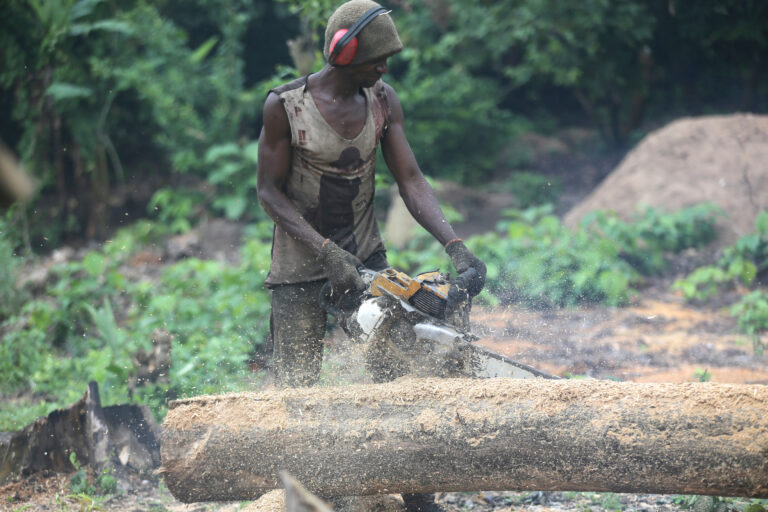
Between 2001 and 2024, the state lost more than 540 square miles of its tree cover, about the size of the city of Los Angeles, according to Global Forest Watch, which uses satellite data to monitor the world’s forests. The loss is due to illegal and unregulated logging operations across the state by businesses, groups and individuals who have besieged the communities with chainsaws, thinning out the forests and threatening biodiversity.
Logging in Cross River communities is as old as the forests themselves. Here, many families rely on the forest economy for food, medicine, firewood, housing and other essential uses.
“We survive on economic trees like cocoa, ogbono trees and the rest. That is the only source of our income. It is what we use to feed and train our children,” Genesis Aria, the Chiefof Butatong community in Boki local government area told the Center for Collaborative Investigative Journalism (CCIJ).
But reporting by CCIJ found that loggers are ignoring government efforts to regulate deforestation. Critics charge that government enforcement is lax. Gold mining is also destroying parts of the rainforest. The extensive destruction of forests is not only fuelled by economic pressures and poor oversight, community leaders are spreading false claims about how cutting down trees will benefit the region. This includes disinformation that fewer trees will reduce the incidence of malaria, even though the scientific consensus documents that the loss of rainforest significantly increases the risk of disease.
From logging bans to illicit timber
The rich soil in these forests makes for land much sought after by farmers to plant cash crops like the African bush mango, pineapples, oil palm and cocoa, a key ingredient in chocolate that has increased in value, fuelling new waves of planting.
As the demand for fertile lands for large-scale agriculture grows, farmers have been encroaching deeper into forest reserves. Investigations have shown how big agribusinesses contribute to this trend, sometimes carrying out large-scale logging under the guise of ‘salvage logging’—only clearing land for agriculture, cutting down wide swaths of forests to set up pineapple farms, cocoa plantations and oil palm estates.
A woman squeezes a sack stuffed with oil palm seeds against wood to extract palm oil into a bowl at an oil palm mill at the edge of Agoi-Ibami forest in Agoi-Ibami town in Cross River, Nigeria, July 21, 2025. People in the region say farm clearing by local farmers and forest depletion by local and foreign wood contractors contribute to the thinness of the forest in recent years. Photograph Akintunde Akinleye/CCIJ
However, some of these companies soon entered into the multimillion dollar timber business, going deeper into the forest to chop centuries-old trees to feed the global demand for exotic hardwoods.
In 2022, environmental groups alleged 22 agribusinesses engaged in illegal logging within Cross River’s protected forests, disguising their work as salvaging land for farming. Some of these companies engaged in the timber trade, processing and selling their timber products. An investigation by Premium Times earlier in the year, found these activities by agribusiness were carried out during a period of government enforced ban (2008-2023). For instance, one was reported to have generated an estimated $2 million in annual revenue from timber exports.
Although lucrative, these logging activities have posed significant threats to Nigeria’s last rainforest, an area that includes Cross River National Park, a lush region near Nigeria’s border with Cameroon. Efforts by successive governments in Cross River State to secure the forests have failed on the back of government complicity and lax enforcement. Governor Liyel Imoke’s statewide ban on logging in 2008, the creation of a Forestry Commission in 2010, and a militarised Anti-deforestation Task Force (ATF), were bold policies aimed at curbing deforestation in the state and prosecuting perpetrators.
These policies supported Cross River as Nigeria’s pilot project for REDD+, an initiative designed by the United Nations to help countries curb deforestation and promote sustainable forest management. Efforts by the ATF under American conservationist, Peter Jenkins and later, Nigerian environmentalist Odey Oyama, swept through with successful seizures of truckloads of timber, logging equipments, and arrest of illegal loggers.
A youth leader, Ofum John recalled how the ATF gave loggers a hard time.
“There was strong control,” he said. “My late father was a timber dealer then, when he was going to the bush he would hide his sawing machine. You would hardly see any trucks of timber openly like we see now. Then, the ATF had some afforestation programmes too and from time to time people were required to plant a certain number of trees.”
A forest guard, Akpama Bassey Arikpo, holds up a tree sapling as he stands in a deforested part of the Agoi-Ibami forest in Cross Rive state, Nigeria, July 21, 2025. Photograph Akintunde Akinleye/CCIJ
The anti-deforestation taskforce has raided forests and timber markets and arrested illegal loggers, confiscating trucks of timber, chain saws and other logging equipment. In 2016, for instance, the ATF arrested 38 illegal loggers with 22 trucks of timber. In 2023, 32 trucks of allegedly illegal timber were impounded in the Yala area. The enforcement often led to violent clashes between illegal loggers and the ATF officials. In one 2009 incident, officials were beaten and stripped when illegal loggers attacked them with machetes. One of the officials, Effa Okongo, had his forefinger cut off.
The ATF also ran “Forest Na Life”, a weekly radio advocacy program to engage citizens and drive awareness on conservation issues. The name of the show is Nigerian pidgin english that translates as Forest Is Life.
Despite its successes, the agency was marred by allegations of corruption and complicity in aiding illicit logging. Oyama, who had to resign his appointment, said undue interference by the government undermined the ATF’s enforcement efforts, akin to “fetching water into a basket”.
Oyama said government officials, especially those at the Cross River State Forestry Commission, were complicit in the illegal logging business, sometimes even tipping off illegal loggers with internal classified information. “For instance, I will write a security memo to the state government and by the time I get to the field, the illegal loggers have a copy. It was a very risky job,” Oyama said.
A proposed 160-mile-long superhighway project by Imoke’s successor Ben Ayade, with lanes cutting through the Cross River National Park, further cast doubts on the government’s commitment to protecting the state’s forests. Governor Ayade, only backed-off in 2021 following intense pressure and backlash from local and international environmental groups.
Felled trees, cut off from their roots in a deforested part of the Agoi-Ibami forest in Cross Rive state, Nigeria, July 21, 2025. Photograph Akintunde Akinleye/CCIJ
Just weeks after assuming office in 2023, current governor Bassey Otu announced an end to the 15-year logging ban and also dissolved the ATF. Otu said it was part of plans to revitalise the state’s Forestry Commission to meet current standards and generate revenue from the forest reserves.
But barely a year later, the governor reinstated the ban on all forms of logging in the state, citing loggers’ refusal to follow conservation measures that are part of the government’s logging permit system. Under that plan, the government granted permission for loggers to fell specific species of trees.
Despite ban, logging continues
Despite the latest ban, illegal logging is still ongoing at a vast scale in Cross River communities, especially within the five local government areas which form the core of the state’s forestry cluster: Obubra, Yakurr, Ikom, Etung and Akamkpa. Here, truckloads of timber are common sight along the roads, with just as many empty ones waiting to be filled with fresh timber.
For some weeks in July, CCIJ witnessed illegal logging in this region carried out in the open. Roughly every 100 yards, logs of timber and sawn wood lay at loading points along the 55-mile road between Ikom and Boki local government areas, known as LGAs. At one of these points in Okwabang, Boki LGA, at least eight young men load piles of sawn timber onto the truck, using a makeshift ladder. Directly across them, the road leads to the Okwangwo Division of the Cross River National Park, one of the main strongholds for critically endangered animals including Cross River gorillas, reported to be further threatened because of illicit logging.
Forest guards stand on a tree cut off from its root and abandoned in a deforested part of the Agoi-Ibami forest in Crosss Rive state, Nigeria, July 21, 2025. Photograph Akintunde Akinleye/CCIJ
There were no signs that forestry officials or law enforcement agents were taking measures to prevent illegal timber cutting. Here, every person earns a living from the logging business – from finders, to operators, carriers and loaders, all facing economic hardship and the absence of alternative livelihoods.
“We survive on timber as our own source of income here,” one logger, Collins Okwor, told CCIJ. “We have nothing else to do, no jobs and no government support. Many of us and our families will go hungry if we stop logging.”
About 110 miles away in Agoi Ibami, Yakurr LGA, similar logging activities persist.
A truck with an inscription on its back “Progress has no Date” is seen loaded and abandoned with processed wood on a road leading to Agoi-Ibami forest in Agoi-Ibami town, Crosss Rive state, Nigeria, July 21, 2025. Photograph Akintunde Akinleye/CCIJ
On a quiet Tuesday morning, Ikechukwu Okorie, aligned his old truck close to a pile of timber trunks. Its loud rumble echoes through the forests. With the help of two colleagues, he fastened a winch choker to one of the trunks, both ends still tacky with sap. As he pulled the chain through the snatch block, the pulley lifted the wood while his colleague carefully guided it onto the back of the truck. It is their first trip today. Two more and they are done here, Okorie said, rolling back the chains.
For a little more than a decade, Okorie has cut down trees and pulled their trunks out of the forests, ready to be chopped before onward transport to various destinations. “The timber goes to places like Ebonyi, Akwa Ibom and as far as the north (in northern Nigeria),” he said.
A little more than a mile from Okorie’s spot, other loggers struggle to pull out their truckload of apa logs stuck in the mud. One man digs around the front tires with a shovel and the other adds planks to create some friction on the track.
“There are many other loggers operating within these forests,” Bassey Akpama who heads the EcoGuards, a community-based taskforce against logging, told CCIJ. He noted, however, that the protected forest areas were out of bounds and that loggers knew better than to encroach them.
“They [loggers] can’t go there. They know. Because anybody we catch within the boundaries of the protected area will go in for it,” he said confidently. It would appear that only trees within these government forest reserves and conservation areas had immunity, while for others outside its boundaries—like the community forests—it is just a question of time before they meet the loggers’ chainsaw.
Gold mining expands in region
Satellite imagery from the University of Maryland’s Global Forest Change, showed that Agoi Ibami lost 74 acres of tree cover between 2020 and 2024. The area gained only a fifth of an acre of new growth within the same period. This is not exclusively due to the massive plundering of forest trees by loggers and farmers, but also due to gold mining deep into the forest.
The recent discovery of gold in communities like Agoi Ibami and Agoi Ekpo has drawn the influx of miners from across the country, including foreigners from neighbouring Niger. To access gold deposits buried beneath the ground, the miners have cleared large swathes of trees and excavated the soil with the use of bulldozers.
To extract gold, artisanal gold miners often use cyanide and mercury, two poisonous materials with degrading impacts on the environment and toxic effects on humans and animals, even at very low levels of exposure. In Zamfara, Northern Nigeria, lead poisoning from gold mining led to the death of at least 400 children in 2010, with many more exposed to severe health risks.
There are also concerns over security threats posed by the influx of the miners, especially foreigners, in the communities. In January, the Attah, a traditional ruler of Agoi Ekpo, Michael Onun Mbang, raised security concerns over foreigners illegally mining gold in the communities’ forests. This led the State’s Security Adviser, a major general, Ubi-Obono, to order the illegal miners to vacate the forests. Multiple locals who spoke to CCIJ confirmed that many of the foreigners were still present in the forests.
A local wood carver, Ubi Ibiang (48), works with an axe as he carves a wooden mortar near a stream at the edge of Agoi-Ibami forest in Agoi-Ibami town in Cross River, Nigeria, July 22, 2025. People in the region say farm clearing by local farmers and forest depletion by local and foreign wood contractors contribute to the thinness of the forest in recent years. Photograph Akintunde Akinleye/CCIJ
Rich in resources but living in hardship
Despite being a vast reservoir of forestry, gold and other rich natural resources, Cross River communities suffer neglect and lack social amenities that would improve life for their population. The roads are hardly drivable due to the movement of heavy machinery and busy traffic of heavy trucks transporting timber out of the communities. There are no public water works and no electricity. For instance, the single road leading into the Agoi community through neighbouring Mkpani, has been dilapidated for years, making it impassable for vehicles, especially during the rainy season.
A truck carrying a earthmover is stuck in a disrepair road leading to Agoi-Ibami town in Cross River state, Nigeria, July 20, 2025. Photograph Akintunde Akinleye/CCIJA woman fans a locally made stove that uses firewood for cooking, in a makeshift kitchen, outside her home in Agoi town, Cross Rive state, Nigeria, July 20, 2025. Many people in Agoi-Ibami, like in other surrounding towns and villages, depend largely on the use of firewood fetched from nearby forests, for cooking. Photograph Akintunde Akinleye/CCIJ
“Look at this place, does it look like a place that produces all these resources? You saw the state of our roads on your way here,” community leader, Etim Aitu said.
The same reality occurred many kilometres away in Okwabang, Ekuri, Ochon, Ekori, amongst other forest communities that CCIJ visited. Most of these communities have been in darkness for over a decade, relying largely on generators and solar power owned by a privileged few. For instance, multiple residents in Ochon and Ekori confirmed that their communities last saw electricity in 2014.
Logging fuelled by disinformation
Beyond poverty and other economic reasons, the devastation of Nigeria’s last rainforest is also fuelled by disinformation widely held across communities.
One of such narratives claims that the forests constitute a health risk to residents, breeding mosquitoes and contributing to malaria in the communities. Community chief Aria is one of those who consider the forest complicit in the spread of malaria, having lost his mother to the disease as a child.
“As at 1996 when I was growing up, I discovered that our people were dying of malaria. My mother was also affected, she had severe malaria and we lost her,” he told CCIJ. So, to rid the community of malaria, he says the trees must fall.
“We decided to cut down those trees to reduce the reign of mosquitoes. Before now, they (the government) were giving us mosquito nets to protect us from mosquitoes, but for like six years now, they stopped bringing those mosquito nets. Almost every month, we take our children, including ourselves, to the hospital and we spend money there,” he said.
Since his foray into the logging business, Aria said he has cut down over 2,000 trees.
Malaria is still endemic in Nigeria. Reports and scientific studies reviewed by CCIJ identified deforestation as a significant way that humans contribute to the spread of malaria, accounting for a 5 per cent increase in cases among children in rural Nigeria.
Several studies detailed how deforestation increases the risk of the disease, emphasising that nations with higher rates of deforestation also tend to have higher rates of malaria.
The result, according to a University of Florida analysis of 17 scientific studies, is that slightly more than half of mosquitos in deforested habitats were confirmed to be carrying malaria – more than twice as much as those forested areas.
Logs of wood on the ground of the Agoi-Ibami forest ready for loading in Agoi Ibami town in Cross River state, Nigeria, July 21, 2025. Photograph Akintunde Akinleye/CCIJ
In Yakurr and Boki LGAs, CCIJ observed that the forested areas where illegal loggers cut trees are located at least three to four miles (5-6 km) away from human settlements. This long distance naturally provides a buffer zone between the forests and settlements, which significantly reduces the risk of malaria transmission, as disease-borne mosquitoes do not travel more than a mile or so from their habitats.
Another factor affecting mosquitos is rising temperatures.
Thermal data obtained by CCIJ from these locations—Agoi Ibami and Inyang Iba (Yakurr LGA)—in Cross Rivers State show temperatures on the ground increased in places where trees were cleared, there was less shade and the soil was exposed to more sunlight. Temperatures increased as much as 9 degrees Fahrenheit (+5℃). Higher temperatures may contribute to malaria-carrying anopheles gambiae becoming more able to transmit disease, according to studies that have appeared in The Lancet, Nature and other scientificpublications.
That is not the only disinformation spread about cutting down rainforests.
In some quarters, it is believed that the forests exist eternally and as such will continue to regrow and replenish no matter how many trees are cut down.
Okwor, a resident also in the logging business, likens forest life to the nature of the evolving human population. Timber is just like the human race, he said as he enjoyed a game of cards. “As older people die, more are born and the younger ones grow. In the forest, we have young trees, when the older ones are cut off, the younger ones will surely grow up,” he said.
His opponent, Collins Obi nodded in agreement, his gaze still on his cards, seemingly plotting his next move. “We cannot exhaust the timber in the forest. The more you cut, the more others grow. So, it is impossible for them to be exhausted,” he said.
The science is less clear. It can take years for a rainforest to regrow. The projections vary depending on whether scientists are looking for positive signs, like biodiversity and soil recovery, to the forest returning to how it was before. It might take from a couple of decades for the first stages of recovery to more than a century when trees and animals might fully return.
Others argue that the loggers are rendering a sort of social service to the communities by using their bulldozers and graders to create access roads in the forests that have helped farmers access their farms easily.
Sylvester Amah, a cocoa farmer living in Boki local government area, said the government neglect and failure to provide social services to the community has caused them to rely on loggers for access roads. Repeated requests for comment from CCIJ to the Cross River Forestry Commission, even through the state’s chapter of the Nigerian Environmental Society, were not responded to.
Already ravaged by desertification in the North, the rapid disappearance of Nigeria’s remaining rainforest in the South due to the ongoing massive deforestation spells a looming environmental crisis that threatens critical ecosystems and intensifies the country’s climate challenges.
Men load wood on the back of an old truck in Agoi-Ibami forest, Nigeria July 21, 2025. Photograph Akintunde Akinleye/CCIJ
Environmentalist Oyama said illegal logging in Cross River persists due to government neglect of environmental conservation and lax enforcement by its agencies. “The Forestry Commission is not working. None of the agencies responsible for this issue is working. The government just stays in Calabar and makes funny pronouncements. There is nothing like environmental protection in the state,” he told CCIJ.
Oyama, who once led the ATF, has been one of the critical voices leading advocacy for the preservation of the state’s forests with his Rainforest Resource and Development Centre. Others include Chief Edwin Ogar and Martins Egot of the internationally recognised community-based conservation group, Ekuri Initiative. Chief Ogar, who also championed campaigns and lawsuits against forest encroachment in the state, died in February 2025 after a brief illness.
“He is dead but his legacy continues to live on,” Cosmas Ogar, his brother who is also a conservationist, said. “Chief Edwin did a lot for the people and our forests, we will do all we can to continue from where he stopped.”
THE Enugu State Police Command has confirmed the arrest of 13 men allegedly involved in an ambush on police officers in the Akpakume community of Udi Local Government Area.
The command’s spokesperson, Daniel Ndukwe, disclosed this in a statement issued on Wednesday, November 5.
He noted that the incident took place in the early hours of Monday, November 3, during an operation to apprehend suspects implicated in cases of conspiracy, illegal possession of firearms, and cultism.
“Operatives of the Enugu State Police Command, in the early hours of 3rd November 2025, arrested thirteen (13) male suspects and recovered one (1) locally made single-barreled gun at Akpakume community, Udi Local Government Area,” Ndukwe stated.
According to him, the suspects and their accomplices had positioned themselves in ambush and opened fire on the police team, injuring some officers and damaging their patrol vehicle.
He further explained that the gunfire shattered the headlights of the patrol vehicle and also caused damage to other vehicles parked nearby.
The statement noted that the state Commissioner of Police, Mamman Giwa, on Tuesday led senior officers to Akpakume for an on-the-spot assessment of the aftermath of the attack.
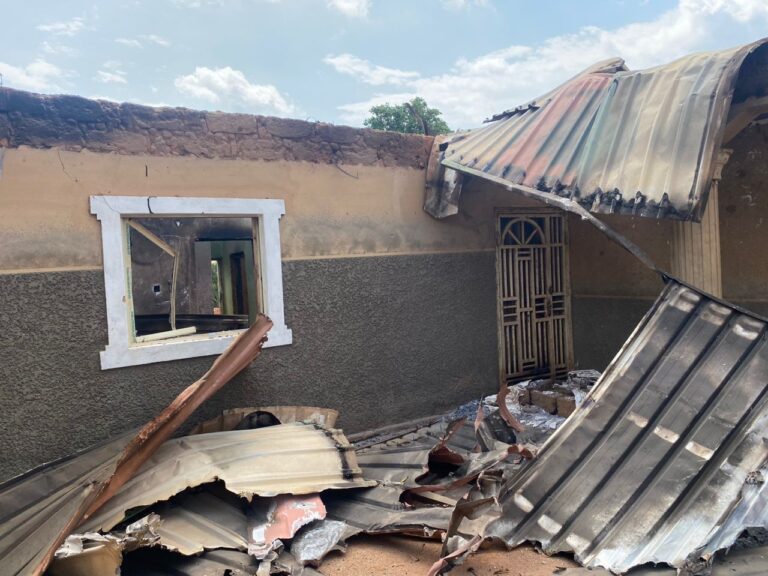
According to him, the attackers had deliberately destroyed several houses, shops, and other properties, including crops and livestock belonging to residents of the area.
““Preliminary investigation has uncovered that the criminal acts are in furtherance of an existing intra-communal crisis in the area,” Ndukwe said.
He further stated that the commissioner has ordered a full-scale manhunt for other fleeing suspects and called on residents to remain calm and cooperate with security agencies.
He assured the public that the command would ensure all those responsible for the attack and related crimes face the full weight of the law.