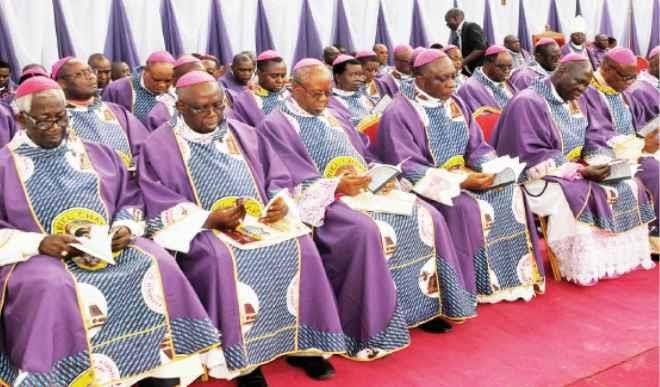
FORMER Nigerian leaders and elder statesmen had a closed-door meeting on Thursday, June 10, over rising insecurity and disunity in the country.
The meeting was convened by former President Olusegun Obasanjo, with former Head of State Abubakar Abdul-Salam and other influential leaders present.
The Ooni of Ife Adeyeye Adewusi; Sultan of Sokoto Sa’ad Abubakar III; former National Security Adviser Aliyu Mohammed Gusau; former Osun State Governor Olagunsoye Oyinlola; former Attorney General of the Federation Kanu Agabi, and former Catholic archbishop John Onaiyekan, including politicians and diplomats were also present at the meeting held at Transcorp Hilton, Abuja.
After the meeting, the attendants did not respond to questions regarding the outcome. However, persons close to the meeting said the discussion bordered on the worsening security crisis in Nigeria.
The former leaders were also said to have deliberated on Nigeria’s economy, threats to the country’s unity, high rate of unemployment, corruption and development issues.
A few days before the meeting, the Buhari Media Organisation (BMO) had claimed that there was a plot by a former civilian president to overthrow President Muhammadu Buhari. The group, however, failed to provide proof of the alleged conspiracy.
BMO, in a statement issued on May 30, claimed that the former president was working with a gang of conspirators operating under the guise of ’eminent persons’ in the country.
The group said its ‘reliable security sources’ informed them that the plot to overthrow the president would be premised on the disaffections in the country through a planned conference of so-called eminent Nigerians.
“While the conference ostensibly aims to review the state of the nation, we can authoritatively confirm that it is actually a premeditated plan to create confusion in the polity by calling President Buhari to resign after a supposed vote of no confidence,” the group said.
The ICIR can, however, confirm that Buhari, in a letter, welcomed the Obasanjo-led conference over the country’s various challenges and expressed hope that the former leaders would avail his government of recommendations from the meeting.
The president’s position might be surprising to many people around him. It is believed that some influential persons around him had sold the idea to him that Obasanjo was holding the conference to criticise and discredit him to undermine his government.
However, a presidency source, who made a copy of the Buhari’s letter to Obasanjo available to our reporter, said that the Nigerian leader might have come to his tether’s end in dealing with the myriad of problems facing the nation and might be open to suggestions and recommendations from well-meaning circles.
“I think first and foremost, the president is tired of listening to the same people advising him on national issues. He is facing challenges without seeing solutions. So, he probably sees the gesture by Obasanjo, Abdulsalam and others as an opportunity to bring fresh ideas to bear on the country’s problems,” the source said.
“Don’t forget that these men are former military colleagues and there is still a lot of trust and esprit de corps among them,” the source added.
Apart from this, the source also reasoned that Buhari might be less trusting of some people around him who had failed to proffer workable solutions but would continue to block fresh ideas from outside government, even from diplomatic circles.
CATHOLIC Bishops Conference of Nigeria (CBCN) has said that Sharia law must be scrapped from the 1999 Constitution to ensure peace in the country.
This was contained in a memorandum signed by CBCN President Augustine Akubeze and Secretary Camillus Umoh, submitted to the Senate Committee on Constitution Review (SCCR).
According to the bishops, Islam enjoyed a special status in the 1999 Constitution, while Christianity was not recognised.
“To ensure peace and unity of the nation, there must be an end to the practically established status that Islam enjoys in our Constitution.
“We note in this regard that while Islam is mentioned very many times in the Constitution, there is not a single mention of Christianity or any other religion in the Constitution. This should be redressed,” the Bishops saidC
CBCN noted that the 1999 Constitution provided Sharia Courts for Muslims, which was why a Christian could not be appointed as Khadi under the states’ laws or Grand Kadi of the Sharia Court of Appeal.
The Bishops’ Conference said with the provision of Sharia Law in the constitution, the Muslims ‘exclusively’ had a court regulating their affairs, but the same could not be said for the Christians, noting that it showed ‘a constitutionally backed gap of inequality and under-representation in the Nigerian judiciary.’
The CBCN said the enforcement of Sharia Laws with public funds amounted to those states adopting Islam as a religion.
“The establishment of Sharia Courts of Appeal in our Constitution is therefore inconsistent with Sections 10 and 38 of the 1999 Constitution. It amounts to the adoption of a state religion which Section 10 of the 1999 Constitution forbids and prohibits,” the memorandum read in part.
They noted that in reviewing the constitution, “all references to Sharia and any other discriminatory or divisive law(s) should be expunged from the 1999 Constitution of the Federal Republic of Nigeria (as amended).”
In October 1999, a former governor of Zamfara State Ahmed Sani Yerima and some other northern governors, at the time, had pushed for the adoption of Sharia law in their states.
Currently, Zamfara, Kano, Sokoto, Katsina, Bauchi, Borno, Jigawa, Kebbi, Yobe, Kaduna, Niger, Gombe States have adopted the Sharia Law.
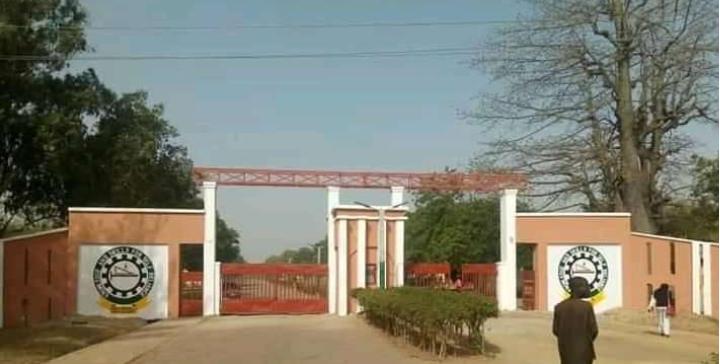
ONE student was killed while many others were abducted when terrorists attacked the Nuhu Bamalli Polytechnic in Zaria, Kaduna State, on Thursday.
A staff member of the polytechnic Ilyasu Mohammad confirmed the incident in an interview with The ICIR.
Mohammad said the attack occurred between 9.30pm and 10.00pm in the evening.
Two lecturers were said to be among those abducted.
But Mohammad could not give an exact number of the students that were taken hostage by the terrorists.
“There are security personnel in the campus; mobile police officers but they are not man. I think they are three in number.
“You know these people (terrorists) have a lot of weapons. The security men tried to do something, they exchanged fire but the situation was beyond them,” Mohammed said.
He further alleged that some lecturers in the polytechnic made efforts to contact relevant government officials, but received no response until Friday morning.
“Some staff have numbers of the government. They informed them exactly at the time of the incident yesterday. They informed them, but no one came around until this morning.
“They killed one of our students. They shot him in his spinal cord, and he lost a lot of blood. He died this morning,” he said.
Spokesperson of the Kaduna State Police Command Mohammed Jalige did not respond to calls and text messages from The ICIR.
Also, Special Adviser on Media to Governor of Kaduna State Muyiwa Adekeye did not respond to inquiries concerning the incident as of the time of filing this report.
However, the News Agency of Nigeria (NAN) reported that Jalige confirmed the incident and promised to get in touch with reporters as soon as details were available.
States in northern Nigeria have continued to experience a high level of insecurity in recent times with the escalation of terrorism and kidnapping within the region.
Education has been negatively affected by the development as schools remain a target for attacks by terrorists seeking to abduct students for ransom.
The ICIRreported an attack on the Federal College of Forestry Mechanisation, Afaka Kaduna State, in March, which resulted in the kidnap of about 39 students. They were eventually released in batches after several weeks in captivity.
In April, The ICIR also reported the kidnap of students of Greenfield University, a private university in Kaduna State.
Some of the students were killed while being held by the terrorists. Others were released after about 40 days.
A tweet says that Nigeria’s President Muhammadu Buhari is suffering from ‘inability to think properly.’ This has gone viral on the social media, with propagators alleging that it originated from the verified Twitter account of Facebook CEO Mark Zuckerberg.
This image was circulated amidst a ban placed on Twitter in Nigeria by Buhari.
Findings by the FactCheckHub showed that the image was manipulated and therefore false.
The manipulated image circulating on social media.
The Claim
Facebook CEO Mark Zuckerberg tweeted that Buhari was suffering from an inability to think properly and might need medical check-up.
The Finding
The image under verification was presented to look like a screenshot of a tweet. It had the photo of Facebook founder Mark Zuckerberg and was alleged to have been posted on June 4, 2021 at 10:42am. It has been retweeted 2.6 million times, with 3.7 million likes. The account is @MarkZuckerberg and it has the blue verification badge.
The tweet purportedly read, “The Nigerian President needs medical check-up; he may be suffering from the inability to think.”
Findings by the Factcheckhub showed that the account @MarkZuckerberg was suspended for violating Twitter rules. When and why these happened could not be ascertained.
The suspended account.
However, the account is not Zuckerberg, the Facebook CEO’s handle. He is on Twitter as @Finkd.
Even though the account has been in existence since 2009, it is almost dormant. The last tweet was in 2012.
Secondly, he is not verified.
To determine whether it was the authentic account of Zuckerberg, the FactCheckHub conducted a Google Search, and multiple reports here, here and here made reference to @Finkd as his account.
One of the reports which talked about Twitter CEO Jack Dorsey unfollowing Zuckerberg cited this account.
In addition, Big Tech Alert, an account that keeps track of the activities of tech CEO’s and top executives, also has @Finkd on its list.
When Jack unfollowed the @finkd, Twitter public relations account replied the Big Tech Alert update with a goat emoji.
Goat icon in social media speak is also used to represent the abbreviation for Greatest Of All Time [GOAT]. It is meant to refer to or describe the person who has performed better than anyone else ever in their field.
Twitter communication reacts to the update with a goat emoji.
Furthermore, from the FactCheckHub audit of the followers of @Fnikd, it was discovered that Facebook follows the accounts of Slicon Valley bigwigs such as Youtube’s Chief Business officer Robert Kyncl; Lyft cco-founder, Gagan Biyani; Microsoft President, Brad Smith; Google and Alphabet CEO, Sundar Pichai, among others.
Facebook and tech bigwigs follow @Finkd on Twitter.
The lack of verification of the account may or may not be unconnected with the silent rift between the two tech bosses who have, over time, had difference of opinions on multiple fronts – from how to run their platforms to polices on political advertisements, tackling of fake news and so on.
Jack reportedly said he did not use any Facebook product while Zuckerberg reportedly attempted to buy Twitter in 2008.
Background to the misinformation
On June 1, 2021, Buhari posted a Twitter thread after receiving a briefing from the Chairman of the Independent National Electoral Commission (INEC) Mahmood Yakubu.
Yakubu had updated him on a series of attacks on electoral facilities across the country, particularly in the South-East region.
Some groups in the region, largely made up of Igbos, are agitating for secession, leading to series of conflicts which sometimes result in loss of lives and destruction of properties.
In 1967, the same region had attempted to secede by forming Biafra. This led to 30-month-long civil war which Buhari, a retired military general, had fought in.
The war led to death and displacement of millions of persons.
In his response to the INEC boss, which was tweeted, Buhari referred to the civil war while talking of how insurrection would be dealt with. This sparked outrage, and the tweet was reported by multiple accounts. It was taken down by Twitter for violating its policies
This further led to the unfolding of several events, one of which was the ban on Twitter in the country. This has been described by those opposing it as unconstitutional. Another is the avalanche of misinformation circulating on social media.
The Verdict
The claim that Facebook CEO Mark Zuckerberg tweeted that President of Nigeria Muhammadu Buhari was suffering from ‘inability to think properly’ and might need medical check-up is FALSE. The image was manipulated and the account cited does not belong to Zuckerberg.
A photo tweet claimed that Twitter had promised to respect the laws and sovereignty of Nigeria. It has been circulating on the social media, attributing its origin from verified public policy account of the microblogging platform.
This image circulated amidst a ban placed on Twitter in Nigeria by President Muhammadu Buhari.
Findings by the FactCheckHub showed that the photo was a manipulated image and therefore false.
The photo shared on WhatsApp was also posted on Twitter by a user with name and handle, Fulani son, @NigeriaFirst1.
A reverse image search done by the FactCheckHub showed that the image was posted on Nairaland forum, However, multiple users on the platform had commented that it was ‘fake.’
The claim shared on Twitter by user Fulani son.
The Claim
That Twitter, through its public policy account, made this statement:
“We’re committed to peace, progress and freedom of speech of the Nigerian people. We have reviewed our actions and are in communication with the Nigerian Government and promise to respect the laws and sovereignty of Nigeria #KeepItOn”.
The Findings
The Factcheckhub recently debunked a claim where a manipulated image was used to falsely claim that Facebook CEO Mark Zuckerberg tweeted that the Nigeria President Buhari could not think properly and might need medical attention.
Twitter CEO Jack Dorsey at a tech hub in Lagos when he visited Nigeria in 2019. Photo: Jack Dorsey.
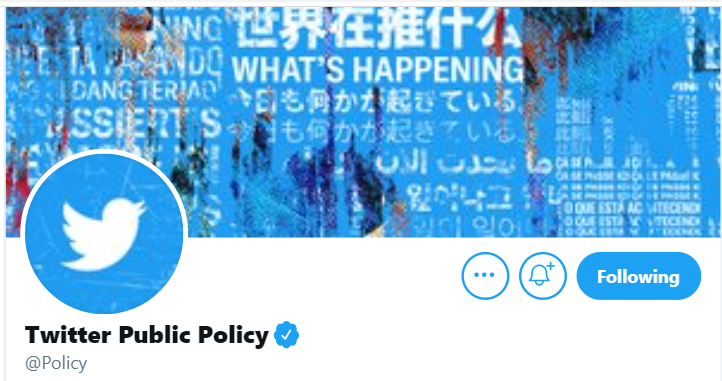
The image under verification was presented to look like a screenshot of a tweet from Twitter Public Policy account.
A scrutiny showed that the image had been manipulated. The ‘l’@’ sign’ should have preceded the handle ‘Policy’ – which is the account for Twitter Public Policy. However, it was missing.
Secondly, the icon coming up whenever the hashtag #KeepItOn was used was also missing.
As at 1:15pm of June 7, the FactCheckHub checked, but the icon had not been deactivated by Twitter, which meant it was still functional.
L-R: The fake tweet showing the inconsistencies and a tweet grabbed from Twitter Policy account.
In addition, the tweet in question was not on the policy handle.
The last post with regard to Nigeria Twitter ban was made on June 5, 2021. Twitter had stated that it was concerned by its blocking in Nigeria, noting that access to Open Internet was an essential human right in a modern society.
Even though signs like the removing of #EndSARS logo, deleting of some of the separatist leader Nnamdi Kanu tweet and a press release from government had a milder tone and indicated that the Nigerian government and Twitter might be having conversation, the above tweet was not from Twitter as purported.
The Verdict
The tweet in question was not from Twitter Public Policy as claimed, it was a manipulated image. Therefore, it was false.
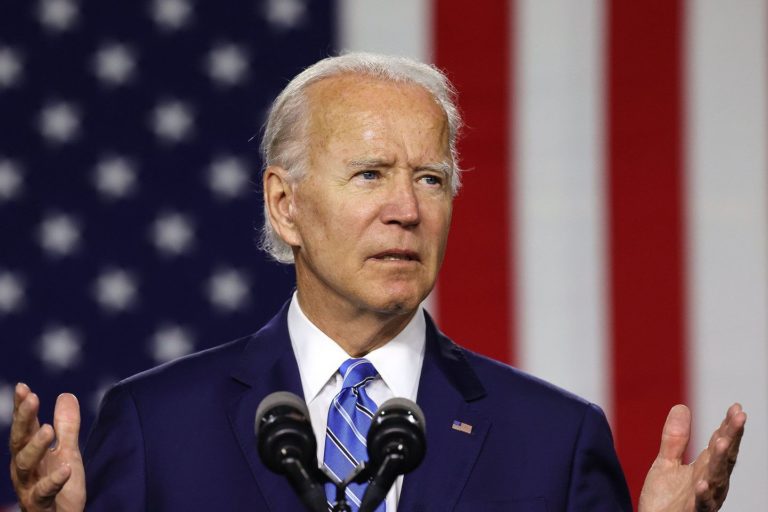
THE United States has condemned the ongoing attempt by President Muhammadu Buhari-led Federal Government to gag the Nigerian media space.
The US Department of States Spokesperson Ned Price, who described the action as ‘unduly’ in a statement on Thursday, said it had no place in a democracy.
While saying that the US supported Nigeria’s quest for unity and peace, Price noted that the country must also respect the right to free speech.
He called for the reversal of the indefinite suspension of Twitter in Nigeria by the Nigerian government.
“The United States condemns the ongoing suspension of Twitter by the Nigerian government and subsequent threats to arrest and prosecute Nigerians who use Twitter,” he said.
“Unduly restricting the ability of Nigerians to report, gather, and disseminate opinions and information has no place in a democracy. Freedom of expression and access to information both online and offline are foundational to prosperous and secure democratic societies.
“We support Nigeria as it works towards unity, peace, and prosperity. As its partner, we call on the government to respect its citizens’ right to freedom of expression by reversing this suspension.”
Minister of Information and Culture Lai Mohammed had announced the ban, in a statement on Friday, shortly after Twitter deleted a controversial and violent tweet by President Buhari.
The Association of Licensed Telecoms Operators of Nigeria (ALTON) announced, in a statement on Saturday, that it had complied with the government directives. However, millions of Nigerians have continued to use the platform through Virtual Private Networks (VPN).
Although the Nigerian government had said it would lift the ban if only the platform could be used responsibly, Mohammed insisted on Wednesday, shortly after the weekly Federal Executive meeting at the State House in Abuja, that Twitter and other social media platforms must register and pay taxes in the country before they would be given any chance.
He said social media platforms were making billions of naira in Nigeria without remitting tax to the government.
“Whether it is Netflix, Iroko or Facebook, they are all doing business in Nigeria, making money and they are not paying taxes. This is in addition to being able to regulate them. They are making billions of naira out of this country and they are not paying tax. That cannot be allowed to go on,” Mohammed said.
Mohammed said social media outfits should also “refrain from using their platforms for activities that are inimical to the growth of Nigeria.”
A 28-year-old man Damien Tarel, who slapped France President Emmanuel Macron in the face, was sentenced to a prison term of 18 months, 14 of which were suspended.
In a viral video on Tuesday, Tarel, who wore a face mask, was seen exchanging words with Macron while gripping his arm. He hit the president on his left cheek while shouting, ‘A Bas La Macronie,’ which meant, ‘down with Macronia.’
He has been in custody since the incident and was arraigned before a court in the town of Valence on Thursday.
He told law enforcement officers that he “acted instinctively and without thinking” after waiting for Macron outside a school in the village of Tain-l’Hermitage.
According to BFM, a France news medium, he said had been annoyed by Macron’s decision to come to greet him — an electoral tactic that he did not appreciate.
“Macron represents the decline of our country,” he added.
In court, he expressed sympathy for the anti-government ‘yellow vest’ movement and said that he and two friends had considered throwing an egg or a cream pie at the president during his visit to the Drome region, according to the BFM news channel.
The prosecuting counsel Alex Perrin called for an 18-month prison term after describing the slap as ‘absolutely unacceptable’ and ‘an act of deliberate violence.’
Under French law, prison sentences of fewer than two years can be converted into non-custodial punishment, meaning it is unlikely that Tarel would spend time behind bars even if the court followed the prosecution’s plea.
Macron blames social media
Macron has shrugged off the assault, calling it an ‘isolated event,’ and he has vowed to continue meeting voters despite concerns for his personal security.
Asked about it again during an interview on Thursday with BFM, he called it a ‘stupid, violent act’ and suggested it was a consequence of the poisonous atmosphere found on social media.
“You get used to the hatred on social media that becomes normalised,” he said. “And then when you’re face-to-face with someone, you think it’s the same thing. That’s unacceptable.”
Leaders across the political spectrum have united in condemning the slap, with many seeing it as a symptom of the fraught political climate and declining standards of public debate just weeks from regional elections and 10 months from presidential polls.
“The political climate is turning to vinegar. It’s dangerous what’s happening,” senior leftist MP and regional election candidate Clementine Autain told France Info.
Others saw the assault as a sign of how Macron has continued to inspire visceral rejection from many French people.
His presidency was rocked by the anti-government ‘yellow vest’ protests in 2018-2019, which were driven in part by anger at his economic reforms as well as his abrasive personality.
Macron, 43, whose personal ratings have risen recently, is expected to seek a second term next year.
Polls show him holding a narrow lead over his main rival, far-right leader Marine Le Pen.
Other modern French presidents have been targeted in shootings, including post-war leader Charles de Gaulle and Jacques Chirac.
In 2011, right-winger Nicolas Sarkozy had a security scare in southwest France when he was grabbed violently by the shoulder by a 32-year-old local government employee.
The Nigerian government has declared Monday, June 14, as a public holiday to commemorate the 2021 Democracy Day.
The holiday was declared in a statement released by Permanent Secretary of the Ministry of Interior Shuaib Belgore on Thursday in Abuja.
According to the statement, Minister of Interior Rauf Aregbesola made the declaration on behalf of the government while urging Nigerians to avoid any form of agitation which could threaten the peace of the nation.
“As we mark another Democracy Day in the history of our dear country, let us reflect on the efforts of our founding fathers and ensure that Nigeria remains one United and Indivisible Entity. We should all know that no meaningful development can take place in an acrimonious environment,” he said.
He assured Nigerians of concerted efforts of the Nigerian President Mohammadu Buhari to secure the lives and property of Nigerians and ensure the stability of the economy.
“With the challenges we face in Nigeria today, I see an opportunity for us not to break up or break down but to break open; open up to ourselves in truth, so that we may appreciate each other, understand each other, honour each other and live together in peace and prosperity,” he said.
Nigeria’s President Muhammadu Buhari, on Thursday, said the expansion of infrastructure to the neighbouring Niger Republic was to ensure good neighbourliness that would halt the spread of Boko Haram in the country. He, however, admitted that he had first cousins from Niger Republic.
Buhari, while fielding questions in an exclusive interview with Arise Television, said sustaining a good relationship with Nigerian neighbours would help sustain a unified offensive against the dreaded Boko Haram terrorist group.
“I spoke to one Frenchman and I have to tell you this: I said to him, you people in 1885 sat down with ruler and pencil and drew the line. I have first cousins in Niger. There are Kanuris, there are Hausas, there are Fulanis in the Niger Republic. The same way there are Yorubas in Benin,” he responded.
The president insisted that sustaining a good relationship with Nigerian neighbours was a good strategy in winning the insurgency war currently ravaging the West African sub-region.
“How many neighbours do you have? If you could recall when I came, I went to Chad, Niger and Cameroon. Look at what is happening to us from Boko Haram. If we are not in a good relationship with Niger, Chad and Cameroon, Bokoharam would have been a worse hit to us.”
The president, who also sustained his argument of infrastructural expansion to (Maradi) Niger Republic with economic importance of the country to Nigeria, said the country’s latest oil discovery put it at strategic alliance to do business with Niger, rather than go through Benin Republic.
“I told you that the border between us and Niger is one side of 1,500 kilometres. Look at the rail plan, Niger has discovered oil, as you know. We do not want to allow them to go through Nigeria. We hope they would be fine when we take the rail to Maradi and take all their exports through Maradi rather than through the Benin Republic.”
Buhari said that infrastructural expansion was one of the strategies used by his administration to diversify the economy and create opportunities for the youth.
“With the railways working from Maiduguri to Port Harcourt, and from Kano to Lagos, I believe if you make the infrastructure work, I assure you Nigerians will be very busy.”
Most Nigerians have raised concerns on the economic viability of the president’s infrastructural connection to Niger Republic, but the analysts say the African Continental Free Trade Area (AfCFTA) puts Nigeria in a good position to consolidate trade deals in the sub-region and on the continent, being Africa’s largest economy.
“We must use infrastructure to boost our opportunities in the continent and consolidate our position as Africa’s largest economy in the sub-region,” Associate Consultant to the British Department for International Development Celestine Okeke told The ICIR.
Nigeria’s Minister of Trade Adeniyi Adebayo had earlier revealed that the Nigerian government would ride on its strength to consolidate position as Africa’s largest economy in the African Continental Free Trade Agreement,(AFCTA).
AS COVID-19 restrictions hindered the movement of farm inputs, leading to an increase in logistics and transactional costs, one cocoa farmer in Ondo State, South-West Nigeria, became a farm service provider (FSP) —a class of service providers who provide sector-expert technical services— for the critical services needed by smallholder farmers.
Cocoa farmers depend on crop protection products: herbicides, pesticides, fertilizers, fungicides, and technologies for pruning trees, spraying, and weeding. These are all supplied by input companies, farm service providers, and technology promoters. But the restrictions on movement in the wake of the COVID-19 pandemic led to a shortage or lack of these services, with farmers spending up to five to eight per cent higher for production.
To help cocoa farmers, Anthony Akinmade, a farmer and agro-dealer who is now an FSP, used phone calls and short messaging service (SMS) platforms to reach farmers, facilitating the delivery of inputs to farmers in distant communities.
Anthony Akinmade: Defying odds to reach out to farmers during COVID-19 pandemic
This was accomplished through a partnership with retailers and input companies who provided farm services training and sold retailed inputs to cocoa farmers. The small group training centred on agronomic practices, post-harvest practices, and new technologies. This helped cocoa farmers remain in business while also facilitating new business opportunities and income for the FSPs and input companies.
Growing Resilience
Beyond the grim impacts of COVID-19 in Nigeria and the near-collapse of all the systems including economy and security, Niger Deltans in Nigeria have a more inspirational tale due to a combination of factors galvanised by the Foundation for Partnership Initiatives in the Niger Delta (PIND). Continuous training of service providers with diverse competencies and skills over the years to offer different services to farmers and MSMEs as well as continued onboarding of service providers that increased the number available to serve farmers and MSMEs are parts of the causative success factors.
Across the Niger Delta, it is easy to come across participants of PIND’s market development projects targeted at poverty alleviation. The programmes span across aquaculture, cocoa production, palm oil production, cassava farming, poultry rearing, while also pioneering funding innovations for small-scale farmers and small and medium scale enterprises. For the year 2020, the Foundation targeted N6.3billion additional combined income for farmers and MSMEs, but the net combined income grew to N11.4 billion when the year ended. A total of 9,813 new full-time jobs were facilitated in the agriculture, agro-allied, and clean energy sectors as against the targets of 4,100.
Through its peace-building programme, there are already 9,610 self-identifying peace actors facilitated through the Partners for Peace (P4P) Network, with their capacity strengthened to tackle conflict in the Niger Delta. P4P has mitigated 860 emerging conflicts in their communities.
Akinmade is one of the 59,710 farmers and small-scale business owners reached recently by PIND with information on good agricultural and climate-smart technologies. In 2020, while COVID-19 ravaged, a total of 10,988 cocoa farmers and MSMEs were reached by FSPs like Akinmade with adaptive services that helped alleviate their most significant COVID-19 induced challenge – access to inputs and labour.
“PIND has trained us, through Saro Company, on how we can use machines in farming in cocoa, farming in palm oil, and in cassava. We are not using manual things like cutlass and hoe again. They introduced to us this pruner, and other machines like that which are faster than the manual machines,” Akinmade said.
The Foundation, in its 2020 Annual report, estimated that 7,036 cocoa farmers/processors increased their productivity and sales as a result of accessing the services and adopting the practices learnt and consequently raised their income by an additional N1.3 billion.
But PIND’s 10th year of peace-building and economic development in the region were almost truncated by a pandemic that no one expected. Executive Director of PIND Dara Akala described the Foundation’s experience in the wake of COVID-19.
Dr Dara Akala, Executive Director of PIND
“The advent of COVID-19 threatened the progress that we had achieved and stalled new activities, which necessitated new approaches to working and living,” he wrote in the 2020 PIND annual report.
“With your support and collaboration, we quickly adapted our delivery approaches and focused on safety. This helped multi-sector market actors to create a joint market response to the pandemic that lessened negative impacts on poor farmers and businesses.”
Cassava Doctor –taking messages to cassava farmers
Bari Endurance: The cassava doctor
COVID-19 restrictions hit cassava farmers and processors severely because they occurred at the peak of the main planting season in the region.
They were unable to access inputs due to intrastate and interstate movement restrictions. Market lockups also made buying and selling their produce difficult as the number of off-takers was reduced.
But a woman known as Cassava Doctor became a saviour. Bari Endurance is popular among locals in her state, Bayelsa, as a farm service provider and a village seed entrepreneur. She has been training other cassava farmers in the state on good agricultural practices. She also sells spray services and agro-input products like fertilisers to them.
When COVID-19 struck early 2020, Endurance, who had undergone capacity-building training by PIND, resorted to using phone calls to serve her clients.
She reached between 600 and 700 cassava farmers with training on good agricultural practices.
“As a matter of fact, in my area, they all know me as a Cassava Doctor,” Endurance, who is also an undergraduate, said.
“Any question they have about cassava, they just put me on a phone call and ask: ‘If my farm is going like this, what should I do?’ And I give them the answer. Because of that, I find it very easy to go to those communities for training, too. I believe I have reached up to 600 to 700 cassava farmers with training on good agricultural practices.”
She is better off for all her efforts both financially and capacity−wise. Her staff increased from just two to five. “From what I know now, after my training, I have the financial confidence in my business—such that if my children are going to school, I don’t need to ask for money or borrow money. It is good to be independent,” Endurance beamed with confidence and joy.
PIND said an estimated 17,718 cassava farmers/processors increased their productivity and sales as a result of accessing the services and adopting the practices learnt and consequently raised their income by an additional N 2.7 billion.
Defying the pandemic: The Poultry Business Example
Nzeota Prince Uche: Making profits with ease
Where there is a will, there is always a way. This seemed to be the motivation for the actors in the poultry sector in Niger Delta during the COVID-19 outbreak−they amassed N1 billion investment into the sector for improved poultry farming practices while creating 1,001 jobs.
To survive the pandemic problems, poultry farmers in the region turned more to the poultry service providers (PSPs) for help in addressing the challenges of access to essential information and inputs. In response, the poultry service providers tweaked their approaches and adapted their services to enable them to support farmers.
The PSPs secured the waiver for free movement of agro products, which facilitated free movement for the poultry sector to conduct their activities. The exemption enabled the service providers to deliver products (such as vaccines, feeds, and DOCs) to poultry farmers for a fee. They also formed relationships with the input companies and helped them to reach more poultry farmers in more locations with support services.
Others used technology platforms—like phone calls, social media, text messages, WhatsApp, and Zoom—to interact with the poultry farmers to make up for the reduced physical visits and organised training programmes for a maximum of 20 farmers to comply with COVID-19 guidelines. The PSPs also provided information to their farmers on how to access the government stimulus packages to reduce the impact on their businesses and, in turn, gained new clients as more farmers turned to them for support in overcoming the pandemic-related issues.
Nzeota Prince Uche from Abia State, a father of three, is one of such PSPs whose interventions have changed the narrative. “I have been able to train other poultry farmers. So far, I have helped set up four to five farms that are around me, and the farmers are running the business on their own, but I give them advice, and they are seeing improvements,” Uche said.
Through his support and those of others, poultry farmers used social media platforms to advertise and sell their produce, targeted market days to sell their produce, started direct sales around their neighborhoods, and sought out stimulus packages from the government. According to PIND, 5,133 poultry farmers and MSMEs were reached during the year 2020 by poultry service providers with training on good practices, linkages to inputs, market, and funding—which were the sector’s most significant business challenges caused by the pandemic.
Surviving the COVID-19 threat: The palm oil sector
Akandu Godwin, agro-input dealer
When other sectors were struggling to stay afloat in the face of COVID-19, the palm oil value chain in the Niger Delta region−consisting of farmers, processors and agro-chemical dealers− held its ground.
In the region, the COVID-19 crisis limited processors’ access to the market, as they could not deliver products to off-takers and big traders due to transportation hikes. Processors had to sell in makeshift local markets within their communities. This led to a drop in palm-oil prices, the shrinkage of cash flows, and difficulty getting working capital from banks. They also faced an increase in the cost of labour and the cost of milling. Palm oil farmers suffered a 36 per cent to 43 per cent increase in the price of fertilizers and had difficulty accessing services.
As a way out, agro-dealers and FSPs worked collaboratively amongst themselves and with palm oil farmers and processors to create a win-win for all actors in the sector. The relationship between these service providers played a crucial role in ensuring access to inputs for palm oil farmers to use on their farms. This helped to improve their productivity and yield as well as pricing information for informed sales decisions. And fabricators ensured the millers’ equipment was in working order. This ensured the continued availability of palm oil for sales and income for the farmers and processors.
Agro-dealers provided advisory support and information on inputs to farmers via phone calls. They strengthened their relationships with FSPs through socially distanced one-on-one (1-on-1) engagements during the peak of the COVID-19 restrictions. They also held socially distanced physical demonstrations and training for a small group of palm farmers.
“My knowledge is spreading. I have gotten more customers all over the place because I am reaching them out there, going from communities to communities. When you ask of agro-dealers, I think I am the number one in Rivers State,” said Akandu Godwin, an agro-input dealer based in Port Harcourt.
“Since I met with PIND in the first place, they have broadened my knowledge. They added value to my business, so it’s not just to tell a customer, ‘please buy fertilizer.’ Now, I can tell them the right fertilizer to buy and the method of application, and those things have increased my output. In fact, it is affecting my business positively because I am selling more products (agro-inputs) now. I am more widely known than before. And why? I am visiting communities, rural areas, all nook and crannies of Rivers State, training and advocating (for best management practices and improved seedlings to palm oil farmers).”
As of December 2020, about 13,524 palm oil farmers/processors were reached by FSPs with adaptive services that helped alleviate their most significant COVID-19 induced challenges–access to inputs, labour, funding, information, and markets. A total of N 1.9 billion was leveraged in new investments into the sector from public and private sectors to implement good agricultural practices and technological innovations.