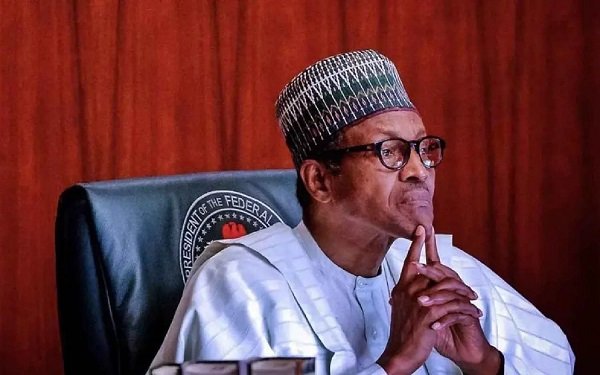
PRESIDENT Muhammadu Buhari has approved the suspension of Managing Director of the Nigerian Ports Authority (NPA) Hadiza Bala-Usman.
Senior Special Assistant to the President on Media and Publicity Garba Shehu, who disclosed this in a statement on Thursday night, said that the suspension was to allow for investigation into allegations against her.
Although details of allegations against her were not disclosed, Garba said the agency’s Executive Director for Finance Mohammed Koko had been appointed to act in her stead pending the conclusion of the investigation.
“President Muhammadu Buhari has approved the recommendation of the Ministry of Transportation under Rt. Hon. Rotimi Amaechi for the setting up of an Administrative Panel of Inquiry to investigate the Management of the Nigerian Ports Authority, NPA.
“The President has also approved that the Managing Director, Hadiza Bala Usman step aside while the investigation is carried out. Mr Mohammed Koko will act in that position.”
The statement added that the “panel is to be headed by the Director, Maritime Services of the Ministry while the Deputy Director, Legal of the same ministry will serve as Secretary.
“Other members of the panel will be appointed by the Minister.”
Bala Usman was first appointed as the NPA managing director in 2016. President Buhari renewed her tenure for another five years in January this year.
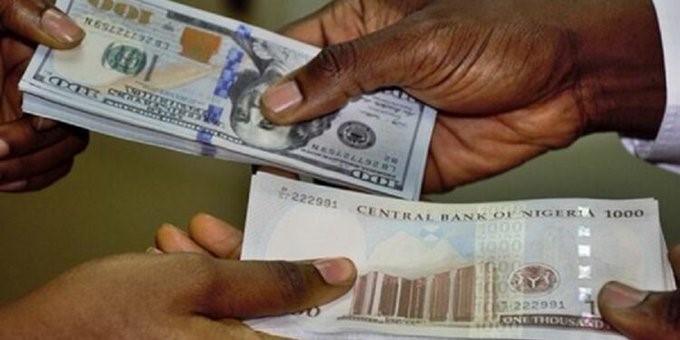
THE Central Bank of Nigeria (CBN) has extended the deadline for the Naira 4 Dollar scheme introduced in March to boost diaspora remittances.
The apex bank said in a statement that the scheme, which was scheduled to end on May 8, would continue indefinitely.
“All aspects of the operationalization of the programme remain the same,” the statement directed to all deposit money banks said.
The CBN, on March 5th, introduced Naira 4 Dollar Scheme for diaspora remittances, a strategy targeted at strengthening the economy by boosting foreign exchange (FX).
According to the details of the scheme, commercial banks are to pay a designated beneficiary N5 for any $1 remitted from the diaspora.
This incentive is to be paid to recipients whether they choose to collect the USD as cash across the counter in a bank or transfer same into their domiciliary account.
Chief Executive Officer of Financial Derivatives Company Bismarck Rewane described the scheme as a ‘promo gimmick’ and described the move as unusual.
“The Central Bank would probably understand in the end that there is no other way of managing an exchange rate than having one rate so that people would stop exploiting it,” said Rewane.
However, Director-General of the Nigerian Association of Chambers of Commerce, Industry, Mines, and Agriculture (NACCIMA) Ayo Olukanni said the Naira 4 Dollar scheme was a strategic initiative of the CBN to improve diaspora remittances.
“The projection is that very soon, we can hit as much as $30 billion in terms of diaspora remittances annually which can be directed at investments at home. The chambers of commerce, which is located all over the country, is a solid platform through which these diaspora remittances can be channelled into developmental purposes,” he said.
Nigeria has the sixth highest diaspora remittance in the world currently estimated at $25 billion per annum.
FORMER Commissioner for Works and Infrastructure in Kano State Muazu Magaji has said that Nigeria’s cabinet appointment or positions are skewed towards incompetent people and not any specific section of the country.
Muazu shared his thoughts in an interview on Channels TV’s Sunrise Daily on Thursday, where he gave his opinion on the insecurity challenge in Nigeria and its solution.
He said that the foundation of the problems that had beset the present Muhammadu Buhari administration was that there were people brought in, but could not manage their space.
Stating that the country needed to be ruled competently and democratically, he called on the young political generation to “find a coordination platform; not to agitate for anti-democratic changes, but to harness their energy towards a very credible democratic change.”
The APC chieftain believed that the generation in power today had been around since 1999 and received everything that Nigeria had to offer them.
He said there was a need for competent people to be brought onboard the administration.
Magaji cited how in 2015, many professional Nigerians in the diaspora tried to come in and contribute to helping Nigeria, but were sidelined for the benefit of those who had special interest with the then newly elected President Buhari.
He stressed that the structure of Nigeria was no longer working and there was a need to find a common ground which was “a functional respected and democratic Nigeria.”
Magaji also shared how in Kano State, “they are doing their best to coordinate young people to create the necessary shift in the paradigm of power and the change they desire to see.”
Speaking about his unconventional views on the need to restructure the democracy of Nigeria to become equitable among the regions and go beyond party affiliations, Magaji noted that those same views had cost him his appointment as a commissioner in Kano State.
Magaji was a member of the APC Presidential Campaign Council for 2019.
A chieftain of the ruling All Progressives Congress (APC) and former Kano State Commissioner for Works and Infrastructure Muazu Magaji has said that citizens in the northern part of the country invested so much money and energy into ensuring that Muhammadu Buhari became president.
Magaji said this when he featured on Channels Tv programme, Sunrise Daily, on Thursday, to discuss the rising state of insecurity in Nigeria and the government’s response.
He said for more than a decade, the North rooted so much for Buhari and invested so much money, energy and time to make him president, which allowed him to enjoy public support.
However, he noted that the nation was facing several challenges under the president seen as a retired general and a credible anti-corruption crusader.
“Today, we are discussing all these issues in this country under the same President Muhamadu Buhari. So, we are coming to the realisation that it’s not about individuals, it’s about the systems,” Magaji said.
He noted that apart from the leakage of the system which allowed some ‘marauders to wreak havoc’ in the country, some Nigerians were aggrieved due to regional dynamics.
The former Kano commissioner said there were also forces working counter-productively against the progress of the country because they felt they were being marginalised and dominated by some other groups in the country.
Magaji noted that the sense of marginalisation felt by some parts of the country transformed into reality, stressing that there were examples to show for it.
An analysis of the top management of the Nigerian National Petroleum Corporation (NNPC) conducted by The ICIR showed an uneven geographical spread of senior appointments and reflects a less gender-friendly national corporation.
According to the report, of 40 senior management positions within the NNPC, 24 are occupied by Nigerians from the North while 16 are headed by those from the South.
A week ago, the governor of Benue State Samuel Ortom had accused Buhari of ‘working for’ the Fulani ethnic group to take over the country.
Ortom said this following an attack on IDP camps in Benue State, noting that the ‘body language’ of the president showed that he was only the president of the Fulani people.
“His body language is what is being played out. The body language, the action and inaction of Mr. President shows that he is only the President of Fulani people; I have known this,” Ortom said on April 27, after visiting the scene of the attack.
In many parts of the country, there have been several crises between the Fulani herders and farmers which have led to deaths and displacement of several Nigerians, especially those in the south-western part of the country.
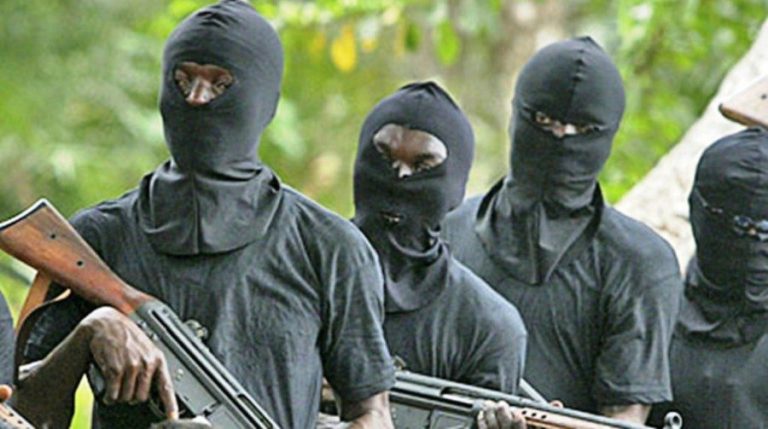
SOME yet-to-be-identified number of students of Abia State University Uturu (ABSU) and other travellers have been abducted by ‘hoodlums’ along Okigwe-Uturu Road in Imo State.
Abia State Commissioner for Information John Okiyi confirmed the incident to The ICIR during a telephone conversation on Thursday.
Okiyi said the students were abducted around 7 or 8 pm on Wednesday while they were on their way to the university.
He stated that although the incident took place in Imo State, some of the abducted persons were students of Abia State University. He added that during the course of the abduction, two students of the university escaped from the scene.
“The students were on their way to the university along Okigwe-Uturu Road before the gang of hoodlums attacked them. We don’t know whether they are herders, but we know they are criminals,” Okiyi said.
According to Okiyi, the hoodlums stopped about three buses on the road, noting that the state government was not sure how many students were abducted yet.
“Our preliminary investigation revealed that there were four of them, two escaped but we are not sure how many are in their custody yet,” Okiyi added.
The commissioner further stated that while the abductees were still being held at an undisclosed location, the state was working with the Imo government and security agencies to rescue the abducted students and others.
The Imo State Police Command is yet to respond to further inquiries from The ICIR about the full details of the abduction.
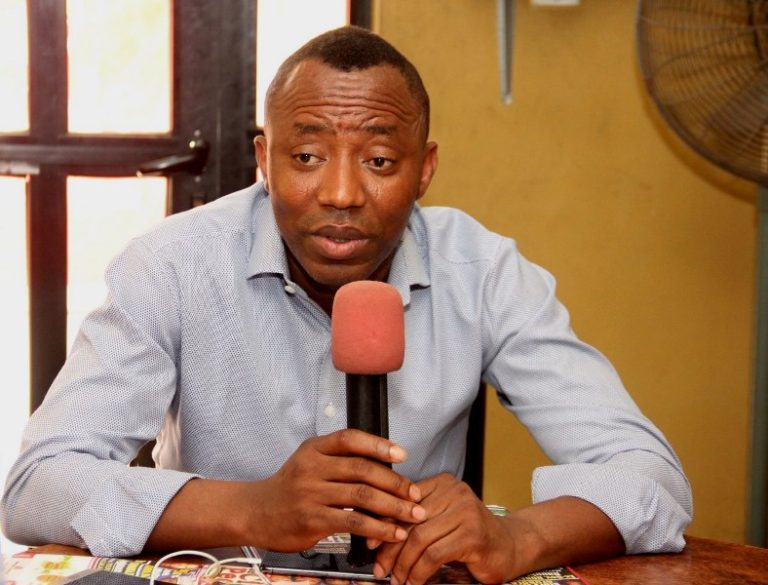
THE call by activist and Publisher of Sahara Reporters Omoyele Sowore that Nigerians should pass a ‘vote of no confidence’ on President Muhammed Buhari is trending online.
Sowore, a Buhari critic, made the call in a series of tweets over what he called the president’s ‘abysmal performance in office.’
In a tweet that has garnered 2016 retweets and 4,913 likes, Sowore said Nigerians should pass a ‘vote of no confidence on the regime,’
Also in another tweet, he said, “Fellow Nigerians: We are passing a ‘Vote of No Confidence’ on President Muhammadu Buhari over his abysmal performance in office. We only need you to retweet this by writing ‘I hereby pass a Vote of No Confidence on President Muhammadu Buhari’s leadership.'”
Sowore had also, during a protest at the National Assembly over the continued detention of students kidnapped in Kaduna, said, “The only thing the Department of State Services can tell you is that if you are speaking out at this time, they will come after you but they can’t come after kidnappers. They can’t come after bandits, and they can’t come after terrorists, including those in government. They can’t go after them, but they are very happy to go after you if you speak your mind.”
“I feel sad for Nigeria,” he continued, “I feel sad for all these students in captivity, students who wanted a bright future. They could as well have taken to kidnapping themselves so that they can make quick money but they opted to go to school and look at what our government has done to them.”
The remaining 29 students of Kaduna School of Forestry Mechanisation kidnapped by bandits were on Wednesday released after spending 56 days in captivity, while the fate of 16 remaining Greenfield University kidnapped from Kaduna State remains unknown.
Nigerian President Muhammadu Buhari urged the US government to relocate AFRICOM’s headquarters to Africa
The call by Sowore is coming only few days after the Presidency revealed that there was a secret plan to pass a no-confidence vote on Buhari.
The Presidency had, on Tuesday, claimed that it had evidence that some ‘disruptive elements’ were recruiting ethnic groups and politicians with the motive of convening conferences where a vote of no confidence would be passed on President Buhari.
The Presidency had said, “Championed by some disgruntled religious and past political leaders, the intention is to eventually throw the country into a tailspin, which would compel a forceful and undemocratic change of leadership.”
“Further unimpeachable evidence shows that these disruptive elements are now recruiting the leadership of some ethnic groups and politicians round the country, with the intention of convening some sort of conference, where a vote of no confidence would be passed on the President, thus throwing the land into further turmoil.”
Nigerians have been criticising the Buhari-led administration over the continued deteriorating security situation across the country.
The ICIR had earlier reported in March that deaths from insecurity in Kaduna State in 2020 were three times higher than those recorded in five states in the North-East within the same year.
According to data obtained from the Nigerian Security Tracker, the figure is much higher than what was recorded within the year in five North-East states of Adamawa, Bauchi, Gombe, Taraba and Yobe.
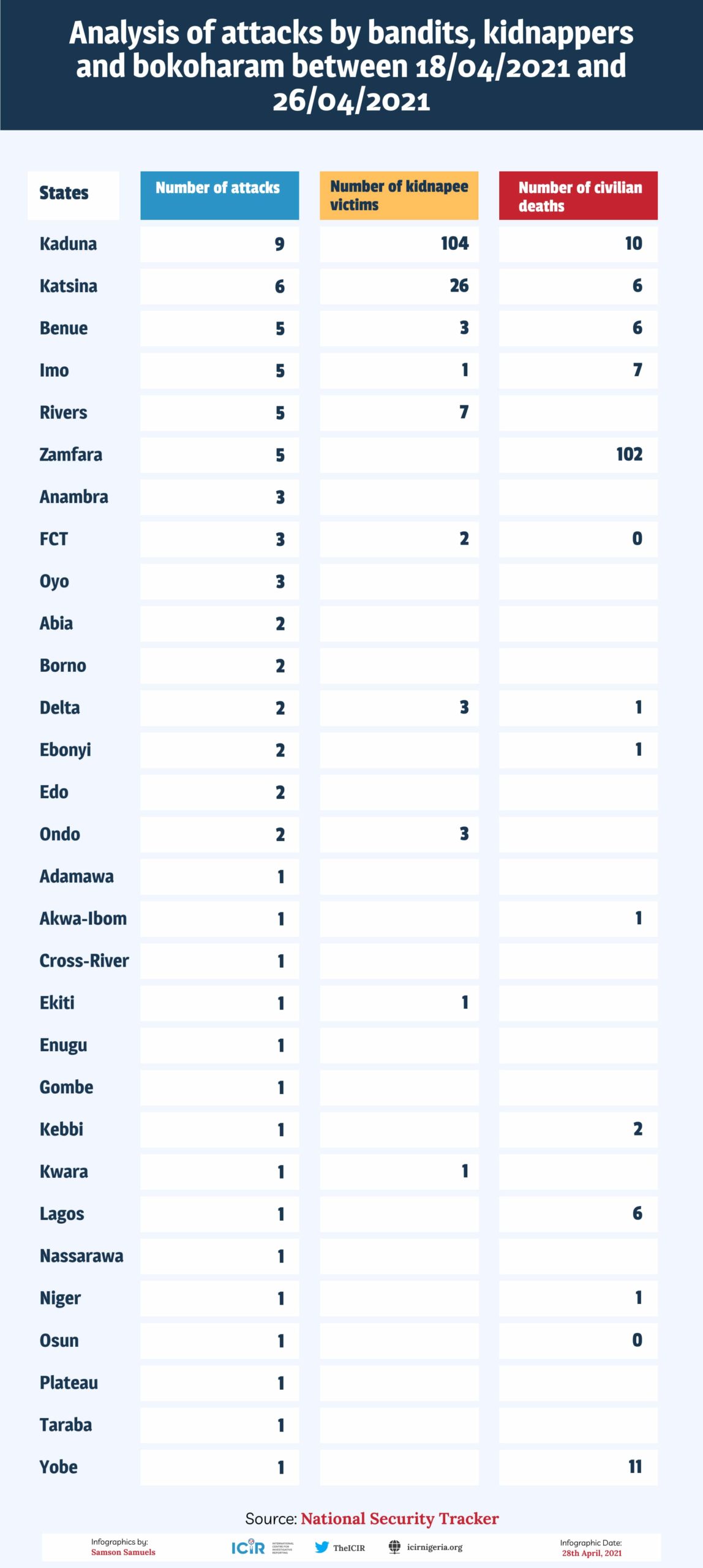
Analysis of attacks by bandits, kidnappers and Boko Haram
It also reported in April that there were 174 kidnap victims and 154 civilian deaths from 71 violent attacks across the country in one week, according to analysis of insecurity data from the Nigeria Security Tracker (NST) shows.
Leading the list with the highest number of attacks was Kaduna State, where nine attacks, 104 kidnaps and 10 civilian deaths occurred.
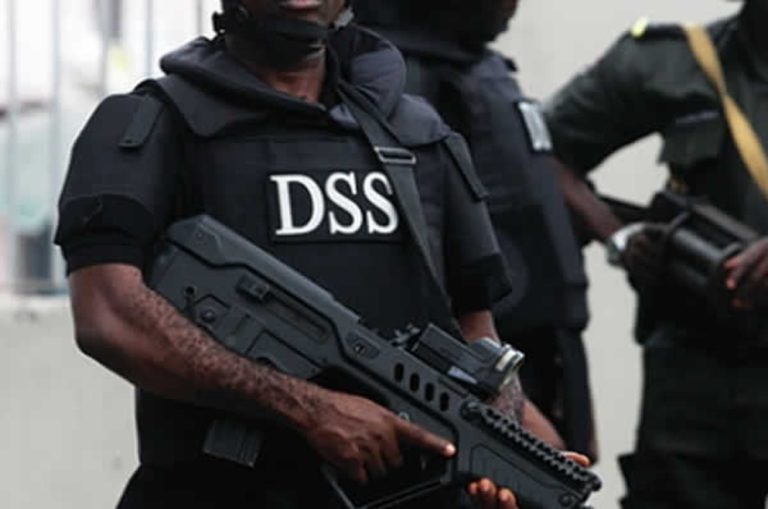
THE State Security Service (SSS) has invited an investigative reporter at the International Centre for Investigative Reporting (The ICIR) by telephone.
On Thursday, one Bayo Paul, who claimed to be an official of the SSS, the Federal Capital Territory (FCT) Command, contacted The ICIR’s Senior Reporter Niyi Oyedeji.
Paul asked the reporter if he was a member of Transparency Integrity Group, to which he declined. Paul tried to coerce the journalist into telling him his name, but the reporter stood his ground, refusing to disclose his name on the phone.
He called back a few minutes later, mentioned the reporter’s name, and asked him to report to the SSS office in Abuja on Friday by 10 am. When asked how he got the reporter’s number, Paul said he got it from the Permanent Secretary of the Federal Capital Territory (FCT).
Editor of The ICIR Ajibola Amzat contacted Paul minutes later to ask why the SSS, as a responsible organisation, would not invite the reporter in writing, but he replied that the organisation would sometimes call to invite persons for interrogation.
“We do call, we do call. The only thing is to verify the source of the call. I am not inviting you to anywhere apart from the office. You can as well trace the number and ask the source or owner of the number if genuinely I am a staff of the State Security Service,” Paul told The ICIR Editor.
Paul said he had the directive of the State Director of Security to invite The ICIR reporter, Oyedeji.
When asked the reason for the invitation, Paul said, “My boss did not tell me. He only gave me his number, his name, and he asked me to invite him to his office.”
The ICIR has contacted the spokesman of the security agency Peter Afunanya, but he replied that he was in a meeting and would get back.
Meanwhile, The ICIR has insisted on an official letter from the SSS to ensure the invitation emanates from the organisation.
There has been a clampdown on journalists by the SSS in recent times. In March 2018, the SSS arrested Daily Independent Abuja Bureau Chief Tony Ezimakor. Later in the year, the secret Police arrested Jones Abiri and detained him for two years for having links with ‘rebels.’ He was re-arrested in March 2019.
In August 2019, former Editor at Daily Trust Ibrahim Dan-Halilu was arrested for a Facebook post expressing support for the ‘RevolutionNow’ campaign.
In December 2019, TVC’s journalist Bukola Samuel-Wemimo was detained by the secret Police at its Magodo office in Lagos.
In 2020, former Premium Times investigative reporter Samuel Ogundipe was hounded by the SSS because he reported on the rift between the National Security Adviser Babagana Monguno and President Muhammadu Buhari’s late Chief of Staff Abba Kyari.
A Nigerian man, Nonso Ekwalor Base, has been arrested at the Indira Gandhi International (IGI) Airport in New Delhi, India, with drugs worth about N206,000 concealed in his underwear.
He was apprehended by the Central Industrial Security Force (CISF) on Tuesday, May 4, on the basis of ‘behaviour detection.’
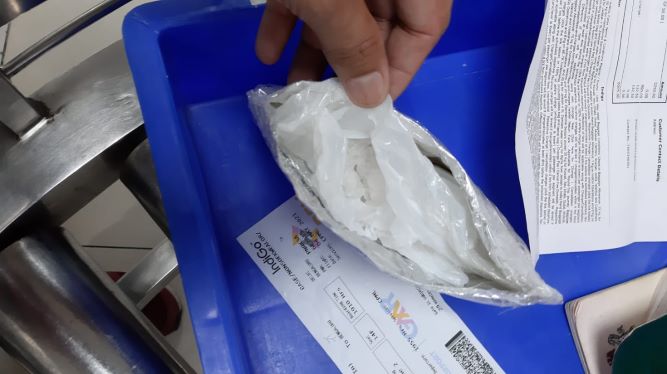
CISF said 200 grams of methaqualone, a sedative, were recovered from Base as he was undergoing security checks at terminal two of the airport just before he was scheduled to board an Indigo airlines flight to Bengaluru.
“Vigilant #CISF personnel apprehended a passenger namely Mr. Nonso Ekwealor Base (Nigerian) carrying 200gms Narcotic Substance (Methaqualone) concealed inside his clothing @ IGI Airport, New Delhi,” CISF said in a statement on Wednesday.
The Nigerian man was handed over to the Narcotics Control Bureau authorities along with the seized narcotics estimated to be worth Rs 40,000, a senior CISF official stated.
SOME yet-to-be-identified gunmen, on Thursday, killed two Police inspectors during an attack on Obosi Police Station, located in Idemili North Local Government Area of Anambra State.
During the attack, the perpetrators also destroyed Police vehicles and set the station ablaze before fleeing the scene.
Anambra State Police Spokesperson Ikenga Tochukwu confirmed the incident to The ICIR during a telephone conversation.
Tochukwu explained that the two officers sustained gunshot injuries during a shootout with the gunmen.
“Two of our officers sustained gunshot injuries, and as a result of that they paid the supreme price,” Tochukwu said.
He noted that the Anambra State Police Commissioner had deployed a crack team led by an assistant commissioner of Police to the scene of the crime to conduct an on-the-spot assessment and investigation into the incident.
On the frequent attacks on Police stations and officers in the state, Tockuwu said that threat analysis was ongoing to know the cause of such attacks.
He added that the attacks on stations in Anambra State were a call for more work in order to secure lives and properties in the state.
Recently, there have been several violent attacks on Nigerian Police stations, most especially in the South-East part of the country.
From April 19th – May 1st, there were six reported cases of attacks on Police stations in Anambra, Abia, Imo, Ebonyi, Enugu and Akwa Ibom states.
Over the course of the attacks, no fewer than 14 Nigerian Police officers were killed, while some were injured.
FORMER Kano State Commissioner for Works and Infrastructure Muazu Magaji has called for a review of the Nigerian political structure, stating that the current system can no longer work.
Magaji said this during an interview aired on Channels TV on Thursday, explaining that security challenges in Nigeria had gone beyond politics and it was time for the country to focus on protecting and defending its citizens.
Magaji, who is a member of the All Progressives Congress (APC), noted that the problems facing the country stemmed from certain regional dynamics and forces within the system working against the progress of the country. He said this could be addressed if the nation’s structure was reviewed.
Magaji stressed that while the State State Services (SSS) was doing its job by warning against anarchy, the social problems in the country should first be resolved as citizens were losing faith in the country.
“The more we push back on the desire of people to live peacefully in their own country, the more we get reactions. We need to face the social problems first before we deploy the forces and the warnings,” he said.
He pointed out that Nigerian leaders had to be more responsible and accountable towards the people because the citizens were only asking for a sustainable environment to do their jobs and cater for their families.
Speaking on the position of northern leaders towards the restructuring of Nigeria, Magaji said that though the concept of restructuring was an evolutionary process for northerners, the reality of the country’s structure was gradually being accepted by them due to a number of reasons.
“We used to think that it is about getting a credible leader that can move this country forward. The North rooted for him for decades and invested so much in his becoming the president of this country.
“Today, we are discussing all the challenges the country is facing under the same President Muhammadu Buhari. So we are coming to the realisation that it’s not about the individuals now. It’s about the system,” he said.
In the last few years, there has been an increase in agitation for the restructuring of Nigeria, but Nigeria’s President Mohammadu Buhari has shown very little interest in the idea.
According to a report, the president had said that the problem of Nigeria was not the structure but the manner in which things were done.
The restructuring of Nigeria was one of the many promises made by Buhari during the 2015 election campaign, but not much has been done towards its fulfilment.
Although a report was submitted to Buhari in 2019, there has not been a substantial action towards its implementation.