ABOUT 6,105 persons have been shortlisted for the 2019/2020 recruitment exercise by the Nigeria Immigration Service (NIS).
This is contained in a statement by the Civil Defense, Correctional Fire, and Immigration Services Board on Monday.
Director/Secretary of the Civil Defence, Correctional, Fire and Immigration Services Board (CDCFIB) Aisha Rufai, who signed the statement, said the shortlisted persons were part of the 45,323 persons that sat for the agency’s computer-based test.
According to the statement, shortlisted candidates would be invited for the screening via text and emails on Monday.
Applicants were advised to check the official website of the NIS for their names and screening details: exam location and guidelines for the recruitment exercise.
Selected applicants were also asked to print out their invitation slips which would be used to admit them into the screening venue.
According to the statement, the screening would commence on May 24, 2021, and did not attract any fee.
Applicants were also advised to tender complaints and report to the Independent Corrupt Practices and Other Related Crimes Commission or the NIS website.
Rufai also stressed that applicants whose names did not appear on the website should not visit the venues of the screening exercise.
MORE than 100 civil society organisations (CSOs) in Nigeria have called for peaceful mass action from Monday 26 and boycott of Democracy Day activities to register their displeasure over the current state of affairs of the country.
This is contained in a statement jointly signed by the CSOs on Sunday and made available to The ICIR.
The organisations called on Nigerians to participate in ‘solemn assemblies’ to commemorate the 4th National Day of Mourning and Remembrance of Victims of Mass Atrocities on May 28th, 2021.
According to the statement, the call for mass action was a result of the increase in mass atrocities in Nigeria by 43 per cent in 2020 and the government’s refusal to decisively act against the atrocities despite much advice.
The groups noted that during their last statement in February, they had highlighted how ‘gross injustices’ had marred the administration of President Muhammadu Buhari through attacks on peaceful protesters and cuddling of terrorists via offering of amnesty.
“This is tantamount to funding and supporting terrorists, encouraging murder and the decimation of the Nigeria’s gallant troops and amounts to treason against the Nigerian State and people,” the statement read in part.
The civil society organisations also called on Buhari to take immediate action against terrorist herder attacks, large-scale terrorist attacks in the North-West, industrial-scale kidnappings, sectionalism through appointments as well as an end to the persecution of the media and free speech.
“We had also demanded that where the President fails to fulfill his constitutional duties as stated above, that he steps aside, or, that the National Assembly initiates impeachment proceedings against him on grounds of gross misconduct as provided for in Section 143 of the 1999 Constitution of the Federal Republic of Nigeria,” the group stated.
The civil society organisations noted that they were appalled that despite the previous statement, President Buhari’s government had failed to heed the call to fulfil his role as commander-in-chief of the Armed Forces and Nigeria’s democratically elected president, hence the call for mass action.
The statement was signed by: Action Aid, African Centre for Leadership, Strategy & Development (Centre LSD), African Centre for Media and Information Literacy (AFRICMIL), CEE-HOPE Nigeria, Centre for Democracy and Development (CDD) West Africa, Connected Development (CODE), Enough is Enough (EiE) Nigeria, YIAGA Africa.
Others were: Arise Foundation, Adopt A Goal for Development Initiative, Advocacy Center for Development, All-4-One Humanity Development Foundation, Alliances for Africa, Ayodeji Fadugba, Baobab for Women’s Human Rights, Bauchi Human Rights Network, Benevolent Initiative for Development, Benue We Deserve (BenDef), Bimbo Odukoya Foundation (BOF), Resource Centre for Human Rights & Civic Education (CHRICED), Rule of Law and Accountability Advocacy Centre (RULAAC), SBM Intelligence, among several others.
THE Arewa Consultative Forum (ACF) has said it is against payment of ransom to secure the release of kidnapped persons but advocates negotiation with bandits.
According to NAN, the group said this in a statement signed by the National Publicity Secretary of ACF Emmanuel Yawe on Saturday in Kaduna.
The forum said although it thanked Nigerians who risked their lives in the negotiating process to free abducted hostages, it was worried about the ransom.
“We thank God for saving their lives and rejoice with their families both immediate and extended.
“Our only regret is that millions of Naira were alleged to have been paid to the bandits before they granted freedom to the kidnapped students,” the statement read.
Although five of the students have been killed, 17 have been in the den of the bandits for more than 15 days.
Governor of Kaduna State Nasir El-Rufai says he will not negotiate or pay ransom to the bandits.
President Muhammadu Buhari also, after issuing several warnings to the bandits, has now appealed to them to release the remaining students of Greenfield University.
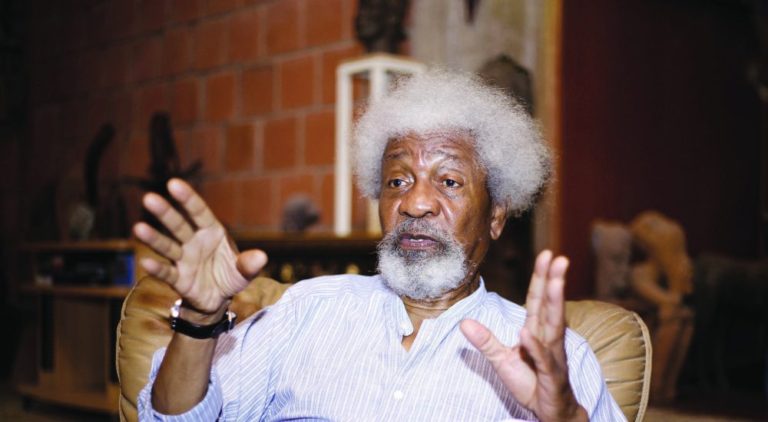
NOBEL Laureate and elder statesman Wole Soyinka has said he does not see Nigeria uniting under the present government of President Muhammadu Buhari.
Soyinka said this on Saturday during the book reading and signing of two of his books titled, ‘Trumpism in Academe’ and ‘Chronicles of the Happiest People on Earth’ in Abuja.
According to the Nobel laureate, the country had had critical moments when it could have come together, but the moments were lost.
“There has been more than one moment and we lost the moment. Will another one come? I don’t know. Right now, I don’t see it under this government quite frankly,” Soyinka said.
He noted that there was a systemic failure in the present governance of Nigeria, stressing that he did not know who could put it together.
Soyinka also stated that he now spent days without reading Nigerian newspapers because of the ‘depressing’ stories of violence recorded across the country.
When Governor of Rivers State Nyesom Wike asked if the Nobel laureate could write a book that would unite Nigeria, Soyinka said no book could unite the country without justice.
He noted that the Internally Displaced Persons(IDPs) and others who had lost relatives and loved ones due to violence would not embrace any story of unity unless they got justice.
Soyinka has consistently criticised the Buhari-led administration over its incapacity to end violence and ethnic crisis in the country.
Soyinka had once said for there to be peace in the country again, those in the government who had been proven weak and incapable must learn to swallow their vain pride and seek help.
In a recent interview, he had also urged the Nigerian government to make leaders, who had claimed responsibility to criminal offences at different times, take back their words, apologise to the nation and even carry out restitution.
Recently, Nigeria has fallen into intense spate of violence across the country, including kidnapping, abduction, terrorism, herders/farmers clashes, banditry as well as attacks on security operatives and facilities.
The violence has been made worse with ethnic coloration, leading to hostility among Nigerians.
THE Nigerian government says it is committed to ensuring that diaspora voting happens, but hinted that it will not happen in the forthcoming 2023 general elections.
The Minister for State for Foreign Affairs Zubairu Dada made this known on Saturday at the maiden Diaspora Quarterly Lecture on critical issues of concern to Nigerians living abroad, organised by the Nigerians in Diaspora Commission (NIDCOM).
Dada said having established the fact that Nigerians residing abroad were bona-fide citizens of the country and should therefore be given equal opportunity to participate in the process of governance back at home, relevant stakeholders were working closely to achieve this goal as obtained in other climes.
“The National assembly is working closely with the Independent National Electoral Commission (INEC) to fashion a way to actualise diaspora voting. I remain very optimistic that in the not-too-distant future, it should be possible for Nigerians in the diaspora to participate in our national elections, ” the minister said.
The minister further said that the commission was working closely with the National Identity Management Commission and Nigerian Missions abroad to capture the data of Nigerians in the diaspora.
“The success of this critical exercise will depend largely on the cooperation and buy-in of Nigerians in the diaspora,” Dada noted.
He added that the mobilisation of Nigerians in the diaspora for national development had, over time, become more and more pertinent, given the on-going contributions they made towards the growth of the Nigerian economy – six percent of the country’s Gross Domestic Product (GDP).
The minister also used the occasion to announce the approval of the National Diaspora Policy (NDP) by the Federal Executive Council, whose objective was to harness the potential of diaspora Nigerians in terms of resources, skills and talents for sustainable national development.
The NDP is founded on the existing national policy on migration, the Economic Recovery and Growth Plan of the Federal Government, as well as the Sustainable Development Goals.
The policy has a strategy to engage, enable and empower Nigerians in the diaspora to contribute their quota to national development on a win-win basis.
Dada also disclosed that plans were underway for the establishment of the Nigerians in Diaspora Investment Fund to further drive development in the country.
In his presentation, Minister of Interior Rauf Aregbesola disclosed that the ministry had recently approved a special passport intervention exercise known as the mobile enrollment unit, targeted at Nigerians residing in countries – especially in Europe – worst hit by the Covid-19 pandemic, where the lockdown had grounded economic and social activities.
“This exercise will enable personnel of the Nigerian Immigration Service (NIS) to meet these Nigerians at their places of residence and get them enrolled for their passport renewals,” he explained.
Aregbesola added that the NIS was establishing non-governmental passport support centres in four key international airports namely: the Nnamdi Azikiwe International airport Abuja, the Murtala Muhammed International Airport Lagos, the Mallam Aminu International Airport Kano and the Port-Harcourt International Airport in Rivers State.
These support centers would enable Nigerians arriving the country on expired passports to have their passports renewed immediately, he noted.
Earlier in her welcome address, Chairman of NIDCOM Abike Dabiri-Erewa said the aim of the Diaspora Quarterly Lecture was to connect Nigerians in the diaspora with opportunities that abound back at home.
“We’re hoping that through this discourse, we will challenge our intellect, our minds and our hearts,” Dabiri-Erewa said.
She assured participants that the quarterly webinar would seek to address issues put forward by Nigerians in the diaspora.
The Federal Capital Territory (FCT) Police Command has dispelled rumours making the rounds across the social media that bandits have infiltrated Kubwa area of the nation’s capital.
Stories of terrorist infiltration spread across social media platforms on Thursday after a video of a looting incident at Arab road, Kubwa, went viral.
But the rumours have been debunked by the Police in a press statement released on Friday, May 7. Police spokesperson Mariam Yusuf described the incident on the video as an aftermath of a demolition exercise.
“The attention of the FCT Police Command has been drawn to the viral video of looting in the social media suggesting that the ‘Hausas were looting Southerners at Arab road, Kubwa-Abuja.’
“On the contrary, preliminary investigation reveals that the Development Control of the Federal Capital Territory earlier conducted a demolition exercise on Thursday 6th May, 2021 at Arab road, Kubwa, however, some yet-to-be-identified residents seized the opportunity to loot items from the demolition sites,” it read.
According to the statement, Police operatives from the Kubwa division had moved to the scene to restore calm and arrest suspects.
Commissioner of Police Bala Ciroma has ordered a discreet investigation into the incident and has urged residents of the area to remain calm and law abiding.
Residents were also encouraged to report all suspicious movements or emergency through the following numbers: 08032003913, 08061581938, 07057337653, 08028940883, while conducts of officers were to be reported to the Public Complaints Bureau (PCB) via 09022222352.
Following the presence of terrorists in the neighbouring Niger State, residents have expressed anxiety over possible terrorist attacks in the FCT.
IT’s that time of the year when the significance of a free press is brought to the fore. Globally known as World Press Freedom day, it is a day set aside to celebrate press freedom by reminding governments of the need to respect their commitment to press freedom, and as well remind media professionals of issues of press freedom and their respect for ethics.
As announced by the United Nations Educational Scientific and Cultural Organisation (UNESCO), the theme of this year’s commemoration is Information as a Public Good. This is an auspicious nudge for media professionals to acknowledge their importance in the society and take pleasure in their role as source of news and information in the society. As purveyors of a service that is classified as public good, journalists are obliged to pay serious attention to the veracity and relevance of information they dish out to the public.
The current state of the media is also aggravated by the weakening of the resistance by journalists to trends as permitted by the system. Here, truth is the victim. Lies, unverified claims have found their way into the prominent pages of many publications. The decentralisation of the media and the unrestrained access to air your views which technology provides with the social media should not repudiate time-tested principles and values upon which journalism was founded.
Just recently, the story of Ojonuwa Onu, the amputee hawker, who was identified as Mary Daniel, went viral. It is strange that the story as published by the mainstream media and copied by other online media, was devoid of attribution and quotation by other persons that she mentioned in the story. Clearly, the reporter, who broke the news was plagued by emotions. A diligent reporter would have verified some of the claims in her story.
Under no circumstance should a journalist be overwhelmed by emotions. In fact, his emotional quotient should have suggested to him the need to seek for one or more relative or institution, who were referred to in her unsubstantiated story. Sadly, none of the media organisations which reported the story did anything close to that. The story which attracted the goodwill of kind-hearted Nigerians ended on an uncharitable note of fudged claims.
Such shoddy reportage is our bane at the moment. They fuel the pitch of anti-press sentiment, erosion of public confidence, mistrust and violence against journalist. How sad that social responsibilities and restraint are falling short of professional ethos, especially by mainstream media organisations. Gaffes by these respected media channels are fast eroding the trust and confidence we have placed in these organisations. Beyond the ordinariness of mediocrity and mad rush for breaking the news, the sanctity of professionalism and the sacrilege of publishing falsehood in any guise cannot be accepted.
Same is the release of the CCTV footage of the minor being molested by the popular entertainment personality. That video is awful and distasteful. Many claim that the video was released out of public interest. While it may have aided the believability of the claims of the accusers against the accused, it further lends to the victimisation and stigmatisation of the victim. The right place for that CCTV video remains the court of law where it is admissible as evidence.
As the fourth estate of the realm, the media wields a powerful influence in the society. In addition to reporting the society and holding governments accountable, the media system, using its product – information – enables citizens to know their rights, duties and prerogatives, just as it also contributes to the general interest, and the service of sustainable development.
As the world celebrates and remembers world press freedom day, this year’s theme is apt and timely for Nigerian media in particular, especially at a time like this. The role of media houses in enhancing the capacity of journalists to recognise and value the elements of information as a public good cannot be overemphasised. This will further help them to defend and promote the type of content which they gather, produce and disseminate for public consumption.
Information as Public Good underscores the irrefutable substance of verified, reliable and beneficial information to the society. Once again, it is a clarion call to the essential role of professional journalists in the gathering, production and dissemination of information, by trashing misinformation, and other contents which may be considered harmful in the society.
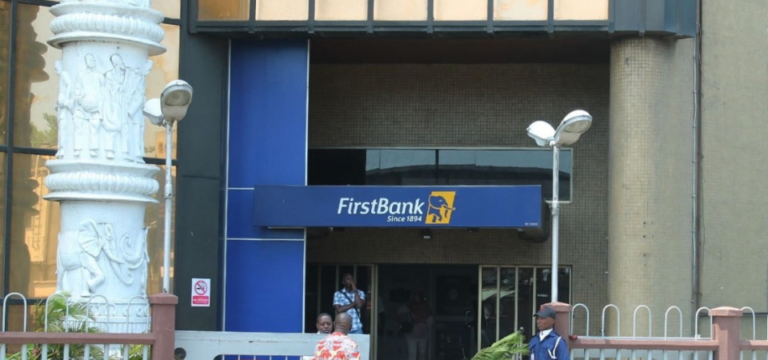
OVER a week ago, Nigeria’s apex bank announced the sack of the Board of First Bank of Nigeria (FBN), citing the previous board’s decision to implement ‘changes’ without alerting regulatory authorities, poor corporate governance and insider dealings.
The Central Bank of Nigeria (CBN) said its decision to wield the stick on First Bank and its holding company, FBN Holdings Plc, was in the interests of its minority shareholders and depositors.
“The sacking of the board was done in order to preserve the stability of the bank, so as to protect minority shareholders and depositors,” according to a media briefing by CBN Governor Godwin Emefiele.
Prior to CBN’s sack of the board, it had directed First Bank to recover the loan it had granted to Honeywell Nigeria Plc, a company owned by the former chairman of FBN Holdings Plc, Oba Otudeko, or face appropriate regulatory measures for insider borrowing.
According to a report, the loan was to the tune of N75 billion but the annual or interim reports of Honeywell Nigeria Plc did not reveal the total amount the company owed the bank.
It stated that Honeywell’s current portion of its loan to First Bank is N13.5 billion, including the overdraft facility of N2.9 billion. However, CBN alleged that First Bank gave special treatment to Honeywell Flour Mills by restructuring its loan facility.
First Bank, Nigeria’s oldest lender, has over 31 million customers, with deposits of N4.2 trillion and also accounts for a 22 per cent share of the country’s instant payments processing capacity.
Otudeko used his FBN shares as collateral
Since 2016, First Bank non-performing loans, when compared with its Capital Adequacy Ratio (CAR), was beyond acceptable standards, according to the CBN.
CAR is the measure of the capital that banks have to protect customers’ deposits. When it is less than non-performing loans, it means that the bank’s liabilities are greater than its assets.
According to data from Nairalytics, FBN Holdings had recorded a total loan impairment of over N565 billion between 2016 and 2020, while N376.4 billion, accounting for more than half the total loans impaired, was provided for in 2016 and 2017.
In its statement, the CBN stated that First Bank might have collapsed were it not for its regulatory forbearance, a financial term for softening some of the strict rules that banks must comply with if they were to avoid being taken over by the CBN.
First Bank’s bad loan ratio improved to 7.7 per cent in 2020, compared to 20 per cent in 2018, following the restructuring and write-offs of corporate debts.
It also revealed that First bank was yet to perfect its claim on the shares of Otudeko in FBN Holdings, which he had used as collateral for N75 billion loan to Honeywell Flour Mills -against the precedent conditions before the company’s credit facility was restructured by the bank.
This indicates that First Bank did not have a binding document filed with the CBN that would allow it to legally claim the collateral if there was a default on the loan.
The CBN also alleged that First Bank gave special treatment to Honeywell Flour Mills by restructuring its loan facility and might not have performed its due diligence in securing the collateral for the credit facility.
Otudeko is the current chairman of Honeywell Flour Mills Plc, having served as Chairman of First Bank until 2010 and was the immediate past Chairman of FBN Holdings Plc at the time the loans were issued.
He was also named Chairman of Bharti Airtel Nigeria after the Group was acquired by Zain in 2010, using his Airtel shares and some of his Honeywell assets as collateral to secure the credit facility from First Bank.
The Airtel shares were also used as collateral for Honeywell’s N5.5 billion loan secured from Ecobank in 2013 which is currently the subject of litigation at the Supreme Court.
CBN had asked First Bank to divest its interests in Honeywell Flour Mills Group and Bharti Airtel Nigeria Ltd because the Airtel shares were part of the collateral Otudeko had used to get the Ecobank loan.
A failed transition
The Board of Directors of First Bank had removed Managing Director/Chief Executive Officer Adesola Adeduntan and appointed Gbenga Shobo as CEO designate without regulatory approval from the apex bank.
The CBN faulted the appointment of Abdullahi Ibrahim as deputy managing director, as well as the appointment of Ini Ebong, Segun Alebiosu, Seyi Oyefeso and Bashirat Odunewu as executive directors.
The move was flagged by CBN, which stated that the bank had no reason to sack its board because Adeduntan’s tenure had not yet run out, and there was no notification from First Bank to the CBN about the transition.
“The attention of the CBN has been drawn to media reports that the Board of Directors has approved the removal of the current Managing Director of the bank, Sola Adeduntan, and appointed a successor to replace him.
“The CBN notes with concern that the action was taken without due consultation with the regulatory authorities, especially given the systemic importance of First Bank Ltd,” Emefiele said in his briefing.
Adeduntan, who was due to retire in December this year, was forced out against the wishes of the CBN, which warned the board it would take disciplinary action if the move wasn’t explained.
The apex bank decided to reinstate Adeduntan, having worked with him since 2016 to restore the bank to a healthy position after it accumulated bad loans that threatened its existence. It also named Remi Babalola as Chairman of FBN Holdings and Tunde Odukola as the chairman of the banking subsidiary.
The board tussle for control could slow down the bank’s recovery in recent years, which has seen an improved threshold in its CAR from 15.5 per cent in 2019 to 17 per cent in 2020.
During the 2008/2009 global financial crisis, the CBN invoked its powers to remove bank executives when it sacked nine CEOs of banks that were under-capitalised.
Also, the regulatory bank in 2016 sacked top executives of Skye Bank over capital adequacy issues, having in 2015 given three commercial banks time to recapitalise after they failed to hit a minimum capital adequacy rate of 10 per cent.
Underhand dealings
Under a revised Banks and Other Financial Institutions Act, CBN has the power to acquire the shares of any failing lender to the level that guarantees its control of the bank.
Since 2016, CBN has considered First Bank a systemically important bank and has been supported to help it reduce its bad loans.
Director-General of Lagos Chamber of Commerce and Industry Muda Yusuf, who spoke to The ICIR, said insider trading was unethical especially when it compromised corporate governance.
“If there is any system that needs tight supervision, then it is the financial system. It’s not like the manufacturing sector where if a manufacturing company goes under, then the shareholders bear the brunt, but for example, a bank may have a capital base of N5 billion and depositors base of N1 trillion.
“I think using insider information to trade is unethical because there is likely to be a compromise in corporate governance as the ethical is likely to become blurry,” he said.
Otudeko is alleged to have obtained billions of unpaid loans in First Bank and had to be controlled by the CBN through Adeduntan, according to the CBN governor.
“The insiders who took loans in the bank, with controlling influence on the board of directors, failed to adhere to the terms for the restructuring of their credit facilities which contributed to the poor financial state of the bank, “Emefiele revealed.
THE Nigerian National Petroleum Corporation (NNPC) has commenced work on Port Harcourt refinery despite indices showing that spending $1.5 billion on the financial-battered business could be a bad investment.
Group General Manager for Public Affairs Division Kennie Obateru quoted Chief Operating Officer for Refineries & Petrochemicals Mustapha Yakubu on Friday as saying that everything was being done to ensure that the project was delivered hitch-free.
Yakubu was also quoted to have said that the NNPC was engaging the host communities appropriately, stressing that the corporation could not afford to fail Nigerians.
“About 200 million Nigerians are looking up to us and we can’t afford to fail. We’ve been on this journey since 2019,” he said.
The contract for the rehabilitation of Port Harcourt refinery was awarded to an Italian firm, Maire Tecnimont, at $1.5 billion. The fund is coming from Afreximbank, NNPC internally-generated revenue and budgetary allocations.
On Friday, representative of Maire Technimont SPA Masu Alberto said the rehabilitation began in 2017 with an integrity test of the refinery.
“In 2019, we did work on it and then now. We’re deploying a good number of engineers,” he said.
He explained that refurbishing of the technical building, replacement of the fire-fighting, deluge sprinkler systems, refurbishing of 24 offsite tanks, replacement of electrical equipment in the substation, installation of primary earthing integration and new lighting system would begin in earnest.
The rehabilitation is seen as an expensive gamble by financial experts. The NNPC has mismanaged all of its refineries, borrowing money each year to fund them despite incurring humongous annual losses.
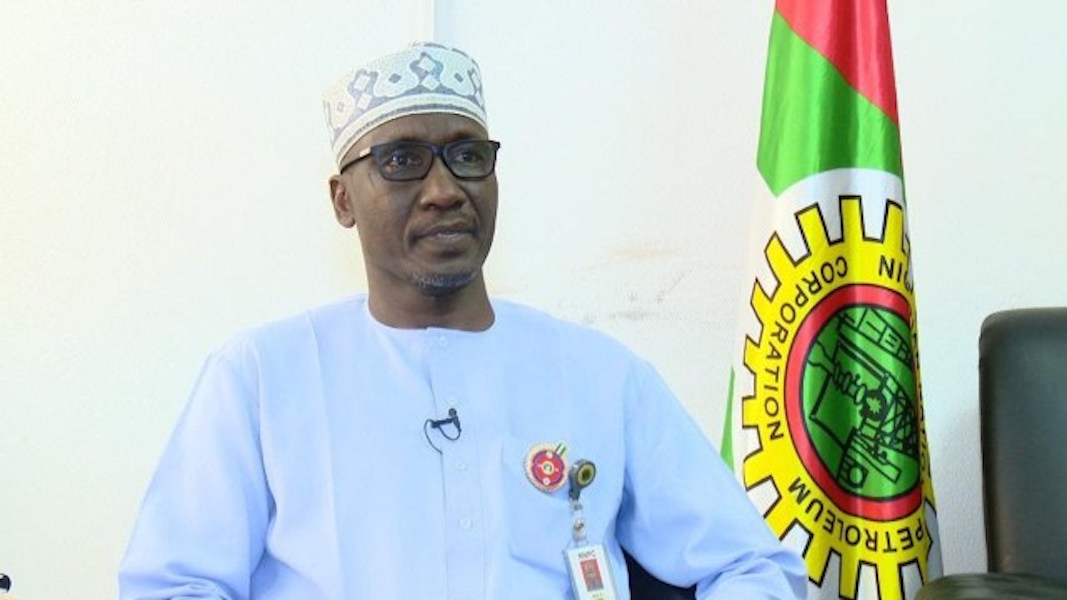
Mele Kyari, NNPC Boss. Photo credit: thecapital.com
According to The ICIRfinancial analysis, Warri refinery generated revenue of N4.429 billion between 2017 and 2019, but it incurred expenses of N144. 140 billion within the same period.
The refinery incurred N178.315 billion cumulative loss, which rises to N188.436 billion if ‘comprehensive loss is factored in.
Despite the losses, it has a workforce of 515 staff and directors taking home their entitlements amid the losses.
On the other hand, Port Harcourt refinery did not record any revenue in 2019. Yet, it reported N25.19 billion in expenses. Six directors collected N59.65 million in fees, meaning that each of them received an average payment of N9.94 million a month in 2019 from a company that recorded no revenue.
In 2019, total liabilities were estimated at N529.544 billion while assets stood at N93.31 billion. In 2018, total liabilities were put at N399.96 billion whereas assets stood merely at N14.265 billion. In 2017, assets were valued at N26.004 billion while liabilities stood at N365.97 billion.
To further buttress the level of financial recklessness in Port Harcourt refinery, the total number of staff as of 2019 was 675.
Their salaries, wages , allowances, redundancy and pension costs amounted to N22.195 billion. What that means is that, on the average, each staff member received N32.88 million in 2019 from a company that made no revenue. This amounted, on the average, to N2.74 million each month.
Total salaries and pays received by staff of Port Harcourt refinery between 2017 and 2019 amounted at N80.57 billion. But revenues received by the company within the period were estimated at N6.27 billion – implying that the NNPC sought N74.3 billion from outside the refinery to pay staff salaries.
The contention of analysts is that NNPC should hand off the refineries and privatise them to allow efficiency in operations.
It is currently being managed as a ‘no man’s business,’ which puts the investment of Afrieximbank in jeopardy.
“In 2019, PH Refinery contributed zero revenue, but incurred costs of N47bn; almost N4bn a month! Instead of ending this nightmare through a #BPE core investor sale, #NNPC wants to enmesh Nigeria into a deeper financial mess by throwing $1.5bn (incl. debt) at a problem it created?” founder of Stanbic IBTC Atedo Peterside said on his Twitter handle on March 28.
Economist and Senior Lecturer at Lagos Business School (LBS) Bongo Adi said the investment was a step in the wrong direction.
In a telephone interview with The ICIR , Adi explained said it was like government swallowing its own vomit, stressing that none of Nigeria’s refineries had been able to meet the country’s demands for petroleum products.
“… I don’t think that a government that has competent people thinking for it would embark on such a wasteful project at this point in our material existence,” Adi stated.
According to Adi, what Nigerians would have expected from the government was to unbundle the petroleum assets and sell them to the private sector who could take them up for a revamp.
FOR over seven years, the Nigerian military has embarked on offensive airstrikes at insurgents’ hideouts in Zamfara State and provided support for ground troops to rid out criminals from the North East region. Investigations by The ICIR reveals that some of these airstrikes, which were unreported by the military, had killed and injured civilians in several villages, leading to the forced displacement of hundreds of residents.
Edited by Ajibola AMZAT
NUHU Umaru is deaf in his left ear and struggles to hear with his right. He wasn’t born like this. But after a bombing incident in his village in 2019, unless you speak to him at the top of your voice from the direction of his right ear, he is unable to hear.
The eight-year-old boy wore a shy smile on his face, as he spoke to The ICIR after he finished playing football with his friends at the Internally Displaced Peoples, IDP, camp in Anka, Zamfara State.
His family had fled from Tangaram in Wuya ward of Anka LG of Zamfara State to escape attacks by military jets conducting bombing raids on their community.
“We were on our way from the farm when we saw a soldier (sic) plane flying, and my sister and I were waving at the plane until we got home. I went to get water to drink before I realised the house was falling while my left ear was bleeding from a piece of iron that pierced through it,” he told The ICIR.
Yet life in the IDP camp is not any less bearable for thousands of children like Nuhu who were forced out of their home by insurgency.
Exodus from home
Surajo Umaru, Nuhu’s father who hails from Tangaram described his life as simple until his village was bombed, then life took a new course.
One Friday afternoon in November 2019, Umaru had just returned from the farm with his wife and six children and as he hurriedly unpacked bags of millet they had harvested so he could join worshippers in time at the mosque for the afternoon prayers, two bomb dropped from a military jet, striking his home. Surajo was knocked unconscious and suffered multiple cuts and burns from the shrapnel of the bombs.
“I don’t know how I found myself at the mosque close to my house covered in blood, lying close to the bodies of two children, and that was the last thing I remembered. I was later rushed to the hospital where I recovered, but the events of that day are still in my head,” he said.
Nuhu at Anka IDP camp. Credit: Amos Abba
Nuhu and his elder sister Hassana 16, were in the house when the bomb hit their home, and neighbours searched through the rubble before they could be rescued.
Ruquyat Umaru, 6, Nuhu’s sister also had minor injuries when a plank fell on her left arm. But Hassana died from the injuries she sustained hours later, while Nuhu, who suffered a concussion to his head. He was unconscious for two days before he recovered weeks later.
According to witnesses who spoke to The ICIR, six people died from the two bombs dropped in Tangaram that fateful day. Among the people killed were two adults and four children, while seventeen people had varying degrees of skin burns.
The Nigerian Airforce regularly posts videos of its jets conducting bombing raids on terrorists and armed insurgents on Twitter and Facebook without a close-up view of its casualties from its airstrikes’ videos.
Investigations by The ICIR reveal that Tangaram village was not listed publicly by the Nigerian Airforce as the location for any of its airstrikes neither did the military publicly acknowledge there were civilian casualties in the February 2020 airstrike.
Three weeks after the bombing incident, Nuhu was discharged from Usman Danfodio University Teaching Hospital, UDUTH, Sokoto, where he was treated, but his parents noticed that Nuhu had lost hearing in his left ear as he started having fainting spells and seizures which he never had before the attack.
“He would sometimes just collapse without warning, I don’t know why it happens but when it happens, we pour water to revive him.”
Umaru said he unable to take his son to the hospital yet since the family cannot afford additional hospital bills.
“I wish I could show you some of the hospital records but I left them in the village and we can’t go there now because it has become bandit’s territory,” Umaru said.
Umaru had stayed with some of his relatives in Tangaram for a few weeks after the airstrike destroyed his home, his village was also attacked by armed insurgents a week later, and bandits carted away what was left of his harvested crops and cattle.
The armed bandits levied every household in the village to pay a tax of cow and compelled residents at gunpoint to divide their harvested crops into two equal parts and give them a portion.
Umaru and his family fled in the middle of the night of January 2020 to the IDP camp in Anka where the Nigerian military was stationed because it was safer for his family.
His family now lives with thousands of other displaced people in an uncompleted building, one of the two officially recognised camps for displaced persons in the state.
Bloody strikes in Dumburum
Dumbourou in Zurmi LG is one of the worst-hit communities.
Abubakar Magaji, 38, was sitting under a mango tree in front of his home in Dumbourou when the first bomb from a military jet hit a house on the opposite side which sent him running for safety, but hearing the screams of the injured he turned back to help.
He told The ICIR, that the initial blast had killed eight people, injuring several others. A second strike which landed a few meters away sent him stumbling into the house of another resident who suffered a heart attack after hearing the explosions of the bomb.
“As I entered into my friend’s house Mai Daji Barau, his wife was dragging him to the ground. When I asked her what happened, she told me immediately he heard the sound of the bomb blast he held his chest and collapsed,” he said.
He doesn’t remember the exact time of the strikes but recalls that at least 11 people in total were killed from six airstrikes launched that Tuesday evening on April 9, 2019, while 20 other civilians were injured.
“I went to primary health care in the village where I met four injured people brought in with broken legs, others whose intestines were out. At the first house that was bombed, there were eight people who died instantly so we had to put their body parts into a sack,and buried them according to the Islamic rites,” he said.
The pattern of strikes that happened in Dumburum is typical with any military aerial operation where the NAF fighter jet dropped bombs on its selected targets and a helicopter gunship arrived minutes later to shell moving targets.
He listed the names of the people who died from the airstrikes that day as follows: Maryam Shafiu, Dahe Malan Sule, Buhari Dan Kurma, Zaliha na Dumburum, Aisha Akilu, Mai Daji Barau, Na Dumburum, Suwaiba Alka, Yar Guru Na Dumburum, Alamin Alka and Fati ‘Yar Gum.
After the bombing, Abubakar moved away from Dumbourou to Zurmi where he currently resides with his family of six in a rented apartment. He has abandoned farming for selling groceries.
When The ICIR reporter visited Dumburum, the village was a ghost town and farms overgrown with weeds.
Most villages in Zamfara State are deserted as residents have re-located to IDP camps in their local government headquarters where there is a military presence.
Abubakar said the livelihoods of people in the community who are predominantly farmers and cattle rearers have been affected drastically by the airstrikes.
“We cannot estimate the number of livestock that were lost because they are many. In one instance, I saw a cow divided into two by a bomb.”
He said most of the people killed and injured did not have any affiliation with the bandits. “They were known residents of this village.”
Seven airstrikes by the military were recorded to have hit Dumbourou between January 2019 and May 2020, but the areas hit were designated as forest enclaves of the armed insurgents, according to data from the Armed Conflict Location & Event Data Project (ACLED) which was analysed by the Centre for Advanced Defence Studies (C4ADS).
Using coordinates obtained from the videos of NAF’s airstrikes on Youtube, The ICIR discovered that the strikes conducted by NAF did not match the GPS coordinates of Abubakar’s town rather they were described as Dumburum forest areas. This raises the question of who launched the airstrikes in Dumburum, a settlement with an estimated population of over 1,000 residents?
Secret strikes without records
The Nigerian Airforce, NAF, spearheads the air component of “Operation Hadarin Daji”, a military operation launched by President Muhammadu Buhari in May 2019 to provide increased air support for ground troops in a bid to intensify the air raids against bandits and other criminal elements in North-West Nigeria, especially Zamfara State.
At the 2018 NAF International Air Power Seminar held in Abuja, Sadique Abubakar former Chief of the Air Staff informed the nation that NAF had embarked on 39,807 combat missions within the span of four years.
“Between June 1, 2015, and Oct0ber 31, 2018, NAF flew a total of 51,582 hours 15 minutes in 39,807 sorties to deliver the airpower that has helped to keep the insurgents at bay,” he said at the event.
In military aviation, a sortie is a combat mission of an individual aircraft, starting when the aircraft takes off, for instance, one mission involving six aircraft would tally six sorties.
However, the details of most of these missions are sketchy as the incidents of bombing released publicly did not match the total number of airstrikes Abubakar announced publicly. As of March 15, the YouTube channel of NAF hosted 205 videos of which 115 were combat-related while the others were ceremonial videos.
Rakkiya Yusuf, hoping to return to her home soon. Credit: Amos Abba
The ICIR examined tweets of the Defence Headquarters, DHQ, a coalition of Nigeria’s military forces and NAF which revealed that 33 airstrikes were carried out against insurgents by NAF, in Zamfara, between April 2019 and January 18, 2021, without any mention of civilian casualties.
However, this represents a fraction of the airstrikes carried out by the Nigerian military that was made public through its press briefings or videos on social media, but it does not portray a clear picture of Nigeria’s military air campaign against armed insurgents in North-West Nigeria, especially Zamfara State, according to findings by The ICIR.
Air Commodore Ibikunle Daramola, former NAF spokesperson in a media report admitted that the Air component of Operation HADARIN DAJI destroyed 7 camps occupied by armed bandits and neutralised nearly 100 armed bandits during its air interdiction missions within four days.
He said NAF carried out 18 missions in 82 sorties (combat missions), flying over 100 operational hours with about 36,000 litres of Jet A1 fuel during the operation which took place specifically within Dumburum and Kwiambana Forests as well as at Dutse Asola and Dutsen Bagai of Zamfara and Katsina states.
Apart from this public admission of 18 missions which is more than half of the strikes publicly announced in two years, it is hard to verify if civilian casualties were involved or the locations struck by the bombs were insurgents camps, considering that military operations were often conducted secretly.
On September 17, 2020, a Twitter user with the user name @ankaboy in a tweet called the attention of NAF to a bombing incident by the military which he claimed dropped on unarmed herders. It had happened a day earlier at Chediya District in Tsafe LG of Zamfara State.
The Nigerian military neither denied nor confirmed this claim.
Yusuf Anka’s tweet.
The military also never publicly announced launching airstrikes within that vicinity as of September 2020, while its only mention of Tsafe in a public report last year was on July 18, 2020, when ground troops in Danjibga recovered over 121 cows and 37 sheep from cattle rustlers.
Philip Olayoku, a senior researcher at the University of Ibadan, Institute of Peace and Strategic Studies said the Nigerian military’s non-disclosure of its targets to the public could be attributed to a lack of synergy in its information dissemination architecture.
“There are several reasons why the military would try to hide its airstrike from the public especially in cases where there is a disjuncture in the military’s dissemination system. It could be that the military did not follow proper procedure when launching these attacks at the targets which involved civilians.
“Also sometimes they rarely carry out a post-assessment analysis of their airstrikes, maybe because they don’t have the exact details of the intelligence at their disposal or they may know there are civilian casualties but they don’t have the resources to track it,” he said.
The Wall Street Journal reporters, Joe Parkinson and Drew Hinshaw in their book, “ The Untold Story of the Global Search for Nigeria’s Missing Schoolgirls,” which was published in March, revealed that in August 2016, a Nigerian military Alpha fighter jet launched an airstrike on a target believed to be Boko Haram headquarters but the rocket strike left at least 40 of the Chibok schoolgirls dead or wounded.
The authors highlighted that the attack did not make the Nigerian military’s public press briefings rather it was kept under wraps and the civilian’s death did not elicit questions.
Nigeria recorded 11,352 deaths between 2011 to 2019 from explosive violence of which 85 per cent are civilian casualties with the worst year with the highest record for civilian casualties in 2015, according to UK-based charity Action on Armed Violence, AOAV.
A distant hope for older citizens
Abubakar Shuaib, 66, another survivor of the bomb strikes by the military in Tangaram considers himself lucky as he escaped the attack by whiskers.
The village head of the community lost his childhood friend, Sule Abdullahi after a wall of his house fell on him from the reverberations of the twin blasts which sank the walls.
“Some houses just collapsed from the sound of the bombs that day. The wall fell on Sule, and a friend of mine in his own house; they didn’t survive. The house of Sarkin Norma, a chief in the community also fell but he escaped before he later took his family out of the town,” he said.
Abubakar Shuaib believes the military airstrikes deliberately targets civilians. Credit: Amos Abba
A section of Shuaib’s house collapsed but no one was injured. Unfortunately, armed insurgents came calling days after the bombing and he was kidnapped. His captors demanded a ransom of N1.1 million which was paid after he spent six days in the forest with his captors. They also took over 100 cows from him.
‘I realised the bandits will keep kidnapping residents of the community for ransom and would not stop until they had taken everything from us,” he said.
Shuaib arrived at the IDP camp in Anka alone, after dividing his family of ten into two groups led by each of his wives. They carried little possessions to avoid suspicion and he arrived at the camp days after the second group arrived.
He still grieves over the loss of his source of livelihood left behind in Tangaram. Now he has to fend for his family in spite of the deplorable condition at the IDP camp where residents rely on voluntary donations.
“The bandits stay in the forests, and their camps are not hidden, but the army will destroy our homes in the name of chasing bandits and leave the bandits’ camps untouched.
“There is little hope for us without any form of intervention to assist people like us to get back on our feet, for we can’t continue to live in an IDP camp forever,” he said.
Rakkiya Yusuf, 80, said she lost her grandson Shehu to the hands of armed insurgents. When she counted 20 bodies that night including two of her nephews, fear gripped her as she joined other residents of the community to leave for a safer area.
Rakkiya hails from Bawandaji in Maru LG where she had lived all her life until October 2020 when armed insurgents attacked her village to raid their food barns, abduct residents and steal their livestock.
“When the bandits attacked our village that night, they killed most of the men as immediately after the attack we started moving out that night and arrived at Dangulbi primary school in the morning. My nephews Usman and Murtala were killed, including my grandson who was shot at the hand of his mother while his mother was seriously injured,” she said.
Official response
Samuel Oyeloye, lecturer at the Department of Political Science, Federal University Oye-Ekiti, told The ICIR, that the international humanitarian law protects the lives of civilians from unwarranted bombing but in cases where bandits are huddled together with civilians and the number of bandits is higher then such an attack is warranted.
“Under international humanitarian law, it is legal to kill civilians in the war when they are not specifically targeted, so long as “indiscriminate attacks” are not applied and the number of civilian deaths is not disproportionate to the military advantage gained.
“For example, if there are two civilians in an area where there are fifty armed insurgents then it not exactly a crime,” he said.
Mohammed Yarima, a brigadier general and spokesperson of the Nigerian Army said he recently assumed office as the army’s spokesperson, promising to look into the details of the airstrikes when The ICIR presented its findings.
“I am just hearing this from you for the first time and so I don’t know much about these airstrikes you are talking about. Like you know I just came into office. However, I might check during office hours to ascertain these airstrikes you are talking about,” he said.
Efforts to get Onyema Nwachukwu, a major general and acting spokesperson of the DHQ to respond to enquiries were futile because he did not respond to calls, text messages and WhatsApp messages.