Home Blog Page 1852

Why FG must engender citizens’ engagement in public procurement processes

PARTICIPANTS at a workshop on open contracting in Nigeria have called on the federal government to invest in getting citizens engaged in public procurement processes in order to sanitise the sector and achieve genuine transparency in contract awards and executions.

This call was made at a one-day workshop on ‘Open Contracting Data Standards (OCDS) for Representatives of Federal Public Institutions’ in Abuja organised by Media Rights Agenda (MRA) with support from the William and Flora Hewlett Foundation through the Africa Freedom of Information Centre (AFIC) on Thursday.

The workshop addressed the concepts of open contracting and open contracting data standards as well as their applications in Nigeria, including the duties and obligations of public institutions under the Freedom of Information (FOI) Act to proactively publish certain types of information. The participants were sensitised on some OCDS platforms in Nigeria at the federal and state levels, including the Nigeria Open Contracting Portal (NOCOPO).

Read AlsoSports projects awarded years ago in Southeast remain abandoned till date

The participants urged the government to undertake public enlightenment and sensitisation to encourage and empower citizens to engage in public procurement processes as well as open contracting data published by government institutions in order to make the open contracting initiative meaningful. These, the participants said, could be done through an agency like the National Orientation Agency (NOA), as well as other institutions or departments with public awareness mandates or capacities.

They called on the federal government to ensure that its ministries, departments and agencies were provided with adequate resources, including technical capacity and the necessary equipment, to comply with their duties and obligations under the FOI Act and to publish their procurement data in accordance with open contracting data standards.

The participants noted that open contracting held a lot of benefits for the government and citizens, including building citizens’ trust and belief in government; enabling innovation among citizens and specific stakeholders; attracting support and funding from global initiatives; preventing fraud and corruption; ensuring fairer competition, and greater value for money in public procurement, particularly in terms of the quality of service delivery.

They also pointed out that the OCDS was a tool that spoke to and expanded on the FOI Act, placing an obligation on public institutions to proactively publish certain kinds of information without anyone making a request on them .  They noted that such public institutions needed to put structures in place to enhance transparency and accountability in all aspects of governance, including public procurement processes.

The participants observed that since Nigeria had committed to implementing open contracting and adopting the OCDS in its second National Action Plan as a member of the Open Government Partnership (OGP), it was imperative that public institutions and public officials key into it by making the procurement process open and publishing procurement data in accordance with the OCDS.

Participants at town hall meeting call for e-election to curb vote-buying

They acknowledged that compliance with proactive disclosure obligations by public institutions would greatly reduce the burden of having to process numerous individual requests for information made by members of the public under the FOI Act, stressing that if contracting information were presented in OCDS format, it would be easier for members of the public to access the data, understand and process the information.

The participants noted that citizens had a responsibility to engage with data or public information, including in the public procurement sector. They, however,  argued that it was the primary responsibility of government and government institutions to proactively disclose the information and relevant data, which would make it possible for citizens to participate in the open contracting process and give open contracting meaning.
NNPC can’t continue paying N120bn monthly as petrol subsidy – Kyari

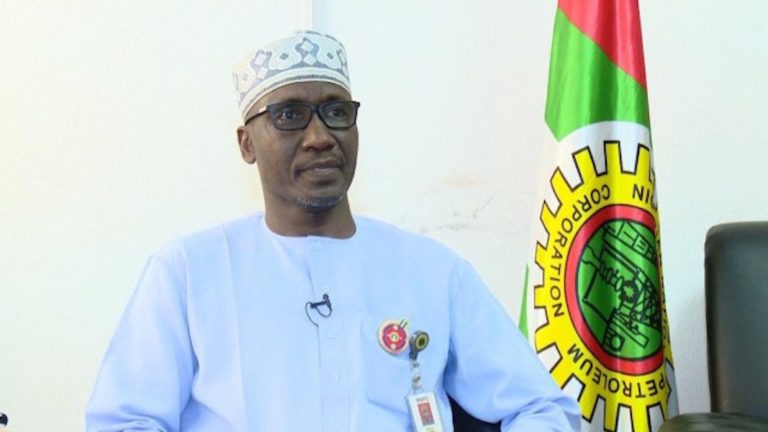
THE Nigerian National Petroleum Corporation (NNPC) says it pays N120 billion every month to subsidise Premium Motor Spirit (PMS), also known as petrol.

NNPC group general manager (GMD) Mele Kyari disclosed this at the weekly presidential ministerial media briefing on Thursday at the State House in Abuja, the nation’s capital.

He lamented that the burden placed upon NNPC by the ongoing subsidisation of the cost of petrol in the country was overwhelming.

Read ALso: Why Nigerians should anticipate increase in petrol’s pump price despite assurances from NNPC

As a result of the huge sum being paid, Kyari stated that Nigerians would have to pay the actual cost for petrol sooner or later.

He noted that the product was currently being sold below the cost of importation, causing the NNPC to pay the difference.

The NNPC boss, however, refrained from calling the shortfall payment a subsidy, stressing that the fund was paid to maintain the pump price of petrol at the current level.

He stated that the NNPC could no longer bear the monumental cost, saying that market forces must be allowed to determine the pump price of petrol in the country in the nearest future.

When asked when the corporation would stop subsidising petrol, Kyari declined to give a specific date.

Minister of state for petroleum resources Timipre Sylva also gave an update on happenings in the nation’s petroleum sector.

He disclosed that the Petroleum Industry Bill (PIB) currently before the National Assembly would be passed by April 2021.

Sylva told reporters that the bill would not suffer a setback, going by all indications from the leadership of the National Assembly.

He stressed the importance of Nigeria steering away from oil to gas, adding that the 20-year-old PIB would attract a lot of investments to the gas sector.

On the issue of having functional refineries in the country, Sylva faulted Senator Dino Melaye’s analysis of the proposed rehabilitation of the Port Harcourt Refinery.

FG spends over N50bn monthly on electricity subsidy -Power minister

According to him, Melaye was not an expert on refinery and should, therefore, not impress his views on an area he was not conversant with.

The minister said the federal government remained committed to its promise to deliver a functional refinery to Nigerians in due time.

Hijab controversy: Leave schools for owners, go to your schools – Oyedepo tells Muslims

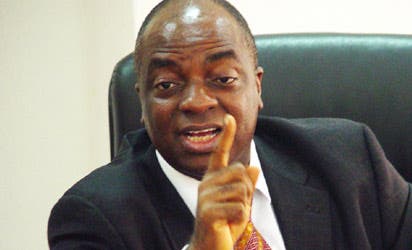
FOUNDER and presiding bishop of Living Faith Church (Winners Chapel) David Oyedepo has asked Kwara State government and Muslims to leave missionary schools for the owners.

Oyedepo said this in a viral video seen by The ICIR on Wednesday over the crisis regarding the use of hijab in Kwara mission schools.

“It is such a nasty development in Kwara State where Muslims are asking their students in our schools to wear hijab, and the church said ‘no.’

“Leave the school for the owners, find your schools, when you get to your school, men and women can wear hijabs there,” Oyedepo said.

School activities in some mission schools in Kwara State were placed on hold due to the agitation of some school authorities that prohibited the use of hijab in schools by female students.

Kwara State government had shut down the schools for 14 days after the controversy escalated between the Muslims and Christians in the state.

However, the state government later issued a directive that all female students in the affected schools were at liberty to use hijab and that the schools be reopened.

On reopening, there was violence in some of the schools as some Muslim and Christian residents clashed in Ilorin, the state capital.

The Christian Association of Nigeria (CAN) has accused Governor Abdulrahman AbdulRazaq of Kwara State of taking sides in the crisis.

According to CAN, there was a pending suit before the Supreme Court over the ownership of the schools.

Proprietor of Baptist Senior Secondary School, Surulere, Victor Dada said the use of the hijab would not be allowed because it was a missionary school.

Dada said that although the school was run by the government, the Baptist owned it and whatever was not in line with the principle of the Baptist church would not be allowed.

Despite pending bills, Senate embarks on Easter break 9 days ahead celebration

DESPITE numerous bills that are yet to be passed by the Nigerian Senate, the upper legislative chamber has embarked on Easter break nine days ahead of the celebration.

The Senate on Wednesday announced the commencement of the break that would end on April 13.

While the Nigerian Senate is going on Easter break, legislators in other serious countries are at work.


Read Also:


The United States Senate, on Wednesday, approved the appointment of a deputy attorney-general nominee Lisa Monaco while the UK House of Lords had an evidence session on impact of UK aid cuts on voluntary service. Both are continuing their sessions beyond Wednesday.

The ICIR observed there were numerous bills lying at Senate begging for the legislative attention.

For instance, The Petroleum Industry Bill (PIB) 2020, whose hearing commenced on January 25, 2021, is still pending at the upper chamber.

Similarly, the proposed bill to get rid of discrimination against B.Sc and HND certificates is also at the Senate begging for attention.

Also, the Civil Aviation Amendment Bills, which seeks to make the country’s aviation industry in tandem with international best practices, is also waiting at the Senate.

The controversial Social Media Bill is yet another bill in the Senate that has not responded to.

“Senate in other countries still go on recess or break during celebrations, but that is often very few days to the celebration. This shows how unserious we are as a nation,” Frank Umeh, a civil rights activist, told The ICIR.


Nigeria violates international agreements on asset recovery -CISLAC

THE Nigerian government is currently violating various international agreements signed under the Global Forum for Asset Recovery, raising concerns on its sincerity in the fight against corruption, the Civil Society Legislative Advocacy Centre (CISLAC) has said.

Executive director of CISLAC Auwal Ibrahim Rafsanjani, who gave the information on Wednesday at the closing ceremony of a media workshop on ‘Effective Reporting of Nigeria’s Asset Recovery and Management System,’ said the Global Forum for Asset Recovery(GFAR) principles agreed and signed in 2017 in Washington DC and the London Anti-corruption Summit in 2016 both clearly stated parameters for  asset recovery and asset recovery management, regretting that the current administration of President Muhammadu Buhari had refused to implement it.

The executive director called on the federal government to implement key legal frameworks around the management and utilisation of recovered assets in order to deepen its fight against corruption in line with global best practices.

He noted further that the lacuna in the management of recovered assets was seen glaringly in the recent arguments between the federal government and the Delta State government in respect to who owned the restituted £4.2 miilion pounds James Ibori loot.

“Foreign assets recovered by Nigerian government do not compare to the amount of domestically siezed and confiscated assets, which include siezed buildings, vehicles and others. These have proven to be worth billions of dollars in the past and are certainly surpassing the internationally recovered assets.”

Read also: OPL 245: Anti-graft group set to meet Malami, others over asset recovery

“The Nigerian public needs to be convinced that these recoveries are not just another loot used for political survival and self enrichment of those in power,” he noted.

Speaking on urgent steps to be taken by the government, he said: “We call for the enactment of the proceeds of crime legislation without excuses. The delay in passing the legislation which the Nigerian government committed to it 2016greatly undermines asset recovery and management process in Nigeria.”

He  further called on the government to establish a database that would contain details of persons from whom assets were recovered and how the recovered assets were utilised. This database, he added, should be publicly accessible, and should contain all interim and final forfeitures of different types of movable and immovable assets siezed by different agencies.

He further called on the government to facilitate inclusion of the civil society in recovered asset return and management.

“It is important that independent civil society organisations, including victims, groups, representatives, are enabled to  participate in the asset recovery process, especially in the process of monitoring and deciding how recovered assets are utilised.”

US Mission raises alarm over fake work visa for Nigerians

THE United States of America (US) Mission in Nigeria has raised the alarm over a fake press release announcing a new work visa for Nigerians.

The US mission in Nigeria disclaimed the purported report in a tweet on its official Twitter page @USinNigeria on Wednesday.


“Scammers and fraudsters are circulating a fake “press release” claiming to offer a new type of work visa to Nigerian citizens aged 40-55.  It’s the same old scam, but in fresh packaging – don’t become a victim,” the tweet read.

NNPC can’t continue paying N120bn monthly as petrol subsidy – Kyari

Why FG must engender citizens’ engagement in public procurement processes

The US advised Nigerians seeking information on US visas to refer to the official and legitimate sources of  information from the mission in Nigeria.

Also, a post on the website of the Office of Visa Services, US Department of State,  advised the public to beware of a notable increase in fraudulent emails and letters sent to the Diversity Visa (DV) program (Visa Lottery) applicants.

The US said the scammers behind such fraudulent emails and letters posed as the U.S. government in an attempt to extract payment from DV applicants.

Yahaya Bello protests visa ban by US, says Nigeria elections are complex

The Bureau warned all applicants to be familiar with information about DV scams provided by the Federal Trade Commission.

#EndSARS: How my brother suddenly went missing at Kuje Police Station since 2009 –  Witness

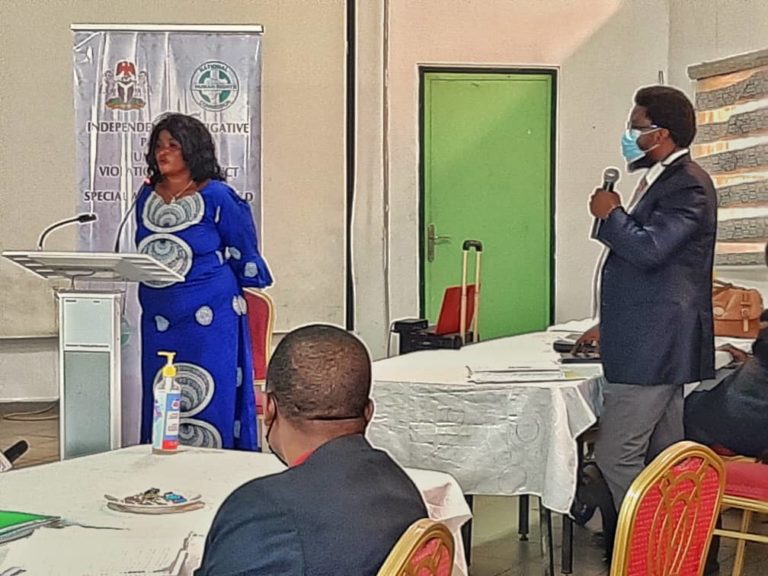
A witness at the independent panel investigating allegations of human rights violations by the defunct Special Anti-Robbery Squad (SARS) and other units of the Nigeria police Kate Okwor, on Wednesday, narrated how her brother, Jude Onunze, went missing at Kuje Police Station in Abuja.

Okwor told the panel that on January 1st, 2009, Jude called her on the phone complaining that he was arrested and taken to the police station.

On getting to Kuje Police Station, she was informed that one John, his brother’s friend, brought a complaint of insult against him, which led to his arrest and detention.


Read Also:

Okwor stated that when she eventually met the officers at the police station, she was told to come back the following day.

Kate Okwor, a witness at the independent panel investigating allegations of human rights violations by the defunct Special Anti-Robbery Squad (SARS) and other units of the Nigeria Police Force.

On January 2nd, 2009, Okwor said she went back to the police station with food for her brother and the police officers delivered it after she had tasted it as requested of her.

However, she noted that on 4th January, 2009, she, her husband and chairman of Igbo community in Kuje, Akpata Justice, went to the police station but were told by Peter Ageh, investigating police officer (IPO) for the case, that her brother had been taken home in a police patrol vehicle.

OKwor further explained that after the police’s statement, they all went back to his brother’s house but discovered that the door was locked and that there was no sign of his return.

According to the witness, she and some members of her family went back to the police station to inform them that his brother was not at home.She said  that nothing came out of the visit till date.

During cross-examination by counsel to the Nigerian police James Idachaba, the police pointed out that the matter for which the witness was before the panel had earlier been brought before a court and that a decision was reached.

Also, Idachaba informed the panel that an appeal was pending before the Court of Appeal over the same matter.

Counsel to the complainant Chukwudi Igwe told the panel that Jude Onunze was presumably dead and that he was not aware that the same matter was pending before the Court of Appeal.

The panel, therefore, adjourned the matter sine die to enable the parties to ascertain the status of the matter at the FCT High Court and Court of Appeal and report back.

Nigeria is in serious danger, falling apart under Buhari — NEF

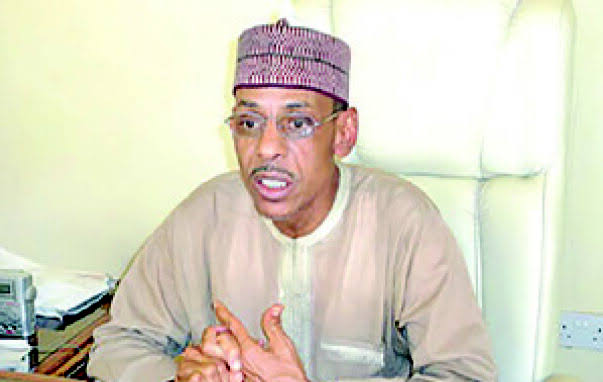
SPOKESPERSON for the Northern Elders Forum(NEF) Hakeem Baba-Ahmed has said that the country is in serious danger, adding that things are falling apart under President Muhammadu Buhari’s watch.

Baba-Ahmed, while speaking on Arise Television on Tuesday, stated that if he had the opportunity to speak with the country’s president, he would tell him that he had failed in keeping to his oath of protecting lives and properties of Nigerians.

“If I have an opportunity to speak with Mr President, I will say sir, please wake up and smell the coffee. This country is falling apart, it is in very serious danger and it is doing that under your watch.”

“You swore in 2015 and again in 2019 that you  will protect citizens, you willl protect territorial integrity of Nigeria, you will protect this country, sorry sir, you are not doing that. You are not doing it well or you are not doing it at all.”


Read Also:


He also added that he would tell the president that the country was largely insecure under his watch.

“We are becoming insecure by the day, so Mr President something is wrong. Either it is your attitude as commander-in-chief of the armed forces or the people you trust to protect us and defend us.

“Why are we suddenly being swamped by bandits and kidnappers? Is it that you have this harmony in your security agencies? Do you have a way of finding out because we do not have the time for you to fix this country at your own leisure.”

Baba-Ahmed, however, blamed the call for seccesion by some people in the country on the insecurity ravaging the nation, saying people were feeling insecure under Buhari’s watch.

“At the rate you are going, you are too slow, you are too indecisive and people are smelling a vacuum around your governance. This is why you see all these people say we do not want to be part of Nigeria.

“That’s an expression of opinion but when these opinions intensify and they become popular like we are beginning to see in some parts of the South-West and the South-East, you actually have citizens who are now legitimately beginning to think this country represents a threat to us, we do not want to be part of this country.”


Miyetti Allah blames northern governor’s negligence for herders, farmers crisis in Nigeria

THE Miyetti Allah Kautal Hore has blamed the perennial crisis between herders and farmers in the country on the negligence of the eighteen governors of northern states.

The group said the failure to maintain and develop the existing grazing reserves, build dams and sensitise herders by the governors are the reasons some herders who have been displaced in southern parts of the country have taken to the criminality in the northwest.

It also said herders are facing so many challenges from hostile host committees including vigilante groups and other criminal elements who rustle cows in the country.

Spokesman for the group, Saleh Alhassan, spoke on Wednesday while featuring on PUNCH Online interview programme, The Roundtable.


Read Also:


While stating that it was wrong to label every herder as a criminal, Alhassan said his members are facing state terrorism through laws banning open grazing by state governments.

He admitted that some of the bandits terrorising the country are displaced herders fighting for their survival.

“We (herders) are victims of state terrorism. What is happening now is an organised terrorism against an economic group. All those herders they are raiding in villages, in communities are just victims and it is sad and you expect people that are supposed to lead the way in terms of justice and fairness will just watch these things happening. It doesn’t add up.

“Herdsmen in this country are facing challenges for so many reasons. You have pressures from Boko Haram that have displaced them. You have activities of bandits that have displaced them, they are moving towards the hinterlands and the Southern part of the country. You also have the issues of climate change and other environmental factors and at the same time, you have total neglect; the northern governors have not done what they are supposed to do. If they had maintained those grazing reserves that we had in the north, build dam, make sure they sensitise the herders, they won’t be in those places they find themselves of recent.

“You also have to take cognisance of the trans-human movement of herders across the ECOWAS states. Most of the herders you have now in the South-West that migrated of recent are either from Benin Republic or Ghana and there are pressures too in those countries and these herders straddle between those axis of Saki, in Oyo to Benin Republic and that has been their internal and external migrating routes.”

Continuing, he said, “If the herders lose their cattle, where do you think they will move to? They don’t have education, they don’t have land, and the business they know right from Adam, you destroy it because you don’t want to accommodate them more so, they are Nigerians.

“So, you now see a rise in jihadists and other extremist groups. It is as simple as that.

“Today, we have very heavy crisis in the North-West because of the activities of some of those governors. In the recent past, they mounted pressure on some of the herders, they lost their cattle, so now they join bandits, the bandits we are talking about.

“They are not spirits, they have bodies, they have reasons why they emerge. When you destroy pastoralism, when you destroy grazing, you are going to create another problem because these are Nigerians, they are not going anywhere and if you don’t give them alternatives, you will have a rank of unemployed youths in the country.”

Bandits hold guns for self-defence, says Gumi

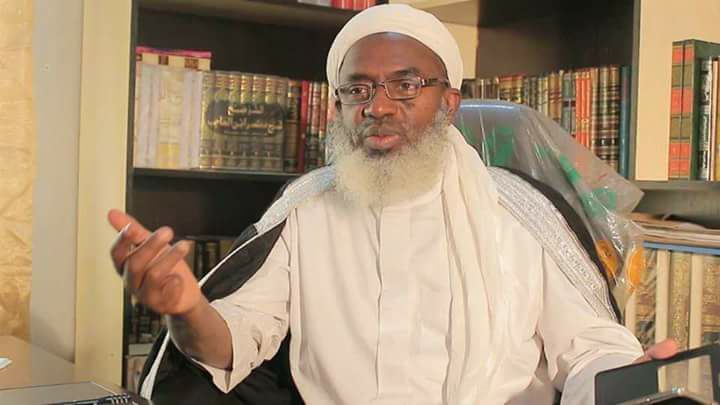
IN yet another defence of bandits, controversial Islamic cleric Ahmad Gumi says  guns are held by the criminals for self-protection.

According to theCable, Gumi stated this at a virtual meeting hosted by the National Institute for Legislative and Democratic Studies on Wednesday.

He said the dreaded criminal elements would not give up their guns if they were not assured of their safety and rehabilitation.


Read Also:

The cleric, who has been an advocate of dialogue and amnesty for the criminals, noted that another reason they took  to arms was because there was no one to listen to and entertain their grievances.

“Nobody can justify criminality. What we are saying is, what we saw in the forest is an ethnic war going on between people in the forest and the neighboring villages and hamlets. When the herder felt he has grievances and nobody was listening to him, he took on weapons.

“So when we went there and they saw a listening ear, they were ready to negotiate, tell us their grievances, and ready to incorporate into the society. So in such a case, I see no reason why we should not have a dialogue with them.”

He reiterated his call that the criminals should be given amnesty just like the Niger Delta militants.

“Looking at their educational status, they do not have any official or unofficial education. How can a nation which is serious about security leave a chunk of its society so uneducated, leave it to arms and drugs? I do not think that society is serious. How can we disperse them, rehabilitate them because they are holding arms to protect themselves?

“If you do not show them they are safe in the larger society, there is no way they can leave their weapons. And that is why we asked for amnesty for them just like we had in the Niger Delta.

“I am not justifying their kidnapping, what they do is crime. But their kidnapping is to get more money to buy more weapons so that they can protect themselves.”