Home Blog Page 1853

Nigeria’s insurance, asset management sectors too small to fuel growth – Aig-Imoukhuede

NIGERIAN banker, entrepreneur and investor Aigboje Aig-Imoukhuede has said that the country’s insurance and asset management sectors are too small to trigger prosperity and growth. 

Aig-Imoukhuede, who spoke at a virtual press conference monitored by The ICIR ahead of the launch of his book entitled ‘Leaving the Tarmac: Buying a Bank, a Memoir by Aig-Imoukhuede,’ noted that the two sectors were bigger than the banking sector in other countries, lamenting that it was not the same in Africa’s biggest economy where banks were much bigger than other financial services industries.

“Nigerian banks are big enough right now, but insurance and asset management sectors are not big enough,” he said.

“The largest financial intermediaries in any economy are not the banks, they are insurance and asset management companies where your future and legacy are preserved.”

Total assets of all Nigerian banks were estimated at N42.2 trillion  as of the end of February 2020, according to a member of the Monetary Policy Committee of the Central Bank of Nigeria (CBN) Rafindadi Sanusi.

On the other hand,  the value of Nigerian insurance industry’s assets was put at N1.8 trillion in June 2020 by the CBN.

Insurance firms in Nigeria say that citizens are not comfortable with insuring their lives and property, with many reluctant to pay for such services.

Aig-Imoukhuede was appointed in 2012 by the government of Goodluck Jonathan to look into the subsidy scam in Nigeria.

At the press conference on Wednesday, he said he was shocked to discover that people claimed subsidies on products they never imported.

He noted that multiple billions in subsidy claims were reduced to a very lower level immediately he was appointed, wondering whether fuel imports suddenly reduced one year after his appointment.

Aig-Imoukhuede and current chief executive of Access Bank Herbert Wigwe both founded the bank, which is now one of the biggest Tier-1 banks in the country.

According to Aig-Imoukhuede, building a bank, like building a nation, required sacrifices.

“Nigerian banking sector is one of the top five stories in the world today,” he said.

“There is a long way to go, but given the talents and opportunities in African market, the Nigerian banking sector can emerge as a global superpower,” he said.

He recalled that the 1999-2007 era, which was a period of renaissance, propelled the sector to a great height.

Like the title of his book, the investor said Nigeria had been left on the tarmac by other countries because the country could not manage its resources and talents.

He lamented that even with human and natural resources in the country, the standard of living was still low, saying that he was willing to work with policymakers to ensure the country was not left on the tarmac.

He said corruption went beyond bribes and economic leakages as it often reduced human beings to lower animals, stating that Nigeria would be a failed nation if there were no efforts to stop corruption.

“Ability to live your dream is being hampered and constrained in Nigeria because of faulty foundation.

This is why our youths spend so much time trying to fix the faulty foundation, which is not supposed to be their responsibility. ”

He stressed the need to build Nigeria’s primary healthcare system and fix health infrastructure, warning that the country could have crisis in the future without doing that.

Re-looted assets: Malami inaugurates committee to sell recovered items

Aig-Imoukhuede is the former chief executive officer of Access Bank. The autobiography captures his life experiences and career journey.
 

JAMB announces date for 2021 UTME registration, says NIN is compulsory

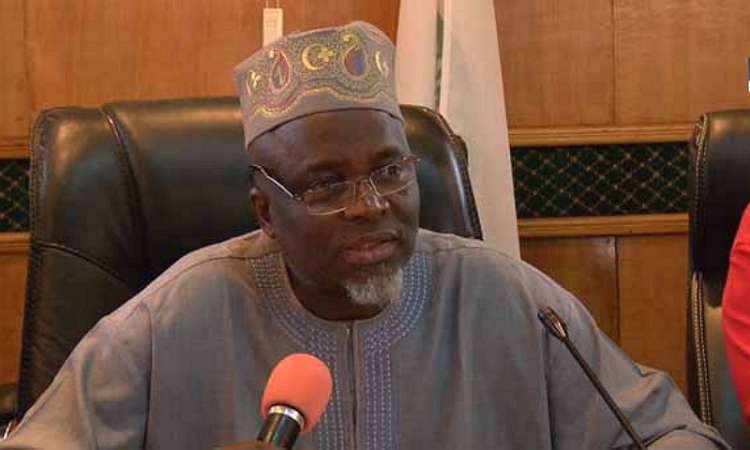
THE Joint Admissions and Matriculation Board (JAMB), on Wednesday, announced April 8 as the commencement date for the 2021 Unified Tertiary Matriculation Examination (UTME) registration.

The examination body, which made this known in a statement by its head of public affairs and protocol unit Fabian Benjamin, also stated that the National Identification Number (NIN) issued by the National Identity Management Commission (NIMC) was mandatory for would-be candidates.

It noted that the forms would be on sale across 700 centres nationwide between April 8 and May 15, while the examination was scheduled to hold between June 5 and June 19, 2021.

It added that both the UTME and the direct entry forms would be on sale at the same time.

“For any person to be registered for UTME/DE, he/she must supply his/her National Identity Number (NIN). It is therefore mandatory for participation in the 2021 Registration Exercise,” part of the statement read.

“Candidates are also to note that the registration for DE applicants would run concurrently with that of UTME candidates. There would be no extension of time for the sale of the UTME/DE application documents.

“Optional Mock will be held on Friday, 30th April, 2021 for those who indicate interest and registered before 24th of April, 2021.”

Meanwhile, JAMB has also retained the cost of registration at N3,500 and an additional N500 for the mandatory purchase of reading texts for the candidates.

Former JAMB registrar in ICPC net over N900m fraud

It urged candidates to check its websites for other registration processes and requirements.

Kogi: Legal experts criticise 12-year sentence on killer of PDP women leader

LEGAL experts have criticised the decision of Kogi State High Court to sentence Ocholi Edicha to 12 years in prison for his involvement in the killing of Salome Acheju Abuh, an opposition party’s women leader during the 2019  gubernatorial election in the state.

A former councillor and women leader of the People’s Democratic Party (PDP), Abuh was set ablaze by hoodlums on November 18 in her house at Ochadamu in Kogi State.

State commissioner of police Akeem Busari, while parading the suspects in Lokoja, had said that they were arrested on November 22 in collaboration with local vigilantes.

Police parade suspects in Abuh’s murder case

According to him, the suspects involved in the murder were Ocholi Edicha, Adamu Haruna, Onu Egbunu, Musa Alidu, Attai Haruna Egwu and Attah Ejeh.

Busari further named Ocholi Edicha as the leader of the gang that allegedly set Abuh ablaze in her house during the Kogi State gubernatorial election, stating that they would be charged to court.

More than a year after the trial, Edicha was found guilty by the court and consequently sentenced to 12 years’ imprisonment for ‘culpable homicide’ by Justice Fola Ajayi of High Court 1 sitting in Idah on Tuesday.

He was found guilty on four-count charge bordering on criminal conspiracy, armed robbery, mischief by fire and culpable homicide.

However, some legal experts have disputed the sentence, arguing that the punishment should have been more for a capital offence.

A retired Nigerian police officer Atinuke Oluseye, who served as a prosecutor in Lagos State, told The ICIR that 12 years’ imprisonment for a homicide case was ‘unheard of.’

Oluseye argued that homicide was a capital offence and should be accompanied with capital punishment.

“Although the punishment can vary, I think the minimum sentence the suspect should get is maybe life imprisonment, most especially if the suspect is very involved in the case,” Oluseye said.

However, she noted that sometimes, it would depend on the advice of the Directorate of Police Prosecution (DPP) in the state, arguing that police prosecutors often worked on the advice given by the DPP over such a matter.

Secretary of the Nigeria Bar Association (NBA) Delta State chapter Collins Osagu told The ICIR in a telephone interview that according to law, the judge did not properly use his discretion in delivering the judgement.

Osagu said the punishment for such crimes must be serious and be able to dissuade intending perpetrators. He added that judgements like that could foster such a crime in the society.

“It is a very small punishment because, some people can go ahead with such crimes and damn the consequences. They could feel that the best they would get is 14 or 12 years and do what they want to do.

“The essence of punishment is to deter people. If punishments are given and it is not enough to deter people from crime, then the purpose of justice is defeated,” Osagu said.

He stated that in crimes bordering on homicide, the judge would usually take note of the degree of involvement of the person (s) in committing the crime.

He added that if the person or persons were very involved in the crime, then it should be capital punishment.

Judge acted in line with Nigerian law

However, Olayinka Olaore, a lawyer with Gamzaki Law Chamber in Abuja, said the judge acted in the purview of power granted to him by the Nigerian law.

She said the punishment for a crime lay in the discretion of the sitting judge on the case, with the guidance of the law in operation in the society.

Olaore argued that if such judgements were given, the judge could have his/her reasons and in the case in contention, justice had been served. She further argued that justice was always in three ways: for the court, the defendants and the appellants.

“I think 12 years is enough and it is also in the discretion of the court. The judge holds the liberty to give a lesser punishment depending on the circumstances but he cannot give a higher punishment more than the law permits,” Olaore noted.

The ICIR findings show that according to the Nigerian Penal Code, anyone found guilty of homicide is to be punished by death.

Kogi Election: SDP candidate, Akpoti accuses Yahaya Bello of arson

Section 221 of the Penal Code states that “except in the circumstances mentioned in Section 222 of this Penal Code, culpable homicide shall be punished with death- (a) if the act by which the death is caused is done with the intention of causing death; or (b) if the doer of the act knew or had reason to know that death would be the probable and not only a likely consequence of the act or of any bodily injury which the act was intended to cause.”

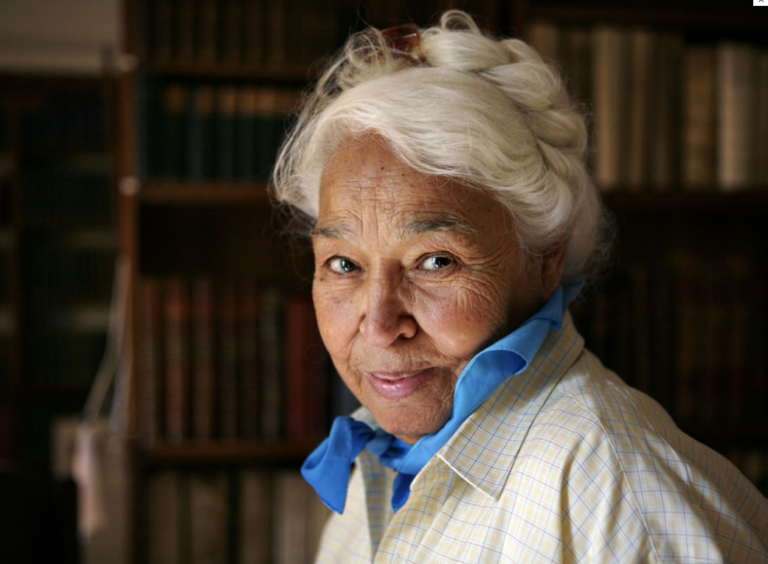
Egyptian doctor, writer and courageous human rights defender passes at 89

By Lisa VIVES


OVER the course of a lifetime spent fighting for women’s rights and equality, Nawal El Saadawi inspired generations of women even while she faced threats against her life and imprisonment.

She died this week in a Cairo hospital after a long illness.

The author of more than 55 books including ‘Women and Sex’ in 1972 and ‘The Hidden Face of Eve’ in 1980, El Saadawi campaigned against women wearing the veil, polygamy and inequality in Islamic inheritance rights between men and women.


Read Also:


Government officials, including the late president Anwar Sadat, tried to silence her voice but were unable to intimidate her. Sent to jail during a political crackdown on intellectuals, she used her time to write ‘Memoirs from the Women’s Prison,’- jotting down thoughts on a roll of toilet paper using an eyebrow pencil a fellow prisoner smuggled in. Published in 1983, it helped shape the discourse on women’s liberation in the Arab world.

El Saadawi was one of nine children and was six years old when she was forced to endure the dangerous practice of female genital mutilation (FGM). In her book, ‘The Hidden Face of Eve,’ she described undergoing the agonizing procedure on the bathroom floor, as her mother watched alongside. “That deep wound in my body never healed,” she wrote in an autobiography.

The experience fueled her campaign against FGM throughout her lifetime, arguing that it was a tool used to oppress women. FGM was banned in Egypt in 2008, but El Saadawi condemned its continued practice.

In the 1990s, Saadawi fled from Islamist attacks and found asylum at Duke University in North Carolina where she taught and completed two volumes of autobiography. Upon returning to Egypt, however, she continued to face fundamentalist accusations of apostasy and heresy.

“Women cannot be liberated in a class society or a male-dominated patriarchal society. This is why we have to get rid, fight against class oppression, gender oppression, and religious oppression,” El Saadawi told CNN in an interview in 2011. “We cannot speak about revolution without women,” she further said.

The founder and president of the Arab Women’s Solidarity Association and co-founder of the Arab Association for Human Rights, she was awarded honorary degrees on three continents. In 2012, the International Peace Bureau awarded her the 2012 Seán MacBride Peace Prize.

“Such a sad loss for our region, our world,” said Turkish novelist and women’s rights activist, Elif Shafak, in a tweet. “Rest in peace, rest in power, sisterhood and books.”

Wike to chief of army staff: Make a difference, shun politics

RIVERS State governor Nyesom Wike has charged Ibrahim Attahiru to make a difference in his position as the nation’s chief of army staff (COAS) by shunning politicisation of the army.

He has also asked the army chief to withdraw troops providing security to both state governors and politicians across the country.

He stated these on Tuesday when the army chief led senior military officers, including the new general officer commanding the Six Division in Port Harcourt Sani Mohammed, on a courtesy visit to the government house in Port Harcourt.

Wike charged the COAS to make a difference by fighting myriads of security challenges in the country, ranging from banditry to terrorism, kidnappings and militancy, among several others.

“The country is facing a lot of insecurity now. So withdraw these soldiers from politicians so that the soldiers can go and do their work,” he stated.

“In those days when you see a soldier, you run. These days, it is difficult because soldiers have been exposed to politics.

“I want you to make a difference to say that what your interest is to protect Nigerians, fight bandits, insurgency and not to carry ballot boxes.”

He lamented the role played by the army in the 2019 election in the state.

“It was a big shame, what happened in 2019 in this state. I am sure you must have watched it on television. I am sure you must have watched where the Six Division turned to INEC office with ballot papers everywhere,” he said.

Speaking further, the governor said he lacked confidence in the leadership of the former service chiefs led by Gabriel Olonisakin.

According to him, the move necessitated his decision to oppose the Nigeria Governors Forum (NGF)’s endorsement for fresh withdrawal of funds by the federal government to fight insecurity.

Wike redeems N200m pledge to families of security operatives killed by IPOB

He, however, called for more collaboration in the fight against insecurity

Abia becomes first Nigerian state to establish diaspora commission

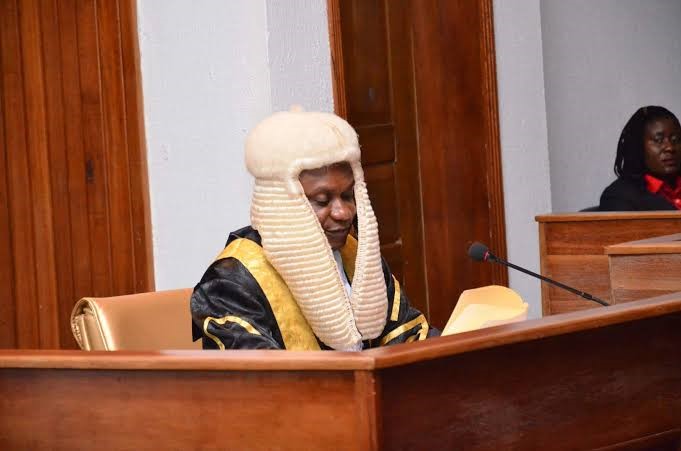
THE Abia State House of Assembly has passed ‘ The Abians in Diaspora Commission Bill’ into law, making it the first state in Nigeria to establish such.

During a plenary on Monday, 22nd March, majority whip and member representing Arochukwu State Constituency Onyekwere Mike Ukoha, who sponsored the bill, announced that the law had come into effect immediately.

“Honorable Colleagues, this law might be cited as ‘The Abians in Diaspora Commission Law’ and shall come into force this day, 22nd of March, 2021, ”said Ukoha, while addressing other parliamentarians.

The lawmaker further stated that having passed through the necessary legislative processes, it had received the approval of the speaker to metamorphose from a bill into a law.

Reacting to the news, chairman and chief executive officer of the Nigerians in Diaspora Commission (NIDCOM) Abike Dabiri-Erewa commended the Abia State  House of Assembly for being the first among others to pass the Diaspora Commission Law.

In a statement signed by head of media and public relations  at NIDCOM Abdur-Rahman Balogun, Dabiri-Erewa urged other states to emulate the move for accelerated development in all parts of the country.

She equally thanked special adviser to Governor  Okezie Ikpeazu on diaspora matters and special duties Ngozi Ogbonna-Erondu  for her diligence and consistency in ensuring the passage of the bill.

The Abians in Diaspora Commission Law will provide a direct link for Abians in the diaspora to participate in the social and economic development of the state, as well as develop and co-ordinate the implementation of policies that affect natives in the diaspora and give them a sense of belonging in the affairs of the state.

It will also monitor independently, or in collaboration with any person, institution or public department unjust acts against Abians in the diaspora and pursue redress as appropriate.

Rising inflation in Nigeria fueled by insecurity, naira devaluation -Emefiele

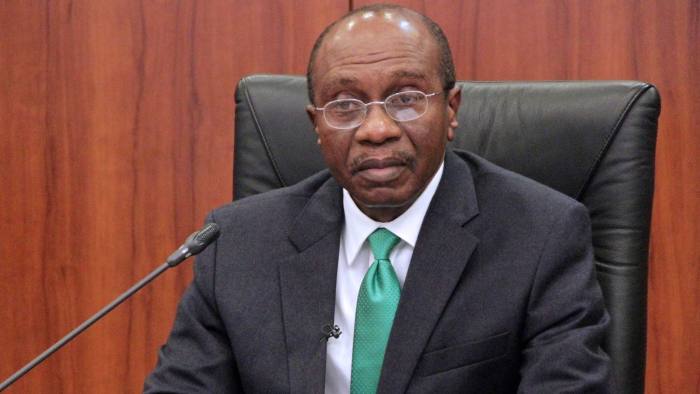
CENTRAL Bank of Nigeria (CBN) governor Godwin Emefiele has said that rising inflation in the country was caused by devaluation of the naira and security crisis.

Emefiele said this on Tuesday while presenting the communique after a two-day Monetary Policy Committee (MPC) meeting.

According to Emefiele, inflation, which had increased for the 18th consecutive month, was exacerbated by food inflation, noting that insecurity in many food-producing areas of the country was a major contributing factor.


Read Also:

“The MPC noted with concern the continued uptick in inflationary pressure for the 18th consecutive month as headline inflation continued on an upward to 17.33 percent at the end of February 2021, from 16.47 per cent in January 2021.

“This increase continues to be attributed to both food and other core components of inflation. This specific uptick in food inflation was the major driving factor for the uptick in headline inflation,” said Emefiele.

The CBN governor added that in many parts of the country, particularly the food-producing areas, farmers faced frequent attacks by herdsmen and bandits in their farms.

The apex bank’s governor said that while the bank was making significant intervention in the agricultural sector, the rising insecurity was limiting expected outcomes in terms of supply to the markets.

Emefiele further stated that the inflationary trend was also worsened by the hike in the pump price of petrol, the upward adjustment of electricity tariff as well as depreciation in the value of the naira.

The northern part of Nigeria has been engulfed in several crises of insecurity bordering on banditry, insurgency and others.

The Small-Scale Women Farmers Organisation in Nigeria (SWOFON) said recently that one of the major challenges facing farmers was insecurity.

According to SWOFON, the most painful of the encounters of the women farmers across the country were the activities of kidnappers, bandits, and terrorist groups like Boko Haram.

“As of today, many women farmers are afraid of going to their farmlands for fear of being kidnapped, raped, extorted by bandits, and killed,” SWOFON said.

In November 2020, Boko Haram claimed responsibility for the killing of 78 farmers in Zabarmari, a community in Jere Local Government Area in Borno State. Although the official figure given by the Nigerian authority was 48, many felt the number was higher.

Ned Nwokolo, the team lead of NexTier SPD, a consultancy firm on human security, said that bandits and insurgents now demanded levies from farmers.

Nwokolo said in Nigeria, farmers were no longer secure and most of them had refrained from going to their farmers due to insecurity.

“It is equally happening all over the country, it’s happening in Zamfara State, in Niger State, in Sokoto, and Katsina. Farmers are suffering. You can’t go to a farm now without someone coming to take levies from you.

“The other day, I have my researchers in Zamfara State telling me that they (Boko Haram) actually wrote to farmers asking them to pay some sort of levy before they can go back to harvest their products,” Nwokolo said.

On Monday, the  ‘Hunger Hotspots’ report released by the Food and Agriculture Organisation of the United Nations (FAO) and the World Food Programme (WFP) ranked Nigeria among the top three countries where acute hunger and food insecurity were set to worsen in the coming months.

The report stated that the conflict-hit areas in North-East were responsible for Nigeria’s worrying ranking among the top countries where citizens were starving.

Moreover, Nigeria’s naira has been devalued from N360/$ pre-Covid-19 to N410-N420/$ since the pandemic began. A dollar exchanged at N480-N486 at Lagos parallel markets on March 24.  Oil price  and demand in the global market have dropped since the pandemic began, leading to lower foreign exchange (FX) inflows into Africa’s most populous nation which relies on mainly oil for sustenance. Lack of good management of FX market and low manufacturing and export capacity have worsened the fate of Nigeria, with jobless rate rising to 33.3 percent in the fourth quarter of 2020, from 27.1 percent in the second quarter of the same year.

‘Invisible shipwrecks’ hide true number of migrants lost at sea – U.N

By Lisa VIVAS


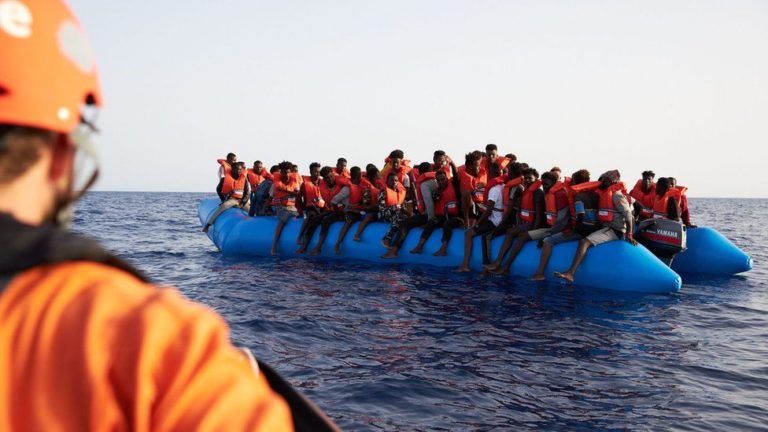
THE sight of refugees clinging to leaking boats, barely floating in frigid waters, or worse, washing up lifelessly on sandy shores almost fails to shock after these images repeat over and over, year after year.

But consciences were re-awakened this week when a toddler from Mali was seen lifted from a sinking vessel packed with refugees. A team of Red Cross nurses worked frantically to resuscitate the girl who had suffered cardiac arrest. They hoped for a miracle. It never came.

Nabody was one of 52 people, including nine children from sub-Saharan African countries, on board a vessel off Spain’s Canary Islands, who spent five days in the Atlantic Ocean after leaving Dakhla on the Western Sahara coast.


Read Also:


“There are no words to describe so much pain,” Spanish Prime Minister Pedro Sanchez tweeted.

The attempted rescue made the front pages of several Spanish newspapers and highlighted the continuing plight of people fleeing violence or seeking better lives in Europe.

In 2020, over 23,000 migrants landed on the Islas Canarias, a figure eight times higher than the prior year.

Read also: Int’l Migrants Day: 280 million people seek greener pastures worldwide – UN

The effect of COVID-19 pandemic on tourism and other industries in north and sub-Saharan Africa have pushed many more to embark on the perilous Atlantic crossing.

While the number of deaths fell this year, so-called ‘invisible shipwrecks’ mean the real number is probably much higher, officials at the U.N. migration agency said.

These ‘shipwrecks’ are events that cannot officially be corroborated because the vessels cannot be located and information is insufficient. If officials learn about them at all, it is often through bereaved family members. Sometimes, the only indication is floating bodies and this week rescuers found the bodies of four children washed up on the shores of Libya from a boat believed to be carrying North and West African migrants and refugees.

Canary Island officials have raised the alarm, particularly as more children are making the journey by boat. Since October, more than 2,000 such children have arrived.

Heartbreaking tales of Southern Cameroonian refugees in Nigeria

Among them was 16-year-old Diawoiye from Mali, who fled conflict and economic insecurity in his own country. He spent six days at sea making the journey. “In Mali, there’s a war now … my mother and father are over there, and now they are getting old and there’s no money, so I left and came here,” he told Al Jazeera.

The Canary Islands’ regional government has opened 21 emergency centers for unaccompanied children but more needs to be done to support the refugee children, said Catalina Perazzo, a spokeswoman for Save the Children.

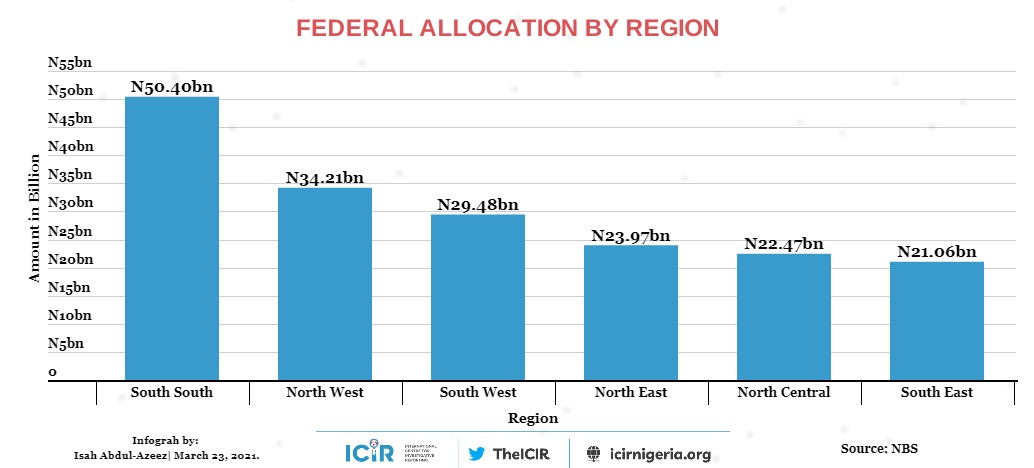
South-South, North-West receive largest chunk of N619bn FAAC allocation in January

IN January 2021, the Federation Account Allocation Committee (FAAC) disbursed the sum of N619.3 billion to the three government tiers from the revenue generated in December 2020, according to the National Bureau of Statistics (NBS).

South-South and North-West regions got the lion’s share, receiving 46.6 percent of the total allocation, The ICIR analysis shows.

Out of the six geo-political zones in the country, the South-South region received the largest share of the total allocation. The region received  N50.4 billion, representing 27.76 percent of the total allocation to states. Next to the South-South is North-West, which got N34.21 billion (18.84 percent), followed by South-West- N29.48 billion (16.23); North-East- N23.97 billion; North-Central- N22.47 billion (12.38 percent), and the South-East- N21.06 billion (11.60 percent).

The amount disbursed in January represents a 3.03 percent increase when compared with N601.1 billion disbursed in December 2020.

The revenue disbursed constitutes N437.26 billion from Statutory Account, N3.83 billion from Exchange Gain Difference, N6.90 billion from Distribution of FOREX Equalisation and N171.36 billion from Valued Added Tax (VAT).

The total amount received by the federal government was N218.0 billion, while N178.30 billion was shared to state governments. On the other hand, local governments got N131.79 billion. The sum of N32.83 billion was shared among oil-producing states as 13 percent derivation fund, the NBS report said.

It was revealed in the report that revenue-generating agencies such as the Nigerian Customs Service (NCS), Federal Inland Revenue Service (FIRS), and Department of Petroleum Resources (DPR) received  N6.99 billion, N10.43 billion and N6.36 billion respectively as cost of revenue collections.

Restructuring, resource control, other issues, dominate Okowa’s interaction with journalists

Breakdown of the allocation showed that the sum of N146.33 billion was given to Nigeria’s federal government (FGN) consolidated revenue account. The sum of N3.69 billion was a share of derivation and ecology, while N1.85 billion was for stabilisation fund. Also, N6.20 billion was earmarked for the development of natural resources, just as N5.22 billion was given to the Federal Capital Territory (FCT) Abuja.

Infographics by Isah AbdulAzeez


1 year after first COVID-19 death in Nigeria, mortality rate stands at 1.25%

NIGERIA recorded its first COVID-19 case on February 27, 2020, when an Italian citizen working in the country returned from Milan, Italy, to Lagos on the 25th of February 2020. He was later confirmed positive for COVID-19 by the virology laboratory of the Lagos University Teaching Hospital.

On March 23, 2020, exactly 25 days after the first COVID-19 case in Nigeria, the country recorded its first COVID-19 death. According to the Nigeria Centre for Disease Control (NCDC), which made the announcement, the country’s 1st COVID-19 death was a 67-year-old male, who returned home following medical treatment in the UK.

The NCDC also added that the man had underlying medical conditions―multiple myeloma and diabetes and was undergoing chemotherapy. He was later recognised as former managing director of the Pipelines and Products Marketing Company (PPMC) Suleiman Achimugu,

Nigeria COVID-19 data stands at 161,868 total cases, 2030 deaths

When Nigeria recorded its first COVID-19 death last year, the country’s total COVID-19 case was just 41. The pandemic had just been recorded in five out of the 36 states of the federation, with the Federal Capital Territory (FCT) also making the list.

As of then, Lagos State had the highest COVID-19 cases with 48, followed by FCT with 7 cases. Ogun had 2 cases while Edo, Ekiti and Oyo State had 1 case each.

Meanwhile, one year after, the COVID-19 pandemic has spread to all the 36 states of the federation, although the death rate and infection rate differ by states.

As at Tuesday,  March 23,  total COVID-19 cases in the country stood at 161,868 while COVID-19 death was 2030, equating to 1.25 percent mortality rate.

It is also important to note that 1.727 million COVID-19 test samples have been carried out in the country so far, with 161,868 (equating 9.4 percent) returning positive.

No fewer than 148,125 people, who had tested positive for COVID-19, have been discharged so far, making the country‘s active COVID-19 cases stand at 11,713.

Lagos, FCT, Plateau, Kaduna and Rivers have the highest COVID-19 cases

Out of the total 161,868 COVID-19 cases in Nigeria as at Tuesday, fives states have been recognised as the states where the pandemic is prevalent.

Lagos State is the hotspot of COVID-19 in Nigeria with 57,337 cases, followed by Abuja that has 19,584 cases; Plateau with 9,015 cases; Kaduna, 8,869 cases; and Rivers with 6,867.

Covid-19 mortality rate in Nigeria

The five states alone account for the 63 percent of the total COVID-19 cases in Nigeria.

While Kogi, Zamfara and Yobe are having the least COVID-19 cases in the country with 5 cases, 231 cases and 293 cases respectively so far.  However, Kogi governor Yahaya Bello has made disparaging comments about the virus, resisting attempts at carrying out tests in the state.

Consequently, the Presidential Task Force (PTF) has warned against travelling to Kogi after classifying the state, Yobe, Jigawa, Zamfara and Kebbi as ‘high-risk’ COVID-19 states.

The PTF hinged its decision on Kogi State government’s repeated denial of the existence of the deadly disease and its poor attitude towards report tests and isolation centres.

Visit the ICIR COVID-19 portal

Lagos, FCT, Edo, Oyo and Kano have the highest COVID-19 mortality rate

According to the NCDC data, Lagos, FCT, Edo, Oyo and Kano are the top five states with highest COVID-19 mortality rates in Nigeria. The five states account for the 49.3 percent COVID-19 mortality rate in the country.

The five states have a total of 1,000 COVID-19 deaths out of 2030 cases recorded in the country so far. Lagos alone has 426 COVID-19 deaths; 156 people have died of COVID-19 in FCT; 192 deaths in Kano; 116 in Oyo, and 110 in Kano.

In Zamfara, only eight people have died of the virus. Yobe has recorded 9 COVID-19 deaths; Ekiti has 11, and Nasarawa has 13.

Prominent Nigerians that have died of COVID-19

Below are the prominent Nigerians that are among the 2,030 people that have died of COVID-19 in the country so far:

Former Chief of Staff to Nigerian President, Abba Kyari

Former Chief of Staff to Nigerian President Muhammadu Buhari Abba Kyari had tested positive for coronavirus disease after returning from a trip to Germany on March 15, 2020.

His death was later confirmed on April 18, 2020, in a statement posted by  presidential spokesperson Femi Adesina.

Several reports had it that Kyari had a history of medical complications, including diabetes and was transferred from Abuja the capital city to Lagos for medical care before his eventual death.

Kyari died at the age of 67.

Former Governor Abiola Ajimobi

Former Oyo State governor Abiola Ajimobi was another prominent Nigerian who died of COVID-19.

Ajimobi died on June 20,2020, a week after news of his death had circulated before it was confirmed.

Ajimobi,  under the platform of the Alliance for Democracy, served as senator representing Oyo South between 2003 and 2007. In 2011, he won the Oyo State governorship election under the platform of Action Congress of Nigeria (ACN), and was re-elected for a second term in 2015, making him the first governor in the history of the state to complete two terms in office.

Wahab Adegbenro

Former Ondo State commissioner of health Wahab Adegbenro was another prominent Nigerian that succumbed to the cold hands of death due to COVID- 19 in 2020.

Adegbenro, who was at the forefront of the fight against the disease in the state, died of the virus on July 2, 2020.

Senator Esho Jinadu aka Buruji Kashamu

A senator, Esho Jinadu, popularly known as Buruji Kashamu, died of COVID-19 on August 8,2020.

Kashamu had served as the senator representing Ogun East in the National Assembly at the 8th assembly.

He was the flag bearer of the People’s Democratic Party in the 2019 Ogun State gubernatorial election and lost against Dapo Abiodun of the All Progressives Congress coming in a distant 4th.

Second wave: How Nigeria’s COVID-19 cases surged to highest daily record

Dan Foster

Popular Nigerian-American broadcaster Daniel ‘Dan’ Foster was another prominent Nigerian who died of COVID-19.

Dan foster died on June 17, 2020.

He was a veteran radio host, who worked with Cool FM, Inspiration FM, and Classic FM. He was also a judge on Idol West Africa alongside Dede Mabiaku and Kate Henshaw on Nigeria’s Got Talent.

Prior to his relocation back to Nigeria, Foster had worked with numerous radio stations in the United States of America.

This report is part of COVID-19 Response: Together For Reliable Information Project, implemented by Paged Initiative supported by the European Union and Dress Press Unlimited.