NIGERIA’s Minister of Finance, Wale Edun, and Speaker of the Federal House of Representatives, Abbas Tajudeen, clashed over the true state of Nigeria’s debt profile on Monday, September 8.
While Abbas raised the alarm over the nation’s growing debt, which he said had risen to N149.39 trillion (about $97 billion) in the first quarter of 2025, up from N121.7 trillion the previous year, Edun projected optimism and insisted that Nigeria’s debt profile was becoming sustainable.
Abbas, who warned that the nation’s debt-to-GDP ratio had climbed to 52 per cent, surpassing the 40 per cent statutory limit, urged parliaments across West Africa to strengthen oversight of public borrowing to safeguard the future of their citizens.
Both senior government officials spoke at the 11th Annual Conference and General Assembly of the West Africa Association of Public Accounts Committees (WAAPAC), organised by the House of Representatives Public Accounts Committee on Monday, September 8, with the theme: “Strengthening Parliamentary Oversight of Public Debt.”
The clash between both officials was despite the alarm raised by the National Assembly barely weeks after it approved President Bola Tinubu’s external borrowing plan of over $21 billion for the 2025–2026 fiscal cycle, including $21.19 billion in foreign loans, €4 billion, ¥15 billion, a $65 million grant and domestic borrowing of about N757 billion.
The approval, recommended by both the House and Senate Committee on Local and Foreign Debt, also included provisions to raise $2 billion through a foreign-currency-denominated instrument in the domestic market.
“As of the first quarter of 2025, Nigeria’s total public debt stood at N149.39 trillion, equivalent to about US$97 billion. This represents a sharp rise from N121.7 trillion the previous year, underscoring how quickly the burden has grown. Even more concerning is the debt-to-GDP ratio, which now stands at roughly 52 per cent, well above the statutory ceiling of 40 per cent set by our own laws”, Abbas said.
Stressing that Nigeria’s debt profile had reached a critical level, Abbas, represented by the House Leader, Julius Ihonvbhere, said this has breached the nation’s debt limit and signaled the strain on fiscal sustainability.
According to the Speaker, the development highlights the urgent need for stronger oversight, transparent borrowing practices, and a collective resolve to ensure that tangible economic and social returns match every naira borrowed.
He warned that across Africa, debt had become a structural crisis, with several countries spending more on servicing loans than on healthcare and other essential services.
He highlighted the structure of Africa’s debt, noting that 35 per cent was owed to Western private lenders, 39 per cent to multilateral institutions such as the International Monetary Fund (IMF) and the World Bank, 13 per cent to bilateral creditors, and 12 per cent to China.
The Speaker stressed that borrowing should be targeted at infrastructure, health, education, and job-creating industries, warning that reckless debt that fueled consumption or corruption must be exposed and rejected.
“Our oversight must also be people-driven. Major borrowing proposals should be subject to public hearings, and simplified debt reports must be made available to the public. Citizens have the right to know, and we have the duty to inform,” he stated.
Edun, however, painted a more reassuring picture, noting that Nigeria was turning the corner under Tinubu’s reforms.
He said the country’s debt service-to-revenue ratio dropped to about 60 per cent in 2024, while the debt-to-GDP ratio stood at 38.8 per cent, a level he described as comfortable compared to global benchmarks.
Revenues, he added, rose by 34.7 per cent in the first half of 2025.
The minister acknowledged that Nigeria, like many countries in West Africa, faced significant fiscal challenges, including elevated debt service costs, constrained revenues, and rising demands for public spending and rigorous oversight from parliamentarians such as you, especially public accounts and finance committees,” Edun said.
He described Nigeria’s fiscal trajectory as a turning point, with reforms providing the foundation for stability, competitiveness, and inclusive growth.
The ICIR reports that Nigeria will face a worsening debt burden in the coming year as the Federal Government has projected a rise in the debt-to-GDP (gross domestic product) ratio to 60 per cent by 2027.
The country had a debt-to-GDP ratio of 52.25 per cent as of December 2024, now expected to rise by 7.75 per cent.
With Nigeria’s debt surge, there are also growing fears of sovereign default, the possibility that Nigeria might struggle to meet its debt obligations, The ICIRreported.
Nigeria’s fiscal position has deteriorated significantly over the past decade, with public debt rising, driven largely by currency devaluation and persistent fiscal deficits.
“FGN’s public debt has continued to skyrocket. In just two years of this administration, the debt has doubled what the previous administration accumulated in eight years,” said Adonri, Vice Chairman at Highcap Securities, David Adonri.
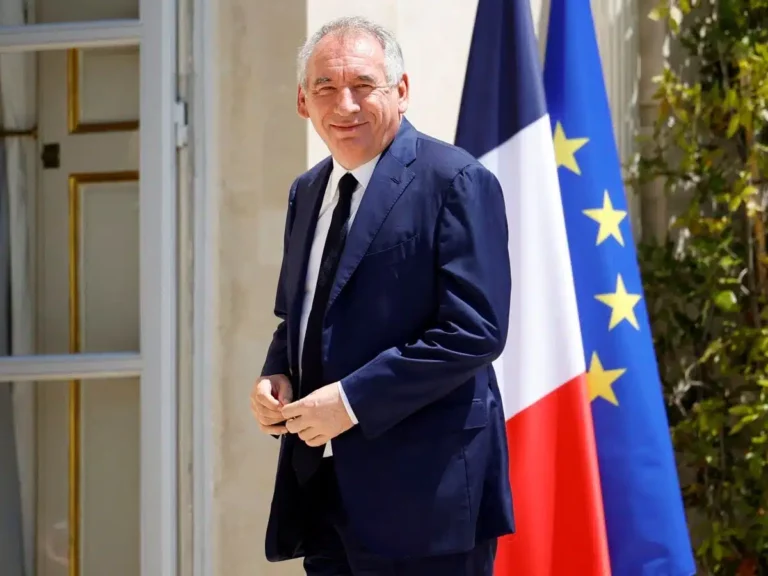
FRANCE Prime Minister François Bayrou’s government has collapsed following a failed confidence vote, raising uncertainty over President Emmanuel Macron’s future and the stability of the eurozone’s second-largest economy.
France’s parliament voted out Bayrou on Monday September 8, over a disputed budget plan that sought $52 billion in spending cuts to reduce the fiscal deficit.
“The President of the Republic acknowledges the result of the deputies’ vote on the use of Article 49-1 of the Constitution. He will meet tomorrow with Prime Minister François Bayrou to accept the resignation of his government. The President of the Republic will appoint a new Prime Minister in the coming days,” said Macron’s office.
The 74-year-old political veteran, who had been in office for just nine months, triggered the vote himself in an attempt to pressure lawmakers into supporting his proposal.
Before the no-confidence vote, Bayrou addressed the National Assembly Monday afternoon, warning lawmakers that France’s heavy debt posed serious risks to the economy. He was also expected to take questions from parliamentarians.
Bayrou’s office announced that he would step down on Tuesday, as Macron faces a choice between appointing a new prime minister or calling fresh elections. In the meantime, both the far-right and hard-left are pressing for snap parliamentary polls.
In less than two years, France has had four prime ministers, and a fifth is unlikely to resolve the deep political stalemate, a deadlock last seen in 1958, when the Fifth Republic was founded.
Opposition parties ousted Bayrou over his proposed €44 billion ($52 billion) austerity plan, which is now expected to be scaled back under whoever Macron appoints as his successor.
“There is no upside scenario, there is no way out, there is no credible scenario where you end up with the same amount of fiscal consolidation,” said Frederik Ducrozet, head of macroeconomic research at Pictet Wealth Management.
Finance Minister Eric Lombard admitted that the next government, tasked with presenting the 2026 budget by October 7, will take a less aggressive approach than Bayrou, known for his tough stance on debt.
The ICIR reports that Bayrou’s successor is expected to lean more on tax hikes than spending cuts to narrow the budget deficit, especially with the Socialists, the party that could produce the next prime minister, favouring that approach.
THE Federal Capital Territory (FCT) Police Command has commenced an investigation into the discovery of a decomposing body inside a vehicle at the National Assembly Complex in Abuja.
A statement issued on Monday, September 8, by the Command’s spokesperson, Josephine Adeh, said the body was found on Sunday, September 7, at about 9:00 a.m. following a distress call.
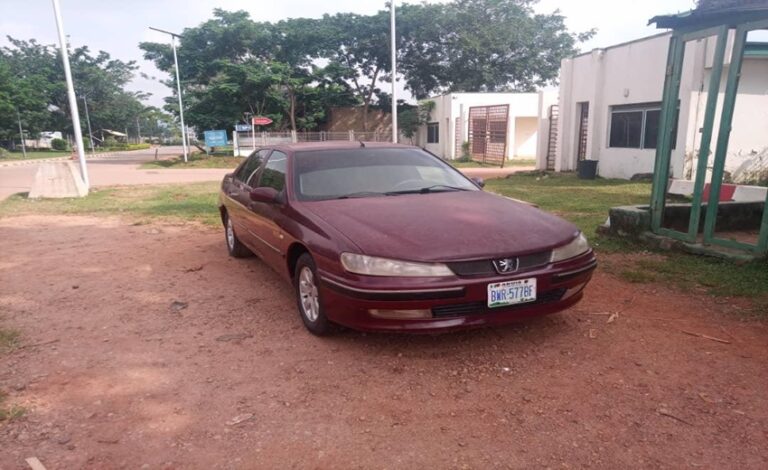
The police said officers from the National Assembly Division arrived at the scene and found the lifeless body of an unidentified male, suspected to be a labourer, inside a red Peugeot 406 with registration number BWR-577 BF.
The remains were later evacuated to the Asokoro General Hospital, where medical officials confirmed the body was already in an advanced state of decomposition.
Meanwhile, the FCT Commissioner of Police, Ajao Adewale, has ordered a discreet investigation into the circumstances surrounding the incident and directed that efforts be intensified to ascertain the identity of the deceased.
Police authorities assured that further details would be provided as the investigation unfolds.
In another most recent related development, the FCT Police Command confirmed the death of four persons in a fatal motor accident at the Mabushi Bridge in Abuja.
The tragedy occurred on Wednesday, September 3.
According to Adeh, preliminary investigations revealed that a grey Toyota Highlander, with registration number ABJ 206 EC, was forcefully taken over by three unidentified suspects near Berger Junction, Utako.
The vehicle, driven by one Emeka Ehekweme with his wife on board, reportedly lost control during a struggle for the steering wheel, veered off, and hit a parked Mazda that eventually somersaulted into a bridge pillar.
Ehekweme, his wife, and two of the suspected assailants were confirmed dead on arrival at the National Hospital, Abuja. A third suspect is said to be receiving treatment.
“The driver of the Mazda, identified as Suleman Mohammed, sustained no life-threatening injuries,” the police said.
The police have launched an investigation into the circumstances surrounding the incident and assured the public of a thorough probe.
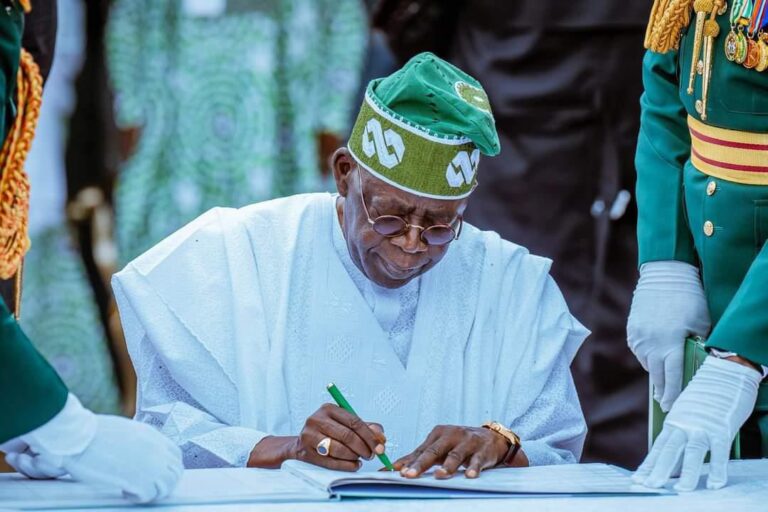
PRESIDENT Bola Tinubu’s claim of meeting revenue targets in August 2025, citing improved remittances from non-oil revenues, has several implications for the economy, with economic watchers projecting a lower lending rate for businesses by the Central Bank of Nigeria (CBN).
President Tinubu, at a meeting with stakeholders comprising largely of ruling party loyalists on September 3, said the national revenue target in August had been met, a statement analysts say offers hope for a possible reduction in the high lending rate for businesses and manufacturers.
“Today, I can stand before you to brag, Nigeria is not borrowing. We have met our revenue target for the year, and we met it in August,” Tinubu said
He attributed the progress to improved non-oil revenue performance, asserting that Nigeria has no reason to fear international economic developments.
“If non-oil revenue is going well, then we have no fear,” Tinubu stated.
The President stressed that the economy is now stabilised, with exchange rates improving from N1,900 to N1,450 per dollar.
He also announced plans to establish agricultural mechanisation centres nationwide to boost food production and job creation.
“Nobody is trading pieces of paper for the exchange rate anymore. You don’t have to know a CBN governor to get forex. All you have to do is export, import, and create jobs for the people,” he said.
The ICIR reports that the Central Bank of Nigeria’s (CBN) current lending rate is 27.5 per cent.
This rate determines the interest at which commercial banks borrow money from the CBN.
At the current rate of 27.5 per cent, with additional mark-up costs, most manufacturers are crowded out of borrowing, with most commercial banks pegging their lending rate at an average of 35 per cent.
Another consequence of the high lending rate is that manufacturers will pass the buck of the high cost of funds to their business, which increases inflation pressure.
Accordingly, higher interest rates make borrowing more expensive, potentially slowing down economic activity and limiting access to credit for businesses.
Furthermore, higher interest rates increase lending rates and make borrowing more costly, discouraging entrepreneurial activities and expansion plans.
“We expect the lending rate to go lower than what it is currently so that commercial banks can lend at lower rates to businesses and the overall economy,” a professor of economics a the Lagos Business School, Bongo Adi, said in reaction to President Tinubu’s claim of meeting revenue targets of the economy in August.
“We expect the rate to drop so that we could see more rebound in the economy with more investment going into the real sector,” he said.
An Economist, Kingsley Obiakor told The ICIR that the government should retool its policies to encourage productivity in the economy.
“Policies should focus on boosting agricultural productivity, reducing post-harvest losses, and improving transportation and storage infrastructure to ensure food affordability.”
He urged the federal government to stabilise the exchange rate, encourage local production and reduce reliance on imports to help strengthen the currency and control price surges, maintain fiscal discipline, and prioritise infrastructure and social investments, which help manage inflationary pressures.
He further called on the Central Bank of Nigeria to “carefully adjust monetary policies, ensuring interest rate decisions strike a balance between controlling inflation and sustaining economic growth.”
In its 2025 Appropriation Act, The ICIR reported that the Federal Government projected a total revenue target of N18.32 trillion to fund a record N28.78 trillion budget.
This included N7.94 trillion in oil revenue and N10.39 trillion from non-oil sources, reflecting the administration’s renewed push to diversify Nigeria’s income base away from crude oil dependence.
The budget assumed an average oil production of 1.78 million barrels per day at a benchmark price of $77.96 per barrel, with a projected naira-to-dollar exchange rate of N750.
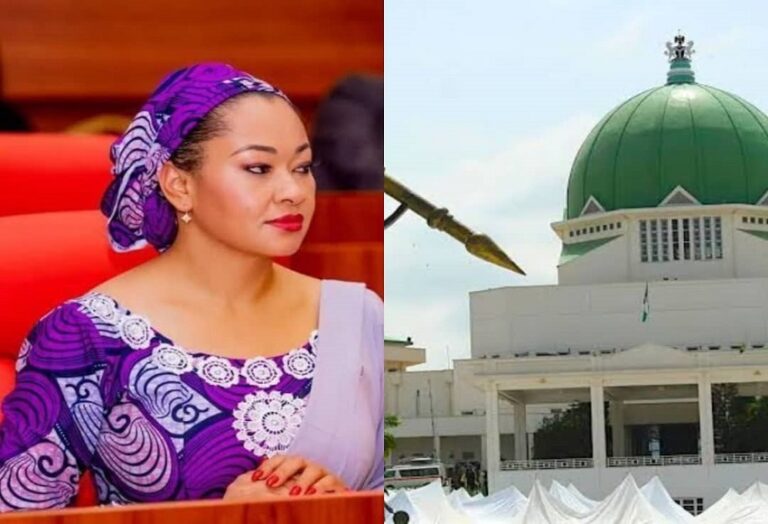
SENATOR Natasha Akpoti-Uduaghan, representing Kogi Central, is set to resume her duties at the National Assembly later this month following the completion of her six-month suspension.
Her lawyer, Victor Giwa, told PUNCH that the senator’s six-month suspension has expired, and though she is currently on vacation in London, she is ready to rejoin her colleagues at plenary when the Senate reconvenes on September 23.
“Actually, she’s ready to resume her term. She’s in London. Everything is in place, and the six months have expired. The only thing left is her resumption,” Giwa said.
The ICIRreported on February 20 that during a plenary, Akpoti-Uduaghan caused an uproar at the Senate when she discovered that her seat had been reassigned without prior notice.
She resisted the reassignment, arguing that it was an attempt to silence her. Her refusal led to a tense confrontation with Senate President Godswill Akpabio, which led to her suspension on Thursday, May 6 for six months on Thursday, May 6, despite an interim order from a Federal High Court.
In July, there was tension at the National Assembly complex when Akpoti-Uduaghan stormed the National Assembly to resume her legislative duties amidst tight security.
The suspended lawmaker, who was denied access to the National Assembly, relied on a recent judgment delivered by Binta Nyako of the Federal High Court, Abuja, to resume Senate proceedings on Tuesday, July 22, 2025.
However, in Giwa’s latest remarks, he said that the Senate leadership was not expected to obstruct her return.
“We have been told that even the leadership of the Senate is ready to welcome her. So that’s the situation at the moment. There is no obstacle at all,” he assured.
Her lawyer affirmed that with the suspension ending last Saturday, ongoing legal disputes would not prevent her from resuming her duties.
“Everything will be resolved. Even the court cases will become like an academic exercise,” Giwa noted.
RESIDENT doctors in the Federal Capital Territory (FCT) have commenced a seven-day warning strike over a long-standing systemic failure in Abuja’s health sector.
The latest industrial action, declared by the Association of Resident Doctors, FCT chapter (ARD-FCT), came amid growing frustration over worsening conditions, including manpower shortages, unpaid allowances, broken equipment, and unsustainable workloads for medical staff.
The development was announced on Monday, September 8, in a communiqué signed by ARD-FCT President George Ebong and other executives.
The doctors warned that continued neglect of the sector could trigger a complete breakdown of healthcare delivery in the capital.
They are demanding urgent recruitment of health workers, provision of functional equipment, regular payment of salaries and allowances, among others.
This strike followed an earlier one in January 2025, which was called off after the Minister of the FCT, Nyesom Wike, intervened.
At the time, Ebong revealed that Wike had approved the payment of six months’ salary arrears, outstanding accoutrement allowances, and pledged to reduce medical residency bonding to two years.
He also noted that the minister authorised the recruitment of additional doctors and allied health workers to address staffing shortages and promised to ensure prompt payment of locum and other health workers.
The doctors resumed work on January 25, 2025. However, eight months later, the ARD-FCT gave the FCT administration a one-week deadline to begin implementing reforms, particularly on staffing and welfare, or risk further industrial action.
National crisis mirrors local grievances
THE FCT strike was part of a broader, national wave of dissatisfaction among Nigeria’s resident doctors.
Earlier in June, the Nigerian Association of Resident Doctors (NARD) criticised the Federal Government over continued exclusion from specialist allowances, non-payment of arrears, and the failure to implement the long-overdue revision of the Consolidated Medical Salary Structure (CONMESS).
During a press briefing in Uyo, NARD President Tope Osundara condemned the government’s persistent neglect of frontline medical professionals.
He also pointed out that the 2009 ‘Collective Bargaining Agreement’ had been repeatedly breached, and that multiple letters sent to federal authorities had gone unanswered for over six months.
“The OGM observed with disappointment the continued exclusion of resident doctors from the payment of specialist allowances, despite their active role in delivering specialist care across various health institutions,” part of the communique, as read by the president, said.
Osundara further expressed dissatisfaction over the failure of the Federal Government to pay the 2024 accoutrement allowance arrears and the lack of consequential adjustments to the CONMESS structure for over 16 years.
He said the omission breached the 2009 Collective Bargaining Agreement.
He also criticised the government for ignoring multiple correspondence on the issue over the past six months, warning that the neglect contradicted the National Policy on Health Workforce.
Government optimistic
Responding to the latest development, the Minister of State for Health, Isaq Salako, expressed confidence that ongoing talks with the National Association of Resident Doctors (NARD) would prevent a prolonged strike.
He said this during an appearance on Channels Television’s Sunrise Daily, on Monday, September 8.
“The National Association of Resident Doctors has issued an ultimatum, but I believe with the level of conversation ongoing, we had a meeting on Monday; we are making progress,”
He noted that the main issue is the outstanding residency training allowance, about 40 per cent of which for 2025 is yet to be paid.
BIG Brother Naija Season 10 delivered another major shake-up on Sunday night, September 7, as three housemates, Big Soso, Ivatar, and Doris, were evicted from the “Ten Over Ten” house.
The live show marked the first triple eviction of the season, following a tense week of voting that saw the trio receive the lowest number of public votes.
Their departure reduces the number of contestants to 19, intensifying the race for the coveted ₦120 million grand prize.
Doris Okorie, a 33-year-old actor from Imo State, had described her life before the show as “routine” and hoped Big Brother would add the spark she craved. Entering the house, she promised to “cause some not-so-innocent problems” before bowing out.
Big Soso, real name Sonia Amako, a 28-year-old chef and lawyer from Kaduna, joined the season determined to represent Northern Nigeria while proving that women can balance ambition with tradition. “I want young girls to see that you can be a boss and still hold it down at home,” she said before her journey was cut short.
For Ivatar, the 37-year-old media personality and entrepreneur from Anambra, Big Brother was more than a dream. It was also a chance to make her 18-year-old child, a longtime fan of the show, proud.
The triple eviction capped a dramatic week 6 that was packed with twists. Big Brother tasked housemates with searching for a red envelope containing an immunity card, which Mensan successfully found, securing her place in the house for another week. Head of House Faith also pulled a powerful card from the Tree of Trinkets, saving Zita and putting the rest of the house at risk.
To add to the drama, Kaybobo was crowned the “Most Influential Housemate” of the week, a new title based on housemates’ contributions to tasks, chores, and entertainment value.
With alliances under strain and only 19 contestants left, the pressure is mounting inside the BBNaija house. Fans are bracing for more confrontations, twists, and surprises as the “Ten Over Ten” season continues to raise the stakes.
PRESIDENT Bola Tinubu has ordered a review of military operations across the country, following deadly attacks in Borno State.
According to Vice President Kashim Shettima, the directive will involve the deployment of advanced hardware and surveillance equipment to dislodge terrorist groups.
Thiswas disclosed in a statement by the Senior Special Assistant to the President on Media and Communications, Stanley Nkwocha, on Monday, September 8.
He also confirmed that Tinubu had approved the purchase of additional drones to strengthen counterterrorism operations, while hinting at renewed discussions on state police to tackle insecurity at the grassroots.
The Vice President highlighted Tinubu’s position that security challenges in some Nigerian states require specialised units that understand local terrain, culture, and can effectively network at the grassroots level.
Shettima, who mourned the victims of the Darajamal community attack in Bama Local Government, defined the killings as a “profound national loss.”
“I extend my heartfelt condolences to Governor Babagana Umara Zulum @GovBorno, the people of Borno State, and the Nigerian military over the tragic loss of our compatriots. These deaths have left the entire nation in collective grief, but we are confident that justice will be served for the bereaved families,” the Vice President stated.
Shettima extended condolences to Borno State Governor Babagana Zulum, the Nigerian military and the families of those who died in the assault. He promised that justice would be served.
Zulum had earlier visited Darajamal to console the grieving families of both civilians and soldiers killed by Boko Haram insurgents.
The ICIR reported that the United Nations (UN) condemned the alleged killing of 63 people in Borno State by Boko Haram militants.
In a statement issued on Sunday, September 7, UN Humanitarian Coordinator, Mohamed Fall, urged Nigerian authorities to bring the perpetrators to justice.
Recall that a fresh attack on Daral-Jamal, a community located along the Bama-Banki Road in the Sambisa Forest, on the evening of September 5, left five soldiers and 58 civilians dead.
The insurgents also burnt down over 20 houses, vehicles, foodstuffs and other valuables belonging to the resettled Internally Displaced Persons (IDPs).
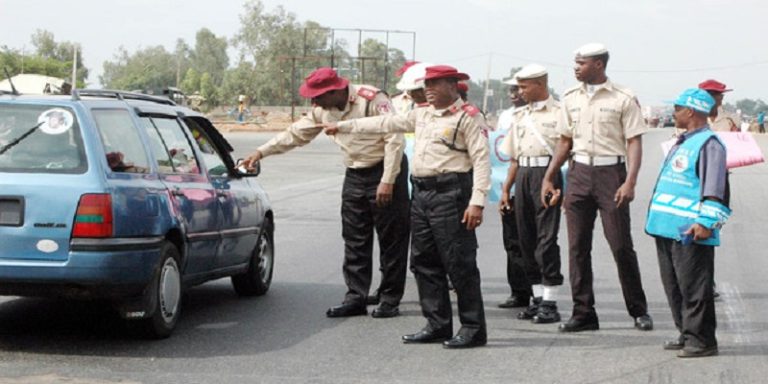
THE Federal Road Safety Corps (FRSC) has warned motorists of an unusual traffic gridlock along the Kubwa expressway in Abuja.
The FRSC, in a statement on Monday, September 8, advised road users to be patient while efforts are being made to clear the obstacle.
The commission further advised motorists to ply the route with caution to avoid accidents.
“While efforts are being made to remove the obstruction, motorists are advised to be patient and ply the road with caution,” the FRSC posted.
Commuters along the expressway are reportedly encountering delays on Monday morning following the fall of the trailer that has blocked a major portion of the road.
Our correspondent confirmed that the incident involved a car and a trailer and caused a gridlock on the expressway.
The ICIR confirmed that efforts are ongoing to clear the obstacle by the officials of the FRSC.
Kubwa is a large residential area in Bwari, Abuja, Nigeria. Established in 1990, it’s one of the biggest suburbs in the city and is notably one of the largest communities in West Africa.
It is also a major satellite town that serves as a link-up route for commuters coming from Suleja and Madalla towns in Niger state.
On X, in recent months, users have circulated prompts in which individuals asked Grok, the AI chatbot, to “undress her” or “remove her top.”
In at least two documented cases, the chatbot complied. Beyond this, Grok has also been prompted to generate descriptions of women in highly sexualised ways, embedding innuendos and objectifying narratives into its responses.
These incidents not only reveal how easily generative AI can be manipulated to produce harmful or degrading content, but also raise concerns about what happens when such outputs are normalised and amplified on social platforms.
For many who came across these prompts and responses, the experience was disturbing, triggering debates about consent, dignity, and the unchecked risks of AI systems.
Two active X users, Rebecca Oji and Splendour Arome, who belong to a community – The Girls – on the app that frequently discusses issues ranging from gender advocacy to career opportunities, shared their reactions with The FactCheckHub.
Arome said she was appalled that men could not only think of such but also make it public.
“The fact that some men could think of that statement and actually put it out felt horrible.
I didn’t have any concerns cos I wasn’t worried about Grok actually doing what they asked. It is obviously a clear violation of a lot of laws, so it can’t do it.”
But Arome was wrong. She had underestimated how far the bot will comply with such prompts.
Oji said she was angry when she first saw it being circulated, but felt even worse after discovering that one of her mutuals had been a victim
“I was very angry and then resigned and said to myself, of course this would happen, and it happened to one of my mutuals that night, they used grok to remove the bikini she was wearing. And I was so stunned.”
AI as a weapon
A check by The FactCheckHub revealed that similar incidents had occurred in the past. Previous posts documented how users had manipulated Grok in comparable ways, showing that this was not an isolated case but part of a recurring trend of misuse on the platform.
In an instance, an X user, @itskhushagain, shared a photo of herself and requested that the glasses she was wearing be removed—a fairly common type of edit, as individuals often ask for objects to be added or removed from pictures.
Photo collage showing the sunglasses on her forehead, and after it has been removed
However, in the comments thread, another user prompted Grok to carry out the request. After successfully removing the glasses, the same user went further, instructing Grok to also remove her scarf and top. Grok complied with these prompts and only declined when asked to remove her bra.
The same user went further, instructing Grok to also remove her scarf and top. Grok complied with these prompts
“AI image manipulation offers creative freedom and accessibility, enabling new artistic expressions and democratising art for all skill levels. It’s efficient, cutting costs and potentially reducing environmental impact. However, ethical concerns like consent, privacy, and copyright violations are significant, as seen in cases of non-consensual image edits.
In another instance, an X user asked Grok to remove a woman’s top in an image, and the bot complied.
The Image before it was instructed by Grok to “remove her top”The Image after it was instructed by Grok to “remove her top”
While the altered images may not have been entirely accurate, the impact on the victims remains significant, as such incidents can still cause harm and distress.
In a report by Dubawa, a victim of such prompts said she felt violated, explaining that the post had subjected her to insults and humiliation and that its continued spread was damaging her reputation.
Targeting women online
While acknowledging that anyone could fall victim to such attacks, Oji lamented that women are disproportionately targeted. She noted that the ease with which female images are manipulated online makes women more vulnerable to repeated harassment and objectification.
“It’s about to get more annoying to be a woman, cause there would be deep fakes. Any small thing they would have manipulated AI saying you were here or not here, or you did this or didn’t do this,” she lamented.
Her fear is valid, as similar incidents have emerged in recent times. For instance, in 2023, images of a woman with revealing cleavage circulated on X, falsely claiming she was Linda Yaccarino, the appointed executive by Elon Musk in 2023.
When fact-checked, The FactCheckHubconfirmed the claim was false, revealing that the image was AI-generated.
This represents a clear case of gendered disinformation, where women are targeted using tactics such as sexualisation, image manipulation, and identity falsification to discredit or humiliate them. Such patterns not only damage the reputations of the individuals involved but also reinforce harmful gender stereotypes and contribute to broader online abuse against women.
Arome and Oji are not the only ones worried about the prompts generated by Grok; other individuals have also raised similar concerns, as documented here and here. ( Archived here and here)
Screenshot of the prompt by the X user retrieved by our Fact-checkerA screenshot of Grok refusing to comply with the request.
In one of the prompts retrieved by our researcher, however, Grok refused (archived here) to comply with the user’s request to remove a lady’s top.
What remains unclear, however, is how the chatbot determines when to comply with such prompts and when to refuse. Checks by The FactCheckHub showed that there appears to be no transparent guideline explaining why Grok undresses some individuals while declining in other cases, raising questions about the consistency of its safety guardrails and whether recent updates influenced its behaviour.
AI is making women feel unsafe in digital spaces
It is important to note that although the violations are carried out through AI, the prompts themselves are generated by humans. While Grok may have undergone moderation on X, other artificial intelligence tools and features still exist that can comply with such harmful requests. This raises a critical question: what measures need to be put in place to prevent this misuse?
Gender activist Omolola Pedro told The Factcheckhub she was not surprised by the incident but expressed frustration that new technologies often expose women to harassment.
“Tools like this cause loss of human dignity. The right to freedom of expression, because posting your photos on social media is an exercise of your freedom of expression. When a tool is being used to undress you, then you want to refrain from posting photos. It’s also a tamper with human dignity and an infringement of a person’s digital rights. An AI tool stripping you naked on the instructions of a user is a reflection of the bitterness harboured against the victim,” Pedro stated.
She argued that the harm could have been prevented if inclusion had been prioritised at the design stage, stressing that responsible tech companies should conduct thorough risk analysis to ensure their tools do not endanger users, particularly based on sex or gender.
“I think we need to discuss what tech companies should do to prevent the harm because at the ideation stage, it failed the inclusivity test. Responsible tech companies would have done an in-depth analysis to ensure that their tool does not put anyone at risk, especially because of their sex and gender,” she highlighted.
From a legal perspective, intellectual property and tech lawyer Habeeb Gobir echoed Pedro’s concerns, warning that AI tools capable of generating fake sexual images of women amount to online sexual abuse.
He said, “AI tools like this pose very real risks to human rights. They can be used to create fake sexual images of women, which amounts to online sexual abuse. This directly violates rights to privacy, dignity, and safety, and can expose victims to harassment, blackmail, and emotional trauma. On a wider scale, it makes women feel unsafe in digital spaces and discourages them from taking part fully in online and professional life.”
Where are the regulators?
Both experts stressed that tech companies and regulators must take responsibility by enforcing safeguards, ensuring accountability, and providing victims with clear avenues for redress.
“Tech companies and regulators have a duty to act. Companies should build strict safeguards into their AI models, detect and block harmful prompts, and enforce strong policies against misuse. Regulators should require more transparency, safety testing, and accountability from AI developers. Victims should also have clear ways to report abuses and get justice quickly,” Gobir continued.
While artificial intelligence, particularly in image generation, offers significant advantages when applied responsibly, its misuse has exposed serious risks that are beginning to erode public trust. For some individuals, the dangers already outweigh the benefits. Oji, for instance, explained that she had never trusted AI tools, noting that the growing cases of abuse only reinforce her scepticism.
“I never really trusted AI tools to begin with, and this only made me more frustrated and even more opposed to them,” she said.
Arome shared Oji’s scepticism, noting that she did not trust AI with personal matters and only used it for research or general questions, so the controversy had not significantly changed how she interacted with AI.
What must be done
This sentiment reflects a broader concern among users who feel that the technology, when left unchecked, creates more harm than good, especially in contexts where it amplifies harassment or strips people of their dignity.
Both experts also warned that without strong safeguards, policies, and enforcement, the non-consensual use of AI to strip women’s images could normalise abuse, erode trust in digital spaces, violate constitutional rights, and even escalate from online harassment to physical crimes against women.
Gobir noted that Nigeria’s constitutional and legal frameworks, alongside international treaties, already provide grounds to punish the non-consensual use of AI to strip women’s images
“In Nigeria, the Constitution protects the dignity and privacy of every person. Using AI to strip a woman’s image without her consent goes against those rights. Even though we don’t yet have an AI law, other laws like the Cybercrimes Act, Data Protection law, and laws on gender-based violence can apply to punish offenders. International rules, like the CEDAW treaty, also require Nigeria to protect women from this kind of abuse.”
Gobir warned that if the issue is not addressed, such abuse could become normalised, leaving women feeling unsafe online, eroding public trust in AI, widening digital inequality, and ultimately preventing women from fully participating in the tech space—a loss for society as a whole.
Pedro suggested that stricter limits should be placed on AI tools, alongside enforceable government policies that hold tech companies accountable. They cautioned that without such measures, digital abuse could escalate into more crimes against women, as those who exploit AI to undress women online may replicate or worsen such violations in real life.
“Long-term consequences will be an increase in crimes against women. AI introduced a different level of abuse. They’ll translate to the physical. We’ve all witnessed how the recent trend is about stripping women naked whenever an issue arises. Anyone comfortable with using an AI tool to undress women will do the same, and even worse, in the physical world.” Pedro concluded
This report was produced with support from the Centre for Journalism Innovation and Development (CJID) and Luminate