Home Blog Page 187

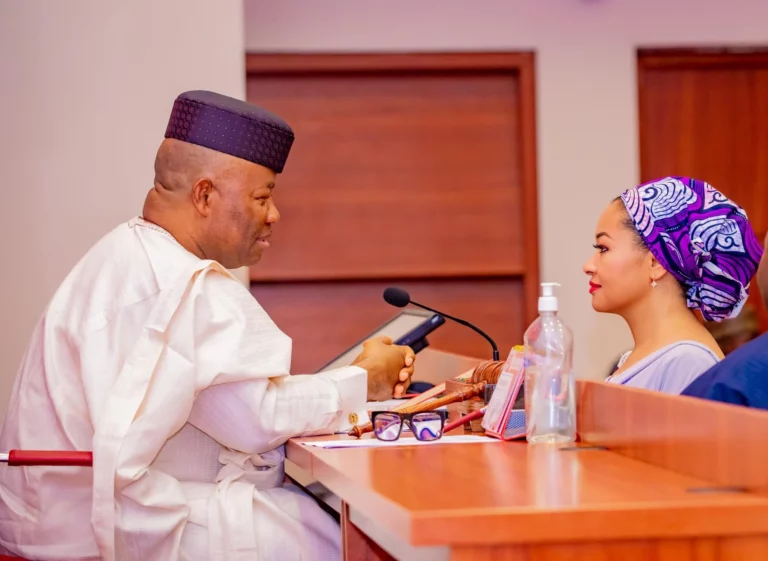
Senate blocks Natasha’s resumption, insists on due process

0

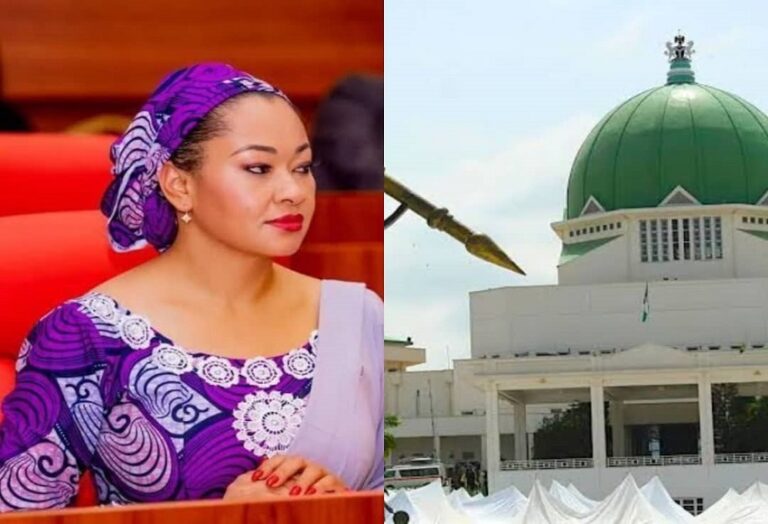
THE Senate has blocked the request of senator representing Kogi Central, Natasha Akpoti-Uduaghan, to resume legislative duties.

The Senate said her six-month suspension was still in force until the Court of Appeal rules on her case.

In a letter signed by the Acting Clerk to the National Assembly, Yahaya Danzaria, the Senate acknowledged receiving Akpoti-Uduaghan’s notice that she planned to resume on September 4, 2025, which, according to her, marked the end of her suspension.

But the Senate indicated that her suspension started on March 6, 2025, adding that the matter was subjudice since it was already before the Court of Appeal.

The Senate said that until the judicial process is concluded, no administrative action could be taken to encourage her resumption.

According to the letter, the Senate will only review her suspension after the court delivers its judgment.

Akpoti-Uduaghan’s lawyer, Victor Giwa, had told PUNCH that the senator’s six-month suspension had expired.

He said though the embattled lawmaker was on vacation in London, she was ready to rejoin her colleagues at plenary when the Senate reconvenes on September 23.

“Actually, she’s ready to resume her term. She’s in London. Everything is in place, and the six months have expired. The only thing left is her resumption,” Giwa said.

The ICIR reported on February 20 that during a plenary, Akpoti-Uduaghan caused an uproar at the Senate when she discovered that her seat had been reassigned without prior notice.

She resisted the reassignment, arguing that it was an attempt to silence her. Her refusal led to a tense confrontation with the Senate President Godswill Akpabio. The aftermath led to her suspension on Thursday, May 6, for six months, despite an interim order from a Federal High Court.

In July, there was tension at the Assembly complex when Akpoti-Uduaghan stormed the National Assembly to resume her legislative duties amidst tight security.

The suspended lawmaker, who was denied access to the complex, relied on a judgment delivered by Binta Nyako of the Federal High Court, Abuja, to resume the Senate proceedings on Tuesday, July 22, 2025.

UK Police charge suspect to court over Nigerian’s death

THE United Kingdom (UK) Metropolitan Police have arrested and charged Andre Wright-Walters, the prime suspect in the killing of 67-year-old Nigerian, James Gbadamosi.

In a statement released on Monday, the Metropolitan Police said Gbadamosi was attacked and assaulted on Balham High Road around 4 p.m. on August 24, sustaining life-threatening injuries.

“Police were called to a report that a man had been assaulted in Balham High Road at around 15:40hrs on Sunday, 24 August.

“A man aged 67 was taken to hospital with potentially life-threatening injuries and sadly died in hospital on Friday, 5 September,” the statement read.

The ICIR reported a similar incident in August, where two people were charged in connection with the fatal stabbing of 26-year-old Nigerian, Ayowale Aladejana, in New Cross, southeast London. 

The Metropolitan Police reported that detectives investigating Aladejana’s stabbing had charged a man and a woman with murder.

According to the latest incident involving the late Gbadamosi, 37-year-old Wright-Walters and a 30-year-old woman, whose identity was withheld, were arrested and charged on Wednesday, August 27, with grievous bodily harm with intent and for being in possession of a Class A drug.

“He appeared at Wimbledon Magistrates’ Court on Thursday, 28 August and was released on bail to appear at Kingston-upon-Thames Crown Court on Wednesday, 24 September.

“A 30-year-old woman was also arrested on Wednesday, 27 August on suspicion of conspiracy to commit grievous bodily harm. She was re-arrested on Saturday, 6 September for conspiracy to commit murder and has been bailed pending further enquiries,” the police explained.

The police further stated that Wright-Walters was re-arrested on Saturday, September 6, on suspicion of murder and was charged before a magistrate’s court on Monday.

“Andre Wright-Walters, 37 (05.02.1988) of Avery Hill, Greenwich, was charged on Sunday, September 7. He appears at Wimbledon Magistrates’ Court on Monday, 8 September. Wright-Walters was arrested on suspicion of murder on Saturday, 6 September.

“He had previously been charged on Wednesday, August 27, with grievous bodily harm with intent and possession of a class A drug, after being arrested the same day.”

The police added that the 30-year-old suspected accomplice had been granted bail pending further investigations.

Gbadamosi’s death adds to the growing number of Nigerians who have been killed under suspicious circumstances in the UK.

The ICIR reported on August 6 that 60-year-old Nigerian, Nkiru Chima, was found dead with multiple stab wounds in her apartment located in Romford, UK.

Similarly in May, a nurse residing in Leeds, United Kingdom, Nnena Miriam, was found dead in her apartment.

The news was confirmed in a statement released by Fellow Nurses Africa; an organisation committed to promoting the nursing profession in Africa.

It revealed that police discovered Miriam’s body following a missing person report.

When Remi Tinubu’s birthday wish exposed jinx of National Library project

0

NIGERIA’S First Lady, Oluremi Tinubu, recently stirred the Hornet’s nest when she urged  well-wishers to donate funds for the completion of the long-abandoned National Library in Abuja, saying such donations would be the most valuable gift as she turns 65 later this month.

Speaking in a video posted by her spokesperson, Bukola Kukoyi, and retweeted by the first’ lady account, Tinubu appealed to lovers to forgo trendy ‘money flower’ birthday gifts and instead channel their resources into an ‘Education Fund’ that will be used to renovate the National Library headquarters.

The former lawmaker turned 65 on September 21, 2025.

She said: “I wish to appeal that those who would like to send a birthday card, cakes, flowers, greetings in the newspapers or gifts should please send the funds to the designated account for a special project close to my heart among many others.

“The completion of the National Library would be the best birthday present I could receive. My love for education has informed my decision to dedicate my birthday to this worthy cause,” she added.

But the request  drew widespread criticism, with many questioning why individuals should be asked to fund a national institution that is constitutionally the responsibility of the federal government. 

They also argued that the appeal showed the federal government’s failure to adequately budget for the library’s completion despite repeated promises.

Although the Federal Executive Council in April 2023 approved ₦32.4 billion for the project, no significant progress has been recorded since. The ICIR checks on government spending related to the National Library through websites that details government spending such as Govspend and Nocopo, shows that there has not been budget allocations or payment made for that purpose since   2023. 

Between 2023 and 2025, budgetary allocations for the National Library have mostly gone to personnel cost, salary and recurrent expenses such as power supply.

For instance in 2024, over N5 billion was budgeted for the National Library with about N2.8 billion earmarked for the personnel cost, salary and allowances. 

Some capital projects listed include, purchase of furniture, acquisition of non-tangible materials, and purchase of computers, while no fresh capital allocation for the renovation has appeared since 2023.

A project long trapped in limbo

For more than a decade, the National Library of Nigeria has operated from rented offices in Abuja while its permanent headquarters, first awarded in 2006, remains incomplete despite billions of naira already allocated.

The NLN Headquarters, conceived as Nigeria’s flagship repository of knowledge, has been under construction since 2006. The contract, initially awarded for N8 billion, was reviewed to ₦18 billion by 2013 before work was abandoned due to poor funding.

The major headquarters located close to the Abuja National Mosque has been abandoned which in turn resulted in the agency moving to another building in  Central Business District, Abuja.

In 2019, then Minister of Education Adamu Adamu announced that N50 billion had been set aside to restart the project, citing exchange rate fluctuations and rising costs as reasons for the sharp increase. Despite the allocation, little progress was made.

Four years later, in April 2023, the Federal Executive Council (FEC) approved another N32.4 billion for the project’s “completion,” with detailed plans unveiled for the 11-floor building to house book stacks, reading areas, a data processing centre, an auditorium, and other facilities. Yet, over a year into the Tinubu administration, the site remains abandoned.

Federal ministry of education presented a memo for approval for the revised estimated total cost of the contract for the completion of the construction of the National Library of Nigeria headquarters building complex in Abuja. The revised estimated cost is N32.4 billion,” he was quoted to have said.

‘Library on quit notice’

Meanwhile, a source at the National Library told The ICIR that the institution had been served a quit notice by the owner of its rented apartment.

He stated that the agency was owing the owner rent arrears, which may have led to the building being sold to another person.

According to him, efforts are underway to vacate the premises to avoid any embarrassment.

When The ICIR reached out to the Assistant Director of Information and Public Relations of the Library, Orvell Dio, he said he was not aware of the ‘quit notice’ but promised to get back on the current situation.

“I am not aware of that (quit notice), if you hold on, I will ask the relevant office. Something like that would have gone to the legal department. I can find out and let you know,” he said.

When The ICIR reached out again about two hours later, he stressed that he had still not been able to confirm, as he was on an official assignment in Katsina.

Criticism trail First Lady’s birthday request

Following the public announcement, many Nigerians argued that the government’s failure to complete the project, coupled with fresh calls for public donations, reflected a lack of commitment to better Nigeria.

They described the appeal as ‘laughable,’ and questioned the rationale behind the call for donation.

A x user, Luz Tak wrote “I don’t understand. Is Nigeria broke? Your husband just promised USD 100,000 each to Super Falcons and D Tigresses. Why should Nigerians donate towards the NATIONAL library even if they have the money? Whose responsibility is it please?”

Awele also wrote “Listening to the president’s wife soliciting for funds under whatever guise is deeply embarrassing, to put it mildly.”

TUC to FG: withdraw 5% petroleum tax or face strike

0

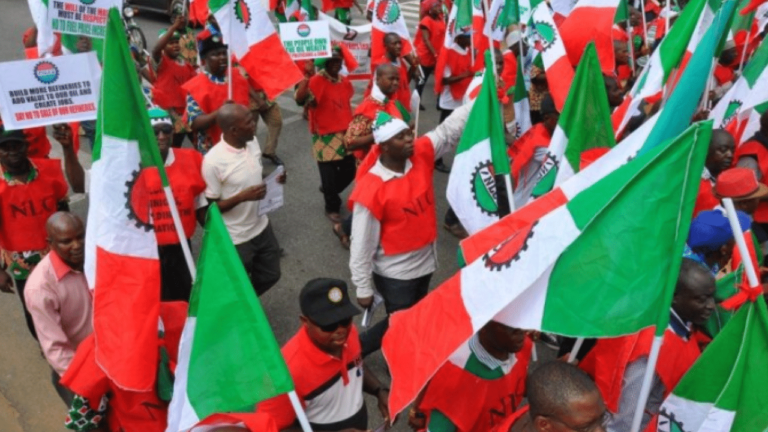
THE Trade Union Congress of Nigeria (TUC) has rejected the Federal Government’s planned five per cent tax on petroleum products, describing it as a “reckless proposal” which is “nothing but an act of economic wickedness against already overburdened Nigerians”.

The union said that the government policy, if implemented, would compound suffering, cripple businesses, and push millions of citizens deeper into poverty.

It stated that the Federal Government could not continue to use Nigerians as sacrificial lambs for its “economic experiments”.

“Let it be clear: workers and citizens are still reeling from the pains of subsidy removal, skyrocketing fuel prices, food inflation, and a collapsing naira. To now introduce another levy on petroleum products is to deliberately compound suffering, cripple businesses, and push millions of citizens deeper into poverty.

“The government cannot continue to use Nigerians as sacrificial lambs for its economic experiments. Instead of offering relief, jobs, and solutions, it has chosen to further squeeze citizens dry. This is unacceptable!” the TUC said on Monday, September 8, in a statement signed by its President General, Festus Osifo, and Secretary General, N. A. Toro.

The TUC demanded that the government stop “this anti-people’s plan in its entirety,” warning that it would mobilise workers and the masses for a “nationwide resistance” if the government failed to do so.

“Failure to do so will leave us with no option but to mobilise Nigerian workers and the masses for a total nationwide resistance. Strike action is firmly on the table if the government dares to ignore this warning and go ahead to implement this policy,” it warned.

The union also directed all its state councils, affiliates, and structures nationwide to remain vigilant, watchful, and wait for further communication that might culminate in a decisive action should the government ignore its call.

“We also call on our allies, civil society organisations, professional bodies, student unions, market associations, faith leaders, and all patriotic Nigerians to stand in solidarity with us in this struggle.

“Together, we must resist policies that seek to further impoverish citizens and mortgage our future. Enough is enough. Nigerians deserve economic justice, not endless punishment,” the TUC added.

The Nigerian government has vowed to expand the tax base by tracking tax evaders’ bank accounts, National Identity Numbers (NIN), and phone numbers, under the newly enacted tax laws, The ICIR reported.

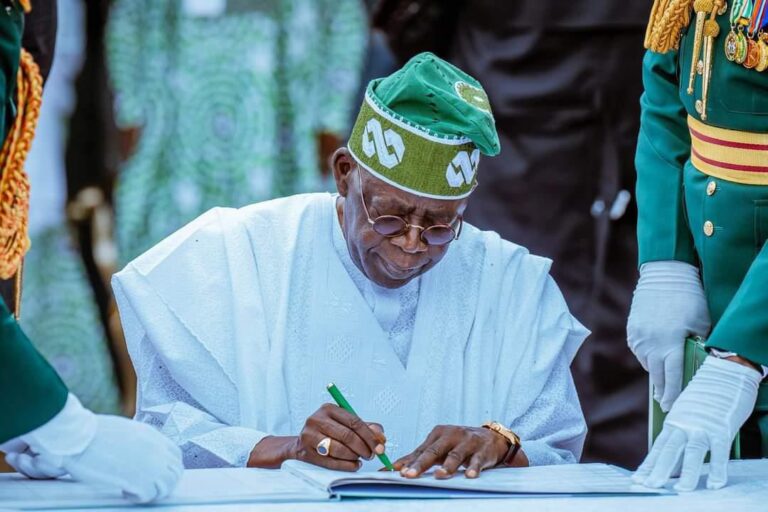
The Chairman of the Presidential Committee on Fiscal Policy and Tax Reforms, Taiwo Oyedele, who disclosed this after President Bola Tinubu signed the Tax law, stressed that the government had already projected a revenue of N50 trillion from the tax law, amid dwindling oil revenue resources.

“As long as you are captured through banking, National Identity Number (NIN), bank information, and phone number, you cannot evade tax again in Nigeria once you’re eligible,” he said.

Minister, Speaker clash as Nigeria’s debt rises to N149.39 trillion

0

NIGERIA’s Minister of Finance, Wale Edun, and Speaker of the Federal House of Representatives, Abbas Tajudeen, clashed over the true state of Nigeria’s debt profile on Monday, September 8.

While Abbas raised the alarm over the nation’s growing debt, which he said had risen to N149.39 trillion (about $97 billion) in the first quarter of 2025, up from N121.7 trillion the previous year, Edun projected optimism and insisted that Nigeria’s debt profile was becoming sustainable.

Abbas, who warned that the nation’s debt-to-GDP ratio had climbed to 52 per cent, surpassing the 40 per cent statutory limit, urged parliaments across West Africa to strengthen oversight of public borrowing to safeguard the future of their citizens.

Both senior government officials spoke at the 11th Annual Conference and General Assembly of the West Africa Association of Public Accounts Committees (WAAPAC), organised by the House of Representatives Public Accounts Committee on Monday, September 8, with the theme: “Strengthening Parliamentary Oversight of Public Debt.”

The clash between both officials was despite the alarm raised by the National Assembly barely weeks after it approved President Bola Tinubu’s external borrowing plan of over $21 billion for the 2025–2026 fiscal cycle, including $21.19 billion in foreign loans, €4 billion, ¥15 billion, a $65 million grant and domestic borrowing of about N757 billion.

The approval, recommended by both the House and Senate Committee on Local and Foreign Debt, also included provisions to raise $2 billion through a foreign-currency-denominated instrument in the domestic market.

“As of the first quarter of 2025, Nigeria’s total public debt stood at N149.39 trillion, equivalent to about US$97 billion. This represents a sharp rise from N121.7 trillion the previous year, underscoring how quickly the burden has grown. Even more concerning is the debt-to-GDP ratio, which now stands at roughly 52 per cent, well above the statutory ceiling of 40 per cent set by our own laws”, Abbas said.

Stressing that Nigeria’s debt profile had reached a critical level, Abbas, represented by the House Leader, Julius Ihonvbhere, said this has breached the nation’s debt limit and signaled the strain on fiscal sustainability.

According to the Speaker, the development highlights the urgent need for stronger oversight, transparent borrowing practices, and a collective resolve to ensure that tangible economic and social returns match every naira borrowed.

He warned that across Africa, debt had become a structural crisis, with several countries spending more on servicing loans than on healthcare and other essential services.

He highlighted the structure of Africa’s debt, noting that 35 per cent was owed to Western private lenders, 39 per cent to multilateral institutions such as the International Monetary Fund (IMF) and the World Bank, 13 per cent to bilateral creditors, and 12 per cent to China.

The Speaker stressed that borrowing should be targeted at infrastructure, health, education, and job-creating industries, warning that reckless debt that fueled consumption or corruption must be exposed and rejected.

“Our oversight must also be people-driven. Major borrowing proposals should be subject to public hearings, and simplified debt reports must be made available to the public. Citizens have the right to know, and we have the duty to inform,” he stated.

Edun, however, painted a more reassuring picture, noting that Nigeria was turning the corner under Tinubu’s reforms.

He said the country’s debt service-to-revenue ratio dropped to about 60 per cent in 2024, while the debt-to-GDP ratio stood at 38.8 per cent, a level he described as comfortable compared to global benchmarks.

Revenues, he added, rose by 34.7 per cent in the first half of 2025.

The minister acknowledged that Nigeria, like many countries in West Africa, faced significant fiscal challenges, including elevated debt service costs, constrained revenues, and rising demands for public spending and rigorous oversight from parliamentarians such as you, especially public accounts and finance committees,” Edun said.

He described Nigeria’s fiscal trajectory as a turning point, with reforms providing the foundation for stability, competitiveness, and inclusive growth.

The ICIR reports that Nigeria will face a worsening debt burden in the coming year as the Federal Government has projected a rise in the debt-to-GDP (gross domestic product) ratio to 60 per cent by 2027.

The country had a debt-to-GDP ratio of 52.25 per cent as of December 2024, now expected to rise by 7.75 per cent.

With Nigeria’s debt surge, there are also growing fears of sovereign default, the possibility that Nigeria might struggle to meet its debt obligations, The ICIR reported.

Nigeria’s fiscal position has deteriorated significantly over the past decade, with public debt rising, driven largely by currency devaluation and persistent fiscal deficits.

“FGN’s public debt has continued to skyrocket. In just two years of this administration, the debt has doubled what the previous administration accumulated in eight years,” said Adonri, Vice Chairman at Highcap Securities, David Adonri.


France PM loses vote of confidence, set to resign on Tuesday

0

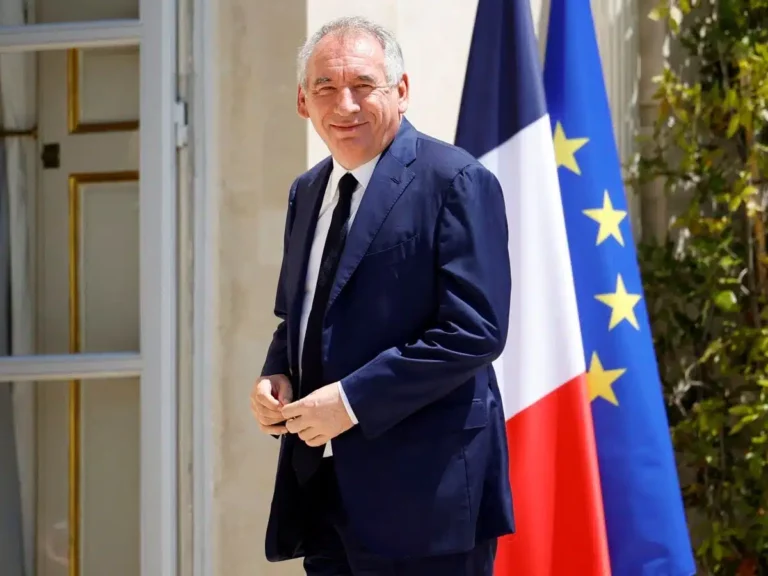
FRANCE Prime Minister François Bayrou’s government has collapsed following a failed confidence vote, raising uncertainty over President Emmanuel Macron’s future and the stability of the eurozone’s second-largest economy.

France’s parliament voted out Bayrou on Monday September 8, over a disputed budget plan that sought $52 billion in spending cuts to reduce the fiscal deficit. 

“The President of the Republic acknowledges the result of the deputies’ vote on the use of Article 49-1 of the Constitution. He will meet tomorrow with Prime Minister François Bayrou to accept the resignation of his government. The President of the Republic will appoint a new Prime Minister in the coming days,” said Macron’s office.

The 74-year-old political veteran, who had been in office for just nine months, triggered the vote himself in an attempt to pressure lawmakers into supporting his proposal.

Before the no-confidence vote, Bayrou addressed the National Assembly Monday afternoon, warning lawmakers that France’s heavy debt posed serious risks to the economy. He was also expected to take questions from parliamentarians.

Bayrou’s office announced that he would step down on Tuesday, as Macron faces a choice between appointing a new prime minister or calling fresh elections. In the meantime, both the far-right and hard-left are pressing for snap parliamentary polls.

In less than two years, France has had four prime ministers, and a fifth is unlikely to resolve the deep political stalemate, a deadlock last seen in 1958, when the Fifth Republic was founded.

Opposition parties ousted Bayrou over his proposed €44 billion ($52 billion) austerity plan, which is now expected to be scaled back under whoever Macron appoints as his successor.

“There is no upside scenario, there is no way out, there is no credible scenario where you end up with the same amount of fiscal consolidation,” said Frederik Ducrozet, head of macroeconomic research at Pictet Wealth Management.

Finance Minister Eric Lombard admitted that the next government, tasked with presenting the 2026 budget by October 7, will take a less aggressive approach than Bayrou, known for his tough stance on debt.

The ICIR reports that Bayrou’s successor is expected to lean more on tax hikes than spending cuts to narrow the budget deficit, especially with the Socialists, the party that could produce the next prime minister, favouring that approach.

Police launch investigation into body found in car at National Assembly

0

THE Federal Capital Territory (FCT) Police Command has commenced an investigation into the discovery of a decomposing body inside a vehicle at the National Assembly Complex in Abuja.

A statement issued on Monday, September 8, by the Command’s spokesperson, Josephine Adeh, said the body was found on Sunday, September 7, at about 9:00 a.m. following a distress call.

The police said officers from the National Assembly Division arrived at the scene and found the lifeless body of an unidentified male, suspected to be a labourer, inside a red Peugeot 406 with registration number BWR-577 BF.

The remains were later evacuated to the Asokoro General Hospital, where medical officials confirmed the body was already in an advanced state of decomposition.

Meanwhile, the FCT Commissioner of Police, Ajao Adewale, has ordered a discreet investigation into the circumstances surrounding the incident and directed that efforts be intensified to ascertain the identity of the deceased.

Police authorities assured that further details would be provided as the investigation unfolds.

In another most recent related development, the FCT Police Command confirmed the death of four persons in a fatal motor accident at the Mabushi Bridge in Abuja.

The tragedy occurred on Wednesday, September 3.

According to Adeh, preliminary investigations revealed that a grey Toyota Highlander, with registration number ABJ 206 EC, was forcefully taken over by three unidentified suspects near Berger Junction, Utako.

The vehicle, driven by one Emeka Ehekweme with his wife on board, reportedly lost control during a struggle for the steering wheel, veered off, and hit a parked Mazda that eventually somersaulted into a bridge pillar.

Ehekweme, his wife, and two of the suspected assailants were confirmed dead on arrival at the National Hospital, Abuja. A third suspect is said to be receiving treatment.

“The driver of the Mazda, identified as Suleman Mohammed, sustained no life-threatening injuries,” the police said.

The police have launched an investigation into the circumstances surrounding the incident and assured the public of a thorough probe.

What Tinubu’s claim of meeting 2025 revenue target means for the economy

PRESIDENT Bola Tinubu’s claim of meeting revenue targets in August 2025, citing improved remittances from non-oil revenues, has several implications for the economy, with economic watchers projecting a lower lending rate for businesses by the Central Bank of Nigeria (CBN).

President Tinubu, at a meeting with stakeholders comprising largely of ruling party loyalists on September 3, said the national revenue target in August had been met, a statement analysts say offers hope for a possible reduction in the high lending rate for businesses and manufacturers.

“Today, I can stand before you to brag, Nigeria is not borrowing. We have met our revenue target for the year, and we met it in August,” Tinubu said

He attributed the progress to improved non-oil revenue performance, asserting that Nigeria has no reason to fear international economic developments.

“If non-oil revenue is going well, then we have no fear,” Tinubu stated.

The President stressed that the economy is now stabilised, with exchange rates improving from N1,900 to N1,450 per dollar.

He also announced plans to establish agricultural mechanisation centres nationwide to boost food production and job creation.

“Nobody is trading pieces of paper for the exchange rate anymore. You don’t have to know a CBN governor to get forex. All you have to do is export, import, and create jobs for the people,” he said.

The ICIR reports that the Central Bank of Nigeria’s (CBN) current lending rate is 27.5 per cent.

This rate determines the interest at which commercial banks borrow money from the CBN.

At the current rate of 27.5 per cent, with additional mark-up costs, most manufacturers are crowded out of borrowing, with most commercial banks pegging their lending rate at an average of 35 per cent.

Another consequence of the high lending rate is that manufacturers will pass the buck of the high cost of funds to their business, which increases inflation pressure.

Accordingly, higher interest rates make borrowing more expensive, potentially slowing down economic activity and limiting access to credit for businesses.

Furthermore, higher interest rates increase lending rates and make borrowing more costly, discouraging entrepreneurial activities and expansion plans.

“We expect the lending rate to go lower than what it is currently so that commercial banks can lend at lower rates to businesses and the overall economy,” a professor of economics a the Lagos Business School, Bongo Adi, said in reaction to President Tinubu’s claim of meeting revenue targets of the economy in August.

“We expect the rate to drop so that we could see more rebound in the economy with more investment going into the real sector,” he said.

An Economist, Kingsley Obiakor told The ICIR that the government should retool its policies to encourage productivity in the economy.

“Policies should focus on boosting agricultural productivity, reducing post-harvest losses, and improving transportation and storage infrastructure to ensure food affordability.”

He urged the federal government to stabilise the exchange rate, encourage local production and reduce reliance on imports to help strengthen the currency and control price surges, maintain fiscal discipline, and prioritise infrastructure and social investments, which help manage inflationary pressures.

He further called on the Central Bank of Nigeria to “carefully adjust monetary policies, ensuring interest rate decisions strike a balance between controlling inflation and sustaining economic growth.”

In its 2025 Appropriation Act, The ICIR reported that the  Federal Government projected a total revenue target of N18.32 trillion to fund a record N28.78 trillion budget.

This included N7.94 trillion in oil revenue and N10.39 trillion from non-oil sources, reflecting the administration’s renewed push to diversify Nigeria’s income base away from crude oil dependence.

The budget assumed an average oil production of 1.78 million barrels per day at a benchmark price of $77.96 per barrel, with a projected naira-to-dollar exchange rate of N750.

Natasha to resume legislative duties as suspension expires – Lawyer

0

SENATOR Natasha Akpoti-Uduaghan, representing Kogi Central, is set to resume her duties at the National Assembly later this month following the completion of her six-month suspension.

Her lawyer, Victor Giwa, told PUNCH that the senator’s six-month suspension has expired, and though she is currently on vacation in London, she is ready to rejoin her colleagues at plenary when the Senate reconvenes on September 23.

“Actually, she’s ready to resume her term. She’s in London. Everything is in place, and the six months have expired. The only thing left is her resumption,” Giwa said.

The ICIR reported on February 20 that during a plenary, Akpoti-Uduaghan caused an uproar at the Senate when she discovered that her seat had been reassigned without prior notice.

She resisted the reassignment, arguing that it was an attempt to silence her. Her refusal led to a tense confrontation with Senate President Godswill Akpabio, which led to her suspension on Thursday, May 6 for six months on Thursday, May 6, despite an interim order from a Federal High Court.

In July, there was tension at the National Assembly complex when Akpoti-Uduaghan stormed the National Assembly to resume her legislative duties amidst tight security.

The suspended lawmaker, who was denied access to the National Assembly, relied on a recent judgment delivered by Binta Nyako of the Federal High Court, Abuja, to resume Senate proceedings on Tuesday, July 22, 2025.

However, in Giwa’s latest remarks, he said that the Senate leadership was not expected to obstruct her return. 

“We have been told that even the leadership of the Senate is ready to welcome her. So that’s the situation at the moment. There is no obstacle at all,” he assured.

Her lawyer affirmed that with the suspension ending last Saturday, ongoing legal disputes would not prevent her from resuming her duties.

“Everything will be resolved. Even the court cases will become like an academic exercise,” Giwa noted.

FCT resident doctors begin seven-day warning strike

0

RESIDENT doctors in the Federal Capital Territory (FCT) have commenced a seven-day warning strike over a long-standing systemic failure in Abuja’s health sector.

The latest industrial action, declared by the Association of Resident Doctors, FCT chapter (ARD-FCT), came amid growing frustration over worsening conditions, including manpower shortages, unpaid allowances, broken equipment, and unsustainable workloads for medical staff.

The development was announced on Monday, September 8, in a communiqué signed by ARD-FCT President George Ebong and other executives.

The doctors warned that continued neglect of the sector could trigger a complete breakdown of healthcare delivery in the capital.

They are demanding urgent recruitment of health workers, provision of functional equipment, regular payment of salaries and allowances, among others.

This strike followed an earlier one in January 2025, which was called off after the Minister of the FCT, Nyesom Wike, intervened. 

At the time, Ebong revealed that Wike had approved the payment of six months’ salary arrears, outstanding accoutrement allowances, and pledged to reduce medical residency bonding to two years. 

He also noted that the minister authorised the recruitment of additional doctors and allied health workers to address staffing shortages and promised to ensure prompt payment of locum and other health workers.

The doctors resumed work on January 25, 2025. However, eight months later, the ARD-FCT gave the FCT administration a one-week deadline to begin implementing reforms, particularly on staffing and welfare, or risk further industrial action.

National crisis mirrors local grievances

THE FCT strike was part of a broader, national wave of dissatisfaction among Nigeria’s resident doctors. 

Earlier in June, the Nigerian Association of Resident Doctors (NARD) criticised the Federal Government over continued exclusion from specialist allowances, non-payment of arrears, and the failure to implement the long-overdue revision of the Consolidated Medical Salary Structure (CONMESS).

During a press briefing in Uyo, NARD President Tope Osundara condemned the government’s persistent neglect of frontline medical professionals. 

He also pointed out that the 2009 ‘Collective Bargaining Agreement’ had been repeatedly breached, and that multiple letters sent to federal authorities had gone unanswered for over six months.

“The OGM observed with disappointment the continued exclusion of resident doctors from the payment of specialist allowances, despite their active role in delivering specialist care across various health institutions,”  part of the communique, as read by the president, said.

Osundara further expressed dissatisfaction over the failure of the Federal Government to pay the 2024 accoutrement allowance arrears and the lack of consequential adjustments to the CONMESS structure for over 16 years.

He said the omission breached the 2009 Collective Bargaining Agreement.

He also criticised the government for ignoring multiple correspondence on the issue over the past six months, warning that the neglect contradicted the National Policy on Health Workforce.

Government optimistic

Responding to the latest development, the Minister of State for Health, Isaq Salako, expressed confidence that ongoing talks with the National Association of Resident Doctors (NARD) would prevent a prolonged strike.

He said this during an appearance on Channels Television’s Sunrise Daily, on Monday, September 8.

“The National Association of Resident Doctors has issued an ultimatum, but I believe with the level of conversation ongoing, we had a meeting on Monday; we are making progress,”

He noted that the main issue is the outstanding residency training allowance, about 40 per cent of which for 2025 is yet to be paid.