Home Blog Page 190

Mass layoff fuelling theft in Nigeria oil and gas sector-NEITI boss

0

 PERSISTENT layoff of skilled workers in the oil and gas sector are fuelling crude oil theft in the country, the Nigeria Extractive Industries Transparency Internatio al (NEITI), has warned.

Executive Secretary of NEITI, Orji Ogbonnaya Orji, disclosed this during an exclusive interview with The ICIR.

According to him, investigations revealed that many of the retrenched workers, who possess rare technical skills in pipeline management and welding, often turn to illicit networks that steal crude from pipelines and offshore facilities.

“You can’t steal oil without skill. The pipelines are sometimes deep underwater. Nigerians trained in welding and pipeline management get laid off, and when they are jobless, they become available to those who want to steal crude,” Orji said.

He explained that oil theft requires extraordinary expertise and is not the work of “ordinary people in the creeks,” stressing that most of those involved were once trained by the same industry they now undermine.

According to him, many retrenched workers have formed consortia and offer their services to oil thieves, further complicating efforts to secure production facilities.

“This is why we told the Nigerian Content Development and Monitoring Board to take this seriously. The laying off of skilled labour in oil and gas must stop,” he added.

While noting that oil theft has reduced in recent times due to tighter security coordination, Orji warned that the failure to address its root causes including unemployment among technically trained oil workers will continue to expose the country to losses.

Between 2021 and 2023, Nigeria lost 687.65 million barrels of crude to theft, according to NEITI’s latest report cited by him. Orji said though theft dropped by 73 per cent in 2023, with 7.6 million barrels stolen compared to 36.6 million barrels in 2022, the figure still translates to billions of dollars in lost revenues.

Orji emphasised that beyond revenue, crude oil theft also undermines national security, as proceeds are used to finance terrorism and money laundering.

“It’s more expensive to keep losing crude than to build the kind of monitoring infrastructure Saudi Arabia has. Nigeria has what it takes to do the same,” he said.

Oil theft has long been one of Nigeria’s most pressing economic and security challenges. Decades of pipeline vandalism, illegal refineries, and collusion between criminal networks and corrupt officials have cost the country billions of dollars in lost revenue.

Successive governments have launched military operations and technical interventions to curb the menace, but theft persists both in the Niger Delta creeks and in offshore facilities.

AFRICMIL challenges FG after Senegal passed whistleblower protection law, says it’s Nigeria’s turn

0

THE African Centre for Media and Information Literacy (AFRICMIL) has urged the Nigerian government to emulate Senegal, a neighbouring West African country that has just passed a whistleblower protection law.

The AFRICMIL Coordinator, Chido Onumah, in a statement described the move by Senegal as a milestone for transparency and accountability in West Africa.

Onumah noted that Nigeria’s whistleblower policy, launched in 2016 under the Presidential Initiative on Continuous Audit (PICA), initially led to significant recoveries of stolen funds and assets.

However, public interest has declined over time because of the lack of legal safeguards for whistleblowers, he said.

“Despite nine years of advocacy by civil society and other stakeholders, Nigeria is yet to move from policy to law. The enactment and enforcement of whistleblower protection laws are not just legal instruments but foundations of good governance, accountability, and public trust,” he added.

The ICIR reported in 2022 that AFRICMIL and other stakeholders highlighted the importance of whistleblower protection legislation as a mean to advance the fight against corruption and other wrongdoings in the country.

The groups restated their commitment to the passage of the bill into law by working with relevant agencies of government.

A year later, in 2023, AFRICMIL and other stakeholders restated the call. They sought an urgent and effective whistleblower law to protect citizens who volunteer information on wrongdoings, noting that they had been on the bill for a long time, and it couldn’t scale through the Ninth National Assembly.

With the end of the Ninth Assembly in June that year, the stakeholders were unrelented, as they continued to appeal to the new government, headed by President Bola Tinubu.

The reiterated their conviction that the passage of the whistleblower protection bill into law would help eliminate corruption in the country.

Urging the government and other West African countries to emulate Ghana and Senegal which now have the whistleblower protection law, Onumah commended the Platform to Protect Whistleblowers in Africa (PPLAAF) for its advocacy in driving the legislation and urged the Senegalese government to work with civil society organisations to ensure its effective implementation.

“We congratulate the people of Senegal, legislators, and civil society champions whose determination made this milestone possible. 

“With this law, West Africa moves closer to a future where corruption is exposed, whistleblowers are protected rather than persecuted, and transnational crime is curtailed,” he added.

He noted that Senegal’s adoption of the law reinforced anti-corruption reforms in the region and strengthened the resolve of the Whistleblowing Advocacy Coalition of West Africa (WACOWA), established at the Abuja conference in November 2024.

The ICIR reports that Senegal becomes the first francophone country in sub-Saharan Africa to enact such a law by its National Assembly on August 26, 2025, joining Ghana as the only ECOWAS members with established legal frameworks for whistleblower protection. 

The new law allows whistleblowers to report corruption and financial crimes anonymously and safely, either within their institutions or to designated authorities.

It also offers incentives, including a 10 per cent reward from recovered illicit funds or an amount determined by the relevant authorities. 

CBN names department for financial crime, counter-terrorism financing monitoring

THE Central Bank of Nigeria (CBN) has said its newly established Compliance Department would focus on financial crime supervision and monitoring of counter-terrorism financing.

The department also focuses on enhancing regulatory oversight and strengthening surveillance across the banking and financial services sector.

According to the CBN, the creation of the department is part of broader structural reforms aimed at consolidating regulatory effectiveness, clarifying institutional responsibilities, and strengthening oversight of non-prudential and emerging risks within the financial system.

The apex bank disclosed this in a letter referenced /DIR/PUB/CIR/001/002, dated September 4, 2025, addressed to all banks, payment service banks, and other financial institutions, as defined under the Banks and Other Financial Institutions Act (BOFIA) 2020.

The letter was signed by Olubunmi Ayodele-Oni for the Director of the Compliance Department.

The apex bank, in the letter, informed regulatory institutions that the Compliance Department was officially established in the first quarter of 2025.

Upon the commencement of operations in the second quarter, supervisory responsibility for non-prudential risk areas was officially reassigned to the department.

“The department has assumed oversight of financial crime supervision, encompassing anti-money laundering, counter-terrorism financing, counter-proliferation financing, and sanctions compliance,” the letter stated.

“It is also responsible for market conduct supervision, covering disclosure practices, complaints management frameworks, and advertising standards,” it added.

The department oversees enterprise security supervision, including cybersecurity, data protection, and third-party risk management.

It further takes charge of corporate governance and oversight, including board effectiveness and environmental, social, and governance risks considerations.

Accordingly, the CBN directed that all regulatory reports, correspondence, and inquiries related to these areas should be addressed to the Director, Compliance Department, through the established communication channels.

The apex bank also stated that financial institutions would receive further details directly from the department regarding specific contact points and submission procedures for inquiries.

It expressed appreciation for the continued cooperation of all institutions in ensuring a smooth transition and in upholding the highest standards of compliance with applicable regulatory requirements.

EFCC declares Sujimoto CEO wanted over alleged money laundering

0

THE Economic and Financial Crimes Commission (EFCC) has declared the chief executive of Sujimoto Luxury Construction Limited, Olasijibomi Suji Ogundele, wanted for alleged diversion of funds and money laundering.

In a notice issued by the agency’s Head of Media and Publicity, Dele Oyewale, on Friday, September 5, the EFCC said Ogundele, a 44-year-old indigene of Ori-Ade Local Government Area of Osun State, was being sought in connection with financial crimes. 

According to the anti-graft agency, his last known address is G29, Banana Island, Ikoyi, Lagos.

”The public is hereby notified that OLASIJIBOMI SUJI OGUNDELE of Sujimoto Luxury Construction Limited, whose photograph appears above is wanted by the Economic and Financial Crimes Commission (EFCC) in an alleged case of Diversion of Funds and Money Laundering.

“Ogundele is a 44 year-old indigene of Ori-Ade Local Government of Osun State, and his last known address is G 29, Banana Island, Ikoyi, Lagos State,” the notice read.

The commission urged Nigerians with useful information about his whereabouts to contact any of its zonal offices across the country or reach out via its official hotline and email.

Ogundele is known as the founder and chief executive of Sujimoto Luxury Construction Limited, a Lagos-based real estate company that built its brand around high-end architectural designs and luxury projects in several parts of Nigeria’s commercial hub – Lagos. 

Over the past few years, Sujimoto has been associated with luxury residential buildings and branded real-estate developments marketed toward high-net-worth individuals. 

Ogundele has previously faced legal scrutiny. In October 2024, he was detained by the Force Criminal Investigations Department in Abuja following a petition by a lawyer, Pelumi Olajengbesi, who alleged that Ogundele obtained US$325,000 in November 2020 from a client as half-payment for a three-bedroom flat in a Sujimoto site marketed as “Leonardo” by Sujimoto Homes.

According to the client, the project never materialised.  

In addition, a report by Foundation for Investigative Journalism, FIJ, indicates an earlier complaint in which Sujimoto was alleged to have withheld an investor’s capital of N90 million.

The investor reportedly invested in a Sujimoto-offered scheme promising a high return, but alleged that repayments did not materialise. 

Transport fare conundrum: Between broken promises and the law

0

A REPORT recently trended on social media whereby a young woman, Jennifer, was reportedly fined ₦450,000 by a Magistrate Court for collecting ₦30,000 as transport fare from a man named Emmanuel but refused to show up at his house.

It started like a typical online gist; the type that is meant to amuse and outrage Nigerians.

According to the viral report,  Jennifer was dragged before a Magistrate Court after allegedly collecting ₦30,000 as transport fare from a Emmanuel, who expected her to visit him.

Jennifer allegedly did not show up and cut off all communication with Emmanuel.

In a dramatic twist, the court reportedly found her guilty of obtaining money under false pretences and ordered her to pay ₦450,000 in damages, a fee fifteen times the amount she had allegedly collected.

The story forced a national debate, making Nigerians ask if relly transport fare can become a legal matter.

Public reactions

On social media, especially X, Nigerians have taken the Jennifer matter as both a joke and a cautionary tale.

A former senator, Shehu Sani, commenting on the matter, tweeted, “Jailing ladies for collecting transport fare and failing to ‘show up’ is weird. Show up’ for what; is it a concert?”, he asked.

An X user, @Mr_DaveChigozie, joked, “If you collect transport for an agreed plan, deliver your pooling unit. Don’t collect money from a guy and feel you can disappear with his money.”

Another X user, @TheHappyMan, applied a mathematical technique to explain the matter.

“Ask yourself first, collect transport fare for what? X = what transport fare was collected for. If you find X, you find what showing up was for,” he posted.

But underneath the jokes and laughter lies a serious conversation because in a country where fraud like romance scams and fake promises is rampant, stories like this force people to ask whether everyday betrayals should be taken more seriously.

A story that resonates

What made this story spread fast is that it touches on a deeply familiar Nigerian reality. TheT-Fare” syndrome among Nigerians, where men/boys send money to women/girls to facilitate a visit. The culture has long been the subject of online jokes and relationship disputes.

Some women see it as a courtesy or a necessary incentive, while some men see it as an investment with the expectation of face-to-face intimacy.

But when anticipation meets reality, what happens? Another critical question to ask is, can romance become fraud?

Legal intervention

To answer the questions, The ICIR turned to two lawyers, Moshood Ibrahim and Marvellous Ini-Obong Monday, to seek answers

“The law doesn’t joke with dishonesty; if someone collects money under false pretence, such as promising to come visit but never intending to, then it may amount to fraud under Section 1 of the Advance Fee Fraud and Other Related Offences Act,Ibrahim explained.

That means Emmanuel or anyone else in his shoes could theoretically drag the offender before a court.      It’s obtaining by false pretence, and it is punishable,Ibrahim said.

The legal practitioner also warned that, though the law allows it, the reality of Nigerian courts, filled with cases of corruption, armed robbery, and other crimes, makes it unlikely that a magistrate would want to spend much time ontransport fare issues.”

As for Monday, he argued that the “transport fare” scenario is unlikely to constitute a legally binding case, except that fraud can be proven. He stressed that casual social arrangements, such as a promise to visit, do not automatically translate into enforceable contracts.

According to him, while a victim could seek a refund of money if fraudulent intent is established, damages for breach of contract would not ordinarily apply since the arrangement lacks contractual elements like consideration.

Promises and the law

Still, the Jennifer-Emmanuel saga opens up a lot of questions. It  brings about drawing similarities to other promises that are made, broken, and left to die.

Consider the following scenarios: A man who promises marriage but backs out at the last moment; a lover who invests heavily in a partner’s education or business, only to be dumped for someone else, a landlord who promises to fix a leaking roof but never lifts a finger, and an employer who dangles a promotion or salary increase but never delivers.

Are all these promises justiceable in court?

According to Ibrahim, a breach of promise to marry is actionable under Nigerian law. He cited Ezeanah v. Atta (2004), where the Supreme Court held that a broken engagement, under certain conditions, could warrant compensation.

He added that promises that involve money, property, or enforceable duties can also be litigated upon. If a service provider collects payment but fails to deliver, the case lacks ambiguity.

Ibrahim said if friends pool money together for a joint business and one absconds with the funds, the courts can intervene. Even children can sue parents for neglect under Section 14(2) of the Child Rights Act.

Promises and obligations

According to Ibrahim, not all promises can stand in court. For instance, if someone promises todash‘ (give) another person money and later fails, it is a mere gift, not a contract. He said no matter how disappointed the expectant receiver feels, the law won’t help.

Similarly, spending on a lover by paying tuition, buying a car, or setting up a business in hopes of marriage is a risky bet unless there is a firm promise by evidence to wed before the offer of the gifts or assistance. Without that, the courts may dismiss it as a private arrangement.

This, Ibrahim argued, is where emotion and law separates.The law deals with evidence, contracts, and obligations. Heartbreak and disappointment alone are not actionable,” he stated.

On his part, Monday submitted that breach of promise to marry is legally enforceable, provided there was an unambiguous promise backed by concrete preparations.

“Sponsorship of education with the mere “hope” of marriage is not enforceable unless backed by a written agreement.

“A child cannot directly sue a parent, though the Child Rights Act imposes obligations on parents, with the state intervening in cases of neglect.

“An employer’s failure to honour promotion or salary promises can only be challenged if they formed part of a formal contract.

“Tenants can sue landlords who fail to make promised repairs, while service providers who default can also face lawsuits.

“Money paid to secure jobs cannot be recovered because such contracts are illegal and contrary to public policy.

“In romantic relationships, money or property given is generally treated as a gift, unless it can be proven that it was a loan or based on a binding agreement.”

While Ibrahim took a stricter interpretation, leaning on statutory provisions, Monday emphasised the difference between enforceable contracts and casual social promises. Both, however, agreed that promises involving illegality, such as job racketeering, cannot be enforced by Nigerian courts.

Between story and reality

The reason the story refuses to die is that it mirrors a bigger truth: Nigerians live in a society where trust is fragile, and broken promises often cost money, time, or dignity. Whether in romance, business, or governance, people are wary of being taken for a ride.

Jennifer and Emmanuel may never have stood before a magistrate. The fine may be fictional. But the story is symbolic because it is about the everyday betrayals that Nigerians endure and the thin line between misconduct and crime.

To many, the Jennifer saga is not all about transport fare but more about the timeless clash between expectation and reality, affection and obligation, and love and law.

Police invite El-Rufai over alleged conspiracy, inciting disturbance of public peace

0

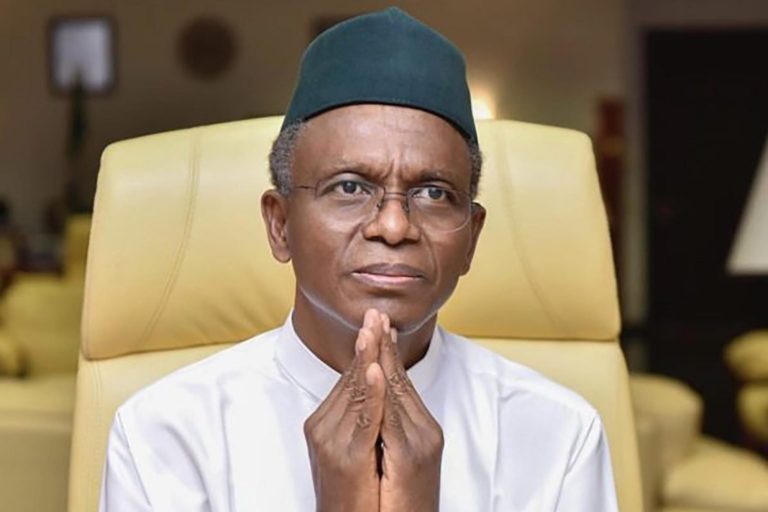
THE Kaduna State Police Command has invited the former governor of the state, Nasir El-Rufai, for questioning over allegations of criminal conspiracy, incitement of public disturbance, and mischief.

El-Rufai was also accused of causing grievous hurt.

He was invited alongside six prominent leaders of the African Democratic Congress (ADC).

The Command in a letter signed by the Deputy Commissioner of Police in charge of the State Criminal Investigation Department (SCID), Uzainu Abdullahi, directed the ADC Chairman in the state to ensure the appearance of the former governor and the other party members at the SCID on Monday, September 8, 2025.

Other ADC stalwarts invited with El-Rufai by the police include Jafaru Sani, Bashir Sa’idu, Ubaidullah Mohammed, Aminu Abita, Ahmed Rufa’i Hussaini and Nasiru Maikano.

The invitation letter titled “Investigation Activities: Case of Criminal Conspiracy, Inciting Disturbance of Public Peace, Mischief and Causing Grievous Hurt” said the invitation was to allow the invitees to explain allegations levelled against them by some complainants.

“You are requested to come along with them to SCID to clarify allegations reported against them by the complainants on 8th September, 2025,” part of the letter read.

Although the details of the complaints were not revealed, the police maintained that the move was part of efforts to maintain public peace and order in Kaduna State.

The invitation to El-Rufai and others followed a violence that erupted at the ADC transition committee inauguration in Kaduna last Saturday, when suspected thugs armed with cutlasses, clubs and stones attacked participants, injuring many and damaging vehicles.

Police later shut the ADC secretariat, with Kaduna command spokesperson, Mansir Hassan, saying the event was held without “prior notification” to security agencies despite “repeated warnings.”

Later, the ADC alleged that the Kaduna State Police Command was trying to brand opposition politics as a crime.

El-Rufai, who has been at loggerheads with his successor, Uba Sani, has been very vocal in recent months. Just a few days ago, he accused President Bola Tinubu’s administration of paying bandits to secure peace.

Recall that as part of its strategies to dislodge the ruling All Progressives Congress (APC) in the 2027 elections, leading opposition figures, including El-Rufai, former Vice President Atiku Abubakar, Labour Party presidential candidate in the 2023 poll, Peter Obi and former Rivers State governor Rotimi Amaechi, launched a coalition in Abuja on March 20.

After months of speculation over which platform the coalition would pursue its agenda, they settled for the ADC as a key opposition party that will challenge Tinubu’s APC in the 2027 elections.

World Charity Day: Why supporting independent journalism is key

0

EVERY World Charity Day, global attention often turns to individuals or organisations that contribute money or aid to alleviating poverty. 

For media owners and journalists, particularly those working as freelance and in independent media platforms, their work is quite vital in safeguarding communities from poverty, neglect, and corruption.

These journalists particularly challenge corruption, expose injustice, and give voice to the voiceless. This role, however, comes at enormous risk and personal cost.

In May 2024, the Nigerian Police Force Cybercrime Centre (NPF-NCCC) detained Dayo Aiyetan, Executive Director of the International Centre for Investigative Reporting (ICIR), and his reporter, Nurudeen Akewushola, for nine hours. 

Their “offence” was publishing a detailed investigation into shady land allocations allegedly linked to two former Inspectors General of Police. The ICIR investigation alleged that some police officers assisted a contractor and Managing Director of Copran International Limited, Andy Chime, to forge the signature of a deceased Deputy Inspector-General of Police Saleh Abubakar to secure a contract.

Chime used the documents to obtain a loan of N573 million from the Nigeria Police Mortgage Bank and also unlawfully used the houses on the land as collateral, thus short-changing the police.

Despite relying on court documents and verifiable testimonies, The ICIR reporter and its publisher were accused of “cyberstalking and defamation”.

The petitioners also accused Akewushola of soliciting money, an allegation he described as unfounded, noting it as a ploy to make the case appear weightier. 

But harassment is only part of the struggle. Financial risk is another.

The ICIR reported that following the intimidation of its reporters, Arase also dragged them to court, demanding they take down the publication and seeking multibillion-naira compensation.

Others have faced dangers that mirror the risks of humanitarian responders or even more. Investigative journalists covering insecurity have had to travel into bandit-occupied villages, insurgent-prone states, and remote border communities, places where government presence is weak, but abuses are rampant. 

In these areas, they often move without security escorts, relying instead on discreet local fixers. 


Support The ICIR: https://www.icirnigeria.org/support-us/

Journalism that holds power to account takes enormous resources. We invite you to support us to continue the work we do. Your support will strengthen journalism in Nigeria and help sustain our democracy. Make use of this link: https://www.icirnigeria.org/support-us/

You can also scan the QR code below.


Why supporting independent journalism is key – ICIR’s investigation head

For many independent newsrooms already struggling with scarce funding, the ability to keep producing such stories depends largely on public support and donation.

Speaking on this, the Deputy Editor and Head of Investigation at The ICIR, Fidelis Mac-Leva stressed that Nigerians must begin to see independent journalism as a charity service in its own right.

“Independent journalism plays a critical role in holding those in power accountable, providing a voice for the marginalised, and shedding light on issues that affect the most vulnerable members of society,” he said.

He posited that by supporting independent journalism, Nigerians can help ensure that the truth is reported, and that those who seek to exploit or harm others are exposed.

“This is especially important in a country where access to accurate information can be a matter of life and death. By supporting independent journalism, Nigerians can help promote transparency, accountability, and good governance, which are essential for the well-being and development of the country,” Mac-Leva said.

Fidelis Mac-Leva, Deputy Editor/Head of Investigation, ICIR

He also warned that silence or apathy from citizens could carry devastating consequences.

“If the public doesn’t support independent investigative journalism, corruption and abuse of power will go unchecked. It would mean poor governance, human rights abuses, and economic stagnation. Without support, independent outlets may not survive, and the voices of those who need to be heard may be silenced.”

According to him, individual donations can help support the costs of conducting investigations, including travel, research, and interviews. 

The ICIR gathered that a single field trip for an investigation can cost up to one million naira or more. This figure escalates substantially when multimedia content, such as video and high-resolution photography and laboratory testing are needed to complement the written report.

Mac-Leva further highlighted that by financially supporting independent journalism, individuals are essentially casting a vote for quality reporting. 

He noted that these contributions, regardless of their size, are a powerful way for the public to show they value the work being done, adding that it fosters a sense of community and shared ownership among readers, which serves as a major motivator for journalists. 

“Even small donations can add up to make a significant impact, and every contribution can help to bring about positive change in the country,” he added.


Your support will strengthen journalism in Nigeria and help sustain our democracy. Make use of this link: https://www.icirnigeria.org/support-us/

Presidency blames private investors for CNG price hike

0

AMID mixed feelings expressed by motorists over the hike in the price of compressed natural gas (CNG), the Presidency has blamed the latest increment on private investors.

Reacting to the hike, the Presidency, through the Presidential Compressed Natural Gas Initiative’s (PCNGI) Brands and Corporate Communications Manager, Matilda Johnson, said the increment in the price resulted from the activities of private investors.

The PCNGI stated this in a statement issued on Thursday, September 4.

It said, “It must also be emphasised that the recent pump price adjustments announced by certain operators are purely private-sector decisions and not the outcome of any government directive or policy.”

The PCNGI described the reports attributing the upward review of prices to the government as misleading.

The statement reads in part, “The Presidential Initiative on Compressed Natural Gas (PiCNG) wishes to address recent misleading and outright false reports suggesting that the Federal Government has removed subsidies or increased the price of Compressed Natural Gas (CNG). This is incorrect.

“For absolute clarity: while pricing matters fall under the purview of the appropriate regulatory agencies, no directive or policy has been issued by the Federal Government to alter CNG pump prices.”

It further disclosed that the mandate of PiCNG, as directed by President Bola Ahmed Tinubu, was to catalyse the development of the CNG mobility market and ensure the adoption of a cheaper, cleaner, and more sustainable alternative to petrol and diesel across the country.

The initiative (the PCNGI), the office stated, attracted close to one billion dollars in private sector investment, underscoring confidence in the market’s potential.

“The Federal Government assures Nigerians that CNG will always remain significantly cheaper, cleaner, and more affordable than PMS and diesel. Our focus remains on deepening CNG penetration nationwide and encouraging broader private sector participation to ensure availability and affordability for all,” it added.

In July 2024, the Nigerian National Petroleum Company Limited (NNPCL) commissioned 12 new Compressed Natural Gas (CNG) stations to provide alternative fuel for Nigerians.

The ICIR reports that major filling stations, including NIPCO CNG and Mobil, raised their pump prices from N230 to N380 on Monday.

Despite assurances that it would serve as a good alternative to petrol, many drivers expressed frustration over what they fear could erode the cost advantage of CNG over petrol.

Hakeem Idris, a ride-hailing driver, described the price hike development as discouraging.

“Many Bolt drivers spend up to 10 hours in queues or drive long distances just to refill. Now with this sudden increase, the whole idea of CNG being cheaper is at risk,” he said.

IGP appoints Benjamin Hundeyin as Force Public Relations Officer

0

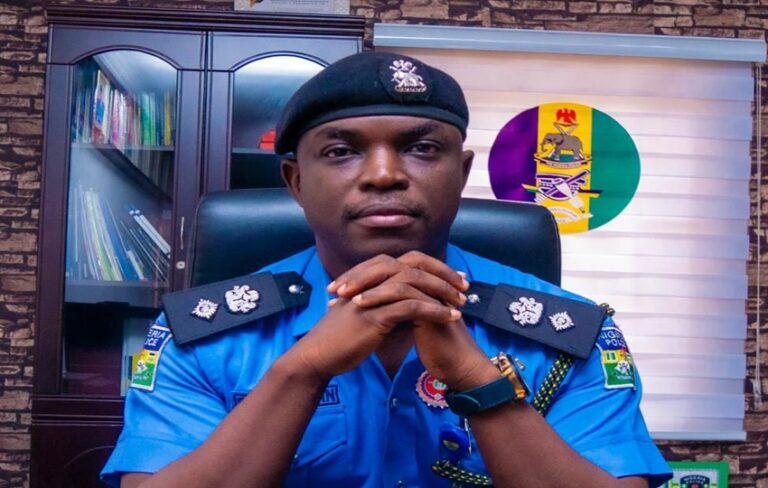
THE Inspector-General of Police (IGP), Kayode Egbetokun, has approved the appointment of Benjamin Hundeyin as the new Force Public Relations Officer (FPRO).

This was disclosed in a statement signed by the immediate past FPRO, Muyiwa Adejobi, on Thursday, September 4.

According to the statement, Hundeyin, who was until his appointment the spokesperson of Lagos State Police command, holds a BA (Hons) in English Language from Lagos State University and an MSc in Legal Criminology & Security Psychology from the University of Ibadan.

He also obtained a Certificate in Civil-Military Coordination from the Martin Luther Agwai International Leadership and Peacekeeping Training Centre, Jaji, Kaduna State.

The new police spokesperson is an Associate of the Nigerian Institute of Public Relations (NIPR), a member of the International Public Relations Association (IPRA), and an Associate of the Chartered Institute of Personnel Management of Nigeria (CIPM).

The statement described him as a seasoned communicator.

Hundeyin, who previously served as the Police Public Relations Officer at Zone 2 Command Headquarters, Onikan, Lagos, was part of the Nigerian contingent to the United Nations Peacekeeping Mission in Darfur, Sudan (UNAMID) in 2020.

He also served as the Administration Officer at the Force Public Relations Department, Force Headquarters, Abuja.

The Inspector-General of Police charged him to leverage his communications and security experience to bolster the Force’s Public Relations activities and ensure continuous positive relations with the public.

The Force said Hundeyin could be reached on 07062606717 or benjamin@hundeyin.com.

The ICIR reported on Wednesday that former police spokesperson, Adejobi, was redeployed to the Delta State Police Command as Deputy Commissioner in charge of Operations.

Tinubu proceeds on 10-day vacation in Europe

0
PRESIDENT Bola Tinubu will depart Abuja today, Thursday, September 4, for a vacation in Europe, as part of his 2025 annual leave.

This was contained in a statement signed and released by his Special Adviser on Media and Publicity, Bayo Onanuga.

The vacation will last for 10 working days.
Tinubu will spend the vacation in France and the UK and then return to Nigeria.
The ICIR reports that the trip is coming seven days after the president returned to Nigeria from an official trip to Brazil and Japan.
Just five months ago, in April, Tinubu sparked mixed reactions from Nigerians for taking an extended leave in Paris and London,
He had described the journey as a working trip intended to review his administration’s mid-term performance.

Data gathered by The ICIR in April indicated that since his inauguration on May 29, 2023, the president had embarked on at least 38 international trips, frequently described as official or private, with France being the most frequently visited.

According to the data, provided by GovSpend, a government spending tracker managed by BudgIT, the Presidency spent over N23 billion in 2024 to purchase foreign currencies for international trips of top government functionaries, including Tinubu, Vice President Kashim Shettima, and the president’s wife, Oluremi Tinubu.

The amount reflects a significant rise of 23 per cent from the N18.63 billion recorded in 2023 for the same purpose.

In 2023, Tinubu travelled abroad 13 times, followed by 19 trips in 2024, and at least nine in 2025.

In January 2025, the president attended the Africa Heads of State Energy Summit in Dar es Salaam, Tanzania, which focused on energy cooperation.

By May, he was in Rome, Italy, for the inauguration of Pope Leo XIV, a largely ceremonial visit.

Between June and July, he embarked on a series of trips — first to Saint Lucia for a state visit aimed at strengthening ties with Caribbean nations, and then to Brazil to boost cooperation in trade and agriculture.

In August, the president was in the UAE, likely Dubai, en route to Japan.

Later that month, he participated in the Ninth Tokyo International Conference on African Development in Yokohama, Japan, to deepen investment and bilateral relations. He then returned to Brazil for a second state visit focused on advancing agriculture and aviation agreements.

The ICIR reported in August that there was a growing concern over Tinubu’s health, with credible sources confirming to The ICIR that preparations were underway by his medical team to fly him abroad for urgent medical attention. However, the Presidency dismissed these concerns, describing them as ‘rumours’.

According to information gathered by The ICIR, the President was bedridden for several days, resulting in his absence from key state functions. 

The latest vacation did not indicate that Tinubu transmitted a formal letter to the National Assembly, as mandated by Section 145(1) of the 1999 Constitution (as amended), to empower Vice President Kashim Shettima to act in his absence. Both chambers of the Assembly are presently in recess.

Some former Nigerian presidents, including the late Muhammadu Buhari, had ignored this law and proceeded on leave without transferring power to their deputy.

However, critics contend that although the trips highlight Nigeria’s visibility on the global stage, they have produced little in terms of concrete economic relief for citizens grappling with soaring inflation, insecurity, and worsening living conditions.

You can stay updated on Tinubu’s journeys outside Nigeria via The ICIR Tinubu travel tracker

This report has been updated to include details of the president’s international trips since he assumed power on May 29, 2023