Home Blog Page 1965

Buhari reassures Okonjo-Iweala Nigeria’s full support for WTO job

0

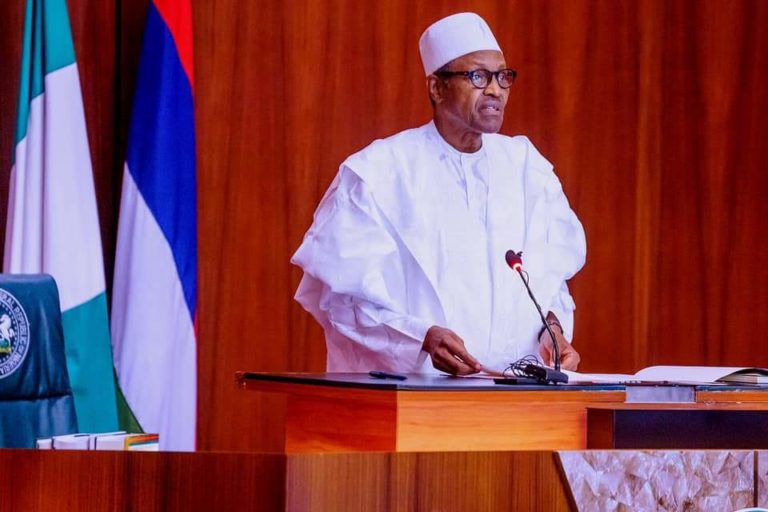
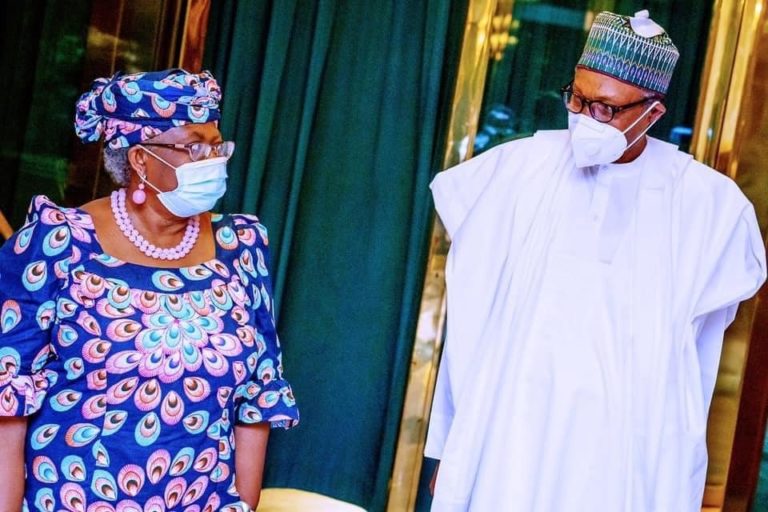
PRESIDENT Muhammadu Buhari Monday has reassured Ngozi Okonjo-Iweala, Nigerian former Minister of Finance and Economy, that the country will explore every opportunity and deploy its entire energy to ensure that she becomes the Director-General of the World Trade Organisation (WTO).

Buhari said this during a visit by the former Managing Director (Operations) of the World Bank to the State House in Abuja on Mondy.

He said she deserved more support to get the top job because of her profile and diligence in serving the country, and the world.

“I assure you that we will do all that we can to ensure that you emerge as the Director-General of WTO, not only because you are a Nigerian, but because you are a hardworking Nigerian. You deserve this,’’ he added.

The President assured Okonjo-Iweala that he would make more phone calls, and send letters to some world leaders for more support.

“I did the same for Akinwunmi Adesina for President of the African Development Bank. Both of you served the country under the Peoples Democratic Party (PDP). You are both highly qualified. We will continue to support you. I will immediately make those calls,’’ the President told Okonjo-Iweala.

In her remarks, Okonjo-Iweala, a renowned development economist, thanked the President and his ministers, particularly the Ministers of Foreign Affairs, and Ministers of Industry, Trade and Investment for supporting her staunchly.

“I feel very proud of Nigeria. I am getting so much support from you, Mr President, Chief of Staff, Ministers of Foreign Affairs and Ministers of Industry, Trade and Investments. The ministers have been working around the clock to ensure that I succeed,’’ she said.

The former Minister of Finance also appreciated Economic Community of West Africa States (ECOWAS) leaders for their endorsement, mentioning in particular the outstanding contributions of President Mahamadou Issoufou of Niger Republic and immediate past Chairman of ECOWAS as well as President Alhassan Quattara of Cote d’Ivoire.

She asked the President to “make one final push within the week to beat the Koreans and bring this to Nigeria by sending a few letters and placing telephone calls to some world leaders, and also thank others for their support.’’

“Mr President, put a smile on my face,’’ she said, “I am very proud of the country.’’

Okonjo-Iweala is one of two candidates contesting for the top position of the multilateral institution.

The Nation’s Sam Omatseye shares fake news, says Okonjo-Iweala is WTO director-general

SAM Omatseye, a veteran journalist, columnist and Chairman, Editorial Board of the Nation newspaper has misled many Nigerians in his Monday column, claiming the former minister of finance, Ngozi Okonjo-Iweala has clinched the position of Director-General of the World Trade Organisation.

“It was such a cheer to hear that former finance minister, Ngozi Okonjo-Iweala clinched the WTO job,” he wrote.

Omatseye’s column was published on Monday, October 12, by the Nations newspaper subtitled ‘Grandmaster and two other plays’.

“This is the second person from the Jonathan administration to be so honoured by an international agency of prestige. The last one was former agriculture minister Akinwunmi Adesina, who stared America in the face and rode back to the glory of his job,” he added.

The veteran journalist also shared the column on his official Facebook profile which has so far been liked by 100 persons, garnered 192 comments and shared by 38 followers as of the time of this report.

Last week, The ICIR had fact-checked the report published by many newspapers that the former finance minister had been declared the winner of the WTO’s top job, and concluded the claim was false.

According to a press statement by the WTO on October 8, two candidates were selected for the final process of the election.

In the statement, the General Council Chair, David Walker of New Zealand and his co-facilitators had said Ngozi Okonjo-Iweala of Nigeria and Yoo Myung-hee of the Republic of Korea advanced to the third and final stage.

Walker said in the statement that the two candidates were selected because they were able to “secure the broadest and deepest support from the membership” of the WTO.

He added that the final rounds of consultation with the member states would commence on October 19.

“This final round of consultations will begin on 19 October and continue through 27 October. The arrangements for the consultations will remain the same, including with respect to non-resident delegations,” Walker said.

Contrary to Omatseye’s claim, the process for the final round has not commenced. It will only begin in seven days’ time.

Even when the assistant editor of Factcheckhub, Bamas Victoria and other commenters called the attention of the senior journalist to the inaccuracy of the claim, he is yet to pull down the article.

 Omatseye, a media teacher,  has won the Diamond Award for Media Excellence (DAME) four times for Informed Commentary.

Ondo election: CDD blames Police for turning blind eye on vote-buying, says poll slightly peaceful

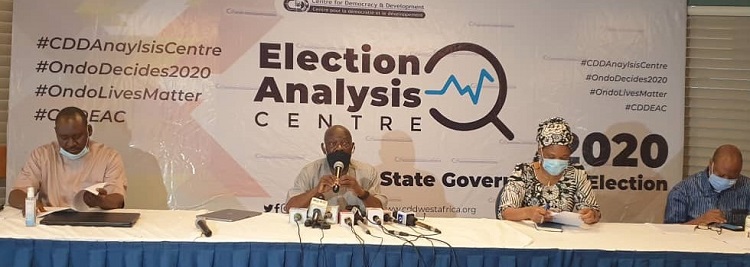
THE Centre for Democracy and Development (CDD) on Monday accused the Police of feigning ignorance of several incidents of vote-buying at the just concluded Ondo State governorship election.

The Centre, however, applauded the police for being civil and impartial at the poll, just as it lamented that not much was done to discourage or arrest vote-buyers.

Idayat Hassan, CDD Regional Director, who spoke during a post-election briefing, held in Abuja queried the number of vote-buyers so far prosecuted in the country, noting that there has been the case of just only one man who was reportedly arraigned in Gombe State for the similar offence during the 2019 general election.

“How many vote-buyers has ever been prosecuted…” she queried.

Hassan cited an instance of a voter she witnessed in Ondo election who publicly demanded payment after voting and was willing to be arrested.

“In fact, in his own words, he said I don’t care to be taken to the police headquarters because there is impunity. There were police and other persons there but nothing ever happened.”

She further described the vote-buying as a big issue that should be of concern to relevant authorities and decisively dealt with.

According to her, vote-buying was induced by poverty, loss of trust in government and impunity, adding that top politicians responsible for the menace should also be identified.

“…that is why while commending the non-partisanship and civility of the security officials, we continue to say that their core mandate of law enforcement is actually not being done,” Hassan said.

“If during that election, at least 100 vote buyers were arrested or 50, it will send a strong message and act as a deterrent to the people. So, this electoral impunity is something we have to deal with.”

On the general conduct of the election, she described the poll as slightly peaceful but noted that some of the electoral issues observed should be addressed in the ongoing constitution amendment.

The CDD boss commended the Independent National Electoral Commission (INEC) for early deployment of voting materials, the collation of materials and deployment of technologies for the poll.

Prof. Adele Jinadu, Head of CDD Analysis Centre, particularly applauded Ad hoc staff of the INEC for complying with the directive to upload completed EC 8A form on the INEC Result Viewing (IReV) platform.

Jinadu commended INEC for the innovative approach on election results collations and announcements.

Rotimi Akeredolu, the incumbent governor won the poll defeating his two major contenders Agboola Ajayi and Eyitayo Jegede from the Zenith Labour Party (ZLP) and Peoples Democratic Party (PDP) respectively.

Over 73,000 Nigerians sign petition seeking arrest of IGP, Adamu by ICC over killing of protesters

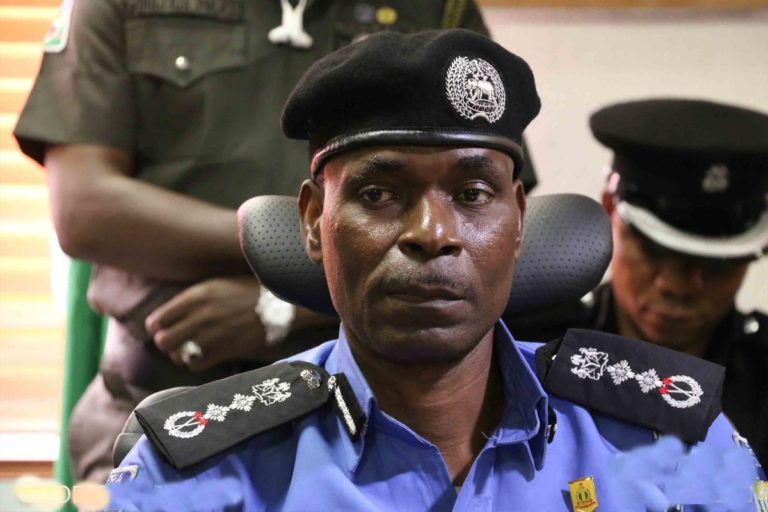
OVER 73,000  Nigerians have signed a petition demanding the immediate arrest of Mohammed Adamu, Nigeria’s Inspector General of Police (IGP), by the International Criminal Court (ICC). 

The petition raised by one Amadi Chima accused the IGP of committing crimes against humanity, following the killing of #EndSars protesters by police officers in at least three states in Nigeria.

“The Nigerian Police under the leadership of the IG of Police, Mohammed Adamu, has unleashed war against defenseless and innocent Nigerian youths whose only crime was demanding an end to extortions, harassments, illegal arrests, detentions, and wanton killings by the rogue police unit, Special Anti-Robbery Squad (SARS),” the petition reads in part.

The ICC is the first and only permanent international court with jurisdiction to prosecute individuals for the international crimes of genocide, crimes against humanity, war crimes, and the crime of aggression.

As of Monday, over a dozen protesters including Jimoh Isiaq, a young Nigerian from Ogbomoso, Oyo State had either been reported shot or killed by men of the Nigerian Police Force during the ENDSARS protest.

Police fired tear gas and water cannons at protesters in Abuja, the nation’s capital Sunday evening, while the protesters continued with their demand which has transformed from ENDSARS  to a call to an end of police brutality in the country.

The Inspector-General of Police had on Sunday announced the disbandment of the dreaded SARS unit, noting that the decision was taken to satisfy the yearnings of Nigerians and observers.

“The SARS is hereby dissolved across all formations in 36 states, police commands and the FCT where they currently exist. All officers currently serving in the unit are to be deployed with immediate effects,” Adamu said during a briefing in Abuja.

Reacting to the disbandment of Sars, Catriona Laing, British High Commissioner to Nigeria, in a tweet described the decision as a very important first step but urged the government to respect the rights of the citizens to protest peacefully.

“The IGP’s commitment to ensure accountability for human rights violations is essential to restoring public confidence in the Nigeria Police Force.

“Hearing reports of violence affecting ongoing protests. Urge authorities to respect the right to protest and protestors to remain peaceful,” she tweeted.

Nigerians on their part have expressed dissatisfaction over the announcement, demanding transparency and concrete evidence that the rogue police unit has indeed been dissolved.

Meanwhile, Joe Abah, a former Director-General of the Bureau of Public Service Reform (BPSR) advocated that members of the disbanded  Special Anti-Robbery Squad (SARS) unit of the Nigeria Police Force should undergo a psychological evaluation.

“Now SARS has been dissolved and the first stage of #EndSARS achieved, we can now discuss reforms,” Abah wrote on Twitter.

Edo Assembly impeaches Speaker Francis Okiye

0

MEMBERS of the Edo State House of Assembly on Monday impeached Francis Okiye, Speaker of Edo State House of Assembly, over allegations of high-handedness.

This was followed by a motion led by the Majority Leader of the House, Henry Okhurobo, which was conveyed in a letter signed by nine out of the 10-member Assembly present at the sitting.

The House elected Marcus Onobun, representing Esan West State Constituency, as the new Speaker.

The Edo State House of Assembly had been embroiled in crises after it was inaugurated under controversial circumstances at night with only nine, out of 24 lawmakers-elect, on June 17, 2019, after an alleged announcement by Governor Godwin Obaseki.


READ ALSO:

Also, 14 lawmakers who were not part of the process, and were members of the All Progressives Congress, APC rejected the process and called on the governor to issue a fresh proclamation.

A Federal High Court in Rivers State barred the governor from recalling the lawmakers while a separate court also barred the National Assembly from taking over the Edo Assembly.

An attempt by the aggrieved lawmakers to be inaugurated was, however, scuttled by hoodlums claiming to be renovating the Assembly complex.

However, the APC claimed the men were thugs hired by the governor who was afraid of being impeached.

The ICIR had reported that Obaseki who later dumped the APC for the People’s Democratic Party, said shortly after he won the September 19 poll that he lacked the power to bring back the 14 lawmakers yet to be inaugurated.

“Even if I wanted today to bring them back, I don’t have such powers, I do not have anything against them because I do not have such authority to bring them back to the house,” Obaseki said.

According to the governor, the 14 lawmakers refused to be inaugurated hence their seats were declared vacant by the Speaker of the Assembly.

“They were listening to their godfather who kept hoping and promising that he would unconstitutionally get the State House of Assembly to reissue a proclamation even after the court had settled the matter,” he said.

“For more than 180 days they did not come. They refused to represent the people. Those seats became vacant; that’s what the constitution says.”

“They went to court after those were declared vacant by the Speaker. There is nothing I can do to that at this time,” Obaseki added.

How IMF COVID-19 loan forced FG to increase pump price, electricity tariffs- Oxfam report

0

NIGERIA and other poor countries that turned to the International Monetary Fund (IMF) for financial assistance to cushion the negative impacts of the COVID – 19 pandemic on their economies are being forced to implement austerity measures which have imposed more suffering on their citizens.

A report published by Oxfam on Monday, October 12, 2020, said: “84 per cent of the IMF’s COVID-19 loans encourage, and in some cases require, poor countries hard hit by the economic fallout from the pandemic to adopt more tough austerity measures in the aftermath of the health crisis”.

Oxfam is a confederation of 20 independent charitable organisations focusing on the alleviation of global poverty, founded in 1942 and led by Oxfam International.

In April, the IMF Executive Board approved $3.4 billion emergency financial assistance to Nigeria, under its Rapid Financing Instrument, to support the Federal Government’s efforts in addressing the severe economic impact of the COVID-19 pandemic, particularly the sharp fall in oil prices.

Kristalina Georgieva,  IMF Managing Director, in an article titled ‘The Long Ascent: Overcoming the Crisis and Building a More Resilient Economy’, on October 6, 2020, said the organisation has provided 81 countries with COVID-19 related funding.

According to her, IMF’s loan commitments have reached more than $280 billion, with more than a third of the amount approved since March.

Georgieva added that the IMF has a significant amount of funds from its total lending capacity of $1 trillion still available for countries in need of financial assistance as a result of the pandemic.

However, a new analysis by Oxfam revealed that 76 out of the 91 IMF loans negotiated with 81 countries since March 2020 – when the pandemic was declared – push for belt-tightening that could result in deep cuts to public healthcare systems and pension schemes, wage freezes, and cuts for public sector workers such as doctors, nurses and teachers, and unemployment benefits, like sick pay.

The Oxfam report mentioned Nigeria as among nine countries whose government’s promised an increase in Value Added Tax rates and collection, once the pandemic abates, as parts of the conditions for receiving IMF assistance.

But findings by our correspondent revealed that a post-COVID hike in VAT was not the only austerity measure the Federal Government had agreed to implement in return for the IMF financial assistance.

Already, ordinary Nigerians are feeling the harsh impacts of one of the consequences of the IMF $3.4 billion financial assistance – the deregulation of the downstream sector of the petroleum industry, which has led to a hike in the petrol pump price.

The Federal Government had promised IMF that it would ensure the ‘final removal’ of fuel subsidy before the Fund agreed to extend the $3.4 billion to Nigeria, and the government has already lived up to that promise by finally removing the subsidy, following the deregulation of the downstream sector of the petroleum industry.

Checks revealed that the Federal Government agreed to implement policies that would amount to ‘austerity measures’ in a Letter of Intent sent to the IMF as part of the application for the $3.4bn emergency financial assistance.

The letter, addressed to IMF Managing Director, Kristalina Georgieva, and dated April 21, 2020, was jointly signed by , Zainab Ahmed, Finance Minister and Godwin Emefiele, CBN Governor.

If the Federal Government sticks to the commitments it made to the IMF, which are part of the conditions for the assistance, Nigerians who are still groaning over the increase in the cost of goods and services due to the recent 7.5 per cent hike in VAT are in for more trouble as the Letter of Intent stated that a further increment in the tax would be implemented once the pandemic is over.

The Federal Government also promised the IMF that Nigerians would be made to pay higher for electricity, with the introduction of a full cost-reflective tariff for power, in 2021.

As it were, it appeared that the Federal Government jumped the gun on the timeline for the introduction of higher charges in the power sector by going ahead to increase the electricity tariff in 2020.

However, the power tariff hike has been halted temporarily as government and labour engage in talks over the implementation of the application of the cost-reflective tariff in the country.

In the Letter of Intent, the Federal Government told the IMF, “First and foremost, we will revert to our government’s planned medium-term fiscal consolidation path – which includes increasing revenue to 15 per cent of GDP through further VAT reforms, rise in excises, and removal of tax exemptions – once the crisis (COVID-19 pandemic) passes.

The recent introduction and implementation of an automatic fuel price formula will ensure fuel subsidies, which we have eliminated, do not re-emerge.

“We are also advancing in our power sector reforms – with technical assistance and financial support from the World Bank – including through capping electricity tariff shortfalls this year to N380 billion and moving to full cost-reflective tariffs in 2021.”

Meanwhile, in the report it released on Monday, titled ‘Behind the Numbers: the spending, accountability, and recovery measures agreed between the IMF and your government’, Oxfam noted that the sum of $101 billion which the IMF has lent to 81 countries, so far, had paved a path to austerity in the world’s poorest countries.

Sub-Saharan Africa, which has most of the world’s poorest countries, has received the highest number of loans worth a total of $15.8 billion. However, the lion’s share of IMF’s committed funds has gone to Latin America and the Caribbean ($50.9 billion to 20 countries).

Over 50 per cent of the IMF’s total COVID-19 financing has been committed to just three countries – Peru, Chile, and Colombia.

Oxfam said its investigations revealed a ‘shocking trend’ whereby the IMF insists on the implementation of austerity measures, once the pandemic ends, as a condition for assistance to poor countries.

Parts of the Oxfam report said, “By far, the most shocking trend we found, was the IMF’s emphatic call for austerity once the COVID-19 crisis abates. We found fiscal consolidation measures promoted in a whopping 84 per cent of the loans, across 67 countries. This pervasive trend was found in 76 of the 91 loans we reviewed and was not confined to one type of loan instrument.

“For example, we noted this explicit advice for countries that took on emergency loans (Rapid Financing Instruments (RFIs) and Rapid Credit Facilities (RCFs) such as Gabon, Mozambique, South Africa, El Salvador, and Tunisia.

“In cases like Egypt and Ukraine which entered more traditional IMF programs, these measures actually came in the form of loan conditions. The Gambia and Jordan also took on traditional loans early in the crisis (presumably negotiated pre-pandemic) and though Jordan was allowed temporary flexibility for emergency spending, the country is expected to get back on track with fiscal consolidation after the pandemic.

“In some instances, like Cameroon and Ethiopia, which had existing IMF programs binding them to fiscal consolidation pre-pandemic, with their new COVID-19 financing, they agreed to resume such measures once the crisis recedes.”

Continuing, with specific reference to Nigeria, the report said, “To illustrate what the future could hold for some countries in the COVID-19 recovery period, at least nine countries, including Afghanistan, Nigeria, and São Tomé and Príncipe intend to introduce/increase Value Added Tax (VAT) collection, while 14 countries plan to cut their wage bills including Tunisia, Barbados and Lesotho. Worryingly, some have committed to undertake both these measures.”

Oxfam noted that in several instances, IMF urged countries to reverse pandemic-related measures, such as increased health spending and cash transfers, when the pandemic is over. “The Fund advised Ecuador, for example, to reverse its increased health spending and cash transfers, once the pandemic wanes,” the report observed.

Also, based on recommendations, 14 countries including Barbados, El Salvador, Lesotho, and Tunisia are likely to freeze or cut public sector wages and jobs, which could mean lower quality of healthcare and fewer nurses, doctors, and community workers in countries already short of healthcare staff.

Warning against the development, Oxfam said “history has shown that IMF-imposed rigid and rapid fiscal consolidation in response to previous crises around the world has meant cuts to schools and hospitals, loss of benefits for workers and the elderly, increases in regressive forms of taxation that impact low-income households and women disproportionately, and exacerbate economic and gender inequality”.

The report added that the Oxfam and Development Finance International (DFI) analysis released last week revealed that governments’ failure to tackle inequality – through support for public services, workers’ rights, and a fair tax system – left them woefully ill-equipped to tackle the COVID-19 pandemic.

“The IMF has contributed to these failures by consistently pushing a policy agenda that seeks to balance national budgets through cuts to public services, increases in taxes paid by the poorest, and moves to undermine labor rights and protections. As a result, when COVID-19 hit, only one in three countries, representing 22 per cent of the global workforce, had safety nets for workers to fall back on if they lost their job or became sick,” Oxfam added.

Chema Vera, Oxfam International’s Interim Executive Director, said the austerity measures being promoted by Oxfam would end up being counterproductive.

“The IMF’s austerity drive will hurt the countries it claims to help,” he said, warning that the Fund was repeating the mistakes it made in the aftermath of the 2008 financial crisis where ordinary people paid the price for austerity measures.

Instead, Vera said the IMF should press countries to boost investments in universal health and education.

Already, there is increasing opposition to the IMF’s imposition of austerity measures as a condition for financial assistance for poor countries hit by the COVID-19 pandemic.

On October 4, 2020, more than 500 charities, social groups, and academics from different countries, including Nigeria, sent a letter to the IMF, warning that its support programs, which have had to be ramped up to cope with COVID-19, were condemning many countries to years of austerity.

In the letter with the heading, ”The IMF Must Immediately Stop Promoting Austerity Around the World’, they noted that “the IMF has already started locking countries into new long-term austerity-conditioned loan programs”, and warned that “fiscal consolidation-driven austerity would only worsen poverty and inequality and undermine the achievement of economic and social rights”.

Buhari breaks silence on ENDSARS protests, says misconducts by officers would be visited

PRESIDENT Muhammadu Buhari on Monday broke his silence on the ENDSARS protests taking place across the country, saying that all those responsible for the misconduct or wrongful acts within the disbanded unit are brought to justice.

The President was speaking barely 24 hours after Mohammed Adamu, the Inspector General of Police announced on Sunday the dissolution of the brutal and controversial SARS following protests by Nigerian youths demanding for its scrapping.

Buhari who appeared in a one-minute thirty-seven-second video clip posted on the social media Monday afternoon by his office stated that the “disbanding of SARS is only the first step in our commitment to extensive police reforms in order to ensure that the primary duty of the police and other law enforcement agencies remains the protection of lives and livelihood of our people.

He was speaking during the launch of the Presidential Youth Empowerment Scheme (P-YES), aimed at creating 774,000 jobs across the Local Government Areas (LGAs) in the country.

“I will like to use this opportunity to say a word on the recent genuine concerns and agitations by Nigerians about the excessive use of force and in some cases extra-judicial killings and wrongful conduct of the men of the Nigerian Police Force” he said.

The President expressed regrets over the killing of  Sherif Ishaq, a young man in Ogbomoso, Oyo State during the protest adding that he has directed an investigation into the circumstances of his death.

“We will also ensure that all those responsible for the misconduct or wrongful act are brought to justice. We also deeply regret the loss of life of a young man in Oyo state during the recent demonstration. I have directed that the circumstances of his death should be thoroughly investigated,” Buhari said.

While noting that men and women of Nigerian Police are dedicated and hardworking officers, he stressed that the ‘few bad eggs’ in the Nigeria Police should not be allowed to tarnish the image of the force.

“It is important to recognize the diverse majority of men and women of the police force are hardworking and diligent in performing their duties the few bad eggs should not be allowed to tarnish the image and reputation of the force.”

As of the time of filing this report, many Nigerian youths across the nation are protesting against police brutality and reforms in the Nigerian Police Force.

#EndSARS: Northern Youth Assembly kicks against move, tells IGP to reform outfit

0

By Haruna MOHAMMED


THE Northern Youth Assembly has kicked against the calls by protesters across the country and other parts of the world asking the Federal Government to scrap the Special Anti-Robbery Squad (SARS),  over alleged brutality and extra-judicial killings in Nigeria,

This is coming against announcement on Sunday by Adamu Mohammed, the Inspector General of Police (IGP) that the SARS unit has been disbanded as a response to an avalanche of protests against the unit by Nigerian youths.

Ukkasha Rahama, National Speaker of the Assembly speaking at a press conference in Bauchi said the calls from some sections of the country to scrap the police squad were unhealthy.


READ ALSO:

“The decision of the Force to establish Special Anti-Robbery Squad was done in good faith to check the illegal activities of kidnapping, banditry and armed robbery cases in the society,” Rahama said.

“We in our organization strongly kicked against any humiliation, harassment, or intimidation by any security personnel, instead to follow the laid down rules of apprehending and prosecuting any suspect as practice in some developed countries.”

He argued that scrapping that unit of the police may exacerbate the security in Nigeria, saying the move is likely to provide the chance for criminals to return to the streets.

Rahama further stated that while the Youth Assembly was in support of prosecuting police officers found wanting in the cause of discharging their duties, he warned that calls for the scrapping of the FSARS and other squads on the basis of human rights violation were not good for the ailing security situation in Nigeria.

“Therefore, we are calling on the IGP, instead of doing away with the operation of FSARS, let us support the reformation of the unit to provide better services to Nigerians at the time when cases of social vices and criminality are in the increase,” he said.

“But we support the total reformation of SARS in the country.”

Officers of dissolved SARS unit should undergo psychiatric evaluation – Joe Abah

JOE Abah,  a former Director-General of the Bureau of Public Service Reform (BPSR) has advocated that members of the disbanded  Special Anti-Robbery Squad (SARS) unit of the Nigeria Police Force should undergo a psychological evaluation.

“Now SARS has been dissolved and the first stage of #EndSARS achieved, we can now discuss reforms,” Abah wrote on Twitter.

“All the officers from the dissolved SARS would need to undergo a psychiatric evaluation before being deployed anywhere else. Anyone unfit or with a record of abuse should be sacked.”

Describing the dissolution as the first stage of popular demands made by Nigerians, Abah noted that reforming the Police as a whole should be a subject of public discourse.

In the Twitter message in which he was reacting to the dissolution of the SARS unit by Mohammed Adamu, the Inspector General of Police, he added that all policemen found unfit or found with any record of human rights abuse should be sacked.

He was particularly interested in the psychological evaluation of the SARS team members before being posted to any other unit.

Mohammed Adamu, the Inspector General of Police (IGP) had on Sunday announced the disbandment of the dreaded SARS unit, noting that the decision was taken to satisfy the yearnings of Nigerians and observers.

“The SARS is hereby dissolved across all formations in 36 states, police commands and the FCT where they currently exist. All officers currently serving in the unit are to be deployed with immediate effects,” Adamu said during a briefing in Abuja.

The disbandment of SARS came after days of wide agitations and multiple protests across states in the country.

Some of the protesters had spent nights at notable government offices, State Assemblies, official residences of public office holders among other locations to criticise several criminal activities perpetrated by the scraped SARS operatives.

In the process, Jimoh Isiaq, a protester in Ogbomoso, Oyo State, was shot dead, an action that further intensified the protests.

The dissolution, Adamu noted was with effect immediately across the 36 states including the Federal Capital Territory (FCT) while officers of the SARS unit were being redeployed.

“In the finest spirit of democratic, citizen-centred and community policing, the IGP M.A Adamu, has today, 11 October 2020, dissolved the SARS across the 36 State Police Commands and the FCT where they hitherto existed.”

Nigerians had accused members of the disbanded SARS unit of kidnappings, extortions, violations of human rights, arbitrary killings among other related offences.

“The Force is not oblivious of the ever-present need to combat armed robbery, kidnapping and other violent crimes in the country which was before now the core mandate of the erstwhile Squad,” the IGP added.

He, however, disclosed plans to set up a special forum to prevent likely re-occurrence of incidents that led to SARS dissolution.

According to Adamu, the Citizens and Strategic Stakeholders Forum would always interface with the top echelon of the force at all levels.

An investigation team comprising Civil Society Organisations (CSOs) and Human Rights group would as well help probe suspected cases of human rights violations.

“The measure…will enhance transparency and accountability in police services as well as providing a system of deterrence for erring police officers whose action clearly violates the rights of the citizenry,” he noted.

Ondo election: APC candidate, Akeredolu wins again

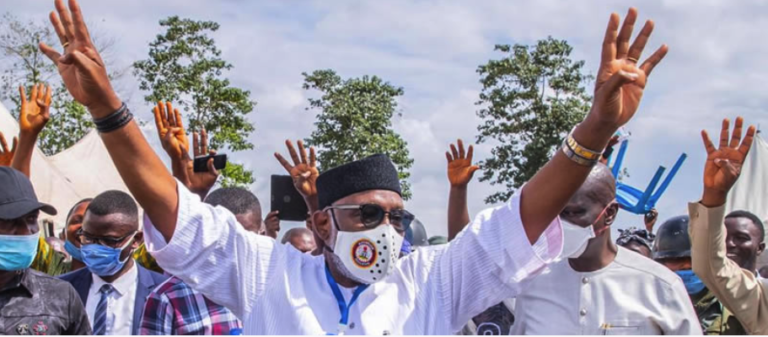
OLUWAROTIMI Akeredolu, SAN, candidate of the All Progressive Congress, APC, has won the governorship seat in the Ondo State for another four -year term.

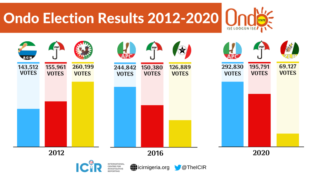
According to the result announced by Independent National Electoral Commission, INEC on Sunday, October 11, Akeredolu in the 2020 governorship election defeated his closest rival Eyitayo Jegede of the People’s Democratic Party PDP with 292,830 votes against 195,791, representing nearly 20 percent lead.

The candidate of Zenith Labour Party, ZLP, Agboola Ajayi scored 69,178 votes.

As expected by many observers, both Akeredolu and Jegede recorded a landslide victory in their senatorial districts and local government areas.

Ondo North where Akeredolu comes from, the APC led PDP by 62,621 votes while PDP led by 23,996 votes in Ondo Central, the stronghold of Jegede.

ZLP was in a distant third in each of the senatorial districts including Ondo South, the home front of Ajayi, the current deputy governor.

A similar pattern is repeated at local government level as Akeredolu led by 30,646 in Owo LGA while  Jegede led by 30,350 in Akure South LGA. Again, Ajayi lost to APC at Ese-Odo, his local government area.

In total, Akeredolu the incumbent governor cleared 15 local government areas including Akoko North East (16,572), Akoko North West (15,809), Akoko South East (9,419) and Akoko South West (21,232).

Others are Idanre (11,286), Ile-Oluji/Oke-Igbo(13,278), Irele (12,643), Okitipupa (19,266), Ondo East(6,485), Ondo West(15,977), Ose (15,122), Owo (35,957), Odigbo(23,571), Ilaje (26,657) and Ese-odo(13,383).

The candidate of PDP won only three local government comprising Akure North (12, 263), Akure South (47,627) and Ifedore (11,852).


With this number, Akeredolu has satisfied the two-third of the geographical spread of the 18 local government areas as prescribed by the electoral law and has been declared the winner by INEC.

In 2016 governorship election, APC also won by 94,462 votes, scoring 244,842 against 150,380 votes scored by PDP, the closest rival.

In 2012, the Labour Party now known as Zenith Labour Party (ZLP) represented by Olusegun Mimiko won with 260,199 votes. PDP took the second position with 155,961 votes while ACN, now APC scored 143, 512.

Since the return of the civil rule in 1999, four governors have ruled in Ondo State. They are Adebayo Adefarati, 1999 to 2003; Olusegun Agagu, 2003 2009; Olusegun Mimiko, 2009 to 2016 and Akeredolu who started in 2017. His second term begins in February 2021.