Home Blog Page 1968

Change your scepticisms and nonchalance attitude to COVID-19, FG tells Nigerians

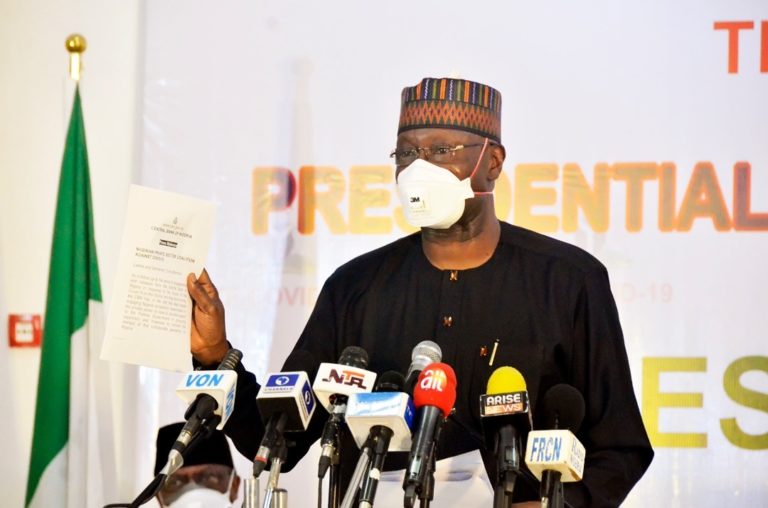
BOSS Mustapha, Secretary to the Government of the Federation (SGF) and Chairman of the Presidential Task Force on COVID-19 (PTF) has urged Nigerians to change their attitude of scepticism and nonchalance to the virus. 

Addressing journalists at the PTF COVID-19 briefing in Abuja on Thursday, Mustapha said there has been an observed drop in the number of confirmed cases and a further reduction in the number of states reporting new confirmed cases, while the rest of the world continues to declare high numbers of cases and fatalities.

Mustapha also urged Nigerians to continue to heed to COVID-19 guidelines stating that the country has had a good recovery rate.

“Although Nigeria is no longer in the top five countries by cumulative deaths in Africa, the PTF continues to urge Nigerians to change their attitude of skepticism and nonchalance to the virus,” Mustapha said.

“For the avoidance of doubts, the virus is real, ferocious, and deadly. To date, Nigeria has recorded 59,738 confirmed cases and 1,113 fatalities.

“The PTF is fully conscious, but not deceived, by the fact that our recovery rate is high and very encouraging. We still urge, however, that everyone should get tested because testing is the only way to detect, isolate, trace, and treat.”

Making reference to other countries, Mustapha said Brazil has crossed  five million confirmed cases and recorded over 150,000 fatalities while other countries like France, Israel, Italy, Britain, etc., are reintroducing more restrictions and measures to curtail the spread of the pandemic in their countries

He said in order to increase testing in Nigeria, there would be a full implementation of the national testing week.

Again, Buhari exceeds FRA threshold over budget deficit

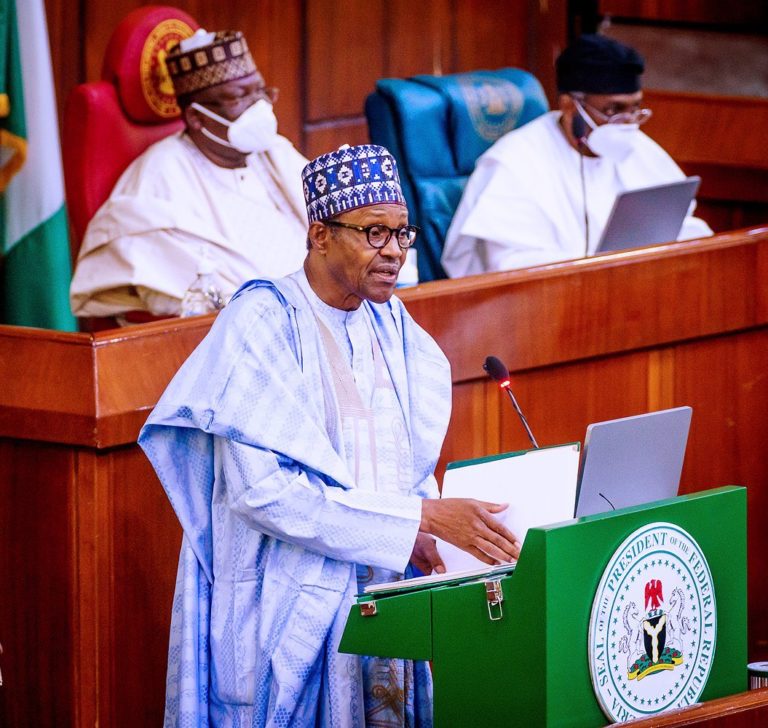
NIGERIAN President Muhammadu Buhari has again, exceed the threshold of the annual budget deficit as stipulated by the Fiscal Responsibility Act, 2007.

This was revealed during the 2021 Budget presentation tagged ‘Budget of Economic Recovery and Resilience’ to the National Assembly on Thursday.

Buhari said the 2021 budget deficit, inclusive of Government-Owned Enterprises and project-tied loans is projected at N5.20 trillion.

He added that the deficit represents 3.64 per cent of the estimated Gross Domestic Product (GDP) of the country.

“The 2021 Budget deficit (inclusive of Government-Owned Enterprises and project-tied loans), is projected at N5.20 trillion. This represents 3.64 per cent of estimated GDP, slightly above the 3 per cent threshold set by the Fiscal Responsibility Act, 2007,” said Buhari.

The President added that the deficit of the annual budget would be financed by new borrowings of N4.28 trillion and N205.15 billion.

He stated that N709.69 billion of the deficit would be gotten from drawdowns on multilateral and bilateral loans secured for specific projects and programmes.

“The deficit will be financed mainly by new borrowings totalling N4.28 trillion, N205.15 billion from Privatization Proceeds and N709.69 billion in drawdowns on multilateral and bilateral loans secured for specific projects and programmes,” Buhari told the National Assembly.

However, Buhari said the exceeded threshold is due to the economic challenges posed by the COVID-19 pandemic.

“It is, however, to be noted that we still face the existential challenge of Coronavirus Pandemic and its aftermath; I believe that this provides a justification to exceed the threshold as provided for by this law, he further stated.

This is another breach of the fiscal responsibility act as Buhari had also exceeded the three per cent budget deficit threshold in the revised 2020 budget.

Reports from the Addendum to 2020-2022 of the Medium Term Expenditure Framework and Fiscal Strategy Paper Fiscal deficit stood at N4.58 trillion as passed by the National Assembly.

In the revised 2020 budget, the fiscal deficit rose from the 3 per cent threshold to 3.29 per cent of the GDP as stipulated by the law.

The Fiscal Responsibility Act, 2007 states that the ‘Aggregate expenditure and the aggregate amount appropriated by the National Assembly for each financial year shall not be more than the estimated aggregate revenue plus a deficit, not exceeding three per cent of the estimated Gross Domestic Product or any sustainable percentage as may be determined by the National Assembly for each financial year.

The FRA further reads that ‘Aggregate expenditure for the financial tear may exceed the ceiling imposed by the provisions of subsection (1) of this section if in the opinion of the president there is a clear and present threat to national security or sovereignty of the Federal Republic of Nigeria.

 Should government be borrowing to balance deficit?

Speaking to The ICIR, Bongo Adi, an economic expert and lecturer at the Pan Atlantic University otherwise known as Lagos Business School, said the breach of the FRA budget deficit is ‘a good way to go’.

According to Adi, the President’s action is a step in the right way because the pandemic is a matter of national defence.

He added that national defence is beyond physical security, that the implications of the aftermath of COVID-19 are poverty which poses a security threat to the country.

Speaking on how the government intends to balance the budget deficit with borrowings, Adi said ‘the question is, should the government be borrowing’.

“Government needs to reconsider borrowing for infrastructures, they are facing two problems, one is the inability to collect revenue and the other is the rising debt profile of the country,” said Adi.

He advised that the government should restructure its mode of provision of physical infrastructures in the country.

“Why can’t we restructure the system? such that equity would be a preferable means of delivering capital projects.

“By restructuring, I don’t mean political restructuring, I am talking about government structure of means of physical infrastructure, creation of incentives such that we would prioritize equity instead of debt.

“Because the priority of government right now is about debt, that’s why the government is borrowing because they want to be the one that builds infrastructures.

“Instead of government being at the forefront of debt, they should create incentives so that private sectors would be the one to go and borrow money on their own terms, let them (private sectors) be the obligor, when they raise the fund, let them construct the infrastructure,” Adi stated.

“When you have a rail network, the government doesn’t need to build the track and bring the train, the government needs to open up, provide the track and let the private sector be the one to get the train, let them manage it to profitability so that government doesn’t have to burden itself with too many things,” the economic expert advised.

He said that what the government should do is be the regulator of financially sustainable projects and let the private sectors be in charge of getting the fund.

Adi further stated that Nigeria is doing badly in terms of mopping up revenue to finance its budget as well as sustain the economy of the country.

“‘It is not just about raising the fund, it is about setting in process, setting appropriate and efficient mechanisms to ramp up the revenue collection ability of the government.

“As it is currently, I think we are among the most inefficient countries when it comes to revenue mop-up, our tax effort is among the lowest if not the lowest in Africa.

“We are facing a lot of challenges as citizens but as it is, we don’t really have much of a choice, we just have to find a way because if people don’t pay tax, the government finds it difficult to create the jobs.

Seyi Kolawole, a finance expert and Research Analyst with the NASD Security Exchange during a telephone interview with The ICIR said it is not about exceeding the threshold rather it is about what the government commits the fund to.

It could be a good thing, obviously, the government has a lot it wants to do that’s why they have a big expenditure than the threshold and I think the COVID-19 pandemic has opened their eyes to probably a number of the key sectors the government has to improve upon,” Kolawole said.

He added that Healthcare is the most of them all stating that a significant part of the budget should be focused on growing other sectors like the agricultural sector.

“For instance, I understand we close the border for a while and that has forced us to look internally, so I’m sure we still need to look at other sectors.

“Like the general health care, because if we look at this year, we will realize that a lot of people could not access quality health and it was even made worse because the politicians were unable to travel out as well, so we come to realize that a number of hospitals were overwhelmed due to the COVID-19 pandemic,” he stated.

He highlighted the agricultural sector, health sector and funding for micro, small and medium enterprises as aspects that should constitute a large part of the budget.

“For me, if this additional expenditure will be insured on these different aspects I spoke about then I think it’s a good thing for Nigeria,” he added.

Ondo electction: IGP orders movement restriction, assures voters of peaceful environment

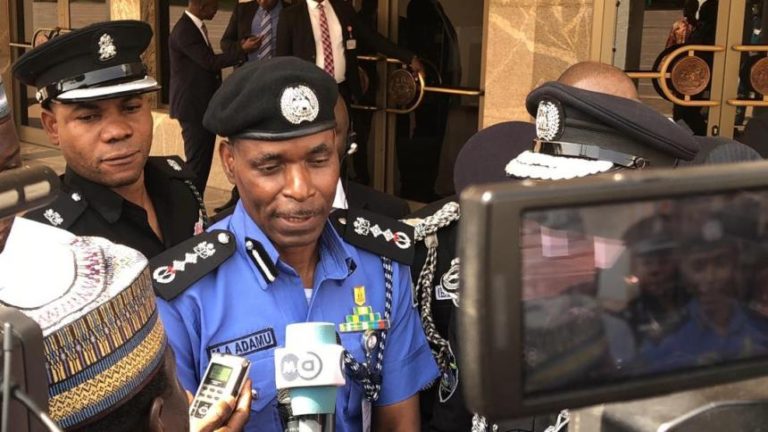
MOHAMMED Adamu, the Inspector General of Police (IGP) has ordered a restriction of vehicular movement in Ondo State ahead of Saturday’s governorship election in the state.

The restriction is to take effect from 11:50 pm on Friday to 6 pm on Saturday, October 10, a statement issued by the Police on the its verified social media handle, said.

Adamu stated that the order would ensure proper coordination of public order and safety during the election.

The Police Chief added that it would prevent illegal arms circulation and movement of political thugs before and during the hours of the election.

“The vehicular restriction order, among other things, is aimed at preventing political actors and trouble-makers from freely engaging in unpatriotic acts – circulation and use of illicit arms and hard drugs, movement of political thugs from contiguous States to Ondo State and disruption of the electoral processes, etc – which are inimical to the dictates of the electoral laws,” the statement reads.

He warned those who might want to engage in snatching of ballot boxes, vote-buying among other forms of illegal activities capable of compromising the integrity of the electoral process to desist from such acts.

Adamu urged residents to move freely to exercise their voting rights, assuring that adequate security has been put in place to secure the public space for the poll.

Citizens who flout the directive, he added should be ready to face consequences of their actions.

“The order is part of necessary sacrifices we all have to endure to nurture and sustain democracy in the country,” he said.

Security officials from the Police, Federal Road Safety Corps (FRSC), Naval officers, officials of the Nigerian Security and Civil Defence Corps (NSCDC) including the marine police have been deployed to the state to ensure the protection of lives and properties, particularly the riverine areas considered as flashpoints of the election.

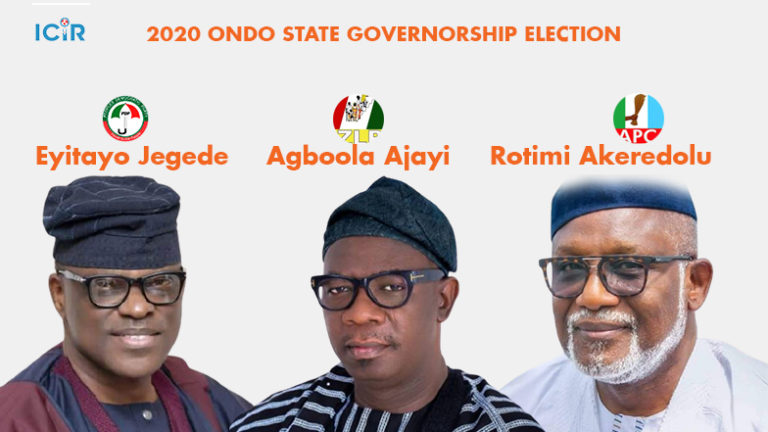
Rotimi Akeredolu, the incumbent governor is the candidate for the All Progressives Congress (APC), Eyitayo Jegede is Peoples Democratic Party (PDP) flag bearer for the election while Agboola Ajayi, the current deputy governor is the ZLP governorship candidate for the Saturday’s poll.

#EndSars protesters keep vigil at Lagos House of Assembly amid police intimidation

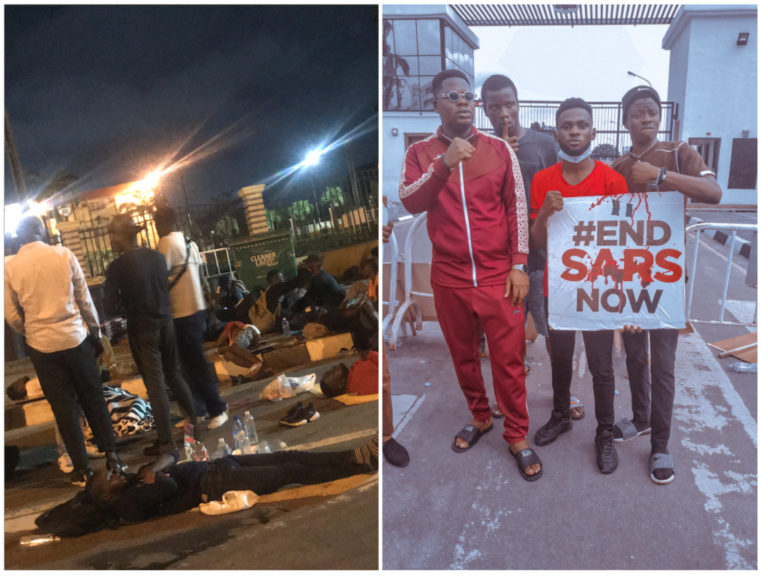
A GROUP of young Nigerians who embarked on an all-night vigil to demand an end to police brutality against youths across the country has accused the Police in Lagos of subtle attempts to frustrate their protest.

The group, using a Twitter handle known as Concerned Nigerians, alleged that while the protesters kept vigil from Thursday to Friday at the Lagos State House of Assembly in Alausa area of  Ikeja, the police launched subtle attacks to dislodge them.

The Lagos State government asked their officials to switch off the street lights around the State House of Assembly, Alausa where Nigerians are keeping vigil so the Police can arrest, harass and detain the #EndSars protestors. This is callous, inhuman, and thoughtless,” the tweet read.

Debo Adebayo, a Nigerian comedian, and actor, popularly known as Mr. Macaroni who led the protest, shared that they were still out as of 4 am and their grievances were being ignored.

In a video clip, Macaroni was seen demanding to speak to the governor or any top official to present their demands.

However, while waiting to gain an audience with the State Governor or any of his representatives,  the canopies under which the protesters were sheltering were taken away by some policemen.

Some of the protesters also took to social media to reveal that they were being threatened as their cars were towed away by state officers.

In response, Adejobi Olumuyiwa, Public Relations Officer of the Lagos State Police Command tweeted that no police officer would launch any attack on peaceful protesters.

Olumuyiwa, however, in another tweet emphasised that violent protest would be resisted.

“Any violent protest will be resisted fully according to the provisions of the law,” his tweet read.

The #EndSars protest was rekindled following an attack on a young boy in Delta State, who was said to have been shot by a police officer during the #EndSars protest.

A viral video clip showing the boy’s injured leg was shared on Twitter, sparking outrage among Nigerians, driving the online and offline protest.

On Thursday, youths in Abuja, Lagos, Delta, and Osun states marched out en masse to demand the disbandment of the Special Anti-Robbery Squad (SARS).

Some Nigerian celebrities including Runtown, Falz, Tiwa Savage, and Toke Makinwa also joined the protest in Lagos.

While Nigerians keep demanding an end to police brutality, Mohammed Adamu, the Inspector General of Police, announced the suspension of the Special Tactical Squads (STS) from routine patrols.

With this ban, the Police personnel are to desist from, “carrying out routine patrols, and other low-risk duties – stop and search duties, checkpoints, mounting of roadblocks, traffic checks, etc. with immediate effect.”

In the most recent reaction, Nigerian Senators on Wednesday condemned the misconducts of operatives of SARS.

This followed a motion by Oluremi Tinubu, the Senator representing Lagos Central,  on the need to check the culture of brutality by security operatives against Nigerians.

“SARS members are agents of corruption. They extort money from innocent people and lock people up arbitrarily. They are not VIOs; they will go ahead to ask for a driving license. That is not their function. They must face their functions,” said George Sekibo representing Rivers East senatorial district.

“SARS has turned back against the nation. This is the right time to do something about them.”

Dapo Apara, former MD of Alpha-Beta accuses Tinubu of fraud, tax evasion

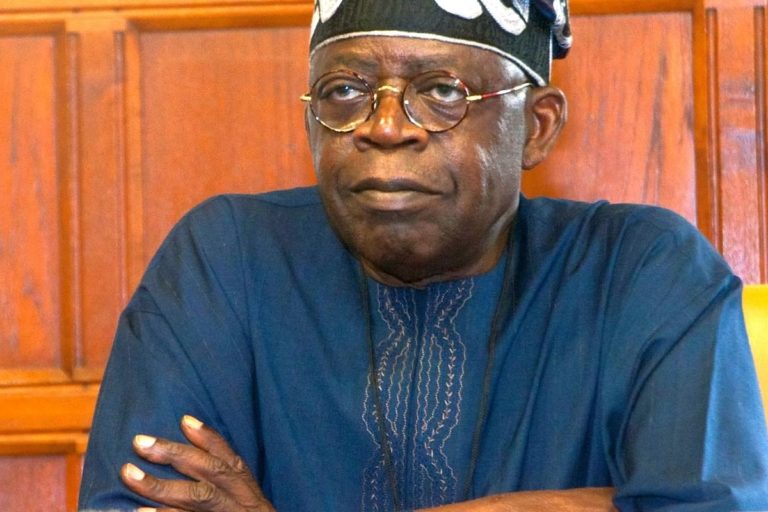
DAPO Apara, a Nigerian chartered accountant and former Managing Director of Alpha Beta, has accused Bola Tinubu, a former Governor of  Lagos State and National Leader of the All Progressive Congress (APC),  of fraud and tax evasion.

Apara, in a 40-page writ of summons sighted by The ICIR issued by his lawyer, Tade Ipadeola, also accused Alpha-beta, a consulting firm and Akin Doherty, a former commissioner in the Lagos State of money laundering, fraud, tax evasion, and other corrupt practices.

He also revealed how Tinubu, used one Adegboyega Oyetola, believed to be the current Governor of Osun State as a front for the establishment of the firm.

Alpha Beta, which has an exclusive right to collect funds on behalf of Lagos State, is believed to be partly owned by Tinubu.

The consulting firm handles the computation, tracking, and reconciliation of Internally Generated Revenue (IGR) in Lagos State in return for a commission.

This is not the first time Apara is coming out to accuse the former Lagos governor and the consulting firm of fraud and tax evasion.

He had in June 2018 written to the Economic and Financial Crimes Commission (EFCC) accusing Alpha Beta Consulting firm of tax evasion and fraud to the tune of over N100billion.

Also, Apara in a January 2019 interview with Punch Newspaper disclosed that seven months after writing the petition to the EFCC, the commission had yet to invite him to explain his allegations.

Tunde Rahman, Media Adviser to Tinubu had then challenged and dared Apara to return to Nigeria to defend the petition.

The writ of summons details all sums due to him from 2010 till date and also disclosing what led to them falling apart, including suspicious transfer, the power play at the firm, the fund and assets due to him from the firm inception to date.

The first, second and third defendants, according to the writ, are Alpha-beta Consulting, Tinubu and Doherty, respectively.

Apara claimed he owns 30 per cent stake in the company, which he said was an idea he solely conceived, prepared and wrote a proposal which he presented to the Lagos State Government sometimes in 2000 on providing consultancy services using his firm, Infiniti Systems Enterprises, with respect to using computerisation to track and reconcile the Internally Generated Revenue (IGR) of the state.

He also claimed that apart from owning 30 per cent stake in the company, other stakeholders are Michael Ogunmola, trading under the name and style Mono Consulting (40 per cent); Tunde Badejo, trading under the name and style Ebo Consult (15 per cent); and again, Tunde Badejo, trading under the name and style Intergrev Services (15 per cent).

Apara said Tinubu, following the presentation of his proposal, demanded that 70 per cent equity interest in the project be assigned to a certain Olumide Ogunmola before he would approve the project.

According to the document, he then met the said Ogunmola, who he had never met before, and it was agreed that a limited liability company is incorporated in which Apara will hold 30 per cent shares while Ogunmola and his partners will hold 70 per cent of the shares of the company.

Alpha Beta Consulting Limited was incorporated in 2002 with the shareholding ratio that shows that 30 per cent was allocated to him (Apara), 40 per cent for Ogunmola, and 30 per cent for Adegboyega Oyetola.

He (Apara) said that upon the commencement of business operations, the 2nd Defendant (Bola Ahmed Tinubu) directed that the 30 per cent shareholding of Adegboyega Oyetola be transferred to one Tunde Badejo, this he said was done.

He stated also that although he was a signatory to all the bank accounts of the 1st Defendant, payments from the bank accounts of the 1st Defendant required only two signatories which was mostly handled between the other two partners, Messrs Michael Olumide Ogunmola and Tunde Badejo.

Stating further that after the incorporation of Alpha-Beta Consulting Ltd in 2002 and structured according to the dictates of the 2nd Defendant (Bola Ahmed Tinubu), the 2nd Defendant in his official capacity as the Governor of Lagos State then approved that Alpha-Beta Consulting Ltd be awarded consultancy contract for the assessment and collection on behalf of the Lagos State Government, all taxes and Internal Generated Revenue IGR) due and payable to the state at a 100 per cent consultancy fee (subject to a benchmark which varies from time to time).

He disclosed further that due to the technological innovation that was deployed by him, the Internal Generated Revenue of the state grew from a base of about N10 billion per annum in 2002 to over N300billion in 2019.

Origin of crisis between Apara and Tinubu, Alpha Beta

According to Apara, Tinubu in 2010 or thereabouts, directed that the incorporation structure of the Alpha-Beta Consulting Ltd be changed from a Limited Liability Company to Limited Liability Partnership under a newly promulgated law of the Lagos State Government.

Tinubu, he said, explained to him that the purpose was to further shield the former Lagos State Governor, involvement in Alpha-Beta Consulting Ltd from public scrutiny.

He said the directives by Tinubu was carried out, with the company registered as a Limited Liability Partnership to carry on business as information and communication technology consultants and provide high quality, value-added information solutions to private and public institutions, stating that after registration as a Limited Liability partnership, 1st defendant then took over the Lagos State contract previously awarded to Alpha Beta Consulting Limited.

He also said Tinubu directed that Ogunmola be designated as Managing Partner of Alpha Beta Consulting LLP, while he be designated as Deputy Managing Partner, but in 2014, Apara said Tinubu directed that Ogunmola should cease being the Managing Partner and that he should become the Managing Partner with access to review the financial records.

Disagreement according to Apara began, when in 2016, the 2nd Defendant (Bola Ahmed Tinubu) told the Claimant that he (Bola Ahmed Tinubu) had received feedback that he was reviewing past financial records of the 1st Defendant.

That he was displeased with this action of the Claimant and therefore intends to bring the 3rd Defendant (AKIN DOHERTY) into the management of the 1st Defendant as Managing Director to take over the financial management of the company, while the Claimant should revert to his former role as Deputy Managing Director and not get involved in the financial affairs of the 1 St Defendant.

Also further disclosing in the document, Apara said the 2nd Defendant (BOIA AHMED TINUBU) warned him not to even think of exposing his involvement in the financial affairs of Alpha to the EFCC as the then Acting Chairman of EFCC, Ibrahim Magu, will always protect him.

He said Tinubu threatened to use the agencies of the Lagos State Government such as the Lagos State Internal Revenue service LlRS) and the Lagos State Building Control Agency LSBCA) to harass and seize his assets if he ever betrayed him.

Apara said he disagreed with Tinubu’s request that he should revert to the role of a deputy. Instead, he claimed, “the Claimant agreed with the 2nd Defendant that he will transition to a consultant to the 3rd Defendant to manage the technology and get remunerated on a monthly basis for this task.”

According to him, “Thereafter, the 3rd Defendant was brought to the office premises of the 1st Defendant by Mr. Tunde Badejo, a partner, and introduced to the staff as the new “Managing Director” of the 1st Defendant.

“Thereafter, MR. TUNDE BADEJO told the claimant that if he (the claimant) ever came to the office of the 1st Defendant he, MR. TUNDE BADEJO will terminate the life of the Claimant. This incident was reported to the police in 2018 and is under investigation.”

“When the police commenced investigation into this complaint by the plaintiff in 2018, the 2nd Defendant (BOIA AHMED TINUBU) interfered in the Police investigation to frustrate it.”

Suspicious Transfers

Apara in the writ, further listed suspicious transfers made to various companies by Tunde Badejo, Michael Olunride Ogunmola and Akin Doherty, which he said all have concluded and conspired to run the affairs of the business in a manner designed to bankrupt the 1st Defendant through suspicious monetary transfers to third parties running into billions of naira contrary to the partnership agreement.

Notable, he claimed is Vintage Press, publisher of The Nation Newspaper alongside two others received N1 billion.

Tinubu is believed to be the owner of The Nation, but that has neither been denied nor refuted officially by the management of the media house.

He also said  N1 billion was transferred to Ocean and Oil Investment LID (OANDO) “various time” and N3.5 billion OCEANIC BANK (Now ECOBANK) “various time”.

He alluded to the fact that Clause 8 of the Partnership Agreement which relates to Profit and Losses provides that “the Partnership’s profits and losses (including profits and losses of capital) shall be divided between and borne by the partners in proportion to the shares in its capital for the time being owned by them.”

He said the 1st Defendant LLP had received from the Lagos State Government commission for its services estimated at over One hundred and fifty billion naira (150 billion) from 2010 to date with the profits of the Partnership being that sum minus legitimate costs.

Stating further that he was denied his share of the huge income made by the firm, that both Messrs Badejo and Doherty acting under the directive of the 2nd defender (Bola Tinubu) denied him his share which was a breach of Clause 8 of the Partnership Agreement.

Apara, also claimed that after a thorough and full assessment of the information he received from the said Tunde Badejo about how the account of the 1st defendant was grossly mismanaged, the poor records book-keeping of accounts of the 1st Defendant and in some cases, nonexistent accounts, he decided to whistleblow the fraudulent activities of the Defendants using the 1st Defendant in which the Claimant is a partner.

When The ICIR reached out to Dayo Apara through his twitter handle, he told The ICIR he won’t be able to comment since the matter is before a court.

The ICIR also reached out to the Tunde Rahman, the media adviser to Bola Tinubu, who responded that he was in a meeting and should be contacted later.

Subsequent calls made to him throughout Thursday evening were not answered and a text message sent to his telephone number was also not responded to.

While Rahman has not responded to the latest allegation made in the writ of summons, he had in a 2019 opinion article titled, ‘Momodu and his obscene obsession” defended Alpha Beta, stating that the consulting firm had done wonderfully well and had helped Lagos to become the fifth largest economy in Africa.

He said “Lest we forget, it was the ingenuity of Tinubu’s government that brought Alpha Beta. Because of this innovation, the Internally Generated Revenue of Lagos moved from N600m in 1999 to over N25bn monthly today.”

“Powered by this increase in IGR, Lagos economy today is ranked fifth in Africa and social services in the state have improved across the board. Alpha Beta also has been invited by many states and other countries to do for them what was done for Lagos.”

Claim that Nigeria’s Okonjo-Iweala has been appointed WTO Director-General is FALSE

Multiple viral posts claiming that Nigeria’s nominee for the position of the Director-General of the World Trade Organisation (WTO), Ngozi Okonjo-Iweala, has been appointed by the organisation surfaced online Thursday October 8.

The posts, which came in different variations, were published on Facebook, Twitter and some online blogs including Observers TimesSahel StandardMyMediaAfrica9NewsNG and Atlantic Post  among others and they have gone viral.

Some of it read: Breaking: Okonjo-Iweala appointed 1st female leader of WTO.”

“BREAKING: Dr Ngozi Okonjo-Iweala has just been appointed as the new—and first female—Director General of the World Trade Organization. Congratulations!”

Dr Ngozi Okonjo-Iweala has been appointed the new DG of the World Trade Organization (WTO). She is the first African & the first woman to head the WTO. Mama is Excellence!! She is Merit!!”

The false report on Sahel Standard platform.

THE CLAIM:

That Ngozi Okonjo-Iweala has been appointed as the Director-General of the World Trade Organisation (WTO).

THE FINDINGS:

Checks by the FactCheckHub 

revealed that the claim is false.

Information obtained from the official Twitter handle of the World Trade Organisation (@WTO) indicated that consultation is still ongoing to appoint the organisation’s director-general, adding that consultations resume on October 19th, contrary to the viral posts.

“These are the candidates moving on for members’ further consideration. The result creates an historic precedent for the WTO: the 7th Director-General will become the first woman to lead the Organization. Consultations resume on 19 Oct #WTODG,” the tweet reads.

Similarly, a news release by the WTO on Thursday, October 8, indicated that Ngozi Okonjo-Iweala of Nigeria and Yoo Myung-hee of the Republic of Korea have both made it to the final round of the selection process.

“The result creates an historic precedent for the WTO in that it assures that the 7th Director-General will become the first woman to lead the organization. These two candidates were chosen from a field of five(*) that had advanced to the second round of consultations.

“Our aim continues to be to encourage and facilitate the building of consensus among members, and to assist in moving from this final slate of two candidates to a decision on appointment.

“As this is the final round of the consultation process, it should bring us to the point where we can make a recommendation to the General Council concerning that decision,”  the General Council Chair of WTO, Amb. David Walker said in the press statement.

The General Council is the highest decision-making body of the WTO apart from the Ministerial Conference which meets every two years, it added.

Further checks by the FactCheckHub also confirmed that Okonjo-Iweala made it to the final round of the selection process, according to a brief statement on her official Facebook and Twitter pages, though she is yet to be appointed.

“Happy to be in the final round of the #WTO DG campaign! Thanks, WTO members for your continued support of my candidacy. Thanks be to God.

“I could not have made it without the prayers and support of all Nigerians and friends around the world. Thank you Nigerians, Thank you, President Buhari and all my friends. Aluta continua!” she wrote.

It will be recalled that the FactCheckHub had earlier in July 2020 did a similar fact-check debunking claim that Kenya’s Amina Mohammed has beaten Nigeria’s Okonjo-Iweala for the WTO DG’s position.

THE VERDICT:

From all evidence available, the claim that Ngozi Okonjo-Iweala has been appointed as the Director-General of the World Trade Organisation (WTO) is FALSE.

This is how Ondo election will be shaped by group politics, and numbers

ON Saturday, October 10, the people of Ondo State in the southwest, Nigeria will again elect a governor for another four years. Independent National Electoral Commission’s record shows that 17 candidates are in the race to Alagbaka House, but observers of Ondo politics have ceded the arena to three gladiators.

One of them is the incumbent, Governor Oluwarotimi Akeredolu, SAN, a candidate of the All Progressive Congress, APC. The others are Eyitayo Jegede, SAN, of the People’s Democratic Party, PDP, and Agboola Ajayi of the Zenith Labour Party, ZLP – all of them, tested politicians and accomplished lawyers.

Akeredolu, 64, was the Ondo State Attorney-General and Commissioner of Justice between 1997 and 1998 during the administration of Navy Captain Anthony Ibe Onyearugbulem. He contested the governorship election in 2012 on the platform of the defunct Action Congress of Nigeria, ACN, and lost to the then incumbent governor, Olusegun Mimiko. Four years later, he won the governorship election with 244, 842 votes against  Olusola Oke of Alliance for Democracy and Jegede who scored 150, 380 and 126, 889 votes respectively.

Jegede, on the other hand, has been the flagbearer of the PDP since 2012 when he defeated the then deputy governor, Hon. Saka Lawal at the party’s primary. In 2016, he also defeated Jimoh Ibrahim to clinch the PDP ticket, and this year, he defeated Ajayi, the incumbent deputy governor who recently defected from APC.

Jegede, like Akeredolu, was also the Attorney-General and Commissioner for Justice between 2009 and 2012 during the first term of Mimiko, and a Senior Advocate of Nigeria.

Before he joined politics, Ajayi, the ZLP party flagbearer, was also a lawyer and businessman. He was a former chairman of Ese Odo LGA, a former member of the Federal House of Representatives under the PDP, and now a deputy governor.  He recently defected to PDP, and later to ZLP after the relationship between him and Governor Akeredolu broke down.

CREDIT: CDD

Therefore, considering the personal achievements and political experience of the three candidates, each of them stands a good chance to win the election on Saturday. Yet this election will not be decided by experience and accomplishment as much it will be by geography and group politics.

Here is why.

There are three senatorial districts in Ondo State: Ondo North, Ondo South and Ondo Central. Between 1999 and 2020, each of the three zones has produced a governor.

Late Adebayo Adefarati who was governor from 1999 to 2003 was from Ondo North, late Olusegun Agagu, the governor between 2003 and 2009 was from Ondo South, Mimiko is from Ondo Central, and Akeredolu who has been governor since 2016 is also from Ondo North.

Among the four governors, only Mimiko has completed an eight-year term. Agagu’s second term was terminated when the court voided his election in February 2009 on account of electoral irregularities. Adefarati did only one term and was defeated by PDP in 2003.

So, if Akeredolu wins on Saturday, he will be the first governor from Ondo North to win a second term. But his chance appears tougher this time around than it was in 2016.

Now, he will have to struggle to snatch victory in Ondo South where in 2016 he led  AD by 8 percent votes and PDP by 24 percent when he scored 72,060 votes above AD and PDP that scored 62,067 and 44,620 respectively.

Though the governor, like an adept chess player, has foreseen this pitfall and has chosen Lucky Orimisan Aiyedatiwa, a native of Obe-Nla, in Ilaje Local Government Area, Ondo South. But it remains uncertain if Aiyedatiwa can pull the political weight as much as the deputy governor can.
By the way, Jegede and Ajayi have also chosen their deputies from zones other than theirs to shore up vote counts, except from Ondo North, the stronghold of Akeredolu. While Jegede who is from Ondo Central chose Olumide Ogunje from Ondo South, Ajayi who is from Ondo South chose Gboye Adegbenro from Ondo Central.

Therefore, for Akeredolu and Jegede, Ondo South is going to be the battleground as the two of them are likely to win in their zones. But while Akeredolu may record a landslide victory in Ondo North, it may not be so for Jegede who will have to lock horns with  Ajayi in Ondo Central and Ondo South where both have chosen their deputies respectively.

CREDIT: CDD

It is worth mentioning, however, that Akeredolu’s stronghold has the lowest registered voters compared to other zones. Among the 1,822,346 that registered to vote on Saturday, 32 percent are from Ondo South, 41 percent from Ondo Central, and 27 percent from Ondo North. Therefore, the outcomes in the two zones will largely determine the victory or defeat of Akeredolu.

Notwithstanding, local government areas from his zone were among the seven LGAs that recorded the highest number of accredited voters in 2016, according to INEC record.

For instance, the highest number of accredited voters came from Akure South, 12 percent (Ondo Central); Okitipupa, 7.4 percent (Ondo South); Owo, 7.3 percent (Ondo North); Akoko Southwest, 7 percent (Ondo North); Ondo West, 6.8 percent (Ondo Central); Odigbo, 6.7 percent (Ondo South) and Ilaje, 6.5 percent (Ondo South). The outcomes in these local government areas will determine who becomes the occupant of Alagbaka House for the next four years.

There is a growing concern, however, about voters’ apathy in Nigerian elections, and the situation is not different in Ondo State. Since 2012, the voter’s turnout has been dropping steadily. Out of the 1,638,950 registered voters, only 38.1 percent voted in 2012. Four years after, 1,647,673 voters registered to vote, but only 35.2 percent eventually voted. In 2016, the situation was worse. Out of the 1,822,346 registered voters, only 32.4 percent elected the governor.

According to the census estimate, Ondo is 4.7 million in population, and only 1,822,346 are registered to vote on Saturday. Even every registered voter cast the ballot, which is less than 40 percent of the population,  it would still be a minority vote.

In 2016,  584, 997 people voted. If every one of them votes on Saturday, they would have represented o.1 percent of the entire population. Therefore, whoever wins the governorship election this weekend will be elected by the minority of Ondo people.


COVID-19: 40 million Nigerians, others in Sub-Saharan African countries face extreme poverty in 2020 – World Bank

THE COVID -19 pandemic will drive up to 40 million people in Nigeria and other countries in Sub-Saharan Africa into extreme poverty 2020, the World Bank said in a latest report.‎

The World Bank also reported that Nigeria’s GDP contracted by 6.1 per cent in the second quarter of 2020 – the worst decline in more than a decade.

The report confirmed the economic downturn in Sub-Saharan Africa‎ as a result of the impact of the COVID-19 global pandemic, ‎noting that a substantial downturn in economic activity will cost the region at least $115 million in output losses this year‎.

The latest edition of Africa’s Pulse, the World Bank’s twice-yearly economic update for the region, titled ‘‎Charting the Road to Recovery’, was launched virtually on Thursday.

The report said growth in Sub-Saharan African countries, including Nigeria, is predicted to fall to -3.3 per cent in 2020, pushing the region into its first recession in 25 years.

“The pandemic could also drive up to 40 million people into extreme poverty in Africa in 2020, erasing at least five years of progress in fighting poverty,” the World Bank said, quoting parts of the report in a press statement issued to announce the release of the latest edition of Africa’s Pulse.  ‎

With over a million reported COVID-19 cases across the continent, the pandemic is still not under control in Sub-Saharan Africa, the World Bank noted, adding that although some governments have acted rapidly to reduce the spread of infections, successful containment measures come with a high economic cost, as is the case across the globe.

The pandemic has already taken a huge toll on Nigeria, according to the World Bank, with the country recording its worst decline in more than a decade.

“Nigeria’s real GDP contracted by 6.1 per cent year-on-year in the second quarter of 2020 – the worst result in more than a decade,” the report said.

South Africa and Angola, the other big economies in the region, are equally suffering from the imp‎act of the pandemic.

“South Africa, operating under severe containment measures, saw its real GDP contracted by 17.1 per cent year-on-year in the second quarter of 2020. Angola, Sub-Saharan Africa’s second largest oil producer after Nigeria, saw its economy contract by 1.8 per cent year-on-year in the first quarter of 2020.”

The decline in growth has been stronger among metals exporters where real GDP is expected to contract by six per cent, partly reflecting the large drop in output in South Africa.

Among oil exporters, after expanding by 1.5 per cent in 2019, real GDP is projected to fall by more than four per cent in 2020, owing to contractions in Angola and Nigeria. ‎

However, the report observed that on average, non-resource-intensive countries would record a moderate decline in growth in 2020, unlike the resource-intensive counterparts who are experiencing more severe contractions. ‎

“In several non-resource-intensive countries, including Côte d’Ivoire, Ethiopia, and Kenya, growth is expected to slow substantially, but remain positive, owing to their more diversified economies.

“Meanwhile, the tourism-dependent economies, especially those of Cabo Verde, Mauritius, and Seychelles, experienced a sharp contraction as exceptionally weak international tourism severely impacted the service sector,” the World Bank added.

With the region losing ‎at least $115 million in output losses in 2020 due to‎ a substantial downturn in economic activity, GDP per capita growth is expected to contract by nearly 6.0 per cent, in part caused by lower domestic consumption and investment brought on by containment measures to slow the spread of the coronavirus.

The World Bank, in the latest edition of Africa’s Pulse, advised that economic recovery will require massive investments across countries, as well as financial support from the international community.

It recommended a bold reform agenda that includes policies that create fiscal space, along with policies to speed up job creation.

According to the report, several countries, including South Africa, Nigeria, and Ethiopia, have already begun implementing long-needed reforms in energy and telecommunications spurred by the current crisis, and 25 per cent of African firms have accelerated the use of digital technology and increased investments in digital solutions.

By mid-September, 46 countries in Sub-Saharan Africa had put in place 166 social protection measures – with social assistance representing 84 per cent of the measures.

Social protection programs have proven to be a critical tool to mitigate the social impact of the pandemic, the World Bank observed.

“The road to recovery may be long, and it may be steep, but prioritising policy actions and investments that address the challenge of creating more, better and inclusive jobs will pave the way for a faster, stronger and inclusive recovery for African countries,” Albert Zeufack, World Bank Chief Economist for the Africa regions, said during the virtual launch of the Africa’s Pulse report.

In the same vein, ‎Ousmane Diagana, World Bank Vice President for Western and Central Africa, ‎stressed the need for policymakers to create the infrastructure necessary for rapid recovery, ‎as COVID-19 continues to put substantial pressure on the region’s economies.


EFCC returns 39 motorcycles, other diverted empowerment items to NDE

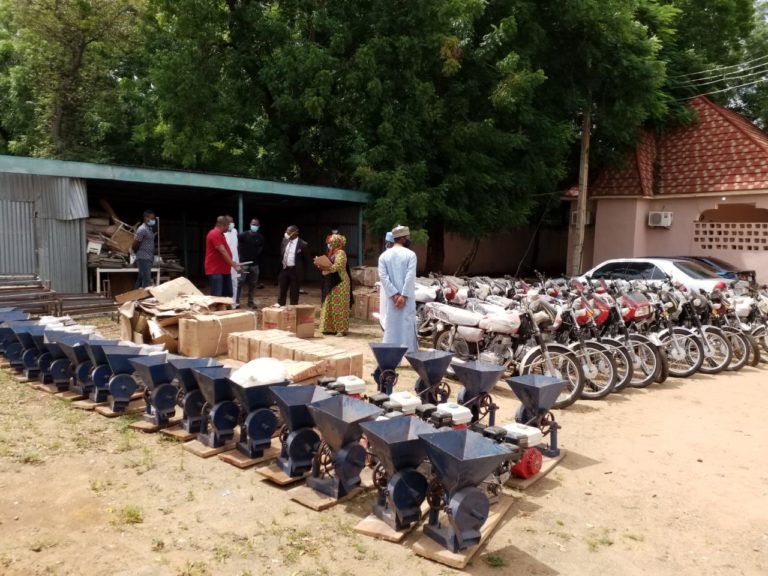
THE Economic and Financial Crimes Commission, (EFCC) says its Sokoto Zonal Office has handed over 39 motorcycles and other items meant for constituency empowerment recovered from a contractor to the National Directorate of Employment (NDE) in the state.

Wilson Uwujaren, Head of Media and Publicity, at the EFCC disclosed this in a statement issued on Thursday though without naming the contractor that diverted the items.

“They are diverted constituency empowerment items, recovered from a contractor with the Directorate,” he stated.


READ ALSO:

According to Uwujaren, the handed over items include 39 motorcycles (24 assembled and 15 unassembled), 22 grinding machines and 10 units of sewing machines.

EFCC hands over 39 motorcycles, others to NDE

He added that the items were handed over to the NDE for onward disbursement to the appropriate beneficiaries.

Bawa Usman Kaltungo, the Sokoto Zonal Head of the EFCC while handing over the items, described the development as a milestone in the fight against corruption, according to the statement.

While taking possession of the items on Wednesday, Eunice John Danmallam, the state coordinator, NDE Sokoto office, commended the commission for the recovery.

Danmallam added that the onward distribution of the items to constituents in Isa/Sabon Birni Federal Constituency of the state would be equitably done.

Ondo election: CDD urges INEC to ensure timely collation of results

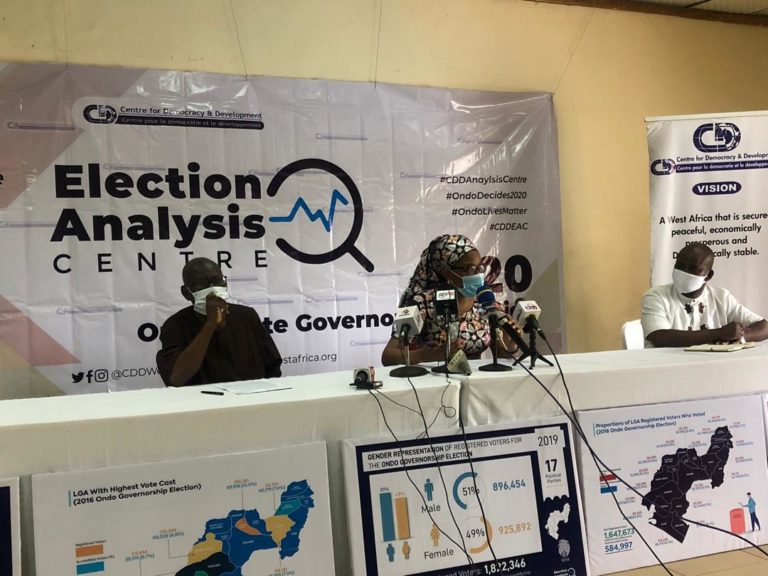
THE Centre for Democracy and Development (CDD), has urged the Independent National Electoral Commission (INEC) to ensure timely collation of results in the forthcoming October 10 governorship in Ondo State.

Idayat Hassan, Director of CDD, stated this on Thursday while speaking during the pre-election briefing held at Royal Birds Hotel in Akure.

Hassan noted that delayed results collation has been a recurring problem especially in riverine areas of the state.

She urged the INEC to ensure that its results viewing portal is capable of documenting results, especially from areas, which will pose a terrain problem.

The CDD boss further told the electoral body to carry out its duties as an unbiased umpire with a working strategy to mitigate the effect of partisan disposition of transport unions, including the National Union of Road Transport Workers (NURTW) and the Motorcyclists Association.

“The partisan posture of these unions could pose challenges, which may create credibility and logistics problems for the entire process. Incidentally, the NURTW is the body INEC relies on for the transportation of electoral materials. This may create a problem for INEC in the area of getting materials to all voting areas in the state. CDD calls on INEC to prepare backup plans just in case there is a system failure in its logistics deployment as a result of the partisan disposition of the transport union,” Hassan said.

Commending the effort of INEC, she tasked the Commission to reciprocate the level of confidence the people of Ondo have placed in it, adding that the electoral body should provide a level-playing field.

Hassan further praised the voters for focusing on promoting an issue-based campaign and displaying a high level of maturity in the process of the election so far, adding that the effort has prevented the spread of fake news and misinformation.

“CDD observation shows that the level of the spread of fake news and misinformation in the Ondo election has been relatively low when compared to recent governorship elections in Kogi, Bayelsa and Ondo State,” she said.

This positive trend is partly so because citizens are busy discussing issues of governance. CDD hopes the people of Ondo State will put those issues in perspective as they go to cast their ballot on October 10.”