Home Blog Page 232

Miles Morland Foundation offers writing grant

MILES Morland Foundation (MMF) is offering its writing scholarship, aiming to allow scholars the time to produce the first draft of a completed book.

Scholars writing fiction will receive a grant of GBP18,000 – paid monthly over 12 months. At the discretion of the foundation, scholars writing nonfiction who require additional research time could receive an additional grant, paid for up to 18 months.

African writers working on fiction and nonfiction books can apply for a scholarship.

To qualify for the scholarship, candidates must submit an excerpt from a piece of work of between 2,000 and 5,000 words, written in English, and that has been published and offered for sale.

The deadline for the application is September 22, 2025. Interested applicants can apply here.

How Buhari presidency was shadowed by foreign medical trips

NIGERIA was thrown into mourning on Sunday, July 13, following the death of former President Muhammadu Buhari at the age of 82.

The ICIR reported that the former President, who served as Nigeria’s military Head of State from December 1983 to August 1985 and as a two-term civilian president from May 2015 to May 2023, passed on in London, where he had been since April for what was described as a routine medical check-up.

Though the nature of his illness has yet to be made public, the development rekindled his history of extended medical trips abroad from May 2015 to May 2023 during his time as elected president.

The ICIR reports that Buhari’s regular medical trips to London was a trend that drew public criticism and sparked debates about the quality of healthcare in Nigeria. 

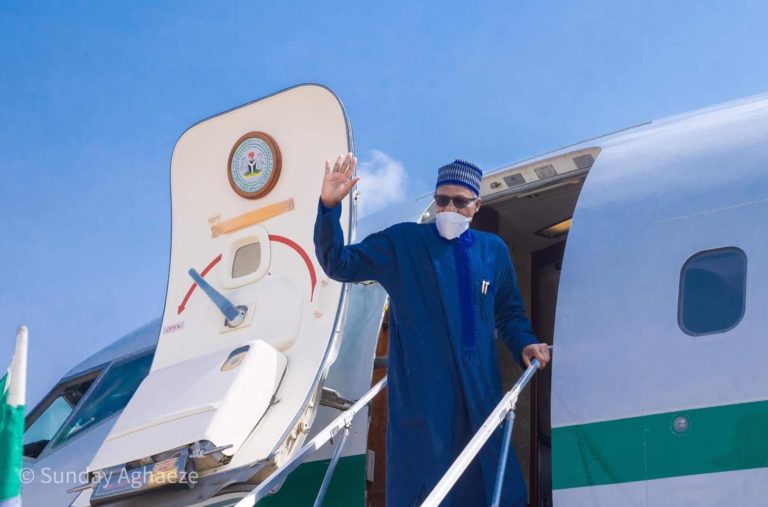
In February 2016, Buhari embarked on a six-day vacation to the United Kingdom. A few months later, in June, he returned to England for a 10-day medical trip to treat an ear infection. He later extended his stay by three days to recuperate.

Nigerians began questioning the appropriateness of the late president’s medical trips abroad, especially in light of the country’s struggling healthcare system and the recurrence of such trips.

Amid mounting criticism over the medical trips in 2016, the President’s Senior Special Assistant on Media and Publicity, Mallam Garba Shehu, published an opinion piece defending Buhari’s travels, insisting they were not for leisure.

In January 2017, Buhari returned to London for another medical vacation. The following month, he wrote to the National Assembly requesting an extension of his medical leave.

He returned to Abuja on March 10, 2017, after spending 50 days away.

In May 2017, the late leader again left for London on what became one of his longest medical vacations, spending 104 days before returning to Nigeria.

What followed was a wave of speculation and misinformation about his health, with some even claiming he had died and was replaced by a body double.

The President did not visit London later that year for another medical check-up until May 2018, when he spent four days for a “medical review.”

In late March 2021, he departed for London again for a “routine medical check-up” that lasted 15 days.

This time, the trip coincided with a healthcare crisis at home, as members of the Nigerian Association of Resident Doctors began an indefinite strike over unpaid allowances.

In March 2022, Buhari flew to London for another 12-day medical trip.

The President’s final medical trip to London before leaving office took place in October 2022 and lasted for about two weeks. He returned to Nigeria on November 13, 2022.

He left office on May 29, 2023, and retired to his hometown, Daura in Katsina State.

While sources said his health improved after he left office, it deteriorated again in April 2025.

He was in London for medical attention from April till his passing on Sunday, July 13.

The late leader was buried at his residence in his hometown of Daura, Katsina State, on Tuesday, July 15.

Nigeria oil production hits OPEC’s 1.5 million quota

0

NIGERIA’s average daily crude oil output in June slightly exceeded the Organisation of Petroleum Exporting Countries (OPEC) quota of 1.5 million barrels per day (bpd).

The latest monthly crude oil report released by OPEC on Tuesday, June 15, showed that Nigeria’s crude oil output rose to 1.505 million bpd in June from 1.453 million bpd in May.

This is the second time it has met its 1.5 million bpd quota this year. In January, Nigeria’s crude oil production rose to 1.54 million bpd, but dropped in the following months.

OPEC had, in November 2023, approved a daily production quota of 1.5 million bpd for Nigeria, but meeting that target has been eluding Nigeria, month on month.

According to the data, the crude oil production figure was based on direct communication received from Nigeria as a member of the OPEC body.

The ICIR can report that despite exceeding the OPEC quota in June, the country is far from meeting its crude oil production benchmark of over two million bpd set in the 2025 budget, a situation many analysts fear will make implementation unachievable.

Amid the crude oil production shortfall, Nigeria is set to push for a 25 per cent increase in its oil production quota by 2027.

The push for the new quota by the Nigerian National Petroleum Company Limited (NNPCL) is hinged on growth in refinery capacity and improved production.

Explaining the economic situation in the country, OPEC noted that private sector activity in Nigeria continued to expand in June, though at a slower pace, as indicated by a retraction in the Stanbic IBTC Bank Purchasing Managers’ Index (PMI) from 52.7 in May to 51.6.

“The slowdown was primarily due to weaker growth in the manufacturing sector, while other sectors maintained some momentum. Persistent challenges such as material shortages, delayed payments, and power supply issues led to a rise in backlogs for the third consecutive month, and employment levels remained largely unchanged.

“While consumer price inflation is trending downward, rising food costs and global volatility – including tariff concerns – are key risks,” the cartel stated.

As a result of the foregoing, OPEC projected that the Central Bank of Nigeria (CBN) is expected to keep the policy rate steady at 27.5 per cent at its upcoming July meeting scheduled for next week.

It further expressed worries that Nigeria’s external and fiscal accounts showed mixed trends.

“The current account surplus in 1Q25 [first quarter 2025] narrowed to $3.7 billion, falling short of market expectations despite a strong increase in the trade surplus. Weakness in the services account and lower transfer inflows contributed to this trend.

“The full-year current account surplus is now projected at 7.1% of GDP. On the fiscal side, Nigeria saw an improved deficit of 3.4% of GDP in 2024, helped by strong oil and tax revenues. However, continued government spending and optimistic assumptions underpinning the 2025 budget are likely to widen the deficit,” OPEC stated.

It added that the public debt climbed in the first quarter but is expected to remain at around 50 per cent of gross domestic product (GDP) this year.

Crude oil prices have moved steeply in response to Trump’s threat against Russia.

Following the persistent geopolitical risks and market fundamentals, on Tuesday, July 15, oil prices fell with Brent crude trading at $68.94 per barrel.

Brent crude had climbed to $70.53 on Monday before settling at $69.21 at the close.

At the same time, West Texas Intermediate (WTI) crude was priced at $66.39 per barrel.

Nigeria engages US, UAE over visa policy changes, assures citizens of protection abroad

0

THE Federal Government has responded to recent changes in visa policies for Nigerians by the United States (US) and the United Arab Emirates (UAE)

Recall that the USA recently introduced new visa rules for Nigerians, effective July 8, 2025, and said non-immigrant visas would be single-entry with a three-month validity period.

The country also said visas issued before July 8, 2025, would remain valid under their original terms.

The US Department of State cited visa reciprocity standards and security benchmarks as reasons for this decision, focusing on secure travel documents, visa overstay management, and information sharing to protect public safety.

The UAE, on its part, introduced tougher entry requirements for Nigerian travellers and said it would no longer accept applications for transit visas.

It added that applicants aged 18-45 travelling alone would no longer be eligible for tourist visas, and those above 45 must provide a single Nigerian personal bank statement with a minimum balance of $10,000 or its naira equivalent for the last six months.

Reacting to the decisions, the Nigerian government reaffirmed its commitment to maintaining and strengthening the longstanding and cordial diplomatic relations with the two countries.

In a statement by the Special Adviser to the President on Information & Strategy, Bayo Onanuga, President Bola Tinubu directed federal agencies to comply with international obligations and boost intergovernmental cooperation.

“The United States government has officially communicated that its decision was based on two principal factors: the current rate of visa overstays by Nigerian nationals and the need for reliable access to their records. It further explained that the visa policy adjustment is part of its global visa reciprocity process, which is routinely reviewed and subject to change, including the number of permitted entries and validity durations,” the statement said.

Regarding the new conditions for issuing UAE transit visas to Nigerian nationals, the Federal Government noted that it had not received any formal communication from the UAE authorities regarding a revised visa policy. However, it observed that visa issuance had been progressing without interruption.

Tinubu appreciated the continued cooperation of the government of the UAE.

He called on all Nigerians to respect the immigration regulations of their host countries and to uphold the integrity of the permits and privileges granted to them under the laws of those jurisdictions.

He added that his administration was working to address concerns through diplomatic channels, ensuring Nigerians could travel, work, and live with dignity and respect abroad.

Buhari buried at his favourite garden relaxation spot in Daura home

0

THE remains of the late former President Muhammadu Buhari have been laid to rest in his hometown of Daura, Kastina State.

The body was laid to rest at exactly 5.15 pm on Tuesday, July 15, after a short prayer by Muslim clerics at his house in Daura.

He was buried at his favourite garden relaxation spot – the exact place where he always rested on a chair.

The ICIR reported that Buhari died at the age of 82 in a London hospital on Sunday, July 13.

The former leader, who served as Nigeria’s military Head of State from December 1983 to August 1985 and as a two-term civilian president from May 2015 to May 2023, died after a protracted illness.

President Bola Tinubu received Buhari’s body at the Yar’Adua International Airport in Katsina on Tuesday, shortly before the burial. 

At the airport were former and current governors, ministers, National Assembly members, and other government officials.

The body of the late leader was accompanied to Nigeria from London by Vice President Kashim Shetima, Tinubu’s Chief of Staff, Femi Gbajabiamila, Buhari’s wife, Aisha Buhari, and other family members.

There was a short military parade at the airport to honour the former president, who was a retired general in the Nigerian Army.

Earlier on Monday, Shettima and Gbajabiamila arrived in London to receive the body of the late leader.

The burial on Tuesday, witnessed by Tinubu, Shettima, the Speaker of the House of Representatives, Tajudeen Abbas, and other dignitaries, had a 21-gun salute by the military.

The venue was also filled with a heavy military presence.

Many youth within Daura jumped over the fence of the late president’s home, while others climbed trees to have a glimpse of the burial.

The ICIR reported that Katsina State Governor Dikko Radda on Monday announced that the late president’s body would arrive in Nigeria on Tuesday for burial.

Pulitzer Centre offers grant for ocean, fishery reporting

THE Pulitzer Centre is seeking ambitious reporting proposals from freelance and staff journalists from around the world who wish to report on vital ocean and fisheries issues and are in need of support for their reporting projects.

Story ideas on illegal, unreported and unregulated fishing, including fisheries subsidies, overfishing and the depletion of fish stocks, impacts on small-scale fishers and livelihoods in coastal communities, as well as solutions-oriented stories, are encouraged.

This new initiative seeks to support enterprising journalists with ambitious reporting projects that will yield high-quality, in-depth journalism that exposes long-running fisheries problems and enables key stakeholders and a well-informed public to find solutions that lead to more legally and sustainably caught fish, supply chains free of forced labour, greater food security, and thriving coastal communities.

Through our support, we intend to develop a global cohort of journalists dedicated to surfacing vital underreported ocean and fisheries stories.

Freelance and staff journalists worldwide who wish to report on vital ocean and fisheries issues can apply for grants.

Proposals should include detailed distribution plans and letters of commitment from outlets where the stories will be published.

Interested applicants can apply here.

Remembering Buhari’s repeated death rumours and ‘Jibril of Sudan’ conspiracy

THE former President Muhammadu Buhari died on Sunday after an illness in London. However, this is not the first time he has been rumoured to have died.

One of the most bizarre and persistent conspiracy theories in Nigeria’s modern political history centres around Buhari’s identity itself — a rumour that once spread like wildfire across the country and even drew a response from the former President himself.

According to the now-infamous rumour, Buhari had died during a prolonged medical trip to London in 2017 and had been replaced by a body double, allegedly a Sudanese man named “Jibril,” the gave rise to the name “Jibril of Sudan” or different viarations of it.

Buhari served two terms as president of Nigeria. The first period was from 2015 to 2019, and the second period was from 2019 to 2023, this is excluding his time as military head of state in the 80’s.

Origins of the conspiracy

The conspiracy gained traction in 2017 during one of Buhari’s longest absences from public view. In January of that year, Buhari left Nigeria for medical treatment in the United Kingdom, handing over power temporarily to Vice President Yemi Osinbajo.

He remained in London for over 100 days, fueling anxiety about his health and a possible power vacuum at home.

While his aides insisted he was alive and recuperating, the length of his stay and the government’s tight control over updates stirred suspicion.

The absence of photos, videos, or substantial updates created a vacuum, and conspiracy theories began to fill the void.

Some Nigerians speculated about his death, while others took it further: claiming he had died and been replaced by a clone or lookalike.

By late 2017, a name had emerged, “Jibril from Sudan”, allegedly the man impersonating Buhari.

The theory postulated that a cabal in Aso Rock, desperate to retain control of the presidency, had smuggled in a double to replace the ailing or deceased president.

The story spread on WhatsApp, Facebook, YouTube, and Twitter, bolstered by dubious “evidence,” including supposed differences in Buhari’s handwriting, changes in his earlobe shape, and inconsistencies in his spoken Hausa.

The earliest mention of the claim of an imposter was in a Twitter post by user @sam_ezeh on September 3, 2017, which showed Nnamdi Kanu, the leader of the Indigenous People of Biafra (IPOB), telling his followers that Buhari had died.

“The man you are looking at on the television is not Buhari… His name is Jubril, he’s from Sudan. After extensive surgery, they brought him back,” he said. Kanu has separately referred to the supposed lookalike as “Jubril Al-Sudani”. Others have called him “Jibrin”. Neither Kanu nor the others making the claim provided any credible evidence.

The rumour was fueled by the real-life death of a Nigerian diplomat in the Sudanese capital, Khartoum in May 2018. There were allegations that the diplomat was deliberately killed due to his involvement in the supposed cover-up about Buhari.

Prominent public figures, including former ministers and aides, repeated the rumour. Reno Omokri, a former aide to President Goodluck Jonathan, and Femi Fani-Kayode, a former minister under President Olusegun Obasanjo, both amplified the claims.

Eric Joyce who claims to be from Scotland and claimed to have campaigned for President Buhari, tweeted a condolence message to the President’s wife, Aisha Buhari, and further remarked that a new president would be confirmed in a day or two to replace the departed Buhari. “The Acting President, I guess. He’ll be confirmed in a day or two,” he wrote.

The claim gained so much traction that it prompted an official response from the President during a town hall event in Poland in December 2018. Standing before a crowd of Nigerians living abroad, Buhari addressed the rumour head-on:

“It’s the real me, I assure you. I will soon celebrate my 76th birthday and I will still go strong,” he said, brushing off the claims with a chuckle. “A lot of people hoped I died during my ill-health. Some even reached out to the Vice President.”

That public denial did little to stem the tide of misinformation. For many Nigerians, especially those disillusioned with the state of governance, the rumour was both a metaphor and a coping mechanism – a way to make sense of an increasingly dysfunctional system where transparency was scarce, and the leadership seemed distant, opaque, and unaccountable.

Buhari’s questionable health status

Fueling these persistent rumours about Buhari’s death at the time was a genuine, yet largely unaddressed concern: his fragile health.

Throughout his presidency, Buhari’s tenure was marked by repeated medical trips to the United Kingdom, many of which were shrouded in secrecy and never fully explained. Between 2015 and 2021 alone, he spent over 200 days abroad receiving medical treatment.

The President’s first official medical trip came on February 5, 2016, just eight months after assuming office. He spent five days in London. Four months later, on June 6, 2016, he returned to the UK for another 10 days to treat an undisclosed ear infection, extending his stay by three more days before finally returning to Abuja on June 19.

Then came one of his most controversial absences. On January 19, 2017, Buhari informed the Senate, led by Bukola Saraki, that he would be embarking on a 10-day medical vacation in London and would hand over power to Vice President Yemi Osinbajo. Though the leave was scheduled to begin on January 23, he departed the same day he sent the letter. He didn’t return until after 49 days away.

Just two months later, in May 2017, Buhari once again flew to London—this time for what would become his longest medical absence, lasting 104 days. Nigerians were not told the nature of his illness. Instead, they were simply urged to “pray for the President.” The lack of transparency sparked intense speculation, misinformation, and wild rumours including claims that Buhari had died and been replaced by a body double from Sudan.

Whatever treatment he received appeared to yield some relief, as he didn’t return to London for another medical check-up until May 2018, when he spent four days on what was described as a “medical review.”

But the trips resumed. In March 2021, amid a national health sector crisis and a strike by resident doctors protesting unpaid allowances, Buhari again departed for London. This time, the trip was described as a “routine medical check-up” and lasted 15 days.

On March 6, 2022, Buhari was once again airborne, leaving for a 12-day medical trip to London, shortly after attending the United Nations Environmental Programme in Nairobi, Kenya. Later that year, on October 31, he flew from Owerri, Imo State, to London for yet another medical check-up that lasted about two weeks. He returned to Nigeria on November 13, 2022.

Throughout these trips, Buhari’s media aides consistently defended the President’s decision to seek medical care abroad.

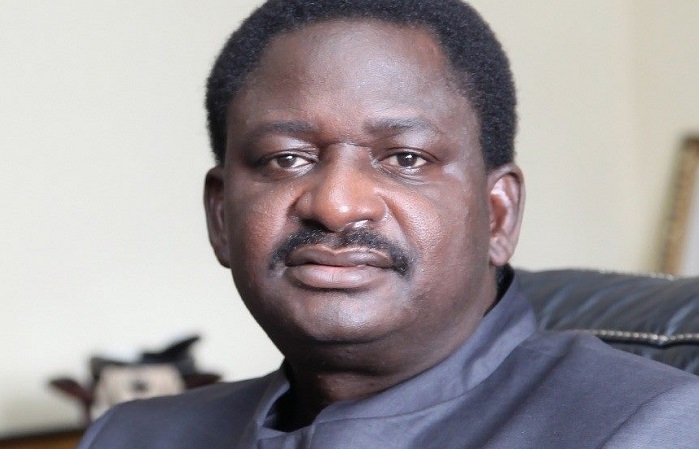
Presidential spokesman Femi Adesina often cited Buhari’s long-standing relationship of over 40 years with his UK-based medical team as justification. According to him, sticking with the team familiar with Buhari’s medical history was not just logical, but necessary.

Each time Buhari left the country, public anxiety surged, and the rumours followed. The silence surrounding his condition only widened the gap between the presidency and the people. In a nation grappling with a broken healthcare system, the image of its leader repeatedly flying abroad for treatment was not just frustrating—it was deeply symbolic.

Moreover, the presidency’s habit of shielding Buhari from the public during his absences, instead of offering clear, transparent updates, left fertile ground for conspiracy theories to grow. In the absence of facts, misinformation continues to thrive.

A man who ‘died’ many times

Until his passing, misinformation surfaced multiple times about his death. Social media platforms, particularly WhatsApp, enabled the claims to evolve and gain traction.

Pseudo-documentaries, doctored images, and deepfakes surfaced to support the claim. Even after multiple fact-checks by reputable organisations debunked the theory, it remained remarkably resilient.

In October 2022, for instance, a video posted on Facebook accused Nigerian vice president Yemi Osinbajo of betraying Christians by failing to announce president Muhammadu Buhari’s “death” and expose “the person in Aso Rock”.

“Buhari is dead. We are just being duped, #endfakebuhari,” the video’s caption read. It was shared multiple times.

The video’s narrator claimed that Buhari died long ago but was replaced by a lookalike named “Maj-Gen Jubril El-Sudani El-Okene”. It showed a screenshot of a Twitter profile with the same name.

The disinformation didn’t disappear even after he left the office. Claims surfaced on Facebook in 2024 that his wife Aisha, said he died in 2017 while on a medical trip to the UK.

One of the posts reads, in part: “My real husband Buhari, died in 2017 in the UK before a Sudanese man who mimics people’s characters was paid and clown to act like my late husband – Aisha Buhari Former First Lady of Nigeria opened up.”

How the claim is found to be false.

Just a few weeks before his death, FactCheckHub reported how many social media users posted a misleading video claiming it depicts the burial rites of the former president.

This followed earlier reports that emerged, which indicated that he was critically ill and had been admitted to the Intensive Care Unit. However, Bashir Ahmad, who was a digital media aide to the former President, refuted the claim.

The FactCheckHub analysed keyframes from the video using Google Reverse Image Search, the result shows that the video depicts the funeral of Safara’u Umar Radda, mother of Katsina State Governor, Dikko Umaru Radda, who was buried on Sunday, March 23, 2025.

Prolonged absences, frequent medical trips abroad, and the government’s lack of transparency created an information vacuum. In that vacuum, speculation thrived. With little official clarity, even the most implausible claims began to seem plausible to some.

This report is republished from FactCheckHub

Nigeria lacks expertise, infrastructure to cater to Buhari’s health – Adesina

0

FEMI Adesina, Former Special Adviser on Media and Publicity to the late President Muhammadu Buhari, has defended his former principal’s frequent medical trips abroad.

He said Buhari “could have long been dead” had he relied on Nigeria’s healthcare system.

Speaking during an interview on Channels Television, Tuesday morning, Adesina said Buhari’s decision to seek medical care in London was rooted in a need for survival before pursuing a reform.

He said this while defending the renewed scrutiny over the state of Nigeria’s public health infrastructure and Buhari’s failure to turn the sector around when he was president.

“Like I said, he always had his medicals in London, even when he was not in office, so it was not only about the time he was president. He had always had them in London,” Adesina said.

“And then, you have to be alive first to get certain things changed or corrected in your country.

“If he had said, ‘I would do my medicals in Nigeria,’ just as a show-off or something, he could have long been dead because there might not have been the expertise needed in the country,” he said.

Adesina’s remarks came amid ongoing criticism surrounding Buhari’s death in a foreign hospital. The former president passed away in London on Sunday, July 13, at the age of 82 after a prolonged illness. 

The ICIR recalls that Buhari had faced years of public backlash for routinely seeking medical treatment abroad. Throughout his presidency, he had frequently travelled to London for medical treatment. 

Particularly, during his first time as civilian leader, from 2016 to 2018, he spent extended periods in London for undisclosed medical treatment, fuelling speculation about his health and capacity to govern. 

Many argued that such trips were a symbol of his administration’s lack of confidence in Nigerian hospitals, even as millions of Nigerians continued to endure poor access to basic healthcare.

But Adesina insisted that Buhari’s medical trips were necessary for him to lead the country through reforms.

“But he needed to be alive to lead the country to a point where we would have that expertise.

“Those who talk of going abroad don’t realise that a man needs to be alive first before he can effect change,” he added.

The ICIR reported in 2017 that between 2007 and 2017, over N9.14 billion was budgeted for the State House Clinic, which the president and other top government officials could use. 

However, the facility was poorly equipped, with Buhari’s wife, Aisha, publicly complaining that it lacked basic supplies such as syringes and paracetamol.

That same year, Zahra Buhari, daughter of the late president, purportedly criticised the State Clinic’s condition, accusing its management of failing to justify its N331.7 million budget.

The revelations came even as Buhari was frequently out of the country for medical attention.

Despite the over N3.1 billion allocated to the State House Clinic in 2016 and 2017, more than what many federal teaching hospitals reportedly received, the facility failed to serve even its core users. 

In 2016, just a year after taking office, Buhari left for a 10-day medical trip to London to treat an ear infection. He would go on to spend over 100 days abroad in 2017 alone, drawing public outrage.

Police nab ‘lovers’ in Plateau after allegedly killing Chinese in Ogun

0

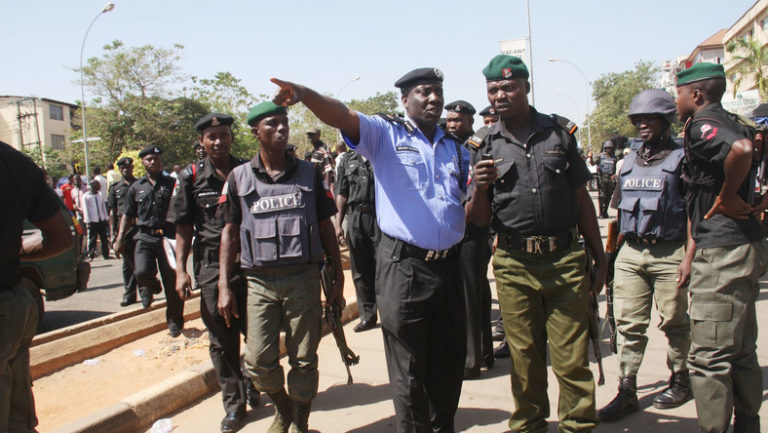
THE Nigeria Police Force (NPF) has arrested two suspects in connection with the murder of a Chinese, Chen Wang, in Ogun State.

Wang worked with WH Great Resource Ltd., Ogere, Ogun State, before he was murdered.

According to a police statement released on Tuesday, July 15, signed by the Force spokesperson, Muyiwa Adejobi, the arrest was made following a coordinated, intelligence-driven operation.

The police said the incident, which occurred on January 12, 2025, drew immediate attention when the Ogun State Police Command received a distress call regarding the discovery of Wang’s lifeless body within his office premises.

According to the police, preliminary findings revealed that the deceased suffered fatal stab wounds to his chest.

“Police Force Technical Intelligence Unit (TIU) was promptly mobilised to provide high-level operational and technological support to the Ogun State Criminal Investigation Department (SCID), Eleweran.

“Investigations uncovered that two factory workers suspected to be in a romantic relationship took advantage of reduced staffing on the day of the incident. While on overtime duty, they allegedly disabled the company’s security system, unlawfully accessed Mr. Wang’s office, and committed the fatal attack,” the police stated.

The police said the victims subsequently stole the keys to the victim’s residence and later burgled his home before fleeing the state with stolen cash.

The police added that following weeks of technical surveillance and tactical coordination, operatives of the Force Headquarters, working closely with SCID detectives, tracked and apprehended the suspects identified as Yunusa Abdullahi, male, 25, from Borno State, and Peace Keno Danlami, female, 20, from Taraba State, on July 14, 2025, in Jos, Plateau State.

The police said the suspects were arrested where they had been hiding under false identities.

The swift deployment of digital forensics, biometric analysis, and human intelligence by the police played a decisive role in bringing the perpetrators to justice, the police stated.

They confirmed that the suspects were in custody and would be arraigned in court upon the conclusion of investigations.

WATCH: Nigerians respond to “How will you remember late President Muhammadu Buhari?”

0

THE death of former President Muhammadu Buhari has sparked a wave of reactions across Nigeria. As the nation reflects on his legacy from his time as a military ruler to his two-term civilian presidency opinions remain mixed.

To capture the mood on the streets, The ICIR Eyes On the Street, asked Nigerians a simple but telling question: “How will you remember President Muhammadu Buhari?”

In this vox pop, citizens share their candid thoughts on the man who shaped Nigeria’s recent history for better or worse.

WATCH the video below to hear their responses.