Home Blog Page 2649

‘Rice importation will stop in 2018’ — 7 things we learnt from Buhari’s New Year message

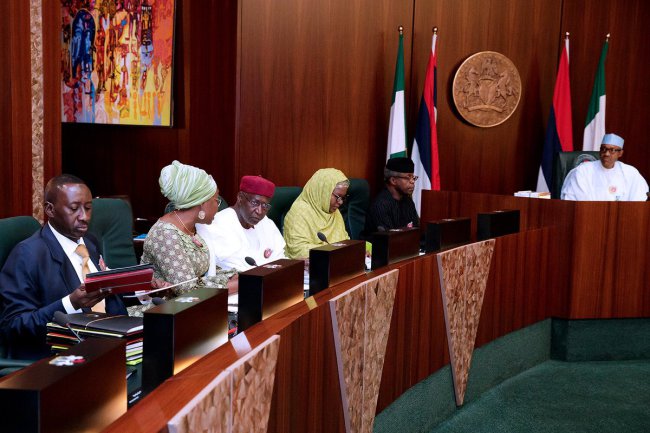
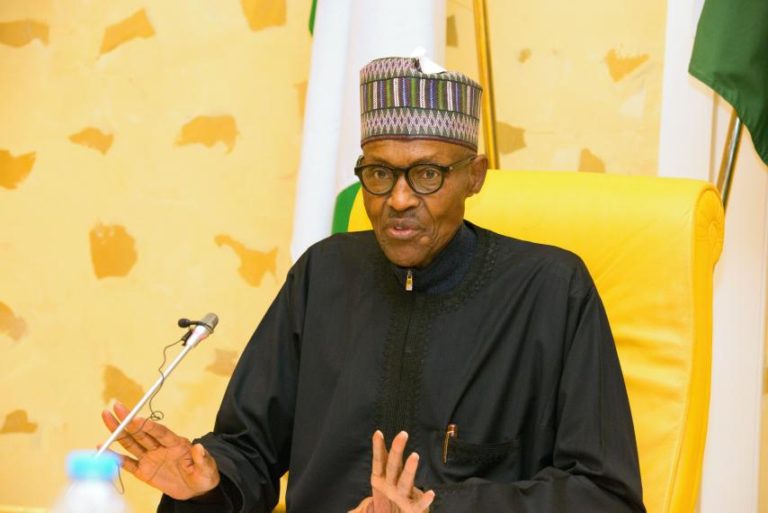
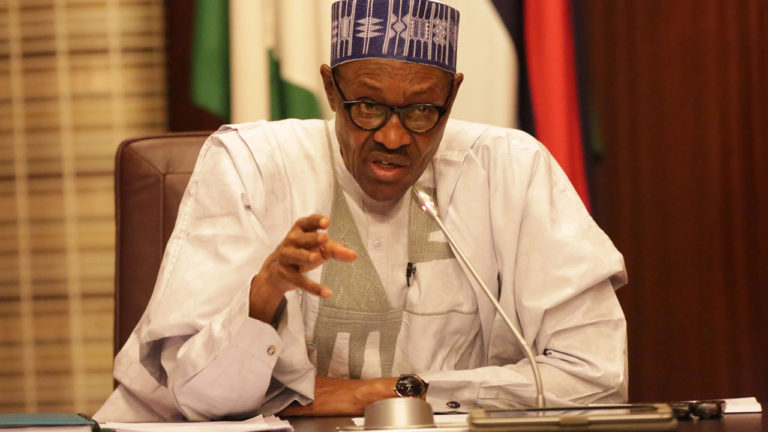
President Muhammadu Buhari kicked off the New Year with an address Nigerians, which is already eliciting mixed reactions among the citizenry.

Here are seven key things the President said in the message.

THOSE BEHIND FUEL SCARCITY WILL NOT GO UNPUNISHED

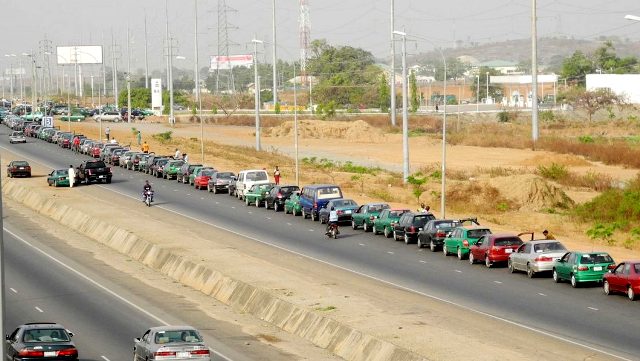
The President expressed sadness with fuel scarcity that marred the Christmas and New Year Celebrations for most Nigerians.

But he promised to get to the root to ensure that such does not again.

“I am saddened to acknowledge that for many this Christmas and New Year holidays have been anything but merry and happy.

“Instead of showing love, companionship and charity, some of our compatriots chose this period to inflict severe hardship on us all by creating unnecessary fuel scarcity across the country.

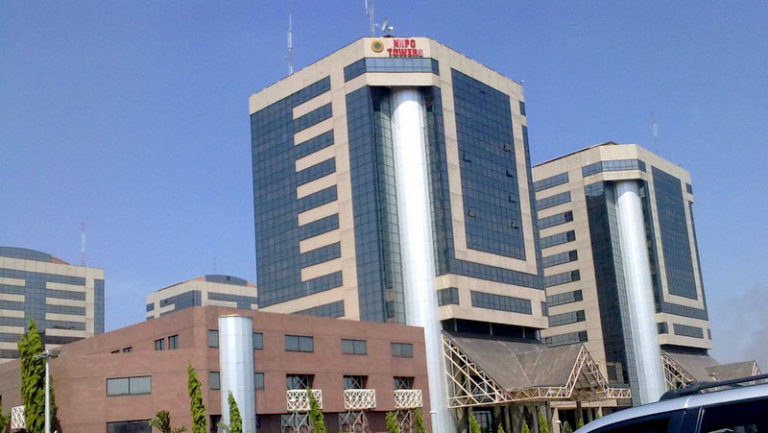
“The consequence was that not many could travel and the few who did had to pay exorbitant transport fares. This is unacceptable given that NNPC had taken measures to ensure availability at all depots. I am determined to get to the root of this collective blackmail of all Nigerians and ensure that whichever groups are behind this manipulated hardship will be prevented from doing so again.

Such unpatriotism will not divert the Administration from the course we have set ourselves. Our government’s watch word and policy thrust is CHANGE. We must change our way of doing things or we will stagnate and be left behind in the race to lift our people out of poverty and into prosperity,” he said

BUHARI’S EYES ARE ON RAIL PROJECTS

President Buhari revealed efforts of his administration to build infrastructure across the country.  He said the administration would work to connect the whole country with rail by the end of 2019.

He said: “With regards to railways, we have set ourselves ambitious targets. Already in construction stage is the Lagos-Kano Standard Gauge Railway.

“The line should reach Ibadan from Lagos by the end of 2019 and will carry two million passengers per year and five million tons of cargo will be transported every year giving a substantial boost to the country’s economy.

“Construction of the Kano-Kaduna segment is expected to commence this year and reach Kaduna by the end of 2019. By the end of 2021 the two ends will be joined so that we will have standard gauge railway across the main North-South trading route.

“The Abuja-Kaduna route will be boosted by additional rolling stock next Thursday and will be able to handle one million commuters annually.

“At the same time I have approved and negotiations will be concluded in the first part of this year for the Port Harcourt to Maiduguri line covering Aba, Owerri, Umuahia, Enugu, Awka, Abakaliki, Makurdi, Lafia, Jos, Bauchi, Gombe, Yola and Damaturu.  The Abuja to Itakpe line will go through Baro and terminate in Warri with construction of a new seaport at Warri.

“Negotiations are also advanced for the construction of other railway lines, firstly from Kano to Maradi in Niger Republic passing through Kazaure, Daura, Katsina, Jibia to Maradi.

“Secondly, Lagos to Calabar the “Coastal Rail”  through Ore, Benin, Agbor, Asaba, Onitsha, Sapele, Ughelli, Warri, Yenagoa, Otuoke, Port Harcourt, Aba, Uyo and Calabar.  In the next few years, all these Nigerian cities will be linked by functional modern rail systems, giving enormous boost to the social and economic life of our people.

“With respect to the Abuja Capital Light Rail, progress has reached 98% completion, as at 64% completion when we assumed office.  Only test runs remain before start of operations.

“This train service will stimulate economic activities in the Federal Capital and provide residents with an efficient and safe transportation system.  Twelve railway sub-stations around the capital over a 45.2 kilometre route will serve as a catalyst and a pull factor to the economy of the area.  The Light Rail System will reduce traffic congestion and carbon emission in line with the Administration’s policy on climate change.”

N100BN SUKUK FACILITY TO FUND 25 MAJOR HIGHWAYS

President Buhari said 25 major highways will be funded under the N100bn SUKUK facility. Each geo-political zone will benefit by an equal amount of N16.67bn. The following major highways are to receive special attention:  Oyo-Ogbomosho,  Ofus- Ore-Ajebandele-Shagamu, Yenagoa Road Junction-Kolo Otuoke-Bayelsa Palm,  Enugu-Port Harcourt Dual Carriage Way,  Onitsha-Enugu Expressway, Kaduna Eastern Bypass,  Dualization of Kano -Maiduguri Road,  Dualization of Abuja-Lokoja-Benin Road,  Dualization of Suleja-Minna Road.

He adds that the management of the Federal Road Maintenance Agency (FERMA) has been reconstituted and has been charged with a 12 week rapid intervention in road repairs to cover all the geo-political zones.

“Government is undertaking repairs and maintenance of 44 roads within the six geo-political zones.

“In addition, Government has approved work to start on the re-construction of Abuja-Kaduna-Zaria-Kano Road which is in a state of disrepair. Work will soon start and is expected to be completed in 2019.”

7000MW, BUT POWER STILL A CONCERN

The President disclosed that more Nigerians are experiencing improved power supply to their homes and businesses, but he also admitted that “power remains a concern to this government because too many people still do not have regular and reliable supply”.

The Payment Assurance Guarantee Scheme, which started in January 2016, has enabled the Nigerian Bulk Electricity Trader to raise so far N701 billion to assure Generation Companies of at least 80% payment for any power delivered to the national grid.

Consequently, generation has now reached 7,000MW. On December 8, 2017 the country achieved 5,155MW of power delivered to consumers, the highest level ever recorded.

“Several moribund projects have been revived.  Repairs of Afam Power Station added 110MW in 2017 and another 240MW will be added this year through a private investment partnership.

“Katsina Power Project is now being tested and producing 10MW of power from wind for the first time in Nigeria.  It should be fully operational this year.

“The Zungeru 700MW Hydroelectric Power Project, stalled by court cases is due for completion in 2019.  The transmission and other requirements to operate the 30MW Gurara Phase 1 Hydroelectric Plant, the 40MW Kashimbilla Hydroelectric Plant and the 215 MW Kaduna Gas/LPG/Diesel Power Plant will also be completed this year.

“A landmark project, Mambilla Hydroelectric Power Project is at last taking off.  This project has been on the drawing Board for 40 years, but now the engineering, procurement and construction contract for the 3,050MW project has been agreed with a Chinese joint venture Company with a financing commitment from the government of China.  Completion is targeted for 2023.

“As I mentioned earlier, the Transmission Company of Nigeria can now distribute all the 7,000MW that can be generated.  TCN and the Niger Delta Holding Company have added 1,950MVA of 330 down to 132KV transformer capacity of 10 transmission stations and 2,930MVA of 132 down to 33KV transformer capacity of 42 sub-stations including Ikot Ekpene, Aba, Alagbon, Ajah, Ejigbo, Funtua and Zaria.”

RICE IMPORTATION WILL STOP IN 2018

Buhari said his administration was slowly stabilizing the economy. He noted that diversification efforts had resulted in improved output, particularly in agriculture and solid minerals sectors.

“Two years ago I appealed to people to go back to the land. I am highly gratified that agriculture has picked up, contributing to the government’s effort to restructure the economy. Rice imports will stop this year. Local rice, fresher and more nutritious will be on our dishes from now on,” he said.

OUR PROBLEMS ARE WITH PROCESS, NOT STRUCTURE

Speaking on agitations for the restructuring of the country, the President said he had “kept a close watch on the ongoing debate about restructuring. He argued that Nigerians must give a long period of trial and improvement before ‘the system we have adopted is anywhere near fit for purpose’.

“No human law or edifice is perfect. Whatever structure we develop must periodically be perfected according to changing circumstances and the country’s socio-economic developments. We Nigerians can be very impatient and want to improve our conditions faster than may be possible considering our resources and capabilities. When all the aggregates of nationwide opinions are considered, my firm view is that our problems are more to do with process than structure.

“We tried the Parliamentary system: we jettisoned it. Now there are shrill cries for a return to the Parliamentary structure. In older democracies, these systems took centuries to evolve so we cannot expect a copied system to fit neatly our purposes. We must give a long period of trial and improvement before the system we have adopted is anywhere near fit for purpose.

“However, there is a strong case for a closer look at the cost of government and for the public services long used to extravagance, waste and corruption to change for the better. I assure you that government is ever receptive to ideas which will improve governance and contribute to the country’s peace and stability.”

BOKO HARAM DEFEATED ‘SINCE’

The President insisted that Boko Haram terrorists had been defeated, noting that terrorism and urban crimes are world-wide phenomena.

“Before I conclude my address I must reassure my fellow citizens that security of life and property is still top of our government’s agenda. We have since beaten Boko Haram. Isolated attacks still occur, but even the best-policed countries cannot prevent determined criminals from committing terrible acts of terror as we have seen during the past years in Europe, Asia, Middle East, elsewhere in Africa and in America,” he said.

“Our government remains determined to protect all Nigerians in line with our election pledge and promises. On behalf of all Nigerians let me offer our thanks to the Armed forces, the Police, other para-military forces and traditional authorities who are working round the clock to ensure that you and I go about our normal business in reasonable safety.

“Terrorism and urban crimes are world-wide phenomena and our security forces are continuously adapting their responses to changing threats.”
What Nigeria will look like in 2018

0


On the first day of 2018, as it is with every new year, the temptation is to dream big — to fantasise about sudden turnarounds of poverty to wealth, sadness to happiness, suffering to delirium. It’s a time when self-appointed men of God, latching on to the propensity of the people to romanticise the future, declare all good and no bad on the nation. This is a clear-cut warning: as far as expectations of a people from the government go, 2018 will be a worse year than 2017 — possibly the worst in recent years. The government has done enough in 2017 to offer us a glimpse of what to expect in 2018. There will be no surprises. No one needs to be clairvoyant to see this.

Government is a continuum not just in terms of faithfulness to policies in the face of changing governing personnel, but also in the performance of a government from year to year. Technically, the only New Year’s Day in the life of any government is its ascension to power or its consolidation (in the form of re-election). Therefore, expect this government to begin the 2018 exactly, if not worse than, the way it ended 2017. And how did the Muhammadu Buhari administration end 2017? Scandalously!

This government saved arguably the biggest embarrassment of its tenure for the last days of the year, naming eight dead people among the 1,457 appointed to the boards of scores of government and public institutions. Not only that, some names were duplicated on the list, while the government still managed to name four to the board of the National Iron Ore Mining Company (NIOMCO), Itakpe, Kogi State — a company it privatised through concession back in 2016! This was an appointment that should have been made in 2015; two years on, it was still bungled. Therefore, in 2018, don’t expect a government that is suddenly tidy; it will continue to be tardy in the execution of the people’s mandate.

In 2018, expect a government that doesn’t take responsibility — so long we have a Garba Shehu who defends the ‘ghost appointments’ by saying; “There is nothing scandalous or extraordinary about what has happened. This list is a historical list. It dates back to 2015.” His current statement is an inkling of future statements. So, expect, in 2018, a government that blames the country’s problems on everyone else but itself.

In 2018, expect more job losses. This is no doomsday prophecy. In any case, I haven’t said anything new. According to the National Bureau of Statistics (NBS), The unemployment rate, induced by a recession, typically peaks about 15 to 18 months after the beginning of a recession or four to eight months after the end of a recession before it returns to its pre-recession trend.” It was in September 2017 that Nigeria officially exited the economic recession it entered in August 2016. “Four to eight months” from September spills into 2018; the job cuts that accompanied the recession won’t suddenly disappear on January 1, 2018.

A change of dates doesn’t automatically spell the end of the ongoing fuel scarcity. Both government and the marketers have been coy about the hard decisions that have to be taken. It is either pump price of fuel is raised to at least N171/litre or government pays a subsidy of roughly N26/litre to retain the current price. But as it stands, government doesn’t want to pay subsidy on petrol, and marketers are averse to importing for sale at N145/litre. NNPC typically imports only 20% of the country’s petrol consumption; there’s no chance it can suddenly cope with the burden of sole importation. How wrong therefore, it is to misconstrue the current fuel shortage for a Yuletide affair! Unless the outstanding questions are answered, it’s new year, renewed fuel crisis!

Finally, expect a year when the wheels of governance grind at the very slowest. It’s election year! In his first year in office, Buhari waited six months before appointing his ministers. That delay still hurts his administration till date, as it left investors scared of Nigeria and engaging in guesswork about the policy directions of the country, and is partly to blame for the fuel scarcity of September to December 2015. This year, with a grueling electioneering to come, expect a litany of delayed appointments. Expect the budget to suffer its worst implementation level since Buhari’s ascendancy to power. The 21percent implementation of the capital component of the 2017 budget is the lowest in five years; no one needs a soothsayer to know that the ignominious record will be shattered in 2018. The executive will be too busy seeking re-election to oversee substantial budget implementation.

How many important events happened in 2017 that Buhari was unaware of? Abdulrasheed Maina’s recall, the Ibe Kachikwu-Maikanti Baru feud, the fuel scarcity? Expect many more in 2018, because his health will be stretched by the hectic campaign schedule, and you can be sure that governance — not the campaign — will be the sacrificial lamb.

In short, the masses will not experience significant upgrade in their standard of living this new year. Instead, it will plummet. But the good news — the only one in a gloomy 2018 outlook for the country — is that the socioeconomic advancement of the people is not wholly in the care of government. There will be individual success stories. Nigerians must know, in 2018, that they can succeed in spite of the underwhelming federal leadership. To continue hoping against hope for the hurriedly-promised change is to set oneself up for heartbreak at the end of the new year. In 2018, Nigerians can succeed — but they will have to do it without their government!

Soyombo, Editor of the International Centre for Investigative Reporting (ICIR), tweets @fisayosoyombo

We’re not asleep, Oyegun says in APC’s New Year message to Nigerians


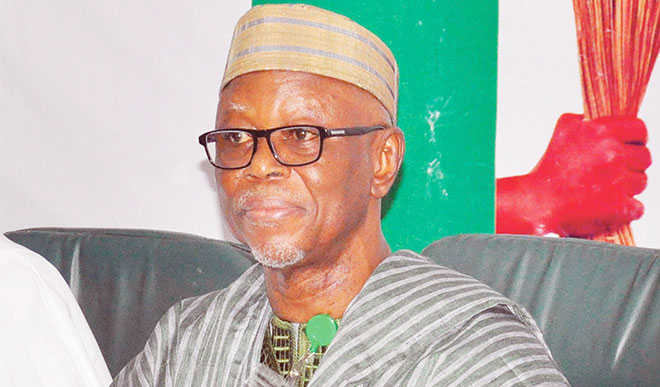
John Odigie-Oyegun, National Chairman of the All Progressives Congress (APC), says the Federal Government is not asleep, but working assiduously to address these challenges and meet the expectations of Nigerians.

He urged Nigerians to collectively look to the New Year 2018 with renewed optimism and vigour.

“2017 was indeed an eventful, yet challenging one for many Nigerians. We thank Nigerians for their continuous support and prayers for the President Muhammadu Buhari administration and indeed the Party… Brighter days are ahead of us,”Oyegun said in a New Year message to Nigerians.

In the message titled: ‘New Year: Let’s Build a New Nigeria Together’, Oyegun said the collective task before every Nigerian is how to convert the country’s potential to greatness.

THE MESSAGE IN FULL

Our great Party, the All Progressives Congress (APC) welcomes all Nigerians to the 2018 New Year.

[The year] 2017 was indeed an eventful, yet challenging one for many Nigerians. We thank Nigerians for their continuous support and prayers for the President Muhammadu Buhari administration and indeed the Party. We urge Nigerians to collectively look to the New Year 2018 with renewed optimism and vigour. Brighter days are ahead of us.

 Indeed, the collective task before us is converting our country’s potential – derived from size, demography, human, and natural resources – to greatness. While the task may seem onerous, it is achievable. With the right ethics, morality, attitudes and priorities, we will get out of our current societal morass that has found expression in our economic challenges, bad politics, ethno-religious divisions and other negative aspects of our national life, sooner than sceptics believe is possible.

 We are acutely aware of our current national challenges, particularly on the economy. However, we assure Nigerians that the administration is not asleep, but working assiduously to address these challenges and meet the expectations of Nigerians. We remain focused and solidly committed to delivering on our Party’s 2015 election promises which were largely hinged on curbing corruption, restoring the economy and the security of the nation.

 Happily, the President Buhari administration is making good progress and already delivering on many front such as restoring our country to its deserved standing among the comity of progressive nations; fighting corruption and repairing our value system; diversifying our economic revenue base, creating jobs and economic opportunities for Nigerians; bringing succor to the insurgency-ravaged North-East; reforming the oil, defence, pensions, and other critical sectors; creating a world-class transport system, among others.

 We can only downplay the ramifications of corruption at our peril. Corruption has for long enabled its perpetrators to divert resources for delivering development to the citizenry and as a result bred discontent, which religious bigots and ethnic jingoists take advantage of to create insecurity and other societal malaise. Therefore, the solution is the enthronement and entrenchment of quality and accountable leadership in governance.

 We should continue to support the administration’s development efforts for the country. The Economic Recovery and Growth Plan (ERGP) should be supported by all as a basis for realizing social inclusion objectives, such as employment generation and eradication of poverty and inequality. Such safety net initiatives as the Home Grown School Feeding Programme, conditional cash transfer scheme and N-Power will guarantee that the poor and vulnerable directly benefit from economic development.

 Let us join in the effort to build a more vibrant nation that every Nigerian will be proud of. Let us join and support the President Muhammadu Buhari-led APC administration in the ongoing of task of building a new Nigeria for our progress, peace, unity and prosperity.

 Once again, our great Party sends warmest greetings to all Nigerians on the occasion of the 2018 New Year.


We shall hold government accountable in 2018, says Wabba


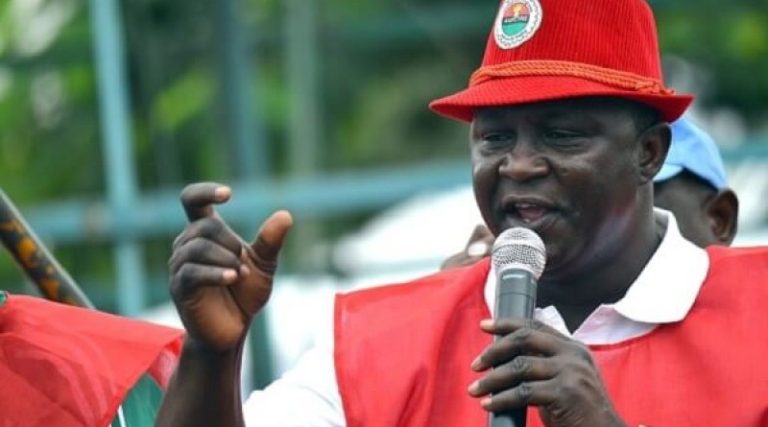
Ayuba Wabba, President of Nigeria Labour Congress (NLC), has said that the Congress would not fail to hold government accountable in the New Year.

In his New Year message to Nigerian workers, Wabba commended them for their resilience in surviving and pulling through the year 2017, which he noted proved to be one of the most difficult for most Nigerians in recent history.

The out-gone year, he said, saw working people, pensioners and other Nigerians face series of daunting socio-economic and security challenges.

Wabba spoke on the socio-economic situation in the country, unpaid workers’ salaries, fuel scarcity, war against corruption among other issues.

The statement read in full

On behalf of the National Executive Council of the Nigeria Labour Congress, I wish to congratulate Nigerian working people and pensioners for their resilience in surviving and pulling through the year 2017, which proved to be one of the most difficult for most Nigerians in recent history.

 The previous year saw the working people, pensioners and other Nigerians facing series of daunting socio-economic and security challenges, even though we had hoped that the year would offer succour for the masses of the people.

 SOCIO-ECONOMIC SITUATION OF WORKERS

 The deplorable economic situation in the outgone year is aptly captured by the statistics recently released by the National Bureau of Statistics (NBS) which indicated that over 4 million Nigerians lost their jobs in 2017. Against the background of the campaign promise of the ruling All Progressives Congress (APC) government to create three million jobs annually, this statistics from the NBS underscores the grave and depressing situation of the Nigerian economic landscape in 2017.

Rather than work to create jobs and improve the condition of Nigerian working people and Nigerians in general, leading elements in the ruling APC government, like Governor Nasir el-Rufai, have been taking measures to further chastise and ruin Nigerians by throwing tens of thousands of workers into the already saturated unemployment market and wretchedness.

In the same vein, despite the huge revenue that the states have received through the Federal Government intervention funds to clear arrears of unpaid salaries and pensions in many states of the federation, coupled with additional payment of three tranches of windfall, (Paris Club debt refunds), states like Kogi, Osun, Benue, Ekiti, Bayelsa and several others entered 2018 with huge arrears spanning up to ten (10) or more months of wages and pensions.

Under these conditions, Nigerian workers, pensioners and their families remained the most despondent group in an economy that even the well-to-do are groaning and struggling to survive. No wonder,  our country is one of the worst, known for having many hungry people in the world according to the World Hunger Index report 2017.

 FUEL SCARCITY AND THE PETROLEUM INDUSTRY

In the last three weeks, Nigerians have witnessed one of the worst shortages in the supply of petrol in the history of the country. This is in spite of Federal Government’s repeated claim that with the complete removal of subsidy on petroleum products, scarcity of petroleum products would become a thing of the past.

We have therefore in the last few weeks watched with dismay the unfortunate blame game, accusations and counter accusations between petroleum marketers: Major Oil Marketers Association of Nigeria (MOMAN), Independent Petroleum Marketers Association of Nigeria (IPMAN), Depot and Petroleum Products Marketers Association (DAPPMA), and the Nigerian National Petroleum Corporation (NNPC), on who is responsible for the current scarcity.


For us in the Congress, our position with regard to the prevailing situation in the petroleum industry remains constant, which is that the crisis in the industry is squarely due to the inability or refusal of our ruling elite to REFINE ALL OUR PETROLEUM NEEDS IN NIGERIA. We are the only major producer of crude oil in the world that depends on importation of refined products from abroad. As long as this remains the case, Nigerians would continue to be subjected to this intermittent scarcity.

We had explicitly stated this fact in our 188-page “Report of the NLC Committee on Deregulation”, submitted to the Yar’Adua government in 2010 and which we gave to top officials of this administration when they assumed office in 2015. We wish to note that this report was a product of consultations with key stakeholders in Nigeria – from the Governors Forum (then under the chairmanship of Dr. Bukola Saraki as Governor of Kwara State, now the current Senate President), NNPC, Ministry of Finance, Major Markers Association of Nigeria (MOMAN) and CSOs, among others.

It was on the basis of the above conviction that the Congress went on national protest in May 2016, following the 66% increase from N86.50 per litre to N145 per litre, in the price of petrol by the current government in the name of total removal of subsidy.

For us in the Congress, and for majority of working people in Nigeria, the hope placed on the capacity of President Buhari to bring about positive change is being undermined by his government’s inability to address the infrastructural deficit and other related problems in the oil industry, such as making our existing refineries work at optimal capacity by refining products for domestic consumption. Not only is government unable to achieve this for almost three years now, but moving forward more refineries, especially modular refineries which can be built between 12 and 18 months are required to address the reoccurring challenge of fuel scarcity and price hike in Nigeria and stop the exploitation of ordinary Nigerians. The inherent corruption in the system has made this impossible for more than three decades and should be addressed headlong.


NEW NATIONAL MINIMUM WAGE

Following the recent inauguration of the tripartite National Minimum Wage Negotiating Committee by President Buhari, it is the expectation of Nigerian workers that the committee under the chairmanship of Ms Ama Pepple, former Head of Service of the Federation, will expeditiously conclude its assignment. This is because a new national minimum wage has been due for over a year now.

It is also our expectation that upon completion of negotiations, the National Assembly will give the executive bill that will emerge, an accelerated passage for the new national minimum wage to become a reality before the end of the 3rd quarter of 2018.

NON-PAYMENT OF SALARIES AND PENSIONS TO WORKERS AND PENSIONERS

We noted earlier that we entered into the New Year with several states owing workers arrears of several months of salaries and pensions. We wish to re-state our determination to continue to mobilise for the full payment of these outstanding salaries and pensions.

 As we approach the 2019 general elections, workers will certainly not forget governors that subjected them to untold hardship by refusal to pay their earned entitlements on the excuse of scarcity of resources while choosing to pay themselves, their political appointees and cronies’ huge packages.

LOCAL GOVERNMENT AUTONOMY

Congress appreciates the recent passage of three core bills on Local Government autonomy in Nigeria by the National Assembly. It is our belief that the passage of the constitutional amendment to guarantee Local Government autonomy will promote good governance and deepen democratic culture at the grassroots level.

We therefore call on the State Houses of Assembly to demonstrate courage, patriotism and assert their desired independence by passing these constitutional amendment bills designed towards emancipating our local governments and freeing their finances from being usurped by governors who are determined to truncate the quest for democratisation at the local government level.

In the same vein, we call on the National Assembly and State Houses of Assemblies to ensure that payment of primary school teachers’ salaries is put on first line charge of the Federation Account to assuage the fears of all stakeholders in the local government system.

GOOD GOVERNANCE AND ANTI-CORRUPTION CRUSADE

 Over the years, the Congress has advocated for good governance as a basis for sustainable development of our country. We have in similar tone campaigned against corruption in our body politics, as this malady has remained the greatest impediment to our quest for national development.

We believe that the ascendancy of the APC to power was rooted on the personal integrity and anti-corruption pedigree of President Buhari. As we move into 2018, our expectation is that the executive arm of government would push for the implementation of key anti-corruption protocols and good governance principles in our public and private institutions.

In the same vein, we call on the government to increase the tempo of the fight against corruption in a way that is fair, just and all encompassing.

GOVERNOR NASIR EL-RUFAI’S DRACONIAN GOVERNMENT IN KADUNA STATE

We wish to once again draw the attention the Presidency and Nigerians in general to the ongoing draconian leadership of the Kaduna State government under Mallam Nasir El-Rufai as governor. A couple of months ago, Governor el-Rufai by administrative fiat dismissed over 22,000 primary school teachers in the state under the excuse that they failed to pass assessment tests that the authorized teaching regulatory body did not conduct. Similarly, El-Rufai equally sacked over 4,500 local government employees in the state.

Despite the wise counsel of well-meaning Nigerians and protestations from the Congress, including an injunction from the National Industrial Court (NIC) which had ruled that the status quo should be maintained till the determination of the substantive suit brought before it by the unjustly dismissed workers and unions in Kaduna State, Governor El-Rufai, like all despots, has remained adamant.


Last Friday, 29th December, 2017, Governor El-Rufai authorised Education Secretaries and relevant local government authorities to commence the distribution of sack letters to teachers and local government workers in the 23 local government areas of the state beginning from Tuesday, 2nd January, 2018.

While some state governments are struggling to devise ways of bringing succour to workers and the people generally in the New Year, Governor el-Rufai’s Christmas and New Year gift to the working people of Kaduna State and their families is tears and sorrow.

Under this atmosphere of disregard for the rule of law and decency, Congress is left with no other option than to use all legitimate means to challenge the crass impunity and despotism being displayed by Governor el-Rufai. It will therefore give effect to the Congress National Executive Council (NEC) decision to observe January 11, 2018 as a day of solidarity with the workers of Kaduna State, and shall mobilise Nigerian workers to march for the reversion of the sacked workers in Kaduna City.

GENERAL OVERVIEW OF THE STATE OF THE NATION

We note the positive sides of 2017, which include the fact that we statistically moved out of recession in the course of the year; the continuing fight against corruption, improvement in the security situation and some progress in agricultural yields; in addition to efforts to implement the macro-economic recovery measures.

The above indicators notwithstanding, the Boko Haram insurgency still poses challenges to our gallant armed forces; herdsmen rampage on communities and peasant farmers’ agricultural losses, occasioning responses, has remained significant threats to peaceful co-existence of our people in many states of the federation.  While the energy situation has slightly improved in recent times, there are still considerable obstacles towards the successful operation of the sector thus weakening the wellbeing of millions of Nigerians consumers – industrialists and micro-business operators alike.

 We call on the federal government to therefore take further bold measures to address the above mentioned challenges to enhance an improved situation in these areas in 2018.

 We wish Nigerians, especially workers, a fruitful New Year!


READ ALSO:

Dead appointees, Mainagate, rodents at Aso Rock… FG’s nine biggest goofs of 2017

It’s the last day of 2017 and the drama won’t stop coming for the Muhammadu Buhari-led Federal Government and the people of Nigeria.

For the ordinary people, however, many will agree that in the outgoing year, the Federal Government, has recorded more lows than highs, the latest being the appointment of at least eight dead people into the boards of some government agencies and institutions.

Here are just nine highlights of 2017 that the Federal Government would not like to recall.

FEC’S ‘MARCHING ORDERS’ TO KACHIKWU ON FUEL QUEUES

Nigeria’s historic albatross, fuel scarcity, reared its ugly head in the opening days of December, and in what sounded like an army commander dishing orders to subordinates, the Federal Executive Council (FEC), after the meeting of December 6, ordered Ibe Kachikwu, the Minister of State for Petroleum Resources, to ensure that the fuel queues disappeared by weekend.

The weekend of that week was between December 8 and 10, but here we are, 12 more days after, and the queues have only worsened.

Meanwhile, for weeks, nothing was heard from the substantive Petroleum Minister, who happens to be none other than President Buhari himself.

And in what many Nigerians interpreted as a ‘go-to-hell’ move, Kachikwu’s rapper-son, known better by his stage name, Kach, released a music video, right in the heart of the biting fuel scarcity, featuring — wait for it — Dino Melaye, the controversial senator whose passion is gathering expensive automobiles and flaunting them.

The senior Kachikwu was in the spotlight earlier in the year when his memo to Buhari accusing Maikanti Baru, the NNPC Group Managing Director, of insubordination and abuse of office, was leaked to the media.

THE SHEKAU DEADLINE

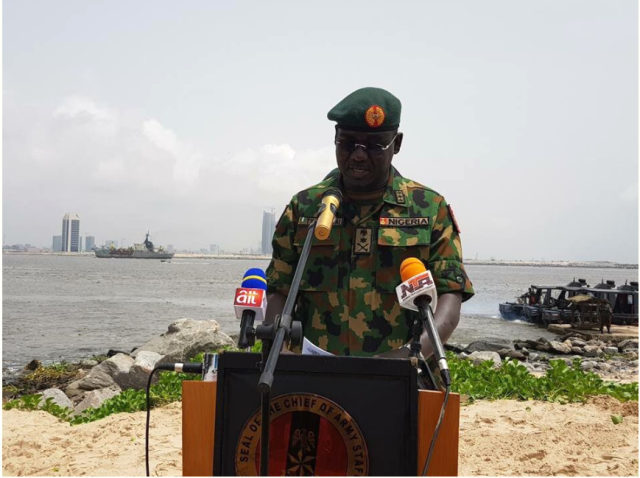
In July, Tukur Buratai, Chief of Army Staff, gave the officers and men involved in the counter-insurgency operations in the North East a 40-day deadline to capture Abubakar Shekau, Boko Haram leader, dead or alive.

This is after the army had told Nigerians several times that Shekau had been killed. However, Buratai’s deadline, issued on July 22, is yet to be met more than five months after.

On the contrary, the insurgency appears to have been rejuvenated. Many officers and soldiers of the Operation Lafiya Dole, as well as members of the Civilian Joint Task Force (CJTF) and local hunters, have been killed in recent waves of attacks and suicide bombings by the insurgents.

Innocent civilian lives have been lost in their hundreds, too, while the ‘luckier’ ones end up in captivity where videos are made of them by the terrorists for the arm-twisting of the Nigerian government to do their bidding.

Meanwhile, Buratai, together with his fellow service chiefs, was recently ‘rewarded’ with another extension to his original two-year tenure that expired in July 2017.

ROTTEN YAMS FOR EXPORT

With pomp and pageantry, Audu Ogbeh, Minister of Agriculture, flagged off what he said was Nigeria’s first yam export to the United States of America; that was on June 29.

But barely three months after, another committee was being told by the same minister to investigate why the yams arrived America rotten.

“Exporters are private sector people. We will investigate both the company that exported and ask the quarantine department to check and find out why such a consignment left here,” said Ogbeh after FEC meeting of October 4.

Two months on, nothing has happened.

‘CORRUPT’ MAIMUNA ALIYU CHOSEN FOR ANTI-CORRUPTION AGENCY

Vice President Yemi Osinbajo announced that Ekpo Nta, former ICPC Chairman, had been eased out of office, and in his place, Bolaji Owasanoye, was appointed to lead a new board.

But on that list of newly appointed ICPC board members were Maimuna Aliyu and Saadu Alanamu, two individuals who  were being investigated by the same commission over corruption allegations.

The goof was promptly spotted and reported by the ICIR, forcing Osinbajo to backtrack and withdraw the nomination of the two candidates.

How the presidency failed to run basic background checks on individuals it nominates to key positions still beat the imagination of many Nigerians.

THE BELATED BABACHIR LAWAL SACK

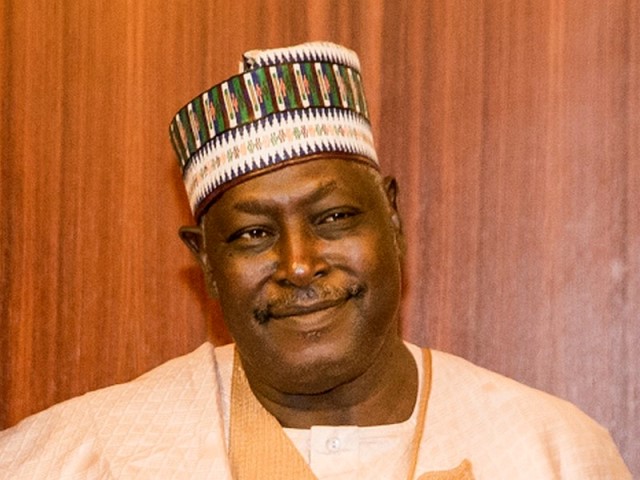
Another incident that damaged FG’s anti-corruption war is the case of Babachir Lawal, who was sacked as Secretary to the Government of the Federation after he was found culpable in the misappropriation of funds meant for victims of insurgency in the North East.

Lawal was said to have awarded multi-million naira contracts to his own companies for ‘clearing of grasses’ in selected Internally Displaced Persons (IDP) camps.

Lawal was eventually sacked, but that happened approximately 11 months after his indictment by the legislature. Till date, he is yet to be invited for questioning by the appropriate authorities or charged to court for misconduct.

THE RETURN OF ABDULRASHEED MAINA


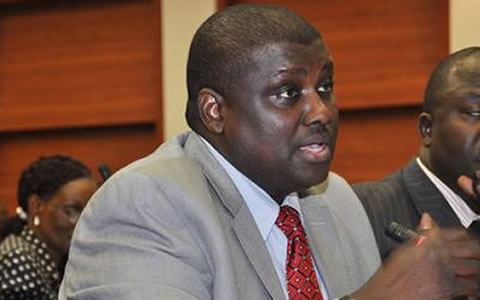
But the issue that all but hammered the final nail into the coffin of the anti-corruption campaign is the backdoor reinstatement of Abdulrasheed Maina.

Maina, former Chairman of the Pension Reforms Task Team, who has been on the run since he was declared wanted for allegedly stealing pension funds, reappeared in October and was clandestinely reinstated into the civil service.

Maina was later removed again on Buhari’s orders, but the circumstances that led to his recall, especially the roles played by top ministers in the Buhari cabinet, left many with no doubt that the fight against corruption needed to begin from within Buhari’s kitchen.

SENATE VERSUS MAGU


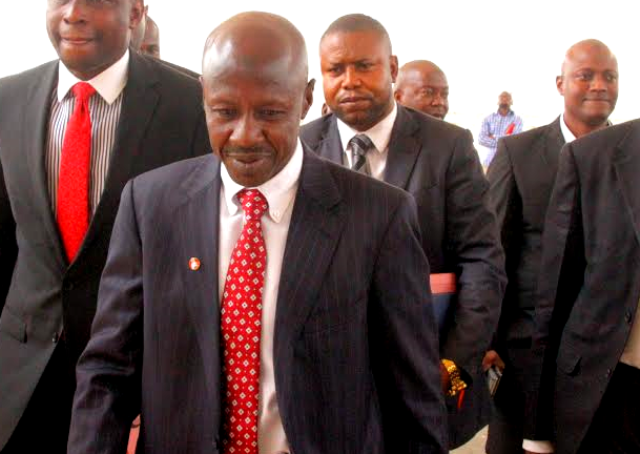
Two times Buhari nominated Ibrahim Magu as substantive Chairman of the EFCC, a commission under the supervision of the Presidency; two times Magu’s nomination was criticised by the Department of State Services (DSS), another agency under the Presidency; two times Magu’s nomination was rejected by the Senate.

Though it’s no fault of Buhari’s that the Senate would not confirm his preferred candidate for a particular position, it’s definitely a blight on his administration that the situation has festered.

Despite having two special assistants on legislative matters, the President failed to convince the lawmakers on his reasons for insisting it is Magu or no one else. He has also refused to look into the concerns consistently raised by the DSS, at least to see if there are any merits therein. The President rather chose to leave Magu in acting capacity, but for how long?

INVASION OF THE PRESIDENT’S OFFICE BY RATS

After 103 days abroad on medical vacation in the UK, Buhari returned to the country in August amid fears that he hadn’t completely recovered. The fears were then given credence when he wasn’t seen at his office the following day, prompting Garba Shehu, his spokesman, to bizarrely claim that this was due to infestation of the President’s office by rodents.

“Following the three months period of disuse, rodents have caused a lot of damage to the furniture and the air conditioning units,” he said.

“Some renovations are ongoing at the office, his fully equipped office in his residence. He will be back to the main office after the works.”

Garba added that Buhari could work from anywhere, saying: “What is important is that the job gets done. Whether he does it from his bedroom, or his sitting room, or his ante room, it does not matter. Let the job be done. And the job will be done.”

With the benefit of hindsight, we now know that the job was never done. For instance, on his first official day at work from his bedroom, Buhari received the report of the probe panel on Babachirl Lawal. It took him two whole months to implement its recommendations!

‘DEAD MEN WORKING’

Musdapha

Just when we thought the administration had committed enough blunders to last an entire tenure, the issue of nomination of dead people into boards of various government agencies came up.

The appointments, announced by Boss Mustapha, Secretary to the Government of the Federation, contains the names of 1,467 “eminently qualified Nigerians”, eight of whom, sadly, are dead.

And if the announcement itself is not embarrassing enough, the explanation given by Garba Shehu, Buhari’s chief spokesman, is hilarious.

“This list is a historical list. It dates back to 2015,” Shehu said, before narrating the how Buhari’s numerous medical trips abroad had slowed down the process.

“The current SGF was only directed to complete that process by releasing the list, which he apparently did without altering it.

“There is nothing scandalous or extraordinary about what has happened. No human undertaking can be free of mistakes.”

As 2017 draws to an end, Nigerians will be hoping that come 2018, the Federal Government will have put its acts together so that it can, in the end, deliver on the change it promised in 2015.

Partisan politics to blame for Buhari’s appointment of dead people, says SERAP

0

The Socio-Economic Rights and Accountability Project (SERAP) has urged President Muhammadu Buhari to “take partisan politics out of the appointments to boards of agencies and parastatals” to show that his government is truly one of change.’

The organisation said this in reaction to the list of appointments to the boards of agencies and parastatals, which includes at least eight dead persons.

A statement by Timothy Adewale, SERAP deputy director, said the appointment poses a clear and recognizable danger to the integrity of these bodies.

SERAP urged Buhari to allow the civil service systems to carry out the appointments, in strict conformity with established rules and Nigeria’s international anti-corruption obligations and commitments.

On Friday, Buhari approved the constitution of the governing boards of agencies and parastatals, appointing 209 chairmen and 1258 members to fill the board positions. However, it has been discovered that at least eight members on the list have since passed away.

Buhari appointed Rev. Christopher Utov as a Member of Nigerian Institute of Social and Economic Research; Utov, the proprietor of Fidei Polytechnic, Gboko passed away on March 17, 2017.

He also appointed Chief Donald Ugbaja as a Member of the Consumer Protection Council (CPC). Chief Ugbaja, a former DIG of the Nigerian Police, died on November 29, 2017.

Francis Okpozo, was appointed as Chairman of the Nigerian Press Council. Okpozo, a senator in the Second Republic, died on December 16, 2016.

“Appointing at least eight dead people as board members would seem to suggest that the 1,467 appointments approved by Buhari were unscreened for competence, merit, equity, aptitude and conflicts of interest.

“Taking partisan politics out of the appointments to boards of agencies and parastatals is one surest way for Buhari to show that his government is truly one of change, that would do things differently from successive governments that apparently handed out board appointments to reward party members, supporters and cronies.

“Going ahead with these appointments would neither advance due process nor Buhari’s oft-expressed commitment to prevent and combat corruption. It would create a lack of trust and confidence among the general public.

“Withdrawing the appointments and directing and allowing the civil service systems to follow due process to reappoint chairpersons and members to the boards of these agencies and parastatals would bring the government’s practices and operations into conformity with Nigeria’s international anti-corruption obligations, particularly the UN Convention against Corruption. Nigeria has ratified the convention.”

“It’s absolutely important for Buhari to ensure that the process through which board appointments are made is transparent and merit-based.

“A merit-appointment system would produce a better qualified board, and ultimately improve the governance architecture and access of Nigerians to essential public services.

“It should be the practice of this government to make board appointments on the basis of ability, and not because of political influence or connection.”

“Letting the civil service systems get on with board appointments would also assure basic bureaucratic ‘hygiene,’ and help to facilitate the establishment of strong boards that would be better placed to ‘deliver the goods’ to Nigerians in the democratic context. It would ultimately bring about higher effectiveness and improved government legitimacy.”


‘Death toll rising’… Deceased persons in Buhari’s appointments now eight

The number of dead people on the list of President Muhammadu Buhari’s appointments to the boards of several government agencies and institutions is now eight — not two as reported on the first day of the announcement.

They are Francis Okpozo, a senator in the Second Republic, who died in December 2016 but was announced as Chairman of the board of the Nigerian Press Council; Christopher Utov, a Catholic Priest and founder of Fidei Polytechnic in Benue State, who died in March but was listed as a board member of the Nigeria Institute of Social and Economic Research (NISER).

Donald Ugbaja, a retired Deputy Inspector General of Police, died in November this year, but he was appointed board member in the Consumer Protection Council (CPC).

Kabir Umar, the late Emir of Katagum in Bauchi State, died on December 9, but his name came up as a board member of the Federal Medical Centre, Azare, Bauchi.

Ahmed Bunza, former Sole Administrator of Jega Local Government Area of Kebbi State, died at Usman Danfodio University Teaching Hospital, Sokoto, and was buried May 22; Magdalene Kumu from Taraba State was appointed into the National Film and Video Censors Board; Nabbs Imegwu, a former Commissioner for Culture and Tourism in Rivers State, was appointed to the board of the National Orthopedic Hospitals; Garba Attahiru, from Kaduna State, was appointed to chair the board of the Federal Medical Centre, Yenagoa.

The list, released on Friday, has attracted public opprobrium. Not only were the names of deceased individuals announced as appointees, the list also included names of persons of questionable integrity, such as Herman Hembe, the same Hembe that was sacked from the Federal House of Representatives.

Hembe  represented Vandeikya/Konshisha federal constituency but the Supreme Court ruled that he was not the authentic candidate of the All Progressives Congress, as he had been defeated by Dorathy Mato, whom the court ruled should be take over Hembe’s former seat.

Appointed the Board Chairman of the Michael Imoudo National Institute for Labour Studies (MINLS), Hembe’s chequered personality dates back to his days as a university student.

Meanwhile, Garba Shehu, Buhari’s Senior Special Assistant on Media and Publicity, explained that the list was compiled in 2015, hence the errors. He promised that the names of the deceased individuals ould be removed.

Also, the list of appointees featured duplication of functions as there were individuals who were appointed into more than one positions.

According to Premium Times, Sabo Nanono was appointed a member of the board of the National Agency for Science and Engineering, but his name was also mentioned as Chairman of the board of Nigerian Tourism Development Corporation.

Again, Kabiru Matazu was appointed Chairman of FCT Universal Education Board and also appointed Chairman of the board of Federal Medical Centre, Abeokuta; Umaymah Abdullahi was named on the board of Lake Chad Research Institute, Maiduguri, as well as the Federal Medical Centre, Sokoto; Habiba Umar was appointed on the board of the Federal Medical Centre, Yola, and also the Federal Medical Centre, Birnin-Kebbi.

BLAME PASSING – The New Year Gift to a Nation

0

By Wole Soyinka

In the accustomed tradition, I wish the nation less misery in the coming year. A genuine Happy New Year Greeting is probably too extravagant a wish.

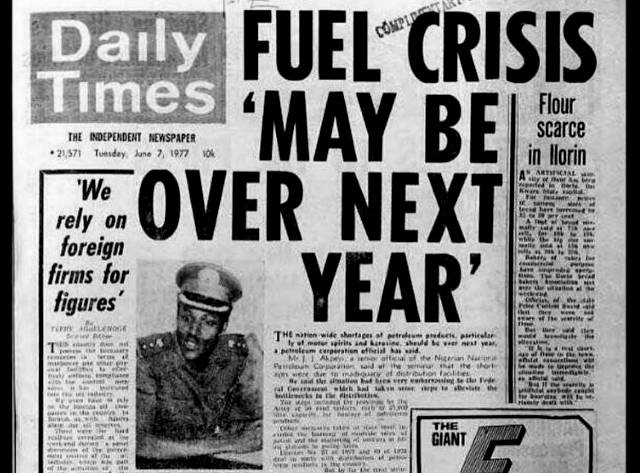
The accompanying news clipping from June, 1977 came into my hands quite fortuitously. It is forty years old. It captures the unenviable enigma that is the Nigerian nation. It is however a masterful end-of-year image to take into the coming year, not only for the individual now at the helm of government, General Buhari, but for a people surely credited with the most astounding degree of patience and forbearance on the African continent – except of course among themselves, when they turn into predatory fiends.

When many of us are blissfully departed, an updated rendition of this same clipping – with a change of cast here and there – will undoubtedly be reproduced in the media, with the same alibis, the same in-built panacea of blame passing.

Let this be called to our collective memory. Even before the current edition of the fuel crisis, other challenges, requiring immediate fix, had begun to monopolize national attention, relegating to the sidelines the outcry for a fundamental and holistic approach to the wearisome cycle of citizen trauma. This has been expressed most recently, and near universally in the word  “Restructuring”, defined straightforwardly as a drastic overhaul of Nigerian articles of co-existence in a more rational, equitable and decentralized manner.

Such an overhaul, the re-positioning of the relationship between the parts and the whole offers, it has been strongly argued, prospects of a closer governance awareness of, and responsiveness to citizen entitlement. An overhaul that will near totally eliminate the frequent spasms of systemic malfunctioning that are in-built into the present protocols of national association.

I recently ran the gauntlet of petroleum queues through three conveniently situated cities – Lagos, Abeokuta and Ibadan – deliberately, this Friday. Even with ‘unorthodox’ aids of passage, this was no task for the faint-hearted. Just getting past fueling stations was traumatizing, an obstacle race through seething, frustrated masses of humanity, only to find ourselves on vast stretches of emptied roads pleading for occupation. As for obtaining the petroleum in the first place – the less said the better.

I suspect that this government has permitted itself to be fooled by the peace of those empty streets, but also by the orderly, patient, long-suffering queues that are admittedly prevalent in the city centres. It is time the reporting monitors of government move to city peripheries and sometimes even some other inner urban sectors, such as Ikeja and Maryland from time to time to see, and listen ! Pronouncements – such as the 1977 above – again re-echoing by rote in 2017 – are a delusion at best, a formula that derides public intelligence. Buying time. Passing blame. Yes of course, the current affliction must be remedied, and fast, but is there a dimension to it that must be brought to the fore, simultaneously and forcefully? This had better be the framework for solving even a shortage that virtually paralyzed the nation.

Just to think laterally for a moment – what became of the initiatives by some states  nearly two decades ago – Lagos most prominently – to decentralize power, and thus empower states to generate and distribute their own energy requirements? Frustrated and eventually sabotaged in the most cynical manner from the Federal centre! The similarity today is frightening – for nearly four days on that earlier occasion, the nation was blacked out near entirely.

We know that one survival tactic of governments is to keep their citizens in the dark over decisions that affect their lives but, this was literal! And yet each such crisis, plus lesser ones, merely reiterate again and again that this national contraption, as it now stands, is simply  – dysfunctional!.

What this demands is that, in the process of alleviating the immediate pressing misery, we do not permit ourselves to be manipulated yet again into forgetting the MAIN issue whose ramifications exact penalties such as petroleum seizures and national power outage. These are only two handy, being recent symptoms – there are several others, but this is not intended to be a catalogue of woes.

Sufficient to draw attention to the Yoruba saying that goes: Won ni, Amukun, eru e wo. Oun ni, at’isale ni. Translation: Some voices alerted the K-Legged porter to the dangerous tilt of the load on his head. His response was – Thank you, but the problem actually resides in the legs.

The providential image above sums up a defining moment for both individual and collective self-assessment, places in question the ability of a nation to profit from past experience. Vast resources, yes, but proved unmanageable under its present structural arrangements. As the tussle for the next round of power gets hotter in the coming year, the electorate will again be manipulated into losing sight of the BASE ISSUE.

Its noisome claque in the meantime, the automated mumus of social media, practiced in sterile deflection and trivialization of critical issues, unwittingly join hands with government to indulge in blame passing and name calling – both sides with different targets. From the anguished cry of Charley Boy’s Our Mummu Done Do! to expositions from academics such as Professor Makinde’s recent intervention, the public is subjected daily to a relentless barrage of awareness, underlined in urgency. Nobody listens.

One wonders if many people read. And certainly, very few retain or relate – until of course the next crisis. The Labour movement declares that it awaits a guarantee of the ‘people’s backing’ before it embarks on any critical intervention. Understandably. There is more than enough of the opium of blame passing on tap to lull mummus into that deep coma from which – give it a little more time – there can only be a rude awakening.

Sooner than later, but not as soon as pledged, the fuel crisis will pass. And then of course we shall await the next round of shortages, then a recommencement of blame passing.  What will be the commodity this time – food perhaps? Maybe even potable water? In a nation of plenty, nothing is beyond eventual shortage – except of course, the commonplace endowment of pre-emptive planning and methodical execution. Forty years after, the same language of re-assurance? “There is something rotten in the state of Naija!”

1,000 prayer warriors for Aso Rock

0

By Fredrick Nwabufo

Normal things do not happen normally in Nigeria. There must always be a “spiritual” side to everything. This is why a dissipated man would wake up from a frightening dream, and then start to “cast and bind” the devil with psychotic inanities.

I have read a volume of reactions to the unfortunate motorbike accident of Yusuf Buhari, son of President Muhammadu Buhari. I must say, most of the reactions lack compassion; some had a sense of schad en freude to them, while a few were utterly ridiculous.

The reactions I considered looniest were those giving a spiritual bent to the incident. To religious shareholders, Aso Rock is a pub for blood-thirsty demons; hence any resident of the place must be spiritually fortified. According to this group, the incident is a spiritual attack on the first family.

Reuben Abati’s “the Spiritual Side of Aso Rock” is not helping matters because his article is often cited as the Magna Carta of spiritual warfare at the presidential villa.

Abati, who was a tenant in Aso Rock under former President Goodluck Jonathan, claimed that the seat of power was in the grip of malevolent supernatural forces. I did not believe this then; I still do not believe it now.

To inveterate cynics, the president is getting his comeuppance for his “crime” against a section of the country. According to this group, karma has come for the president. This is really disturbing. It says a lot about our humanity.

In all of these, I hope the presidency does not succumb to suggestions and shadow whispers of targeted spiritual attacks on the president’s family. Life happens. Aso Rock should not return to the days of lordship by 500 marabouts and 1000 prayer warriors, please.

Let me end this article by putting a post on “religion” on my Facebook page here.

“The deadly intercourse of religion and ignorance will keep Nigeria where it is at the moment – in the mud. There cannot be any progress as long as these two potent evils remain in bed.

China pulled more than 500 million of its citizens out of poverty between 1981 and 2012. The poverty rate fell from 88 percent to 6.5 percent! Note, more than half of China’s population is irreligious.

In Nigeria, more than 90 percent of the population is religious. As of 2016, 112 million Nigerians were living in stage-four poverty! The cause of this depressing figure is the matrimony of religion and ignorance. And more Nigerians will plunge further into poverty.”


Fredrick is a journalist.

You can reach him on: Twitter: @FredrickNwabufo, Facebook: Fredrick Nwabufo


NNPC failed to remit $16.8 bn to federation account in 15 years, reveals NEITI audit

0

Nigeria National Petroleum Corporation (NNPC) failed to remit $16.8 billion from the Nigeria Liquefied Natural Gas (NLNG) to either the Federal Government or federation account, in 15 years, the 2015 Nigeria Extractive Industries Transparency Initiative (NEITI) Oil and Gas Industry Audit Report has revealed.

The report, released on Friday, shows that the unremitted money was NLNG’s payments to NNPC for the period 2000 to 2015, indicating that the payments are for the loan grant to NLNG and for the 49% stake that the government holds in the company.

The report disclosed that in 2015 alone, NLNG paid $1.07 billion as dividend, interest and loan repayment to NNPC, broken down as $1.04 billion as dividends, $3.1 million as interests, and $29.1 million as loan repayment.

NEITI pointed out that while NNPC had always confirmed receipt of the payments, it had never shown evidence of remittance to either the Federal Government or to the Federation Account. Instead, the corporation maintained that it had authorization from the presidency to hold the dividends in trust and utilize as directed by the government.

NEITI recommended that NNPC should provide documentary evidence of the authorization to hold the money in trust and to give account of the expenditure from and the status of the $16.8 billion collected in 16 years.

The report disclosed that the volume of crude oil declared lost to theft by 13 operators in 2015 was 27.1 million barrels, amounting to 3.5% of total oil production and valued at $1.4 billion.

While reiterating its call for effective and adequate metering infrastructure and enhanced security of the country’s oil and gas assets, NEITI stated that established loss to theft from 2011 to 2015 is 113.1 million barrels valued at $11 billion.

The report also revealed that Nigeria’s oil and gas revenues plunged from $54.5 billion in 2014 to $24.8 billion in 2015, while the country’s oil production fell from 798 million barrels in 2014 to 776 million barrels in 2015.

The report noted that the total outstanding revenue from the sector as at 2015 was $3.7 billion and N80 billion, while losses incurred stood at $2.2 billion and N60 billion, and unreconciled N317 billion.

The report showed that Nigeria suffered a 54.6% decline in oil revenues but only a slight 2.7% fall in oil production due to drastic reduction in the unit price of crude oil in the global market. It will be recalled that the yearly average price of crude oil per barrel tumbled from $101.91 in 2014 to $52.16 in 2015.

Oil and gas revenues have been declining since 2011 when total revenues peaked at $68.4bn. A five-year analysis in the report revealed that revenues declined by 8%, 7.7% and 6% in 2012, 2013 and 2014 respectively. However, the decline leapt to double digits in 2015 when total revenue dwindled by more than half.

Total oil production also dropped slightly from 798 million barrels in 2014 to 776 million barrels in 2015.

The report attributed the decline to oil theft and militancy. However, total gas production went up by 20.23% from 2, 593,090 mmscf in 2014 to 3, 250, 667 mmscf in 2015. The jump by a fifth was on account of the combined effect of increase in gas utilisation and decline in gas flaring.

According to the report, the total oil lifted in 2015 was 780 million barrels, about four million barrels higher than the amount produced with the balance drawn from previous years. Of the 780 million barrels, the companies lifted 467 million barrels while NNPC lifted 313 million barrels.

NNPC’s lifting were split almost evenly between Federation Export and Domestic Crude Allocation, which accounted for 159.4 million barrels and 153.9 million barrels respectively.

However, only 8.7 million barrels or 5.6% of crude oil allocated for domestic consumption went to the refineries in 2015 on account of the state of the refineries.

“Beyond providing a snapshot of what transpired in 2015, this report reveals money to be recovered, leakages to be blocked, and urgent reforms to be undertaken,” Waziri Adio, the Executive Secretary of NEITI, said.

“The most critical takeaway is the need to expedite, expand and sustain reforms in this still-critical sector of national life.”

The NEITI 2015 Oil and Gas Audit Report is the eighth to be produced since the extractive sector transparency regulator came into being in 2004.