Home Blog Page 356

Nigeria Immigration Service repatriates 155 foreigners

0

THE Nigeria Immigration Service (NIS) has arrested 155 foreigners for cybercrimes and unauthorised entry into the country.

According to the Punch, the Service said the arrests were made between January and February 2025 through a series of coordinated operations across Rivers, Ogun, and Oyo states.

Following directives from the Comptroller General of Immigration, Kemi Nandap, the apprehended individuals have been deported.

A breakdown of the number showed that 90 illegal immigrants involved in cybercrimes designed to defraud unsuspecting Nigerians were arrested in Rivers State in January.

The operation, conducted in collaboration with other security agencies, resulted in the arrest of 94 people, including 85 Cameroonians, five Chadians, and four Nigerians. The group comprised 74 males and 20 females.

Rivers State Comptroller of the NIS, Y.I. Abdulmajeed, revealed that none of the 90 foreigners had valid residence permits or travel documents.

Also, 25 illegal migrants were arrested at a commercial farm in Odogbolu Local Government Area of Ogun State in February.

According to the Ogun State Comptroller of the NIS, Mr A.M. Akadri, the suspects were all Beninese nationals working as farm labourers without valid travel documents or permits. They also entered Nigeria through unauthorised routes.

In the same vein, the Oyo State Command also arrested 40 illegal immigrants at various locations within Akinyele Local Government Area in February.

The suspects included 27 Cameroonians, two Ghanaians, 10 Beninese, and one Togolese. Among them, 32 were males, while eight were females, all aged between 18 and 35.

According to Oyo State Comptroller, Tayo Dada, 10 of the arrested individuals were farmers, while 30 claimed to be online marketers.

He added that none of them possessed valid travel documents, and they all entered Nigeria through illegal routes.

The Minister of Interior, Olubunmi Tunji-Ojo, recently disclosed that the Federal Government deported 828 illegal immigrants in 2024 as part of its efforts to combat irregular migration and improve national security.


Jigawa bus fire kills 4, injures 10

0

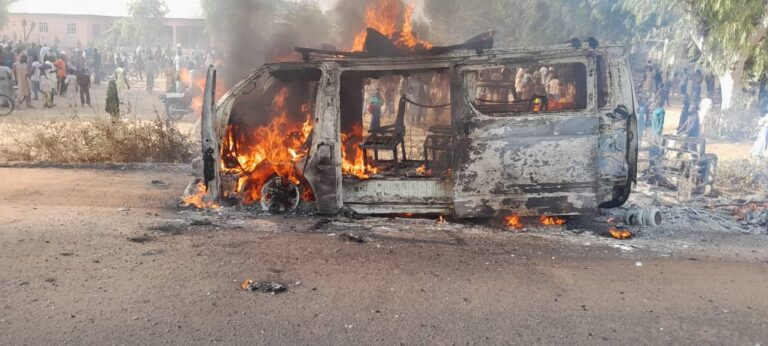
FOUR people were burnt to death and 10 others were injured in a fire that consumed a Hummer bus in Jigawa State on Saturday, February 22.

The state Police Command spokesperson, Lawan Adam, a superintendent of police, said in a statement on Sunday, February 23, that the incident occurred around 4:00 pm near Government Girls Unity Secondary School in the Gwaram area of the state.

The bus was travelling from Zaki Local Government Area in Bauchi State to Rabadi village in Gwaram LGA.

The police said the bus was carrying 44 passengers, comprising 25 adults and 19 children.

Initial investigations suggest the fire began when the vehicle’s exhaust touched a mattress strapped to the back of the bus, sparking flames that rapidly spread.

“The victims were identified as Zuwairah Hassan, 40; Fatima Hassan, 5; Iyatale Hassan, 3; and Halima Muhammad, 10 — all from Saldiga village in Zaki LGA, Bauchi State,” the statement said.

Ten injured passengers were rushed to Gwaram Cottage Hospital for treatment, while others were safely evacuated. The bodies of the deceased were released to their families following medical examinations, said the statement.
The Jigawa State Police Command advised commercial drivers to focus on safety by avoiding overloading and performing regular vehicle inspections.

“We urge all drivers to be mindful of the safety of their passengers and other road users. Overloading and reckless driving can have devastating consequences, as we have seen in this tragic incident,” the statement added.

The ICIR reports that the accident followed a similar tragedy in the state in October 2024 in which nearly 200 people died from an explosion when residents were scooping fuel from a fallen tanker.

Soludo, Obi differ on Anambra markets closure over crackdown on illicit drugs

0

ANAMBRA State Governor Charles Soludo has expressed shock over how illicit drugs get into Nigerian markets through the nation’s borders under the watch of security officials. 

Soludo stated this when he visited the Ọgbọ Ogwụ Market in the Onitsha area of the state on Saturday, February 21.

His visit followed the recent impoundment of fake drugs and closure of some markets suspected to harbour fake and banned drugs by the National Agency for Food and Drug Administration and Control (NAFDAC)

The NAFDAC had shut down over 11,000 drug shops in Aba (Abia State), Onitsha (Anambra State), and Idumota (Lagos State, seized 77 truckloads of counterfeit drugs, and arrested 40 suspects.

Soludo said tackling counterfeit drugs should start at the country’s entry points, where the harmful products are smuggled into the nation, in addition to local regulatory efforts.

Among the markets reportedly shut in Onitsha by NAFDAC are Ogo Ogwu, Plumbing Materials, Rod, Allied and Tools markets.

The government said, “I visited the Ọgbọ Ogwụ and adjoining markets today in Onitsha. As the biggest open drug market in Africa, it is not surprising that federal agencies and regulatory bodies would, from time to time, visit the market to enforce standards and check the sale of fake, counterfeit, and controlled drugs.

“With drugs and related matters strictly under the Exclusive List, my visit today was interventionist. First, I sought to ascertain why other markets close to the drug market in Onitsha were closed.

“Away from the media sensation created by a few political actors, the leadership of the Plumbing Materials Market, which was shut down alongside the drug market, confirmed to me that the discoveries made by regulators in some shops were shocking and disturbing.”

The governor added that several shops were found storing cartons of counterfeit drugs, many of which were banned both locally and internationally. He questioned how these drugs, produced in India, manage to pass through the country’s sea and air ports and end up in local markets.

He appealed to the Federal Government to intensify efforts to crack down on the supply chain of these harmful drugs, stressing the need to tighten controls at the source. He also suggested that the market inspections be done on time to allow traders at the Plumbing Materials Market to reopen and resume legitimate business within 10 days.

Highlighting his efforts to address the issue, he listed the construction of a wholesale drug centre in Oba, Idemili South Local Government Area of the state, which will be the major drug hub in the state.

“This is our contribution to ending the current chaotic market environment where fake and counterfeit drugs thrive,” he stated.

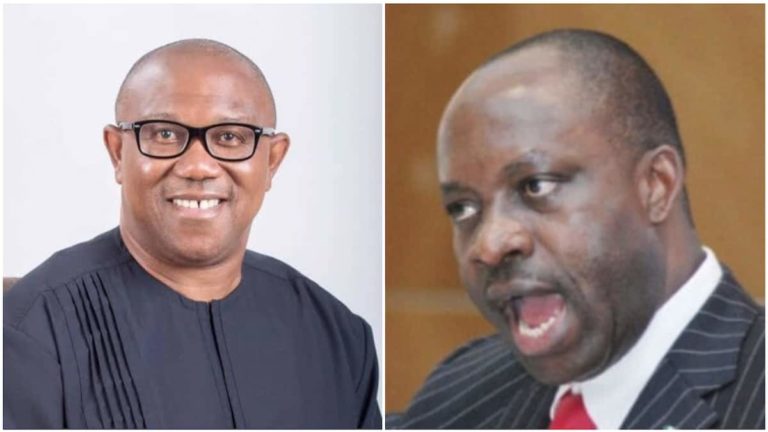
Meanwhile, Soludo’s position contrasts with his predecessor and the Labour Party presidential candidate in the 2023 election, Peter Obi.

Obi had, in a statement on X on Monday, February 17, voiced his dissatisfaction with the closure of other markets neighbouring the Ọgbọ Ogwụ Market.

Obi had called on regulatory and security agencies to reconsider the closure of markets surrounding the Head Bridge Market in Onitsha, after the crackdown on illegal drug activities within the area.

While the former governor condemned the sale of counterfeit drugs and supported the prosecution of those responsible, he raised concerns about the collateral damage caused by the blanket closure of nearby markets, which he said were not involved in the illegal sale of drugs.

“Shutting down neighbouring markets like Rod, Allied and Tools, Plumbing Materials, Timber, Surgical, and Provision Markets, which have no connection to the illicit drug trade, is excessive and unjustified.

The continued closure is severely affecting the livelihoods of millions, especially during this difficult period in our country,” he said.

Obi recalled how his administration addressed similar public health threats when he led the state.

He questioning the rationale behind the extended market closures, asking, “If the goal is to conduct a legitimate search, why extend the closure to other markets? What are their offences?”

Why is there so much gold in west Africa?

0

By Raymond Kazapoe, University for Development Studies

MILLITARIES that have taken power in Africa’s Sahel region – notably Mali, Burkina Faso and Niger – have put pressure on western mining firms for a fairer distribution of revenue from the lucrative mining sector.

Gold is one of the resources at the heart of these tensions. West Africa has been a renowned gold mining hub for centuries, dating back to the ancient Ghana empire, which earned its reputation as the “Land of Gold” because of its abundant reserves and thriving trade networks. The region remains a global leader in gold production. As of 2024, west Africa contributed approximately 10.8 per cent of the world’s total gold output.

But why is there so much gold in this region? The Conversation Africa asked geologist Raymond Kazapoe to explain.


How is gold formed?

The simple answer here is that we are not certain. However, scientists have some ideas.

Gold, like all elements, formed through high energy reactions that occurred in various cosmic and space environments some 13 billion years ago, when the universe started to form.

However, gold deposits – or the concentration of gold in large volumes within rock formations – are believed to occur through various processes, explained by two theories.

The first theory – described by geologist Richard J. Goldfarbargues that large amounts of gold were deposited in certain areas when continents were expanding and changing shape, around three billion years ago. This happened when smaller landmasses, or islands, collided and stuck to larger continents, a process called accretionary tectonics. During these collisions, mineral-rich fluids moved through the Earth’s crust, depositing gold in certain areas.

A newer, complementary theory by planetary scientist Andrew Tomkins explains the formation of some much younger gold deposits during the Phanerozoic period (approximately 650 million years ago). It suggests that as the Earth’s oceans became richer in oxygen during the Phanerozoic period, gold got trapped within another mineral known as pyrite (often called fool’s gold) as microscopic particles. Later, geological processes – like continental growth (accretion) and heat or pressure changes (metamorphism) released this gold – forming deposits that could be mined.

Where in west Africa is gold found and what are its sources?

Most gold production and reserves in west Africa are found within the west African craton. This is one of the world’s oldest geological formations, consisting of ancient, continental crust that has remained largely unchanged for billions of years.

The craton underlies much of west Africa, spanning parts of Mali, Ghana, Burkina Faso, Côte d’Ivoire, Guinea, Senegal and Mauritania. In fact, most west African countries that have significant gold deposits have close to 50 per cent of their landmass on the craton. Notably, between 35% and 45% of Ghana, Mali and Côte d’Ivoire’s territory sits on it – which is why these areas receive so much attention from gold prospectors.

Gold deposits were formed within west Africa’s craton rocks during a major tectonic event, known as the Eburnean Orogeny, 2.2 billion to 2.08 billion years ago. This event was accompanied by the temperature, pressure and tectonic conditions which promote gold mineralisation events. Most of the gold resources in the west African craton are found within ancient geological formations formed by volcanic and tectonic processes about 2.3 billion to 2.05 billion years ago. These are known as the Rhyacian Birimian granitoid-greenstone belts.

These gold-bearing belts in Ghana and Mali are by far the most endowed when compared with other countries in the region. Ghana and Mali currently, cumulatively account for over 57 per cent of the combined past production and resources of the entire west Africa sub-region.

Ghana is thought to be home to 1,000 metric tonnes of gold. The country produces 90 metric tonnes each year – or 7 per cent of global production. Gold production in Mali reached around 67.7 tonnes in 2023. Mali has an estimated 800 tons of gold deposits.

By comparison, the world’s two largest gold producers are China (which mined approximately 370 metric tonnes of gold in 2023) and Australia (which had an output of around 310 metric tonnes in 2023).

What are some of the modern exploration tools used to find gold?

Gold was traditionally found by panning in riverbeds, where miners swirled sediment in water to separate the heavy gold particles, or by digging shallow pits to extract gold-rich ores. Over time, methods have evolved to include geochemical exploration techniques, advanced geophysical surveys, and chemical extraction techniques, like cyanide leaching.

Geological mapping techniques are always evolving, and at the moment, there is a lot of interest in combining remote sensing data with cutting-edge data analytics methods, like machine learning. By combining these two methods, geologists can get around some of the problems caused by traditional methods, like the reliance on subjective judgement to create reliable maps and the need to spend money prospecting in areas with low chances of success.

In recent years, deep learning computer techniques have made significant progress. They examine various geological data-sets to reduce uncertainty and increase the chances of finding gold mineralisation through advanced artificial intelligence techniques. These methods have proved highly beneficial in identifying specific features and discovering new mineral deposits when applied to remote sensing data.

Another method, which I’ve researched and which could serve as a complementary gold exploration tool, is the use of stable isotopes. Stable isotopes are elements – like carbon, hydrogen and oxygen – that do not decay over time. Some are responsible for helping to carry gold, in fluids, through rocks to form the deposits. As the gold-bearing fluids interact with the rocks, they transfer the stable isotopes to the rocks, thereby imbuing them with their unique signature. The thinking here is to identify the signature and then use it as a proxy for finding gold, since gold itself is hard to identify directly.

Advancements in analytical techniques have reduced the cost, volume, and time involved. This makes it a viable alternative to geochemical approaches – the most widely used and relatively efficient method.The Conversation

Raymond Kazapoe, Senior lecturer, University for Development Studies

This article is republished from The Conversation under a Creative Commons license. Read the original article.

Osun poll: Police seal OSSIEC office, arrest staff – Official

0

THE chairman of the Osun State Independent Electoral Commission (OSSIEC), Hashim Abioye, has alleged that operatives of the Nigeria Police Force (NPF) arrested the commission’s staff on election duty across the state.

Abioye made the allegation in a statement on the commission’s X account on Saturday, February 22.

While commending voters for turning out to exercise their rights, Hashim apologised to the media for the commission’s failure to accredit them for the exercise.

He explained that the police had sealed the OSSIEC headquarters where the materials were stored.

Abioye explained that delays in delivering materials to some units were caused by the police arresting officials transporting them. He added that new materials had since been deployed and voting was ongoing.

“Operatives of the Nigeria Police Force have arrested staff of the commission who are on election duty across the state.

“For the units where material didn’t arrive early, it was due to police arrest of the officials conveying the materials. However, new materials have been deployed, and voting is now ongoing,” the statement read in part.

The ICIR reached out to the Osun State Police Command spokesperson,  Yemisi  Opalola, for reaction to the allegations by the OSSIEC’s chairman. Her phone line could not be reached via calls.

She did not also respond to text and Whatsapp messages sent to her line.

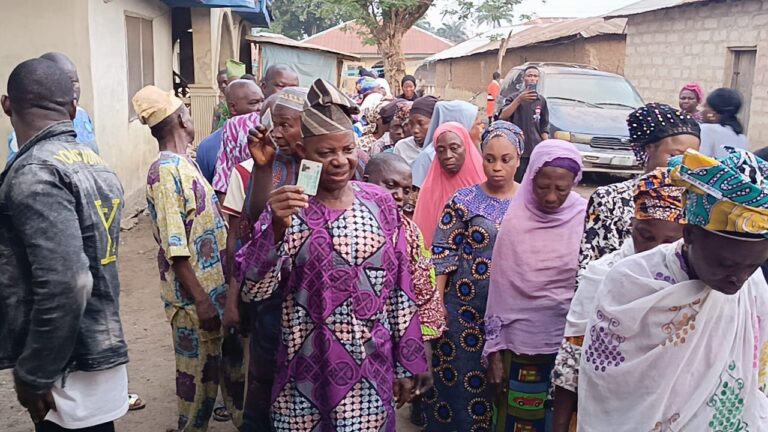
Earlier reports indicates that the Osun poll saw mixed turnout across different LGAs, with some polling units in Osogbo and Ile-Ife reportedly lacking OSSIEC staff, security personnel, and voters.

However, Ede, the governor’s hometown, recorded active participation in the election.

Despite the governor’s order restricting vehicular movement, free human and vehicular movements was observed across the state; though there were police roadblocks on major roads.

Plateau governor suspends mining activities over insecurity

PLATEAU State Governor Caleb Mutfwang has suspended all mining activities in the state over security concerns.

In an executive order dated Friday, February 21, Mutfwang said the suspension, which is with immediate effect, would subsist until further notice.

“I, Barr. Caleb Manasseh Muftwang, the Executive Governor and Chief Security Officer of Plateau State, deemed it necessary to suspend all mining activities in Plateau State for security reasons.” he said.

Mutfwang said that the decision was prompted by the rise in illegal mining activities and the associated security threats across various local government areas in the state.

He added that his administration would carry out a holistic review of the security situation in all the mining areas in the state and ensure an appropriate community development agreement is in place to address the socio-economic contributions of the mining rights holders.

“There is an increased influx of foreigners in the mining areas of Plateau State, which significantly increased insecurity in the state, including but not limited to offences of rape, banditry, illegal possession of firearms, drug trafficking and kidnapping.”

The governor pledged that his administration would work with the Federal Government to establish appropriate standards and monitoring framework involving the state, local government areas, host communities, and mineral rights holders.

The ICIR reported in November 2024 that a deadly mining accident claimed the lives of 13 miners in the state, following the collapse of an artisanal mining site.

This tragedy highlighted the dangers within Nigeria’s largely unregulated mining sector, where miners often work without proper safety protocols in place.

The ICIR reported that despite casualties from unregulated mining collapses and repeated warnings by the government and security agencies, more young people are driven into illegal mining due to poverty, unemployment, and inadequate oversight by regulatory bodies.


Ogun police arrest fake officer on Lagos-Ibadan expressway

0

The Ogun State Police Command has arrested 52-year-old Harry Collins for posing as an officer of the Nigerian Police Force (NPF) while wearing a uniform with a sergeant rank.

The spokesperson of the  state police command, Omolola Odutola, a chief superintendent of police, stated on Saturday, February 22, that the suspect was arrested on February 21, around 2:10 pm during a patrol led by the deputy commissioner of police (Operations) on the Lagos-Ibadan Expressway.

The officers on duty were said to have become suspicious of his presence at the bridge and consequently arrested him.

“Upon interrogation at the station, Collins was unable to provide a satisfactory explanation for his impersonation, raising further suspicion about his activities.”  The statement read in part.

She added that investigations were ongoing to uncover his motives and any possible criminal connections, while warning residents to be vigilant.

“Investigations are ongoing to determine his motives and any potential criminal involvement.

“The suspect will be charged to court upon completion of the investigation. The Ogun State Police Command warns the public to remain vigilant and report any suspicious individuals posing as police officers,” added that statement.

EFCC recovers, returns $132,362, N78.5m to fraud victims

0

THE Economic and Financial Crimes Commission (EFCC) has announced the return of $132,362.43 and ₦78,566,324.81 to American, Spanish, and Swiss nationals defrauded by Nigerians.   

In a statement by the EFCC, the commission disclosed that its chairman, Ola Olukoyede, handed over the funds on Friday, February 20, at the EFCC’s headquarters in Abuja.

The commission said that the handover reflected its commitment to combating economic and financial crimes while ensuring restitution for fraud victims.

The acting Spain ambassador to Nigeria, Maria Higon Velasco, received $1,300 along with evidence of ₦30 million already transferred to the Spanish Embassy in Nigeria for onward delivery to a victim, Maria Del Rosario San Jose.

Vehicles and real estate were also handed over to Spain, the United States, and Swiss citizens.

“Handed over in addition to money are vehicles and real estate to citizens of Spain, the United States of America and Switzerland.  Acting Ambassador of Spain to Nigeria, Maria Higon Velasco received the sum of $1,300 and evidence of N30 million already transferred to the Embassy of Spain in Nigeria for onward transmission to a victim, Maria Del Rosario San Jose.

“Florent Geel, Senior Political Officer, First Secretary, Embassy of Switzerland received $100,011.43 on behalf of a victim, Chantai Helene Lavancy, formerly known as Chantai Helene Maeder. Charles Smith, Legal Attache, Federal Bureau of Investigation, FBI, embassy of the United States received the sum of $7,344; N7,963,483.35, and Bitcoin cryptocurrency valued at $4,470.00 on behalf of the United States Embassy in Nigeria for onward transmission to a victim, Maria Jesus Brockell.

“Also received by Smith was Mercedes Benz E550 4Matic Chasis No: WDDHF9AB6AA111112, Mercedes Benz C450 AMG with Chasis No: WDD20J0641F282467, and one residential bungalow, located at 17/19 Seaman Street, Unguwar Maigero, Kaduna, Kaduna State on behalf of the United States Embassy in Nigeria for onward transmission to the crime victim.

Smith also received $7,527 on behalf of the United States Embassy in Nigeria for onward transmission to a victim, Michael Smith.

He also received $11,710.00 on behalf of the United States Embassy in Nigeria for onward transmission to another victim, Cheryle Williams; and N32,639,358.11 on behalf of the  Embassy in Nigeria for onward transmission to a victim by the name Marva Marrow.

In her remarks, Swiss ambassador, Ambassador Velasco expressed her gratitude, while Geel, on behalf of the Swiss government, thanked the Nigerian government and the EFCC for the recovery and restitution.

The ICIR reported that the EFCC in December 2024 apprehended a suspected internet fraudster, Osang Otukpa, accused of scamming 139 Australians for $8 million.

Otukpa was arrested at Murtala Mohammed International Airport, Ikeja, Lagos, upon arrival from the US on December 6, 2024.

According to a statement issued by the EFCC’s head of media and publicity, Otukpa allegedly operated under five aliases—Ford Thompson, Oscar Tyler, Michael Haye, Jose Vitto, and Kristin Davidson—to defraud the victims.

The ICIR also reported that a 37-year-old Nigerian, Abiola Kayode, was extradited from Ghana to the United States to face allegations of orchestrating a business email compromise scheme that defrauded businesses in Nebraska and other states of over $6 million between 2015 and 2016.

In 2024, the ICIR highlighted five financial scams, among which was investment scams, which Otukpa had defrauded his victims with.


Some parts of Abuja to experience seven-hour blackout – TCN

0

THE Transmission Company of Nigeria (TCN) has announced a seven-hour power outage in some parts of the Federal Capital Territory (FCT).

In a statement issued on Friday, February 21, TCN’s general manager of public affairs, Ndidi Mbah, said the affected areas will experience a blackout on Saturday, February 22, and Sunday, February 23, 2025, from 9:00 am to 4:00 pm each day.

She attributed the action to scheduled annual preventive maintenance on two transformers.

“The Transmission Company of Nigeria informs the public that its maintenance crew will conduct annual preventive maintenance on the 2x100MVA, TR3 & TR4 transformers at the Apo 132/33kV Transmission Substation in Abuja,” the statement read.

“The planned power interruptions are unavoidable, as Abuja DisCo will be unable to receive bulk power supply from the transformers during the maintenance period. Power supply will be restored to the affected areas upon completion of the maintenance exercise.”

Mbah explained that on Saturday, February 22, the power disruptions will affect the National Hospital, G2 Injection Station, Garki, Area 1, and Asokoro for seven hours.

According to the statement, areas including Apo legislative quarters, Apo resettlement, Gudu, Apo mechanic, and surrounding areas will also experience a seven-hour power outage.

Mbah explained that the interruption is necessary as Abuja Electricity Distribution Company will be unable to receive bulk power supply from the affected transformers during maintenance. The transmission company also apologised for any inconvenience caused to the affected customers during this scheduled maintenance time.

“Power supply will be restored once the maintenance exercise is completed. We apologise for any inconvenience this may cause the affected electricity customers,” the company said.

In a separate development, TCN said as part of its transmission expansion programme, it has officially commissioned a new 100MVA power transformer at the 132/33kV  in Osogbo substation-Osun state.

TCN explained that the new transformer boosts the substation’s capacity from 180MVA to 280MVA and enhances bulk power supply to the Ibadan Electricity Distribution Company (IBEDC) customers within the Osogbo township.

TCN noted that the 100MVA power transformer project is part of nationwide initiatives, undertaken in collaboration with the World Bank.

The ICIR reported that the TCN said 128 transmission towers were destroyed by vandals in 2024, raising concern over recurrent epileptic power supply in the country.

The transmission company also said it spent about N8.8 billion to repair and put into adequate use the vandalised transmission towers within the year.

Labour Party, Allied Peoples Movement pull out of Osun LG poll

0

LABOUR Party (LP) and Allied Peoples Movement (APM) have pulled out from the Osun State local government election held today, Saturday, February 21.

The LP chairman in the state, Adebayo Bello, announced the party’s decision on Friday.

Addressing reporters in Osogbo, Bello cited inadequate security arrangements by the Osun State Independent Electoral Commission (OSSIEC) for the peaceful conduct of the poll.

He urged OSSIEC to postpone the exercise for one or two months to allow for adequate preparations, emphasising that the postponement would also provide time to resolve the legal issues surrounding the exercise.

Similarly, the APM chairman in the state, Adewale Adebayo, announced the party’s decision to withdraw from the election.

He noted that when he attempted to submit the official withdrawal letter at the OSSIEC office on Thursday, no commission official was available to receive it.

“We want to confirm that we are not participating in the illegal local government election, slated for Saturday. We are very disappointed that all OSSIEC staff, including its chairman, have absconded from their headquarters since Wednesday,” he said.

Meanwhile, the Osun State Government has dismissed the Nigeria Police Force’s (NPF) security advisory urging the suspension of the election.

The ICIR reports that the NPF had on Friday called for the poll’s suspension based on what it described as credible intelligence it obtained.

In a statement issued by the Force public relations officer, Muyiwa Adejobi, the police said their intelligence indicated a high likelihood of violence and significant security threats should the election is conducted.

However, in a counter statement dismissing the police’s advisory, the state government stated that the grounds for rejecting the advice were based on the rule of law and aversion to police partisanship.

The state government said in the statement signed late Friday by the Commissioner for Information and Public Enlightenment, Kolapo Alimi, that it had reviewed the advisory and concluded that it was biased, partisan and in contravention of democratic tenets.

The state government also accused the police of pursuing partisan interests rather than obeying court orders and working for the rule of law.

The ICIR reported that there were gunshots in the state as supporters of the All Progressives Congress (APC) and the Peoples Democratic Party (PDP) clashed following the attempted reinstatement of sacked council chairpersons in the state on Monday, February 17. The ensuing melee led to the death of seven people, including a former local government chairman of Irewole Local Government Area, Aderemi Abbas.

The crisis followed a disagreement between the state Governor Ademola Adeleke and the Minister of Marine and Blue Economy, Adegboyega Oyetola, over the interpretation of the Appeal Court’s ruling on the chairpersons who were elected on the APC platform but sacked by the Federal High Court in 2022.

The ICIR reported on Sunday that Adeleke raised the alarm over a plot by Oyetola, a former governor of the state, to reinstate the sacked chairpersons. The APC in the state confirmed the plot, which turned out to claim the lives of seven people the following day.

Though the Federal Government through the Attorney-General of the Federation, instructed the state to suspend the conduct of the LG poll, the state governor ignored the order.