STAKEHOLDERS in the security sector have declared that a better economy, improved welfare for security agencies, intelligence gathering, and provision of modern equipment, among other things, will play a key role in Nigeria achieving better security in 2025.
This came after the National Bureau of Statistics (NBS) released its latest Crime Experience and Security Perception Survey report, which revealed that Nigerians paid N2.23 trillion to kidnappers as ransom in 12 months.
In the report, the NBS revealed that Nigerian households experienced an estimated 51.89 million crime incidents within the period.
The North-West region topped the list with 14.4 million reported cases, followed by the North-Central region with 8.8 million incidents. Meanwhile, the South-East region recorded the lowest number of crimes, with 6.18 million incidents, according to the report.
President Bola Tinubu
The report also raised concerns about the effectiveness of Nigeria’s security agencies, particularly the police, in responding to emergencies. More worrisome is the part of the report that says no fewer than 614,937 Nigerians were killed across the country during the same period.
The NBS disclosed this on Tuesday, December 17, saying the report was based on the surveys conducted between May 2023 and April 2024.
Experts weigh in
A security expert, Salihu Dantata Mohammed, who is the director of Security at Salute Nigeria Initiative and a security analyst Senator Iroegbu, bear their minds on key areas that can aid peace in the coming year.
Mohammed said security agencies must combine and collaborate to enhance intelligence gathering and exploit the ownership involvement through non-kinetic measures where the inhabitants of troubled areas and non-state actors operate.
“These include sharing of intelligence and also voluntary contribution, like the civilian joint task force did in Borno State at the advent of the dreaded Boko Haram terrorist group.
He also harped on the need for a better welfare for both the officers and men of the security agencies carrying out onslaughts against insurgency and armed banditry as well as unknown gunmen in the southeast.
According to Iroegbu, security in 2025 is unpredictable butit may improve if the economy is stable. He maintained that with the way things are going in the country, especially with the coming on board of Dangote Refinery and others, the economy might stabilise, leading to a reduction in crime and other petty criminal activities.
Iroegbu affirmed that whether crime and criminality will reduce in the coming year depends on how the government handles the economy.
“If the economy is stable, it might reduce crimes like kidnapping and armed robbery a bit. If the economy picks up, backed by intelligence-based operations, it might reduce insecurity,” Iroegbu said.
All eyes on the Sahel region
Iroegbu also emphasised the need to closely keep an eye on what happens in the Sahel region in the coming year to achieve security stability.
Africa’s Sahel region is a transnational area between the savannah and grasslands to the south and the Sahara Desert to the north. Senegal, Sudan, Niger, Chad, Mali, and Mauritania are just a few of the nations it crosses.
Nigeria places strategic importance on the Sahel because of its location between sub-Saharan Africa and North Africa and the possibility of being affected by any breakout of crisis in the region.
Among the many issues facing the Sahel region is terrorism, such as Boko Haram and Al-Qaeda in the Islamic Maghreb, violence, and poverty, which plays a big impact on Nigeria’s security stability.
Chief of Defence Staff, CDS, Christopher Musa
“In 2025, we need to stay focused on what is going on in the Middle East and the effect on terrorist activities in the Sahel region and how it might likely snowball because what is happening in Syria is similar to what is happening in the Sahel region.
“This is a region that is regarded today as the epicentre of terrorism. and with the recent emergence of a new terrorist group, Lakurawa, which snowballed into Nigeria from Niger. Nigeria should keep an eye on that region to achieve security stability,” Iroegbu said.
He added that groups like ISIS and Jabhat al-Nusra have connections with other extremist groups, including Al-Qaeda, which can facilitate resource sharing and ideology spreading across other countries like Nigeria if not watched.
To avert a crisis, he called for a comprehensive approach involving community engagement and dialogue to address these challenges.
Terrorism and Banditry in 2025
On the activities of terrorists, Iroegbu said there should be an effort to make sure it doesn’t get out of hand, adding that the nation should be on alert and not be caught napping.
The Inspector General of Police (IGP), Kayode Egbetokun
On the activities of bandits, which is a huge security issue in the northwest of Nigeria, Iroegbu said it is linked to terrorism and predicted there might be a lull in their activities in 2025 but urged the authorities to be on the alert.
Tax Reform Bill controversy and the politics of the 2027 election
According to the experts, the tax reform bill, which is currently before the National Assembly, might snowball into a crisis if not well handled.
The controversial bill has pitched the north against other parts of the country in recent months but according to Iroegbu, that is another place we need to watch to avoid ethnic and religious clashes in 2025.
“We know what the tax reform bill is. We know how the North feels about it so it might come in the form of a political riot or whatever. So it depends on how the government manages it,” he said.
The 2027 election is still almost two years away but according to Iroegbu, from this year, there will be an increase in political activities towards the general election and this might lead to a political crisis if not well handled.
“We are entering the second to third year of the current administration. It means the election should be around the corner so we should watch out for political and ethno-religious protests and clashes and the policy of the government, like the tax reform bill. It is imperative how the government handles it,” he said.
Security in the Southeast and Niger Delta
According to both Salihu and Iroegbu, the government and security agencies should take the security of the Southeast very seriously in the coming year.
Iroegbu described the situation in the region as “uneasy calm” and said the government must ensure that it gives the people of the region a sense of belonging to avoid violence.
He also appealed to the government to dialogue with the leaders of the region and seek a political solution to the case of the detained leader of IPOB, Nnamdi Kanu.
“In the Southeast, the issue of Nnamdi Kanu should be resolved once and for all. A political solution should be embraced,” he said.
Iroegbu stated that the government has been able to manage security well in the oil-rich Niger Delta and urged the authorities to sustain it.
Intelligence gathering is key
Security experts agreed that for Nigeria to enjoy relative peace in 2025, security agencies should embark on more intelligence-led operations.
According to Mohammed, improved synergy, collaborations, and enhanced intelligence gathering and sharing amongst the security agencies will help maintain security in 2025.
“The resumed collaboration in the multinational task force will also be an added advantage,” he said.
Mohammed Mohammed of NIA and the DG of SSS, Adeola Ajayi.
As for Iroegbu, intelligence gathering needs to be heightened to observe what is happening in the Sahel region.
“We have to deepen our geopolitics knowledge and trends of events to be able to connect the dots,” he said.
Other key issues that will determine security in 2025
Other key issues raised by the experts to prevent insecurity in 2025 include inclusive policies, the government not muscling opposition voices, a comprehensive security sector reform and regional cooperation.
They also listed proper management of human rights issues, agenuine fight against corruption, constant availability of fuel at affordable prices and availability of modern gadgets like drones and mine-resistant vehicles for security agents to fight crime.
LABOUR Party’s presidential candidate in 2023 election, Peter Obi, has criticised the exclusion of North Central Development Commission from the N2.493 trillion budgetary allocation for regional development commissions in the 2025 proposed budget.
In a statement via his X handle, on Wednesday, January 1, Obi described the omission as “deeply troubling” and urged immediate rectification to ensure equitable development and lasting peace across the nation.
Obi noted that such an omission undermined efforts toward equitable development and peace across Nigeria, particularly in a region grappling with severe insecurity and displacements.
According to him, the North Central, which he said is widely regarded as Nigeria’s agricultural backbone, has been at the forefront of insecurity crises, with thousands forced into internally displaced persons (IDP) camps.
“The exclusion of the North Central Regional Commission from the budgetary allocations provided to other regional commissions in the 2025 proposed budget is deeply troubling and must be urgently reversed. Such an anomaly does not make for even development and peace that is needed for progress in the country.
“A total of N2.493 trillion has been allocated to five regional development commissions, with the North Central Regional Commission glaringly omitted.
“The North Central region requires special attention due to the severe challenges it faces today. Relentless terror attacks and banditry in Plateau, Benue, Kogi, and Niger States have caused immense suffering, resulting in significant loss of lives and forcing countless families into internally displaced persons (IDP) camps. These persistent tragedies have made the North Central one of the most affected and vulnerable regions in Nigeria,” he said.
The ICIR’s analysis of the 2025 budget proposal revealed that five regional commissions, including the Niger Delta Development Commission (NDDC), North East Development Commission (NEDC), South West Development Commission (SWDC), North West Development Commission (NWDC), and South East Development Commission (SEDC), are expected to spend nearly all their N2.5 trillion allocation on salaries.
A breakdown of the 2024 budget proposal shows that the commissions will collectively spend 99.7 per cent of their budgets on personnel costs, while only leaving just 0.3 per cent for developmental projects.
The NDDC tops the list with N776.5 billion allocated entirely to salaries, followed by the NWDC with N585.9 billion and the SWDC with N498.4 billion.
The SEDC and NEDC also allocated the bulk of their budgets to personnel costs, sparking concerns over their ability to deliver tangible development outcomes.
Obi called on the government and National Assembly to urgently review the decision, warning that the exclusion could hinder development in a region vital to the country’s stability and agricultural output. “Together, we must work toward a more inclusive and equitable Nigeria,” he said.
President Bola Tinubu presented the N47.90 trillion 2025 budget proposal to the National Assembly, titled “Budget of Restoration: Securing Peace, Rebuilding Prosperity” on Wednesday, December 18.
The budget, according to Tinubu, reflected the administration’s commitment to human capital development under its Renewed Hope Agenda.
Recall that President Bola Tinubu had in October 2024 established the Ministry of Regional Development to oversee all the regional commissions.
The new ministry replaced the Niger Delta Development Ministry.
THE Federal Capital Territory (FCT) police commissioner, Olatunji Disu, said the command dealt with a significant number of crimes, including 104 kidnappings and 268 armed robberies in the nation’s capital in 2024.
Disu said this while addressing journalists in Abuja on Wednesday, January 1, 2025.
The CP said 216 kidnapping and 132 armed robbery suspects were arrested during the year.
He added that 263 “one-chance” robbery cases were reported and 71 suspects were arrested.
The police boss said from available data, there was a 15 per cent reduction in crime incidents within the FCT between 2023 and 2024.
Disu reported that there were 32 cybercrime cases with 15 arrests, 68 homicide cases with 78 arrests, and 73 burglary cases with 20 arrests in the outgoing year.
He said the city recorded 385 fraud cases with 422 arrests and 38 cultism cases with 59 arrests.
Additionally, the commissioner said 68 cases of police misconduct were reported, and 127 car theft cases were recorded with 64 arrests.
Disu noted that 68 abduction victims and 19 ‘one chance’ robbery victims were rescued.
In terms of convictions, 178 fraud suspects were charged, with 58 convicted. Eleven out of 19 cult suspects were convicted, and eight out of 26 burglary suspects were convicted.
He also stated that 58 police misconduct suspects were charged without conviction, and 11 out of 22 car theft suspects were convicted.
During the year, Disu said the police recovered 376 firearms, including 13 AK-47 magazines and 187 rounds of live ammunition, as well as N409,992. They also recovered 73 vehicles from car theft cases, with 24 from ‘one chance’ robbery incidents and two from cultism cases.
The command lauded the minister of the FCT, Nyesome Wike, the FCT residents, sister security agencies, the media, members of the police community relations committee (PCRC), civil society organizations (CSOs), vigilante groups, and community policing stakeholders for their unwavering support and cooperation throughout the year.
PRESIDENT Bola Tinubu has allocated over N500 billion to 20 federal universities in the proposed 2025 budget, with the University of Nigeria, Nsukka (UNN) receiving the highest share of N44.38 billion.
The ICIR tracked the budget for 20 out of 43 federal universities in the country.
The budget proposal comes amid unresolved issues with the Academic Staff Union of Universities (ASUU), which has consistently identified poor funding as a major contributor to Nigeria’s educational challenges.
An analysis by The ICIRshowed how the budget presented on Wednesday, December 18, 2024, and titled “Budget of Restoration: Securing Peace, Rebuilding Prosperity,” allocated N3.52 trillion (7.3 per cent) of the N47.90 trillion total budget to the education sector.
Although this reflected a marginal increase from the 5.5 per cent allocated in 2024, the allocation still falls short of the UNESCO-recommended 15–20 per cent of the national budget for the sector.
20 universities get N500bn in FG’s proposed 2025 budget.
While presenting the budget to the National Assembly on December 18, Tinubu outlined plans to address key development priorities, including public education infrastructure.
Underfunding public universities has been a recurring issue, sparking prolonged ASUU strikes, including an eight-month industrial action in 2022.
In the latest budget proposal, the University of Calabar and Ahmadu Bello University, Zaria, follow UNN in the highest allocations, with N37.26 billion and N36.74 billion, respectively.
Institutions such as the Federal University Wukari and Alvan Ikoku University of Education, Owerri, received N13.43 billion and N13.65 billion, respectively.
The ASUU President, Emmanuel Osodeke, had lamented that capital allocations to universities often failed to translate into impactful projects due to the bulk amount going into paying salaries and poor implementation.
The union had also stressed the need for sustainable funding mechanisms, warning that Nigerian education was at risk of collapse unless the government demonstrated a genuine commitment to the sector’s revitalisation.
Speaking with The ICIR on the 2025 budget proposal to the Education sector, Osodeke argued that while the proposed allocations might look like an increase, it remained insufficient to reverse the systemic decay in public tertiary institutions.
He noted that the lingering inadequate funding, coupled with poor infrastructures, continued to degrade Nigerian education and frustrated students and staff.
According to him, the value of the budget is still way below the previous years, given the rising inflation and the hardships caused by the Tinubu administration.
“if you look at the quantum of money, it looks as if there’s an increase in funding. But when you put all the indices together, it’s still the same thing. If you put all the indices, the inflation rate, the cost of training a student, fuel, electricity, and everything, it’s even less than what we were seeing before.
“Realistically, that is it. You find out that actually this one is even less than what we had before. If you look at what this amount of money can do, it is less than what we had before.
“Look at the state budget, one of the states in Nigeria, about 80 per cent of the budget is for capital development. Yes, only about 20 per cent is for salary. When you look at the Federal Government’s budget, if you also check what they want to use to pay civil servants, it’s less than 30 per cent of the budget. The bulk goes to the politicians’ allowances and travel,” he said.
PRESIDENT Bola Tinubu said his administration plans to float a National Credit Guarantee Company (NCGC) to expand risk-sharing instruments for financial institutions and enterprises.
The company, which is expected to start operations before the end of the second quarter (Q2) is a partnership among government institutions such as the Bank of Industry, the Nigerian Consumer Credit Corporation, the Nigerian Sovereign Investment Agency, and the Ministry of Finance Incorporated, the private sector, and multilateral institutions.
Recall, businesses have struggled to have access to finance at a favourable interest rate, with the Central Bank of Nigeria’s (CBN) monetary policy committee last interest rate benchmark for banks in November 2024 put at 27.50 per cent.
The interest hike at 27.50 per cent put lots of businesses enterprises at huge risk with banks lending at almost 35 per cent, but President Tinubu believes the scheme is a relief to easier access to finance for business and the manufacturing sector.
“This initiative will strengthen the confidence of the financial system, expand credit access, and support under-served groups such as women and youth. It will drive growth, re-industrialisation, and better living standards for our people,”the President said.
While conceding that 2024 posed numerous challenges to Nigerians and households, the President said 2025 will bring brighter days.
The President harped on increases in foreign reserves and the prospects for the Naira rebound, noting that these are indications that the economy will stabilise in 2025.
“Economic indicators point to a positive and encouraging outlook for our nation. Fuel prices have gradually decreased, and we recorded foreign trade surpluses in three consecutive quarters.
“The stock market’s record growth has generated trillions of naira in wealth, and the surge in foreign investment reflects renewed confidence in our economy. Nevertheless, the cost of food and essential drugs remained a significant concern for many Nigerian households in 2024,”he stressed.
He also expressed the government’s commitment to intensifying efforts to lower the cost of living by boosting food production and promoting local manufacturing of essential drugs and other medical supplies.
The President further reassured on his plans to reduce inflation from its current high of 34.6 percent to 15 percent, adding that, “with diligent work and God’s help, we will achieve this goal and provide relief to all our people.
“In this new year, my administration will further consolidate and increase access to credit for individuals and critical sectors of the economy to boost national economic output.
He also urged the governors and local council chairpersons to work closely with the central government to seize emerging opportunities in agriculture, livestock, and tax reforms and move our nation forward.
The ICIRreported that CBN’s hawkish and unrelenting orthodox monetary policy boosted banks’ earnings, but inversely affected the operation of other sectors of the economy including manufacturing and small and medium-sized enterprises (SMEs).
“What manufacturers and other investors need at this time is some oxygen and stimulus, not policy measures that would worsen an already suffocating situation,” an economist and former director-general of the Lagos Chamber of Commerce and Industry (LCCI), Muda Yusuf said.
PRESIDENT Bola Tinubu has vowed to foster Nigeria’s unity in 2025.
In his New Year message on Wednesday, January 1, the President emphasised the importance of national unity and ethical values as part of his Renewed Hope Agenda.
The Presidentsaid his government would promote commitment to ethical principles, shared values, and beliefs under the National Identity Project (NIP).
He announced plans to unveil a National Values Charter in the first quarter of 2025, alongside a national orientation campaign to promote patriotism and shared values.
“I will launch an ambitious national orientation campaign that fosters patriotism and love for our country and inspires citizens to rally together.
“The charter will promote mutual commitments between the government and citizens and foster trust and cooperation among our diverse population and between the government and the citizens,” Tinubu stated.
In the New Year message, Tinubu also promised to increase food production and bring down inflation on food and drugs to 15 per cent while working to strengthen the economy.
He mentioned that lower fuel prices, growing foreign reserves, and stronger naira were all positive signs from 2024 that would continue in 2025.
Tinubu said although 2024 was a challenging year for Nigerians, he expressed confidence that 2025 would be a better year.
He said economic indicators suggest a positive outlook for the nation, with fuel prices decreasing and the country recording foreign trade surpluses for three consecutive quarters.
“We are resolute in our ambition to reduce inflation from its current high of 34.6 per cent to 15 per cent. With diligent work and God’s help, we will achieve this goal and provide relief to all our people,” the president said.
Additionally, he said foreign reserves had increased and the naira had gained strength against the US dollar, resulting in greater economic stability.
Tinubu noted that Nigeria’s stock market had experienced record growth, creating trillions of naira in wealth and that the increase in foreign investment showed renewed confidence in the country’s economy.
However, he acknowledged that the cost of food and essential drugs was still a major concern for many households, adding that inflation and rising costs of essential commodities remained a challenge.
He pledged to intensify efforts to reduce inflation from 34.6 per cent to 15 per cent by implementing reforms to boost food production and encourage local manufacturing of drugs and medical supplies.
He argued that as far-reaching and foundational as his government reforms were, they could produce the desired outcomes only through shared values and identity, and unconditional love for the country.
Tinubu said that the Youth Confab, which he announced in October, would kick off in the first quarter of 2025, demonstrating his government’s dedication to involving young people in nation-building.
He stated that the Ministry of Youth would soon reveal the details of how representatives would be chosen for the conference from the country’s diverse youth population.
The President expressed his confidence in Nigeria’s economic growth, reaffirming his commitment to implementing reforms that would help the country achieve a $1 trillion economy.
He argued that the country was on the right track to becoming a great nation that works for all its citizens and urged Nigerians not to be swayed by anyone viewing things through the lenses of politics, ethnicity and religion.
The President also expressed gratitude to citizens for their sacrifices and support.
BY the end of the year, all commercial, merchant, and non-interest banks would have just three months left to meet the Central Bank of Nigeria’s (CBN) recapitalisation requirements.
The apex bank had mandated a compulsory recapitalisation of all the banks in the country.
Recapitalisation requirements
The apex bank had set March 31, 2026, as the deadline for all the banks to raise their capital base, giving a two-year period that started on April 1, 2024.
The apex bank pegged the minimum capital requirement for commercial banks with international exposure at N500 billion, commercial banks with national authorisation at N200 billion, regional banks and merchant banks at N50 billion, non-interest banks with national and regional operations at N20 billion and N10 billion, respectively.
The capital requirements can be through private placements, rights issues and/or offers for subscription, mergers and acquisitions (M&As), and/or upgrade or downgrade of license authorisation.
At the Annual Bankers’ Dinner in November 2023 where the CBN Governor, Olayemi Cardoso, officially announced the compulsory recapitalisation of the banks, he said it is aimed to enhance banks’ resilience, solvency, and capacity to continue supporting the growth of the Nigerian economy.
Other requirements set by the CBN included that the minimum capital shall comprise paid-up capital and share premium only and not include shareholders’ funds.
“Additional Tier 1 (AT1) Capital shall not be eligible for meeting the new requirement. Notwithstanding the capital increase, banks are to ensure strict compliance with the minimum capital adequacy ratio (CAR) requirement applicable to their license authorisation.
“In line with extant regulations, banks that breach the CAR requirement shall be required to inject fresh capital to regularise their position,” CBN cautioned.
Only 6 out of 43 banks have complied
As of the close of the 2024 financial year, only about six banks out of 43 licensed deposit money banks have issued one form of securities or the other to raise funds to meet the CBN capital base requirements.
With a large chunk of the banks left to make issuance to investors, many of them may be rushing to the capital market next year to raise funds to meet CBN’s March 2026 deadline.
As of October 2024, five banks had raised approximately N1.27 trillion from the capital market.
The Guaranty Trust Holding Company raised N400.5 billion, Access Holdings N350.1 billion, Zenith Bank N289.1 billion, Fidelity Bank N127.1 billion, and FCMB Group N110.9 billion.
Sterling Financial Holdings Company was also in the market for N153 billion after finalising a $50 million capital raise through private placement.
As of December 2024, FBN Holdings was in the market to raise about N150 billion by way of rights approved by its shareholders, same with United Bank for Africa (UBA) Plc to raise N239.4 billion rights issue.
List of licensed banks
The ICIRreported on Tuesday, May 8, 2024, that CBN on its official website, provided insights into the country’s banking landscape as follows:
Banks with international authorisation
Access Bank Limited
Fidelity Bank Plc
First City Monument Bank Limited
First Bank Nigeria Limited
Guaranty Trust Bank Limited
United Bank for Africa Plc
Zenith Bank Plc
Commercial banks with national authorisation
Citibank Nigeria Limited
Ecobank Nigeria Limited
Heritage Bank Plc
Globus Bank Limited
Keystone Bank Limited
Polaris Bank Limited
Stanbic IBTC Bank Limited
Standard Chartered Bank Limited
Sterling Bank Limited
Titan Trust Bank Limited
Union Bank of Nigeria Plc
Unity Bank Plc
Wema Bank Plc
Premium Trust Bank Limited
Optimus Bank Limited
Commercial banks with regional licenses
Providus Bank Limited
Parallex Bank Limited
Suntrust Bank Nigeria Limited
Signature Bank Limited
Non-interest banking sector with national authorisation
Jaiz Bank Plc
Taj Bank Limited
Lotus Bank Limited
Alternative Bank Limited
Merchant banks with national authorisation
Coronation Merchant Bank Limited
FBN Merchant Bank Limited
FSDH Merchant Bank Limited
Greenwich Merchant Bank Limited
Nova Merchant Bank Limited
Rand Merchant Bank Limited
Market’s anticipation
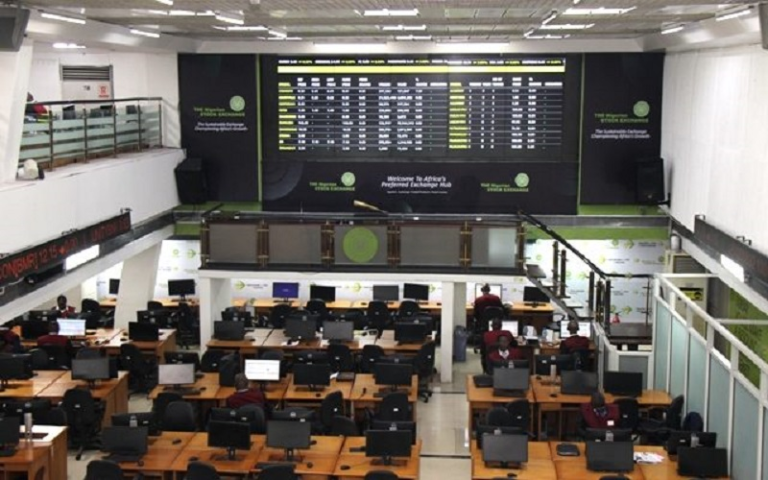
The primary market of the Nigerian Exchange Limited (NGX) will be very active as banks and many issuers approach the market to raise fresh capital in 2025, a capital market operator, David Adonri, told The ICIR.
“Since the global meltdown, this is the first time that the Primary Market is genuinely becoming very busy. Market depth and absorption capacity of the market have increased considerably to assure issuers of resounding success,” he said.
Adonri, who is the executive vice chairman of Highcap Securities Limited, believes the Nigerian equities market has been strengthened with robust technology to handle any number of public offerings and as a result of its enhanced technology, its reach has been extended to every corner of the world.
“The capacity of the Primary Market has also been enhanced by favourable conditions in the secondary market and growing foreign investors’ confidence in the market. I don’t expect an avalanche or crowding of issues in 2025 as the SEC (Securities and Exchange Commission) has a timetable for coming to the market by issuers,” he maintained.
He noted the huge growth of equities that started last year has continued into 2024 with the year-to-date return of the All-Share Index (ASI) appreciated by 35.2 per cent.
“This growth is expected to extend to 2025 due to emerging favourable market and economic conditions. When compared to 2023, aggregate dividends paid by listed companies have increased by 118 per cent in 2024.
“With the anticipated recovery of the manufacturing and telecom sectors in 2025, together with rising investors’ confidence, the profitability and rise in dividend yield of the equities market should be expected,” Adonri added.
On his part, the national president of New Dimension Shareholders, Patrick Ajudua, said that there are more expectations from the banks post-re-capitalization.
“Hence, we anticipated a better dividend payout and capital appreciation on our investment. We also expect to see some mergers and acquisitions in 2025 which are aimed at meeting up the re-capitalisation.
“I don’t think we expect any bonus issues as this may lead to dilution of shares, but we expect that no bank will be cut up in the deadline all things being equal,” Ajudua said.
An investment and portfolio analyst, Abel Ezekiel, noted that capital raising requires strategic planning else it could be flops which is not good for the image of an organisation.
He further said it was mostly the tier-1 banks with a wide range of investors, local and international, and could pool out money where the ones that have come into the capital to raise funds to meet the CBN requirements.
Even some of the banks that issued their rights issues at a price higher than the market price got investors’ patronage.
“This is strange in the capital market. Why is it a rights issue if they are not giving preferential treatment to existing shareholders but have to buy it at a higher price than the market price?
“What is the logic there? What stops me from buying it in the secondary market where I will immediately be entitled to dividends yield when so declared? Ezekiel expressed concern.
He assumed the tier-1 banks banked on their financial muscle, networks and their reach to raise the capital which may be a reason they did it at the time into the fourth quarter of the year when people are burdened with paying children’s school fees and doing other things towards the year’s end.
“Other banks that are watching or on the sideline, it may be they want to reason it out and come out at a favourable and convenient time,” he stressed.
According to Ezekiel, based on what has happened with the offers thus far, it appears it favoured the banks, and that could be a pointer to what should be expected in 2025.
“I believe the market will be liquid and solid enough to accommodate others, knowing fully well that we have more than 12 months for them to strategically come into the market to raise funds.
“I believe they are aligning with their investor’s advisers, counselling not to rust into the market but to wait for a favourable time to come out with their offers,” he said.
He also believes that the market will be able to absorb the remaining banks’ issuance in the coming year, maintaining that it is a question of aligning portfolios and using them to buy more favourable securities.
“Everything is about strategic thinking and return on investment. I think the market will cope with the volume of issuance expected to come in.
“I don’t know if the CBN will give an extension of maybe six months. But I don’t think it will be a do-or-die affair where the CBN will say if a bank doesn’t meet up, it will liquidity the bank. It is not good for the CBN to liquidate a bank and start looking for how to pay depositors and investors their money. I think the market will absorb the issues within the period,” he added.
THE Governing Council of the University of Abuja, chaired by Saddiq Ismaila Kaita, retired air vice-marshal, has named Aisha Sani Maikudi, a professor, as the institution’s seventh substantive vice-chancellor.
The university’s acting director of information, Habib Yakoob, announced the appointment in a statement, on Tuesday, December 31.
Maikudi emerged as the top candidate among 10 people shortlisted and interviewed by the joint council and senate selection board, in line with the university’s established guidelines.
The statement revealed that the decision on Maikudi’s appointment was made during the 77th extraordinary meeting of the governing council held on Tuesday, December 31.
The appointment, which takes effect on January 1, 2025, is for a non-renewable tenure of five years.
Meanwhile, The ICIR reports that her appointment followed a series of controversies surrounding the appointment of a new VC for the institution.
Prior to her appointment as the substantive vice-chancellor, Maikudi served in an acting capacity from July 5, 2024.
Born on January 31, 1983, in Katsina State, Maikudi began her education at Sacred Heart School, Kaduna, and completed her secondary education at Queens College, Yaba, Lagos, in 1999.
She was said to have earned her LLB from the University of Reading in 2004, followed by an LLM in Public International Law from the London School of Economics and Political Science in 2005.
After completing the Nigerian Law School in 2007, she obtained a PhD in International Law from the University of Abuja in 2015.
Maikudi joined the University of Abuja in 2008 as a Lecturer II and rose through the ranks to become a professor in 2021.
During the period, she became the university’s first female head of department in 2013 and first female deputy dean of Faculty of Law in 2018.
She also served as the pioneer director of the University of Abuja International Centre in 2019 and as deputy vice-chancellor (Academic), where she played a key role in improving academic standards.
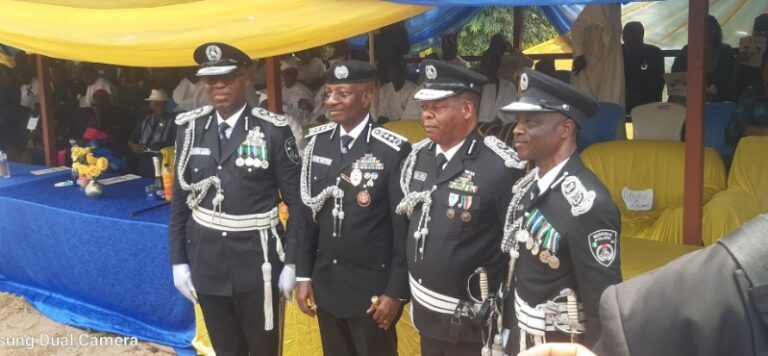
THE deputy inspector general (DIG) of police, Abiodun Sylvester Alabi, and two other top officers have bowed out of the Nigeria Police Force (NPF).
The two other officers, with the rank of assistant inspector general (AIG) of police, are Joshua Ayodeji Ogundele and Olanrewaju Stephen Olaosebikan.
The pulling-out parade in honour of the former officers was conducted at the Police College, Ikeja, Lagos State on Tuesday, December 31.
“I always believe that in my life, I need to serve humanity. In the course of my career trajectory, I have had the opportunity of meeting people daily.
“Beyond that, I love this uniform, apart from the fact that it is a symbol of authority, I love it,” Alabi said.
According to him, an officer’s success hinges on exemplary leadership that subordinates will covet.
“I think I was able to achieve (all I did) with the support of all my men who worked with me and by showing an example as a leader, and by giving them a proper directive,” Alabi said.
He noted that he was eager to go into the next phase of his life, still very gallant and vibrant, to serve his community where he came from.
Alabi advised officers of the Force to be committed to their duties while striving to work within the ambit of the law.
“They need to be ethical always in whatever they are doing or anywhere they find themselves. They must always conform with the ethical standards of the Nigeria Police Force and must observe the rule of law,” Alabi added.
The inspector-general of police (IGP), Kayode Egbetokun, who graced the occasion bid his colleagues farewell.
Pulling Out Parade in honour of DIG Alabi
He said it was a huge accomplishment to rise to the prestigious ranks of AIG and DIG of police.
“It is a testament to hard work, dedication, and resilience.
“I extend my heartfelt congratulations to these my esteemed friends and colleagues, course mates, DIG Abiodun Alabi, AIG Ogundele Ayodeji Joshua, and AIG Olanrewaju Stephen on their outstanding careers,” Egbetokun remarked.
He noted that Alabi, in his final role, was the DIG, Force CID, and as a member of the Force management team, demonstrated extraordinary vision and provided insights that the Force would miss.
“Ogundele last led an enduring legacy at the Force CID Alagon, while Olaosebikan worked closely with him as AIG at the Force Secretariat.”
The IGP noted that officers who served honourably, with integrity and commitment, would retire with a sense of pride and fulfilment.
“They will be remembered in the prayers of the people they served so well and will retire with the peace of knowing that they discharge their duties with distinction.
“They may not retire as billionaires, but they carry with them the greatest wealth of all, the satisfaction of a job well done, and the comforting assurance that, even if forgotten by men, they will forever be remembered by God,” the IGP added.
IN its 2023 supplementary and 2024 Appropriation Act, the Kano State government budgeted billions of naira for the purchase of furniture, renovation of the governor’s lodge and upgrading of the Deputy Governor’s official residence. However, across many communities, access to healthcare remains a challenge. From dilapidated infrastructure to a dearth of medical supplies and health workers, vulnerable populations such as women, children and the elderly continue to pay the price.
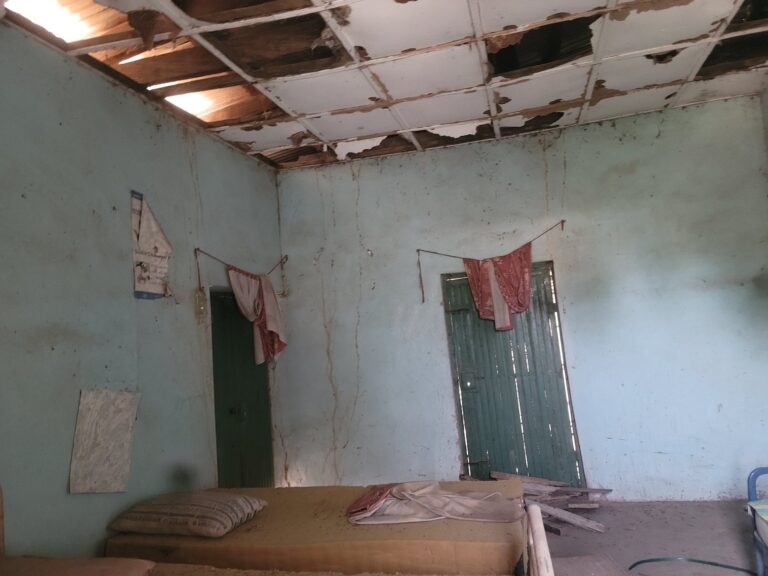
This October, pregnant Amina Kabiru braced herself for the familiar long and tortuous journey from Yola Kazurawa, one of the remotest communities in Gaya Local Government Area (LGA), Kano State to Gaya town, where she receives antenatal care. Her destination is miles away, accessible only by navigating pothole-filled, unpaved roads. Though her community once had a primary healthcare centre, it now lies in ruins with its ceilings collapsed, doors and windows shattered, and the promise of care long forgotten.
But Amina dreads travelling on a motorcycle to Gaya for antenatal. She said it is agonising and discomforting and had led to a previous miscarriage.
“Travelling on foot gets uncomfortable too, especially in the heat,” she said. “But it’s not as painful as bouncing on a motorcycle with my baby.” When exhaustion sets in during the journey, she pauses to rest before pressing on, only to find herself in overcrowded hospitals where the wait for care feels endless.
Staff quarters at an Islamic school converted into a healthcare centre in Yola KazurawaRoad leading to Yola Kazurawa
The Yola Kazurawa Primary Healthcare Centre, built over two decades ago, once served as a lifeline for residents, with doctors, nurses, and health workers providing much-needed care. But those days are a distant memory. Over the years, medical supplies dwindled, health workers stopped coming, and the structure began to decay. Rainwater seeps through the roof’s missing zinc sheets, and the cobweb-covered walls drip with moisture. By 2017, the centre had ceased to function entirely.
For women like Amina, the alternative is traditional birth attendants, many of whom lack the expertise to handle complications. The consequences are devastating. “In some months, at least two women lose their children,” lamented Abubakar Ahmed, the village head of Yola Kazurawa. “Some even give birth at home, often with tragic outcomes.”
Outside the Yola, Kazura PHC
Infant and maternal mortality rates in Kano are among the highest in the Nigeria, with maternal mortality standing at 1,025 deaths per 100,000 live births. According to Budgit’s 2023 State of States report, a majority (74.2 percent) of women in Kano give birth at home, a high rate attributable in part to lack of access to healthcare. While the Kano State government touts free maternal and child healthcare programmes, for women in rural communities like Yola Kazurawa, this promise remains an unreachable mirage.
Inside Yola Kazurawa PHC
Broken promises
In the lead-up to the 2023 elections, residents said that the senator representing Kano South at the National Assembly, Kawu Sumaila visited Yola Kazurawa and promised to renovate the PHC.
He walked through the dilapidated Primary Healthcare Centre (PHC), visibly moved by its state of neglect, and promised to renovate it.
“He entered the PHC and saw how bad things were, but since then, we have not seen him again,” said Muktar Alhassan, a health worker in the community. “This is not the first time politicians have made promises they never keep.”
Frustrated by the inaction, delegates from the community followed up with the senator in July 2024, reminding him of his pledge. He reassured them that he had not forgotten, but no visible progress has been made since the visit.
Entrance into the Sabon Layin Ago PHC
Similarly, state government officials visited the site in January 2023, ahead of the governorship election, acknowledging the dire need for intervention, yet nothing has changed. Today, residents have resorted to using the staff quarters of an Islamic school, where health workers only visit on Mondays to administer immunisations.
The challenge of poor access to healthcare is not exclusive to Yola Kazurawa.
“The impact on vulnerable groups especially women, children, and the elderly is a recurring issue across many communities in Kano State,” said a doctor Musa Bello, who is a public health expert in Kano.
The immediate past chairman of the Nigerian Medical Association (NMA) in Kano, Abdullahi Kabiru, pointed to a systemic failure of prioritisation.
“Primary healthcare is the foundation of any functional health system because it is the closest and most accessible to citizens,” he explained. “It should address at least 70 per cent of the population’s health needs, but that is not the case in Kano or across Nigeria.”
Kabiru, a consultant family physician, noted that the lack of autonomy for local governments exacerbates the issue. “Primary healthcare falls under local governments, yet they lack financial independence. Their allocations are controlled by the state government, which decides how funds are spent,” he said.
Immunisation room inside Sabon Layin Ago PHC
The ripple effect of these structural challenges is devastating.
“Overburdened secondary healthcare facilities and overcrowded hospitals lead to delays in accessing care,” Kabiru added. “Ultimately, this creates a system where preventable conditions become life-threatening.”
Human cost of neglected healthcare in Jibawa community
Between 2021 and 2024, Jibawa community in in Gaya Local Government Area (LGA) suffered devastating losses. According to Yahaya Fulani, the village head, over 15 people, including 10 children and 5 women, died due to the lack of access to healthcare.
“Many of these deaths could have been avoided if we had a functioning healthcare facility,” Fulani lamented.
The Jibawa Health Clinic, the only healthcare facility serving the community’s 13,167 residents, is a picture of neglect. Dilapidated and understaffed, the clinic barely meets even the most basic medical needs. The walls are discoloured with brownish stains, the ceilings have collapsed, and rainwater regularly floods the rooms. Essential medical equipment and drugs are absent, leaving the clinic ill-equipped to conduct tests, make diagnoses, or provide antenatal and delivery care.
Inside Jibawa PHC
The situation is equally dire for patients. “The beds smell terrible because they have been used for years without replacement,” said one frustrated resident. The clinic’s pit latrine is unkempt, surrounded by overgrown bushes, forcing patients to endure unsanitary conditions.
Efforts to draw attention to the worsening state of the healthcare centre have yielded little action. In July 2024, the Gaya Youth Awareness Association took to social media, (archived HERE) appealing to the state government for intervention. However, this was not the first call for help. Concerns raised as far back as 2020, during the tenure of former governor Umar Ganduje, also went unanswered, leaving residents feeling abandoned (archived HERE) and forgotten.
Currently, the clinic operates under severely limited conditions. Only one doctor visits on Mondays, staying from 8 a.m. to noon to address basic needs such as conducting tests, prescribing drugs, and administering immunisations.
“We rely on medical students to fill the gap from Monday to Friday, but they lack the skills to handle complicated cases,” Fulani explained.
As a result, residents are forced to travel 10km to Gaya for medical care, spending over ₦2,500 on transportation which is an expense many households cannot afford.
“In Gaya, we also have to pay for drugs and treatment,” Fulani said.
“If our clinic was functioning, we wouldn’t need to waste money on transport; we could focus on getting the drugs we need.”
The journey to Gaya is especially harrowing for pregnant women. “Carrying them (pregnant women) on a motorcycle is exhausting and painful. You can hear them crying out in pain during the trip,” Fulani added.
In Kaleku, patients pay for everything
In October, 65-year-old Abdulwahab Idris was admitted to the Kaleku Primary Healthcare Centre (PHC) in Damagari, a community in Rogo Local Government Area (LGA), after falling ill with malaria. Upon his arrival, the health worker on duty examined him and handed his sister, Amina Hairy, a list of drugs to purchase.
“They told us they had run out of supplies, so we had to get everything ourselves,” Hairy recalled. “We bought the drugs, including drips, and even paid for transportation.”
What was supposed to be a staff quarters abandoned behind Kaleku healthcare centre
The Kaleku PHC rarely receives regular drug and medical supply shipments from the government. At best, the facility gets a limited stock of malaria treatment drugs, which quickly runs out due to the high volume of patients. When supplies are depleted, the staff must wait months for replenishment.
But the lack of supplies is only one of many challenges plaguing the PHC.
“The infrastructure is woefully inadequate,” said Tijani Rabiu, the officer in charge.
The small facility is grossly insufficient for the number of patients seeking care. It has only three beds, one of which is missing a mattress, forcing patients to share spaces meant for specific purposes.
“Both men and women end up using the antenatal care unit, which is designed for women,” Rabiu explained.
The plight extends to the health workers. Health workers operate in shifts but with nowhere to lay their heads are forced to sleep inside the office. The structure that would have served as a staff quarters, located behind the PHC was abandoned by the government five years ago. Now, it has been overgrown by bushes with the structure already falling off.
“Whenever the walls develop cracks, we raise funds and patch them ourselves,” Rabiu said.
The PHC also lacks basic amenities like a toilet facility, compelling patients to relieve themselves in the surrounding bushes. Drinking water is unavailable, as the well near the PHC is unclean and close to a contaminated river.
“We don’t conduct lab tests or handle serious cases. We desperately need the government’s intervention because working under these conditions is discouraging” Rabiu said.
PHC lacks supplies, toilet facilities, drinking water
A mother of six, Saadata Naziru, has never given birth at the Sabon Layin Ago Primary Health Centre (PHC) in her community. Each time she approached delivery, the health workers were unable to attend to her.
“I had no choice but to travel to Rogo town, about 30km away, to receive care,” she said.
According to Auwal Sanusi, the officer in charge of the PHC, while the facility houses an Outpatient Department, an immunization room, and an antenatal department, it lacks the basic amenities and equipment needed to serve the community.
One of the beds used by patients who come to Sabon Layin PHC
Built in 2005, the PHC is now in a deplorable state. There are no tables or chairs, and the single bed stand available for antenatal patients has a mattress covered with a mat and carton. “Other beds in the facility don’t even have mattresses, and the ceilings are either weak or completely open,” Sanusi lamented.
Sanusi also revealed that the PHC relies on Malaria Rapid Diagnostic Test (RDT) kits and malaria treatment drugs supplied by the Global Fund, as state government supplies are scarce.
“Once these supplies are exhausted, it can take months for the facility to receive replenishments,” he said.
Every Monday, the PHC organises immunisation sessions. However, the lack of a toilet facility forces women and children to relieve themselves in surrounding bushes.
“Even drinking water is a challenge,” Sanusi disclosed.
“Our well is unclean and located close to a river contaminated by all sorts of dirt. When it rains, water floods the PHC, forcing workers to seek refuge.”
The lack of access to healthcare in Kano state can be addressed with budget accountability in terms of allocation and expenditure. Sadly, budget review shows that the current administration does not prioritise healthcare delivery.
Between 2019 and 2023, Kano State consistently met and even surpassed the Abuja Declaration’s target of allocating 15 per cent of the budget to health. The sector received 15 per cent in 2019 and 2020, 16 per cent in 2021, 17 per cent in 2022, and 15.9 percent in 2023. However, this trend sharply reversed in 2024 with the health sector getting N34bn which represents 7.7 percent of the entire budget.
But beyond the decrease is the disconnect between allocation and releases. Analysis of the state government’s budget since 2023 shows that only paltry sums were released for budget lines that have to do with healthcare provisions.
Out of the N4.7bn budgeted for the purchase of medical equipment in 2024, N318m was released in first quarter (Q1) and N10m in second quarter (Q2), taking the total to about N328m which translates to a 7 per cent budgetary release.
Also, out of N3.3bn budgeted for the construction of hospitals and health centres, nothing was released in both Q1 and Q2. Further analysis of the budget shows that out of N17.8bn budgeted for rehabilitation of health centres,N98.6m was released in Q1 and N1.29bn in Q2, taking the total to N1.389bn, which translates to 7.8 percent.
In the 2023 budget, the story was the same. Out of N1.3bn budgeted for the purchase of medical equipment in 2023, N502.8m was released, representing 37.4 per cent. While N1.509bn was budgeted for the construction of health centres, nothing was released. Also, out of N3.6bn earmarked for rehabilitation of health centres, only N24.87m which translates to 0.7 per cent was released.
While the government allocates billions to luxury projects, the reality in underserved communities remains dire. In 2023, Kano State’s budget grew to ₦350bn, up from ₦268bn, following two supplementary budgets of ₦58.1bn and ₦24bn. By 2024, it had soared to ₦536.5bn, after a supplementary budget of ₦99.2bn was signed into law.
“This supplementary budget is not just about increasing spending; it’s about ensuring that we meet the needs of our people,” the governor claimed in a statement.
“We are focused on infrastructural development, enhancing human capital, and making significant improvements in the health and education sectors.”
Government fails to respond to report’ findings
Efforts to get a response from the Kano State Ministry of Health regarding these challenges proved futile. The reporter reached out to the Commissioner for Health, Abubakar Labaran, on November 12 and 13, 2024, but received no response. Follow-up messages sent on November 13 and November 15, along with a Freedom of Information (FOI) request on November 18, went unanswered.
FOI
When contacted, Ibrahim Abdullahi, the Public Relations Officer (PRO) of the health ministry, redirected inquiries to the Primary Healthcare Management Board (PHCMB), stating, “We are a policy-making ministry. You can get all the information you need about primary healthcare from the PHCMB.”
Attempts to reach Nasir, the Director-General of the Kano PHCMB, on November 13 and 15, were unsuccessful. The Board’s PRO, Ali Abdullahi, explained, “I’ve only been here for two weeks, so I don’t have much information about primary healthcare in the state.”
Any way out?
Kabiru emphasised the need for a complete overhaul of the state’s primary healthcare system. “The government must invest in manpower and infrastructure to provide quality care and attract health workers to rural communities,” he said. “This would eliminate the need for residents to spend money on transport or face delays in accessing care.”
A program officer at Budgit Foundation Thaddeus Jolayemi, added that community leaders must take proactive steps to address these challenges.
“They can formally communicate their issues to the local government and follow up to ensure these challenges are addressed,” he said.
In a Community-Based Perception Survey conducted in Kano State between May and June 2024, the Nigeria Health Watch recommended the need to introduce governance frameworks that include community oversight, regular performance audits, and citizen participation in healthcare decisions.
Deputy Director of Media Programmes at the Nigeria Health Watch, Chibuike Alagboso, said that the people need to be active and become aware of their roles are how to hold their leaders accountable for their commitment to healthcare delivery.
“While physical infrastructure such as roads and bridges are needed, we must also learn to judge leaders based on their investment in healthcare provision”. “People cannot travel on the roads if they are sick,”.
Speaking further, he said that beyond the state government, residents of communities must also begin to question what local government authorities are doing with the funds they receive as primary healthcare is under the local government.
The survey also recommended the need to develop policies that prioritize staffing in rural and underserved LGAs through recruitment drives and incentives for healthcare professionals.
This publication is produced with support from the Wole Soyinka Centre for Investigative Journalism (WSCIJ) under the Collaborative Media Engagement for Development, Inclusion and Accountability project (CMEDIA) funded by the MacArthur Foundation.