back to top
Home Blog Page 5

Pate, Atsenuwa to lead WSCIJ’s national conversation on democracy beyond elections

0

IMMEDIATE past Vice-Chancellor of the Federal University Kashere and professor of Communication at Bayero University, Kano, Umaru Pate, will deliver keynote address at the 18th Wole Soyinka Centre Media Lecture Series scheduled for July 13 in Lagos State.

The event, themed Beyond the Ballot: Measuring Democracy Through Security, Welfare, Accountability and Public Trust,” will also feature the public presentation of the Wole Soyinka Centre for Investigative Journalism (WSCIJ) 2025 Journalism & Civic Space Status Report, which will be reviewed by Ayodele Atsenuwa, a professor at the University of Lagos.

In a statement on Monday, the organisers said the lecture would interrogate whether Nigeria’s democracy is delivering meaningful outcomes for citizens beyond elections, with particular focus on governance performance in key sectors namely security, welfare, accountability and public trust.

They stated that the conversation would focus on shifting attention from electoral contests alone to broader questions of how democratic systems translate into real-life impact for citizens.

“The lecture seeks to examine whether democracy is delivering security, welfare, accountability, and public trust,” the organisers said.

The programme will also feature the Democracy Delivery Conversation, a high-level dialogue bringing together journalists, academics, policymakers and civic actors to examine the role of the media in democratic governance.

The discussion will focus on how journalism can strengthen accountability systems and deepen democratic engagement through sustained scrutiny of public institutions.

Participants will explore the role of the media in improving governance outcomes and reinforcing public trust in democratic processes.

The event includes the presentation of the WSCIJ 2025 Journalism & Civic Space Status Report, which documents trends in media freedom and civic participation in Nigeria.

The report continues WSCIJ’s longitudinal tracking of journalism and civic space, building on earlier editions such as “Hushed Voices and the Media’s Defence of Civic Space (2012–2022), Hushed Voices in an Election Year (2023), and Shrinking Freedoms (2024)”.

The organisation said the report provides an evidence-based assessment of developments affecting democratic participation and media freedom in the country.

According to WSCIJ, it examines developments affecting media freedom, civic participation and public accountability, while identifying both opportunities and challenges for democratic governance.

Held annually on July 13 to mark the birthday of Nobel Laureate Wole Soyinka, Grand Patron of WSCIJ, the lecture series has, for nearly two decades, convened stakeholders in journalism, governance and civic advocacy to reflect on democratic accountability.

This year’s edition will bring together journalists, academics, policymakers, civil society actors, development partners, students and citizens to reflect on how democratic performance should be measured beyond elections.

 

Police suspend DPO over alleged N500,000 extortion in Rivers

0

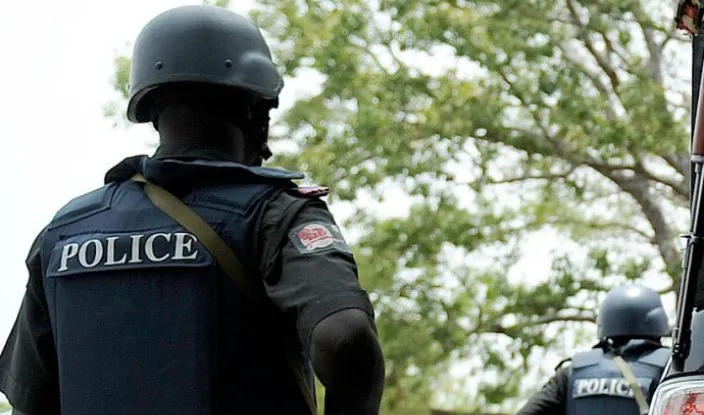
THE Police Command in Rivers State has suspended a Divisional Police Officer (DPO) from office following allegations of extortion and misconduct.

The command’s spokesperson, Blessing Agabe, a superintendent of police, disclosed this to journalists on Monday in Port Harcourt.

Agabe said the action followed reports circulating on social media alleging that the officer collected N500,000 from a suspect to secure his release from detention.

According to the reports, a payment receipt indicated that the money was transferred to an Opay account bearing a name alleged to belong to the DPO.

The reports also alleged that the officer arrested a mother of two and charged her in court after she reported that her husband had assaulted and injured her.

Agabe said the Commissioner of Police in Rivers, Olugbenga Adepoju, had ordered a comprehensive investigation into the allegations.

She stated that the officer was immediately relieved of his duties pending the outcome of the investigation.

“In response to the allegations and in line with the command’s commitment to transparency, accountability and professionalism, the officer has been removed from office pending a thorough and impartial investigation,” she said.

The police spokesperson said the commissioner had expressed concern over the allegations and reaffirmed the command’s zero-tolerance stance to misconduct.

According to her, the police command will not condone abuse of office or any conduct capable of undermining public confidence in the Nigeria Police Force.

“Adepoju has assured residents that the investigation will be conducted diligently, professionally and without bias,” she added.

Agabe reiterated the command’s commitment to maintaining high standards of integrity, discipline and service delivery.

She also encouraged residents to continue reporting cases of alleged misconduct through appropriate channels.

The spokesperson assured the public that any officer found culpable after investigation would face appropriate disciplinary measures in accordance with extant regulations. (NAN)

Court remands Sowore in Kuje Correctional Centre

0

The Federal High Court in Abuja on Monday ordered the remand of Omoyele Sowore, the presidential candidate of African Action Congress (AAC), in Kuje Correctional Centre.

Justice Mohammed Umar, in a short ruling, ordered Sowore to be kept in the correctional centre pending the hearing and determination of his motion for stay of the order for revocation of his bail and bench warrant.

Umar also dismissed Sowore’s earlier application seeking the judge’s recusal from the case on the ground of alleged bias.

The judge then adjourned the matter until June 24 for hearing of the application for stay.

The News Agency of Nigeria (NAN) reports that the motion for stay was filed by the defendant’s new lawyer, Adeyinka Olumide-Fusika, a senior advocate.

NAN earlier reported that Sowore, also the publisher of Sahara Reporters, arrived at the court in company of members of his group with placards.

Umar had, on June 16 revoked a bail granted to Sowore following his failure to appear in court his trial.

The judge, in a ruling on an oral application made by the lawyer to the State Security Service (SSS), Akinkolu Kehinde, a senior advocate, also issued a bench warrant for his arrest.

The SSS is prosecuting Sowore for allegedly making false claims against the person of President Bola Tinubu by referring to him as “a criminal” in a post he made on his “X” and Facebook accounts.(NAN)

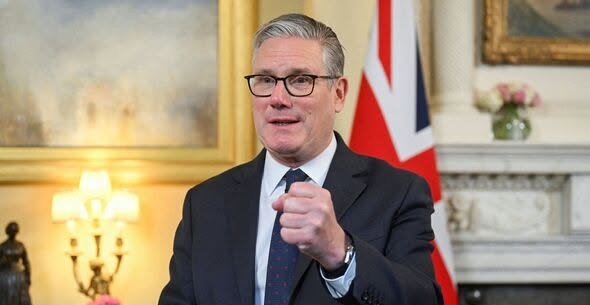
UK Prime Minister Keir Starmer resigns

British Prime Minister Keir Starmer has announced his resignation as leader of the Labour Party after less than two years in office.

Speaking outside 10 Downing Street on Monday, June 22, an emotional Starmer said he had always acted in what he believed were the country’s best interests.

“Every decision I have taken has been about putting the country I love first. That is why I will resign as leader of the Labour Party,” he said.

Starmer said the Labour Party would begin the process of selecting a new leader in July and confirmed that he would remain Prime Minister until a successor is chosen before Parliament returns from its summer recess in September.

“I will remain in post as Prime Minister until the contest is complete, and I will do everything I can to ensure an orderly handover of power,” he added.

The announcement came after months of mounting pressure on Starmer’s leadership, fuelled by a series of scandals, high-profile resignations and growing dissatisfaction within the party. Until the weekend, he had insisted he would remain in office and fight off calls to step down.

Attention has now turned to veteran politician Andy Burnham, who returned to Parliament after winning a crucial by-election on Thursday, strengthening expectations that he could emerge as a leading contender for the Labour leadership.

Starmer’s departure means Britain is on course to have its seventh Prime Minister in a decade, underscoring a period of prolonged political instability that began after the 2016 Brexit referendum.

Although Starmer was credited with rebuilding Labour and leading the party to a decisive election victory in 2024, ending 14 years of Conservative rule, his government struggled to maintain public support.

His administration faced criticism over welfare reforms, defence spending plans and a controversial diplomatic appointment involving Peter Mandelson, which triggered calls for his removal earlier this year.

Starmer also faced increasing pressure from the rising popularity of the anti-immigration Reform UK party, which made significant gains in local elections in May.

In his farewell remarks, Starmer pledged his full support for his successor.

“I will also give my successor my full and unequivocal support, knowing that they will inherit a Britain that is far stronger and fairer than the one I inherited two years ago,” he said.

In 2024, Starmer won the biggest parliamentary majority for Labour since 1997 after 14 years of ‌Conservative-led government.

But opinion polls have shown the 63-year-old Labour Party leader and former lawyer is deeply unpopular with voters after a series of policy missteps and scandals.

This led to mounting pressure from his own Labour Party on him to quit following the decisive by-election win by his rival, Andy Burnham, to claim a parliamentary seat in North-West England.

AIJC opens entries for African Investigative Journalist of the Year Award

AFRICAN journalists and investigative journalists are invited to submit entries for the African Investigative Journalist of the Year (AIJY) Award, one of the continent’s leading honours recognising excellence in investigative journalism.

Organised by the Wits Centre for Journalism and the African Investigative Journalism Conference (AIJC), with support from Absa Africa, the award celebrates outstanding investigative stories that uncover hidden truths, hold powerful individuals and institutions accountable, and serve the public interest.

The award is open to journalists or teams working across all media platforms, including print, broadcast, and digital media. Eligible entries must be investigative stories focused on Africa and published or broadcast in African media outlets during the qualifying period specified by the organisers.

The overall winner will receive a cash prize of US$5,000. In addition, finalists will have their flights, accommodation, and conference fees covered to attend the African Investigative Journalism Conference, where the award ceremony takes place.

Entries will be assessed based on originality of the investigation and its revelations; quality, persistence, courage, and innovation demonstrated during the reporting process; and impact of the story and its contribution to public accountability and public interest.

Applicants are typically required to submit copies of the published or broadcast investigative work; a short biography and photograph of each entrant, and a publication or broadcaster logo.

Others are a brief motivation outlining the story’s background, impact, challenges, and investigative process, and additional materials, such as transcripts for broadcast entries, where applicable.

Interested journalists should review the official rules and submission guidelines before sending their entries through the designated application platform.

Applications are open to investigative journalists from across Africa who have produced impactful reporting that advances transparency, accountability, and public interest journalism.

The deadline for applications is July 10, 2026.

Interested applicants can apply here.

Police recover lifeless twins from drain in Onitsha, detain suspects 

0

THE Anambra Police Command has recovered the lifeless bodies of a set of twins inside a drain in Okpoko, near Onitsha, Anambra State.

The Commissioner of Police in the state, Ikioye Orutugu, disclosed this in a statement issued by the command’s spokesperson, Tochukwu Ikenga, a superintendent of police.

Orutugu stated: “The police operatives attached to Okpoko Divisional Police Station, in the early hours of June 21, 2026, received the information about the discovery of the lifeless bodies of a set of twins abandoned in a drain along Cooperative Street, Nwokedi, Okpoko.

“Following the report, operatives immediately swung into action, secured the scene, gathered vital evidence, and commenced investigations. The preliminary investigation led to the identification and arrest of the biological parents of the infants, who are currently in police custody.”

He further stated that the suspects were assisting investigators in unravelling the circumstances surrounding the unfortunate incident.

He condemned the act in strong terms, noting that every child deserves protection, care, and the opportunity to live.

“This discovery of lifeless bodies of twin infants in a drain at Okpoko is a disturbing case of man’s inhumanity to man and a gross violation of the sanctity of human life,” he stated.

The police chief gave assurance that anyone found culpable in the incident would face the full weight of the law.

He added that investigation into the matter was ongoing and further developments would be communicated to the public, in due course.

Orutugu commended the operatives for their swift response and diligent investigative efforts that led to the arrest of the parents of the deceased babies soon after the incident was reported. (NAN)

Lassa fever deaths rise to 214 as fatality rate reaches 25% – NCDC

LASSA fever has claimed 214 lives in Nigeria, with the case fatality rate climbing to 25.0 per cent.

This was contained in the Nigeria Centre for Disease Control and Prevention’s (NCDC) Lassa Fever Situation Report for Week 23 (June 1 to June 7).

This, the agency said is up sharply from 18.9 per cent during the same period in 2025. It said that both suspected and confirmed cases have also increased compared to 2025.

“New confirmed cases held steady in week 23, matching the count from week 22. Infections were reported in Edo, Ondo, Bauchi and Ebonyi.”

The NCDC explained that no new healthcare worker infections were reported during the week, adding that the outbreaks had spread across 23 states and 109 Local Government Areas since January 2026.

According to the organisation, five states account for 84 per cent of all confirmed cases.

“Ondo leads with 28 per cent, followed by Bauchi 25 per cent, Taraba 15 per cent, Edo 10 per cent, and Benue six per cent. The remaining 16 per cent of cases are spread across 18 other states with confirmed infections,” it said.

The Centre said young adults were most affected, and the predominant age group fell between 21-30 years, with cases ranging from one to 93 years and a median age of 30 years.

The National Lassa fever multi-partner – the multi-sectoral Incident Management System (IMS) – have remained activated and has been supporting response activities at federal, state and LGA levels, noted the NCDC.

The ICIR reports that Lassa fever kills scores of Nigerians yearly, with the Nigerian government often appearing helpless to contain the crisis.

Between January and June 29, 2025, Nigeria recorded 790 confirmed cases of Lassa fever and 148 deaths, according to a situation report by the (NCDC).

A situation report by the NCDC revealed that 806 cases of Lassa fever were recorded across the country in the first quarter of 2024.

Also, the NCDC report, analysed by The ICIR, showed that the virus killed 150 people within the period.

The Centre said Nigeria might have recorded the highest number of Lassa fever cases in 2023, with 8,542 suspected cases, 1,170 confirmed cases, and 200 deaths across 28 states.

The confirmed cases reported that year indicated a 9.7 per cent increase from those reported in 2022.

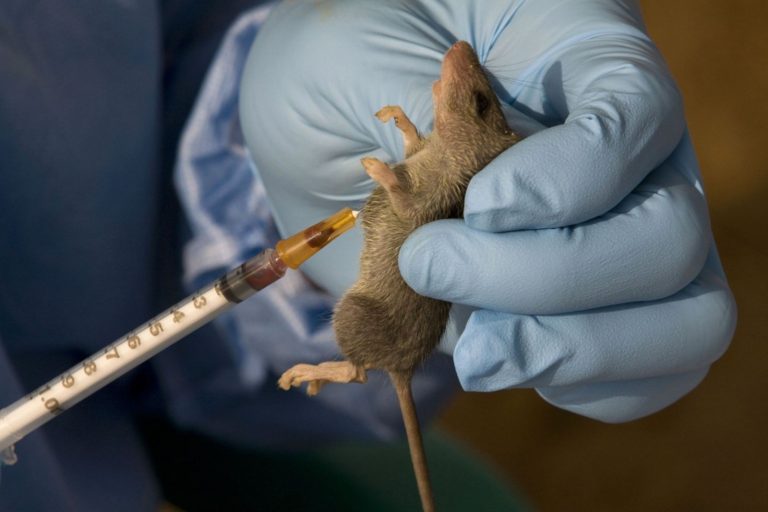
NCDC describes Lassa fever, which causes acute viral haemorrhagic fever, as a virus caused mostly by the type of rodents known as the multimammate rat or the African rat.

The disease can be spread through direct contact with urine, faeces, saliva, or the blood of infected rats or contaminated objects, faeces, saliva, or the blood of infected rats.

Person-to-person transmission can also occur through direct contact with an infected person’s blood, urine, faeces, vomitus, and other body fluids.

SERAP gives N’Assembly 7 days to refund N110bn vehicle allowance

0

THE Socio-Economic Rights and Accountability Project (SERAP) has issued a seven-day ultimatum to Senate President Godswill Akpabio and Speaker of the House of Representatives, Tajudeen Abbas, to refund N110 billion vehicle procurement and support allowances given to lawmakers to the nation’s treasury following a Federal High Court judgment declaring the scheme unlawful.

SERAP stated this in a statement urging the National Assembly to ensure that all senators and members of the House of Representatives return “every kobo received under the controversial scheme.”

“We urged Mr Akpabio, Mr Abbas and the National Assembly to immediately establish effective mechanisms to ensure that all future procurements and expenditure of public funds comply strictly with due process requirements and are guided by the principles of transparency, accountability and value for money,” the statement read.

The ICIR reported that a landmark judgment delivered by Justice Yellim Bogoro of the Federal High Court, Lagos, in Suit No. FHC/L/CS/1606/2023 held that the expenditure violated Nigeria’s procurement laws, constitutional provisions, and public trust.

According to the judgment, the National Assembly spent N40 billion to procure 465 vehicles for lawmakers, and approved an additional N70 billion support allowances for newly elected members without complying with statutory procurement requirements.

Describing the court’s decision as a watershed moment for accountability in public finance, SERAP argued that the ruling leaves no room for lawmakers to retain benefits obtained through what the court declared unlawful spending.

“Flowing from Justice Bogoro’s judgment, there must be consequences and full restitution for the lawmakers’ failure to comply with their constitutional and statutory obligations, particularly in relation to the unlawful expenditure of the N110 billion, as found by the Court,” the statement added.

The accountability organisation warned that allowing legislators to retain vehicles, allowances or any benefits arising from the transaction would amount to endorsing impunity and weaken public confidence in democratic institutions.

It maintained that public officials should not be permitted to profit from actions that have been judicially declared unconstitutional, calling for sweeping reforms in the National Assembly’s budgeting and procurement processes.

“Restitution is necessary to uphold the rule of law, restore public trust, and ensure accountability for violations of constitutional and statutory duties,” it stated.

The organisation urged Akpabio, Abbas and the leadership of both chambers to institutionalise public hearings on the National Assembly’s budget during every budget cycle and insisted on the proactive publication of detailed budgetary allocations and expenditure records to enable greater public scrutiny and participation.

The demands come amid growing calls for transparency over the National Assembly’s finances and renewed public debate about the cost of governance, with advocates arguing that compliance with procurement laws is essential to restoring confidence in public institutions and ensuring accountability in the management of taxpayers’ funds.

APC dominates five of six bye-elections as PDP retains Rivers senate seat

THE All Progressives Congress (APC) recorded a sweeping victory in five of the six bye-elections conducted across several parts of the country on Saturday, June 20, while the Peoples Democratic Party (PDP) secured the Rivers South-East Senatorial District seat.

The bye-elections, organised by the Independent National Electoral Commission (INEC), were held to fill vacancies created by deaths and appointments that left legislative seats vacant in Nasarawa, Enugu, Ondo, Kano, Kebbi and Rivers states.

The outcomes of the election in five of the six states further strengthened the APC’s legislative presence across the country, with the ruling party winning four senatorial seats, one House of Representatives seat and a state assembly seat.

Faduyile reclaims Ondo South for APC

In Ondo State, APC candidate Dayo Faduyile won the Ondo South Senatorial District bye-election with 68,474 votes.

The election was conducted to replace former senator Jimoh Ibrahim, who was appointed Nigeria’s Permanent Representative to the United Nations.

INEC Returning Officer, Gbenga Solomon-Ibileye, announced the result in Okitipupa on Sunday, June 21, declaring Faduyile the winner after polling the highest number of votes. His closest challenger, Adeolu Akinwunmi of the Allied People’s Movement (APM), garnered 1,411 votes, while candidates of the Action People’s Party (APP) and Boot Party (BP) secured 213 and 70 votes, respectively.

The election was held across Okitipupa, Ilaje, Ese-Odo, Irele, Odigbo and Ile-Oluji/Oke-Igbo local government areas.

Envulu-Anza defeats rivals in Nasarawa North

In Nasarawa State, APC candidate Danladi Envulu-Anza emerged victorious in the Nasarawa North Senatorial District bye-election, polling 45,362 votes.

The seat became vacant following the death of Senator Godiya Akwashiki from a prolonged illness.

Declaring the result in Akwanga, Returning Officer Aminu Ali said Labour Party candidate and former Information Minister Labaran Maku scored 12,931 votes, while PDP candidate Emmanuel David Ombugadu secured 11,570 votes.

Shortly before the declaration, Labour Party officials staged a walkout from the collation centre, alleging irregularities in the collation process. Maku had earlier raised concerns over BVAS malfunctions and ballot-related issues in some polling units across the senatorial district.

APC records landslide victory in Enugu North

The APC also secured a commanding victory in Enugu North Senatorial District, where Ikeje Asogwa polled 162,360 votes to defeat PDP candidate Nestor Ezeme, who garnered 9,299 votes.

The bye-election was conducted to replace Senator Okey Ezea, who died in November 2025.

Announcing the result in Nsukka, Returning Officer Christian Ezeibe said Asogwa scored the highest number of lawful votes cast and satisfied all constitutional requirements.

According to INEC, 184,094 voters were accredited out of the 727,340 registered voters in the district.

In his acceptance speech, Asogwa pledged to provide quality representation to the people of the six local government areas that make up the senatorial zone.

Shuaibu wins Dawakin Kudu/Warawa federal constituency poll

In Kano State, APC candidate Rabiu Shuaibu won the Dawakin Kudu/Warawa Federal Constituency bye-election with 35,356 votes.

INEC Returning Officer Umar Sani announced the result, noting that Lawan Garba Haruna of the APM polled 268 votes, while Labour Party candidate Abubakar Yahaya Mohammed secured 98 votes.

The bye-election was conducted following the death of the constituency’s former representative.

INEC officials described the exercise as peaceful and orderly, although voter turnout was relatively low. Major opposition parties in Kano, including the New Nigeria Peoples Party (NNPP) and the PDP, did not participate in the contest.

Security personnel deployed under the Inter-Agency Consultative Committee on Election Security monitored the process across polling units.

Aiki wins Zuru assembly bye-election

In Kebbi State, APC candidate Rabiu Garba Aiki emerged victorious in the Zuru State Constituency bye-election for the State House of Assembly.

According to INEC, Aiki polled 4,871 votes to defeat Labour Party candidate Aliyu Muhammad, who secured 168 votes.

The election was held to fill the vacancy created by the death of former Speaker of the Kebbi State House of Assembly, Muhammad Usman Zuru.

INEC said 5,156 voters were accredited out of 109,385 registered voters, while 95 votes were rejected and 5,055 valid votes were recorded.

The election witnessed generally low voter turnout across the constituency’s 10 wards, with the APC maintaining a clear lead throughout the collation process.

Nwogu gives PDP sole victory in Saturday’s polls

The PDP’s only success came in Rivers State, where Olaka Nwogu won the Rivers South-East Senatorial District bye-election.

Nwogu polled 46,961 votes to defeat APC candidate Osarokaka Ebenezer Erewari, who secured 1,647 votes. Douglas Fabeke of the Action Alliance scored 1,175 votes, while Labour Party candidate Sam Kinani garnered 367 votes.

The election was conducted to replace Senator Barry Mpigi, who died in February.

Declaring the result in Bori, Returning Officer Rosemary Ogu said Nwogu satisfied all constitutional requirements and was duly returned elected.

Although INEC acknowledged reports of technical glitches involving the Bimodal Voter Accreditation System (BVAS) in some polling units, the commission said backup devices were deployed, and technical teams promptly resolved the issues.

The ICIR reports that the bye-elections were held alongside the Ekiti State governorship election, where Governor Biodun Oyebanji of the APC secured a second term in office, further boosting the party’s performance ahead of the 2027 general elections.

Less than 40% of registered voters participated in Ekiti governorship poll- YIAGA Africa

LESS than 40 per cent of the more than one million registered voters participated in Saturday’s governorship election for Ekiti State, according to YIAGA Africaa leading Nigerian civic society and election observer group. 

The governorship election, conducted by the Independent National Electoral Commission (INEC) and observed by local and international observers as well as the media, had 1,059,360 registered voters.

Briefing journalists on the outcome of the exercise, which saw the re-election of incumbent Governor Biodun Oyebanji of the All Progressives Congress (APC), the Chairperson, YIAGA Africa Observation Group for the Ekiti Election, Aisha Abdullahi, said estimated voter turnout for the election was between 34.1 per cent and 38.2 per cent adding that the data tallied with INEC’s official turnout figure estimated at 38.7 per cent.

She said the organisation deployed 250 observers, 22 mobile observers and 16 results collation observers across the state’s 16 Local Government Areas (LGAS).

Reacting to the deployment of the Bimodal Voters Accreditation System (BVAS) for the election, Yiaga Africa said the devices functioned properly in 87 per cent of polling units and malfunctioned in 13 per cent of the polling units, but were later fixed. Abdullahi said in 10 per cent of polling units, some voters were refused accreditation because the BVAS did not verify their PVC’s or authenticate their fingerprints or facial biometrics.

“In 14 per cent of polling units, voters who presented what looked like a printed slip that contained their details were accredited by the BVAS and allowed to vote without a PVC. At 17 per cent of polling units, it was possible to see how a voter’s ballot paper was marked when it was put in the ballot box at some point throughout the day. Voters crowded the polling officials in 11 per cent of polling units,” the NGO noted.

The organisation reported its findings on the vote counting, noting that at 98 percent of polling units, officials displayed each marked ballot paper to everyone present. “At 89 per cent of polling units, the official results were posted for the public to see. At 88 per cent of polling units, presiding officers used the BVAS to scan/take a snapshot of the Result Form EC8A; A and transmit to the IREV.”

She further said 90 per cent of polling units transferred the results from validated Form EC8A to the e-EC8A on the BVAS.