Home Blog Page 585

Court stops Kano govt from reinstating Sanusi as Emir

0

A FEDERAL High Court sitting in Kano has granted an ex-parte order stopping the state Governor Abba Yusuf from reinstating Muhammadu Sanusi II as Emir of the state.

The court also stopped the state from implementing the new emirate law, which saw five emirs dethroned from their seats.

The suit, with number FHC/KN/CS/182/2024, was filed by one Sarkin Dawaki Babba (senior councillor at the Kano emirate), Aminu Babba-Dan’Agundi.

The applicant prayed for an order to suspend the implementation of the new law made by the Kano State House of Assembly.

Dan’agundi joined the state government, the state House of Assembly and its Speaker; the Attorney-General of the state; the state Commissioner of Police; the Inspector-General of Police; Nigeria Security and Civil Defence Corps; and the State Security Service (SSS) as respondents.

The presiding judge, Justice Ahmad Liman, after listening to the Applicant, granted leave to the Plaintiff/Applicant to issue and serve their Concurrent Originating Motion as well as all other court processes on the 6th Defendant (IGP) in FCT Abuja and outside the jurisdiction of the Honourable Court.

With the order of the court, the reinstatement of Muhammadu Sanusi II as Emir of Kano is expected to be put on hold.

“The court granted: “An order of interim injunction of this honourable court suspending, not giving effect to, not implementing the operation of the Kano State Emirate Council (repeal) Law, 2024 (1445 A.H.), as they affect all offices and institutions of the Emirates Council created under the provision of the Kano State Emirate Council Law, 2019 (1441 A.H.).

“This Honourable Court restraining the 5th to 8th (security agencies) from enforcing, executing, implementing and operationalizing the Kano State Emirate Council (repeal) Law, 2024 (1445 A.H.)

“In the alternative to relief 3 above, an order of of interim injunction of this honourable court for the maintenance and preservation of the subject matter and or the preservation of status quo by all the parties to this suit, pending the hearing and determination of the Originating Motion before this Honourable Court as well as an AN ORDER of accelerated hearing of this matter.

“The 5th, 6th, 7th and 8th respondents are hereby directed to ensure and maintain the peace and security in the state pending the determination of this application,” the judge ruled.

The judge adjourned the case to 3rd June 2024 for hearing of the Fundamental Rights application.

The ICIR reported how Governor Abba Yusuf, on Thursday, May 23, announced the reinstatement of Muhammadu Lamido Sanusi as the 14th Emir of Kano state.

The governor made the announcement immediately after he assented to the reversal of the emirate council law, which split the emirate into five councils in 2019.

Addressing a media briefing after signing the law on Thursday, May 23, Yusuf directed the embattled monarchs to vacate official residences and palaces. 

He also asked them to hand over the properties to the Commissioner of Local Government and Chieftaincy Affairs within two days.

The ICIR reported that the State House of Assembly after concluding the amendment of the Emirate Council Law of 2019 that created five emirates, announced the dethronement of the four emirs.

The decision was taken during plenary on Thursday, May 23, 2024.

According to the bill which passed the second and third reading on Thursday, district heads appointed or promoted under the law are also required to return to their previous positions by the new law.
ALL THE DATA: Tinubu’s one year in office

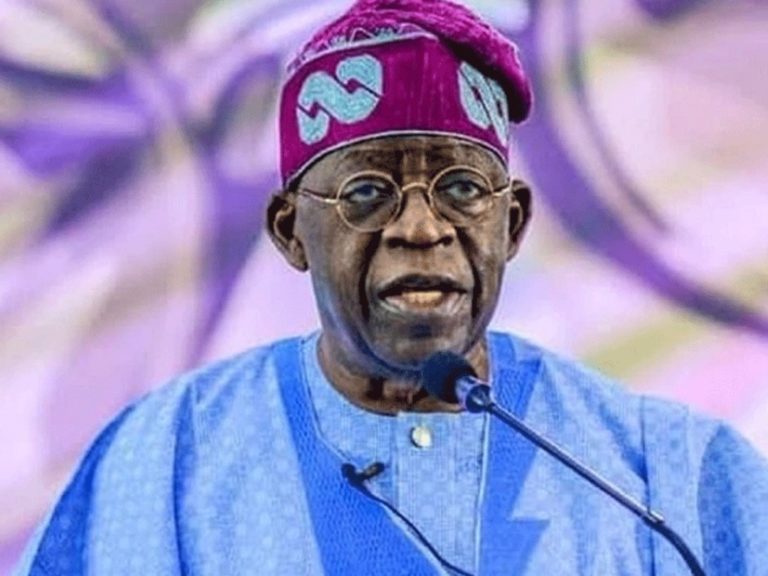
ON May 29, 2023, President Bola Tinubu assumed office as the 16th president of Nigeria, succeeding former president Muhammadu Buhari.

Tinubu, who contested under the All Progressive Party, pulled 8.79 million votes to defeat the other 17 candidates who contested for the seat on February 25, 2023.

The ICIR reported how the votes secured by Tinubu were equivalent to three out of 10 Nigerians who participated in the electioneering process. Further findings also showed that the 2023 election had the lowest turnout since 1999.

However, within one year in office, several policies have been enacted by the president and members of his cabinet which have directly impacted the economy, foremost, increasing indicators, such as inflation rate, food inflation, price of transportation, and prices of crude oil products among others, the ICIR reports as part of the series “Tinubu’s one year in office”.

Very notable, among these policies, was the removal of fuel subsidy while Tinubu was giving his inaugural address. Others include the devaluation of the naira in the foreign exchange market, the introduction of new taxes and increments in tariffs, like electricity.

The ICIR reported how the president introduced several palliative measures to cushion the effect of economic hardship.

For this report, The ICIR monitored socio-economic indicators between May 29, 2023, and April 30, 2024, comparing the figures when the president assumed office to one year after his assumption. Here is a list showing the increase in one year;

  • Inflation Rate: When Tinubu assumed office in May 2023, Nigeria’s inflation rate, according to the National Bureau of Statistics (NBS) was 22.41 per cent. However, consecutively, the figures rose every month to become the highest surpassing the 2005 and 1996 figures. The latest figure shows that the inflation rate is 33.2 per cent as of April 2024. 
  • Food inflation: In one year, the food inflation rate increased by 15.17 per cent from 24.82 per cent recorded in May 2023 to 40.01 per cent as of March 2024.
  • Eating healthy: Also, the cost of eating a healthy diet rose from N503 in May 2023 to N982 in March 2024. This is an increase of 95.23 per cent in one year
  • Transportation: The aftermath effect of the petrol subsidy’s removal increased the transportation cost. Before the removal, the average cost of a single journey on a motorcycle was N464.55. When compared after one year, the price increased by 1.6 per cent to N472.16. Also, the cost of a bus journey within a city increased by 46.2 per cent from N649.59 to N969.32. The cost of a bus journey within two states increased by 78.7 per cent from N4002.16 to N7152.97. For air transportation, the cost of a single-route journey increased by 18.7 per cent from N74,948.78 to N88,964.86. Meanwhile, for a single journey on water, the cost from N1,045.15 to N1,384.32, an increase of 32.5 per cent.
  • Exchange Rate: When Tinubu assumed office, the naira was exchanged at N461 to 1 dollar ($) but the president took steps to abolish the multiple exchange rate system. This increased the rate by 226.80 per cent to N1510/$1, after consequently rising until February 2024. As of April 204, the average rate was N1215/$1.
  • Crude oil products: In one year, there was also an increase in the price of petrol, diesel, kerosene and gas at pump stations. The average price of a litre of petrol rose by 192.63 per cent in one year from N238.11 to N696.79. Also, a litre of diesel rose by 58.85 per cent from N844.28 to N1,341.16. While the price of a litre of kerosene rose from N1,206.05, by 12.30 per cent, to N1,354.40. For 1kg of gas, the price increased by 41.99 per cent from N928.45 to N1,318.32.

Other data indicators

  • Budget: Tinubu presented his first budget of N27.5 trillion to the National Assembly in November 2023. The budget was however increased by 4.36 per cent when it was passed in January 2024 to N28.7 trillion. The ICIR reported several stories on frivolous items contained in the budget.
  • Federal Allocation: Between June 2023 and February 2024, according to data gathered from NBS, the Federal Allocation Account Committee (FAAC) approved a total of N14.6 trillion to be shared between the three tiers of government.
  • Travel: Reports monitored by The ICIR also showed that in one year, the president visited 13 countries within one year. Guinea Bissau and Saudi Arabia were visited twice. 
  • Insecurities: According to data filtered from the Armed Conflict Location and Event Data, (ACLED), between June 2023 to the end of April 2024, a total of 7,828 people were killed in various insecurity attacks.

International Breweries get N588.28bn rights issue approval amid financial losses

THE International Breweries Plc said it has gotten the approval of the Nigerian Securities and Exchange Commission to proceed with the issuance of an N588.28bn Rights Issue to shareholders.

Investopedia described the ‘Right Issue’ as an invitation to existing shareholders to purchase additional new shares in the company.

The company disclosed this in a statement signed by its Secretary, Marian Reginald-Ukwuoma, on Wednesday, May 22.

It stated that the rights issue would offer 161,172,395,100 ordinary shares at two Kobo each at N3.65 per share valued at N588.28 billion.

“International Breweries Plc is pleased to notify its esteemed Shareholders, Stakeholders, Nigerian Exchange Limited, and the general public, that the Company has obtained approval from the Securities Exchange Commission to offer to the shareholders the proposed Rights Issue of 161,172,395,100 Ordinary Shares of 2 Kobo each at N3.65 Per Share, based on six (6) new ordinary shares for every one (1) existing ordinary share held,” International Breweries stated.

It said the qualification date for the rights issue was May 2, 2024, while the application list opened on May 21 and would close on June 10.

Shareholders of International Breweries had in February this year approved the company’s request to raise additional equity capital through a rights issue to existing shareholders.

The rights issue will help the company re-strategize its operations buffeted by the foreign exchange unification, which led to huge revaluation losses reported last year.

International Breweries has been facing escalating financial losses over the past half-decade, as reported by The ICIR in August 2023 that the consumer goods company despite revenue posted losses across various margins.

In its 2023 financial results, the company posted a loss after tax of N87.64 billion from the N26.84 billion loss reported in 2022.

Its loan portfolio also stood at N374.34 billion. Notably, a $424 million loan from Citi Bank in 2018, with an outstanding balance of $389.08 million (2022: $309 million), was rolled over in 2021 for an additional three-year period.


READ ALSO:


The move to raise the rights issue is a strategic plan to address its financial difficulties.

At its Extraordinary General Meeting in April, the company proposed and received approval for a shareholder convertible loan of $379.9 million from AB InBev Nigeria Holdings BV to repay the Citi Bank loan.

The funds from the shareholder loan are to be used for any shares subscribed to by AB InBev Nigeria Holdings BV in the company’s Rights Issue.

Lamido Sanusi reinstated as emir after four years

0

KANO Governor Abba Kabir Yusuf, on Thursday, May 23, announced the reinstatement of Muhammadu Lamido Sanusi as the 14th Emir of Kano state.

The governor made the announcement immediately after he assented to the reversal of the emirate council law, which split the emirate into five councils in 2019.

This means that all offices established under the former law and the emirs enthroned during the administration of the former governor, Abdullahi Ganduje, have been set aside.

Addressing a media briefing after signing the law on Thursday, May 23, Yusuf directed the embattled monarchs to vacate official residences and palaces. 

He also asked them to hand over the properties to the Commissioner of Local Government and Chieftaincy Affairs within two days.

The ICIR reported that the State House of Assembly after concluding the amendment of the Emirate Council Law of 2019 that created five emirates, announced the dethronement of the four emirs.

The decision was taken during plenary on Thursday, May 23, 2024.

According to the bill which passed the second and third reading on Thursday, district heads appointed or promoted under the law are also required to return to their previous positions by the new law.

It also revived the single emirate system in the state, vesting constitutional powers to appoint a new emir in the State Governor Abba Yusuf alone.

Under the immediate past administration led by Abdullahi Ganduje, the previously existing single emirate system was abolished by the law that has now been amended.

Ganduje established the Bichi, Karaye, Gaya, and Rano emirates in addition to the Kano emirate.

Initially, the Kano State High Court nullified the creation of the new emirates. However, the lawmakers in 2019 passed a fresh law that brought about multiple emirs.

The state government then dethroned the existing Kano emir Lamido Sanusi citing insubordination and political interference as reason. He was replaced by Aminu Ado-Bayero, who was transferred from the Bichi emirate to Kano.

Before Sanusi was deposed, the ex-governor’s move to create new emirates was already being seen as an attempt to reduce the emir’s authority.

Sanusi served as the Governor of the Central Bank of Nigeria (CBN) from 2009 to 2014. He was suspended by former president Goodluck Jonathan in 2014.

Speaking on the amendment, Majority Leader of the House Lawan Dala told journalists that the creation of additional emirates through the amended law defeated the aim of the council, which was to serve as a custodian of culture.

The Kano State Assembly also adopted a motion to create a new second class emirate council in Kano on Thursday.

Why we want old National anthem back – Lawmakers

0

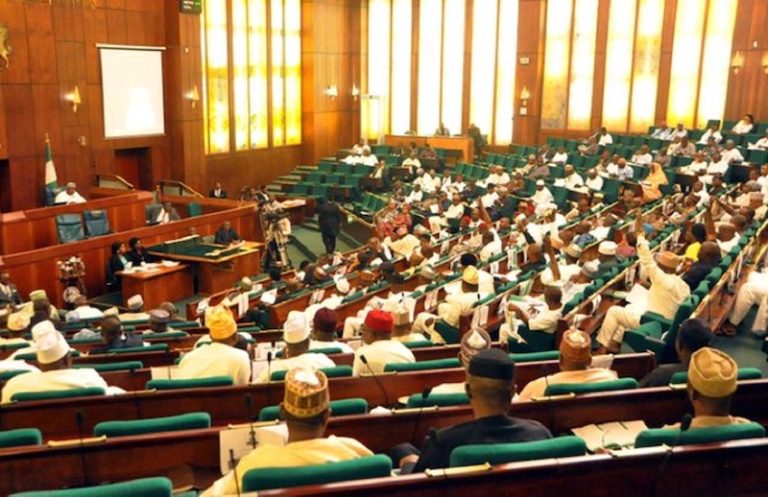
FEDERAL Lawmakers in both the Senate and the Federal House of Representatives have given reasons for their support of the bill to revert to the old national anthem, “Nigeria We hail thee”.

This followed the passage of a bill to revert to the old national anthem “Nigeria, We Hail Thee” which passed the second reading at the Nigerian Senate, on Thursday, May 23.

The bill was also passed by the Federal House of Representatives on Thursday, having scaled the first, second and third reading.

Providing insight into the reason for the passage of  “A Bill for an Act to Provide for National Anthem, 2024,”  the Senate leader, Bamidele Opeyemi,  who sponsored the bill, said the old anthem aligns with the vision of President Bola Tinubu’s administration and will promote national unity.

The old anthem, “Nigeria, We Hail Thee,” whose lyrics were written by Lilian Jean Williams in 1959, and sung between 1960 and 1978, was replaced with the current one “Arise, O Compatriots” in 1978.

While lending support to the motion, a senator representing Enugu North, Okechuukwu  Ezea, explained that the old anthem evoked more emotional connections with the Nigerian people.

He pointed out that the current anthem is vague and does not pass any message.

Another, Senator who spoke in favour of the bill, Tahir Monguno, representing Borno North, added that the current anthem is a product of a military junta and does not reflect the aspirations of Nigerians.

On his part, Jimoh Ibrahim said “If Nigeria we get the National  anthem right, we will get Nigeria right.”

Although, the approach with the passage of the bill was faulted by some senators, including Adams Oshiomhole and Mohammed Goje, of the ruling party All Progressive Congress, the bill scaled through second reading.

Reps passed bill, seeking to bring back National anthem 

Despite opposition by some lawmakers in the federal House of Representatives, the bill, sponsored by the Majority Leader of the House, Julius Ihonvbere, scaled through the first, second and third reading within minutes.

Speaking on the importance of going back to the anthem the House Leader, Ihonvbere, emphasised the need for Nigerians to see the anthem as a national symbol and sign of authority, one which does not deny the realities.

However, while opposing the bill, the Minority Leader, Kingsley Chinda, noted that the old anthem has a colonial tag which was the reason for the new anthem.

Chinda further questioned the importance of the anthem change at a time of more important challenges in the country.

However, the bill was given an expedited hearing and subsequently passed by the lawmakers.

The old anthem, composed to music by Frances Berda, read: 

Nigeria we hail thee

Our own dear native land

Though tribe and tongue may differ

In brotherhood we stand

Nigerians all and proud to serve

Our sovereign motherland

Our flag shall be a symbol

That truth and justice reign

In peace or battle honour

And this we count as gain

To pass unto our children

A banner without stain

O God of all creation

Grant this our one request

Help us to build a nation

Where no man is oppressed

And so with peace and plenty

Nigeria may be blessed.

While the current goes as:

The current national anthem read thus:

Arise, O Compatriots,

Nigeria’s call obey

To serve our Fatherland

With love and strength and faith

The labour of our heroes past

Shall never be in vain,

To serve with heart and might

One nation bound in freedom,

Peace and unity.

Oh God of all creation,

Direct our noble cause

Guide our leaders right

Help our youth the truth to know

In love and honesty to grow

And living just and true

Great lofty heights attain

To build a nation where peace
And justice shall reign.

Abuja Light Rail to operate free for two months -Wike

0

MINISTER of the Federal Capital Territory (FCT) Nyesom Wike, has said the Abuja Light Rail will offer free rides for two months after it is commissioned.

Wike disclosed this on Thursday, May 23, 2024, during the ongoing ministerial sectorial update.

“If you are going to the airport, from here to the airport is 20 minutes. Seeing is believing. Go on Tuesday. We are going to allow free rides for two months,” Wike said.

The project is scheduled to be commissioned by President Bola Tinubu on Monday, May 27, 2024.

The first phase of the rail connects the city to the Nnamdi Azikiwe International Airport.
Former Nigerian President Muhammadu Buhari commissioned the project in July 2018.

The project was abandoned soon after, while residents continued to grapple with transportation issues in the city.

However, Wike said on Thursday that the ex-president only commissioned the building.

“For those who are saying that the rail system had already been commissioned, don’t make a mistake. What was earlier commissioned was the building. What we want to commission on Monday is commercial operations,” he said.

The ICIR reported that gaps in the FCT’s transport system have put many residents of the nation’s capital at risk.

Residents are usually left at the mercy of private car owners who convey passengers to different destinations for a fee, especially during rush hours.

The light rail is expected to ease transport challenges for Abuja residents, who sometimes fall prey to criminal gangs masquerading as transporters, due to the inadequate means of transportation in light of the ever-growing population of the city.

The Abuja Light Rail has stations in Idu, Stadium and the Nnamdi Azikiwe Airport areas of the FCT.

Wike also disclosed that his administration will soon begin constructing 10,000 affordable housing units in the FCT.

Tinubu orders review of tertiary institutions’ governing councils amid protest

0

PRESIDENT Bola Tinubu has ordered a review of the list of the governing boards of tertiary institutions in Nigeria over the lack of federal character in the nominations.

The directive, which was contained in a statement issued by the President’s Special Adviser on Information and Strategy, Bayo Onanuga, on Thursday, May 23, was against the backdrop of various criticisms and protests that trailed the appointments.

The ICIR earlier reported that the Federal Ministry of Education released names of nominees for chairmen, Pro-Chancellors, and members of the boards and councils of universities, polytechnics, and colleges of education, with an inauguration and retreat planned for May 31.

The nomination was, however, met with public criticism, with critics stating that some states received only one nomination while others received multiple nominations.

Reacting to the development, Tinubu acknowledged the feedback across the country, adding that his administration is committed to ensuring strict compliance with the principle of federal character as entrenched in the constitution.

The statement reads in part: “However, public reactions showed that the nominations did not reflect the federal character of the country as some states got just one nomination, while some others got many.

“In directing a complete review of the list of members, President Tinubu acknowledges the feedback across the country.

“President Tinubu is committed to ensuring strict compliance with the principle of federal character as entrenched in the constitution,” the statement added.

According to Tinubu, the review will also take into consideration national spread and ensure every part of the country is adequately represented.

The  Academic Staff Union of Universities, (ASUU) Bauchi zone, had on Tuesday, May 21, had raised concern over the composition of the governing boards across Federal Tertiary Institutions.

The ASUU chapter stated that the Tinubu-led administration should instead reinstate the earlier dissolved members.

The zone, comprised of  executives from Abubakar Tafawa Balewa University, Bauchi State University Gadau, Federal University Kashere, Gombe State University, Plateau State University, and the University of Jos, disclosed this after its meeting in Gombe State.

Speaking, Zonal Coordinator Comrade Namo Aku stated that the union did not request new board appointments, but rather urged Tinubu to reinstate the previously dismissed members.

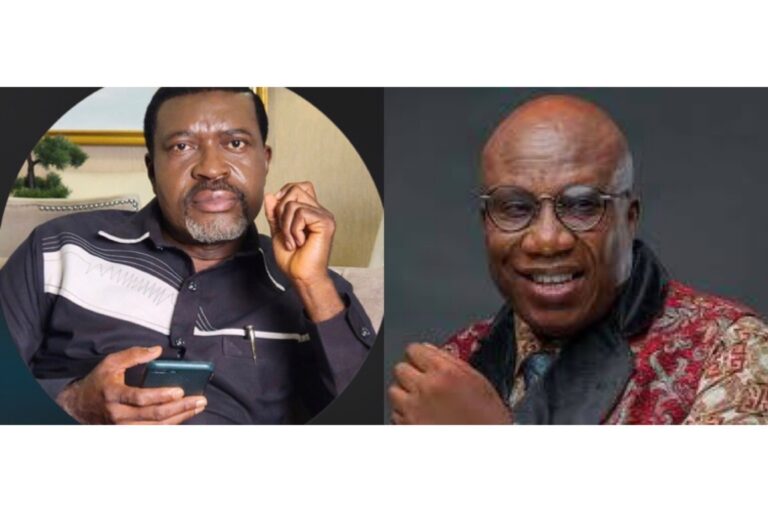
Kanayo. O. Kanayo, Mike Okri, condemn FG’s ban on smoking, money rituals in movies

VETERAN Nollywood actor, Anayo Modestus Onyekwere popularly known as Kanayo.O. Kanayo and renowned music artiste, Mike Okri have condemned the approval by the federal government to ban smoking, money rituals, among other vices in Nollywood movies.

The ICIR  earlier reported that the executive director of the National Film and Video Censors Board (NFVCB), Shaibu Husseini, announced the ban on these vices on Wednesday, May 22, during a National Stakeholders’ engagement in Enugu State.

According to Husseini, the NFVCB supports smoke-free movies and seeks collaboration from stakeholders to develop creative content that discourages smoking and promotes positive health messages, adding that the film industry occupies a central position in the entertainment and creative sector.

Reacting to this announcement, music icon, Mike Okri noted that the move is a way to silence the movie industry adding that the federal government should focus on the country’s actual challenges.

“Whoever is behind this from the federal government is joking. It’s a way to silence the movie industry. They should focus on the real challenges facing the country,” Okri said.

In a similar submission, veteran movie actor, Kanayo O. Kanayo, described the move by the federal government as ‘nonsense’. noting that it is not the responsibility of the Minister of Arts, Culture, and the Creative Economy, Hannatu Musa Musawa, to approve any action that would gag the filmmakers.

“Arrant Nonsense, the minister has no work in this,” he said in his comments.

Meanwhile, some Nigerians have taken to social media to react to the recent development by the federal government. While some support the decision, others called on the government to tackle the issues faced in the country.

An X user, @Opsylo_jay said “This is a good move from the Federal Government even though it is long overdue. Money ritual is among top 3 of the biggest scams ever in Nigeria, it is responsible for the killing of innocent people for nothing. The damage the movie industry can cause in the society cannot be overemphasized. I hope to see more good moves like this.

Another user, @mudiaga247 in his post said, “I don’t know if I should call this misplaced priority coming from the FG, there are more important issues to be tackled.

Reactions trail dethronement of five emirs in Kano

0

THE dethronement of five Kano State emirs appointed by former governor Abdullahi Ganduje has continued to generate mixed reactions.

The State Assembly, earlier today, Thursday, May 23, while announcing the removal of the four emirs, noted that the creation of additional emirates through the amended law defeated the aim of the council, which was to serve as a custodian of culture.

The development followed the passage of the amendment of the Emirate Council Law of 2019 that created five emirates.

The decision was taken during plenary on Thursday, May 23, 2024.

According to the bill which passed second and third reading on Thursday, all offices established under the former law have been set aside. It also revived the single emirate system in the state, vesting constitutional powers to appoint a new emir in the State Governor Abba Yusuf alone.

District heads appointed or promoted under the law are also required to return to their previous positions by the new law.

It’s, however, unclear whether the sitting emir of Kano, Aminu Ado-Bayero, who replaced Lamido Sanusi, has been dethroned by the state.

In 2019, Ganduje dethroned Sanusi citing insubordination and political interference as reasons.

While there is no official communication regarding the reinstatement of Sanusi as the Emir of Kano, both Leadership and Daily Trust Newspapers reported that the former Central Bank of Nigeria Governor is on his way to his seat.

According to Daily Trust, Sanusi, who was in Rivers state earlier today, is making preparations for an elegant return.

“Emir Sanusi is currently preparing for his return to the throne. Although he is not in town at the moment, we are expecting his return on Friday,” one of the sources said.

Meanwhile, the move has been met with mixed reactions from Nigerians on social, with many celebrating Sanusi’s possible return to the seat.

An X user, Fatimah Gambo Raka, wrote: “Alhamdulillah we called our Governor @Kyusufabba to reinstate our Beloved King HRH Khalifa Muhammad Sanusi II back to the throne and he heard our voices, Thank you My Governor we really appreciate you, Kano is blessed.”

Another user, with the name Sir David Onyemaizu, said “Lamido Sanusi has always been the rightful Emir of Kano. Because he’s a blunt man who speaks the truth, without pandering to greedy politicians, Ganduje removed him.”

Also, @Yousaseef11, said “Abuse of power can have devastating consequences but Naija no dey care. It’s disheartening that some individuals defended  Ganduje’s unjust actions when he deposed Sanusi as the Emir of Kano. They justified the move, saying, “Sanusi speaks out too much, and you can’t”

However, some also said Sanusi’s reinstatement might cause a political instability and a bad precedent in the state .

An X user, Abdul-Aziz Naibi Abubakar, wrote: It seems Sanusi Lamido Sanusi will set record as the first Emir of Kano to be dethroned twice, because nothing can stop the next government from dethroning him, if Gov. Abba decided to bring him back.

“Each an every Kano state governor will now come with his own Emir. What a bad legacy bequeathed by Ganduje and now Gov. Abba continue with the legacy.”

Seplat Energy extends ExxonMobil’s proposed $1.28bn acquisition

0

SEPLAT Energy has extended the share sale and purchase agreement of $1.28 billion to acquire ExxonMobil’s share capital of Mobil Producing Nigeria Unlimited (MPNU).

The indigenous energy company disclosed this in a statement signed by its Chief Executive Officer, Roger Brown, on Thursday, May 23, 2024 without reference to the period the extension will last.

It stated, however, that the extension would enable Seplat Energy to get the necessary approvals and settle pending legal issues on the acquisition.

“Seplat Energy announces that it has extended with Mobil Development Nigeria Inc. and Mobil Exploration Nigeria Inc. (“ExxonMobil”) the Share Sale and Purchase Agreement (“SSPA”) for the acquisition of ExxonMobil’s share capital of Mobil Producing Nigeria Unlimited (“MPNU”) (the “Transaction”), in order to preserve the Transaction pending the resolution of certain legal proceedings and receipt of applicable regulatory approvals.

“There has been no material change in terms of the announcements dated 25 February 2022 and 24 May 2023. The headline consideration, effective date and the contingent payment structure remain unchanged. Seplat Energy continues to engage key stakeholders and remains committed to completing the Transaction as soon as possible,” the statement read.

A former Nigerian President Muhammadu Buhari had in August 2022 approved the acquisition of ExxonMobil’s assets by Seplat Energy.

At the time, energy experts told The ICIR that the proposed acquisition violated Petroleum Industry Act (PIA) provisions and that the legal tussles that arose did not inspire investors’ confidence.

The Nigerian Upstream Petroleum Regulatory Commission (NUPRC) also issued a statement that faulted Buhari’s consent and stated that the commission has the sole authority to deal with such matters in the Nigerian upstream sector.

Although the dust raised on the acquisition has yet to settle amid court cases, the current administration of President Bola Tinubu has expressed commitment to close the deal.

The Minister of State for Petroleum Resources, Heineken Lokpobiri, said this in April this year at the Nigerian Exchange Limited event on ‘the facts behind the figures presentation’ of Seplat Energy to mark a decade of the oil company listing on the exchange.

The ICIR reports that MPNU is ExxonMobil’s Nigerian offshore shallow water business, having gas and oil reserves in the country.

The $1.28 billion pre-purchase agreement was signed between Seplat and ExxonMobil in February 2022, plus a contingent payment of up to $300 million.

The deal has, however, not been completed, because the Nigerian National Petroleum Company Limited (NNPCL) had won a court decision temporarily blocking Exxon Mobil Corporation from selling assets in Nigeria to Seplat Energy.