Home Blog Page 637

Owners of Greywolf logistics, Fespan travels, defraud investors millions of naira, shut down operations

GREYWOLF logistics, in partnership with Fespan travels and tours, touts itself as one of Lagos’s fastest-growing logistics companies, with a strong market position in the fastest deliveries to areas around Lagos. It also boasts distribution services powered by a quality orientation, dedicated staff and updated technology. To achieve that, they claimed to source funds from willing investors, which is used to fund motorcycle (bikes) purchases to boost its existing logistics fleet for delivery purposes in Lagos and Abuja, with investors paid Return on Investment (ROI). But that is far from the truth, as it has rather subjected no fewer than 72 investors to awful experiences, poverty, death threats and harassment through its investment platform.


WHEN Onyebuchi Eze was approached by a young man and a woman in January 2022 that investors would get over 60 per cent Return On Investment (ROI), after six months of investing in their logistics business, he gave in after thinking it was a good business opportunity.

This was because he had known the woman, Felicia Iriogbe, as a travel agent who owned Fespan travels and tours for a long time. Besides, he saw a clearer picture of the business, not knowing he was being lured into their trap.

The logistics investment would enable investors to entrust Greywolf logistics and its partner company, Fespan travels, with the purchase and maintenance of their delivery bikes. Afterwards, the company would pay investors their initial capital and accrued ROI at the end of every month for the duration of the investment period for each chosen project.

Eze, and other investors he later brought on board were required to pay a sum of N420,000 (later increased to N500,000) to purchase bikes, which would be operated in Lagos, with a promise of receiving N60,000 in return for a duration of two years.

With what seemed to be a legitimate process, he explained to The ICIR that he signed a memorandum together with their company’s lawyer, who told him he  would take the documents to the court for stamping, Eze was reassured.

“The initial budget we made was N420,000 then, but after about two months, they scaled it up to N500,000. The agreement was that they would buy the bike and manage the bike for you for 24 months, after which they would return the bike.

Another receipt of payment made to the companies account by Felicia, one of the investors introduced by Eze
Another receipt of payment made to the companies account by an investor introduced by Eze

“They are going to pay you a Return of Investment  (ROI) of N60,000 every month and signed a Memorandum of Understanding that they took to court and brought back. It was after they brought it back that they told you that you can’t receive ROI until after two months, stating that it would take them two months to buy the bike and train the rider and do documentation, not knowing that the documentation they are doing was fake,” he narrated with a lump in his voice.

Although Eze received ROI in the first nine months of his first investment, he has since then ceased to receive money from the the companies. This was despite having tried every possible means of reaching out to the directors.


Read Also:


Eze said he, alongside other investors who registered under his name and their respective names, cumulatively invested N109 million in the business. 

According to him, they did not sense any foul play until after many investors had invested well over N800 million in the business. It was at that point the companies began providing excuses before eventually going to extinction.

“They clone the chassis and registration number of Lagos state, which we didn’t know until around October 2022 that they did the promotion. That was when people started borrowing money and investing. Immediately after, they got to the tune of N800 million from people. They now ceased,” Eze said.

By promotion, Eze is referring to the public campaign by the companies to get more people onboard.

The company and its partner have since shut out members from communicating directly with the directors, and their offices remain closed down.

“He was complaining that the Zenith bank was having a problem. From Zenith Bank was having a problem to fuel subsidy removal. Now, from January 2022 that people invested till today, if their phone contact ring they will switch it off or not answer you. Their shops are closed.”

But Eze is not the only one experiencing this agony. There are many other investors suffering a similar fate. There are even more who have suffered much worse situations because they did not receive any penny and had to go through life and pain to get the money invested paid back to where they borrowed it.

Receipts and MoU signed signed with companies by one of the investors introduced by Eze, showing the amount paid to Greywolf and Fespan

Nwabueze Miracle, an indigene of Anambra state who works in a private firm in Abuja, had to take a loan from the bank to invest in the business in January 2023.

Miracle was among those who registered during the promotion period but have not received ROI from the company since then.

Like others, he was supposed to receive 60,000 ROI monthly on his N500k investment for two years.

“I took a loan, I almost went crazy when i knew i had been scammed, but thank God for family. I still have to pay back the money from my salary – 80% every month. Getting scammed on loan is just wrong and heartbreaking,” Miracle added.

How Greywolf logistics and Fespan travels & tour logistics operate

The ICIR interviewed several investors to understand how these companies approach and persuade individuals to invest in their logistics business. Many investors revealed that they were introduced to the business by either friends, family members, or the two companies’ directors.

It was gathered that the companies contracted a lawyer to sign the Memorandum of Understanding (MoU) alongside the directors after the payment had been made. Subsequently, the MoU is taken to a high court in Abuja for stamping.

All transaction documents obtained from the investors displayed a stamp of the Commissioner for Oath, High Court of Justice, Abuja, and another stamp indicating that the MoU was received by the Revenue officer, FCT High Court of Justice.

While some investors reported receiving partial payments, those who registered around late 2022 and early 2023 did not receive any payment from the company despite the binding terms and conditions stipulating that the Return On Investment (ROI) would commence two months after payment.

In 2021, when the investments started, the two companies charged N420,000 for a bike, promising a weekly ROI of N15,000 or a monthly ROI of N60,000, lasting for 24 months. The MoU specified the Q-Link X Ranger 200 2021 as the bike model and, in most cases, displayed FESPAN Travel and Tour account details as the account to pay to.

Investigations revealed a pattern in how these companies enticed people to invest in their businesses through various online advertisements, particularly on Facebook, showcasing riders delivering goods in Lagos.

With Greywolf also boasting of several testimonials both on its social media platforms and to potential investors, some investors claimed that it convinced them to invest their money in the business.

Forgery of court stamps, bike registration numbers to lure investors

The perpetrators went to great lengths to present forged court stamps, creating concern about the legality of their operations.

The ICIR discovered some discrepancies in the stamp and signatures of the Commissioner for Oaths, High Court of Justice Abuja, and the FCT Revenue officer on the MoU provided to the investors, warranting the need to independently confirm if the stamp and signature were indeed from the Abuja High Court.

On Wednesday, January 31, The ICIR approached about three commissioners (who would not disclose their names) of the high court on if the stamp on the documents provided by the two companies to the investors were stamped and signed by the court. 

However, the commissioner confirmed certain discrepancies in the stamp, noting that every stamp from the court carries the commissioner’s name for authentication.

MoU signed by the Heart Chidozie, carrying the forged stamp of High Court Abuja
MoU signed by the Heart Chidozie and Iriogbe Felicia, carrying the forged stamp of High Court of Justice Abuja

According to the commissioners, the court’s stamp has borne names since at least 2011, foiling the documents provided to some investors. These documents did not display the commissioner’s name, and the officials who spoke with The ICIR marked the signature as’ unknown’.

The commissioner also disclosed that the court has been using rubber and personalised stamps, unlike the wooden carved stamp affixed to the documents provided by the investors. 

Similarly, the revenue officer of the court claimed that the stamp indicating payment to the court was forged, highlighting that, although the stamp resembled theirs, it always accompanied by another red stamp.

Another document carrying forged stamp of revenue officer of High Court of Justice Abuja

While The ICIR was yet to independently confirm if the logistics companies cloned their chassis number and registration numbers of the bikes they claimed to own, one of the investors, Eze, noted that he had confirmed that all the registration numbers of the bikes provided by the companies were fake and cloned.

The ICIR sent a Freedom of Information (FOI) to the Nigeria Postal Service (NIPOST), requesting the status of the bikes supposedly owned by the logistics, but despite the seven-day response period prescribed by the FOIA, NIPOST has yet to reply.

NIPOST is a regulatory body responsible for effective and efficient courier and logistics services, licensing processes and procedures and the regulation of the courier and Logistics industry in Nigeria.

Companies not registered with SEC 

Investigations by The ICIR have revealed that the Greywolf Logistics and Fespan travels and tours are not registered with the Securities and Exchange Commission (SEC), a government agency mandated to regulate and develop the Nigerian capital market, despite a law mandating capital market operators to.

For crowdfunding-based investment, the SEC provides regulations and restrictions for both investors and investments. These financial regulations are implemented to protect investors from overexposure and mitigate the risks associated with crowdfunding investments.

While the SEC’s crowdfunding regulations mandate that companies seeking funding must offer thorough disclosure regarding their business, financial status, and the particulars of the offering, findings by this organisation revealed the companies could not be found on the SEC official website for capital market operators.

When The ICIR also reached out to the SEC’s enforcement and investigation department via an email, it reaffirmed that names and contact details of capital market operators with valid registration can be accessed on their website.

This was against the backdrop of increasing concerns over the lack of regulatory oversight and potential risks posed to investors by unregistered entities operating within the crowdfunding space.

The investment violated not only the country’s extant law requesting investors to register with the SEC as the regulatory body but also most of the body’s regulations, risking a multimillion naira fine and being liable for any loss caused to the investors.

Part 10 of the Investments & Securities Act (ISA) 2007 (as reviewed in 2021) states that “Any crowdfunding intermediary that fails to comply with these rules shall be liable to a fine of not less than N100,000.00 (One Hundred Thousand Naira Only) and the sum of N5,000.00 (Five Thousand Naira Only) for every day the violation continues and shall in addition be liable for any loss of investor funds arising due to 50 the Crowdfunding Intermediary’s failure to comply with its obligations under these rules.”

While the SEC stated possible penalties for failing to follow the extant law, The ICIR gathered that weak enforcement of these rules promotes crowdfunding-based investment in the country.

Greywolf logistics registered with CAC two years they began operation

In one of its posts in August 2020, Greywolf announced the opening of its first customer hublet in Computer Village, Lagos state, but records from the Corporate Affairs Commission (CAC) showed the company registered in 2022. 

Record from CAC showing that Greywolf was registered in 2022 despite evidences of business activities since 2020

That was also after some investors claimed to have invested in the business.

Just like the investors claimed that Heart Chidozie Obum is the Director of the company, findings through the CAC portal confirmed him as ‘a person with significant control of the company.


Read also: Accommodation scam: Lagos property agent accused of defrauding client N300,000 on the run


Record from CAC showing persons with significant owner of Greywolf

It also listed Iriogbe Felicia, who paraded herself as the owner of Fespan, as the Director of Greywolf with two others, namely Okeyode Oyewale David and Orji Chibike.

The address under the company was Ogundipe Street, Santos Layout, Akowonjo, Egbeda, Alimosho, Lagos, Nigeria.’

Meanwhile, the partnered company, Fespan travels, was registered in 2009 and has three Directors, including Felicia, as the Directors of the company. The other two are
Isari Beatrice and Ejemai Iwere.

Multiple investments with no ROI, principal

On September 30, 2022, Joseph Ayes Minmu invested in the logistics, the sum of N450,000, with an expected RoI of N1.4 million for the two years duration. 

Payment receipt to Greywolf by Ayes Mimu

The company, on the same day issued a receipt confirming Ayes Minmus’ payment and also signed a MoU binding the two parties on the business.

Ayes Minmu, who got to know about the business through a friend, stated that she was only paid for three months out of the 24 months signed in the MoU.

‘I didn’t take a loan, but it’s my hard-earned money. My savings.’ she said as she narrated her ordeal with the logistics company.

“I have been sending messages to their mail no response, calling the CEO (Mr heart Chidozie ) he’s not picking calls. Putting myself in this mess affected my career because I aimed to further my education. Now I am just stranded.”

Another investor, Efe Michael, narrated that he and his family members invested over N2 million in the logistics, having learned about the business through his wife. 

Michael, who lost his job in 2020 during the Coronavirus pandemic, described his experience with Greywolf as a ‘sham, embodiment of deception and lies upon lies. It has been an embarrassing situation.’

While providing the breakdown of the investment, he stressed that his Dad invested the sum of N905,000 to get a return on investment of N2,880,000 for 2 years. His Mom invested N450,000 to get an ROI of N1,440,000 for two years, and his sister invested N485,000 to get an ROI of N1,440,000, while he invested N420,000 to get an ROI of N1,440,000.

“We all took a loan to start this investment. And it’s been issue upon issue. Embarrassment upon embarrassment. Those we borrowed money from have reported us to the police.

“My Dad, for one, is so angry with how things turned out, especially since my wife introduced us all. We can’t cry more than we already have. It’s really an appalling situation indeed,” he narrated.

Firms shut operations, offices under lock and key

Greywolf office under lock.

Meanwhile, since the business has turned downward and failed to remit ROI to investors, both Greywolf logistics and Fespan  Travels and tours have shut down operations, leaving their offices closed, investors told The ICIR.

On January 10, 2024, The ICIR attempted to pay the investment firms a visit at their offices located in Abuja.

Upon reaching the Greywolf office, situated at Suite 32, 29 Adebayo Adedeji Crescent, Silla Zeka Plaza, Utako, the office remained closed, with dust covering the veranda, indicating that it has been shut down for an extended period.

When The ICIR questioned the security guard, Emmanuel, he explained that the office had been closed for over seven months, adding that attempts to contact the management had been unsuccessful.

He noted that The ICIR was not the first to inquire about the office, emphasizing that several others had come seeking information about its status and the whereabouts of the staff.

Emmanuel also said about four months ago, the Economic and Financial Crimes Commission (EFCC) came with Heart Chidozie to the office to come and pick up some documents.

Fespan shut down operations for over five months
Fespan shut down operations for over six months. Photo: The ICIR

This was a similar story when The ICIR visited the Fespan travels and tours office at Suite 6B, Rhodand Place, 19, Ndola Crescent, Wuse zone 5, FCT- Abuja.

Despite the presence of different advertising banners around the office corner, it remained shut down. Staff from neighbouring shops confirmed that the Fespan  travels and tours office has been closed for the past six months.

Firms keep mute

When The ICIR reached Heart Chidozie, Greywolf’s director, with its findings, although he read the message, he did not respond. The ICIR had initially asked him if Greywolf logistics was still active; he replied with a ‘no.’ However, when this reporter sent him the findings and allegations made against him, he failed to reply, despite reminders and SMS sent to his phone contact.

On Monday, January 22, The ICIR also called Heart, but he did not answer and instructed to be reached later. However, when The ICIR called back later, he failed to pick up. 

Similarly, all efforts to reach Felicia, Fespan’s director, to speak on allegations against her and her company proved abortive as her contact remained unreachable and her office remained shut down.

EFCC, ICPC ask to be petitioned

When presented with the findings, the Economic and Financial Crimes Commission, EFCC and the Independent Corrupt Practices & Other Related Offences Commission (ICPC) stated that the investors should petition them.

According to the EFCC spokesperson, Dele Oyewale, the EFCC could not jump on the case unless there were petitions from the aggrieved investors stating their plights.

Also, the Independent Corrupt Practices Commission (ICPC) spokesperson, Asuka Ogugua  said the investors should report formally to relevant law enforcement agencies, including ICPC and EFCC.

“They can also report to FCCPC. I think they are the statutory body that handles such matters,” she said.

We prosecuted over 29,000 criminal cases in one year – Police

0

THE Nigeria Police Force (NPF) said it prosecuted 29,052 criminal cases in the past year.

This was disclosed in a statement posted on X on Tuesday, March 26, by the Force, signed by its spokesperson, Olumyiwa Adejobi.

According to the statement, the high number resulted from the dedication and diligence exhibited by investigative officers, working in harmony with the various legal teams in  commands and formations nationwide.


Read Also:

Adejobi said that out of the 29,052 cases prosecuted, 17,676 had been concluded, while 11,376 cases were still undergoing trial.

He added that 51 cases were under appeal at various appellate courts.

“Moreover, out of the dispensed cases, an impressive sixteen thousand, two hundred (16,200) cases have led to the conviction of suspects who have been handed various forms of punishments for their criminal acts, a stark reminder to all criminals that they have no hiding place in our societies.

“They are hereby warned to desist from their criminal acts as the long and vicious arm of the law will eventually bring them to justice. Additionally, 1,476 individuals have been discharged at the discretion of the jury. However, some of these discharged cases have been appealed by the Police for justice to prevail,” the statement reads.

According to the Police, The Inspector General of Police (IGP) Kayode Egbetokun has pledged to ensure that perpetrators of crime are brought to justice swiftly and fairly.

The IGP also extolled the dedication and professionalism of field and supervisory officers and legal teams, “whose tireless efforts have contributed to these remarkable achievements.”

He also lauded the judiciary, legal practitioners, and all stakeholders for their invaluable support and collaboration in pursuing justice. He reiterated the resoluteness of the Nigeria Police to uphold the principles of justice and effectively play its due role in the criminal justice system.


CBN raises MPR by 200bps to 24.75%

THE Central Bank of Nigeria (CBN) has again raised the benchmark interest rate as it continues to battle inflationary pressures stoking the country’s economy, hurting businesses, and worsening citizens’ hardships.

At the end of its two-day Monetary Policy Committee (MPC) meeting on Tuesday, March 26, the CBN increased the monetary policy rate (MPR), otherwise known as the benchmark interest rate, by 200 basis points (bps) to 24.75 per cent.

It retained the cash reserve ratio (CRR) of deposit money banks at 45 per cent and the liquidity ratio at 30 per cent but adjusted the CRR of merchant banks from 10 to 14 per cent.

The meeting marks the second MPC meeting for 2024 and the 294th meeting of the CBN committee.

At its February MPC meeting, the CBN raised the benchmark interest rate by 400 basis points to 22.75 per cent, CRR to 45.00 per cent, adjusted the asymmetric corridor to +100 to -700 and retained the liquidity ratio at 30 per cent.

“The considerations of the committee at this meeting focused on the current inflationary pressures and the need to anchor inflation expectations as well as ensure sustained exchange stability,” the CBN Governor, Olayemi Cardoso, said.


Read Also:


He said the MPC decision to hike the parameters was part of efforts to combat the country’s rising inflationary rate, which was pegged at 31.70 per cent in February, and the members believed a hike in the cost of food primarily triggered the headline inflation in the country.

“The committee, therefore, was of the view that addressing food insecurity is key to containing the current inflationary pressures,” Cardoso added.

Commenting on the recent MPR hike, an economic consultant, Orji Udemezue, said it was challenging for manufacturers and businesses to borrow from merchant banks.

“I’m a chartered banker, and my concern is while we fight inflation, we don’t need to destroy the economy. No nation can move forward with the rate hike. What you’re practically saying is to stop banks from lending because of the huge cost of lending.

“The cost of borrowing is much more challenging right now. It’s more like businesses and manufacturers are being told to hold off till the CBN finishes fighting inflation.

“No economy grows without entrepreneurship. Even some of us with our experience in banking, it is difficult to borrow now from the banks,” he said.

According to Udemezue, the asymmetric corridor is to make sense of the need to mop up more money.

“Instead of +100-700, they’re now doing +100-300. It means that if today you’re trying to borrow money from the Central Bank as the lender of last resort, they will lend to you at a maximum 26 per cent interest rate,” he added.

While reacting to the development, the Chief Executive Officer (CEO) of CFG Advisory, Tilewa Adebayo, said the CBN was gradually enforcing economic restructuring while urging that the fiscal authority complement the CBN efforts.

“The leading and lagging indicators influenced the rate hikes we have today. However, we would keep watching and seeing the reactions; maybe they would start to hold. The policies from the fiscal side also need to complement the efforts of the CBN,” Adebayo said.

The CBN uses the MPC meeting to make critical decisions on the country’s economy.

African Institute accepts applicants for 2024 writers fellowship

THE African Institute is accepting applications for its third cohort of Tejumola Olaniyan Creative Writers-in-Residence Fellowship for the 2024 academic year.

The residency programme is created in honour of the late Nigerian Professor Tejumola Olaniyan and his remarkable intellectual legacy in African literature and critical theory.

Opened to creative writers, including novelists, short story writers, playwrights, poets and scriptwriters from Africa; applicants are to submit a proposed project related to Africa and the African diaspora.

Read Also:

Humanitarian reporting fellowship opens for journalists

Club of Rome opens application for communications fellowship

RAF invites journalists for 2024 fellowship

Berlin Energy Transition Dialogue media fellowship opens

International Center for Journalists offers Health Innovation Journalism Fellowship

The proposed project can be in Arabic or English (other languages will be considered).

Three recipients will be chosen based on the quality of their proposal and the demonstrated feasibility of completion within the timeframe of the residency.

Applicants must include a CV/résumé, a two-page narrative of the project to be undertaken during the residency period, its significance, a proposed completion date and a sample of published or unpublished writings in their applications.

Successful recipients will have the opportunity to publish their texts through The Africa Institute’s publications program, receive a AED45,000 grant as well as travel to Sharjah, UAE, for a period of three months to complete their work.

The programme begins in the fall.

Interested persons can apply here.

The deadline for application is June 1.

Court sentences Chinese who killed Nigerian girlfriend to death

0

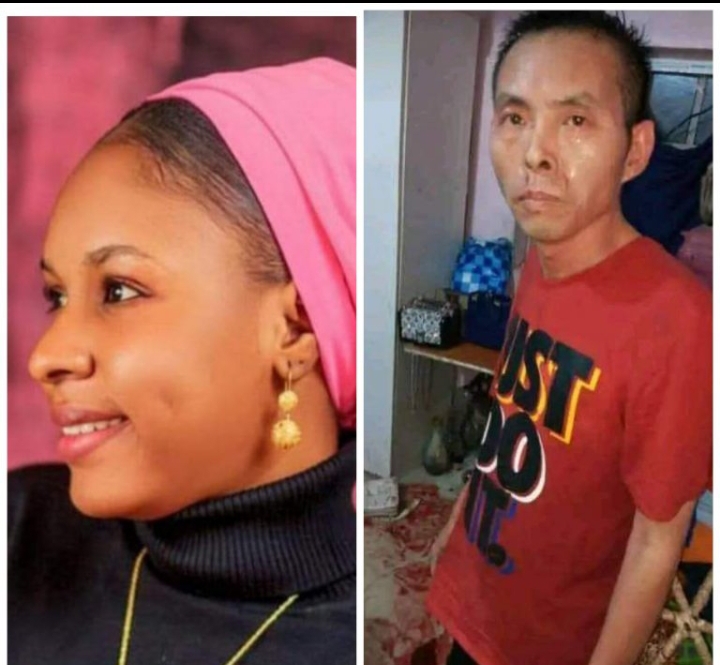
A HIGH Court in Kano State has sentenced Quandong Geng, a Chinese national, to death by hanging for killing his Nigerian girlfriend, Ummukulsum Buhari. 

The presiding justice of the court, Sanusi Ado Ma’aji, found Geng guilty of culpable homicide, an offence punishable with death under Section 221 of the Penal Code Law of Kano State and convicted the accused in a judgment on Tuesday, March 26.

The defendant was alleged to have killed the deceased in her house at Janbulo Quarters, Kano, on September 16, 2022.

He was was said to have gone to the family house of Buhari on Friday, September 16, night and attacked her with a sharp knife, leading to her death.

Read Also: 

Court remands Chinese man over alleged murder of lover in Kano

Lagos pastor sentenced to life imprisonment for rape

Blasphemy: Kano Islamic cleric Abduljabbar sentenced to death by hanging

Geng was subsequently charged to a magistrate court on Wednesday, September 21, by the Kano State Police Command on a one-count charge of culpable homicide.

However, Hanif Ciroma, the presiding magistrate, held that the court lacked the jurisdiction to entertain the case.

The magistrate consequently remanded the suspect in Kurmawa Medium Security Custodial Centre until October 13, pending when he would be arraigned before a court of competent jurisdiction.

In his testimony at the High Court where he was later arraigned, the accused claimed that the late Ummukulsum attacked him with a knife.

“While I was defending myself, Ummukulsum bit me on my arm and finger and also injured me on my genitals,” Geng said.

Kidnapped Edo PDP chairman regains freedom 11 days after

0

THE Edo State chairman of the Peoples Democratic Party (PDP), Tony Aziegbemi, has regained freedom from his kidnappers after 11 days.

Aziegbemi was abducted by armed men on Friday, March 15, at 11 p.m. after a meeting with the governor of Edo State, Godwin Obaseki. 

The kidnappers demanded a ransom of N500 million to free him.


Read Also:

A statement signed by Clem Aziegbemi, on behalf of the Aziegbemi family, appreciated Nigerians for the show of love and solidarity with the family throughout the period of the politician travails.

Meanwhile, Aziegbemi told PUNCH Online on Tuesday after his release that he was glad to be back home and reunited with his family. 

 He claimed that the kidnappers did not maltreat him and that kidnapping was part of “the terrain.” 

The ICIR reported that gunmen kidnapped Aziegbemon Friday, March 15.

The police authorities and the Edo State government confirmed the kidnap on Saturday, March 16.

Aziegbemi was said to have left a meeting at the Government House and was returning home in his vehicle when he was kidnapped in the presence of his driver, who was attempting to climb a speed breaker.

His abduction is one of many of such incidents in Nigeria.

The ICIR, in a report published on Saturday, March 16, revealed that 703 persons were abducted in eight days under President Bola Tinubu despite his promises to secure Nigerians.

 These are in addition to many other kidnappings and killings that have taken place since he took over power on May 29, 2023.


ONDO 2024: APC governorship aspirant dies days after alleging threat to life

AN aspirant for the 2024 gubernatorial election in Ondo state under the All Progressives Congress (APC), Paul Akintelure, is dead.

He died on Tuesday, March 26.

According to a report, Akintelure died early on Tuesday in a hospital in Lagos State.

His death came five days after he released a statement on Thursday, March 21, through his spokesperson, Oladapo Akintelure, alleging threats to his life.

In the statement, the deceased noted that though he had reported the direct and indirect threats to security agents, the incidents only escalated.

“It is with a heavy heart that I acknowledge recent unsettling events wherein there have been both direct and indirect attempts on my person. Initially, I hoped these incidents would dissipate over time, yet regrettably, they have escalated to pose a serious threat to my life.”

“The threats against me only strengthen my resolve to stand up for what is right and just. I will not allow fear to dictate our path forward,” the statement read in part.

Ondo State is set to hold governorship elections in November. Akintlure’s death also comes barely a month before the APC primaries scheduled for April 25.

The ICIR reported that at least 16 political parties indicated interest in participating in the governorship election.

On March 1, some APC governorship aspirants in the state had raised alarm over political violence.

They claimed that their supporters were being attacked by thugs sponsored by people in government.

The state is currently governed by Lucky Aiyedatiwa, a member of the APC and a strong contender for the party’s ticket.

“The thugs who carried out the orchestrated attacks were armed with all sorts of dangerous weapons. It is sad to note that many of our supporters with deep cuts are in the hospital receiving treatment at the moment.

“It is however surprising that no aspirant other than the governor was spared of the attacks,” a statement by former Finance Minister Wale Akinterinwa, who spoke on behalf of the aspirants, noted.

Investors lose N288.93bn as CBN commences March MPC meeting

TRADING activity in the Nigerian stock market closed in the red on Monday, March 25, as the All-Share Index declined by 0.49 per cent to 104,136.35 points and the market capitalisation by N288.93 billion to close at N58.88 trillion as CBN commences March MPC meeting

Analysts believe this was not unconnected to investors’ reaction to the two-day monetary policy committee (MPC) meeting that started on Monday.

The meeting is expected to end today, Tuesday, March 26, as the 12-member committee makes another decision to rein in inflation.

After its first MPC in February, the committee raised the benchmark interest rate by 400-basis-point to 22.75 per cent and tampered with other parameters.


Read Also:


Analysts had argued that the CBN committee’s decision would hurt the fragile economy already contending with numerous macroeconomic challenges. They also told The ICIR that the committee would likely raise the benchmark interest rate at its March meeting.

This seems evident as the country’s headline inflation has further jumped to 31.70 per cent as of February, which some analysts said had left the CBN committee with no choice but to tighten the benchmark rate and further impact investors’ confidence.

Monday’s trading activity reflected investors’ sentiment as total deals, volume, and value declined by 2.41 per cent, 39.27 per cent, and 20.04 per cent to 9,343, 306.82 million units, and N11.38 billion, respectively.

The banking and consumer goods indices also reflected the bearish sentiment, declining by 1.72 per cent to 992.84 points and 0.83 per cent to 1,613.01 points.

GTI research analysts attributed the negative sentiment to increased profit-taking observed in the market, adding, “It is projected, however, that the market will experience mixed sentiments for the remaining days of the week.”

The National President of New Dimension Shareholders, Patrick Ajudua, said investors were reacting to the negative sentiment of the MPC meeting that started on Monday.

He noted that since the resumption of the MPC under the current CBN governor, Olayemi Cardoso, an expected upward review of interest rates and other parameters had occurred.

“This results from inflationary pressures, which have seen inflation rise monthly. Therefore, a consistent upward review of these rates will continually attract negative sentiment, which could be more investor-friendly.

“These rates have further hampered the declaration of attractive dividends by banks, especially,” Ajudua told The ICIR.

He suggested that the committee hold on to existing rates while tackling the foreign exchange issues and other microeconomic challenges.

“This will improve investors’ confidence in better dividend payment and returns on investment,” Ajudua stated.

Sexual harassment bill stuck in National Assembly 8 years after

0

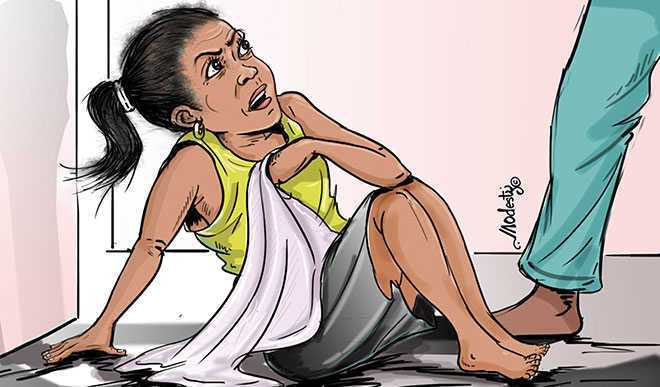
DESPITE the prevalence of sexual harassment in schools and other places in Nigeria, a bill seeking to criminalise the act from teachers against students, especially in tertiary institutions, is yet to get past the National Assembly eight years after it was first introduced.

October 2019 was the second time that former Deputy Senate President Ovie Omo-Agege would re-introduce a bill seeking to criminalise sexual harassment against students.

The bill, titled “Sexual Harassment in Tertiary Education Institution Prohibition Bill,” was first introduced in 2016, sponsored by Omo-Agege and 57 other senators in Nigeria’s Eighth National Assembly.

It proposed jail terms for educators, especially in tertiary institutions, found guilty of sexually harassing their students.

In 2017, the Senate passed the bill and transmitted it to the House of Representatives for concurrence.

However, it was rejected by lawmakers in the House of Representatives for not being comprehensive enough.

At the time, it was also opposed by the Academic Staff Union of Universities (ASUU) whose leadership said it would undermine the autonomy of tertiary institutions.

The then Speaker of the House of Representatives, Femi Gbajabiamila, now Chief of Staff to Nigerian President Bola Tinubu, had said other institutions, such as workplaces and religious organisations, should be captured in the bill. With the support of other lawmakers, the bill was stepped down.

Two years later, the British Broadcasting Corporation (BBC) released a documentary exposing two lecturers of the University of Lagos for sexual harassment, and shortly after, the bill was re-introduced by Ovie-Agege and 106 other senators.

It was passed again by the Senate in 2020 and eventually by the House of Representatives in 2022. By 2023, both chambers of the National Assembly jointly passed the bill.

However, a new Assembly was inaugurated about a week after, and for the current president, Tinubu, to grant assent, it has to be re-introduced and passed, like all other bills not assented to before the dissolution of a previous Assembly.

A prevalent menace in schools

Sexual harassment has remained a recurrent issue in Nigerian universities and other institutions such as workplaces, homes and even worship centres.

In August 2023, a lecturer at the University of Calabar (UNICAL), who was also the Dean of Law Faculty, Cyril Ndifon, was suspended by the institution following a protest by his students, alleging that he had subjected them to various forms of sexual harassment.

He had been suspended for similar reasons in 2015 after a final-year student accused him of raping her in his office.

He is currently being prosecuted by the Independent Corrupt Practices and Other Related Offences Commission (ICPC) before a Federal High Court in Abuja.

Following the protests that led to Ndifon’s arrest and prosecution, lecturers in other institutions have also been indicted for sexually harassing students.

In September 2023, a lecturer at the University of Lagos (UNILAG), Kadiri Akeem Babalola, was accused of raping a 20-year-old female student.

Although the Lagos State Police Command confirmed that he would be arraigned in court following the allegations, it has failed to provide an update on the case.

A survey carried out by the World Bank in 2018 showed that classmates and lecturers sexually harassed 70 per cent of Nigerian female graduates as students.

“The effects experienced by victims were depression and perceived insecurity on campus,” the report stated.

There have also been reported cases of sexual harassment in primary and secondary schools.

In 2022, a mother called out a secondary school in Lagos, Chrisland Schools, over the rape of her daughter, a student at the institution. She stated that Chrisland authorities deliberately kept the incident from her knowledge and instilled fear in her daughter to keep her from speaking up.

In 2021, a student of Premier Academy in Lugbe, Abuja, Keren-Happuch Akpagher, died from complications she suffered after a condom and dead spermatozoa were discovered in her vagina.

A diabetic patient since she was nine, the condom left in her vagina resulted in a septic infection that later claimed her life.

While her mother insisted that the deceased was raped while in school custody, authorities of Premier Academy refute the allegations.

According to a report, sexual harassment is forcing many Nigerian girls out of secondary schools, contributing to the already alarming figure of girls out of school.

CSOs advocate for timely passage of sexual harassment bill

Several CSOs, including the Centre for Journalism Innovation and Development (CJID) and Gender Mobile Initiative (GMI), have called on the President and National Assembly to facilitate the bill’s timely passage.

During a press briefing in November 2023, the Executive Director at GMI, Omowunmi Ogunrotimi, said the absence of a dedicated legal framework criminalising the act in educational institutions undermined collective efforts to address it.

Speaking with The ICIR on Monday, March 25, she stated that the delay in reintroducing the bill to the National Assembly had been a major setback.

She noted that there had been conversations with legislators in relevant National Assembly committees who assured that the bill would be reintroduced soon.

Naira sustains gains as CBN sells $10,000 To BDCs at N1,251/$

AS the naira sustains gain against the dollar after months of uncertainties, the Central Bank of Nigeria (CBN), on Monday,  March 25, announced the sales of $10,000 to each of the eligible Bureau De Change (BDC) operators in the country at the rate of N1,251/$1.

In a circular to the President of the Association of Bureau De Change Operators of Nigeria on Monday, the apex bank said the BDCs are to sell to eligible end users at a spread of not more than 1.5 per cent above the purchase price.

The circular was signed by the bank’s Director of Trade and Exchange Department, Hassan Mahmud.

Read Also:

The CBN warned that “any BDC that breaches the above terms shall be sanctioned appropriately, including outright suspension from further participation in the sale”.

The apex bank had, on March 1, 2024, revoked the licenses of 4,173 BDCs over compliance failures.

Nigeria is battling rising inflation, food inflation, forex crisis, economic hardship, and high cost of living occasioned by the removal of petrol subsidies, attracting protests in parts of the country.

The naira has dipped in the last nine months since President Bola Tinubu’s administration collapsed the foreign exchange window.

The naira experienced an all-time low, falling from about N700/$1 in May 2023 to about N2,000/$1 in February 2024 before its appreciation in March.

The authorities have since focused on cryptocurrency websites like Binance, accusing them of speculation and clamping down on them through telecommunication companies.

Industry analysts lauded the move by the government but urged the government to pay attention to exports to sustain long-term gains of the naira against the dollar.

They argued that if the government failed to apply long-term measures to the naira gains, it could risk depletion of the reserve.

“This is why the naira is gaining. The CBN is selling at N1,251, so no trader locks in large transactions above N1,251.In essence, the naira has floated, but the CBN is intervening to strengthen the naira by selling its FX reserves to BDCs at a price below the willing buyer/ willing seller price. Implementations? The naira will gain value, but FX reserves are paying for it,” an economist, Kalu Aja, said while reacting to the development.

He further argued that the intervention is a band-aid, adding,” The CBN is attempting to fix a problem it can’t fix without a huge war chest of FX reserves. The long-term fix is to export.”

The ICIR  reported the BDCs’ suggestions that the naira could only sustain gains against the dollar by sustaining liquidity in the foreign exchange market.

Kalu, however, insisted that foreign reserves could be depleted if Nigeria’s exports are not intense enough to sustain supply to the dollar market.

“If you want a strong naira, you export more,” he stressed.

A former Deputy Governor of the apex bank, Kingsley Moghalu, stressed the importance of exports to strengthen the naira.

He said, “The sooner we focus on the painstaking creation of a value-added manufacturing export economy that earns forex beyond oil in real and significant terms, the better. Key to this is the electricity conundrum in which we are at less than 4,000 megawatts of generation for a population of 200 million for decades now.”

On Thursday, March 21, the naira gained N18 to close at 1,382/$ at the official market, continuing its consistent upward trend against the US dollar.

The local currency saw significant gains at the official and unofficial foreign exchange exchanges the day before. On Wednesday, March 20, it closed at N1,400 per dollar at the black market.