FIVE of the six sisters of the Al-Kadriyar family who were kidnapped earlier this month by bandits in the Bwari area of Abuja have regained their freedom.
A statement by the spokesperson of the Nigerian Police Force, FCT Command, Josephine Adeh, a superintendent of Police, said security operatives successfully rescued the victims around Kajuru forest in Kaduna state at about 11:30 p.m. on Saturday, January, 20.
“Following the relentless advancement of the Federal Capital Territory Police Command Anti-Kidnapping squad in a concerted effort with troops of the Nigerian Army, on the heels of the kidnappers that struck the Zuma 1 area in the Bwari Area Council on the 2nd of January 2024, The FCT Police have rescued the victims and reunited them with their families,” the statement read in part.
An uncle to the girls, Kabiru Aminu, shared the news of their release on his X handle, @kabiru_aminu, with a video of the sisters and their family members celebrating.
“#Najeebahandhersisters are home right now. Someone, please wake me up!” Aminu wrote.
“#Najeebahandhersisters. These girls are strong,” he added in a follow-up post.
The six sisters were kidnapped along with their father after their uncle was killed. The bandits released their father, demanding that he should raise N60 million as payment before Friday, January 12 2024, to free his daughters.
Nigerians were asked to donate whatever they had into a bank account to raise the ransom, but not enough was raised.
Displeased by the delay in raising the ransom, the kidnappers killed the eldest of the six sisters – Nabeehah – and dumped her body somewhere for her parents to bury and consequently increased the ransom to N 100 million.
Following the killing of Nabeehah, The ICIRreported that Nigerian security operatives were criticised for their failure to promptly rescue the abducted family members after spending ten days in captivity as of the time Nabeehah was killed.
This prompted a ‘friend’ of the former Minister for Communication and Digital Economy, Isah Pantami, to assist the family with an additional N50 million.
It made Nigerians query the rationale for queuing for hours and days to get the National Identity Number (NIN) which is mainly aimed at identifying criminals.
Reacting, Pantami stated that he was frustrated that the security agencies were not deploying the NIN and other policies he developed while in government to fight insecurity.
The ICIR reported how residents of Kuchiko, a border town between the FCT and Niger state, fledd their homes due to bandits attacks and kidnappings.
While appreciating the efforts of the Inspector General of Police Olukayode Egbetokun, the FCT Police urged the city’s residents to call the following numbers for any emergency or to report suspicious activities: 08032003913, 08061581938, 07057337653, and 08028940883.
PCB: 09022222352
THE National Agency for Food and Drug Administration and Control (NAFDAC) says it is probing a widely shared social media post in which a woman allegedly used polythene-laced oil to fry plantain chips.
In a statement by NAFDAC’s resident media consultant, Sayo Akintola, on Saturday, January 20, the agency said it was taking a science-based approach to evaluate the claim before taking action.
The organization reassured the public that it was committed to protecting public health.
Before slicing plantains to prepare chips, the viral clip purports that a woman melted roughly five pieces of “olonka rubber” (polythene) into oil and claimed that adding the polythene makes chips stronger and more durable after frying.
NAFDAC said in its statement, ‘The attention of the management of the National Agency for Food and Drug Administration and Control has been drawn to viral posts making the rounds on social media where an individual was reporting the alleged frying of plantain chips by a woman who before she grated the plantain into the hot oil melted about five of the white polythene, what we call ‘olonka rubber’ into the oil.”
However, the agency noted that the post began circulating before the date the practice was allegedly observed without indicating the geographical location.
“The agency is taking a science-based approach in her response to the alleged claim and will conduct necessary laboratory investigation into the claim. In the meantime, our advice to the public who consume NAFDAC-regulated food products remains the same and centres around being vigilant as consumers,” the statement added.
While advising Nigerians to buy NAFDAC-regulated food products, the agency stated that citizens should only purchase from credible sources while checking for NAFDAC registration numbers on product labels.
It also warned against buying products with suspicious packaging, objectionable smell/colour, or unrealistically low prices.
Reacting to the video earlier, the Lagos state Consumer Protection Agency had urged the public to be cautious of any unwholesome activities in processing plantains for sale.
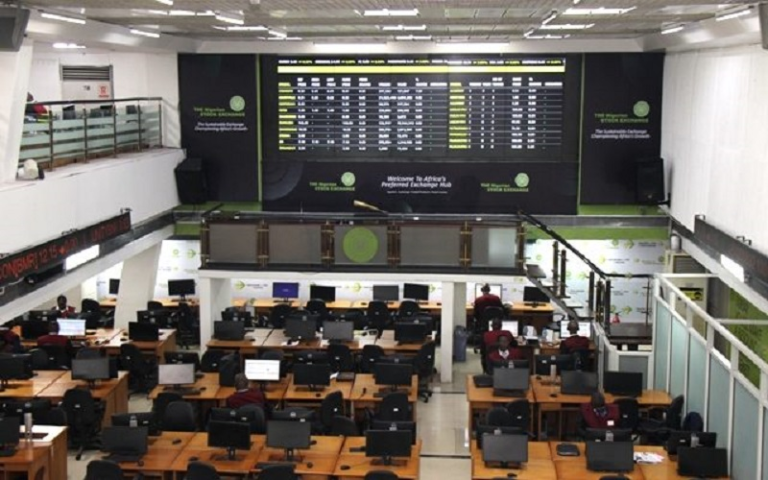
DANGOTE Cement, Airtel Africa, MTN Nigeria Communications (MTN), and nine other stocks hit 78.6 per cent of the Nigerian stock exchange’s total market capitalisation as of the close of trading on Friday, January 19, findings by The ICIR have shown.
The other companies are BUA Cement, BUA Foods, Seplat Petroleum, Zenith Bank, Guaranty Trust Holding Company (GTCO), Geregu Power, Access Holdings, United Bank for Africa (UBA), and Transcorp Hotels.
The ICIR findings further showed a total market capitalisation of N51.74 trillion when the equities market closed on Friday, and the 12 companies’ stocks stood at N40.66 trillion.
The 12 companies are in the league of those that have crossed the N1 trillion market capitalisation mark and have sustained the position of the 121 companies trading on the floor of the Nigerian Exchange Limited (NGX) as of the end of trading on Friday.
A cursory look at the trading figures shows that Dangote Cement has a market capitalisation of N9.18 trillion, Airtel Africa, N7.52 trillion; MTN, N6.09 trillion; BUA Cement, N5.03 trillion; and BUA Foods at N4.32 trillion as of the close of trading on Friday.
Others, Seplat Petroleum, has a market capitalisation of N1.495 trillion; Zenith Bank, N1.41 trillion; GTCO, N1.297 trillion; Geregu Power, N1.17 trillion; Access Bank, N1.07 trillion; UBA, N1.06 trillion; and Transcorp Hotels, N1.02 trillion respectively.
“The fact that 12 equities out of 121 companies account for 78 per cent of market capitalisation is an indication that there is the prospect for other equities and opportunities to arise in the near future.
“As investors, we anticipate that once the issues of forex (foreign exchange) are addressed along with the high cost of doing business, more equities will join the trillion mark as investors will go after them,” the National President of New Dimension Shareholders, Patrick Ajudua, told The ICIR.
Investors in the capital market are thrilled by the positive trend the market has witnessed, Ajudua maintained.
“It’s an attestation of investors’ confidence in the market resulting in all share index crossing the 90,000 mark with market capitalisation crossing the N50 trillion mark.”
At the close of the week trading on Friday, the all-share Index rose by 13.84 per cent to close at 94,538.12 basis points; investors gained N6.29 trillion as market capitalisation increased to N51.74 trillion even as the year-to-date return strengthened to 26.43 per cent.
In their weekly report, analysts at Cowry Asset Management said the current movement pattern indicates that the market is persistently in the overbought region, with stock valuations and prices significantly exceeding intrinsic values.
“This signals a potential imminent pullback, suggesting the market requires a correction in the short term.
“Anticipated market dynamics for the upcoming week include a mix of sentiments, profit-taking activities, and the ongoing presence of bargain hunters, all unfolding against the backdrop of expectations for unaudited quarter four 2023 financial results,” the analysts said.
According to the analysts, investors are gearing up for heightened volatility, especially with the Central Bank of Nigeria shifting its monetary policy committee (MPC) meeting to February, and they will closely monitor these factors for potential shifts in market conditions.
“Amidst all these, we continue to advise investors to take a position in stocks with consistent track records of dividend payments and strong fundamentals and growth prospects to support earnings growth,” they added.
PERSISTENT attacks and abductions are forcing residents of Kuchiko, a border town between the FCT and Niger state, to flee their homes while many battle sleeping disorders due to heavy gunshots at night.
12:25 AM
It was a quiet night until loud knocks on the door startled Ruth Kehinde and her little children awake at midnight on July 30, 2023.
Gunmen were on a kidnapping spree for the umpteenth time in Kuchiko, a satellite town bridging Niger state and the Bwari Area Council in Nigeria’s Federal Capital Territory (FCT).
Kehinde’s hesitancy to open the door amidst fear did not suffice when the notorious criminal gang, often tagged as bandits, began shooting sporadically in the air and shattering the window glasses.
Read also:
There was no pity, she told The ICIR. “They flung my one-year-old baby into the bush when they finally forced their way into the house”.
The 32-year-old breast-feeding mother was whisked away from her toddler and four other little children in the dead of the night. Her husband, Kehinde Ajibade, was in faraway Nigeria’s southwest, where he works as a quarryman.
Meanwhile, two other residents, Moses Ayala, in his early thirties, and another middle-aged man who asked not to be named, had already been kidnapped that night by the same gang. Once Kehinde joined, they began the long torturous trek to the bandits’ den through the hilly terrains of Niger state.
“They kept flogging us with heavy sticks until we reached their hideout in one of the mountains. We walked for more than four hours”, said Kehinde, revealing her injured legs.
Ruth Kehinde sustained injuries due to torture while in the bandits’ den, Photo credit: Fatumbi Olayinka/The ICIR
She estimated the criminal gang to be 18 in number.
What followed in the morning were calls from the abductors to the victims’ family members demanding millions of Naira ransom payments.
In Nigeria, gunmen make fortunes from kidnapping citizens on the roads, homes, schools and farms.
Between July 2022 and June 2023, a total of $387,179, translating to N302 million, was paid as ransom to kidnappers in the country, according to SBM Intelligence.
This amount represents six per cent of the total N5 billion ($6,410,256 as of 30 June 2023) the kidnappers requested within the period, the intelligence gathering platform revealed.
Despite being Nigeria’s seat of power, more than four hundred residents of FCT have been kidnapped from 2018 to June 2023, according to the Nigeria Security Tracker (NST).
Since grappling with banditry, FCT’s Kuchiko has become one of the hotbeds for abduction. The persistent attacks have forced some residents to flee their homes. Other residents have opted to advertise their property for sale or lease, The ICIR confirmed.
Stuck between death and ransom…
While trekking through the hills on the night of the abduction, Ayala Moses, one of the victims of the July 30 abduction earlier mentioned, was stabbed multiple times after he attempted to run away.
The fresh graduate of Ambrose Ali University, Ekpoma, said he took the risk to save his “family and friends the trouble of raising millions of naira to pay ransom”.
Ayala Moses was stabbed multiple times when he attempted to run away Photo credit: Moses Ayala
“When they noticed that I might die from bleeding, they called my elder brother to choose between my life or N2 million ransom. They ordered him to bring the cash to a particular location away from where we were held hostage. After collecting the money, they told me to go”, according to Moses, still undergoing treatment at the time of filing this report.
Yielding to the demands of bandits amidst legal dilemma…
While the ransom negotiation was going on with the bandits, Ruth’s husband, Ajibade, said he ran to the State Security Services (SSS) Head Office in Abuja to request the rescue of his wife by tracking the number the kidnappers used for communication.
However, Ajibade said the Nigeria’s secret police advised him to comply with the bandits’ demands for the safety of his wife and the other victims.
“So if the security operatives cannot track numbers that are registered with the National Identification Number (NIN), or even make attempts to rescue victims, what kind of system do we have?” Ajibade asked in a distressed tone.
A few months after Ajibade made this query, an X user posed the same question to the former minister of Communication and Digital Economy, Isa Pantami, who was behind the NIN drive.
Pantami, who had aided in raising N50 million to pay ransom for the release of an abducted family, replied that the relevant bodies are not making use of the technology. Read the detailed report HERE.
N2 million Naira ransom paid to kidnappers by Ayala’s family photo credit: Zack Ayala
Ruth and the other victim, who did not want his identity in print, said they paid N3 million each to secure their freedom. Both of them spent four harrowing nights at the kidnappers’ den. But Ayala Moses spent only a night due to the injuries he sustained from the multiple stabbings and the prompt payment of his ransom.
Meanwhile, Nigeria’s Senate in 2022 passed a bill amending the Terrorism (Prevention) Act 2013 to criminalise the payment of ransom to kidnappers.
The former Senate President Ahmad Lawan said the bill “will enhance the efforts of this government in the fight against terrorism, kidnapping, and other associated and related vices”.
However, the bill received a heavy backlash from the public who feared it would further risk the lives of kidnap victims. A report by the Conversation, a pan-African think-tank, also raised concerns about the inability of Nigeria’s security agencies to carry out successful rescue operations against kidnappers.
Subsequently, former President Muhammadu Buhari declined to assent to the bill. This implies that yielding to the demands of the abductors remains the viable option for kidnap victims. However, there have been several instances where the bandits kill their victims after ransom payment.
Earlier, The ICIRreported how non-state actors killed 31,821 people between May 2015 and April 2023. And within the first 45 days of President Bola Tinubu’s administration, over 600 people were reportedly killed from the insecurity crisis.
Kuchiko residentsbattle sleeping disorder
Since July 2023, when a resident of the Kuchiko Resettlement Development Area also known as El-rufai Estate, Folakemi Selman’s “next-door” neighbour was kidnapped, the 35-year-old lawyer said sleep had become a nightmare.
Selman said she was on her way to the hospital for check-ups over her inability to sleep when The ICIR requested an interview with her.
“I was awake when my neighbour was whisked away. In fact, my little daughter wakes up every night screaming my name even when there are no sounds of gunshots because the situation has affected her psychologically.
“We need the FCT Minister and all relevant government agencies to provide security for us in this area”, she added.
Selman is not alone. In several interviews conducted by The ICIR, 40 residents of Kuchiko said they experienced sleeping difficulty due to frequent gunshots in the area. Parents said the medical condition known as insomnia was taking a heavier toll on their children. This is exacerbated by the fear of being the next victim of abduction.
A study by Healthine, an American health information website, says lack of sleep drains mental abilities and puts physical health at risk.
“Science has linked sleeping disorders with a number of health problems, from weight gain to a weakened immune system”, it stated.
Why residents are fleeing homes…
Residents of Kuchiko were still in panic during the visit on September 5 last year. A resident of the estate, Chinedu, had been kidnapped from his home in a fresh bandit attack.
Fortunately, he would later escape from the criminal gang after a local vigilante group from Niger state, popularly referred to as Yan-Banga launched a rescue operation, according to a local chief, Suleiman Sanusi.
However, Emeka’s fenced bungalow was deserted during the time of the visit. After reuniting with family, Emeka’s neighbours said he moved out of the estate.
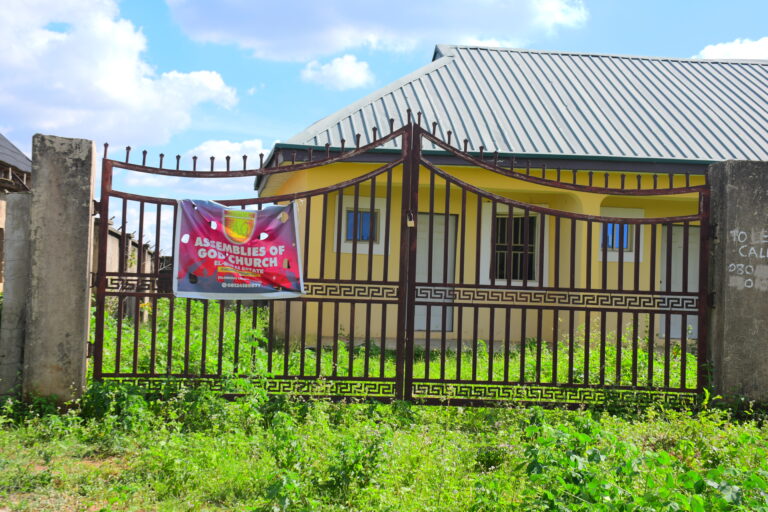
Across the Kuchiko Resettlement Development Area, The ICIR observes grasses growing thickly in several homes, which residents said were deserted due to insecurity. A local church, Assemblies of God’s Church was also shut down as grasses grew over the vicinity.
Some properties were advertised either for sale or lease. Buildings hitherto under construction had also been put on hold.
Another resident, Abimbola Okahlomo, who runs a restaurant business in the Estate, said her sales had dropped since abductions spiked. “For how long are we going to run away from our property in our own country?” quizzed the 42-year-old chef, pointing at several deserted homes and abandoned site projects.
FCT/Niger border unchecked, area not guarded…
Kuchiko sits on the boundary, spanning both Niger state (Kuchiko-Ijah) and the FCT (Kuchiko-Bwari). A 12 metres bridge marks the demarcation between Niger state and the FCT.
However, the boundary is blurred by the intersection of buildings and the absence of a security checkpoint to signal exit or entrance between the state and Nigeria’s capital. Many residents of Kuchiko attribute the recent spike in kidnapping cases to the absence of a security checkpoint.
The border between FCT and Niger state in Kuchiko does not have a security checkpoint. Photocredit: Sinafi Omanga/The ICIR
Ukparaji Uzuoma, an official of the Kuchiko Resettlement Development Area appealed to the FG to establish a standby security post or mount a constant patrol team to curtail the rising criminal activities in the area.
The 73-year-old retired civil servant decried the “slow intervention” from security agencies to the constant evasion of the area.
“For crying out loud, this is a border town between two states. One would expect a heavy presence of the Military and police to scare criminals away. But that is not the reality here”, Uzuoma noted.
We need emergency security meeting – FCT Minister
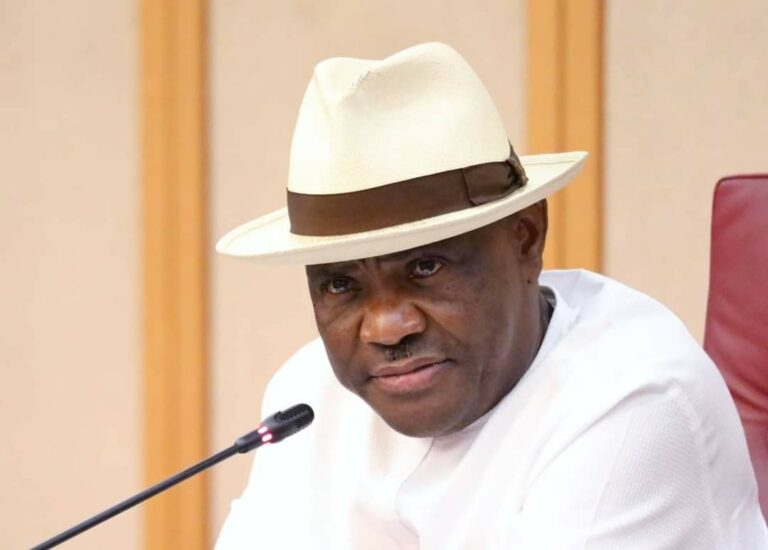
Minister of FCT, Nyesom Wike expressed shock over rising cases of kidnapping in the nation’s capital
The Minister of the FCT, Nyesom Wike when he was appointed expressed shock over the rising rate of abduction in the nation’s capital.
During his maiden meeting with the six council chairmen of the FCT on September 7, Wike promised to meet with FCT Director of State Service and the Commissioner of Police to address the insecurity challenges.
The Minister said, “The incident of kidnapping you talked about, nobody has reported that to me. It is a serious issue, and we need to call an emergency security meeting.
“I have to call the Director of SSS and the CP now to give me more details because it is very embarrassing to me”.
The outcome of the proposed meeting between the Minister and the security agencies has not been made public, at the time of filing this report.
However, FCT residents in the satellite town of Kuchiko continue to flee their homes and battle sleeping disorders due to frequent abductions.
“It is no longer a question of when but who is next,” said a Kuchiko elder, Baba Bego in a follow-up interview with The ICIR.
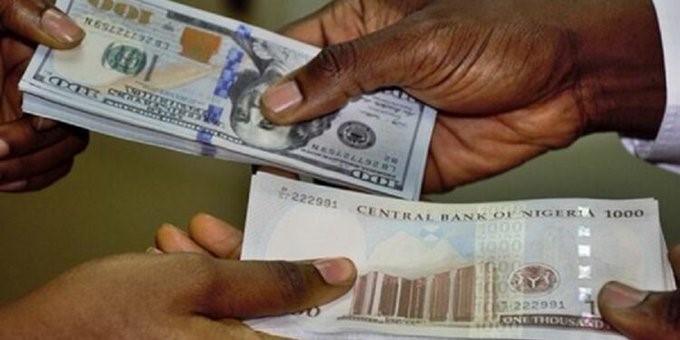
THE Nigerian currency depreciated against the United States dollar, routing to N902.45/$1 on Friday, January 19, as foreign exchange (FX) demand outweighed supply, despite the Central Bank of Nigeria’s (CBN) clearance of $2bn FX backlog.
The ICIR analysis of transactions in the FX market in the just concluded week shows that the naira depreciated against the dollar by 1.34 per cent at the official market and 6.62 per cent at the black market.
At the official market, the naira, which opened on Monday, January 15, at N890.54/$, closed at N902.45/$1 on Friday, January 19. Similarly, at the black market, the naira opened at N1,269/$1 and closed at N1,353/$1, respectively.
During the week, CBN announced that it had cleared about $2 billion of FX backlog across the manufacturing, aviation, and petroleum sectors.
The CBN spokesperson, Hakama Sidi-Ali, disclosed this in a statement on January 17.
The bank said in the statement that it had cleared the entire foreign exchange forwards liability of 14 banks and would turn its focus on settling the trapped funds owed to foreign airlines.
On January 7, CBN reportedly paid an initial $61 million to address the $800 million owed to foreign airlines.
Meanwhile, Nigeria has about $7 billion in forex forwards that have matured, a significant concern for investors as foreign currency shortages continue to weigh down the naira, despite assurances by CBN to clear the backlog.
The CBN said an independent forensic review of the backlog commissioned showed “grave infractions, gross abuse, and significant non-compliance with market regulations.”
The bank, however, assured that appropriate sanctions would be enforced on offenders in collaboration with relevant agencies.
The apex bank reiterated its commitment to cleaning up the financial services industry to boost market confidence, adding that it would continue to settle legitimate forex backlog to clear all outstanding liabilities.
The report resulted from a survey of 30 chief economists, exploring vital economic trends, including growth and inflation prospects, and the implications of recent geopolitical, industrial policy, and artificial intelligence (AI) developments.
It indicates that 67 per cent of the economists anticipated weak economic growth for the European region.
“The change in the outlook for Europe is particularly stark, with the share of respondents expecting weak or very weak growth almost doubling to 77% since September,” it stated.
Relatively, all the other regions of the world are projected to have moderate economic growth except South Asia, which 52 per cent of the economists say will have robust economic growth in the year in view.
The U.S., China, Central Asia, East Asia and Pacific, Middle East and North Africa, Latin America and the Caribbean, and Sub-Saharan Africa will pose moderate growth.
For sub-Saharan Africa, it specified that 65 per cent of the economists project moderate growth for the region.
“Chief economists continue to see the most buoyant economic activity in the economies of Asia, although no region is slated for very strong growth in 2024,” the report stated.
It revealed that global economic prospects will remain uncertain as it grapples with headwinds from financial conditions, geopolitical risks, and generative AI (GenAI) progress.
It explained that 69 per cent of the economists agree China expects moderate growth amid weak consumption, lower industrial production and property market, while 53 per cent see U.S. economic growth to moderate.
A further look at the report shows that seven in 10 economists agree the pace of global fragmentation will accelerate, with 59 per cent expecting the global economy to weaken. In contrast, two-thirds agree that industrial policies will create new growth hotspots.
Other highlights in the report are that most economists warn of rising fiscal strains and divergences between higher-lower income economies and expect GenAI to increase productivity and innovation.
In the year in view, all the regions are expected to experience moderate inflationary pressure except China, which is projected to record a low inflation rate.
“At the start of 2024, global inflation continues to ease, propping expectations of mild ebbing in interest rates this year. The global headline rates of inflation are projected to reach 4.8%, a sharp decline from 5.9% in 2023 and 9.2% in 2022.
“Core inflation is decelerating too, albeit at a slower pace, and is expected to reach 4.5% in 2024. The easing is reflected in the latest survey results, with expectations for high inflation being pared back across all regions,” the report also indicated.
THE Minister of the Federal Capital Territory (FCT), Nyesom Wike, has announced the arrest of some informants working for kidnappers in the nation’s capital.
He made the announcement when he visited Gwagwalada Area Council on Friday, January 19.
The minister also approved the demolition of uncompleted buildings serving as criminals’ hideouts within the council.
He implored the head of the council to write a letter of authorisation, promising that the demolition would begin by Monday, January 22.
During a town hall meeting in the area council, the minister warned kidnappers and their informants that their time was up.
Wike said some kidnappers’ informants who had recently launched attacks on different parts of the city had been arrested.
Addressing the locals, Wike emphasised the government’s dedication to preserving lives and property.
He asked people of the area council to volunteer information on suspected criminal activities and warned against ransom crowdfunding, as, according to him, it only incentivises crimes.
To improve security, the minister explained the government’s plans to equip Police stations in the FCT with more facilities.
Wike directed the FCT Police commissioner to create two additional Police divisions in response to calls for more divisions inside Gwagwalada.
He stressed that security-related concerns must be handled quickly and without bureaucratic hiccups.
Meanwhile, the FCT Police Command confirmed the arrest of one Chinaza Phillip, a notorious kidnapper in the FCT, by Police operatives of the Kaduna state Police Command on Thursday, January 18.
The FCT Police spokesperson, Josephine Adeh, in a statement on Friday, said the suspect has been handed over to the command.
The ICIR, in a report earlier on Friday, revealed that some residents of the FCT, especially those within the Bwari Area Council, were abandoning their homes to escape being kidnapped by bandits who seem to be taking over the city in a recent wave of abductions.
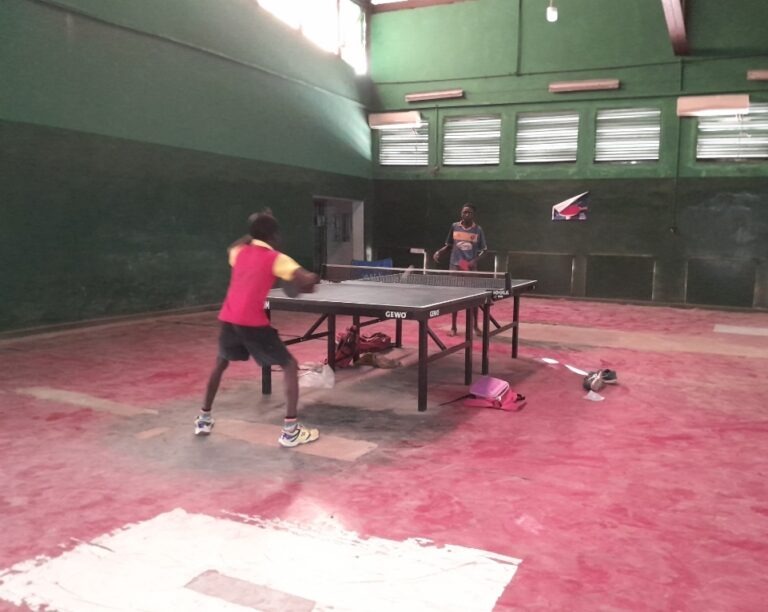
THE state of sporting facilities inside the Nigeria Table Tennis Federation (NTTF) continues to be a great concern to hundreds of budding talents who swarm into the facility daily.
Founded in 1951, the NTTF, tucked between an open mini-field and the National Basketball Hall, is a few metres away from the entrance of the National Stadium in Surulere, Lagos state.
Once a national pride, the ping-pong hall is begging for modern infrastructures as many Nigerians, especially youth, see it as a platform for actually their dreams.
The NTTF parades a dilapidated floor, few table tennis boards, spoilt bulbs and non-functioning air conditioners, which makes the hall emit heat all day.
Few persons sitting on the bench watching a tennis game.
Inside the hall are a few wooden benches for the audience or players waiting for their turn to play. There is a place for hanging clothes.
But in the face of the odds, budding table tennis players enthused with the passion of the sport wait in turns to display their skills.
One of the players, Emmanuel Augustine, called on the Federal Ministry of Sports Development to revitalise the table tennis hall.
“This place is not too good for training, as you can see the floors, the condition of this place is not too good for training. The tables are not too good, but we can still manage them. The lights are good, but the air conditioners are not working.
“The Federal Government can come and renovate everywhere, do the floors and give us new tables,” he said.
Another player, Bose Odusanya, appealed for standard equipment in the table tennis hall, noting that it would improve the game in the country.
“We need more equipment, like the tables we use to play table tennis. We have just a few. If you see the National Stadium, there are no good tables, so we need tables and other equipment to improve our game,” she said.
The Chief Executive Officer of the Africa Table Tennis Association, Kweku Tandoh, attributed the sterling performance of table tennis players to the proper sporting infrastructures available to them.
“If we don’t have the right facilities to support the game’s growth, there is little that we can achieve. So it goes together with coaching, education and player development.
“We appeal to those that are there to put things right. Right infrastructures and sports facilities are very essential,” he added.
Tandoh stressed that Nigeria’s tennis was at a crossroads between the old and young generation, hence the need for modern sporting infrastructure to aid the transition process of the junior to the elite level.
“The transition is important. It is key. To do that transition, you must have the right ingredients: what is the coaching system and the player’s development like? You cannot transit a player from youth to senior level if you don’t get that right.
“The senior level is very competitive now, which is the area we need to focus on more in Nigeria. Do we have the right coaches to take our youths to the elite level?” he added.
THE Central Bank of Nigeria (CBN) has announced that its Monetary Policy Committee (MPC) would hold its first meeting under the tenure of the new governor, Olayemi Cardoso, on Monday, February 26, and Tuesday, February 27.
The last monetary policy meeting was held in July 2023, under the then-acting governor Folashodun Shonubi, where the committee members voted to increase the benchmark interest rate by 25 basis points from 18.5 to 18.75 per cent.
The announcement of the upcoming MPC meeting followed a two-day strategic session for the MPC members in preparation for the February meeting.
The acting director of the Corporate Communications Department of the CBN, Hakama Sidi Ali, said the meeting engaged in an in-depth discussion about the committee’s objectives.
She explained that the meeting focus areas include deliberations on the strategic plan to effect necessary improvements in the monetary policy transmission mechanism.
According to her, the sessions were facilitated by former MPC members, monetary policy communication specialists at the International Monetary Fund IMF, and directors of departments critical to the MPC process.
“The valuable insights gained from these discussions will significantly contribute towards the robustness of the forthcoming MPC meetings,” she noted.
The CBN governor had in November 2023 assured that he would focus on the bank’s primary mandate, which is to ensure price stability in addition to other objectives such as issuing legal currency and safeguarding external reserves. He stressed that he would promote a sound financial system and provide economic and financial advice to the government.
Cardoso has also outlined the bank’s policy direction for 2024, with a pledge to prioritise price and exchange rate stability to promote sustainable economic growth, safeguarding the livelihoods of Nigerians.
Notably, a calendar of the MPC meeting for 2024 published on the CBN website indicates that the meetings have been scheduled for February, March, May, July, September, and November 2024.
The ICIRreported that the delay in not having a monetary policy committee meeting is affecting key decisions in Nigeria.
Economy observers say the CBN needs to work closely with the Federal Ministry of Finance to ensure proper realignment of the monetary and fiscal policies.
“The monetary authorities cannot do it alone. The fiscal authorities need to support every effort of the monetary authorities to ensure the naira strengthens against the US dollar,” said the chief executive officer of the Financial Derivative, Bismarck Rewane.
THE International Women’s Media Foundation (IWMF) is seeking nominations for its Courage in Journalism Awards in English, French and Spanish.
Nominations are opened to full-time and freelance women journalists working in print, broadcast or online media in any country.
IWMF is built to serve the holistic needs of women and non-binary journalists with equity, opportunity, recognition and safety.
The Courage Journalist Award honours women who have demonstrated extraordinary strength of character in journalism under difficult or dangerous circumstances.
Candidates must be full-time staff or freelance women or nonbinary reporters, writers, editors, photographers or producers working in any country and of any nationality.
Nominations for the award is strictly third-part based (no self nomination). The deadline for application submission is March 3, 2024.