THE United Nations seek entries to its 2026 Reham Al-Farra Memorial Journalism Fellowship.
The fellowship is a unique opportunity for young working journalists between the ages of 22 and 35 from developing countries and countries with economies in transition to cover the UN.
During the programme, fellows have the opportunity to attend special briefings, interview senior UN officials and exchange ideas with colleagues from around the world.
Full-time working journalists can apply for the programme. Freelance journalists can apply too but are encouraged to attach documentation of their press accreditation (e.g., membership in a press syndicate, union, or similar association).
The application for the fellowship is now open until April 3, 2026. Organisers request interested applicants to submit their applications here.
THE National Coordinator of the Obidient Movement, Yunusa Tanko, on Tuesday, February 24, raised the alarm over an alleged attack on former presidential candidate, Peter Obi and his Obidient members in Benin, Edo State.
Tanko disclosed that armed thugs had shot at Obi and members of the movement during the formal defection of a former governorship candidate Olumide Akpata to the African Democratic Congress ((ADC), in the state capital.
In a statement he signed and titled: “Breaking: Red Alert in Benin, Edo State.” Tanko said: “PO and the leadership of the ADC are under siege and attack in Benin, Edo State.
“At the formal declaration of Olumide Akpata into the African Democratic Congress, armed individuals followed us from the ADC Secretariat to the residence of Chief John Odigie-Oyegun.
“They shot at the gate and destroyed several vehicles in what appears to be a successful assassination attempt on our lives. Democracy is in danger,” the statement added.
As of the time of filing this report, there was no official confirmation from security agencies regarding the incident.
The ICIR reports that Governor Monday Okpebholo had warned Obi that he must get security clearance before coming to the state.
Obi had earlier visited Benin, the state capital, on July 7 and donated N15m million to St. Philomena Hospital School of Nursing Sciences for the completion of projects in the school.
“That man who says he has no ‘shishi’ came and dropped ₦15 million. Where did he get it from? After he left, three people were killed. For this reason, Obi must not come to Edo without security clearance,” the governor said.
The ICIR could not immediately report if Obi got a clearance before visiting the state.
PRESIDENT Bola Tinubu appointed Assistant Inspector-General of Police Tunji Disu as Acting Inspector-General of Police on Tuesday, February 24.
His appointment followed the resignation of the immediate past IGP, Kayode Egbetokun.
In a statement shortly after the news of Egbetokun’s exit from the Force broke, presidential spokesperson, Bayo Onanuga said Tinubu expressed “profound appreciation” for his decades of service, dedication and commitment to strengthening Nigeria’s internal security architecture.
Onanuga said in view of prevailing security challenges, Tinubu approved Disu’s appointment in acting capacity, citing his “experience, operational depth, and demonstrated leadership capacity” as critical for steady direction of the Nigeria Police Force.
It also noted that the president would convene a meeting of the Nigeria Police Council in accordance with the Police Act to formally consider Disu’s appointment as substantive IGP, after which his name would be forwarded to the Senate for confirmation.
Who is Tunji Disu?
Disu is a career police officer with over three decades of service. Before his elevation, he served as Assistant Inspector-General of Police in charge of the Force Criminal Investigation Department (FCID) Annex, Lagos.
He previously held key operational and command roles, including Commissioner of Police in Rivers State and the Federal Capital Territory (FCT), Commander of the Rapid Response Squad (RRS) in Lagos, and head of the Police Intelligence Response Team (IRT).
His tenure in Lagos RRS drew attention for operational reforms in urban policing and crime response. Many Nigerians are already throwing their support behind him, hoping for a better policing.
Disu, a graduate of English Education from Lagos State University, holds master’s degrees in Public Administration and Criminology, Security and Legal Psychology, and he is a member of the International Association of Chiefs of Police.
Current state of the Nigeria Police Force
The new Acting IGP inherits a police force shaped by the contentious tenure of Egbetokun.
Prominent issues under the former IGP were many human rights abuses, attacks on citizens and journalists, and harassment of protesters.
As Acting IGP, Disu faces immediate challenges as Nigeria continues to grapple with persistent security threats, including banditry, kidnapping and organised crime.
Beyond frontline security concerns, Nigerians are expecting a change in leadership that strengthens internal discipline within the Force and reinforces respect for human rights.
There is also heightened public concern around how the police manage protests and civil dissent, with expectations that operations will reflect restraint, respect for constitutional rights and adherence to the rule of law.
Many will further expect a balance between enforcement of cybercrime regulations and the protection of press freedom.
With the 2027 general elections drawing closer, preparations for credible and impartial election security will form another major test of the new police leadership.
THE United States Congress has outlined major recommendations for the Nigerian government in a report submitted to US President Donald Trump, following investigations led by lawmaker Riley Moore into alleged Christian genocide in Africa’s most populous nation.
Moore shared the full report on his X handle on Tuesday hours after releasing a statement where he explained that he had presented a congressional report to the White House aimed at addressing religious violence and insecurity in Nigeria.
The ICIRreported that the development followed congressional hearings and visit of investigative delegation to Nigeria, which form part of Washington’s broader push after Nigeria’s redesignation as a Country of Particular Concern (CPC) over alleged religious freedom violations.
The report was formally delivered after months of investigations into “violence affecting Christian communities” and broader security challenges in Nigeria.
Highlights of what US lawmakers want Nigeria to do
(1a) New US–Nigeria security agreement: The Congress wants a bilateral agreement between the United States and Nigeria to protect vulnerable Christian communities from violent persecution, eliminate jihadist terror activity in the region, further economic cooperation, and counter ‘adversaries’ in the region, including the Chinese Communist Party and Russian Federation. Such an agreement should include:
Commitments by the Government of Nigeria to co-fund donor-supported humanitarian assistance – including through faith-based organisations and to prioritise underserved communities of Internally Displaced Persons (IDPs) and their host communities, especially in the predominantly Christian Middle Belt region; support and respond to early-warning mechanisms to prevent attacks and kidnappings, including by deploying sufficient and capable security forces to the Middle Belt to enable rapid and effective response, and hold those who ignore the warnings accountable.
(1b) Remove Fulani militias from confiscated, productive farmland and enable the voluntary return of displaced communities to their homes, including by ensuring security and infrastructure, thereby reducing the need for humanitarian aid and generating economic development through increased agricultural productivity.
(1c) Continue and expand security cooperation with the United States, including by divestment of Russian military equipment for American military equipment through sales and financing.
(1d) Technical support to the Government of Nigeria to reduce and then eliminate violence from armed Fulani militias, including developing a demobilisation, disarmament, and reintegration programme to address illicit weapons and support safer communities while allowing farmers to engage in legitimate self-defence; supporting the new Ministry of Livestock’s ranching plans and meaningful land reform efforts; and enhancing the recruitment, technical capabilities, and willingness of the security forces and military to prevent and respond to violent attacks.
(1e) Comprehensive counter-terrorism cooperation to rid the region of foreign terrorist organisations that pose a direct threat to the American homeland, including through the provision of excess defence equipment and use of relevant drawdown authorities.
(1f) Counteract the hostile foreign exploitation of Chinese illegal mining operations and their destabilising practice of paying protection money to Fulani militias.
(2a) Implement security measure
Implement the National Security, Department of State, and Related Programmes Appropriations Act, 2026, to support the preceding recommendations and the following priorities:
(2b) Increased accountability by requiring proof of progress before obligating additional funds.
(2c) Programmes to address religious freedom, atrocity response, legal reforms, expand and improve policing, strengthen the criminal justice sector, improve anti-money laundering methods, and enhance capabilities to disrupt terrorist financing networks as well as capture illicit monies from Fulani militia members.
(2d) Treasury Department programmes and activities to strengthen the integrity of Nigeria’s financial system which will safeguard US national security and enhance the favorable balance of trade for the United States.
(2e) US Development Finance Corporation investments in Nigeria, especially in the Middle Belt.
(2f) GAO audit report on the effectiveness of aid to Nigeria and recommendations for strengthened oversight.
(3) Invoke and publicly announce the CPC Presidential Directives to name and shame perpetrators of violence.
(4) Implement sanctions on groups and individuals who participate in, or tolerate violence against, Christians.
(5) Continue visa restrictions for perpetrators involved in Christian violence and violations of religious freedom.
(6) Demand the repeal of Sharia codes and criminal anti-blasphemy laws.
(7) Review and use points of leverage to compel Fulani herdsmen to disarm, including by blocking export of beef and other cattle-related products to countries like Ivory Coast, Ghana, South Africa, and Senegal.
(8) Ensure adequate staffing of diplomatic posts in Nigeria.
(9) Improve the Foreign Military Sales process to expedite the procurement and delivery of defence articles and services necessary to support shared security priorities.
(10) Require a National Intelligence Estimate (NIE) on Nigeria’s sectarian and communal violence, and review classifying Fulani militia groups with links to terror groups, as well as other groups conducting organised campaigns of violence that threaten the United States, as a foreign terrorist organisation.
(11) Enlist the support of international partners, including France, Hungary, and the United Kingdom.
BANKING and other financial lending institutions are expected to adjust their cost of funds for businesses as the Monetary Policy Committee (MPC) meeting of the Central Bank of Nigeria (CBN) cut interest rates to 26.5 per cent on Tuesday, February 24.
The CBN Governor, Olayemi Cardoso, announced the reduction at the end of the committee’s 304th meeting held in Abuja.
Cardoso disclosed that the committee decided to reduce the monetary policy rate by 50 basis points to 26.5 per cent, citing ease in inflation.
The move followed a 50-basis-point cut implemented in September 2025 and a hold at the previous MPC briefings in November 2025.
According to Cardoso, “The committee’s decision for rate cuts was premised on the balanced and ongoing disinflation and sustained exchange rate stability in the country.”
While the main interest rate was reduced, the CBN decided to maintain other safety measures to ensure the stability of the banking system.
Cardoso also informed that the Cash Reserve Requirement (CRR)-which is the amount of money banks must keep with the apex bank-was held at 45 per cent for regular commercial banks and 16 per cent for merchant banks.
The committee also adjusted the “Standing Facility Corridor,” which is the range of interest rates at which banks can borrow from or lend to the CBN. This range has now been set at +50 to-450 basis points around the new 26.5 per cent rate.
The apex bank governor also disclosed that 20 banks had met the recapitalisation requirements, adding that the recapitalisation would enhance the resilience and sustainable economic growth.
He stressed that food inflation recorded a single-digit inflation of 8.89 per cent in January, after over a decade of high staple food prices, adding that inflation easing to 15.10 per cent was a good development for the economy.
Cardoso further said that stability in the foreign exchange (FX) and domestic refining capacity, boosted by Dangote Petrochemical Refinery were other factors that supported macro-economic stability.
“Foreign exchange stability and domestic refining capacity improvement would support a favourable base effect on the economy and would support inflation decline.
The Chief Executive Officer of Economic Associates, Ayo Teriba, said interest rate cuts were largely driven by reforms in the currency market and clearing backlogs of foreign exchange owed by airlines and other companies, which made the reforms easier for enforcement.
“The rate cuts are a welcome development, and we expect the economy to progress and support more lending to small-scale businesses and industrialists for overall economic developments,” he added.
NIGERIA’S Inspector-General of Police, Kayode Egbetokun, has resigned, the Presidency confirmed to The ICIR on Tuesday.
Egbetokun was reported to have resigned at the request of the President Bola Tinubu after a meeting at the Presidential Villa in Abuja on Monday, February 23.
However, the Presidency told The ICIR he was not forced to do so. “It is true. He has resigned. He was not SACKED by the President,” the Special Adviser to the President on Information and Strategy, Bayo Onanuga, told this organisation.
Preparations are reportedly underway by Egbetokun to formally hand over to Assistant Inspector-General of Police Tunji Disu, who oversees the Force Criminal Investigation Department (FCID) Annex in Lagos.
Although Egbetokun was appointed as the 22nd IGP on June 19, 2023, and his appointment was later confirmed by the Nigeria Police Council, his tenure became contentious due to statutory retirement provisions.
Under Section 18(8) of the Police Act 2020, an officer is to retire upon attaining 60 years of age or after 35 years of service.
Egbetokun turned 60 on September 4, 2024. However, the National Assembly amended the Police Act in July 2024 to allow the IGP to complete a four-year term regardless of age or years of service.
The Presidency and the police had maintained that his continued stay in office was lawful under the amended legislation, and he was expected to serve until October 31, 2027.
Controversies
Egbetokun’s tenure was dominated by disputes over the legality of his continued stay in office after reaching retirement age.
Critics argued that the July 2024 amendment to the Police Act was influenced by the Presidency to enable the police chief to complete his four-year term.
The ICIR reports that the bill scaled second and third readings in both chambers on July 23, 2024, the same day Tinubu forwarded it to lawmakers.
The amendment sought to introduce a new provision overriding Section 18(8) of the Police Act 2020, which requires officers to retire after 35 years of service or upon attaining 60 years of age.
At the time, Egbetokun, born September 4, 1964, was months away from turning 60 in September 2024.
After the National Assembly passed the amendment bill, the police issued a statement maintaining that Tinubu did not extend Egbetokun’s tenure but merely applied the law properly.
The Force said his appointment letter already granted him a four-year tenure in line with constitutional provisions.
Activist and former presidential candidate Omoyele Sowore persistently challenged Egbetokun’s continued stay in office after he turned 60 and organised protests demanding his sack.
Police later charged Sowore with cybercrime-related offences over comments describing the IGP as ‘illegal’, and secured an injunction aimed at preventing the activists from further ‘defaming’ Egbetokun.
Beyond the tenure dispute, Egbetokun’s leadership faced criticism over police conduct during protests and civic actions. Under him, the Nigeria police Force were reported to harass citizens, peaceful protesters, and civic actors.
THE BAYELSA State House of Assembly has confirmed Peter Akpe as the state’s new Deputy Governor.
Akpe, a pastor with the Redeemed Christian Church of God (RCCG), was the chief of staff to Governor Douye Diri before his appointment.
Akpe has a strong background in government and politics, having worked in the Rivers and Bayelsa state civil services. He was also a member of the Bayelsa State House of Assembly for two terms, from 2011 to 2019, and served as the majority leader during his time in office.
Additionally, he was a commissioner in the state government from 2008 to 2011 under the administration of Seriake Dickson.
The position of Deputy Governor became vacant after the death of Lawrence Oborawharievwo Ewhrudjakpo, who passed away on December 11, 2025.
Akpe’s confirmation has cleared the way for his swearing-in as the new deputy governor.
The ICIRreported that the Peoples’ Democratic Party (PDP) confirmed Ewhrudjakpo’s death, describing his passing as an “inexplicable loss and indescribable pain.”
In a statement by the party’s National Publicity Secretary, Ini Ememobong, on Thursday, December 11, the PDP said it received the news with “deep shock.”
The statement noted that the news threw the party’s National Working Committee, led by Kabiru Tanimu Turaki, a senior advocate, as well as party members across the country, particularly in Bayelsa State, into “profound grief.”
“While alive, Senator Ewhrudjakpo was an honest and consistent politician who believed in and practiced politics with principle. He was a person of conviction, not convenience; a leader whose life was anchored on belief, integrity, and strength of character,” the PDP wrote, adding that he held firmly to these values until his final moments.
The ICIRreported that the late deputy governor collapsed while carrying out official duties at the Government House in Yenagoa, the state capital.
UNITED States (US) lawmaker Riley Moore has presented a congressional report to the White House recommending sweeping diplomatic and security measures aimed at addressing religious violence and insecurity in Nigeria.
Moore disclosed this in a statement posted Tuesday morning on his X handle following a meeting with senior US officials and members of congressional committees overseeing foreign affairs and appropriations.
“Washington, D.C. – Today, Congressman Riley M. Moore joined members of the House Committees on Appropriations and Foreign Affairs at the White House to formally present the comprehensive report outlining concrete actions to end the persecution of Christians in Nigeria and counter growing extremist violence in the region,” Moore wrote.
According to the statement, the report was formally delivered after months of investigations into “violence affecting Christian communities” and broader security challenges in Nigeria. The effort followed the US President Donald Trump’s redesignation of Nigeria as a Country of Particular Concern (CPC) over religious freedom violations on October 31, 2025.
“The meeting follows President Trump’s redesignation of Nigeria as a Country of Particular Concern (CPC) on October 31, 2025. President Trump requested Congressman Moore and Appropriations Committee Chairman Tom Cole to lead a comprehensive investigation on the persecution against Christian communities and security challenges plaguing Nigeria.
“This report is the result of months of investigation, including a bipartisan congressional fact-finding trip to Nigeria, hearings with expert witnesses, consultations with religious leaders, meetings with internally displaced persons, and engagement with senior Nigerian government officials,” he added.
Moore described the White House meeting as ‘productive’, thanking Trump for redesignating Nigeria as a CPC and for directing Congress to conduct a comprehensive review of religious persecution claims. He noted that the findings presented a “clear picture of the threat environment” and outlined accountability measures to counter extremist violence while strengthening cooperation between both countries.
Moore further proposed a series of policy actions by the US Government, including negotiating a bilateral US–Nigeria security agreement aimed at protecting vulnerable communities and dismantling extremist networks.
“Establishing a bilateral US–Nigeria security agreement to protect vulnerable Christian communities and dismantle jihadist networks, withholding certain US funds, pending demonstrable action by the Nigerian government to stop violence against Christians, Implementing sanctions and visa restrictions against individuals and groups responsible for or complicit in religious persecution, providing technical support to the Nigerian government to eliminate violence from armed Fulani militias, demanding the repeal of Sharia and blasphemy laws, working with international partners including France, Hungary, and the United Kingdom,” he added.
The Congressman also urged Nigerian authorities to deepen diplomatic relations with the US, arguing that stronger collaboration would benefit both nations and help address ongoing insecurity in the West African nation.
While US lawmakers framed the recommendations around religious persecution concerns, Nigerian authorities have repeatedly maintained that the country’s violence was driven by complex security, economic, and communal factors rather than a single religious agenda.
This development signals increasing international scrutiny of Nigeria’s security situation, particularly attacks linked to insurgency, banditry, and communal conflicts that have affected multiple regions of the country.
The ICIR reported Amnesty International disclosing that 323 people in Nigeria were killed in the first 20 days of February 2026.
The Nigerian government has yet to issue an official response to the latest report as of the time of filing this report.
THE Association of Power Generation Companies (APGC) has rejected Presidency’s claim that N2.8 trillion is the newly verified and final settlement of legacy debts owed to electricity generation companies, describing the figure as inaccurate and misleading.
In a statement issued Monday, February 23, in Abuja and titled “APGC Position on Misleading Reports Regarding GenCos’ Debt Reconciliation,” the association’s Executive Secretary, Joy Ogaji, said the reported amount did not reflect the outcome of any officially concluded reconciliation process.
“We categorically reject recent media reports suggesting that N2.8trillion represents a newly verified and final settlement of GenCos’ legacy debts. The report is completely inaccurate. It is fake news,” Ogaji said.
Presidency sources cited N2.8 trillion approval
The clarification followed a media report that President Bola Tinubu approved N2.8 trillion as the Federal Government’s verified liability for accumulated electricity subsidies dating back to 2010.
According to sources quoted in the report, the president rejected a N6 trillion claim submitted by operators and insisted that payment would not exceed the audited N2.8 trillion figure..
Responding to the claim, Ogaji challenged the unnamed Presidency sources to make public the basis of their computation.
“Those Presidency sources should come out openly. I dare them. Publish your audit report. Why hide to throw stones? Issue a formal press release explaining how you arrived at that figure,” she said.
She argued that the debt in question arose strictly from bilateral commercial agreements executed within the framework of the Nigerian Electricity Supply Industry (NESI), stressing that the obligations were contractual, and not arbitrary claims.
According to Ogaji, the debt is calculated through verifiable processes, including metered megawatts generated by GenCos, energy dispatched to the national grid, invoices issued in line with market rules, and settlement reports from the Nigerian Bulk Electricity Trading Plc (NBET).
“The energy generated by GenCos is metered and documented. The megawatts generated and dispatched to the grid are captured under established market procedures. These form the basis of invoices rendered under bilateral agreements. So any suggestion that figures are arbitrary is incorrect,” she said.
Previous reconciliation put figure at N4 trillion
Ogaji disclosed that as of December 2025, no further reconciliation meeting was convened by NBET following the March 2025 tripartite reconciliation exercise.
She recalled that in July 2025, after a reconciliation involving GenCos, NBET, the Ministry of Finance, and the Office of the Special Adviser on Energy, the President approved N4 trillion in recognition of verified legacy obligations.
“It is on record that after a tripartite reconciliation… His Excellency approved N4t trillion in recognition of verified legacy obligations. That commitment was made following due process and formal engagement,” she stated.
According to her, generation companies subsequently engaged financial institutions, gas suppliers and investors based on that commitment. Revising figures outside the established reconciliation framework, she warned, could erode market confidence.
Structural liquidity crisis
The APGC maintained that the persistent liquidity crisis in Nigeria’s power sector stemmed from structural challenges rather than inflated demands by generation companies.
Ogaji identified key drivers of the crisis as tariff shortfalls under regulated pricing, market settlement deficits, foreign exchange exposure and accumulated unpaid invoices.
“These are structural market realities, not arbitrary demands,” she stressed.
Nigeria’s power sector has struggled with mounting debts since the 2013 privatisation of the industry. Generation companies have repeatedly warned that delayed payments from NBET and distribution companies constrained their ability to meet obligations to gas suppliers and lenders, raising concerns about generation sustainability.
Against this backdrop, the APGC insisted that any attempt to alter reconciled figures without formal engagement would further weaken investor’s confidence at a time when the sector urgently requires stability and fresh capital injection.
The ICIR reports that Nigeria’s power sector is currently going through liquidity problems largely occasioned by an unbalanced tariff methodology and subsidies, which have impacted on investors’ trust in the market.
GENCOs were owed over N6 trillion as of January 2026, and the government was only able to pay N501 billion of the debt.
IN 2024, when Aliyu Abu, a resident of Niger State, went to the Lapai local government secretariat to correct a date of birth error on his National Identification Number (NIN), he expected a routine fix. He handed over N10,000 to a staff member, thinking the problem would be resolved quickly. Instead, his NIN was suspended indefinitely after leaving their office—a harsh consequence that revealed cracks in the very system meant to protect Nigerians from identity fraud.
With a National Youth Service Corps (NYSC) registration deadline fast approaching, Aliyu was referred to a local accredited staff known as ‘Master Cafe’ in Muna’s Barkin Sale area.
The ICIR reports that NIMC had one of the frequently asked questions on its website, “Do I need to re-enrol if I forget my NIN?” The response was clear: no re-enrolment is required. Nigerians can retrieve a forgotten NIN by visiting the nearest Enrolment Registration Centre (ERC) and providing their phone number, date of birth, or fingerprints, or by using the USSD code *346#, which is available on all networks at a cost of N20.
However, this has proven to be wrong as people like Aliyu, and many Nigerians now possess more than one NIN.
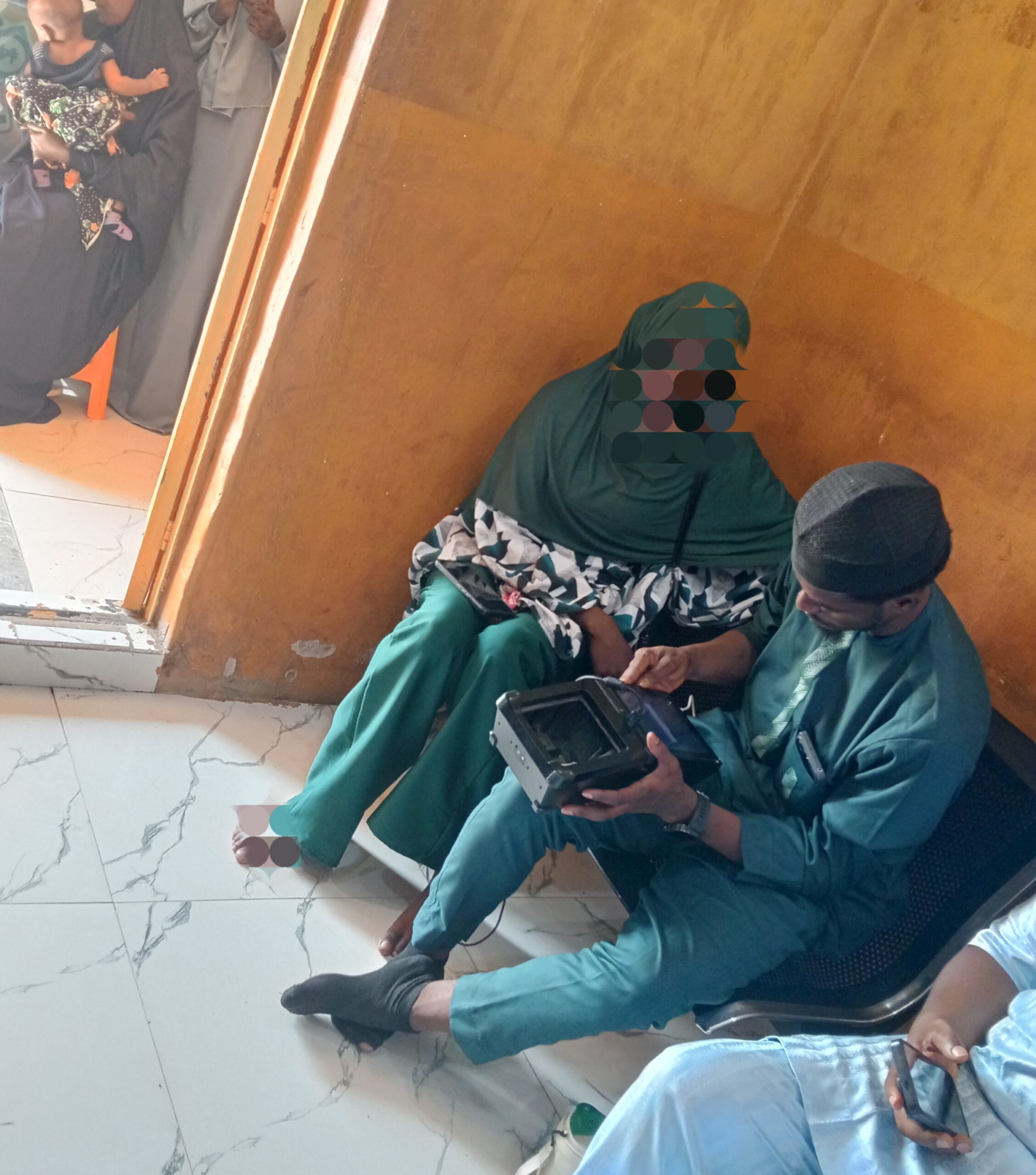
Fati and NIN agent during the enrolment in his-shop in-Dei-Dei.-PC-Hamzat Ibrahim Abaga/ICIR
‘I thumb printed twice without being flagged’
For another N3,000, Aliyu told The ICIR he was issued a completely new identity with a fresh NIN. “It worked within 24 hours and I was able to complete my NYSC registration immediately when the portal was open,” he said.
Even though Aliyu had already thumb printed during his first NIN registration in 2011, he was asked to thumbprint again for the new registration. “The NIMC did not flag the duplication. I handed over my personal details, was thumb printed a second time, and my new NIN became active almost immediately,” he explained.
The incident left him anxious about the integrity of his original identity record. “I remained concerned about the unresolved status of my first NIN and the fact that two records could now exist for the same person,” Aliyu said. He noted that the suspension of his first NIN likely stemmed from errors during his initial registration, particularly around his date of birth.
“Even though I had used the same thumbprint, the system did not prevent me from enrolling again. This shows how easy it is for repeated thumb printing to happen without verification,” he said.
Procedural gaps exposed
Aliyu’s experience exposes how simple procedural gaps combined with opportunities for under-the-table payments can create vulnerabilities in a system meant to be fraud-proof.
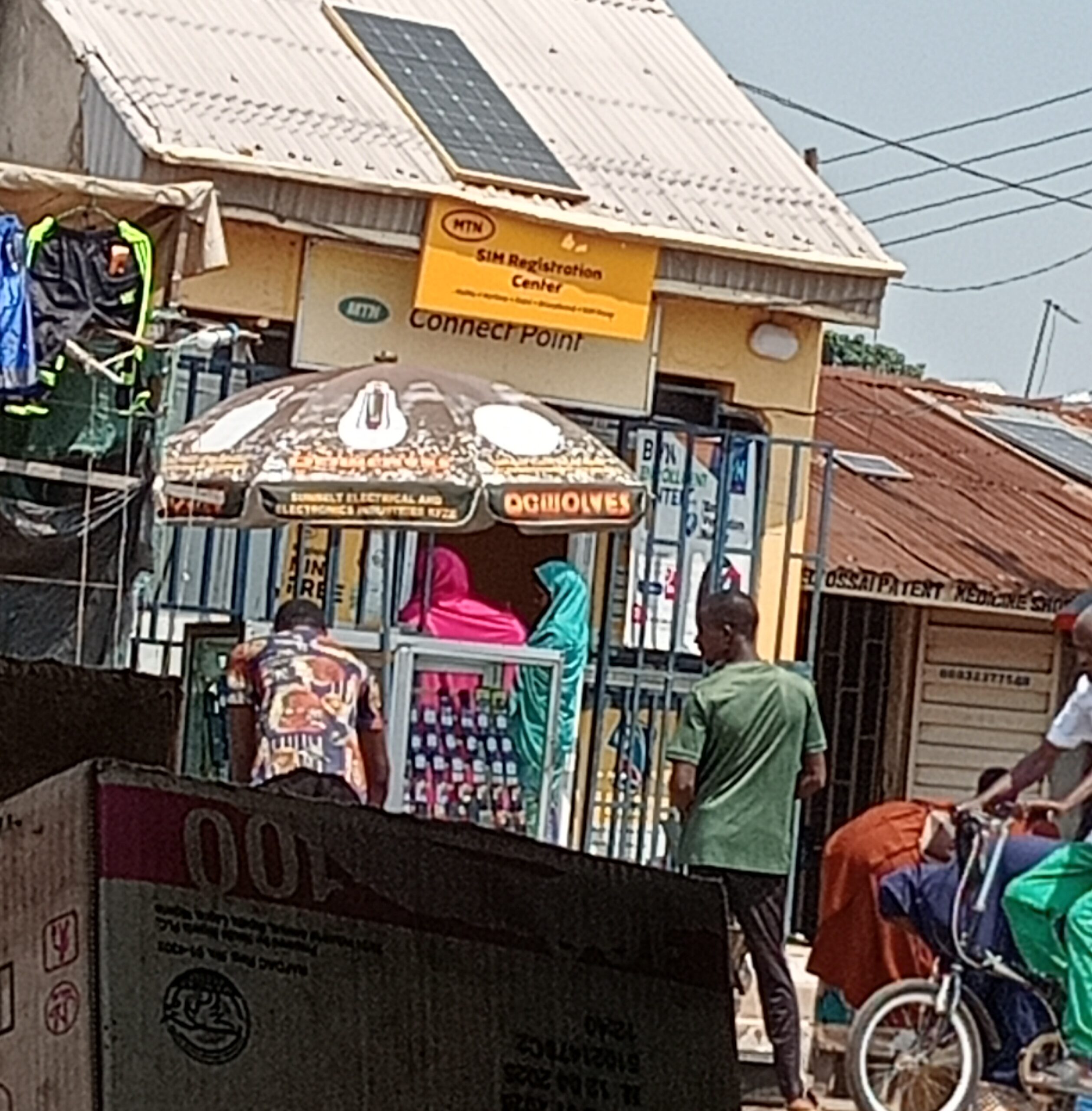
In Abuja and Niger State, where this investigation was focussed, some respondents admitted to holding more than one NIN with the help of some corrupt NIMC accredited centres.
Aliyu was able to successfully register his NYSC, and served his father’s land. But to perfect his new NIN he had to do newspaper publication, court affidavit and went through the process of replacing his new NIN with the old one in his Bank Verification Number (BVN) and across his banks. That was how he went through the whole process to get everything done.
While these issues persist, in 2023, the National Identity Management Commission budget stood at N24.1 billion of which N10.1 billion was earmarked for capital projects, according to the official budget documents. In 2024 N9.8 billion was budgeted for the NIMC capital expenditure while total expenditure stood at N22.7 billion.
In 2025, the capital expenditure increased to N25.6 billion while total expenditure stood at N40.8 billion. A review of budget documents shows that in 2025, NIMC budgeted a sum of N2 billion for the purchase of verification equipment, another N2.5 billion was budgeted for the provision and deployment of frontend and backend support system.
Another sum of N2 billion was budgeted for the provision of biometric/enrollment capture equipment for the headquarters and thirty-six states of the federation.
In June, 2024, the World Bank provided $45.5m to Nigeria’s NIMC as part of the Digital Identification for Development (ID4D) project.
This development was communicated in the World Bank’s implementation report. It was noted that the funds were disbursed in several tranches between December 2021 and April 2024, with disbursement still ongoing.
As of October 2025, the data published by the NIMC shows that the number of persons enrolled for NIN stood at 123.9 million.
NIN-SIM linkage crisis
Nigeria’s immediate past minister of communications and digital economy, Isa Ali Pantami, in 2020 led the push for every citizen to link their NIN with their SIM cards. The move was presented as a crucial step toward improving national security by ensuring that mobile phone users could be accurately identified.
However, with Nigerians able to register dual sims it would mean that criminals may be exploiting the system to use NIN with inaccurate details to register SIM cards which may invariably embolden them to commit more crimes.
An investigation by HumAngle had earlier raised flags in the SIM-NIN registration. The report found that some telecom agents had registered more than 20 mobile lines using a single NIN. Additionally, the verification process was so poorly designed and inadequately monitored that it could still accept photographs even those sourced from magazines-as legitimate profile images.
‘How I ended up with two NINs’
As part of the Joint Admissions and Matriculation Board (JAMB) regularisation process, candidates must verify their NIN. This involves sending the NIN via SMS to a designated short code provided by the NIMC. A confirmation message from NIMC then verifies that the NIN is valid and correctly linked to the candidate’s records. Without this verification, the regularisation process cannot be completed, and JAMB records will not match official identification—a critical step for one to get their records in the JAMB database to be able to participate in the mandatory NYSC.
For Iya Zaliya, this routine procedure marked the beginning of an ordeal she could never have anticipated.
In 2024, as Iya prepared to complete her National Diploma at a polytechnic, her school instructed her to register with JAMB since she didn’t get her admission through JAMB to qualify for the NYSC.
Fati’s second NIN
In the first week of October, she joined fellow students at JAMB Computer Based Test (CBT) centres in Morris area, Minna, for regularisation. That was when complications began.
Iya told The ICIR that despite sending her NIN multiple times, she never received the confirmation SMS from NIMC. She even tried using her husband’s and several relatives’ phone numbers, but the system continued to reject her. Many of her classmates who had similar cases, used different SIM cards, and were successfully verified. Some got verified later using their own phone number which was initially rejected.
“The response I keep getting is that my NIN had been used by another candidate to generate a confirmation code. I kept asking myself, how is that possible, and who could have access to my NIN?” she recalled.
Frustrated and exhausted, Iya watched her colleagues complete the process and eagerly awaited the next phase. “I was in a very sad state of mind—angry and regretful, even though I didn’t know what or who was responsible for my ordeal,” she said.
At the registration centre, an attendant offered only one solution: enroll for a new NIN. Shocked by the suggestion, Iya questioned the possibility of holding multiple NINs. The attendant explained that several students facing similar issues had ended up creating new NINs. “But I can’t help you,” he told her, “You should ask your colleagues for guidance.”
Her search for assistance eventually led her to a former classmate, Salisu, who connected her to an NIMC-accredited agent in the Federal University of Technology (FUT Minna) area, Bosso campus. The agent assured Iya he could enroll her for a new NIN, but later withdrew due to the high cost—N15,000 that was in 2024.
“My husband then contacted another person who claimed he could help, but it would also require some money. My husband told the story of the Bosso agent who he pulled out from because the fee was too high,” Iya said. This new agent’s shop was located on Shiroro Road in Chanchaga Local Government Area, Niger State.
NIMC legal provisions on violations
Section 14, 20, and 21 of the Independent Corrupt Practices and Other Related Offences (ICPC) Act and Sections 10 and 12 of the Code of Conduct Bureau and Tribunal Act have stated clearly that the unlawful possession of multiple NINs or forged identity cards is a punishable offence.
According to the NIMC, individuals found guilty face a minimum of six months’ imprisonment, a fine of at least N100,000 (One Hundred Thousand Naira), or both.
The laws also explicitly cover enrolment agents and Commission staff who collect money or favours to facilitate access to NIMC services, including enrolment, card collection, activation, or contract awards.
This applies to all staff, consultants, service providers, security personnel, and cleaners, with violators liable to seven (7) years’ imprisonment and dismissal from service.
Despite these clear legal provisions, cases of dual NINs still persist, highlighting a failure on the part of the NIMC to enforce its own regulations and safeguard the integrity of Nigeria’s identity database.
Thumbprint by proxy
Iya proceeded with the new NIN enrollment. All her details from the first NIN including her photograph, names, date of birth, and address were replicated except for the biometric fingerprint scan.
“After capturing all my details including my photograph, names, date of birth and address it got to a stage I had to thumbprint and he said that could be the major issue,” Iya told The ICIR, saying the agent assured her that the problem could be resolved.
Iya, who could not recall the agent’s name, said she paid him N7,000 for the enrolment process.
She was worried that if they could bypass the thumbprint stage and use her own biometric fingerprint could cause the registration to be flagged as duplicated. The agent reassured her not to panic and that he had a way of bypassing the process.
Second-NIN slip of Zaliya obtained-for-JAMB-regularisation. PC: Zaliya
According to Iya, the agent told her that they would have to use vulnerable children under Islamic tutelage, commonly referred to as ‘Almajiri ’, that have not reached the age for enrolment or enrolled before, to provide the thumbprint. The first child attempted the process but after a few days the agent informed Iya that it could not work but did not explain the reason for the failure.
They tried again with another pupil slightly older than the first, around 12 years old. This attempt was successful and Iya was issued her new NIN within 24 hours after enrolment.
With the new NIN, Iya successfully completed her JAMB verification and regularisation without any glitches, finally ending the months-long struggle that could ruin her participation in the NYSC.
Concerns over data protection
According to the Nigeria Data Protection Commission (NDPC) 2024 annual report, the country is witnessing a sharp rise in cases involving unauthorised access to personal information, identity impersonation, behavioural tracking, and opaque practices by mobile applications.
Within a single year, Nigeria experienced a dramatic jump in data privacy violations—soaring from 209,000 documented incidents in 2023 to 4.3 million in 2024. This implied a rapid escalation in the exposure of confidential personal details such as names, phone numbers, identity records, and financial information.
This disturbing pattern has firmly placed Nigeria at the centre of digital insecurity across the continent, revealing the gaps in national cybersecurity systems and the vulnerability of citizens’ personal data. It also raises urgent concerns about whether the government can adequately protect digital identities in a rapidly expanding tech landscape.
During a 2024 inquiry into a breach involving the NIMC, the NDPC disclosed that an authorised third-party service provider—granted permission to offer NIN verification services—had reportedly enabled XpressVerify.com, a private platform branding itself as an identity verification service, to use its official credentials. This access allegedly allowed the site to perform verification checks without proper authorisation.
By 2025, several online services were uncovered selling Nigerians’ personal information obtained from NIN databases. Reports showed that with nothing more than a phone number and as little as N100, individuals could retrieve highly sensitive data, including full names, birth dates, home addresses, and NINs.
‘How am I sure you are not a DSS officer?’
At an enrolment centre behind Wema Bank, Federal Housing along Total Road, Lugbe, the agent was willing to comply but remained sceptical and, uncertain of the reporter’s intentions. After the reporter explained the reason for seeking a new NIN, the agent said: “We used to do it before, but since NINMC suspended registration and reopened it recently we can no longer do it. But let me ask a colleague who, maybe, can still do it.”
He called a colleague based in the Kuje area of the FCT, also an accredited agent, who said he could do it for N25,000. The reporter requested a reduction to N20,000, but the agent refused. After a phone conversation, the reporter was told to meet the agent near First Bank in Kuje, but his number soon became unreachable.
As the reporter left Lugbe for Kuje, the first contact agent called back, asking: “Abi you go pay the N25,000 make I just enroll you?” The reporter insisted on N20,000, but the agent refused, explaining that he could not risk his license.
“Since the enrolment reopened, only a few of us got our access back. How sure am I that you are not DSS doing an investigation?” he said. Despite assurances of identity, the agent remained wary of losing his license.
At another enrolment centre inside the High Court Lugbe, by the police signboard and close to Lugbe Market, an agent named Ibrahim outrightly refused, explaining that enrolling a second NIN was impossible and would jeopardise all existing documents and credentials.
“The only thing I will advise you to do is modify it, and it will cost you N60,000 or N70,000. With this, all your existing documents, bank accounts, and other credentials will remain useful. But enrolling for another NIN will affect everything,” he said.
In Zuba, near the Mail-Kiffi fuel station, several enrolment centres were willing in principle but hesitant, unsure of the reporter’s motives. Two women in a shop at a nearby junction explicitly refused, citing fear of the unknown.
‘Multiple NIN could undermine Nigeria’s security, economy, electoral system, global credibility’
Experts have warned that the proliferation of multiple or fake NINs is capable of undermining Nigeria’s global credibility, national security, economy, and electoral integrity.
The Executive Director of Civic Society Legislative Advocacy Centre (CISLAC) and Head of Transparency International, Nigeria, Awal Musa Rafsanjani, said that dual or fake NINs threaten the country’s international reputation.
“Many countries will not respect our identity either passport or NIN means of identification because it’s already compromised,” he said, adding that criminals exploit these gaps for terrorism, human trafficking, and financial fraud.
Rafsanjani also criticised the commercialisation of illegal identity services, saying, “The lack of accountability and transparent process…has created business for some people to illegally issue this identity…It is being manipulated for personal gain.”
He urged the government to strengthen access controls, improve network security, train staff, and audit officials handling identity data, noting, “Without these measures, we will continue to suffer the consequences of people illegally obtaining dual identity.”
On his part, Ali Sabo, Digital Rights Lead at the Centre for Information Technology and Development (CITAD), warned that multiple NINs are capable of compromising national security, the economy, and the integrity of elections.
“At this critical juncture of our nation’s security…the country is being attacked by several forces…also the issue of dual NIN registration is very serious,” Sabo said.
Breaches have allowed NINs to be sold online, raising concerns about the National Identity Management Commission’s (NIMC) capacity. “The system has lost integrity, especially in the eyes of civil society and ICT experts,” Sabo said.
NIMC acknowledges double registration by roadside centres, vows crackdown
The NIMC has warned that double registration for national identification is a criminal offence punishable by law, emphasising that offenders could face legal action.
When The ICIR contacted the commission via its call centre, officials said investigations would begin once supporting documents are provided.
“Forward the debit alert and other details to the email address so that we can send our team out for investigation. We’ll pick it up from there,” the NIMC representative said.
The agency acknowledged that cases of double registration are possible, but by roadside registration centres and stressed that a dedicated unit handles such offences to ensure compliance with the law.
“Double registration is a crime. They are not supposed to do double registration. That’s why our team is going to pick it up, they are mostly done by roadside centres,” the official explained.
The commission noted that the centres involved could include roadside enrolment centres, urging the public to report any suspicious or illegal registration activities to authorities.






![[BREAKING] Presidency confirms IGP Egbetokun’s resignation](https://www.icirnigeria.org/wp-content/uploads/2024/02/Inspector-General-of-Police-IGP-Kayode-Egbetokun.jpg "[BREAKING] Presidency confirms IGP Egbetokun’s resignation")