Home Blog Page 779

US Court orders Chicago varsity to give Atiku access to Tinubu’s records

0

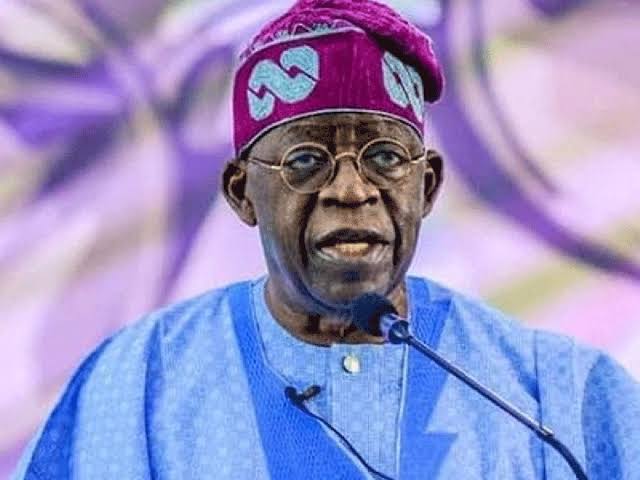
THE Chicago State University (CSU) has until Tuesday, October 3, to give former Vice President Atiku Abubakar access to President Bola Tinubu’s academic records, the US Court for the Northern District of Illinois in Chicago has ruled.

Tinubu’s argument was overruled by the presiding judge, Nancy Maldonado, who gave CSU two days to grant Atiku access to the records. This was contained in a copy of the judgement obtained by THE ICIR.

She emphasised that the PDP candidate Atiku had a legal right to examine the data while upholding the September 20 decision of US Magistrate Judge Jeffery Gilbert, who ordered the CSU to reveal Tinubu’s academic records as requested by Gilbert.

“For the reasons stated in the Court’s accompanying Memorandum Opinion and Order, the Court overrules President Tinubu’s objections (44] and adopts Judge Gilbert’s recommended decision [40] in full.”

“The Court therefore grants Mr. Abubakar’s application under 28 U.S.C. § 1782. [1],”. Justice Maldonado of the Northern District of Illinois ruled.

The judge has ordered CSU to finish all paperwork related to the release by Tuesday at 5 p.m.

“Respondent CSU is directed to produce all pertinent and non-privileged documents in response to Requests for Production Nos. 1 through 4 in Mr. Abubakar’s subpoena by 12:00 p.m. (noon) CDT on Monday, October 2, 2023 (as narrowed by Judge Gilbert and adopted by the District Court in its opinion).”

“The Rule 30(b)(6) deposition of CSU’s corporate designee must be completed by 5:00 p.m. CDT on Tuesday, October 3, 2023,” a part of the judgment read.

Abubakar, the Peoples Democratic Party’s (PDP) presidential candidate in the February 25 poll, asked the US District Court in Northern Illinois to order the release of Tinubu’s academic records on the grounds that doing so would support his lawsuit contesting the President’s victory in the February 25 presidential election.

The PDP candidate had requested the documents for use in Nigerian courts to support his claim that Tinubu falsified a certificate he purportedly obtained from CSU in 1979 and submitted to Nigeria’s electoral body, the Independent National Electoral Commission (INEC), for the 2023 presidential election.

Abuja ‘one chance’ victim: What does the law say about police report?

0

THE Federal Competition and Consumer Protection Commission (FCCPC) and the Federal Capital Territory Administration (FCTA) have commenced investigations into the death of Greatness Olorunfemi, attacked by a ‘one chance’ gang in Abuja.

Executive Vice-Chairman of the FCCPC Babatunde Irukera disclosed this in a statement on Saturday, September 30.

“The Commission commiserates with Ms Greatness Olorunfemi’s family, friends and associates who are affected by this tragic loss. The Commission has opened an investigation accordingly,” the statement read.

Irukera noted that the Office of the Mandate Secretary for Health Services and Environment for the FCT also announced a Coroner’s inquiry into Olorunfemi’s death.

“Of particular concern is if Ms Greatness Olorunfemi died on account of failures implicated in the Commission’s Patients’ Bill of Rights (PBOR) or other enforceable legal instruments regarding attention and care to patients generally, and more specifically, in emergency situations where victims of criminal conduct require medical attention,” the statement read.

A separate statement issued on Saturday by the Office of the Mandate Secretary for Health Services and Environment occupied by Dolapo Fasawe disclosed that the inquest would follow an autopsy, both of which have become necessary due to the circumstances surrounding Olorunfemi’s death.

Olorunfemi’s death, Maitama hospital accused of negligence

A video went viral on Wednesday, September 27, showing a lady, later identified as Greatness Olorunfemi, by the roadside along the Maitama-Kubwa expressway after being pushed out of a vehicle by a suspected criminal gang disguised as commercial drivers.

“This lady was just pushed down from a vehicle between Maitama-Kubwa express, the road going towards Wuse, Berger. She was pushed by all this one chance. Please, let’s be careful, she was pushed down from a one-chance vehicle,” an unidentified eyewitness narrated in the video.

According to an audio tape from the eye witness that also went viral, passersby had taken Olorunfemi to the Maitama District Hospital in Abuja for treatment but were denied treatment by the hospital staff.

“All of us, about 15 vehicles, we all drove down there, and then she was still alive. The Maitama General Hospital refused to receive her and said they wanted a police report before they could attend to her,” the eyewitness narrated.

He stated that the hospital staff were informed of an extant law that criminalises the demand of a police report before treatment is provided for patients with gunshot or stab wounds. However, despite efforts to reason with the staff, Olorunfemi was denied treatment until she bled to death.

A social media user on X, with username @Nwaadaz, who claimed to be friends with the deceased, also posted a video of the victim with a caption accusing hospital staff of neglect.

“Maitama General Hospital refused to attend to my friend who was stabbed by a one-chance driver in Abuja. They allowed her to bleed to death and locked the emergency ward against her because she didn’t have a police report!! Nigeria has failed Greatness!!” she tweeted.

However, there are reports that the patient was brought in dead, which has resulted in the need for investigations.

What does the law say?

Many Nigerians have died due to the refusal of health facilities to provide treatment to patients with gunshot or stab wounds without a police report.

This is usually based on a misconception of the Robbery and Firearms (Special Provisions) Act of 1990, which mandates any person or health facility that treats a patient suspected of having bullet wounds to report immediately to the police.

According to Section 4(2) of the Act, “it shall be the duty of any person, hospital or clinic that admits, treats or administers any drug to any person suspected of having bullet wounds to immediately report the matter to the police.”

While the section seems to demand a report from health care providers even if treatment is given, many patients have been required to provide clearance from the police even before treatment.

In December 2014, Nigeria passed the National Health Bill into law, which described denying patients medical attention as an offence.

Section 20 (1) and (2) of the National Health Act states that “a health care provider, health worker or health establishment shall not refuse a person emergency medical treatment for any reason. A person who contravenes this section commits an offence and is liable on conviction to a fine of N100,000.00 or imprisonment for a period not exceeding six months or to both.”

This, however, did not stop the acts of requesting police reports, as in 2021, Oluremi Tinubu, who was a senator then, reacting to the practice said, “In a country where emergency response is almost non-existent, and getting victims to the hospital is already burdensome, it is sad that where the victims make it to a hospital alive, they are still denied treatment and left to die.”

Interestingly, the Lagos state police spokesman Benjamin Hundeyin had earlier stated that men of the police force were repeatedly turned away by several public health institutions when they wanted to access emergency care for an accident victim.

Hundeyin, in a post on X, said, “Officers on early morning patrol found a man critically injured as he had just been involved in a lone motorcycle accident. The police officers quickly took him to the nearest hospital. The hospital rejected him. They rushed to another hospital, again rejected”.

He noted that five hospitals rejected the patient.

Although allegations of negligence by the Maitama District Hospital are still under investigation, many Nigerians are outraged by Olurunfemi’s death.

The ICIR reports that the one-chance menace has increasingly worsened insecurity in Nigeria, especially in major cities where they operate as large syndicates.

One chance menace worsens insecurity in Nigeria

One chance is a criminal group disguised as commercial drivers and commuters. They usually move around cabs in groups of two, three or four, armed with weapons such as guns, knives, hammers and other harmful objects.

They dispossess passengers of their belongings, including laptops, money, phones and other valuables. Many of them conduct their illicit business, using Point of Sale machines to empty victims’ bank accounts, using force.

These criminals often leave the front seat of their vehicles or one or two seats at the back for unsuspecting victims.

The group’s mode of operation comes in different forms. They could drive victims into the bush or to a section of highways with few vehicles and carry out their heinous acts.

The ICIR reported how the FCTA vowed to crack down on the group, but the city continues to witness the criminals’ attacks on residents.

Many Nigerians believe that a poor transportation system, aggravated by high transport costs occasioned by fuel subsidy removal by the Federal Government, aids the group’s operations.

‘Why Nigeria lost 2025 AFCON hosting bid’

0

NIGERIA’S sports industry stakeholders have provided insights into why the country lost its bid to hold the 2025 Africa Cup of Nations (AFCON).

Two North African countries, Algeria and Morocco, including Zambia, vied to host the tournament against a joint bid from Nigeria and Benin.

But Morocco eventually won the bid.

The North African side will host Africa’s flagship event for the second time, 35 years after the country hosted the competition in 1988.

Meanwhile, the rights for the 2027 edition were handed to a co-bid from Kenya, Tanzania and Uganda.

The joint East African bid returns the tournament to the region for the first time since 1976.

They beat Botswana, Egypt and Senegal in a vote of the CAF executive committee.

Stakeholders’ reactions to Nigeria’s failed bid

A sports administrator, Peter Iweze, recalled how he and ex-international Segun Odegbami sought a joint bid for the country with South Africa ahead of the 2010 World Cup, saying they started the bid early.

He described Nigeria’s bid for the 2025 AFCON as impromptu, adding that early preparation would have conferred some advantages on the nation over its peers.

“We are not ready to do anything like that. Is that our priority? You don’t bid for events like that; you start early. When we bid for the World Cup for the West African joint bid, Odegbami and I went to the whole of West Africa. We took time for the World Cup in 2010; we started in 2002,” he said.

According to him, Nigeria is suffering from an economic downturn, and its failure to secure the hosting rights would help salvage its economy.

“So it is good savings for us. Right now, Nigerians are suffering. They don’t want unnecessary expenditure of funds. I am not surprised that we lost,” he said.

Also, a veteran sports journalist, Maxwell Kumoye, explained that hosting AFCON tournaments demands quality sporting infrastructures like good stadiums, airports and hotels.

He argued that the country could not boast of these.

“At the moment, look at the state of our facilities. What facilities were they putting forward to host AFCON besides UYO, Abuja, Stephen Keshi and Samuel Ogbemudia Stadiums?

“The stadiums in Lagos are nothing to write home about. They are not ready for major international events like AFCON. Yes, we may have hotels and airports, but our sporting facilities are below the mark,” he said.

He faulted the country’s bid, saying it was dead on arrival.

“We were thoroughly disgraced in the sense that we hurriedly put up that bid and indicated that it was dead on arrival from the start to the end.

“What did we do right? Certainly, we did not do anything right. Perhaps the board felt, ‘let’s put this together to tell the world we are doing something.’ For me, that bid had no substance. What was in that bid was that we were seeking the help of the Benin Republic to bid for our AFCON.

“Those doing this were not doing it for the country’s sake. They were doing it for their own to be relevant in the international scene that Nigeria is putting up a bid,” he added.

Nigeria@63: Reforms may hurt, but necessary, says Tinubu

0

PRESIDENT Bola Tinubu has urged Nigerians to endure the prevailing hardships occasioned by his reforms for a while. He said they were necessary for the nation’s stability and prosperity.

He stated this in a national broadcast commemorating Nigeria’s 63rd Independence Day on Sunday, October 1.

The President said several reforms had begun to stabilize the economy.

“We have embarked on several public sector reforms to stabilize the economy, direct fiscal and monetary policy to fight inflation, encourage production, ensure the security of lives and property and lend more support to the poor and the vulnerable,” he stated.

He said reforms could be difficult but were necessary for greatness and the nation’s future.

“I am attuned to the hardships that have come. I have a heart that feels and eyes that see. I wish to explain to you why we must endure this trying moment. Those who sought to perpetuate the fuel subsidy and broken foreign exchange policies are people who would build their family mansion in the middle of a swamp. I am different. I am not a man to erect our national home on a foundation of mud. To endure, our home must be constructed on safe and pleasant ground,” he maintained.

He announced an increment of N25,000 to support workers’ wages for six months.

https://www.youtube.com/watch?v=3QmtwUbV1nk

The President promised the increase would not result in inflation.

He also pledged to support transportation, as, according to him, his government would introduce Compressed Natural Gas (CNG) buses nationwide, which would operate at a fraction of the current fuel price.

The President stated that new CNG conversion kits would arrive in the nation soon, stressing that training facilities and workshops nationwide were being set up to train and provide new opportunities for transport operators and entrepreneurs.


READ ALSO:


He also said that a committee on tax changes was being set up to address fiscal policies that hurt the nation’s business climate while increasing the tax administration’s effectiveness.

Tinubu removed fuel subsidy removal on the day he took over power – May 29. The decision and his other reforms have worsened the hardships most Nigerians face.

In protest to his policies, the nation’s workers, under the auspices of the Nigeria Labour Congress (NLC) and the Trade Union Congress (TUC), have declared an indefinite strike for Tuesday, October 3.


Flood destroys over 60 homes in Nasarawa

0

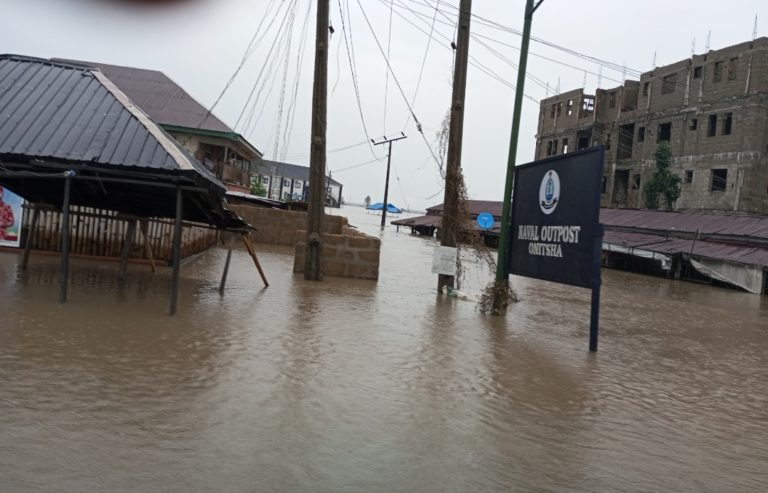
At least 60 homes and property worth millions of naira have been destroyed in Nasarawa State after a heavy downpour in two of the state’s Local Government Areas.

The Nasarawa State Emergency Management Agency (NASEMA) director general, Zachary Allumaga, stated this while addressing newsmen in Lafia on Saturday, September 30, 2023.

He explained that floods in the two LGAs of Lafia and Toto in August left numerous residents homeless and destroyed the victim’s belongings.

The DG claimed the Federal University of Lafia’s off-campus student houses were impacted by the Lafia flood disaster, and valuables such as computers, mattresses, books, food, and other items were destroyed.

File video: Flooding in Kogi

Allumaga added that additional flooding was reported in Toto LGA, where over 60 homes were submerged and numerous properties were destroyed.

The NASEMA DG noted that preparations were underway to supply relief supplies to the affected towns and the Federal University off-campus in Lafia.

He further explained that the flooding in Toto LGA was caused by gully erosion.

Read The ICIR extensive reporting on flooding in Nigeria tagged FLOOD SERIES here!

Toyin Falola Prize 2023 seeks entries from African creative writers

Toyin Falola Prize, organised by Lunaris, invites applications from African creative writers for its 4th edition.

The Prize was created to honour the historian and professor, Toyin Falola.

This year’s topic is Sacred, which will be interpreted generally in religious, secular, mysterious, moral, and treasured meanings. Sacred may or may not be about purity and consecration. What is holy can be physical, psychological, or political, says the organisers in the application call.

Interested African creative writers should submit short stories between 1,500 and 4,500 words, and writers between 15 and 35 can submit entries for the Toyin Falola Prize.

The winner will receive $1000 and an invitation to the BIGSAS Festival of African and African Diasporic Literatures at Bayreuth in Germany, while the shortlisted entries will get $100 each.

Applicants can send their entries to prize@lunaris.com.ng with the submission title: TOYIN FALOLA PRIZE 2023 SUBMISSION.

Nigeria@63: Tinubu promises workers N25,000 increase in minimum wage for 6 months

0

PRESIDENT Bola Tinubu has approved an additional N25,000 to the “average worker’s” salary.

He announced this while delivering his Independence Day address to Nigerians on Sunday, October 1.

The President said the wage rise would take effect within six months.

Update:

PRESIDENT Bola Tinubu has promised to increase the minimum wage for ‘average workers’ in Nigeria by N25,000 for the next six months as part of efforts to cushion the effects of some reforms by his administration.

He disclosed this on Sunday, October 1, while delivering a speech commemorating Nigeria’s 63rd Independence Day anniversary.

“Based upon our talks with Labour, businesses and other stakeholders, we are introducing a provisional wage award increment to enhance the federal minimum wage without causing undue inflation. For the next six months, the average low-grade worker shall receive an additional N25,000 per month,” he said.

Noting that states have received funds to provide relief packages for residents, he promised a reduction in transport costs by introducing Compressed Natural Gas (CNG) buses across the nation, which he said would operate at a fraction of current transport prices.

Although he did not disclose a definite date for introducing the buses, Tinubu said efforts were being made to hasten the process.

“The new CNG conversion kit will start coming in very soon, as all hands are on deck to fast-track the usual lengthy procurement process. We are also setting up training facilities and workshops across the nation to train and provide new opportunities for the transport operators and entrepreneurs,” he added.

The harsh living conditions in Nigeria have worsened following some reforms introduced by the Tinubu-led administration, including the removal of petrol subsidy and exchange rate unification.

Transport costs and prices of goods and services have increased, leading to protests by the Nigeria Labour Congress.

The NLC and the Trade Union Congress (TUC) declared an indefinite strike beginning on Tuesday, October 3, due to the federal government’s failure to alleviate the hardships caused by the reforms.

African anti-narcotics bodies seek special courts for drug cases, money laundering

0

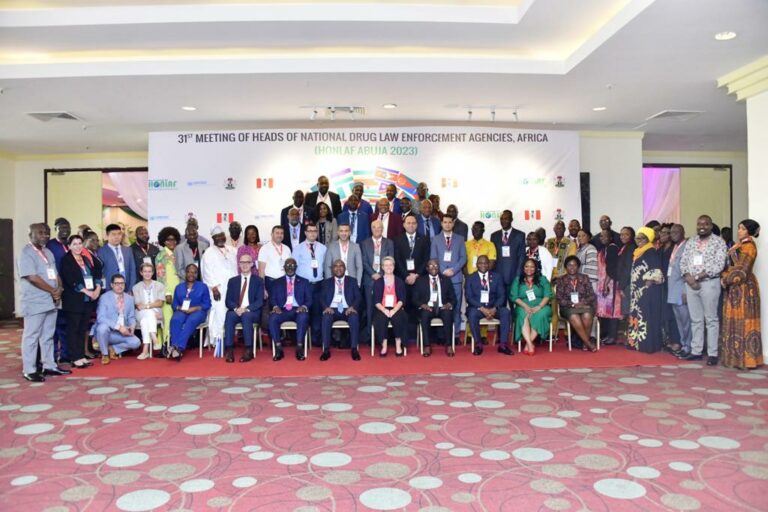
HEADS of drug law enforcement agencies in Africa have demanded the creation of specialised courts to hear drug issues and other cases of organized crimes on the continent.

This was one of the suggestions at the 31st Meeting of Heads of National Drug Law Enforcement Agencies, Africa (HONLAF), which ended on Friday, September 29, in Abuja.

In a statement signed by Femi Babafemi, the NDLEA spokesperson, the body stated that African governments should consider establishing national specialized courts and asset recovery offices to deal with organised crime and money laundering, and to support tracking down, recovering, and managing criminal proceeds.

The forum recommended the use of some of the regional and international cooperation instruments namely West African Network of Central Authorities and Prosecutors (WACAP), the Asset Recovery Inter-Agency Network for Southern Africa (ARINSA), and the Asset Recovery Inter-Agency Network of West Africa (ARINWA) to support the goals.


READ ALSO:


The group also urged governments in African countries to promote cooperation and sharing of best practices in the confiscation of proceeds of crime, including drug-related cases.

“Governments should adopt adequate legal and regulatory frameworks on virtual assets, including cryptocurrencies, to prevent and combat their use for drug-related crime and money-laundering,” part of the statement read.

Other recommendations adopted by the HONLAF working group during the annual meeting include asking African governments to develop and implement drug policy responses that address, indirectly or directly, the environmental impact of illicit crop cultivation, drug manufacture and drug use, taking into consideration their positive and negative effects.


Stakeholders harp on implementing reproductive healthcare policies in conflict areas

0

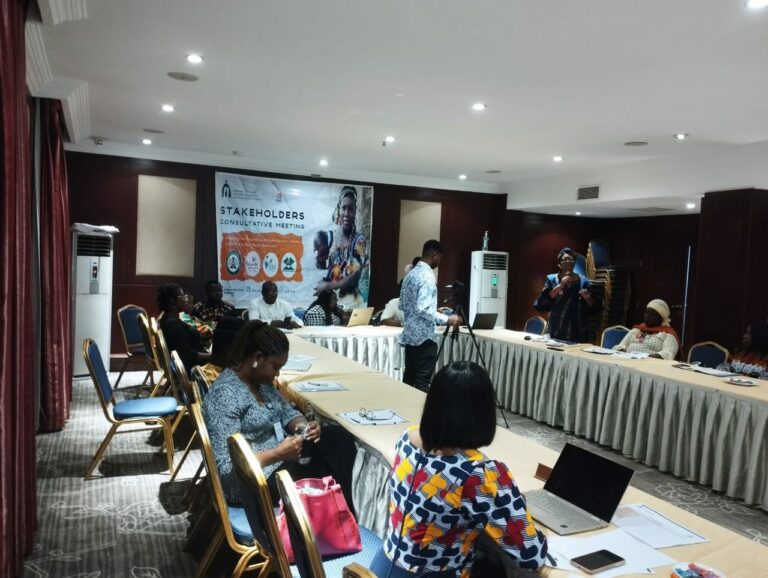
STAKEHOLDERS in the health and humanitarian sector have called for implementing policies on Sexual and Reproductive Health Rights (SRHR) for women in conflict areas in Nigeria.

Participants of a stakeholders consultative meeting held in Abuja on Friday, September 29, agreed on the need to address policy gaps and promote access to reproductive healthcare for women, especially in conflict areas.

The event was organised by the Theodora Anavhe Adamu Foundation (TAAF) and was focused on women in the North-Eastern part of the country.

The meeting focussed on “Addressing Gaps in Policy and Access to Reproductive Health Rights for Women in Conflict Context”

Convener of the meeting, Odion Ikyo, pointed out that women and children were at the receiving end of sexual abuses resulting from insecurity in Nigeria.

Ikyo, a Reproductive Health Rights Advocate, presented research carried out in the North-Eastern states which showed that access to sexual and reproductive health care in the region had been relatively low.

She told The ICIR that the event aimed to develop actionable plans that could close policy gaps affecting service delivery in sexual and reproductive health care.

“I believe that policies affect a whole lot. No matter how great my idea is to change things, if there are no favourable policies, it would even go far. So, since some lawmakers were represented here, we are hoping as we send this to the ministries and the National Assembly, they will be able to come back to review all these laws and check if they need to strengthen the mechanisms they have or train more service providers,” she said.

Minister of Humanitarian Affairs Betty Edu was represented by Mfawa Usani, who urged subnational governments to complement the federal government’s efforts in addressing the issue.

“Most of those government sectors are not doing what they should do. And that is as if the government is not working. No matter what we want to do at the federal level, if the state and the local government are not replicating our efforts, the government will not work. That is where the gap is. That is why it looks as if the policies are not working,” she said.

She urged the various government sectors to be more proactive in health and reproductive rights issues.

Those present at the event include representatives of the Ministries of Women Affairs, Humanitarian Affairs and Poverty Alleviation, Foreign Affairs, the Minister of State for Federal Capital Territory (FCT), the National Human Rights Commission (NHRC) and some lawmakers.

Kano demolition: Court awards N30bn against govt

0

A Federal High Court in Kano ruled on Friday, September 29, that the state government pay N30 billion as compensation to the Incorporated Trustees of Massallacin Eid Shop Owners following the demolition of their buildings in June.

High Court Justice Samuel Amobeda ruled that the demolition exercise was illegal.

The compensation includes N10 billion in damages for violation of the applicants’ rights to life, dignity, and ownership of property, and N20 billion for highhandedness, impunity and disregard for the rule of law exhibited by the government during the process.

The state government embarked on a demolition spree under the leadership of Governor Abba Kabir Yusuf a few days after his inauguration, pulling down several shops, offices and other buildings worth billions of naira.

Yusuf said the properties being demolished were government lands sold off to private individuals by his predecessor, Abdullahi Ganduje. He also said the exercise fulfilled his campaign promises, adding that residents were satisfied with his actions.

However, many have insisted that the exercise was politically motivated and a vendetta mission against the previous government.

The ICIR reported that many state residents who lost their buildings to the exercise felt they were being targeted for belonging to the opposition party. Yusuf denied the allegation.

Following the ruling on Friday, the state Commissioner of Justice and Attorney-General Haruna Dederi said the ruling would be appealed on several grounds, including that the court lacked jurisdiction to entertain the case.

“The action that was instituted at the Federal High Court was by way of enforcement of fundamental rights, and issues that border on title were not even dealt with in that judgement. We have already prepared every paper, and we are going ahead to file an appeal against that petition because it’s a judgment that cannot stand.

“We are going to contest that at the Court of Appeal, and the land use decree is very clear about the governor’s powers over land in the state and more particularly in urban areas. It is a decision the court has passed, and we did not agree with,” Dederi said.

Meanwhile, The ICIR reported how the Governorship Election Petition Tribunal sacked the state Governor Yusuf on September 20.

The tribunal consequently declared the All Progressives Congress candidate, Nasir Gawuna, as the winner of the March 18 governorship poll in the state.

The tribunal ordered the Independent National Electoral Commission (INEC) to withdraw the certificate of return issued to Yusuf of the New Nigeria People Party (NNPP) and give it to Nasiru Gawuna.

The three-person panel presided over by Oluyemi Akintan-Osadebay deducted 165,663 votes from Yusuf’s total votes.

The court declared the deducted votes invalid because the ballot papers were not stamped or signed.

The tribunal had earlier on Monday, August 21, reserved a ruling on a petition filed by the APC against Yusuf’s victory.