Home Blog Page 782

Why Muslims celebrate Eid-il-Mawlid – Scholars

0

EID-IL-MAWLID, often called Mawlid Nabiy, commemorates the Prophet Muhammad’s birth date (PBUH) a revered prophet of Islam.

According to the Qur’an, The Prophet was born on the 12th day of the Islamic calendar’s third month, Rabi’ al-Awwal, in the year of the elephant, 570 AD, a major day for Muslims worldwide.

The date of Mawlid varies yearly because the Islamic (Hijrah) calendar, which is based on the lunar cycle, is ten to eleven days shorter than the Gregorian calendar.

Muslims view the Prophet Muhammad (PBUH) as an ethical and spiritual role model, and celebrating his life is considered one more method to preserve his memory in the Muslim community.

Given the prophet’s significant role in Islam and the absence of a religiously prescribed holiday to commemorate his life, Muslims now observe the Mawlid as a means to honour the prophet.

Therefore, Muslims spend Mawlid learning more about the prophet and looking for ways to develop personally through studying his teachings.

Worshippers assemble at mosques and community centres for many of the rites, which take place in a communal setting.

Muslims are not mandated to celebrate the prophet’s birthday. Since the event is neither required nor explicitly mentioned in Islamic beliefs, some Muslims decide not to observe it. Additionally, some people think it is unnecessary and that it is not proper to celebrate it.

Speaking with THE ICIR, Fuad Adeyemi, the chief imam and founder of the Al Habibiyyah Islamic society, stated that Prophet Muhammad was born during the period of ignorance, which was referred to as the ‘Jahiliyyah period’ by Arabs, and his birth gave the entire world cause for hope.

“His coming brought a ray of hope to the entire world. His coming also changed the fate of the world generally because the way things are been done was never the same after he came. He was one man that was everywhere. No man in history can match or equal his success as concerning what we have in the world today,” he stated.

While advising leaders to emulate the prophet’s attributes as a humble leader and to designate positions without regard to ethnicity or background, he emphasized that following the prophet’s instructions about Zakat (taxation) would be advantageous to the nation as a whole.

“It was the coming of the prophet that Zakat became an institution. Supposing everybody follows the injunction of the prophet today, people might not be rich, but there would be no poor person, especially in our country.

“When he put people in authority, he did not put people there because of his relation with him, but he put someone with competency and fear of God. He never cared whose ox is gored. He suppressed personal aggrandisement. If you met the prophet among his followers, you would never differentiate him from his followers. That is what is lacking among us today, ” he added.


READ ALSO:


Also speaking with The ICIR, Musa Olaofe, a doctorate holder, the chief imam of the Ansar-ud-deen Society of Nigeria stated that Prophet Muhammad left behind a legacy that is very important to the entire Muslim community since he had many admirable traits.

“He did all he could as a Muslim who believed in the oneness of Allah. He settled many disputes, encouraged education, and emphasized unity, governance, and many other things we are doing in Nigeria today. He never encouraged begging, which we see almost everywhere because he wanted people to be industrious, productive and agile,’ he stated.

Both scholars enjoined citizens and government officials to emulate the qualities of the prophet in the discharge of their duties and daily activities.
Coalition demands apology from FRSC for assaulting ICIR journalist

0

THE Coalition for Whistleblowers Protection and Press Freedom (CWPPF) has condemned the attack on a reporter with the International Centre for Investigative Reporting (ICIR), Mustapha Usman, by officers of the Federal Road Safety Commission (FRSC).

The ICIR reported how Mustapha was beaten up and had his identification card confiscated on the 18th of September near the Corps’ Zone 7 office in Abuja while doing his job.

The reporter was documenting an incident involving the FRSC officers at the Wuye Junction in the nation’s capital, where the officers stopped a motorist for allegedly violating traffic laws.

Mustapha attempted to record how the officer pounced on the female motorist, struggled to collect the steering from her and moved on to deflate her tyre after failing to take over the steering.

CWPPF, a group of media and civil society organisations committed to upholding good governance and democracy by protecting the ethos of whistleblowing, freedom of expression and press freedom, condemned the officers’ action in a statement.

“Journalists have an obligation of reporting on matters of public interest and ensuring transparency and accountability and must be allowed to perform this duty without fear of harassment, intimidation, or physical harm,” part of the statement read.

The group called for a comprehensive and unbiased investigation into the incident.

It said those responsible for assaulting him must be identified and held accountable for their actions, stressing that FRSC and relevant stakeholders must ensure justice prevails.

The coalition also demands public apology to Usman and a commitment from the FRSC to respect and uphold the rights and safety of journalists in the future.

“The right to report freely and independently is a stronghold of any democracy, and our collective responsibility is to protect and uphold this fundamental right.”

Speaking with the coalition, the Editor of The ICIR, Victoria Bamas, expressed her displeasure over the incident. 

“It is disheartening that journalists discharging their responsibilities and working within the law are attacked by public officials,” she said.

What Nigeria, others can do to escape debt crisis – IMF

0

The International Monetary Fund (IMF) has suggested measures for sub-Saharan Africa to avoid a debt crisis.

The advice coincides with an appeal by the African Network for Environment and Economic Justice (ANEEJ) to creditor nations and institutions to cancel Nigeria’s huge debt burden.

In a report released on Tuesday, September 26, the IMF said the average debt ratio in sub-Saharan Africa had almost doubled in just a decade, rising from 30 per cent of gross domestic product (GDP) at the end of 2013 to nearly 60 per cent of GDP by the end of 2022.

Not only has the debt risen, but repaying this debt has also become much costlier, the Britton Wood financial institution said.

It noted that the problem had been that the region’s ratio of interest payments to revenue, a key metric to assess debt servicing capacity and predict the risk of a fiscal crisis, had more than doubled since the early 2010s and was close to four times the ratio in advanced economies at the time it released the report.

“As of 2022, more than half of the low-income countries in sub-Saharan Africa were assessed by the IMF to be at high risk or already in debt distress.

“These trends have sparked concerns of a looming debt crisis in the region,” IMF stressed.

In proffering solutions, the IMF identified five policy actions African nations would adopt to preserve public finances’ sustainability while achieving the region’s development goals.

The policies include setting a course to re-anchor their fiscal policy through a credible medium-term strategy.

According to the IMF, this will help sub-Saharan Africa focus their fiscal policy away from excessive short-term goals and be guided by a medium-term strategy.

“A more strategic approach to fiscal policy would be preferable by setting explicit debt targets that integrate key policy trade-offs between debt sustainability and development objectives, rather than focusing narrowly on short-term fiscal deficits,” it explained.

The IMF also suggested that the region undertake fiscal adjustment to bring debt back to a safer level.

It means most countries in Sub-Saharan Africa must reduce their fiscal deficits to about two to three per cent of their GDP in the coming years, suggested the organisation.

A third approach is mobilising more domestic revenue, as most sub-Saharan African countries rely excessively on expenditure cuts to reduce their fiscal deficits.

While acknowledging that this might be required in some circumstances, the IMF said revenue measures, like eliminating tax exemptions or digitalising filing and payment systems, should play a more significant role.

“Mobilising domestic revenue is less detrimental to growth in countries where initial tax levels are low, whereas the cost associated with reducing expenditures is particularly high given Africa’s large development needs,” it explained.

The IMF further suggested that the sub-Saharan countries strengthen their budget institutions to improve the implementation of fiscal plans.

“Policy changes are more likely to yield tangible results if fiscal institutions are strong and efficient. On the expenditure side, well-designed plans too often yield disappointing results due to budgetary slippages or an unforeseen materialisation of fiscal risks.

“Adopting a medium-term fiscal framework, putting in place tools to better assess and manage fiscal risks, and enhancing controls over government expenditure during the budget implementation phase is key to avoiding such pitfalls,” it explained.

The IMF stressed the imperative of considering the implications of policies on the population.

“The sustainability of a new fiscal strategy also depends on the government’s ability to secure public support by linking the policy measures to longer-term benefits. Public acceptance should be a central consideration in policy design—for instance, by sequencing reforms carefully and introducing compensatory measures,” it said.

Meanwhile, the Executive Director of ANEEJ, David Ugolor, had on Tuesday, September 26, urged the World Bank, IMF, China and the African Development Bank (AfDB) to cancel Nigeria and other African countries’ debt obligations.

Ugolor made the plea at a two-day National Conference on ‘Debt and Development’ organised by ANEEJ in conjunction with the African Forum and Network on Debt and Development, AFRODAD, Bill & Melinda Gates Foundation, Open Society Initiative for West Africa, OSIWA, with the theme ‘Repositioning Nigeria For A Debt-Free Africa,’ Vanguard reported.

The ICIR reports that former President Muhammadu Buhari, at the 77th session of the United Nations General Assembly (UNGA) in September 2022, expressed worries that developing countries were facing numerous challenges, including being able to service external debts.

At the event, he beckoned on the global leaders to address what he described as the “burden of unsustainable external debts” and called for “outright cancellation for countries facing the most severe challenges.”

The increasing debt burden remains one of the significant challenges facing Nigeria and weakening its economy.

In its recent disclosure, the Debt Management Office (DMO) put Nigeria’s total public debt at N87.38 trillion at the end of the second quarter of this year, representing a 75.29 per cent rise compared to N49.85 trillion disclosed at the end of March this year.

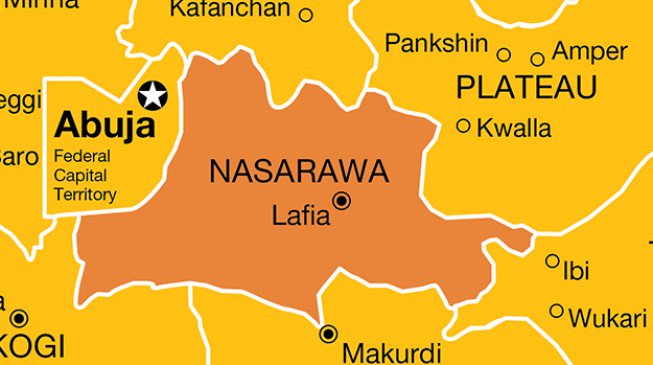
Police launch manhunt for Nasarawa Poly student abductors

0

THE Nasarawa State Police Command has launched a search for abductors of the Isa Mustapha Agwai Polytechnic student in the state capital, Lafia.

The Command said the investigation into the abduction of the female student, identified as Jumoke, would be detailed.

On Monday night, armed men attacked Ombi One, a student housing complex about two kilometres from the school, and whisked the student away to an unidentified location.

The kidnappers reportedly abducted the student after shooting others during an hour-long gun rampage.

 In addition to the abducted student, two other students and an admission seeker were hurt in the incident.

In a chat with The ICIR on Wednesday, September 27, the Nasarawa Police Public Relations Officer (PPRO) Ramhan Nansel said upon receipt of the report, police officers were immediately drafted to the scene and on arrival, it was discovered that three people were injured.

“On arrival, it was discovered that three people were injured. The victims were rushed by the Police to the Dalhatu Araf Specialist Hospital, Lafia, for treatment.

“Upon their (officers) return to the scene of the incident, it was discovered that one person was missing named Jumoke, surname unknown. The command has launched an investigation into the case,” Nansel stated.

He added that the Police were on the kidnappers’ trail.

On April 7, The ICIR reported that unidentified gunmen abducted a former deputy governor of the state, Onje Gye-Wado.

The Police said Gye-Wado, a professor, was whisked away in the morning when gunmen broke into his residence in Gwagi village, Wamba Local Government.

Nansel (The state Police Public Relations Officer), in a press release, confirmed the abduction.

According to the statement, the gunmen stormed into Gye-Wado’s residence and took him away.

The abductors later released him.

Nansel confirmed Gye-Wado’s release in a chat with The ICIR on Monday, April 10.

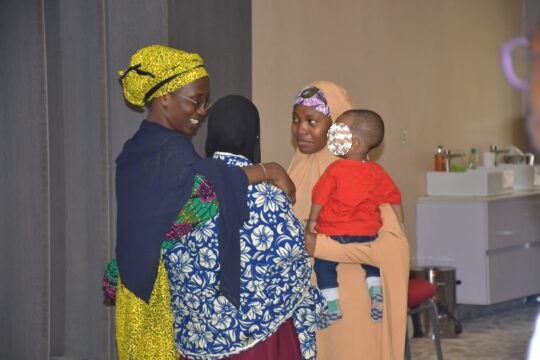
Nursing mum speaks on coping with journalism and motherhood

0

“In my experience, there have been instances where I had to miss out on opportunities because of the challenges of being a nursing mother”, says Aisha Ahmad, a journalist practising in Kano state.

Ahmad, while speaking on the sidelines of the just concluded Promoting Democratic Governance Project (PDGP) training organised by the International Centre for Investigative Reporting (ICIR) with support from the United States Embassy, Abuja, noted that motherhood has a noticeable impact on the career move for women journalists.


Ahmad, who was a participant in the training aimed at strengthening the capacity of investigative journalists to promote transparency, accountability, and good governance in Nigeria, explaining the impact said: “There was a project I was supposed to attend that required me to travel to a location outside of Kano.

“However, due to the logistics and the fact that the provisions at the destination didn’t allow me to take my baby along, I had to make the difficult decision not to go. There have also been times when I hesitated to even apply for certain opportunities because I knew that the circumstances might not allow me to participate. So I wouldn’t even know if I could have secured the slot or not.”

The nursing mother, who is a journalist with AllNews Nigeria media organisation, said she hesitated before applying for the ICIR Promoting Democratic Governance Project but eventually did when the centre assured her it was all-inclusive. She could come along with her baby.

Nursing mum speaks on coping with journalism and motherhood.

“Earlier, I was going to take him (my child) to my mum, but something came up that she wouldn’t be available. I called one of the organisers – programme officer – and told her I had a baby. She said I could come with the baby. I was very happy when The ICIR agreed that I come with the child.”

In its call for applications for the programme, The ICIR strongly encouraged qualified female journalists to apply. Ahmad commended The ICIR for the inclusivity, adding that the venue was also conducive for women with children.

“Everything was fine because the room was spacious and beautiful. I was able to look after the baby there. The venue was also okay. If I didn’t want to go to the room, I could stay with the baby close by.

“I thank The ICIR; this is very comfortable,” she said.

Female journalists worldwide face challenges when it comes to balancing their careers with motherhood. According to a report titled “Where Are the Mothers? in which approximately 20 working mothers in newsrooms shared their diverse experiences, many nursing mothers have had to stop breastfeeding earlier than planned due to the pressures of managing both work and breastfeeding.

The report published by Nieman reports opened with, “If news organisations want to attract and retain millennial journalists, newsrooms must better meet the needs of parents with young children—and create better work-life balance for everyone.”

While some newsrooms provide support for nursing mothers, women who find themselves in such supportive environments also need to invest additional effort to achieve their breastfeeding goals.

Because of women’s aspirations to balance work and family responsibilities, a 2015 University of Kansas study revealed that female journalists were at a higher risk of experiencing burnout and were more likely to plan to leave the industry compared to their male counterparts.

The programme officer of the Centre, Ayisat Abiona, said The ICIR pays serious attention to Gender Equality and Social Inclusion (GESI) without bias in all our projects. Our approach to Gender Equality and Social Inclusion (GESI) addresses unequal power relations between different social groups. It focuses on the need for action to ensure equal rights, opportunities, and respect for all individuals regardless of their identity as a Media organisation.

“Gender balance is also considered in the final selection process of all participants, including CSO representatives, journalists, and resource persons involved in our projects. During our previous initiatives, we ensured that participants were qualified people of diverse races and identities, with priority given to female journalists in our programmes to overturn the professional gender barrier and foster inclusiveness”, she added.

The PDGP training was held in Kano state between Tuesday, September 12 and Thursday, September 14, and was organised specifically for journalists in the North-Western.

At least 20 journalists were trained by facilitators on investigative journalism, using the Freedom of Information Act, reporting in hostile or unsafe environments, and sensitising journalists on safety and security, among other topics.

A flyer with the participants.

Hinrich foundation award for trade invites applications

THE Hinrich Foundation Award for Distinguished Reporting on Trade now accepts applications through the National Press Foundation (NPF). 

The award recognises exceptional reporting that advances and informs the public’s understanding of international trade and business.

Entries can be submitted by journalists whose work upholds the highest standards of journalism and published by an established news source.

Journalists from all media platforms—print, television, and digital—can compete for a US$10,000 reward.

Works published or broadcast from September 30, 2022, to September 30, 2023, are eligible for submission.

The deadline is October 2, 2023. Interested individuals can apply here

“I have no hand in Mohbad’s death”- Naira Marley

0

NIGERIAN Singer, Azeez Fashola popularly known as Naira Marley has said he has no hands in the death of the late singer, Ilerioluwa Promise known as Mohbad.

In a statement shared by Naira Marley on Tuesday, September 26, through his official Instagram account, Naira Marley said individuals have accused him of being responsible for Mohbad’s demise. However, like everyone else, he, too, has been shocked by the tragedy.

“In the last few days, there has been a lot of onslaught on my person and reputation globally over the death of my former signee. All manner of stories have been woven against me in respect of his untimely death. 

“I have not only been in shock over the death of the deceased, whom I considered to be my brother and member of our music family, but over the various lies spread and threats against me.

“Before I progress further, let me say that as it is traumatic for a lot of people to bear the reality of lleri’s death, so it is to me. May his gentle soul continue to rest in peace, and may God grant his family the fortitude to bear the irreparable loss”, he stated. 

He also emphasized that while they had their disagreements, it never escalated to the point of harbouring ill wishes towards anyone, and they were actively pursuing a legal resolution to their disputes.

“Permit me to categorically state that I have no hand in the death of llerioluwa, either directly or indirectly. It is not unusual in the industry, just like in several other industries, to have family friction, even amongst blood relatives.

“Truly, we had our own share of misunderstandings whilst working together, but the disagreement between us was never to the extent being painted by some hirelings. 

“It never degenerated to the extent of wishing each other death. Even at that, we were resolving our business disputes legally before he had passed”, he added.

Naira Marley noted that he had been outside the country since August 31 and had not yet returned, indicating that he was not present when Mohbad passed away.

In the statement, Naira Marley expressed his intention to return to the country in response to the invitation by the Police. He pledged to fully cooperate and provide assistance during the investigation to uncover the truth.

“In light of the police invitation, I am making arrangements to return to the country to assist in the investigation and give my version of the events. I am fully cooperating with the Police team, and I certainly have no reason to be a fugitive when I have no hand in his death”, he stated.

The late Mohbad was formerly affiliated with Naira Marley’s record label, Marlian Music, from which he departed in October 2022.

Following Mohbad’s passing on September 12, Naira Marley experienced a drop in his Instagram followers, losing thousands. Additionally, some Nigerians have initiated a petition to advocate for the banning of Marlian Music.

Naira Marley's statement
Naira Marley’s statement
Part of the statement released by Naira Marley.

Senate confirms Olayemi Cardoso as new CBN governor

0

THE Senate has confirmed the nomination of Olayemi Cardoso as the Governor of the Central Bank of Nigeria (CBN).

The Senate also confirmed four others as the Bank’s Deputy Governor.

They are Emem Usoro, Muhammad Dattijo, Philip Ikeazor and Bala Bello.

Cardoso and his deputies were confirmed in Abuja on Tuesday, September 26.

The confirmation marks the beginning of a new era at the apex bank after President Bola Tinubu suspended the Bank’s immediate past governor, Godwin Emefiele, who is facing a 20-count charge filed against him by the Federal government at the Federal High Court, Abuja.

Tinubu had on September 15 approved Cardoso’s nomination for five years at the first instance and the four deputy governors.

Cardoso and his team had formally assumed duty on Friday, September 22, in an acting capacity.

The team took over from Folashodun Shonubi, the Bank’s acting governor, and his team – Aishah Ahmad, Edward Lametek Adamu, and Kingsley Obiora, all deputy governors.

According to economic experts, the new board came when Nigeria faced several economic problems, from losing confidence in the foreign exchange market to defects in the entire financial system.

“There is a serious confidence crisis in the foreign exchange market fueling an unprecedented speculative onslaught on the naira,” a renowned economist, Muda Yusuf, said in a statement titled, ‘Ten Point Agenda for the CBN Governor.’

Yusuf, the chief executive officer of the Centre for the Promotion Of Private Enterprise (CPPE), pointed out that Nigeria’s economy grappled with severe adverse effects of depreciating exchange rates, soaring energy costs, ravaging inflationary pressures, a massive backlog of foreign exchange obligations that needed to be cleared and debt service obligations that needed to be redeemed.

“This is evidently an economic management quandary that the new economic team would have to manage, and urgently too. And the CBN has a key role to play in this,” he maintained.

Another leading Nigerian economist and chief executive of Economic Associates, Ayo Teriba, had told the Guardian that there was a challenging way out of the foreign exchange crisis and that it was partially the job of the CBN to stabilise the market.

The ICIR reports that the apex bank did not publish its financial statements for about seven years but had to do so in August 2023 because of an ongoing investigation into its financial management by Tinubu’s presidency.

Cardoso pledges to embrace a culture of compliance

An economic and development policy advisor, financial sector leader, former chairman of Citi Nigeria and Commissioner for Economic Planning and Budget in Lagos, Cardoso has over three decades of managerial experience on board. 

He is an alumnus of Aston University, Birmingham, United Kingdom, where he studied managerial and administrative studies. 

He also holds a Master’s in Public Administration from the Harvard Kennedy School, United States of America.

However, the new Central Bank’s chief and his committee of governors will have to face the seemingly tough job and daunting challenges, ranging from runway inflation, volatile exchange rate, contentious ways and means (W&M) advances, ambiguous external reserves, falling bank adequacy ratio, unaffordable cost of borrowing, touchy development financing and sundry other issues.

At their screening at the Senate chamber on Tuesday, the CBN chiefs highlighted a few of the priority issues. 

These include returning the apex bank to its core mandate set up in the CBN Act, depoliticising the CBN, transparently ensuring effective communication and feedback, working with evidence-based data to stimulate the economy, and strengthening collaboration between the fiscal and monetary authorities.

However, they noted that the job before them would be challenging but that they were determined to work with the National Assembly.

Cardoso stressed that his team would work and not run afoul of the extant laws guiding their operations and pledged to embrace a “culture of compliance” at the CBN.

The Senate, however, charged its committee on banking, insurance and other financial institutions to rise to the occasion to monitor the activities of the CBN.

Federal government reviews investigator’s interim report

Meanwhile, the Secretary to the Government of the Federation, George Akume, on Monday, September 25, disclosed that the Federal government would soon unveil the audit report of the CBN probe.

President Tinubu had, on July 28, 2023, appointed a former chief executive officer of the Financial Reporting Council (FRN) of Nigeria, Jim Obazee, as the special investigator for the apex bank.

The special investigator was to probe the CBN and key government business entities and report directly to the President’s office.

Akume, who fielded questions from pressmen in Abuja on the 63rd Independence anniversary of Nigeria, however, said the Bank’s probe report, when made public, would reveal how poor governance brought the country to its present predicaments.

He said the report would let Nigerians know what went wrong and how the country got to its present mess.

Obazee had submitted the interim report to the President’s office over a week ago for necessary action to be taken by the President, the Punch reported.

The preliminary report will give the President an idea of the rot discovered so far as the investigation continues. 

More young people use drugs than previous generations – Marwa

0

MORE young people are using drugs than previous generations, Chairman of the National Drug Law Enforcement Agency (NDLEA), Mohammed Buba Marwa, has said.

Marwa stated this at the 31st meeting of Heads of National Drug Law Enforcement Agencies, Africa (HONLAF) in Abuja, on Tuesday, September 26.

The NDLEA boss charged his counterparts across the continent to strengthen operational networks and raise the bar in the drug war.

“Young people are using more drugs than previous generations, and the majority of people being treated for drug use disorders in Africa are under the age of 35.

“What is worse, the availability of treatment and other services has not kept pace with these developments, and women in particular are suffering from treatment gaps,” Marwa stated.

He said the world drug problem affects everybody, and no country could tackle the problem alone.

“The meeting is very important, as it enables its parent body, the UN Commission on Narcotic Drugs, to learn about current regional drug trends, threats, and emerging challenges from practitioners and law enforcement experts from all parts of the continent.

“The 31st meeting will indeed provide an opportunity for us to raise the bar and break new ground in different areas of our operations and collaborative efforts,” he added.

He said he was delighted to listen to others and share experiences that would positively shape operations and redefine cooperation among African countries in tackling illicit drug abuse.

Chairman of NDLEA, Mohammed Buba Marwa, speaking at the HONLAF event in Abuja.

While declaring the meeting open, President Bola Ahmed Tinubu, represented by Vice President Kashim Shettima, expressed his administration’s commitment to the country’s fight against substance abuse and illicit drug trafficking.

Tinubu said efforts were on to curtail the global drug problem. He assured that he would continue to provide the necessary support and tools for the NDLEA to fulfil its mandate.

“We understand the connection between the success of the fight against substance abuse and illicit drug trafficking and the attainment of a number of goals on our socio-economic and security agenda.”

“For us, the commitment to the fight against drug trafficking and substance abuse is not just a matter of policy; it is a moral imperative,” Tinubu said.

The President noted that he recognised that a population at war with drugs was not a dividend but a liability.

He added that the future of the youths, the strength of institutions, and the well-being of communities depended on the nation’s ability to eradicate this threat.

“Our strength has always been our proactive actions to prevent any individual or group from turning our countries into a minefield of drug trafficking. So, we must prioritise prevention, education, and rehabilitation to empower our youth with knowledge and opportunities.

“We must steer them away from the treacherous path of drug abuse and trafficking and protect our economy from the consequences of their actions,” the President said.

While emphasising the threat posed to countries by the drug scourge, the President urged participants attending the conference to seize the opportunity of the gathering to develop novel strategies to dismantle drug cartels across the African continent.

In his remarks at the ceremony, Attorney General of the Federation and Minister of Justice, Lateef Fagbemi, represented by the Director of International Criminal Justice Cooperation, Federal Ministry of Justice, Nkiruka Jones-Nebo, said the conference must remain proactive in addressing the legal complexities that might impede seamless cooperation in intelligence sharing, joint operations, and training.

Also speaking at the event, Country Representative of the United Nations Office on Drugs and Crime (UNODC) Oliver Stolpe said the drug problem had changed from what it used to be 20 years ago.

The Executive Director of UNODC, Ghada Fathi Waly and the Chairman of the UN Commission on Narcotic Drugs, who spoke via video messages, expressed support for the gathering.

He charged delegates to maximise the opportunities provided by the platform.

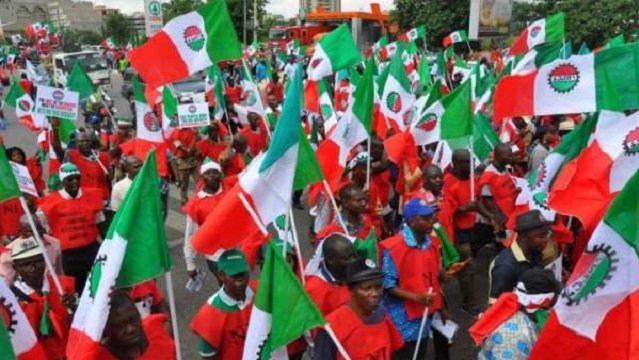
NLC, TUC declare indefinite strike

0

THE Nigeria Labour Congress (NLC) and the Trade Union Congress (TUC) have declared an indefinite strike beginning from Tuesday, October 3.

The development followed the Federal Government’s failure to alleviate the hardships caused by the removal of petrol subsidy in the country, said the leaders of the two unions, Joe Ajaero and Festus Osifo in Abuja on Tuesday, September 26, at a media briefing.

The unions directed all affiliate bodies to comply with the directive. The Labour union had on September 5-6 embarked on a two-day warning strike on the same issue, pressuring the Tinubu’s government to implement policies that lessen pains borne by workers and other Nigerians.

At a press briefing, Ajaero said the strike would precede an indefinite action to begin later in September.

The Union also issued a 21 days ultimatum to the FG which ended on Friday, September 22.

About month ago, NLC, Trade Union Congress (TUC) and other members of organised labour staged a nationwide protest against the subsidy removal.

The protest held on August 2 was suspended on the same day after a meeting with President Bola Tinubu, during which the protesters were assured that their demands would be met.