Home Blog Page 793

SERAP issues UNILAG 48-hour ultimatum to reverse fee hike

0

THE Socio-Economic Rights and Accountability Project (SERAP) has issued the University of Lagos (UNILAG) a 48-hour ultimatum to reverse the recent hike in tuition fees for students of the institution.

SERAP disclosed this in a statement via its official X handle on Wednesday, September 13, and threatened to file a lawsuit if the university failed to comply.

“The management of the University of Lagos (UNILAG) must immediately reverse the unlawful increase in tuition fees for students, reportedly from N19,000 to over N190,000. We’ll see in court if the fees are not reversed within 48 hours,” SERAP posted.

In July, UNILAG increased tuition fees, citing harsh economic conditions, and some students are now required to pay about N190,000 following the hike.

In a statement on Friday, July 21, the management noted that the hike was to help the university meet its obligations to staff and students.

Fresh students whose courses do not require laboratories and studios are to pay N126,325, while those who use the facilities are to pay N176,325.

In addition, they are expected to pay N10,000 and N20,000 for the toxicology test and utility charges.

The fee hike comes amid hardship resulting from several economic reforms by President Bola Ahmed Tinubu’s government, including the removal of fuel subsidy and the floating of the naira, which have caused a surge in the cost of transport, food and other essential commodities.

The new fees took effect in September and led to a series of protests by the students.

During one of the protests, policemen arrested two of the students and dispersed others using tear gas.

Despite the current hardships, several other universities have hiked school fees, with some students paying over N200,000, including the University of Jos (UNIJOS) and University of Abuja (UNIABUJA), where a student Cyprian Igwe was rusticated in May for urging students to meet and discuss the hike.

Agribusiness: Youths trained by Oyo government in Nasarawa allege neglect

By Our Reporter

A GROUP of unemployed youths trained in Agribusiness by the Oyo State government has expressed frustration over the neglect its members suffered two years after attending the programme.

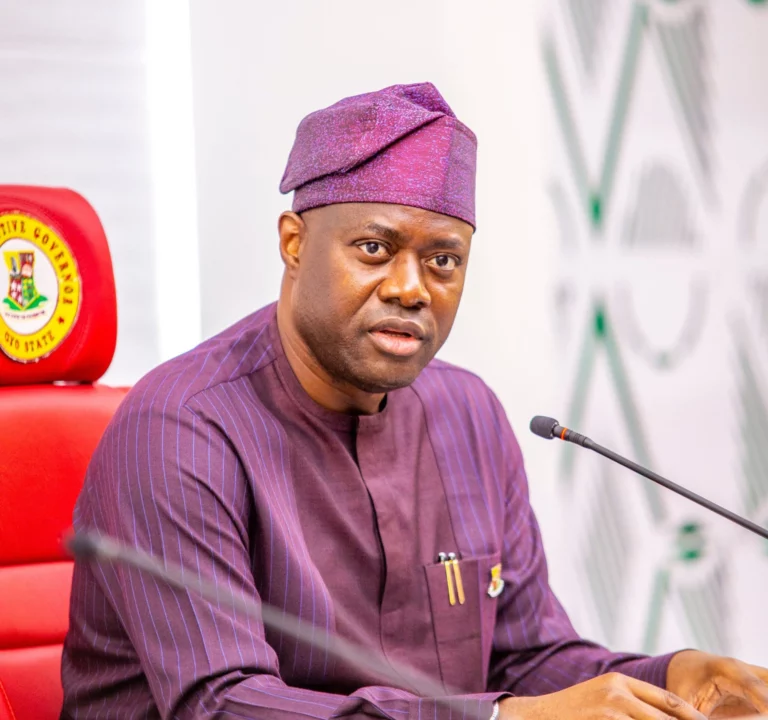
Some trainees who spoke to The ICIR in Ibadan, the state capital, called on Governor Seyi Makinde’s administration to fulfil its promise to the scores of unemployed youths who participated in the training programme in Nasarawa State.

In 2021, Makinde, during a stakeholders consultative meeting on the 2022 budget, said he had signed a Memorandum of Understanding (MoU) with the CSS Global Integrated Farms in Nasarawa State to train 3,300 youths from the state on agriculture and agribusiness.


Read Also:

“I am happy to tell you that we just signed an MoU with CSS Farms in Nasarawa State to assist us in training 3,300 youths in agriculture and agribusiness. The training will last two weeks. The first set will start on August 1, with 150 participants for every batch. By the end of August, we would have trained 600 of them,” Makinde said.

During his first term in office, the governor had said he would reduce youth unemployment by training them in the agricultural value chain. 

Makinde then came up with the Youth Entrepreneurship In Agribusiness Program (YEAP) initiative to achieve his goal.

It was gathered that two years later, most of the trained youths are still waiting to receive the empowerment package promised by the governor after their training. 

The ICIR found out that most of them are unemployed or underemployed youths who applied for YEAP in 2021.

They were trained in various aspects of agriculture over two weeks and had about a dozen facilitators.

Sharing his experience, one trainee, Olasunkanmi Afolabi, said nothing had happened since he concluded the training.

“We were lied to. They did not give us anything. We went there to risk our lives. We did the necessary things before we left Nasarawa. They promised to give us money, but they did not give us anything”, he alleged.

“Since the very day we left Nasarawa, we did not hear anything from them again.

“We believe they heard about us planning to see the governor. Along the line, they called back some people and took them to Fashola’s Farm to show them some land, but they returned everyone to their local government that their chairman would get land for them and they would give them huge money, but still, nothing has happened.

“We are still discussing maybe we should see him, but we are being told we can’t see him (the governor). We decided to go to the media to talk because we don’t know if people have received the money from the government but have refused to disburse it,” Afolabi said.

Another trainee, Segun Olosunde, who said he was in Batch B, observed that the government promised to give them money after the training, and they were given forms to fill in with their details, including Bank Verification Number (BVN), which they submitted, along with the name of a guarantor.

He said a facilitator at the training told participants that the money was a grant but did not disclose the total amount, and nothing came out of it since then.

Olosunde, selected from the Oluyole Local Government Area, said he expected the government to make good its promise.

Samson Olayinka, another beneficiary of the training, shared the same experience. He said they had great hopes after the training in Nasarawa, which he described as robust.

Meanwhile, speaking on behalf of the state government, Debo Akande, the Executive Assistant to Governor Makinde on Agribusiness, said the government had started to engage the youths trained in Nasarawa.

He said about half of the 3,000 youths trained had been empowered.

“We have started engaging YEAP members trained at CSS FARMS Nasarawa state-sponsored by OYSG,” he stated.

“They have started benefitting from OYOCARES Projects from August last year (2022), majorly on agric inputs services such as cassava cuttings, maize deeds, NPK 20-10-10 fertilizer, urea fertilizer, rice seeds, tomatoes, and herbicides.

“Some YEAP members also benefited from assets-based-farm activities such as pump machines and accessories, knapsacks and PPE, mechanical weeders, battery cages, cassava graters and pressers, rice threshers and maize threshers,” Akande said.

He noted that a demand-driven approach was used in sharing the implements, that is, “ask for what you need”, and if it’s within our reach or among the activities we have, then you shall be given.

“We have empowered so far 1,450 YEAP members. Another round of 410 YEAP members would benefit from assets-based equipment on or before December.

Akande said, however, that some of these YEAP members were told to go to the LGAs for registration with NCARES facilitators, but they didn’t go.

Responding to Akande’s claims, Olayinka said Akande wasn’t forthcoming with the truth. He said those who reported at their LGAs were taken to Fasola’s Farm and attached to a company that used them like labourers. He said they were told they would be paid after the harvest sale.

“That was how those who went to Fasola came back disappointed because that was not the orientation and idea they got from the training in Nasarawa and the promise made by Governor Makinde at the training,” Olayinka said.

Another youth who participated in the programme but chose to remain anonymous also faulted Akande’s claim.

“So if they have empowered 50 per cent batch by batch, at least they start from batch A, Batch B, So why did they jumped batch B?

“Why haven’t I heard of anything?” he asked.

 He said the government would have just informed them of an opportunity to train them instead of telling them they wanted to empower them.

“So what’s the essence of raising people’s hopes without doing anything about it?” he reiterated. 

Nigerian man sets World record for climbing ladder with football on head

0

ANOTHER Nigerian, Tonye Solomon, has set a Guinness World Record (GWR) for the most steps climbed on a ladder while balancing a football on the head.

GWR announced this on their official X page on Wednesday, September 13.

“New record: Most steps climbed on a ladder while balancing a football on the head – 150 by Tonye Solomon (Nigeria) ⚽️Don’t look down 👀”, GWR posted.

Solomon climbed 150 steps to the top of a 250-foot (76-metre) tall radio mast while expertly controlling the ball atop his head.

He achieved the feat last month, August 10, in Yenagoa, Bayelsa state. However, GWR responded to it on Twitter on Wednesday.

According to GWR, Tonye Solomon had walked 60 km with a football on his head from Amassoma to Yenagoa in Bayelsa State, but many Nigerians doubted the authenticity of his story.

To disprove their doubts, Solomon opted to showcase his abilities by attempting to set a Guinness World Record for the most steps climbed on a ladder while balancing a football on his head.

Solomon said he wanted to set this record to challenge himself and “inspire others to do great things.”

Many Nigerians, including Fela Kuti, Wizkid, Steven Keshi, Bayo Omoboriowo, and Vincent Okezie, have written their names into the Guinness World Records, with the latest, Hilda Baci, a chef who broke the record for the longest cooking marathon by an individual. 

Super Falcon’s Oparanozie quits football at 29

0

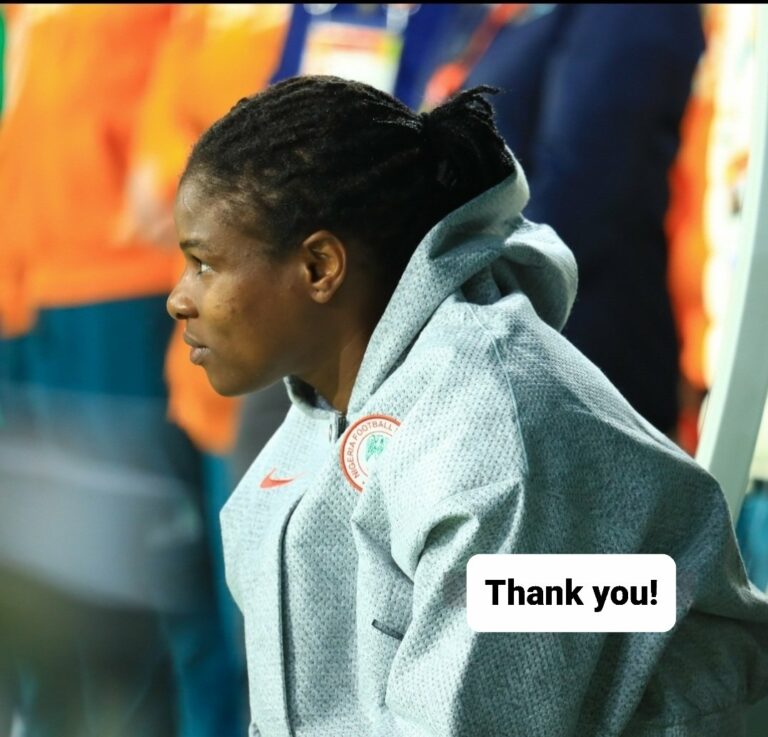
SUPER Falcons’ Desire Oparanozie has announced her retirement from international and club football at age 29.

The player announced this on her verified X social media platform on Wednesday.

Appreciating her supporters, she said, “To my fans, family, and friends, thank you for the show of love and support over the years. It’s time to take a bow, as I believe there’s no better time than now. I’m officially announcing my retirement from professional football for club and country.”

Desire began her career with the Super Falcons in 2010, having 35 caps and 22 goals in her account. Also, she won the Golden Boot at the 2014 African Women’s Championship.

She featured in four FIFA Women’s World Cups 2011, 2015, 2019 and 2023.

Her last outing for the Super Falcons was the 2023 FIFA World Cup Round of 16 exit to England, where she lost a penalty kick.

Oparanozie started with Bayelsa Queens in the Nigerian Women’s Championship and moved to Delta Queens in 2010.

She then travelled abroad on a two-month loan at Düvenciler Lisesispor in the Turkish Women’s First Football League in 2011 before returning to Delta Queens.

A year later, she joined Rossiyanka from the Russian Women’s Football Championship, where she played four matches at the 2012–13 UEFA Women’s Champions League, scoring one goal.

Oparanozie joined Bundesliga club VfL Wolfsburg for the 2013–14 season, signing a two-year contract, then transferred to Ataşehir Belediyespor to play the second half of the season in the Turkish Women’s First Football League.

From there, she joined Guingamp of the French Division 1 Féminine in the 2014–15 season until 2020.

She then signed a two-year contract with Dijon FCO. Before her retirement, she joined Chinese Women’s Super League club Wuhan Jianghan University for the 2022 season.

Rema bags Best Afrobeats awards at 2023 MTV VMAs + full list

0

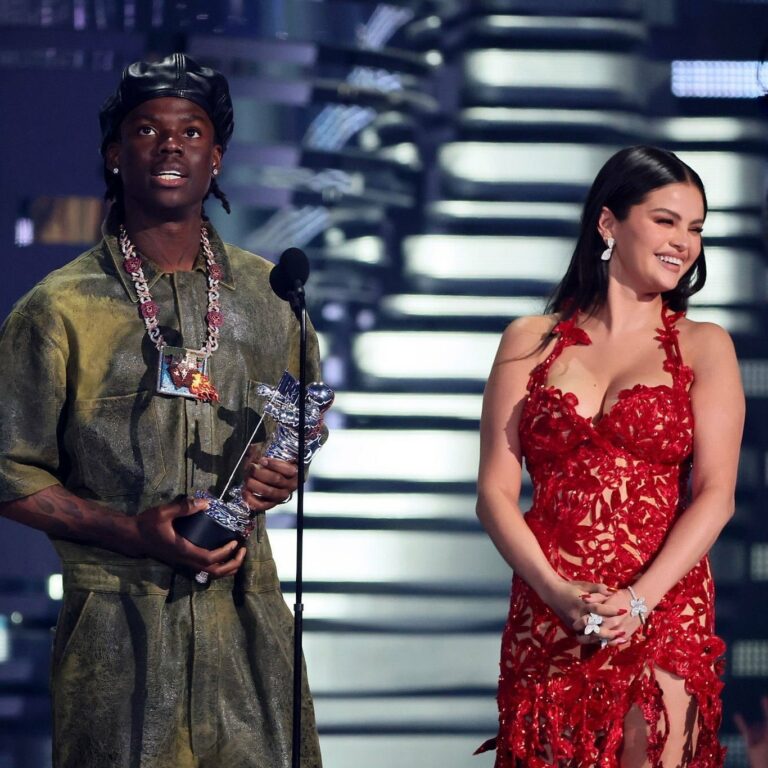
NIGERIAN Afrobeats star, Divine Ikubor, professionally known as Rema, has won the award for the ‘Best Afrobeats’ at the 2023 MTV Video Music Awards (VMAs).

He clinched the award on Tuesday, September 12, at Prudential Center, Newark, New Jersey.

The award for Beat Afrobeats is a new category introduced at the MTV VMAs, making Rema the first African to win it. He won the award for the remix of his song, ‘Calm Down’ featuring American singer Selena Gomez.

Alongside Rema’s Calm Down featuring Selena Gomez, Burna Boy’s ‘It’s Plenty,’ Davido feat Musa Key’s ‘Unavailable,’ Ayra Starr’s ‘Rush,’ Libianca’s ‘People,’ Wizkid ft Ayrra Starr’s ‘2 Sugar,’ and Fireboy DML ft Asake’s Bandana was also nominated for the same category. 

Calm Down remix has achieved remarkable success, becoming the first track ever to hold a place on the Billboard US Afrobeats Songs chart for a full year. It also claimed the prestigious title of inaugural No.1 hit on The Official MENA Chart.

During his acceptance speech, Rema expressed his gratitude to influential figures, including the late Fela Kuti, Don Jazzy, and D’Prince (his label head), Tuface Idibia, D’Banj, Wizkid, Davido, and Burna Boy, who paved the way for artistes like himself. 

“This means so much seeing Afrobeats grow this big and me representing Afrobeats tonight. I am so happy. Shoutout to the people who opened the doors for me”

He also encouraged contemporary Afrobeats newcomers to maintain the same passion as his role models, emphasizing the importance of opening doors for emerging talents, just as his idols had done in the past. 

Notably, his award-winning song recently joined the billion-stream club on Spotify, marking a historic achievement as the first African song to reach such a milestone. Rema is the second African artiste to win a VMA award after Wizkid in 2021.

The MTV VMAs is an annual award show by Cable Channel Music Television (MTV) that celebrates excellence in music videos.

Taylor Swift emerged as the night’s top winner after bagging nine awards, placing her second only to Beyonce in terms of the most VMAs wins.

Full list of winners

Song of the Year

Taylor Swift – Anti-Hero

Best New Artist

Ice Spice

Push Performance of the Year

TOMORROW X TOGETHER – Sugar Rush Ride

Best Collaboration

KAROL G, Shakira – “TQG

Best Pop

Taylor Swift – “Anti-Hero”

Best Hip-Hop

Nicki Minaj – “Super Freaky Girl

Best R&B

SZA – “Shirt

Best Alternative

Lana Del Rey ft. Jon Batiste – “Candy Necklace

Best Rock

Måneskin – “THE LONELIEST

Best Latin

Anitta – “Funk Rave

Best K-Pop

Stray Kids – “S-Class”

Best Afrobeats

Rema & Selena Gomez – “Calm Down

Video for Good

Dove Cameron – “Breakfast

Show of the Summer

Taylor Swift

Group of the Year

BLACKPINK

Album of the Year

Taylor Swift – Midnights

Song of the Summer

Jung Kook ft. Latto – “Seven

Best Direction

Taylor Swift – “Anti-Hero (Directed by Taylor Swift)

Best Cinematography

Taylor Swift  “Anti-Hero (Cinematography by Rina Yang)

Best Visual Effects

Taylor Swift – “Anti-Hero (Visual Effects by Parliament)

Best Choreography

BLACKPINK  “Pink Venom (Choreography by Kiel Tutin, Sienna Lalau, Lee Jung (YGX), Taryn Cheng (YGX))

Best Art Direction

Doja Cat – “Attention (Art Direction by Spencer Graves)

Best Editing

Olivia Rodrigo – “vampire (Edited by Sofia Kerpan and David Checel)

Video Vanguard Award

Shakira

Global Icon Award

Diddy

Reps halt move to give up Adamawa community to Cameroon

0

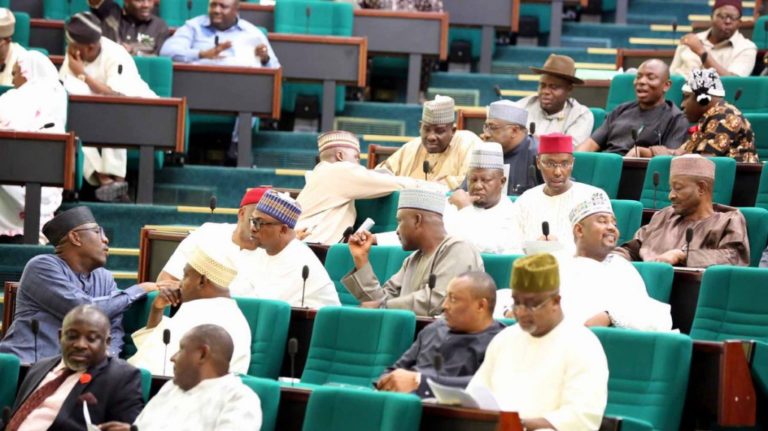
THE House of Representatives has halted plans to cede the Sina community in Michika Local Government Area (LGA) Adamawa to Cameroon.

The legislators disclosed this on Tuesday, September 12, during an investigative hearing on the Nigerian-Cameroon boundary disputes.

Chairman of the ad hoc Committee on International Boundary Dispute Beni Lar said legislators would visit the location in question on a fact-finding mission to resolve the dispute.

“We have to continue this engagement with the relevant community and the boundary commission and come up with a solution. Let us go on a fact-finding mission, and then we will intervene. The communities have a right, and their right must be considered.

“This demarcation exercise has to be put on hold until the disputes are resolved. It should be halted pending the resolution of this committee. We would visit Adamawa and come up with a comprehensive report,” she said.

Adamu Adaji, the Director-General of the National Boundary Commission (NBC) responsible for the demarcation, said the process was being carried out following a ruling by the International Court of Justice (ICJ).

He said there were documents available to show that the boundaries had existed, which were being used to re-establish the existing boundaries.

A representative of the Sina community, Adamu Kamale, who was present at the hearing, maintained that the area was Nigerian territory, as it was not considered during a ruling by the ICJ.

“From Lake Chad to Bakassi, the ICJ ruled on several communities based on different criteria. The criteria used for Bakassi are not the same used for Michika LGA.

“In our own case, the ruling stated clearly that it is the watershed, and if the watershed is to be used, it means any territory on the flank to the left as you are coming from Lake Chad falls into Cameroon. And any community to the right falls to Nigeria because both countries had an agreement on the ruling,” he said.

In 2022, tensions rose about the border demarcation process in border communities in Adamawa state.

Residents had halted the demarcation, which they described as suspicious during a protest in 2022 that almost degenerated into a bloody clash.

The demarcation followed a 2010 judgment by the ICJ, ceding some parts of Nigeria to Cameroon.

However, the altercations are based on allegations by Nigerians in border communities that Cameroonians were taking advantage of the judgment to overstep the approved boundaries.


READ ALSO:


Nigeria had ceded a part of Cross Rivers state, Bakassi, to Cameroon in 2008.

This came after a 15-year dispute over the ownership of Bakassi between Nigeria and Cameroon.

It was a protracted legal battle that spanned about eight years, after which the ICJ ruled in favour of Cameroon, basing its decision on the 1913 treaty between the colonial masters of the two countries.

“We can’t do this alone”: Nigerian fact-checkers teamed up to debunk politicians’ false claims at this year’s election

0

By Patrick Egwu

Journalists from FactCheckHub, CDD Fact-check, Dubawa and Cable Check explained what they learnt from the process.


MISINFORMATION played a key role earlier this year during Nigeria’s 2023 general elections. The election cycle, held between February and March, ended with the victory of candidate Bola Tinubu, who was inaugurated in May 2023. 

In the run-up to the elections, activists and politicians used social media to disseminate misinformation to millions of followers. Photos, videos and text messages were doctored and shared massively on WhatsApp, and this became a conduit for false narratives and fake news. 

Election cycles are always a tough period in Nigeria, and this one was made even tougher by the cacophony of the digital public sphere. But trolls and activists were not alone on the internet. Fact-checking teams across different newsrooms worked hard to debunk false claims and had a meaningful impact on public discourse. 

These fact-checking teams worked with the Nigeria Fact-checkers’ Coalition (NFC), an alliance of 12 fact-checking news and research organisations, including CDD Fact-checkDubawaFactCheckHubCable CheckRoundCheckAfrica Check among others who verify statements from politicians and false narratives being shared online. 

The coalition is not funded by any donor. However, three members (Africa Check, FactCheckHub and Dubawa) self-funded the activities and projects of the coalition. 

I spoke to these five Nigerian fact-checking organisations to learn more about their strategy, their tactics and their work during the past election. 

Fact-checking politicians 

The Centre for Democracy and Development (CDD) Fact-check is an independent fact-checking operation run by the CDD West Africa, a nonprofit set up to provide democratic development in the region. 

Mayowa Tijani, who led the fact-checking initiatives of the organisation, said they had between 12 to 20 journalists who worked round the clock during the election. He said the organisation had a partnership with media outlets who dedicated a number of journalists to assist in the fact-checking efforts. 

The fact-checking project during the election was largely funded by the U.K’s Foreign, Commonwealth and Development Office. 

Tijani said CDD had a “multi-pronged approach” to tackling misinformation. Before the election, the organisation set up a social media war room. “We prepared pre-bunks which we called ‘Fact Shields.’ They were basically explainers of issues that we thought could be soft spots for disinformation peddlers,” he says. 

During the election, they published daily fact-checks on controversial claims by politicians and their handlers. “We were not only debunking claims,” Tijani says. “We were also flagging bad actors with social media platforms and providing context where necessary. Now that the election has passed, we are sharing what we’ve learnt with others so our processes get better ahead of future elections.”

Did CDD’s have a meaningful impact? Tijani thinks it did. “Candidates could not just get away with misinformation,” he says. “They became quite cautious about what to say and about the negative impact of being called out for a misleading statement.”

Over the election period, CDD’s posts got more than five million views on Twitter and created a community who looked to them for clarification on any controversial statement. “We were constantly being asked online and offline to check claims,” Tijani says. A more informed electorate was a big win for us.”

“Fighting misinformation is not a job for one organisation. We can’t do it alone,” Tijani says of the work of the coalition during the election. 

He thinks fact-checkers have managed to “line politicians up in front of a mirror of truth, showing how false some of their claims have been.” Has this changed anything? Tijani thinks so. “Our work has helped improve the information ecosystem,” he says. “Politicians are now aware that journalists will always check what they say.”

Verifying information in real time

FactCheckHub is an independent fact-checking initiative established by the International Centre for Investigative Reporting (ICIR) in 2020. Before the election, its team of fact-checkers embarked on a major social listening exercise for over a year. They wanted to know how accurate were the statements of all political players across the country, says Opeyemi Kehinde, editor of the hub. 

As a member of the fact-checking coalition, Kehinde said that the Hub worked with other members of the coalition to produce live-checks on what was happening during the voting process. Live-checks, Kehinde explains, is fact-checking on the spot immediately a false claim was made, for example. This was mostly used during the election debates and town halls to debunk false claims made by politicians. 

As part of the Nigerian coalition and as a member of the International Fact-Checking Network (IFCN), the FactCheckHub was able “to launch a much broader approach to tackling misinformation and disinformation,” Kehinde says. They independently fact-checked many of the people involved in Nigeria’s electoral process. 

“Nigerians were faced with the threat of misinformation. Even presidential candidates shared false narratives and statements,” says Kehinde, who thinks their fact-check reports helped hold politicians to account during the campaign. 

Kehinde gives a couple of examples. “In reaction to our multiple fact-checks on him, Peter Obi, one of the leading presidential candidates, had to recant some of the facts and figures he had shared,” he says. “We also fact-checked [winning candidate] Bola Tinubu, who had claimed that voter cards had expiration dates. He only rectified after we published a report debunking his claim.”

The Hub debunked a false claim about a statement attributed to the European Union delegation and the election observation mission to Nigeria. This false statement called on the electoral chairman, Mahmood Yakubu ,to step down and initiate a review of the results. The claim also called for the disqualification of president-elect Tinubu after he was declared the winner.

Why local languages matter

Cable Check is the fact-checking project of The Cable, one of the leading Nigerian newspapers. The initiative is led by editor Lanre Olagunju and is staffed by eight full-time journalists. 

“Before the campaign, we monitored political conversations on television and town halls to identify any misleading claims,” Olagunju says. Then they produced fact-checks and translated them into Nigeria’s three main dominant local languages – Yoruba, Igbo, Hausa and pidgin English to reach audiences on their own terms. Fact-checks were also published in voice-over versions, so they could be listened to. 

Olagunju and his team partnered with radio stations so that fact-check reports could be aired regularly. “These strategies are very important because fact-checks are always playing catch-up with fake news,” he says. 

In a couple of cases, Olagunju says, fact-check reports from Cable Check were used to “present empirical factual evidence to politicians and their spokespersons.”

One of the most notable things of this year’s election, Olagunju says, was the sophistication of the digital tools used to mislead voters. He is concerned that the days ahead might reveal advanced weaponisation of digital tools to amplify disinformation, especially with the advent of artificial intelligence (AI). 

“Fact-checkers should be better equipped with modern digital tools for investigations, to fight the scourge of fake news in the days to come,” he says. 

Investigating misleading accounts

Dubawa is one of the leading fact-checking organisations in Nigeria. Its editor Kemi Busari explains he and his colleagues looked out for social media accounts which were persistently spreading misinformation around the election. Busari worked with 10 journalists during the election project. 

They designed what they call a “Caution Card,” a social card with information about the accounts spreading falsehoods and alerting audiences they should beware of such accounts. “We also tried to put out some explainers and media literacy articles which helped to keep the public informed,” he says.

Busari said they received a lot of positive reviews from members of the public on the impact of their work during the election. 

“We opened up our channels widely so people could send us tips and claims to debunk on WhatsApp, Twitter or Instagram. Some reached out to us to fact-check an issue they saw trending on social media and we did that,” he says.

Busari says politicians are now weaponising false information. “They craft falsehoods and then pay some of their supporters to spread them on social media and use them as a tool they use against their opponents.”  

Adesola Ikulajo agrees with Busari. As the managing editor at RoundCheck, a fact-checking platform which focuses on reaching young audiences, he noticed politicians were the main source of misinformation during the election period. 

“Thanks to the work of fact-checkers, audiences can decipher that most of what the politicians post is untrue,” Ikulajo says. “Some have been forced to recant false information they put out there. The problem is that they cherish all the engagement they get from social media more than the pressure from the information ecosystem.”

This is republished from Reuters Institute. Read the original here  

Floods likely in 13 states – NEMA

0

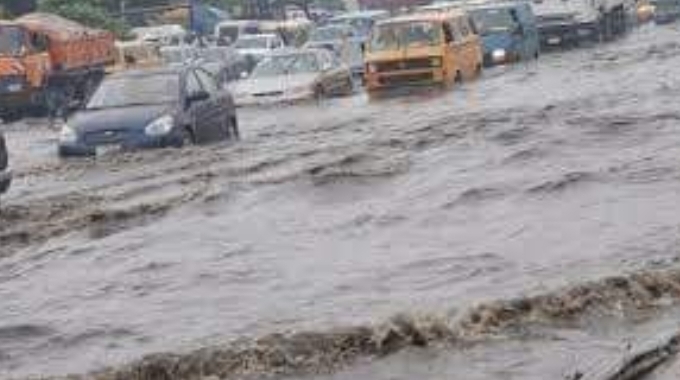
THE National Emergency Management Agency (NEMA) has alerted 13 states to heavy downpours that would fall between September 13 and 17 and could cause flooding.

A statement by the Lagos Territorial Coordinator, NEMA, Ibrahim Farinloye, on Wednesday, September 13, listed 50 communities likely to be affected by the floods.

Virtually all the 13 states are in the North.

They are Kebbi, Kano, Katsina, Niger, Kwara, Zamfara, Adamawa, Gombe, Jigawa, Bauchi, Taraba, Borno and Bayelsa.

In Kano, floods might affect Sumaila and Kunchi, and Argungu in Kebbi.

NEMA cautioned Bindawa, Jibia and Kaita communities in Katsina to prepare for the flood.

In Niger, the agency said Kontagora, Mashegu, and New Bussa communities could be affected, while Kosubosu community in Kwara State should be ready.

“Zamfara State, with such communities as Kaura Namoda and Shinkafi; Bauchi State, with Bajoga, Darazo, Kirfi, Azare, Jama ‘are, Itas, Misau; Taraba, with Bali, Donga, Lau, Serti, Mutum-Biyu, Yorro, and Borno State, with Briyel, Biu, Dikwa, Kukawa will be affected,” Farinloye said.

He added that Ganye, Mubi, Demsa, Jimeta, Mayo Belwa, Numan, Shelleng, and Song in Adamawa; and Dapchi, Gashua, Geidam, Kanamma, Machina, Potiskum in Yobe would be affected.

The agency also listed Nafada, Jigawa, Dutse, Gumel, Gwaram, and Miga in Gombe as flood-prone.

Farinloye advised people of the communities along the Rivers Niger and Benue, up to Bayelsa, to take precautionary measures in the coming days due to the rise in the water levels.

The ICIR reports that in 2022, about 96 persons died, while 1.3 million others were displaced by floods in Bayelsa State alone.

Recently, the federal government disclosed that 32 states, 178 local government areas (LGAs) and the Federal Capital Territory (FCT) were at risk of heavy flooding in 2023. 

The ICIR in April reported on the likely flooding in 2023 and highlighted what the government and residents were doing to prevent the disaster.

Additionally, there are mounting concerns regarding the allocation and utilization of ecological funds earmarked for tackling flooding and related challenges, with 12.9 billion naira shared with 36 states within the first four months of 2023.

Kaduna: 23 priests killed, 200 churches burnt in four years — CAN

THE chairman of the Christian Association of Nigeria(CAN), Kaduna chapter, Joseph Hayab, has said at least 23 priests were killed in the last four years due to activities of bandits in the state.

Hayab disclosed this during a meeting with the state Commissioner of Police (CP) held at Albarka Fellowship Baptist church in Kaduna on Tuesday, September 12.

Hayab lamented the dimensions of insecurity plaguing the state during the meeting. 

He stated that 200 churches were shut down, while 115 were burnt in Birnin Gwari, Chikun, and Kajuru due to terrorist attacks.

 He added that many Christians have since been worshipping under trees.

“Just last month, to be precise, 8th August,2O23, one of the pastors, Adamu, was kidnapped only to find himself in Birnin Gwari and was asked to lead prayers for over 200 Christians still in captivity.

“it even came to a point that I became weak because we kept talking without results every day,” Hayab said.

The CAN leader appreciated the CP for the interface, noting that the state’s problems with insecurity would have been resolved if there had been such meetings between religious leaders and security agencies.

In his remarks, the CP, Musa Garba, argued that interaction with religious leaders would improve relations between the Nigeria Police and religious leaders.

Garba stated that as crime knows no bounds of religion or tribe, the state’s people should watch and pray. He also urged the leaders to support him and pray for his success during his term.

He pointed out that he had a mandate to ensure that the state was safe so that people could sleep with their two eyes closed, stressing that the insecurity challenges the state was facing were not unique to the state alone but to the entire world.

The commissioner encouraged citizens to contact security personnel around their communities with prompt information once they identify suspicious persons.

The ICIR reported on Sunday, September 3, that the Kaduna State governor, Uba Sani, directed the police to investigate the bandits’ attack on Saya-Saya village in Ikara Local Government Area of the state that led to the death of five worshippers in a mosque.

In a statement by his Chief Press Secretary, Mohammed Shehu, Sani described the killing as wicked and barbaric.

The governor assured his government would work tirelessly until peace is restored in every part of the state.

On Saturday, September 2, The ICIR reported that seven persons, including five worshippers, were killed by suspected bandits in the village.

The Kaduna state government in April 2023 said about 1,266 persons were killed by bandits in Kaduna State in the previous 15 months.

Also, 214 people were killed, and 746 others were kidnapped in the state between January and March 2023.

Former Kaduna State Commissioner for Internal Security and Home Affairs, Samuel Aruwan, released the figures on Wednesday, April 19, at the Sir Kashim Ibrahim Government House, Kaduna.

According to Aruwan, 1,052 deaths were recorded due to banditry and other attacks in the state in 2022.

FUOYE: Academic activities stalled after student’s death

0

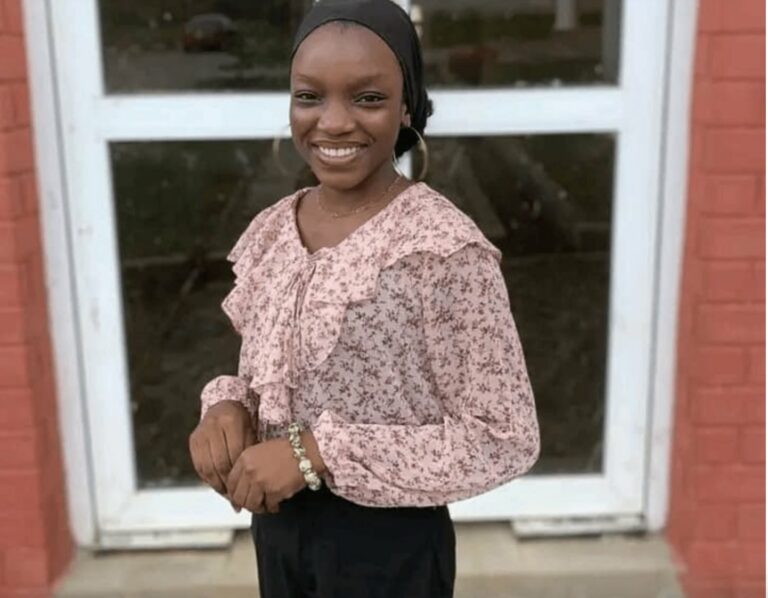
ACADEMIC activities have remained on hold at the Federal University Oye-Ekiti (FUOYE) in Ekiti state following the death of a 200-level Nursing student, Atanda Modupe Deborah.

Some students who spoke to The ICIR said the university was closed following the incident, and there had been no information on when it would be reopened.

“School activities are on hold for now. The school has been closed till further notice. The majority of the students have returned to their houses, and the school remains closed,” a student of the school, Uchenna Okon, told The ICIR.

Another 200-level student, identified as Glory, confirmed the school closure and said she left the school premises due to the anxiety that followed the incident.

Late Atanda was declared missing on Tuesday, September 5. She was later found dead and buried in a shallow grave on the school premises two days later.

Ekiti State Police Public Relations Officer (PPRO) Sunday Abutu disclosed that investigations had commenced into the cause of her death, and the body was deposited at a morgue for autopsy.

The university management also confirmed her death in a statement on September 5 and appealed to students to remain calm amid ongoing efforts to apprehend the killers.

While most students were on holiday during the incident, Atanda was one of FUOYE’s Stream A students who, due to the disruptions in studies caused by the Academic Staff Union of Universities (ASUU) strike actions over unmet demands by the Federal Government, were required to remain on campus during the break.

Her death has, again, disrupted learning activities for the students.

Although there were reports that the deceased’s eyes were plucked out, a statement by the leadership of the university’s student union noted that the corpse was not mutilated.

Many Nigerians have reacted to the incident, including members of the House of Representatives, who condemned the killing.

In a statement by the Spokesperson of the House, Akin Rotimi, the legislators called on security operatives and the Ekiti State Government to ensure that Atanda’s killers are apprehended and punished.

“It’s a very dastardly act and a sad one. There is what we call a safe space where such should never happen, and the school environment is one of them. It’s a very sad development and worrisome. We would ensure that Modupe Atanda gets justice and perpetrators are brought to book. I condemn it, and it’s deeply distressing and sad,” Rotimi noted.

Days after the deceased’s body was found, the police announced that ten suspects had been arrested in connection to the death.

Like Atanda, many other students have been found dead in other universities nationwide.

On February 22, a 300-level student of Benue State University, Dooshima Naomi Erekaa, was found dead and buried in a shallow grave a few days after being declared missing.

The Benue State Police Command arrested one suspect in connection to the murder a week later.

In June, a 20-year-old student of the Federal University, Wukari, Taraba state, Mark Shagari, was stabbed to death by suspected cultists.