OLAMIDE, Davido, Blaqbonez and others have taken to social media to mourn the death of Afrobeat singer and songwriter Ilerioluwa Oladimeji Aloba, known as Mohbad.
While the exact cause of his death remains unknown, Mohbad passed on at age 27 on Tuesday, September 12.
Reacting to the loss, YBNL boss Olamide took to X, formerly Twitter, to express sadness over the artiste’s death. He posted, “This life 🤦🏾♂️…”
Similarly, Davido, Blaqbones and other artistes mourned the death of the young and rising singer.
Mohbad was signed to Marlian Records, Naira Marley’s record label, between 2020 and 2022 as he started his music career. He released his debut extended play, ‘Light’ in 2020, with eight songs featuring Davido, Naira Marley and Lil Kesh.
Until his death, Mohbad was nominated for several awards, including The Headies Awards and was also listed in Audiomack’s top 21 Afrobeats artists of 2021.
THE International Centre for Investigative Reporting (The ICIR) welcomes applications from journalists for its “Countering Misinformation and Promoting Media Literacy in Nigeria Project”.
The Countering Misinformation and Promoting Media Literacy project aims to reduce the dissemination and impact of misinformation in Nigeria by promoting media literacy and responsible information sharing among citizens.
The ICIR is an independent, non–profit media organisation promoting good governance in Nigeria through robust investigative, data-driven reporting. We aim to build a culture of watchdog reporting for the media in Nigeria.
In the last five years, the Centre has worked to develop the capacity for journalists to undertake investigative, data-driven reporting, thus strengthening accountability and engendering effective service delivery for the welfare of the citizens, particularly at the sub-regional level.
The ICIR verification platform FactCheckHub was established amid the infodemic that COVID-19 brought about in 2020. It aims to enhance its capability, visibility, and influence in Nigeria and has established itself as one of the country’s most reliable platforms for verification.
The Countering Misinformation and Promoting Media Literacy project is supported by the Embassy of the Federal Republic of Germany, Abuja.
For this training, The ICIR will select 30 journalists from different media organizations in Nigeria.
The application opens on Tuesday, September 12 and ends on Friday, September 22, 2023.
The training will build capacity and provide financial support for selected journalists to provide critical fact-check content, leading to responsible journalism and higher information quality in Nigeria.
Candidates with at least two years of experience practising as print, electronic and online media journalists can apply. Freelancers with a track record of critical fact-checking skills are also welcome.
Intending participants must provide proof of previous fact-checking content published in the last 12 months.
Being a gender-inclusive organization, the Centre strongly encourages qualified female journalists to apply.
Interested candidates can apply for this project here.
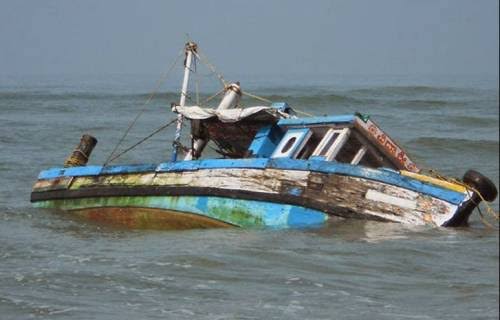
PRESIDENT Bola Tinubu has expressed sadness over the boat mishap in Mokwa Local Government Area (LGA) of Niger State and two others in different locations in Adamawa State.
The incidents, which occurred in three different locations, tragically claimed many lives, including several children. In the Niger accident, 26 people were reported dead, while 15 lives were lost in the first incident in Yola, Adamawa state capital.
While the exact number of casualties of the second accident in Adamawa is still unconfirmed, a local source said divers had taken out 11 bodies from the water.
Tinubu’s condolence message was contained in a statement on Tuesday, September 12, by his spokesperson, Ajuri Ngelale.
He demanded a “thorough and comprehensive investigation into the recurring tragedy of boat incidents across the nation” from the relevant authorities.
The accidents occurred at Njuwa Lake in Yola on September 9, in Mokwa, Niger State, on September 10, and in Gurin, the Fufore area of Adamawa State on September 11.
For the Niger incident, about 26 bodies have been recovered, while 44 are still missing. The boat mishap was reported to have occurred at about 8 a.m. on Sunday, between the Jabba and Kainji dams.
The Niger State Emergency Management Agency (NSEMA) confirmed that over 100 persons were on board the boat. The agency added that the victims, who were from Gbajibo, Ekwa, and Yankyade communities, were on the way to their farms located on the other side of the River Niger.
In Yola, a boat carrying 23 people capsized in Njuwa Lake, killing at least 15 people, the state’s emergency agency and witnesses said.
Bearly 72 hours after the incident, another boat capsized in a river, in Gurin, a suburb of Fufore Local Government Area of the state with many people onboard.
While expressing sympathy with the governments and people of Niger and Adamawa States, the President commended their swift action in mobilizing emergency response teams and volunteers to provide immediate assistance to those affected by the incidents.
Tinubu also directed various government agencies, including law enforcement, maritime safety and transportation safety authorities, to collaborate to identify the root causes of the disasters.
“President Tinubu underscores his commitment to holding government agencies accountable for any regulatory or safety lapses and further instructs a comprehensive review of safety measures and strict enforcement of existing laws on boating activities in the country.
“The President assures the affected families and communities of the government’s continued support and his commitment to preventing such tragic incidents from occurring in the future,” the statement added.
The latest incident happened three months after a boat carrying families returning from a wedding sank in a river in Kwara State, resulting in the loss of over 100 lives.
The ICIR reports that over 100 persons drowned in Kwara state following a boat mishap on Monday, June 12, in the Patigi local government area of Kwara state.
The spokesperson of the state Police command, Ajayi Okasanmi, on June 26, said the boat was loaded with about 250 passengers, out of which 106 people died.
“Among the casualties were people from Ebu Village with 61 casualties, Dzakan Village with 38, Kpada Village with four dead, and three other casualties from Kogi State, putting the total number of casualties at 106 and the total number of rescued people at about 144.”
On June 27, The ICIR, also reported how a boat mishap claimed the lives of three medical students in Calabar, Cross River State.
Thirteen medical students under the aegis of the Nigeria Medical Students Association (NiMSA) had on Saturday, June 24, boarded a boat at Marina Resort as part of their annual health week programmes. But the boat cruise turned tragic after the vessel capsized.
Ten of the thirteen medical students were swiftly rescued by Naval officers, while the remaining three drowned.
THE Election Petition Tribunal sitting in Jos, Plateau state, has sacked Musa Dachung Bagos of the Peoples Democratic Party (PDP) and declared Alfred Ajang of the Labour Party (LP) winner of Jos South/ Jos East Federal Constituency.
The Independent National Electoral Commission (INEC) had declared Bagos, a two-term House of Representatives member, winner of the February 25 National Assembly poll.
The Returning Officer Jonathan Dabak declared that Bagos polled 95,637 votes, Ajang came second with 36,270 votes, while the APC’s candidate, Gideon Dandareng, followed with 27,235 votes.
In its ruling, the tribunal stated that Ajang was the poll winner and ruled that the PDP candidate was not validly selected by his party to contest the poll.
On Monday, September 11, the tribunal nullified the election of two other PDP National Assembly members, Peter Gyengdeng, who represents Barkin Ladi/Riyom Federal Constituency, and Napoleon Bali, Senator representing Plateau South constituency.
It invalidated Gyengdeng’s election and declared Fom Chollom of the LP as the duly elected representative of the constituency.
The tribunal also declared the state’s immediate past governor, Solomon Lalong, the winner of the Plateau South senatorial district election.
The tribunal gave the judgement after sacking Napoleon Bali of the PDP.
It overturned Bali’s victory because the party disobeyed a Jos High Court order to hold ward congresses before the general election.
The court added that the Lalong’s evidence was relevant and admissible.
Lalong currently serves as the Minister of Labour.
ARMED men have attacked Benue govt transport vehicles and kidnapped ten passengers.
The assailants descended on two fully loaded buses owned by Benue State and attacked them along the Ajaokuta-Okene road in Kogi state.
The buses took off from Makurdi, the Benue State capital, heading for Lagos State.
Out of the passengers whisked away from the vehicles on Sunday, September 10, ten are still in captivity.
The Benue State Commissioner for Power, Energy and Transport Omale Omale confirmed that ten out of the 28 passengers in the buses were still with the kidnappers.
Omale confirmed the incident in a telephone interview with the News Agency of Nigeria (NAN) on Tuesday, September 12.
“With the help of Police in Kogi and the vigilante in the area, we secured the two buses, drivers, and 18 passengers unhurt and have since arrived in Lagos safely.
“However, ten passengers are still with the kidnappers—four from one bus and six from the other. The kidnappers have made contact with families of the victims and are making several demands for ransom,” the commissioner said.
Omale said the government is in touch with the family members and would ensure the passengers are all released unhurt.
He added that security personnel were on the ground to ensure that all the passengers regain their freedom unhurt.
Attempts to speak to the Police Public Relations Officer (PPRO) in Kogi State, William Ovye Aya, were unsuccessful as he did not pick up his call or respond to messages sent to his phone.
THE Federal Competition and Consumer Protection Commission (FCCPC) has said the number of delisted loan apps from the Google Play store has risen to 37.
The FCCPC disclosed this on its official website, and checks by The ICIR on Tuesday, September 12, showed the number of fully approved loan apps is 164, loan apps with conditional approval are 38, loan apps on the watchlist are 56, and four apps under waivers or licenced by the Central Bank of Nigeria.
On July 21, 2023, The ICIRreported that the FCCPC delisted two digital money lenders for violating customer privacy.
The chief executive officer of the FCCPC, Babatunde Irukera, had said some loan apps resorted to unethical, obnoxious, and unscrupulously exploitative practices in the industry.
The FCCPC had in August requested Google, the owner of the Play Store, to remove illegal apps operating without regulatory approval.
The commission had flagged many loan apps for violating the Limited Interim Regulatory/Registration Framework and Guidelines for Digital Lending, 2022, and initiated efforts to shake up the digital money lending space following harassment of Nigerians by loan app lenders.
“In furtherance of the investigation by the Joint Regulatory and Enforcement Task Force (JRETF) into possible violation of privacy and other rights by Digital Money Lenders (DMLs), the FCCPC has resumed the registration of digital money lending Apps under the Limited Interim Regulatory Framework and Guidelines for Digital Lending 2022,” the FCCPC stated.
According to the commission, delisted loan apps were permanently deleted by Google from the Play Store, the Punch reported.
The ICIR has made several reports on the illegal activities of the loan app operators who collected customers’ data, images and other vital information and secretly used them to harass, intimidate and shame customers.
In a report on Monday, April 10, the spokesperson of FCCPC, Ondaje Ijagwu, told The ICIR that the Federal government was putting measures in place to enforce the latest policy by Google.
The commission requested Google to prohibit loan apps from accessing contacts and images of their customers.
The FCCPC’s chairman, Irukera, also promised that the commission’s renewed drive would protect Nigerians’ privacy, thereby tackling the violation of customers’ privacy by loan app operators.
The ICIR recalls that Google had established a policy to remove illegal loan apps from the Play Store in Nigeria, effective January 31, 2023.
Online loan fintech companies sometimes send WhatsApp and text messages to every contact on their customer’s phones, claiming they are debtors and fraudsters.
In August 2021, The ICIRreported how Nigerian fintech companies shamed and threatened customers for late payment of loans.
While many experts in the technology ecosystem have raised concerns over the breach of personal data, the resources manager at the Fintech Association of Nigeria, Seun Folorunso, had told The ICIR in a report that scammers would likely succeed unless the online loan companies introduced a high-level multi-factor authentication like pictures and fingerprints.
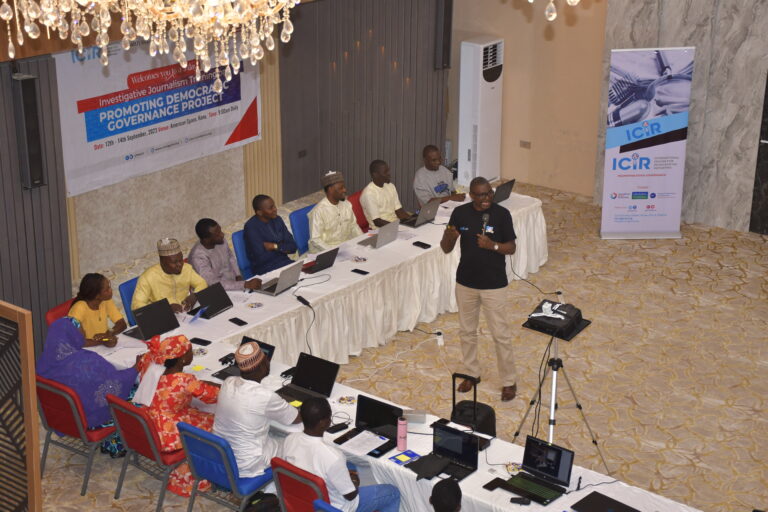
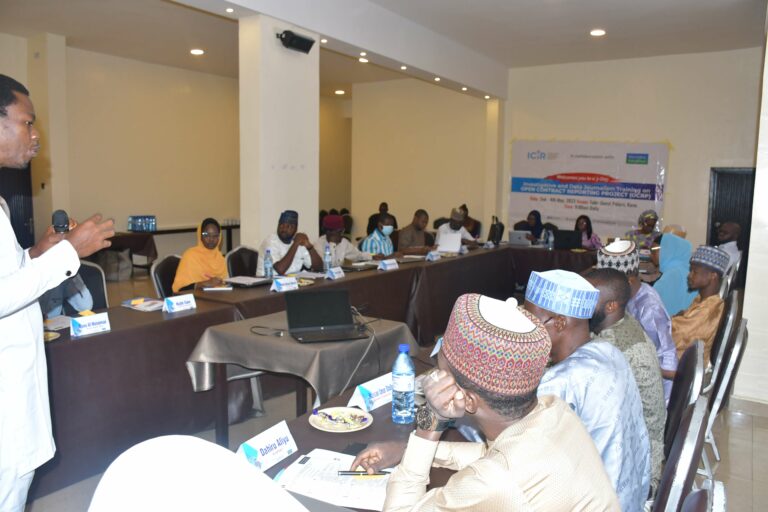
THE International Centre for Investigative Reporting (ICIR) has commenced training select journalists on Promoting Democratic Governance project.
Beneficiaries are from different newsrooms in Nigeria’s Northwest.
The three-day training is ongoing in Kano State, with participants drawn from print, online and broadcast media.
The Promoting Democratic Governance in Nigeria Project aims to strengthen the media capacity to promote transparency, accountability, and good governance in Nigeria through robust journalism.
The U.S. Embassy in Nigeria supports the Project under its “Public Diplomacy Small Grants Programme”.
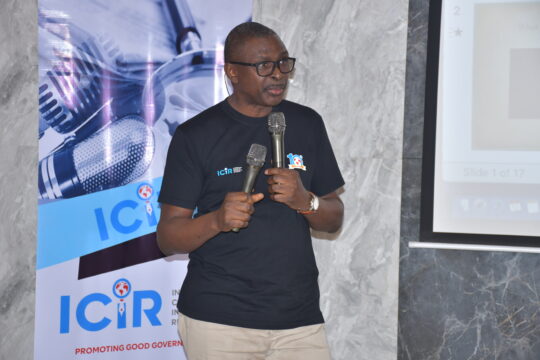
In his opening remark, The ICIR’s Executive Director Dayo Aiyetan highlighted the importance of investigative journalism in today’s world, emphasizing its role in uncovering truth, exposing corruption, and holding those in power accountable.
Dayo Ayeitan, the Executive Director of The ICIR
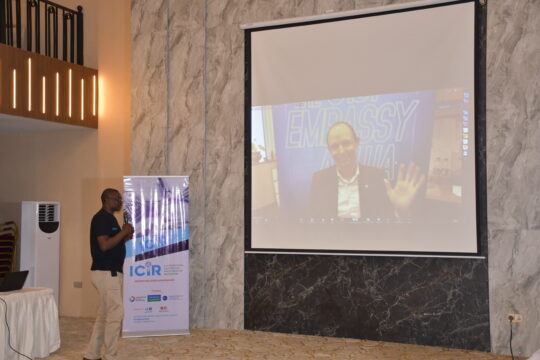
Welcome address by U.S. Embassy Spokesman Robert Gabor highlighted the importance the United States places on the freedom of the press as a key component of democracy.
According to him, the First Amendment states, “Congress shall make no law…abridging the freedom of speech, or of the press.”
Robert Gabor, US Embassy Spokesperson
The organiser said in the past five years, the Centre had worked to build journalists’ capacity to undertake investigative, data-driven reporting, thus strengthening accountability and engendering effective service delivery for the welfare of the citizens, particularly at the sub-regional level.
SOME Nigerians in the diaspora have taken to X (formerly Twitter) to recount what led to their fleeing from the country.
This followed a question posed by an X user, Fisayo Osudo, enquiring about what made some Nigerians decide to leave the country.
“People who left Nigeria, what was the thing that made you finally decide to leave?” Osudo asked on X.
“Japa”, a Yoruba expression which means “to flee”, is now widely used among Nigerians to express a desire to leave the country for various reasons. However, while some leave the countries for a “greener pasture”, some, especially youths, were forced to leave owing to the country’s myriad of challenges.
Reacting to the post, some Nigerians who have fled the country cited police brutality, insecurity, bad leadership, unemployment and other challenges as their major reasons for leaving the country.
A Nigerian in Diaspora, @Miz_Estaa, recounted being attacked by thugs in Lagos.
He tweeted, “I moved to Lagos to be closer to my long-distance boo. I was on Alfred Rewane waiting for my colleague. Obalende boys entered my car, made me drive to their office, deflated my tires, took my keys and made me withdraw N25,000 to get my car back. Long distance marriage entered voice mail.”
I moved to Lagos to be closer to my long distance boo. Was on Alfred rewane waiting for my colleague. Obalende boys entered my car, made me drive to their office, deflated my tires, took my keys & made me withdraw 25k to get my car back. Long distance marriage entered voice mail. https://t.co/RcVzGTzRTz
— What I have written, I have written.™️ (@miz_estaa) September 12, 2023
Another Nigerian based in the United States, Uchenna Osuchukwu, narrated how he lost some valuable possessions when he was kidnapped, but the policemen asked him to bring N200,000 when he went to report.
“I was kidnapped, they emptied my bank account and my people still paid ransom. They took my car and damaged it. One of them transferred money directly from my account to his; one bought airtime directly from my bank. I took all the evidence to the police and was asked to pay N200k, but I let it slide.
“A month after that, police at Enugu stopped me while driving back to Abuja, planted dirty panties in my luggage while searching it and threatened to shoot me right there if I argued and did not cooperate with them. They labelled me a Yahoo boy/man (meaning a fraudster in Nigeria.)
“In Abuja the next week, a police lady slapped me for nothing. I slapped back, and her colleagues, who were men, attacked me, one wanted to stab me with a dagger.
“The last thing that made me say, “fu-k it” was the day Vehicle Inspection Officer personnel in Abuja attacked me. One entered my car and nearly made me crash into a fence of Ya’dua Center. @whitenigerian witnessed this one. Right there, I realized Nigeria seriously wanted to kill me by all means. The next day, my wife and I started the process of leaving.
I was kidnapped, they emptied my bank account and my people still paid ransom, they took my car and damaged it. One of them transferred money directly from my account to his, one bought air time directly from my bank. Took all evidence to police and was asked to pay N200k, I let… https://t.co/wtCK58em2I
Similarly, another Nigerian based in the United Kingdom with X name Guyman recounted being assaulted by the Special Anti-Robbery Squad, a unit of the Nigerian Police Force notorious for human rights violations.
The day SARS treated me like a criminal. Dragged me in their car, beat me, took my smartwatch, emptied my bank account and cryptocurrency. I had PTSD of the beating for like a week. My life flashed before my eyes. Them no teach me before i go run my passport. https://t.co/bkgNkTwHDZ
A Nigerian based in the United Arab Emirates, @Ibii_o, made up her mind in October 2020 when the security operatives opened fire at harmless protesters against police brutality in Lagos.
He tweeted, “Oct 2020, I never got over the fact that the person whose number one responsibility was to protect us opened fire on us, bypassed rubber bullet, teargas, etc. and went straight to killing us. I knew it was time to pack my bag for real.
Oct 2020, I never got over the fact that the person whose number one responsibility was to protect us opened fire on us, bypassed rubber bullet, teargas etc and went straight to killing us. I knew it was time to pack my bag for real. https://t.co/DajLC4s5mq
The nonchalant attitude and extortion by the Nigerian Police have been long-standing issues plaguing the nation. The challenge, which has deeply affected the lives of ordinary citizens and continues to erode trust in the institutions meant to protect them, led to a massive protest in October 2020.
The lack of public trust in law enforcement hampers efforts to combat crime effectively. Citizens are often reluctant to report crimes, fearing extortion or harassment by officers meant to protect them.
The ICIR reported how Police brutality, extortion and harassment have persisted after the #EndSARS protest. The report pointed out that youths are the principal victims and the method/strategy of extortion.
The ICIR also reported how the challenge plagues many young Nigerians and frustrates many start-up businesses for years. The report detailed how Nigerians continue to fall victim and lose businesses to the menace.
Another Nigerian X user, based in England, @Ayodeji_87, said he left the country due to incessant industrial actions by the Academic Staff Union of Universities (ASUU).
The moment i heard ASUU extended their 2022 strike for the second time. I just knew i was done; i wasn't willing to spend 3 or more years on MBA lasan! https://t.co/8xiejEIL9a
Damilola Michael Ige’s reason for leaving the country for the United Kingdom was the attack on Kuje prison. Michael was staying at Kuje at the time and decided to protect himself.
Although plans have hit top gear, the Kuje prison attack https://t.co/hYaoXjjT5q was a confirmation I did the right thing for my family and me. We stayed in Kuje and that night was the worst night I ever had. I had PTSD every night till I landed in Jand https://t.co/lEW66MRl62
The ICIR reported how gunmen ridiculously attacked the Kuje Prison in the Kuje area of the Federal Capital Territory (FCT) in July 2022.
The facility has served as the correctional centre for many prominent Nigerians, including former governors, lawmakers and errant security operatives.
A survey conducted by the Nigeria Social Cohesion Survey revealed that seven out of 10 Nigerians are willing to relocate to other countries for various reasons, with many of them recording success.
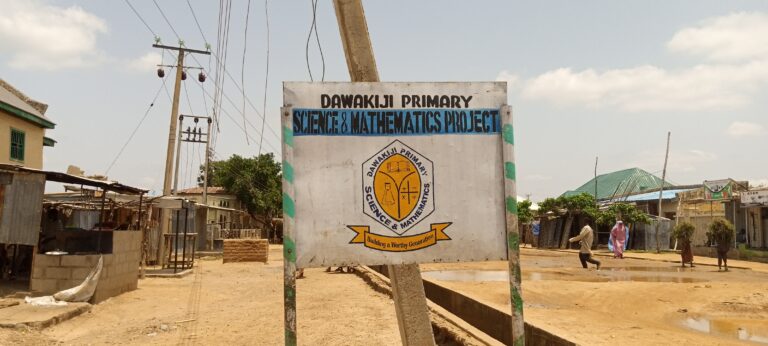
A 2019 Constituency Project in Dawakaji Primary School of Dawakin Kudu community in Kano State has been left to rot away. This is after those in charge of the project failed to consider how its distance would affect the pupils.
JAFARU Wali, 12, is a primary six pupil at the primary section of Dawakiji Primary School in Dawakin Kudu LGA of Kano State. He narrates how they struggle to concentrate in an overcrowded class that makes it difficult for those sitting at the back to view the board. This, according to him, leaves the pupils frustrated as their interest in a subject is often lost.
“This happened particularly during hot weather as some of us will often leave the class so as to get fresh air outside,” he said. Young Jafaru is one of many pupils who bear the brunt of lack of educational facilities in government schools in Kano State.
Like Jafaru, 16-year-old Ibrahim Sani, a student of the secondary section of the school, appeared disheveled when this reporter met him. He said his dirty uniform was a result of the morning rain because the students have to sit on bear floors.
“Whenever it rains, our uniforms get dirty because we sit on the floor. Our lessons are always interrupted during the rainy season, and we cannot concentrate because we are forced to move in different directions to avoid the rainwater,” he said.
It is for this reason that Mrs. Balaraba Dankani, a parent in the schools, said the performance of her two children at the primary section was at the barest minimum, compared to pupils attending less crowded schools within the neighborhood.
Aminu Sani, another parent, popularly known as Dan Takai, said he was planning to withdraw his three children; Amina Sani and Abdullahi Sani from the primary school and Anas Sani from the secondary school.
“The school which had once been a sanctuary for education is now known for its overcrowded classrooms which results in students’ poor performances,” he said.
Mr. Aminu’s children, together with over 3,000 others in the school form part of the sordid statistics of Nigerian children who are forced to contend with poor educational facilities.
No succor despite a N28m Dawakiji contract
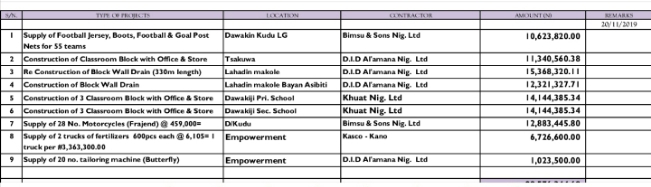
In 2019, the Kano State Government awarded the sum of N28,288,770.68 to Khaut Nigeria Limited for the construction of two classroom blocks with offices and stores in Dawakiji Primary and Secondary schools.
2019 constituency project documentation
The constituency project document specified that the contract, which was billed for completion in 12 months, is for the construction of one block, containing three classrooms with an office and store in the primary school and a similar project for the secondary section of the school. The contract stood at N14,144,385.34, each, giving the total sum of N28,288,770.68 for the two blocks.
However, poor planning and alleged ulterior motives have overshadowed the execution of the project, as four years after its completion, the classrooms in the primary school lay in waste.
An on-the-spot visit to the school showed that the block of classrooms in the primary school had been constructed by the contractor but was closed during school hours while pupils were crowded in other available classes.
This reporter observed that the pupils were congested in a narrow classroom, particularly one located at the right-hand side of the school gate. There were less than eight sitting desks occupied by a few pupils while the rest were seen sitting on dusty floors.
Data from the office of the Headmaster of Dawakiji Primary School, Aminu Sani Mamuda, revealed that the school has a population of over 3,570 with 18 teachers. The head teacher lamented the dearth of teachers and limited classrooms in the school.
Observation revealed that the number of pupils in the school has surpassed student-to-teacher ratio as recommended by UNESCO (United Nations Educational, Scientific and Cultural Organisation) globally and the Nigerian Education Policy.
A 2022 report by UNESCO, recommends 26 students to a teacher in class, while the Nigerian Education Policy recommends a 35-to-one student ratio for a teacher in class. At the Dawakiji primary school, however, the ratio is 198 pupils to a teacher, leaving a gap of 119 teachers to fill the recommended student-to-teacher ratio.
However, the Dawakiji Secondary Section houses over 1,000 students in a school with only 12 teachers, according to the principal, Abdullahi Jido.
Budget analyst and the Project Manager of Gender and Socially Inclusive, a civil society organization in Kano State, Ibrahim Garba Maryam, explained that having overcrowded classrooms also affects the teachers.
“High pupil-teacher ratios, results in lower quality education. In the late 70s, the number of pupils per classroom was 40-45. However, today we have more than 100 pupils in some classes, resulting in overcrowding. This congestion hinders teachers’ performance,” he said.
He added that this also explains why teachers are not as productive as they should be. “Infrastructure deficiency is the main factor contributing to the poor quality of students, as no student will be focused when they are uncomfortable,” he said.
The Principal, Dawakiji Secondary School, Mal. Abdullahi Jido, told this reporter that the school is in dire need of more classes to make learning and teaching processes more comfortable.
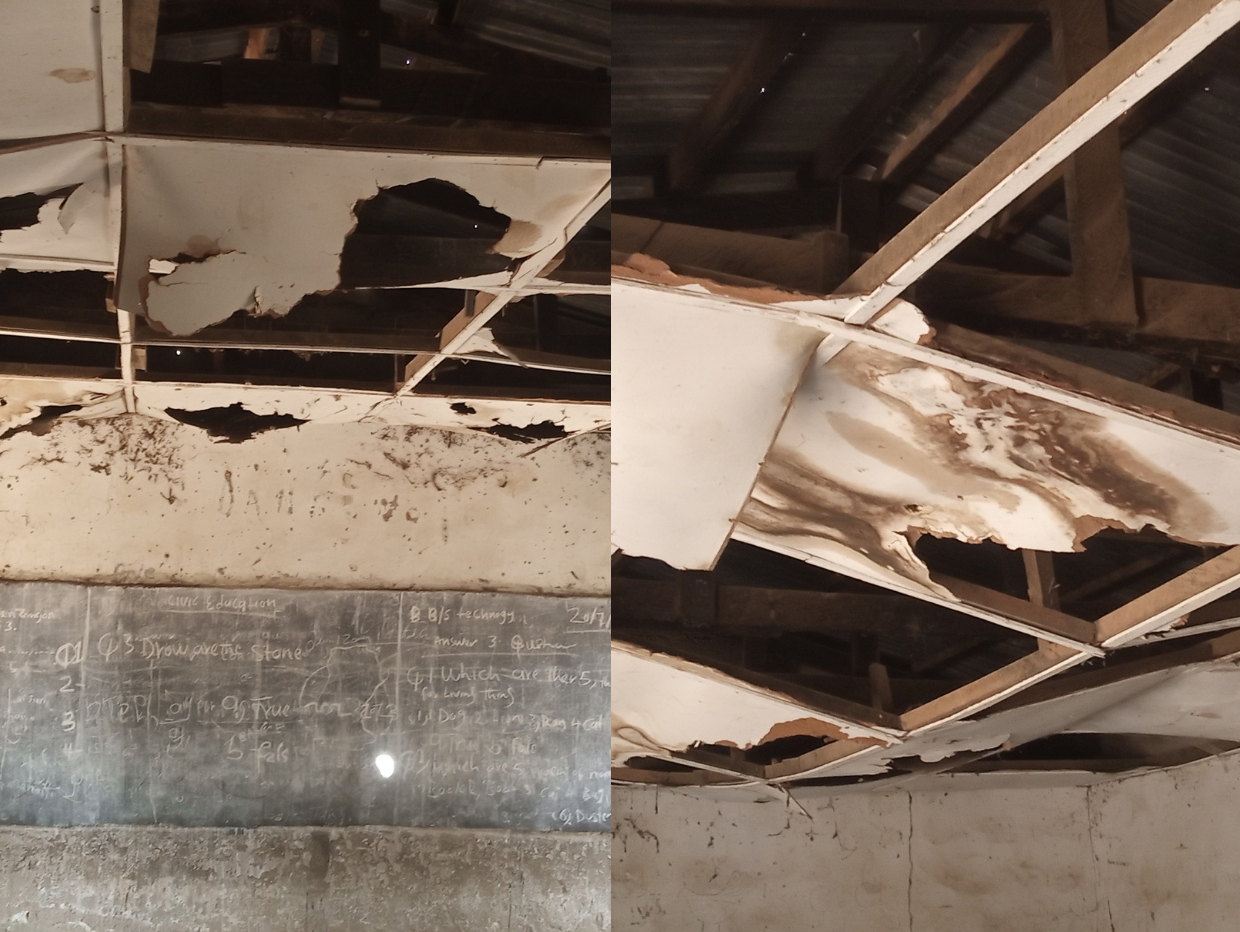
He emphasized the urgent need for furniture and renovations, saying the school currently suffers from myriad of problems; ranging from leaky roofing, to broken windows, making it challenging to provide a conducive learning environment for the students.
Pictures of some classrooms in Dawakiji Primary school
Left to rot away
At Dawakaji Primary Section, the completed block, situated about some meters from the main building of the primary school has been left unattended for at least two years. Standing from the headmaster’s office, the completed block cannot be sited because teachers claim it was too far from the main block.
In an interview with this reporter, Mamuda disclosed that the constructed block remains unused by the primary section due to its distant location from the main complex.
“This is because the completed block was constructed far away from the main complex of the primary section,” he said.
“Pupils are children who need to be monitored closely. The block was built far away from the main complex of the primary school, and teachers cannot properly monitor the pupils if they are relocated.” For this reason, he said the block was rendered useless to them.
Recalling an encounter with the contractor, Mamuda told this reporter that in 2019, the school authority had advised the contractor to construct the block at the main complex of the school, but he had ignored their plea.
“I was a classroom teacher at that time, before I was elevated to become the head teacher at the school.”
He said, “at the time the discussion took place, to our dismay, the contractor refused our advice and went ahead to construct the block at a far vicinity.”
“If the projects had been constructed within the easy reach of our teachers and students, there would have been less congestion in classes. Our pupils are sitting on dusty floors to learn and teaching does not go well when one is not comfortable, especially for young children in primary school,” he said.
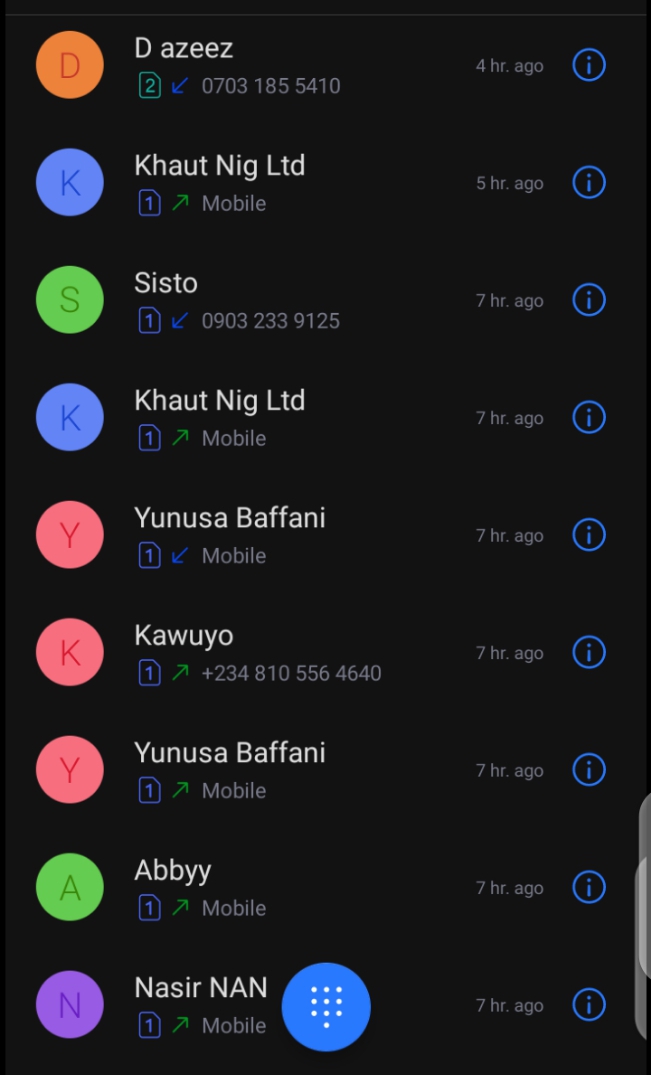
The Chief Executive Officer of Khaut Nigeria Limited, Yahaya Aliyu, was contacted several times by this reporter regarding the reason behind constructing the block at a distant. However, his phone was switched off and he did not respond to SMS messages sent to him.
He had earlier confirmed to this reporter that he had executed the projects he was paid to do and promised to take this reporter to the site, but this did not happen as he failed to respond to various calls and text messages sent to him.
How Kano State Ministry awarded contract to inactive company
The project awarded to Khuat Nig Ltd by the Ministry of Works is currently not being utilized by the primary section as verified by this reporter, thereby violating the provisions of the Federal Public Procurement Act of 2007.
Section 16 (1) e and f of this act provides that “All public procurement should be conducted with the aim of “achieving value for money and fitness for purpose” and in a manner which promotes economy and efficiency.
According to Barrister Abdulrahman Yusuf, a Kano-based private legal practitioner, this implies that the service being offered should be suitable for the public entity that intends to utilise it. Therefore, the project under reference has not obtained value for money because it is not being utilised for its intended purpose.
Contract awarded to inactive company
A public search on the website of the Corporate Affairs Commission (CAC), for Khaut Nigeria Limited showed that it was incorporated in 2007 and has listed as directors Yahaya Aliyu, Garba Ali, Mukhta Ali and Umar Garba. Its address is given as Plot No 477, Yauri Street, Garki III, Abuja but its status is shown as inactive.
An inactive status could mean many things. It could mean that the CAC has not updated the company’s documentation, even though it had been filing returns. In this case, this would be the agency’s fault. But it could also mean that the company has failed to file its annual returns. This is particularly true for an entity that was incorporated long ago and has not been filing returns.
Chapter 16 of the Companies and Allied Matters Act (CAMA, 2020) makes it a statutory prerequisite for every company in Nigeria to file annual returns yearly.
The award of contracts to an inactive company would be a direct breach of section 16 (8) (d) of the Public Procurement Act 2007. The Act states that: “A bidder may have its bid or tender excluded if the bidder is in arrears regarding payment of due taxes, charges, pensions or social insurance contributions unless such bidders have obtained a lawful permit in respect to allowance, the difference of such outstanding payments or payment thereof in installments.”
A call was placed to the contractor by this reporter to inquire whether he is aware of his company’s status as inactive on the CAC portal, but he stressed that his company is supposed to be active.
“It is supposed to be active,” he disclosed. “I am unaware of its inactiveness but would verify with the CAC,” he added. Attempts to reach the contractor to find out if he had verified also proved futile as he did not respond to various calls by this reporter.
Ministry of Works and Infrastructure ignored FOI request
A Freedom of Information Act, FOIA, request was sent to the Commissioner of Works and Infrastructure on June 19, 2023. Thereafter, this reporter continued to follow up with the ministry but there was no response.
However, this reporter was later invited to a meeting chaired by the head of Constituency Projects Unit, Usman Usaini, on July 18, 2023. During the meeting, this reporter briefed Usaini on her findings in the school and the information required to balance the story.
Usaini told this reporter that he supervised the contract when he was the Zonal Coordinator of Kano-South constituency project unit. “There are some issues surrounding the contract, but I can’t produce detailed information without the presence of our legal officer,” he stated.
According to him, “there was new directives from the new Commissioner of Works, Eng. Marwan Ahmad Aminu, regarding release of Information. We were directed to liaise with the ministry’s legal unit.”
After some weeks of persistent follow-up, a meeting was arranged with the legal unit. Mustapha Imam, a lawyer in the legal unit, said that the ministry cannot give out any information regarding the contract as the state has not domesticated the Freedom of Information Act.
“The act you quoted, that is the Freedom of Information, 2011, has not been domesticated by the state. Therefore, it does not apply to the state,” he said.
However, in an interview with an advocate for freedom of information act, who is also a lecturer at Bayero University Kano Rukkayya Aliyu Yusuf revealed that the Freedom of Information Act is a federal law that should be adhered to by all states.
“Ideally, it’s a federal law that should be abided by across all states, but people are using the issue of domestication as a cover to deny people access to information.
“They are just hiding under the issue of domestication because they feel threatened, and that has been a stumbling block to its effective implementation,” she added.
She advised mobilising media reports and programms focused on the utilisation and implementation of the Act in Kano. Also, she recommended filing a legal suit to serve as a deterrent to others.
“That will send a very strong signal of seriousness and readiness of practitioners to implement the Act,” she stated.
* This investigation is supported by the John D. and Catherine T. MacArthur Foundation and the International Centre for Investigative Reporting.”
AMIDST dwindling revenue generation, revenue to debt management and increasing demand by citizens for improved infrastructural development, state governors are increasing the number of their appointees, and the appointments cost millions in monthly remunerationsfor the beneficiaries.
The ICIR observed that five newly elected governors (Abia, Enugu, Ebonyi, Kano, Niger) and two re-elected governors (Adamawa, Yobe) created new offices to accommodate more people into the government, shunning concerns about the rising cost of governance in their recurrent expenditures.
In Sections 196 and 208 of the 1999 Constitution, a governor is empowered to appoint aides to assist him in performing his functions. However, the Constitution does not limit the number of persons to be appointed.
The law states that “the number of such Advisers and their remunerations and allowances shall be prescribed by law or by resolution of the House of Assembly of the State.”
Human rights lawyer Festus Ogun said the appointment was an abuse of scarce state resources, adding that the law does not support reckless abuse of meagre state resources.
He said, “There must be prudence, accountability and transparency in government. If Section 14(2)(b) of the Constitution says the people’s security and welfare shall be the government’s primary purpose, then appointing an endless list of appointees will defeat that purpose because the resources meant for the people will now be used to pay political appointees. Profligacy in government is unconstitutional.”
At the federal level, The ICIRreported how the appointment of 46 ministers by President Bola Tinubu would cost N29.91 million monthly to pay the basic salaries of these ministers. The ICIRalso reported N110 billion palliative and N218 million holiday allowance for lawmakers and how the funds could improve some sectors of the economy.
Salaries costing states millions
According to the remuneration approved by the Revenue Mobilisation, Allocation and Fiscal Commission (RMAFC), if a review has not been made, each special adviser earns N380,241.76 monthly and N4.6 million annually. Also, the assistants or advisers are entitled to other allowances like accommodations, furniture estacodes, medical, severance gratuity, leave and motor vehicle loans, which are paid based on application.
The ICIR used the amount provided by the commission as an estimate to determine how much it would cost the state governors monthly to offset the payment of their aides’ salaries.
For instance, in Adamawa, The ICIRreported how the governor, Ahmadu Finitiri, appointed 47 media aides. These appointments, by calculations, would cost the government N17.9 million to offset the aides’ monthly salaries.
Similarly, Governor Alex Otti appointed 52 Special Advisers and Assistants to his cabinet in Abia. This would cost the state N19.77 million monthly to pay the aides’ basic salaries.
In Kano state, a report captured that the governor, Abba Kabir Yusuf, appointed 197 Special Advisers, Senior Special Assistants and Special Reporters. By calculation, the governor would be paying N74.9 million monthly, while in Yobe State, where the governor, Mai Mala Buni, appointed 642 aides, nothing less than N244.11 million would be spent on their salaries monthly.
In Niger State, Governor Umar Bago appointed 131 women into his cabinet to fulfil his campaign promise of women’s inclusion in his administration. Out of this, 90 women were appointed as SSAs. This amounts to N34.22 million monthly in salary payments.
Similarly, in Ebonyi state, a report showed that Governor Francis Nwifuru appointed 41 Special Assistants and Senior Special Assistants, translating to N15.59 paid monthly as salaries to the officials by the governor.
Meanwhile, in Enugu state, Governor Peter Mbah had earlier appointed 24 special advisers and senior assistants but got the approval of the state House of Assembly to appoint 50 more aides. By calculation, the state would be spending N28.14 million monthly salaries for the 74 aides.
Aside from the appointment of SAs and SSAs, some of the state governors, like Ebonyi and Niger, also appointed as high as 35 and 30 commissioners in their respective states. According to RMAFC, a commissioner is expected to earn N406,739.25 monthly. This means Ebonyi and Niger states would pay N14.24 million and N12.02 million on monthly remuneration for their commissioners. The ICIR captured the appointment of commissioners by state governors in this report.
Looming challenges
While there are questions about how state governors can manage the cost of running their administrations, the perceived waste of taxpayers’ money can be reinvested into addressing some challenges in the state.
For instance, according to the Debt Management Office (DMO) data, Enugu and Kano states are among the highest states with foreign debt profiles. Also, data from the National Bureau of Statistics (NBS) showed that Yobe and Kano states have one of the country’s highest numbers of out-of-school children, while Yobe state ranked poorly in providing primary health services.
The ICIR further looked into the multidimensional poverty rate of each state published by NBS in 2022. Kano, Ebonyi and Niger have 10.51 million, 3.66 million and 3.60 million poor people in their state.
Also, Adamawa has 3.44 million poor people, Yobe state with 3.23 million, Enugu has 2.63 million and Abia with 1.12 million.
Vahala Kwagwa, senior research & policy analyst for BudgIT, told The ICIR that states should be looking to reduce the cost of governance and not increase it with no justification for doing so.
He said, “Every naira spent on a Special Assistant is not spent on citizens that need public goods and services.”




![Delisted loan apps from Google Play Store rise to 37 – FCCPC [+list]](https://www.icirnigeria.org/wp-content/uploads/2022/11/googlestore.jpg "Delisted loan apps from Google Play Store rise to 37 – FCCPC [+list]")