Home Blog Page 801

Fuel subsidy: FCT residents react to Tinubu’s 100 days in office 

0

RESIDENTS of the Federal Capital Territory (FCT) have shared mixed feelings over the administration of  Nigerian President Bola Tinubu since he assumed office on May 29 – 100 days ago.

While some lauded the President’s policies, others lamented over the increased hardship occasioned by his reforms.

Speaking with The ICIR, a resident of the FCT, Blessing Ugoke, commended Tinubu for what she described as efforts to ensure that the country is stabilised.

She, however, noted that people are suffering, which she said should be looked into.

“The President is working to put the country in order, but many people are suffering. People are now trekking long distances because of the high cost of fuel.

“Fuel price is increasing daily, and not everyone is mobile. Most people use public transport, so they should look into it,” she said.

Another resident, Mohammed Bello, who admitted he voted for Tinubu, said he was not expecting the administration to turn out the way it is, as, according to him, things are very hard for him and his family compared to the last government.

“I campaigned and voted for Tinubu, but I did not expect this administration to be like this. Before I spent N600 every day but now I spend N2,000 on transport, and many things are now expensive.

“In Buhari’s administration, I ate three times a day with my family, but now I eat once because of the economy. Everything is high; we did not expect that from the government,” he noted.

A resident, Nathaniel Usman, expressed disappointment in the government for not ensuring things were in place before announcing the removal of the fuel subsidy.

“This government came in without putting things in place properly, and they removed fuel subsidy, which doubled the suffering of the masses. They would have put things in place first,” he said.

Usman added that “the five billion naira they shared would have been put back into the subsidy and removed within five to six months. Food and other things would have come down; people would be prepared.

“Removing subsidy immediately coming into government only multiplied the hardship when they would have given time for citizens to adapt to it by preparing first”. 

The President declared an end to subsidy during his inaugural speech at Eagle Square in Abuja after he was sworn in.

The ICIR reported that following the declaration by President Tinubu, the Nigerian National Petroleum Company Limited (NNPCLtd) announced a hike in petrol price by about 200 per cent, from approximately N197 to over N600.

The sharp rise led to a  surge in transport fares and cost of goods across the country, leaving citizens in much pain.

However, Tinubu justified the subsidy removal, noting that only a few rich Nigerians enjoyed the billions of dollars the government paid on it yearly.

A Reuters report shows the country paid $10 billion on fuel subsidy in 2022.

In a nationwide broadcast on July 31, the president highlighted his plan to alleviate the subsidy removal pains.

He has also begun the disbursement of funds for palliative to states, in addition to increased monthly allocation the state receive from his government since the subsidy regime ended.

Tinubu’s government has repeatedly urged the state governors to judiciously use the rising monthly allocations to touch the lives of their people more positively to alleviate the subsidy removal’s impact.

While emphasising how the removal of fuel subsidy has made life difficult for them, other residents complained about the increase in tuition fees by schools across the nation’s capital.
Days after suspension, NNPP faction expels Kwankwaso

0

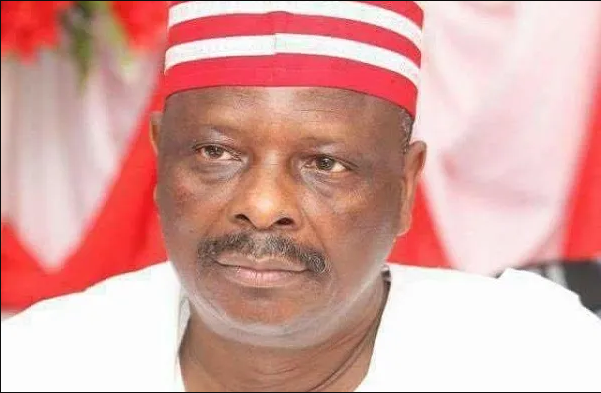
A faction of the New Nigeria Peoples Party (NNPP) headed by Major Agbo has expelled the party’s Presidential candidate in the February 25 general election, Rabiu Kwankwaso.

The dismissal followed Kwankwaso’s alleged refusal to appear before a disciplinary committee set up by the party.

The ICIR reports that the expulsion further deepened the rivalry between the blocks within the party.

The party’s NEC under Agbo had earlier suspended Kwankwaso from the party.

Following the suspension, the NEC issued a warning that he would be expelled from the party in accordance with the terms of the party’s constitution, as revised in 2022 if he failed to appear before the committee.

Abdulsalam Abdulrasaq, the acting national publicity secretary of the party under Agbo, said in a statement released on Tuesday, September 5, in Lagos, that Kwankwaso was sacked from the NEC with immediate effect for refusing to accept the committee’s invitations.

“The NEC met in an emergency session on Friday, September 1 and resolved as follows:

“Following the refusal of Sen. Rabiu Musa Kwankwaso to appear before the disciplinary committee, which sat on Thursday, August 31, after being duly invited in writing, he is hereby expelled from NNPP immediately.

“That the erstwhile presidential candidate, Sen. Rabiu Musa Kwankwaso, will be reported to appropriate quarters to answer questions on financial impropriety relating to mismanagement of public funds,” Abdulrasaq stated.

The ICIR reported on Tuesday, August 29, that the Board of Trustees (BoT) of the NNPP suspended Kwankwaso and another member over alleged anti-party activities.

The BoT said that the suspension would be in place for six months.

In addition, the BOT also suspended the National Working Committee (NWC) of the party.

The BoT announced the suspension at a media briefing in Lagos on Tuesday, August 29.

The suspension of the party’s founder, Boniface Aniebonam, and the national publicity secretary, Agbo Major, was previously declared by the NWC of the party on Thursday, August 24.

Addressing reporters after the meeting in Lagos, the BoT secretary, Babayo Abdulahi, accused Kwankwaso of socialising with President Bola Tinubu, Presidential candidate of the Peoples Democratic Party (PDP) Atiku Abubakar and Peter Obi of the Labour Party (LP) without the board’s approval. 

According to Abdullahi, Kwankwaso’s role as the national leader of the NNPP had been revoked.

In another twist, another faction of the party, speaking through the National Legal Adviser, Robort Hon, stated on Tuesday, August 29, at the National Executive Committee (NEC) meeting that the suspension of Kwankwaso was null and void.

They accused the other group that suspended Kwankwaso of trying to sabotage the NNPP.

“At the meeting were Gov. Abba Yusuf of Kano State; the Acting National Chairman, Malam Abah-Kawu Ali; the Speaker of the Kano State House of Assembly; Engr. Buba Galadima and many others.

“NEC noted that these suspended persons (now expelled) purportedly held a Board of Trustees meeting in Apapa, Lagos, this morning. Naturally, their meeting was null and void and had no effect,” the party’s legal adviser stated.

First 100 days: How Tinubu’s reforms throttle Nigeria’s economy

0

AS the Nigerian President Bola Ahmed Tinubu clocks 100 days in office today, September 5, some economic indicators already point to the impact of his reforms on the nation’s economy.

A former governor of Lagos State, Tinubu was sworn in as Nigeria’s president on May 29, 2023.

The Independent National Electoral Commission (INEC) had declared him the winner in the 2023 presidential election, but he still awaits the court’s final decision as two other opposition parties’ candidates are contesting the poll’s outcome.

During his inaugural speech, Tinubu highlighted some critical issues his administration set out to tackle.

“I had promised to reform the economy for the long-term good by fighting the major imbalances that had plagued our economy. Ending the subsidy and the preferential exchange rate system were key to this fight,” he said in a July national broadcast.

Tinubu pledged to double the annual economic growth rate to six per cent – or more.

Since assuming office, his major decision, which affects most citizens negatively by worsening existing hardship, is the fuel subsidy he suspended on the first day he assumed office.

Reforms too costly to bear 

Notably, many experts have argued that the fuel subsidy removal and exchange rate unification are too costly to bear.

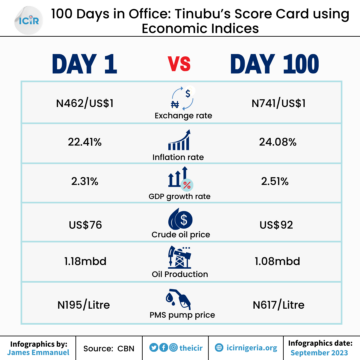
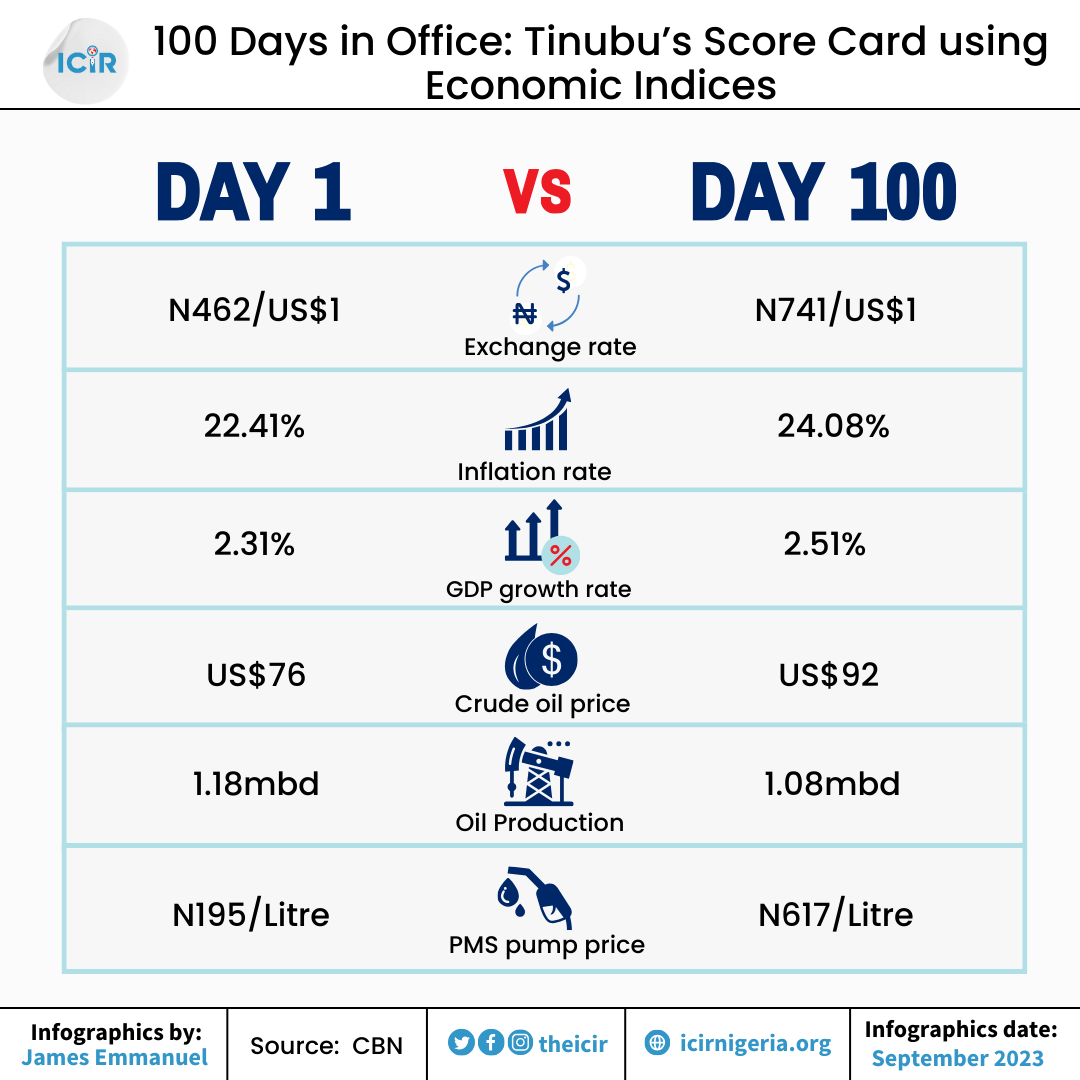
Fuel subsidy removal had seen the pump price of petrol jump by over 200 per cent from about N195 per litre to about N617 per litre.

The effects have been the rising transportation costs and snowballing prices of goods and services for households and businesses, among others.

Exchange rate unification has likewise impacted the sharp drop in the value of the naira against the dollar and other foreign currencies.

The exchange rate, around N462 to $1 when the new administration came in, has risen to N741 to $1. Inflation had risen from 22.41 per cent to 24.08 per cent.

“Our economy is going through a tough path, and you are being hurt. The cost of fuel has gone up. Food and other prices have followed it. Households and businesses struggle,” the President had admitted.

Infograhic on Nigeria’s economic indices within President Bola Tinubu’s first 100 days in office.

Hardship and more hardship

Even though Tinubu’s initial steps enthused many people, it now elicited public backlash as food and transport costs surged.

In a July 31 address, the president acknowledged Nigerians’ hardship, heightened by his administration reforms.

He said the reforms are unavoidable, and he pleaded with Nigerians to be patient.

Following the ballooning suffering faced by the citizens, including civil servants, the Nigeria Labour Congress (NLC) embarked on a two-day warning strike on Tuesday, September 5.

The strike came after a similar action a month earlier.

In mid-July, the government declared a state of emergency, which allowed it to take exceptional steps to improve food security and supply, including clearing forests for farmland and improving access to seed and fertilisers.

As Nigerians await major harvests from the farms, hunger bites hard in most homes.

The humanitarian organisation Mercy Corps has reportedly illustrated how hard ordinary Nigerians have been hit by inflation, making it difficult for many to feed.

It found that food prices jumped by 36 per cent, and transportation fares rose by 78 per cent in the northern Borno state within a week after the government ended the fuel subsidy regime. It also revealed that hunger and incidents of petty theft grew.

“The sufferings are real and affect the citizens across all segments of our society – public service, private sector, informal sector, artisans, students, SMEs, the unemployed, the aged, pensioners, etc. There is, therefore, a need for urgent responsive actions from all tiers of government,” an economist, Muda Yusuf, told The ICIR.

He added that mitigating measures should be holistic, inclusive and driven by direct interventions, fiscal policy measures and monetary policy actions.

The federal government has provided soothing relief, known as palliative, to support vulnerable citizens, but few beneficiaries have received support aid.

Impact on businesses

Four critical sectors (oil refining, crude petroleum and gas, textile and livestock) of the economy had slid into recession in the year’s second quarter.

Yusuf said the sectors have been struggling because of macroeconomic, structural and policy issues. 

The gross domestic product (GDP) fell by 2.5 per cent year-on-year in Q2 compared to 3.54 per cent in the same quarter last year.

An economic mix solution

Solving Nigeria’s economic challenges lies in addressing the issues around liquidity, stability, growth, and harmony, said a renowned economist and chief executive officer (CEO) of the Economic Associates (EA), Ayo Teriba.

Teriba had told The ICIR that the transition of power to President Tinubu offered Nigeria an excellent opportunity to make fresh efforts to solve its lingering economic problems and stabilise its economic growth and progress.

He had said the solution lay in the President taking a holistic, inclusive and sequential approach to four dimensions – liquidity, stability, growth and harmony.

“You cannot talk about stability without liquidity, you cannot talk about growth without stability, and you cannot talk about harmony without growth,” the economist explained.

Italian oil firm to sell onshore Nigerian assets to Oando

0

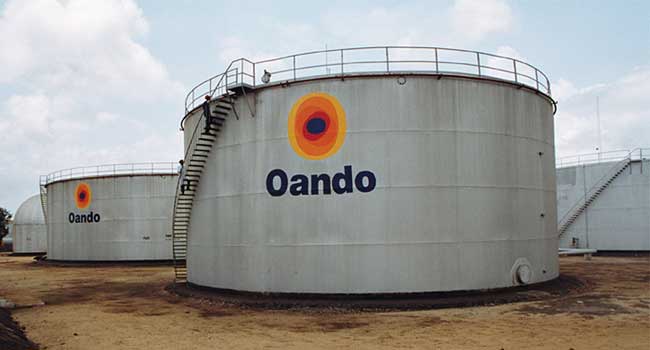
ENI, an Italian firm, has agreed to divest its onshore Nigerian assets to Oando Plc, an indigenous energy solutions provider.

Oando disclosed this in a statement signed by the Company Secretary, Ayotola Jagun, on Monday, September 4.

The agreement is to acquire 100 per cent of the shares of Nigerian Agip Oil Company Limited (NAOC Ltd), the company said, adding that the completion of the transaction would be subject to ministerial consent and other required regulatory approvals.

With the acquisition, Oando will nearly double its reserves to 996 million barrels of oil equivalent.

“The transaction increases Oando’s current participating interests in OMLs [Oil Mining Lease] 60, 61, 62, and 63 from 20 per cent to 40 per cent,” the company stated.

While Oando did not disclose the acquisition cost, an investment bank, Jefferies, pegged the deal at more than $500 million, according to a Reuters report.

After the sale, Eni will retain the unit’s five per cent stake in the Shell Production Development Company (SPDC) joint venture operated by Shell. At the same time, the Italian group will keep its offshore activities in Nigeria.

The purchase will enable Oando to “significantly increase production” and “bring to bear the important role indigenous actors will play in the future of the Nigerian upstream sector,” it said.

NAOC Ltd, which focuses on oil and gas exploration and production, has interests in four onshore blocks, two onshore exploration leases and two power plants.

“The synergies created by this acquisition will unlock unparalleled opportunities for us to re-align expectations, enhance efficiency, optimise resource allocation, and significantly increase production. Furthermore, it aligns with our strategy of acquiring, enhancing, appraising, and efficiently developing reserves.

“Having achieved this significant milestone, we look forward to closing the transaction and harnessing the full potential of the enhanced platform to accrue value for our local communities, stakeholders and shareholders,”  the group chief executive, Oando, Wale Tinubu, said.

Tribunal judgement: Tinubu believes in sanctity, integrity of judiciary – Presidency

THE Presidency has said the Nigerian President Bola Ahmed Tinubu believes in the sanctity and integrity of the judiciary and will not tamper with its independence.

Presidential spokesperson Ajuri Ngelale said this on Channels Television’s Politics Today programme on Monday, September 4.

Ngelale added that the President was not concerned about the court’s decision, which is expected to be made on Wednesday, September 6, by the Presidential Election Petition Tribunal.

“The President sees no need to threaten judicial officers. He sees no need to raise speculations against the integrity of judicial officers. He believes in the sanctity and integrity of the Nigerian judicial system. He believes the great men and women on the panel will make their decisions based only on the facts before them.

“He will continue to ensure that no matter what the outcome of the judgement is, he does his part and ensure that our institutions continue to be respected, not just by him, but by all actors,” Ngelale stated.

According to the presidential spokesperson, Tinubu is not worried about the court’s decision because he believes he won the election and acknowledges the judiciary is in the best position to decide independently based on the merits of the case at hand. 

The ICIR reported on Monday, September 4, that the Presidential Election Petition Court (PEPT) fixed Wednesday, September 6, to deliver judgement in the case of Atiku Abubakar of the Peoples Democratic Party (PDP) and Peter Obi of the Labour Party (LP) against the winner of the February 25, 2023 presidential election, and incumbent President Tinubu.

The Registrar of the Court of Appeal, Umar Bangari, confirmed this to The ICIR in a telephone chat on Monday, September 4.

“Yes, it is confirmed. The date is September 6. I am sending the statement to your chapel chairman now,” Bangari said.

Judgement on the case of the Allied Peoples Movement (APM) has also been scheduled for the same day.

Bangari also added the proceedings would be open to live broadcast by interested media organisations.

Peter Obi of the Labour Party (LP), Atiku Abubakar of the Peoples Democratic Party (PDP), and the Allied Peoples Movement (APM) are contesting Tinubu’s victory at the 2023 Presidential Election held in February.

Atiku, a former vice president, finished second. Obi, a former governor of Anambra State, finished third in the hotly contested election.

How Tinubu ‘hit the ground running’ within 100 days in office

NIGERIA’S President, Bola Ahmed Tinubu, assumed office as the 16th democratically-elected president on May 29 after securing 8.8 million votes to win the country’s 2023 presidential election which was held in February.

Today, September 5th, marks 100 days since President Tinubu has been in office. The ICIR looked through several policies and actions taken by the president between May 29 and September 5, 2023.

Within these days, there have been appointments, dissolution of heads of agencies, implementation of policies, signing of bills and foreign journeys made by the president.

Earlier, The ICIR had reported on key decisions taken by the president and 18 new governors sworn into office after 20 days and the real cost of Tinubu’s economic policies in 50 days in office.

Here is a look at some of the activities:

Economic policies 

While giving his inaugural speech, Tinubu announced the immediate removal of subsidies on Premium Motor Spirit (commonly called petrol or fuel locally). This was the first economic action taken by the president. The removal increased the prices of transportation and foodstuffs by over 100 per cent. The ICIR also reported several strike actions organized by the Nigeria Labour Congress over the agitations on the removal.

A few weeks later, the Central Bank of Nigeria announced the abolition of the segmentation in the foreign exchange market. By implication, the naira currency floated after several years of regulations. The ICIR reported that the policy, after two weeks, increased the naira-to-dollar exchange by 15.84 per cent. 

100 Days in Office: Tinubu's score card using Economic indices

Later, Tinubu said N8,000 was going to be distributed as palliative to 12 million poor households for six months before the policy was retracted for review. The ICIR reported how feasible the palliative would benefit poor Nigerians and by this review, the impact of conditional transfers by past administrations.

Also, the president inaugurated the National Economic Council and a Presidential Committee on Fiscal Policy and Tax Reform with a mandate to transform and rejuvenate the nation’s economy and signed an executive order suspending the five per cent excise tax on telecommunications services and locally manufactured products. 

Suspension and Appointment 

Three major dismissals by the president within 100 days include the suspension of Godwin Emefiele as the Governor of the Central Bank of Nigeria (CBN); Abdulrasheed Bawa, as chairman of the Economic and Financial Crimes Commission (EFCC) and all service chiefs from office replacing them with new heads.

Meanwhile, the first major appointment made by the president was the announcement of the immediate past Speaker of the House of Representatives, Femi Gbajabiamila, as Chief of Staff. Subsequently, the former governor of Benue State, George Akume, was appointed as Secretary to the Government of the Federation (SGF). There was also the appointment of 20 aides as Senior Special Assistants (SSAs), personal assistants, a personal physician and photographers.

Tinubu also assigned ministerial portfolios to 46 people after being screened by the Senate. The ICIR reported how it might cost taxpayers over N29.91 million monthly to pay the basic salaries of the appointed ministers.

Signing of bills

Between May and September 2023, at least four bills were signed by the president into law. 

The bill to increase the retirement ages of judicial officers in the country to 70 years was, first, signed into law by Tinubu on June 8. The new law will harmonise the pension rights of judicial officers of “superior courts of record” specified in Section 6(5) of the 1999 Constitution (as amended).

Also, on June 9, the Electricity Act 2023, empowering states and private companies to generate power, was signed. Similarly, the Student Loan Bill, which provides interest-free loans to indigent students in Nigeria’s tertiary institutions, was signed on June 12. 

While, the data protection bill, which provides how data should be managed, its limitations, and fines for violators, was signed on June 14.

Travels

Tinubu has also travelled to six countries; three countries in Africa and three countries outside Africa. 

In June, the president’s first travel was for a Global Financial Pact Summit where he spent three days and then moved to the United Kingdom on a private visit, spending four days.

Also, between July and August, Tinubu attended the Economic Community of West African States  (ECOWAS) Summit in Guinea Bissau, the African Union (AU) meeting in Nairobi -Kenya and the 63rd Independence Anniversary of Benin Republic.  

Currently, the president is in New Delhi, India, to attend the G-20 Leader’s Summit. 

Other activities

Within 100 days, the president only organized two live broadcast messages. The first speech was given during his inauguration as president, while the second speech came two months after where he highlighted plans to ease the hardship faced by Nigerians due to subsidy removal.

Tinubu was also appointed as the ECOWAS chairman on July 9 where he would be responsible for leading implementation of the decisions of the ECOWAS heads of state and government, promoting peace, stability, and economic growth within the West African region.

Within a short time frame, The ICIR has reported how Tinubu has been faced with taking critical steps in addressing the ongoing Niger coup

The president also approved the establishment of the Infrastructural Support Fund (ISF) for the 36 states and also declared a state of emergency on food security in Nigeria. The ICIR also reported how over 600 people were killed within the first 45 days under the new administration.

Wike condemns previous negotiation for N85bn Wasa mass housing project

0

MINISTER of the Federal Capital Territory (FCT) Nyesom Wike has expressed his displeasure with arrangements made by the previous administration over the N85bn Affordable Housing Project in Wasa.

He disclosed that the agreement between the FCT Administration (FCTA) and the private developers would be reviewed for better negotiations in favour of the government during a visit to the site in Wasa on Monday, September 4.

“We are not impressed with the arrangement made by the FCT. Government will not just cough out N85 billion and the land and we are providing all the infrastructure, then you want to give out to private developers who will now build and sell. We think that government must also participate, having provided the land and having provided the infrastructure.

“This kind of arrangement is not commendable at all. If we are partnering with private individuals or developers, the common sense is that you provide the land and also provide infrastructure and then they come and develop and make profit. Government can say okay we will take 10 percent, then they take 30 percent, depending,” he said.

Wike added that active participation of the government in the project would help with monitoring the pricing of the homes and keeping them within an affordable range as intended.

He also said contracts would only be awarded by the FCT if available funds could see to the completion of projects.

“We are not going to be awarding contracts for awarding sake. We are going to award contracts that we will finish and then embark on new contracts. Contracts in the FCT are something else. As I speak to you, you don’t even have up to 20 percent completion. Every contract abandoned because of no money. We are not going to encourage that. We are going to look at everything,” Wike said.

In 2014, the sum of N28bn was approved for the Mass Housing Estate in Wasa, meant to serve as affordable accommodation for FCT residents, with a completion period of 48 months. The sum was later reviewed to N85bn in 2018.

Wike also visited the yet-to-be-completed access road leading to the Institution and Research District in Jabi, along which some buildings housing government agencies, including the EFCC Corporate Headquarters, Body of Benchers Building and Federal Medical Centre, are located.

The Minister stated that the contractors have been invited to see to the completion of the road.

Banks, others shut down as workers begin strike

0

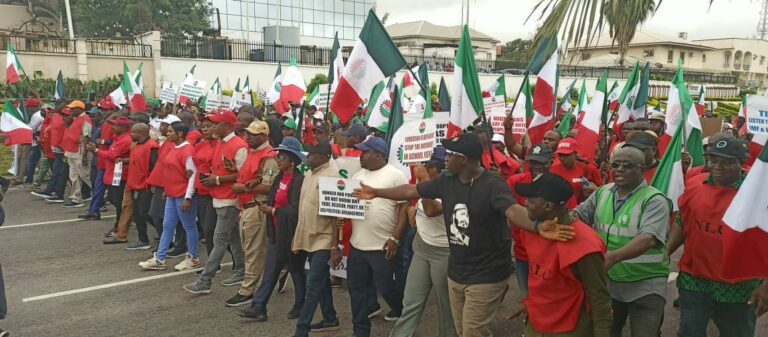
THE National Union Of Banks, Insurance and Financial Institutions Employees, NUBIFIE, and other affiliates of the Nigeria Labour Congress (NLC) are set for the two-day warning strike declared by the workers’ body.

The workers are downing tools to protest the escalating hardship arising from the removal of subsidy on Premium Motor Spirit (PMS), commonly known as petrol, by the Federal Government.

The strike holds between Tuesday, September 5 and Wednesday, September 6, 2023.

The ICIR reports that it will paralyse socio-economic activities across the country, leading to a further loss for a nation struggling with its economy.

NLC President Joe Ajaero ordered the union members to commence the strike on Friday, August 31.

He said unless the government takes significant measures to alleviate the effects of the subsidy removal on Nigerians, the union would commence an indefinite strike in either 14 working days or 21 days.

The Union had previously embarked on a nationwide protest on the same issue in August 2023, with its membership comprising workers from both the public and private sectors.

NUBIFIE, in a statement released on Monday, September 4, announced its solidarity and declared that all banks would be closed on Tuesday, September 5, and Wednesday, September 6.

According to the statement, the notice aligns with the NLC’s resolution on its planned two-day strike.

Part of the statement read: “In line with the communique issued after the meeting of National Executive Council (NEC) of the Nigeria Labour Congress (NLC) held on Thursday 31 August 2023, that all affiliates should direct their members to commence two days withdrawal of services from Tuesday and Wednesday the 5 and 6 September 2023, the directive is imperative to get the needed attention of the government and warn it of its new found love of meddling in the internal affairs of unions rather than addressing the punishing economic circumstances we find ourselves in.”

The group directed its organs to comply with the directive by ensuring all members stayed off duty for the two days.

The ICIR had earlier reported that numerous NLC affiliate organisations had instructed their members to adhere to the directive issued by the national body.

One of these groups, the Maritime Workers Union of Nigeria (MWUN), ordered its workers to mobilise its members effectively to ensure their participation in the strike.

In a circular shared by Deputy Secretary General Erazua Oniha, acting on behalf of the union’s Secretary General Felix Akingboye, the union stated, “We have received a communique from the Nigeria Labour Congress, NLC, regarding the aforementioned matter, instructing all NLC affiliates to initiate a two-day nationwide warning strike as a demonstration of our preparedness for the indefinite strike later in the month…”

“Consequent to the foregoing, all National Administrative Council, NAC, Central Working Committee, CWC, NEC and members in all ports, jetties, terminals and oil and gas platforms nationwide are by this notice directed to commence an immediate and total mobilisation of our members to effectively ensure their participation in the nationwide warning strike from Tuesday 5 to Wednesday 6 September 2023.”

Others, according to a report, are the National Union of Electricity Employees (NUEE), the Private Telecommunications and Communications Senior Staff Association of Nigeria (PTECSSAN).

The ICIR reports that sources within the judiciary said the strike would not affect the Presidential Election Petition Court (PEPT), which delivers judgment in the case of Atiku Abubakar of the Peoples Democratic Party (PDP) and Peter Obi of the Labour Party (LP) against the winner of the February 25, 2023 presidential election, and incumbent President Bola Tinubu, on Wednesday, September 6.

However, the government appealed to the NLC to shelve the strike on Monday, September 4.

The ICIR contacted Ajaero on the telephone Monday evening to confirm if the strike would go on as planned. He did not pick up the call put across to his telephone line. He did not also reply to text and WhatsApp messages sent to his line.

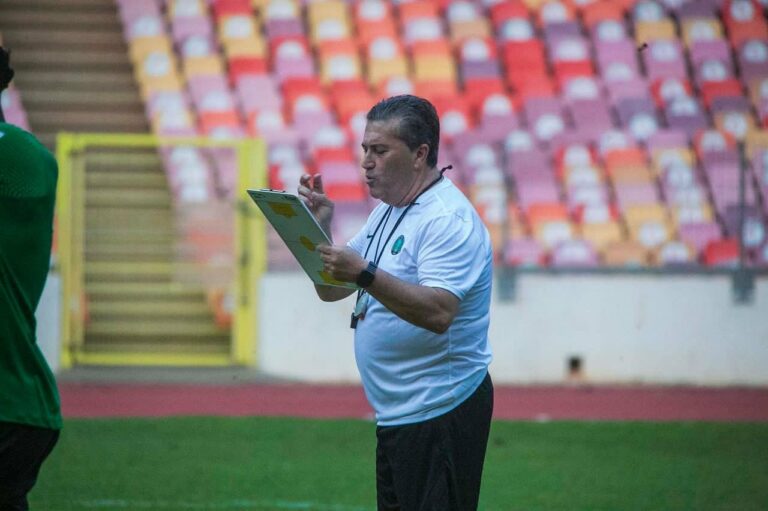
Super Eagles’ coach Peseiro extends contract despite 29% pay cut

0

THE Super Eagles head coach Jose Peseiro will continue his contract with the Nigeria Football Federation, NFF as the head coach despite agreeing to a 29 percent pay cut.

His employer, the Nigeria Football Federation (NFF), made this announcement on Sunday.

The NFF said in a statement that the 63-year-old Portuguese will now lead Nigeria to the Africa Cup of Nations after his initial one-year contract ran out in July.

Peseiro’s initial contract with the country’s apex football administration was agreed on $70,000 a month, but it is understood the new agreement will have his monthly pay at $50,000 after the federation said they could no longer afford his previous salary.

The ICIR calculated the head coach’s pay cut dropped to 29 per cent.

Ahead of the Africa Cup to be hosted by the Ivory Coast in January 2024, he has been handed the target of leading the Super Eagles to at least the semi-finals.

The three-time African champions have 12 points from five qualifying matches and have already secured a place in the tournament.

However, the Super Eagles will need at least a point against Sao Tome and Principe next weekend to win their group ahead of second-placed Guinea Bissau, who are on 10 points and play at home to Sierra Leone.

Ahead of the match, Nigeria has called up several uncapped players, including Victor Boniface, Gift Orban and Jordan Torunarigha.

Among the players recalled up for the match include Portugal-based left-back, Bruno Onyemaechi, Tyronne Ebuehi, defensive midfielder Raphael Onyedika and defender Jamilu Collins, who has returned from a long-term injury.

Nigerians paid N302 million as ransom for kidnapping in one year

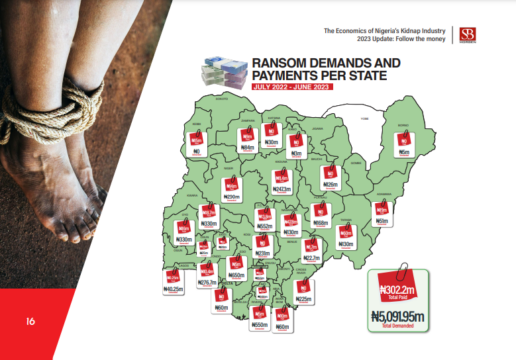
SB Morgan (SBM), known as SBM Intelligence, has revealed that between July 2022 and June 2023, $387,179, translating to N302 million, was paid as ransom to kidnappers in the country.

According to the SBM, the amount represents six per cent of the total N5 billion ($6,410,256 as of 30 June 2023) the kidnappers requested within the period. 

Nigeria has faced insecurity challenges in the last decade, from insurgent attacks, banditry, inter-ethnic or communal crises, and separatist agitations.

The ICIR reported how non-state actors killed 31,821 people between May 2015 and April 2023. Also, within the first 45 days of President Bola Tinubu, over 600 people were reportedly killed from the insecurity crisis. 

However, kidnapping in Nigeria has become an economic industry where abductors demand money from families and guardians before releasing abductees. This is most prominent in the Northern region of the country, which has recorded a plethora of cases of school children and other kidnappings like Chibok, Jangebe and Dapchi in the last decade.

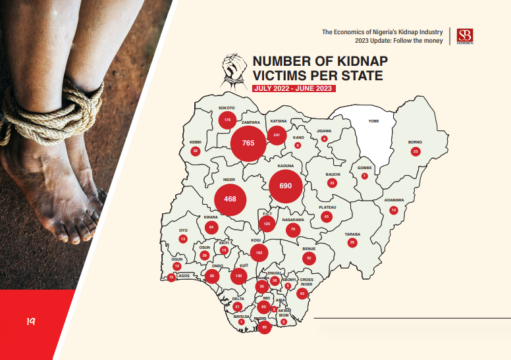
According to the SBM report, between June 2022 and July 2023, 3,620 people were abducted in 582 kidnap-related incidents in Nigeria. 

SBM said, “The north west and north-central regions exhibit higher numbers of in-kind ransom demands. This aligns with Nigeria’s poverty and its correlation with areas where food is commonly demanded. Additionally, these regions have seen a surge in motorcycle demands due to economic opportunities and possibly because of their potential use in terror activities.”

Analysis of the data

According to the report, at least 3,620 people were kidnapped, while 570 people were killed during kidnapping incidents. The North-West region had the highest number of people kidnapped and killed during kidnapping incidents.

However, the North-East region had the lowest number of people kidnapped, and the South-East region had the least people killed during the kidnapping incidents.

RegionNUMBER OF PEOPLE
KIDNAPPED
NO. OF PEOPLE
KILLED DURING
KIDNAP INCIDENTS
North East12563
North Central977153
North West1,921217
South East15927
South South27081
South West16829

The report said it was more likely to get kidnapped and killed in states like Zamfara, Niger and Kaduna than elsewhere. Meanwhile, three states recorded no deaths from kidnap: Akwa Ibom, Bayelsa and Borno.

“Civilians comprised the most casualties for persons killed in kidnap cases, with 430 dead. In the same period, 121 kidnappers were killed, mostly by security agents, with some of them meeting their end at the hands of irate mobs or in friendly fire. 19 security operatives—including state security agencies and vigilantes—lost their lives”, SBM stated.

Additionally, within the period in review, 21 Catholic priests were kidnapped.