THE National Association of Persons with Physical Disabilities (NAPWPD) has demanded a five per cent share of the N5 billion palliative approved by the Federal government for states and the federal capital territory (FCT) to address the impact of the fuel subsidy removal already taking a toll on the lots of the masses.
Its national president, Rilwan Mohammed, requested this in a statement on Saturday, August 19, according to a report by the News Agency of Nigeria.
Mohammed asserted that persons with disabilities (PWDs) are neglected and not being carried along in the decision to support the states with relief funds.
The ICIR reported that the Federal government had on Thursday, August 17, approved an N5 billion palliative for the 36 federation states, including the FCT, which amounts to N185 billion.
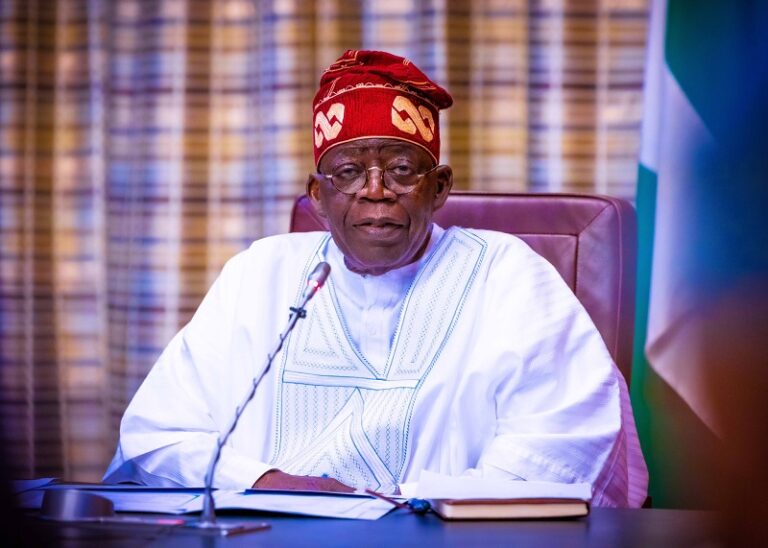
President Bola Tinubu had, during his inauguration speech on May 29, said fuel subsidy was gone.
Since the declaration, the pump price of fuel has jumped from about N185 to over N600 per litre, increasing transport fares and costs of food items and throwing many households into severe hardship.
The NAPWPD president’s appeal indicates that N250 million of the fund be allocated to persons with disabilities across each state, which will invariably amount to N9.25 billion, including the FCT.
He said the demand was in tandem with the provisions of the Discrimination Against Persons with Disabilities (PWDs) Prohibition Act.
Section 25 of the Disability Law provides that in situations of risk or humanitarian emergencies, PWDs should be accorded preference and protection.
“The disability law provides for a sharing formula to accommodate PWDs, who are usually excluded when they are lumped with other people during the allocation of relief support.
“It is to address this problem that we are asking for five per cent to be allocated to PWDs in line with the provision of the law,” Mohammed said.
According to him, there is a need to provide a precise template or clarity on how marginalised groups like the PWDs would be accommodated in the utilisation of the N5 billion palliative.
Mohammed said the association is “extremely disturbed and sorely worried” over the suffering of its members due to the fuel subsidy removal.
“The impact of the removal has continued to have a debilitating impact on PWDs who are largely poor and vulnerable.
“The inability of PWDs to afford decent food, healthcare and necessities of life has been compounded and made worse with the recent situation in the country.
“Our members now find it difficult to access public transport as the transport system is largely inaccessible and unaffordable to members of the disability community,” he said.
He further decried the rapid multiplier effect of the fuel subsidy removal, which has shut the price of goods and services to the rooftop, adding that the development was making life unbearable for people experiencing poverty, particularly physically challenged persons.
Calling on the governments to tackle the challenges of public transportation, he said the public transport system should be made accessible to PWDs, demanding that buses and other means of transportation be fitted with adjustable ramps and handrails for wheelchair users.
“The vehicles should also be fitted with signage and electronic display for directions with audio announcements for the benefit of the deaf and the blind.
“All these are provided for in the disability law. Our demands, therefore, are not based on charity requests but consistent with legal provisions,” Mohammed added.
Global concern
According to the World Health Organisation, persons with disabilities face all kinds of inhumane treatment, including finding inaccessible and unaffordable transportation 15 times more difficult than those without disabilities.
As of 2020, there are reportedly over 27 million Nigerians with some form of disability.
Dataphyte, a media research and data analytics organisation, showed that about one in every eight Nigerians live with at least one form of disability.
The most common of these disabilities are visual impairment, hearing impairment, physical impairment, intellectual impairment, and communication impairment.
The United Nations’ Sustainable Development Goal 10 aims to reduce inequality by empowering and promoting the social, economic and political inclusion of all, including persons with disabilities. At the same time, its Goal 11 would make cities and human settlements inclusive, safe, resilient and sustainable.
However, social protection for disabled people in Nigeria is still relatively weak, Dataphyte stated.
THE Kano State Police Command has banned all protests in the state with immediate effect.
The command, in a statement on Monday, August 21, signed by the Commissioner of Police (CP) Mohammad Usaini Gumel, said intelligence received by the command indicates that two dominant parties, the All Progressives Congress (APC) and the New Nigeria People’s Party (NNPP) have gathered a crowd to launch a protest.
The police vowed to thwart any attempts made by any group or individuals to incite disturbance in the State.
According to the CP, disobeying a security directive will be viewed as uncivil, illegal, and a threat to national security, and as such, will be dealt with according to the law.
“In consideration of the confirmatory intelligence products at the disposal of this Police Command, all forms of street protests are hereby banned across all parts of the State.
“Members of the Public should therefore note that it has come to our knowledge that both the APC and the NNPP members are currently mobilizing rented crowds in the guise of the Civil Society Coalition and without clearance from the leadership of the Nigeria Labour Congress and without prior approval from the security agencies in the state,” the CP stated.
The police added that information gathered indicated that some members of both political parties are pressuring Civil Society participants to make this choice purely out of concern for their safety and to get ahead of the election tribunal’s ruling.
The ICIRreported that the APC in Kano filed a petition to challenge the victory of Abba Yusuf of the New Nigeria NNPP in the governorship election.
However, the APC governorship candidate Nasiru Gawuna was exempted from the petition filed before the Governorship Election Petition Tribunal.
Gawuna, the former Deputy Governor of the state, was not joined as a party in the petition.
The parties involved in the petition are APC as the petitioner, versus the NNPP, Abba Yusuf and INEC as 1st, 2nd and 3rd respondents, respectively.
In the petition filed on Sunday, April 10, the APC alleged that Yusuf was not qualified to contest the election because his name was not on the list of members of the NNPP sent to INEC.
The petitioner further alleged that Yusuf didn’t win the election with the majority of lawful votes, arguing that some of the votes cast for the NNPP are invalid and, if removed from the scores, the APC will have the highest number of votes cast.
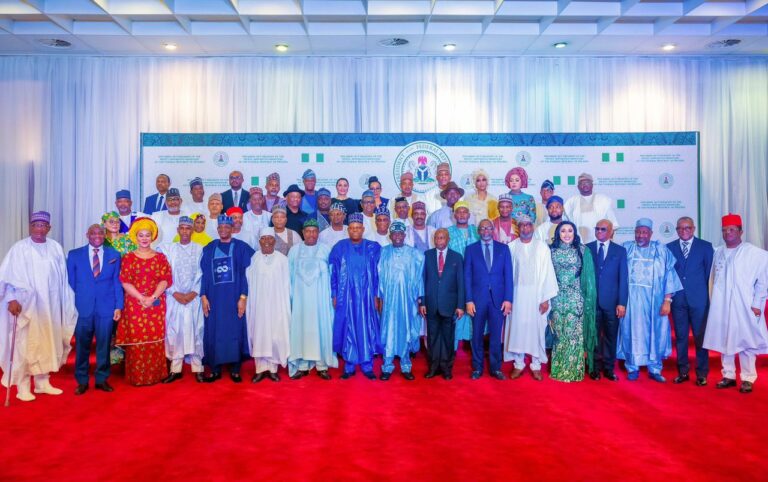
NIGERIA’s president, Bola Ahmed Tinubu, has sworn in 45 new ministers.
The ministers were sworn in on Monday, August 21, at Presidential Villa, Abuja.
President Bola Ahmed Tinubu presided over the inauguration, emphasizing the importance of this new cabinet in steering Nigeria towards prosperity and addressing its multifaceted challenges.
In his address, Tinubu stated that the newly inaugurated ministers were carefully selected and represented the diversity in the country.
“In line with the constitutional and obligations, the senate of the Federal Republic of Nigeria has screened and confirmed 45 ministers who will superintend over the ministry of the Federal Government in this administration of Renewed Hope.
“The Men and Women who have been sworn in have been carefully selected by me for their track record of excellence and achievement in public and private sectors reflected in the diversity of Nigeria and bring to their new roles an assortment of experience and expertise to help guide the nation.”
He also said that the ministers were selected to transform the nation’s economy and ensure peace, safety and prosperity.
He added, “Minister of Federal public you are not a minister of a region or minister of a particular state.”
The President also warned the ministers to uphold their constitutional duties, stressing that they should restore people’s faith in governance. “The greatest number of Nigerians are highly expectant. They believe you will serve with integrity and deliver. I will hold you to account.’
The newly inaugurated ministers represent a wide range of sectors and portfolios, including finance, health, education, and foreign affairs and were selected across the six geo-political zones.
The moderator of the event, Ajuri Ngelale who is a spokesperson to the president, read the citation of the ministers before their inauguration. The ministers-designate in a group of five, took turns to take an oath of their offices, pledging to uphold the constitution, serve diligently, and work tirelessly towards the betterment of Nigeria.
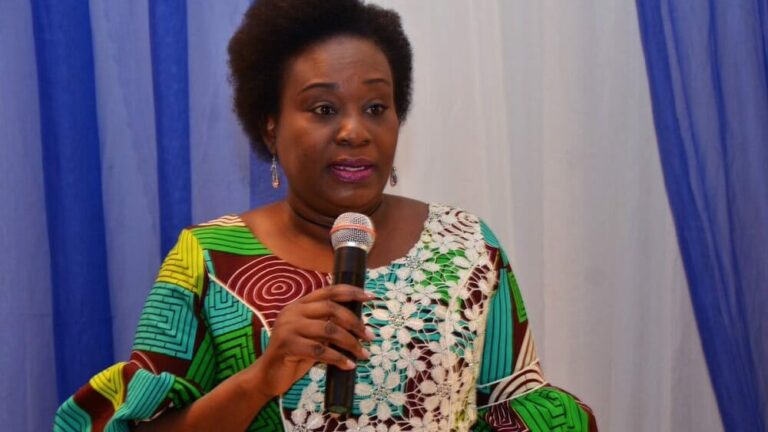
The first set of the ministers designate to take their oath are the Attorney General of the Federation and Minister of Justice, Lateef Fagbemi; Minister of State for Labour and Employment, Nkiruka Onyejeocha; Minister of State Gas in the Ministry of Petroleum Resources, Ekperikpe Ekpo, Minister of Women Affairs, Uju Kennedy, and Minister of Education Tahir Maman.
The other 40 ministers subsequently took their oaths of office in batches after their citations were read by Ngelale.
Tinubu had, in different letters, conveyed the names of the ministerial nominees to the Senate, explaining that the confirmation request was in accordance with the provisions of Section 147 Subsection 2 of the 1999 Constitution of the Federal Republic of Nigeria, as amended.
On August 7, 2023, The ICIR, reports that the Senate confirmed 45 out of 48 ministers nominated by President Bola Ahmed Tinubu.
The confirmation was made despite controversies surrounding the certificates and forgery of some nominees.
However, three nominees, namely, Nasir El-Rufai, Abubakar Danladi and Stella Okotete, have not been confirmed due to security clearance, according to the senate president.
The president subsequently assigned portfolios to the ministerial nominees who passed the screening process at the National Assembly.
The president named Bosun Tijani as Minister of Communications, Innovation and Digital Economy, Ishak Salako as Minister of State, Environment and Ecological Management; Wale Edun, Minister of Finance and Coordinating Minister of the Economy; Bunmi Tunji, Minister of Marine and Blue Economy; Adedayo Adelabu, Minister of Power and Tunji Alausa as Minister of State, Health and Social Welfare.
Others include Dele Alake as Minister of Solid Minerals Development; Lola Ade-John, Minister of Tourism; Adegboyega Oyetola, Minister of Transportation; Doris Anite, Minister of Industry, Trade and Investment; Uche Nnaji, Minister of Innovation Science and Technology; Nkiruka Onyejeocha, Minister of State, Labour and Employment and Uju Kennedy, Minister of Women Affairs.
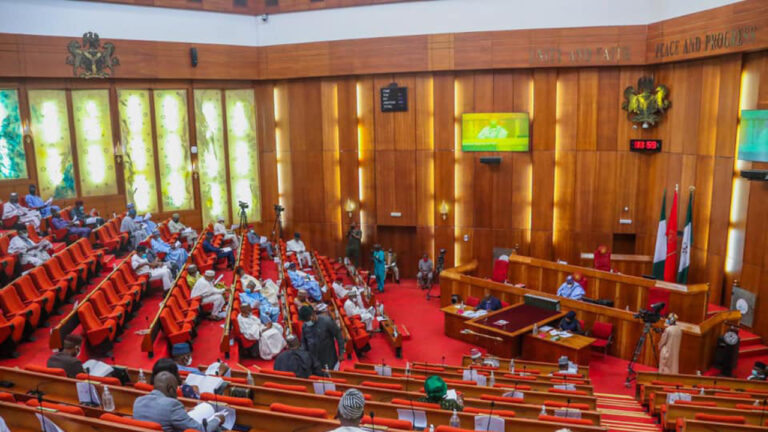
ON August 7, just after the screening and confirmation of all ministerial nominees, the Nigerian Senate President, Godswill Akpabio, announced the payment of a ‘vacation allowance’ to senators as they embarked on a seven-week recess.
In his words, “In order to enable all of us to enjoy our holidays, a token has been sent to our various accounts by the Clerk of the National Assembly.”
He, however, retracted the statement upon realising the session was being televised.
He said, “I withdraw that statement. In order to allow you to enjoy your holiday, the senate president has sent prayers to your mailboxes to assist you to go on a safe journey and return.”
A report later disclosed that 109 senators received N2 million each, totalling N218 million shared.
Since the announcement was made, despite the senators’ consent, several political actors, including civil organisations, have condemned the allowance by the upper chamber as this is coming at a time when Nigerians are battling with hardship due to the economic policies initiated by the president.
However, this is not the first time the Senate has announced palliative allocations for its members. The ICIRanalysed how N110 billion was earmarked in July to improve the working conditions of lawmakers.
The NASS approved N70 billion from the N819.5 billion 2022 supplementary budget to support the working conditions of the new lawmakers. It earmarked an extra N40 billion for the acquisition of 465 Sports Utility Vehicles (SUVs), bulletproof cars for principal officials and members.
For this report, The ICIR looked through the 2023 fiscal budget to show how N218 million ‘holiday allowance’ can benefit Nigeria, assuming the money is redirected to solve other issues.
What the allowance can do
Using the 2023 budget as a benchmark to get the unit cost of projects, the holiday allowance can;
Health sector
Supply and install four ultra-modern and specialised diagnostic equipment at a unit cost of N50 million. It can also construct 21 radiology complexes at a unit cost of 10 million, construct 23 modular theatres at a unit cost of N9.4 million and construct four hospital wards, beds and accessories at a unit cost of N50 million.
Water sector
Construct 12 motorised boreholes at a unit cost of N18 million, construct 11 boreholes at a unit cost of N19.5 million, and construct 4 drainages and flood control at a unit cost of N50 million. It can also construct 50 drip irrigations at a unit cost of N4.3 million and construct 2 earth dams at a unit cost of N74 million.
Power sector
The allowance, The ICIR learnt, can construct 21 500kva/11/0.400kv with 11km line at a unit price of N10 million, provide the electrification and installation of 21 solar systems and street lights at a unit cost of N10 million and construct 21 solar power energy infrastructure at a unit cost of N10 million. Also, eight integrated solar street lights at a unit cost of N25 million and the provision and installation of eight street lights at a unit cost of N25 million can be provided.
Education Sector
In the education sector, the allocation can construct seven blocks of student hostels at a unit cost of N30 million, construct and equip four Information, Centre and Technology centres at a unit cost of N50 million, provide four 32-seater buses at a unit cost of N52 million, construct and equip two classrooms with 11 blocks at a unit cost of N80.5 million and construct 10 computer technology laboratories at a unit cost of N20.73 million.
THE Federal Ministry of Information and Culture (FMIC) has flouted a Federal Government directive that all directors who have spent eight years or above should proceed on retirement in line with the revised Public Service Rules (PSR).
The directive was issued in a memo dated July 27 by the Head Of Civil Service of the Federation (HCSF), Folasade Yemi – Esan.
The revised PSR 020909 stipulates that “A director or its equivalent by whatever nomenclature it is described in MDAs shall compulsorily retire upon serving eight years on tenure policy on the post; and a permanent secretary shall hold office for a term of four years and renewable for a further term of four years, subject to satisfactory performance and no more.”
But rather than adhere to this directive, the Human Resources Manager (HRM) in the information ministry, Grace Okani, ostensibly on the instruction of the Permanent Secretary (PS), Ngozi Onwudiwe, issued a counter order giving additional three months to the affected directors before disengagement.
The revised Public Service Rules (PSR)
The Federal Government recently unveiled the new Public Service Rules (PSR) for immediate implementation.
The Federal Executive Council (FEC) approved the amendment of the Public Service Rules in 2021; however, the HCSF issued a circular for its implementation on July 27, 2023.
According to findings by The ICIR, some civil servants are opposed to the revised policy because they think it violates the mandatory retirement age of 60 years or 35 years in service.
Head of the Civil Service of the Federation, Folasade Yemi-Esan
Memo from the Office of the Head of Civil Service Of the Federation (HCSF)
The ICIR sighted the memo by the Head of Service addressed to all permanent secretaries, Accountant-General of the Federation, Auditor-General of the Federation and heads of extra-ministerial departments.
The memo directed full compliance with the newly revised PSR.
A Memo from the Head of Service Of the Federation directing all directors who have stayed up to 8 years in ministries to retire.
“Following the approval of the revised Public Service Rules by the Federal Executive Council on September 27, 2021, and its subsequent unveiling during the Public service lecture during the commemoration of the 2023 Civil Service Week, the PSR has become operational with effect from July 27, 2023.
“You are, therefore, to ensure full compliance with all provisions of the Public Service Rules (PSR) 2021.
“Please, ensure strict compliance with the contents of this circular,” the memo stated.
A Contrary directive
Following the commencement of the PSR, it was expected that all affected persons in the Federal Ministries would exit, but that was not the case in the FMIC, as Okani issued a counter directive through a circular dated August 8.
In the memo, she directed all the affected staff to use the next three months to prepare for their disengagement from service.
A counter Circular signed by the Human Resources Manager of the FMIC, Grace Okani.
“Accordingly, affected officers are hereby, in line with Rules 021210 of the Public Service Rules, given three months to prepare their disengagement from service effective 1st August 2023.
“Futhermore, all Resident Informations Officers (RIOs) affected by the Circular are directed to act accordingly in line with extant rule for disengagement from service,” the circular stated.
The new circular has, however, generated grumbling among the staff of the Ministry.
Some Ministries and MDAs complied with the PSR.
Checks by The ICIR show that some Directors in the Ministry of Finance have been eased out of the Civil service due to the new rules.
A staff at the Ministry who preferred to remain anonymous told The ICIR that Labour Unions in the Ministry led a protest that ensured all the directors followed the revised rules.
“Some unions in the Ministry ensured that all the affected directors did not enter their offices; they were asked to leave,” he said.
In a circular issued on August 3, 2023, signed by the Director, Administration, Ministry of Finance, Mariya Rufa’i, affected directors were encouraged to hand over their positions to the most senior official in their respective offices and start the paperwork process immediately.
It was also gathered that some directors in the National Gallery Of Art, a department under the FMIC, have also complied and retired in line with the new rule.
“National Gallery of Art directors who are affected have stopped coming,” our source stated.
Affected directors in the FMIC
According to a source in the Presidency, the affected directors who are due for retirement in the FMIC are the Director of Federal Government Press, Itu Itu, Director of Finance and Account (DFA), Kayode Musbau and Willie Bassey, Director of Information, Office of the Secretary to the Government of the Federation.
Pending procurement process
Our source said the extension of the retirement date of the directors in the FMIC, it was suspected, is to enable them to participate in the forthcoming procurement process, which is meant to commence soon.
“Now the HRM released a circular against the Presidency circular that says that all the directors should retire immediately, backdated to July 27th.
“So the circular that the HRM of Information and Culture now released gives them three months to work till they disengage, instead of immediately, contrary to the government position.
“We have some privileged information that the Ministry is going into the procurement process for 2023, which will start any moment from now, so because of that, the DFA has promised the Permanent Secretary some juicy jobs.
“The DFA has to strike a deal with the Permanent Secretary so he can finish the procurement process,” the source alleged.
Response to allegation of disobeying a government directive
In their various reactions to the issue, both the HRM, Okani and the Information Officer in the office of the SGF, Bassey, confirmed the existence of the two circulars.
Okani, in a telephone chat with The ICIR on Thursday, August 17, said she only obeyed a superior order to issue the counter circular.
“The Permanent Secretary told me there is an order from above that since they are the first set under the revised PSR, they should stay for another three months.
“I am not in Abuja presently; I will meet the Permanent Secretary to verify it when I come.
“Since they are the first, they should stay a little bit. I will rectify it when I come so they may avoid setting a precedent. This will be settled,” Okani said.
When asked about the officers affected by the PSR in her ministry, Okani said, “I have the director of Finance and Accounts and the director of the Federal Government Printer, Itu Itu. For others assigned to other offices, we have forwarded their names to the Head of Service,” she added.
In a chat with The ICIR on the same day, Bassey insisted that he did nothing wrong but only obeyed the instruction he received through a circular that asked affected officers to stay for additional three months.
“The Circular I received said I should stay till October. I have a circular from the Federal Ministry of Information and Culture and the Office of the SGF that all affected persons have been given three months to exit the service. They have given us till October,” he said.
When asked about the circular, Bassey said, ” You can’t see it; I cannot circulate it. I am a civil servant. Please quote me that we have been given another circular. In the Civil service, you are given time; it is not like the military.”
On the PSR, he said it is new, hence the need for them to be given more time to exit the service.
All efforts to clarify these developments with the ministry’s Permanent Secretary, Onwudiwe, yielded no response. A request was made to her Personal Assistant, named Ifeanyi, to speak to her, but he declined.
On the second visit to her office, the PS directed The ICIR reporter to her Special Adviser, Isaac, who disclosed that another memo would soon be issued before the close of work on Thursday, August 17, to rectify the issue. He maintained that the initial circular from the Head of Service was not specific on the implementation date.
” The memo from the Head of Service was not too specific. Under normal circumstances in the Civil service, you are entitled to three months to prepare before retirement.
‘But there is another memo on the way. It will come out before the close of work today or tomorrow,” Isaac said.
Latest memo
On Thursday, August 17, after a visit to the PS office, the Ministry issued another Circular directing the affected officers to hand over to the most senior officer in their office and immediately proceed on what it termed “Pre-retirement training.”
“In furtherance to our earlier circular Ref. No. FMCT/PS/010/11/113 dated 10th August 2023 on the above subject and in compliance with PSR 021210, I am directed to request you to, as a matter of urgency, hand over to the next most senior officer in your office and proceed immediately on your pre-retirement training.
“You are hereby kindly requested to accord this matter the urgency it deserves,” the circular stated.
The latest circular was issued on August 17 and signed by the newly posted HRM from the Ministry of Petroleum, Emma Equere.
The latest circular was issued on August 17 after ICIR’s visit to the PS office.
PRESIDENT Bola Tinubu has reappointed Abubakar Momoh as the Minister of the Federal Ministry of Niger Delta Development.
Prior to this new development, Momoh had been designated as the Minister for the Federal Ministry of Youth by President Bola Ahmed Tinubu.
A statement by the president’s spokesman, Ajuri Ngelale, on Sunday, August 20, stated that the Federal Ministry of Youth is to be re-assigned to a Minister-Designate soon.
Tinubu also approved the reshuffling of some ministerial positions while also domiciling Ministers of State in the Oil & Gas in the Federal Ministry of Petroleum Resources.
“The Ministers-Designate allocated to the Federal Ministries of Transportation, Interior, and Marine & Blue Economy have been reshuffled as follows:
“(A) H.E. Adegboyega Oyetola is redeployed as the Honourable Minister of Marine & Blue Economy
“(B) Hon. Bunmi Tunji-Ojo is redeployed as the Honourable Minister of Interior
“(C) Hon. Sa’idu Alkali is redeployed as the Honourable Minister of Transportation.”
Similarly, both Ministers of State in the Oil & Gas sector are now domiciled in the Federal Ministry of Petroleum Resources with the following designations; “(i) Sen. Heineken Lokpobiri is the Hon. Minister of State (Oil), Petroleum Resources.
“(ii) Hon. Ekperipe Ekpo is the Hon. Minister of State (Gas), Petroleum Resources.
The President also approved renaming the Federal Ministry of Environment and Ecological Management as the Federal Ministry of Environment.
On August 16, The ICIR had reported that Tinubu had assigned portfolios to the ministerial nominees who passed the screening process at the National Assembly.
Among these appointments, former Rivers State governor Nyesom Wike was named as the Minister for the Federal Capital Territory (FCT), while Mairiga Mahmud was designated as the Minister of State for FCT, among other portfolio assignments.
Others include Dele Alake as Minister of Solid Minerals Development; Lola Ade-John, Minister of Tourism; Adegboyega Oyetola, Minister of Transportation; Doris Anite, Minister of Industry, Trade and Investment; Uche Nnaji, Minister of Innovation Science and Technology; Nkiruka Onyejeocha, Minister of State, Labour and Employment and Uju Kennedy, Minister of Women Affairs.
TERSEER Kiddwaya, widely known as Kiddwaya, has been evicted from the Big Brother Naija (BBNaija) All-Stars show, while Prince Nelson Enwerem (Prince), Omashola Kola Oburoh (Omashola), Chinonso Ibinabo Opara (Kim Oprah) and Lucy Essien (Lucy) were added as new housemates.
During the live eviction show on Sunday, August 20, the host, Ebuka Obi-Uchenndu, revealed that Kiddwaya and Tolanibaj were the two housemates with the lowest votes, of which the jurists voted out Kiddwaya.
Tsakute Jonah (Saskay from Shine Ya Eye season 6), Elozonam Ogbulu (Elozonam from Pepper Dem season 4), and Victoria Adeyele (Vee from Lockdown season 5), who were members of the jury collectively decided to evict Kiddwaya through a unanimous vote.
Kiddwaya, a former participant of Lockdown season 5, was the third contestant to be evicted from the All Stars show. Others who were evicted are Uriel and Princess.
Ebuka, during the live eviction show, said that the new four ex-housemates will be joining the show to add to the game’s fun but will not be competing for the N120 million grand prize.
THE Spanish women’s national team has won $4.29 million in prize money as they defeated England 1-0 to be crowned the champion of the 2023 FIFA Women’s World Cup played at Stadium Australia in Sydney.
The monetary reward of $4.29 million was earmarked for the winner, a slight increase in the $4m the USA received as a team for winning the World Cup in 2019.
Also, each Spaniard player will smile home with $270,000.
The keenly contested match was decided by Spain captain Olga Carmona whose strike earned the first major title for her team.
This feat also completed a unique clean sweep of FIFA crowns for Spain at U-17, U-20 and senior level.
The match witnessed football artistries between both teams which created an exciting moment.
Sweden defeated Australia, 2-0, to emerge as the third-place winner.
Individual awards won at 2023 FIFA Women’s World Cup
Spain’s Aitana Bonmati won the Adidas Golden Ball Award for the tournament’s best player. She scored three times and two assists during the tournament.
Japan’s player Hinata Miyazawa emerged as the top goalscorer to win the Adidas Golden Boot Award. She had an unmatched five goals.
England’s Mary Earps won the Adidas Golden Glove Award after earning three clean sheets and making a host of fine saves, including a penalty in the final.
Spain’s Salma Paralluelo won the FIFA Best Young Player Award.
Japan won the FIFA Fair Play Award after finishing first in the Fair Play contest.
THE Lagos State Domestic Violence and Sexual Abuse Agency (DSVA) has condemned the comment made by a BBNAIJA All-Stars housemate, Seyi Awolowo.
In the early hours of Sunday, Seyi shared with some male housemates that he plans to have only sons that would “run train” on girls.
Dictionary.com describes ‘to run train’ as when multiple men sleep with a woman one after the other, with or without consent.
“I gave birth to a boy first… My boys! They will come to me and say ‘daddy I need the Benz’, I will give them the Benz, I will give them the key to the guest house, and they will run train on people’s daughters. I am saying this plainly because i know where I’m saying it from. I’m giving birth to boys, and they will have *** with people’s daughters”, he said.
In response, the Lagos DSVA, through their official Twitter account, expressed their condemnation of Seyi’s remarks, citing that such comments promote harmful beliefs and add to a culture of violence and abuse.
“We strongly condemn the comments made by Seyi Awolowo in the disturbing video that has surfaced. Such remarks perpetuate harmful attitudes and contribute to a culture of violence and abuse.
“The bystanders’ passive response in the video is also deeply concerning because it only enables such behaviour to persist. It is important for us all to actively speak up in circumstances such as this.
“We remain committed to addressing issues of domestic and sexual violence. Together, we can work towards creating a society that truly values consent and is free from violence.”
Celebrities and former housemates took to social media to express their dissatisfaction and disappointment with Seyi’s comments.
Mike Edwards, a BBNaija ex-housemate said, “I don’t condone this behavior”.
Similarly, Nigerian actor Daniel Etim Effiong said, “ This isn’t a true representation of fatherhood. We raise our children to be respectful, disciplined and speak with wisdom”.
SOCIO-ECONOMIC Rights and Accountability Project (SERAP), has urged President Bola Tinubu to instruct the former governors to stop collecting life pensions, exotic cars and other allowances from their states while serving as ministers in his administration.
The organisation also appealed to Tinubu to direct the former governors to immediately return any pension and allowances that they might have collected since leaving office to the public treasury.
SERAP, in a letter dated August 19, and signed by its deputy director Kolawole Oluwadare, said, “The appointment of former governors who collect life pensions while serving as ministers is implicitly forbidden by the Nigerian Constitution 1999 [as amended] and the country’s international legal obligations.”
The ICIR in an earlier report, disclosed that Tinubu has so far assigned ministerial portfolios to eight past governors. The president initially submitted names of nine ex-governors to the Senate for confirmation but the former governor of Kaduna state, Nasir El-Rufai, was not confirmed due to what the Senate described as ‘security clearance.’
The former governors confirmed as the ministers in the Tinubu administration are: Badaru Abubakar, Nyesom Wike, Bello Matawalle, Adegboyega Oyetola, David Umahi, Simon Lalong, Atiku Bagudu and Ibrahim Geidam.
Stating the need to stop the ex-governors from receiving pensions, SERAP explained that the president would be acting in the public interest given the current grave economic realities in the country.
SERAP, in the letter, also pointed out that while many pensioners are owed arrears of their pensions, former governors serving as ministers get paid huge severance benefits upon leaving office and are poised to enjoy double payments on top of the opulence of political officeholders.
SERAP, meanwhile, threaten to take legal action against Tinubu’s administration if he fails to order the ex-governors in his administration to stop taking life pension within seven days.
According to SERAP, stopping the former governors from collecting double emoluments would be entirely consistent with the proper exercise of your constitutional power to appoint ministers.
“The states currently implementing life pensions for former governors reportedly include Jigawa, Kebbi, Jigawa, Ebonyi, Yobe, and Rivers. Many of these states owe workers’ salaries and remain the poorest in the country.
“Several of the pension laws in these states include provisions for six cars every three years, a house in Lagos worth N750 million, and another in Abuja worth N1 billion, unrestricted access to medical attention, and pensionable cooks, stewards, and gardeners.
“Other provisions 100 per cent annual salaries of the incumbent governor, security operatives and police officers permanently assigned to former governors,” the statement added.
The organisation also noted that life pensions for former governors serving as ministers are inconsistent with the Nigerian Constitution and the country’s obligations under the UN Convention against Corruption.
“The convention, specifically in paragraph 1 of article 8 requires you and your government to promote integrity, honesty and responsibility in the management of public resources.
“Furthermore, Justice Oluremi Oguntoyinbo, in a judgment dated November 26 2019, also indicated that double emoluments for former governors are unacceptable, unconstitutional and illegal.”