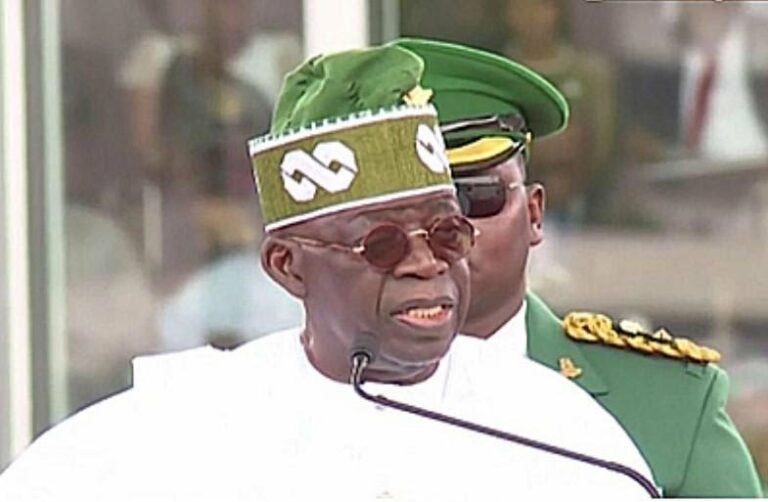
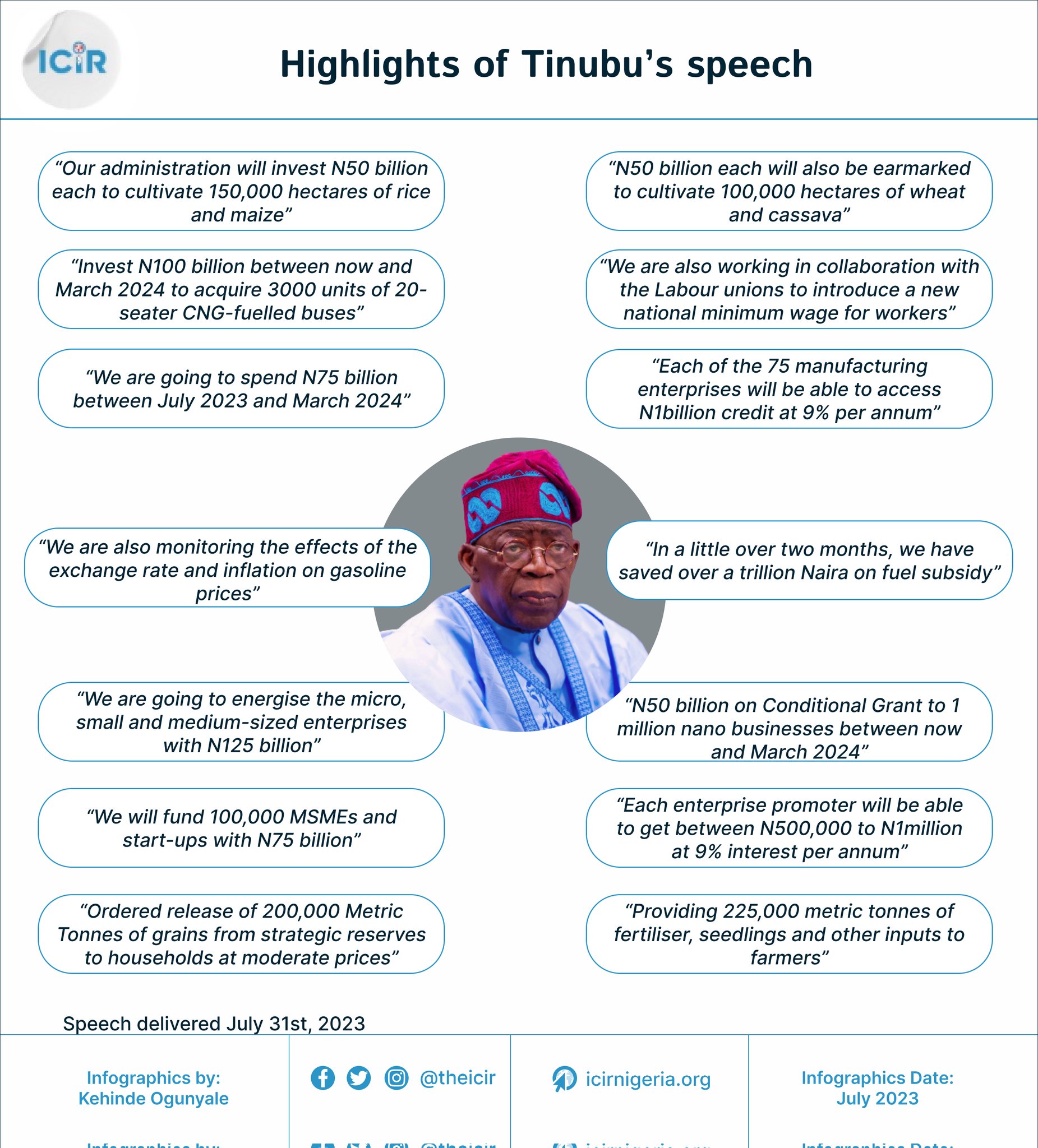
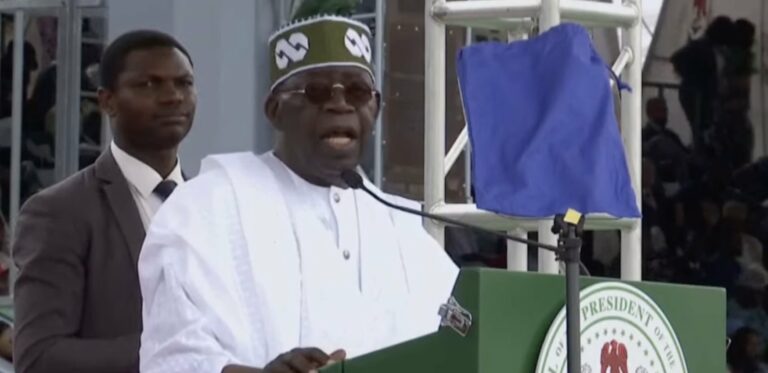
“In a little over two months, we have saved over a trillion Naira that would have been squandered on the unproductive fuel subsidy, which only benefitted smugglers and fraudsters.
“That money will now be used more directly and more beneficially for you and your families.
“For example, we shall fulfil our promise to make education more affordable to all and provide loans to higher education students who may need them. No Nigerian student will have to abandon his or her education because of lack of money,” Tinubu said.
The President also said he is collaborating with the labour unions to introduce a new national minimum wage for workers.
“I want to tell our workers this: your salary review is coming. Once we agree on the new minimum wage and general upward review, we will make budget provision for it for immediate implementation,” he stated.
On measures to reduce the cost of transportation as a result of subsidy removal, Tinubu said, “Part of our programme is to roll out buses across the states and local governments for mass transit at a much more affordable rate. We have made provision to invest N100 billion between now and March 2024 to acquire 3000 units of 20-seater CNG-fuelled buses.”
He added that the buses will be shared with major transportation companies in the states, using the intensity of travel per capita.
Tinubu says participating transport companies will be able to access credit under this facility at 9 per cent per annum with a 60-month repayment period.
The ICIRreported that the removal of subsidy led to a spike in the pump price of petrol, which also resulted in an increment in the cost of goods and services.
The development has led to a surge in transport fares across the country, leaving commuters in great agony.
Senate President Godswill Akpabio explained that Wike was not questioned during his appearance for the screening since the Senate already had his documents from his prior work as a minister.
He said Wike had appeared before the Senate for screening when ex-President Goodluck Jonathan nominated him as a minister.
“Having been nominated again for a ministerial position, there is no point asking him much questions,” Akpabio said.
Wike served as Minister of State for Education under former President Goodluck Jonathan.
In his short remarks, Wike said Tinubu will not regret choosing him to be a minister in his cabinet because he would perform.
He informed the senators that while serving as governor of Rivers State from May 2015 to May 2023, he initiated and finished several projects and asked representatives from many political parties to serve as commissioners.
“These things can be achieved if you are committed; if you have passion for the job.
“There are so many people who want to be ministers for the sake that ‘I was a governor’; for the sake that ‘I was a minister.
“But there are those who say, ‘Look, what do I have to offer? Am I committed to this job?’
“And I can assure you, if I am confirmed in whatever capacity, Mr President will not regret nominating me,” Wike stated.
After praising Wike’s ability to do his duties as governor, Akpabio requested him to take a bow.
Meanwhile, efforts by supporters of former vice president Atiku Abubakar to expel Wike from the PDP gained traction during the last weekend.
According to the Cable, PDP candidate in the 2023 presidential race, Atiku Abubakar, allegedly met with “elders and stakeholders” who are his supporters, where the “Wike problem” was extensively discussed.
Wike led a group known as G5 to oppose the election of Atiku during the 2019 presidential election.
Reports also said he succeeded in installing Simon Davou Mwadkwon (Plateau) as the Senate Minority Leader and Kingsley Chinda (Rivers) as Speaker House of Representatives.
THE National Primary Health Care Development Agency (NPHCDA) has said 83 people in Nigeria died from diphtheria between May 2022 and July 2023.
Addressing journalists in Abuja on Monday, July 31, the Executive-Director of the agency, Faisal Shuaib, a doctor, said between May 2022 and July 27, 2023, the country recorded an estimated 2,455 suspected cases in 26 states.
Of the cases, 836 were confirmed in 33 Local Government Areas (LGAs) across eight states, and 83 died.
The affected states are Cross River, Kano, Katsina, Kaduna, Lagos, Osun, Yobe, and Federal Capital Territory (FCT).
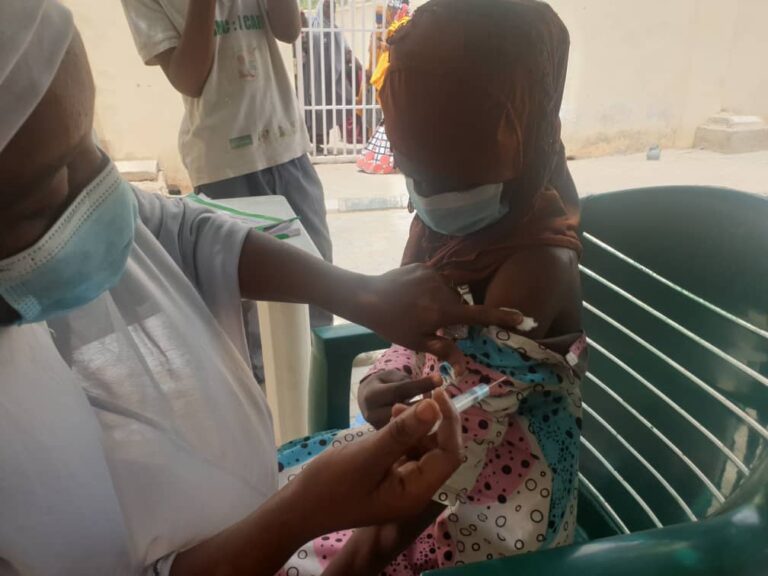
Working with the Nigerian Centre for Disease Control (NCDC), other partners and the affected states, Shuaib said the agency would conduct intensified mass vaccinations for identified at-risk populations, administering Tetanus TD for children four to 14 years and pentavalent vaccines for children under four years.
Diphtheria is a highly contagious vaccine-preventable disease caused by the bacterium Corynebacterium diphtheria, mainly spread through direct contact with an infected person or exposure to airborne droplets. It poses a severe risk to people of all ages, particularly our children.
It primarily affects the respiratory system, and symptoms include fever, cough, runny nose, sore throat, neck swelling, and breathing difficulties. If left untreated, the symptoms can lead to death, with a higher risk for partially vaccinated or unvaccinated children in crowded and unsanitary areas.
Shuaib urged that adherence to proper hygiene practices is crucial in preventing the spread of diphtheria. Simple yet effective measures like hand hygiene, good cough etiquette, environmental cleaning, eating nutritious meals, and isolating and quarantining suspected cases can significantly reduce the risk of infection.
He noted that the disease is totally preventable through vaccination. In Nigeria, pentavalent vaccines are used to protect against diphtheria and are administered to children at 6 weeks, 10 weeks, and 14 weeks of age, with additional doses being given during campaigns.
The NPHCDA boss blamed Nigeria’s cases on unimmunized children “despite the availability of vaccines in the country’s routine immunization schedule.”
“Despite the efforts of the Federal Government to provide safe and cost-effective vaccines, a significant number of children remain unvaccinated or partially vaccinated, compromising the country’s goal of achieving population immunity. Suboptimal vaccination coverage has been the main factor contributing to these outbreaks, with the most affected age group being those between 2-14 years.
“The NPHCDA, in collaboration with the Federal Ministry of Health, NCDC, the states, and our partners, is mobilizing all necessary resources to respond effectively to this outbreak. A comprehensive response plan has been activated to detect cases early, contain the spread, and prevent further transmission through a multi-phased strategy.”
The agency’s response to the ongoing diphtheria outbreak will be carried out in two phases, said Shuaib, with phase one covering LGAs across four states of Bauchi, Katsina, Yobe, and Kaduna.
Phase two covers outbreak response in 171 LGAs in six states: Kano, Katsina, FCT, Yobe, Kaduna, and Bauchi.
There will also be targeted outbreak responses in LGAs across eight states, which are Jigawa (8 LGAs), Borno (4 LGAs), Osun (4 LGAs), Lagos (3 LGAs), Zamfara (3 LGAs), Gombe (3 LGAs), Plateau (1 LGA), and Nasarawa (1 LGA).
He urged parents and caregivers to take their children, from birth to 14 years, to nearby health facilities for vaccination with the pentavalent or Td vaccines and other age-appropriate vaccines.
NIGERIA’S Super Falcons on Monday, July 31, qualified for the Round of 16 in the ongoing 2023 FIFA Women’s World Cup after a goalless draw with the Republic of Ireland at Brisbane Stadium.
It is the third time the Super Falcons will qualify for the knockout stage of the FIFA Women’s World Cup. Their first was in the USA in 1999 where they ended their campaign at the quarterfinals, losing to Brazil 4-3.
Twenty years later, the Super Falcons reached the knockout stage of the FIFA Women’s World Cup, hosted by France. They ended the campaign in the Round of 16 after losing to Germany 3-0.
Super Falcons road to the Round of 16
Super Falcons began their campaign in the ongoing FIFA Women’s World Cup with a goalless draw against Canada in a Group B match, salvaging a point.
In their next match, they pulled a surprise, defeating the co-hosts Australia 3-2.
Their third group stage match against the Republic of Ireland ended in a goalless draw.
The current standing of group B in the ongoing FIFA Women’s World Cup.
The Super Falcons qualified for the next round with 5 points and 1 goal difference.
The Nigerian side is the only African team to have appeared at every edition of the FIFA Women’s World Cup since 1991. In that period, the team has recorded five wins from 29 matches.
Having won a record eleven Women’s Africa Cup of Nations titles with a total of 223 goals, the Super Falcons have not been able to replicate their goal scoring prowess on the global stage, scoring only 23 times at the FIFA World Cup.
The ICIR’s analysis shows that the team has failed to score in 18 of their previous 29 games at the FIFA Women’s Cup.
THE Media Rights Agenda (MRA) has condemned the continuous harassment and attacks on journalists in Enugu State.
The organisation also called on the state governor Peter Mbah to immediately stop the ongoing intimidation of one Michael Okechukwu Ilediagu, the publisher of News Center, allegedly orchestrated by his aides.
Ilediagu was said to have been arrested by agents of the government over his reporting on developments in the state, with no evidence that he had committed any offence.
In a statement released on Monday, July 31, by its Deputy Executive Director, Ayode Longe, the MRA said: “We wish to advise Governor Mbah, in the light of the fact that he is new to his office, that the media do not exist to sing his praises but to perform a constitutionally mandated function of upholding the responsibility and accountability of his government to the people.”
Longe said the ongoing attacks on the media by the Enugu government was in violation of the constitution and a breach of the oath Mbah took upon becoming the governor of the state.
The MRA warned that the unwarranted attacks on journalists engaged in the lawful pursuit of their professional duties will not go unchallenged.
“If the situation persists, we will be compelled to activate all constitutional means and international mechanisms available to us to challenge this ongoing illegality which constitutes a clear abuse of office and abuse of power.”
The organisation further called on President Bola Tinubu and the Inspector-General of Police, Olukayode Egbetokun, to order an investigation into abuse of power by police authorities in Enugu State at the behest of the Governor’s Office for the purpose of harassing and intimidating journalists, with the objective of preventing them from performing their constitutional functions.
The statement noted that the victim of the government’s harassment, Ilediagu, had been subjected to intimidation by operatives of the Police Anti-kidnapping Squad in the state, who invaded his home.
According to the statement, the officials of the Enugu State Council of the Nigeria Union of Journalists (NUJ) as well as other journalists and civil society actors in the state have confirmed that the journalist and publisher continues to face threats and harassment from state government officials.
Noting that it was a crime to use police power to advance the personal and political interests of government officials, the MRA stressed that journalism is not a crime to warrant the use of police units to hound journalists.
The organisation urged Mbah and his aides to abide by the rule of law and allow journalists and media organisations in the state to carry out their professional duties free of any harassment, intimidation or other attacks and threats.
Over the years, there have been efforts to suppress media and the civic space in Nigeria. In 2020, The ICIR reported that 160 journalists were attacked in two years, as the court was ranked 115th out of 180 countries on the Global Press Freedom Index.
In subsequent rankings by Reporters Without Borders, Nigeria dropped to 129th out of 180 countries. Also, The ICIRreported that 63 journalists and three media houses experienced various attacks in 2022.
According to the database of the Committee to Protect Journalists, at least 33 journalists have been jailed, and 12 killed between 1992 and 2023, despite the proclamation of press freedom in 1993.
A survey by The ICIR on Strategic Lawsuits Against Public Participation (SLAPP) in Nigeria, published on June 9, also revealed that 40 organisations faced lawsuits within the past year for reporting or advocating about public concerns.
The survey, with 141 respondents including media organisations, journalists, and civic advocates, found that some of these organisations received up to 10 lawsuits in a year.
Among the 40 organisations that faced lawsuits, only 23 (57.5%) had the capability to defend themselves against the baseless suits, with 13 of them having an organisation size of 1-100 employees.
On the other hand, the survey revealed that 13 out of the 40 organisations lacked resources to pursue some of the filed lawsuits, with 69.2 per cent having fewer than 100 employees.
In addition to the sued organisations, five received threats from the police and state actors within the same period. Out of these, only two had the capacity to defend themselves.
The survey showed that the majority of threats or lawsuits (representing 91.1 per cent) were targeted at journalism organisations.
Stakeholders proffer solutions
Some media stakeholders kicked against continuous attempts to silence critical voices and media organisations and also proffered solutions to tackle the lawsuits and other attempts to frustrate and intimidate journalists and activists.
The stakeholders spoke during a Twitter Space organised by The ICIR on Tuesday, June 6, on the theme, ‘SLAPPThemBack: Examining frivolous lawsuit targeted at dissenting voices’.
The Deputy Director of Journalism Programme at the Centre for Journalism Innovation and Development (CJID), Busola Ajibola, said collaboration and cross-checking of investigative reports would protect journalists from frivolous lawsuits.
“In the course of my work over the years, I have come to realise that we underestimate how collaboration can protect us. When perhaps we are doing a story that we know will expose us to abuse or libel cases, then we had better come together and do some forms of cross publications.
“The second one on my list is that; I think we need to work together with CSOs to put forward a legislative proposal that is aimed at stamping out SLAPP and in doing that we need to have a clear timeline.”
To tackle lawsuits, the founder of Foundation for Investigative Journalism (FIJ) Fisayo Soyombo suggested building relationships with supportive legal practitioners. However, he noted that sometimes the costs of prosecuting the cases, especially when expert witnesses are needed, require additional funds beyond legal fees.
The remote program will also help independent journalists develop newsletters, podcasts, local sites and other niche news products.
English-speaking prospective media entrepreneurs can apply for a distance learning program.
The Entrepreneurial Journalism Creators Program will launch on October 17, 2023, and run for 100 days.
The organiser says participants will gain knowledge of audience identification and development, business model creation based on knowledge of market demands and revenue potential, compelling narrative telling, and the development of a portfolio of goods and services.
Graduates will know how to apply tactics to build a product, grow a following, market a project beyond its initial user base and engage with their community on an ongoing basis.
They will also develop a revenue portfolio by analysing and testing potential monetisation strategies for their new product or initiative. Graduates will also learn to identify tools and platforms for serving a community through newsletters, podcasts, and digital events or platforms.
Tuition costs US$4000. There are numerous scholarships available.
The deadline for the submission of the application is September 8, 2023. Interested persons can apply here
IT was a black weekend for the Nigerian judiciary following the death of two judges of the Supreme Court and the Federal High Court.
The two justices who passed on during the weekend are Chima Nweze of the Supreme Court of Nigeria and Peter Mallong of the Federal High Court.
Nweze reportedly died on the evening of Sunday, July 30, at the age of 64. A native of Obollo, in Udenu Local Government Area of Enugu State, he was born on September 25, 1958.
The spokesman of the Supreme Court, Festus Akande, confirmed Nweze’s passing, according to multiple reports on Monday.
Justice Chima Centus Nweze
Nweze became very popular following his dissenting judgment in 2020, which opposed the declaration of Hope Uzodinma of the All Progressives Congress (APC) as winner of the 2019 governorship election in Imo State.
He held that Uzodinma’s proclamation as governor was invalid due to “wrong declaration”, noting that the APC candidate misled the court by showing ballots in 388 polling units that had not been checked.
The late jurist was also one of the justices that rejected the request by Atiku Abubakar of the Peoples Democratic Party (PDP) to view the server of the Independent National Electoral Commission (INEC) in order to contest the victory of President Muhammadu Buhari in the 2019 presidential election.
Also, in a split judgment of three against two, Nweze delivered the contentious Supreme Court ruling which declared Ahmad Lawan, the then-President of the Senate, as the legitimate candidate of the APC for Yobe North Senatorial District in the 2023 general elections.
Nweze was the court of appeals’ fifth-most senior justice before his elevation to the Supreme Court.
With his passing, the number of judges on the Supreme Court fell to 12, far less than the maximum of 21 allowed by statute.
He has held positions as a member of the Ondo State Local Government Election Petition Tribunal in 1999, chairman of the Ogun State Governorship and Legislative Houses Election Petition Tribunal, and chairman of the Nsukka Robbery and Guns Tribunal in 1998 and 1999.
Nweze was promoted to the Court of Appeal on February 15, 2008, where he remained till his appointment to the Nigerian Supreme Court on October 29, 2014.
The National Judicial Council (NJC) recommended that Nweze be appointed to the Supreme Court in 2014. The administration of former President Goodluck Jonathan accepted the recommendation.
Justice Peter Mallong
Peter Mallong, a justice of the Federal High Court, also passed on during the weekend.
Mallong reportedly died on Sunday after a brief illness. He was 60 years old.
He was born on January 21, 1963 in Yauri, Kebbi State.
The Chief Registrar Federal High Court of Nigeria, Hassan Sulaiman, confirmed his passing in a statement on Monday, July 31.
The statement reads: “It is with deep sadness and heavy hearts that we announce the death of our own, Hon. Justice Peter Hoommuk Mallong, a judge of the Federal High Court, who passed away on July 30 2023, unexpectedly after a brief illness in Abuja.
“We will miss him more than words can express. Funeral arrangements will be communicated to the public in due time.”
PRESIDENT Bola Tinubu will make his third broadcast to Nigerians today, Monday, July 31, at 7:00 pm.
The ICIR reports that the broadcast will likely be on the planned protest and strike by the Nigerian Labour Congress (NLC) on Wednesday, August 2, over the hardship Nigerians face after the Federal Government removed the subsidy on petrol.
It follows the May 29 inauguration and June 12 Democracy Day addresses the President made to Nigerians.
A statement by Special Adviser to the President on Special Duties, Communications & Strategy, Dele Alake, early Monday morning, urged television, radio stations and other electronic media outlets to hook up to the Nigerian Television Authority (NTA) and Radio Nigeria network services for the broadcast.
Since the President announced the subsidy removal, transportation costs have snowballed, with an accompanying rise in prices of other basic commodities, making life difficult for most citizens.
Efforts by the government and labour to reach a truce through meetings failed.
The government, however, said on Friday, July 28, that labour’s insistence on the strike was a contempt of court.
However, the NLC is insisting on strike.
In a letter addressed to the Permanent Secretary of the Ministry of Justice/Solicitor-General of the Federation, titled ‘Re-NLC in contempt of court’, signed by its lawyer, Sam Ogala, the labour union said no court had ruled against its planned protest, adding that it was within the constitutional right of the workers to embark on peaceful protests.
“You will agree with us that the National Industrial Court or any other court has not granted an order of interim, interlocutory or perpetual injunction restraining Nigerian workers from participating in peaceful rallies convened by the Nigeria Labour Congress.
“Since the constitutional right of Nigerian workers to protest peacefully cannot by any stretch of imagination be classified as an industrial action or strike of any nature, you ought not to have threatened our client with contempt of court,” parts of the letter read.
The ICIR reports the NLC has never gone on a major strike in the past eight years, covering the eight years of former President Muhammadu Buhari.
Open Contracting Portals in Nigeria are online platforms designed to provide transparent and accessible information regarding public procurement processes and contracts. The objective is to promote open contracting practices, enhance accountability, and reduce corruption within the Nigerian public procurement system. These portals serve as centralised repositories of data and documents related to government contracts, enabling citizens, civil society organisations, and businesses to monitor and scrutinise government spending. This investigation looks at the portal of each state as well as the responsiveness of the relevant agency.
FATIMAH Idera is employed as a project tracker in Ondo State, working for UDEME, a social accountability platform in Nigeria.
In her first month on the job, she was assigned five projects to track. However, when she accessed the Ondo State Bureau of Public Procurement (BPP) portal, they did not upload any documents to the website, thereby hindering the public’s ability to hold the government accountable. She could not access the vital Open Contracting Data Standard (OCDS) and e-procurement portal.
Situations like the unavailability of the OCDS and e-procurement portal not only hindered Fatimah’s ability to perform her duty as a project tracker but are also depriving citizens of the opportunity to monitor how their taxes funds are utilised effectively.
The difficulty in tracking project documents on the OCDS and e-procurement portal has been raising concerns.
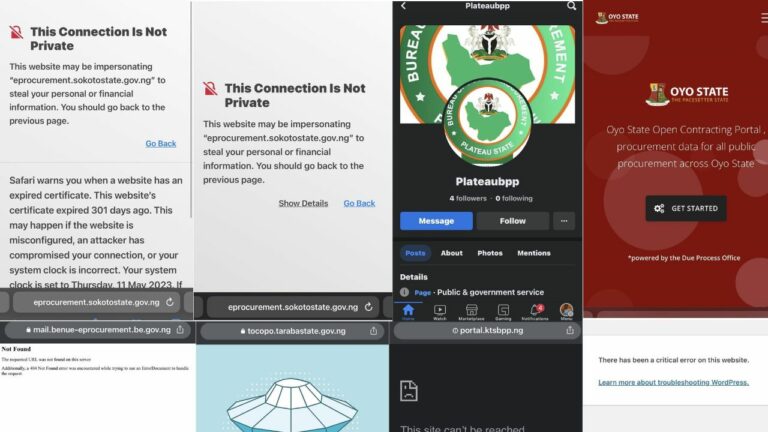
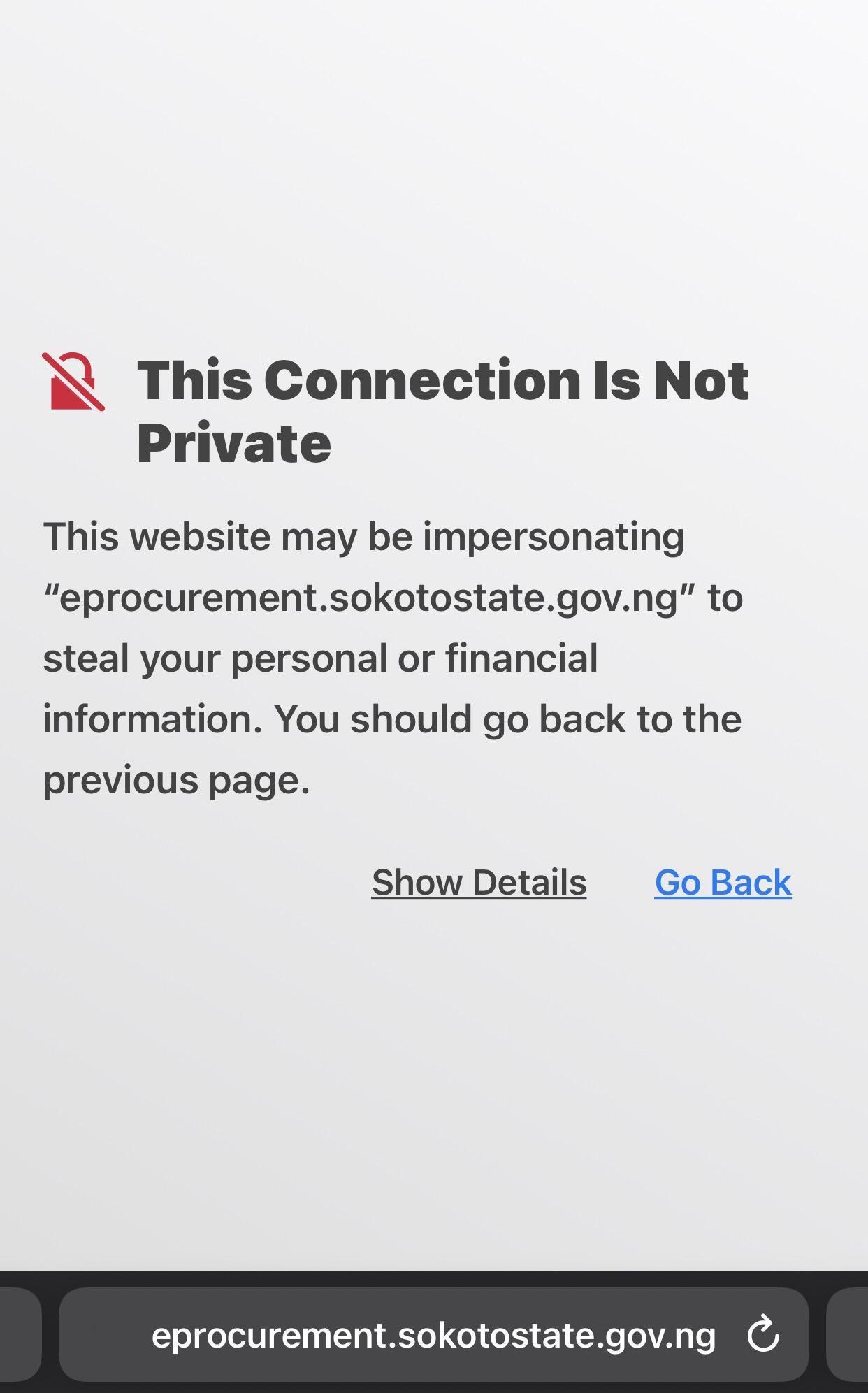
Screenshots of the Sokoto State e-procurement portal showing that this reporter’s personal and financial information can be stolen
The Ondo state instance reflects how Nigerian state governments generally make their open contracting portals inaccessible and thereby preventing citizens from holding government officials accountable.
This hinders monitoring of the efficiency and effectiveness of public spending and makes it difficult to identify instances of fraud, waste, or mismanagement.
screenshots of the Sokoto State e-procurement portal showing that an attacker can compromise this reporter’s connection
Typically, open contracting portals include a wide array of information, such as tender notices, bidding documents, contract awards, terms and conditions, contractor details, project implementation specifics, and payment information.
Nigerian state governments were compelled to sign agreements and pass procurement laws, committing them to publish their expenditures to enable them to receive grants over a three-year period from the World Bank. Unfortunately, some of these portals are inaccessible or lack details on awarded contracts in the respective states. Some portals pose security risks, Some portals only provide partial information on their website, and others are difficult to navigate.
How state governments make open contracting portals inaccessible, hiding awarded contracts from citizens
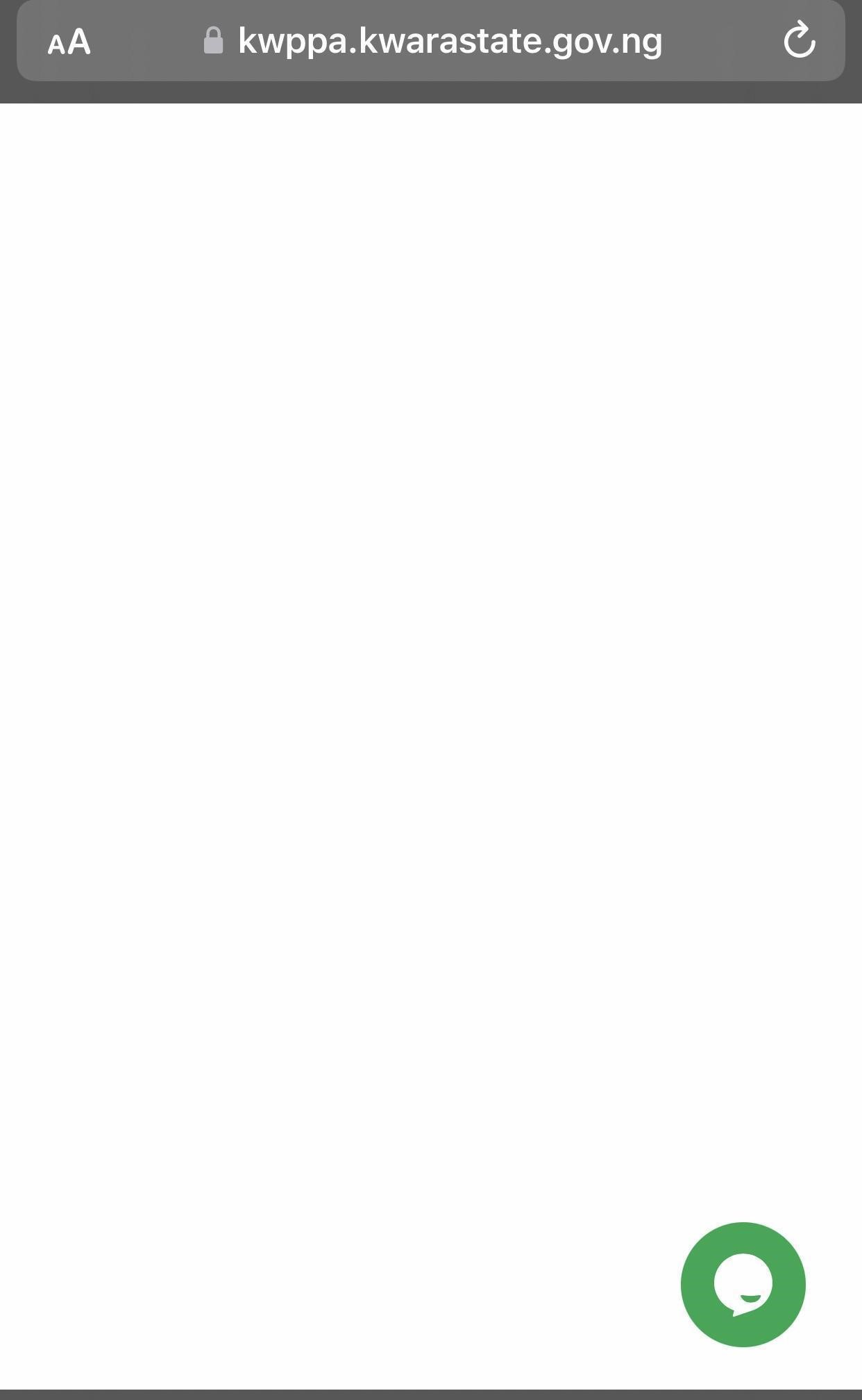
The screenshot of the blank Kwara State government OCDS portal
The investigations showed that the Kwara State e-procurement portal was inaccessible as it was blank (showing only white) when the reporter accessed it.
There were no details of contracts awarded by the state government.
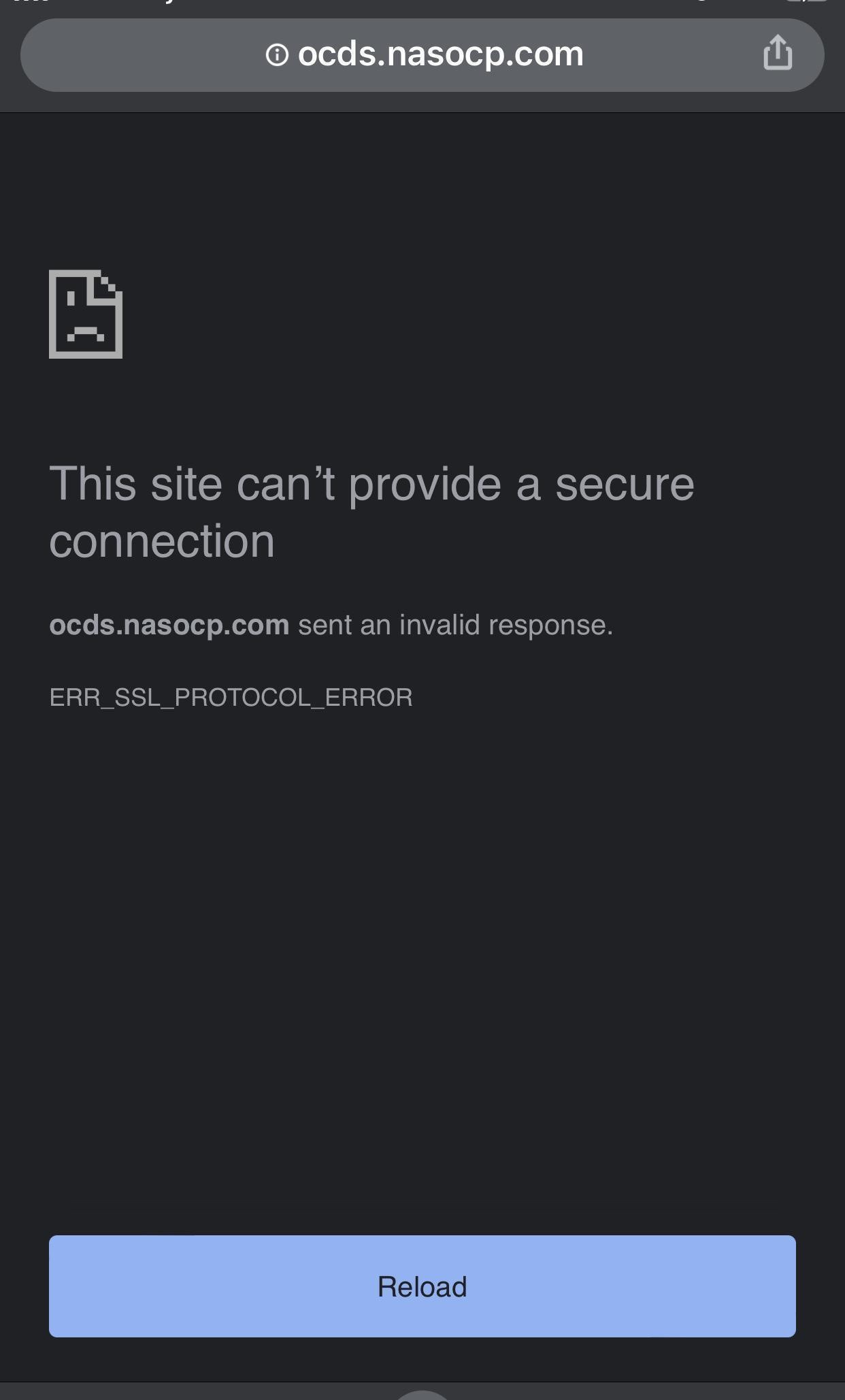
The Safari browser warned against proceeding to access the Sokoto state e-procurement portal because the website certificate expired over 301 days ago, warning that an attacker can compromise the reporter’s connection.
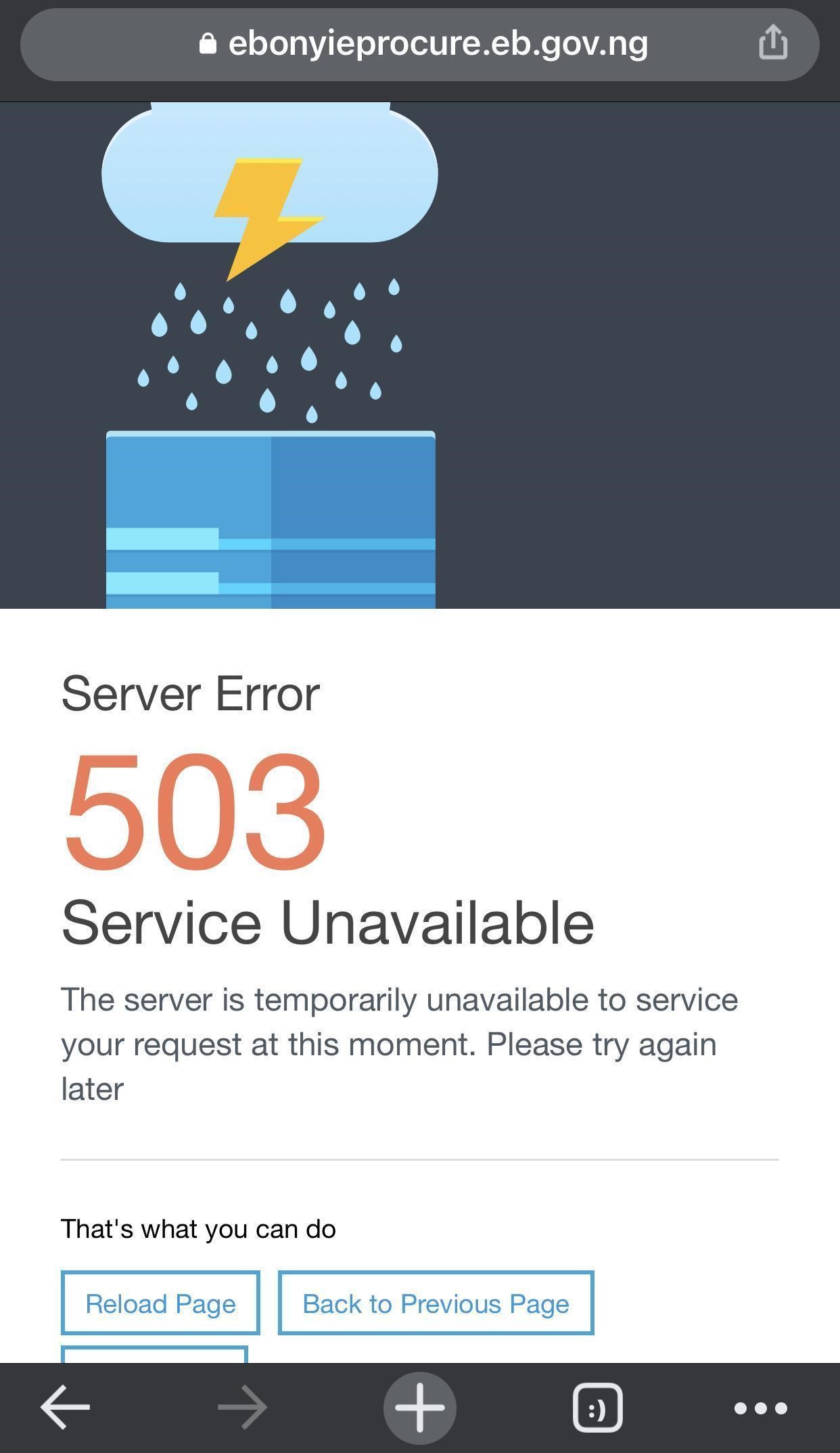
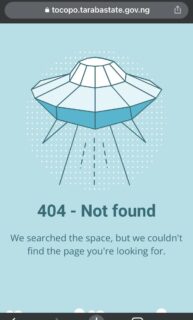
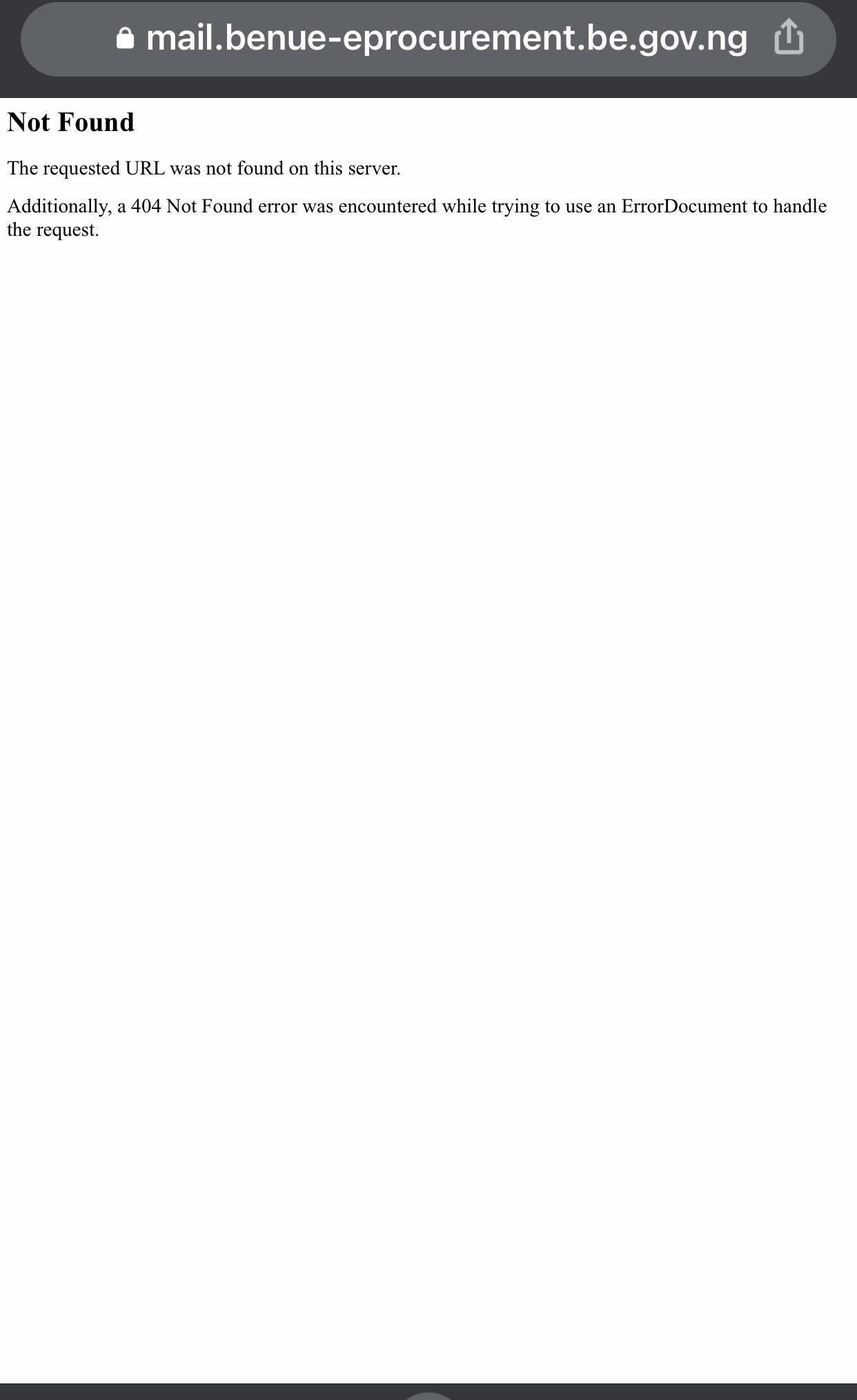
Enugu, Nasarawa, Kebbi, Katsina, Ebonyi, Taraba, and Benue did not have the state’s e-procurement portal because most of them were not found, while some were not operational, showing ‘404-Not found’.
The screenshot of the e-Procurement of the Ondo State government
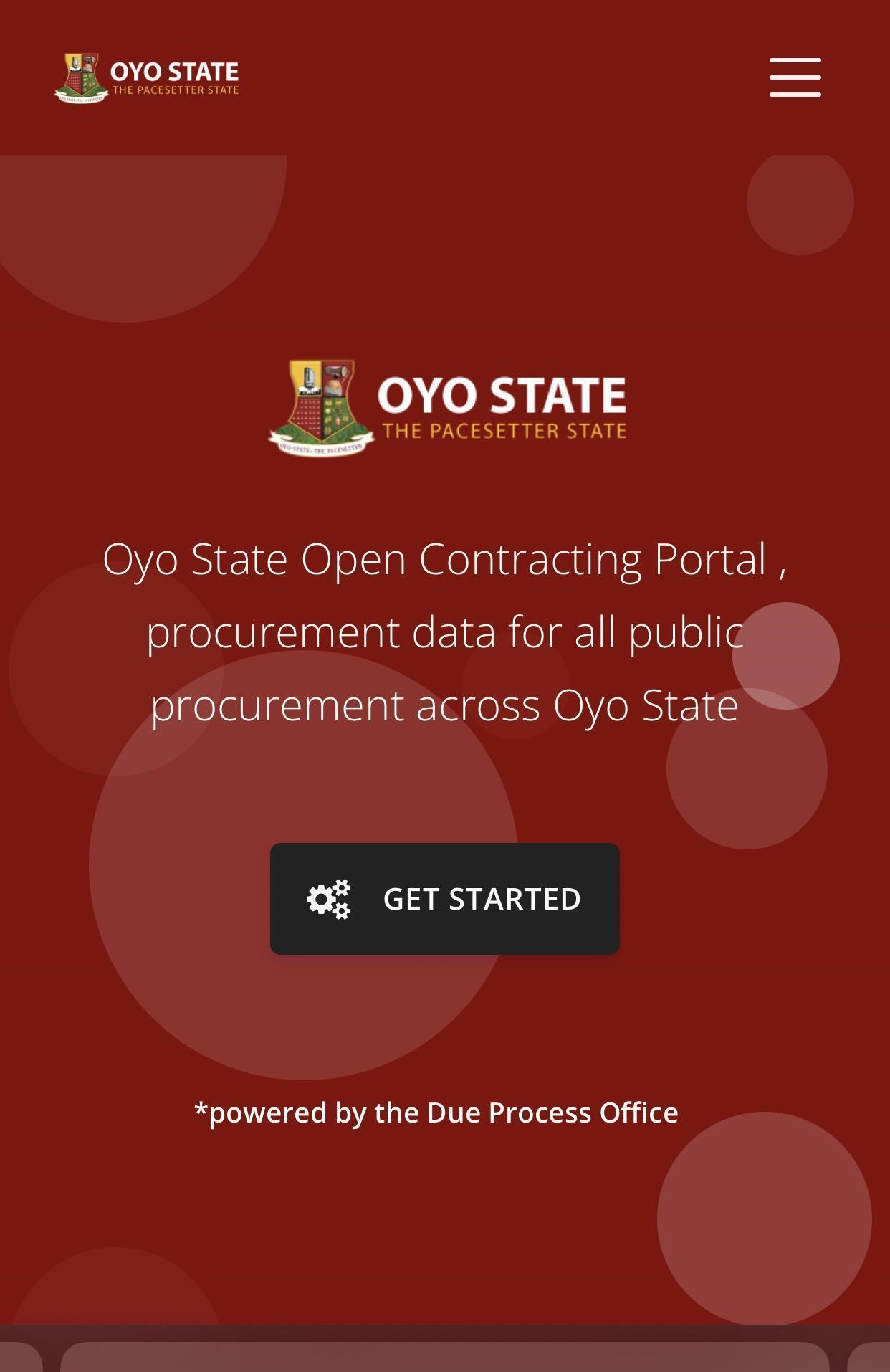
E-procurement portals like that of Ondo, Oyo, Kogi, and Rivers states were accessible but failed to provide any details on awarded contract.
The Oyo State e-procurement Facebook account only has six followers with no posts.
For some states, the problem is that vital procurement details were not provided making nonsense of the launch of the portals.
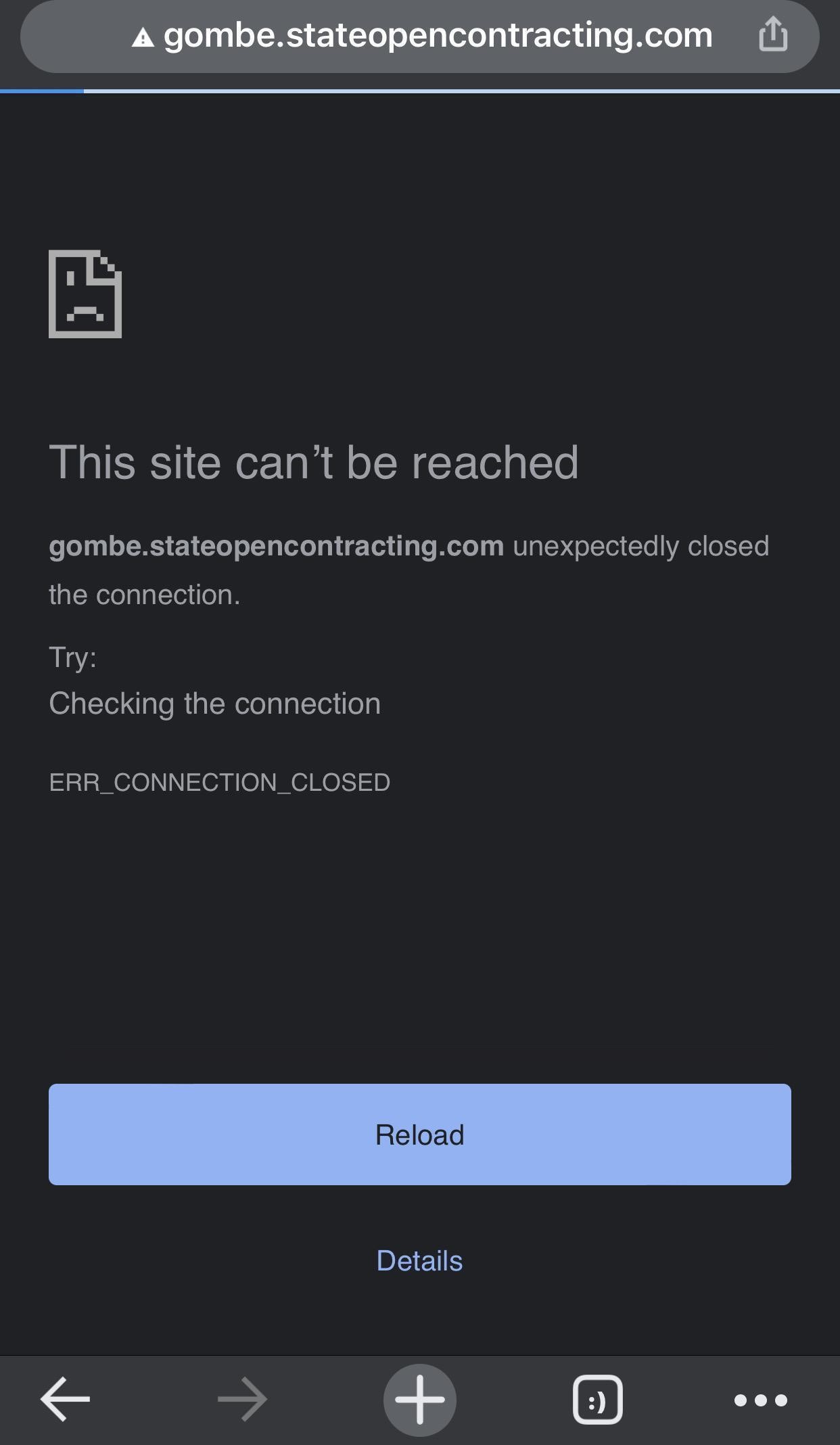
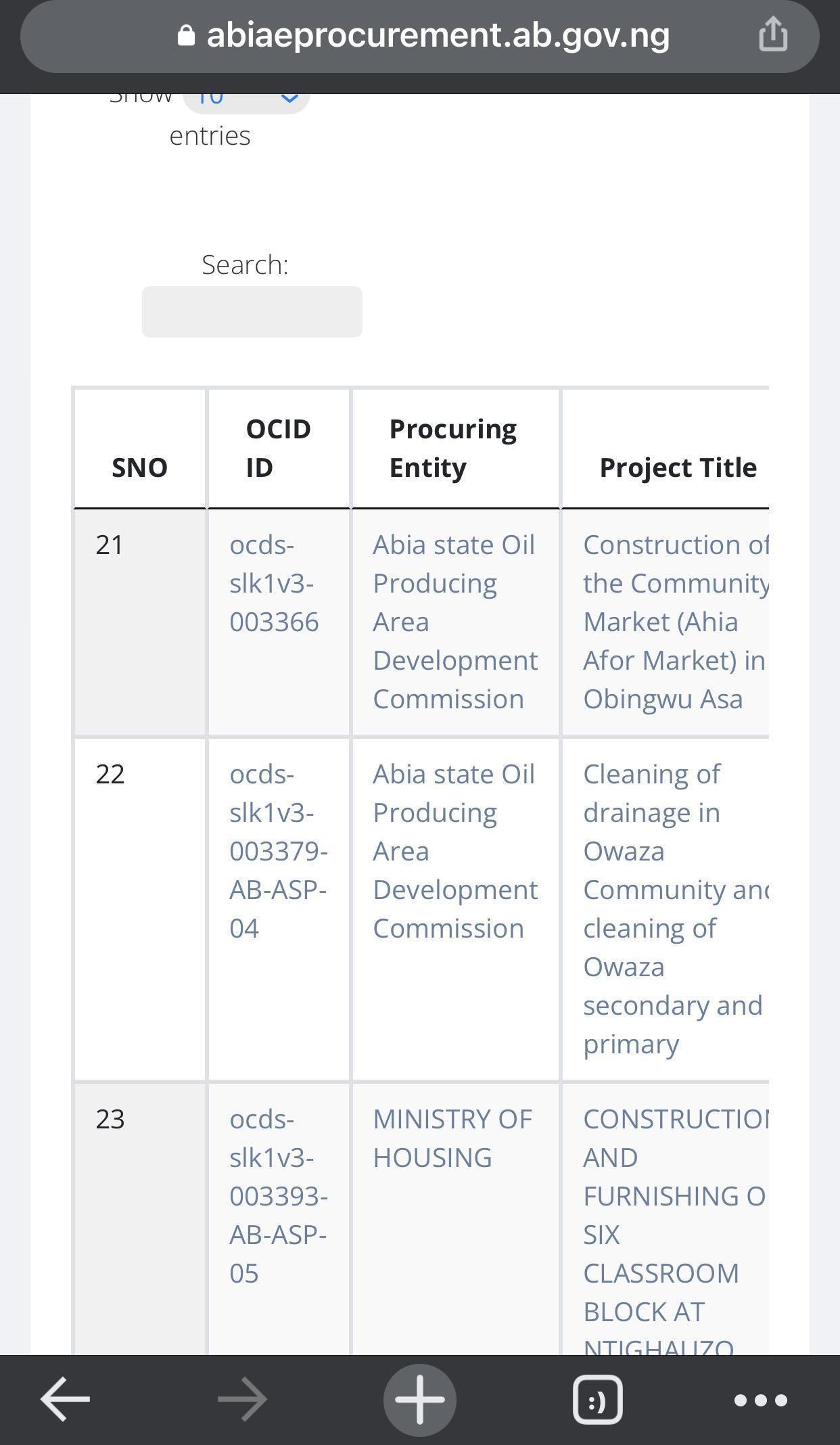
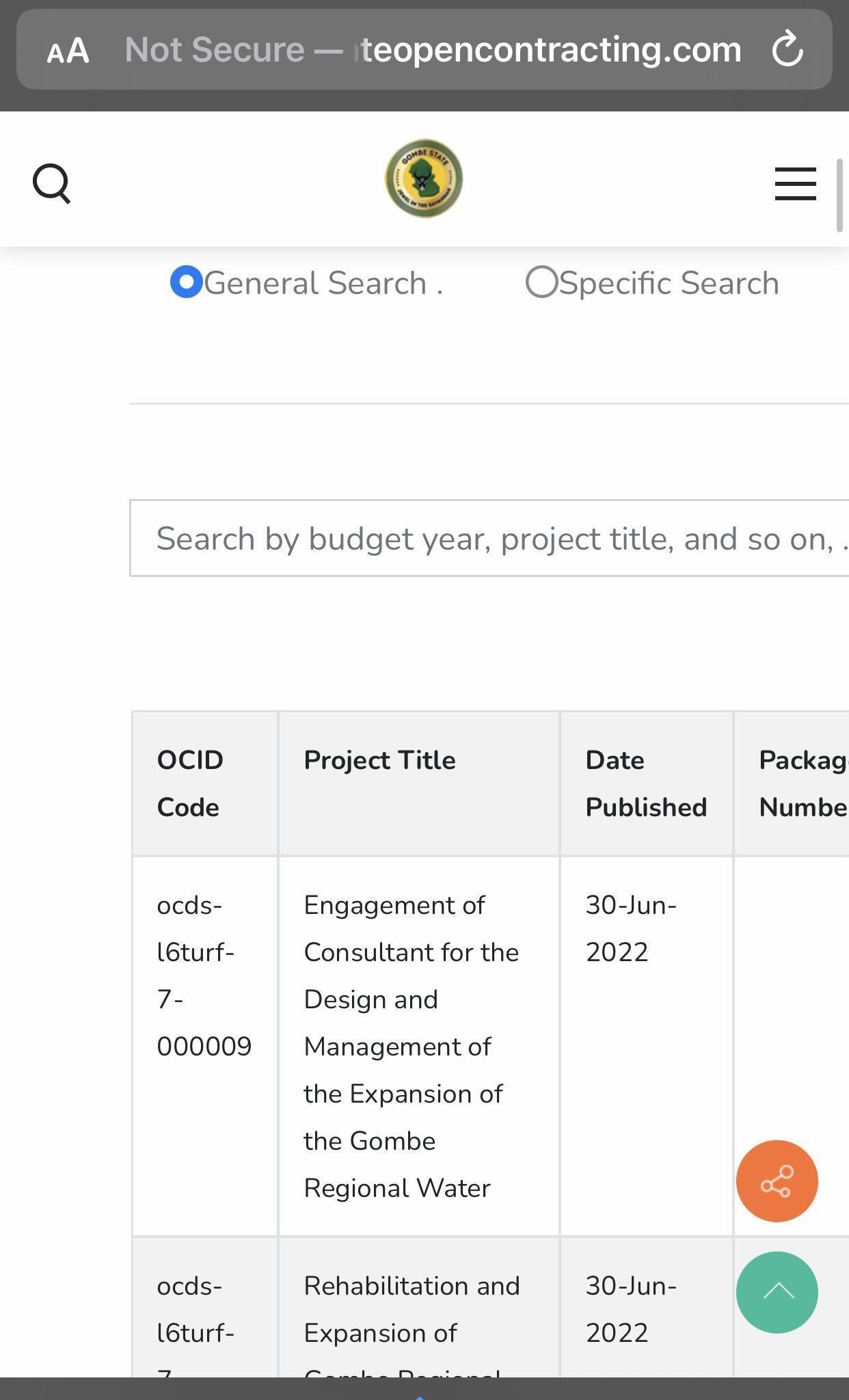
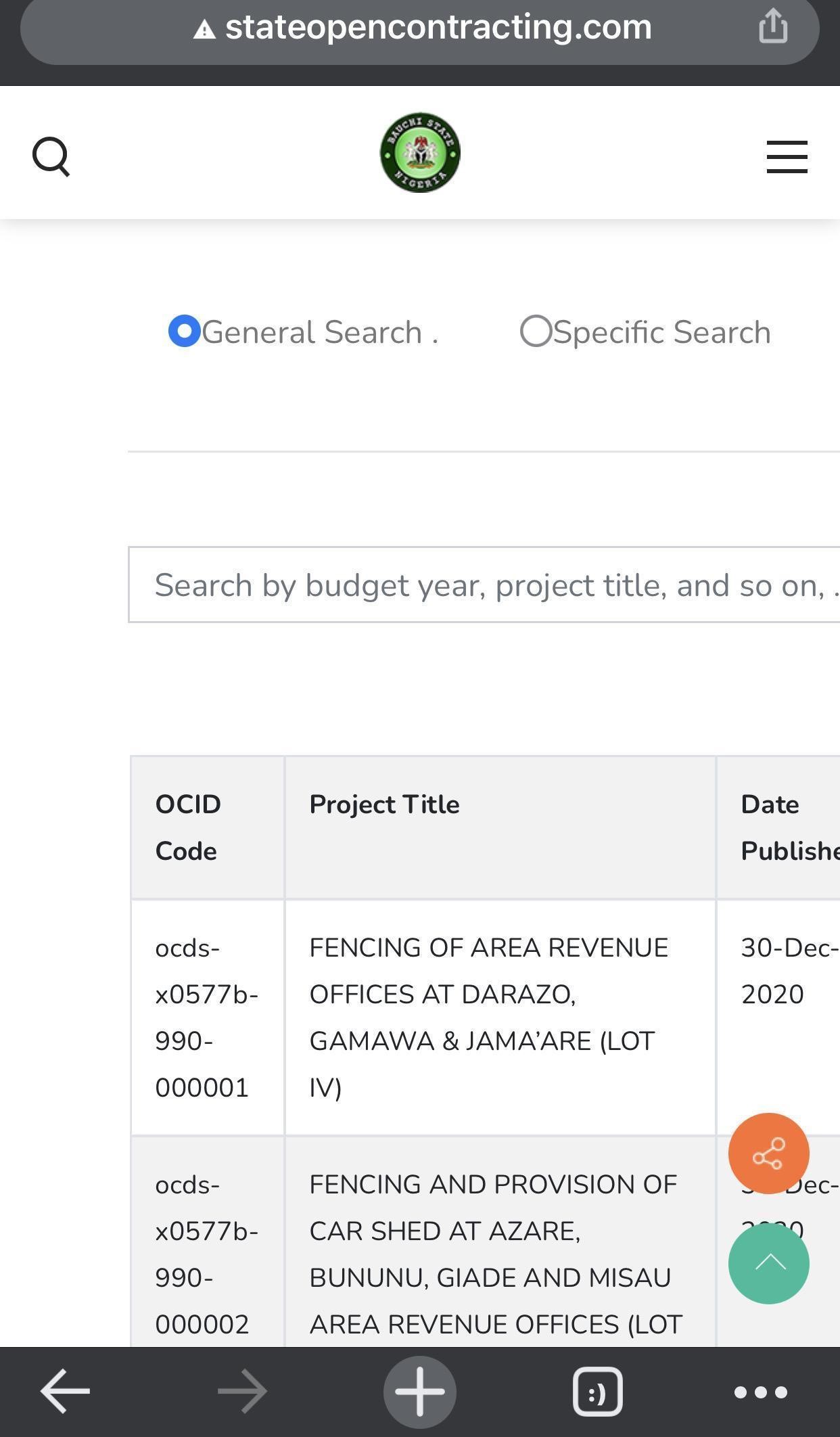
Abia, Bayelsa, Bauchi, and Gombe states uploaded incomplete information on the contract the governments awarded as contractor’s details and contract sums were not provided. only project titles and procurement entities were provided.
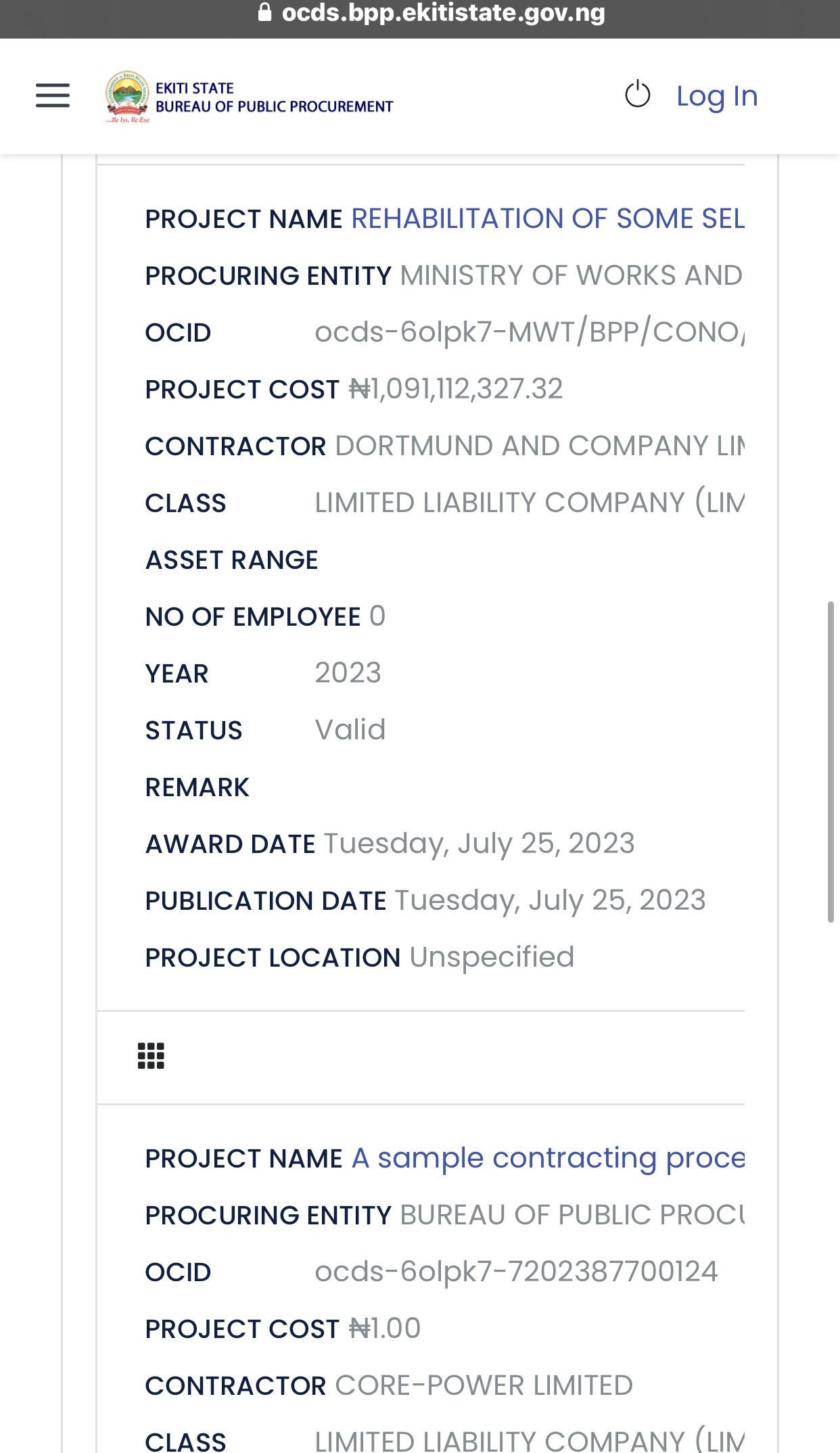
Ekiti uploaded incomplete data that did not provide the project locations and the award dates.
Jigawa state only uploaded the details of only one project under the Ministry of Water and Resources.
Akwa Ibom state did not have an official open contracting portal.
However, the Lagos State e-procurement portal is accessible with details of awarded contracts, but there is no email address to contact the BPP.
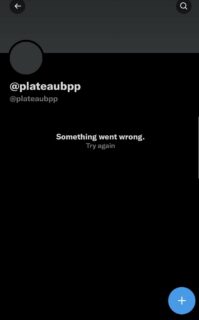
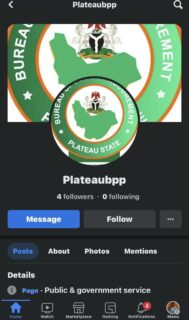
Plateau state BPP portal is also accessible, but it only has four followers on the official Facebook account and the Twitter account is not accessible at all.
The dormant Facebook and Twitter accounts of Plateau State BPPThe screenshot of one of the OCDS portals for Nasarawa State
In summary ten states’ open contracting portals were inaccessible, while three states were accessible without uploading the details on awarded contracts. Six states uploaded partial information, one state did have an official portal, and only 16 states made their portal accessible to citizens.
The screenshot of Taraba State open contracting portalThe screenshot of Gombe State open contracting portal
The state of African countries’ portals
To verify the status of open contracting portals in African countries, the reporter examined the Public Procurement Authority (PPA) portals of Ghana, Senegal, Sierra Leone, Gambia, Liberia, Niger Republic, Benin Republic, Cameroon, and Kenya.
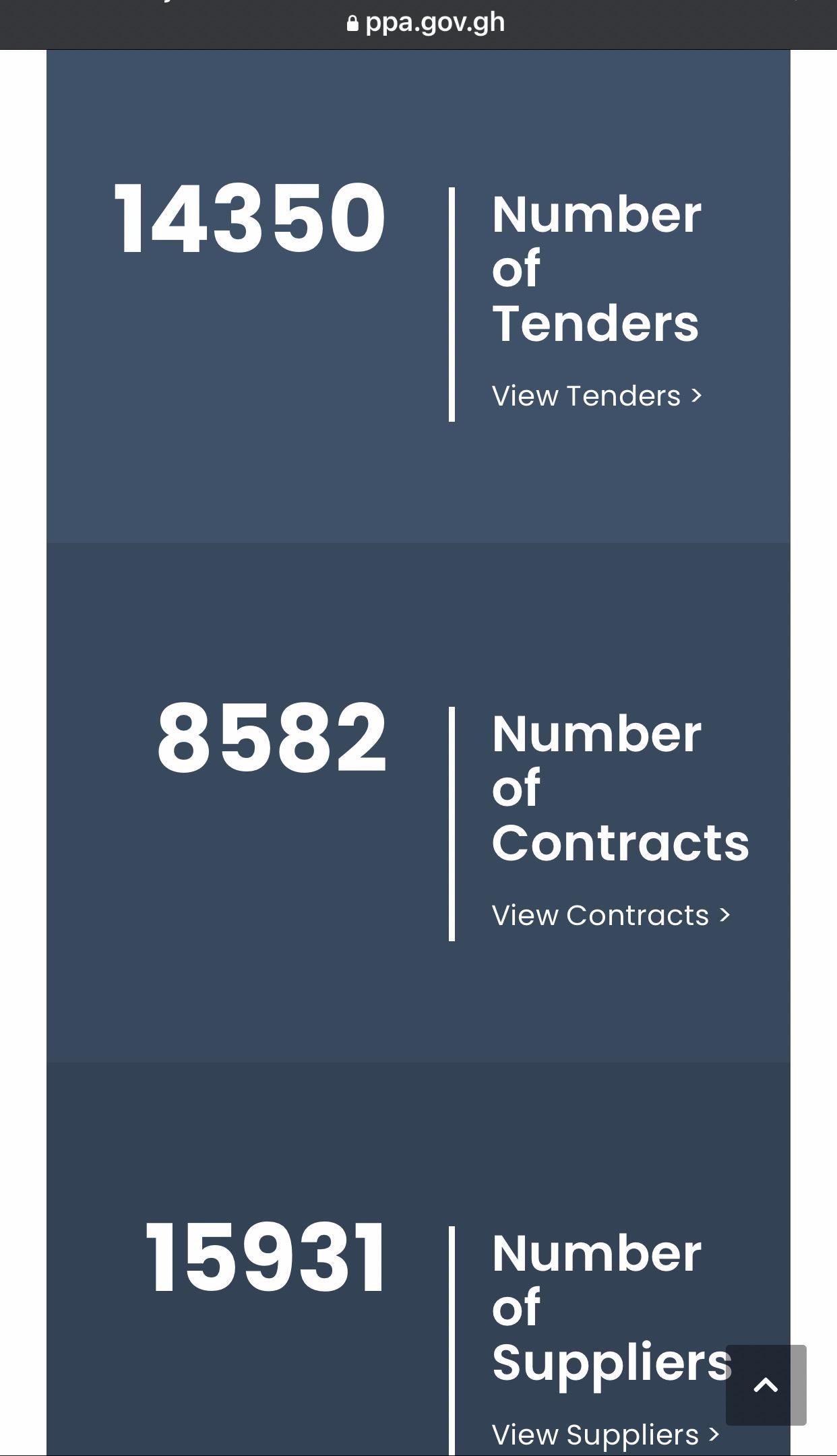
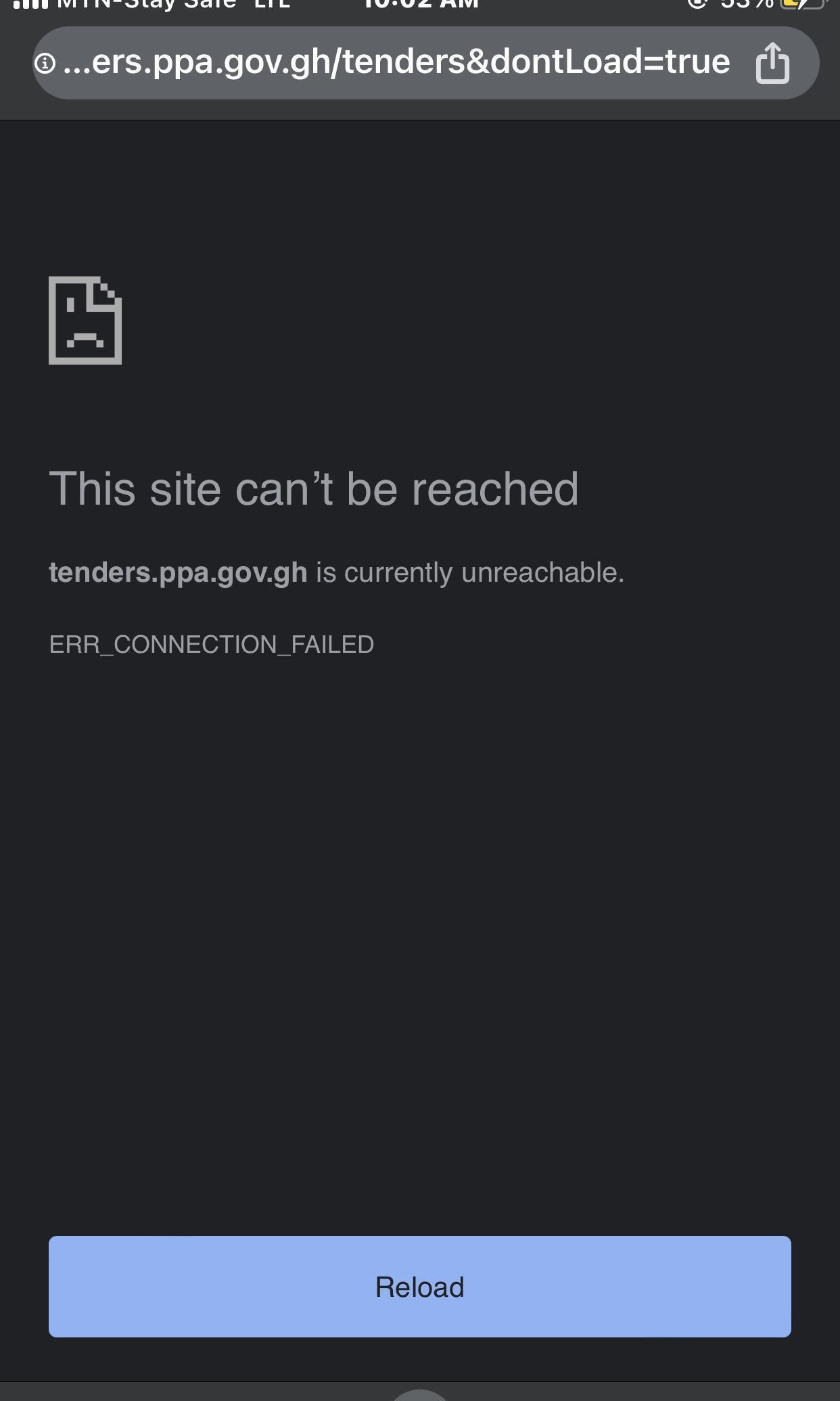
The Ghana Public Procurement Authority (GPPA) claims to have 8,582 executed contracts and 14,375 tenders. However, the link to check the contracts was inaccessible and showed that the site cannot be reached.
Screenshots of the number of projects Ghana claimed to have been executedScreenshot of how Ghana PPA portal is blank after pressing the link to know the 8,582 contracts Ghana claims to have executed
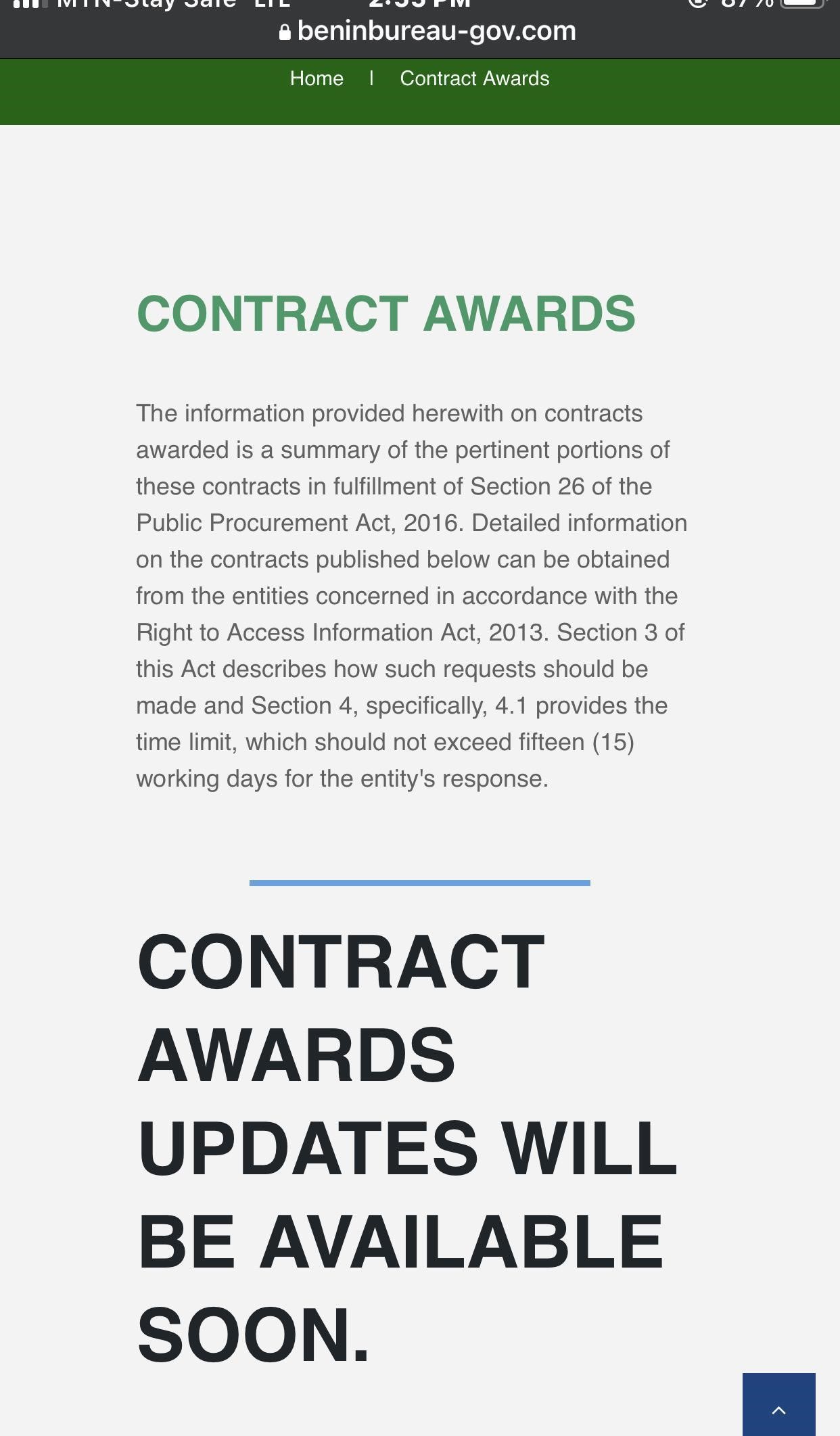
The screenshots of Benin Bureau of Public Procurement in the awarded contract
Senegal has a Public Procurement Portal (www.marchéspublics.sn) where relevant legislation and information on procurements can be found.
Decree No. 2014-1212 ensures the protection of the general interest and public funds, promotes transparency in procurement procedures, and ensures fair competition among candidates.
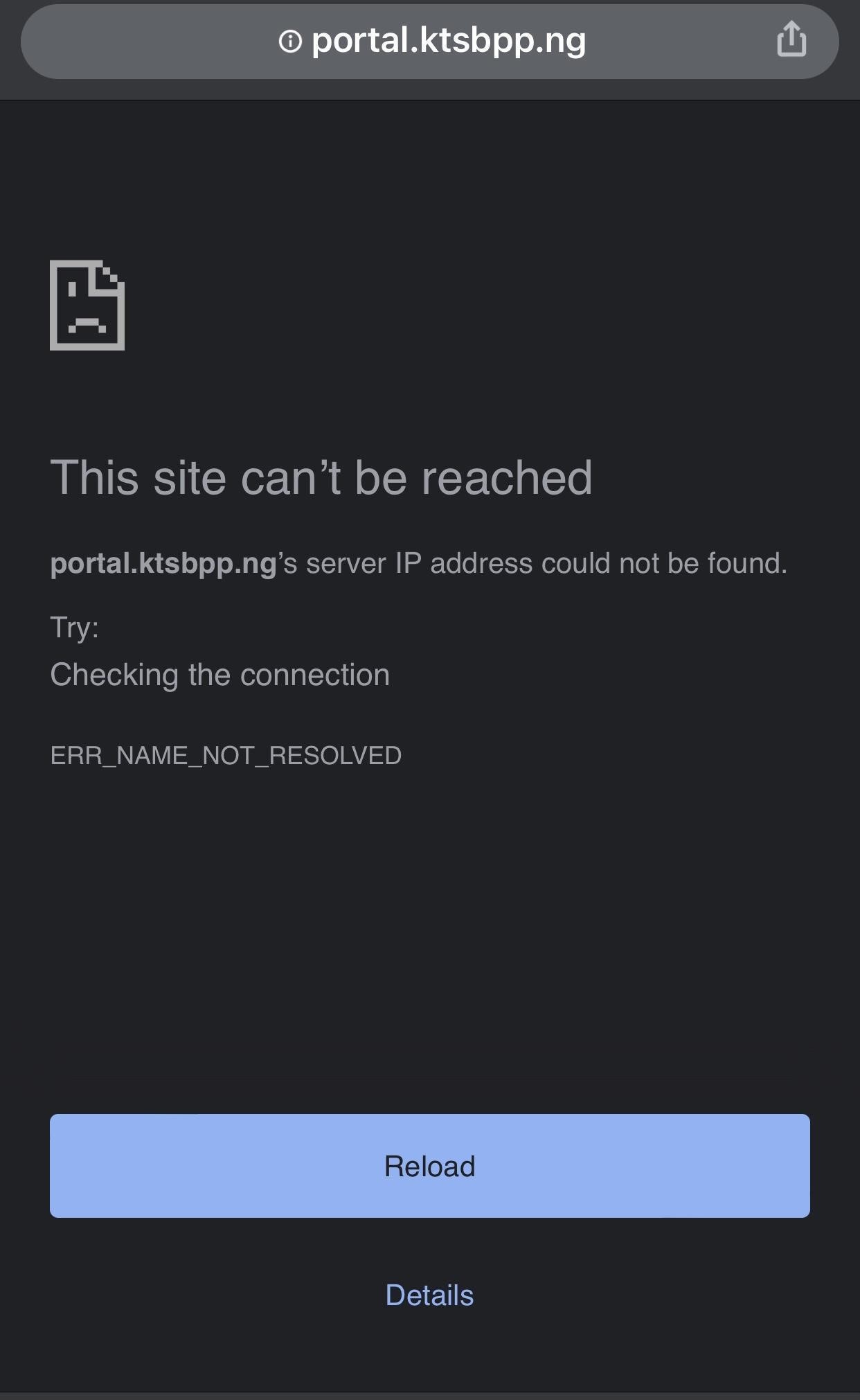
However, when the reporter checked the portal the IP address of the site could not be found. The investigation also revealed that the second portal was accessible, but the details uploaded in the contract had nothing to do with procurement.
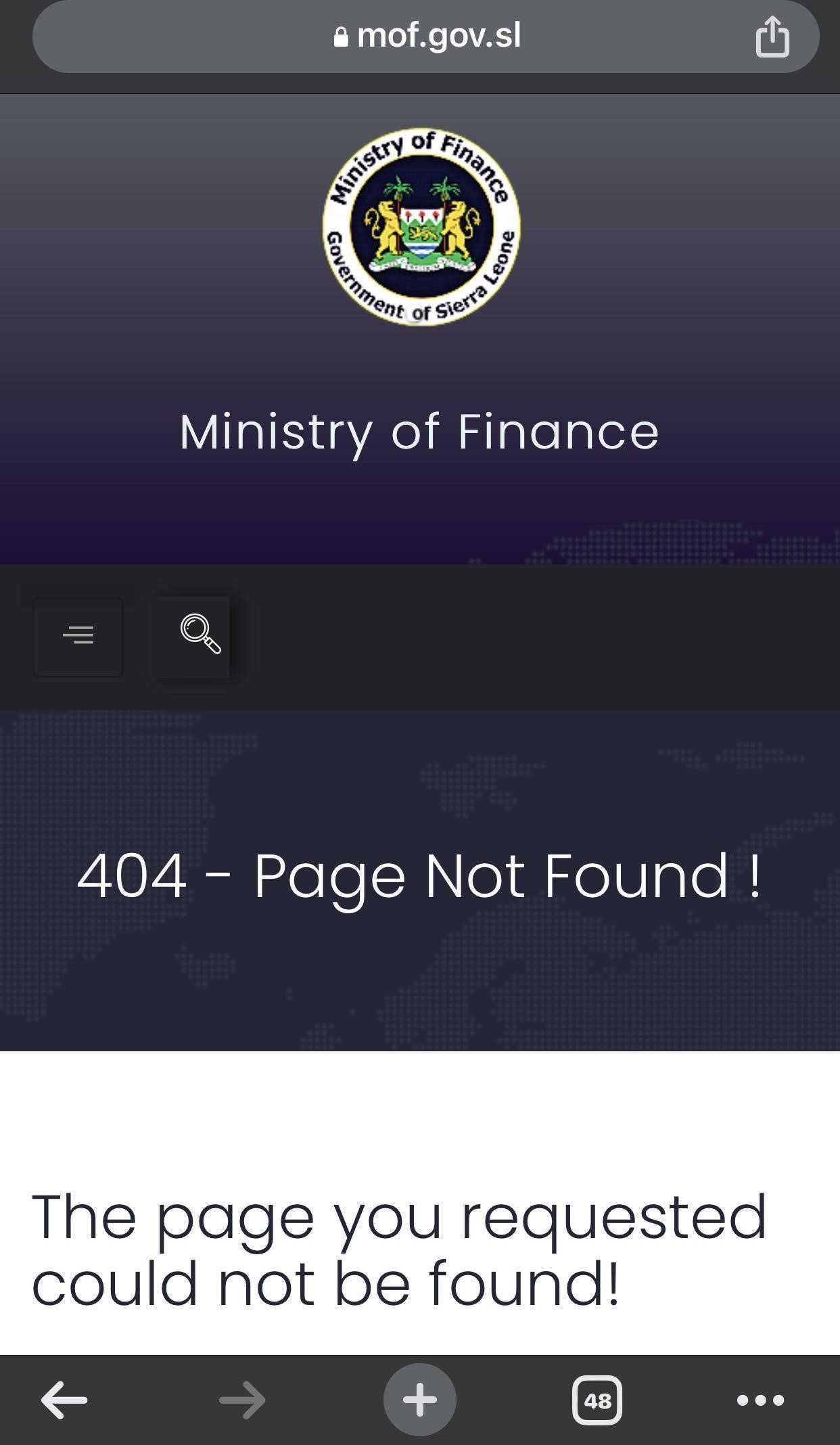
But it is not a sad story all over the continent in terms of procurement transparency, as at least three countries had provided actionable information and data to citizens. For example, the Sierra Leone National Public Procurement Authority’s portal is accessible, and the department uploaded the details of the awarded contracts.
How Nigerian states’ BPP are responding to Citizens’ requests on email
To confirm how Nigerian state governments’ BPP departments are responding to the citizens’ requests via email address, this reporter sent an email to the various state BPPs requesting information on the 2021 and 2022 contracts awards and asking states whose BPP portals were inaccessible why that was so.
The screenshot of the Benue State e-Procurement website
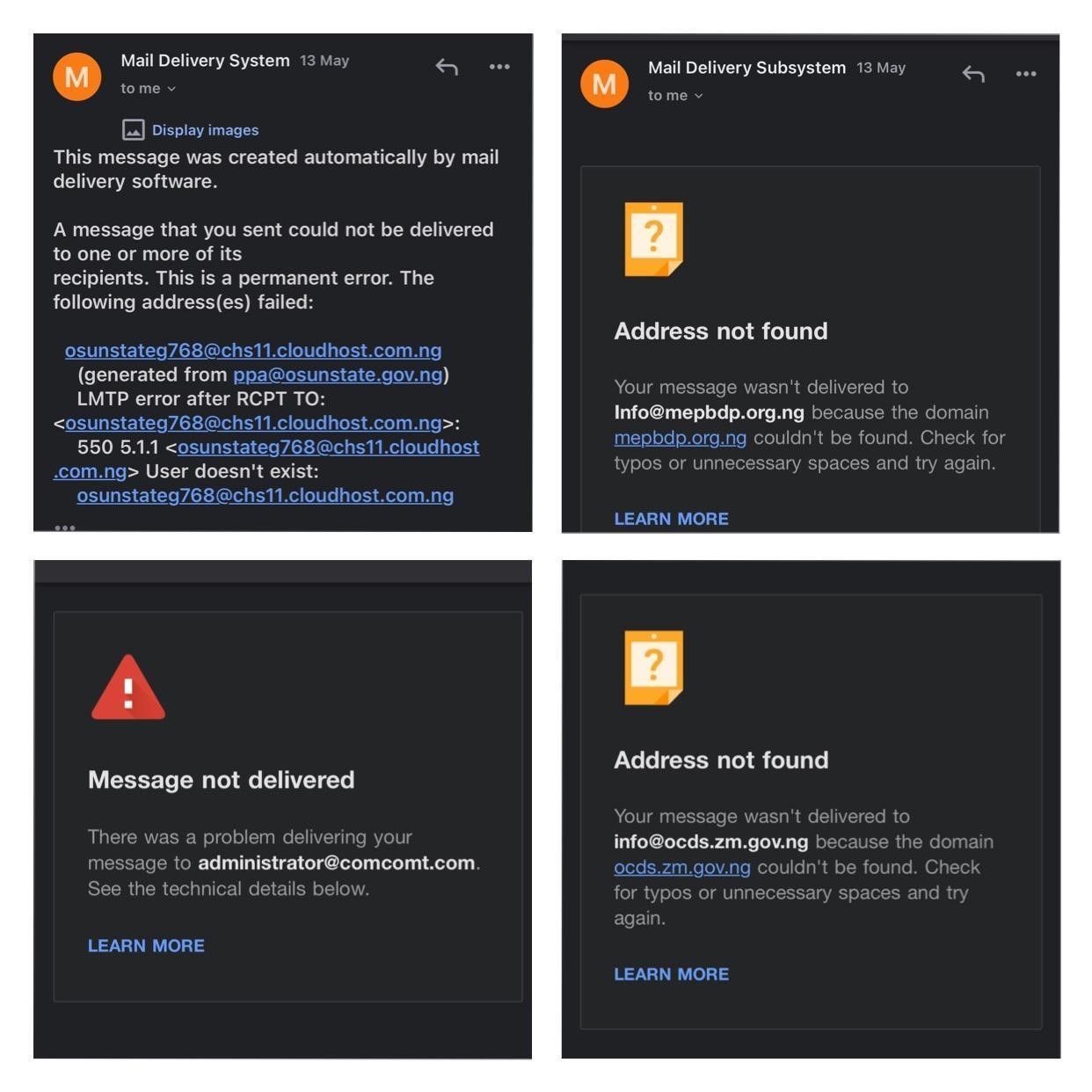
Only a few states responded to emails. Some emails were not delivered because the domain of the email could not be found. Some Nigerian open contracting portals do not even have official email addresses on their websites.
Seventeen BPP departments failed to respond to the email and form filled out on their website, respectively. The states are Abia, Bauchi, Ogun, Jigawa, Lagos, Gombe, Nassarawa, Kwara, Bayelsa, Kogi, Oyo, Sokoto, Borno, Kano, Imo, Edo and Yobe.
The screenshots of responses from the email sent to Cross River, Kebbi, Zamfara, and Osun State BPP
The email sent to Cross River, Kebbi, Zamfara, Anambra, and Osun State BPP were not delivered because the domain could not be found.
Some states’ BPP whose portals were not accessible and did not have official email addresses included Benue, Akwa Ibom, Taraba, Ebonyi, Katsina and Enugu.
Out of 36 states in Nigeria, only five responded to emails sent. The states are Adamawa, Kaduna, and Ekiti Ondo and Ogun.
The Abia state e-procurement portal that uploaded partial details on the awarded contractsThe screenshot of the Gombe State open contracting portal that provided only the project title without including the contractors and contract amounts
Adamawa State BPP replied that they have published the details of awarded contracts this reporter requested on their website, and advised the reporter to check their websites bpp.ad.gov.ng and ocds.bpp.ad.gov.ng for more information.
The screenshot of Oyo State open contracting portal without uploading any document on the awarded projects in the State
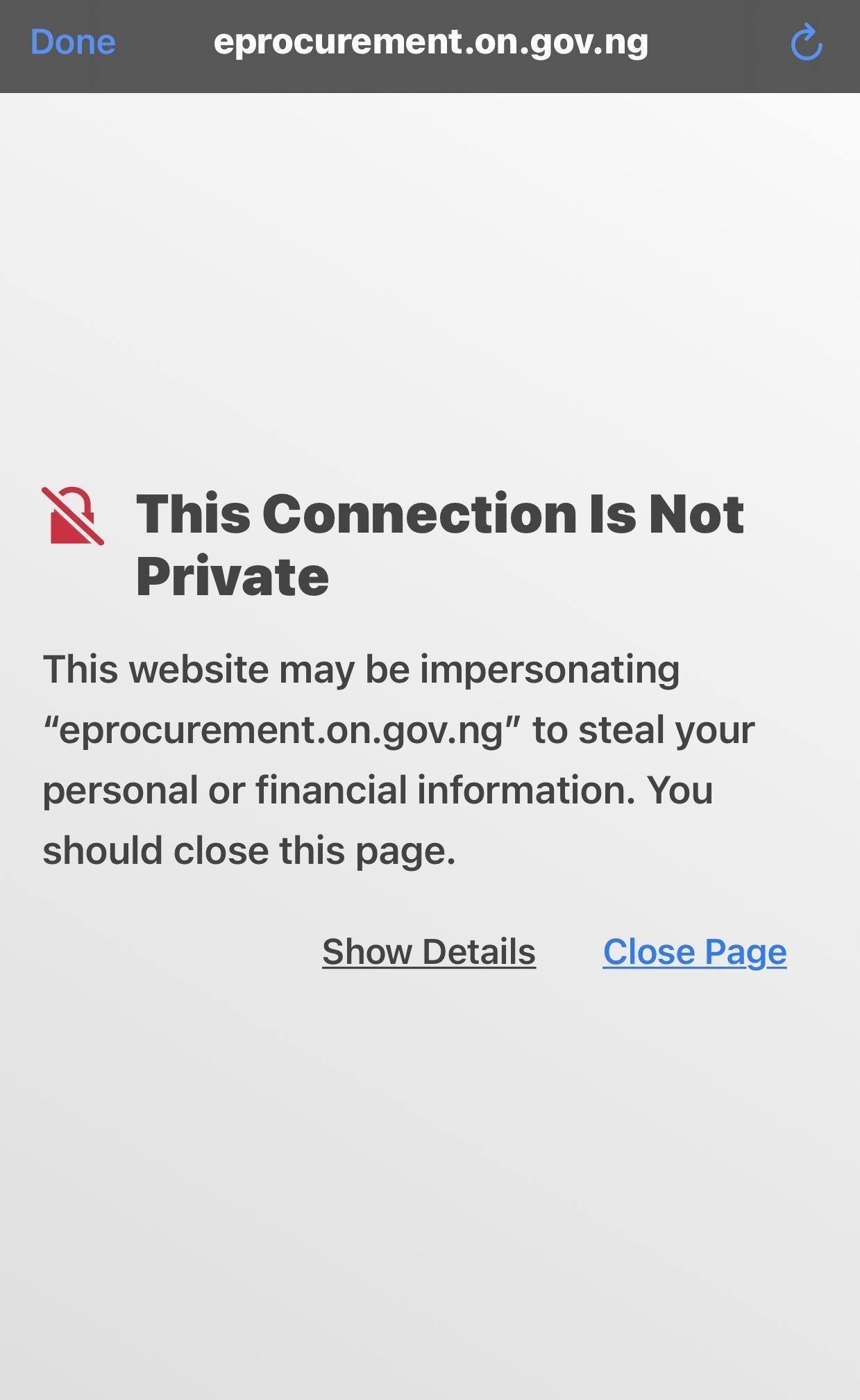
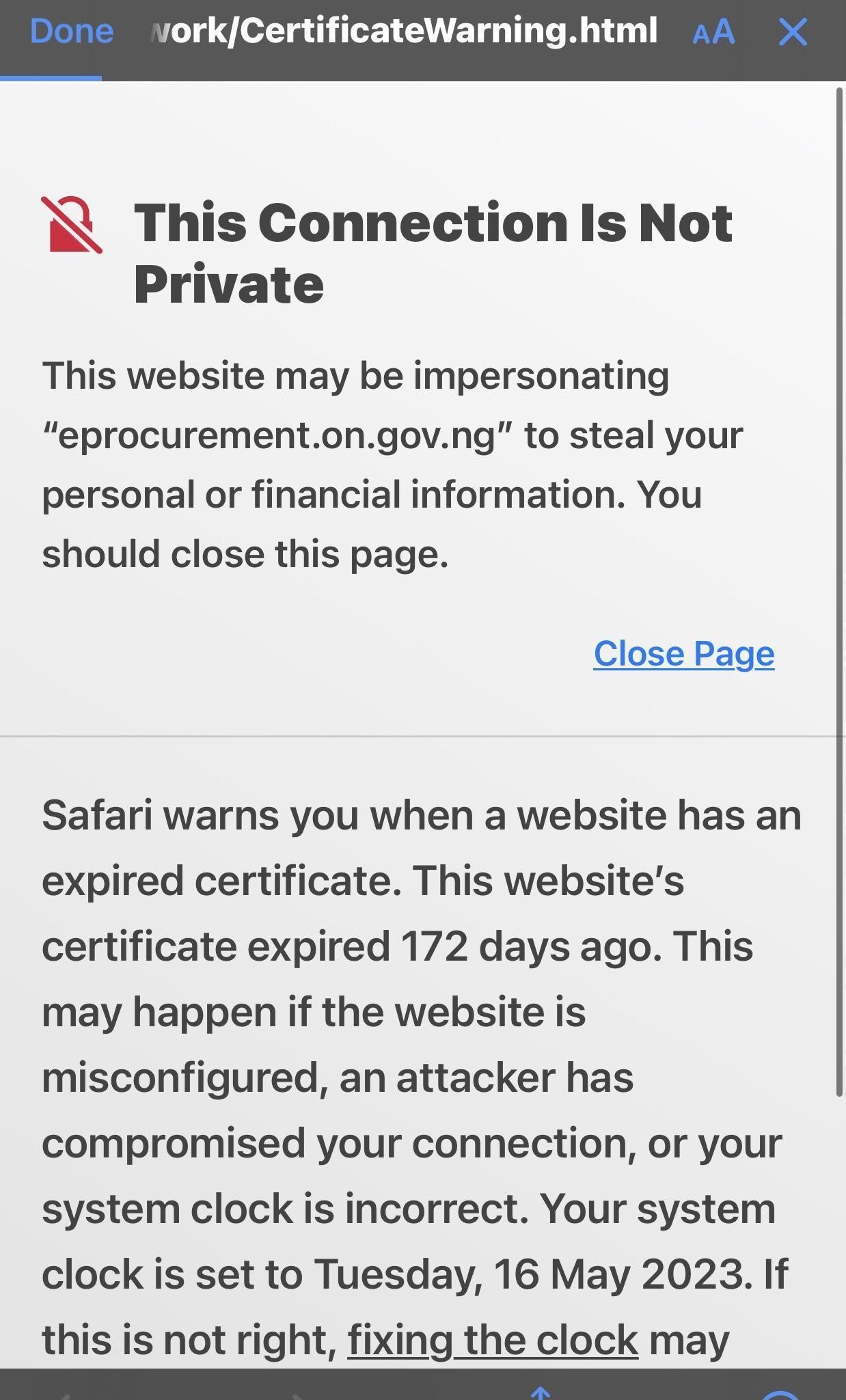
Ondo state BPP replied to the email stating that the link the journalist provided in the mail is for the portal of Ondo State Bureau of Public Procurement (ODBPP), noting that e-procurement portal is a different portal and it is currently down.
When this reporter clicked the link, he saw a Safari browser warning that the website’s certificate expired over 172 days ago, adding that an attacker could compromise this reporter’s connection.
The screenshot of of the incomplete details of the awarded contracts in Bauchi State
An engineer, Suleiman Abba, the Acting Director, of Planning & Reforms, Kaduna State Public Procurement Authority (KADPPA), said the department has made concerted efforts to make relevant information easily accessible to the public, including the details of the awarded contract on their open contracting data standard (OCDS) portal.
Abba explained that other pieces of information had also been provided in the annual report of the state. This, the reporter confirmed to be the case.
The screenshot of Kogi State BPP portal
Ekiti State BPP replied that both the previous and follow-up emails the reporter sent were duly noted, adding that the issues relating to the reporter’s inquiries had been resolved on the OCDS portal.
They advised the reporter to revisit it for confirmation. This reporter revisited the website, and he confirmed that the issues have been rectified.
The current OCDS portal of Ekiti State after this reporter’s email
The Ogun State Bureau of Public Procurement replied that the email had been received but said it would prefer a letter on letterhead addressed to the Director-General of the state.
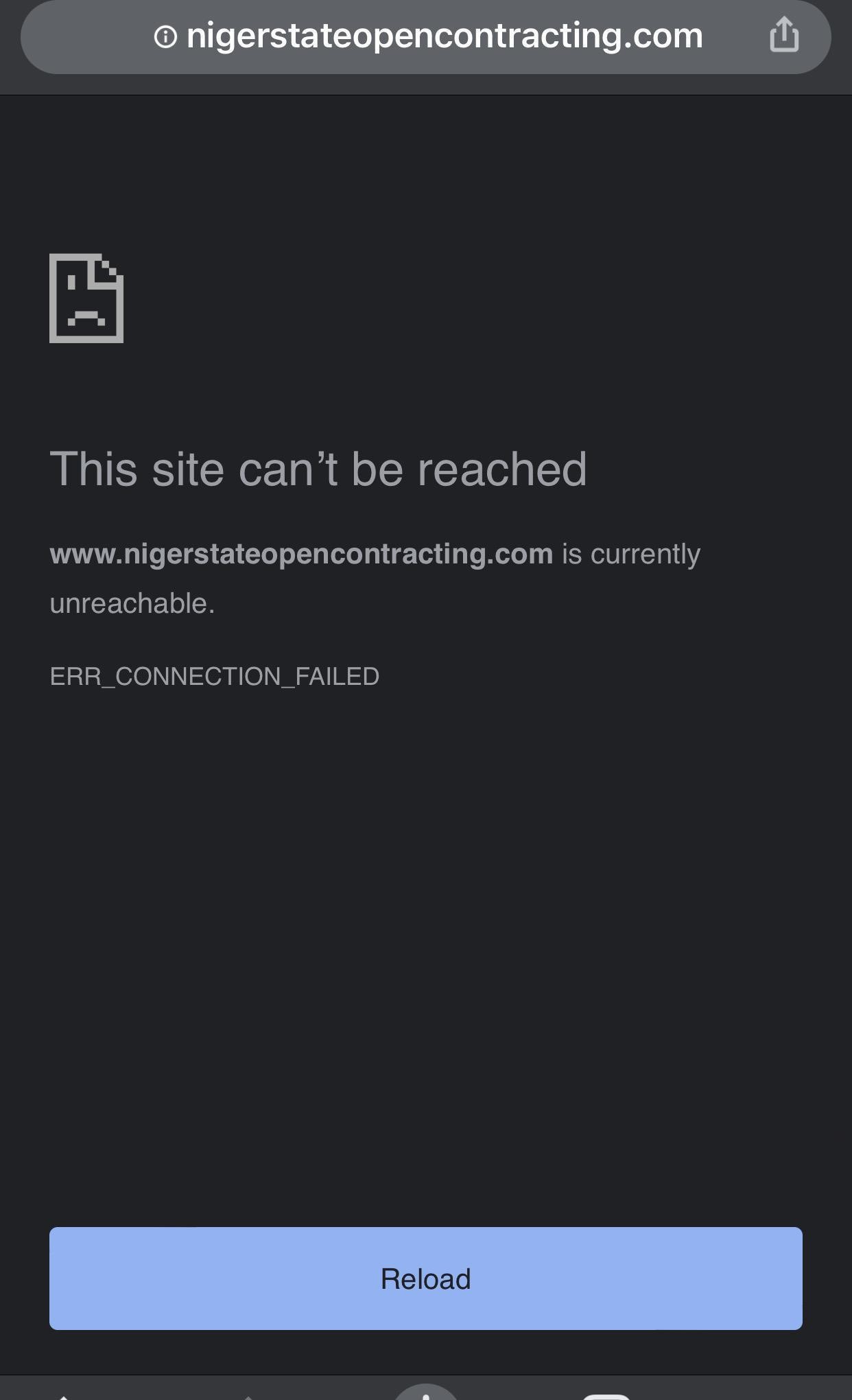
The screenshot of one of the Niger State open contracting portals.
Fifty-two per cent of Nigerian States failed to respond to emails sent to them, 14 per cent of the email sent didn’t deliver to the recipient, 19 per cent of Nigerian BPP doesn’t have an official email address while only 13 per cent responded to the email sent to them.
Implications…
The deputy coordinator of project tracking for Elites Network for Sustainable Development (ENETSUD), Lanre Osho, said that the inaccessibility of these portals is a form of corruption.
The screenshot of the due process document for Enugu State
“ENETSUD has been raising concerns about this matter in Kwara state and has been engaging with the government for a considerable period of time. The anti-corruption civil society organisations heavily rely on documents, and having access to these portals would enable us to evaluate and assess whether the projects align with the allocated funds,” he said.
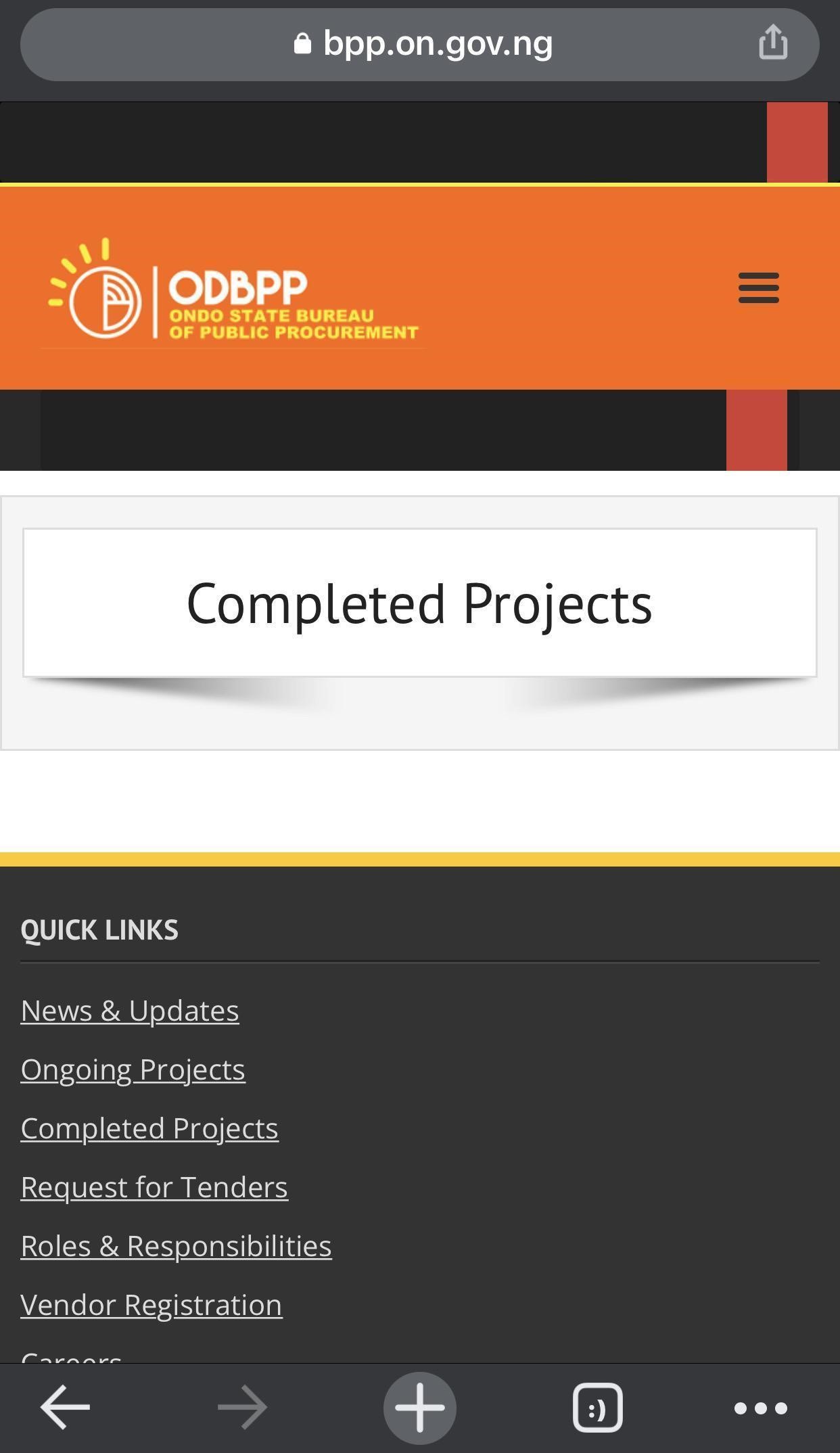
The page on the completed projects on Ondo State BPP
Osho condemned this practice as a clear instance of corruption and undemocratic behaviour, asserting that it obstructs the work of civil society organisations and hinders their activities, stating that ENETSUD has been advocating for the domestication of the Freedom of Information Act (FOI) in Kwara state.
The screenshot of the Katsina State BPP portal
He said whenever ENETSUD writes a letter to the Kwara state government requesting information about awarded contracts, the government responds by stating that the FOI Act needs to be domesticated before they can provide the requested details.
Furthermore, he highlighted the World Bank’s emphasis on fiscal transparency and accountability, which requires states seeking grants to hold town hall meetings to obtain citizen input before formulating the budget at the state level. However, he noted that the situation is reversed when it comes to the e-procurement portal, as it lacks the necessary transparency and accountability.
Abubakar Ismail Kankara, a journalist who works in the ICT sector, explained that the reason some reasons why the website is down.
He noted that if the connection of the website is not private or it is showing ‘404 Not Found’ as found in some state procurement websites, it was because the developer of the website failed to install a security plug that would ensure that the privacy of visitors is protected.
He added that “It is the issue of HTTP and HTTPS, and HTTP is not secured because your information can be accessed and transferred out to anybody. If it is migrated to HTTPS, it would be secure and friendly to users.
“The browser is trying to protect you and your confidentiality while the 404 not found appears if the site is not active either due to an issue with the hosting company or the webpage is not available, which sometimes is a deliberate attempt to hide information from citizens or both the domain and the hosting has expired,” he said.
He added that the website is mostly managed by quacks and non-professionals because they only awarded the contracts to their political allies in the form of paying them back their suffering or contributions during campaigns.
The programme lead and Data Analyst with Dataphyte, Charles Mbah, stated that the States started publishing their contract data through the state fiscal transparency, accountability and sustainability (SFTAS) programme of the government, which focuses on strengthening the fiscal sustainability, transparency and accountability of Nigerian states.
He said the programme gives grants to states based on different deliverables that enable these states to make their fiscal transaction, such as budget, contract budget implementation, and audit documents open for citizens to access them.
He explained that the OCDS portal is a civic technology tool that can be used to hold the government to account for its expenditure of public funds, noting that it is supposed to contain all contract details from planning, tender, and contract award to implementation of different projects.
“Having procurement information of this nature open for everyone to access has the possibility to reduce the rate of corruption in the procurement process. This is the reason why most states do not have this information or make the OCDS portal inaccessible in order to stop citizens from scrutinizing the procurement process and holding the government to account,” he said.
He cited an example of the Oyo State OCDS portal, which is no longer accessible to citizens after numerous stories written by organisations such as Dataphyte about the procurement irregularities in the states that sometimes involve the governor, adding that if the states do not have their OCDS portal accessible, they have something to hide and do not want to be held accountable.
Stanley Achonu, the Nigerian Country Director of One Campaign and former Operation Lead for Budgit, stated that as part of the World Bank programme, state governments were compelled to pass procurement laws and other transparency laws in order to receive grants for a three-year period. These grants were intended for the development of healthcare facilities, schools, hospitals, and other projects. However, since the program ended, the actual implementation of the law by the state governments has been lacking.
Achonu noted that there is a lack of awareness among citizens regarding the requirements of procurement laws. Additionally, he pointed out that State Houses of Assembly have failed to hold the state governors accountable for any breaches of procurement law.
“It is crucial to note that any procurement conducted by the state governors that do not adhere to the procurement law is a violation, and the state governor is legally responsible. The question arises as to who will hold these state governors accountable for their failure to comply with the laws enacted by the State Houses of Assembly and signed by the governor?” he noted.
Achonu suggested that for the procurement portal to be effective, State Houses of Assembly should initiate investigations into government contracts and question the contract award processes, noting that by doing so, it would become evident that the law is not being followed. He emphasized that when a governor or any arm of the state government fails to comply with the law, the governor who appointed the officials will be held responsible.
“Non-compliance with the law is an impeachable offence, which means the governor cannot spend money that is not appropriated in the budget or arbitrarily award contracts in violation of state laws. If found guilty during an impeachment trial, the governor can be removed from office,” he noted.
OPERATIVES of the National Drug Law Enforcement Agency (NDLEA) have arrested an artiste’ manager Oseni Babatunde and his ikoyi businessman accomplice Nnadi Ikenna for selling illicit drugs at nightclubs in Lekki and Lagos Island axis.
A statement by the NDLEA spokesperson, Femi Babafemi on Sunday, July 30, stated that the arrest followed information received by its operatives about a shipment of Colorado, a synthetic strong strain of cannabis, which was expected to be delivered to the duo from Los Angeles, United States.
Babatunde, also known as Papalampa was the first to be arrested in his house at Lekki area of Lagos when the consignment arrived on Sunday July, 23.
A total of 10 parcels of Colorado weighing 2.50kg were intercepted at the Murtala Muhammad International Airport, Ikeja, during the process.
The second suspect, an Ikoyi-based businessman, Ikenna, who was out of the country when the shipment arrived, was apprehended upon his return on Thursday, July 27.
Parts of the statement read: “NDLEA operatives attached to the NAHCO export shed of the MMIA intercepted a cargo going to Nairobi, Kenya. A search of the consignment revealed that various quantities of MDMA (Ecstasy) popularly known as ‘Molly’ and Rohypnol were concealed in a bag consisting of foodstuff. An agent, Onydem Chinwe Florence who presented it for export was arrested.
“Also, an attempt by another suspect, Igboma Ifeanyi to export quantities of Loud, a variant of Cannabis, Tramadol and Rohypnol all weighing 7.8kg concealed in 66 bottles of skin lightening lotion was thwarted by vigilant operatives who intercepted him while preparing to board an Ethiopian airline flight to Muscat, Oman at the Lagos airport.
“Another suspect, Ekpenisi Wisdom Pious was equally arrested while trying to board an Ethiopian airline flight to Oman with 6.00kg skunk hidden in a bag of food stuff. A follow up operation led to the arrest of a staff of Toprano Hotel, Ikeja, Ibigbami Temitope Oluwatobi who was fingered in the drug trafficking scheme.
“A consignment of 5.70kg codeine syrup going to the United Kingdom was on Thursday 27th July seized from a 51-year-old widow, Adewunmi Taiwo Atinuke by NDLEA operatives at the SAHCO export shed of the MMIA Ikeja.”
In another development, a 32-year-old suspect, Chukwuma Nnaji was arrested with 47kg skunk in a warehouse at Onuogba Eke, Ishielu LGA, Enugu state on Saturday, July, 29 while 12kg of the same substance was recovered from a lock up shop during the raid.
The NDLEA operatives also arrested a 62-year-old grandfather and one Chimezie Onyenjuru, with 49.415kg of cannabis sativa, 127.7 grams of methamphetamine, and 15 grams of cocaine during a raid on July 28 in Ihiala LGA of Anambra State.
In Ogun State, operatives uncovered a skuchies factory in Sagamu where a suspect Femi Isiaka was arrested on Thursday, July 26.
Items recovered from the factory include: 37kg cannabis, 195 pills of tramadol, 5,000 tabs of diazepam, 216 tabs of rophynol 216, 204 litres of skuchies, four fridges, four gas cylinders and one industrial cooker among other items.
According to the statement, two suspects identified as Abdulrazak Bala and Lawal Salisu were arrested with 156,380 pills of Tramadol along the Gwagwalada-Abaji road in the Federal Capital Territory (FCT) on Saturday.
In the same vein, NDLEA chairman Buba Marwa charged operatives of the Agency “to remain undaunted by the various machinations of drug cartels and barons who are daily frustrated and desperate due to the continued heat on them and their criminal trade”
The ICIR had earlier reported that the NDLEA expressed concern over the surge in the abuse of drugs by Nigerians, particularly women.
According to the Agency, latest records on drug use show that one in four drug abusers in the country is a woman.
The Ogun State Commander of the NDLEA, Ibiba Odili, stated this during the Launch of the War Against Drug Abuse in collaboration with Lions Club International, in Abeokuta.
She revealed that 14.3 million Nigerian drug abusers are within the age range of 15 and 64 years, adding that more women are now involved.
She said, “2018 survey tells us that the most common drug abused in Nigeria is cannabis, which regrettably is cultivated mostly in the South-West region of Nigeria.
“One out of every four drug users is a woman. In 2018 data shows that more women are going into drug use. And if more women are going into drug use, it is a source of worry for us, because, it means that the traditional role of women in families and communities as caregivers, role models, and life moulders will be threatened, because what quality of children are these women going to raise?”