THE Nigeria Immigration Service (NIS) has demanded enhanced logistics to ensure proper discharge of its duties at Nigeria’s blue borders.
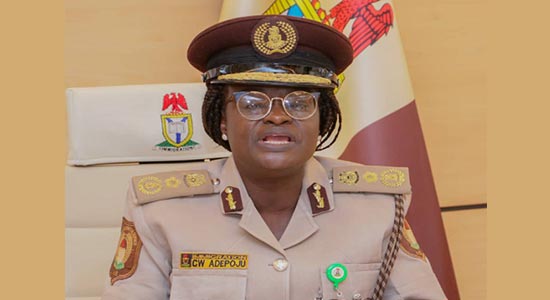
The Acting Comptroller General of the Service, Caroline Adepoju, while speaking to newsmen on Saturday, July 29, said the organisation has concluded plans to tighten the security of all marine borders across the country.
According to her, the Akwa Ibom Command had the longest coastal borders that must not be left porous to avoid nefarious activities within the maritime environment.
Speaking on the Federal Government’s recent tightening of air and land borders across the country, she explained that marine borders will also receive heightened security to prevent any vulnerabilities.
She however, noted that the government is resolute in providing the essential logistics required to ensure the safeguarding of the blue borders.
“Like I said, the Akwa Ibom State Command houses one of our longest coastal borders and we are working hard as we have done in the air and land borders, we want to tighten the security around coastal borders.
“We don’t want the marine area, the blue borders of Nigeria to be porous. We don’t want people of shady characters to perpetrate nefarious activities using our blue borders.
“That is why I am here and since I came, I discovered that in Nigeria Immigration Service, we have trained officers, we have dedicated officers, we have people who are willing to work, but we are in need of logistics.
“We need the government to help us, we need gunboats to be able to patrol our coastal borders. We need good offices and residential accommodation for our personnel, who are working in these coastal borders,” Adepoju said.
Adepoju further assured officers and men of the Command of the government’s commitment to improving their welfare, charging them to be dedicated and committed to their duties.
“I can assure you that when the time comes for promotion, those who are qualified will be promoted.”
On May 1, The ICIR reported that the Federal Executive Council (FEC) approved N52 billion to purchase E-border surveillance systems for the country.
The project was part of efforts to ensure effective monitoring of the nation’s borders through technology. Once fully implemented, the system would monitor and provide real-time information from major border posts in the country.
The project was also an effort to check the age-long porous border crisis bedeviling the country for years due to inadequate manpower.
Meanwhile, the allocation was different from the budget allocation the Federal Government has been allocating to the security agency over the years.
The former Minister of Interior Rauf Aregbesola, in 2019, identified 1, 400 illegal routes which had become access ways for cross-border criminal activities.
“You will recall that when we came, I made the observation that our borders are very porous and diverse and that it is impossible to man these borders physically.”
Similarly, the former Comptroller-General of the Nigeria Immigration Service (NIS) Mohammed Babandede, at a public function, lamented the inability of the Immigration officials to man the 140 border points in the country effectively.
He also admitted to the porosity of the borders, alluding to the same argument that the nation’s borders cannot be effectively managed without a comprehensive surveillance system at the border points.
However, despite need for improved security surveillance at Nigeria’s borders, the project is yet to be completed.
AMID the hike in the pump price of petrol, the Federal Government has urged Nigerians to consider the use of bicycles as alternative means of transportation.
According to a report, Director, Road Transport and Mass Transit Administration in the Federal Ministry of Transportation Musa Ibrahim made the call during a sensitisation meeting held in Abuja, aimed at highlighting the importance of cycling as a transport system.
Ibrahim noted that a shift to bicycles would reduce road traffic crashes and allow for a cleaner environment, adding that the meeting was in accordance with the World Bicycle Day celebrated on June 3.
He highlighted the “uniqueness, longevity and versatility of the bicycle as a simple, affordable, reliable, clean and environmentally fit sustainable means of transport” which fosters environmental stewardship and health.
He also stated that cycling could serve as a means of eradicating poverty and promoting good health and sustainable development.
While Ibrahim focused on the health and environmental benefits of cycling, Sector Commander of the Federal Road Safety Corps (FRSC) in Oyo State Joshua Adekanye urged Nigerians to adopt cycling as an alternative means of transportation to cushion the effects of the removal of fuel subsidy.
“Use of bicycle is economically cheap because the cost of a bicycle is not as expensive as using a car or motorcycle,” Adekanye said.
Following the removal of fuel subsidy in Nigeria, there is an upsurge in the price of petrol and, consequently, cost of transportation.
The Nigerian National Petroleum Company Limited (NNPCL) initially increased the petrol pump price from less than N200 to over N500 per litre in June and effected a further hike to N617 in July.
In most parts of the country, transport fares rose by at least 50 per cent. The ICIRreported that residents had resorted to trekking long distances to reduce costs, while commercial vehicle operators suffered from low patronage.
Many car owners now rely more on public transportation for mobility, including John Musa, who resides in the Life Camp area of Abuja.
“One thing is, I stay indoors a lot now. Except the trip is necessary. Sometimes, I even use public transport, depending on the distance because this fuel price is now something else,” Musa said.
Others, such as Victoria Ani, told The ICIR that the rising cost of petrol could further push Nigerians to seek greener pastures in other countries, a term now widely referred to as ‘japa’.
“It’s quite difficult and painful to have such percentage increase on the amount of PMS which has resulted in increase in the cost of other commodities in the market. I will not park my car, but if I get fed up, I will sell the car and japa,” she said.
Less than two months after removing subsidy, the Federal Government announced that monthly fuel consumption in the country dropped by 18.5 million litres.
How feasible is cycling as alternative means of transportation in FCT?
Despite calls for the use of bicycles by the Federal Government, residents of the FCT are unsure of the feasibility of the recommendation.
For Abuja resident James Emmanuel who owns a bicycle, there are more risks of road accidents from riding a bicycle along the same highways as other vehicles.
“There is the risk of accidents. There is danger in using it to convey yourself from Nyanya, where I stay, to my workplace in Wuse. The speed with which drivers drive on the highway will likely expose someone using bicycles to any form of accident,” he said.
Others cited stress, time involved, and possible harassment from traffic management officials as reasons why bicycles as a major form of transportation is unlikely to work.
“There is no bicycle lane in Nigeria. They will not even allow us use it,” FCT resident Mustapha Usman said.
Like Usman, many other residents of Abuja are sceptical about the use of bicycles along highways in the city, as several vehicles are restricted from plying major roads.
In 2019, the FCT Ministerial Task Team on Free Flow of Traffic and the Department of Road Traffic Services (DRTS) began enforcement of a ban on tricycles along Abuja highways.
Chairman of the Enforcement and Monitoring team Ikharo Attah said the ban was in line with the transportation masterplan of the FCT.
The Federal Capital Territory Administration (FCTA) also banned motorcycles from highways in the city. At least 432 seized motorcycles were crushed in 2022, a development which sparked a protest in Abuja.
The ICIR contacted the Federal Road Safety Corps (FRSC) on the feasibility of the recommended transport system.
FRSC Corps Public Education Officer (CPEO) Bisi Kazeem, who promised to address questions by The ICIR on the topic, is yet to respond at the time of filing this report.
The ICIR also contacted the FCTA Deputy Director on Mass Transit Okey Nwaegbu to ascertain if the FCT has provisions for bicycles along highways, as the Acting Director, FCT Road Traffic Service Aliyu Bodinga Wadata could not be reached on the phone.
Nwaegbu is also yet to respond to calls or messages as at the time of filing this report.
THE United Nations (UN) says it will continue to provide humanitarian assistance to Niger Republic despite the military coup that ousted President Mohamed Bazoum on Wednesday, July 26.
The development has resulted in sanctions from international bodies and escalated tensions in the West African country.
According to the UN Acting Resident Humanitarian Coordinator, Ms Nicole Kouassi, humanitarian operations, development support and peace programmes have continued even after the coup.
She said this while briefing journalists on Friday, July 28, in New York on the humanitarian situation in Niger.
Nigerien soldiers announced that they had overthrown Bazoum late on Wednesday, hours after presidential guards detained the President at his official residence. In a statement broadcast on national television, Amadou Abdramane, a Colonel-Major, Major, said “the defence and security forces have decided to put an end to the regime you are familiar with”.
Regional leaders, blocs, and supranational organisations have condemned the coup.
On Friday, the European Union criticised the coup. It warned that any abuse of the fundamental rights of the ousted leader would meet dire consequences with the suspension of support for the troubled country.
The United Nations also condemned the coup and indicated that it would halt humanitarian operations in the Sahel country to express its displeasure with the coup.
However, Kouassi said the UN would continue to provide aid given the difficult situation in Niger, where 4.3 million people, mainly women and children, were already dependent on support before the power grab.
“Some 3.3 million are facing food insecurity, while a $534 million appeal is just over 30 per cent funded.
“All the humanitarian partners and development partners remain engaged and committed to supporting the vulnerable population of Niger who are affected by a combination of climate issues, economic and security shocks in the context of very high humanitarian and development needs,” she said.
Kouassi added that the UN and international aid groups have not stopped delivering amid the crisis. However, UN Humanitarian Air Service (UNHAS) flights have been temporarily suspended because the air space and territorial borders are closed.
Meanwhile, the Nigerien military leader behind the detention of the country’s democratically elected president, Omar Tchiani, has become the new head of state.
Tchiani, the head of the presidential guards since 2011, appeared on state television on Friday, saying he was the “President of the National Council for the Safeguard of the Homeland” and warning that any foreign military intervention would lead to chaos.
THE meeting between Organised Labour and Federal Government, at the Presidential Villa on Friday, July 28, ended in deadlock.
It was gathered that representatives of the workers union walked out of the meeting with the Presidential Steering Committee on Subsidy Palliatives.
The labour delegation led by its president, Joe Ajaero, had earlier met the government delegation on Wednesday, July 26, where the two parties agreed to reconvene on Friday to get a brief from the government’s subcommittees on mass transit, compressed natural gas (CNG), and cash transfer.
The steering committee was set up by the Federal Government to address the effects of fuel subsidy removal on Nigerians.
Walking out of the Chief of Staff’s office in disappointment, the labour leaders accused the Federal Government of using the meetings as a ploy to deceive Nigerians.
According to Punch, Chief of Staff to the President, Femi Gbajabiamila, waited for the labour delegation alongside other team members but excused himself to attend to other official matters within the Presidential Villa when the union’s delegates did not show up.
It was gathered that the organised labour delegation from the NLC and the Trade Union Congress (TUC) experienced minor delays while entering the State House due to clearance issues. The delay occurred because the names of the delegation members were not sent to the gate early enough for clearance.
But, despite the issues, the Federal Government insisted that the meetings had made some progress.
“We’ve agreed to continue to make progress. It was a very productive meeting. The focus was really on how to fast-track a lot of the interventions that will bring relief, particularly around CNG, mass transportation, cleaner energy, transportation, and reducing the impact of the cost of transportation, and the increased cost of transportation. So, we’ve made good progress,” said the Special Adviser to the President on Energy, Olu Verheijen.
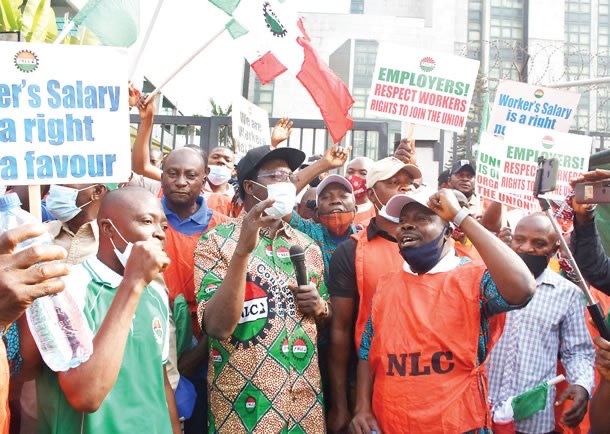
Meanwhile, the National Executive Council of the NLC insisted on a nationwide strike and mass protests scheduled for August 2 over the recent hike in the pump price of petrol despite the court order restraining the union from embarking on the planned nationwide strike.
Recall that the NLC planned to protest against the removal of subsidy in June but suspended the exercise after a meeting with government officials.
AMID the high level of insecurity in the country, the military high command said troops of the Nigerian Army killed 59 terrorists across the six geopolitical zones between July 17 and July 28.
The troops also recovered oil worth N388 million from oil thieves within the period under review.
A statement released on Friday, July 28, by the Director, Defence Media Operations Edward Buba, disclosed that a total of 137 criminals were arrested in separate operations conducted within the period.
According to Buba, the troops seized 68 weapons and 1,364 ammunition from criminals.
The statement read, “The Armed Forces of Nigeria is engaged in several operations across the six geopolitical zones to tackle the security challenges confronting the nation. As of July 28, 2023, the military has neutralised 59 terrorists and arrested a total number of 88 criminals, 10 kidnappers, 20 gunmen and 19 suspected oil thieves. Troops have also rescued 88 kidnapped hostages.
“In the course of operations across the country troops recovered a total number of 68 weapons and 1,364 ammunition. Troops recovered 26 AK47 rifles, one GPMG, 1 AKMS rifle, one FN rifle, four pump action, five pistols, and 19 Dane guns.
“Also recovered are 1,083 rounds of 7.62mm special, 228 rounds 7.62mm NATO, 14 rounds 5.56 x 45mm, 15 fully loaded AK47 magazines, nine rounds of 9mm ammo, the sum of N41,915.00 only and CFA49,000.”
Nigeria has experienced a wave of violent attacks since the general elections, particularly in Benue, Nasarawa, Plateau, and some southeastern states where a faction of Indigenous People of Biafra (IPOB) has been enforcing sit-at-home orders.
In Benue State, The ICIR has done extensive reports on how communities were attacked, resulting in several persons being killed. Some of the communities have been deserted as a result of insecurity.
In April, four communities of Entekpa ward – Umogidi, Upu, Olakpoga and Iwili— in Otukpo local government area were attacked by militias with sophisticated weapons, leading to deaths of at least 46 persons.
The attacks on these communities on April 5 was just one of many that have occurred in recent times across the Idoma ‘nation’ and Benue State as a whole.
In Benue State, communal clashes are also contributing to the insecurity situation. The ICIRreported on a fatal crisis that escalated at an electric isolation point between youths of Obi and Otukpo LGAs after the Jos Electricity Distribution (JED) Plc failed to restore power. This clash led to the death of few persons while over 300 houses were destroyed.
Also, in Nasarawa State, some communities were attacked by suspected herders on May 11, leaving 40 persons dead and several displaced. Among the casualties of the attack were five children and three adults burnt alive in their homes, and others slaughtered while fleeing the crisis.
Meanwhile, those who survived, mainly farmers, fled to neighbouring communities after having their relations killed and their means of livelihood destroyed by the tragedy.
The enforcement of sit-at-home in the South-East states has caused several hardships as individuals who ventured out to attend to business or other engagements were attacked. Lives were lost, and properties were destroyed.
A report published by The ICIR in January ahead of the 2023 general elections highlighted the high level of insecurity in the South-East.
While there was a temporary improvement during and after the elections, the security situation worsened again after a faction of the Indigenous People of Biafra (IPOB) led by Simon Ekpa imposed a one-week sit-at-home order from July 3 to July 10 to demand the release of the group’s leader Nnamdi Kanu.
THE Independent National Electoral Commission (INEC) has raised alarm over the cycle of violence witnessed in Bayelsa, Imo, and Kogi ahead of the November 11 governorship elections in the three states.
INEC chairman Mahmood Yakubu expressed this concern during a meeting of the Inter-Agency Consultative Committee on Election Security (ICCES) in Abuja, on Friday, July 28, where the 2023 general elections were reviewed.
Present at the meeting were the Co-Chair of ICCES and National Security Adviser (NSA), Nuhu Ribadu, and the Acting Inspector General of Police Kayode Egbetokun.
Yakubu stressed the need to learn from the challenges faced during the 2023 general elections and improve performance not only for the upcoming general election but also for the bye-elections, eight off-cycle governorship elections, and other electoral activities scheduled over the next three years.
“As we review the conduct of the last general election, we also need to focus our attention on the forthcoming bye-elections and the three off-cycle governorship elections in Bayelsa, Imo and Kogi States. Campaigns in public in the three states commenced on 14th July 2023 and will continue until Thursday 9th November 2023 i.e. 24 hours to the opening of polls on Saturday 11th November 2023.
“Already, there are ominous signs in the form of violent clashes between opposing political parties and candidates. While maintaining strict neutrality, security agencies should take decisive action against purveyors of violence and other undemocratic activities such as vote buying, attacks on election officials and disruption of the electoral process,” Yakubu said.
Meanwhile, the National Security Adviser (NSA) Ribadu pledged unalloyed support to ensure peaceful elections throughout the country. He also commended INEC for its efforts in employing advanced technologies, which he believes will enhance the credibility of future elections and stabilise democracy in Nigeria.
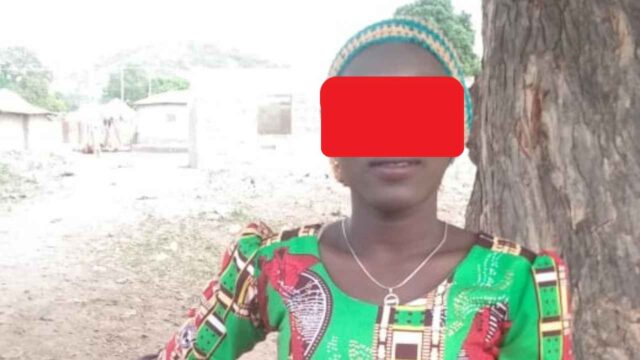
This investigation looks into the practice of forced marriages on young girls in several communities in Niger state.
Over 200 residents, in Saganuwan-Kulla village, near Etsu Audu, Gbako Local Government Area (LGA), swooped on the community head’s compound on Sunday, July 16, when The ICIR visited the community. The crew sought to interview the parents of a teenager, Amina Abubakar, one of the victims of forced marriage in the state.
Usman Alhassan is the head of Saganuwan-Kulla community. Amina’s father had died before her wedding. Alhassan sent for Amina’s mother; she was far away on the farm.
The chief then sent for Abubakar Tauhid, Amina’s uncle, to speak on behalf of the family. Tauhid has led the family since Amina’s father died.
Alhassan knew about Amina’s wedding. He expressed disappointment in the girl and said nobody forced her into marriage. He narrated all he knew about the wedding and argued that her family did it with her consent.
Tauhid’s arrival attracted more than 200 villagers who besieged the building and threatened to deal with the reporters for having the guts to question the villagers over their daughter’s marriage. The crew eventually escaped by a whisker after briefly interviewing Tauhid.
Some Saganuwan-Kulla residents thronged the village head’s compound before mobilising others to descend on The ICIR reporters.
That is the usual mood in most communities where a girl forced into marriage has absconded from her husband’s home. Many villagers see the girl’s action as conflicting with their culture and the Islamic religion, which is the predominant faith in the state.
Amina Tauhid Abubakar
Amina lived with her uncle in Minna from childhood until 2020, when her mother withdrew her from school to marry a man her late father had chosen for her before his death. She was then in primary four.
The soft-spoken girl had hoped to become a doctor in a country where only four doctors attend to 10,000 people and possibly help reduce the country’s maternal and child mortalities, which are the second highestglobally.
She is among the 26 million child brides in Nigeria, according to the United Nations Children Fund (UNICEF) data.
The ICIR reports that child marriage is one of the abuses children face in Nigeria, and the challenge is not limited to Niger State alone.
Thirty-four of Nigeria’s 36 states, including Niger, have domesticated the Federal Government’s 2003 Child Rights Act enacted to protect children like Amina, but the trends in child brides in her state cast a shadow on the operationality of the Act.
With out-of-school children hovering around 20 million and 133 million peopleliving in multi-dimensional poverty in Nigeria, tackling child marriage remains a huge task for any level of government in the country.
Amina was the only one who could speak pidgin English among all the four girls interviewed.
“There are two reasons I didn’t like the man my parents chose for me. The first reason is that my father told me how he forced my sister into marriage. Every day, I see my sister and her husband fighting in their house located near our compound.”
“I see my sister, who is already married off, every day. We live in the same neighbourhood. I don’t want to live this type of life. Even my mother, that was how her parents married her off to my father. They said that was how they would marry me off, and I resisted.”
Amina said she woke her mother every night, Kneeling and pleading that she let her choose the person to marry instead. She explained to her mother the kind of family she wanted, but the mother wouldn’t listen.
“She always ignored my pleas. I cried every night. Nobody cared about how this affected my health. I was always left alone in a sad mood.”
“Since I was born, I’d never begged anyone over anything as I pleaded with my mother not to force me into marriage. I continued to plead, and she insisted that I accept her decision. I later hardened my heart that I would never allow myself to be forced into marriage even if it requires that I die,” said Amina.
When it dawned on her that her marriage was inevitable, she presented four men from the village at different times as suitors, but her mother declined to endorse any of them.
Her siblings and extended relations ignored her pleas for help that would make her escape her mum’s decision. Whenever she needed anything in the house, her mother referred her to the man she wanted her to marry. This further compounded her troubles.
She became more miserable, watching her dream of becoming a medical doctor fly past her reach.
She said of her wedding experience, “After I had severally resisted the marriage proposal by my family, they took me to one man called Iyakatu. They chained my legs. When the legs began to swell in the night, they removed the chain because of the swelling and took me straight outside in the night and poured water on my head.”
Pouring water on a girl’s child is a symbol of marriage among Nupe-speaking people, a predominant tribe in Niger state. It’s done at dawn in front of friends and family to signify she is now married.
“They said they had already done the wedding for me to marry the person they chose. At 6:am, they prepared everything they would use for the wedding and brought the marriage dress to me. I wore the cloth and was sobbing.”
“I lived with the boy they married me to for 15 days but didn’t allow him to touch me. My parents always locked the man with me inside his room so he could have sex to enable me to become pregnant. They always locked the door with a padlock” Amina stated.
She said after they had failed to force her to have sex with her husband, they bundled her to a man in Makagi village, Muhammadu Baba (poplary called Alhaji Makagi), in Agaie LGA in the state.
Two of the four girls interviewed said their parents took them to the man they described as very influential in the area. They claimed he had charms and possessed healing power. The state’s Child Rights Agency staff and the Committee for the Defence of Human Rights (CDHR) corroborated the girls’ claim.
According to many sources, the man hypnotises girls who refuse their parents’ marriage choices. Makagi village is about 40 kilometres from Agaie town, and Bida to Agaie is 37 kilometres. Commuters spend hours on the highly dilapidated highways where articulated trucks fall off daily.
Amina claimed she didn’t know how her husband found it very easy to have sex with her after returning from the man. “I didn’t even know the time he did it. I got to know about sex when I woke up the following morning. I was in the village for 15 days and escaped at night after fasting.”
Amina fled into the bush at midnight and trekked for two hours before reaching another village belonging to the boy she had wanted to marry.
Days later, through a lawyer, she filed for a divorce at a Sharia court. The court separated her from the marriage and ordered that she return the bride price.
The court ruled that she can marry the man of her choice after observing her Iddah – the three months a divorced Muslim woman or widow observes before marrying another man.
During this investigation, she was observing the Iddah in the custody of Abubakar Mahmood, district head of Etsu Audu.
Mahmood attested to the claim that the man in Makagi administered love potions and gave concoctions to girls rejecting marriage. He described the state’s high rate of child marriage as “worse than slavery.”
Balkisu Abubakar
A native of Ebugi, in Gbako LGA, Balkisu Abubakar had a boy in mind that she wanted to marry. Her father had called her severally before becoming a teenager and had wanted to know her plan for marriage. She had repeatedly told her dad about him.
Having a boyfriend at puberty is commonplace among many girls in the communities visited, which appears as a ploy to reject their parents’ choice for them in marriage so that they will have someone to present as soon as they are asked to get married.
So, Balkisu was happy her dad did not object to her relationship with the boy she loved. However, that joy soon ebbed when her father told her he had someone else for her to marry.
“Without my consent, my father collected gifts from the guy he wanted me to marry. They fixed a date for the marriage last year, and I told them I couldn’t marry him. They set another date for earlier this year. Ten days before the said date for my wedding, I left for the court in Lemu. I told the court the reason I came for its intervention.”
“I asked the court to plead with my father not to force me to marry someone I didn’t love. The court summoned my family, and on getting to the court, they bribed their way through. The court asked me to go home with my family and obey my parents. All the marriage rites were carried out at the court with two police officers, and I was forcefully married to a guy I didn’t love.”
Balkisu’s travails had just begun with the forced marriage. Her matter got to the head of the Etsu Audu community before it was reaching the man in Makagi.
Balkisu Abubakar, one of the victims of forced child marriage in Niger State. Photo credit: The ICIR
She said the man in Makagi made some incantations and sprinkled some substances on her, with six other people in his custody facing the same problem.
She also said he accused her of having a ‘dark mind’ and ordered her back to reunite with her husband.
Balkisu’s parents eventually ejected her from their home when they noted she was unwilling to yield ground.
She left the community and headed for the bush, where she stayed for some days in the mountains.
“My parent started looking for me. After they found me, they took me to the village head of Edodzighi. I went to (a Sharia) court from the village head’s house. After narrating my ordeals, the court asked me what I wanted, and I told the judge that I was not interested in the marriage between me and the person I was forced to marry because I didn’t love him.”
“I also told the court that if it didn’t separate me and the man, I might end up killing him, or he might end up killing me. After terminating the marriage, the court ordered me to bring the guy I love. I refunded all the money I had collected from the man.”
Balkisu has since remained in the custody of the village head in Edodzighi.
Amina Idris
Amina Idris has become a household name in her community Edogi-Jima, Lavun LGA, since she absconded from her husband’s home several weeks ago.
She is the boldest among the victims interviewed by The ICIR. She had run a flourishing shea butter business and other commodities before her parents forced her into a marriage.
Her story is interesting because a Sharia court judge, Mohammed Mohammed, from her family, supports her marriage, despite being allegedly forced into it.
The judge has purportedly threatened an official of the state’s Child Rights Agency, Mariam Abdulmalik, who kept the girl in custody after she fled her husband’s home.
While Amina’s father is late, her mother is alive. The mother divorced her father when the girl was very young. The mother now has five other children for the husband she later married.
Amina lived with her husband, Usman Haruna, with whom she was married in May, for 13 days.
According to Abdulmalik, the girl slept in the bush for two nights before finding her way to the Child Rights office. The office treats at least 100 cases of girl-child forced marriage yearly.
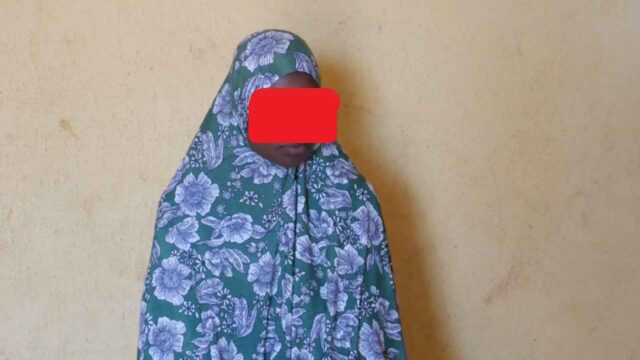
Amina Idris, one of the girls forced into marriage in Niger State. Photo credit: The ICIR
Amina wants an end to her marriage to Haruna. “I am not interested in getting married to the boy. I can’t even stand close to him because I don’t love him.”
Days after her people forced her into marriage, Amina lied to her husband that she wanted to collect a contribution in faraway Bida town and pleaded that the husband rides her to the bustling town on a motorcycle. Haruna agreed, and the couple set for the journey.
Amina alighted from the motorcycle and told her husband to wait, pretending to collect her money from a compound facing her. She escaped through the backyard and eventually found her way to the Child Rights Protection Agency.
She was in the agency’s custody when she was interviewed for this report. But Abdulmalik (the agency’s Desk Officer keeping her) said on Wednesday, July 25, that a Sharia Court ruled that she return to her husband and has obeyed the court.
Hajara Mohammed
The story of Hajara also epitomises the magnitude and challenges of child marriage in the state. Hajara said her planned forced marriage caused her mother’s death.
From birth, her father and mother had different men for her to marry. The parents refused to agree on who she would marry. The matter dragged on for some years, and the mother took ill. The husband allegedly abandoned his wife till she died.
Hajara couldn’t bear the pain of her mother’s loss and insisted on rejecting her father’s choice for her marriage.
The wedding eventually took place. But days after the wedding, she ran to the vigilantes in Bida for support, and they led her to the Child Rights Protection Agency in the town.
She remained in the agency’s custody until her brother took her away, promising they would visit her grandmother in Kwara state. She left her luggage behind.
Hajara Mohammed, one of the girls forced into marriage in Niger State. Photo credit: The ICIR
That was the last time the agency heard from her. One of The ICIR sources located Hajara on Tuesday, July 18, at Gara village, Gbako LGA, in the custody of a woman. Her brother dumped her there allegedly as part of his family’s efforts to compel her to accept the man his father chose for her.
Hajara no longer had access to her phone. “They removed my SIM card from my phone, and I can’t call anybody anymore,” she told the source.
“I’ve told them I would not marry the man even before my mother died. That’s the reason I ran away. It was the frustration of my marriage that killed my mother. After my mother’s death, I was forced into the village to stay with my husband.”
“Though they succeeded in forcing me, I didn’t allow the man to have sex with me throughout the period I was with him. They held my hands and legs to make the man rape me. But I didn’t become pregnant for him. I refused to accept the marriage because I didn’t love the man.”
On Saturday, July 22, The ICIR learnt that her family forced her to settle with the man she was forced to marry. However, in a twist of events, Hajara escaped the marriage days later and fled to Abuja on Friday, July 28.
Makagi, victims’ families react
During these findings, the CDHR petitioned the Area Commander, Bida Police Area Command, Abiodun Bakare-Apanpa, a lawyer, over the Makagi man’s alleged activities, as The ICIR planned to visit him.
The CDHR requested that the Commander provide some officers to lead the crew to the community. Responding, the Commander directed the team to the Divisional Police Officer (DPO) Agaie Divisional Police Headquarters, Abubakar Yahaya, through a letter.
The journey to Makagi from Bida began at 1 p.m. The team eventually got to the community at 6:30 p.m., accompanied by police officers from Agaie. Residents said the man travelled for Hajj and was yet to return home.
However, Abubakar Aliu, one of Alhaji Makaji’s assistants, who spoke to The ICIR denied all allegations against his principal.
Abubakar Aliu, Makagi’s asistant. Photo credit: The ICIR
He explained that the man only treated sick people and had been in business for over 25 years.
“If you are not feeling fine or bring someone sick, he will help you. But any problem that has to do with marriage issues, he doesn’t have a hand in it. Even if you come to him about it, he doesn’t pay listening ears. I can swear with the holy Quran on that,” he said.
The crew left the community at 7:00 p.m. and returned to Bida at 11:00 p.m.
The team met the victims’ families in their villages, except Balkisu Abubakar. The bridge linking her village, Ebugi, Gbako LGA, has reportedly collapsed.
Mohammed Mohammed – Hajara’s father regrets marriage
We met Hajara’s father, Mohammed Mohammed, at Lenfa-Boro, Edati LGA. He regretted giving her child out in marriage and the embarrassment her rejection of the wedding had caused his family.
He blamed his action on his inability to enrol his children in school. Apart from Hajara, he had five other children from Hajara’s mother before she died. They are four boys and a girl – Hajara’s younger sister.
Hajara’s father, Mohammed Mohammed.Photo credit: The ICIR
He did not know Hajara’s age but said he married her mother at a much older age than Hajara.
Mohammed promised to support Hajara to learn a vocational skill if she could return home.
The man, who is in his sixties, said he may marry three more wives when asked if he was considering remarrying after his only wife’s death.
Amina disappoints my family – Abubakar Tauhid
Tauhid (earlier named as Amina’s uncle) told The ICIR crew while other villagers were protesting outside the compound of the village head of Saganuwan-Kulla, that his niece, Amina, disappointed the family by rejecting her marriage.
He said even though she initially rejected the marriage, she later agreed to it after interventions by people she respected.
Abubakar Tauhid, Amina uncle. Photo credit: The ICIR
He accused the girl of collecting gifts from her husband and fleeing his home thereafter.
Given the villagers’ attitude towards our reporters, we report that it could be dangerous for Amina to come to the village for whatever reason for now.
The villagers claimed a ‘rich man’ that Amina planned to marry hired our reporters to put them “on the internet.”
Amina Idris brought shame to our family – Adamu Ndagi
Adamu Ndagi is the Chief Imam of Edogi-Jima village, Lavun LGA, where Amina hails from.
He spoke for his family alongside Mohammed Mohammed, a Sharia court judge, who is also from the family.
Ndagi said the girl embarrassed his family twice. The first was how she disappeared from her wedding venue before she resettled with her husband, and the other was how she eventually abandoned the marriage.
He accused the girl of collecting money from her husband and still dumping him.
“According to Islam, if you have a daughter who has reached 15 years, she’s matured. If a boy reaches 14 years, he’s matured,” he stated as he expressed hope that Aminu would return home.
Similarly, the judge frowned at Amina’s attitude. He argued repeatedly that the girl consented to the wedding.
He blamed Amina, alleging she didn’t speak against the wedding but collected gifts from her husband.
Mohammed Mohammed, Sharia Court judge and Amina’s uncle. Photo credit: The ICIR
He said God forbids forced marriage, and he would not support it.
“If Islam says 15 years, and the marriage is conducted when she is 19 or 20, there is nothing wrong with that. Even in the constitution of Nigeria, it’s not wrong.”
“It is a mere marriage proposal. Even if done at age 13, it is not bad in Islam. Proposing is not marriage. There is a difference between proposing and conducting marriage. It’s a different issue. I can propose to 10 or 15 years old and conduct my marriage after 15 years.”
“There is nothing bad there in Islam,” the judge stated.
However, Amina’s husband, Usman Haruna, said he had been sad since his wife disappeared. He was eager to see his wife back while speaking with The ICIR crew.
Amina’s mother refuses to talk about her daughter’s wedding
The ICIR located Amina’s mother, Ramotu Haruna, at Zhigichi community in Lavun LGA. She declined to speak but cried profusely for nearly 30 minutes.
Ramotu Haruna, Amina Idris’ mother. Photo credit: The ICIR
The ICIR crew linked her to the agency where her daughter was taken refuge in Bida. She was at the Child Rights Protection Agency by 9 a.m. the next day, accompanied by her new husband. Despite beaming with a smile after seeing her daughter, all the woman said was that she collected N20,000 for Amina’s wedding.
She denied giving her daughter out in marriage. “Her father’s family married her to a husband, not me,” she said.
Underage marriage causes 70 per cent of maternal, child deaths in LGA – PHC Director
The Director of Primary Health Care, Bida LGA, Amina Manko Yahaya, said complications from under-aged pregnancies accounted for 70 per cent of maternal and child mortality in the LGA.
She decried the high rate of child marriage in the area and called on stakeholders to stop the trend.
“Being the director, I was once in the facility, and I’ve witnessed many things like when the lady is pregnant, you never see her coming for antenatal. When she doesn’t come for antenatal, it is a problem because you never detect anything pre (natal). There’s no counselling. She will be hiding somewhere. Nobody will see her. The parents will encourage her to hide so nobody knows she’s pregnant.”
“By the time she enters labour, if she does not deliver within certain hours, the parents will bring her to the clinic. It will be already late when they bring her to the clinic. Maybe she already had prolonged labour. During this prolonged labour, the baby can die in her womb.”
Yahaya explained that the cervix of under-aged girls in labour is too small that even when there is a contraction during labour, the cervix would not dilate because all her system is too small for her baby to come out.
Amina Manko Yahaya, Director, Primary Health Care, Bida Local Government Area, Niger State. Photo credit: The ICIR
“If you’re not careful, the baby is even bigger than her pelvis. You cannot detect anything because she didn’t come for antenatal.”
She narrated the story of a nine-year-old married to her neighbour, who developed Vesicovaginal Fistula (VVF) caused by labour.
Marrying off underage is wrong – Hisbah leader
The Commandant, Niger State Hisbah Commission, Bida Emirate Unit, Shuaib Muhammad Ndeji, condemned the high rate of girl-child marriage in the state.
He said his organisation handled many child bride cases.
“Many people are misbehaving, leaving Islamic provisions and turning them upside down. This is very wrong. The Prophet said, ‘Marry and reproduce that I should be proud of you.’ We should marry and reproduce so that Prophet Muhammed will be proud of us on the day of judgement.”
“He should be proud before other prophets that he has the highest population, bigger than that of Abraham, Jacob, Moses etc. The Prophet also said, ‘Marry from those you love, the girls, the women you love and love you. If you want to marry, start from two, three or four. Don’t exceed four. But if you cannot maintain, reverse to one for justice.”
Commandant, Niger State Hisbah, Bida Emirate, Shuaib Muhammad Ndeji. Photo credit: The ICIR
He explained further that neither the Quran nor Bible recommends forced marriage, adding that his office received several such girls coming to complain.
He said many women quit their marriages because of a lack of love. The commandant averred that the practice is common in the villages more than in the city.
He also said all children should receive formal education and at least complete secondary education before considering marriage.
Parents give out girls days after birth – former LG chairman
The former chairman of Bida LGA, Bako Ndaawo, is one of the people who said parents give out their girls shortly after birth, and the parents do so to enable them to obtain gifts or a similar offer from their would-be in-laws.
Bako Ndaawo, former Chairman, Bida Local Government Area, Niger State.Photo credit: The ICIR
“By the time they start growing up, they see that the child is trying to be wise, they will say if they don’t fast-track the marriage, by the time she becomes a full grown-up child, she may decide not to marry that man again. They will try to bring them together.”
He added that parents could give their girl to a man they think is buoyant enough to be husband to their daughter. He said they would collect huge amounts of money without the children’s consent.
We always receive cases of child marriage – Emir’s Palace
The ICIR crew visited the Bida Emir’s Palace and discovered it was familiar with the trend. The palace said it always received cases of child marriage.
Abubakar Mohammed, personal assistant to the Emir, Yahaya Abubakar, heads the Emir’s office dealing with child marriage issues.
He spoke on behalf of the Emir who was in Saudi Arabia for Hajj.
Abubakar Muhammad, Rep. Bida Emir, Yahaya Abubakar. The ICIR
“We are here day and night, receiving many cases from the parents and girls regarding forced marriage. But we have many challenges. Sometimes, the fault comes from the girls and the parents,” he said.
He cautioned that the world was changing fast, and it would be wicked for any parent to offer a child for marriage before clocking 18, after which he said the child might have completed at least secondary education.
Islam forbids forced marriage – Lawyer
A lawyer in Bida, Muhammad Rabiu, who has practised for decades, explained how difficult it could be for a girl forced into a marriage to divorce. She will find at least two male witnesses of impeccable character to testify before a court that her parents married her out by force.
She must also refund all the money her husband spent on her.
Rabiu said Islamically, it was not wrong for a child to marry at puberty, but in contemporary society, every child must acquire knowledge to enable them to cope well in marriage.
Barrister Muhammad N. Rabiu. Photo credit: The ICIR
He slammed scholars he said were misinterpreting the Quran and claiming that parents could give their daughters to any man they like without consulting them.
Stressing when a Muslim child could marry, the lawyer stated, “We don’t have a fixed date for the age of maturity in Islam. The moment a child attains maturity, and maturity in Islam, if a lady or a girl, is when she begins to menstruate. She has reached the age of maturity that she can be married out, unlike the common law that says until you reach 18.
“Similarly, a boy attains the age of maturity when sometimes they say he has started having hair in his groin, beard, armpit, etc. It is not necessarily 18 years of age. What is most important is that she must be able to know what is right and wrong.”
We receive over 100 child marriage cases yearly in Bida Emirate – official
Bida office of the Niger State Child Rights Protection Agency receives a case of forced child marriage almost daily, said its Desk Officer, Mariam Abdulmalik.
Abdulmalik has supported child brides and accommodated them at her expense on the advice of community leaders.
“We have been having a lot of cases of child brides. It’s been happening frequently that I can say almost every day, we have a case. You see parents forcing an underage girl to marry a man she doesn’t love.”
Mariam Abdulmalik, Desk Officer, Child Rights Protection Agency, Bida office. Photo credit: The ICIR
“Parents take their daughters to herbalists to give them concoctions so they will accept the parents’ choice in marriage. There are some villages where you will see a room filled with snakes that they will drop a child inside to compel her to marry the man they chose for her who she doesn’t love.”
Abdulmalik has several files bearing different names of victims of child marriage on her table.
She said when girls refuse their parent’s marriage offer, the parents will stand their ground. Her office’s role in such a matter is to refer the case to court.
But marriage litigations attract much spending, which she said her office or the victims could not afford.
She confirmed that child marriage was more common in villages than in major towns such as Bida because children in towns go to school and parents are better enlightened.
“You will see a newly-born baby, from two to three months, the parents will announce that they have engaged her to somebody who will marry her. Even if the parents are not alive, they will say what the parents said before they died will stand. Even if she doesn’t want to marry, she must marry the person they chose for her from childhood. They don’t want their children to be educated so that this thing can continue. They see education as something that will not let the children listen to them.”
She said her officials were going around communities sensitising people against the practice.
Abdulmalik stated that education and continued sensitisation are the way out of the problem.
Child Rights Protection Agency headquarters declines interview, summons Bida staff
The Director-General of the Niger State Child Rights Protection Agency, Mairam Kolo, was said to have travelled for Hajj.
She allegedly handed over to Suleiman Shehu, a senior official in the agency.
One of our reporters called Shehu on Tuesday, July 18, requesting an interview with him on Wednesday, July 19.
The request followed a message sent to him through his official in Bida two days earlier.
He turned down the interview, claiming he had to seek approval from the state governor.
During his conversation with the reporter on the phone, he said child marriage was prevalent in the state. He said he treated six cases in his office that day.
Displeased with how its Bida officials provided information to support this investigation, the agency summoned its three officials in the town to report to Minna, its headquarters, in what is suspected to be an invitation to punish them.
We’re inundated with child bride cases – CDHR
The Niger state CDHR chairman, Abdulkadir Tukur Muhammed, said since his office was inaugurated two years ago, it had been inundated with child marriage cases.
“We have girls who have run away from home for weeks, living inside the bush and trying to come out from their villages to town for assistance,” he stated.
Abdulkadir Tukur Muhammed, Chairman, CDHR, Niger State chapter
He opined that attributing child marriage to Islamic tenets was wrong.
Muhammed explained that girls fear marriage offers because of what their fathers do to their mothers at home.
“Poverty is a major cause of this practice. They also don’t want their girls to be far from them, so they will use her for farming. It is the girls that usually harvest crops from the farm. They have that kind of belief. When one of the parents has a problem and goes to another man in the village, he will collect money from the man and offer his daughter in exchange for the money.”
“The only way to solve this problem in the state is through education and serious sensitisation across the communities,” he noted.
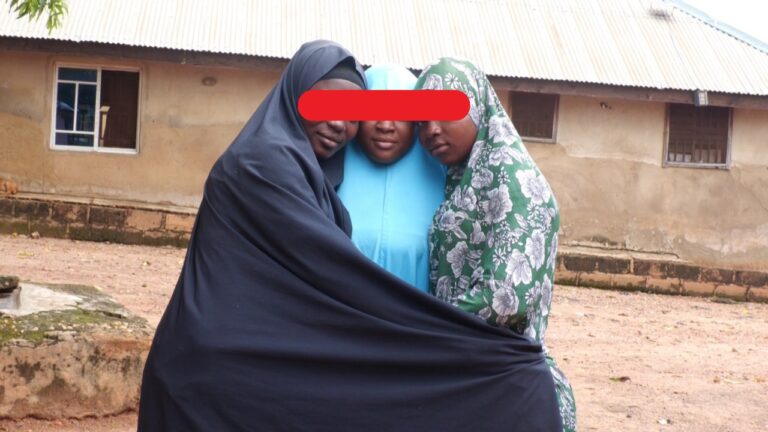
We report that the high point of this investigation was when we brought the two Aminas and Balkisu together in Bida. They were happy sharing their experiences and felt like never leaving one another again. They pledged to be advocates against child marriage.
IT appears there would be no let yet in the surging pump price of petrol in Nigeria as uncertainty clouds the commencement of domestic production of the vital product.
It is widely believed that local production and supply of petrol would positively impact on price as the negative implications of cost, insurance and freight (cif) on shipping it in would have been eliminated.
Moreover, market forces, on which the incumbent President Bola Ahmed Tinubu has uncompromisingly hinged the fuel pricing template, are not in any way looking up Nigeria’s way.
With the unification of exchange rates and floating of the naira, the value of the naira against the major currencies cannot be favourable to imports, especially the importation of premium motor spirit (PMS), widely known as petrol.
The inflation rate, well tied to the exchange rate in the macroeconomic influence, has also been spiralling. The Nigerian National Bureau of Statistics (NBS) put the inflation figure for June 2023 at an unprecedented 22.79 per cent.
With the Tinubu administration further increasing the price of petrol in July and the cost of goods and services consequently biting harder, the NBS inflation rate is not unexpected to set a new record in the July NBS basket.
Nigeria’s national refineries in Port-Harcourt, Warri and Kaduna have remained comatose despite tens of billions of naira expended on them over decades on turn-around maintenance contracts, as well as on the huge salaries NNPCL workers are paid monthly in their unproductive facilities.
A report by the Nigerian Guardian newspaper of August 25, 2022, stated that “about 660 staff at the Kaduna Refining and Petrochemical Company (KRPC), 506 staff at the Port Harcourt Refining Company (PHRC), and 437 staff at the Warri Refining and Petrochemical Company (WRPC) earn N136 billion in salaries without refining a drop of crude oil.”
The NNPCL had shut down the 445,000 barrels per day total capacity of its refineries for over two years, yet has kept the large workforce at the facilities, as it rehabilitates the Port Harcourt refinery for $1.5 billion and those of Warri and Kaduna for $1.4 billion.
In August 2020, the total losses incurred by the refineries were N7,088 billion, N7,043 billion in September of the same year, and N5,489 billion in October. In November 2020, it went up to N5,995 billion and went further up to N8,279 billion in December that year.
In January 2021, the operational deficit was N5,371 billion. February recorded a N6,879 billion loss, N3,866 billion in March, N3,544 billion in April, N5,243 billion in May, N4,014 billion in June, N3,752 billion in July and N3,819 billion in August.
On average, the oil company spends approximately N68 billion in paying salaries and other expenses at the moribund refineries yearly. In the last two years, the losses have amounted to an average of N136 billion.
The NNPCL spokesperson, Garba Deen Muhammad, did not respond to calls made to him to confirm the extent of rehabilitation work at the refineries. But an inside source at the Port Harcourt refinery said repair work was, indeed, in progress.
Petrol consumers are also waiting eagerly for the Dangote refinery at Lekki Free Zone, Lagos, to start producing and supplying petrol in the hope that would influence a drop in pump price.
The then president, Mumammadu Buhari commissioned the 650,000 barrels per day capacity refinery on May 22, 2023. A statement from the president of the Dangote Group, Aliko Dangote, after the commissioning gave the end of July or early August this year as date refined crude would flow out of the refinery.
But with consumers apprehensive of more rounds of hike in petrol price virtually every week, the Dangote August promise would seem too far away.
Worse is the speculation that work on the Dangote Refinery has not been completed to the extent it would not be ready to commence production and supply in August.
“Construction of the facility is not going as earlier planned. It’s been delayed by financing and purchases. So give or take, 2025 is viable,” Value Chain energy magazine quoted Sahara Report in its latest report.
But the Group Head, Corporate Communications at Dangote Group, Anthony Chiejine, called, on Friday, July 28, the general public to “discountenance such mischievous and twisted reports” and rather focus on what the impact of the project would be on the Nigerian economy.
The company reiterated that the refinery would start producing in August or September, and if for any reason it could not at that time, it would inform the public.
The fear of continuation of fuel imports beyond 2023, with all its harsh multiplier effects, has, however, persisted in some quarters.
“We are totally dependent on imports, so we remain vulnerable to exchange rate fluctuations and international prices of refined products,” a former chairman of the Major Oil Marketers Association of Nigeria (MOMAN), Adetunji Oyebanji, told The ICIR.
Another economist, Kelvin Emmanuel, said local refining would impact on the pricing once Dangote refinery comes on stream.
“Hopefully, Dangote can undercut the marketers and force them to stop importing when he starts production and supply . This would affect the price. But for now, exchange rate volatility will still affect price of importation,” Emmanuel told TheICIR.
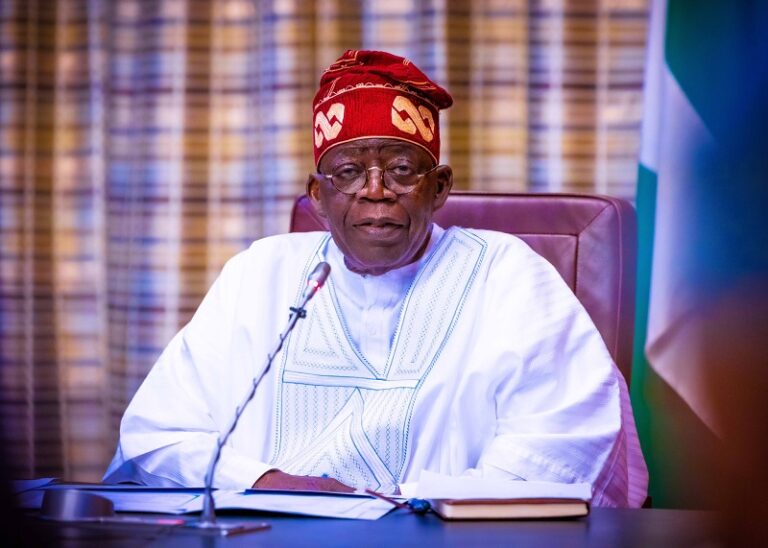
PRESIDENT Bola Tinubu has expressed his commitment to partner global tech giant, Google Incorporated, to create one million digital jobs in Nigeria.
The President made this known, on Friday, July 28, at the State House, during the visit of Google Global Vice President, Richard Gingras, to his office.
Tinubu told the Google vice president that Nigeria possesses a pool of creative and talented young individuals who are eager to learn, especially in the era of Artificial Intelligence.
He also highlighted that Google, as a tech giant, holds the capabilities and tools necessary for these young people to excel in their endeavors.
The President had vowed in his inaugural speech, on May 29, to create one million jobs through the digital economy for the teeming youths in Nigeria.
Speaking with Google Global vice president, Tinubu said: “I am glad that Google is ready to partner with us. You have answered our call on digital innovation and to help our youths. You are supporting our efforts to promote digital economy. We are ready to work with you on your commitment to create 1 million digital jobs in Nigeria.”
He also assured the global tech company of his support to have a beneficial corporate responsibility, adding that his administration has started its economic reforms.
Speaking on Google’s promotion of free speech, freedom of the press and democracy through its platforms, Tinubu said he is committed to supporting free society.
“It is in public interest to continue to defend free press and free speech. We are committed to supporting a free society,” the President said.
On his part, the Google Vice President reportedly told Tinubu that he had been inspired by the creativity and talent of young people in Nigeria who are embracing technology and digital tools to expand access to information and promote democracy.
Gingras also expressed his enthusiasm towards Tinubu’s administration, saying that his company has a deep interest in Nigeria.
He listed the many capabilities of Google to include areas of Artificial Intelligence and other digital innovations that are empowering young people to become digital entrepreneurs, adding that Google subsea cable, Equiano, named after a Nigerian slave abolitionist, which will significantly impact future internet connectivity demands, landed in Nigeria in April 2022.
He also vowed to help the Federal Government in the fight against fake news and disinformation.
“Google has deep interest in Nigeria. We want to support the government’s efforts to create one million digital jobs. We have all the tools and capabilities to make this happen. We will also help to secure Nigeria and we have discussed that with your National Security Adviser.
“I came to Nigeria to learn. I am going back home very impressed with what I saw. You have very vibrant, creative and talented young people who are embracing innovation.
“We will continue to support your programmes to expand your digital economy,” Mr. Gingras said.
Tinubu’s one million job creation, other campaign promises
Tinubu in his inaugural speech made several promises to Nigerians, one of which was focused on job creation.
Tinubu stressed that the country he dreamed of is more than just an improvement in economics and other statistics.
He vowed to increase Nigeria’s gross domestic product (GDP) by, at least, six per cent annually, through job creation and food security to mitigate poverty.
He said, “My administration must create meaningful opportunities for our youth. We shall honour our campaign commitment of one million new jobs in the digital economy.
“We shall remodel our economy to bring growth and develop the GDP much better than we have seen through job creation, food security and an end to extreme poverty.
“On the economic, we target a GDP of not less than six percent growth.
Other promises made by Tinubu were improving the economy, tackling insecurity, securing rural agricultural income, creating agricultural hubs for production, re-channeling fuel subsidy funds into a better investment, housecleaning of monetary policy, reducing interest rate and improving relationships with foreign countries.
FOLLOWING the coup in Niger Republic, President Bola Tinubu, who also serves as the Chairman of the ECOWAS Authority of Heads of State and Government, has convened a special summit of regional leaders.
The crucial meeting is scheduled to take place on Sunday, July 30, in Abuja, Nigeria’s capital, according to a statement released on Friday by the Special Adviser to the President on Special Duties, Communications, and Strategy, Dele Alake.
Tinubu has unequivocally condemned the current political turmoil in Niger and reiterated ECOWAS’ unwavering commitment to safeguarding democracy and fostering stable governance within the sub-region.
He vowed that both ECOWAS and the international community would spare no effort in defending democracy and ensuring its firm establishment.
The coup in Niger has received widespread condemnation from the international community.
On Thursday, in two separate telephone calls, United States Vice President Kamala Harris and United Nations Secretary-General Antonio Guterres reached out to Tinubu to express their support for ECOWAS’ stance on the development in Niger.
In addition, the United States acknowledged the pivotal role Nigeria plays as a regional power in Africa and commended Tinubu for his commitment to implementing vital reforms.
The upcoming ECOWAS summit is expected to devise a pathway towards a peaceful resolution of the crisis in Niger.