Home Blog Page 839

Tinubu nominates Wike, El-Rufai, Umahi, others as ministers

PRESIDENT Bola Tinubu has nominated 28 persons for screening and confirmation as ministers by the 10th Senate.

Among the nominees are former governors Nyesom Wike (Rivers); David Umahi (Ebonyi); Nasri El-Rufai (Kaduna); and Abubakar Badaru (Jigawa).

Umahi, who completed his two-term of four years each as governor on May 29, is currently a serving senator.

Tinubu sent the list containing the nominees to the Senate through his Chief of Staff, Femi Gbajabiamila, on Thursday, July 27.

The Senate President, Godswill Akpabio, read the list at the plenary at about 1:30 pm.

The President’s letter, as read by Akpabio, stated: “In compliance with the provisions of Section 147, sub-section two of the constitution of the Federal Republic of Nigeria (1999 as amended), I am pleased to forward to the Senate for confirmation the under-listed 28 ministerial nominees.”

The nominees are Abubakar Momoh; Yusuf Maitama Tukur; Ahmad Dangiwa, an architect; Hanatu Musawa, a lawyer; Uche Nnaji; Binta Edu, a doctor; Doris Aniche Ndoka, also a doctor; Umahi; Wike and Badaru.

Others are El-Rufai; Ekperipe Ekpo; Nkiru Onyejiocha; Olubunmi Tunji Ojo; Stella Okotete; Uju Keneddy Ohaneye; Bello Mohammad Goronyo; Dele Alake; Lateef Fagbemi and Muhammad Idris.

The nominees also include Olawale Edu; Waheed Adebayo Adelabu; Imaan Suleiman Ibrahim; Ali Pate, a professor; Joseph Usev, also a professor; Abubakar Kyari; John Enoh; and Sani Abubakar Danladi.

While noting that the list was not exhaustive as more names would be sent to the National Assembly in due course, Tinubu expressed hope that the nominations would receive expeditious consideration and confirmation by the Senate.

The 9th Senate amended the Constitution to ensure that a sitting President presents his ministerial nominees to the Senate latest 60 days after taking the Oath of Office.

The ICIR reports that there are 36 states in Nigeria, and the Constitution makes it mandatory for the President to appoint at least a minister from each state.

With the 28 nominations Tinubu made, at least eight states are yet to have a minister in the President’s planned cabinet.

Court rejects DSS bid to extend Emefiele’s detention by 14 days

0

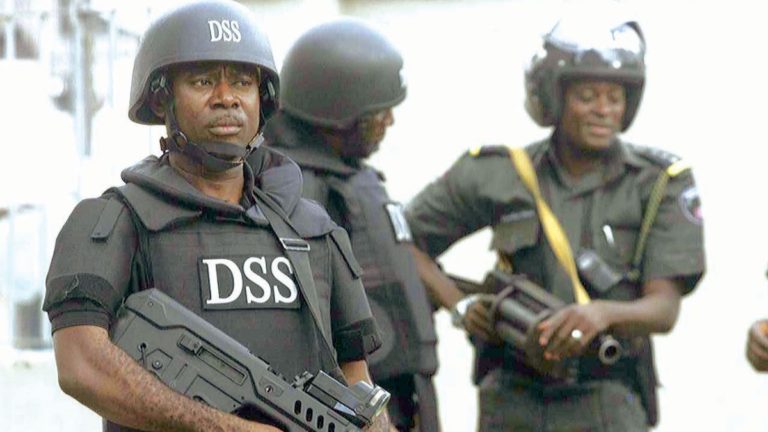
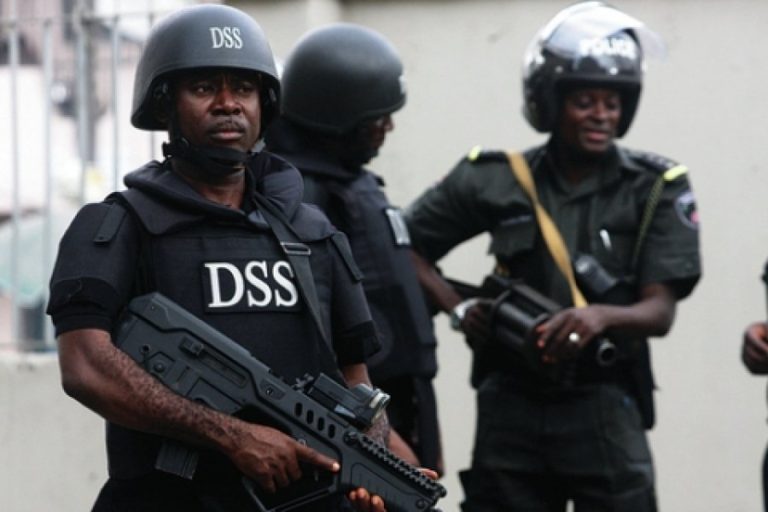
A FEDERAL Capital Territory (FCT) High Court has rejected an application filed by the Department of State Services (DSS) for an order to detain suspended governor of the Central Bank of Nigeria (CBN) Godwin Emefiele for a further 14 days.

The DSS, in the application, said the request for the 14 days extension was informed by fresh evidence it uncovered in the case against the suspended CBN boss.

It was gathered that the DSS’s legal team discreetly filed the application on Wednesday, July 26.

However, the court presided by Hamza Muazu rejected the application due to jurisdictional issues and abuse of the legal system.

The DSS’s attorney, Victor Ejelonu, decided to withdraw the case when the judge questioned the court’s jurisdiction and pointed out that the Magistrate Court had exclusive authority to issue detention orders under sections 293 and 296 of the Administration of Criminal Justice Act.

The application came in the wake of Emefiele’s rearrest by the DSS at the premises of the Federal High Court in Lagos, following his remand in a correctional centre pending the fulfilment of his bail conditions.

The ICIR reported that Emefiele was rearrested by the DSS on Tuesday, July 25, minutes after he was arraigned and granted bail by a Federal High Court in Ikoyi, Lagos.

The development followed a physical altercation between operatives of the DSS and the Nigerian Correctional Service (NCoS).

The ICIR earlier reported on Tuesday, July 25, that the Federal High Court in Lagos granted bail to Emefiele after he was arraigned over charges relating to alleged gun possession.

The court, presided by Nicholas Oweibo, released Emefiele on a N20 million bail bond, with one surety in like sum.

The former apex bank chief was arraigned on two counts of illegal possession of firearms and ammunition.

A former Nigerian Bar Association (NBA) president Joseph Daudu led Emefiele’s legal team.

The suspended Central Bank of Nigeria chief pleaded not guilty to the charges brought against him.

After the plea, Daudu told the court that his client had been detained for weeks.

Dauda requested that Emefiele be released on bail on self-recognition, stating that the accused person had satisfied all requirements for the application to be ready for hearing.

The government’s lawyer, who is the Deputy Director of Prosecution (DDP), told the judge that she had “not been given the bail application,” adding, “As I stand here, I have not set eyes on it.”

The judge rejected the Federal Government’s argument that Emefiele posed a flight risk, saying the government had not presented any evidence to support its assertion.

The bail requirement included producing a surety with landed property within the court’s Ikoyi, Lagos, jurisdiction, the deposit of his passport with the court, and providing a civil servant of level 16 or higher to complete the bail.

A High Court in Abuja on July 14 nullified the arrest, detention and interrogation of Emefiele by the DSS.

The court, presided by Bello Kawu, ordered Emefiele’s release and described his arrest and detention as illegal.

Kawu, delivering judgment, held that the arrest, detention and interrogation of the former CBN governor violated the subsisting decision and orders of Justice M. A. Hassan in Suit No. FCT/HC/GAR/CV/41/2022.

The court also granted an injunction restraining the security agencies, particularly the DSS, from interfering with his personal liberty and freedom of movement or taking other steps against him.

The judgment came barely 24 hours after another High Court in Abuja had ordered the release of the suspended CBN governor.

The DSS on Thursday, July 13, said it had filed charges against Emefiele.

This came more than a month after the secret service took Emefiele into custody on June 10.

The ICIR reported that the DSS confirmed the arrest of Emefiele, whom President Bola Tinubu had suspended on June 9.

Tinubu suspended Emefiele with immediate effect and directed him to hand over the affairs of the CBN to the deputy governor, operations directorate, Folashodun Shonubi.

Emefiele’s suspension was announced in a statement released on June 9 by Willie Bassey, director of information, Office of Secretary to the Government of the Federation (SGF).

Niger’s constitution dissolved in military coup as ECOWAS sues for peace

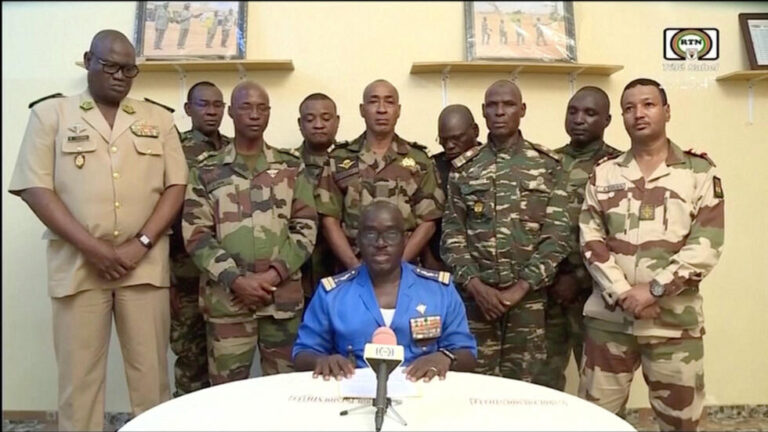
NIGERIEN soldiers have announced a successful coup on national television, dissolving the country’s constitution, suspending all institutions, and closing its borders to prevent external intervention.

The coup led by Amadou Abdramane, a Colonel-Major, is the sixth in West Africa since August 2020.

Flanked by uniformed soldiers, Abdramane cited worsening security conditions and economic challenges as reasons for the coup, and declared the end of the existing regime.

Abdramane announced that all day-to-day business would be managed by ministry heads. He also imposed a night curfew on the country.

The successful coup in Niger has sent shockwaves through the West African subregion and sparked widespread international condemnation, with ECOWAS sending President Patrice Talon of Benin to mediate the crisis.

ECOWAS is determined to uphold democratic norms and constitutional order in its member states, expressing its commitment to democratic principles.

“It should be quite clear to all players in the Republic of Niger that the leadership of the ECOWAS Region and all lovers of democracy around the world will not tolerate any situation that incapacitates the democratically-elected government of the country,” the regional bloc said in a statement on Wednesday.

President Mohamed Bazoum’s detention at the hands of the military also prompted a swift response from the international community.

US Secretary of State Antony Blinken, called for Bazoum’s immediate release, vowing unwavering support, just as the UN Secretary-General Antonio Guterres offered the UN’s full backing.

Niger’s fragile democratic progress since independence

Niger has a long history of political instability, marked by coups and attempted coups. The country has struggled to establish a stable democratic system since gaining independence from France in 1960.

Wednesday’s successful coup adds to the nation’s turbulent political past and raises concerns about the sustainability of democratic institutions.

Nigeriens took to the streets in support of Bazoum on Wednesday, but heavily armed forces loyal to the coup leaders fired shots to disperse the crowds.

The coup has left the nation on edge, uncertain about its political trajectory, even as the dissolution of the constitution threatens to roll back the progress made towards good governance and democratic principles.

With two Islamist insurgencies at play, Niger faces significant security challenges and there are fears that the coup could further hamper the nation’s ability to address these issues effectively.

WAJIC23: Media stakeholders proffer solutions on sustaining accountability journalism

0

MEDIA stakeholders, at the second day of the inaugural West Africa Journalism Innovation Conference (WAJIC), in Abuja, proffered solutions on sustaining accountability journalism.

In a session moderated by the Editor in Chief, Premium Times, Musikilu Mojeed, titled “Accountability Journalism and the Challenges of Sustainability”, various speakers at the event organised by the Centre for Journalism Innovation and Development (CJID) agreed that accountability journalism cannot sustain itself.

One of the panellists, Publisher of BusinessDay Newspaper, Frank Aigbogun, hinted at the need for collaboration among media houses to sustain accountability journalism.

“Newspaper Owners Association of Nigeria, which I am a member, had a seminar last week at a resort; it was about collaboration. So the newspapers at least are already collaborating, many of them are now printing in the same location. It was unthinkable years ago. So collaboration is already happening in the media.”

On how he sustained his Newspaper, Business Day, Aigbogun said, “Let me talk about Business Day; when we started, our traditional business accounted for 100% of our revenue, and our traditional business is simply print subscription, print advertising.

“Today, our traditional business accounts for 49% of our revenue; we expect that in two years, we will take it down to 40% of our revenue. We would like to be at the point of 70/30, and we think it is doable. What are we doing? It is simply revenue diversification.

“Our events and conferences units, for instance, added to our digital operations, provide today 51% of our revenue. As you said, we started eight digital subscriptions in Africa; today, we have subscribers who contribute.

“What are we doing? We are investing in journalism, they talked about not paying salaries; fortunately, we pay salaries. We invest in journalism, we simply believe  that good journalism should attract some kind of revenue. That’s our principle at Business Day,” he said.

In her submission, Toun Okewale Sonaiya, Chief Executive Officer (CEO) of Women Radio, said accountability journalism cannot pay for itself. She urged media owners to embrace diversification in order to remain relevant. She also discussed the need to diversify the representation of women’s issues in the media.

She stated that accountability journalism is dying and needs to be rescued.

“In my opinion, there is a pricing problem there because it cannot pay for itself. It is very expensive. You referred to other forms of journalism where you can sit in the corner of your bedroom and write about anything.

“From my economic perspective, I found accountability journalism very expensive. It is time-conscious, time constraint. Sometimes it takes weeks, it takes months, it could take a year, so it can’t pay for itself. 90% of media owners in Nigeria are men and most of them have agendas. Every media owner has an agenda,

“A lot of media house can’t pay salaries; when you pay salary, there is dignity,” she added.

Deputy Director (News Operations) Nigerian Television Authority (NTA), Muhammed Ali, said holding people accountable is difficult and encouraged collaboration in the media space.

“Importance of collaboration in the context of accountability journalism and sustainability cannot be over emphasised,” he said

Principal Scarlet Ink Media, Fran Scarlet, who spoke virtually, said they have moved away from believing that advertisements will fund accountability journalism in the United States.

“The media globally is affected by accountability journalism,” she said

“Many of the foundations don’t fund you everywhere; you need to have a good management, you need to have a good model.”

In her remarks, Rosemary Egabor-Afolahan, Head of Commercials, News Central TV, said partnership among media houses is the way out.

“Partnerships and collaborations with independent content producers are crucial. We gain a comprehensive understanding of our target audience’s consumption behaviour and co-create content with them.

“We are investing in journalism partnership; you cannot get it wrong with partnership,” Egabor-Afolahan stated.

Programme Director of the Media Development Investment Fund, Deji Adekunle, advised media houses to embrace innovation and diversify.

“We must focus on innovative distribution methods, understand our audiences, segment them effectively and actively engage with them. By doing so, we can explore, improve strategies to monetise our existing audience and their valuable talents and skills.

Adekunle said Journalism, in general, has been slow to innovate.

“No organisation is guarantee eternal life. You have to continue to innovate. Your journalism must be of high value,” Adekunle said.

The event organiser said about 300 journalists from across West Africa registered for the conference.

On day one of the event, the Vice President of News at Google, Richard Gingras, urged journalists to be more constructive in reporting to sustain the relevance of the media.

What Tinubu must do to avert strike — NLC

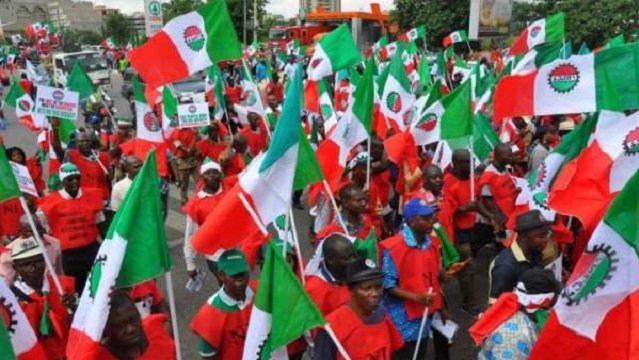
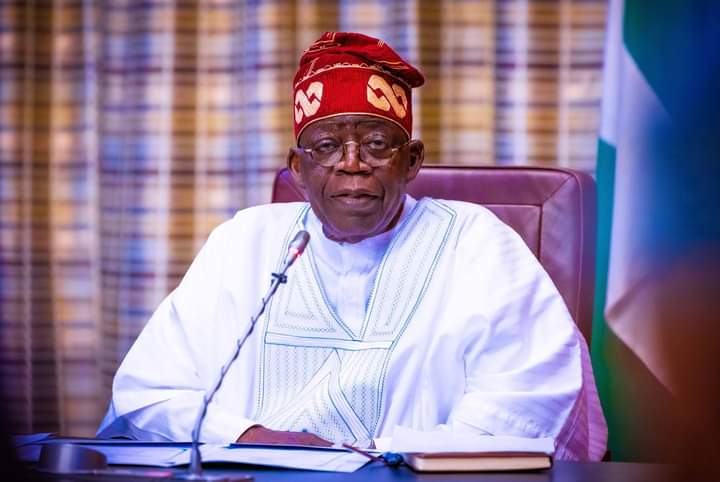
THE Nigeria Labour Congress (NLC) has urged President Bola Tinubu to immediately reverse all his government’s “anti-poor policies” to avert a looming industrial action that will commence on Wednesday, August 2.

In a communique released after a meeting of the workers’ Central Working Committee (CWC), signed by it President, Joe Ajaero and General Secretary, Emmanuel Ugbonga, on Tuesday July 26, the NLC said it is under pressure from Nigerians to lead a protest over the government’s policies. It added that the pressure had come to a breaking point.

The NLC called for the immediate inauguration of the Presidential Steering Committee as agreed in its earlier dialogues with the Federal Government.

The Congress is demanding the reversal.of PMS price, the recent increase in public school fees, the release of the eight months withheld salary of university lecturers and workers and reversal of the increase in VAT as prerequisites for aborting the strike.

It wants the government to begin building a coalition of all Nigerians where all will be leaders and all will be followers.

Meanwhile, the body has urged all civil society organisations and its.affiliates across states and other Nigerians to begin mobilisation for a mass protest , beginning from Wednesday, August 2.

It said given the continued indifference of the government to the plight of the workers and the poor, it had heeded calls by the citizens to lead a protest against the government over biting hardship in the country.

The ICIR reported earlier on Tuesday how the NLC gave the Federal Government seven days to.reverse some of its policies or face workers’ showdown.

According to the NLC, Tinubu’s inaugural “shocking gift” by increasing the price of Premium Motor Spirit (PMS) from N185 to N500; and the subsequent hike of the product to over N600 per liter showed the level of the government’s insensitivity to the plights of Nigerians.

“Other anti-poor policies have since been unleashed on Nigerians which have left workers and masses reeling and deeply impoverished. CWC-in-Session noted unfortunately that the federal government has shown enormous disdain and contempt for Nigerian people and workers having acted and continued to act without regards to the welfare and cries of the citizenry.

“That Government seems to have declared a war of attrition on Nigerian workers and masses without any care leaving them to the throes of hopelessness and helplessness. That the federal government has refused to put in place safeguards to protect Nigerians from the harsh economic situation that its policies have inflicted on the people rather it has decided to insult the sensibilities of Nigerian masses by offering us N8,OOO per family and offering themselves N70 billion.”

The workers noted that since the President said “subsidy is.gone forever” in his inauguration speech, the peace of many Nigerians have vanished with the announcement.

NLC opined that the Federal Government has continued.to treat Nigerians as slaves and a conquered people, without any concern on the consequences.

It has consequently directed all its affiliates and state councils to begin immediate mobilisation and closely work with associations, individuals and other entities including the ones already on the streets to ensure that government listens to the citizens.

Senate rejects motion to release Nnamdi Kanu, demands Ekpa’s extradition

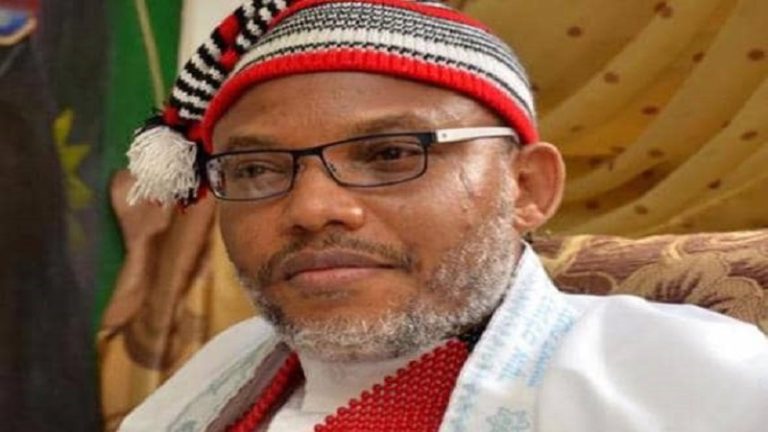
THE Nigerian Senate, on Wednesday, July 26, rejected a motion calling for the release of leader the Indigenous People of Biafra (IPOB) Nnamdi Kanu.

Kanu, who is facing terrorism charges, has been held in the custody of the Department of State Services (DSS) since his repatriation to Nigeria from Kenya in 2021.

Rejecting the motion for Kanu’s release, the legislators noted that the matter was under judicial consideration and could not be decided upon.

The lawmakers, in the same vein, asked the Federal Government to collaborate with the government or Finland towards the extradition of IPOB factional leader, Simon Ekpa.

Ekpa’s faction is behind the continued violent enforcement of sit-at-home orders in the South-East.

The Senate, in the same vein, condemned the weekly sit-at-home orders by IPOB in the South-East.

The motion for Kanu’s release was moved by Senator representing Imo West, Osita Izunaso.

The senator decried the loss of lives and properties in the South-East, noting that Kanu’s release will restore normalcy in the region.

“When people are forced to stay at home and businesses remain closed, productivity declines, and income is reduced, thereby affecting livelihoods and economic growth,” Izunaso said.

He also pointed out that the education sector was affected as missed classes have negative long term impacts on academic development.

“The sit-at-home protests continue to lead to acts of violence and clashes with the law enforcement agencies, which have led to uncountable losses of lives of innocent people, security agents and the protesters.

“As this increases, the potential for criminal elements to take advantage of the situation to engage in looting or other unlawful activities while the people stay at home,” he said.

He called for Kanu’s release as a political approach to ending the sit-at-home orders in the region, which the legislators rejected.

The legislators, rather resolved that the Ministry of Finance will investigate and expose those behind the actions after a minister is appointed.

Agitations by the Indigenous People of Biafra (IPOB) in the region led to a weekly sit-at-home order, enforced every Monday since the arrest of the group’s leader Nnamdi Kanu in 2021.

Failure of residents to comply with the sit-at-home orders resulted in attacks and death in some cases.

Many stakeholders have condemned the orders, including Labour Party (LP) presidential candidate in the 2023 general elections Peter Obi who described the enforcement of the sit-at-home as a criminal activity.

Meanwhile, Ekpa has declared a two-week sit-at-home, starting from July 31, to demand Kanu’s release. The development came after his faction ordered and enforced a one-week sit-at-home.

Most residents of the South-East are unhappy with the sit-at-home orders.

On Monday, hundreds of Enugu residents staged a protest against the sit-at-home orders in the South-East. The protesters, mostly youths and middle-aged persons gathered at Okpara Square, close to the government house, from where they marched around the Enugu metropolis.

As the protesters marched through major streets in the Coal City, they chanted solidarity songs, expressing their frustrations over the weekly Monday sit-at-home orders, which had taken a huge toll on personal and business activities in the South-East region.

Emefiele: DSS reacts to fight with NCoS, says it did not break any law

THE Department of State Services (DSS) has denied any wrongdoing following the rearrest of the suspended governor of the Central Bank of Nigeria (CBN) Godwin Emefiele after he was granted a bail by a federal high court.

Emefiele was arrested minutes after he was granted bail by the Lagos high court in Ikoyi, on Tuesday, July 25.

In a statement issued on Wednesday, July 26 by its spokesman Peter Afunanya, the DSS said it has not broken any laws in the way it is handling Emefiele’s case.

This reaction came in response to widespread public outcry following the faceoff between operatives of the DSS and Nigerian Correctional Service (NCoS) on Tuesday.

The ICIR had reported the physical altercation between operatives of the DSS and NCoS in front of the courtroom where the suspended CBN governor was arraigned.

The two agencies clashed over the custody of the suspended CBN boss, who pleaded not guilty when he was arraigned over gun possession charges. The court had after granting Emefiele bail, ordered his remand in the custody of the NCoS, pending when he meets the bail conditions.

But the DSS, which held Emefiele since it arrested him, overpowered the NCoS operatives and rearrested the suspended apex bank governor.

Many Nigerians, particularly on Twitter, showed their displeasure over the incident, describing it as a ‘show of shame’.

Reacting to the development in a statement, the DSS alleged that there is a ‘sinister plot’ to discredit its leadership.

The Service insisted that it did not break any law.

“For emphasis, the DSS has not broken any laws in handling the Emefiele case despite efforts by some elements to skew the narratives to the contrary. The Service had since alerted the public of sinister plots to discredit its leadership. In pursuit of its assignments, it will strive to remain professional, maintain ethical standards and high sense of discipline,” the statement said.

The DSS further described the incident as unfortunate, noting that it has a high respect the judiciary.

“The incident was unfortunate and does not in any way reflect the professional disposition of the DSS. The Service did not and would never encourage the incident under reference.

“The Service has tremendous respect for the judiciary as an arm and institution of government and will not go out of its way to undermine it. The DSS recognises the judiciary as a critical component in nation building, national development and security management. Also, the Service has robust working relationship with sister security and law enforcement agencies including the NCoS.”

The DSS further said it has initiated detailed investigations into the matter, vowing to undertake disciplinary actions against the officers involved. 

“While noting that the personnel from both agencies exhibited undue overzealousness, the Service has further initiated detailed investigations into the matter. This is with a view to identifying the role played by specific persons as well as undertaking disciplinary actions if necessary and drawing some lessons going forward.”

NLC threatens strike over subsidy removal, gives 7 days notice

0

THE Nigeria Labour Congress (NLC) has threatened to embark on a nationwide strike over the hike in the cost of living caused by the removal of petrol subsidy.

The umbrella body for civil servants and public sector workers in the country threatened to stop work in protest should the Federal Government refuse to reverse all anti-poor policies, such as the recent petrol pump price hike, within seven days. 

The NLC central working committee made this resolution during a meeting at Abuja Labour House on Tuesday, July 25.

The labour union vowed that it will commence a nationwide strike from August 2, despite the order of the Industrial Court of Nigeria, which prohibited the congress from going on strike. 

Last month, the government asked the industrial court to prevent members of the labour union from withdrawing their services as it can “disrupt economic activities, the health and education sector”.

The court granted the order pending a date that will be fixed for a hearing of the government’s arguments.

However, NLC has directed all its affiliates and state council to begin mobilisation of workers and other Nigerians for a protest and an indefinite industrial strike. 

Hakeem Ambali, the NLC’s national treasurer, said, “Yes, we issued the Federal Government a seven-day deadline to conclude all negotiations with labour or risk industrial action by the Central Working Committee.”

The NLC had planned to protest the subsidy removal in June but suspended the planned protest after a meeting with government officials. 

Although no resolution was made, the labour union halted the proposed industrial action saying it intends to “continue ongoing engagements with the Federal Government and secure closure on the resolutions”.

Similarly, the Nigerian Association of Resident Doctors (NARD) has declared an indefinite strike which began at 12:00 am Wednesday, July 26. 

The doctors are demanding the implementation of the one-for-one replacement policy for healthcare workers; the Medical and Dental Council of Nigeria is to discontinue the downgrading of the membership certificate issued by the West African Postgraduate Medical and Surgical Colleges.

They also accused the federal government of refusing to pay resident doctors’ salary arrears for 2014, 2015 and 2016.

Tinubu condemns attempted coup in Niger, calls for President’s release

THE Chairperson of the Economic Community of West African States (ECOWAS) and President of Nigeria, Bola Tinubu, has condemned the attempted coup in Niger Republic on Wednesday, July 26.

In a statement posted on the ECOWAS website, the regional body called on the “coup plotters” to immediately release the democratically elected President, Mohammed Bazoum.

“ECOWAS has received the news of an attempted coup d’Etat in Niger with shock and consternation. ECOWAS condemns in the strongest terms the attempt to seize power by force and calls on the coup plotters to free the democratically-elected President of the Republic immediately and without any condition,” the statement read.

The attempted coup has led to a tense situation in the country, with access blocked to Bazoum’s official residence and offices in the presidential complex in Niamey.

Tinubu emphasised that the Authority of Heads of State and Government of member nations of the regional body will not accept any form of undemocratic government in West Africa.

“It should be quite clear to all players in the Republic of Niger that the leadership of the ECOWAS Region and all lovers of democracy around the world will not tolerate any situation that incapacitates the democratically-elected government of the country,” Tinubu stated.

He further assured that the ECOWAS leadership is closely monitoring developments in Niger and will do everything within its powers to ensure democracy continues to thrive in the country and the entire region of West Africa.

The ICIR reports that Niger, a landlocked West African state, has faced several coups and attempted coups since gaining independence from France in 1960.

The current attempted coup has raised concerns about the stability of the country and its democratically-elected government, as the international community, including ECOWAS, continues to closely monitor developments to ensure the safety and security of the President, his family, members of the government, and the general public.

 Federal universities still tuition-free — Presidency

0

THE Nigerian government has explained that federal universities in the country are still tuition-free

The Special Adviser on Special Duties, Communications, and Strategy to the President, Dele Alake, made the clarification in a statement released on Wednesday, July 26.

According to Alake, what is commonly referred to as tuition fees are actually optional fees assessed by each university for services, including lab use, registration, and hostel lodging.

He added that the Students’ Loans Scheme, which is part of the Student Loans Bill that President Bola Tinubu signed into law last month, would be implemented before the start of the next academic year in September.

Alake further disclosed that the Federal Government would provide additional support for needy students.

He described as inaccurate, reports that the Federal Government has increased tuition fees in federal universities in the country.

“We are aware that some universities have in recent weeks announced increase in the amount payable by students on sundry charges.

“However, the fact remains, and we have confirmed that these are discretionary charges by each university for hostel accommodation, registration, laboratory and other charges. They are not tuition fees,” Alake 

He said authorities of these universities made this fact clear enough in explaining the rationale behind the new fees.

“For avoidance of doubts, federal universities in Nigeria remain tuition-free. President Bola Ahmed Tinubu remains committed to his promise of ensuring that every Nigerian, regardless of the economic situation of their parents, have access to quality tertiary education,” he added.

Alake stated that the government’s plans include work-study, merit-based scholarships, and grants in order to ensure that all devout students complete their education on time, regardless of their parent’s financial status.

Recently, the National Association of University Students (NAUS)1 threatened to embark on a mass protest over the recent hike in tuition in tertiary institutions.

This was disclosed in a statement on Saturday, July 22, titled, ‘Warning Against Tuition Fee Increment’, signed by both the NAUS chairman and national deputy president, Eruobami Ayobami and Babalola Daniel, respectively.

The association warned that any legislation enacting tuition increases in higher institutions would be met with immediate protests from the student population.

NAUS advised the various higher educational institutions to rethink their plans to raise tuition, as doing so would harm the academic system and students.

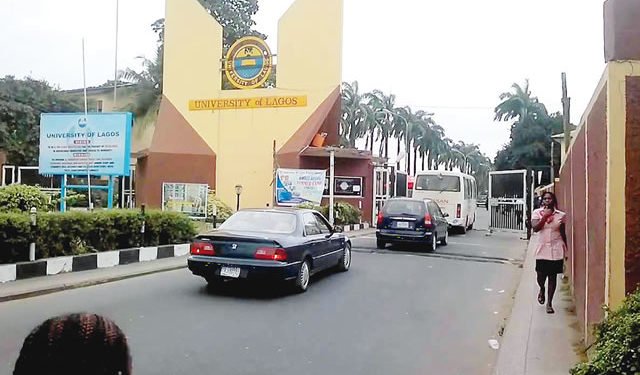
The ICIR reports that the management of the University of Lagos, Lagos State, has increased fees for undergraduate students in the institution.

The university management explained its decision to hike tuition for new and returning undergraduate students in statement it issued via the institution’s website on Friday, July 21.]

It attributed the development to what it described as the “prevailing economic realities and needs” to meet its obligations to students and staff.

The statement noted that the adjustment would take effect from the first semester of the 2023/2024 academic session.

The students of the institution had been paying N19,000, but the management has fixed new fees at N190,250 for students studying Medicine, while for courses that require laboratory and studio, students are to pay N140,250.

Additionally, the Federal government has increased tuition for new students at Federal government colleges, also known as Federal Unity Colleges, through the Ministry of Education, to ₦100,000.

The fee increase was announced in a circular titled, ‘Approved Fees/ Charges for Federal Unity Colleges (1st Term) for new students’, signed by the Director of Senior Secondary Education, Hajia Binta Abdulkadir.

According to the statement, new students are expected to pay ₦100,000 instead of the old N45,000.

The increment generated public outcry as many criticised the action amid the effect of fuel subsidy removal.