Home Blog Page 867

Catapult Development Fund offers grant for documentaries

DOCUMENTARY filmmakers can apply for development grants ranging from US$5,000 to US$25,000.

The Catapult film fund is offering the Catapult Development Grant. The organisation gives early support to propel projects that hold the promise of a story that should be uniquely told in film.

The grant enables filmmakers to develop their projects to the next level, at the early stage when funding is hard to find. The grant supports powerful and moving storytelling by filmmakers with a strong voice across a broad spectrum of subject matter.

Catapult accepts applicants who can arrange to have a U.S. 501(c)(3) fiscal sponsor. Grantees will need a fiscal sponsor in order to receive the funds.

The deadline for the submission of the application is July 10, 2023. Interested persons can apply here 

Dubawa wins at Global Fact 10

0

DUBAWA has emerged winner of the highest impact fact check at the Global Fact 10 awards.

A fact check and investigation done by the Nigeria editor of Dubawa, Kemi Busari, won the highest impact category.

The published fact check/investigation focused on a Nigerian fake ‘doctor’ cashing out on a deadly concoction that cures nothing.

Shortlisted in the highest impact fact check in the second category alongside Dubawa (Nigeria), include AFP Fact-Checking (France/USA), Myth Detector (Georgia), and Taiwan Factcheck Center (Taiwan).

At the 10th Global Fact-checking ceremony which was held in Seoul, South Korea from June 26th to 30th, Dubawa was announced the winner of the highest impact fact-check.

Speaking during the ceremony, FactCheckHub editor, Opeyemi Kehinde, discussed overcoming hurdles and how digital media literacy innovation coupled with repurposed fact-checking content generated trivia game content.

FactCheckHub and Dubawa who are part of the Nigerian Fact-checkers Coalition (NFC) were also among the organisations that received grants from the International Fact Check Network (IFCN).

Speaking with The ICIR, Kemi Busari, talked about the challenges encountered during the course of the investigative fact check.

“The investigation itself took about five months, if I even want to add the research part, is far more than that. There were a lot of challenges, we needed to source funds to do the investigation, and secondly, it was hard to get respondents who will be willing to talk about the effect of taking the herbal product.

“Apart from that, it is really a very wide field. I had to read up a lot of scientific articles, terms, and documents so I could understand and clearly interpret the outcome from the laboratory to the public,” he stated.

Reacting to the award won in the category of the highest impact fact check, Busari expressed joy at the global recognition.

“We received the best award a few weeks ago when we saw that NAFDAC immediately swung to action to ensure this product is off the market and we also see their continued effort to make sure that they sanitize the space.

“When some of these little things we do in our small closet get international recognition, it brings a lot of joy and happiness to someone like me and the entire team who worked on the story.”

He went further to advise budding fact-checkers to go beyond the basics in their reports as fact-checkers can hold the government accountable anywhere in the world.

Winners also emerged in other categories of the awards. Cek Fakta-Liputan 6 (Indonesia) won the most creative format while the most innovative collaboration was won by Esatdao Verifica, Agencia lupa, aos fatos projeto Comprova, universo online and meedan.

Police trail customer who absconded with N55m Benz during test drive

0

OPERATIVES of the Federal Capital Territory (FCT) Police Command are on the trail of a customer who absconded with a N55 million Mercedes Benz GLB 250 while test driving the vehicle in Abuja.

Public Relations Officer (PRO) of the Command Josephine Adeh disclosed this while speaking with The ICIR on Friday, June 30.

“We are on top of the situation. We are on it,” Adeh said, noting that efforts are being made to apprehend the man.

A car dealer, Mohammed Manga, reportedly handed the car over to a colleague who went on the test drive with the customer, identified as Henry.

“He (the colleague) took the car to his office, and the customer came there. He said the customer introduced himself as Henry from Gwarinpa and that he saw the car on an online marketplace.

“He saw the car and said he liked it; they negotiated N55 million for the car, and he said OK and demanded test driving the car. He drove the car with my friend sitting on the passenger side of the vehicle and they drove out to the filling station opposite the automatic car wash in Garki to buy petrol before the test drive,” Manga said.


READ ALSO:


However, Henry sped off with the vehicle, which was grey in colour with a milage of 19000, to an unknown destination as soon as Manga’s friend stepped out to withdraw money to purchase the fuel.

“Immediately my friend stepped out of the car at the filling station to withdraw money from the PoS operator to buy fuel, the guy zoomed off with the vehicle. You know how it is, there’s no traffic, no hold up in Abuja, and that’s how he absconded with the car,” Manga added.

He said the case was reported to the Anti-Car Theft Unit of the FCT Police Command.

Why cooking gas price fell in May despite year-on-year rise – experts

0

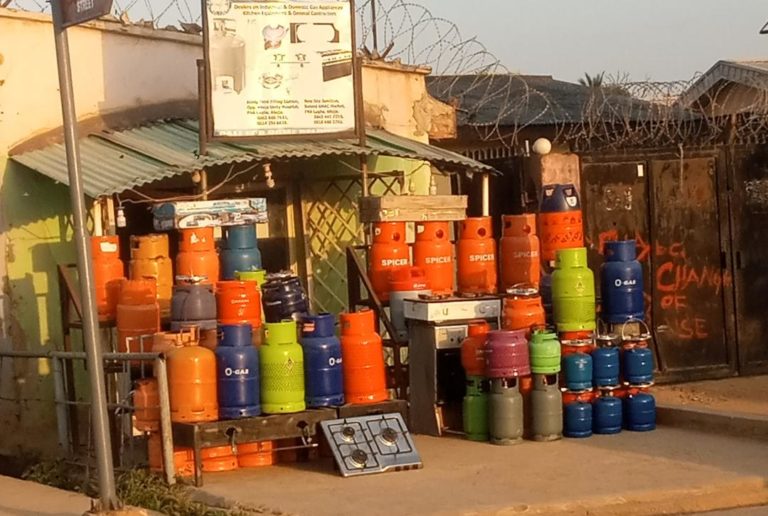
THE price of cooking gas fell in May for the first time this year, and has improved further in June, compared to the price a year ago.

In its latest report, ‘Liquefied Petroleum Gas (Cooking Gas) Price Watch for May 2023’, released on June 23, the National Bureau of Statistics (NBS) stated that the average price for refilling a 5-kilogramme cooking gas cylinder fell in May by 6.07 per cent to N4,360.69 from N4,642.27 recorded in the previous month of April.

The average retail price for refilling a 12.5kg cooking gas also dropped in May by 7.61 per cent to N9,537.89 on a month-on-month (MoM) basis, from N10,323.33 in April.

A check by The ICIR this week at some gas filling stations in Ogun State revealed that cooking gas sold at N570/1kg, with the 3kg size selling for N1,700 and the 6kg cylinder going for N3,300.

Before the price dropped to N4,360.69 in May, the price for refilling a 5kg or 12.5kg cooking gas cylinder had been on the up.

For instance, the average price for refilling a 5kg cylinder rose from N4,588.75 in January this year to N4,600.57 in February, climbed to N4,610.48 in March and N4,642.27 in April, before dropping to N4,360.69 in May.

Why cooking gas price fell month-on-month

The drop being recorded in the price of cooking gas is affected mainly by the global market forecast, the head of financial institutions ratings, Agusto and Co, Ayokunle Olubunmi, told The ICIR.

As Olubunmi posited, the forces of demand and supply are at play, with the world gradually moving into the summer period, where demand for gas is expected to fall.

“What that means is that as the global demand for gas reduces, the international gas price falls.

“If you check what is happening now, the world is gradually moving into the summer and, as such, people won’t need more gas for cooking and all sorts,” he explained.

He also adduced the price drop to the Nigeria LNG Limited’s (NLNG) priority to supply more gas to the Nigerian market.

The ICIR can report that LNG is Nigeria’s second largest export commodity and accounts for 10.4 per cent of total exports, according to the Financial Derivatives Company in its latest June Monthly Economic Update.

Why cooking gas price rose year-on-year

On a year-on-year (YoY) basis, however, the average retail price for refilling a 5kg cooking gas cylinder rose by 11.20 per cent to N4,360.69 in May 2023, from N3,921.35 in the corresponding month in 2022.

The average retail price for refilling a 12.5kg cylinder also rose on a YoY basis by 9.30 per cent to N9,537.89 in May, from N8,726.30 in May 2022.

Speaking on Arise Television’s Global Business Report on Wednesday, June 28, the chief executive officer of Dairy Hills Limited, Kelvin Emmanuel, gave an insight into some of the factors affecting the price of cooking gas.

Emmanuel, an economist, noted that the LPG consumed in the country and supplied by the NLNG carries a United States dollar (USD) obligation to shareholders, driving the naira-dollar exchange rate parity.

Another challenge is the inadequacy of bulk storage terminals to handle LPG as Nigeria has less than 20,000 metric tonnes capacity as against the required 70,000 to 100,000 metric tonnes.

Nigeria has only two functional LPG landing jetties – the Navgas and New Oil Jetty (NOJ) in Lagos – and another terminal in Calabar.

“These are infrastructure challenges impacting on pricing,” the economist said.

A cursory look at the NBS report showed that cooking gas prices vary from state to state and zone to zone.

“This is because two of the three LPG landing jetties in Nigeria are located in Lagos,” Emmanuel said.

In May, Bayelsa recorded the highest average price for refilling a 5kg cylinder at N5,016.67, followed by Zamfara at N5,000.00, and Abuja at N4,900.00.

On the contrary, Ondo recorded the lowest price with N3,795.83, followed by Nasarawa and Edo with N3,800.00 and N3,837.14 respectively.

Analysing the report by zone, North-Central recorded the highest average retail price for refilling a 5kg cylinder with N4,712.85, followed by the North-West with N4,550.04, while the South-East recorded the lowest with N4,078.50.

“Between  2014 and 2023, the consumption of LPG increased nine times from about 144,000 to 1.1 million metric tonnes, despite Nigeria still having one of the lowest LPG per capita at 1.8kg, compared to Saudi Arabia, which is nearly 500kg per capita.

“If you want to look at why the price of LPG was rising, you look at the upstream processing capacity for Nigeria’s backward integration to ensure that Nigeria processes up to 90 or 95 per cent of the LPG it consumes,” the economist said.

According to him, these are the primary reasons why even though Nigeria has one of the largest gas-proven reserves in the world, the country still has LPG prices that are high, and that has affected the penetration of LPG usage in Nigeria.

“There is the tendency that macroeconomic pressure will push the price of cooking gas upward, Emmanuel said, “because there is still high volatility as the naira tries to find its footing with the dollar following the exchange rate unification,” he said.

What government could do to tame the price

Emmanuel suggested that as done by the FMDQ Group in setting up an Exchanging Traded Derivatives, the government could set up a non-exchange traded derivatives, or what is called a non-deliverable forwards in derivative trading to help importers and companies use forward contracts to hedge against currency fluctuation.

“For instance, if a company is billed to import 20 million barrels of LPG in January, what is the guarantee that by December 2023, the exchange rate wouldn’t have risen to N820 or N830? That is what forward contracts help you to do, and non-exchange derivative forwards allow you to hedge.

“In the short term, I expect few uncertainties in the market to last for three to six months, which will impact the cost of importing LPG into Nigeria considering that one metric tonne of LPG in the international market is somewhere around $280 and $300, and you still need another $135 as landing cost,” he explained.

My greatest achievement in 2022 is Asake, Yhemolee reveals

NIGERIAN actor and social media influencer, Idowu Adeyemi popularly known as Yhemolee, has revealed that his most significant accomplishment in 2022 was witnessing Asake’s complete emergence into the spotlight.

During an interview on the program “With Chude” hosted by Chude Jideonwo on Wednesday, June 28, Yhemolee enthusiastically shared a revelation, expressing his delight at Asake’s remarkable achievements.

“On his birthday, I said it that my greatest achievement in 2022 is Asake”, he said.

The actor, renowned for his enthusiasm for nightlife, reminisced about his enduring friendship with Asake over 13 years. He noted that throughout their journey, they have steadfastly pursued their respective dreams of attaining success, while providing unwavering support to each other every step of the way.

Yhemolee narrated the intriguing story of how he introduced Asake to Olamide. According to him, Olamide initially reached out regarding another artist, Dan Dizzy. However, upon realising that Olamide was actively engaged and responding instantly, he seized the opportunity to mention Asake’s talent and potential to him.

“Badoo liked my song, ‘All the girls’ and randomly posted it on his page one day and tagged me. One morning around 4:00 am, he texted me to ask about Dan Dizzy but I realised he is very active so immediately told him I have an artist for him. As we were talking, I sent Asake’s song to his mail then told him to listen at his free time and help the boy in anyway”, Yhemolee said.

He noted that he didn’t have high expectations when he informed Olamide about Asake. However, to his surprise, that very same morning, he received another message from Olamide expressing his readiness to collaborate and work with Asake.

Nigerian singer, Asake

Ever since Asake’s signing to YBNL Records under the ownership of Olamide, he has become a sensation dominating the Nigerian entertainment industry. His talent has garnered global recognition, resulting in a multitude of prestigious awards and a recent nomination for the highly acclaimed BET Awards.

Service chiefs: DHQ orders senior officers to resign before July 3

0

THE Defence Headquarters (DHQ) has ordered military officers who are superior in rank to the newly appointed service chiefs to resign voluntarily before July 3.

A memo issued on Monday, June 26, from the military headquarters and signed on behalf of the Chief of Defence Staff by Major General Y Yahaya said the directive was aimed at preserving and upholding the tenets of the military profession, which is based on hierarchy.

By military tradition, officers cannot take orders from their juniors and with the appointment of service chiefs, those who are superior to them in rank are to leave the service.

The new Chief of Defence Staff, Major General Christopher Musa is a member of 38 Regular Course, likewise the other military service chiefs – Chief of Army Staff, Major General Taoreed Lagbaja; Chief of Naval Staff, Rear Admiral Emmanuel Ogalla, and Chief of Air Staff Air Vice Marshal, Hassan Abubakar.

Copy of the memo issued to order senior military officers to embark on voluntary retirement

The memo read: “It would be recalled that the President, Commander-in-Chief of the Armed Forces of the Federal Republic of Nigeria, His Excellency Bola Ahmed Tinubu recently appointed new CDS and Service Chiefs on June 19, 2023. In order to preserve and uphold the tenets of the military profession which values hierarchy and service discipline, it is important that all officers whose officer cadet courses run seniority above that of the current Service Chiefs disengage from the Service.

“Consequently, I am directed to respectfully request Services to direct all officers with seniority on commission above that of NDA Regular Course 39 to submit their applications for voluntary retirement from Service with immediate effect. I am to add that affected officers are to submit their applications to their respective Service Headquarters not later than Monday, July 3, 2023.”

The ICIR earlier reported that President Bola Tinubu fired the old service chiefs, comprising Chief of Air Staff, Isiaka Amao; Chief of Defence Staff, Lucky Irabor; Chief of Naval Staff, Awwal Zubairu Gambo and Chief of Army Staff, Farouk Yahaya, on June 19.

The President also sacked the Inspector-General of Police, Usman Alkali Baba, and the Comptroller-General of Customs, Hameed Ibrahim Ali, a retired colonel.

Tinubu appointed immediate replacements for the sacked officers, according to a statement signed by the Director of Information in the Office of the Secretary to the Government of the Federation, Willie Bassey.

Nigerian woman jailed in Switzerland for trafficking

IN a ruling that exposes the grim reality of human trafficking, a 34-year-old Nigerian woman has been handed a four-and-a-half-year prison sentence by a Swiss court for her involvement in trafficking young women and girls for sexual exploitation.

The sentencing, reported by SwissInfo on Monday, June 26, included the subsequent deportation of the unnamed 34-year-old mother of three from Switzerland upon completion of her prison term.

The court proceedings unveiled a distressing tale of how the woman, a former trafficked sex worker herself, allegedly recruited several young Nigerian girls, some of whom were minors, to work as prostitutes in the Lausanne region.

The court learned of the horrifying conditions endured by five sex workers, who were housed in different locations within Lausanne and forced to engage in street prostitution regardless of weather conditions. Three of the women had courageously come forward to file complaints.

Operating in conjunction with her partner, who was already convicted and sentenced in 2021, the Nigerian woman allegedly collaborated with family members in Nigeria to target girls from impoverished homes.

The victims embarked on a deceitful journey, travelling through Niger, Libya, the Mediterranean Sea, and Italy before reaching Switzerland.

However, before their departure, they were subjected to a coercive ritual known in Nigeria as “juju”, involving black magic spells and threats of harm to themselves and their families if they defied their captors.

Under the grip of their traffickers, the victims were compelled to surrender their earnings to the Nigerian woman who has now been convicted.

Refusal to comply resulted in threats of death, physical abuse, or deprivation of food. The presiding judge, Pierre Bruttin, expressed deep shock and labelled the case as “extremely serious”.

The convicted woman, who had already spent over a year in prison, admitted to her offenses and in addition to her prison sentence, was fined and will face deportation from Switzerland once her jail term is complete.

Meanwhile, her three young children are under the care of authorities in France, while their father remains incarcerated.

While Switzerland has seen previous cases of similar nature, public prosecutor Eric Mermoud noted that this particular instance was the first to be resolved through a simplified procedure.

He described the woman’s admission of guilt as a “rare confession”, adding that Nigerian prostitution appears to be on the decline in Lausanne, possibly due to recent court rulings that have diminished its appeal to traffickers.

Although prostitution is a regulated trade in Switzerland, human trafficking, coercion into prostitution, and most forms of pimping are strictly illegal.

Despite the prevalence of sex trafficking, such cases seldom make it to court in the country.

Blasphemy: CAN condemns killing of butcher in Sokoto

THE Christian Association of Nigeria (CAN) has condemned the killing of a butcher, Usman Buda, in Sokoto over allegations that he made blasphemous comments against the Islamic religion.

In a statement on Thursday, June 29, CAN President Daniel Okoh called for the protection of Nigerians irrespective of religious affiliations or other diversity.

“According to reports reaching us, Usman Buda was brutally murdered over an alleged blasphemous comment. CAN firmly believes in the freedom of religion and the peaceful expression of beliefs. We, therefore, denounce any form of violence or jungle justice in the name of religion.

“This tragic incident underscores the urgent need for increased efforts to foster religious tolerance, peace, and unity in our diverse society,” he noted.

While commiserating with the family of the deceased, he urged religious leaders to promote peaceful coexistence and tolerance among their followers.

Buda was murdered by a mob on Sunday, June 25, over alleged blasphemy.

The Sokoto State Police Command confirmed the incident in a statement.

No arrests have been made following the killing. However, the Police Command noted that investigations had commenced into the killing.

Amnesty International condemns killing

Other organisations, including Amnesty International, condemned the brutal killing of the butcher, stating that the rising spate of blasphemy murders was an urgent call for the protection of human rights in Nigeria.

“By failing again and again to ensure that those suspected of responsibility of killing(s) over alleged blasphemy are brought to justice, the Nigerian authorities continue to create a permissive environment for brutality,” the organisation’s Acting Director in Nigeria Isa Sanusi noted.

Following the killing, Muslims Rights Concern (MURIC) urged Muslims to desist from taking laws into their hands.

In a statement on Monday, June 26, MURIC Chairman in Sokoto Muhammad Aliyu noted that although blasphemy was punishable by death under the Sharia law, it was not the responsibility of private individuals to carry out the killing.

Blasphemy killings on the rise in northern Nigeria 

Buda’s killing is the second such incident in Sokoto and the third in Nigeria within a year.

In May 2022, Deborah Yakubu, a Christian student of the Shehu Shagari College of Education, Sokoto, was lynched over alleged blasphemy.

Though two suspects were arrested in connection with the killing, justice is yet to be served one year later.

Eid-el-Kabir: Gombe extends public holidays to Friday

0

THE Gombe State government has extended public holidays for the Eid-el-Kabir celebrations to Friday, June 30.

The state governor Muhammadu Yahaya approved the extension of on Thursday, June 29, according to a statement signed by the Acting Head of Civil Service, Ahmed Abdullahi.

“I am directed to inform you that His Excellency Muhammadu Inuwa Yahaya, CON (Dan Majen Gombe), has approved the extension of the Public Holidays to Friday, 30th June 2023, to enable Civil Servants in the State to continue with the celebration of this year’s Eid-el-Kabir along with their counterparts nationwide.

“The Acting Head of Civil Service wishes all Workers and indeed the General Public a peaceful celebration. Meanwhile, all essential services would be maintained throughout the Public Holiday, and workers will resume work on Monday 3rd July, 2023, please,” the statement read.

While Islamic clerics and other relevant authorities across the country preach peace on the occasion of Eid, politically motivated clashes were recorded in Osun State during the festivities.

Sitting arrangements at the Central Eid praying ground in Osogbo led to a clash between supporters of the state governor, Ademola Adeleke and a political opponent, Ajibola Basiru.

Adeleke, who left the prayer ground as a result of the clash, alleged in a statement released after the incident that there were attempts to assassinate him in the process.


READ ALSO:


“The government particularly notes with shock and surprise the role played by former Senator Ajibola Bashiru, who took over the space reserved for the Governor at the prayer ground. All efforts to get the former Senator to vacate the space proved abortive.

“The government was even more shocked that thugs armed to the teeth were spotted all over the praying ground with security information that they were imported to eliminate the governor and key government functionaries,” the statement partly read.

Islamic leaders in the South-West have, however, condemned the actions of those involved while speaking to journalists on Thursday, June 29, and urged politicians to respect religious leaders and practices.

CBN directive on bank customers’ social media handles illegal — Commission

THE Nigeria Data Protection Commission (NDPC) has faulted the Central Bank of Nigeria’s (CBN) recent directive that banks should obtain and verify customers’ social media handles.

The Commission described the directive as illegal, noting that it violated privacy laws.

The apex bank had on June 26, directed banks to obtain the social media handles of customers as part of enhanced Customer Due Diligence (CDD) regulations.


Read Also:

It explained that the move was geared towards bolstering bank customers’ compliance with anti-money laundering (AML) and counter-terrorism financing (CFT) provisions, while aligning with international best practices.

However, in a statement on Thursday, June 29, the NDPC said it was currently engaging with the CBN on the directive, stressing that there is need to adhere to fundamental principles when collecting citizens’ data.

NDPC national commissioner Vincent Olatunji, who reacted to the directive in the statement, highlighted the significance of the Nigerian Data Protection Act (NDPA), which was enacted on June 12, in ensuring the responsible handling of citizens’ data by Data Controller Organisations.

Olatunji said the Act outlines guidelines for the processing of personal data, emphasising fairness, lawfulness, transparency, minimal data collection, and limited retention periods.

He explained that there were prerequisite steps any Data Controller must take prior to the collection of data from data subjects.

The NDPC official added that any organisation that defaulted was going against the law and causing a data breach, noting that such would attract a fine.

“We are already engaging with the CBN to let them know that what they have done is against the law because there are basic principles you must meet when you want to collect citizens’ data,” he said.

“There is data minimisation, meaning you don’t collect data beyond the purpose for which it was intended, purpose limitation, what purpose it is for.”

Olatunji stressed that the NDPC’s role is to protect the rights and interests of Nigerian citizens, making it applicable to all data controllers, including private and government offices, NGOs, and hotels.

“The purpose of this law is to safeguard the rights and interests of Nigerians who are data subjects.”

He highlighted key principles, such as data minimization, which mandates that data should only be collected for its intended purpose, and purpose limitation, which specifies the purpose for which data is collected.

Olatunji further argued that requesting social media handles from bank customers was unnecessary.

However, he acknowledged that if the collection of social media handles served a public interest, such as transaction monitoring, customers should be properly informed.